


Knowing how to place a rug in a bedroom correctly can completely change how the room feels underfoot and how balanced it looks visually. A rug that’s too small or oddly positioned makes even a well-decorated room feel unfinished.
This guide covers every common placement style — under the bed, at the foot, layered, or with runners — so you can pick the approach that fits your room size and bed setup. We’ll also cover sizing, material, and the small details that separate a professional-looking layout from a haphazard one.
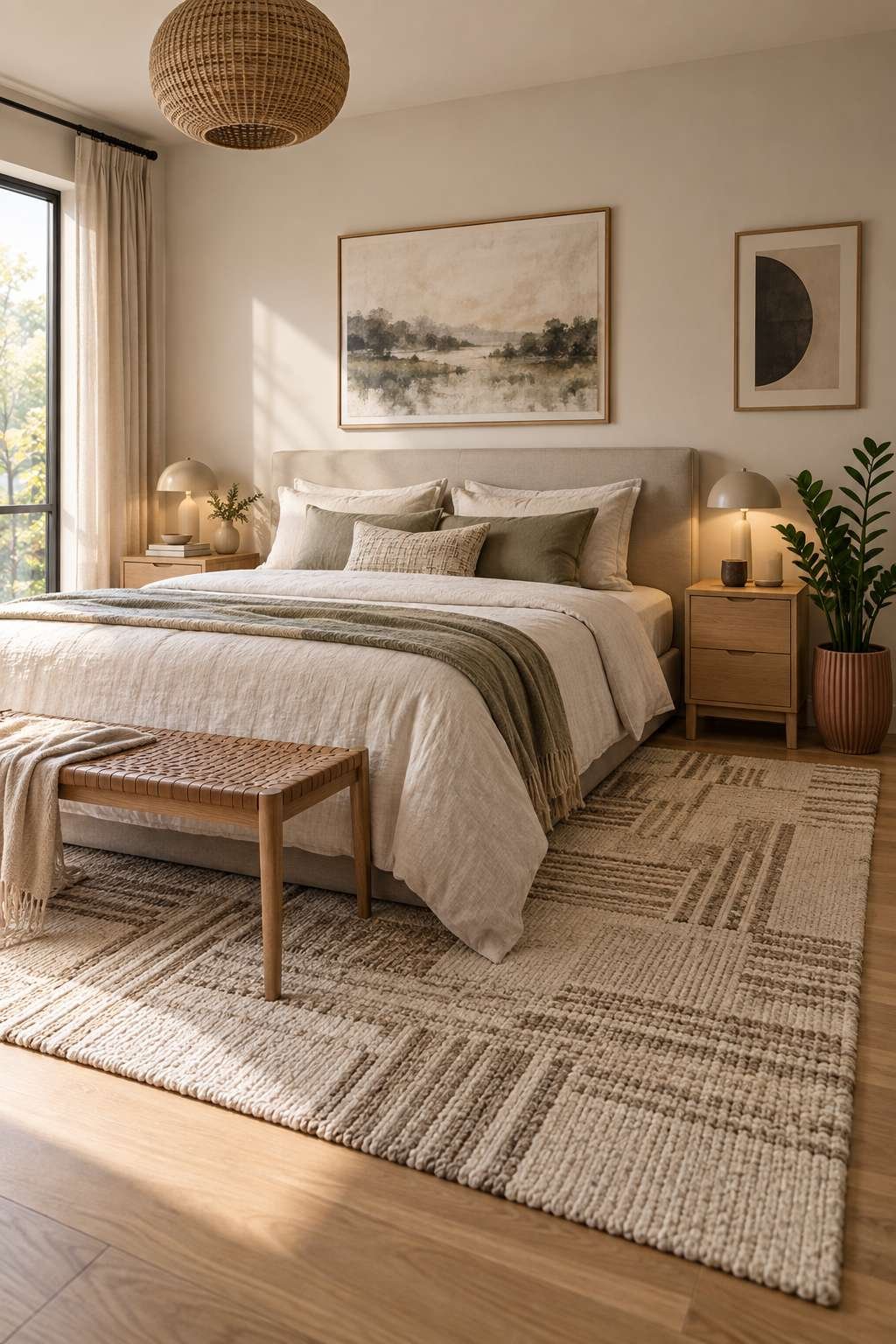
Whether you’re working with a spacious primary bedroom or a smaller guest room, learning how to place a rug in a bedroom the right way makes the space feel more intentional and complete.
1. Why Rug Placement Matters in a Bedroom
A rug does more than add softness underfoot — it visually anchors the furniture and defines the room’s layout. Poor placement can make a bed look like it’s floating awkwardly in the middle of an unfinished space.

Rugs also add warmth, especially over hardwood or tile flooring, and help absorb sound in a room meant for rest. Getting placement right is just as important as picking the right color or pattern.
- Rugs visually anchor the bed and surrounding furniture
- Proper placement prevents a “floating furniture” look
- Rugs add warmth over hard flooring surfaces
- Placement affects both style and everyday comfort
2. Standard Rug Sizes for Bedrooms
For a queen bed, an 8×10 rug is a common standard size that extends comfortably beyond the bed’s edges. A king bed typically calls for a 9×12 rug, while smaller full or twin beds can work well with a 5×8 or 6×9.
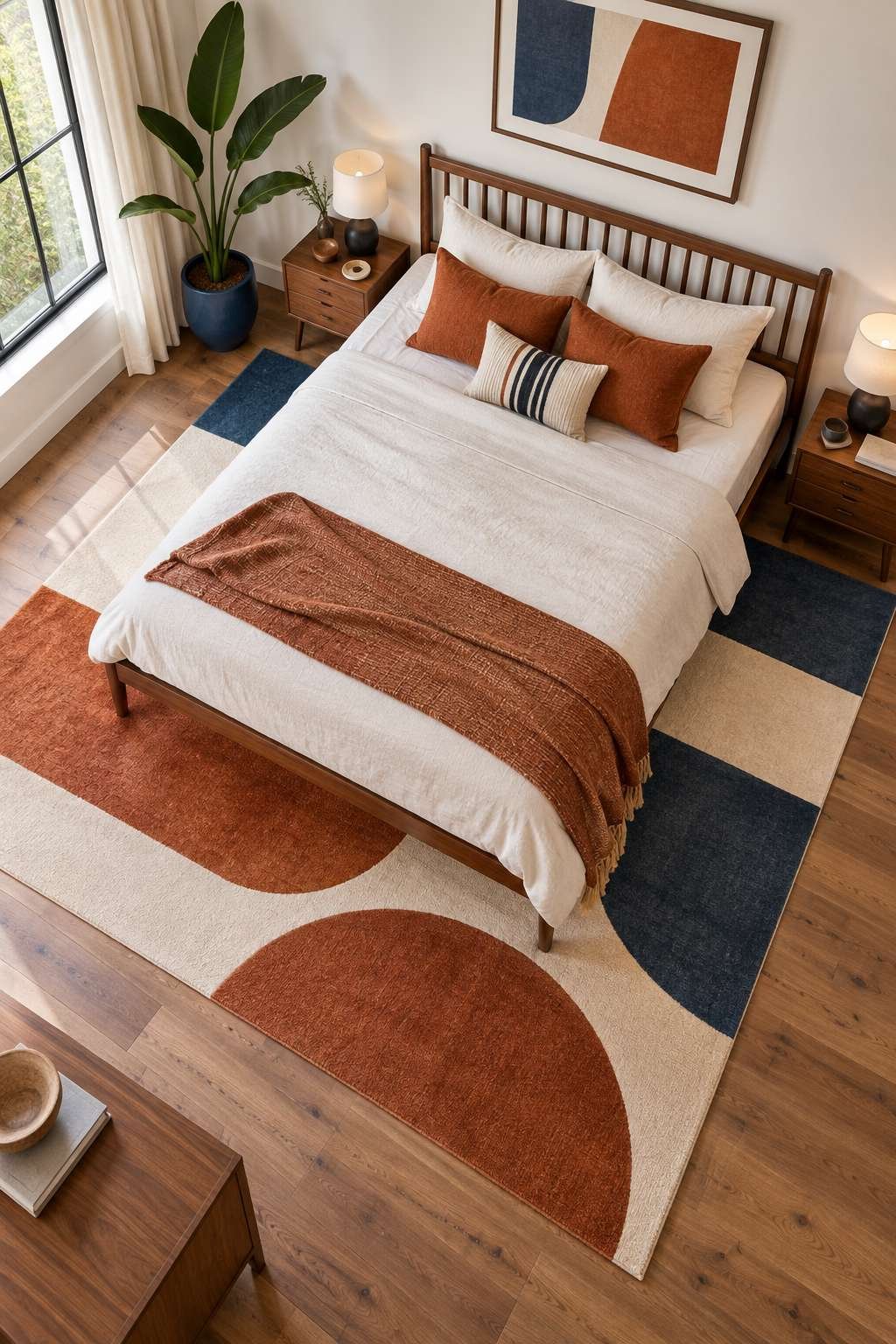
Always measure your room and bed dimensions before buying, since a rug that’s too small will look disconnected from the furniture around it. Bigger, when in doubt, generally reads better than smaller in a bedroom setting.
- Queen bed: 8×10 rug is a common standard
- King bed: 9×12 rug works well in most rooms
- Full or twin bed: 5×8 or 6×9 rugs are common choices
- When unsure, size up rather than down
3. Placing a Rug Under the Bed
The most popular approach slides the rug partially under the bed, leaving 18-24 inches exposed on the sides and foot of the bed. This creates a soft, framed look without the rug disappearing entirely under the frame.
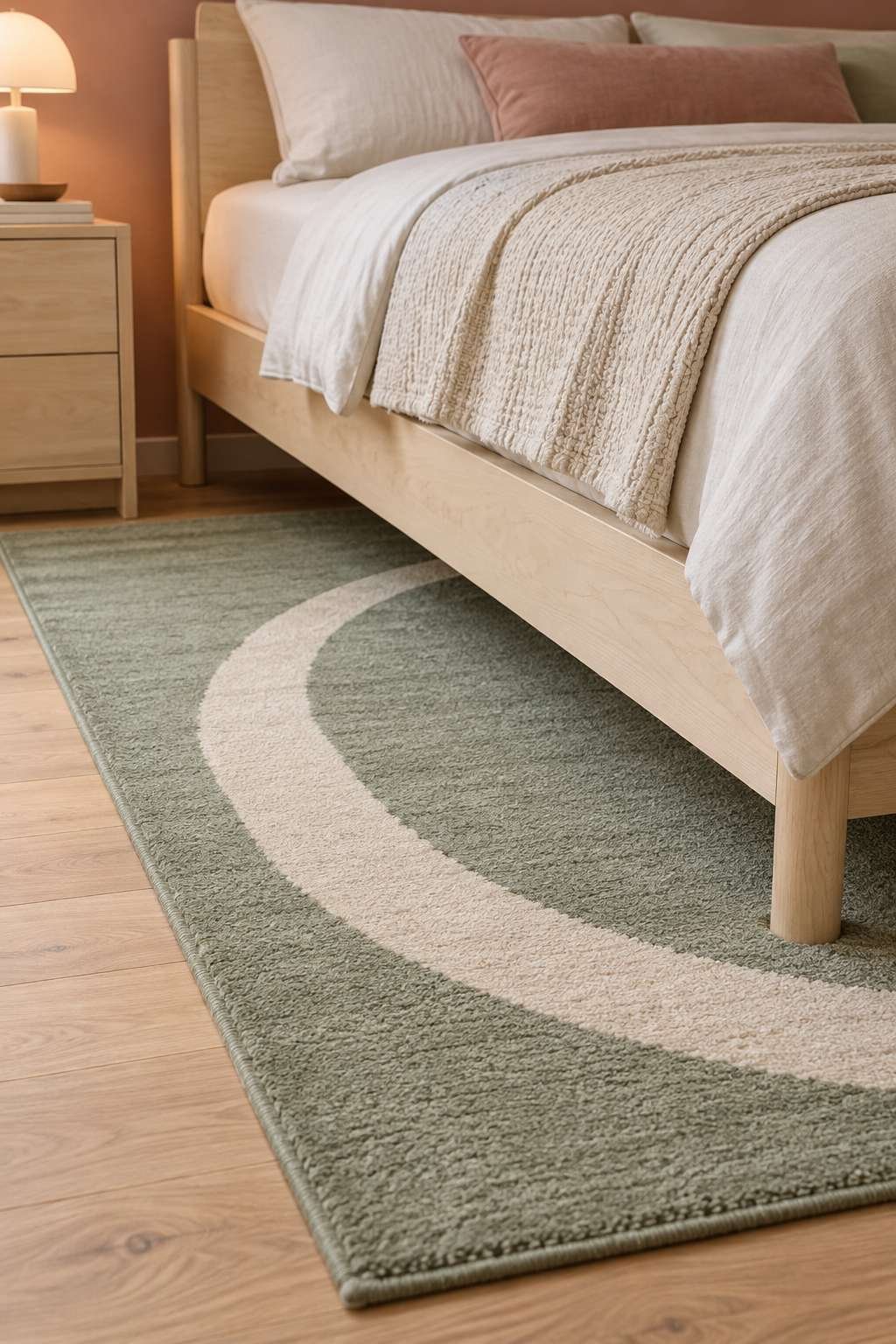
Ideally, the rug should extend far enough to reach under the nightstands as well, tying the whole furniture grouping together visually. A rug that stops right at the edge of the bed frame often looks abrupt rather than intentional.
- Leave 18-24 inches of rug exposed on visible sides
- Extend the rug under nightstands when possible
- Avoid stopping the rug exactly at the bed frame’s edge
- Center the rug evenly side-to-side under the bed
4. Placing a Rug at the Foot of the Bed
For a smaller rug or a tighter budget, placing it just at the foot of the bed is a simpler, effective option. This works especially well when the rug isn’t large enough to extend meaningfully under the bed itself.
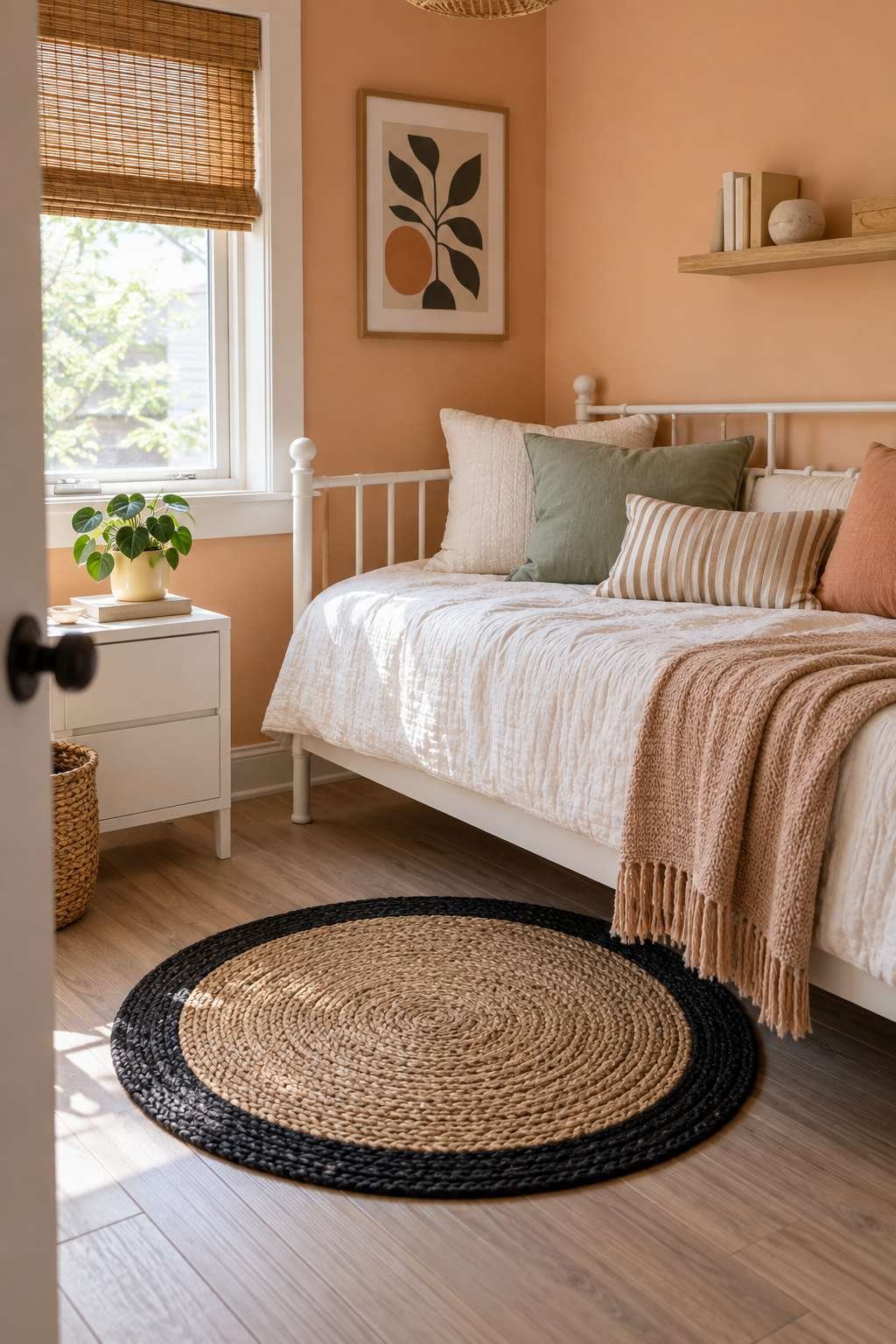
Position the rug so it starts right where the mattress ends, extending outward into the walking area. This placement style is popular in smaller bedrooms where a full under-bed rug isn’t practical.
- Start the rug right where the mattress ends
- Works well in smaller rooms or with a smaller rug
- Center the rug with the bed’s width for visual balance
- Leave enough walking space beyond the rug’s far edge
5. Using Two Runners on Either Side of the Bed
Instead of one large rug, some bedrooms work better with two matching runners placed on either side of the bed. This approach adds a soft landing spot right where feet hit the floor each morning.
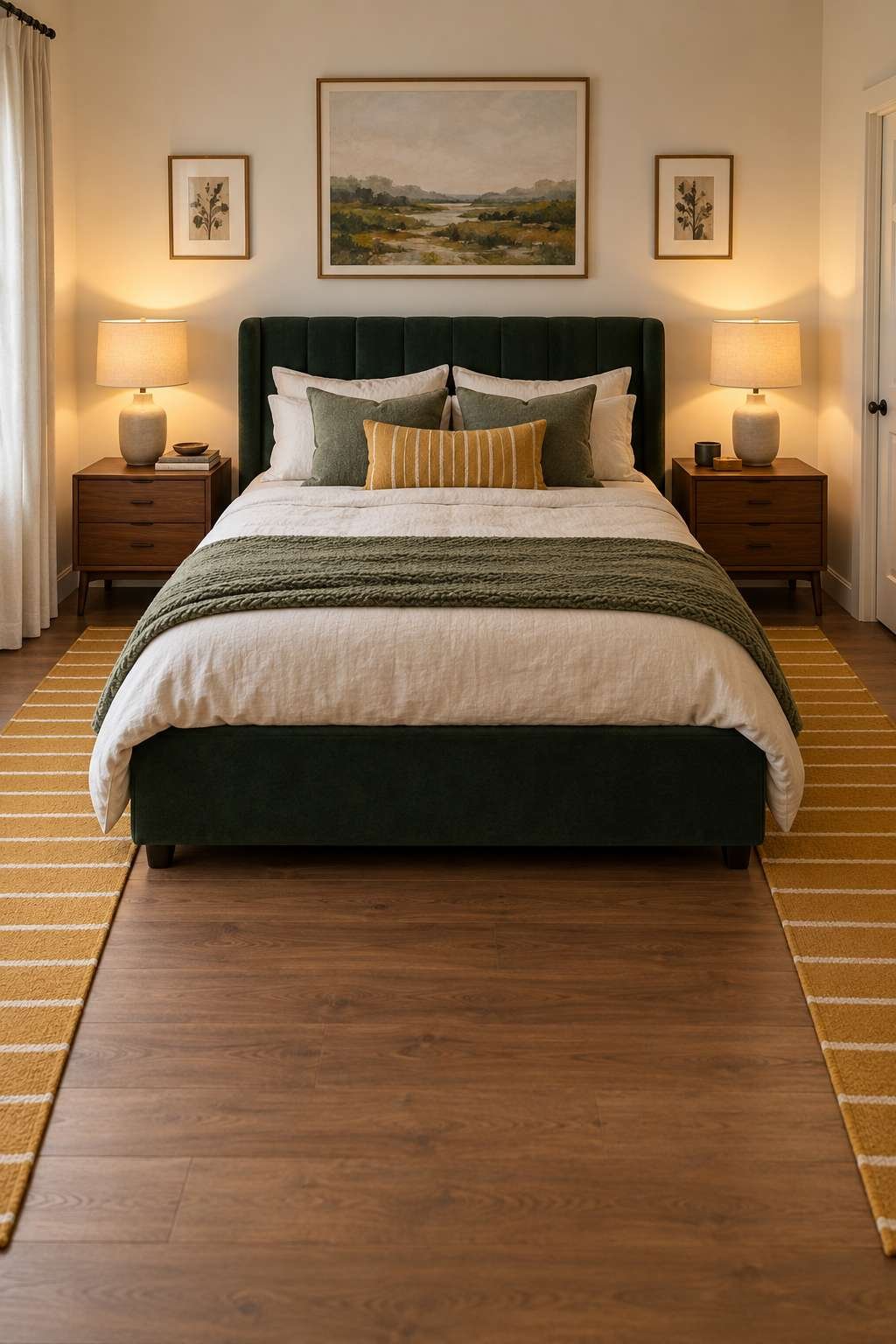
Runners typically extend a few feet beyond the bed’s length, running perpendicular to the bed frame. This layout works particularly well in bedrooms with a centered bed and a nightstand on each side.
- Runners work best with a centered bed and matching nightstands
- Extend runners a few feet beyond the bed’s length
- Keep both runners identical for visual symmetry
- A good option when a single large rug feels too costly
6. Layering Rugs for a Designer Look
Layering a smaller patterned rug over a larger neutral base rug adds texture and visual interest to a bedroom. This designer-favorite technique works especially well in rooms with plain flooring that could use more personality.
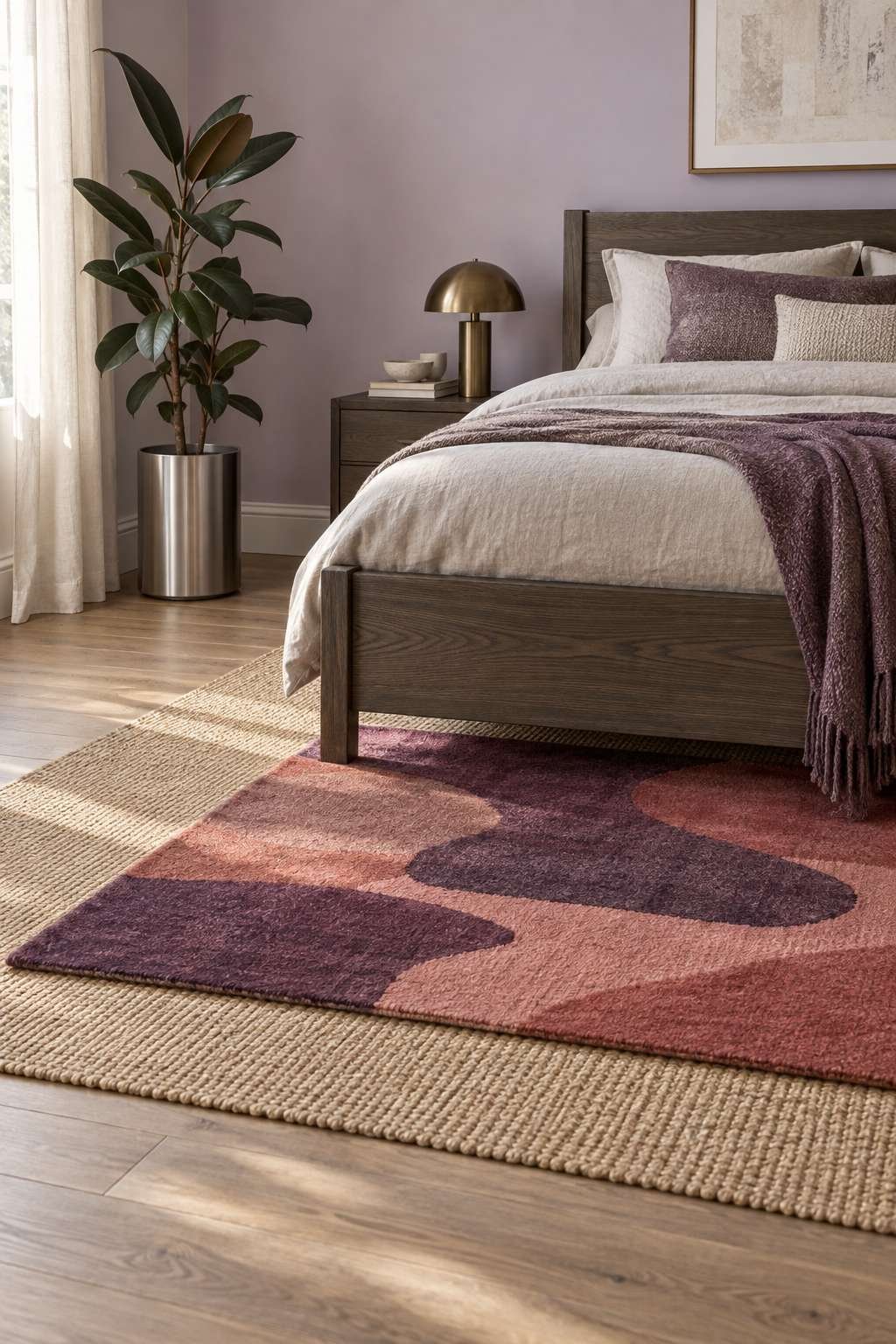
Keep the base rug large enough to extend under the bed as usual, then center the smaller accent rug at the foot or alongside it. Two rugs in similar tones tend to look more intentional than two competing bold patterns layered together.
- Use a neutral, larger rug as the base layer
- Add a smaller patterned rug for texture and interest
- Keep both rugs in a complementary color family
- Center the accent rug rather than placing it off to one side
7. Rug Placement in Small Bedrooms
In a tight bedroom, a full 8×10 rug may not physically fit without covering the entire floor edge to edge. In these cases, a smaller rug placed at the foot of the bed or just on one visible side often works better.
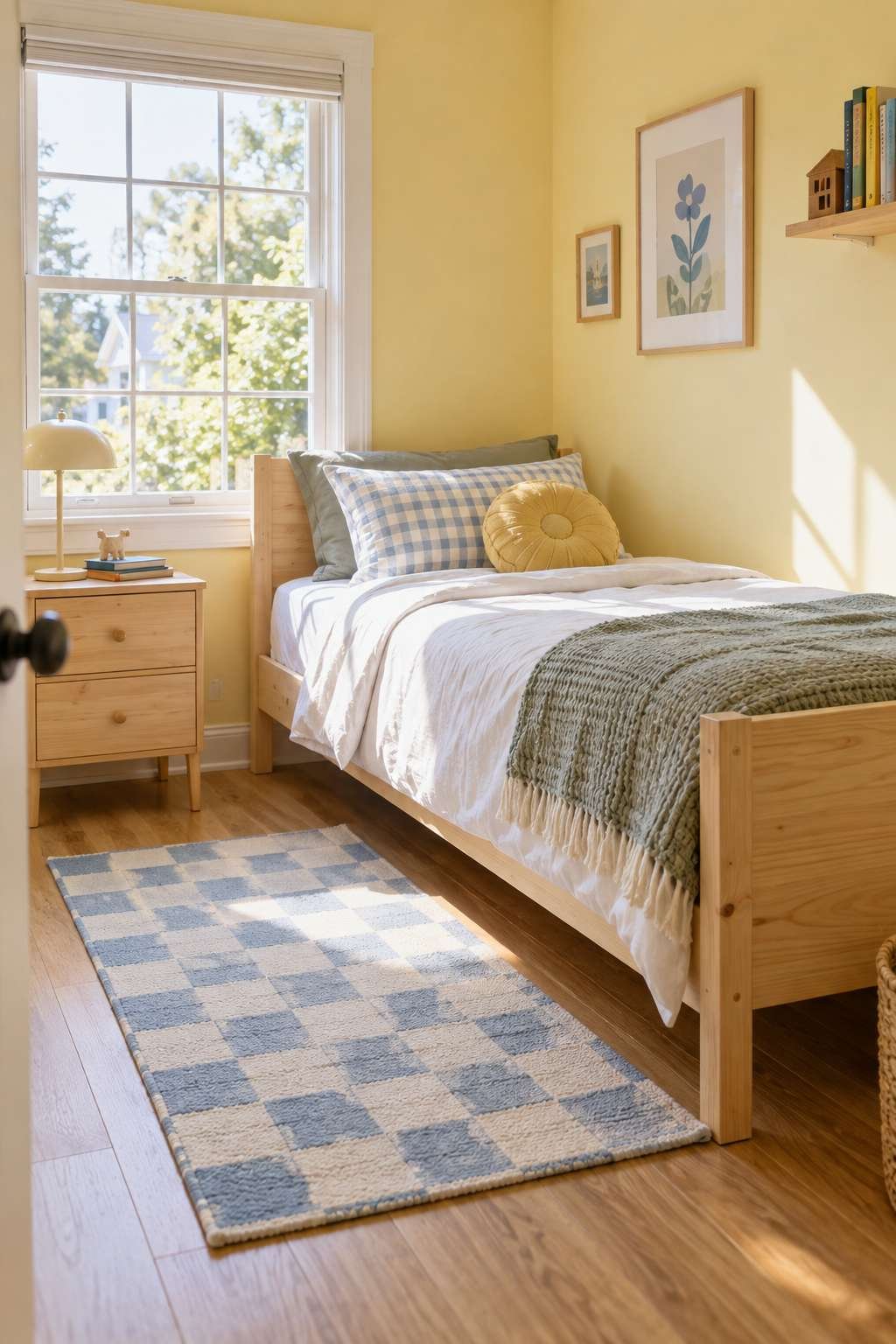
Choosing a lighter-colored rug in a small room can also help the space feel more open rather than visually heavier. Prioritize the areas where feet actually land — getting out of bed or standing at a dresser — over covering the entire floor.
- Full-size rugs may overwhelm very small bedrooms
- Foot-of-bed or single-side placement works well in tight spaces
- Lighter colors help small rooms feel more open
- Prioritize high-traffic spots over full floor coverage
8. Rug Placement with a Bed Frame vs No Frame
A bed with a solid platform frame hides more of the rug underneath than an open frame with visible legs, which changes how much rug exposure actually matters. With platform frames, focus placement decisions on the visible sides and foot area only.
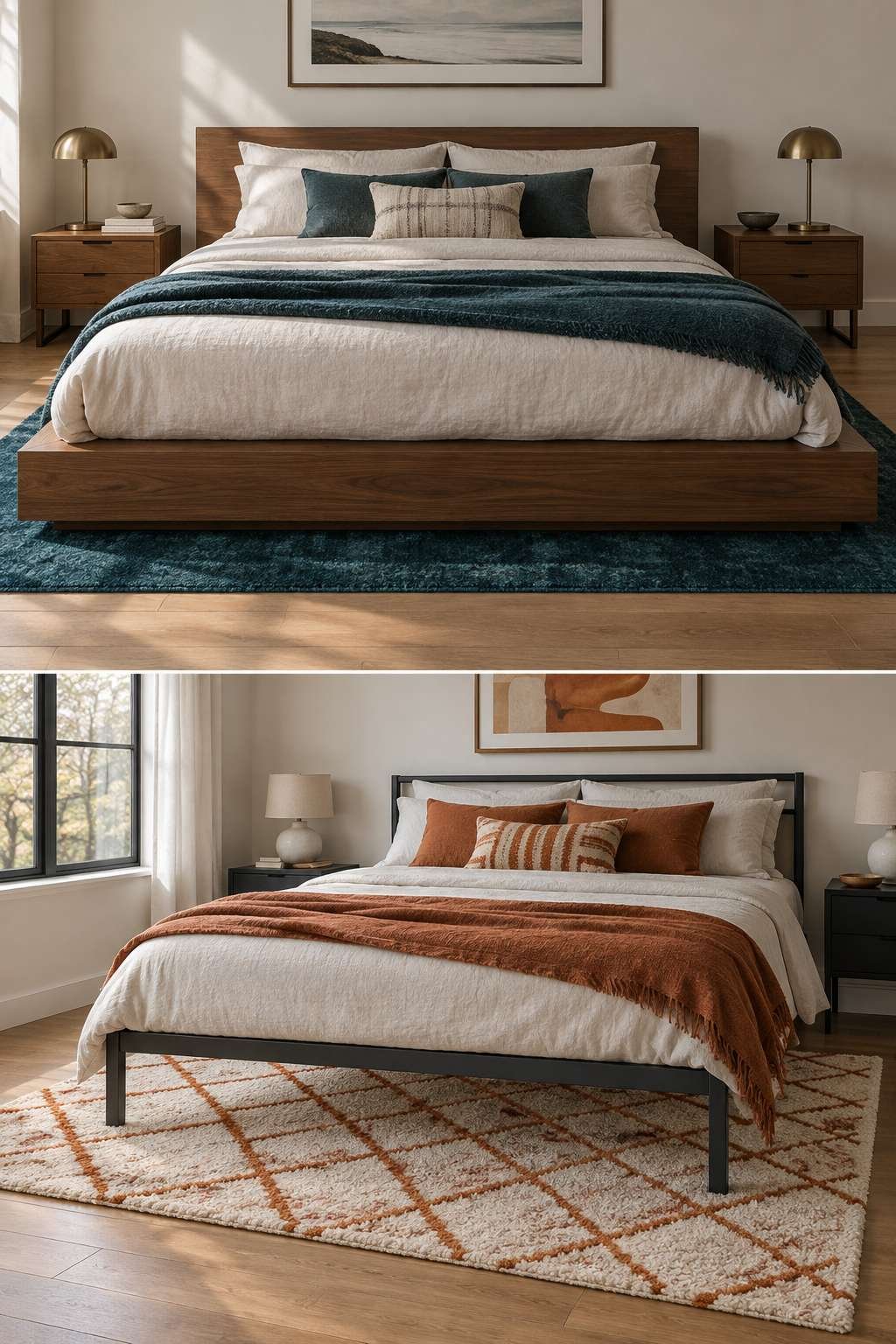
An open frame with visible legs, by contrast, shows more of the rug’s pattern and color underneath the bed itself. In that case, coordinating the rug’s visible portion with the rest of the room becomes slightly more important.
- Platform frames hide most of the rug underneath
- Open frames show more rug detail beneath the bed
- Focus color coordination on visible edges with platform frames
- Consider full rug visibility with open, leggy bed frames
9. Choosing Rug Material and Pile Height for a Bedroom
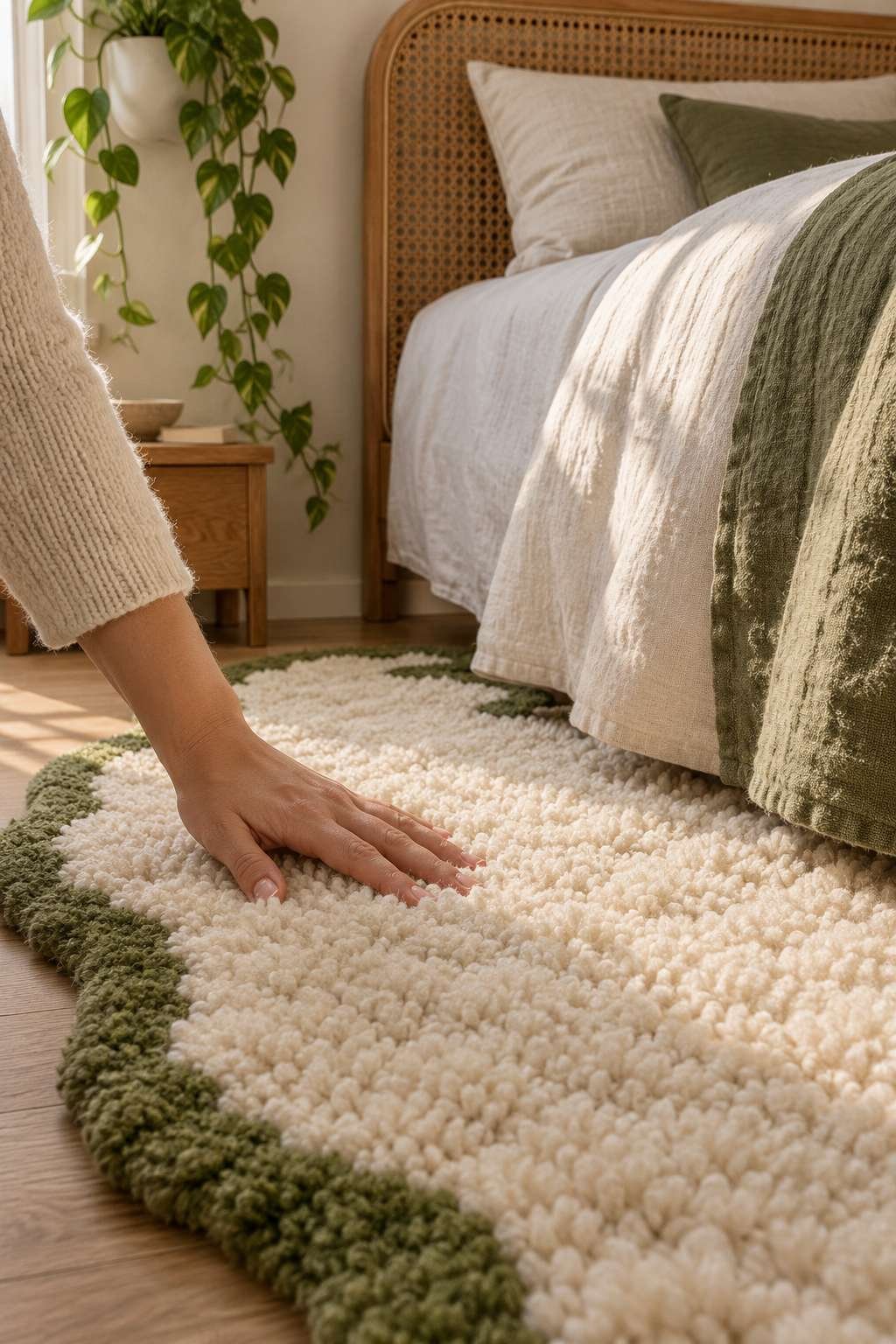
A plush, high-pile rug feels especially comfortable in a bedroom, since bare feet touch it first thing every morning. Wool and wool-blend rugs tend to offer that soft feel while still holding up well over time.
If you’re deciding between a full carpet installation and an area rug for the same room, our guide on how to place carpet in bedroom flooring covers wall-to-wall layout considerations that differ from a standalone rug. Flatweave or low-pile rugs, meanwhile, are easier to clean but offer less plush comfort underfoot.
- Wool and wool-blend rugs offer durable, plush comfort
- High-pile rugs feel best for bare feet in the morning
- Flatweave rugs are easier to clean and vacuum
- Consider allergies when choosing natural vs synthetic fibers
10. Common Rug Placement Mistakes to Avoid
One frequent mistake is choosing a rug too small for the bed size, leaving it looking like an afterthought rather than a deliberate design choice. Always size up when unsure, since a slightly larger rug reads more intentional than a small one.
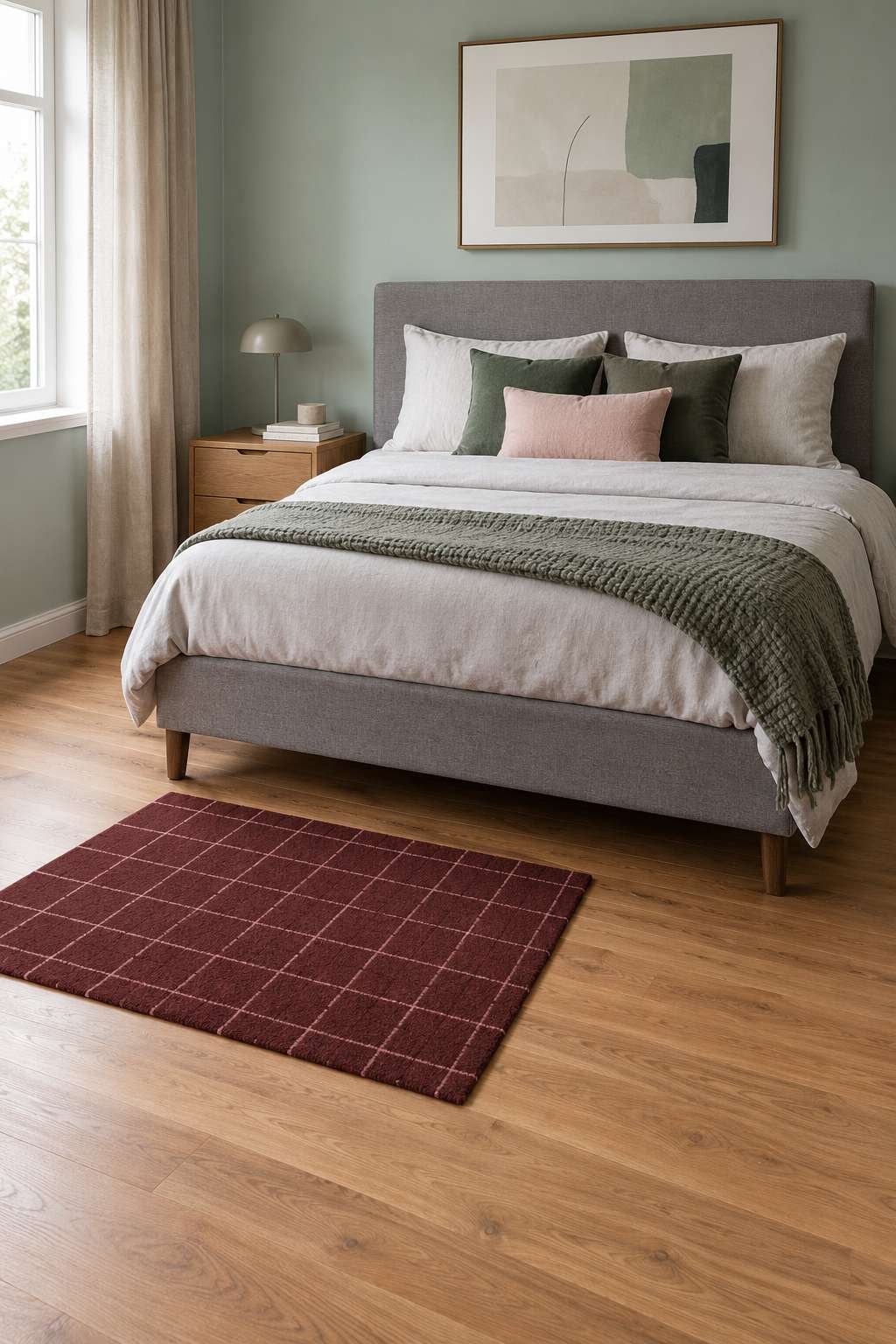
Another common error is placing the rug off-center, creating visible asymmetry that draws the eye in an unflattering way. If you’re weighing whether full carpet might solve these sizing headaches altogether, our guide on how much does it cost to carpet a bedroom breaks down that comparison in detail.
- Avoid rugs that are noticeably too small for the bed
- Keep the rug centered under the bed and furniture grouping
- Don’t stop the rug abruptly right at the bed frame’s edge
- Measure twice before ordering, since rugs are costly to return
Getting how to place a rug in a bedroom right comes down to size, positioning, and matching the layout to your specific bed frame and room dimensions. None of these placement styles are universally “correct” — the best choice depends on your space.
Take a few measurements before committing to a rug, and don’t be afraid to size up if you’re torn between two options. A well-placed rug is one of the simplest changes that makes a bedroom feel finished.

