If you’re standing in your backyard trying to decide between artificial grass and natural grass, you’re not really choosing between “fake” and “real” — you’re choosing between two different maintenance philosophies. Artificial grass front-loads the cost and removes the weekly work; natural grass keeps the upfront price low and asks for a recurring commitment of water, mowing, and patience. Broadly, artificial grass tends to win for drought-prone climates, pet-heavy households, and anyone who wants a low-maintenance yard from day one. Natural grass tends to win for buyers watching the initial budget, homes with a lot of square footage to cover, and neighborhoods where an all-synthetic lawn would look out of place. Here’s the full breakdown, cost by cost and scenario by scenario.
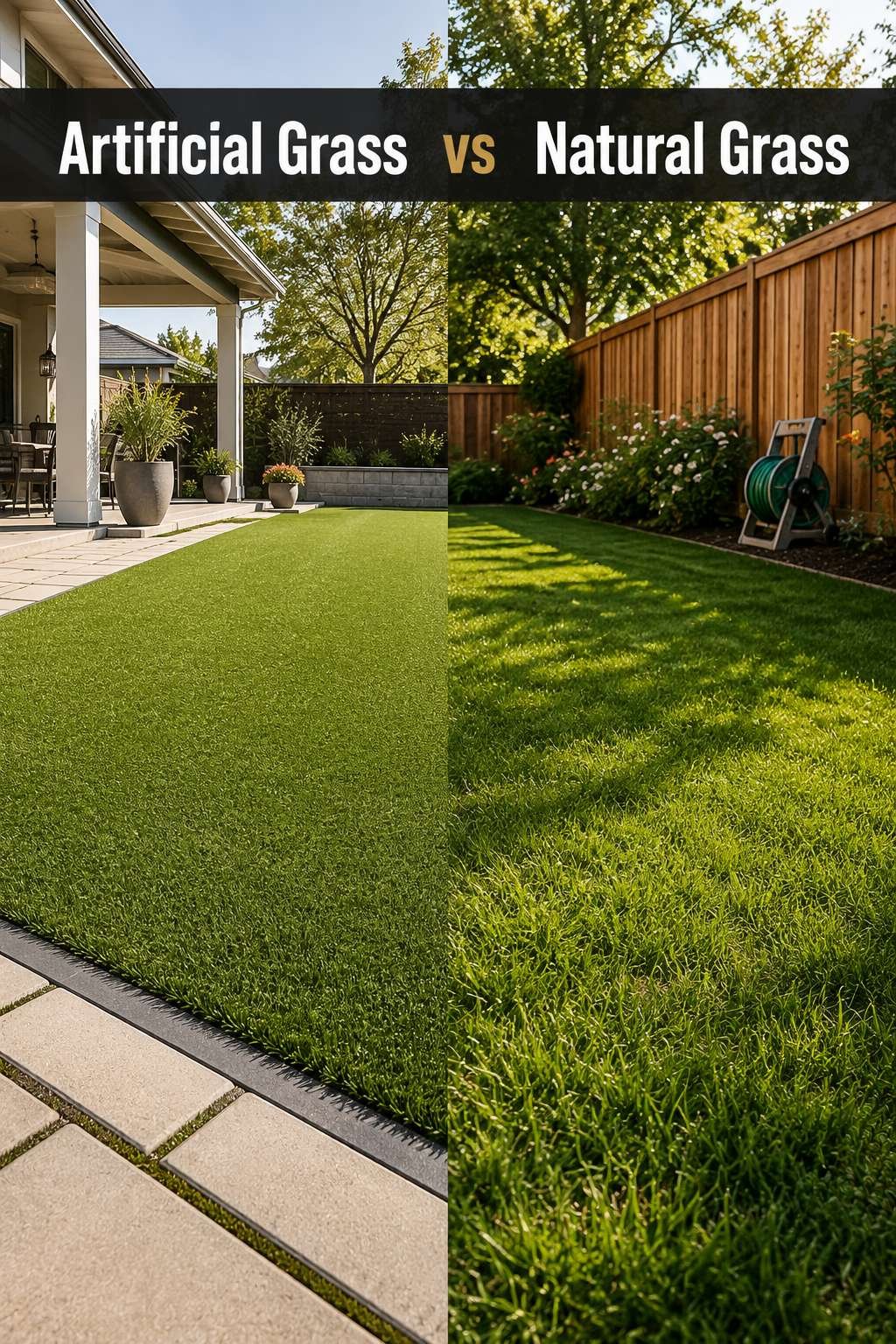
Artificial Grass vs Natural Grass: The Full Comparison Chart
| Criteria | Artificial Grass | Natural Grass |
|---|---|---|
| Upfront Cost | $3–$20+ per sq ft installed | $0.50–$2 (seed) to $1–$2 (sod) per sq ft |
| 10-Year Cost | $3,500–$9,000+ for a 1,500 sq ft yard | $4,000–$12,000+ (water, fertilizer, mowing) |
| Maintenance | Rinse occasionally, brush infill 1–2x per year | Weekly mowing, regular watering and fertilizing |
| Durability & Lifespan | 15–20 years | Indefinite with upkeep; dies back without it |
| Installation Difficulty | Moderate to high (pro-recommended) | Easy to moderate (DIY-friendly) |
| Surface Heat | Can exceed 150°F in direct sun | Stays close to ambient air temperature |
| Pet-Friendliness | High — rinses clean, no mud | Moderate — mud, dig spots, waste cleanup |
| Resale Value | Neutral to slightly negative in grass-typical markets | Neutral to positive in most markets |
| Environmental Impact | Zero water use, but petroleum-based and landfill-bound | High water use, but supports soil ecosystem |
What These Numbers Actually Mean In Your Yard
A $12-per-square-foot turf install on an average 1,500 sq ft yard is an $18,000 project — but it’s also the last major lawn expense you’ll make for close to two decades, with no mower, no fertilizer bill, and no water meter creeping up every July. A natural lawn costs a fraction of that to start, but the $300–$800 a year in water, fertilizer, and equipment adds up, and in a drought-restricted region that number climbs fast. The real question isn’t which option is “cheaper” in isolation — it’s whether you’d rather pay once and stop thinking about it, or pay less now and keep paying, season after season.
Quick Look: Artificial Grass vs Natural Grass at a Glance
Artificial Grass
A synthetic turf lawn that stays green year-round with no mowing, watering, or fertilizing required.
View on Amazon →Natural Grass
A living lawn that costs less upfront but needs regular mowing, watering, and seasonal care to stay healthy.
View on Amazon →Artificial Grass: Where It Wins (and Where It Doesn’t)
Artificial grass is the strongest fit for drought-prone climates, shaded lots where real grass won’t establish, and households with dogs or kids putting heavy daily wear on the yard. It’s also the go-to for rooftop decks and small urban patios where soil depth and sun exposure make a living lawn impractical. Our small patio ideas has more inspiration along these same lines.
Pros
- Looks green year-round regardless of drought, season, or shade
- No mowing, fertilizing, or reseeding, ever
- Handles heavy pet and kid traffic without dying or turning to mud
- Major water savings — useful in drought-restricted regions
- Lasts 15–20 years with only basic upkeep
Cons
- High upfront installation cost, especially professionally installed
- Gets noticeably hot underfoot in direct summer sun
- Petroleum-based material that doesn’t biodegrade, eventually landfill-bound
- Needs occasional rinsing and brushing to manage pet odor
- Some HOAs and neighborhoods restrict or discourage it
Real cost range: $3–$6 per sq ft for budget DIY kits with basic infill, and $12–$20+ per sq ft for a professionally installed, premium turf system with proper base prep and drainage. For an average 1,500 sq ft yard, that’s roughly $4,500–$30,000 depending on quality and labor.
Natural Grass: Where It Wins (and Where It Doesn’t)
Natural grass is the strongest fit for buyers prioritizing a low upfront cost, large lots where a full turf install would be expensive, and neighborhoods where a traditional lawn is the norm and matters for resale. It’s also the better choice for anyone who genuinely enjoys yard work as part of homeownership.
Pros
- Low upfront cost, especially starting from seed
- Cools the surrounding air and stays comfortable underfoot in summer
- Supports soil health, pollinators, and natural drainage
- Feels and smells like a traditional lawn — expected in most resale markets
- Easy to patch, expand, or change over time
Cons
- Needs weekly mowing plus regular watering and fertilizing in season
- Water bills climb fast in hot or drought-prone regions
- Struggles in full shade, heavy foot traffic, or extreme heat
- Can die back, go patchy, or need reseeding after a rough season
- Ongoing mower, fertilizer, seed, and irrigation costs add up over the years
Real cost range: $0.50–$2 per sq ft to seed a lawn from scratch, or $1–$2 per sq ft for sod installed. For an average 1,500 sq ft yard, that’s roughly $750–$3,000 upfront — plus an ongoing $300–$800+ per year in water, fertilizer, and equipment, depending on climate.
Which Option Wins for Your Specific Yard?
Small Urban Backyard / Rooftop
Shaded, small-footprint lots often can’t get real grass to establish. A compact turf install drains well and stays green regardless of light.
Verdict: Artificial grass winsDrought-Prone / Water-Restricted Region
When outdoor water use is capped or costly, a natural lawn becomes an ongoing stress point every summer. Turf needs zero irrigation once installed.
Verdict: Artificial grass winsHigh-Traffic Household With Dogs
Dogs turn worn patches of real grass into mud within a season. Turf with proper drainage holds up to daily use without dying.
Verdict: Artificial grass wins, with regular cleaningRental-Friendly, Low-Maintenance Yard
Renters rarely want to sink money into a semi-permanent turf install, and landlords are unlikely to approve one. A simple, low-cost lawn is more practical.
Verdict: Natural grass winsKids’ Play Area / Allergy-Sensitive Family
Turf skips the pollen that triggers seasonal grass allergies and gives a soft, consistent play surface, though it can run hot in direct sun.
Verdict: Artificial grass wins for allergy relief; add shade for comfortProfessional Tips Before You Decide
- Check your HOA before ordering turf. Some communities restrict or ban synthetic lawns outright — this is the single most common regret shared by turf buyers who skipped this step.
- Test a turf sample in full sun before committing. Surface temperature varies significantly between products, and a cheap sample can run noticeably hotter than a premium one.
- Get a soil test before reseeding a struggling lawn. Often the real problem is soil compaction or pH, not the grass variety — reseeding without fixing the soil just repeats the failure.
- Think about resale before going all-turf in a grass-typical neighborhood. Buyers in most markets still expect a green lawn, and an entirely synthetic yard can read as a red flag to some.
- Consider a hybrid approach — turf in high-wear or shaded zones, natural grass in the rest of the yard — a legitimate middle ground more homeowners are choosing.
Shop the Winner
If you’re leaning toward artificial grass, here’s what to get started with:
Best Overall
A mid-weight, realistic-blade turf roll with built-in drainage backing and antimicrobial infill — the safest pick for most yards and traffic levels.
Best Budget
A basic short-pile turf roll for DIY installers covering a small patio or side yard, without the cost of a professional-grade product.
Best Premium
A dense, dual-tone blade turf with cooling infill technology, built for high-traffic households and hot climates that want the most realistic look.
If you’re leaning toward natural grass, here’s what to get started with:
Best Overall
A regionally-suited grass seed blend paired with a starter fertilizer — the most reliable combo for establishing a healthy lawn from scratch.
Best Budget
A basic all-purpose grass seed bag and spreader, ideal for patching bare spots or overseeding an existing lawn without a big spend.
Best Premium
Pre-cut sod paired with a soil conditioner, for a lawn that looks established within days instead of the weeks seed takes to fill in.
Frequently Asked Questions
Is artificial grass cheaper than natural grass in the long run?
Not usually. Artificial grass costs far more upfront ($3–$20+ per sq ft installed vs $0.50–$2 per sq ft for natural grass), and it typically only breaks even with natural grass’s ongoing water, mowing, and fertilizer costs after 8–15 years, depending on your climate and water prices.
How long does artificial turf actually last?
A quality artificial turf installation typically lasts 15–20 years before the blades noticeably fade or flatten, though heavy daily use (like a large dog run) can shorten that lifespan.
Does artificial grass get too hot to walk on barefoot?
Yes, it can. In direct summer sun, artificial turf surface temperatures can exceed 150°F, noticeably hotter than natural grass, which stays close to ambient air temperature. Lighter-colored or cooling-infill turf products reduce this but don’t eliminate it.
Will artificial grass smell if I have dogs?
It can if it isn’t rinsed and brushed regularly. Turf with a proper drainage backing and occasional hosing down manages pet waste odor well; turf without good drainage or regular cleaning will hold onto smell over time.
Can you install artificial grass over dirt, or do you need a base?
You need a proper base — typically a compacted crushed-stone base with a weed barrier underneath — for turf to drain well and stay flat. Installing directly over dirt leads to drainage problems, uneven settling, and a shorter lifespan.
How much does it cost to install natural grass — sod vs seed?
Seed runs about $0.50–$2 per sq ft and takes weeks to establish; sod runs about $1–$2 per sq ft installed and gives you a usable lawn within days, at a higher upfront cost than seed.
How much water does a natural lawn actually use per month?
A typical lawn needs about 1–1.5 inches of water per week during the growing season, which can add up to thousands of gallons a month for an average yard — a major factor in regions with water restrictions or high water costs.
Does artificial grass hurt my home’s resale value?
It depends on the market. In markets where synthetic lawns are common (drought-prone regions), it’s often neutral or even a selling point. In grass-typical neighborhoods, some buyers view an all-turf yard as a downside, so it can be neutral to slightly negative there.
Is artificial grass bad for the environment?
It has trade-offs. It eliminates water use and pesticide/fertilizer runoff, but it’s petroleum-based, doesn’t biodegrade, and eventually ends up in a landfill after 15–20 years — unlike natural grass, which supports soil health and pollinators while it’s growing.
Can artificial grass be recycled when it wears out?
Some specialized recycling programs exist for artificial turf, but they’re not widely available yet in most areas, so most old turf currently ends up in landfills. Ask your installer whether a take-back or recycling option is available in your area before you commit.
How do I clean artificial grass if my dog uses it as a bathroom?
Rinse solid waste away promptly, then hose down the area regularly with water (or a diluted enzyme cleaner for odor buildup) to flush waste through the drainage backing. Routine rinsing, not deep cleaning, is what actually keeps turf odor-free.
Do I need to mow or fertilize artificial grass at all?
No — that’s the main appeal. Artificial grass needs occasional rinsing, brushing to keep blades upright, and infill top-ups every few years, but no mowing, fertilizing, or watering.
Will natural grass grow in full shade?
Most standard grass varieties struggle in full shade and thin out over time. Shade-tolerant seed blends help, but a heavily shaded yard is one of the strongest cases for choosing artificial turf instead.
How often should I mow natural grass in summer?
Most lawns need mowing every 5–7 days during peak summer growth, though this varies by grass type and how much rain or irrigation the lawn gets.
Is artificial grass safe for kids to play on?
Yes, quality turf with a cushioned underlay is a soft, consistent play surface and avoids allergy triggers like grass pollen — the main safety consideration is checking surface temperature on hot, sunny days.
Does my HOA allow artificial grass?
It varies widely by community — many HOAs allow it, but some restrict or ban it outright, and rules can also depend on visibility from the street. Always check your HOA’s covenant or ask directly before ordering turf.
What’s the average lifespan of a natural grass lawn before it needs reseeding?
A well-maintained lawn can last indefinitely with normal upkeep, but most lawns need partial reseeding or overseeding every 3–5 years to fill in thinning or bare patches from wear, drought, or disease.
Can I install artificial grass myself, or do I need a professional?
Small areas (a patio strip or side yard) are reasonably DIY-friendly with the right base prep. Larger yards, slopes, or drainage-sensitive sites are usually worth hiring a professional for, since poor base prep is the most common cause of turf problems later.
Does artificial grass attract or repel bugs?
Artificial grass doesn’t attract insects that feed on living grass, but it doesn’t repel bugs either — ants, spiders, and other insects can still nest underneath it if the base and drainage aren’t properly installed.
Which option is better for a drought-prone or water-restricted area?
Artificial grass is generally the better fit — it needs zero irrigation once installed, which matters most in regions with water restrictions, rising water costs, or extended drought conditions.
The Verdict
So which one actually wins? If you’re dealing with drought restrictions, heavy pet traffic, deep shade, or you just don’t want a weekend chore list, artificial grass is worth the higher upfront cost. If you’re working with a tighter budget, a large yard, or you’re in a neighborhood where a traditional lawn is the norm — and you don’t mind the mowing — natural grass is still the smarter, cheaper long-term choice. Neither option is universally “better.” The right one depends on your climate, your yard size, and how much of your weekend you’re willing to spend on lawn care.