A cluttered room creates a cluttered mind. When belongings pile up without a system, even a beautiful space feels chaotic. Learning how to organize your room starts with simple habits and smart storage solutions.
The goal is not perfection. It is about creating a space that functions well and feels calm. Whether you are tackling a bedroom, home office, or living area, these practical strategies help you declutter and maintain order without feeling overwhelmed.
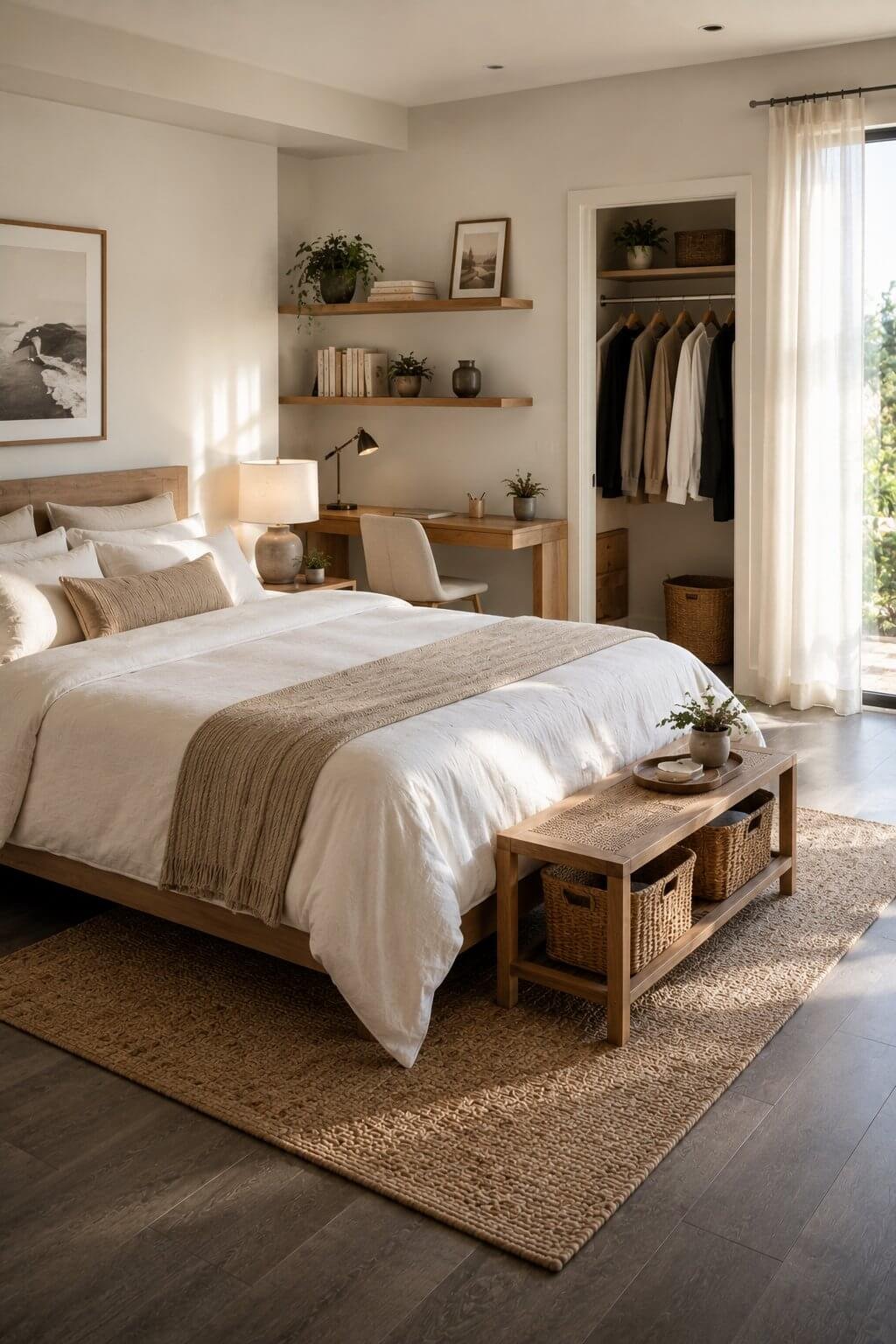
1. Start by Decluttering Everything
Organization begins with owning less. Go through every item in your room and ask one question. Does this serve a purpose or bring joy? If the answer is no, it is time to let it go.
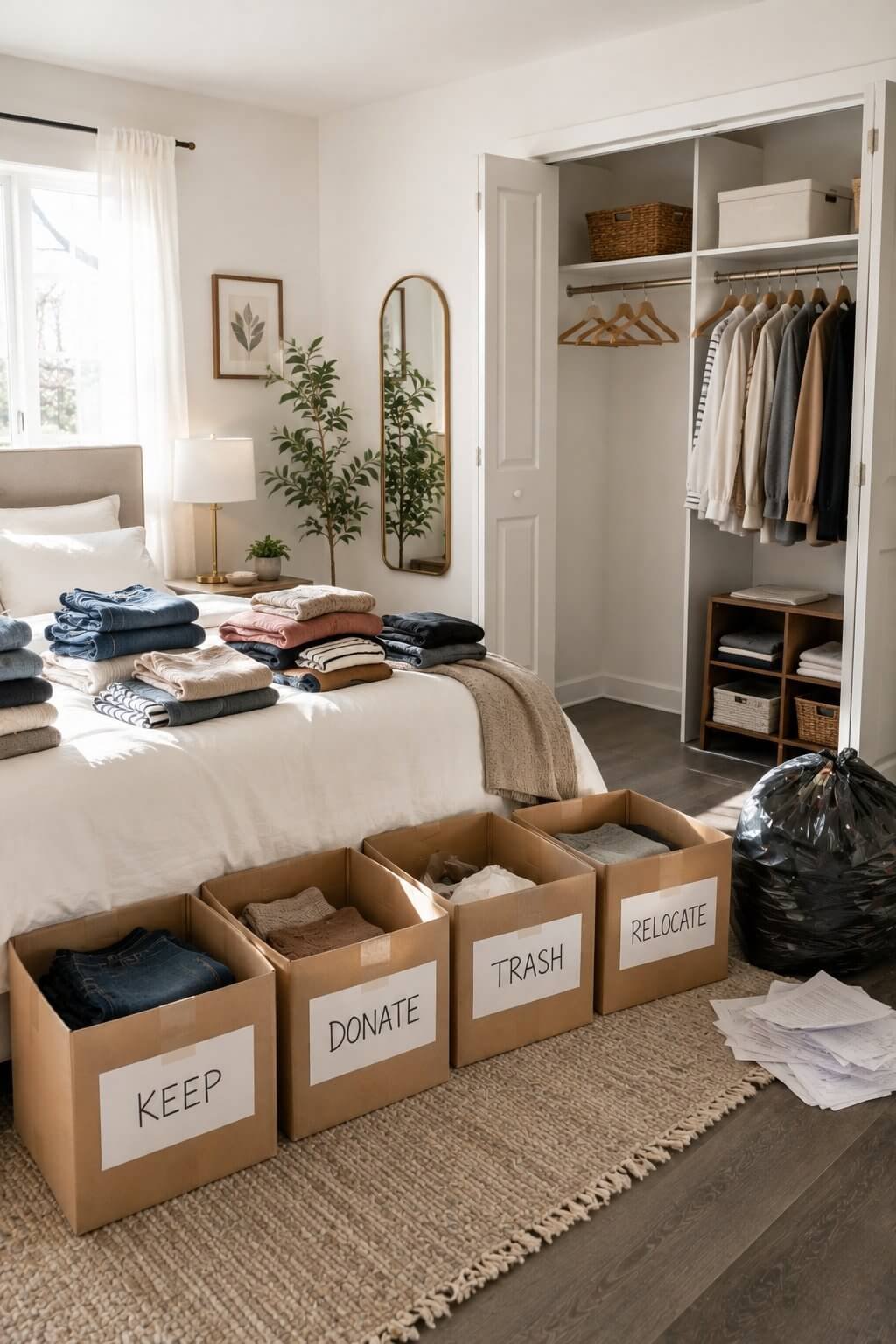
Sort items into four categories: keep, donate, trash, and relocate. Work through one area at a time rather than dumping everything at once. Tackling your closet first often creates the most visible progress and builds momentum for the rest.
- Remove items you have not used in the past year
- Donate clothes that no longer fit or suit your style
- Toss broken items, expired products, and old paperwork
- Relocate items that belong in other rooms
- Avoid the “maybe” pile — decide now
2. Assign a Home for Every Item
Clutter happens when things have no designated spot. After decluttering, give every remaining item a specific place. Your keys go in the tray by the door. Chargers stay in the nightstand drawer. Books return to the shelf.
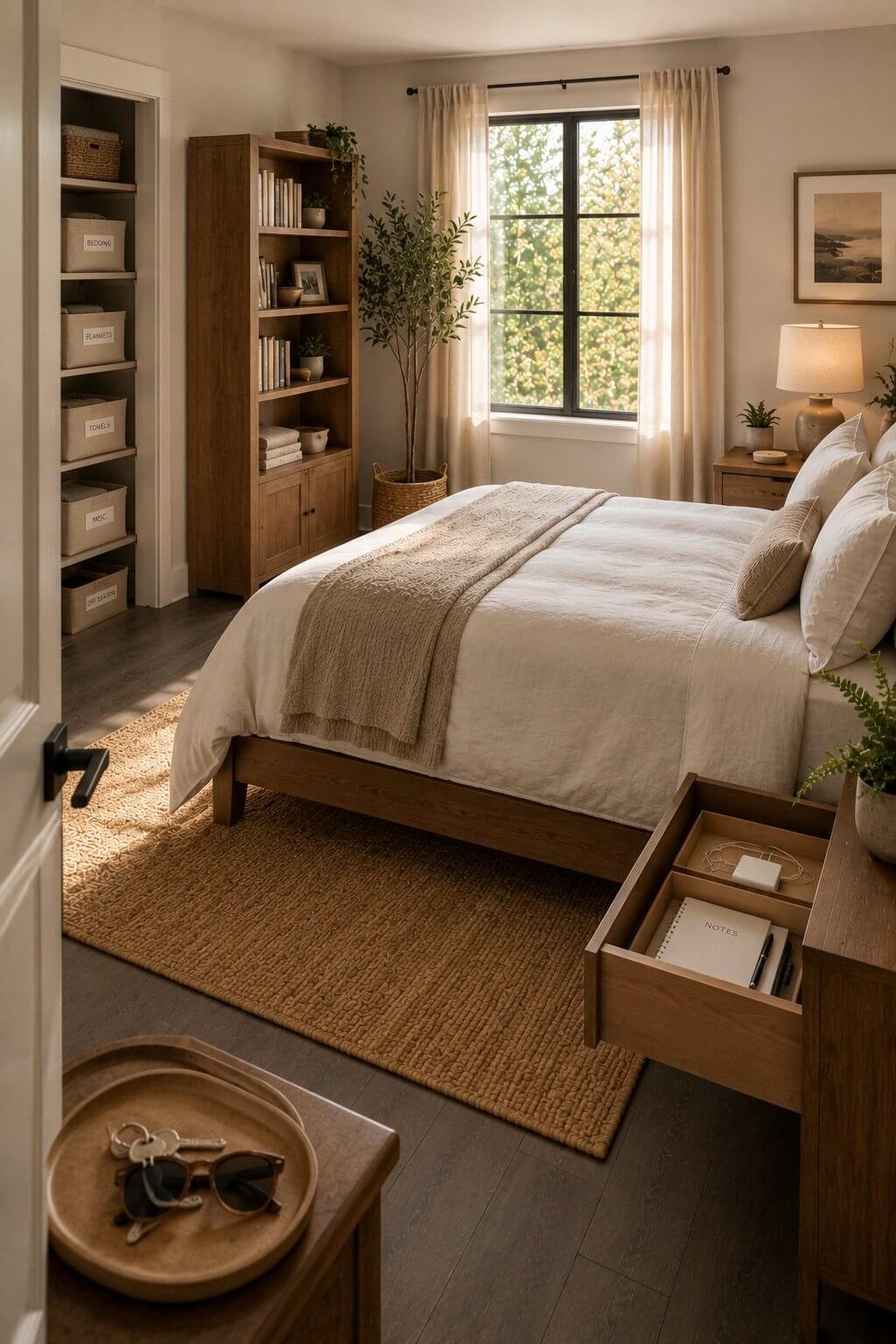
This simple rule makes tidying effortless. When everything has a home, cleaning up takes minutes instead of hours. Label bins and drawers if needed to reinforce the habit.
- Designate zones for different categories of items
- Use drawer dividers for small accessories and supplies
- Keep daily essentials within arm’s reach of where you use them
- Store seasonal items in labeled bins under the bed or on high shelves
3. Maximize Vertical and Hidden Storage
Floor space is limited. The key to a well-organized room is using vertical space effectively. Wall-mounted shelves, over-door organizers, and tall bookcases store more without crowding the room.
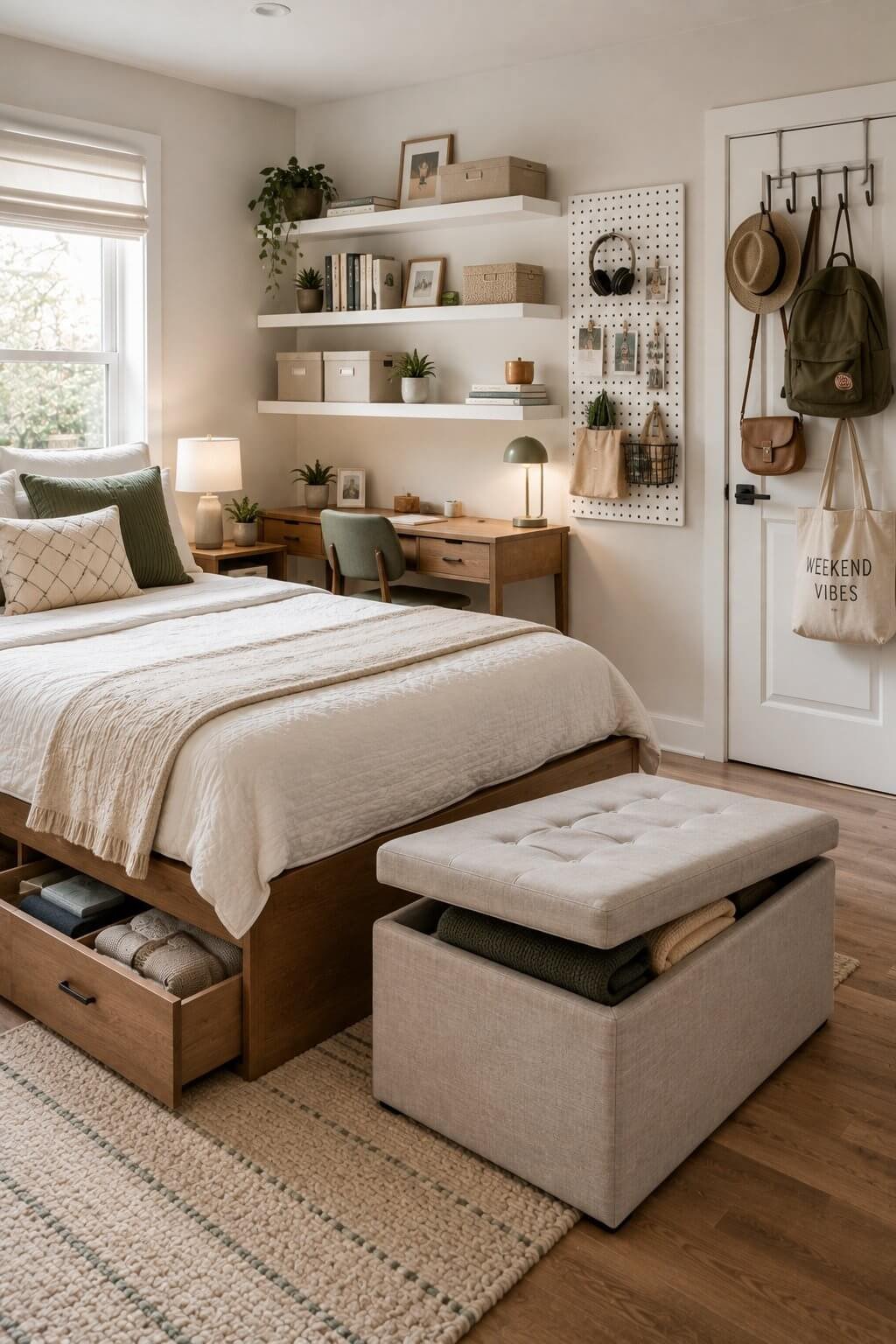
Hidden storage is equally powerful. Storage ottomans, bed frames with drawers, and furniture with built-in compartments keep belongings out of sight. A tidy surface instantly makes a room feel larger and calmer.
- Install floating shelves above desks or dressers
- Use over-door hooks for bags, hats, and accessories
- Choose furniture with built-in storage like lift-top tables
- Stack decorative boxes on shelves for concealed organization
- Add a pegboard to walls for flexible and visible storage
4. Organize Your Closet Strategically
The closet is often the biggest source of bedroom clutter. A well-organized closet changes how the entire room feels. Start by grouping clothing by type and color for easy access.
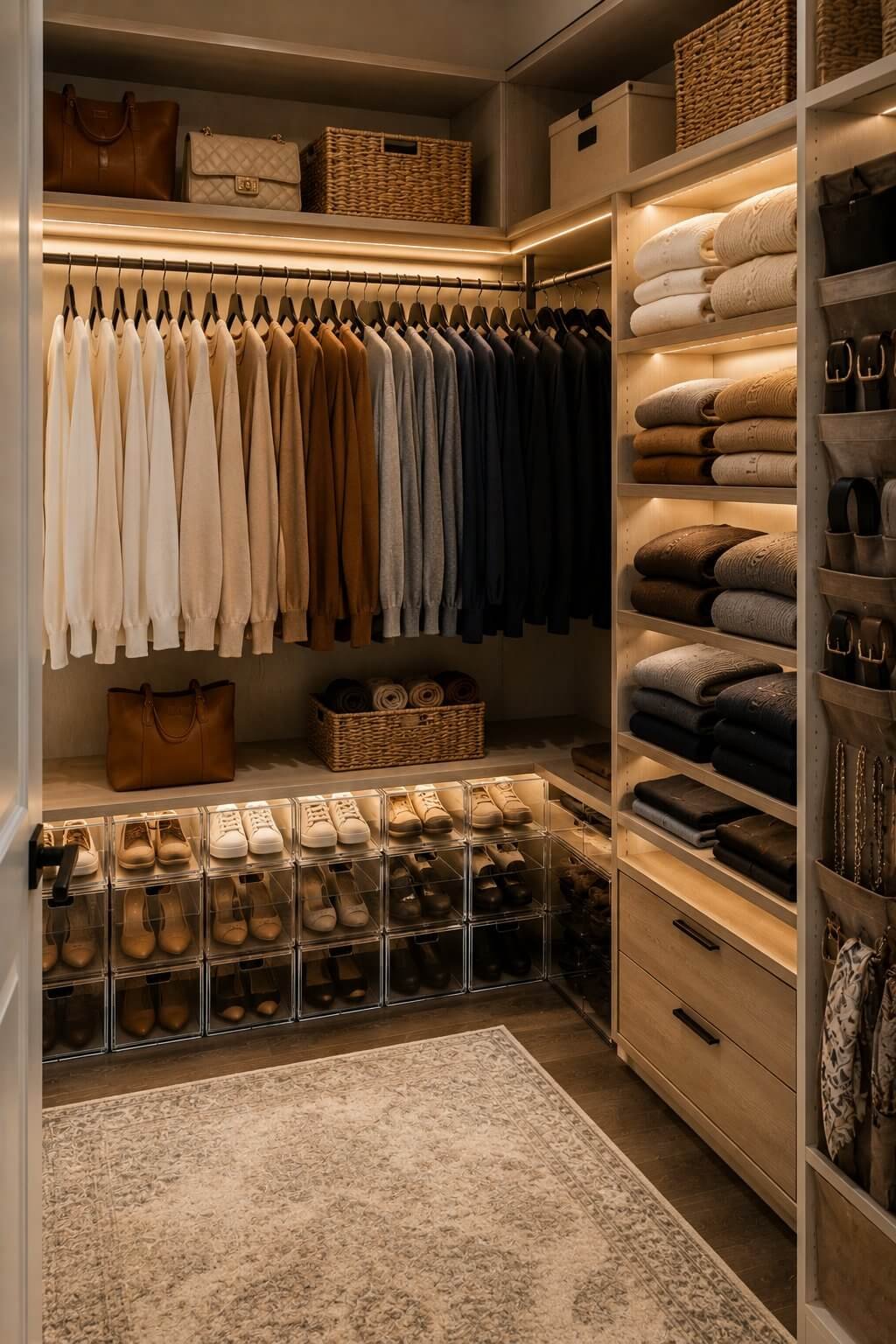
Invest in slim velvet hangers to save space and prevent clothes from slipping. Use shelf dividers for folded items and clear bins for accessories. Keep your most-worn pieces at eye level and store off-season clothing higher up.
- Group items by category: tops, bottoms, dresses, outerwear
- Fold knitwear instead of hanging to prevent stretching
- Use clear shoe boxes or a hanging organizer for footwear
- Add a small basket for accessories like scarves and belts
5. Build a Daily Maintenance Routine
Organizing once means nothing without daily maintenance. The best systems fall apart without consistent habits. Spend just five to ten minutes each evening resetting your room.
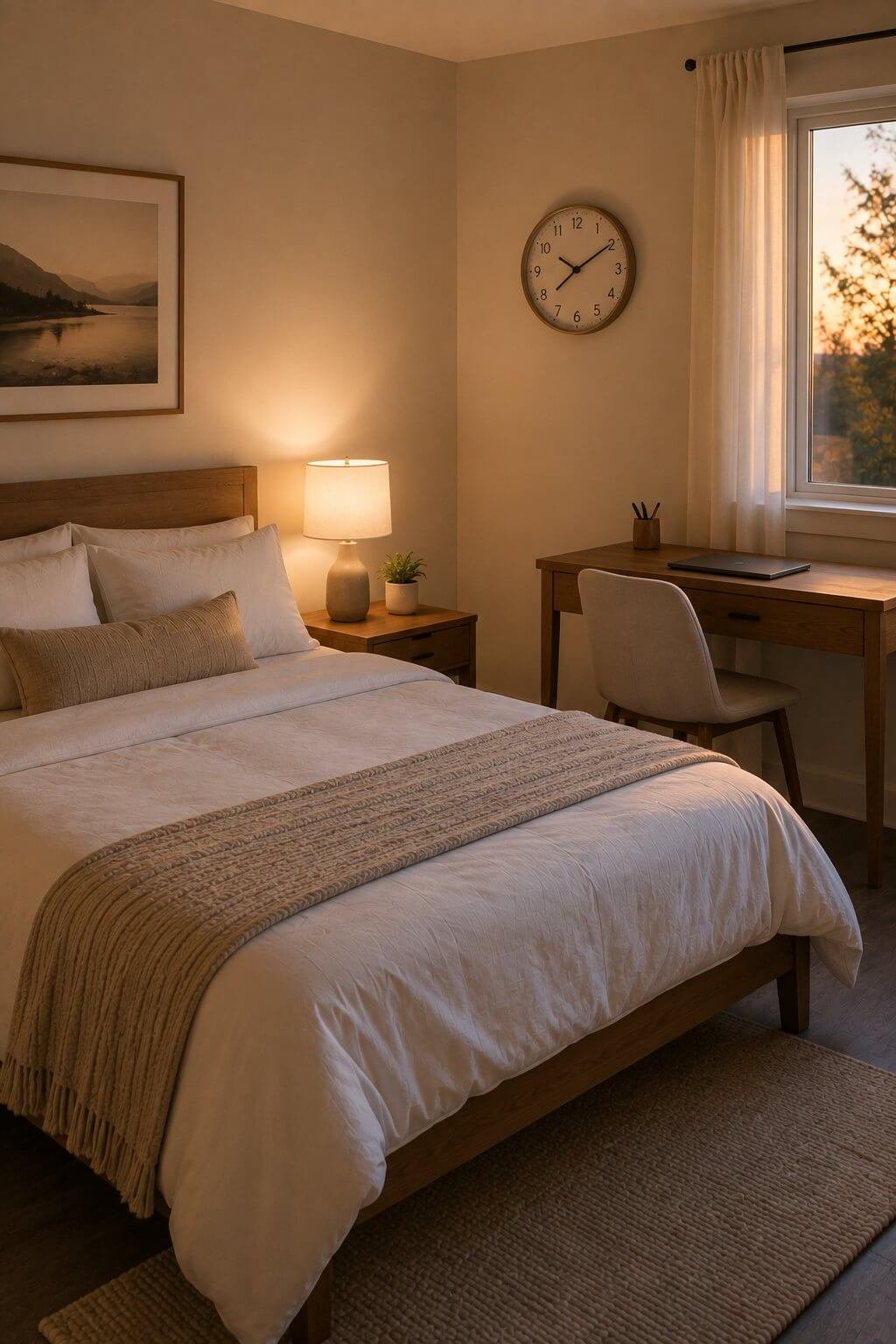
Make your bed every morning. Return items to their homes before sleeping. Do a quick surface sweep of desks, nightstands, and countertops daily. Small consistent efforts prevent clutter from ever building up again.
- Make your bed immediately after waking up
- Put away clothes instead of draping them on chairs
- Clear your desk at the end of each workday
- Do a weekly fifteen-minute deep tidy for drawers and shelves
- Follow the one-in-one-out rule for new purchases
Conclusion
Organizing your room is not about having less. It is about making space for what truly matters. By decluttering first, assigning homes for your belongings, and using smart storage solutions, you create a room that stays tidy naturally.
Start small and stay consistent. A few intentional changes today lead to a calmer and more functional space tomorrow. Your room should work for you, not against you.