


Small bathrooms present unique design challenges that require creative solutions. Limited square footage demands careful planning and strategic choices. Yet these compact spaces can become highly functional and beautiful retreats.
The key to successful tiny bathroom design lies in maximizing every inch. Smart storage solutions and space-saving fixtures transform cramped quarters into efficient sanctuaries. The designs featured here demonstrate innovative approaches to small bathroom planning.
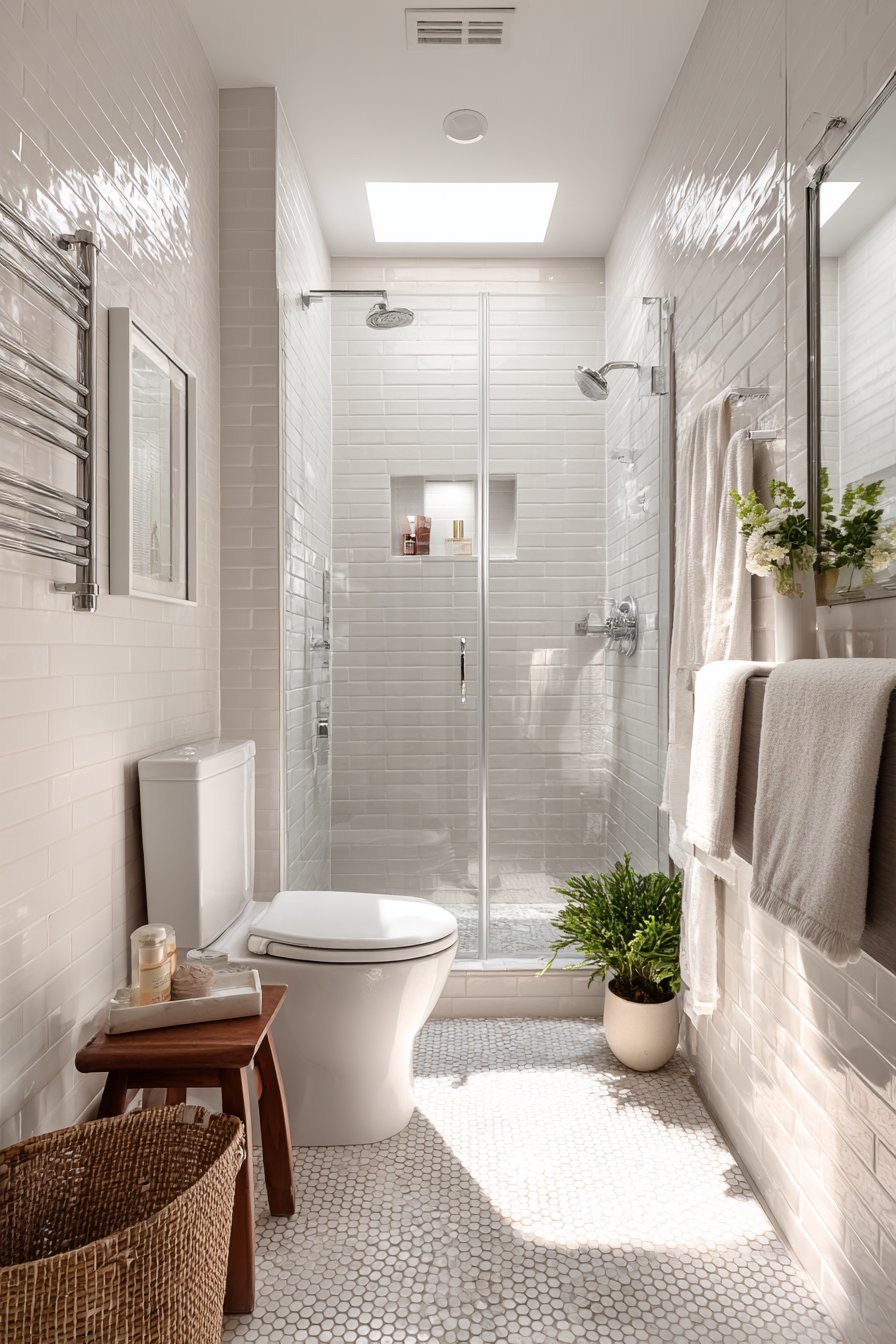
These thirty concepts showcase diverse strategies for tiny bathrooms. From corner-mounted fixtures to wet room layouts, each design offers practical inspiration. Whether renovating or building new, these ideas prove that small bathrooms can deliver big impact.
1. Corner Sink Space Maximization
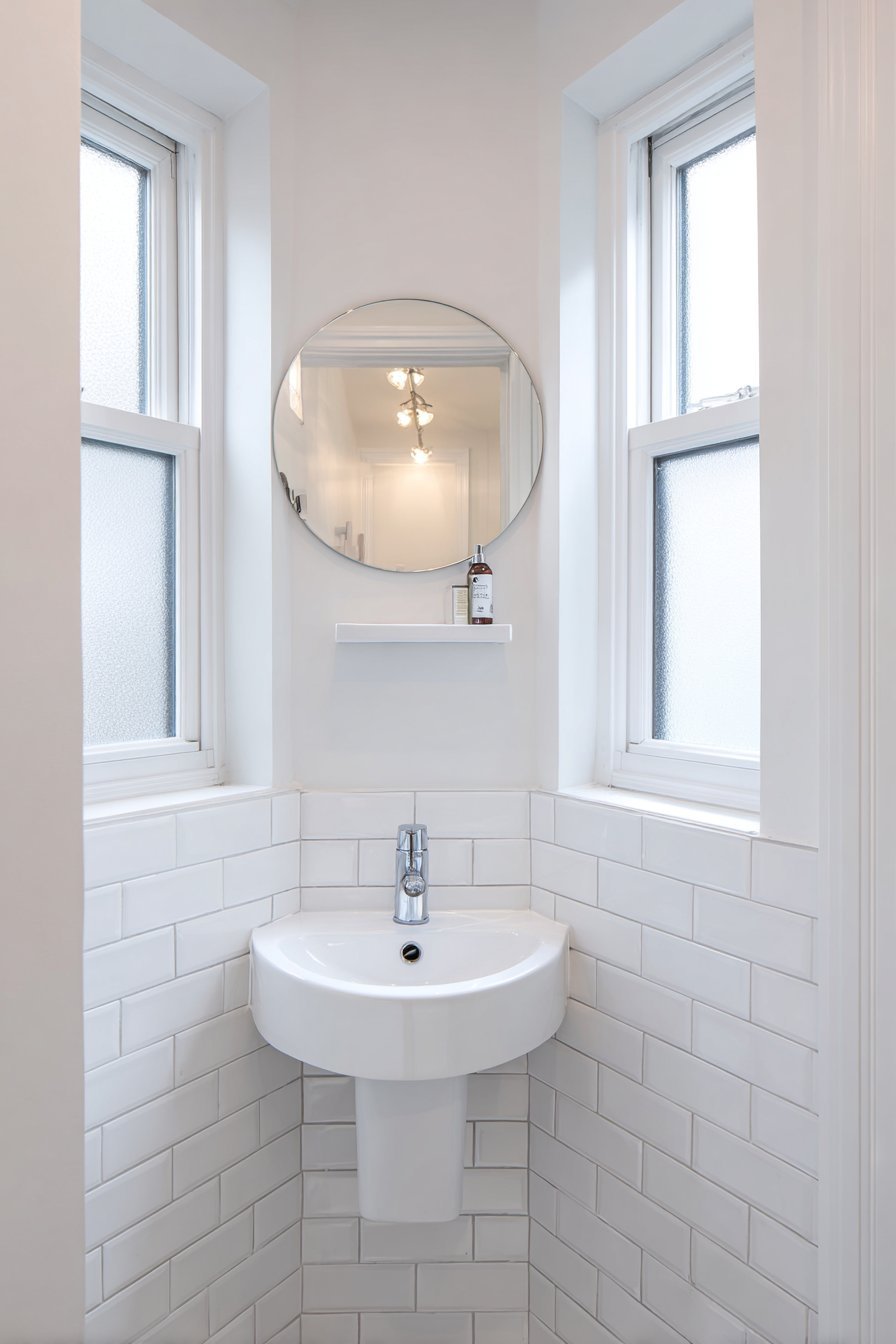
A wall-mounted corner sink revolutionizes tiny bathroom functionality. The slim profile ceramic fixture features chrome hardware that gleams softly. Positioned strategically in the corner, it liberates precious floor space. Light grey subway tiles extend across the walls in continuous patterns.
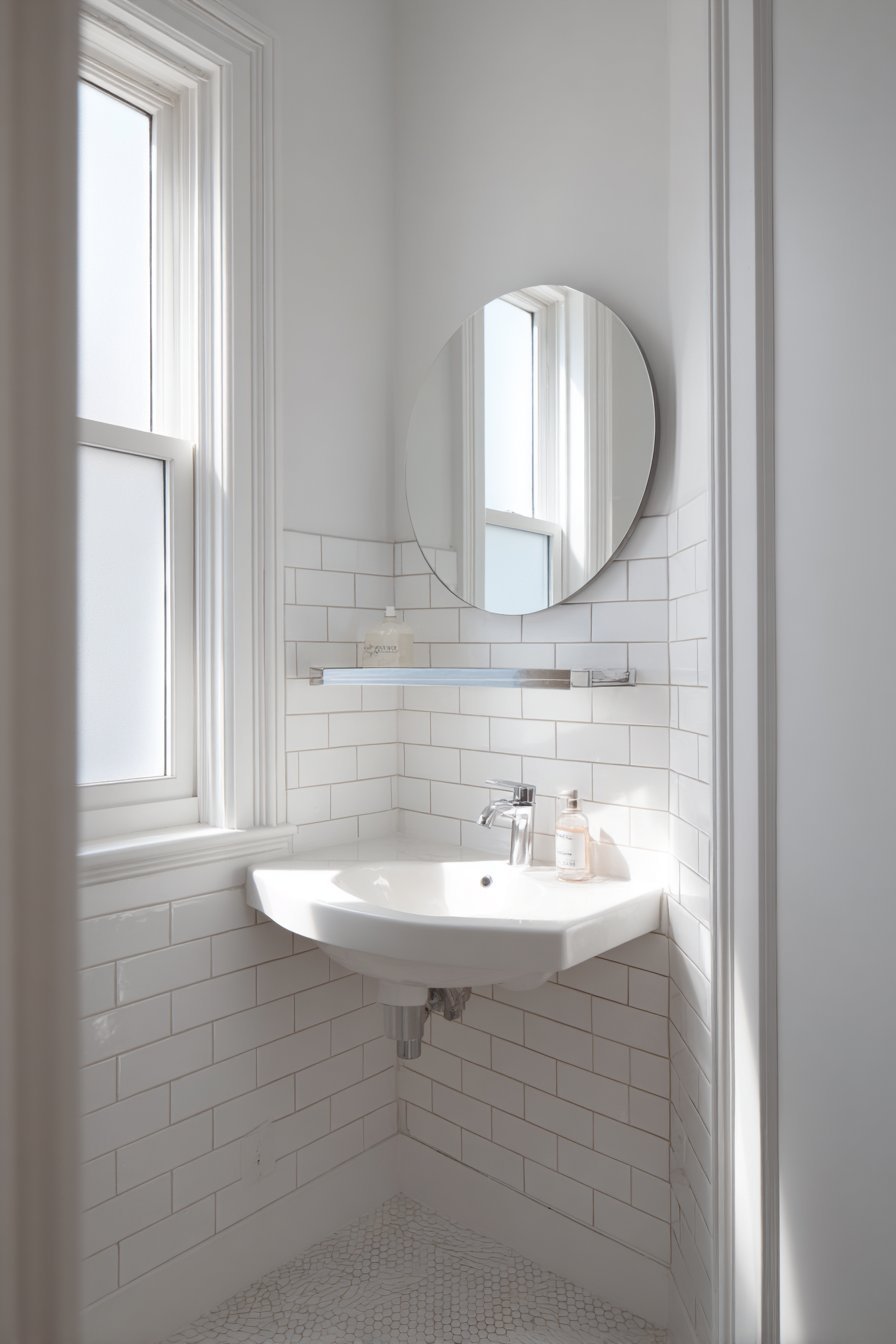
The visual continuity created by consistent tiling makes boundaries disappear. A frameless round mirror captures and reflects natural light beautifully. The small frosted window provides privacy while admitting soft daylight. A floating shelf beneath the sink holds essential toiletries in organized simplicity.
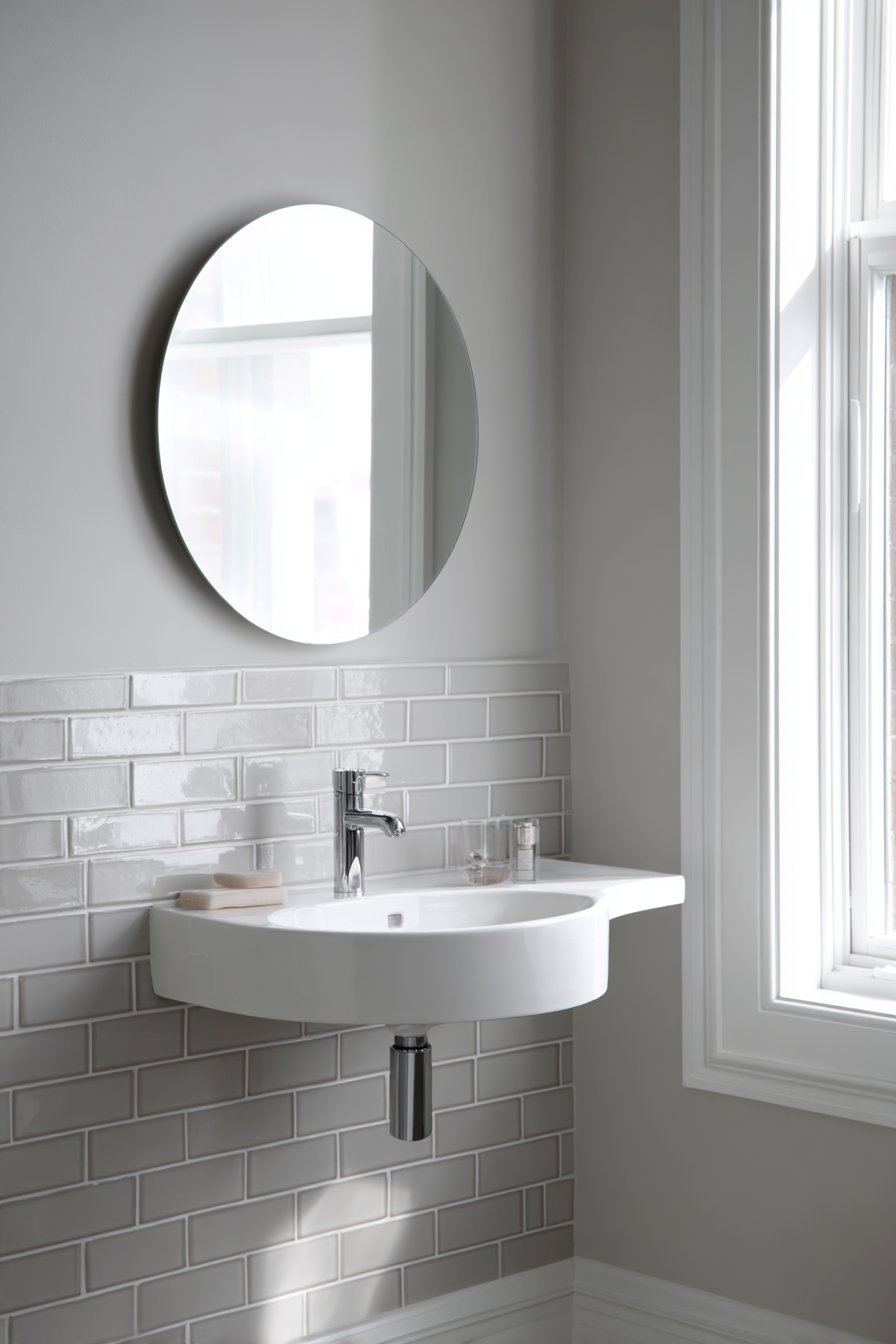
Every element serves multiple purposes in this efficient design. The corner placement eliminates wasted space that traditional sinks create. Chrome fixtures add touches of sophistication without overwhelming the compact room. The subway tile pattern guides eyes upward, enhancing perceived height.
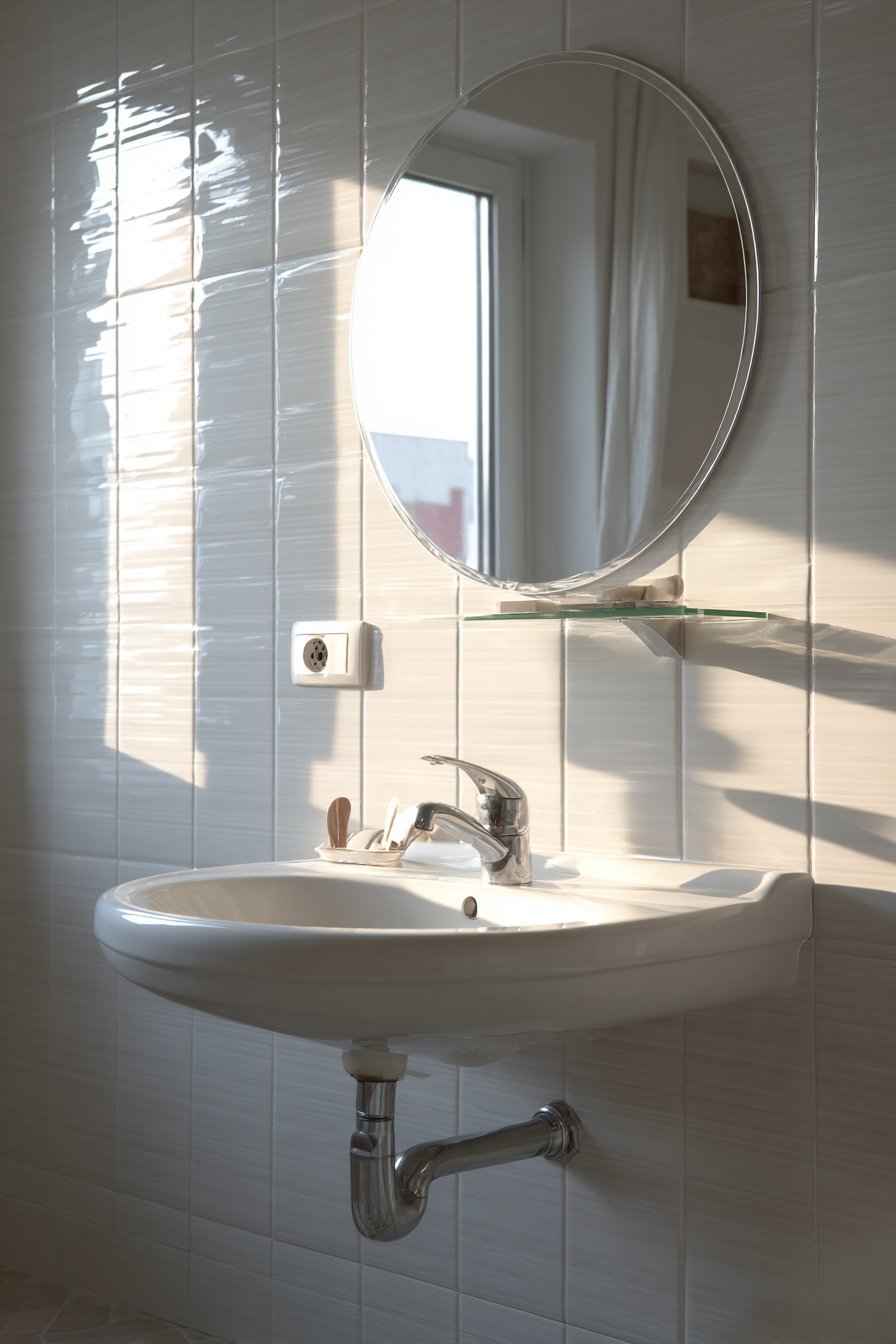
Natural light plays a crucial role in expanding spatial perception. The frosted window diffuses harsh sunlight into gentle illumination. Reflective surfaces multiply this light throughout the small space. Clean lines and minimal accessories maintain an uncluttered atmosphere.
Key Design Tips:
- Install wall-mounted corner sinks to maximize floor visibility
- Use light-colored subway tiles to create visual continuity
- Position mirrors to reflect natural light sources
- Add floating shelves for storage without bulk
- Choose chrome fixtures for timeless appeal
- Keep accessories minimal to avoid visual clutter
2. Pocket Door Space Liberation
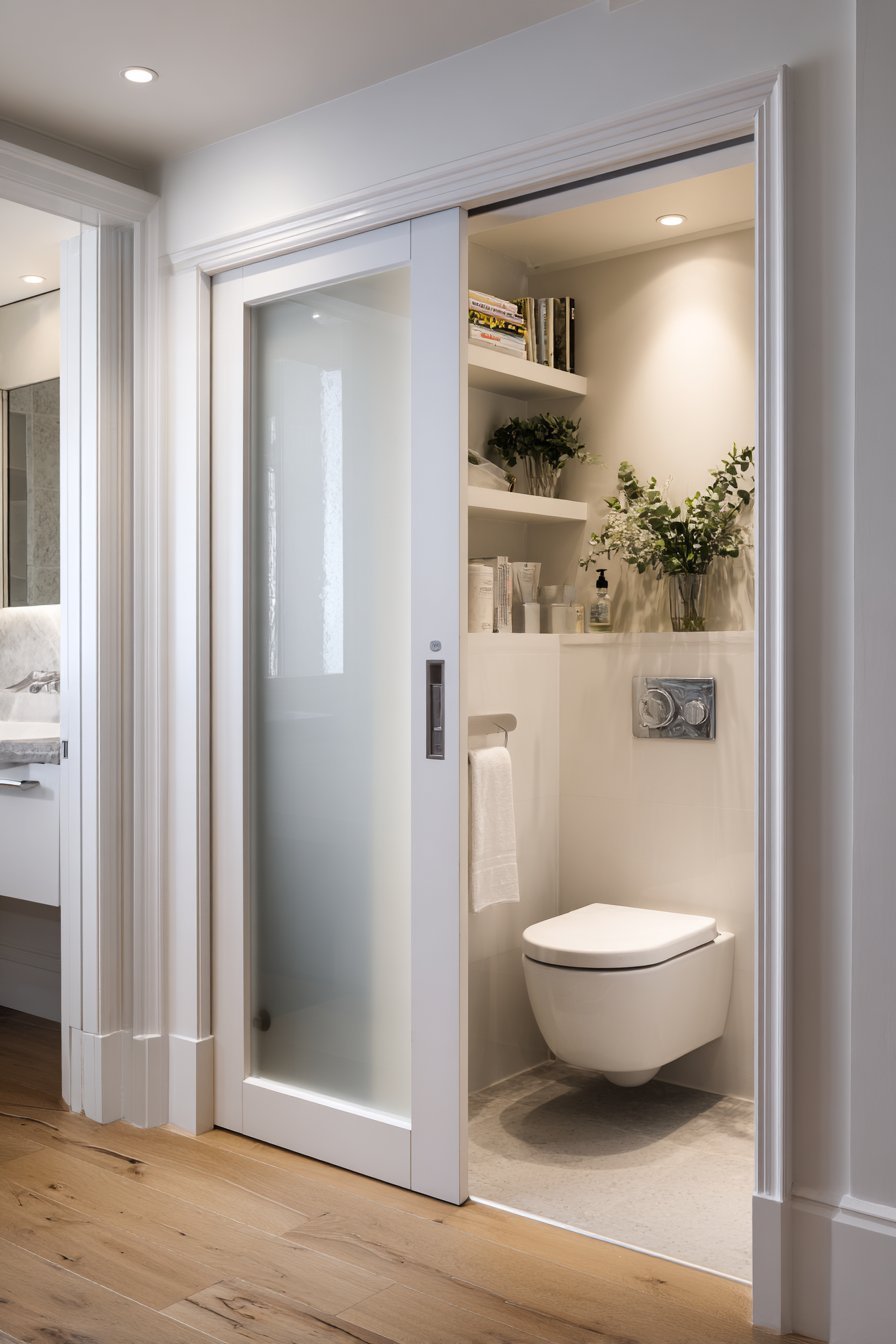
The pocket door transforms how tiny bathrooms utilize available space. Traditional swinging doors consume valuable square footage unnecessarily. This sliding alternative disappears into the wall cavity completely. Frosted glass panels allow light transmission while ensuring privacy.
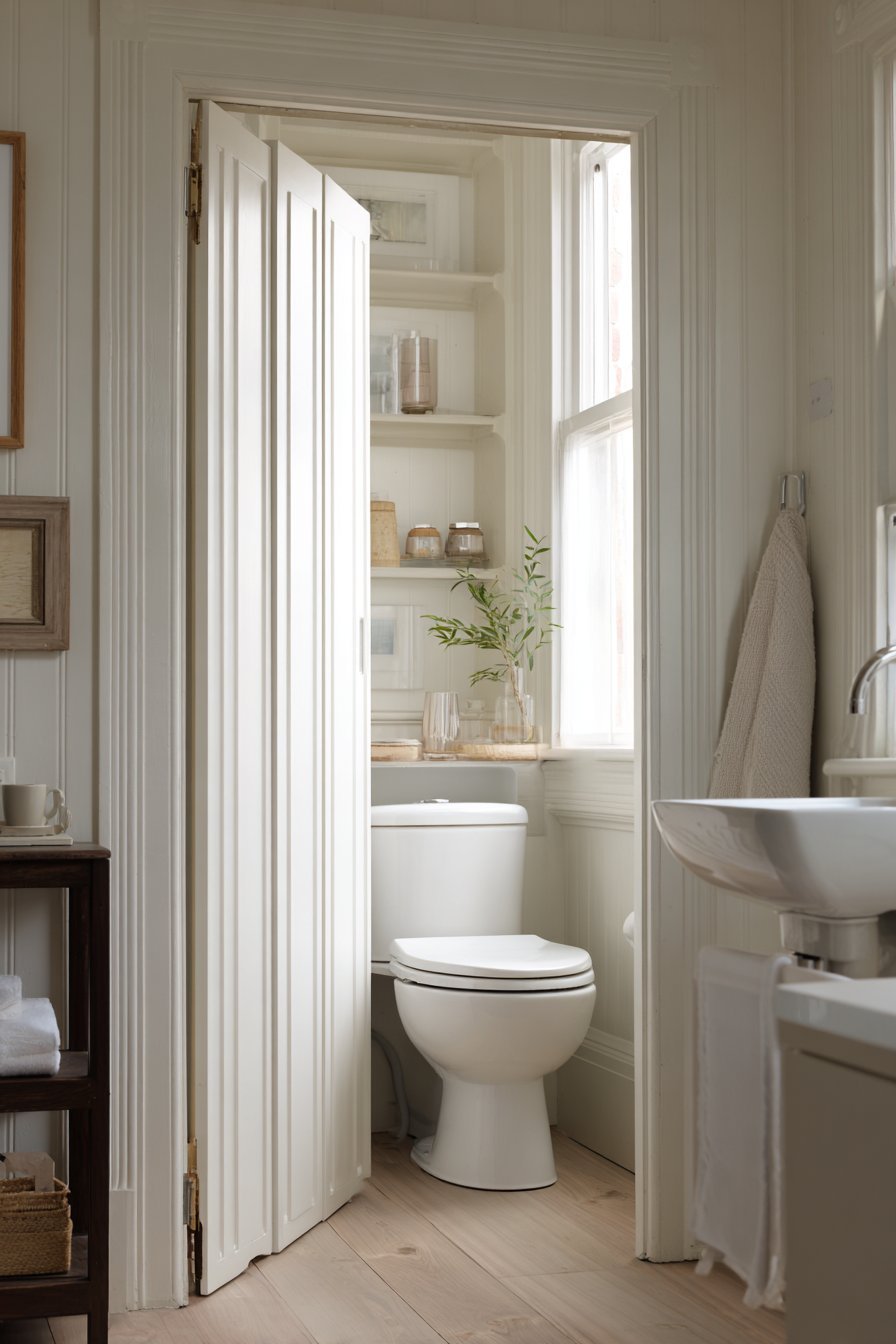
White painted walls create an airy foundation for the design. Light oak flooring adds warmth without darkening the compact area. A concealed cistern toilet sits flush against the wall. The streamlined appearance eliminates visual obstacles and physical barriers.
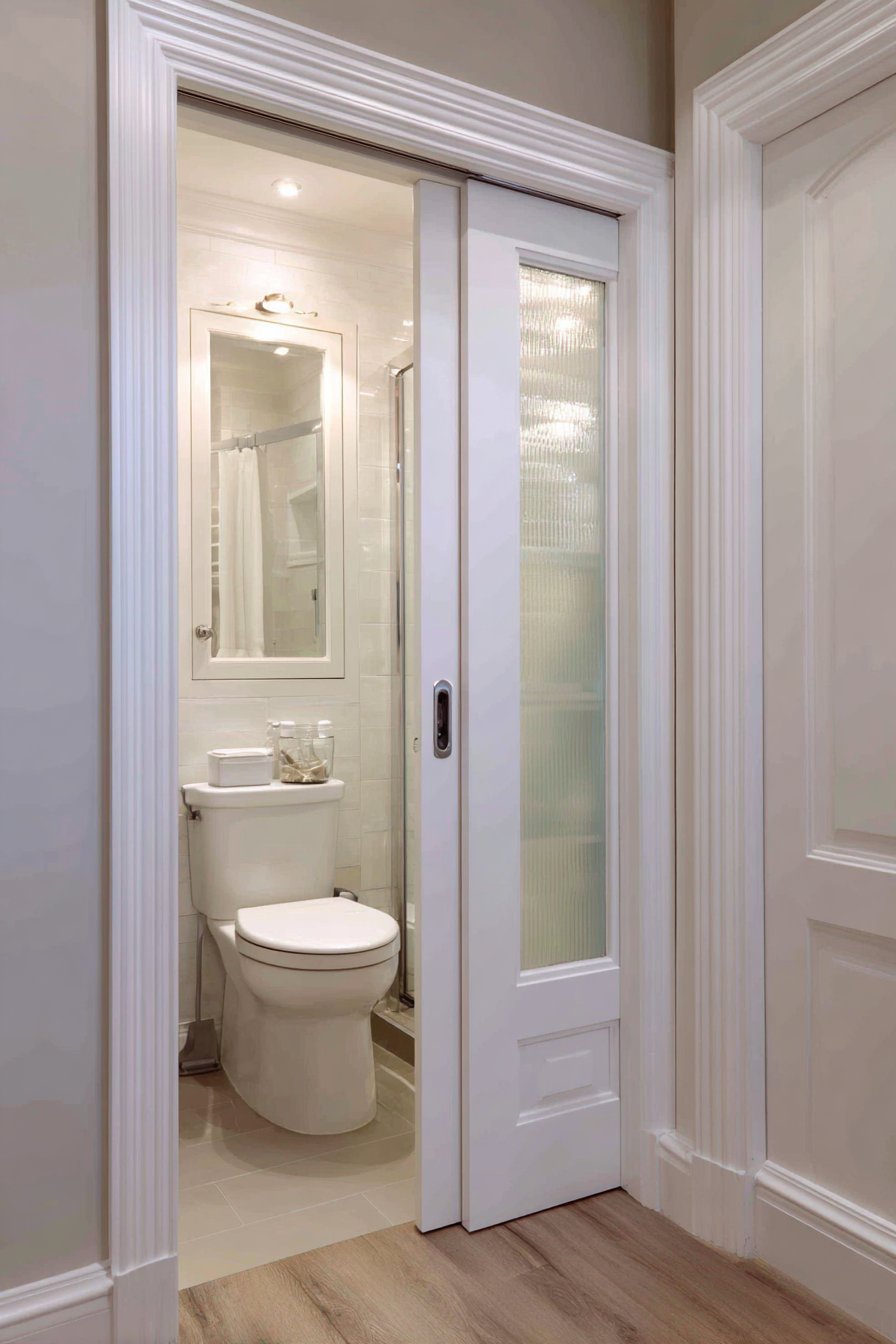
The mechanical advantage of pocket doors cannot be overstated. They reclaim the swing radius that traditional doors require. This recovered space accommodates additional fixtures or improved circulation. The frosted glass maintains connection with adjacent rooms through shared light.
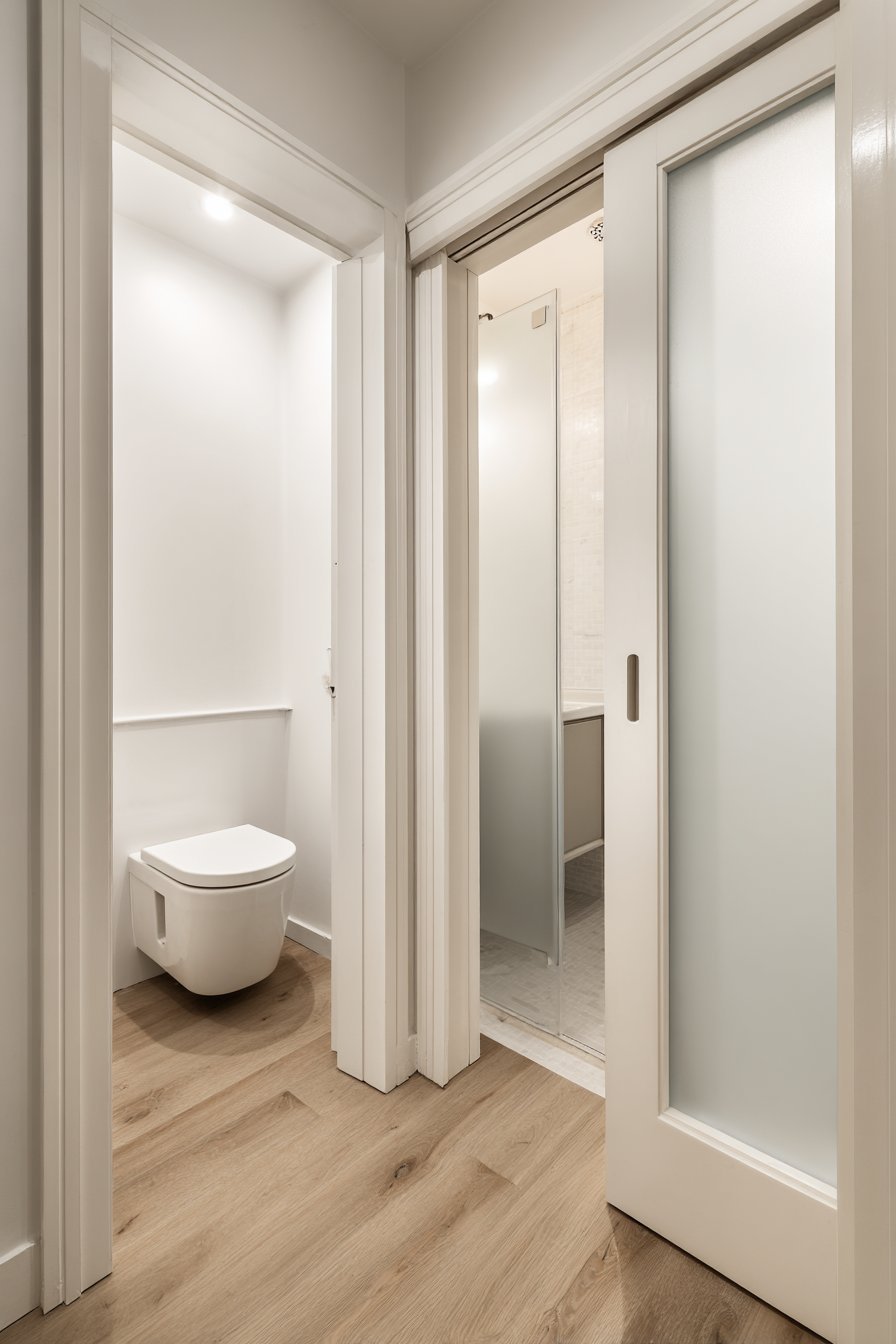
Installation requires wall cavity modifications but delivers substantial benefits. The sliding mechanism operates smoothly along ceiling-mounted tracks. Professional installation ensures proper alignment and effortless operation. The result justifies the initial construction investment through daily functionality.
Key Design Tips:
- Replace swinging doors with pocket doors for space efficiency
- Choose frosted glass panels to maintain light flow
- Install concealed cistern toilets for streamlined walls
- Use light oak flooring to add warmth
- Paint walls white to enhance brightness
- Ensure professional installation for smooth operation
3. Curved Corner Shower Efficiency
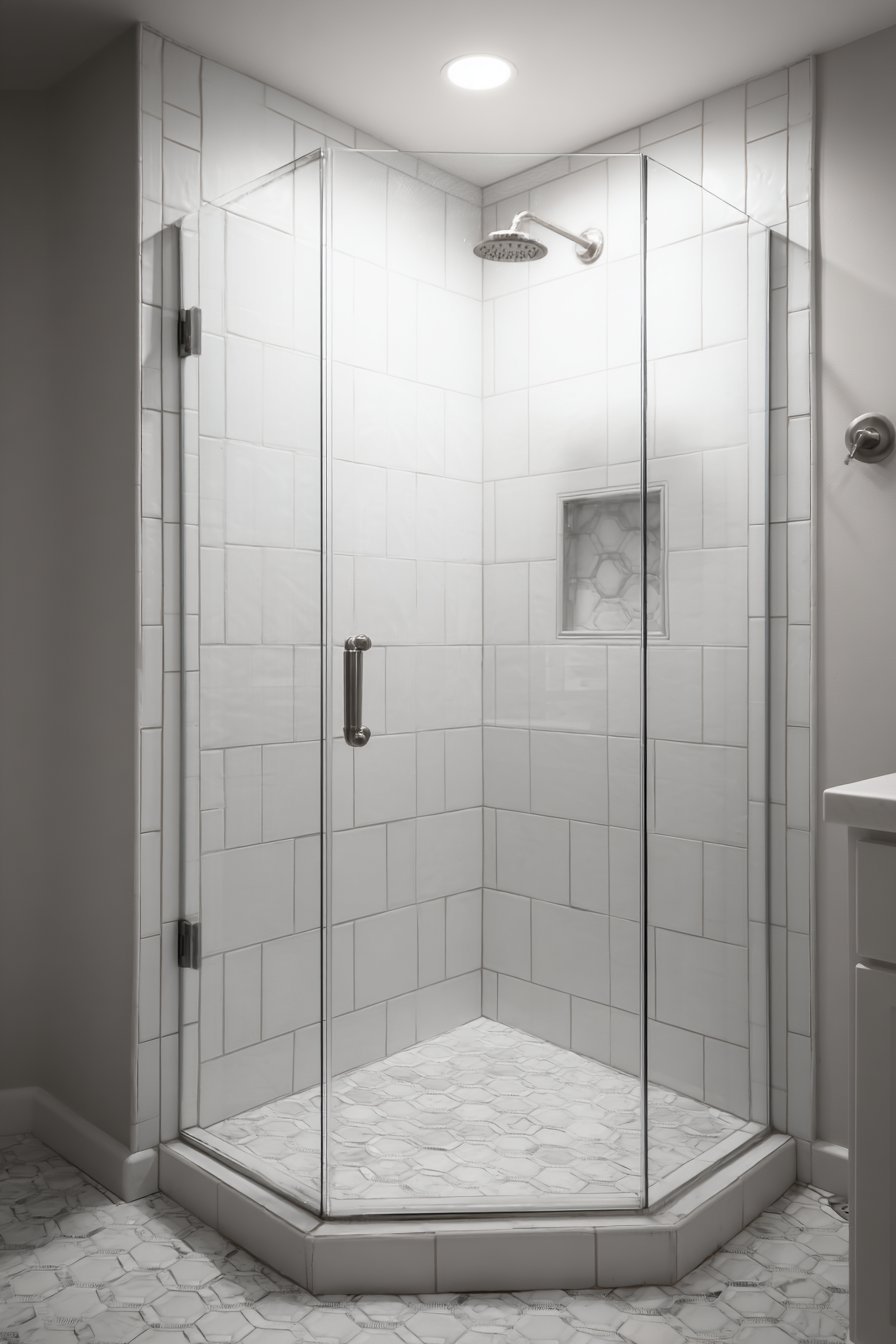
Corner shower enclosures with curved glass maximize limited floor area. The transparent panels create visual flow throughout the compact bathroom. White hexagonal floor tiles feature subtle grey grout lines. A wall-mounted rainfall showerhead delivers spa-like experiences in minimal footprint.
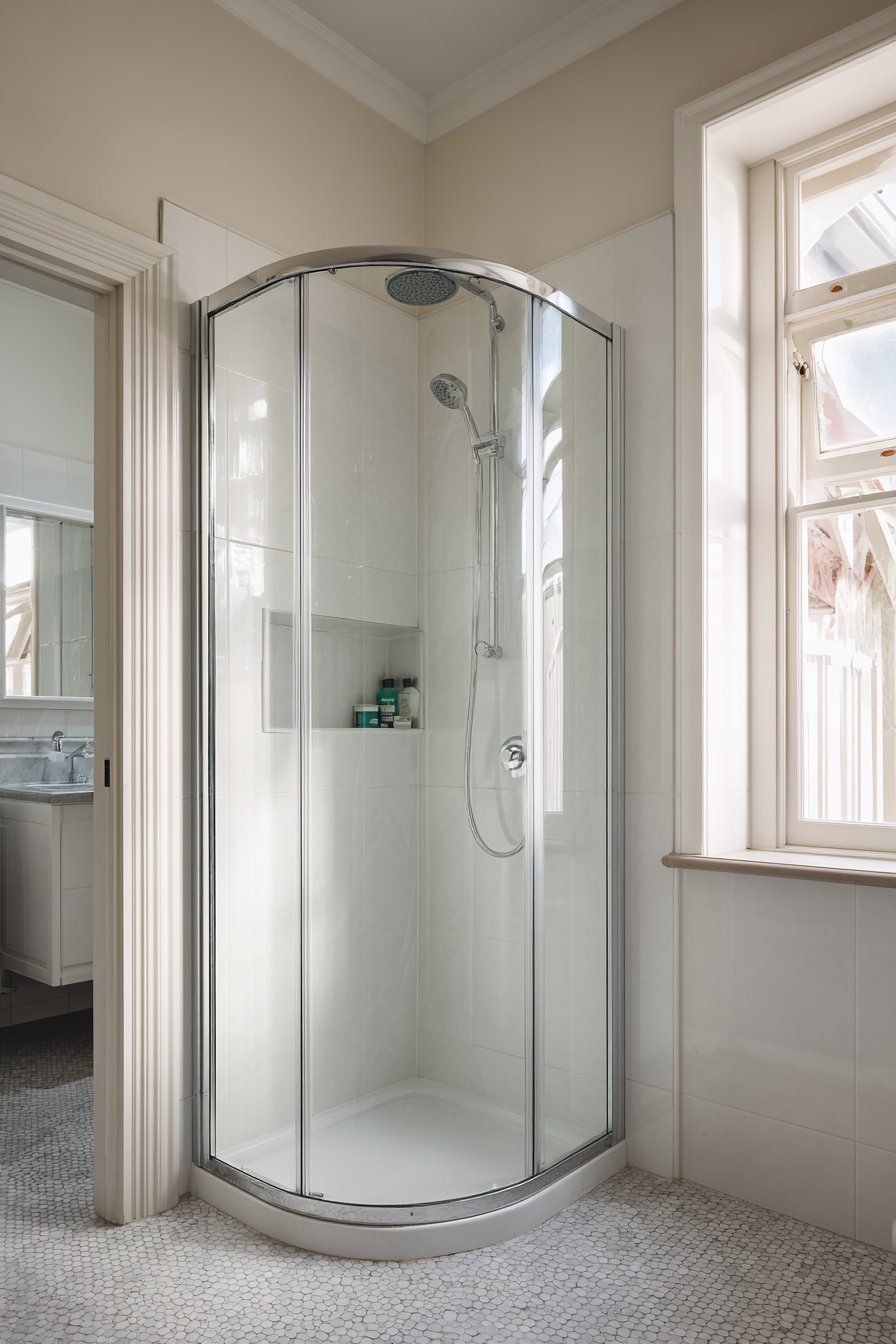
The curved glass design eliminates sharp corners that impede movement. This thoughtful geometry improves circulation in tight quarters. A narrow recessed niche holds shower essentials without protrusion. Large-format white tiles on surrounding walls reduce visual clutter significantly.
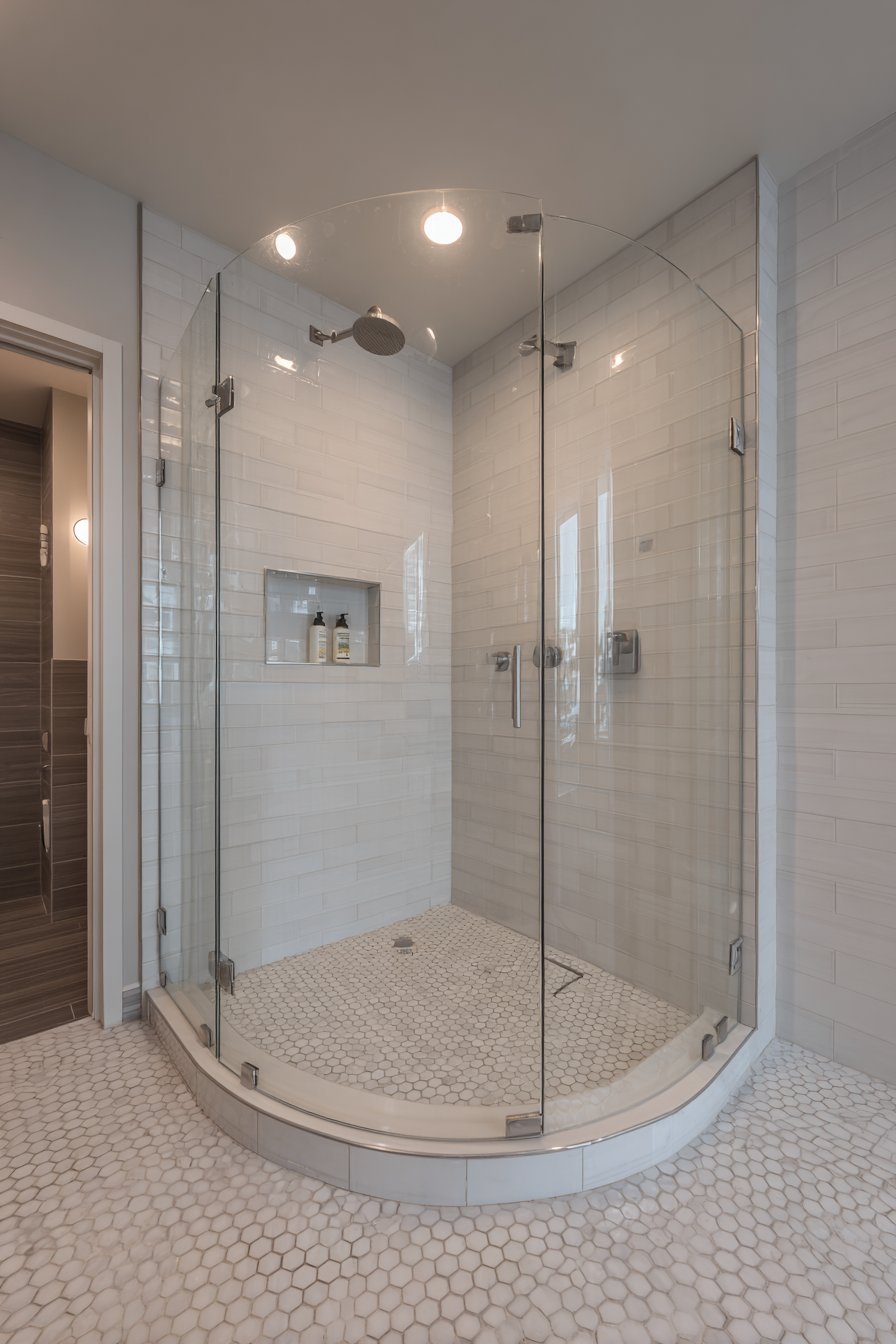
Transparency becomes a strategic design element in small bathrooms. The curved glass boundaries maintain openness while containing water spray. Natural light penetrates the shower area freely. This integration prevents the enclosed feeling that solid walls create.
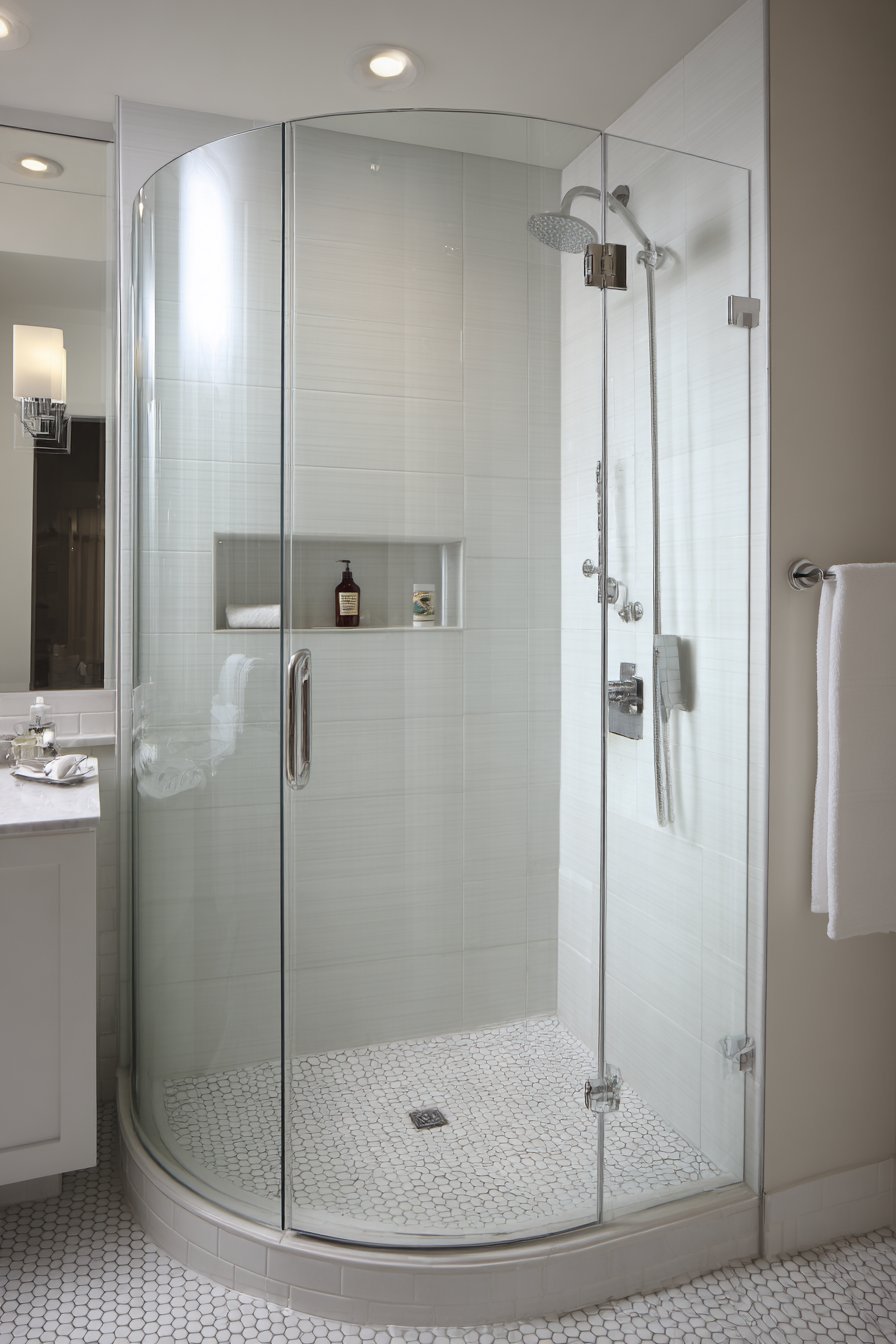
The rainfall showerhead mounts directly overhead for clean lines. Brushed nickel finish adds subtle elegance to the fixture. The recessed storage niche keeps products organized and accessible. Every component contributes to functional beauty in the constrained space.
Key Design Tips:
- Select curved corner shower enclosures for better flow
- Use transparent glass to maintain visual openness
- Install wall-mounted rainfall showerheads for clean aesthetics
- Create recessed niches for storage without protrusion
- Choose large-format tiles to minimize grout lines
- Opt for hexagonal floor tiles for texture and grip
4. Narrow Floating Vanity Solution
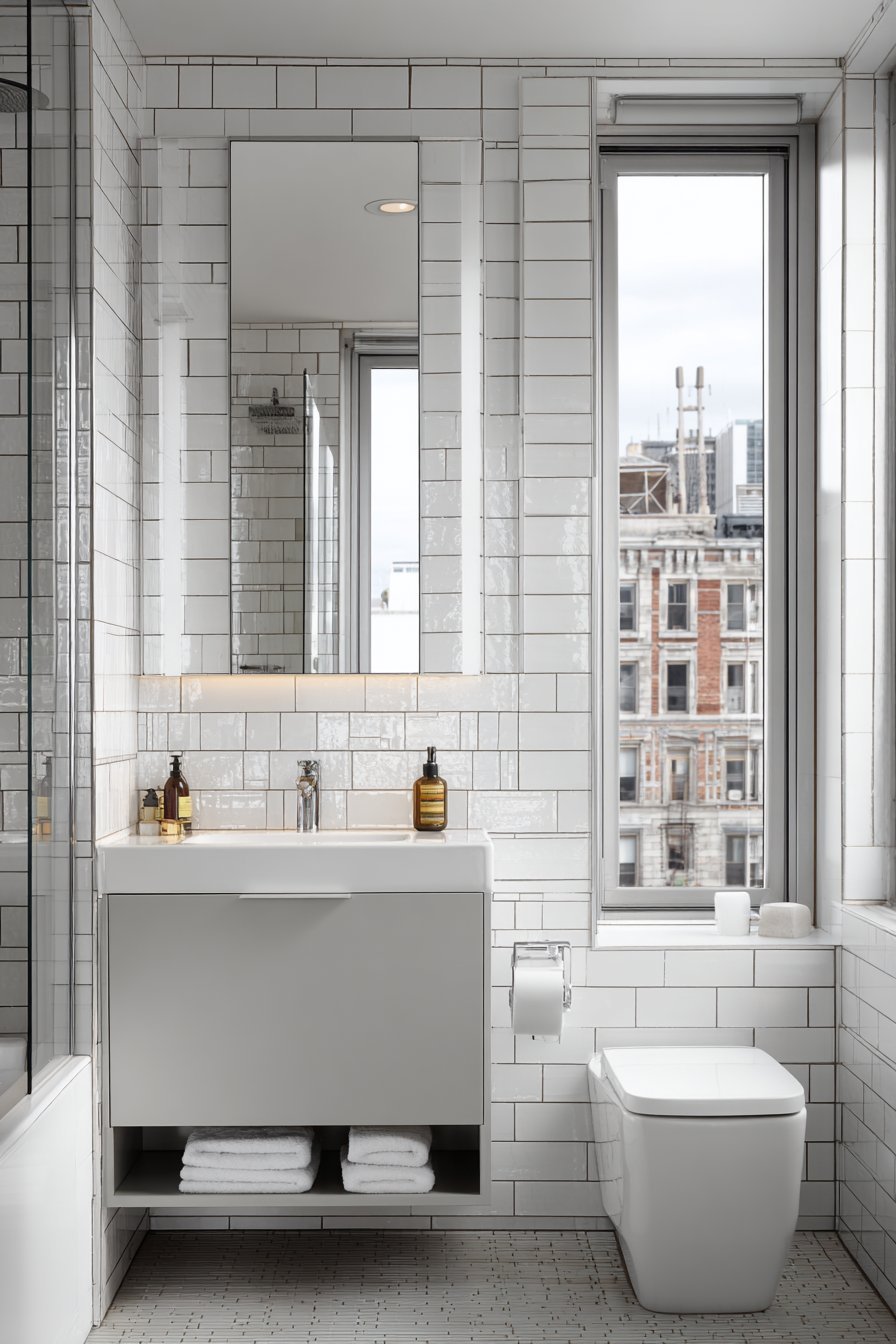
Custom floating vanities only eighteen inches deep revolutionize tiny bathrooms. The light grey finish complements contemporary design preferences beautifully. A single drawer provides essential storage beneath the integrated ceramic sink. Wall-mounted faucets eliminate counter depth requirements entirely.
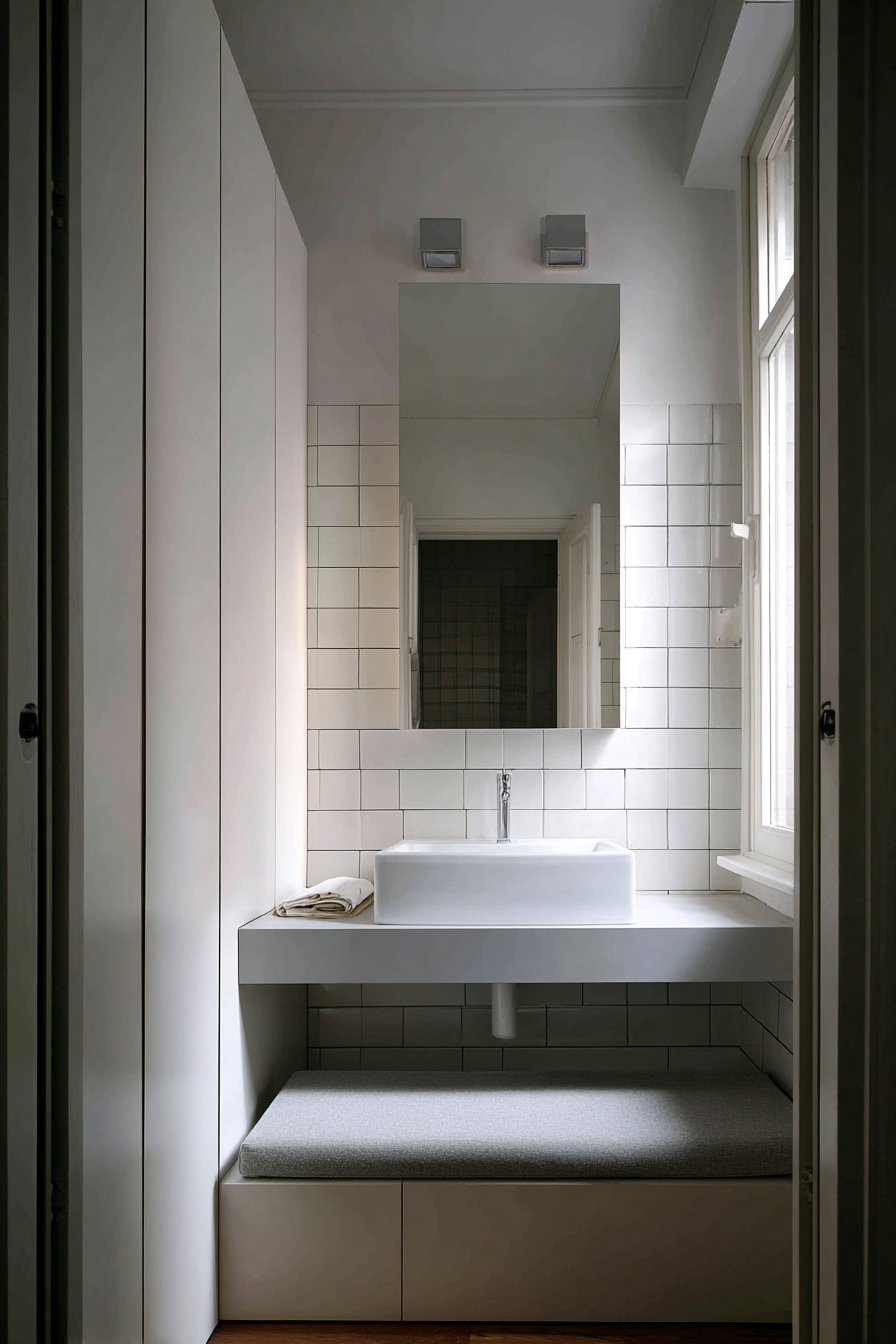
The open space beneath floating vanities creates visual lightness. This perception of airiness makes cramped quarters feel more spacious. A slim vertical mirror extends upward to enhance height perception. White subway tiles in vertical stack bond patterns draw eyes skyward.
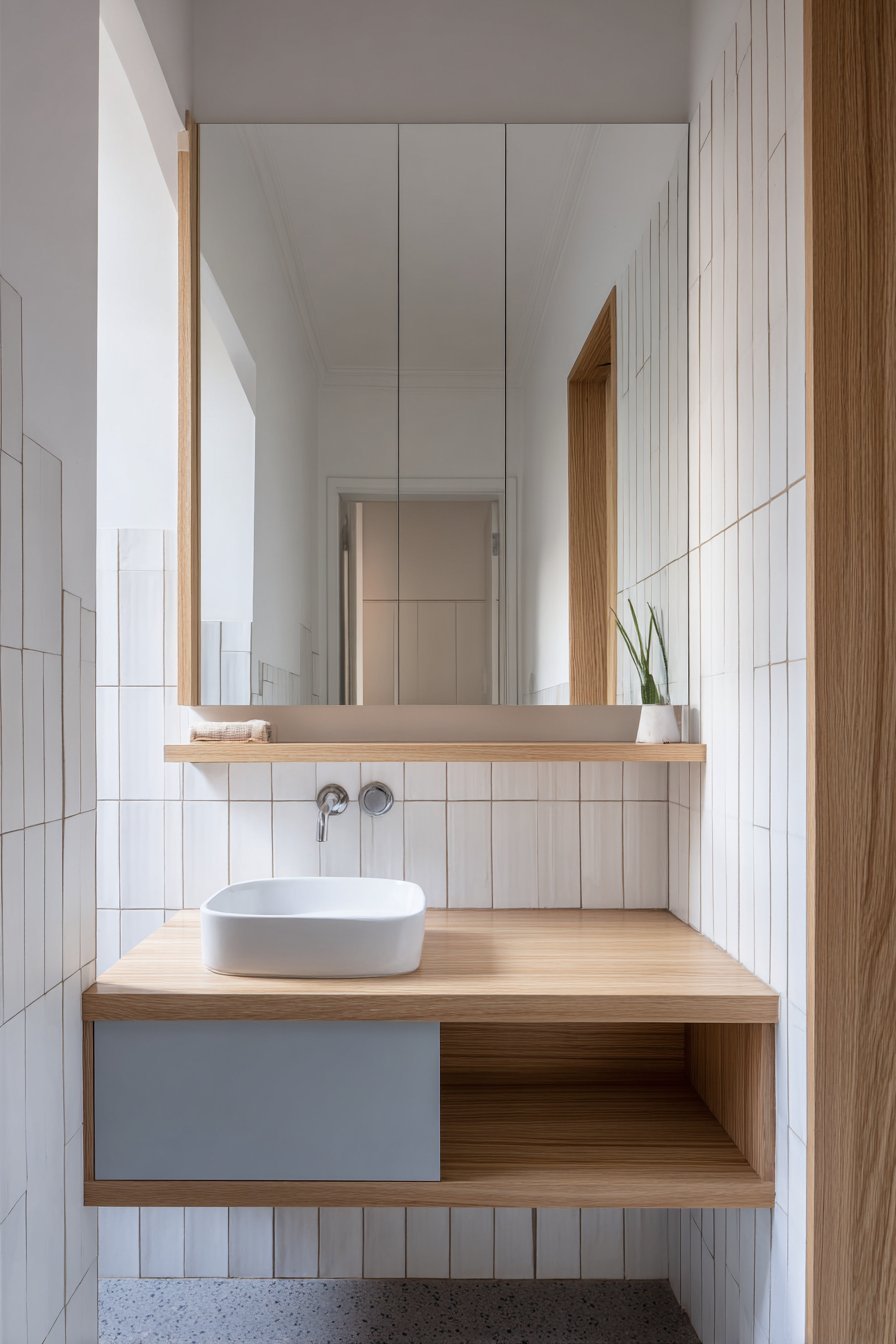
The narrow depth represents thoughtful adaptation to spatial constraints. Traditional vanities protrude further, consuming precious circulation space. This streamlined alternative maintains functionality while respecting room limitations. The integrated sink design eliminates gaps that collect dust and grime.
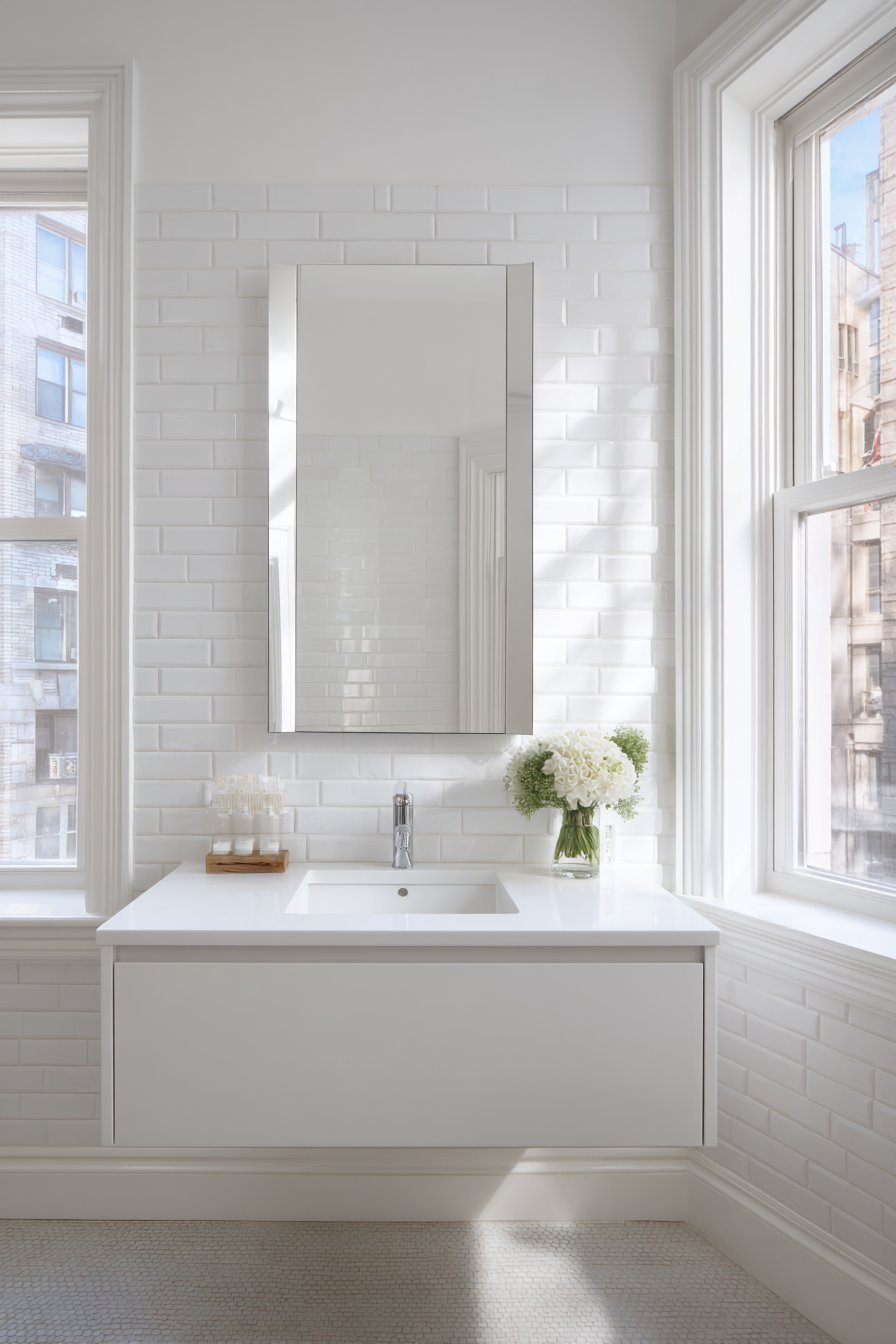
Morning light highlights the proportional balance of careful planning. The vertical mirror amplifies natural illumination throughout the space. Wall-mounted faucets contribute to the streamlined aesthetic significantly. Every measurement reflects intentional design thinking and spatial awareness.
Key Design Tips:
- Choose floating vanities to create visual lightness
- Limit vanity depth to eighteen inches maximum
- Install wall-mounted faucets to save counter space
- Use vertical mirrors to enhance height perception
- Stack bond subway tiles vertically for upward draw
- Select integrated sinks for seamless appearance
5. Wet Room Continuous Flow
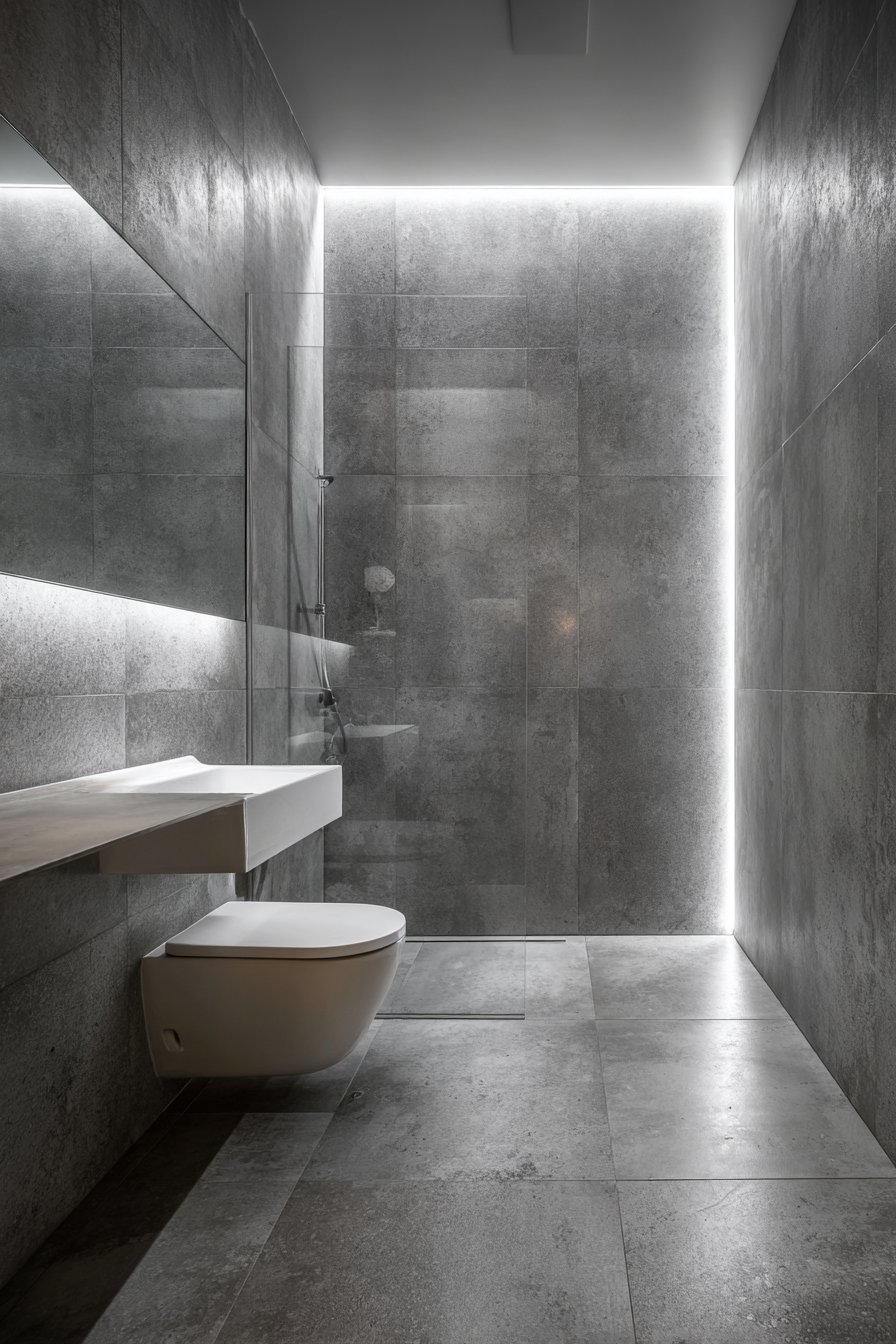
Wet room layouts eliminate traditional shower enclosures completely. The entire floor slopes gently toward a linear drain. Grey concrete-effect porcelain tiles create seamless transitions between zones. Wall-mounted fixtures maintain the minimal aesthetic throughout the space.
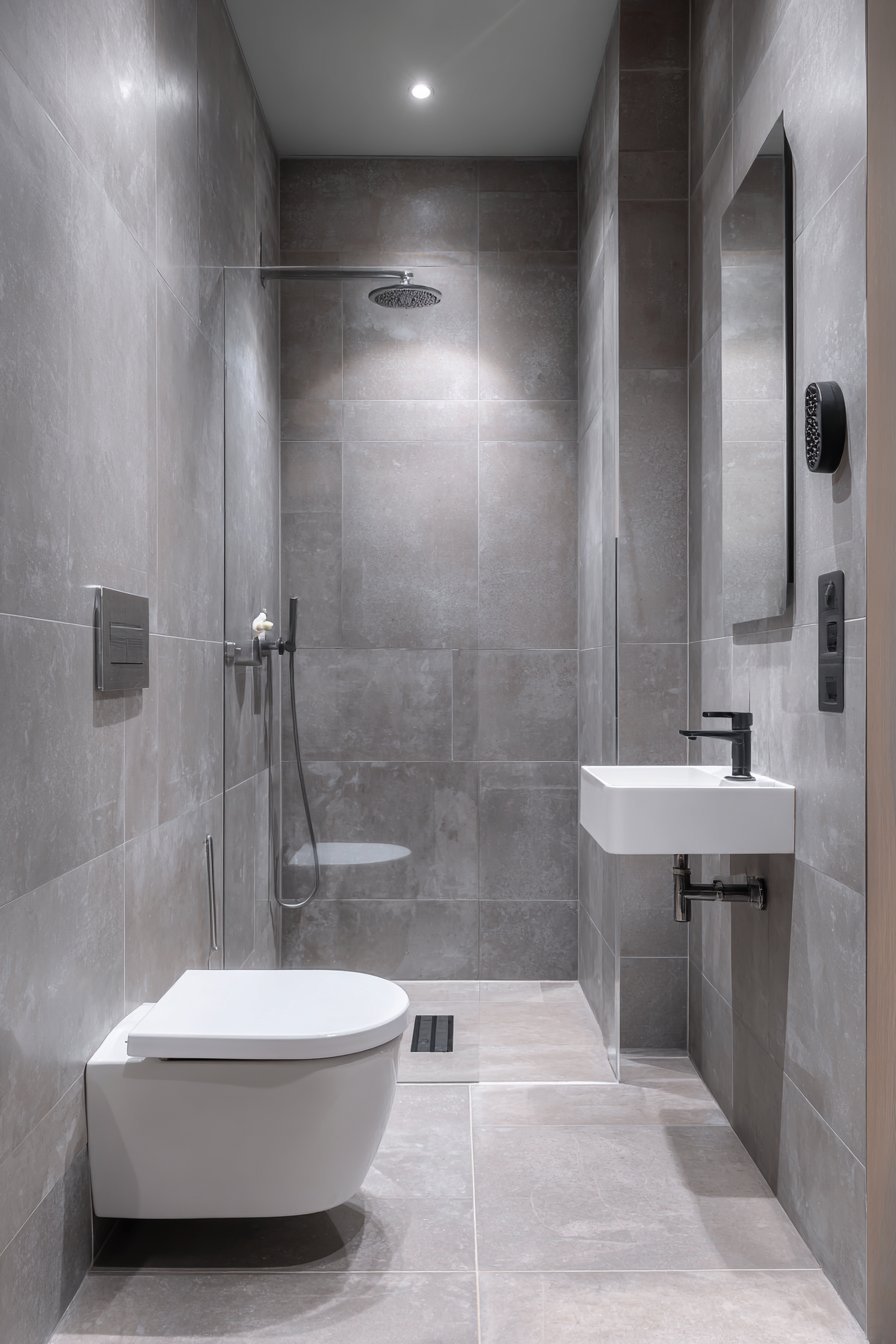
This approach represents ultimate spatial efficiency in tiny bathrooms. No shower threshold or enclosure interrupts the continuous floor plane. A simple glass panel provides necessary splash protection. Recessed LED lighting creates ambient illumination without fixture protrusion.
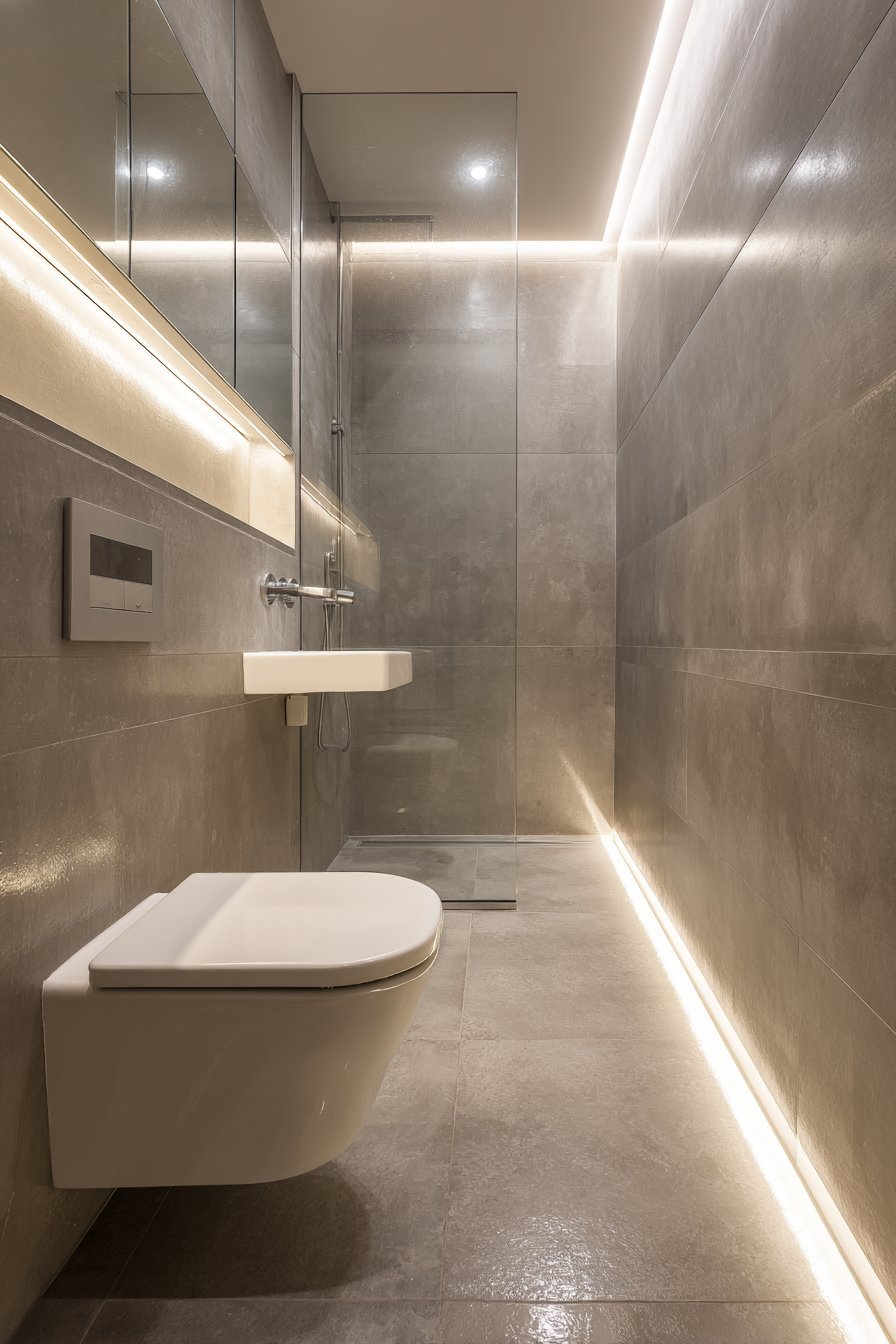
The continuous surface treatment expands perceived boundaries dramatically. Eyes travel uninterrupted across floors and walls. The monochromatic grey palette reinforces spatial unity. Subtle shadows define architectural elements without harsh visual breaks.
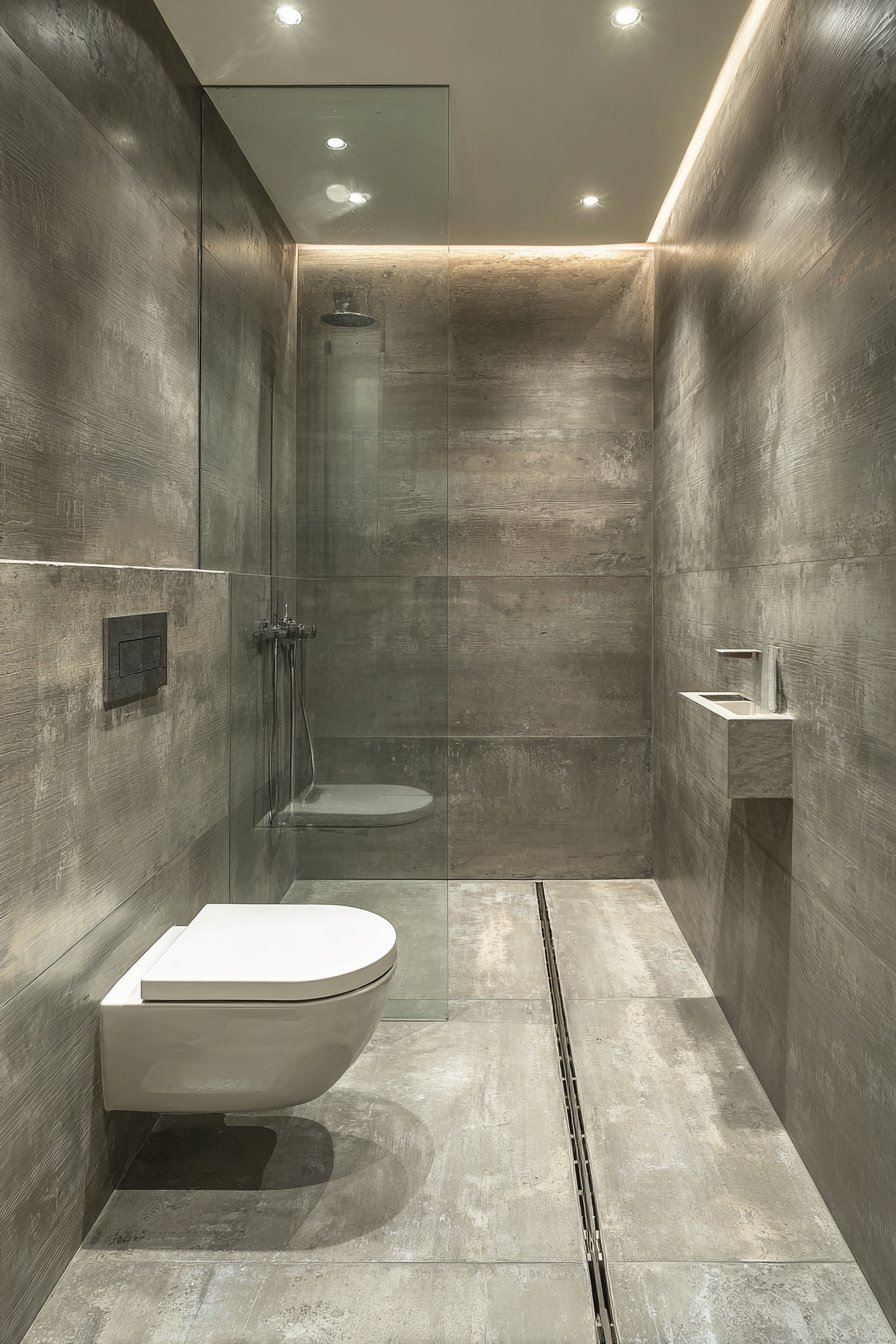
Waterproofing becomes paramount in wet room installations. Professional installation ensures proper slope and drainage function. The linear drain handles water efficiently while remaining visually discreet. This design requires expert execution but delivers exceptional results.
Key Design Tips:
- Slope the entire floor toward linear drain for wet room function
- Use continuous tile from floor to walls
- Install single glass panel for splash protection
- Choose recessed LED lighting to save space
- Ensure professional waterproofing installation
- Select concrete-effect tiles for modern aesthetic
6. Dual-Function Toilet Cistern
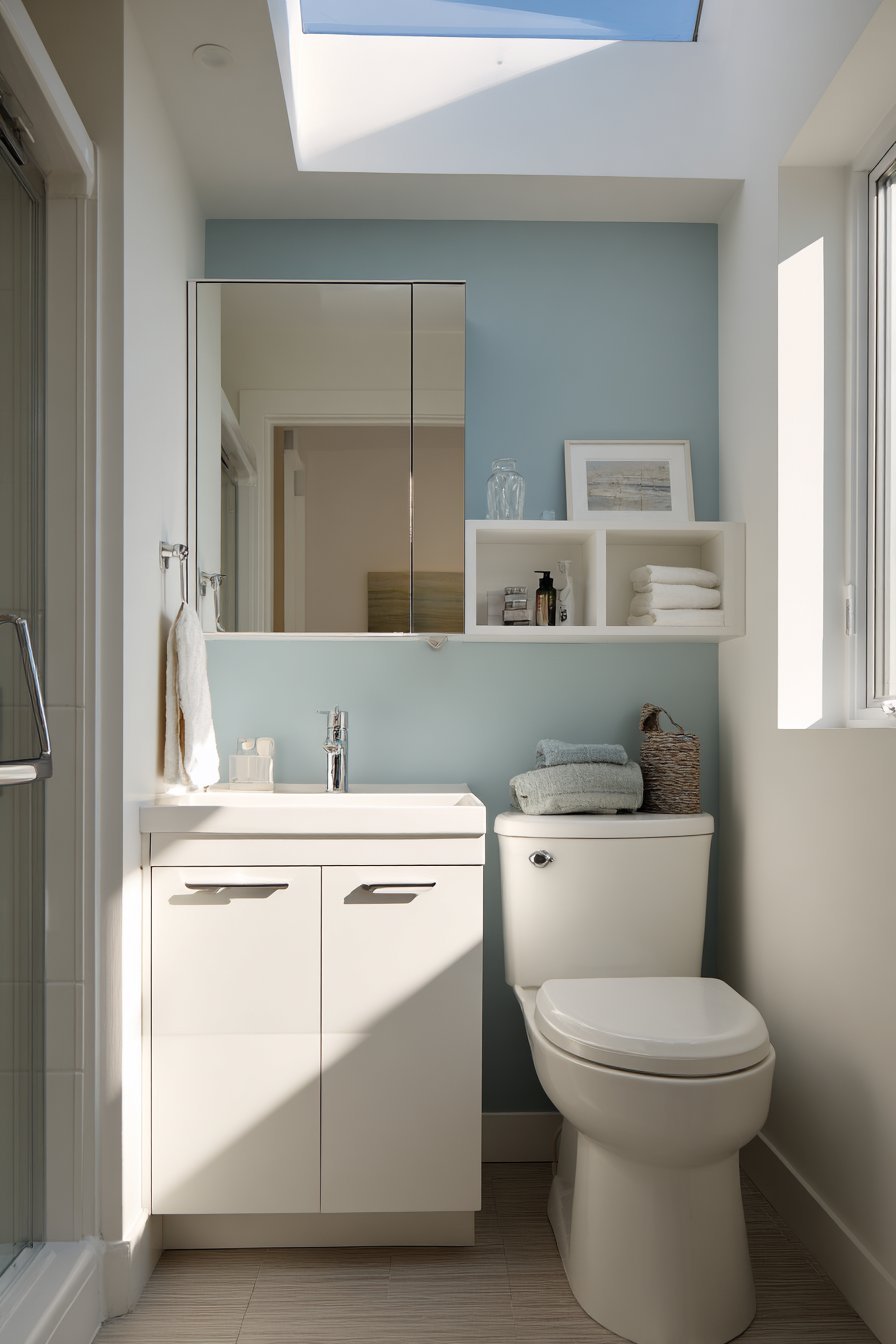
Combination units integrate handwashing directly into toilet cisterns. This innovation maximizes water efficiency and space utilization simultaneously. The white ceramic fixture features chrome hardware throughout. A light blue accent wall provides cheerful color contrast.
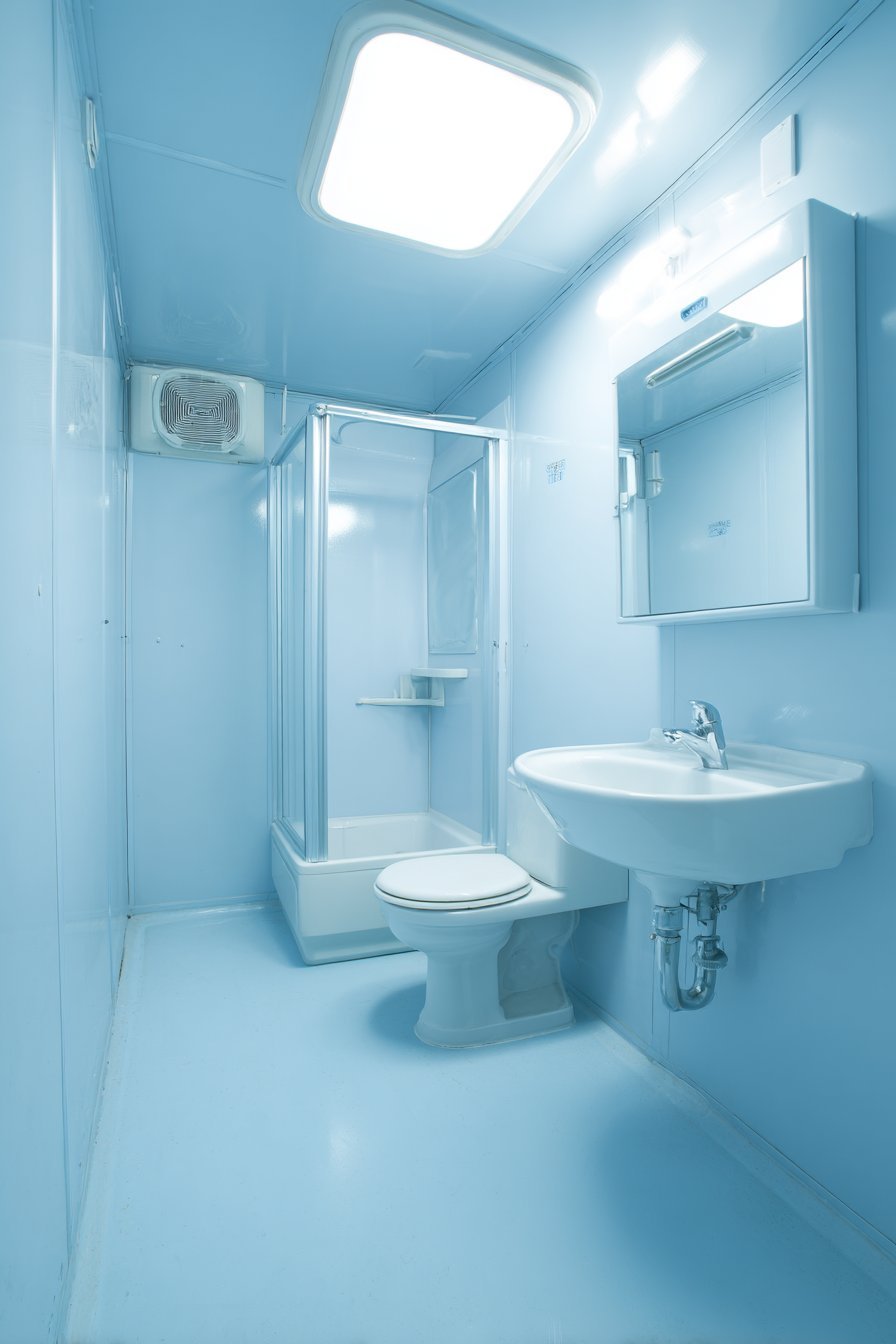
The handwashing basin sits atop the toilet cistern structure. Used water flows directly into the toilet bowl below. This clever design eliminates the need for separate sink installation. A small medicine cabinet with a mirrored front provides essential storage.
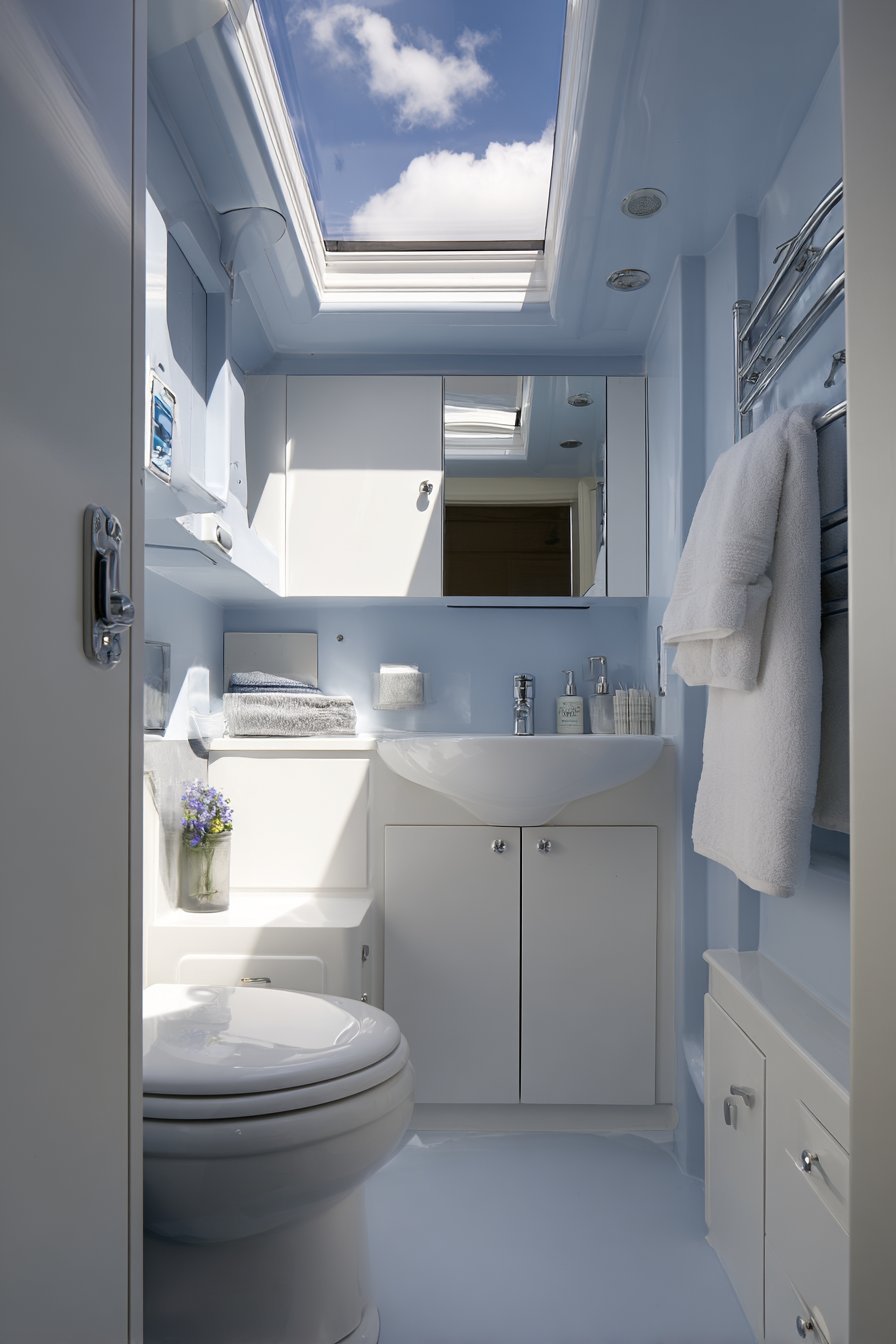
Natural light from a skylight above illuminates the practical setup. The vertical light source prevents shadows on working surfaces. The dual-function fixture demonstrates remarkable spatial economy. Storage and facilities combine in remarkably compact footprint.
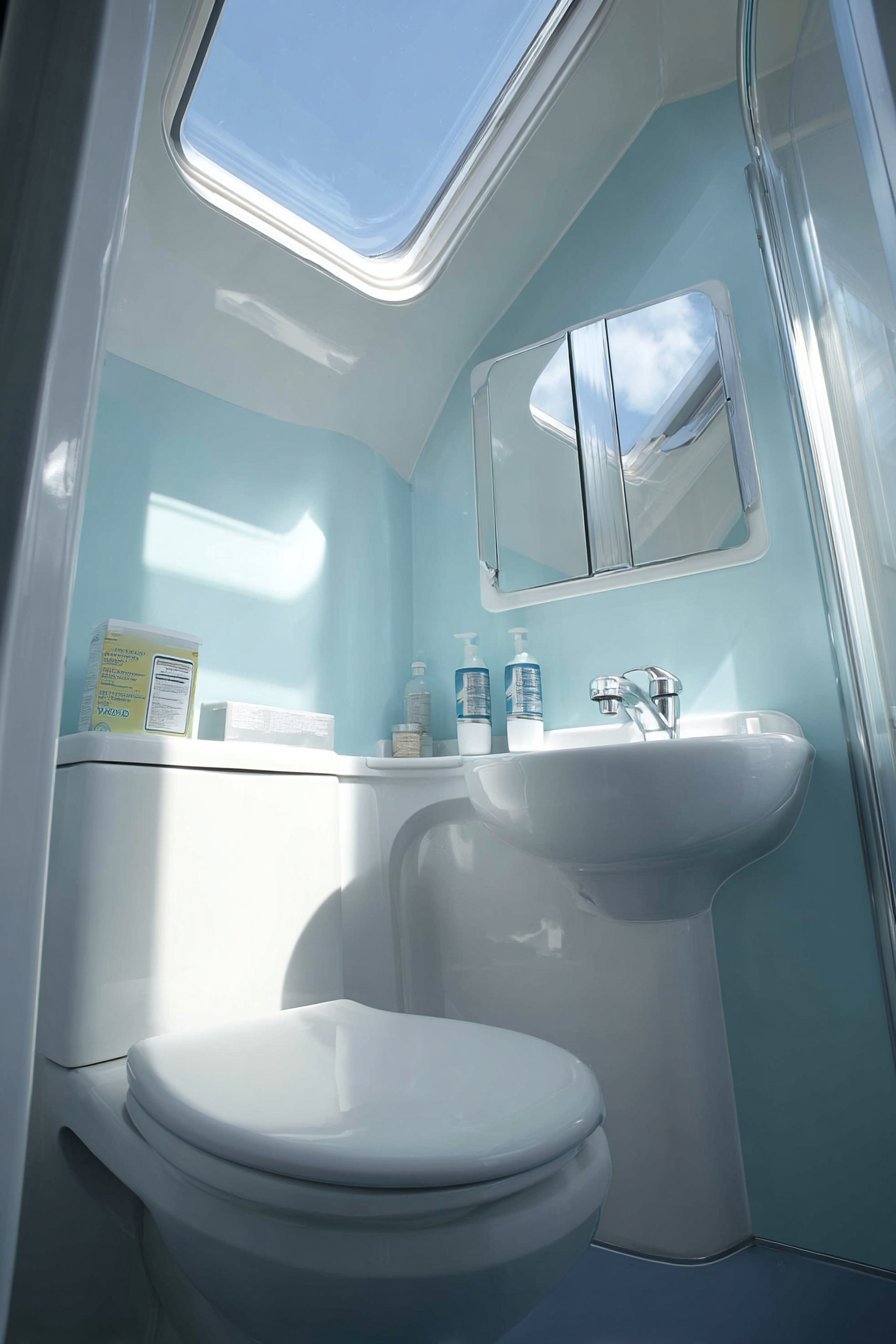
This Japanese-inspired innovation suits powder rooms and micro-bathrooms perfectly. The water-saving aspect appeals to environmentally conscious homeowners. Installation requires specialized fixtures but standard plumbing connections. The result delivers functionality far exceeding the minimal space consumed.
Key Design Tips:
- Consider toilet-sink combination units for extreme space savings
- Use light blue accent walls for cheerful atmosphere
- Install skylight for optimal natural lighting
- Add mirrored medicine cabinets for storage
- Choose chrome fixtures for coordinated appearance
- Embrace water-saving dual-function designs
7. Large Format Tile Continuity
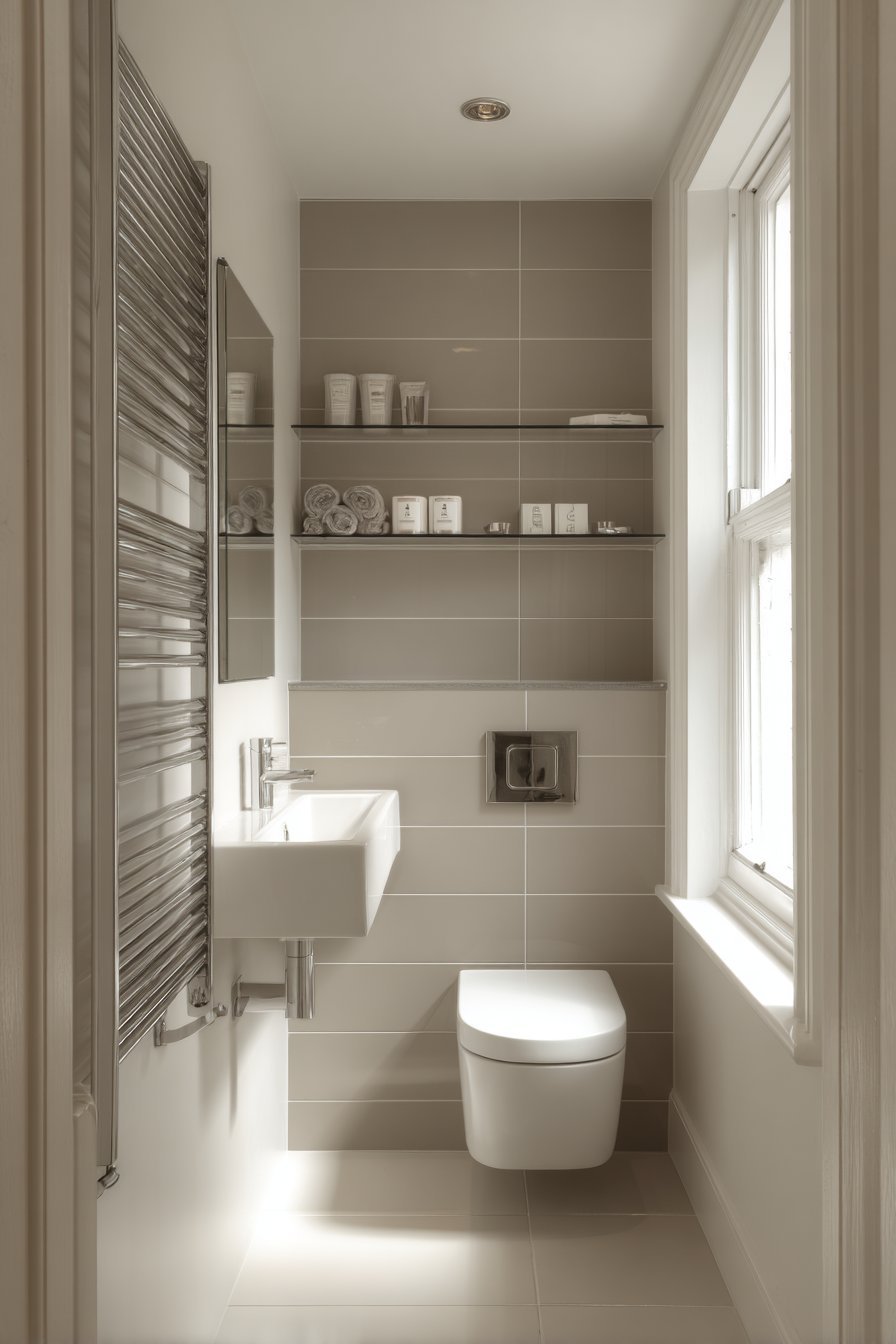
Floor-to-ceiling large format tiles minimize grout lines dramatically. The grey tiles create unbroken visual expanses across surfaces. Wall-hung toilets and sinks maintain maximum floor visibility. A single glass shelf holds essential toiletries in matching containers.
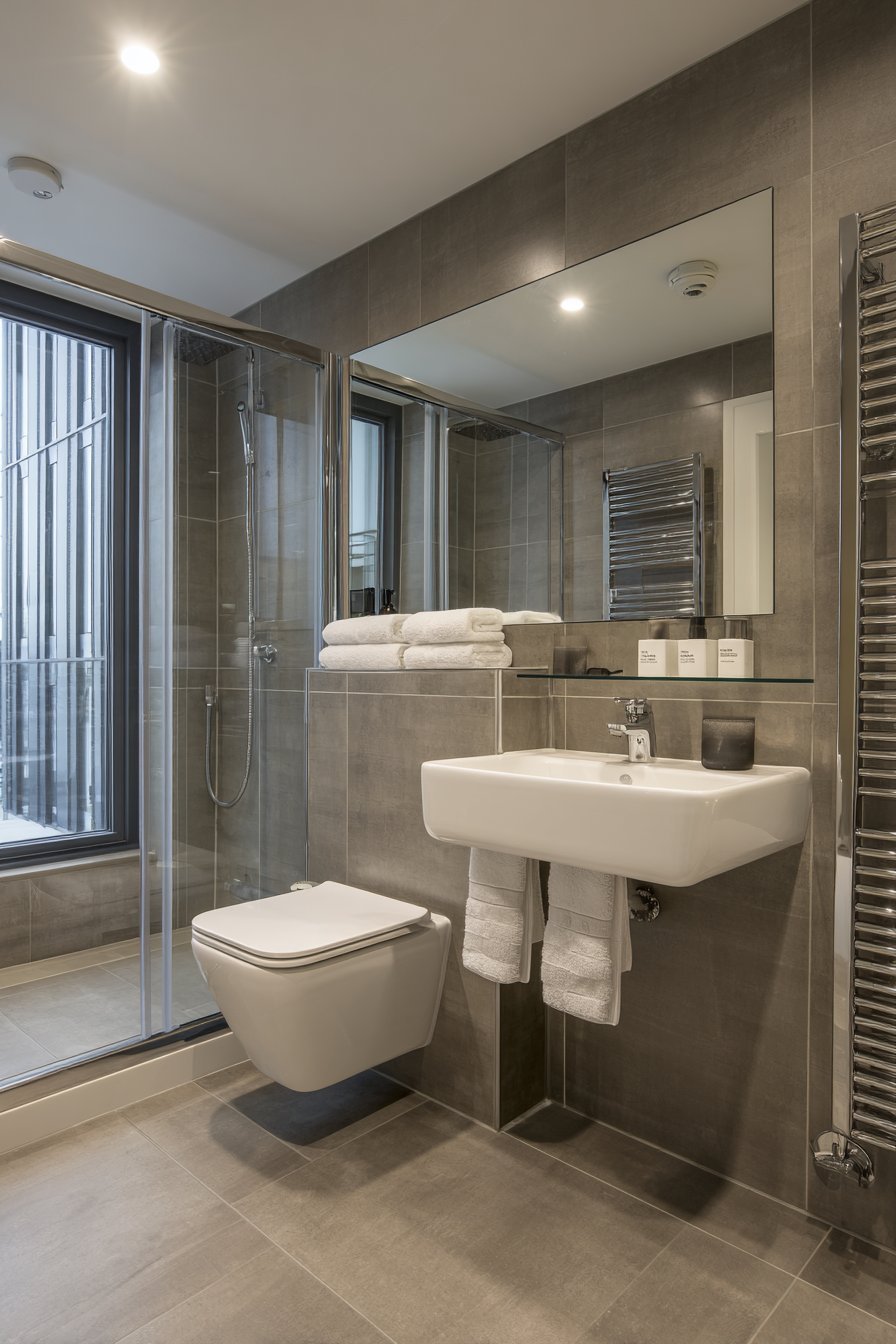
The continuous tile application eliminates visual interruptions completely. Fewer grout lines mean less maintenance and cleaner appearance. Floating fixtures preserve sight lines to the floor below. A compact heated towel rail serves dual warming and storage purposes.
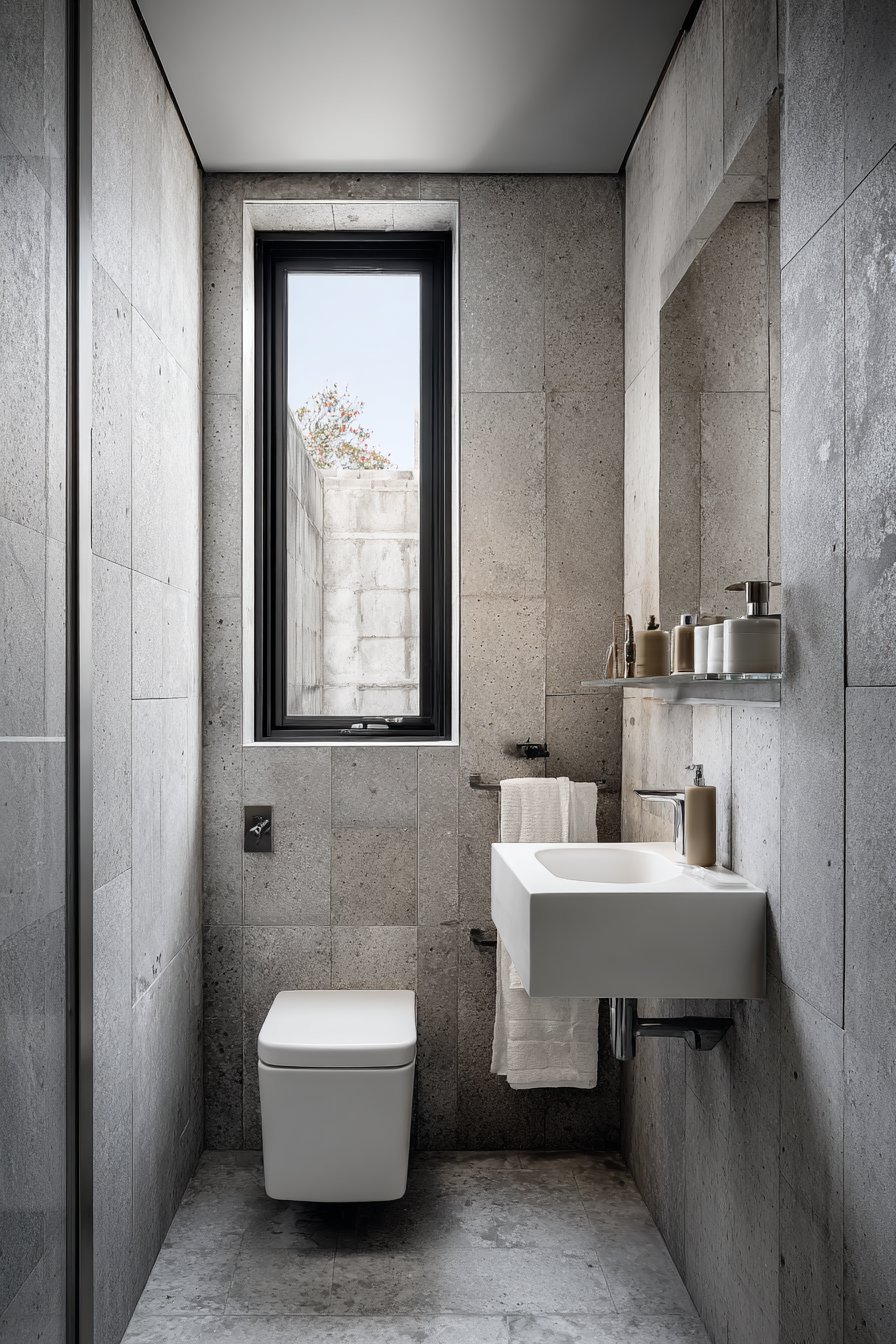
The psychological impact of unbroken surfaces cannot be overstated. Eyes perceive larger dimensions when boundaries disappear. Natural light from a narrow window enhances this spatial illusion. The monochromatic grey scheme reinforces the seamless aesthetic.
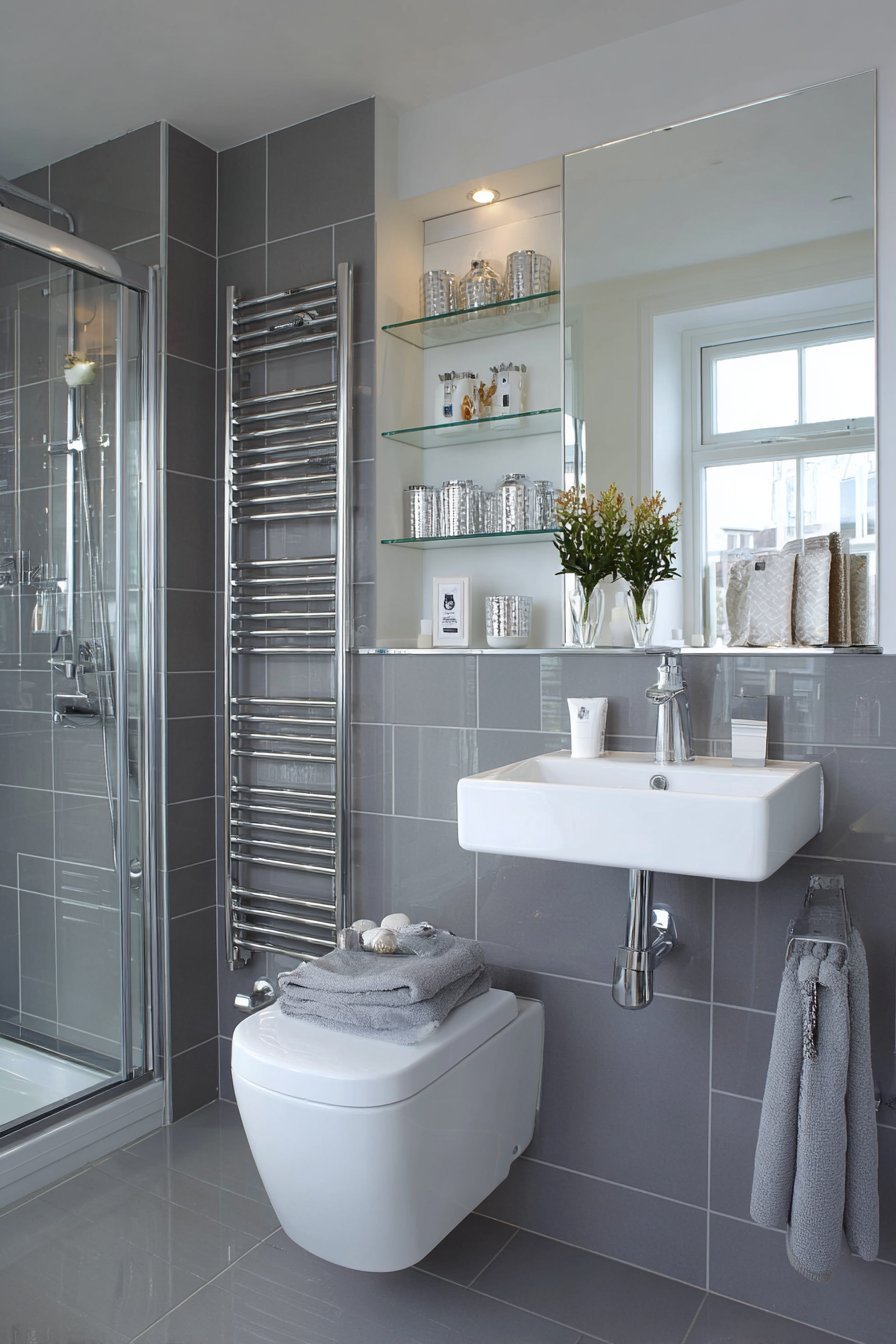
Heated towel rails provide practical comfort in compact spaces. The chrome fixture warms towels while occupying minimal wall area. Wire shelving above holds organized supplies without overwhelming the design. Every element contributes to perceived spaciousness through thoughtful restraint.
Key Design Tips:
- Install large format tiles to reduce grout lines
- Choose wall-hung fixtures for floor visibility
- Use single glass shelves for minimal storage
- Add heated towel rails for dual function
- Maintain monochromatic color schemes for continuity
- Position narrow windows for natural light admission
8. Vertical Storage Maximization
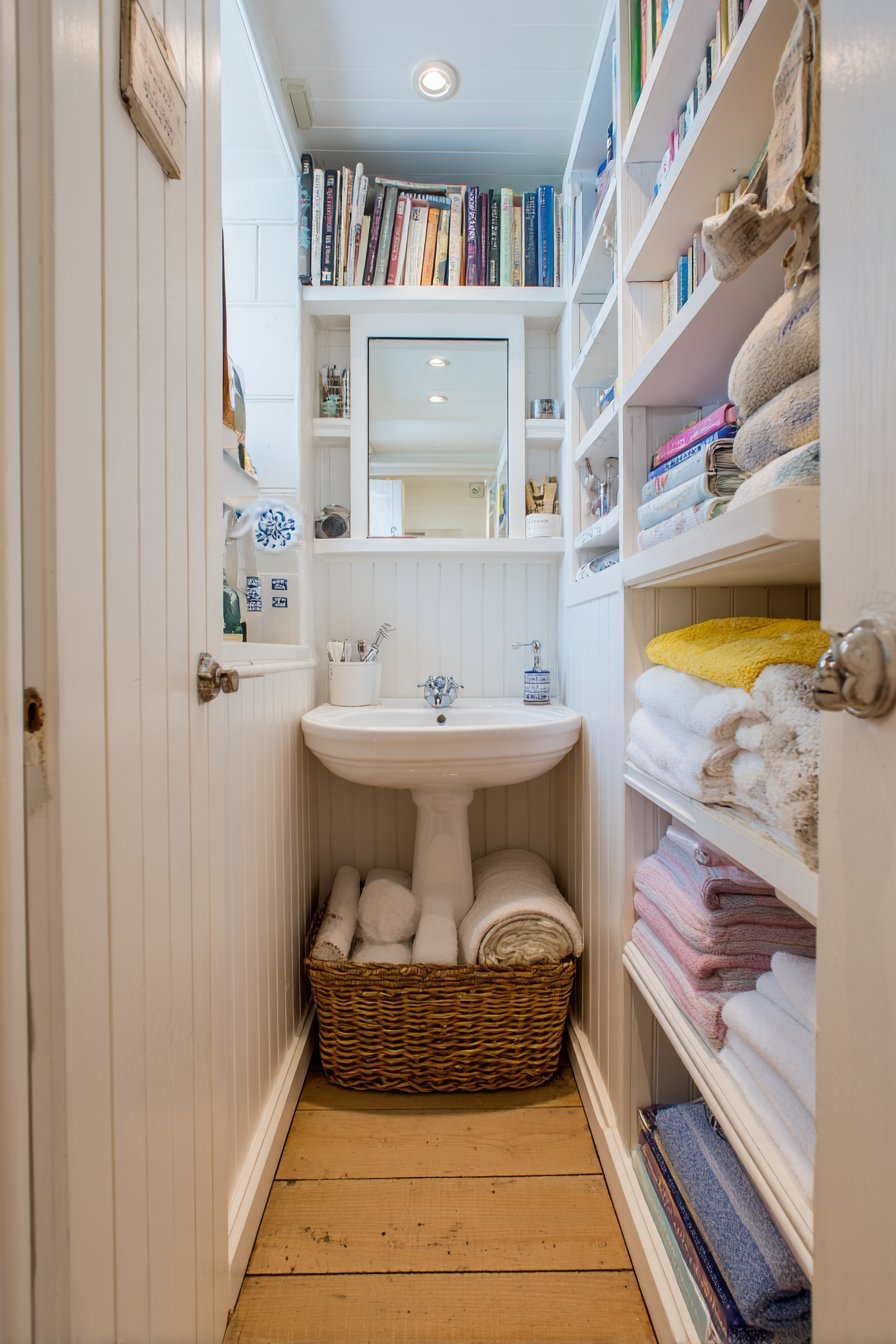
Tall narrow cabinets flanking pedestal sinks utilize wasted vertical space. White shaker-style units reach from floor to ceiling. The middle section features a classic pedestal sink in white ceramic. Vintage-inspired chrome fixtures add timeless appeal throughout.
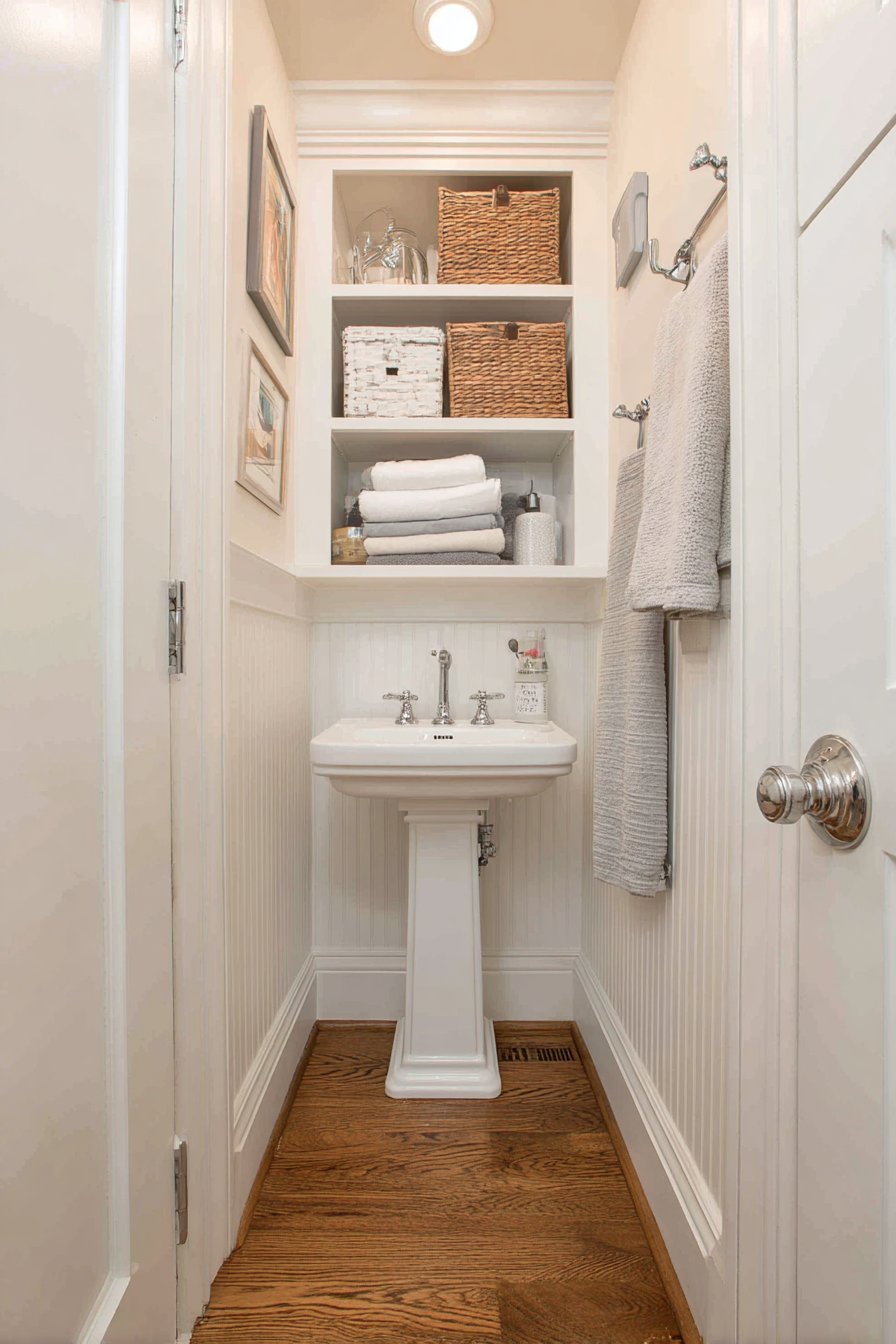
The vertical storage strategy addresses tiny bathroom challenges brilliantly. Upper cabinets hold linens and supplies beyond daily reach. Lower sections accommodate frequently used items conveniently. The central pedestal sink maintains traditional bathroom character.
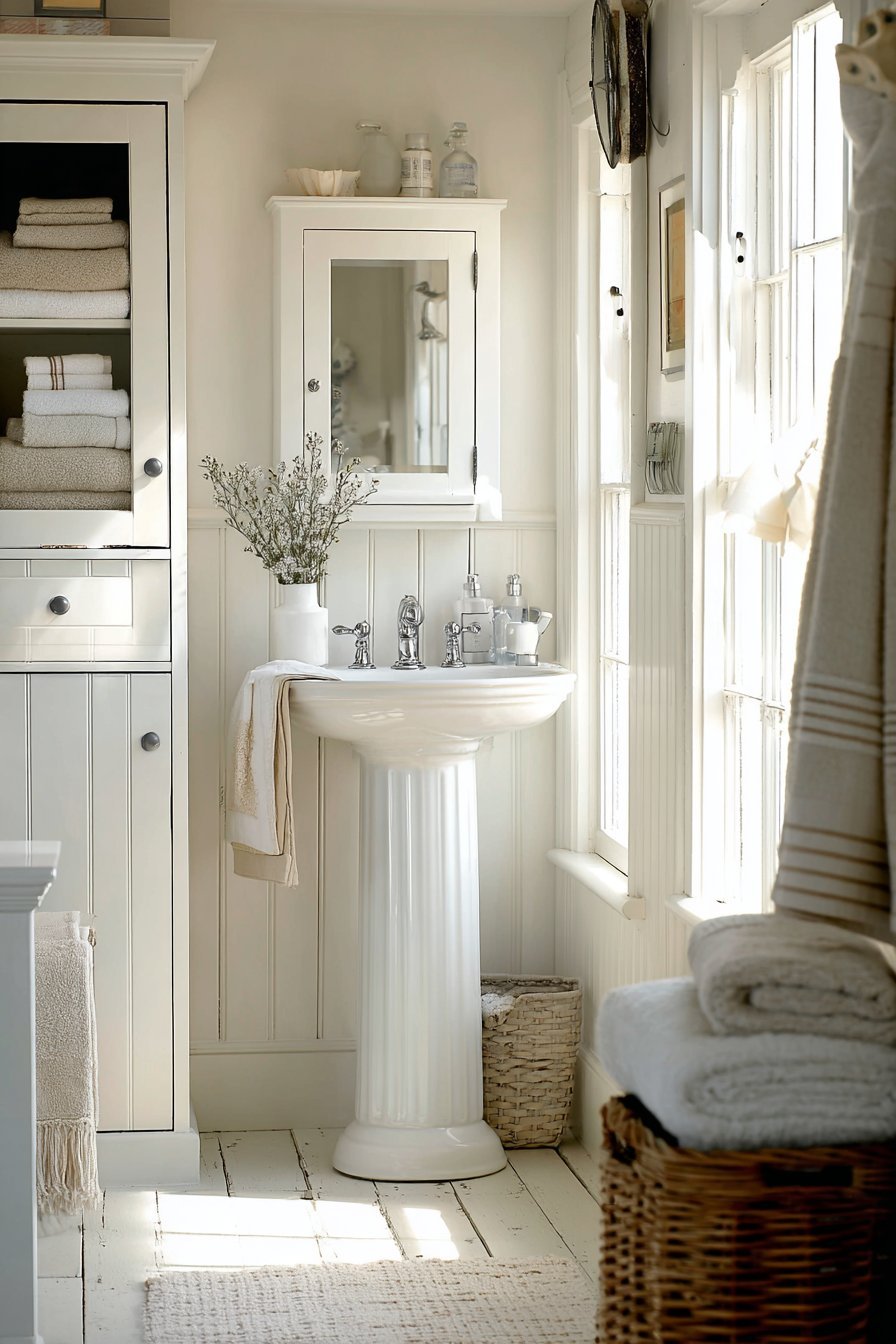
White beadboard wainscoting adds texture without overwhelming compact dimensions. The lower wall treatment provides visual interest at eye level. Chrome fixtures coordinate beautifully with the clean white palette. Natural light enhances the bright, organized atmosphere.
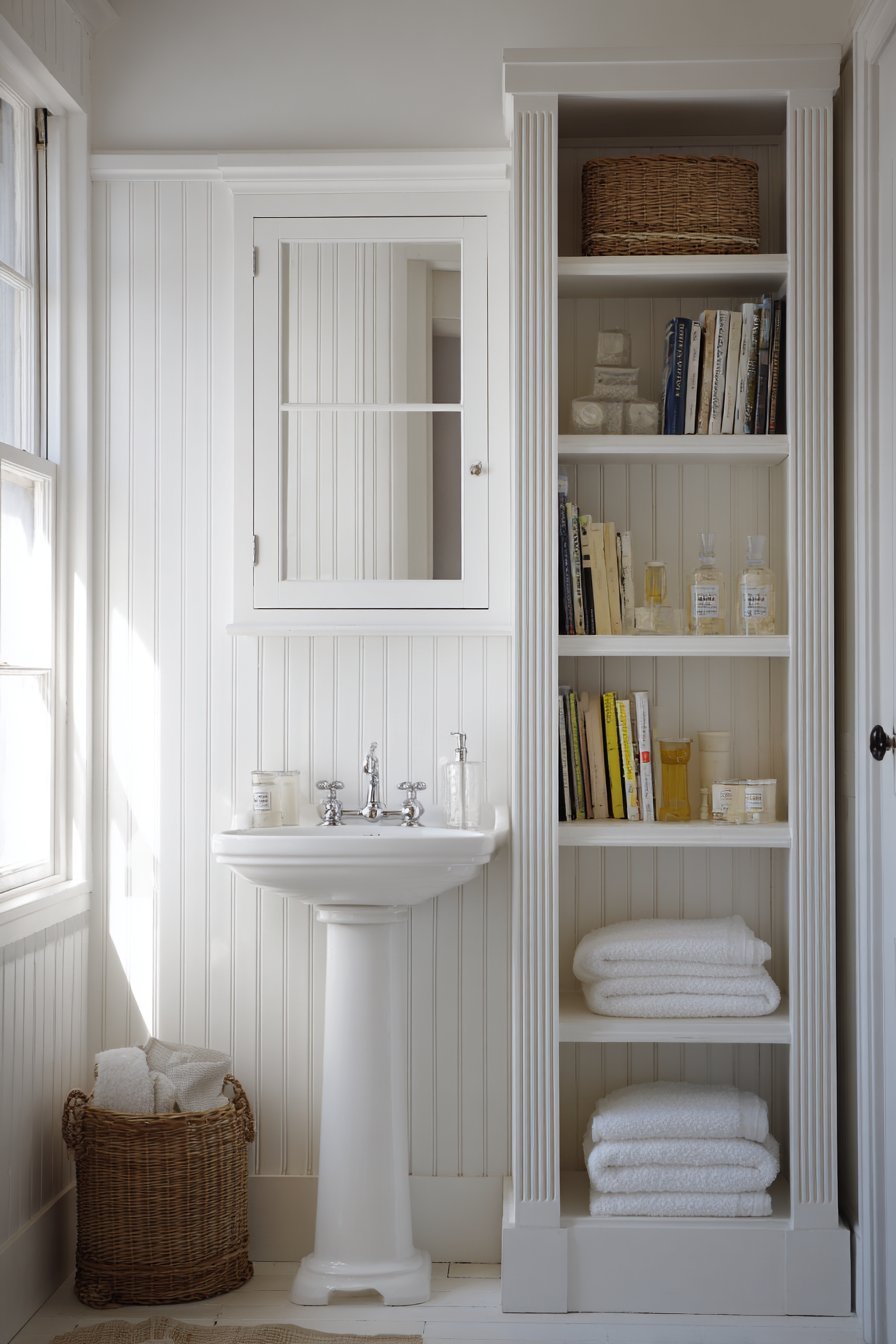
This arrangement demonstrates efficient vertical organization principles. Unused upper wall space transforms into valuable storage volume. The flanking cabinets frame the sink area architecturally. The result balances practical storage with classic aesthetic appeal.
Key Design Tips:
- Install floor-to-ceiling cabinets for vertical storage
- Choose shaker-style doors for timeless appeal
- Position cabinets flanking central pedestal sinks
- Add beadboard wainscoting for texture
- Select vintage-inspired chrome fixtures
- Maximize vertical space in constrained floor areas
9. Sliding Mirror Storage
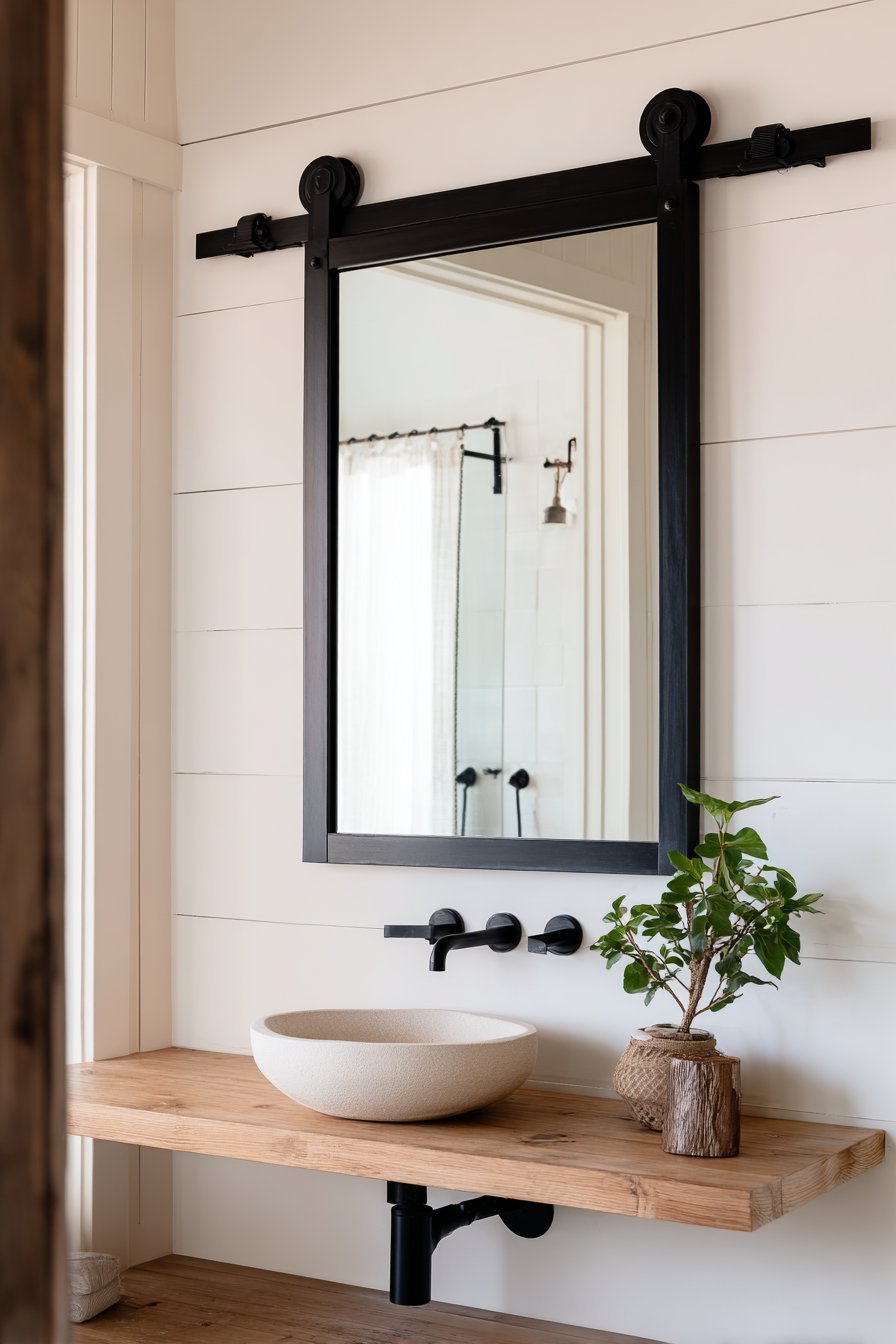
Barn door-style sliding mirrors conceal medicine cabinet storage ingeniously. The black metal frame and hardware add industrial character. White shiplap accent walls provide textural contrast beautifully. A small vessel sink sits on a narrow oak floating shelf.
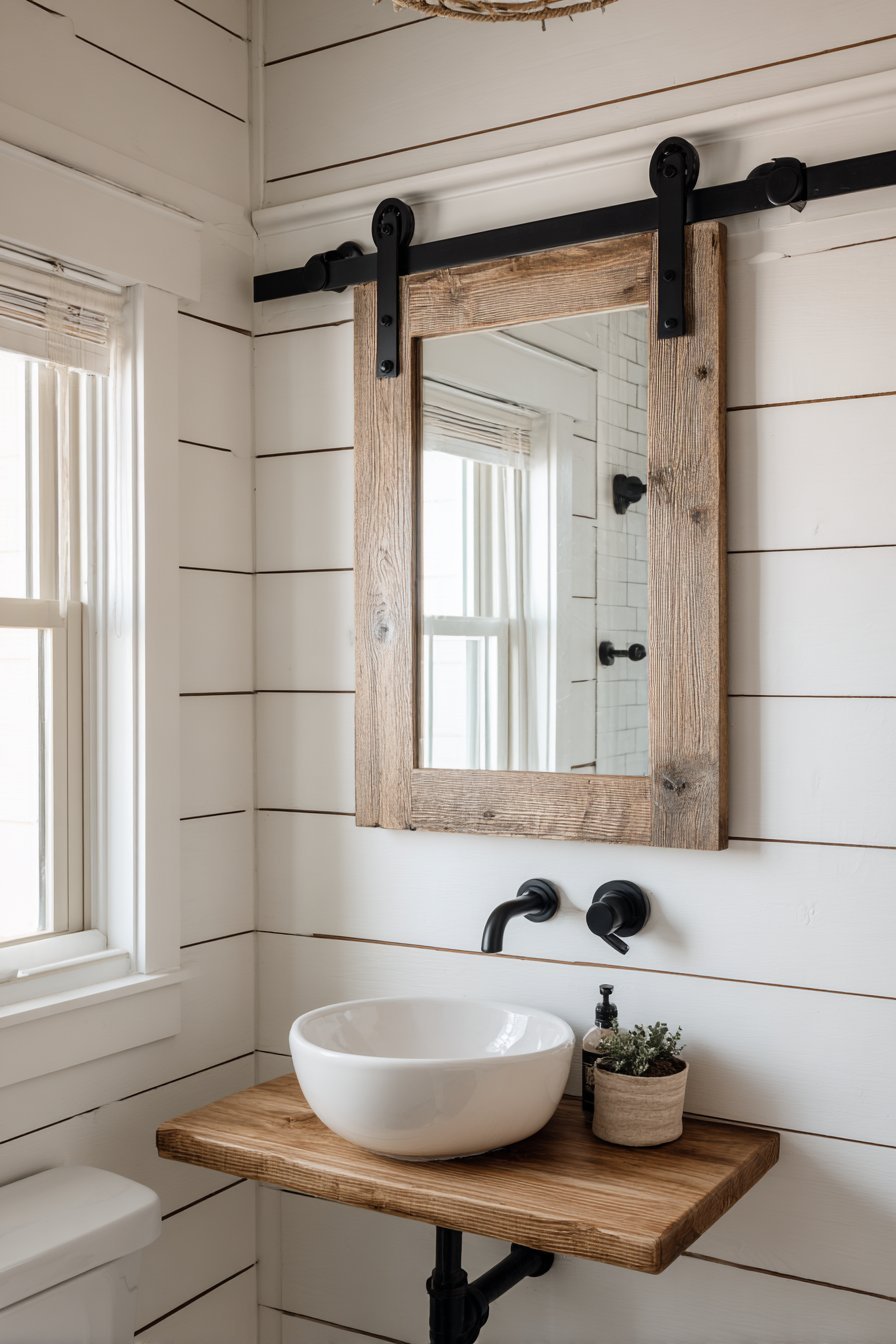
The sliding mechanism requires no clearance space for operation. The mirror moves laterally along mounted tracks smoothly. Behind the mirror, hidden storage accommodates medicines and toiletries. Matte black fixtures coordinate with the mirror hardware throughout.
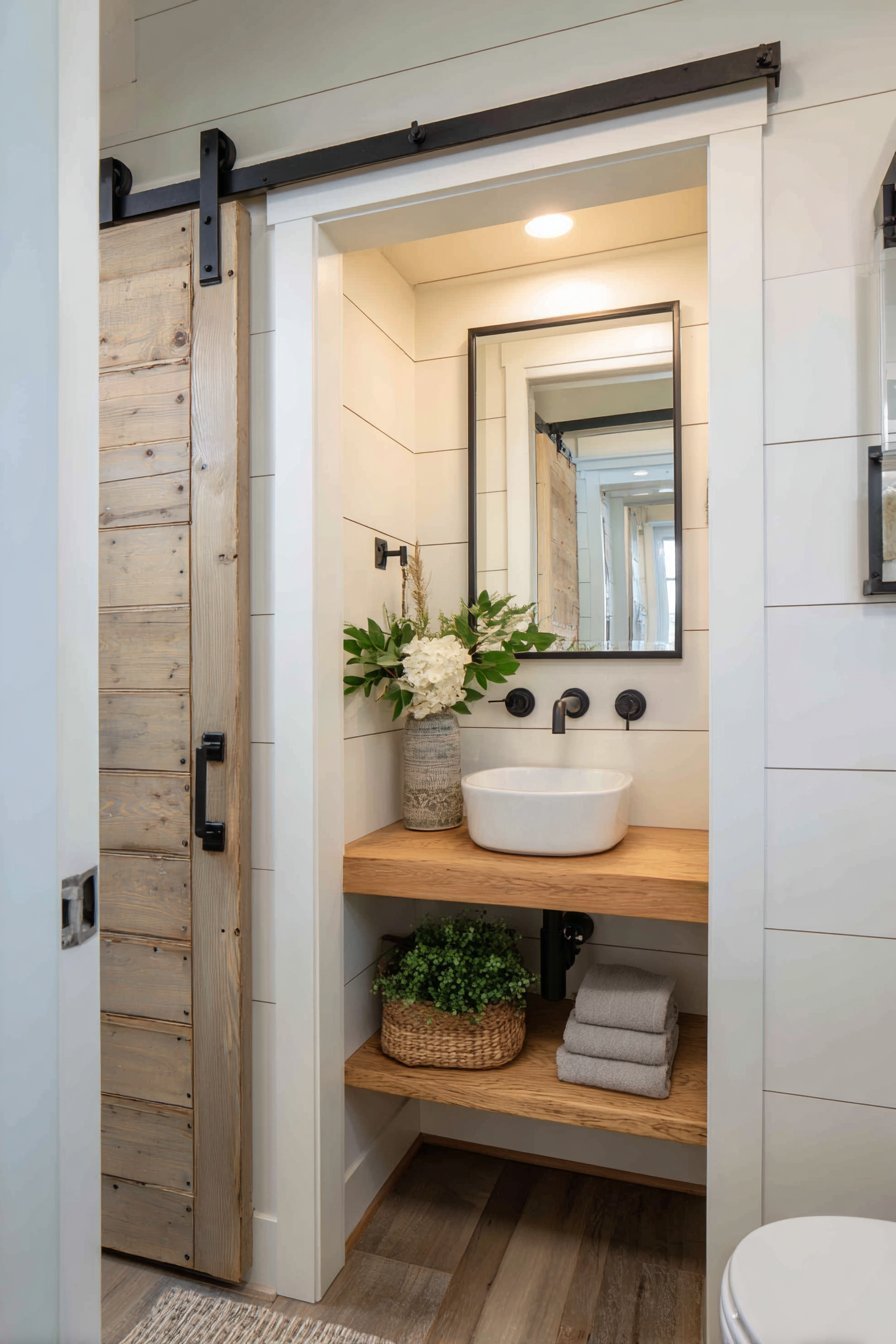
This dual-purpose design delivers reflection and concealed storage simultaneously. The barn door aesthetic adds personality to tiny bathrooms. The natural oak shelf introduces warmth against white walls. The vessel sink maintains a compact footprint while providing functionality.
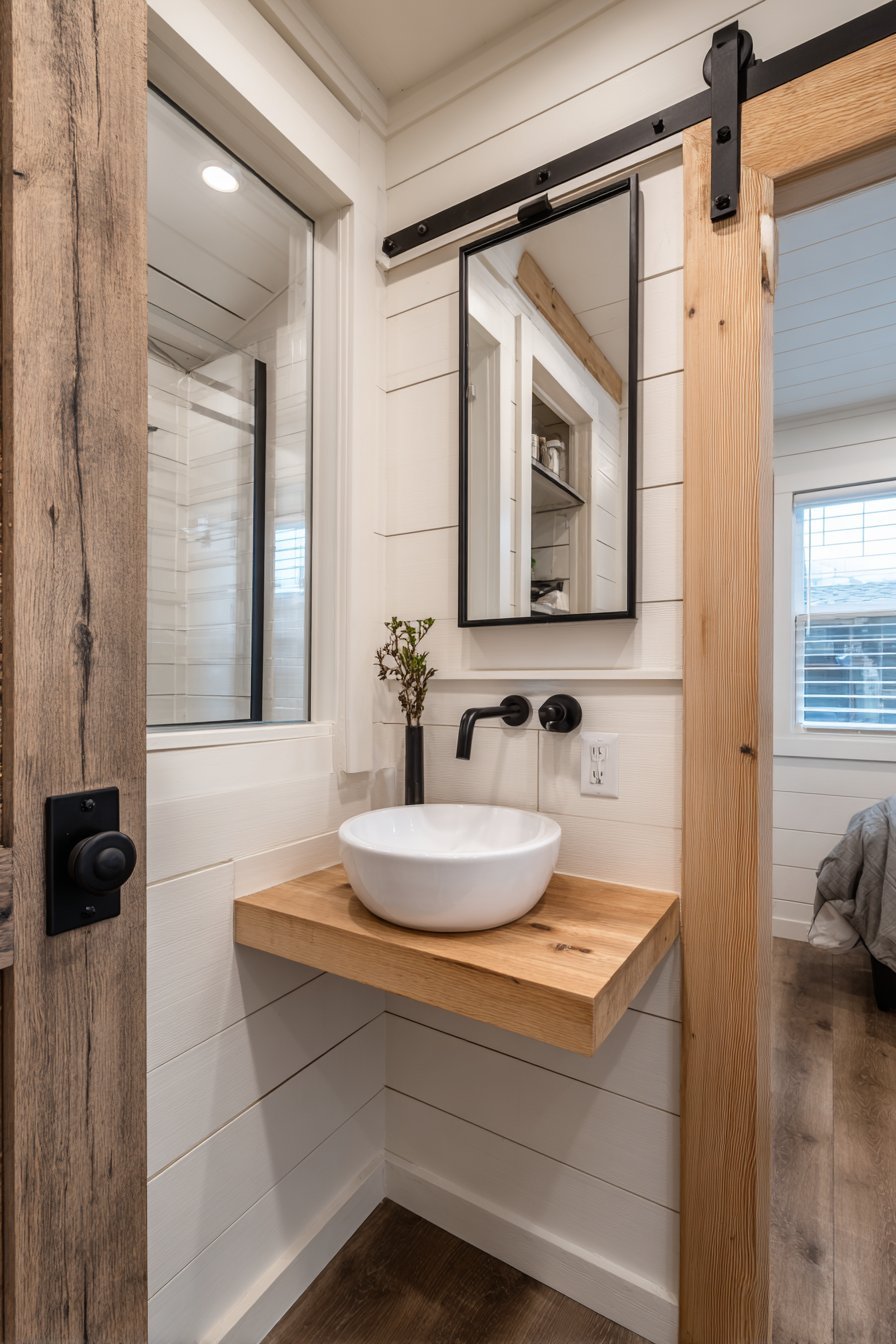
The movable mirror provides flexible access to hidden storage. Sliding reveals organized shelves behind the reflective surface. The track-mounted system operates effortlessly with minimal maintenance. This creative solution combines style with practical storage needs.
Key Design Tips:
- Install sliding barn door mirrors for dual function
- Use black metal hardware for industrial accent
- Add shiplap walls for textural interest
- Choose vessel sinks on floating shelves
- Coordinate fixture finishes with mirror hardware
- Maximize storage behind movable mirrors
10. Angular Toilet Placement
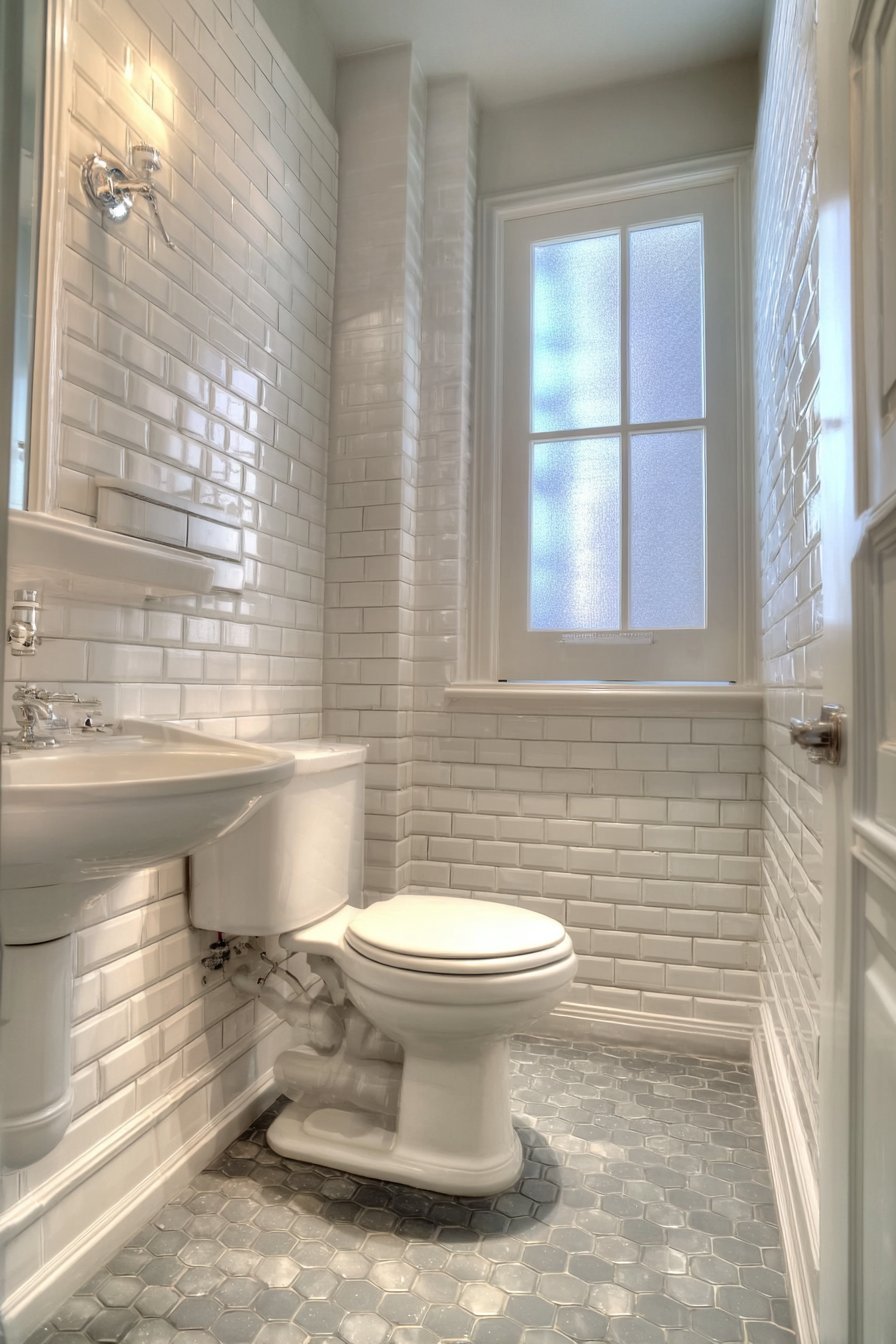
Corner-mounted toilets positioned at forty-five degrees improve traffic flow. The angled placement creates better circulation in narrow spaces. Grey hexagonal floor tiles provide visual interest and texture. A small corner wall-mounted sink completes the efficient layout.
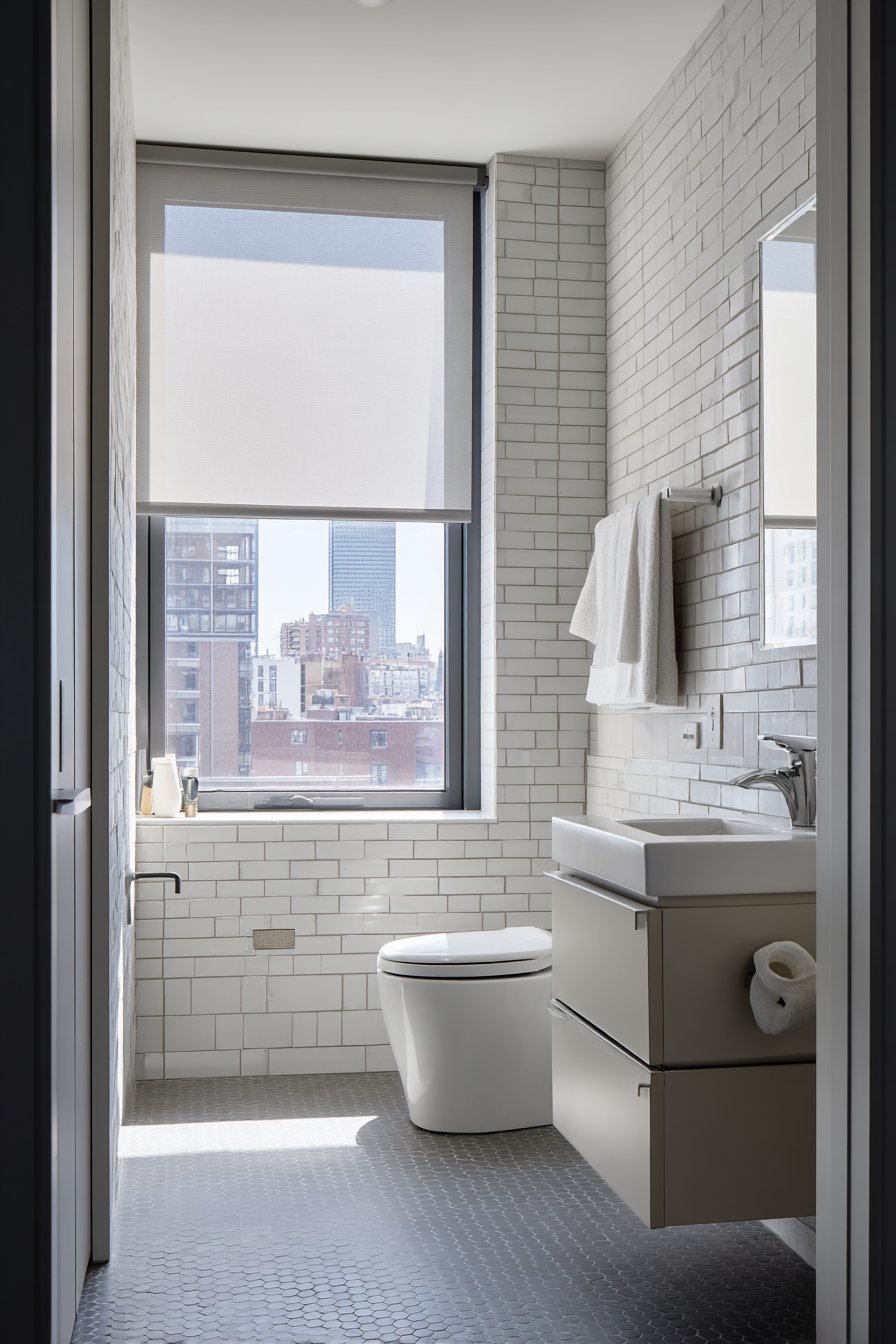
The diagonal orientation represents thoughtful spatial planning. Traditional perpendicular placement often blocks circulation paths. This angled strategy opens movement corridors significantly. White subway tiles in brick pattern maintain classic appeal.
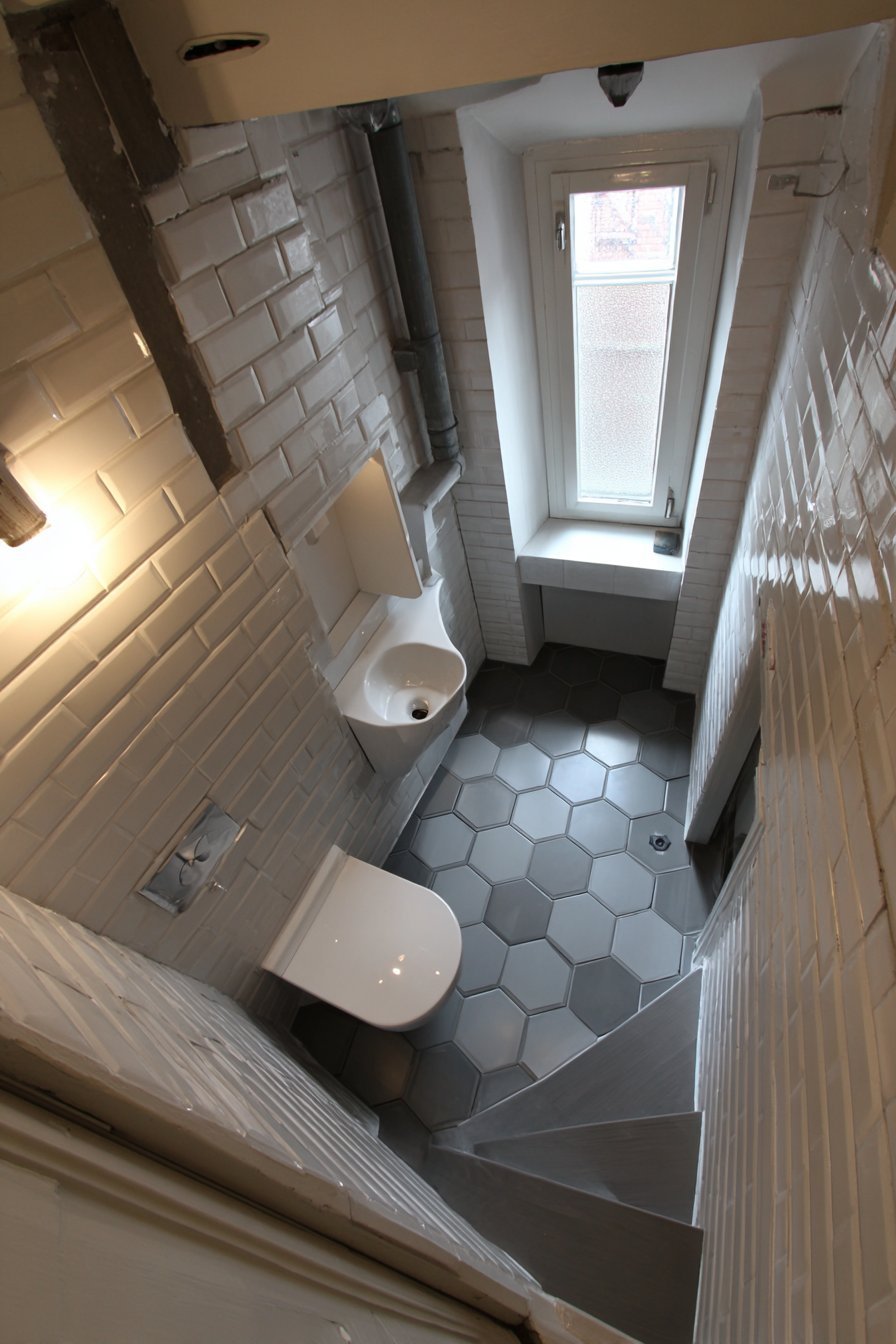
A narrow window with privacy film admits natural light discreetly. The frosted treatment maintains seclusion while brightening the space. The angular toilet position maximizes usable floor area. Small sinks mounted in remaining corners complete the functional arrangement.
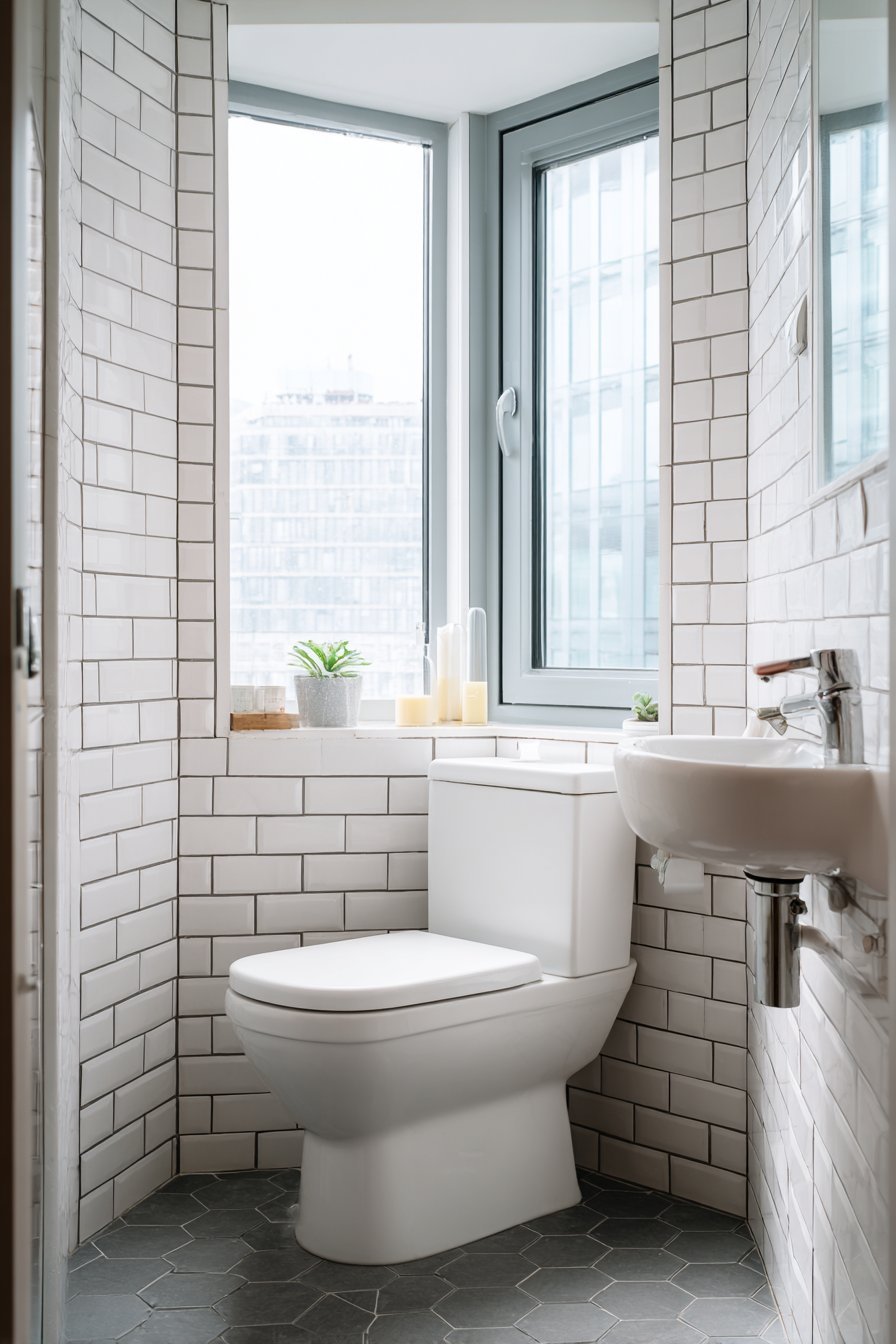
This unconventional approach demonstrates creative problem-solving in tight quarters. The forty-five-degree angle creates surprisingly effective improvements. Circulation patterns flow more naturally around angled fixtures. The geometric floor tiles complement the angular placement beautifully.
Key Design Tips:
- Position toilets at forty-five-degree angles for better flow
- Use hexagonal floor tiles for visual interest
- Install corner wall-mounted sinks for efficiency
- Add privacy film to windows for natural light
- Choose white subway tiles for classic appeal
- Consider angular placement in narrow bathrooms
11. Compact Shower-Tub Combination
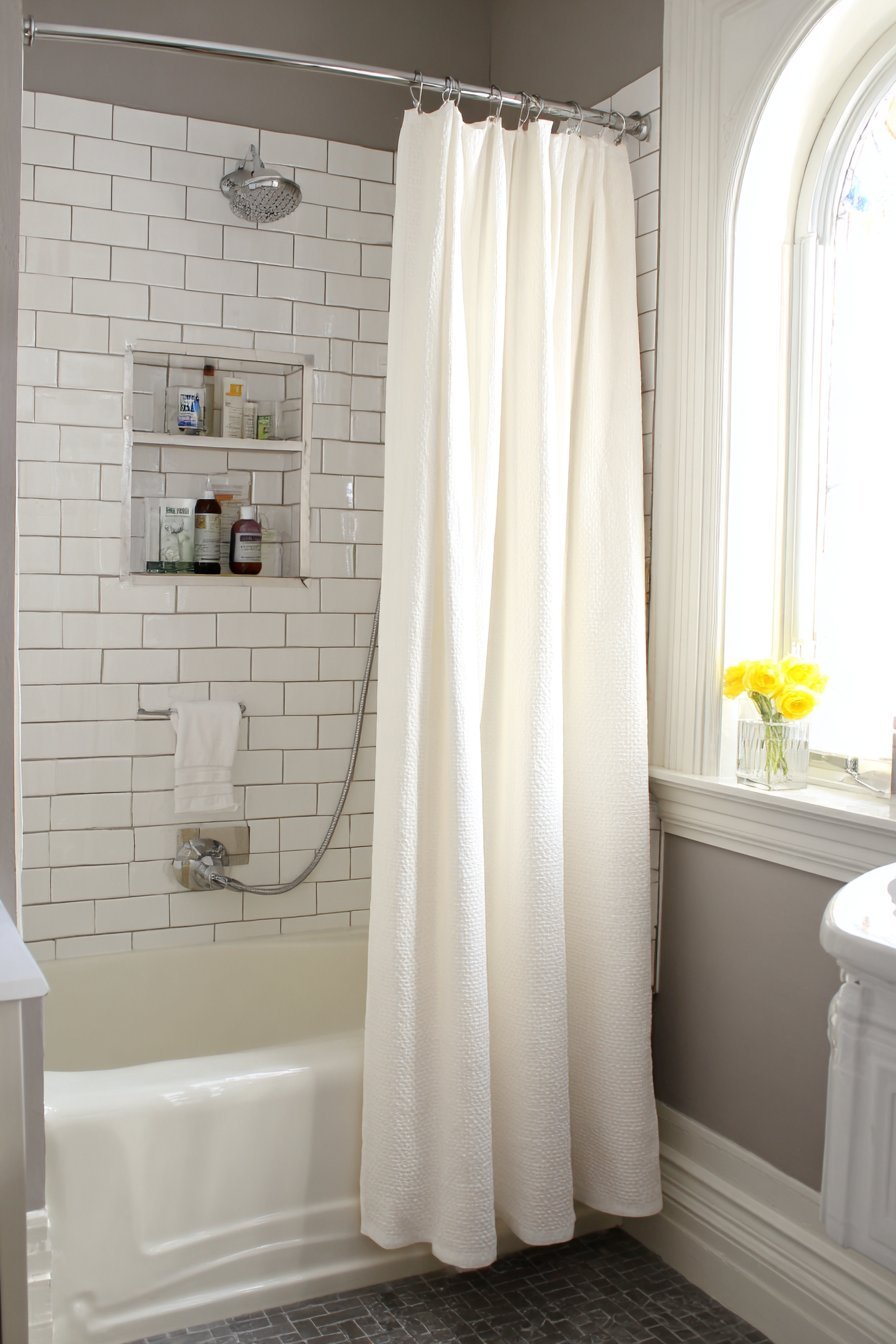
Alcove tubs measuring forty-eight inches provide dual bathing options. The white acrylic tub features overhead shower combinations. A curved shower rod allows the waffle-weave curtain to expand. White subway tiles with dark grey grout surround the bathing area.
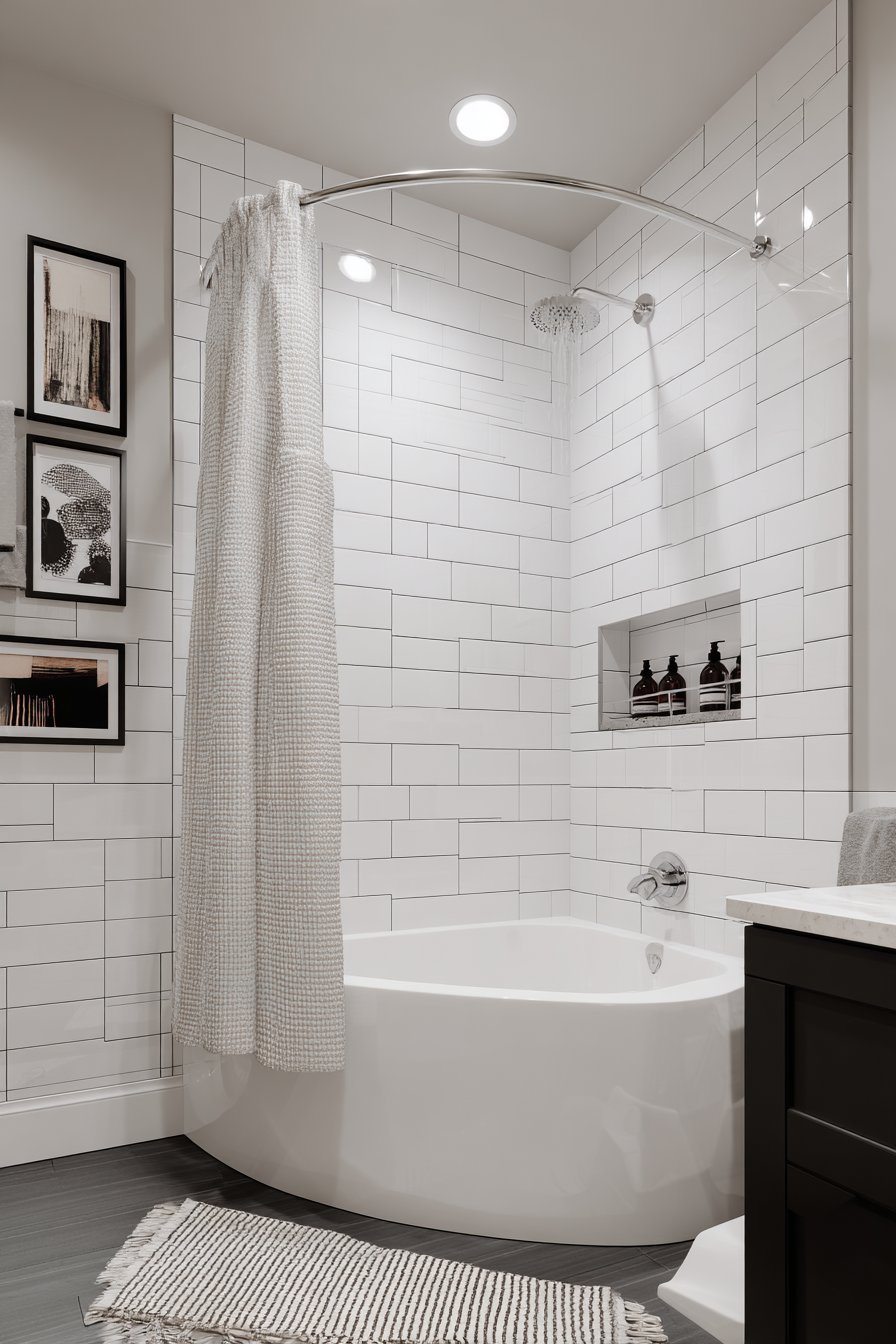
The dual-function fixture delivers remarkable versatility in minimal footage. Soaking and showering capabilities combine in single installations. The curved rod creates more interior shower space when curtains close. Built-in shelf niches hold shower products within easy reach.
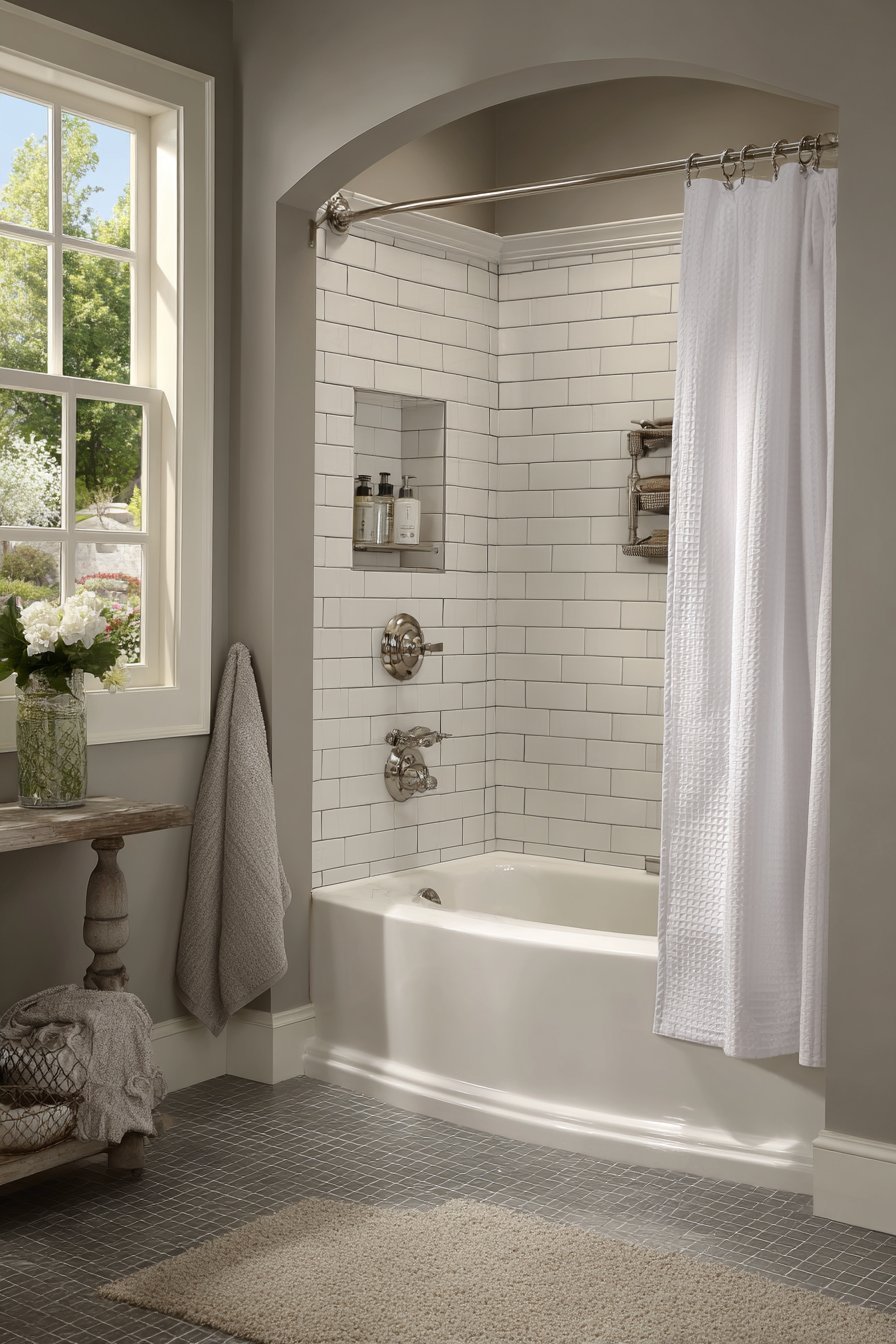
This traditional solution remains popular in tiny bathrooms worldwide. The alcove installation fits snugly between three walls efficiently. Standard dimensions accommodate most small bathroom configurations. The tub depth allows comfortable bathing despite compact length.
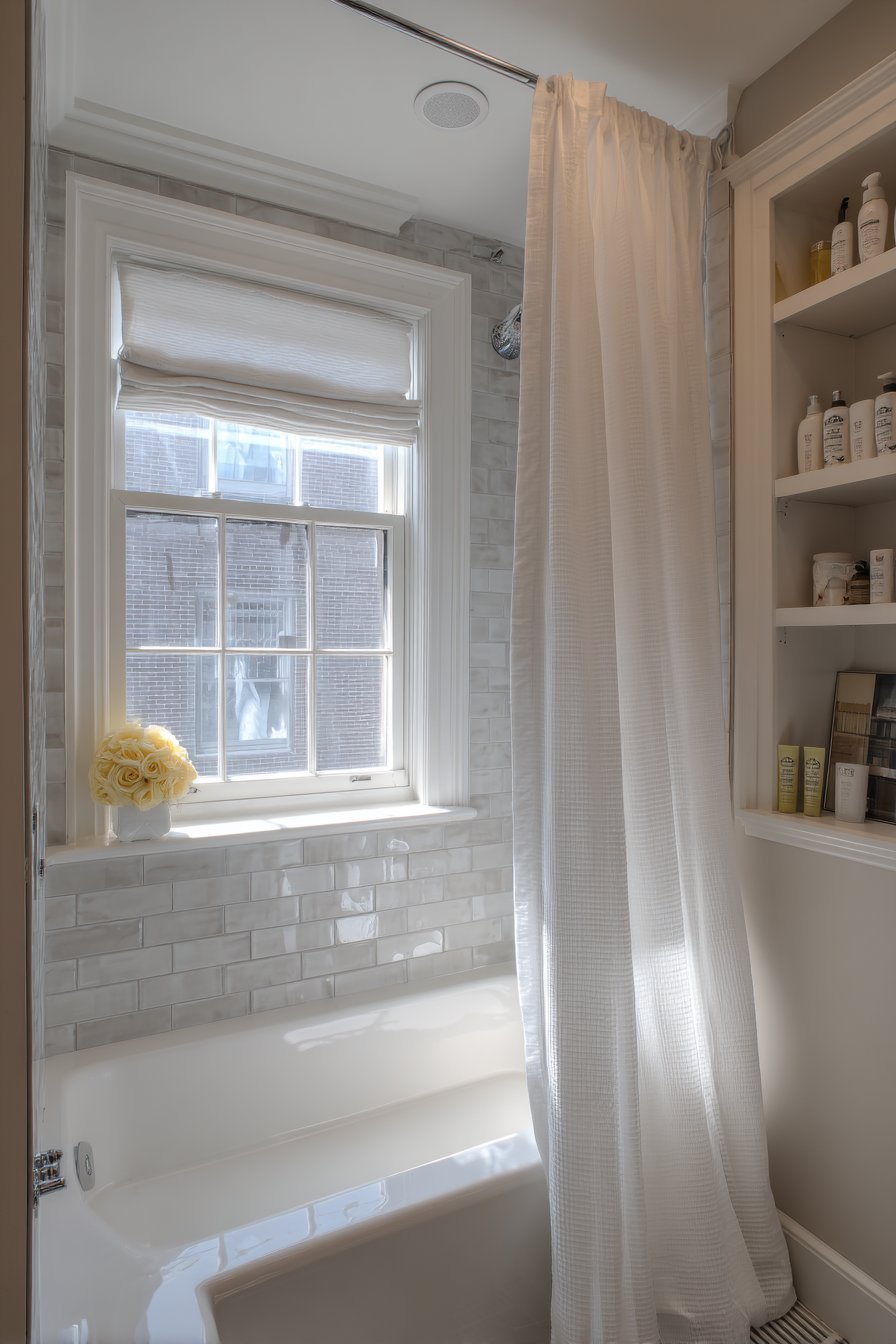
Dark grey grout lines add definition without overwhelming white tiles. The contrasting joints create subtle geometric patterns across walls. Natural lighting highlights the clean, functional bathing area. The waffle-weave curtain adds texture while maintaining light passage.
Key Design Tips:
- Choose forty-eight-inch alcove tubs for small spaces
- Install curved shower rods for interior space
- Use white subway tiles with dark grout for definition
- Add built-in niches for shower storage
- Select waffle-weave curtains for texture and light
- Embrace dual-function bathing fixtures
12. Collapsible Wall-Mounted Sink
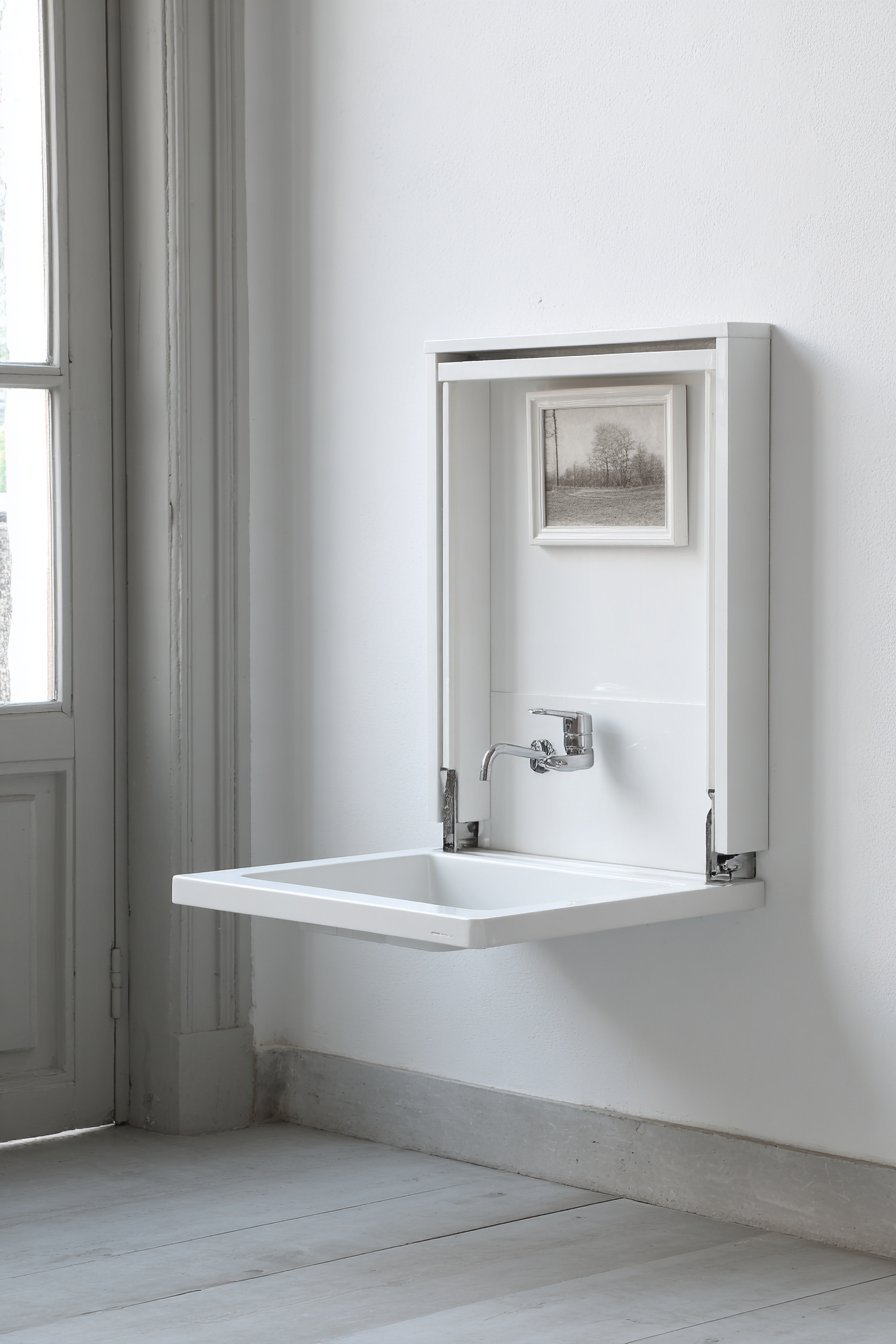
Foldable sinks collapse flat against walls when not in use. The white ceramic basin features simple chrome faucet hardware. The fold-down mechanism operates with minimalist aesthetic principles. When retracted, a simple white wall with artwork appears.
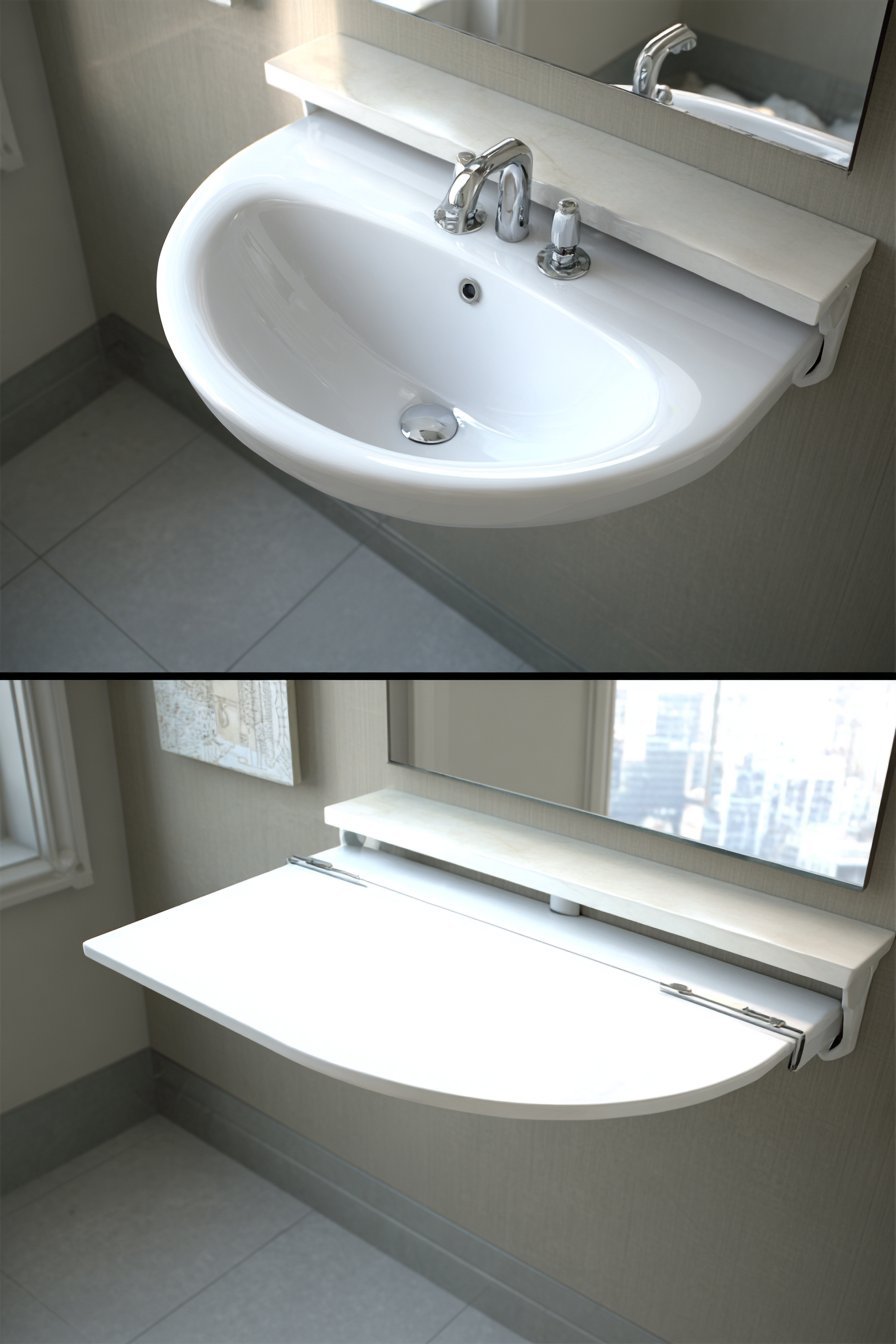
This innovation suits powder rooms and micro-bathrooms perfectly. The collapsible design provides washing facilities on demand. When folded, the fixture disappears to reveal wall space. Light grey tiles cover the floor in neutral simplicity.
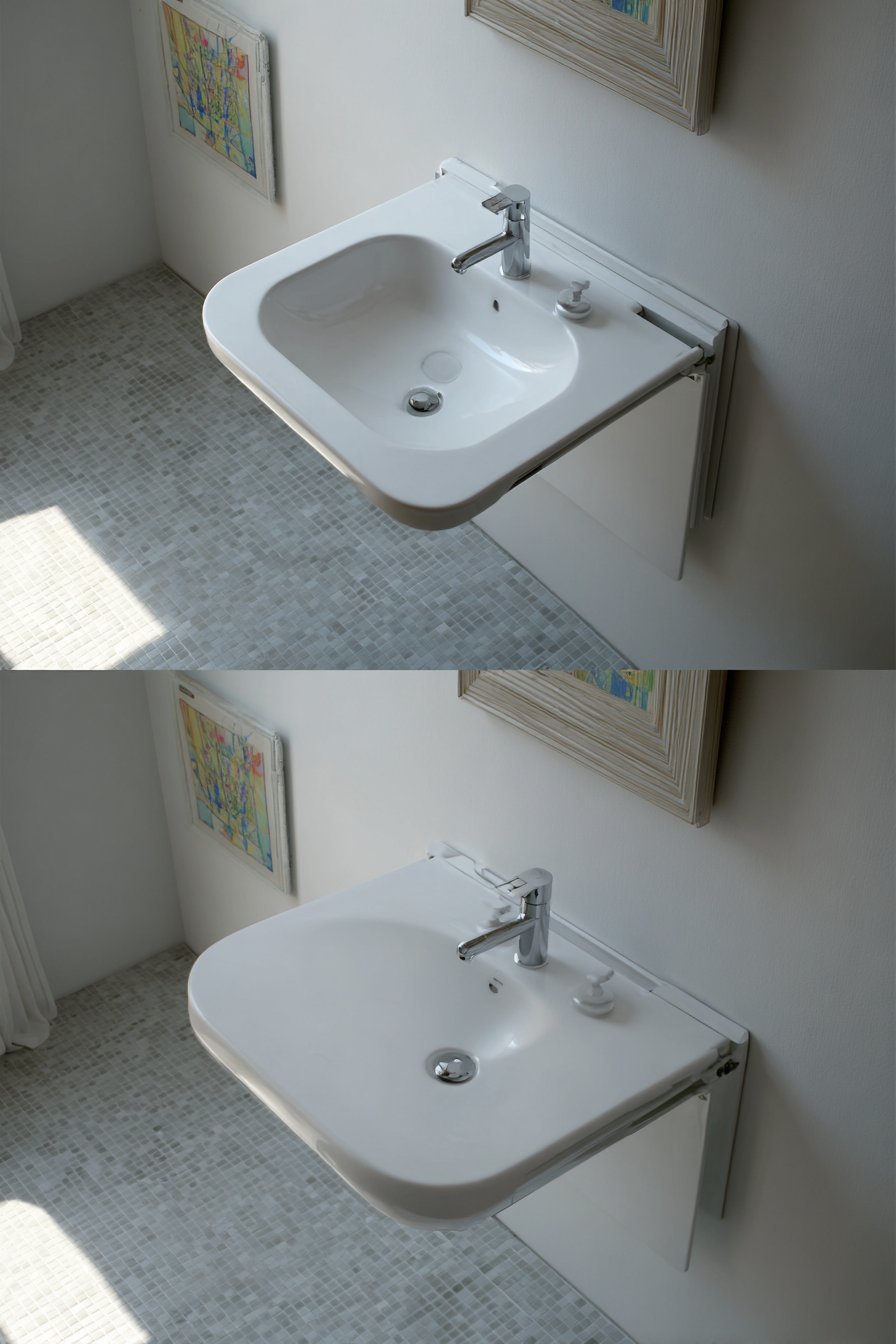
The space-saving innovation represents cutting-edge bathroom design. Extended position provides full washing functionality. Retracted position maximizes available floor area for movement. The mechanical hinge system operates smoothly through repeated cycles.
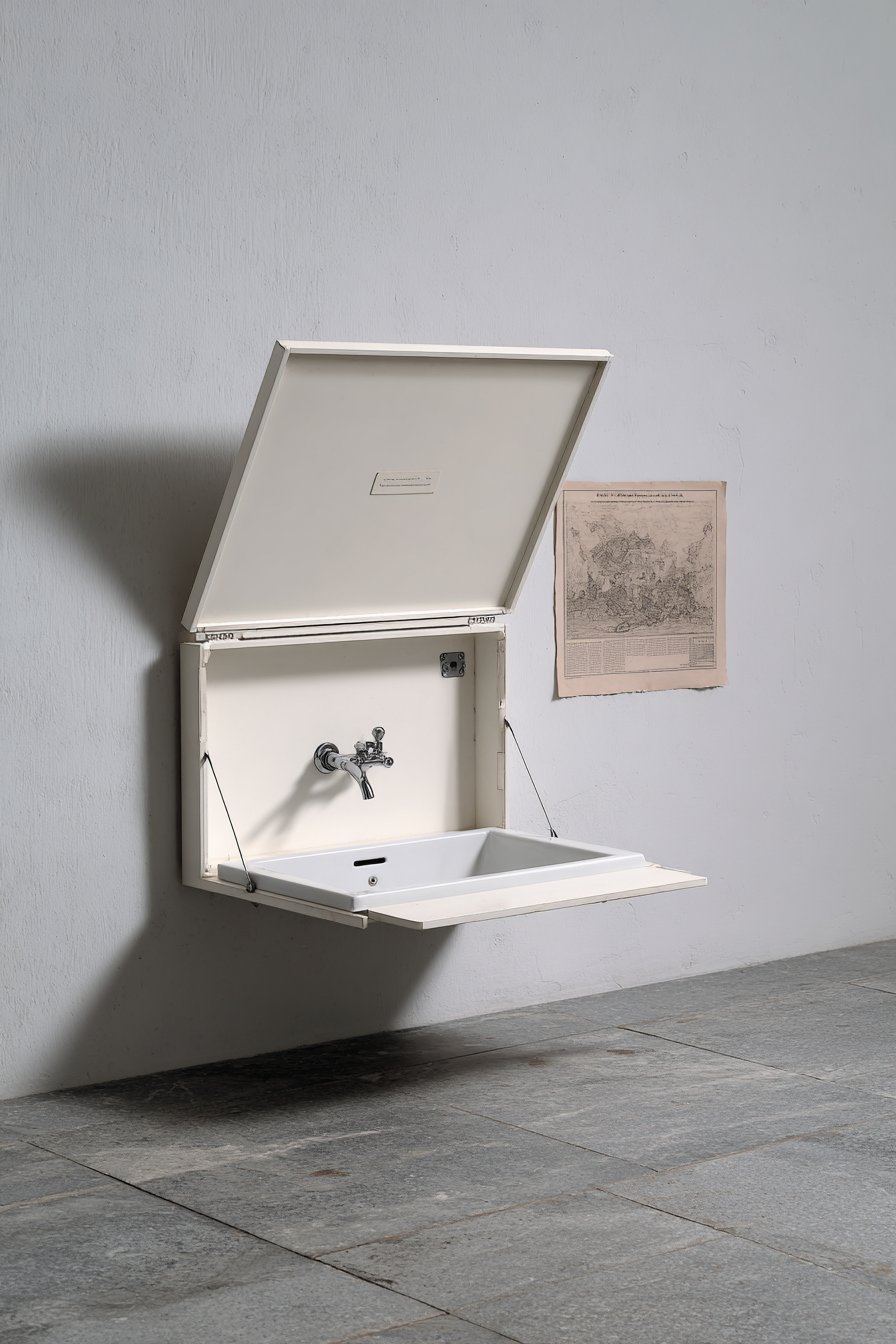
Clean lines characterize both extended and collapsed configurations. The fixture maintains elegant proportions in both positions. Chrome hardware adds quality touches to functional innovation. This creative solution addresses extreme space constraints effectively.
Key Design Tips:
- Consider foldable sinks for extreme space constraints
- Choose simple chrome faucets for clean aesthetics
- Use light grey floor tiles for neutral foundation
- Add artwork to walls revealed when collapsed
- Embrace mechanical innovation in tiny bathrooms
- Prioritize fixtures with dual configurations
13. Above-Toilet Open Shelving
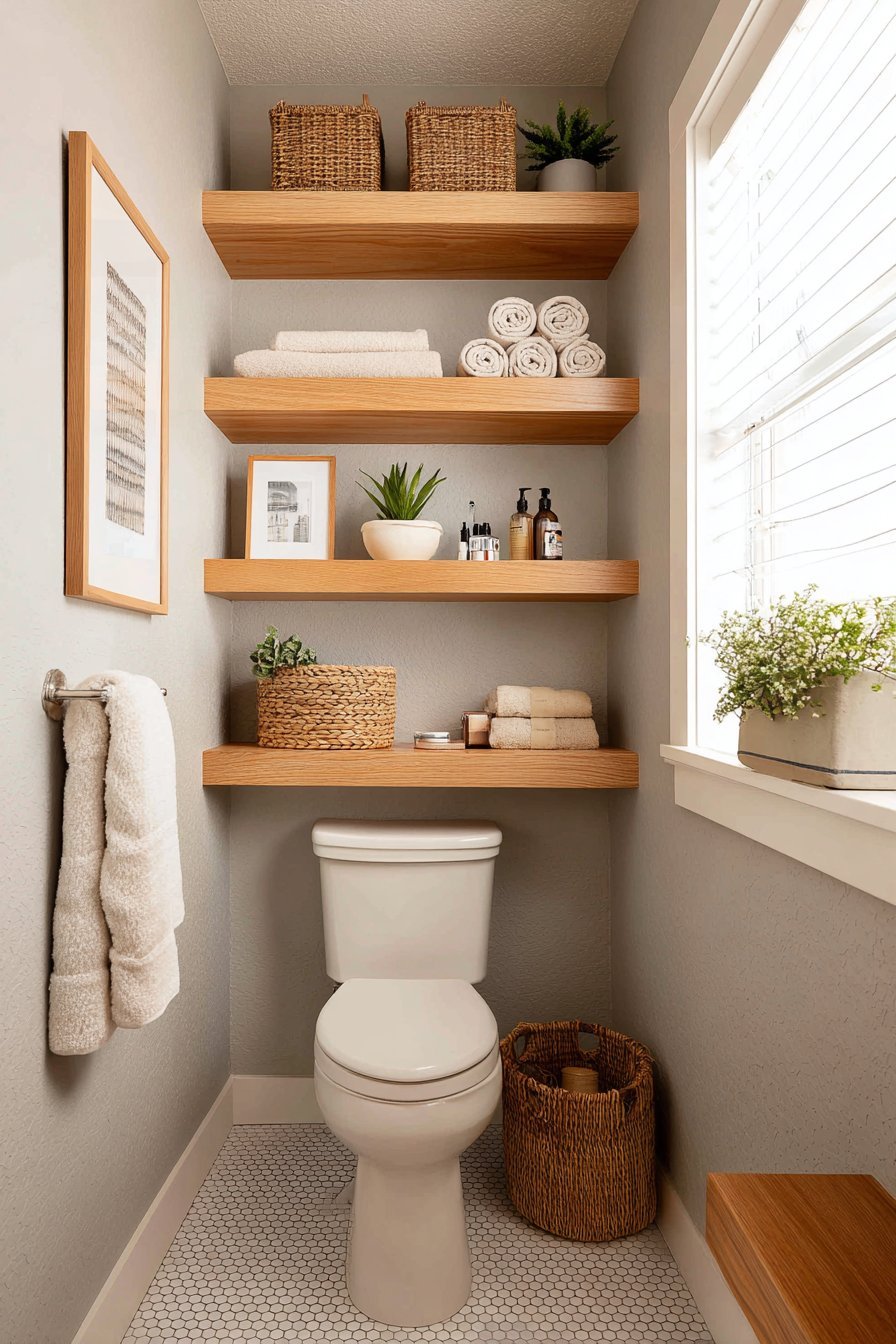
Three floating wooden shelves transform dead space above toilets. Light oak shelves hold rolled towels and woven baskets. The organized display includes small potted plants for life. White hexagonal floor tiles ground the functional arrangement.
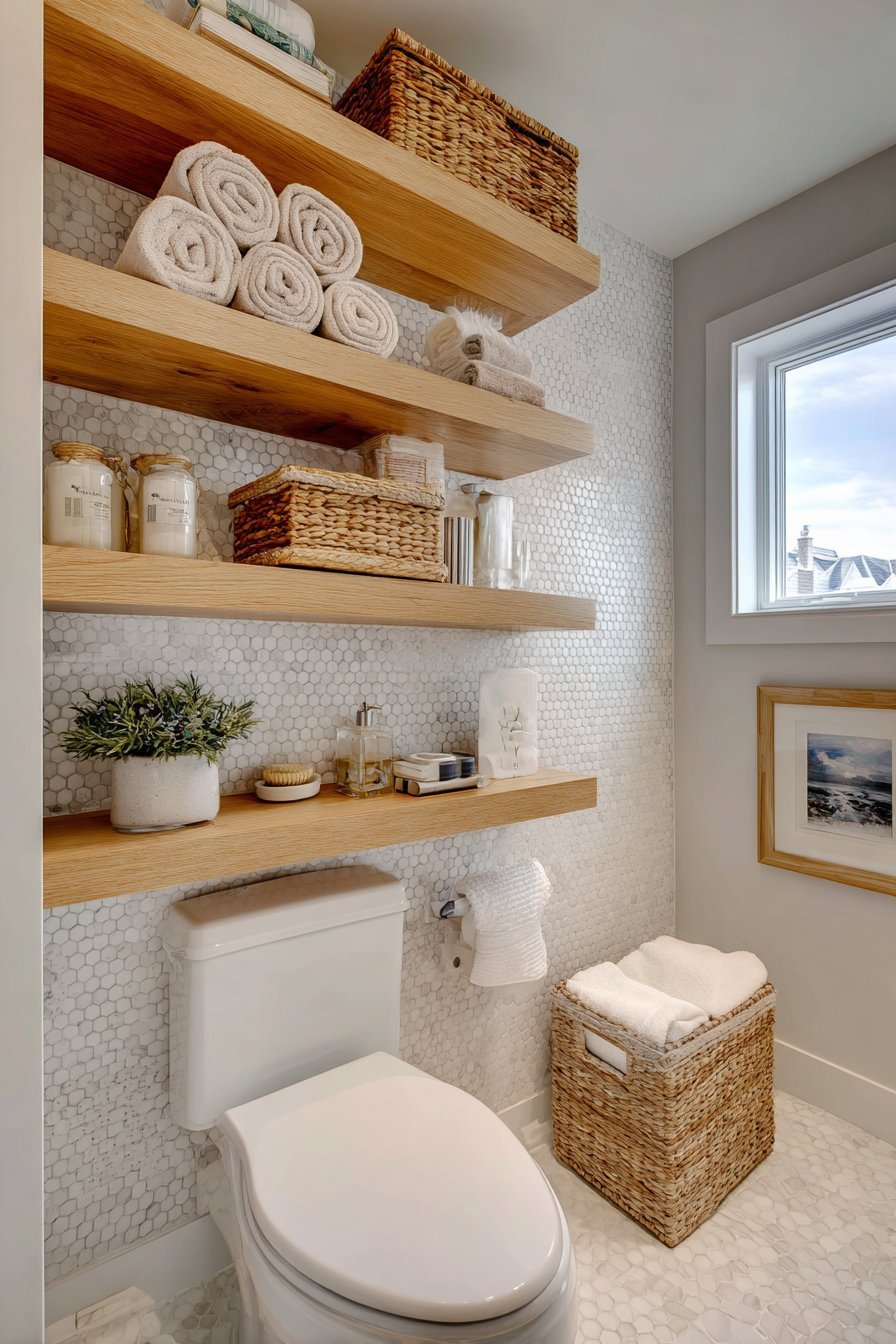
The vertical storage solution utilizes typically wasted space brilliantly. Shelves positioned above toilet tanks create accessible storage. The open design maintains visual lightness throughout the space. Light grey textured paint provides subtle backdrop interest.
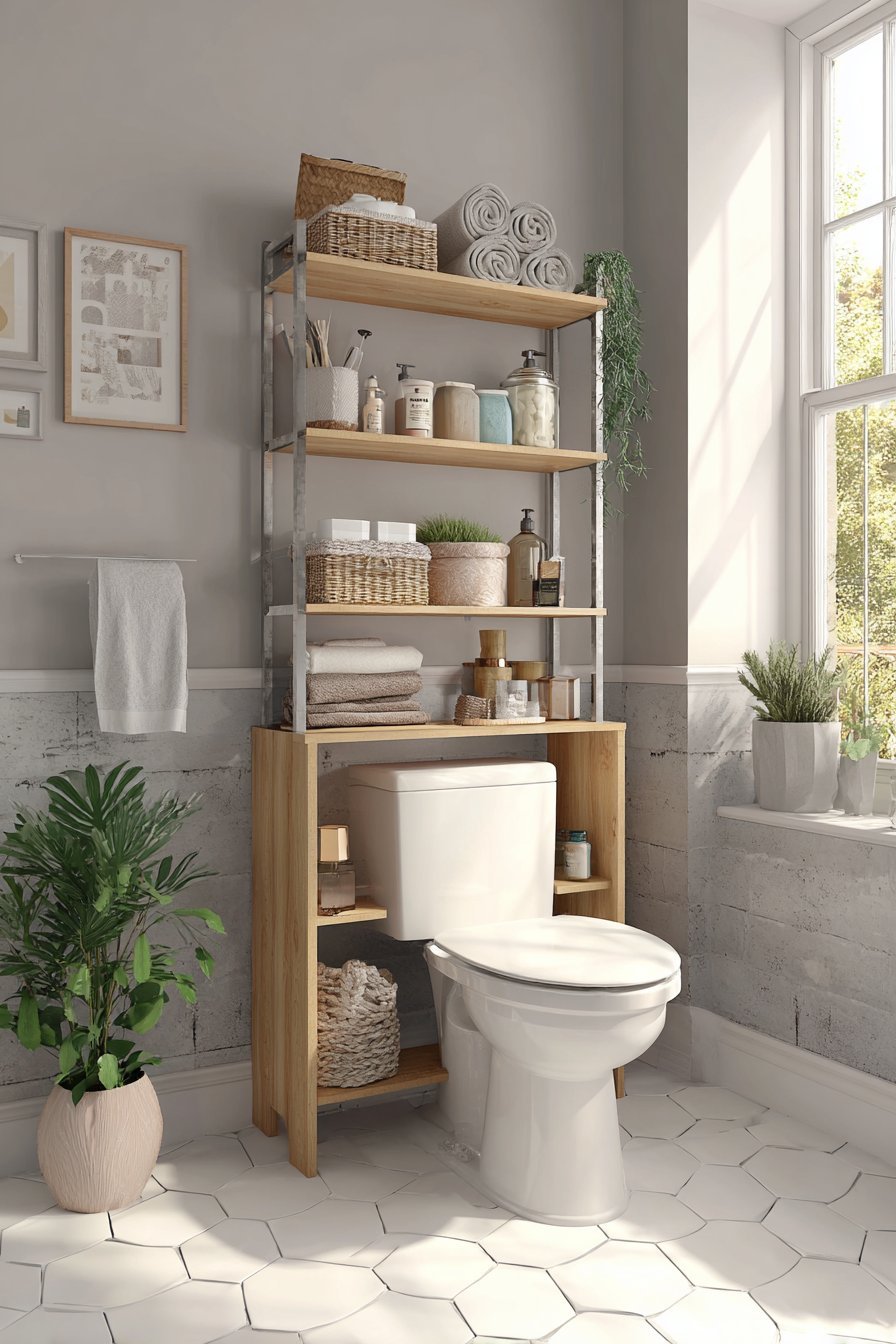
Rolled towels create appealing cylindrical forms on shelves. Woven baskets conceal supplies while adding natural texture. Small plants introduce organic elements to bathroom environments. A small framed print adds personality without overwhelming the design.
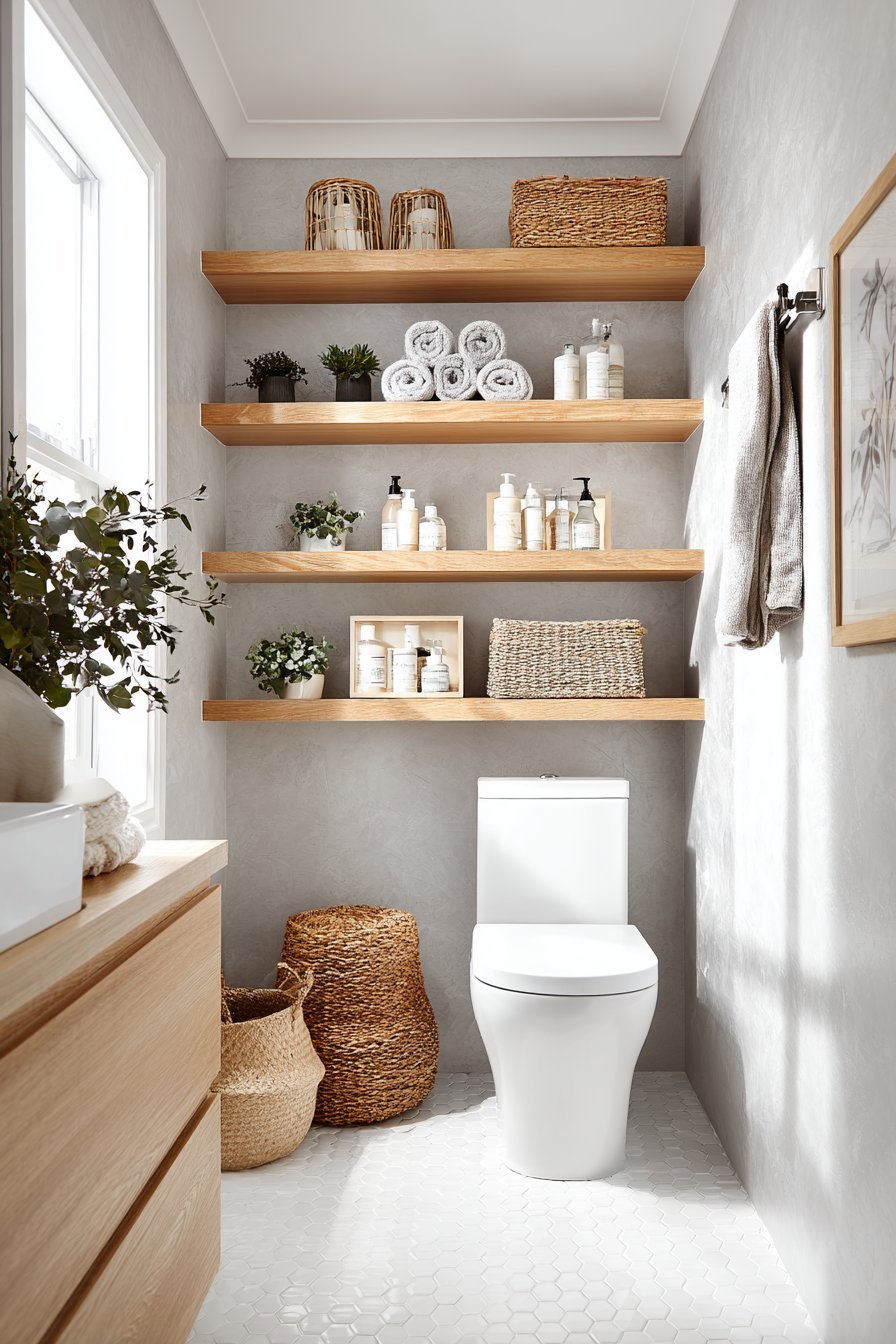
This arrangement demonstrates practical and aesthetic storage solutions. The floating installation appears weightless against painted walls. Natural light from nearby windows illuminates the organized display. The efficient vertical approach maximizes every cubic inch available.
Key Design Tips:
- Install floating shelves above toilet tanks
- Use light oak wood for warmth
- Roll towels for appealing display
- Add woven baskets for concealed storage
- Include small plants for organic elements
- Choose hexagonal floor tiles for texture
14. Narrow Walk-In Shower
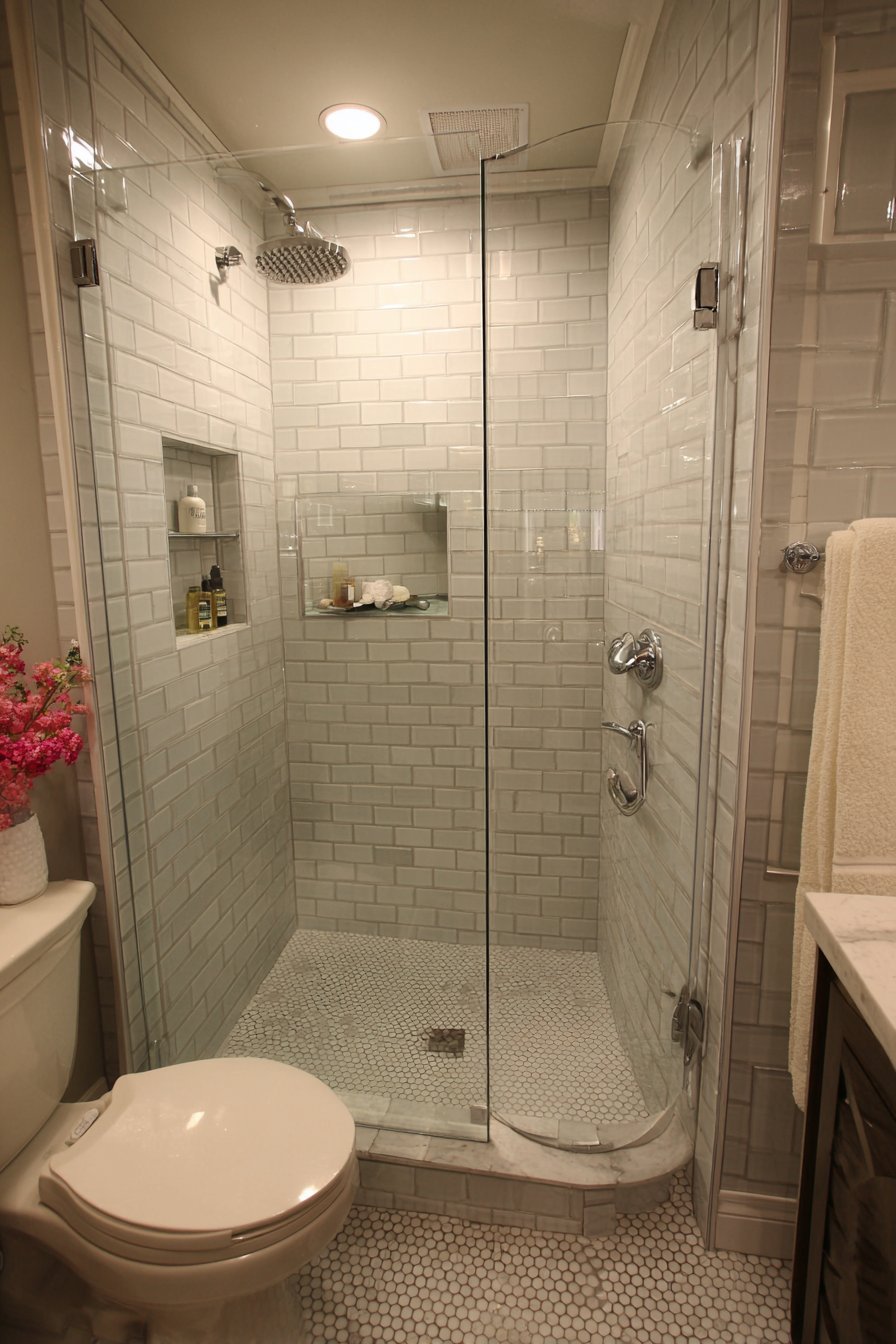
Walk-in showers only thirty inches wide fit extremely tight spaces. Hinged glass doors open outward to maximize interior dimensions. White subway tiles in vertical orientation elongate narrow walls. Ceiling-mounted rainfall showerheads eliminate protruding shower arms.
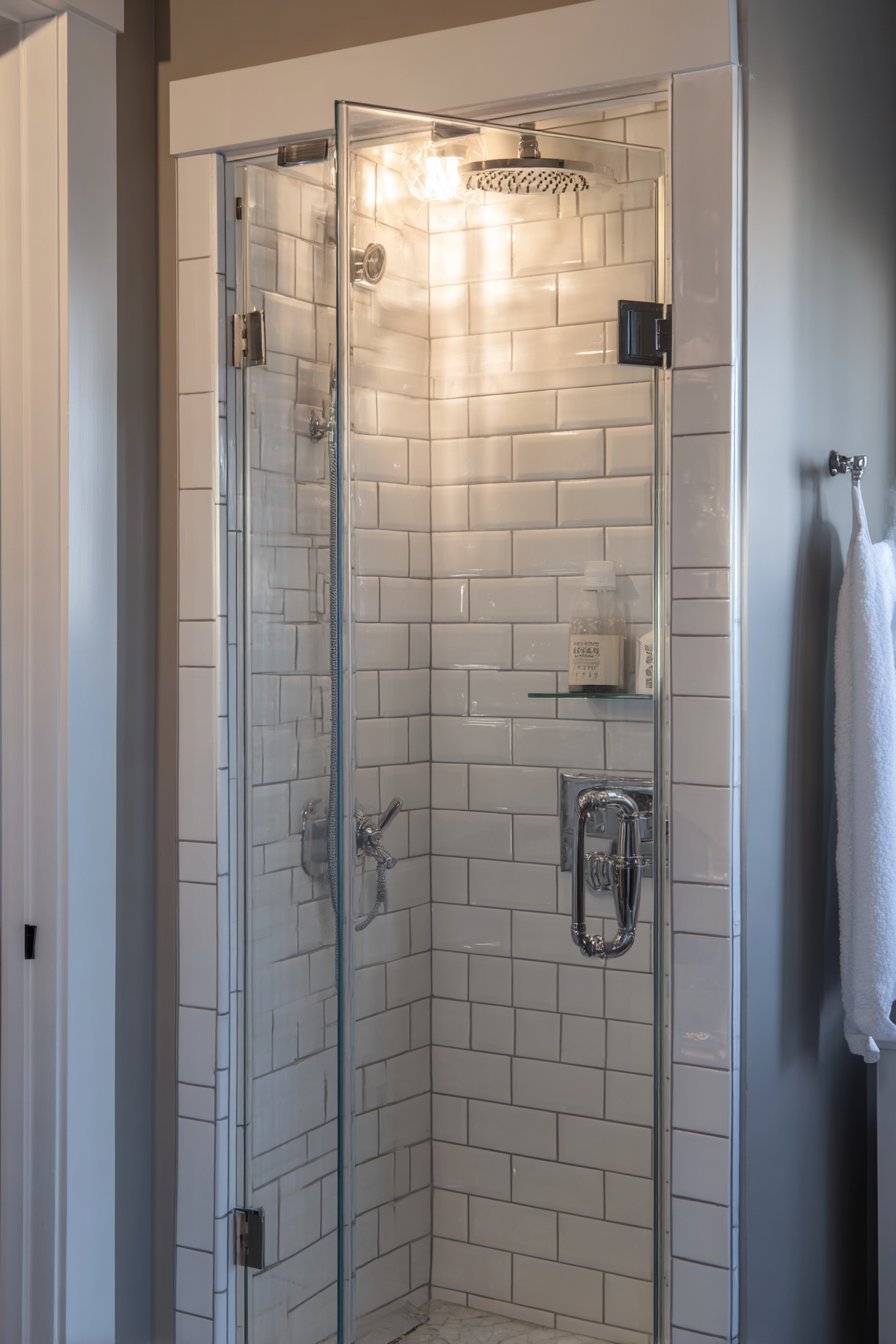
The compact footprint accommodates extremely constrained bathroom layouts. Outward-opening doors preserve precious interior shower space. Vertical tile orientation draws eyes upward visually. Chrome fixtures maintain streamlined appearance throughout the installation.
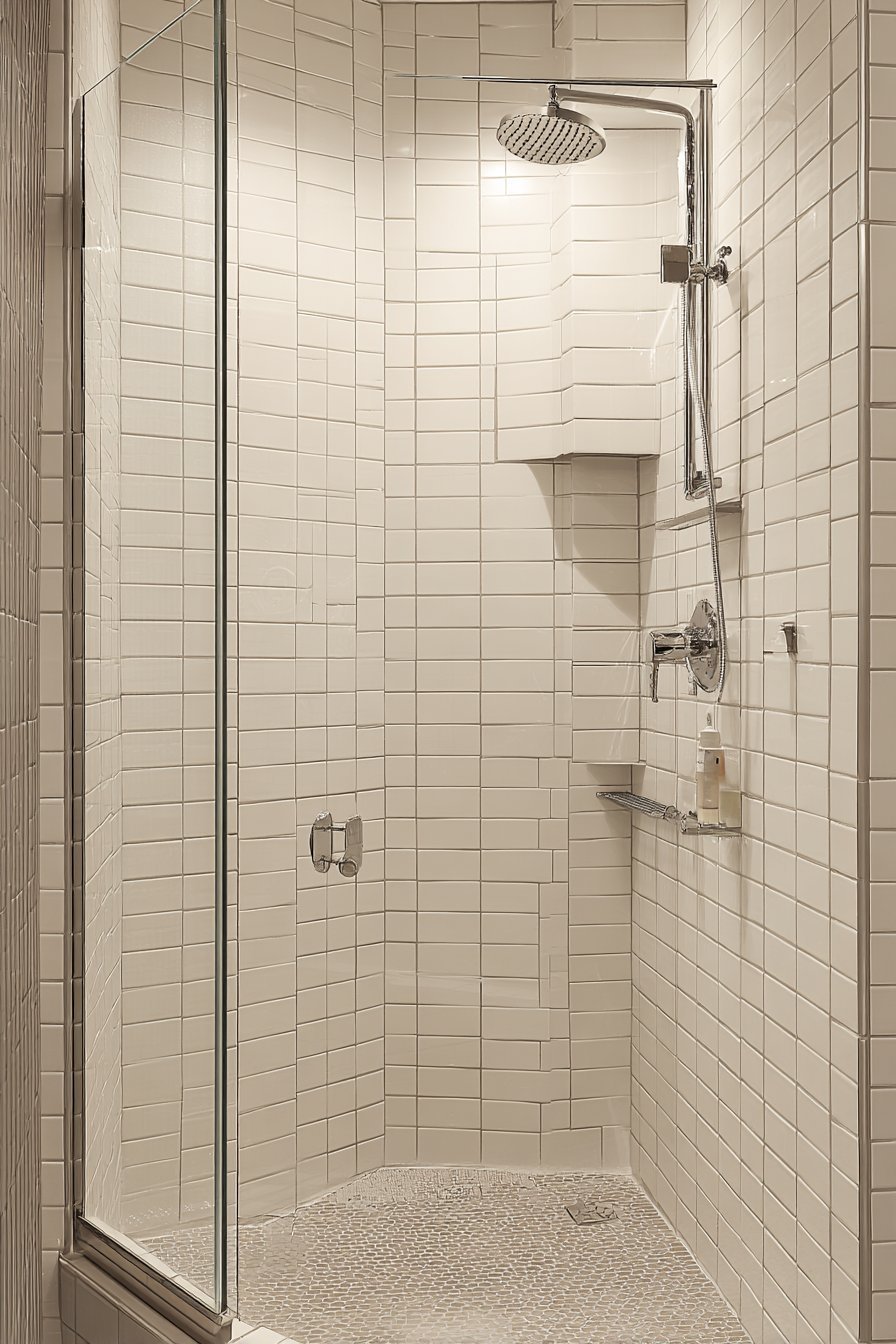
The ceiling-mounted showerhead represents thoughtful spatial planning. No wall-mounted arm protrudes into limited shower width. Water falls directly downward in gentle rainfall patterns. A compact corner shelf holds toiletries without consuming floor space.
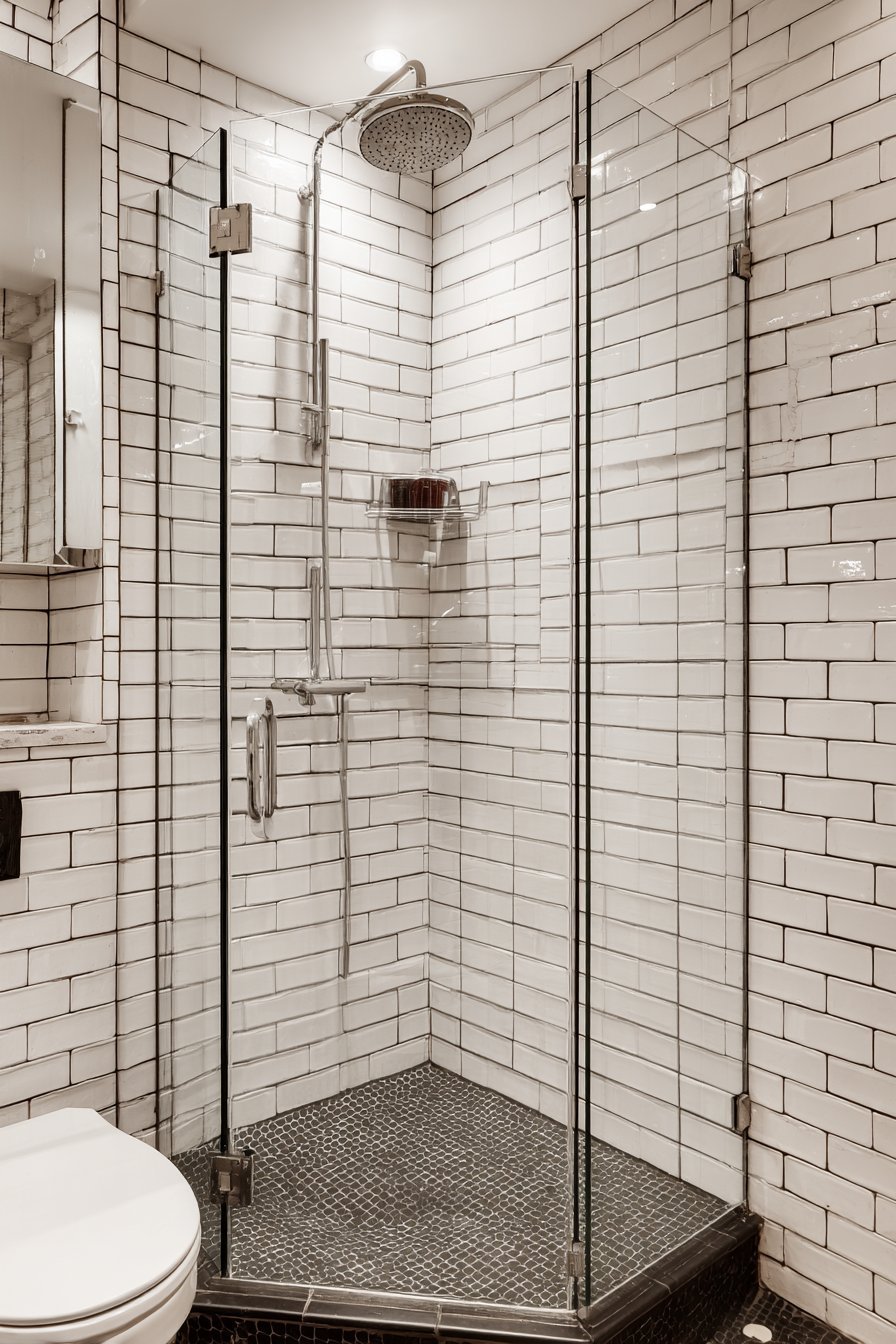
This minimal approach delivers full shower functionality remarkably. The narrow width proves sufficient for comfortable showering. Glass transparency maintains visual connection with bathroom beyond. Professional installation ensures proper waterproofing and drainage function.
Key Design Tips:
- Design walk-in showers as narrow as thirty inches
- Install outward-opening hinged glass doors
- Orient subway tiles vertically for height emphasis
- Mount rainfall showerheads from ceiling directly
- Add compact corner shelves for storage
- Maintain streamlined chrome fixture aesthetics
15. All-White Light Maximization
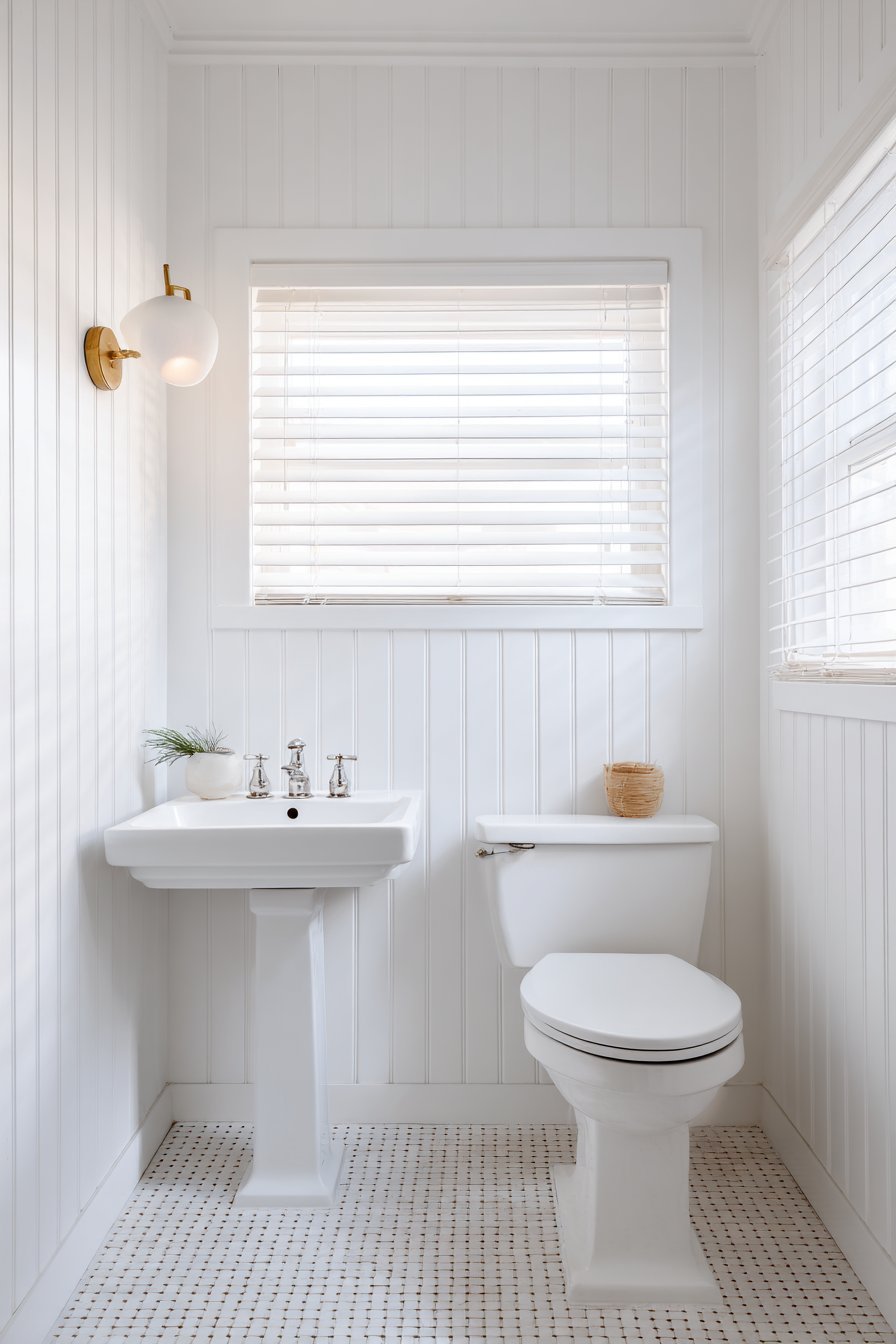
Monochromatic white schemes maximize light reflection dramatically. White wall-mounted sinks and compact toilets create brightness. White painted shiplap walls add subtle texture throughout. White penny tiles with light grey grout cover floors.
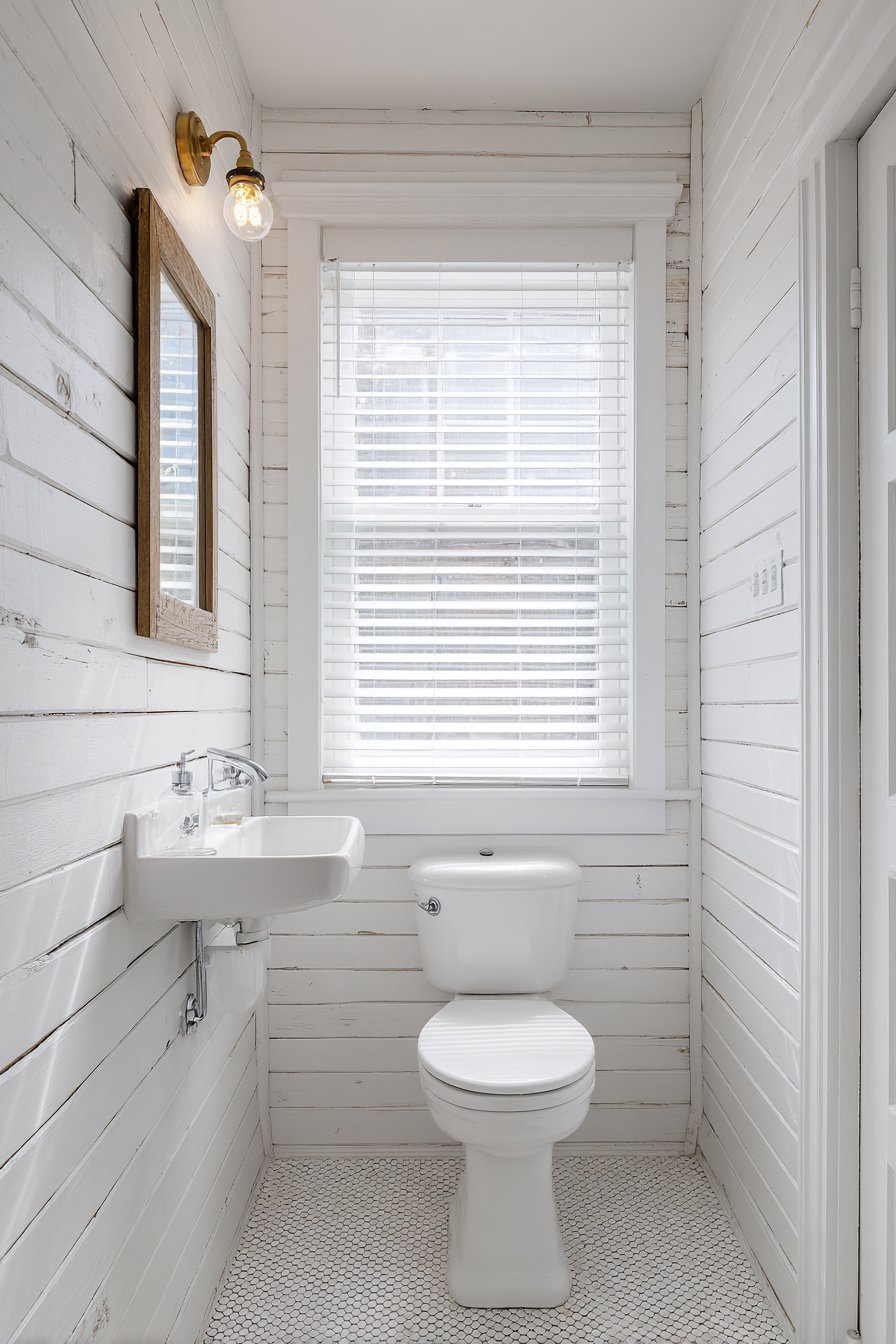
The continuous white palette eliminates visual breaks completely. Light bounces freely across all surfaces without absorption. A single brass sconce provides warm task lighting above mirrors. Small windows with white wooden blinds allow natural light control.
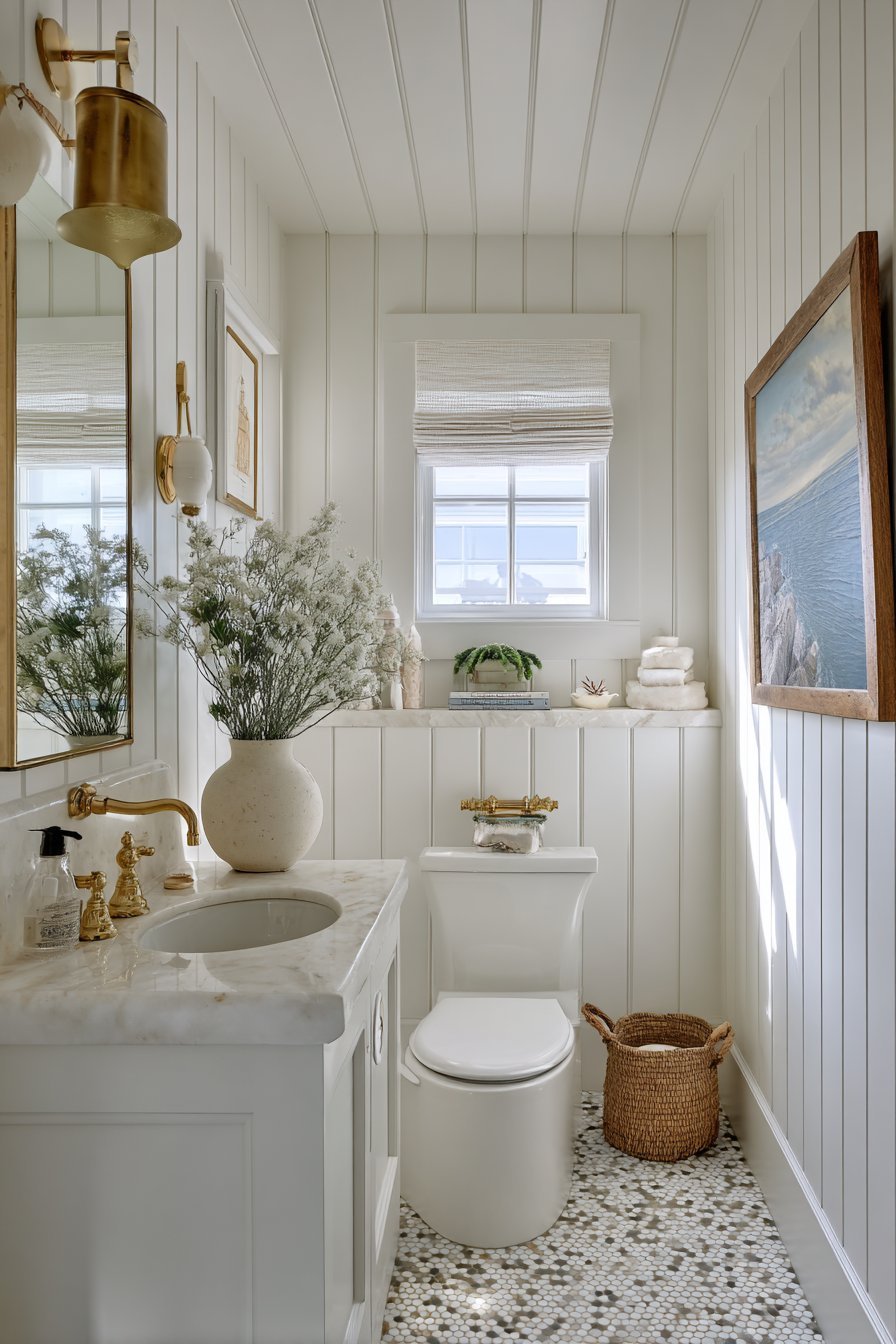
This approach demonstrates color’s psychological impact on spatial perception. The unbroken white expands perceived dimensions significantly. Eyes find no stopping points to define boundaries. Soft diffused daylight enhances the open, airy atmosphere.
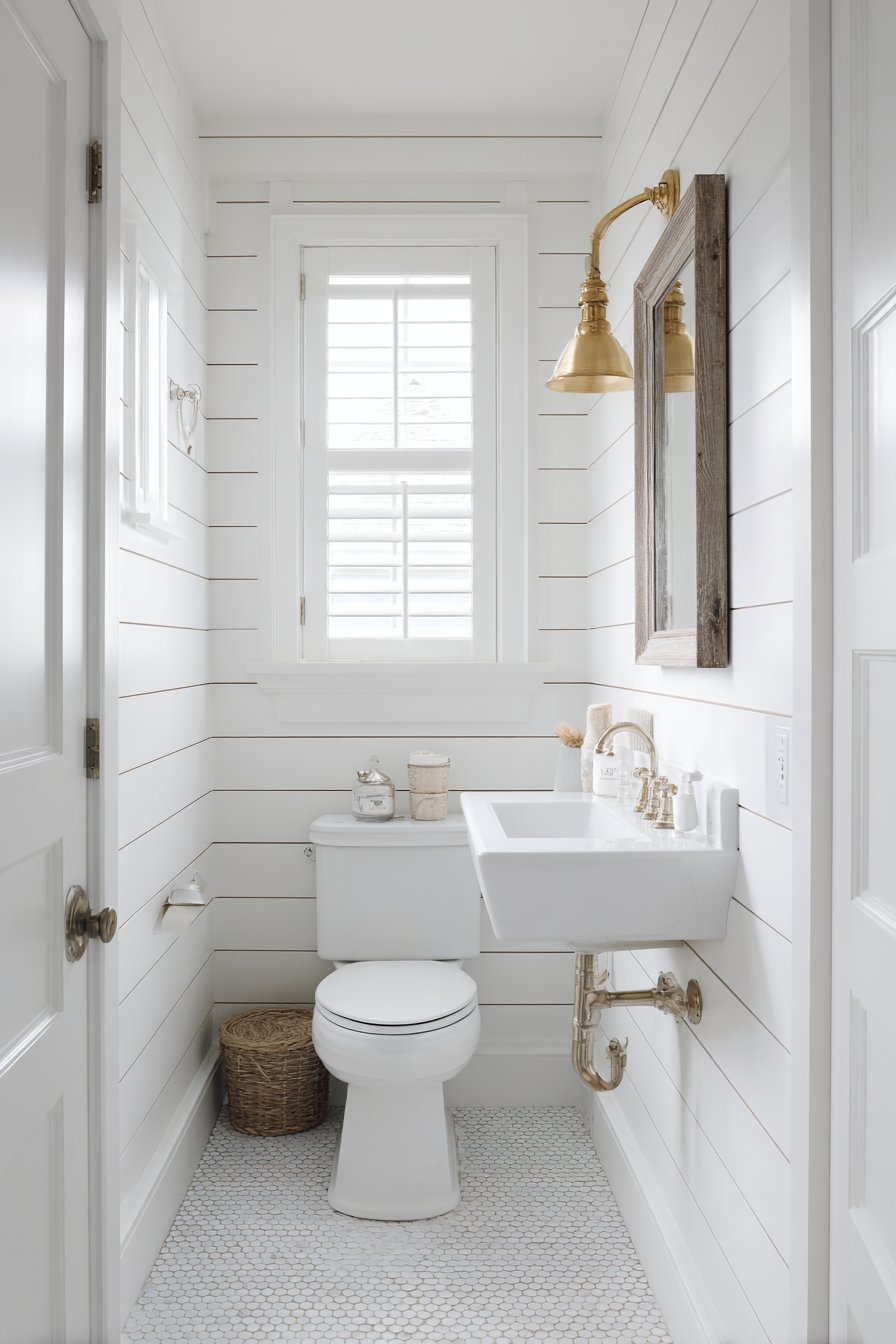
Subtle texture variations prevent monotony in monochromatic schemes. Shiplap walls add horizontal lines and shadow play. Penny tiles create circular patterns underfoot. The brass sconce introduces necessary metallic warmth strategically.
Key Design Tips:
- Use all-white color schemes for maximum brightness
- Add shiplap walls for subtle texture
- Install penny tile floors with light grey grout
- Choose brass sconces for warm accent lighting
- Include white wooden blinds for light control
- Embrace monochromatic palettes in tiny spaces
16. Flush-Mounted Medicine Cabinet
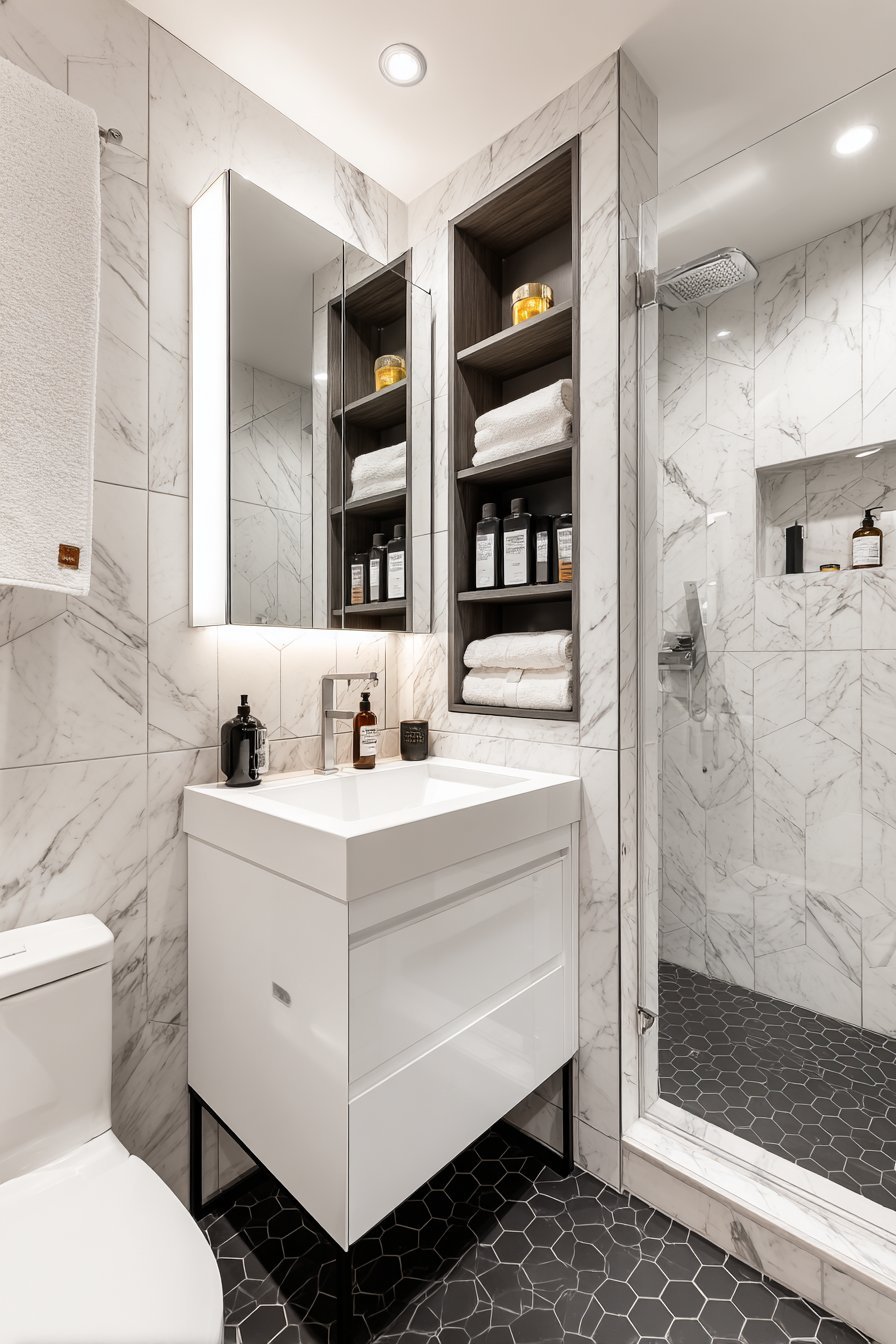
Recessed medicine cabinets sit flush within wall cavities. The frameless mirror cabinet features touch-latch opening mechanisms. Interior LED lighting illuminates stored items automatically. Small console sinks with thin metal legs maintain visual lightness.
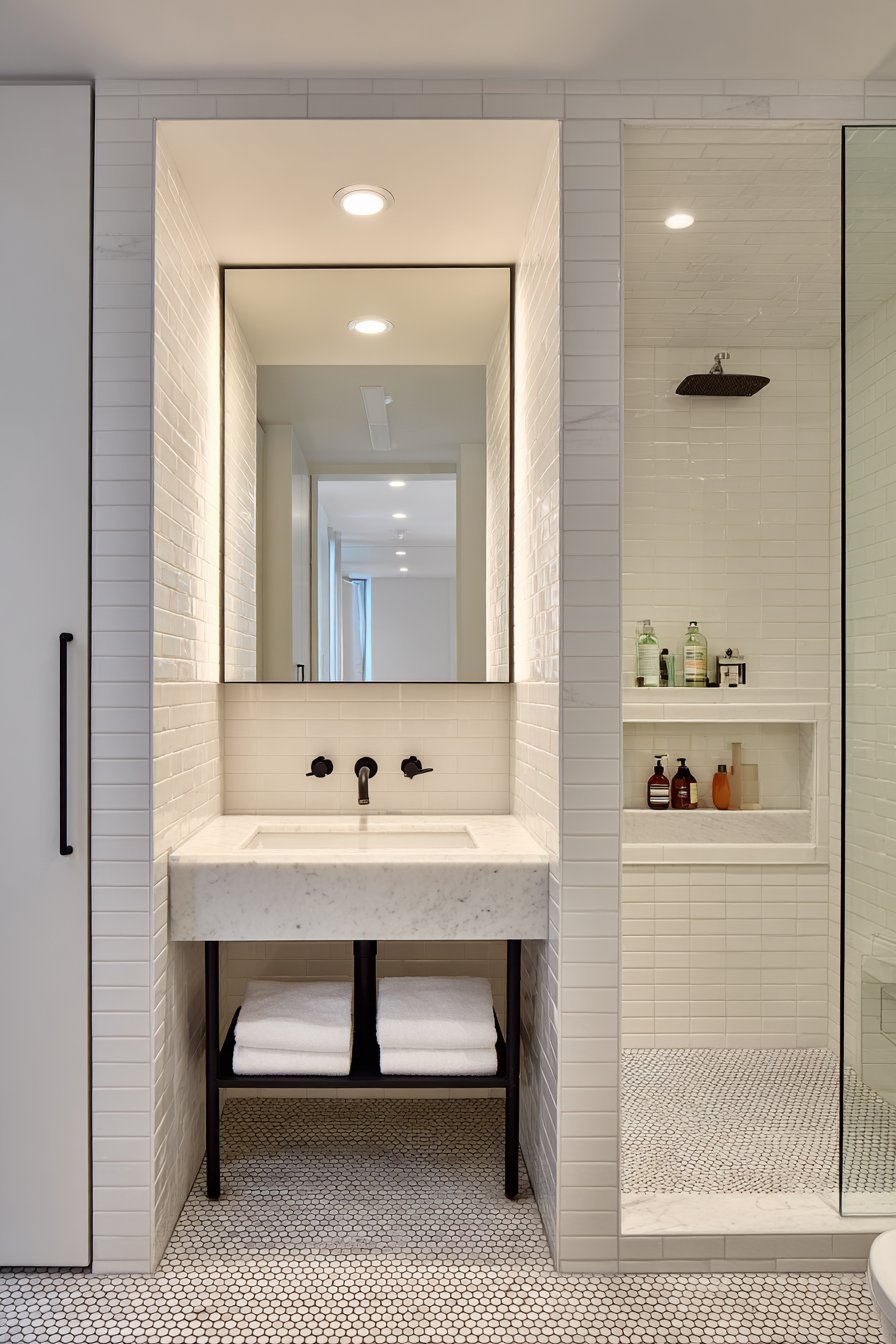
The flush-mounted installation avoids protrusion into limited space. Standard wall depth accommodates most medicine cabinet dimensions. The mirror surface continues the wall plane seamlessly. Hidden storage appears only when opened intentionally.
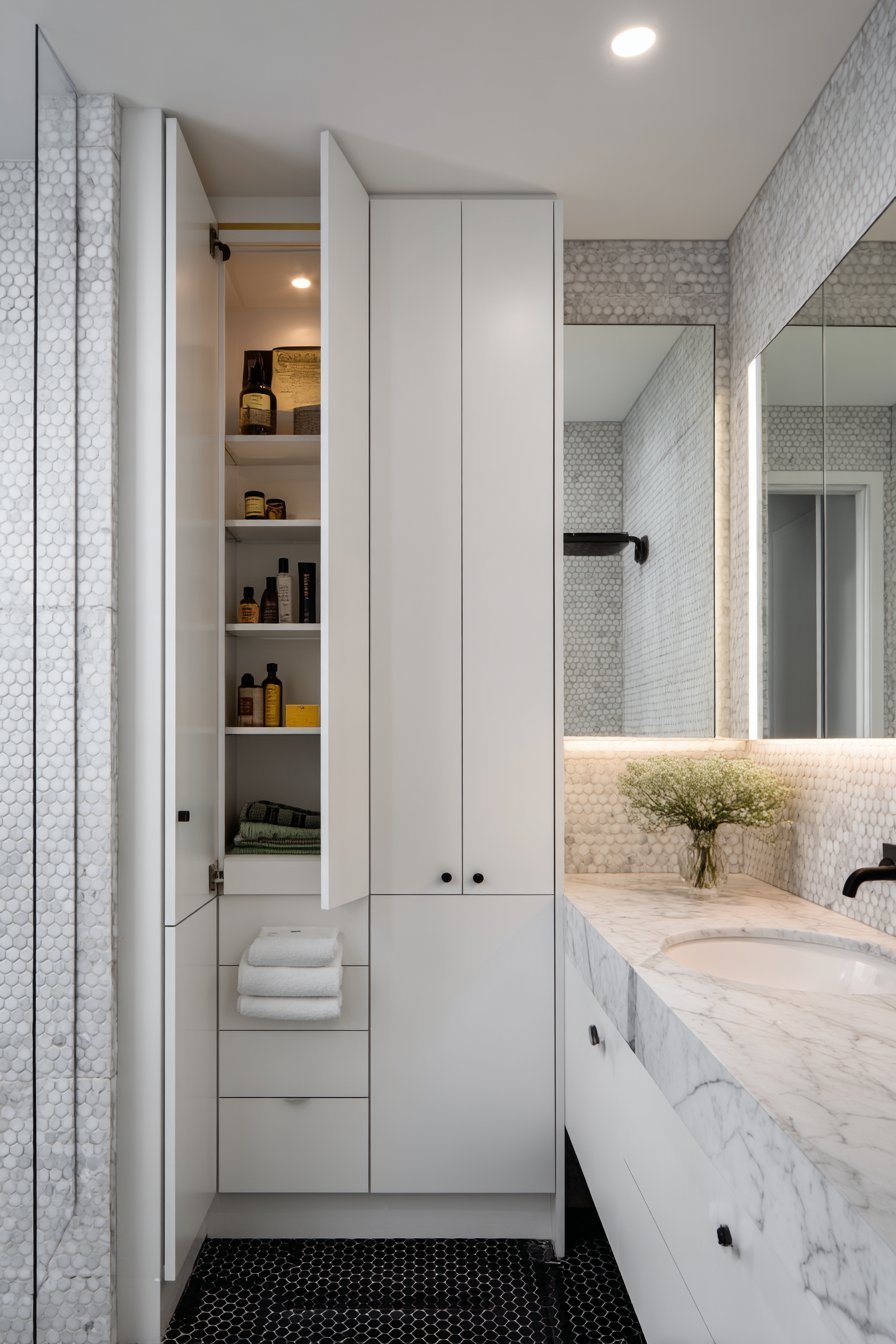
White marble-look porcelain tiles cover walls in elegant simplicity. Black hexagonal floor tiles provide subtle contrast underfoot. The console sink’s metal legs create transparent visual quality. The combined effect maintains spaciousness despite functional additions.
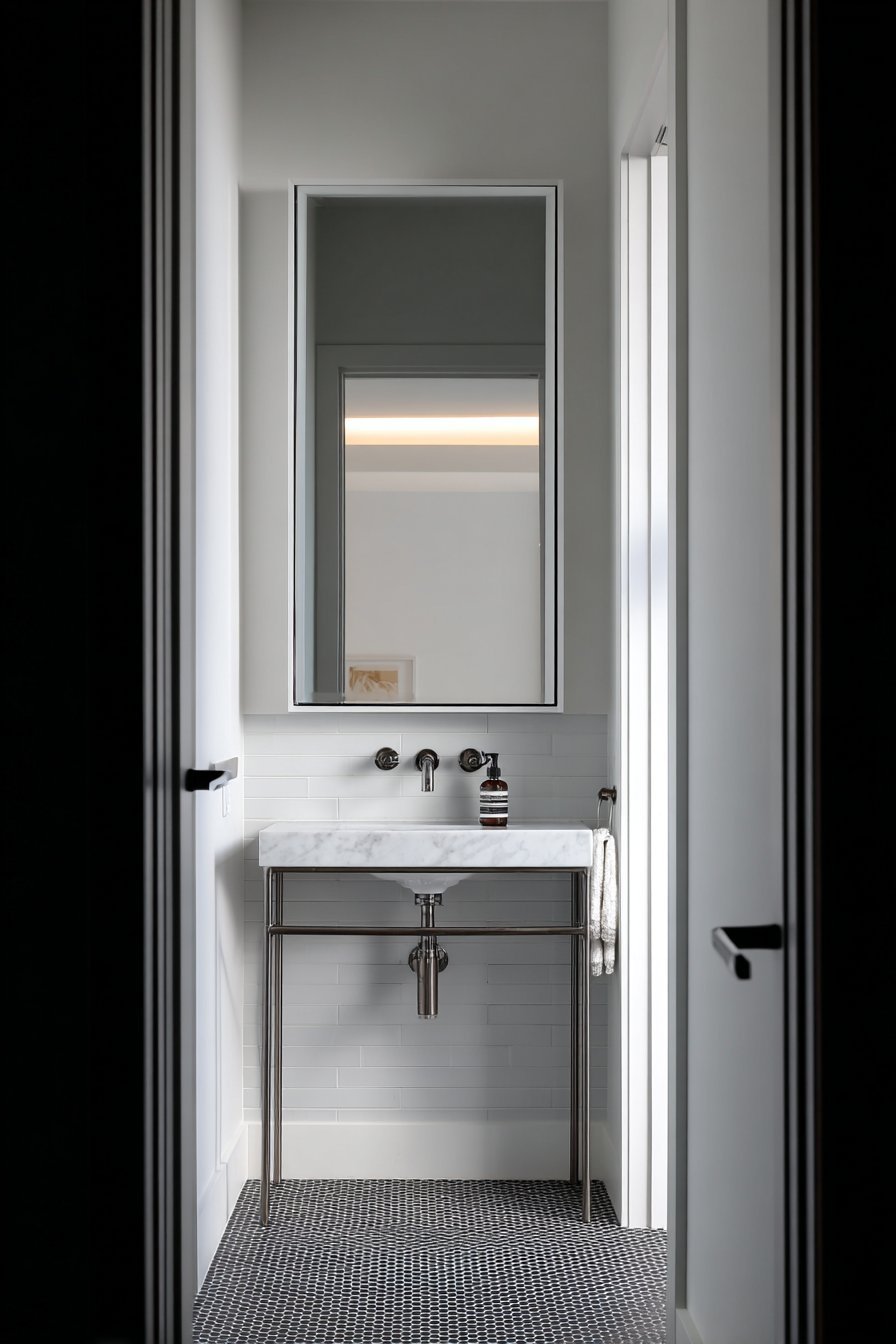
This strategic recessing preserves precious clearance space entirely. No cabinet box projects into the already constrained bathroom. The touch-latch mechanism eliminates protruding handles completely. Interior lighting activates automatically upon opening for convenience.
Key Design Tips:
- Recess medicine cabinets into wall cavities
- Choose frameless mirrors for seamless appearance
- Install interior LED lighting for convenience
- Select console sinks with thin metal legs
- Use marble-look porcelain for elegant walls
- Add black hexagonal tiles for floor contrast
17. Japanese Soaking Tub Depth
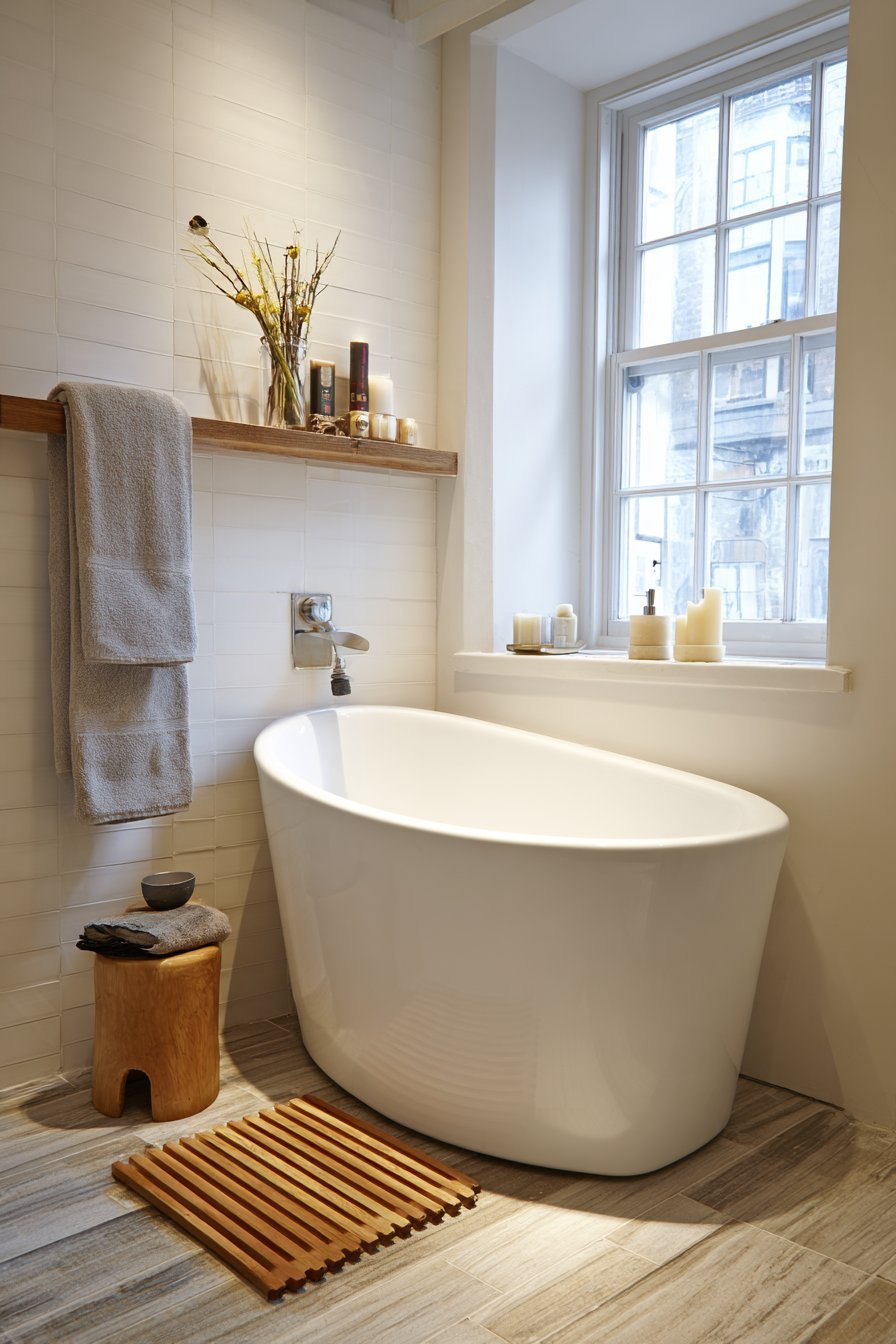
Compact soaking tubs only forty inches long accommodate small bathrooms. The vertical depth of twenty-six inches enables seated bathing. White acrylic construction sits on wood-look tile flooring. A teak bath mat beside the tub adds natural warmth.
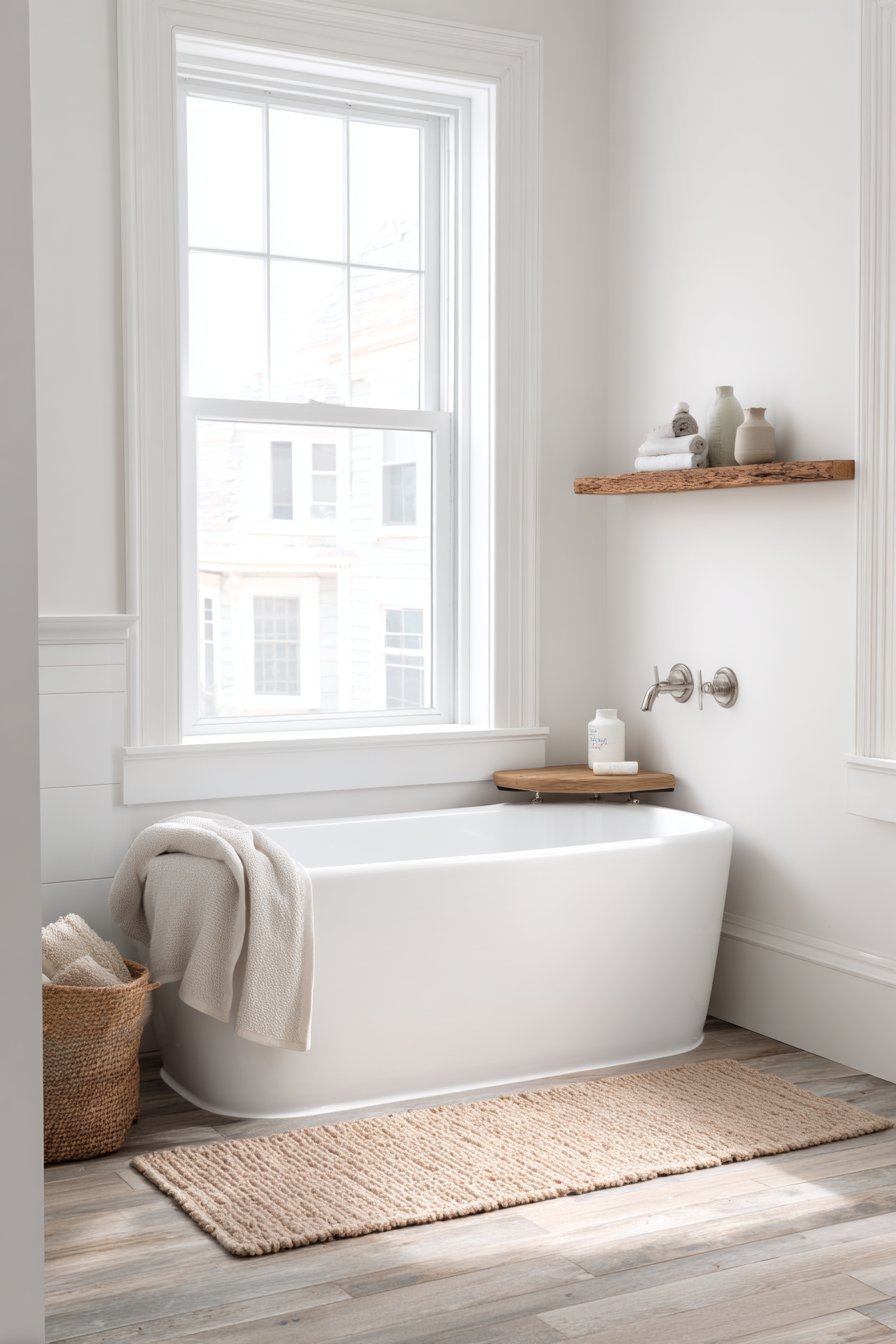
The space-efficient design prioritizes depth over length strategically. Traditional tubs consume excessive floor area for reclining positions. Japanese-style soaking emphasizes vertical dimension instead. The compact footprint fits remarkably tight bathroom configurations.
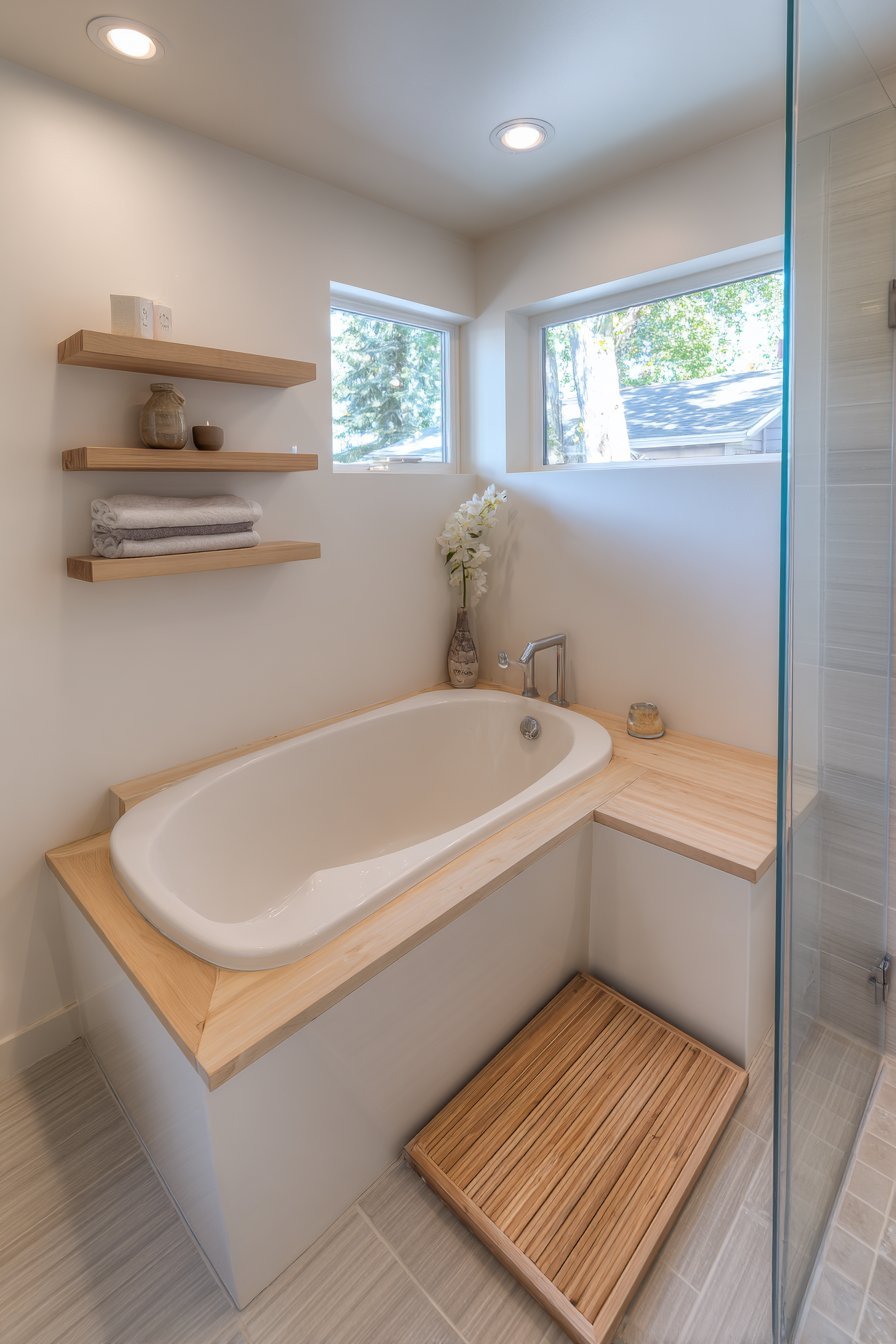
Natural wood-look tiles provide warm, spa-like atmosphere underfoot. The teak mat creates transition zone from tile to tub. White walls with single windows allow natural light penetration. Wall-mounted wooden shelves hold minimal bath accessories neatly.
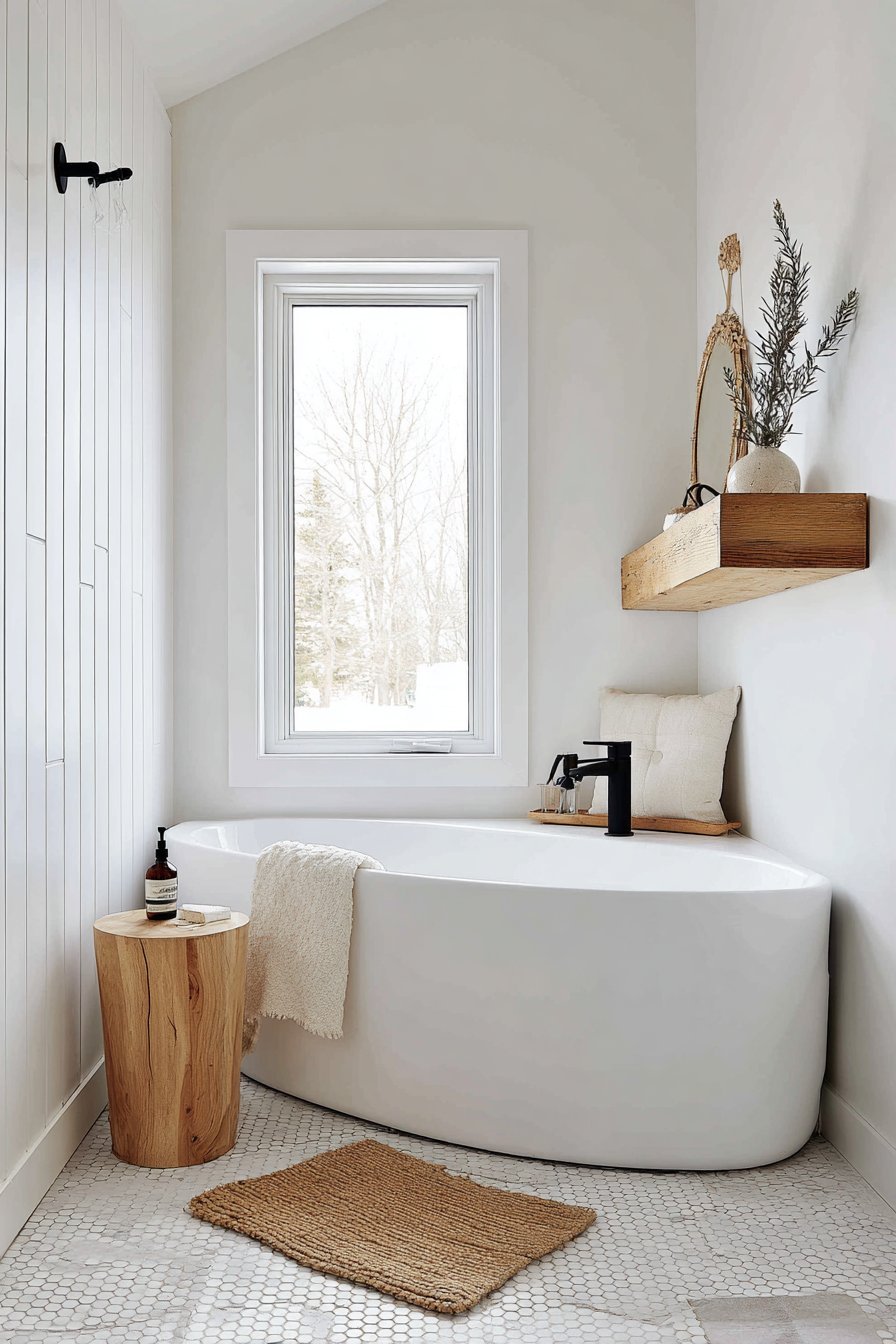
This bathing approach delivers comfort in minimal floor area. The deep dimension allows complete body immersion while seated. The compact length preserves circulation space around the fixture. Natural materials create serene, contemplative bathing environments.
Key Design Tips:
- Choose deep soaking tubs for space efficiency
- Limit length to forty inches maximum
- Install on wood-look tile for warmth
- Add teak bath mats for natural transition
- Mount wooden shelves for minimal accessories
- Embrace vertical depth over horizontal length
18. Full-Wall Mirror Expansion
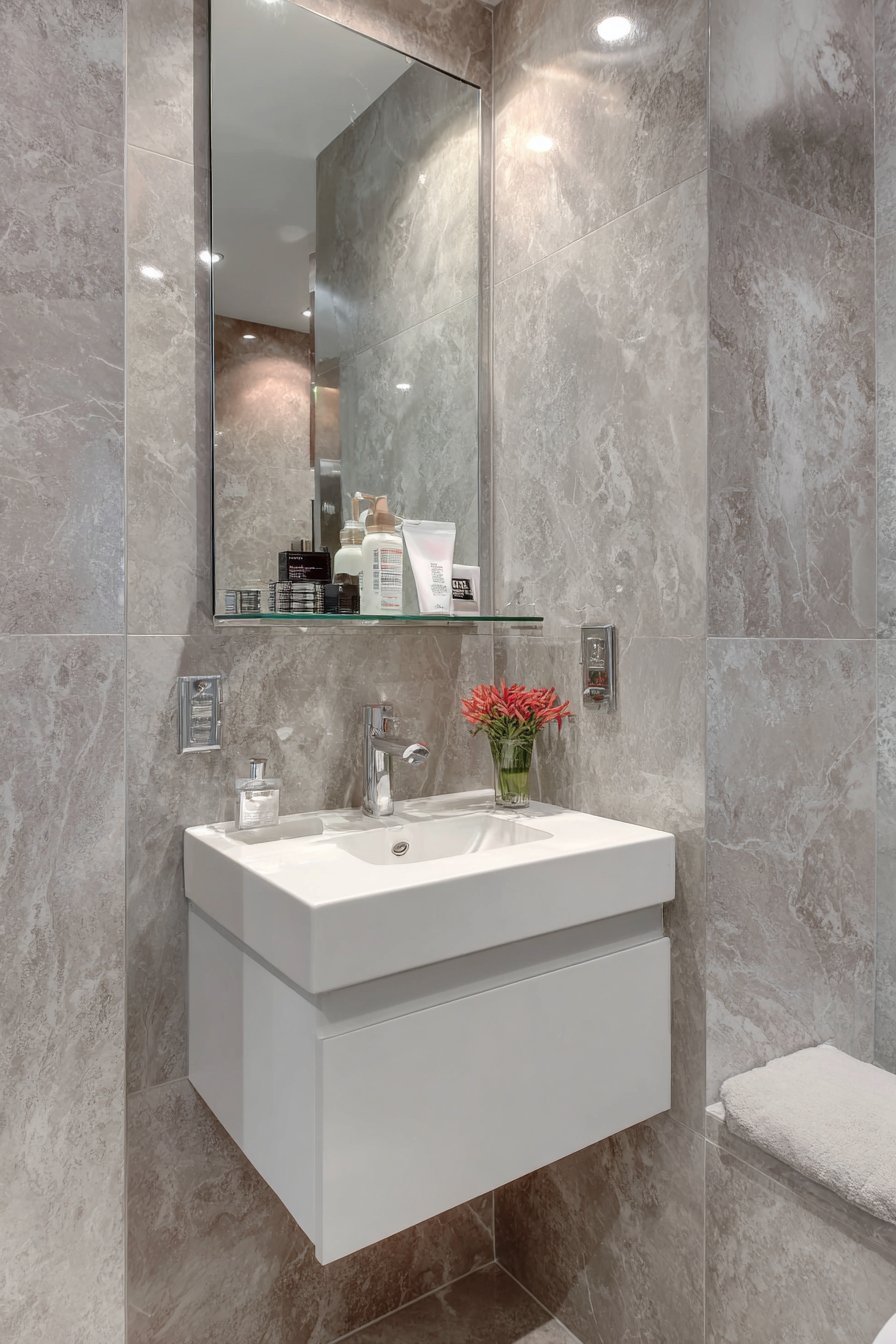
Mirrors covering entire walls double the perceived bathroom dimensions. The reflective surface extends from countertop to ceiling completely. Below sits a narrow floating vanity only sixteen inches deep. Light grey large-format tiles cover the remaining walls simply.
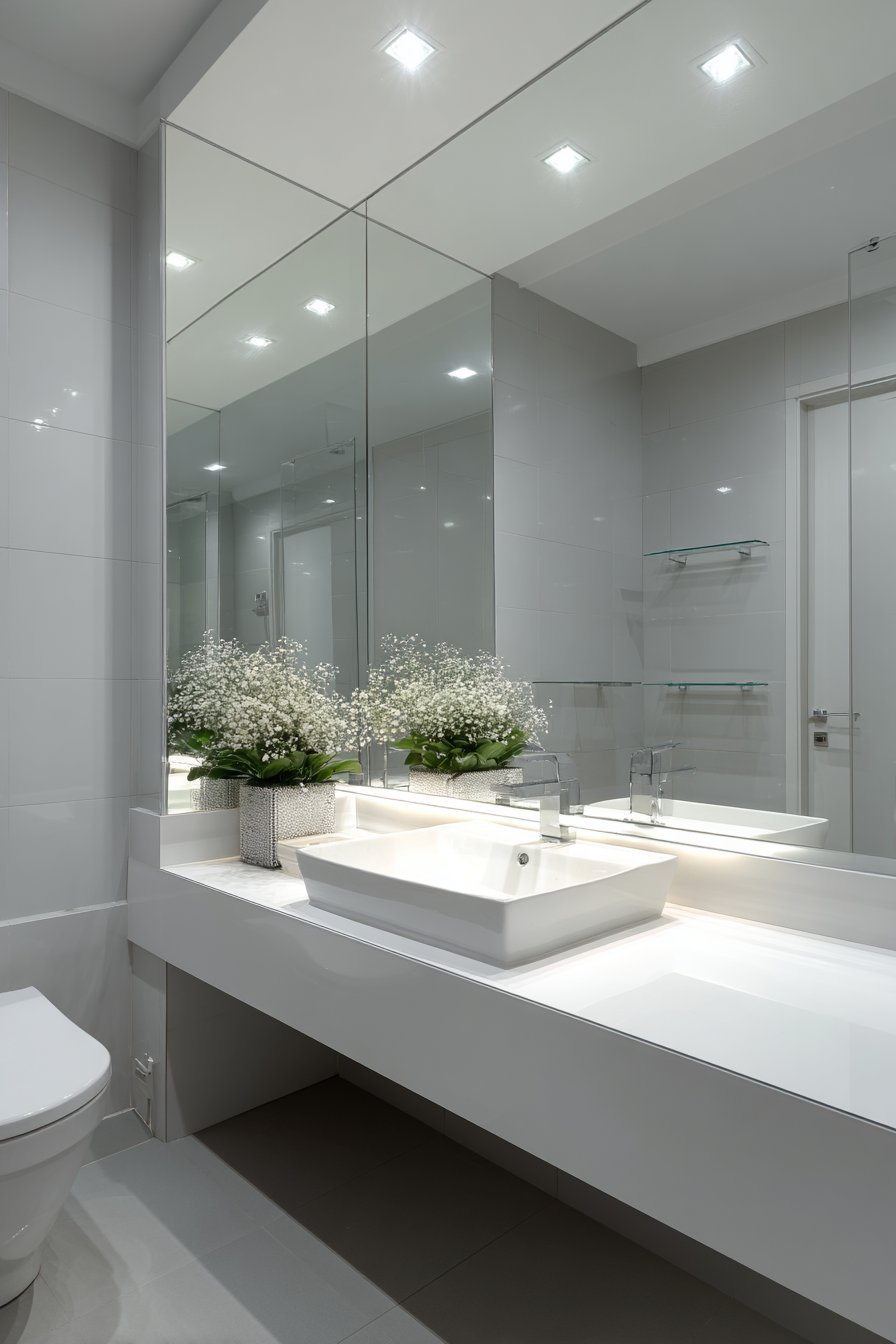
The continuous mirror creates powerful spatial illusion visually. The reflected bathroom appears to extend infinitely beyond. This psychological expansion makes confined bathrooms feel dramatically larger. Wall-mounted faucets require minimal countertop depth.
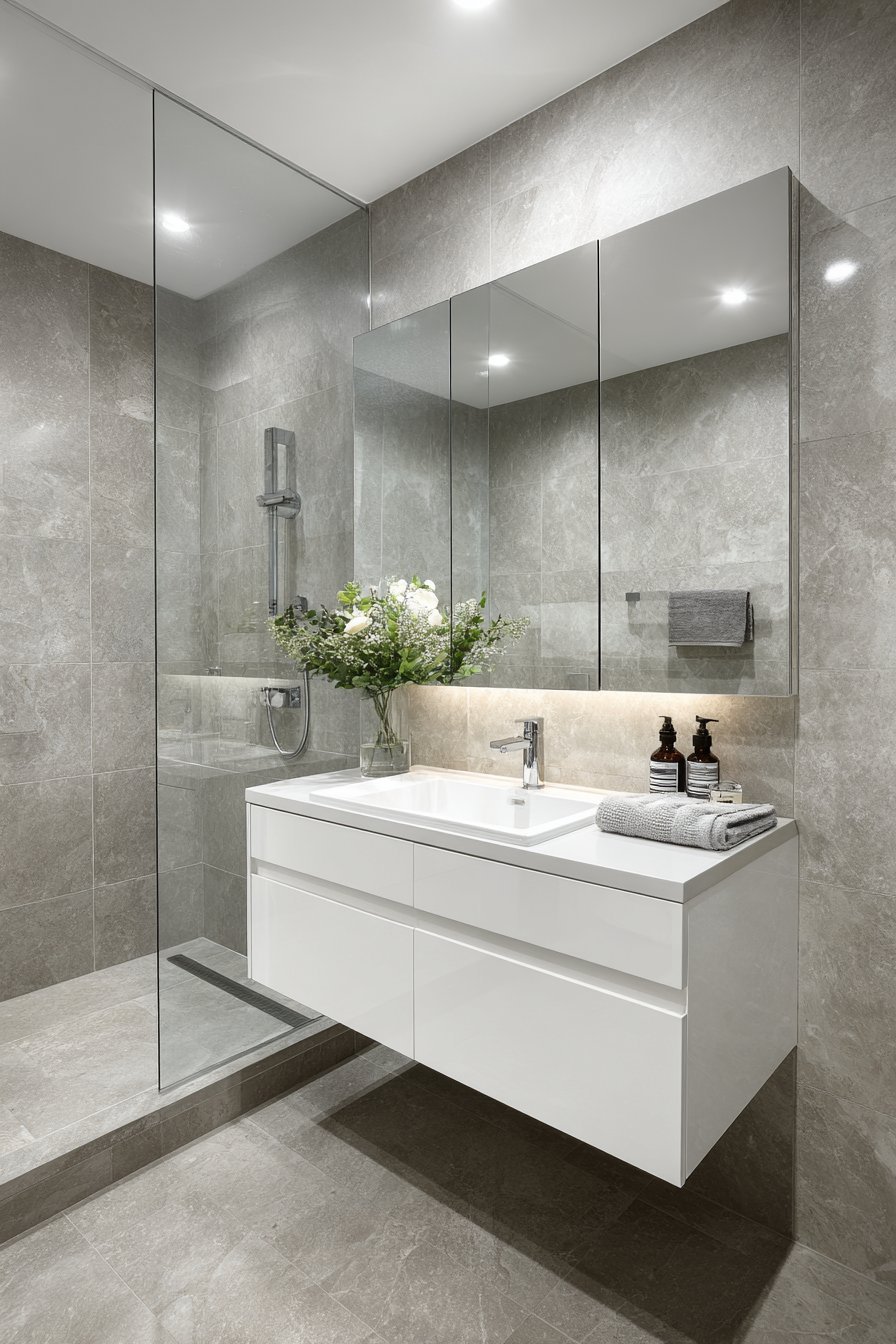
The white vanity maintains streamlined proportions throughout its length. An undermount sink integrates seamlessly into the counter surface. The sixteen-inch depth represents the absolute minimum for functionality. Simple glass shelves hold daily essentials without visual weight.
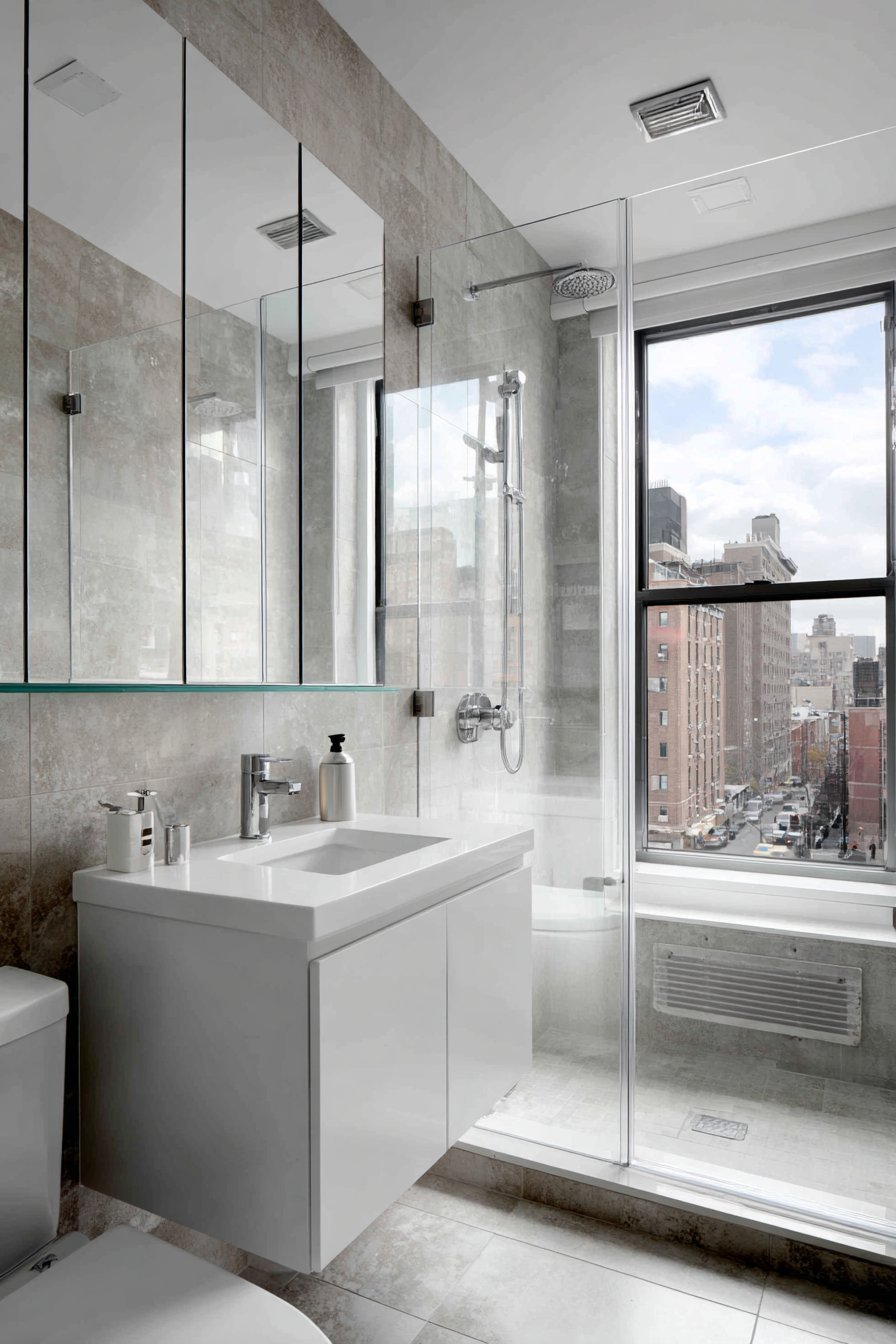
Balanced lighting ensures mirror effectiveness throughout the space. Natural and artificial sources combine to eliminate shadows. The reflective wall multiplies available light significantly. This strategic mirror placement delivers maximum spatial perception benefits.
Key Design Tips:
- Install floor-to-ceiling mirrors for spatial illusion
- Limit vanity depth to a minimum of sixteen inches
- Use undermount sinks for seamless integration
- Choose wall-mounted faucets for depth savings
- Add simple glass shelves for essentials
- Balance lighting to eliminate shadows
19. Neo-Angle Corner Shower
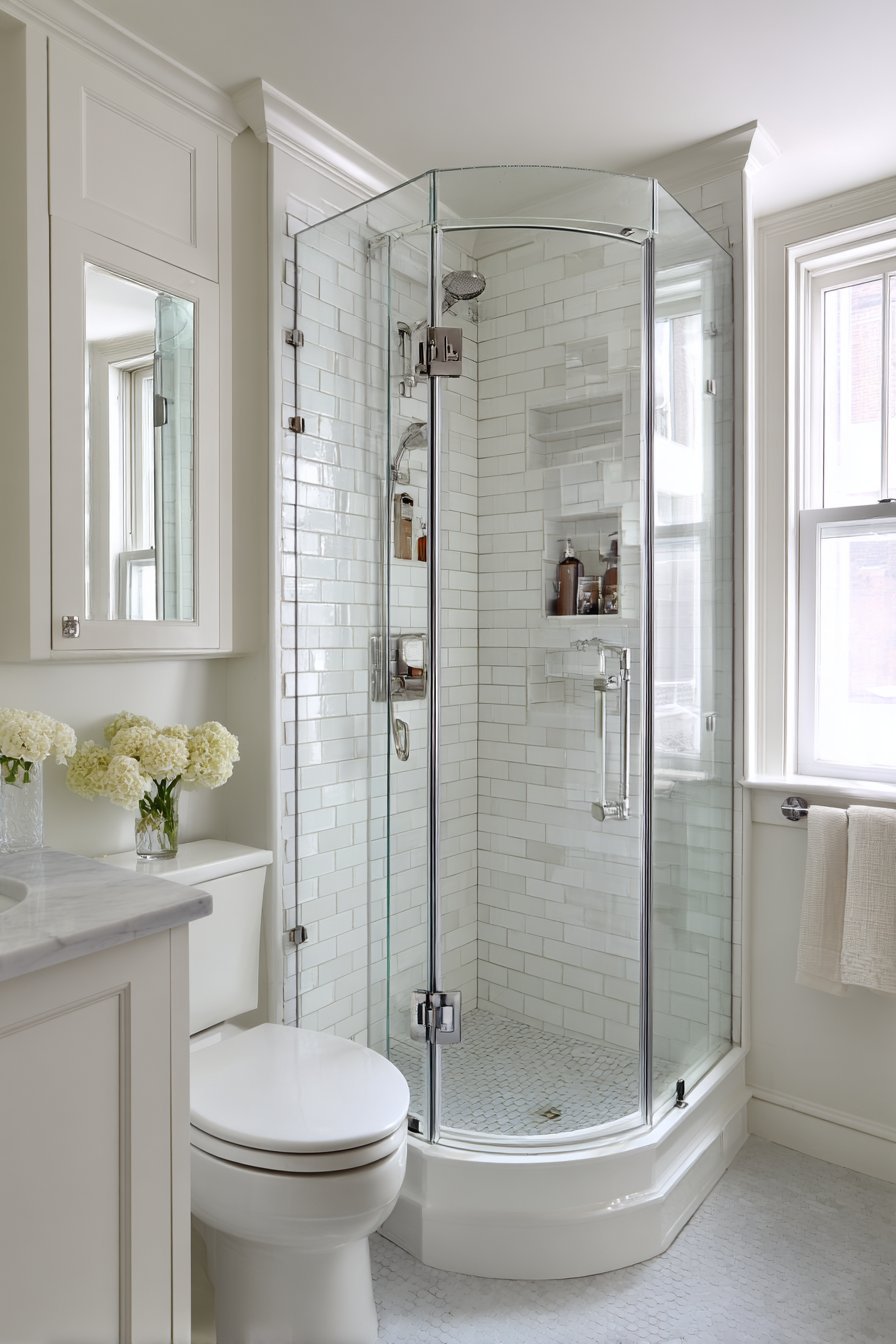
Neo-angle shower enclosures fit tight corner installations perfectly. Clear glass panels with minimal chrome framing maintain openness. White subway tile interiors create classic shower aesthetics. Compact corner toilets and wall-mounted sinks complete layouts.
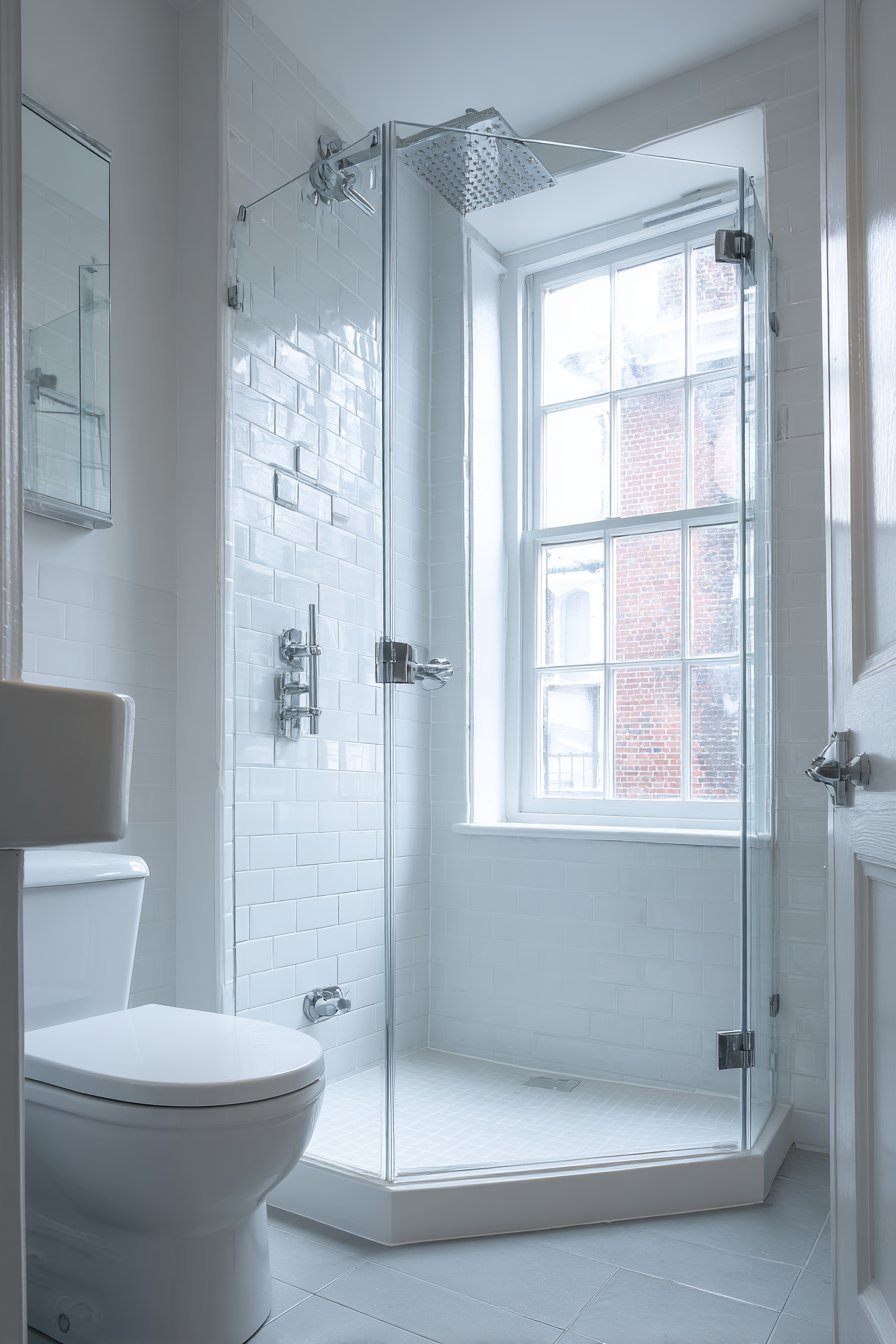
The angled entry design maximizes usable floor space strategically. Traditional square enclosures consume excessive corner area. The diagonal front panel creates more efficient footprints. White painted walls and light grey floor tiles maintain brightness.
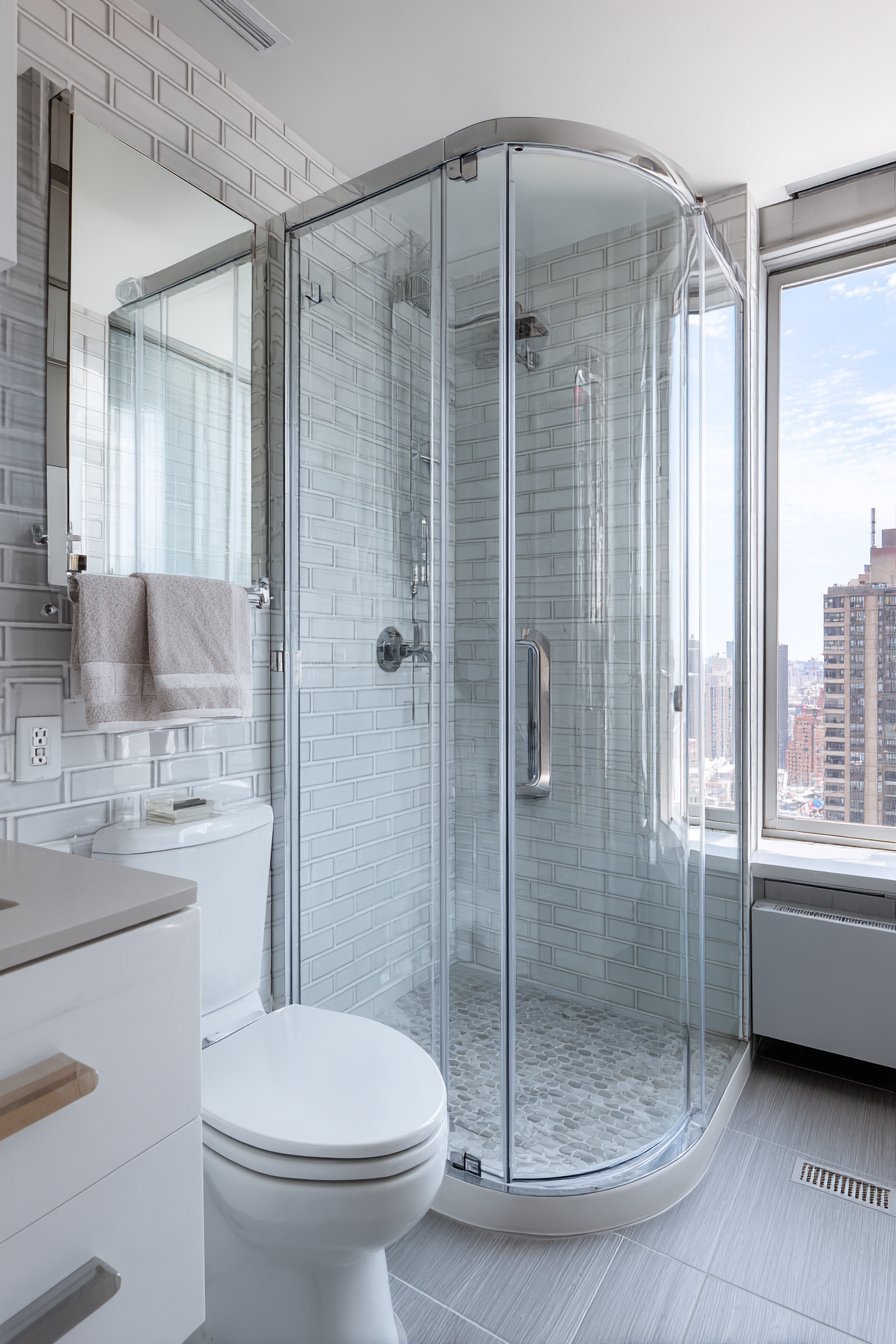
Natural light from small windows illuminates the space-saving configuration. The transparent glass allows light penetration throughout the bathroom. Minimal framing reduces visual obstruction significantly. The corner installation preserves central floor area for movement.
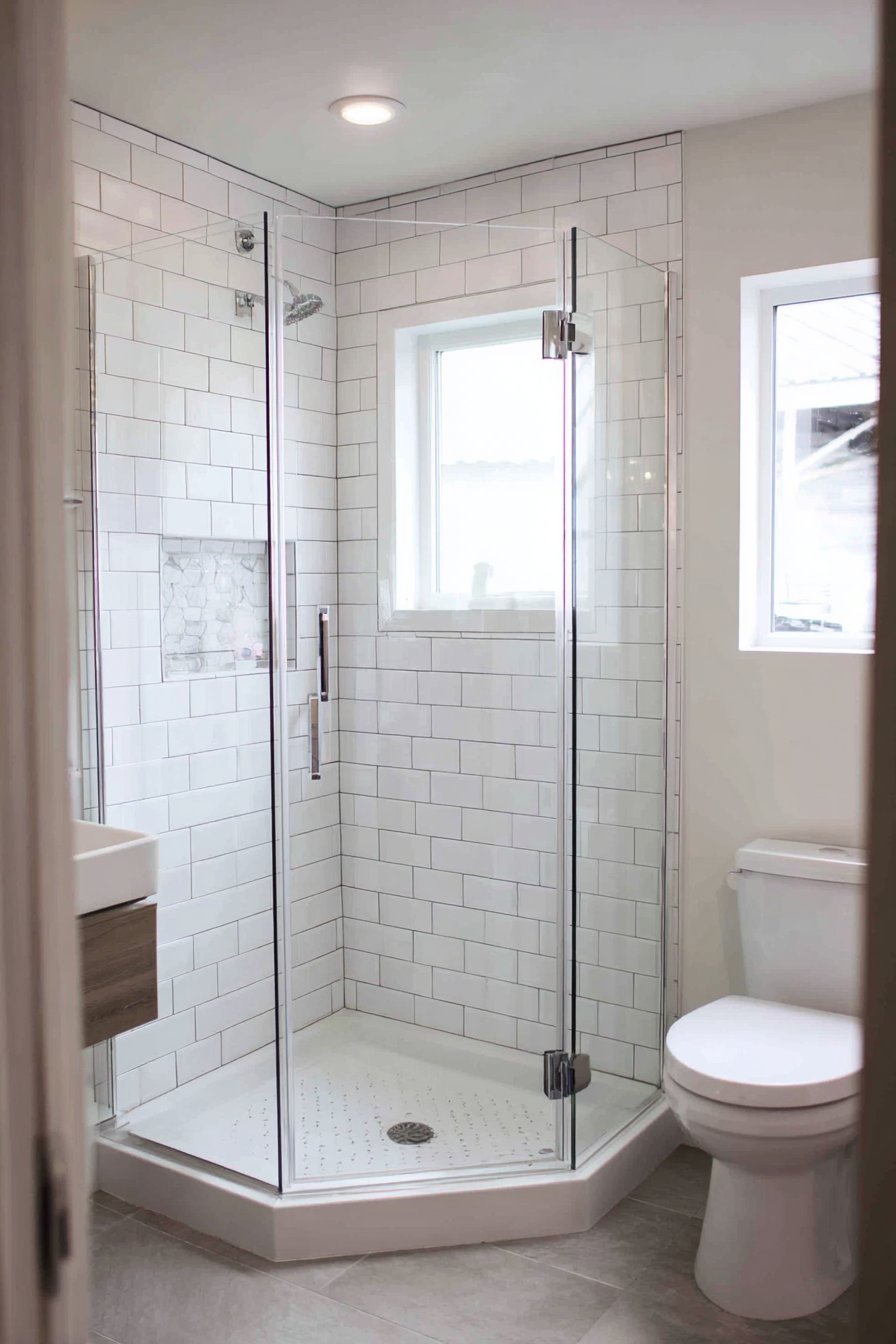
This specialized enclosure addresses corner placement challenges effectively. The angled geometry fits awkward bathroom configurations perfectly. Professional installation ensures proper waterproofing and door alignment. The result delivers full shower functionality in minimal footprint.
Key Design Tips:
- Install neo-angle enclosures for corner efficiency
- Use clear glass with minimal framing
- Choose white subway tiles for shower interiors
- Add compact corner toilets for space savings
- Include wall-mounted sinks in layouts
- Preserve central floor areas for circulation
20. Vintage Console Table Adaptation
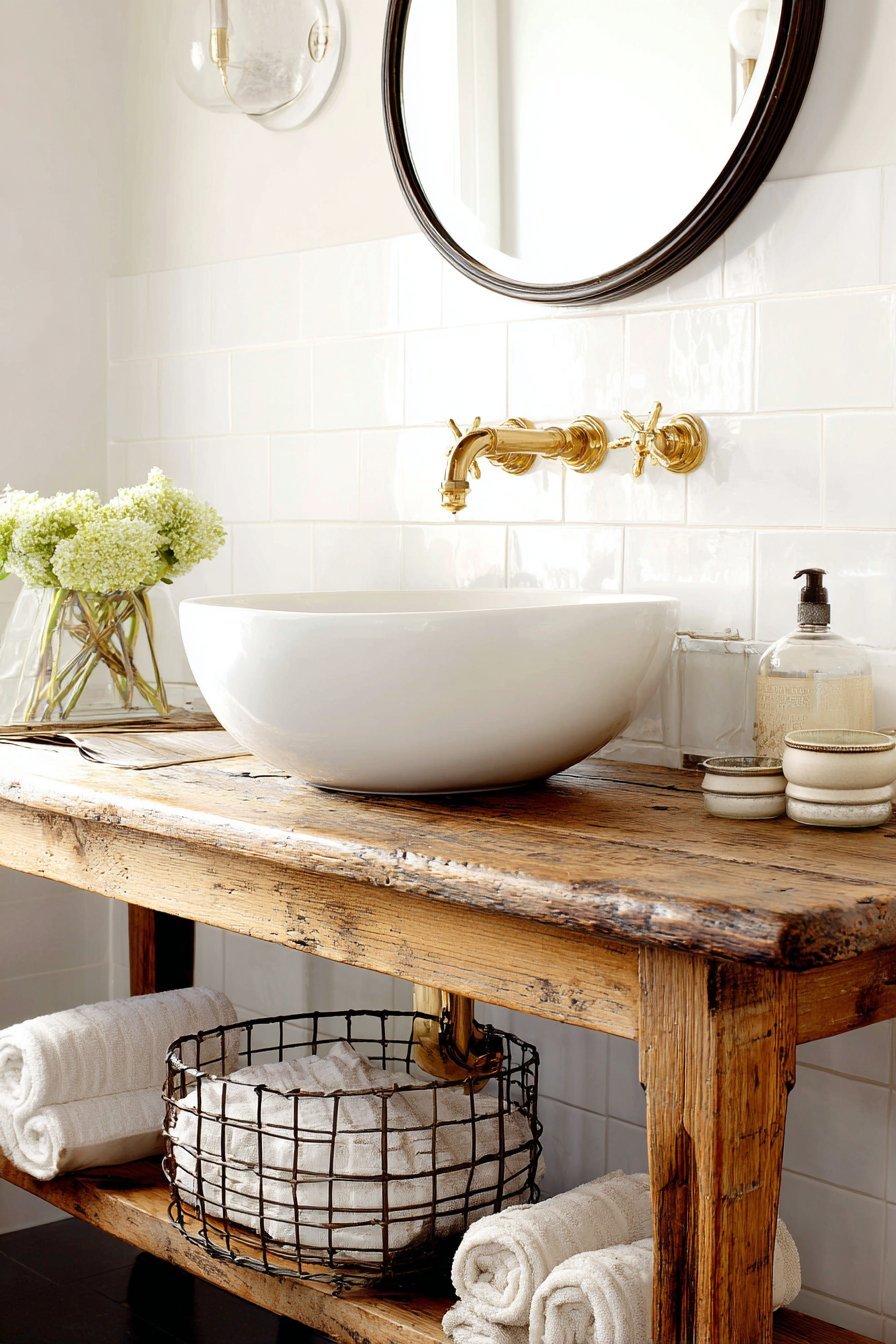
Repurposed furniture becomes functional bathroom vanities creatively. Round white vessel sinks mount on vintage pine tables. Cutouts accommodate plumbing while preserving lower shelf storage. Brass faucet fixtures coordinate with vintage-style hardware throughout.
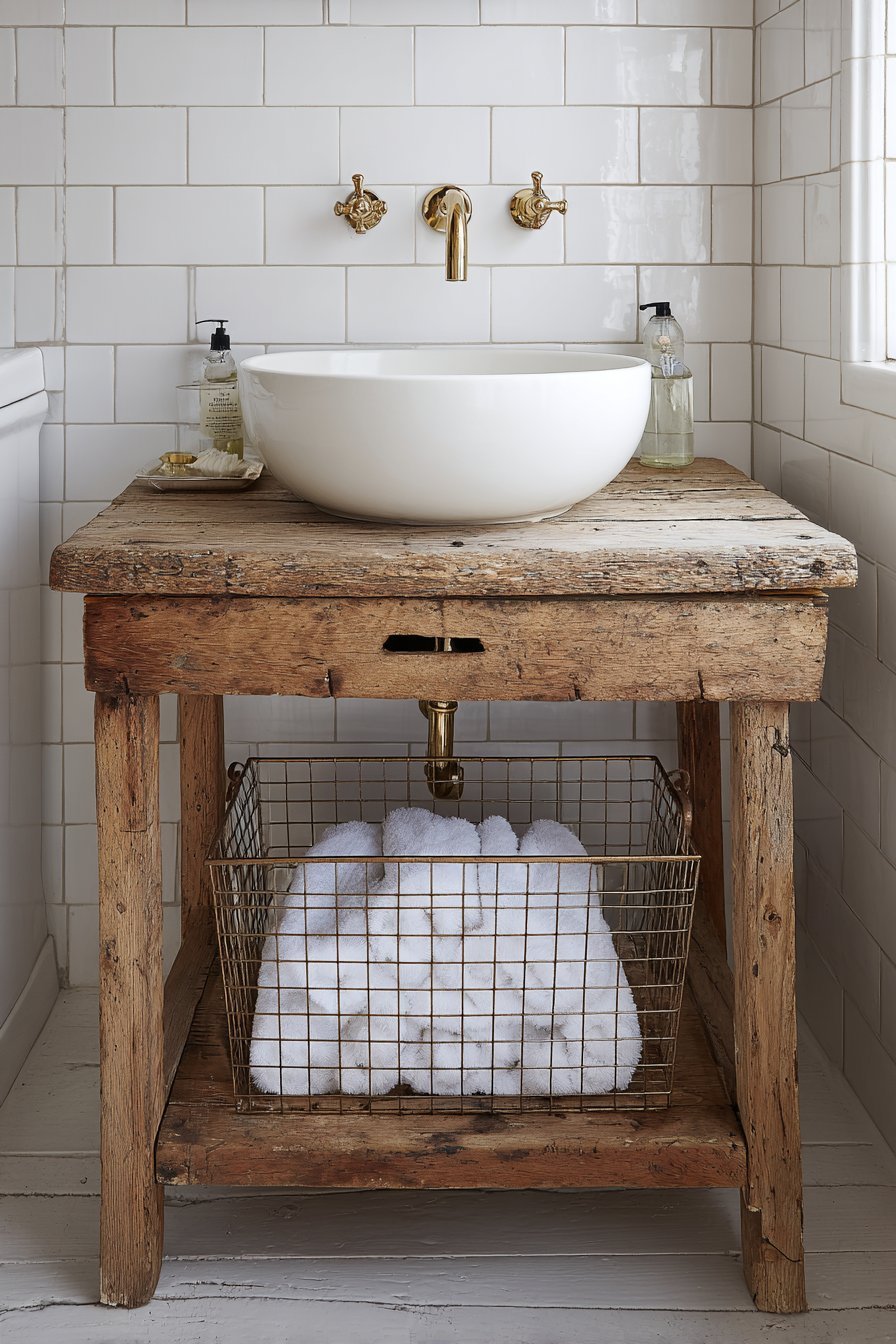
The narrow thirty-six-inch console provides character and functionality simultaneously. The lower shelf displays rolled towels in wire baskets. Open construction maintains visual lightness despite storage capacity. White subway tiles create clean backdrop for furniture pieces.
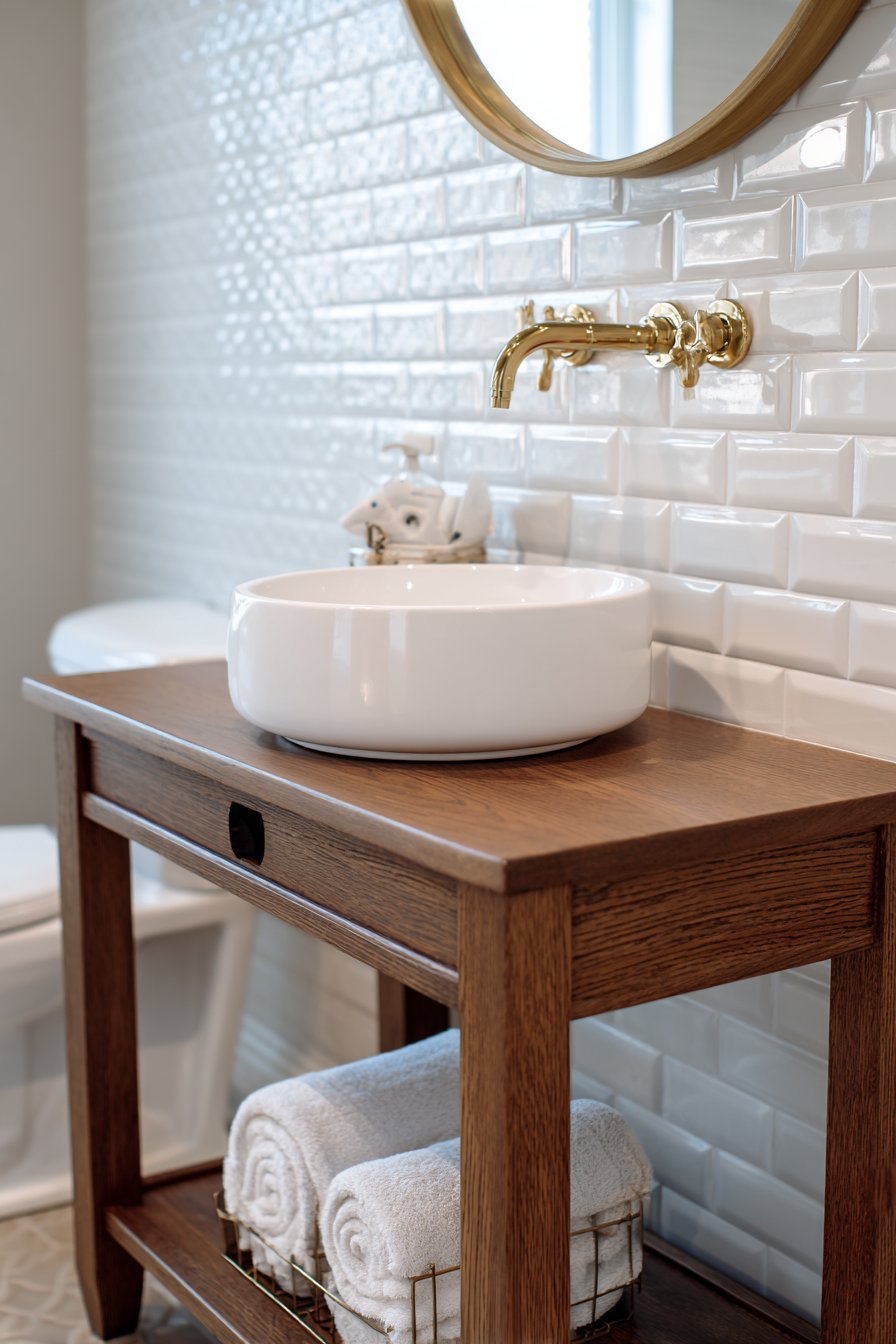
This creative adaptation demonstrates personality in tiny bathrooms. Antique pine brings warmth and history to sterile spaces. The open lower shelf provides accessible towel storage. The vessel sink creates an elevated washing surface elegantly.
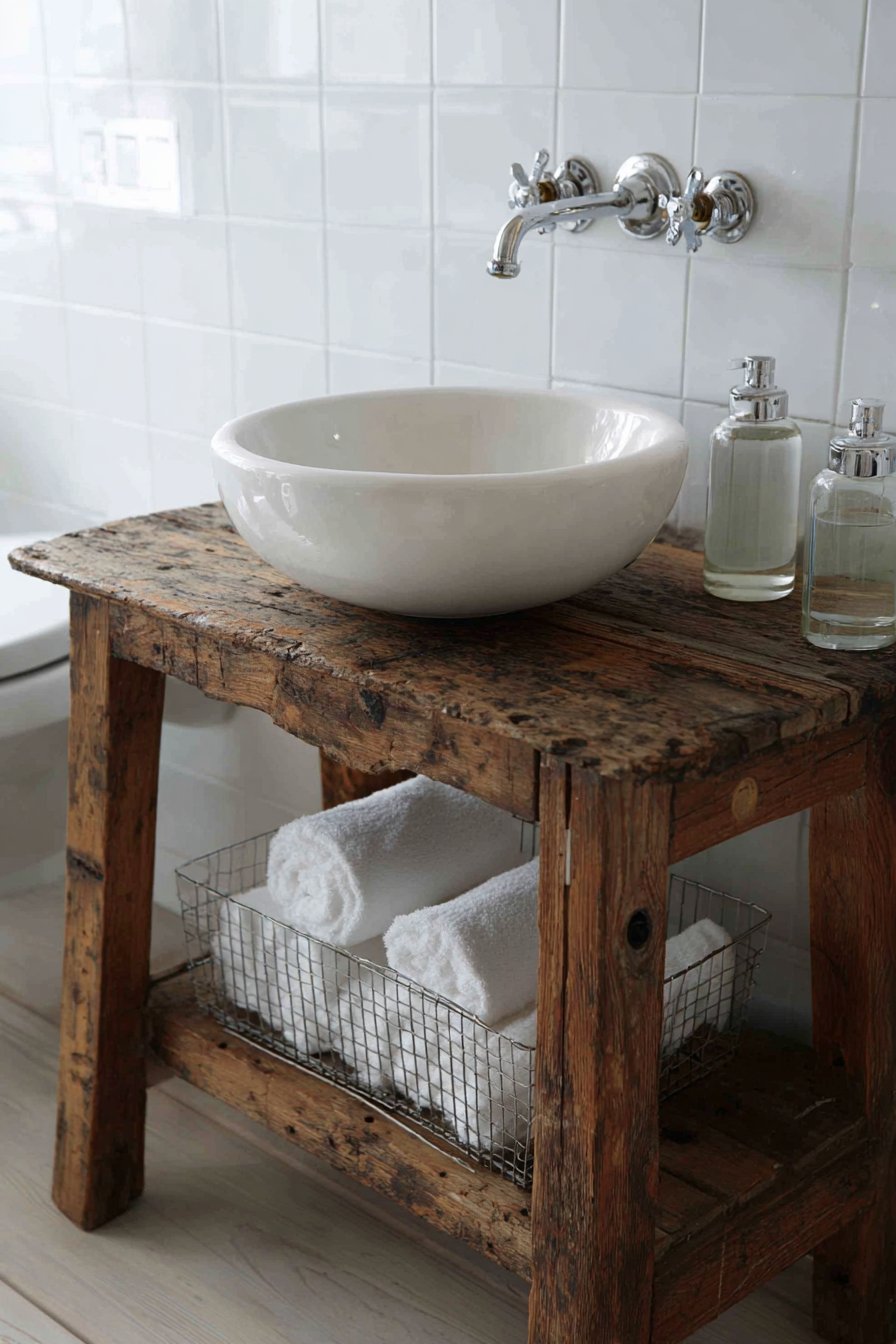
Natural wood tones contrast beautifully against white tile backgrounds. The vintage brass fixtures add quality period-appropriate touches. The slim furniture profile respects tight spatial constraints. The result combines function with distinctive character successfully.
Key Design Tips:
- Repurpose vintage furniture as bathroom vanities
- Install vessel sinks on narrow console tables
- Create plumbing cutouts while preserving storage
- Choose brass fixtures for vintage coordination
- Display rolled towels in wire baskets
- Embrace furniture adaptations for character
21. Sliding Glass Shower Door
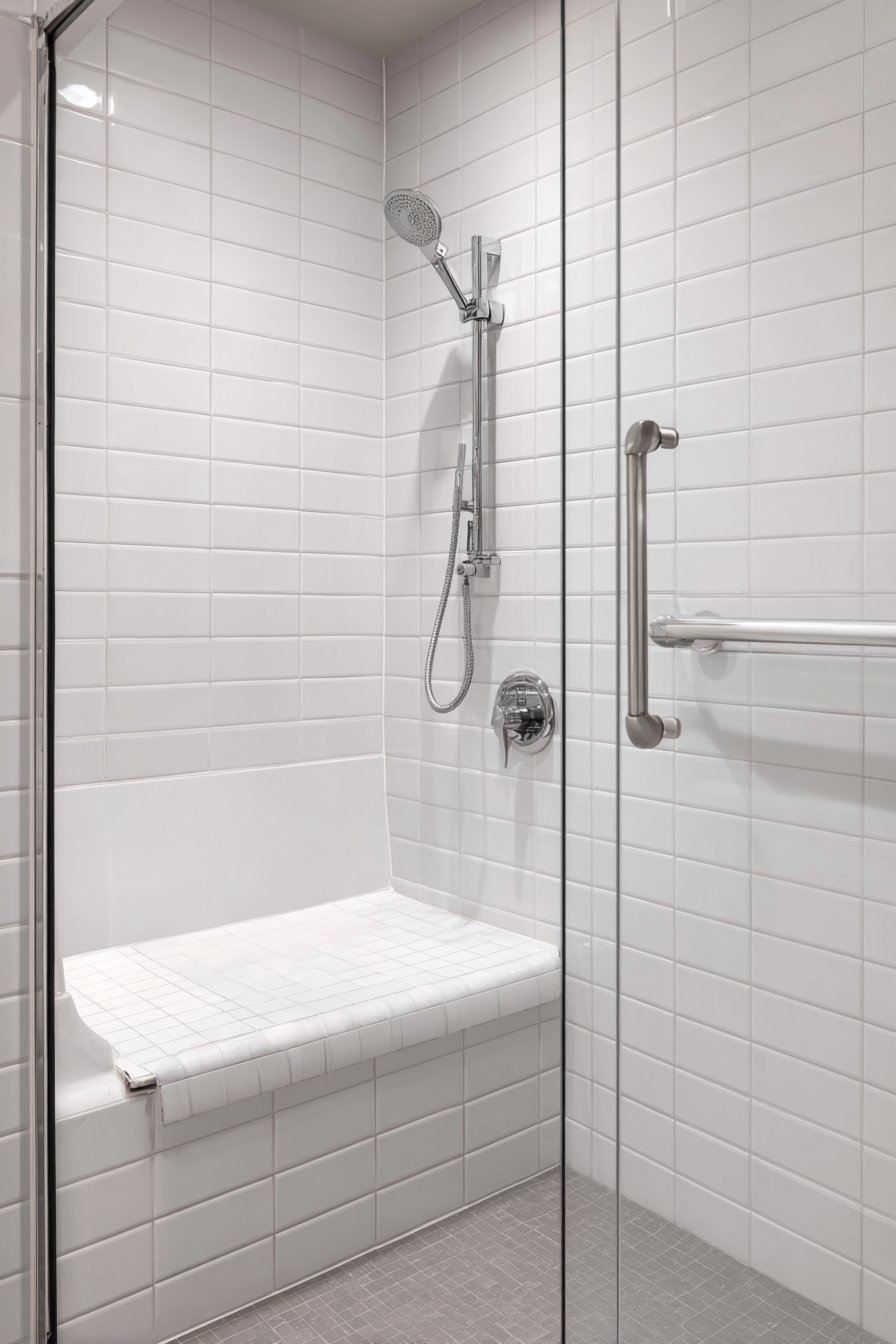
Track-mounted sliding doors eliminate swing clearance requirements completely. The glass panel moves along single tracks smoothly. White subway tile surrounds include built-in corner seats. Handheld showerheads on slide bars offer flexibility throughout.
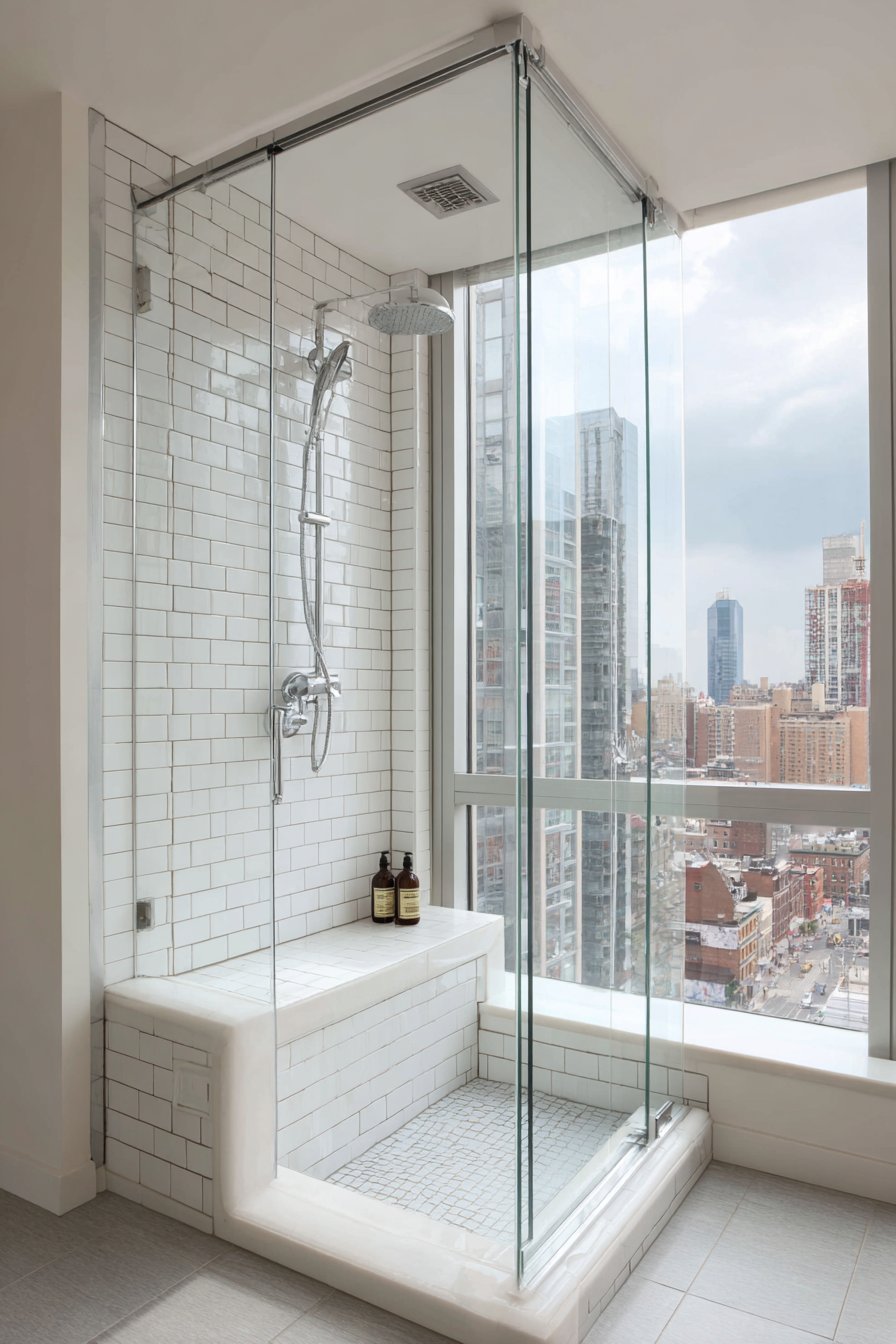
The space-saving sliding mechanism preserves tight floor plans. No clearance zone for door swing becomes necessary. Chrome fixtures maintain clean aesthetic consistency. Light grey floor tiles create seamless continuation beyond shower area.
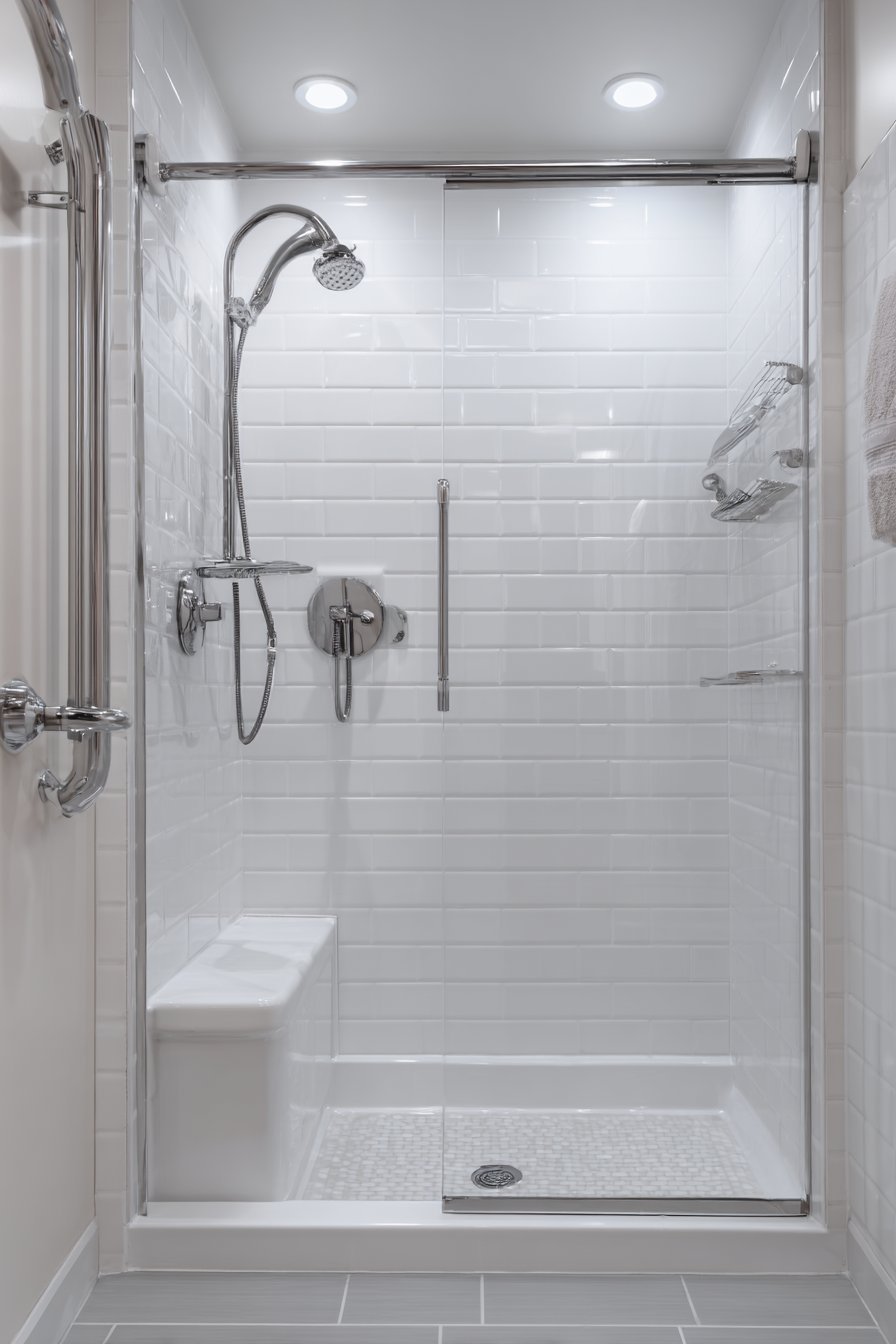
The built-in corner seat serves multiple practical purposes. Shaving and accessibility needs meet comfortable seating. The subway tile installation wraps the seat area seamlessly. The handheld showerhead adjusts vertically for different user heights.
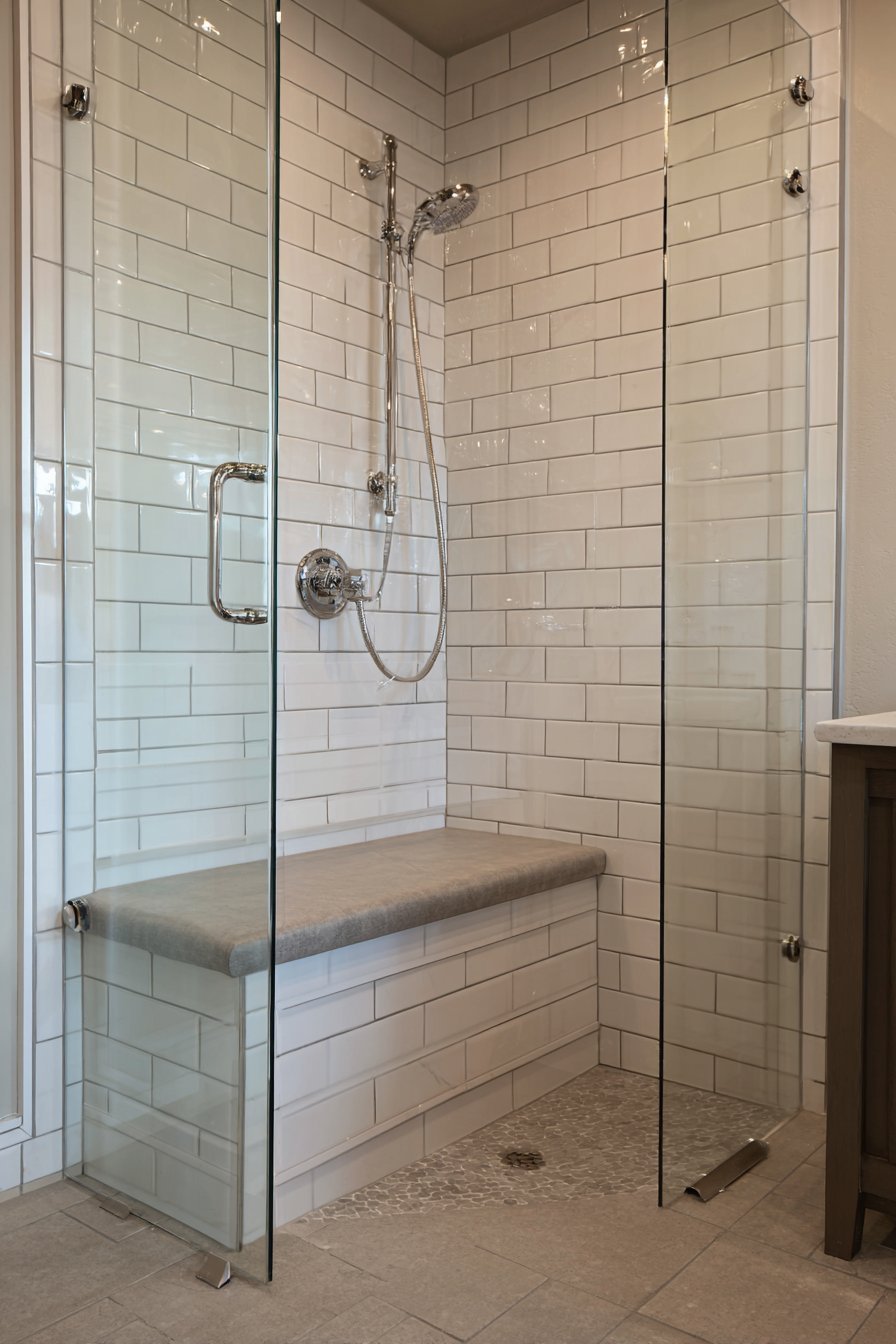
This traditional sliding approach remains effective in tiny bathrooms. The single track installation simplifies installation and maintenance. The glass transparency maintains visual spaciousness throughout. Balanced exposure highlights the practical door mechanism clearly.
Key Design Tips:
- Install sliding glass doors for clearance savings
- Include built-in corner seats for versatility
- Add handheld showerheads on slide bars
- Use chrome fixtures for clean aesthetics
- Choose light grey floor tiles for continuity
- Embrace track-mounted sliding mechanisms
22. Integrated Towel Bar Pedestal
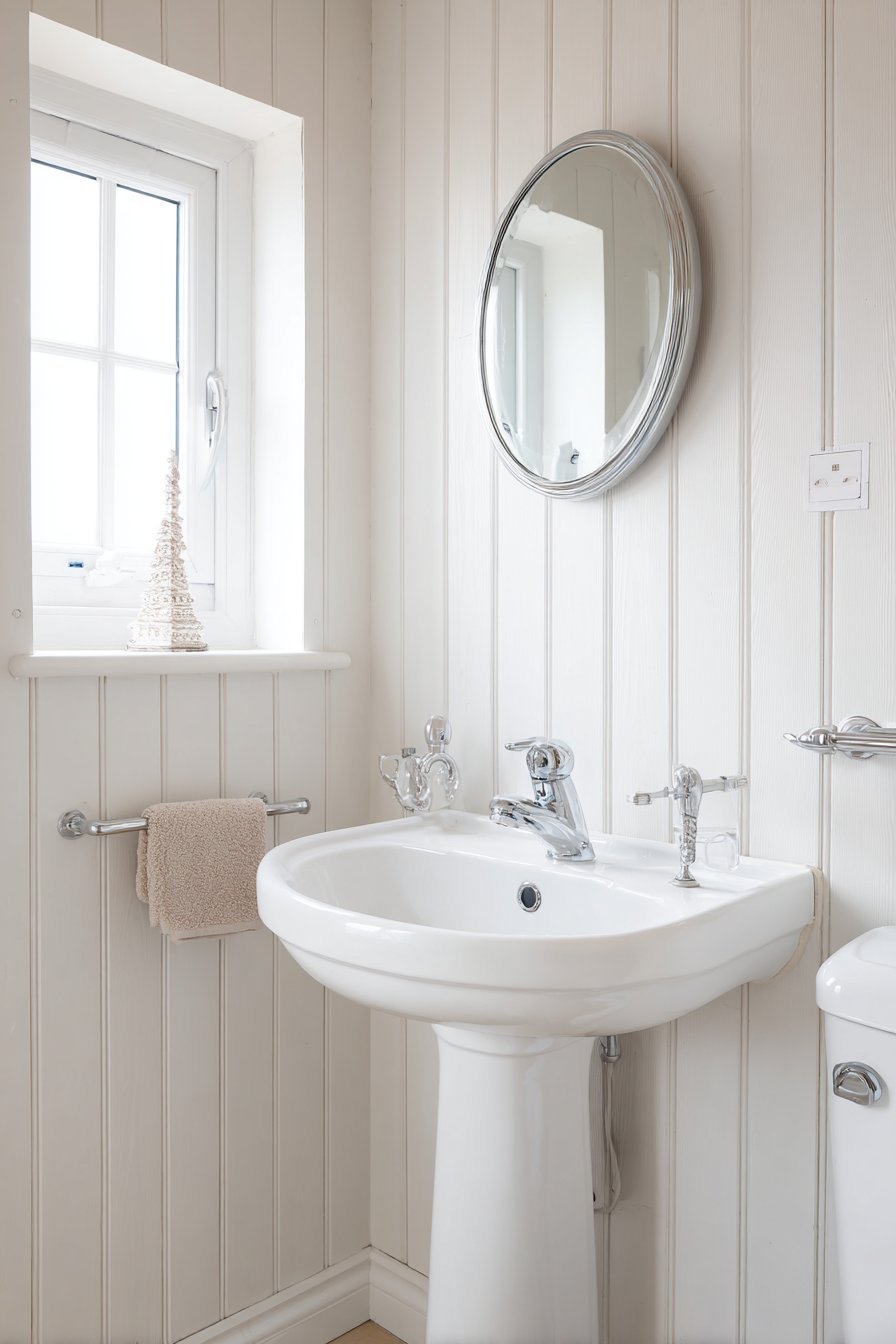
Pedestal sinks with integrated towel bars combine dual functions. Chrome rails extend from both sides of classic pedestals. Hand towels hang conveniently within easy reach. Small round mirrors with chrome frames complete the setup.
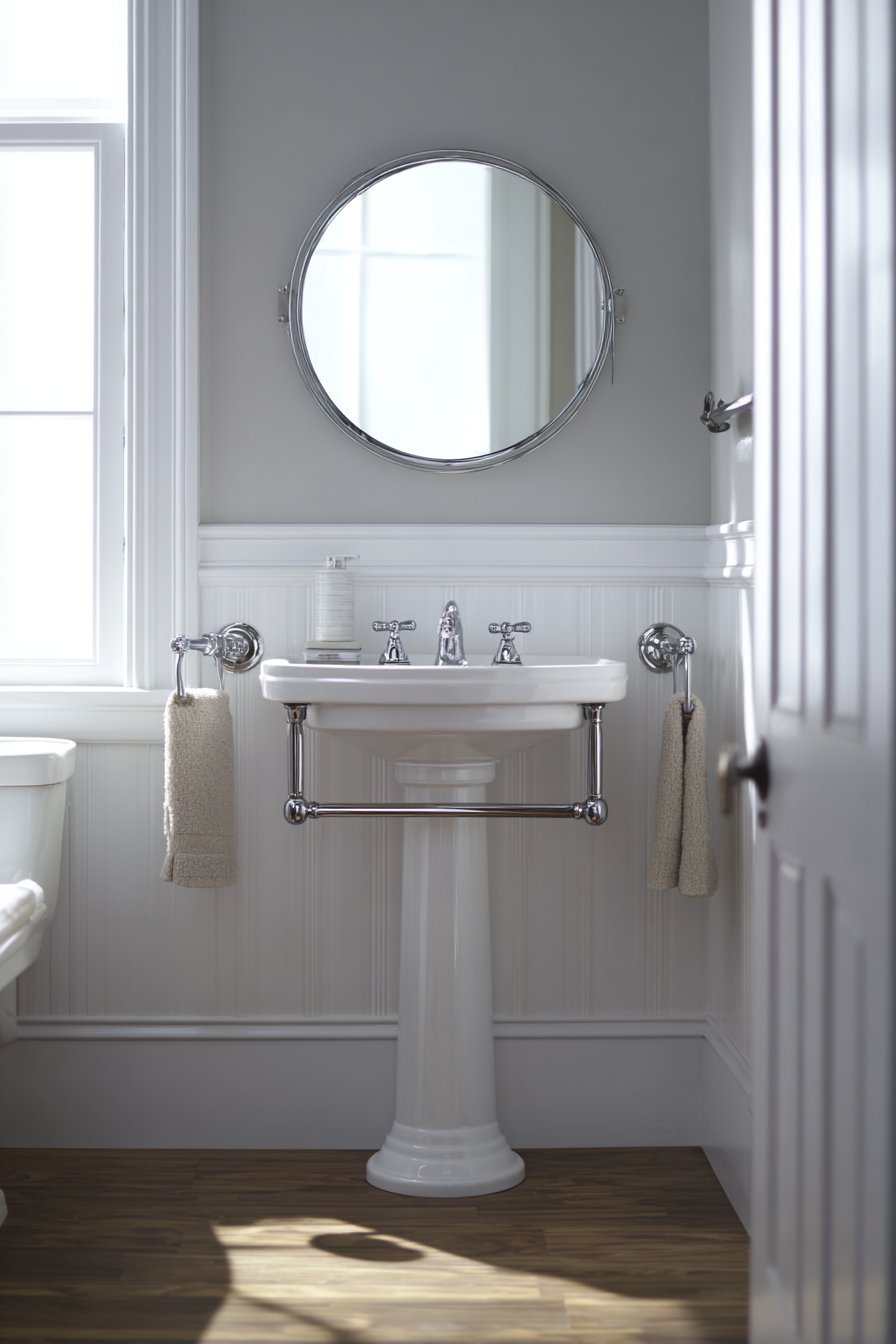
White ceramic pedestals maintain traditional bathroom character. The integrated towel storage eliminates separate wall-mounted bars. White beadboard paneling covers lower walls with texture. Soft grey paint finishes upper wall portions beautifully.
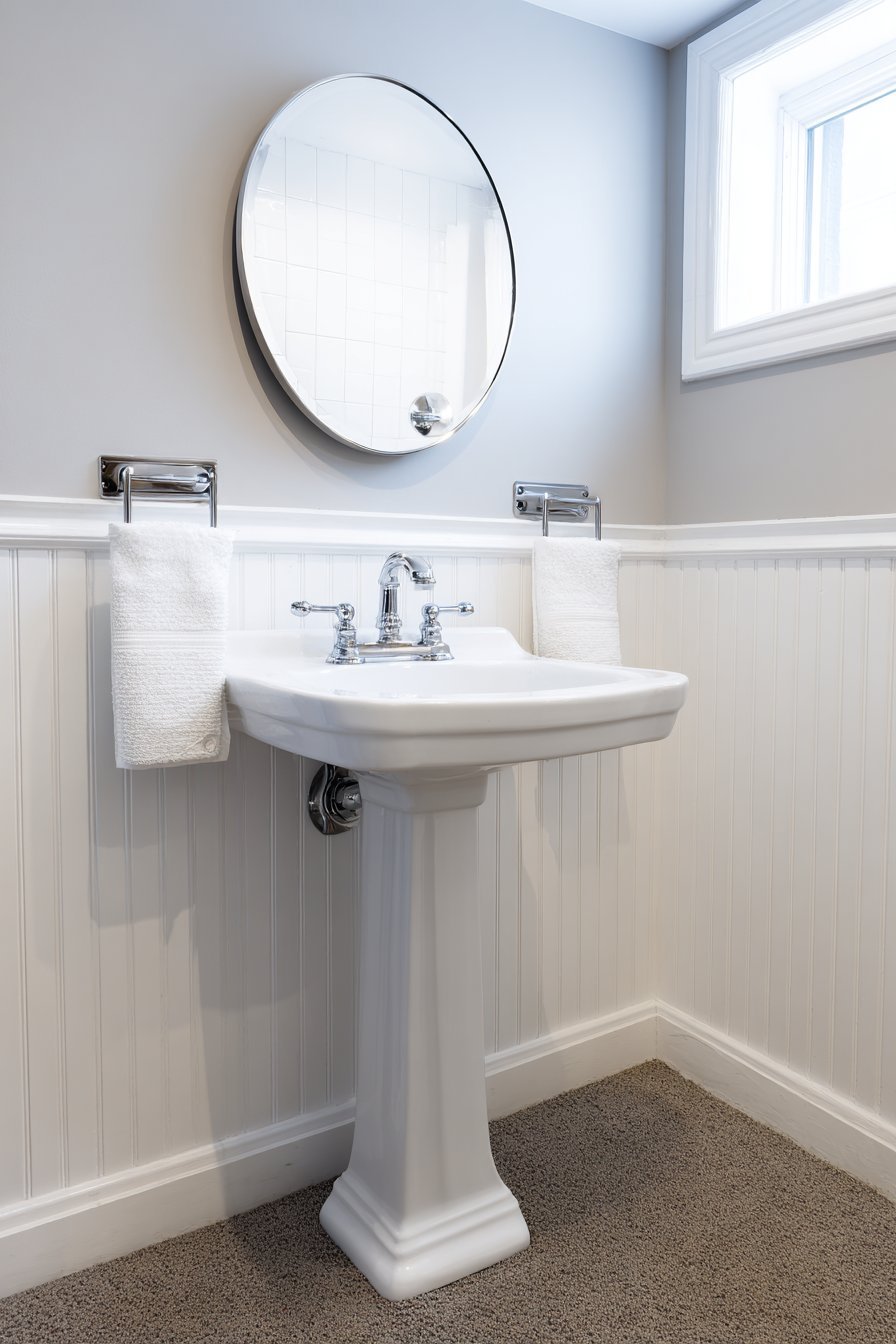
Natural light filters through small frosted windows softly. The dual-purpose fixture demonstrates efficient integration principles. Towel storage becomes inherent to sink structure itself. The result saves wall space for other essential elements.
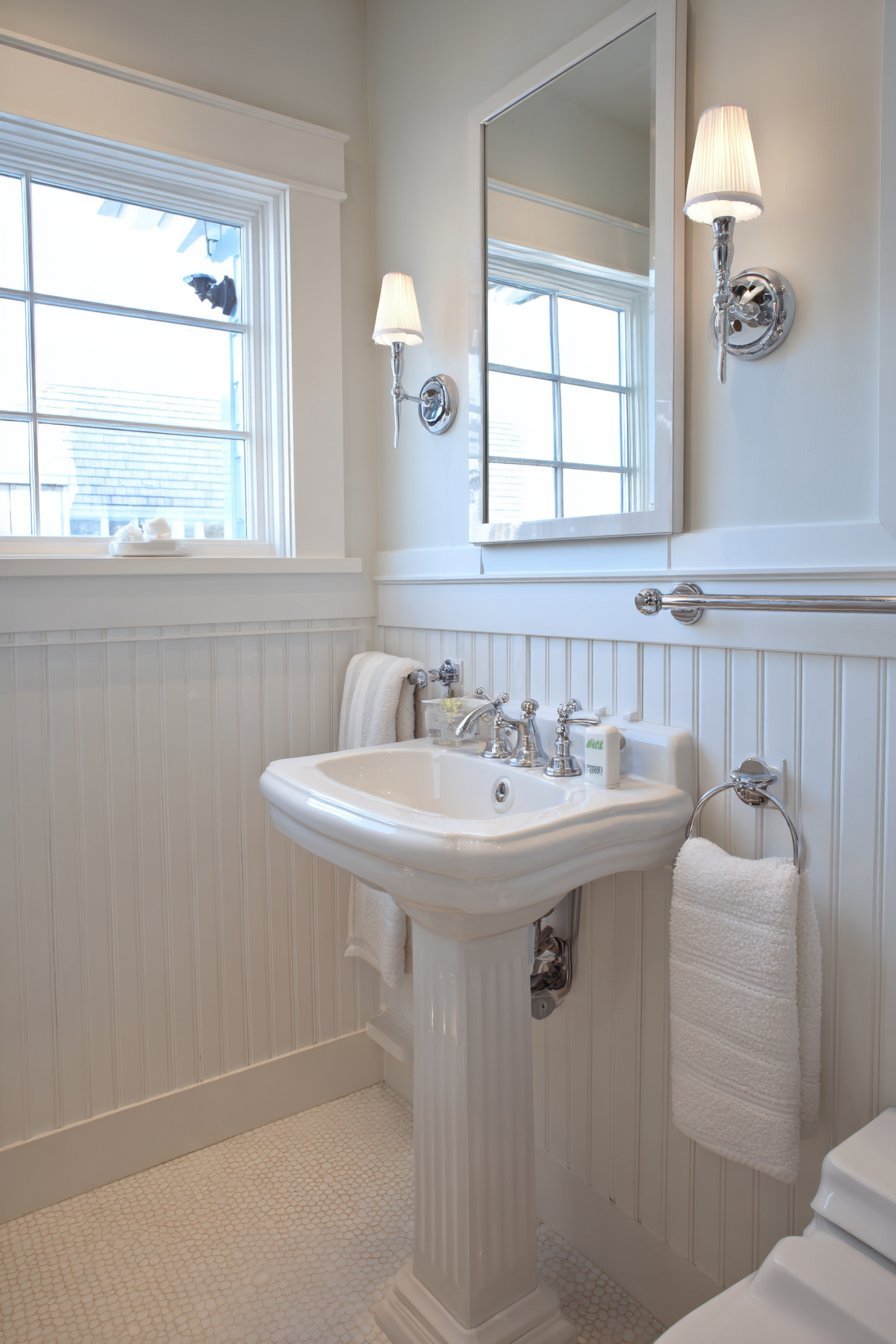
This clever integration addresses tiny bathroom storage challenges. The pedestal provides stable towel hanging without additional fixtures. The classic styling suits traditional design preferences perfectly. Soft daylight highlights the functional design integration clearly.
Key Design Tips:
- Choose pedestal sinks with integrated towel bars
- Install chrome rails on both pedestal sides
- Add small round chrome-framed mirrors
- Use beadboard paneling on lower walls
- Paint upper walls soft grey for contrast
- Include frosted windows for natural light
23. Trough-Style Elongated Sink
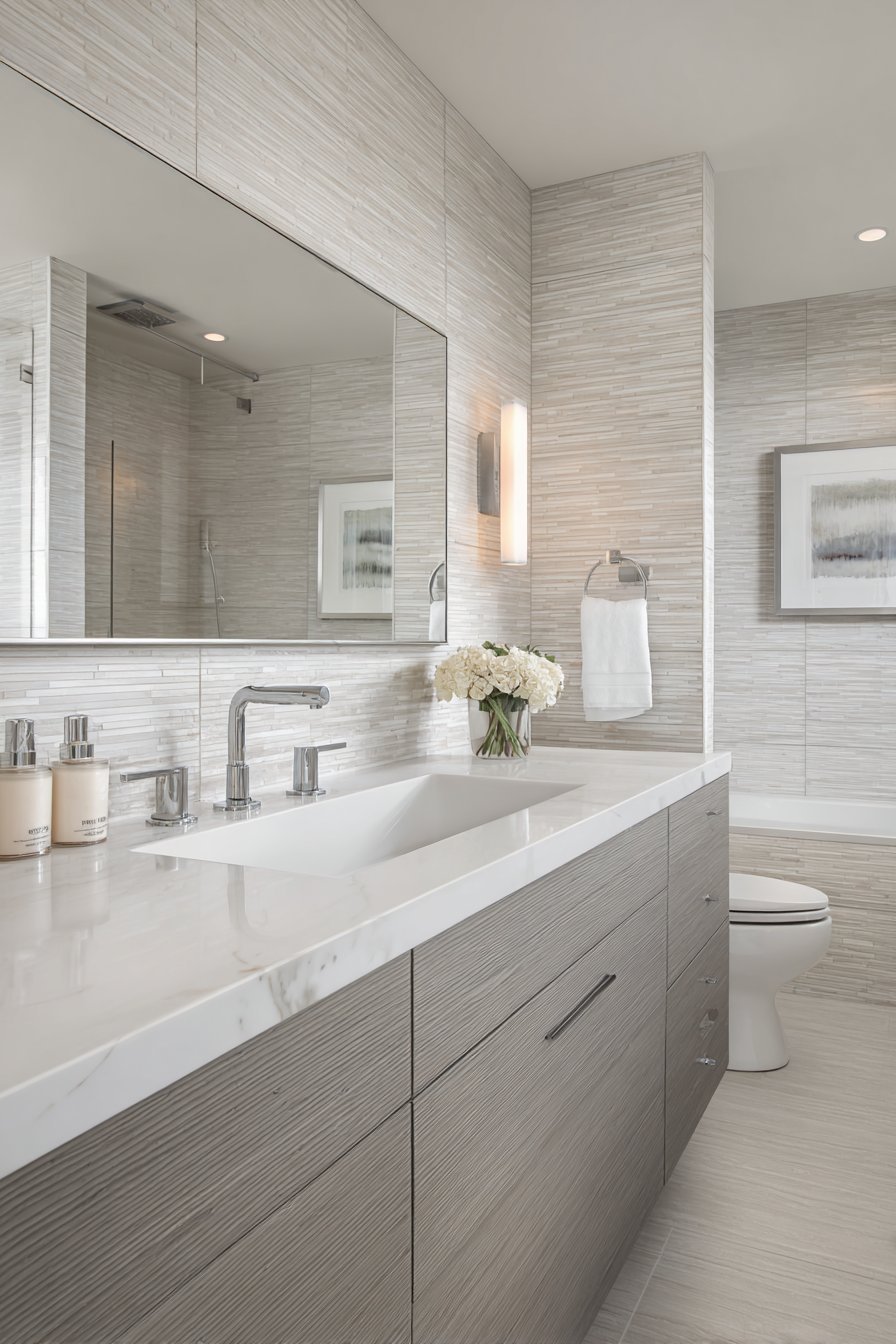
Narrow trough sinks extend full vanity width efficiently. The white rectangular basin measures twelve inches deep only. Wall-mounted chrome faucets preserve counter space completely. Large white tiles minimize visual clutter across surfaces.
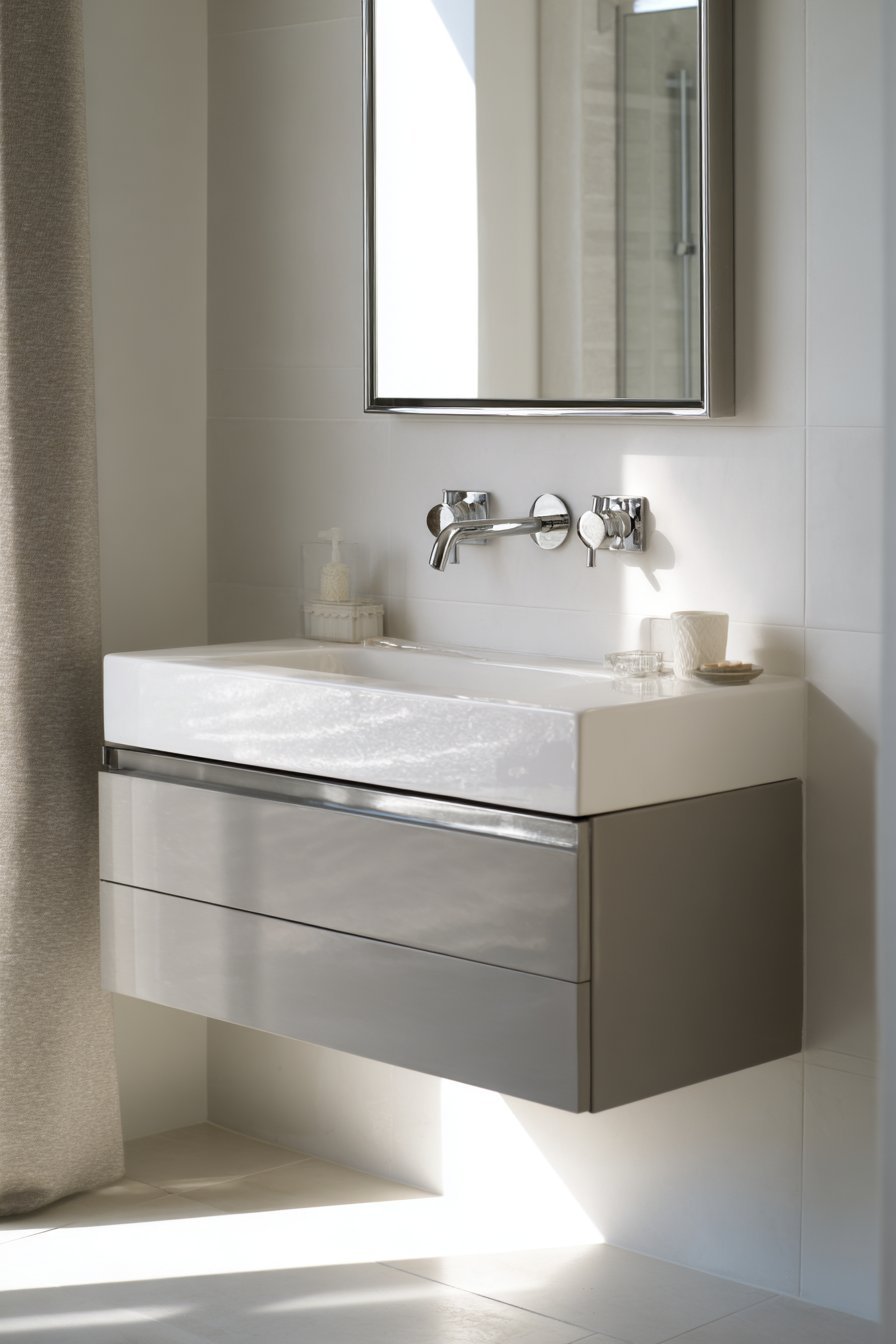
The elongated narrow design provides washing space despite shallow depth. Width compensates effectively for limited depth dimensions. The thirty-six-inch length offers generous washing area. Floating grey vanity with single drawer completes the installation.
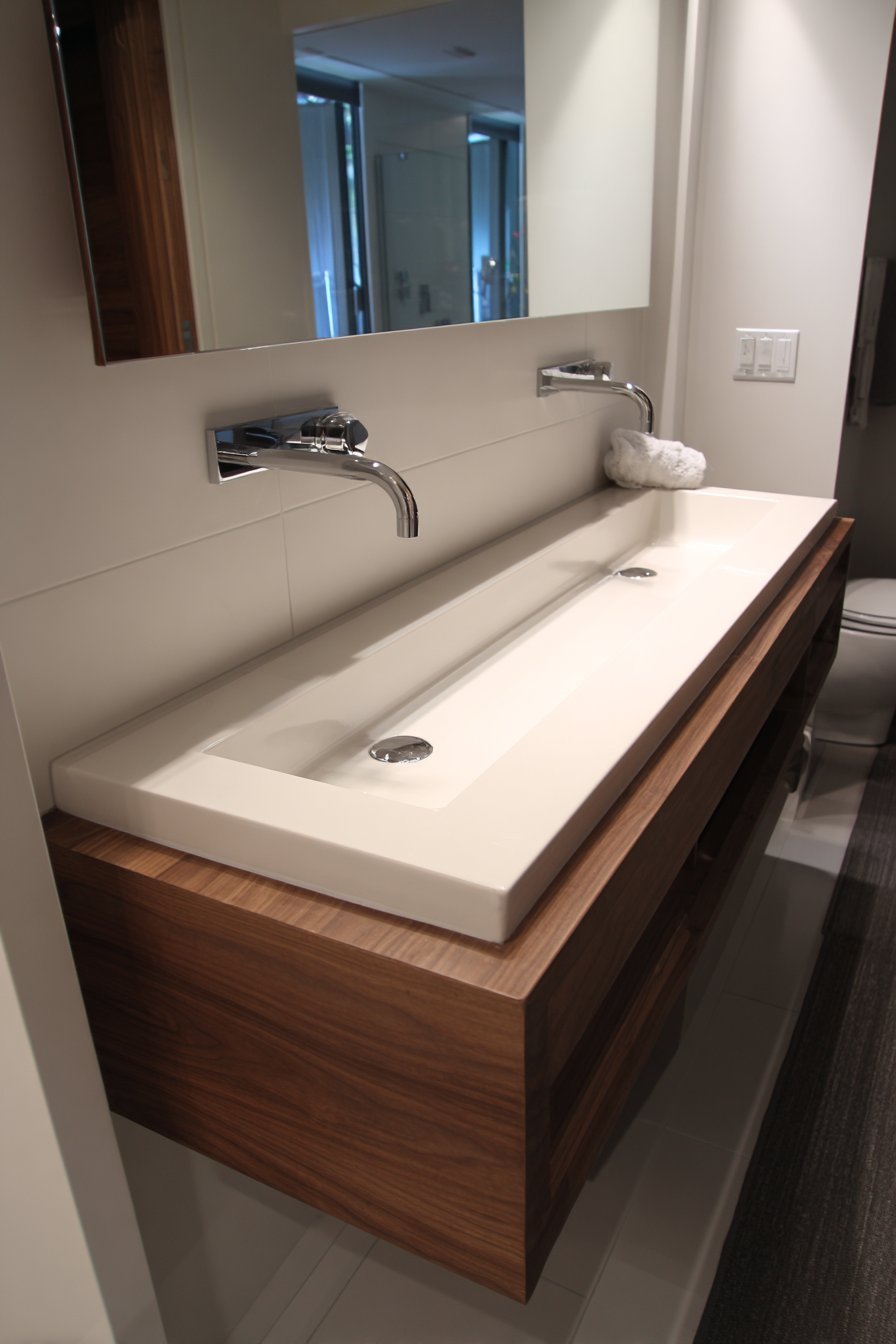
Horizontal mirrors span the full vanity width above. The proportional relationship creates balanced visual composition. Professional interior photography captures the innovative sink design. Natural lighting demonstrates how width compensates for depth constraints.
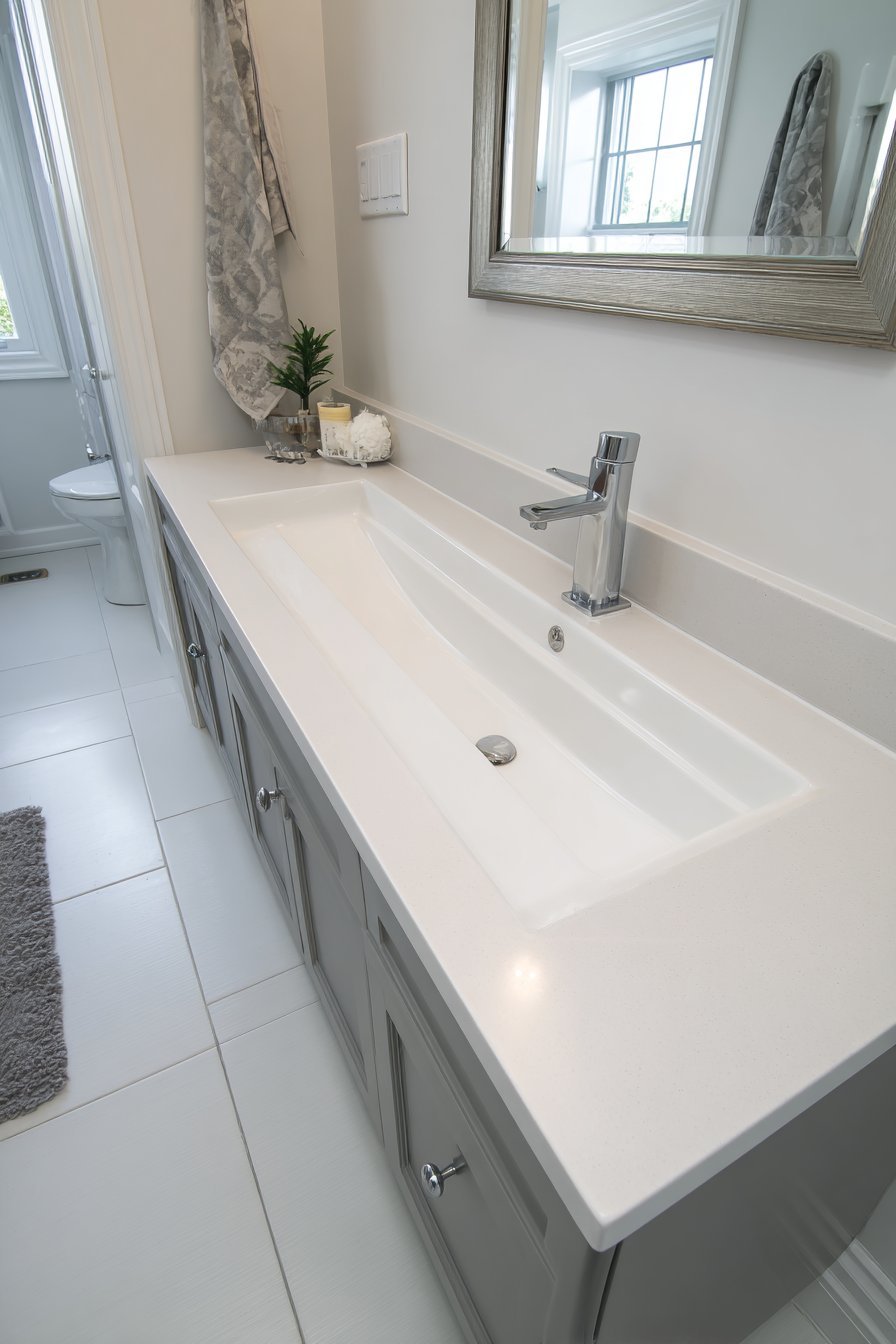
This strategic proportion adjustment addresses space limitations creatively. Traditional deep sinks consume excessive front-to-back dimension. The trough alternative provides adequate functionality differently. The wall-mounted faucets eliminate further depth requirements entirely.
Key Design Tips:
- Install trough-style sinks for width emphasis
- Limit depth to twelve inches maximum
- Extend length to thirty-six inches minimum
- Mount faucets on walls for space savings
- Use large white tiles for visual simplicity
- Add horizontal mirrors spanning full width
24. Partial Glass Zone Separation
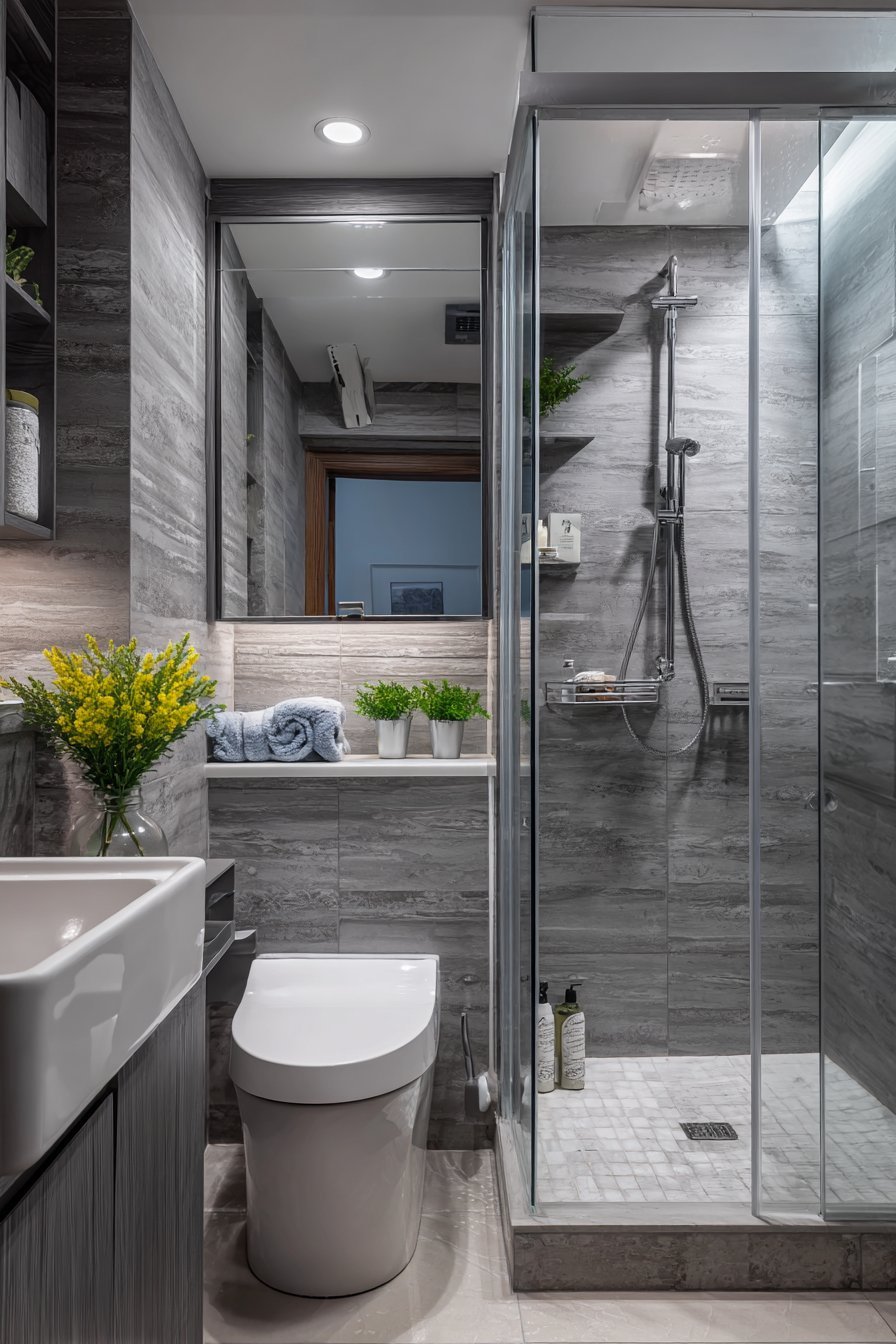
Partial glass partitions separate wet and dry zones effectively. The shower-toilet wet area features white tiled surfaces. Floor drains handle water from both fixture areas. Grey waterproof panels cover wet zone walls completely.
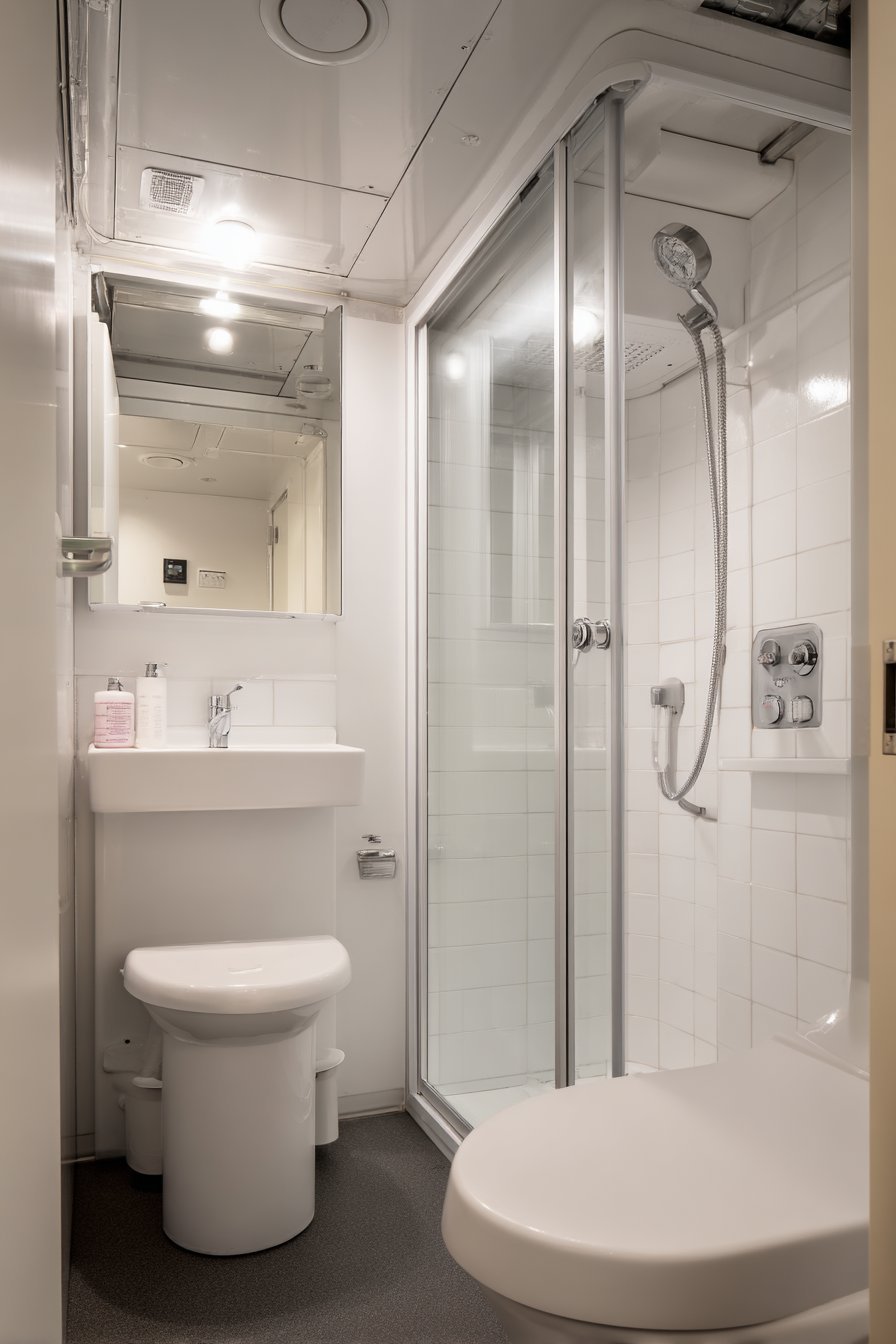
This Japanese-inspired spatial division creates functional zones efficiently. The glass divider maintains visual connection throughout the bathroom. Light flows freely between separated areas naturally. The small sink area remains dry and accessible separately.
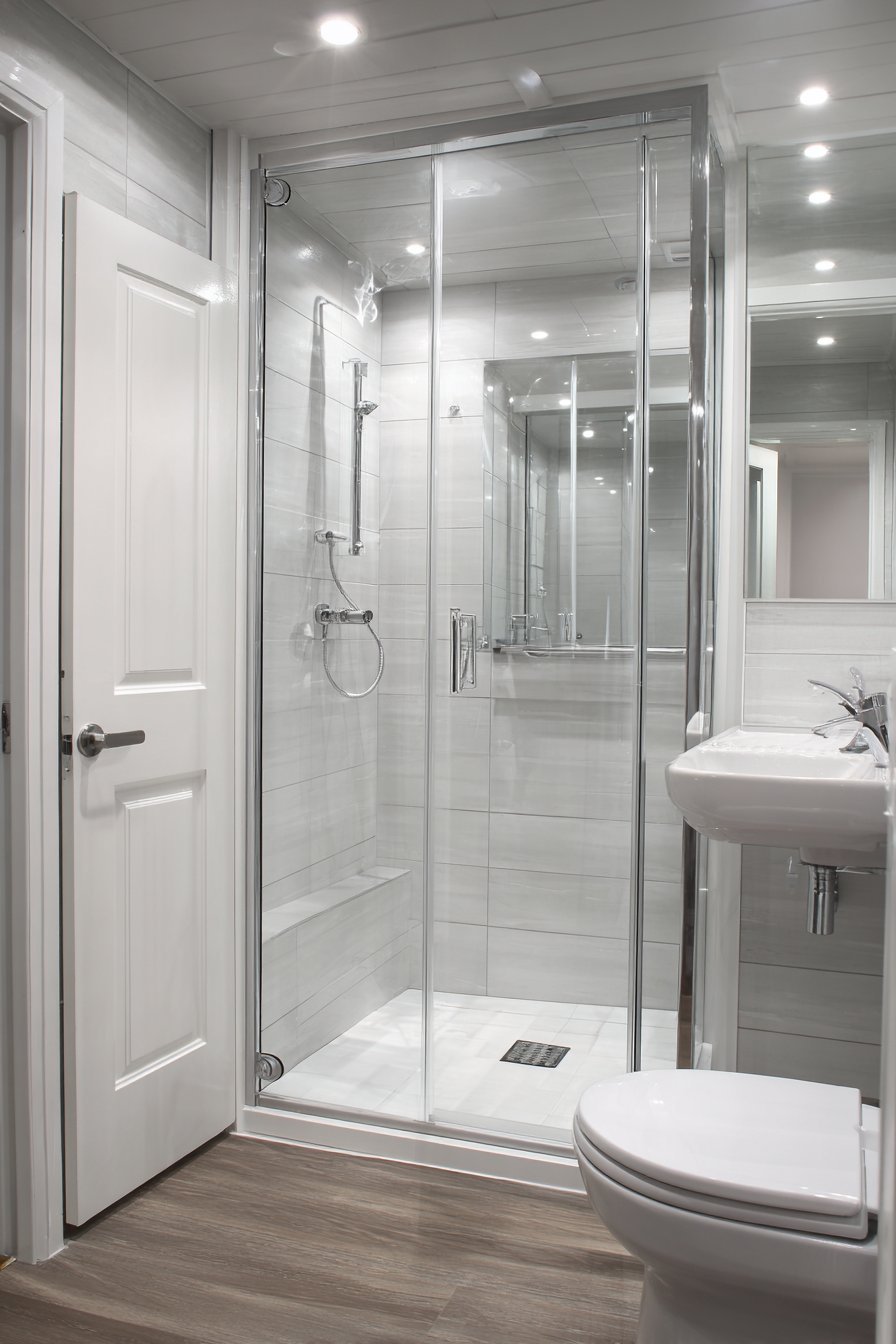
The wet room portion accommodates showering and toilet use. Wall-mounted toilets maintain streamlined appearance throughout. Chrome fixtures coordinate across both functional zones. The partial separation provides privacy without complete enclosure.
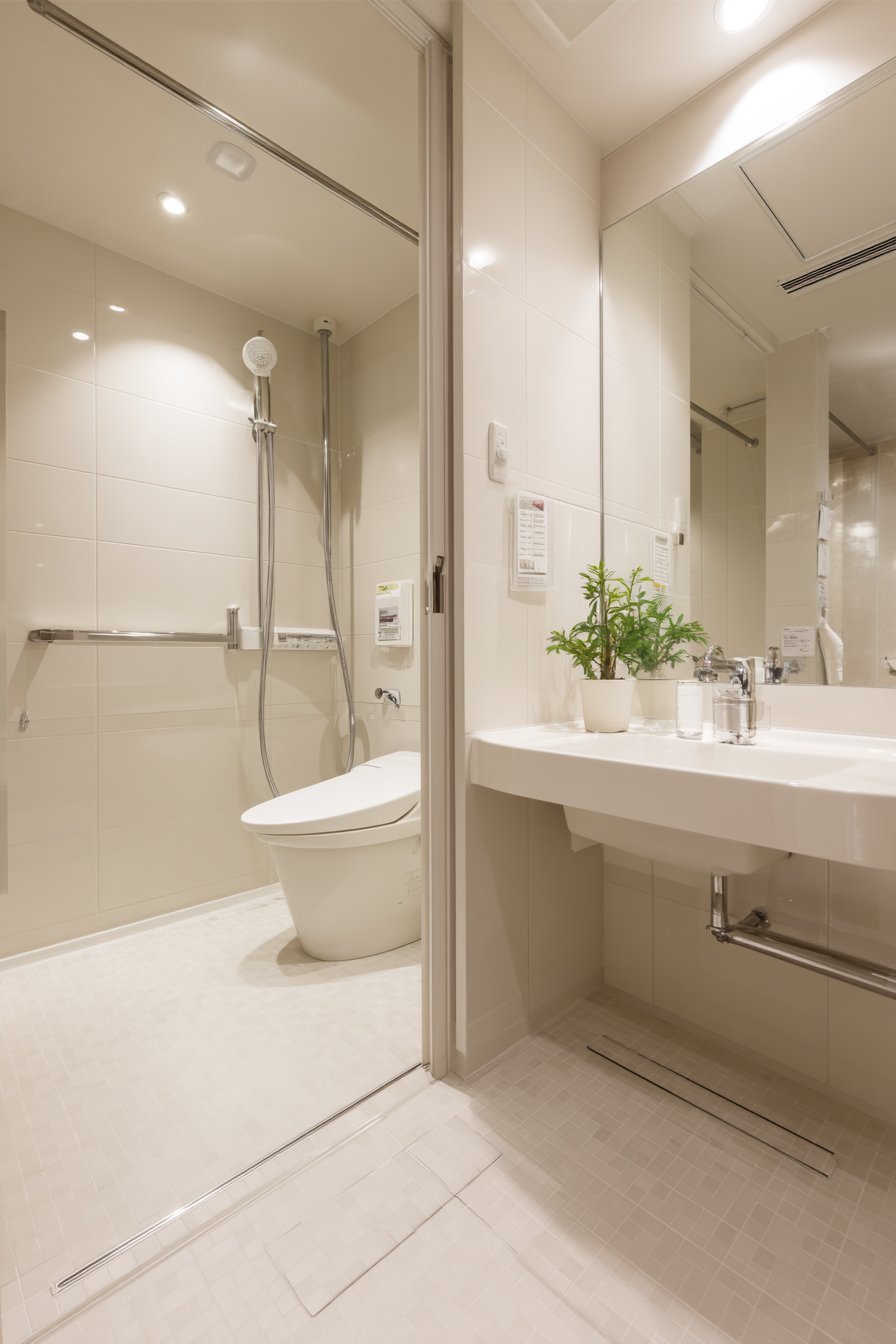
This strategic division approach suits tiny bathrooms remarkably well. Wet and dry zones coexist without complete separation. The glass partition prevents water migration while maintaining openness. Soft lighting shows functional zone creation with visual transparency.
Key Design Tips:
- Install partial glass partitions for zone separation
- Create combined shower-toilet wet areas
- Use waterproof panels in wet zones
- Mount toilets on walls for streamlined appearance
- Maintain visual connection through glass dividers
- Separate sink areas to remain dry
25. Circular Fixture Flow Improvement
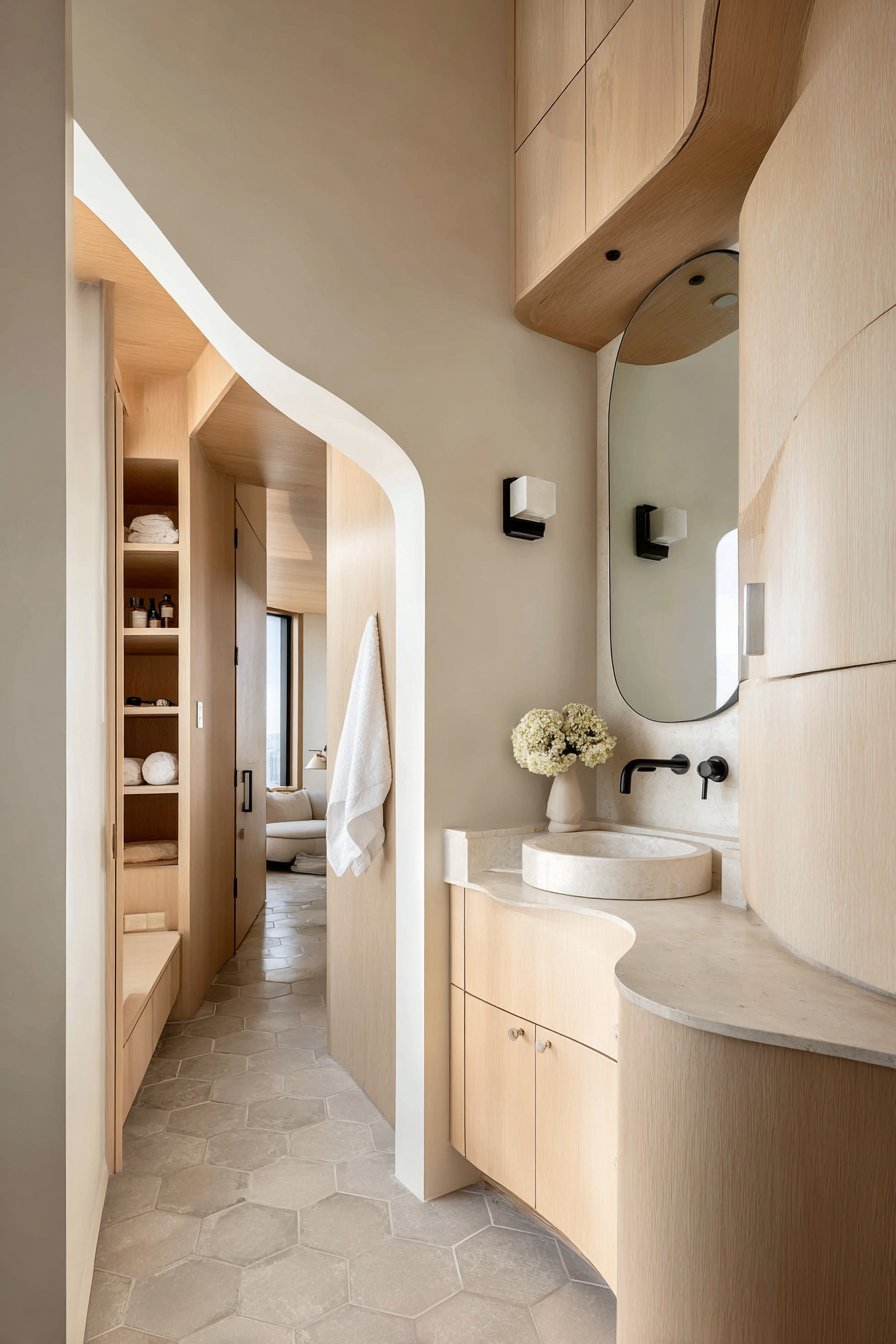
Round sinks eliminate sharp corners that impede circulation. White circular drop-in sinks sit in curved corner vanities. Light wood finishes create warm, inviting atmospheres. Rounded mirrors above echo the circular design theme.
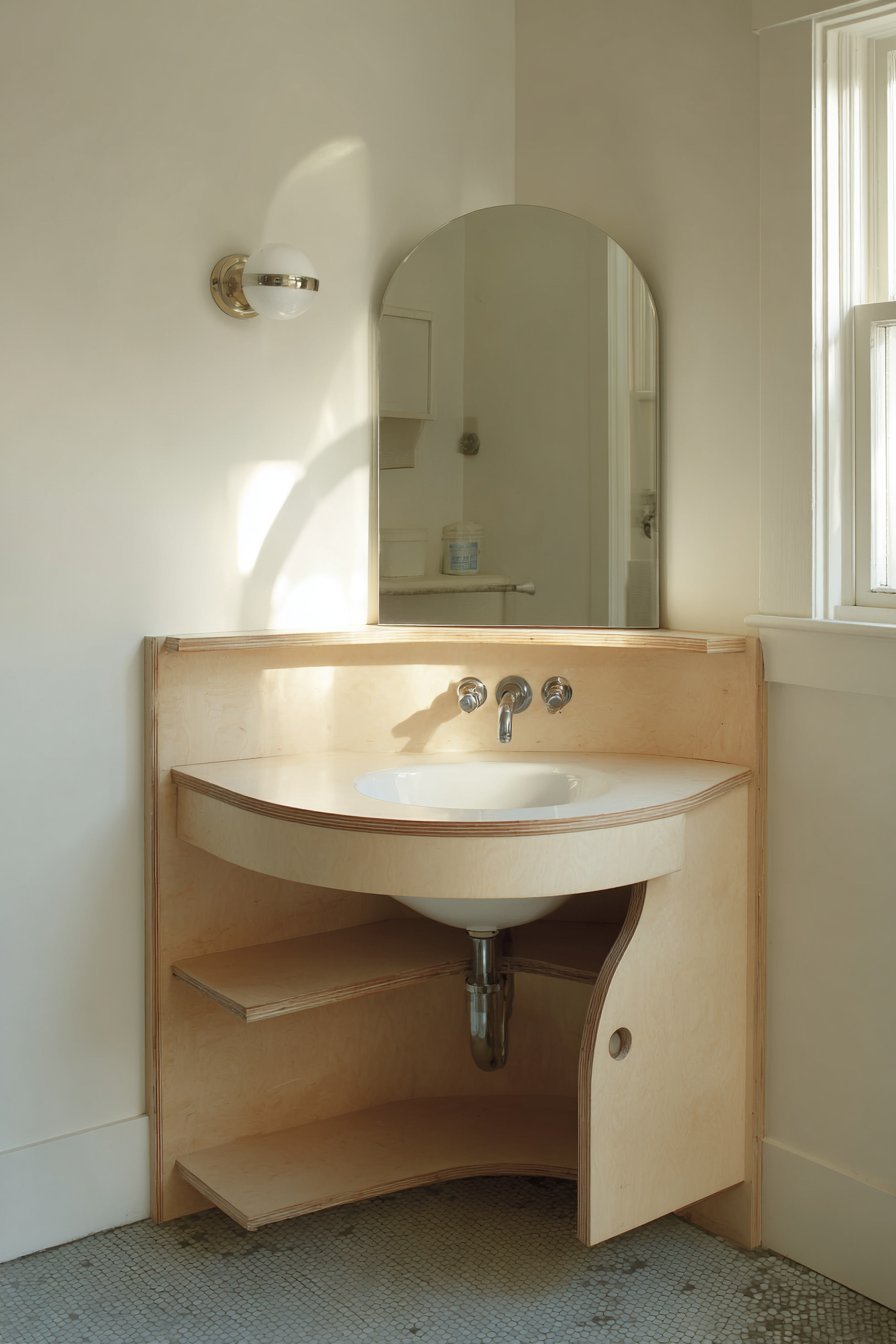
The curved elements improve traffic flow around fixtures significantly. Sharp rectangular corners create collision points in tight spaces. Circular forms allow smoother movement patterns naturally. Soft white walls and light grey hexagonal tiles maintain airiness.
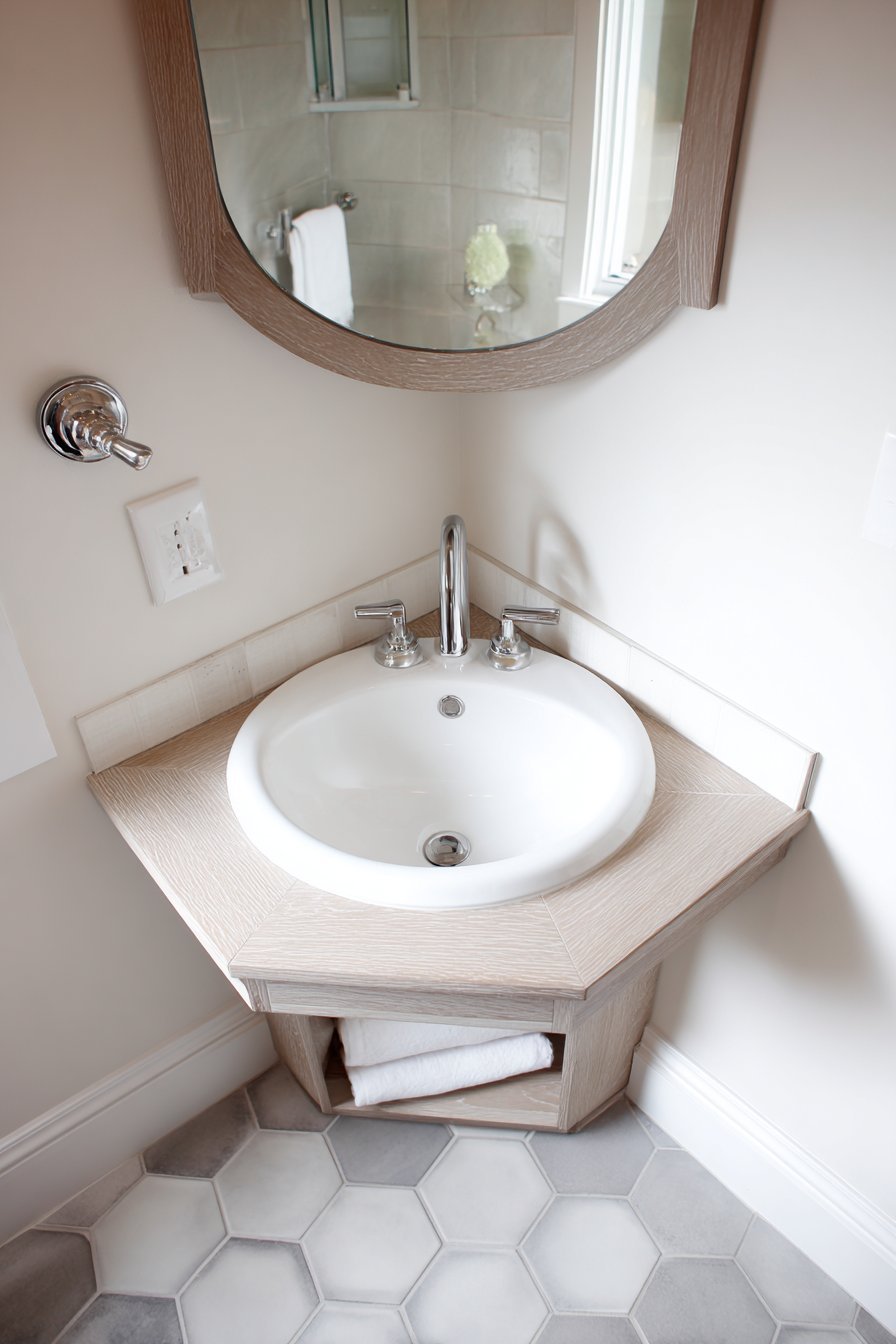
A single sconce provides necessary task lighting above mirrors. The circular theme creates visual harmony throughout the design. The corner vanity placement maximizes available wall space. The curved edges prevent painful impacts during movement.
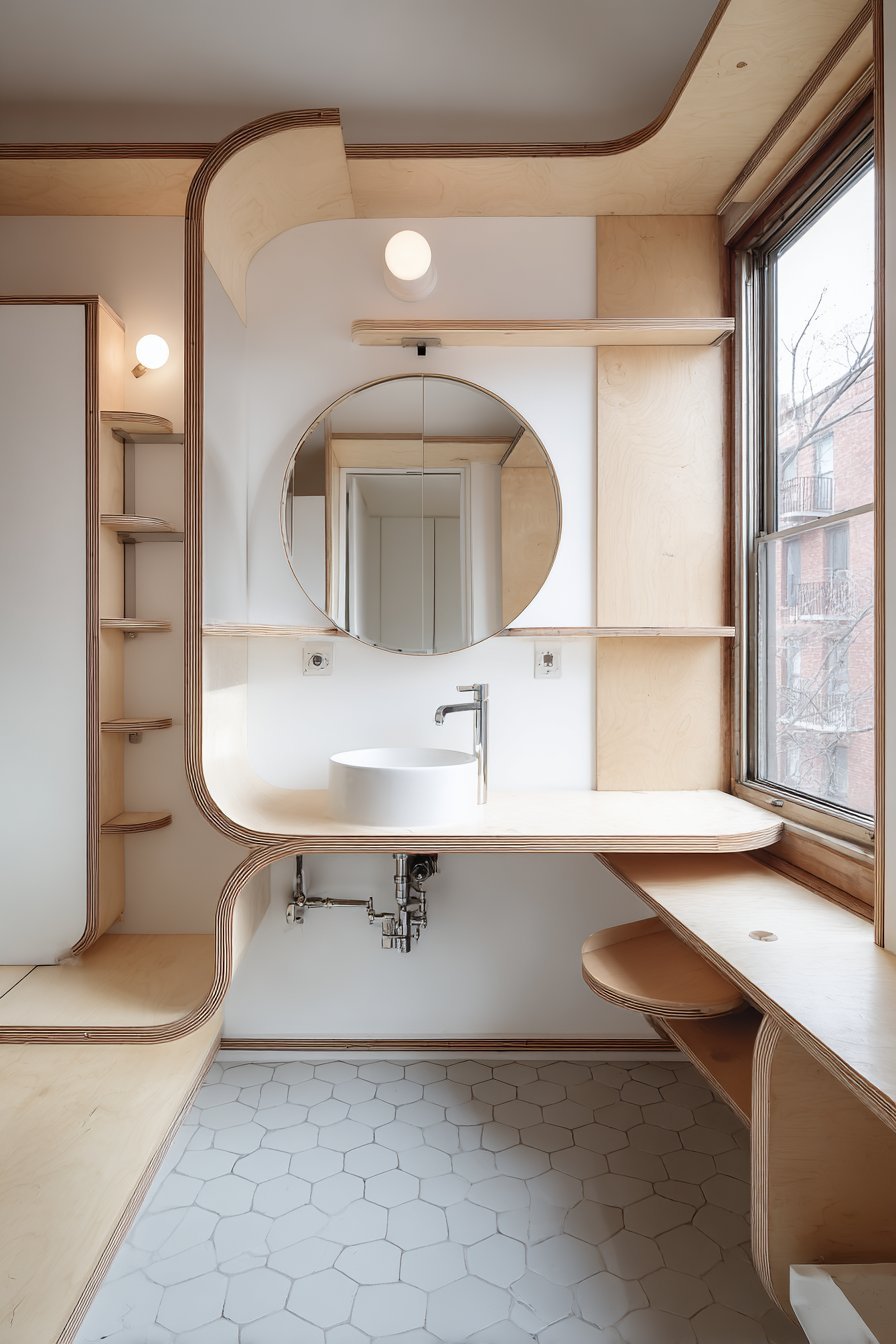
This thoughtful geometry consideration improves tiny bathroom functionality. Rounded fixtures accommodate human movement patterns better. The circular repetition creates cohesive design language. Natural light demonstrates circulation improvements clearly throughout.
Key Design Tips:
- Choose round sinks for better circulation flow
- Install curved corner vanities for efficiency
- Use light wood finishes for warmth
- Add rounded mirrors echoing sink shapes
- Include hexagonal floor tiles for texture
- Position single sconces for task lighting
26. Glass Block Natural Privacy
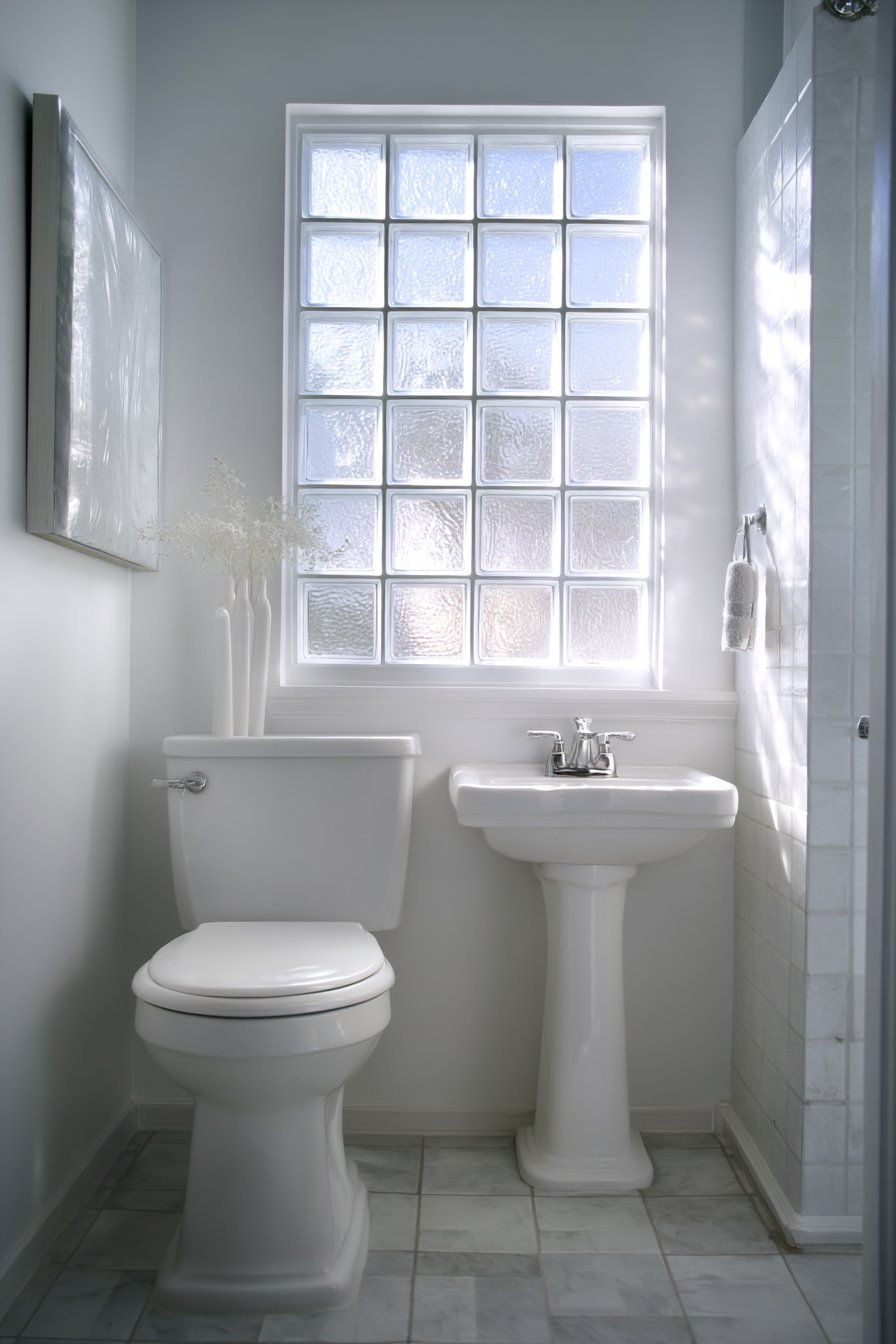
Glass block windows provide natural light and permanent privacy. The translucent blocks form twenty-four-inch square windows. Diffused illumination eliminates harsh direct sunlight. White walls and simple white fixtures maintain clean aesthetics.
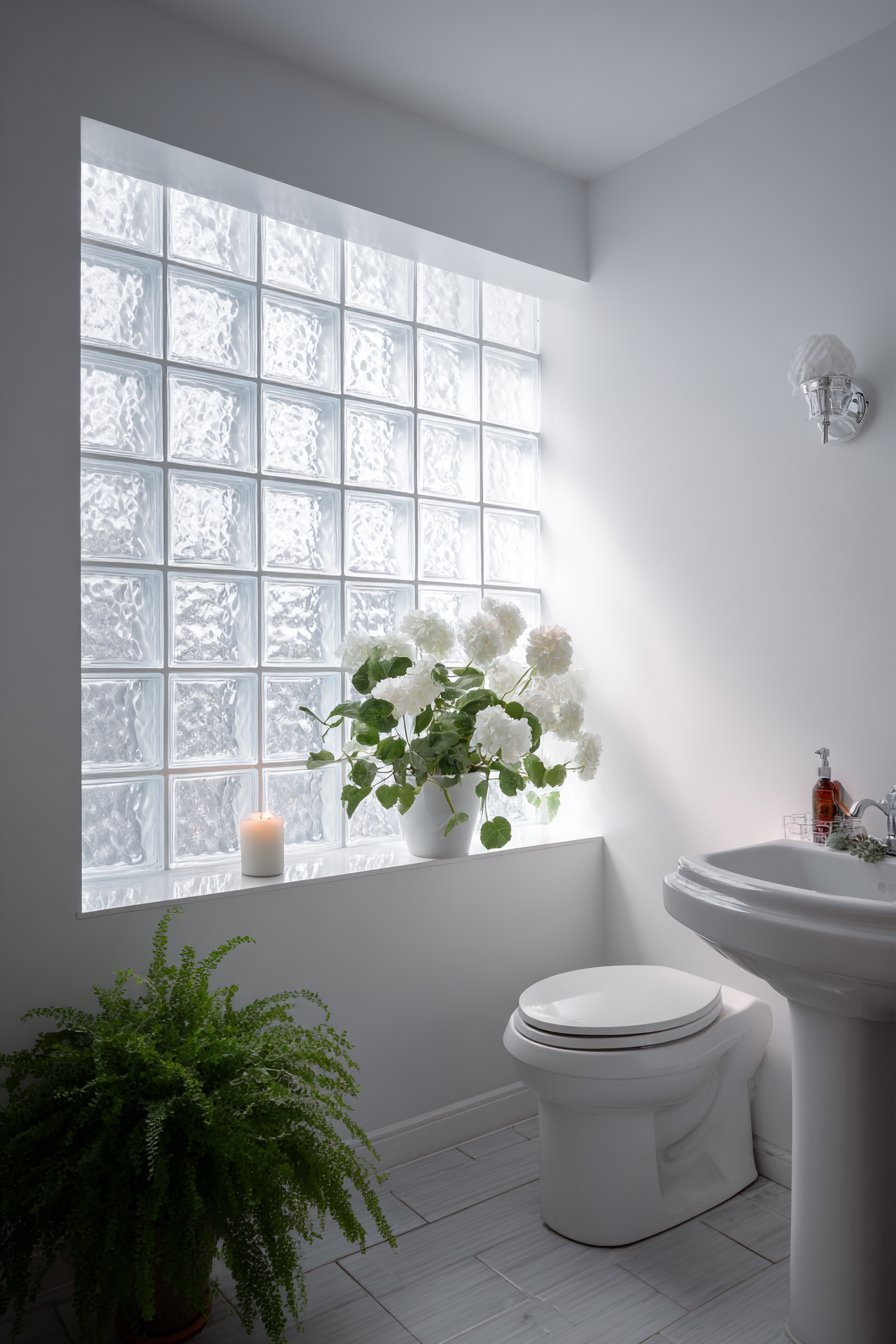
The textured glass blocks create privacy without window treatments. No curtains or blinds consume valuable wall space. The permanent solution requires no maintenance or adjustment. Light grey floor tiles ground the minimalist space effectively.
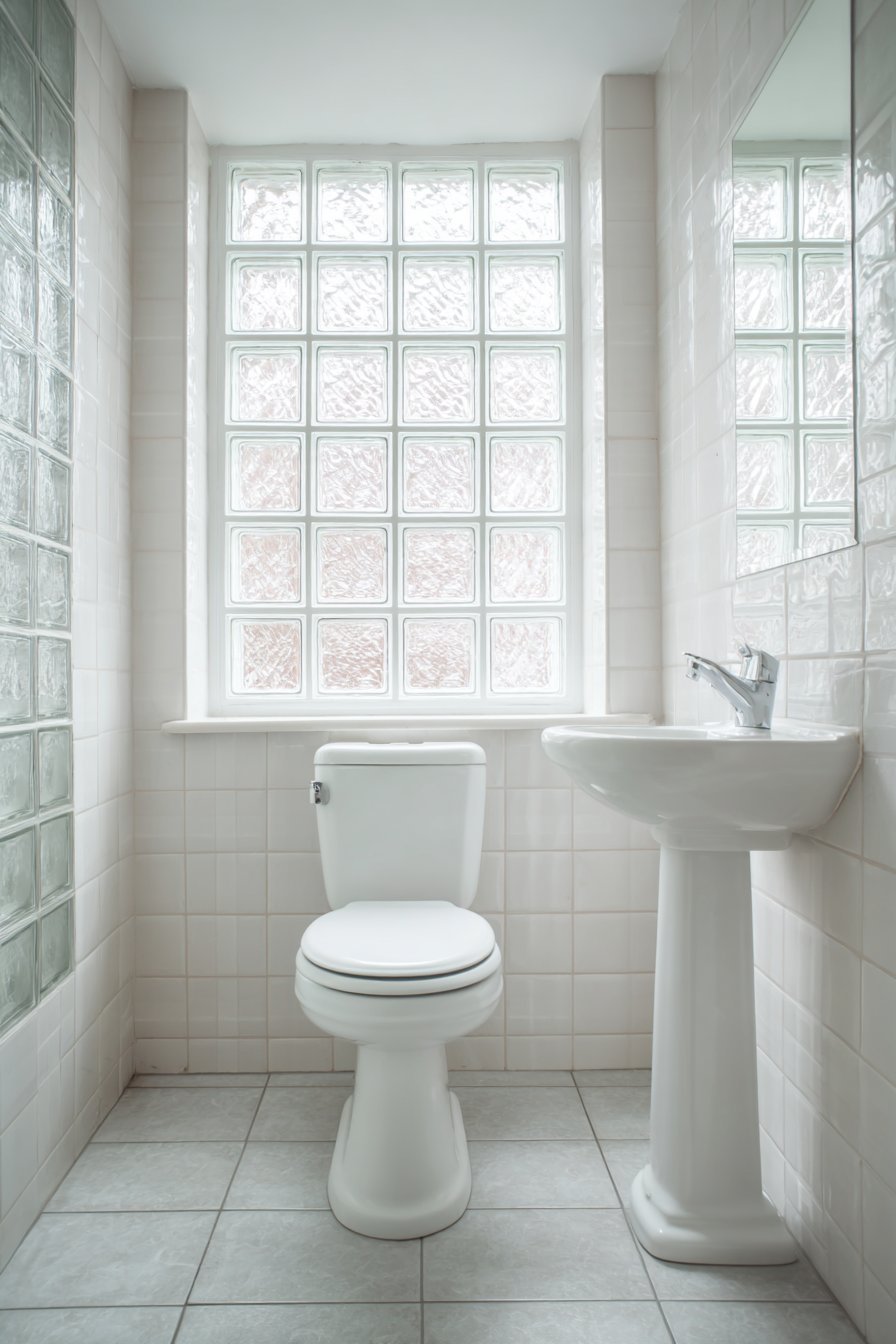
The glass block construction allows light transmission beautifully. The textured surface diffuses illumination gently throughout the bathroom. Privacy remains absolute despite window presence. The small square dimension fits tight bathroom configurations perfectly.
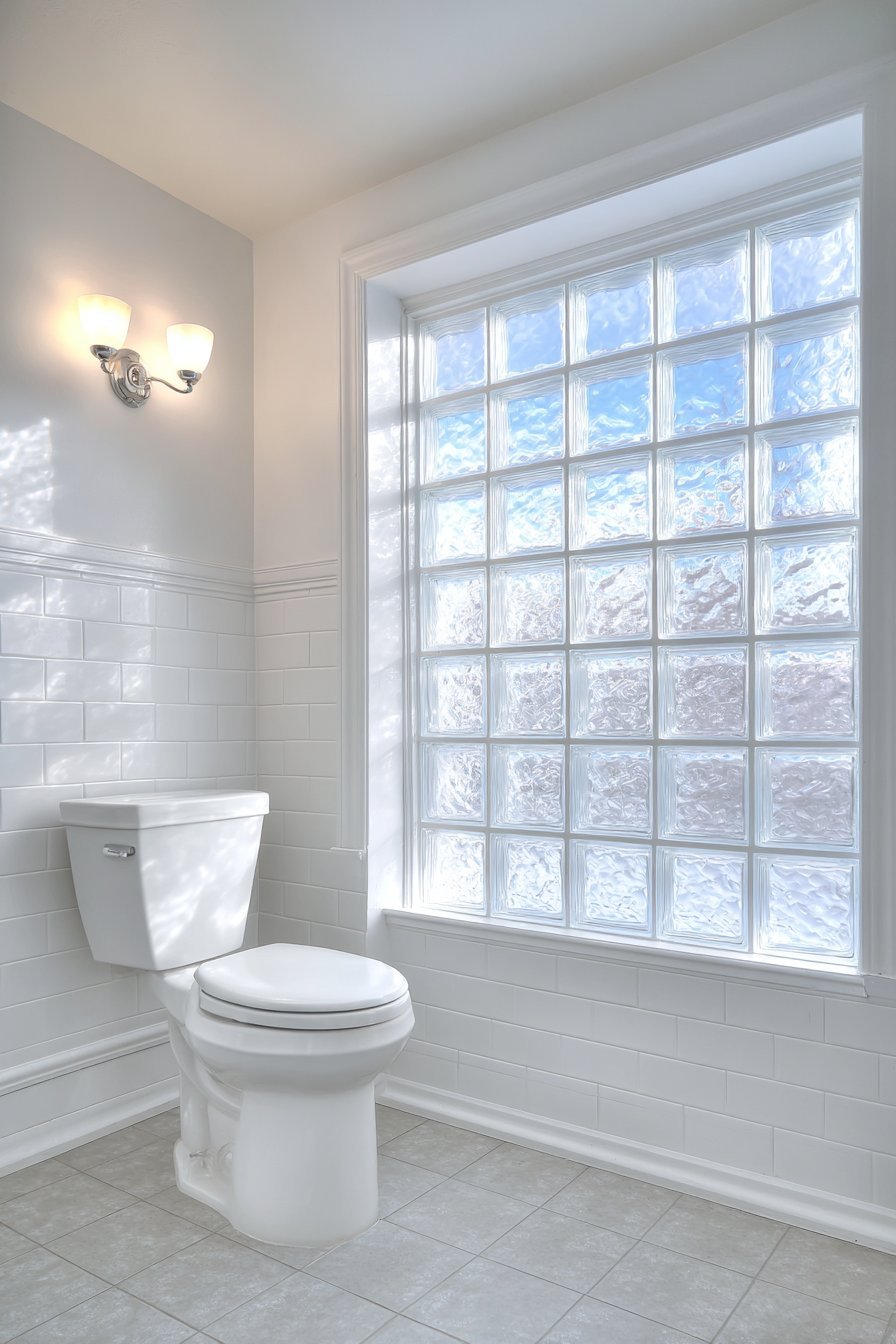
This architectural solution addresses dual light and privacy needs. The permanent installation eliminates ongoing treatment maintenance. The distinctive texture adds visual interest to plain walls. Professional photography captures the unique light quality created.
Key Design Tips:
- Install glass block windows for permanent privacy
- Create twenty-four-inch square window openings
- Eliminate need for curtains or blinds
- Use white walls for clean aesthetics
- Add light grey floor tiles for grounding
- Embrace textured glass light diffusion
27. Ceiling-Height Above-Toilet Storage
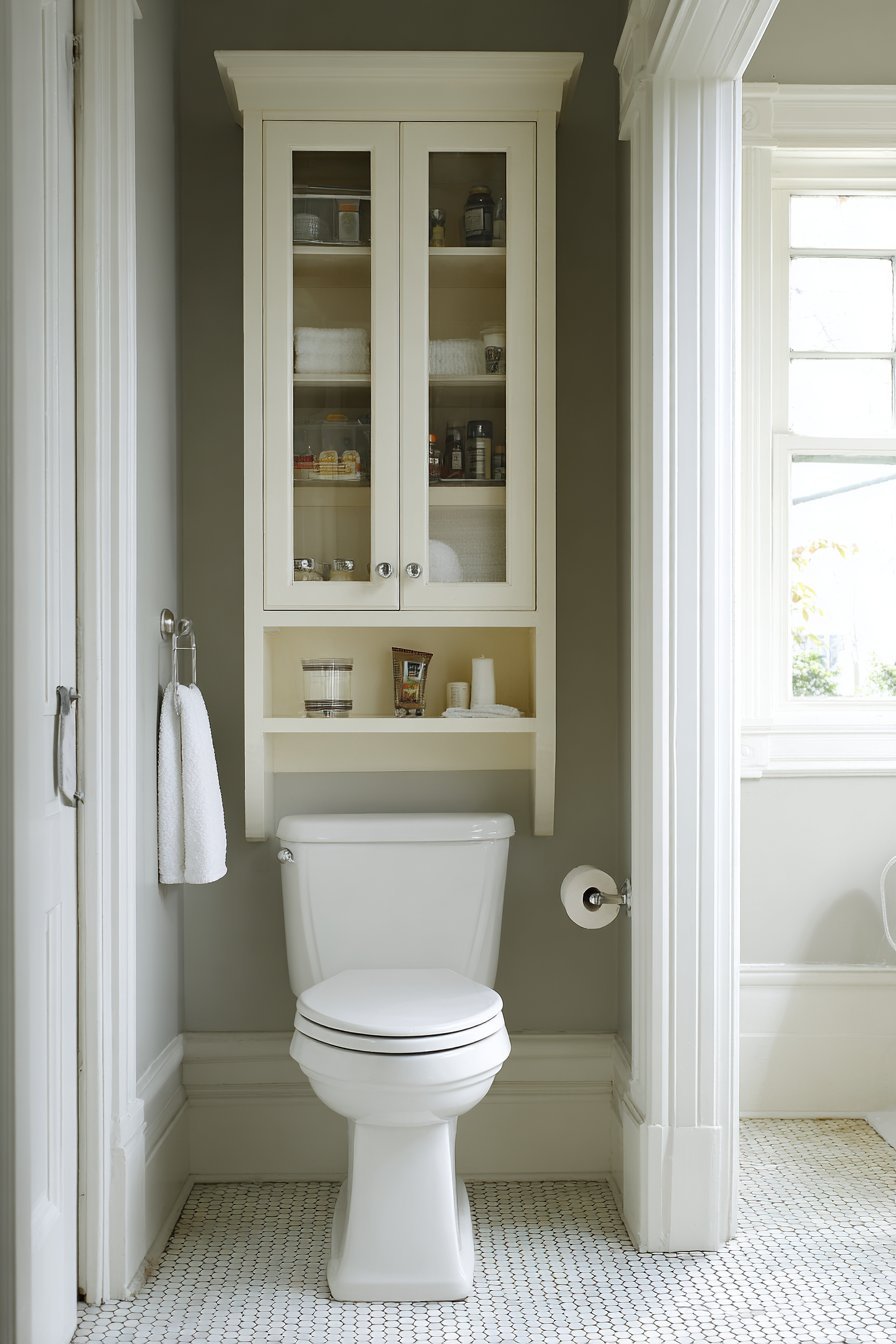
Wall-mounted cabinets extending to ceilings maximize vertical storage. White shaker-style units feature three compartments with glass panels. Interior shelving remains visible through transparent door fronts. Standard white toilets sit below on hexagonal floor tiles.
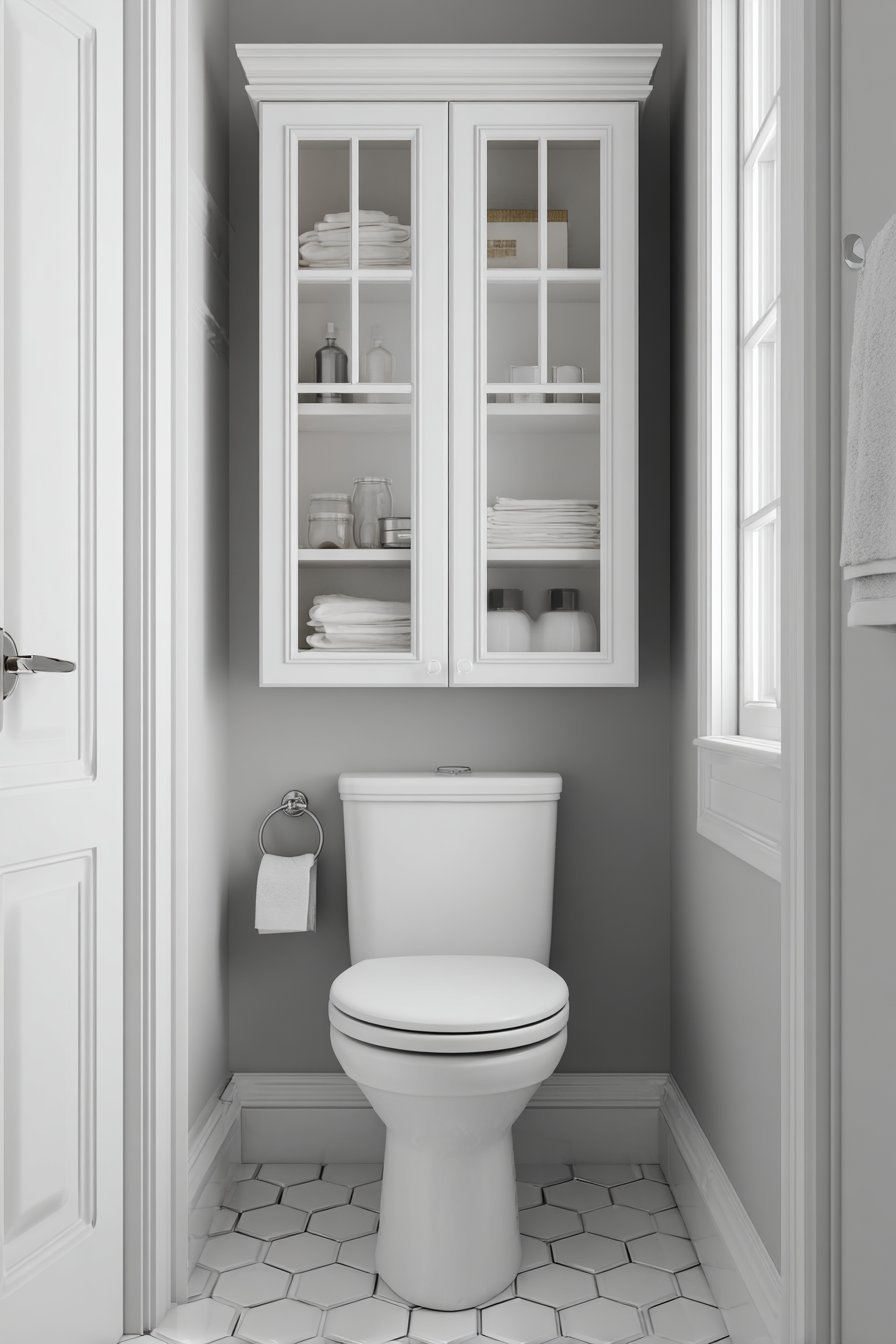
The ceiling-height design utilizes typically unused upper zones. Valuable storage volume occupies otherwise wasted vertical space. The shaker-style doors provide timeless aesthetic appeal. Light grey walls create subtle backdrops for white cabinetry.
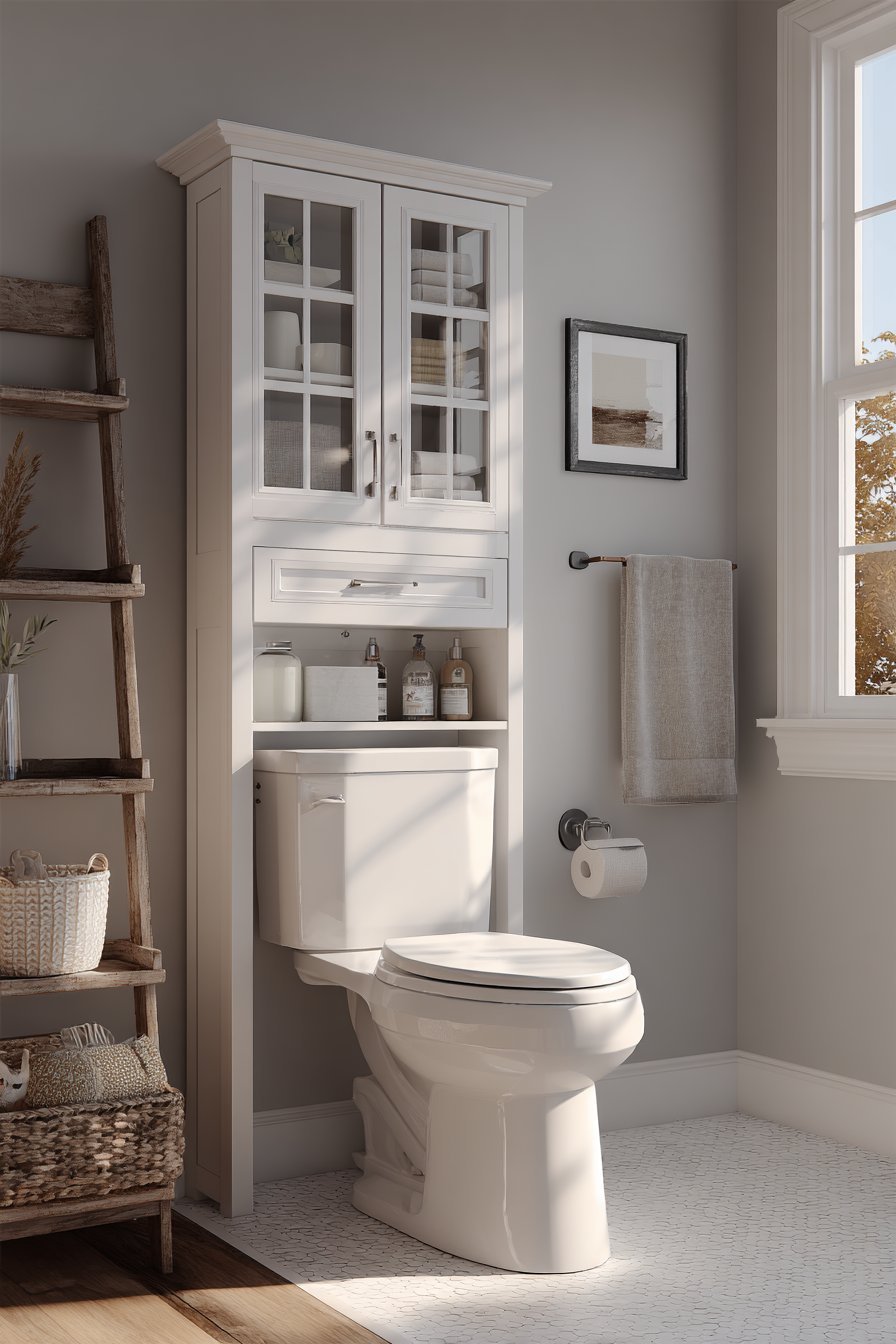
Glass-panel doors allow visual inventory of stored items. The transparent fronts prevent the closed, heavy appearance. A small hand towel ring mounts conveniently beside toilets. The efficient vertical approach maximizes cubic storage capacity.
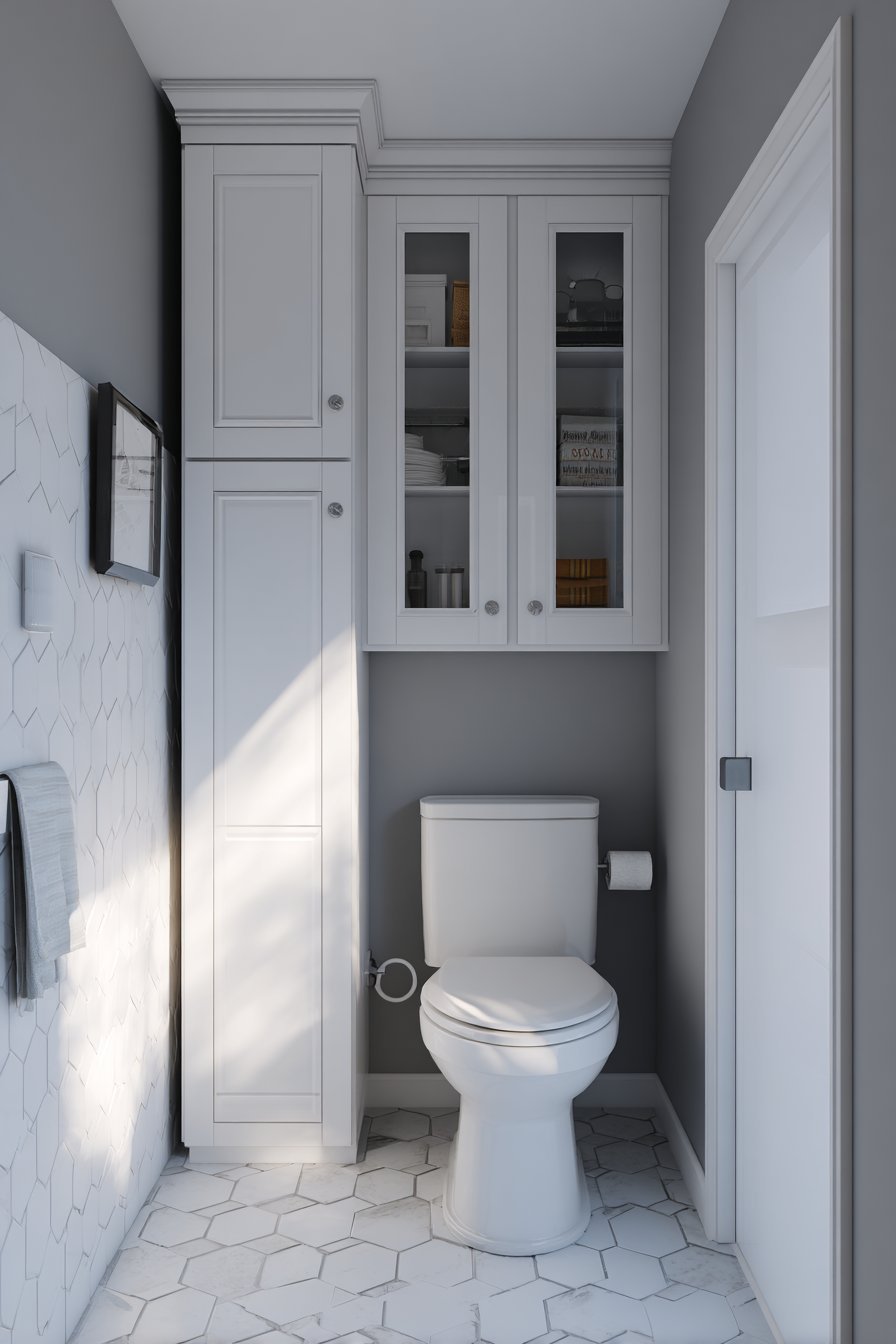
This storage strategy demonstrates effective vertical thinking. Upper cabinets hold less-frequently-accessed items safely. Lower sections accommodate everyday necessities conveniently. Balanced lighting highlights the floor-to-ceiling storage extension clearly.
Key Design Tips:
- Install ceiling-height cabinets above toilets
- Choose shaker-style doors for timeless appeal
- Use glass panels for interior visibility
- Mount hand towel rings beside toilets
- Paint walls light grey for subtle backdrop
- Maximize vertical storage in tight spaces
28. Curbless Continuous Floor Design
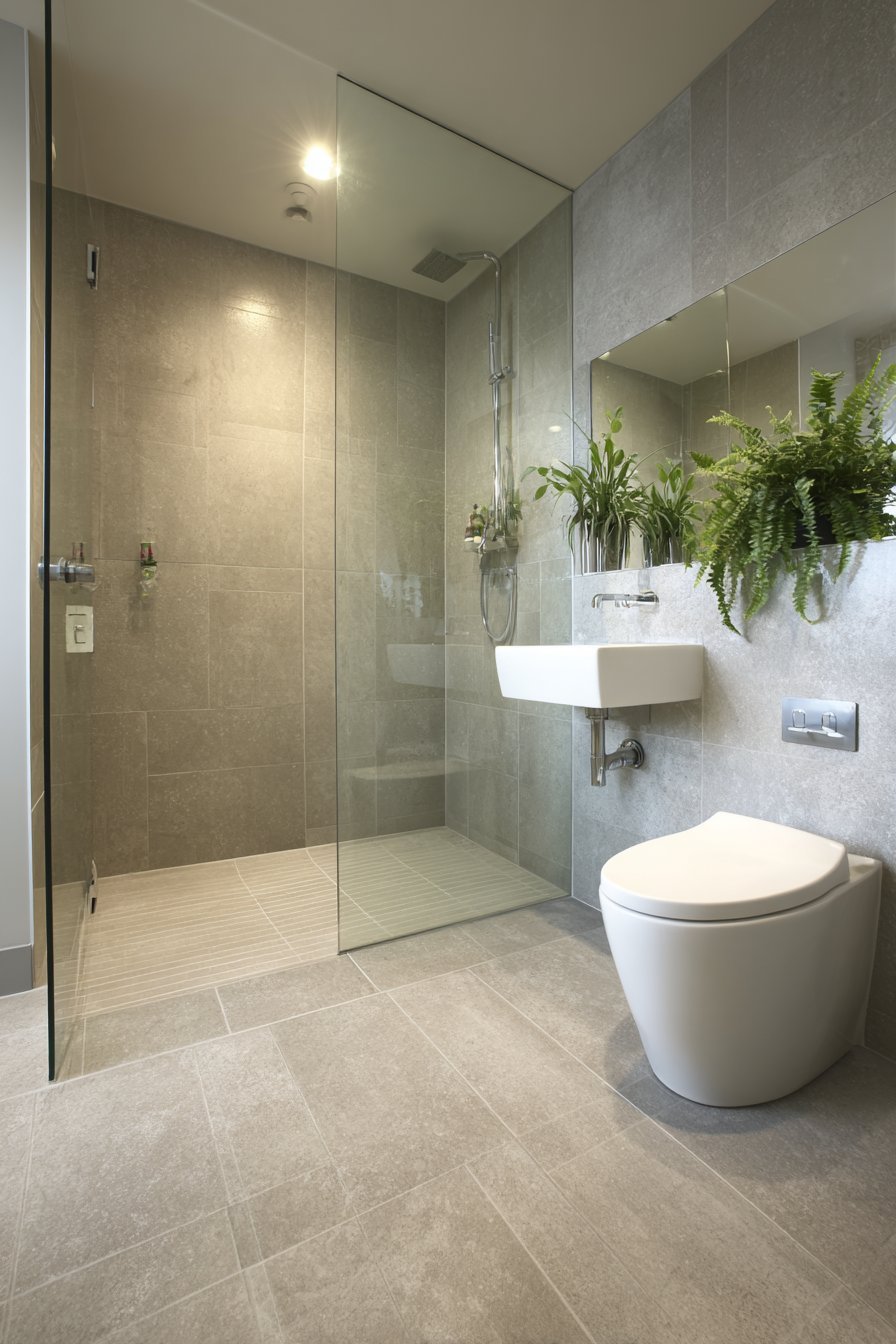
Curbless shower entries eliminate visual barriers completely. Continuous floor tiles flow seamlessly into shower areas. Large-format light grey porcelain creates uninterrupted planes. Subtle slopes direct water toward linear drains effectively.
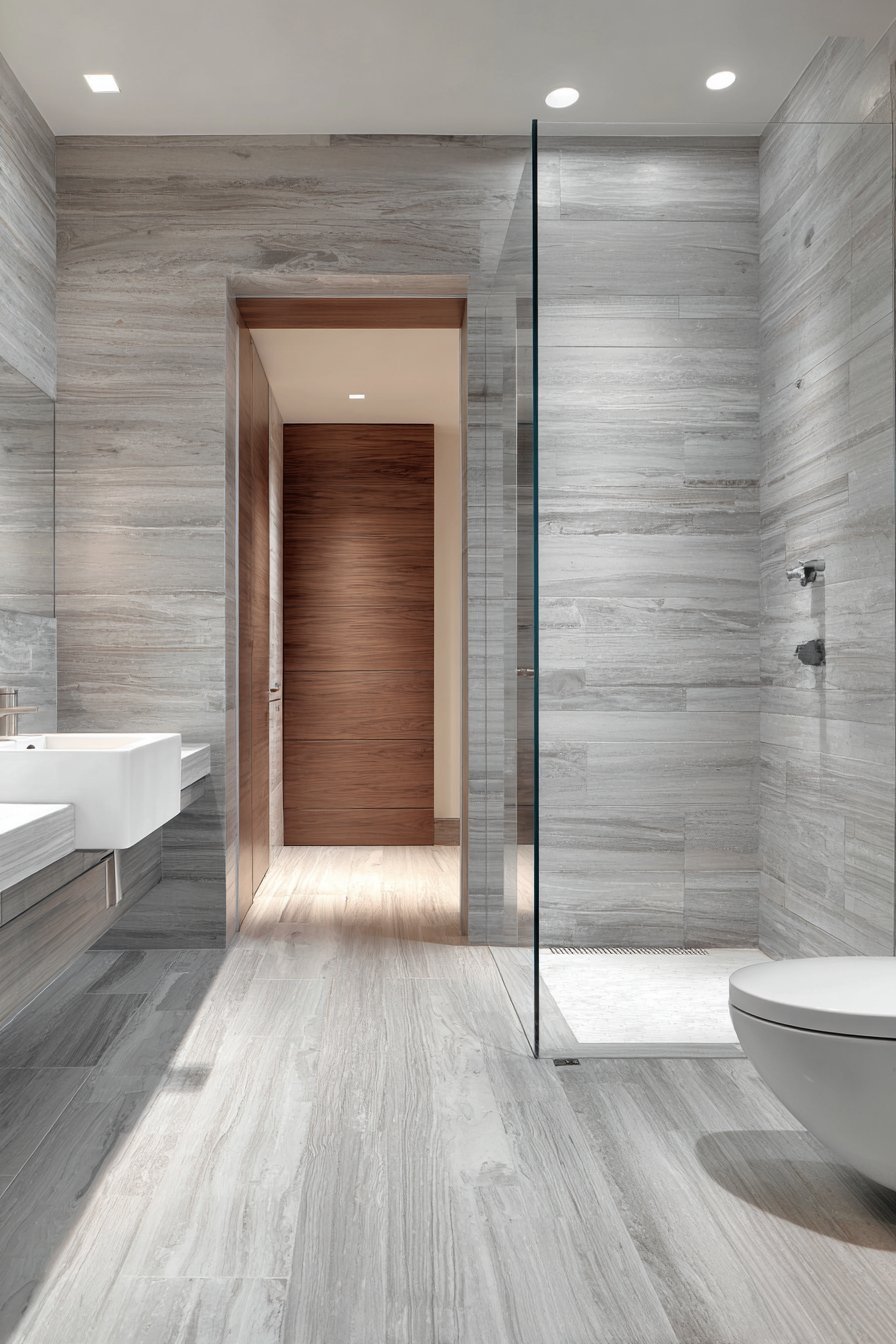
The barrier-free design expands perceived bathroom dimensions dramatically. No threshold interrupts the continuous floor surface. Minimal glass panels provide necessary splash protection only. Wall-mounted fixtures maintain the streamlined appearance throughout.
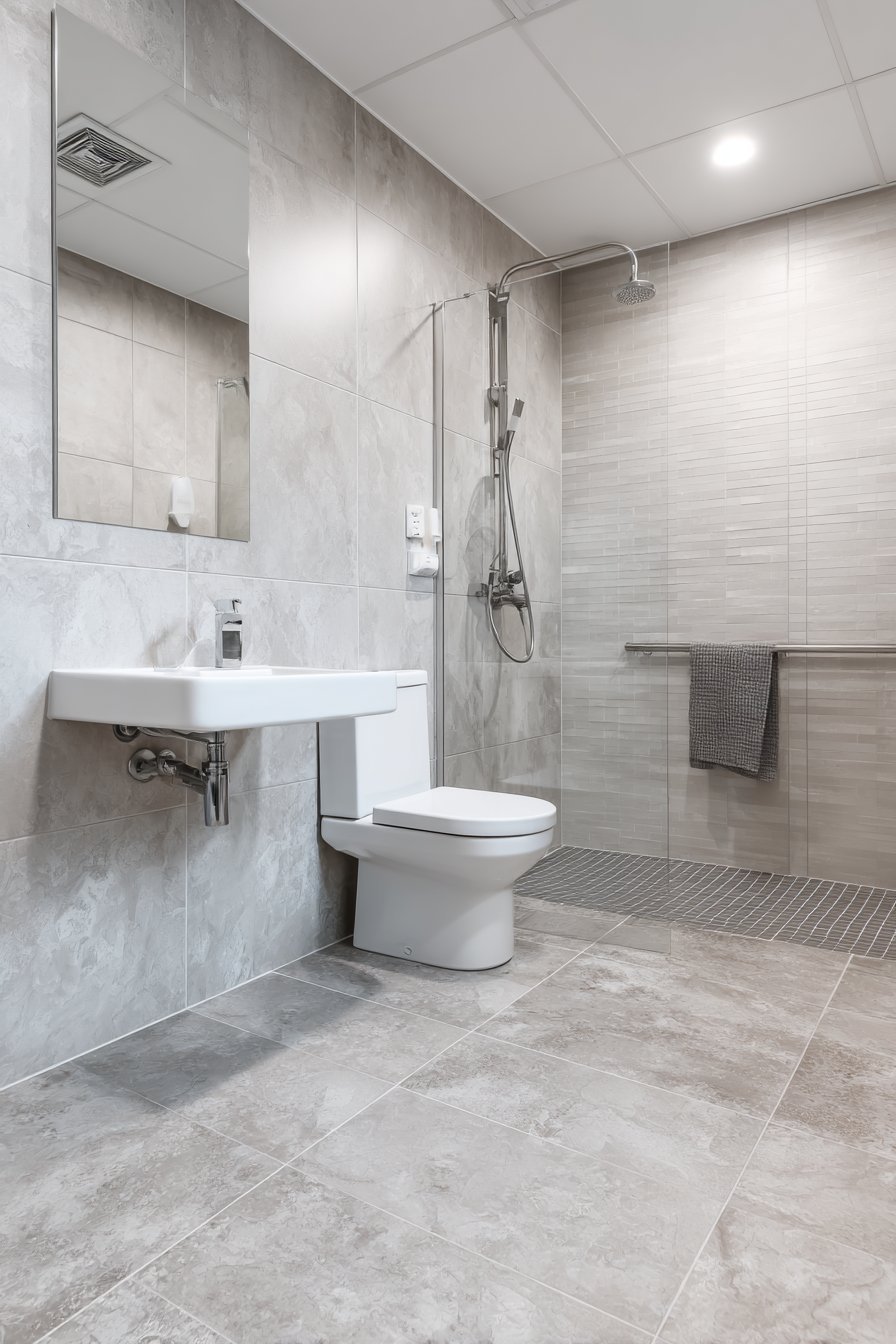
The uninterrupted surface treatment creates powerful spatial expansion. Eyes travel freely across the entire floor plane. The subtle slope remains imperceptible to occupants. Linear drains handle water efficiently while remaining discreet.
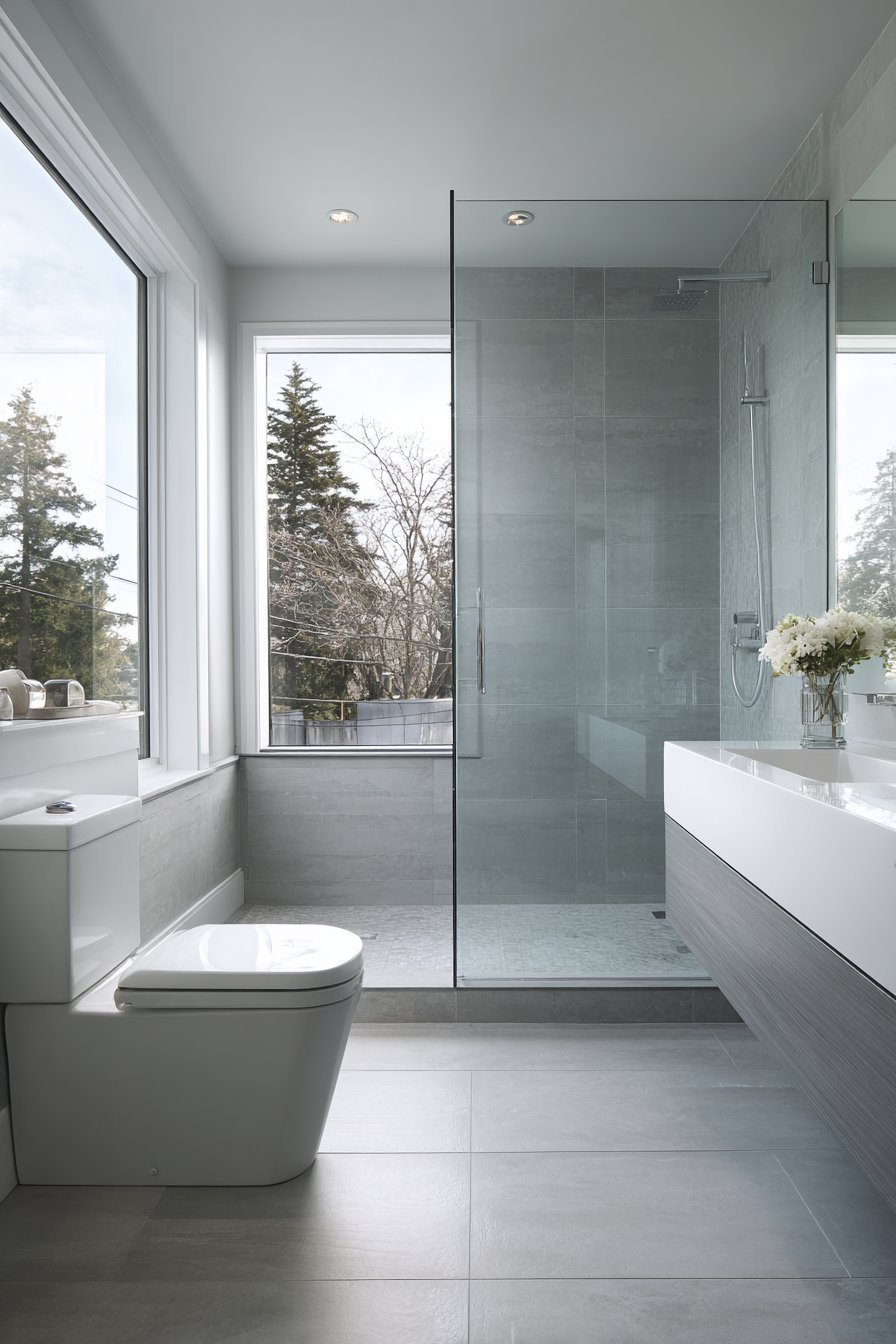
Professional installation ensures proper waterproofing and drainage. The continuous tile requires expert slope calculation. Natural light shows how uninterrupted surfaces expand compact spaces. The result delivers accessibility and aesthetic benefits simultaneously.
Key Design Tips:
- Create curbless shower entries for visual flow
- Use continuous floor tiles throughout spaces
- Install linear drains for efficient water handling
- Choose large-format porcelain for fewer joints
- Mount fixtures on walls for a streamlined appearance
- Ensure professional waterproofing installation
29. Leaning Ladder Towel Storage
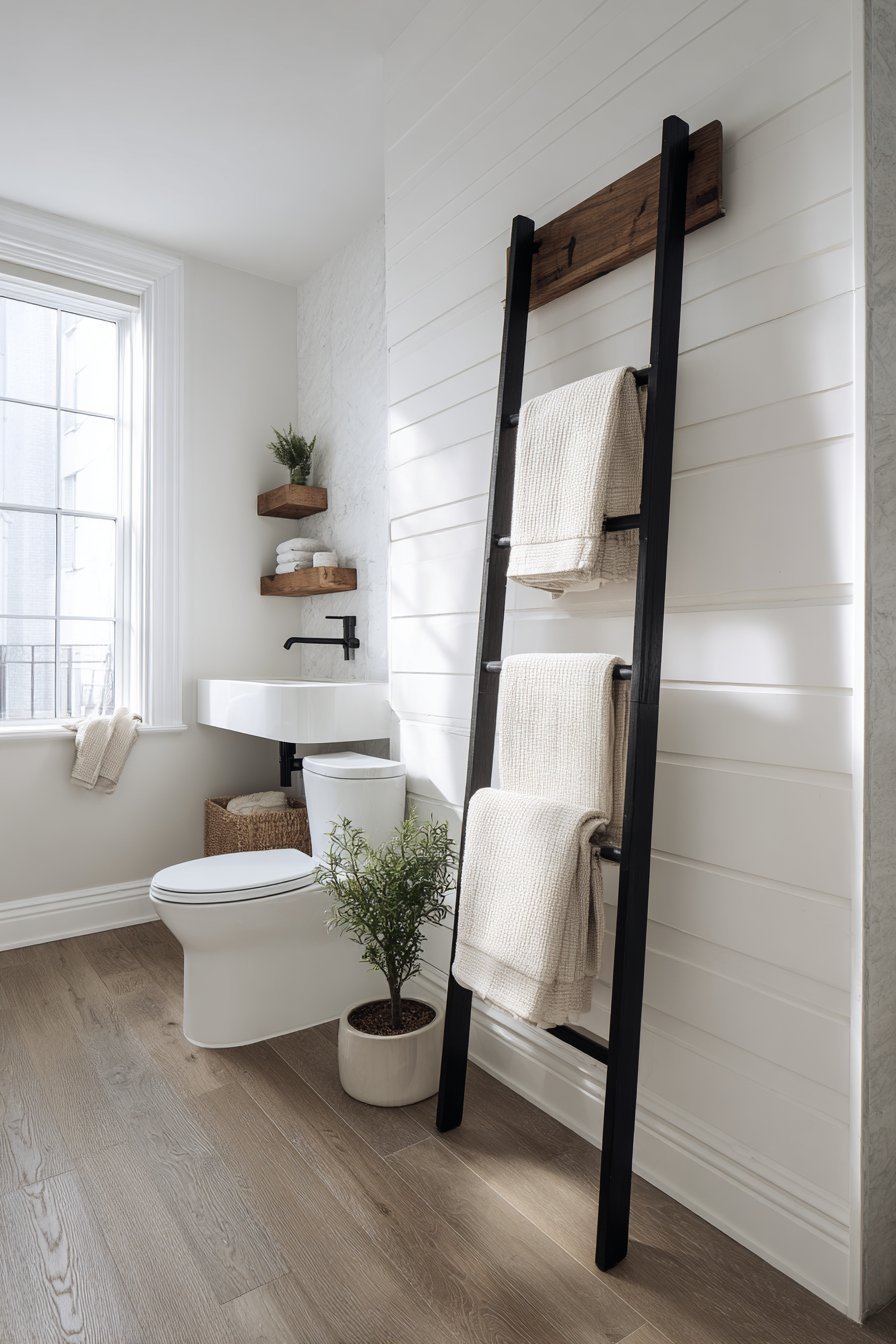
Ladder-style towel racks lean against walls without installation. Black metal ladder racks hold three ascending towel levels. The freestanding design requires no wall mounting or damage. Small wall-mounted sinks and toilets complete minimal setups.
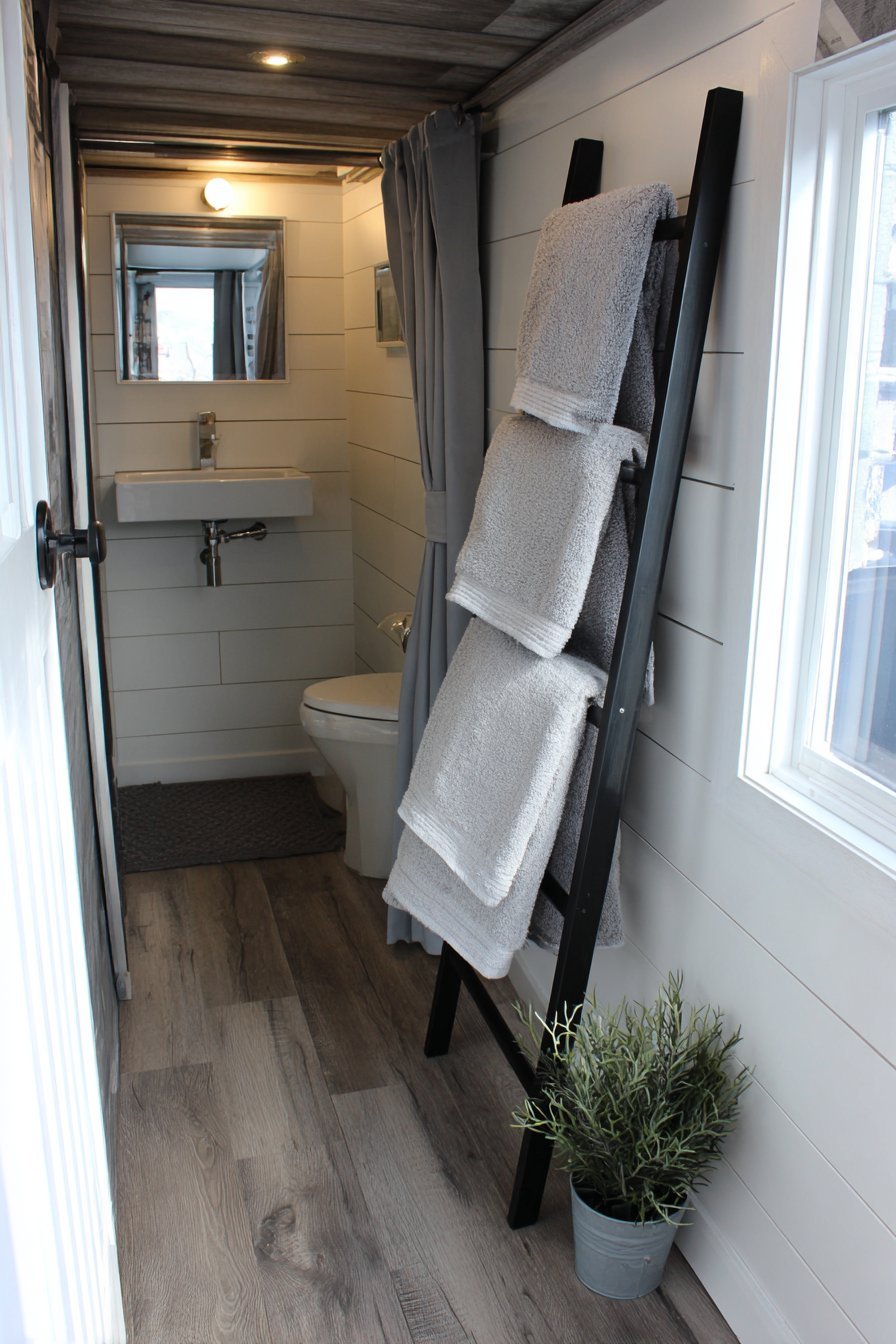
The lean-to design provides flexible storage solutions effectively. No permanent installation or wall penetration becomes necessary. The black metal finish contrasts beautifully against white shiplap. Natural wood-look vinyl plank flooring adds warmth underfoot.
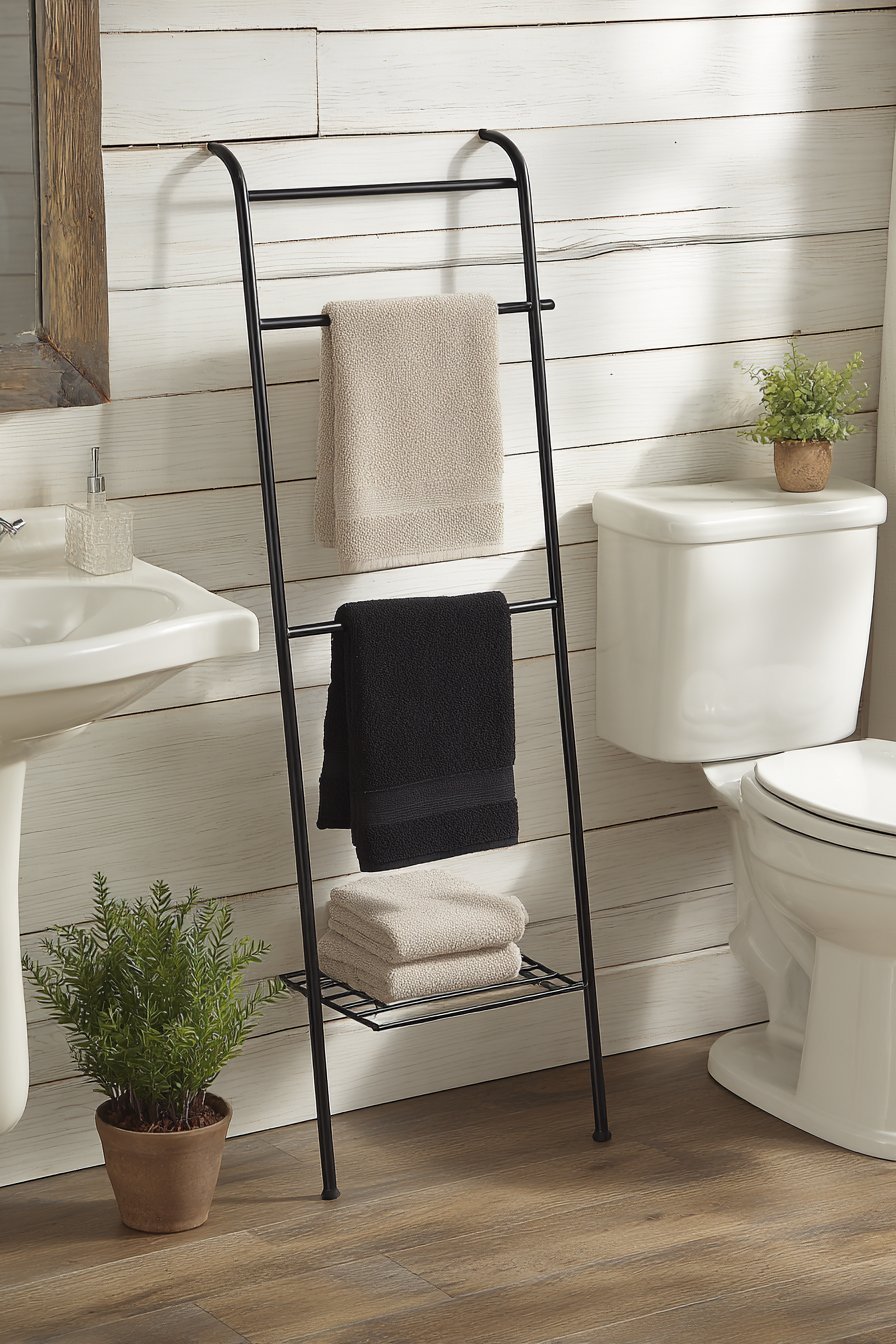
Three ascending rungs accommodate multiple towel types efficiently. The ladder angle provides stable support without wall attachment. Small potted plants beside ladders introduce organic elements. The movable design allows repositioning as needs change.
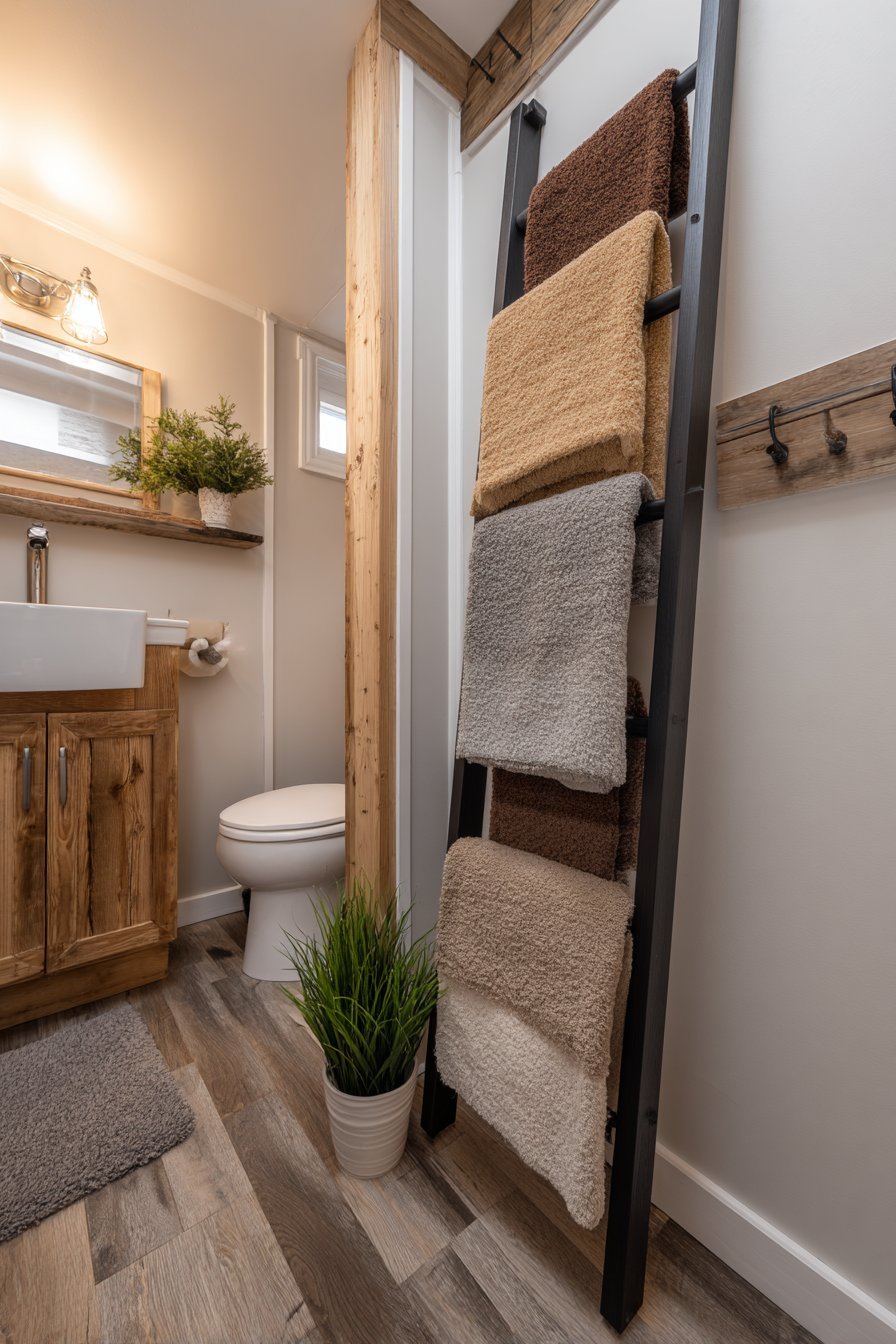
This flexible approach suits renters and commitment-averse homeowners. The ladder moves easily for cleaning or rearrangement. The vertical storage utilizes wall space without permanent fixtures. Professional photography captures the casual, adaptable storage solution.
Key Design Tips:
- Use leaning ladder racks for flexible towel storage
- Choose black metal for contrast against white
- Install three-rung ladders for multiple towels
- Add wood-look vinyl flooring for warmth
- Include small potted plants for organic touches
- Embrace non-permanent storage solutions
30. Interior Barn Door Character
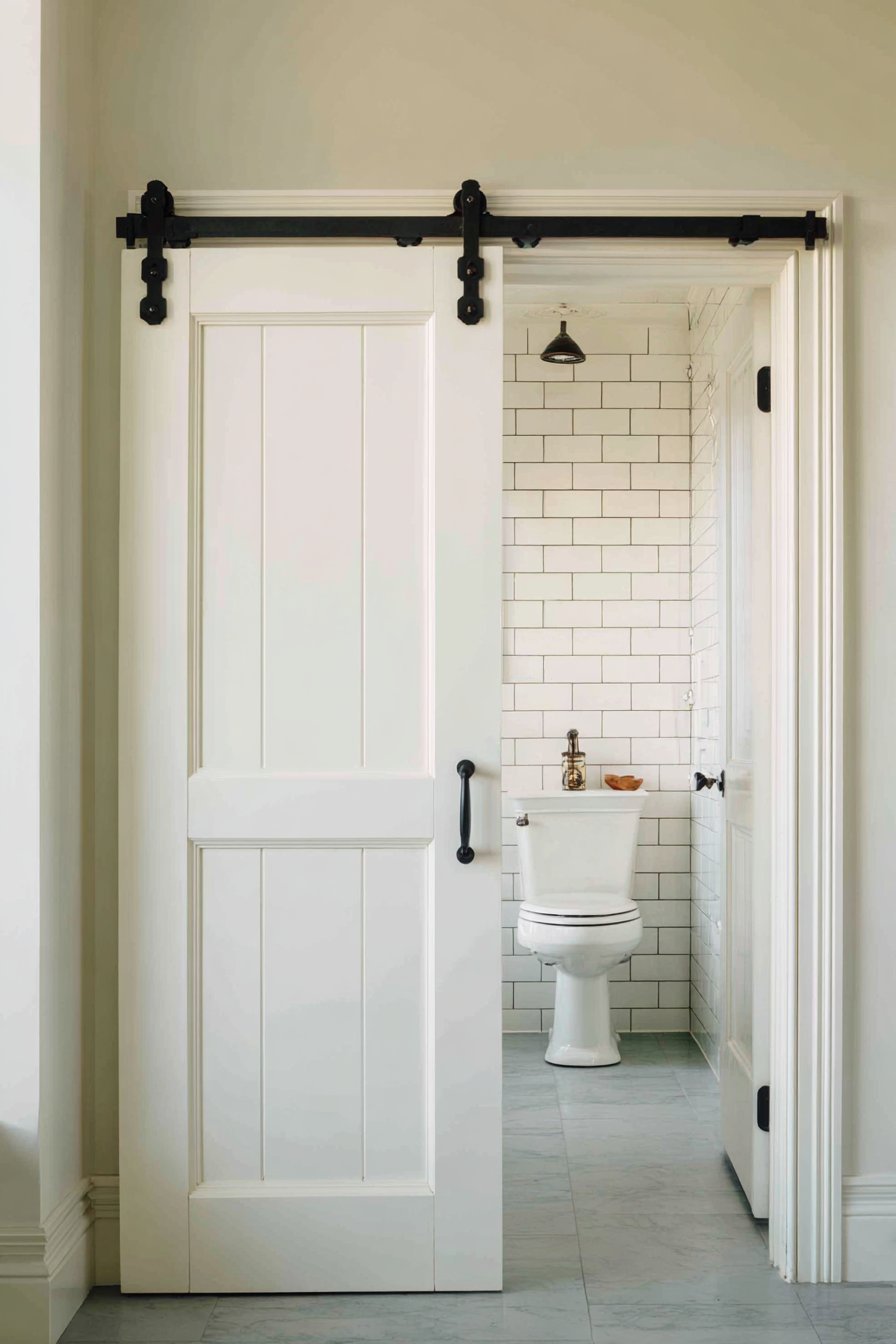
Pocket doors with interior barn door hardware combine space-saving mechanics. The door slides into wall cavities completely when open. White-painted finishes feature black metal hardware on interior sides. Compact bathrooms beyond show simple white fixtures and subway tiles.
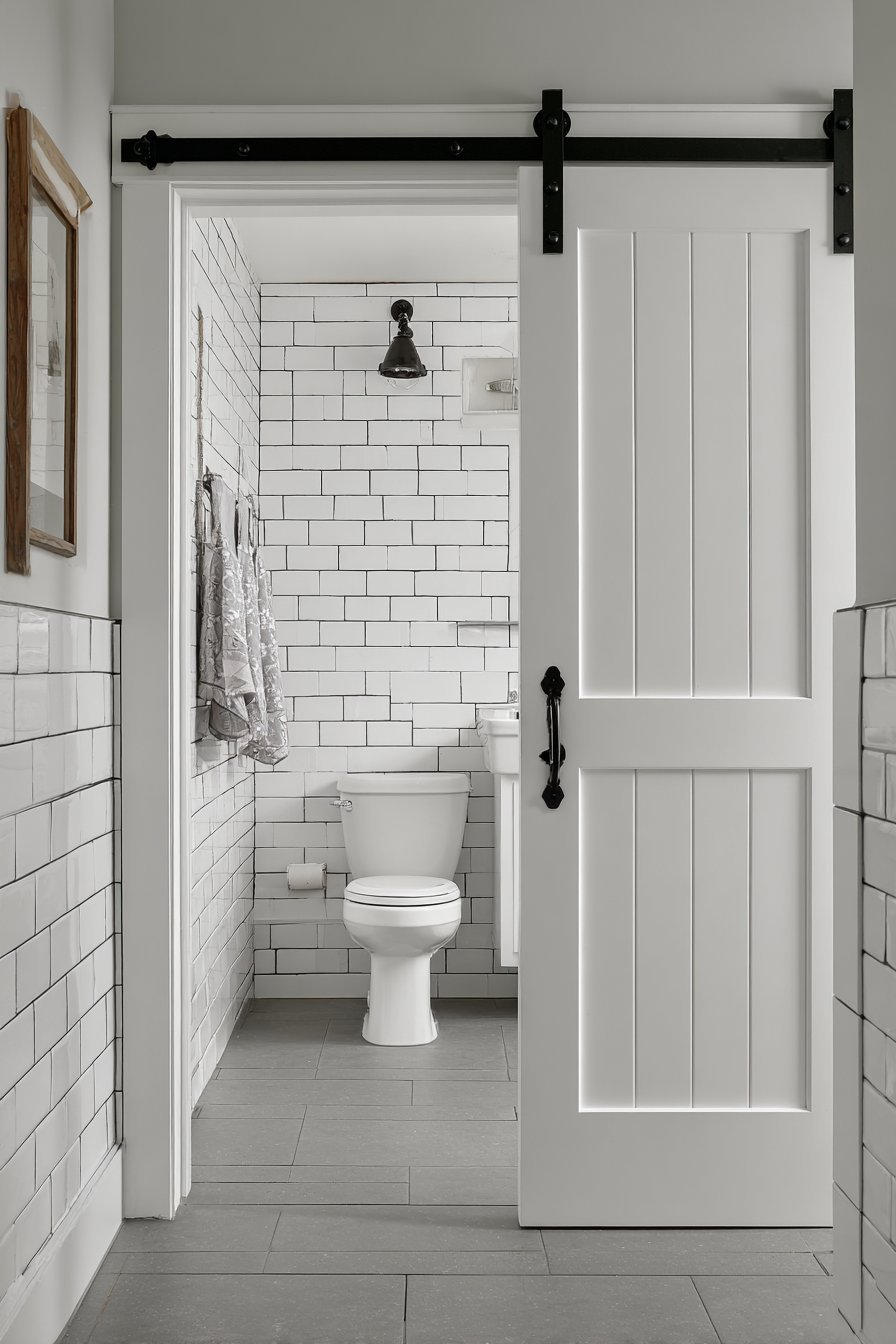
The cavity slider eliminates swing clearance requirements entirely. The door disappears completely into the wall structure. Interior barn door hardware adds aesthetic character visibly. Black metal coordinates with modern bathroom fixture finishes.
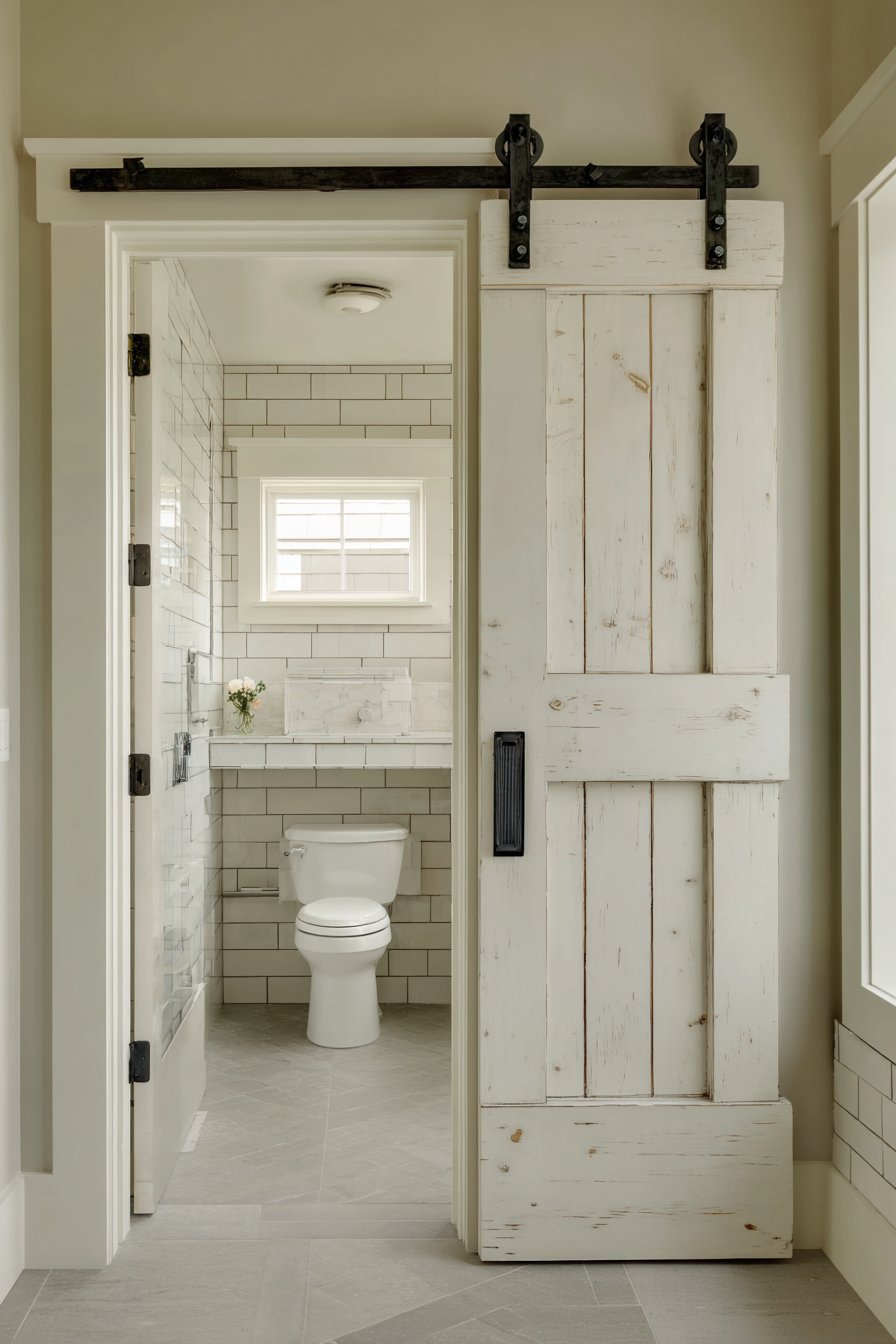
The dual benefit delivers space savings and style simultaneously. The mechanical advantage preserves precious floor area. The decorative hardware creates focal point of interest. Light grey floor tiles complete the minimal color palette.
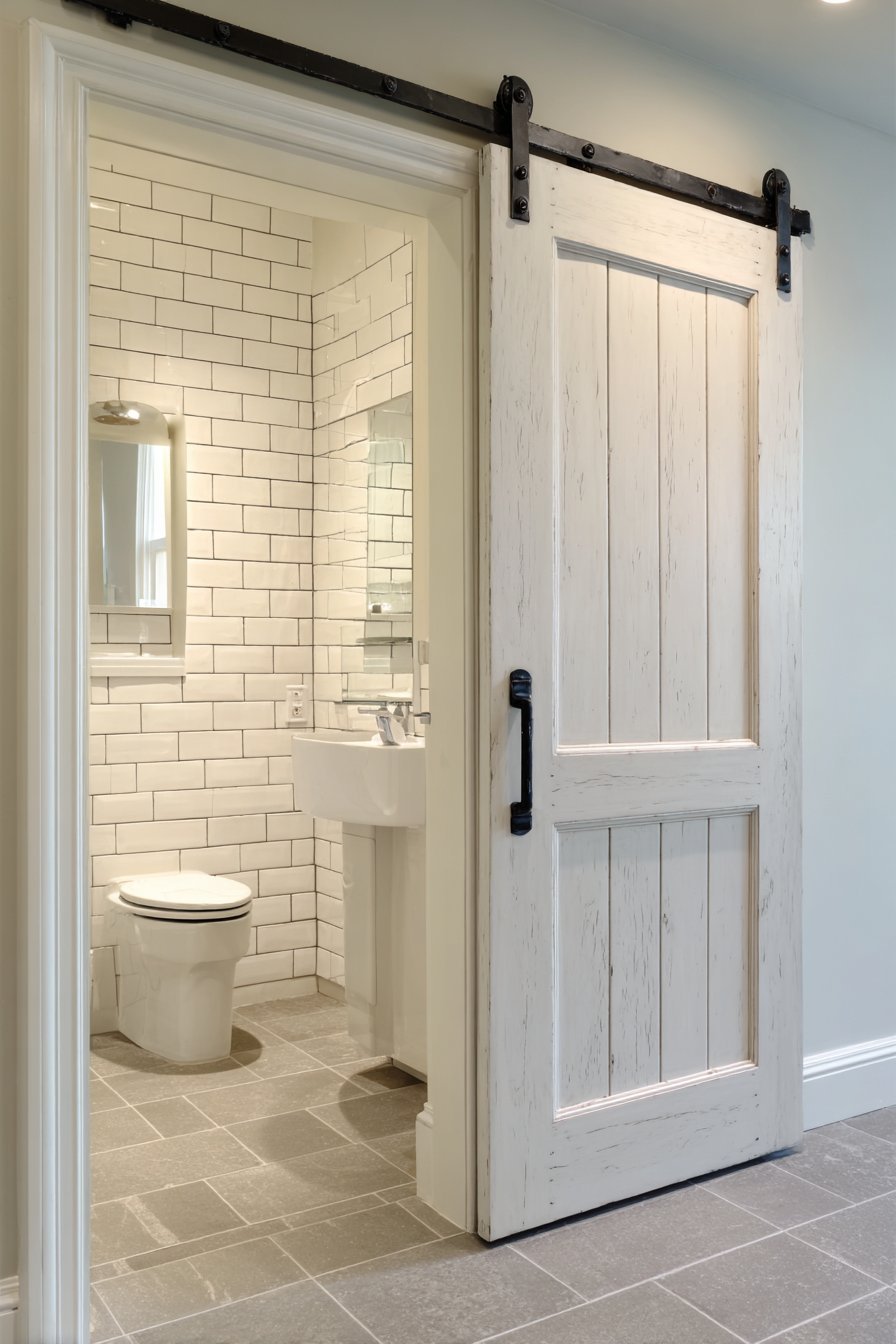
This combination approach addresses function and aesthetics equally. The pocket mechanism provides maximum space efficiency. The barn door style adds personality to tiny bathrooms. Interior design photography captures the mechanical innovation and decorative appeal.
Key Design Tips:
- Combine pocket doors with barn door hardware
- Paint doors white for brightness
- Use black metal hardware for contrast
- Install simple white fixtures in bathrooms
- Choose light grey floor tiles for neutrality
- Embrace dual functional and aesthetic benefits
Why These Tiny Bathroom Designs Excel
These thirty tiny bathroom concepts represent comprehensive approaches to small space challenges. Each design demonstrates thoughtful consideration of spatial constraints and functional requirements. The strategies showcase remarkable versatility across different aesthetic preferences and practical needs.
Space-saving fixtures form the foundation of successful tiny bathrooms. Wall-mounted toilets, corner sinks, and floating vanities preserve floor visibility. This visual continuity creates perceived spaciousness despite actual dimensions. Transparent shower enclosures maintain openness while containing water effectively.
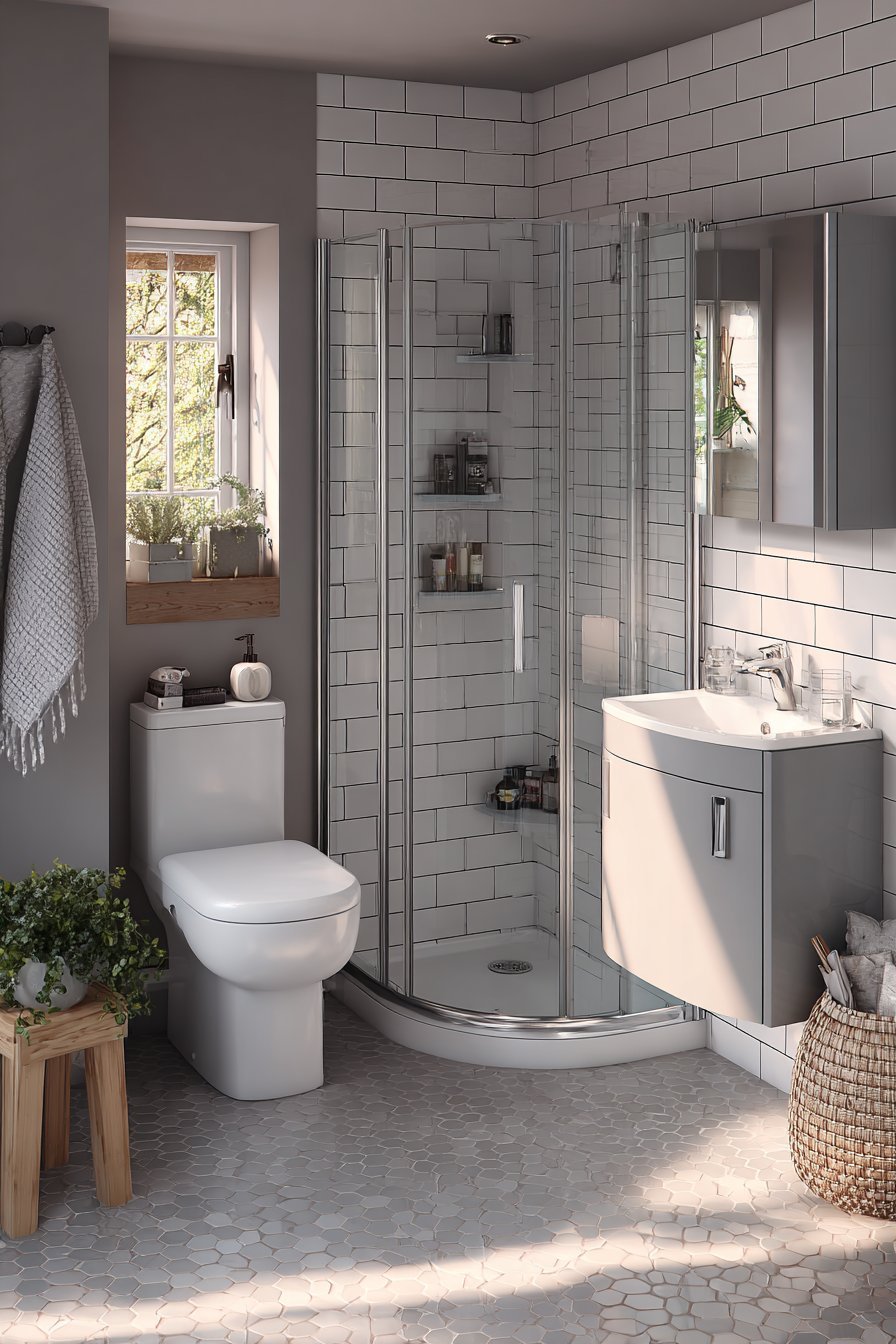
Vertical storage solutions maximize often-overlooked upper wall zones. Floor-to-ceiling cabinets and high shelving transform wasted space into valuable storage. The upward emphasis draws eyes skyward, enhancing height perception. Strategic use of mirrors doubles perceived dimensions through reflection.
Material choices significantly impact spatial perception in compact bathrooms. Large-format tiles minimize grout lines and visual interruption. Monochromatic color schemes eliminate boundary definition that fragments space. Glass elements maintain transparency and light flow throughout confined areas.
Lighting strategies prove essential in tiny bathroom success. Natural light admission through windows and skylights expands perceived boundaries. Reflective surfaces multiply available illumination effectively. Recessed fixtures eliminate protrusion while providing necessary task lighting.
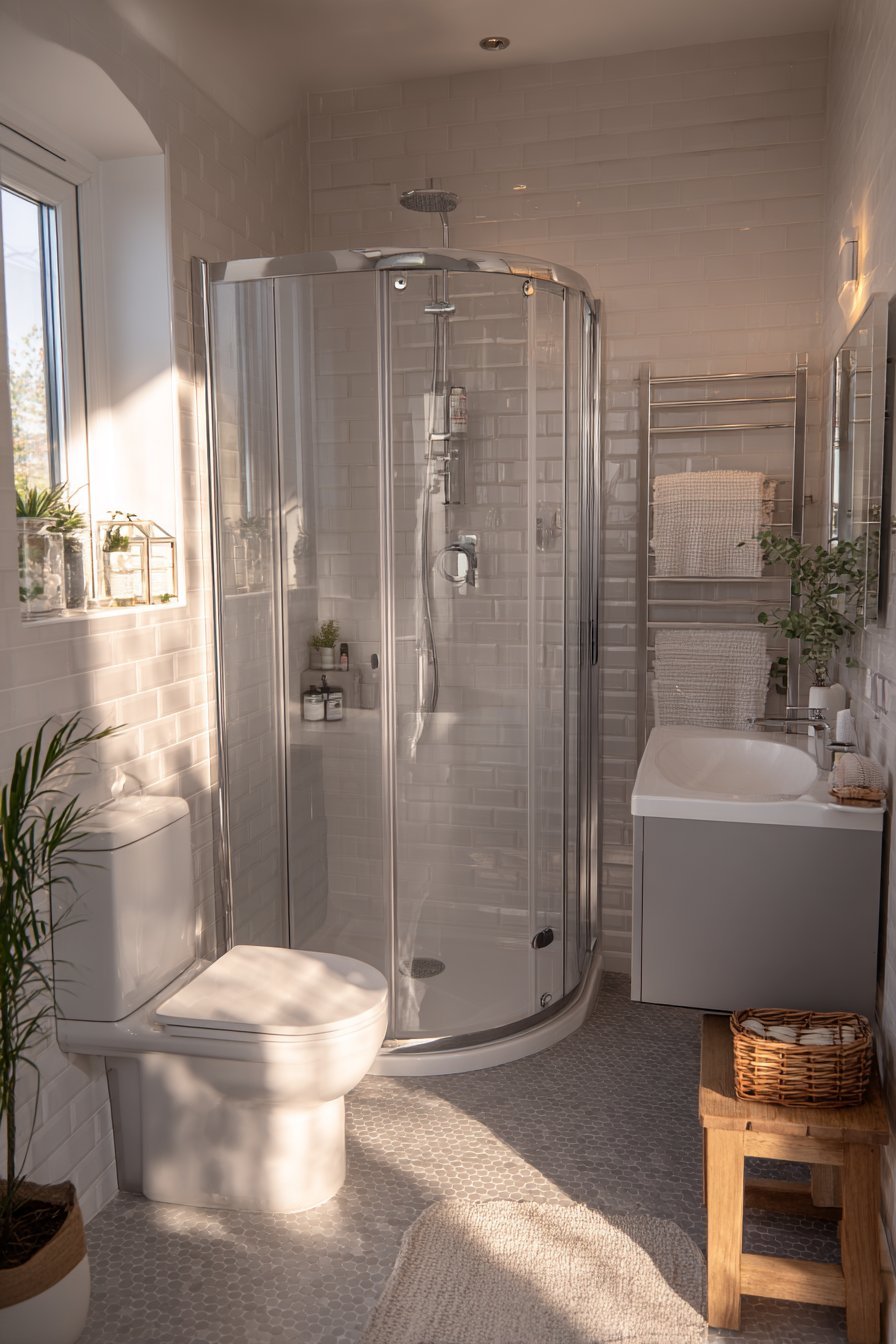
Innovative fixtures address dual functionality requirements brilliantly. Combination toilet-sink units save space while conserving water. Collapsible sinks provide washing facilities on demand. Wet room layouts eliminate traditional shower barriers entirely.
The designs balance aesthetic appeal with practical durability. Quality materials withstand moisture and daily use effectively. Timeless styling ensures longevity beyond temporary trends. Professional installation guarantees proper waterproofing and mechanical function.
Conclusion
These thirty tiny bathroom designs prove that limited square footage need not limit functionality or beauty. The key principles include maximizing vertical space, embracing transparency, and selecting multifunctional fixtures. Strategic lighting and material choices expand perceived dimensions dramatically.
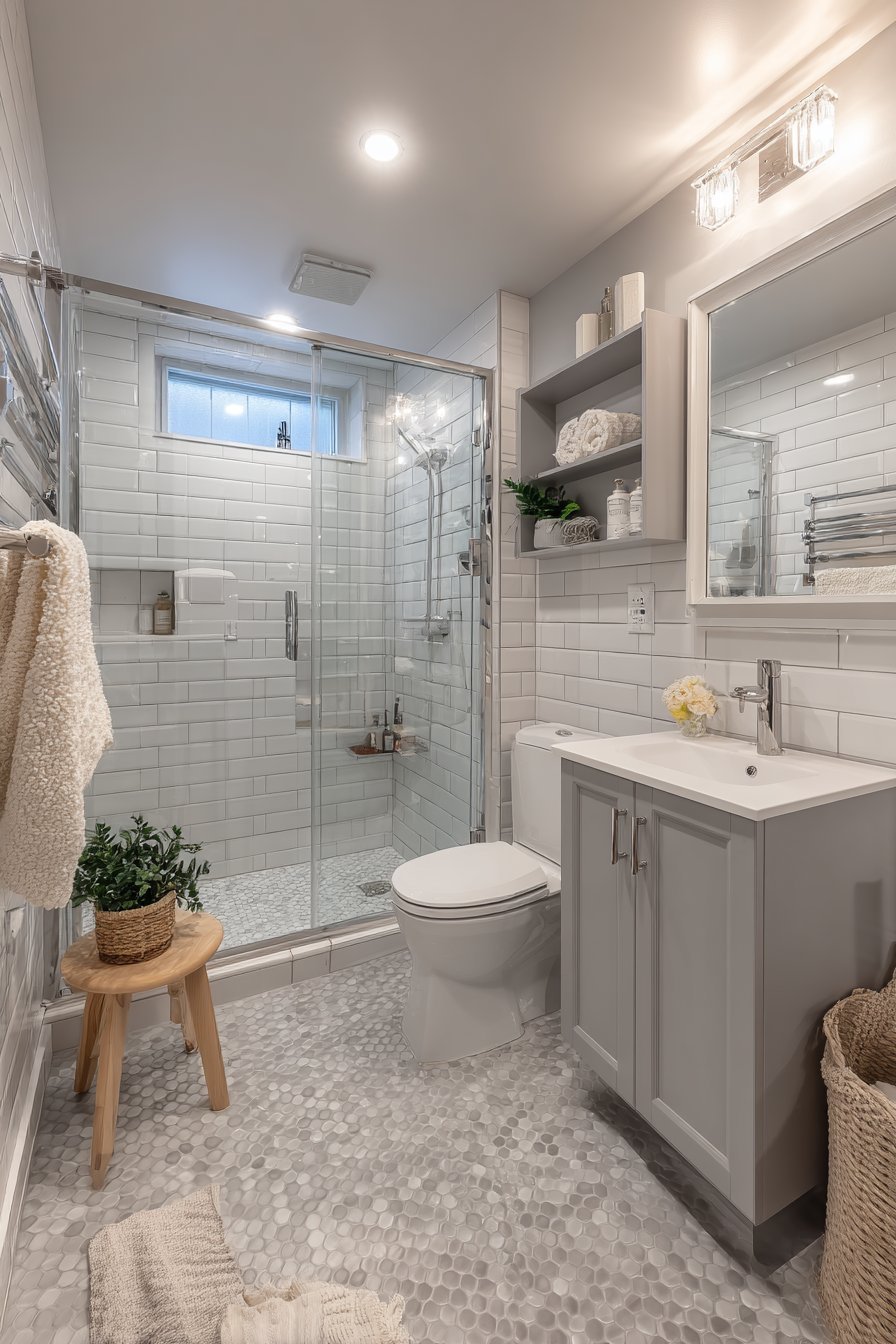
Successful tiny bathroom design requires creative problem-solving and thoughtful planning. Corner-mounted fixtures, wall-hung toilets, and floating vanities preserve precious floor area. Continuous surfaces and monochromatic palettes eliminate visual barriers. Glass elements and mirrors multiply light and space perception.
Start your tiny bathroom transformation by identifying your greatest spatial challenge. Whether storage, circulation, or functionality, these designs offer proven solutions. Quality fixtures and professional installation ensure lasting performance. Your compact bathroom can become an efficient, beautiful sanctuary through intelligent design choices.