Learning how to wash the bathroom properly can turn a dreaded chore into a quick, satisfying routine. A well-designed bathroom deserves the same thoughtful care as any other room in your home, since this small space sees more daily use — and more moisture, soap scum, and grime — than almost anywhere else. Whether you’re cleaning your first apartment bathroom or just want a more reliable system, this guide breaks the process into simple, beginner-friendly steps you can follow every time.
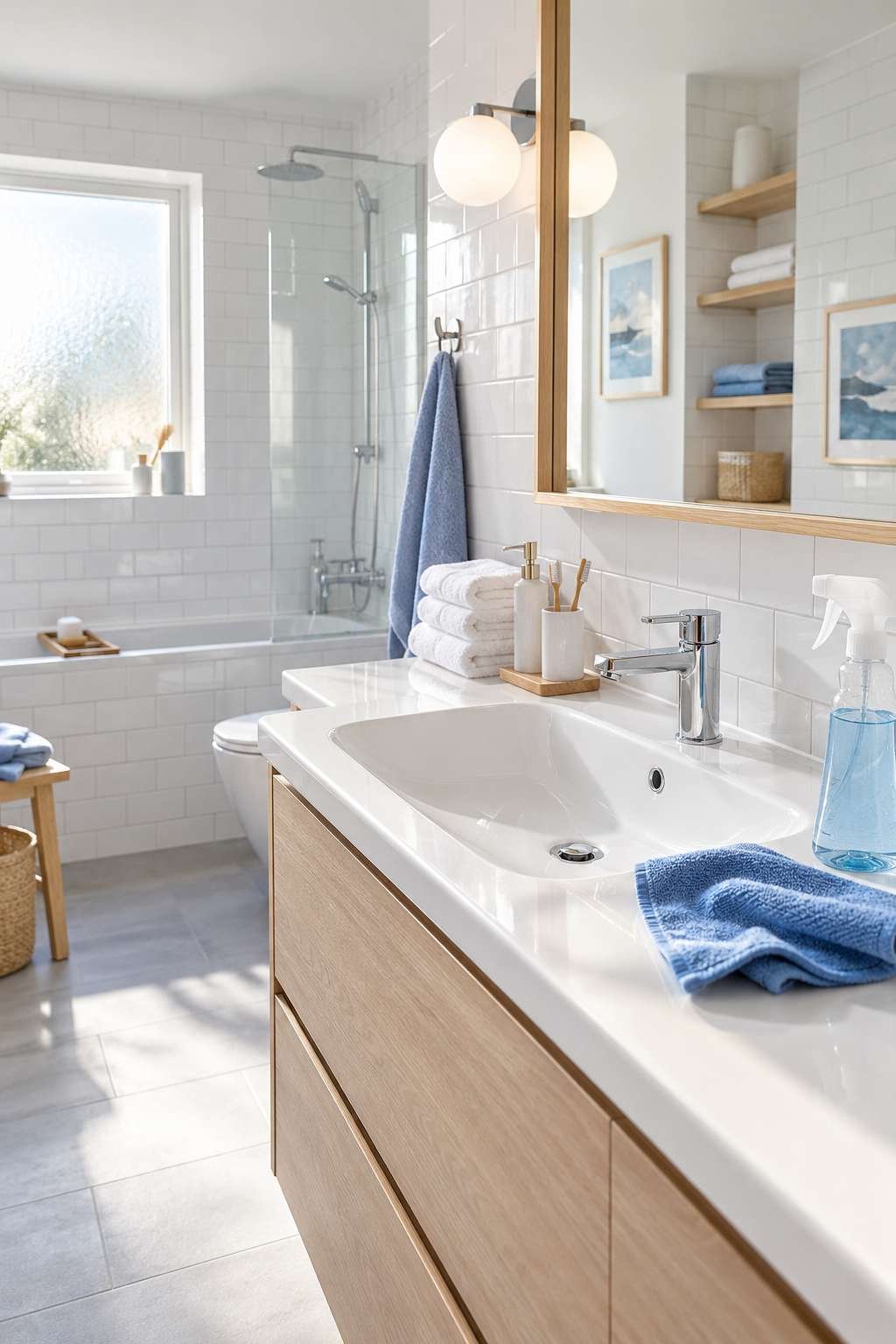
A clean bathroom isn’t just about appearances. It’s about creating a healthy, functional space where mildew and bacteria don’t have a chance to build up. With the right supplies, a logical order of operations, and a few habits, you’ll find that washing the bathroom becomes far less overwhelming than it seems.
1. Gather Your Cleaning Supplies
Before you start, take a few minutes to collect everything you’ll need. Running back and forth for a missing sponge or spray bottle breaks your momentum and makes the job feel longer than it is. A simple caddy or bucket keeps your supplies organized and portable as you move around the room.

Stock up on an all-purpose cleaner, a bathroom-specific disinfectant, a toilet brush, microfiber cloths, and rubber gloves. Having the right tools ready also protects your surfaces from accidental scratches or chemical mishaps.
- Choose a disinfectant labeled safe for bathroom surfaces
- Keep separate cloths for the toilet and other surfaces
- Stock rubber gloves to protect your hands
- Add an old toothbrush for tight corners and grout
- Fill a spray bottle with diluted vinegar for glass and mirrors
- Keep a dry towel nearby for buffing surfaces after rinsing
2. Declutter and Prep the Space
A cluttered counter or shower ledge makes it nearly impossible to clean thoroughly. Start by clearing away bottles, toothbrush holders, and bath toys so every surface is fully accessible. This step alone can cut your cleaning time significantly.

Open a window or turn on the exhaust fan for proper ventilation, especially if you’re using stronger chemical cleaners. Good airflow helps fumes dissipate and speeds up drying once you’re finished.
- Remove all items from counters and shower shelves
- Turn on ventilation before applying any spray cleaners
- Sort items you no longer need for the bathroom
- Wipe down storage bins before replacing items
- Check expiration dates on toiletries while you’re at it
3. Clean the Toilet First
Always tackle the toilet early, since it’s the most germ-heavy fixture in the room and benefits from letting cleaner sit while you work elsewhere. Apply toilet bowl cleaner under the rim and let it sit for several minutes before scrubbing with a dedicated brush.
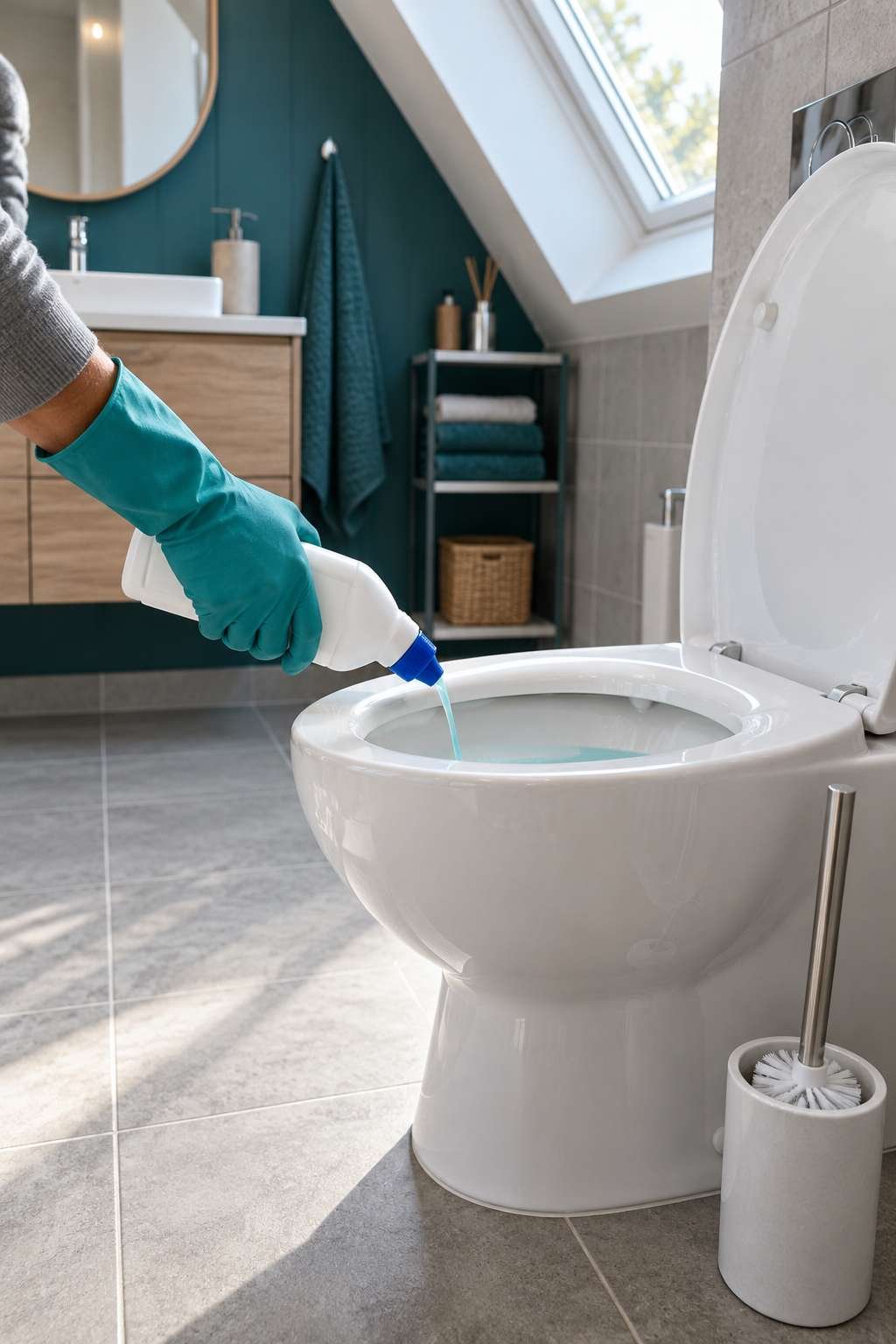
Wipe down the exterior, including the base, hinges, and handle, using a disinfecting wipe or spray. These high-touch areas are often skipped but collect just as much bacteria as the bowl itself.
- Apply cleaner under the rim and let it sit
- Scrub the bowl thoroughly, including under the rim
- Wipe the seat, lid, and hinges with disinfectant
- Clean the handle and base last
- Flush and give the bowl a final rinse
4. Scrub the Sink and Countertop
The sink area collects toothpaste residue, soap scum, and hard water spots faster than most people realize. Spray an all-purpose cleaner across the basin and countertop, letting it sit briefly before wiping with a microfiber cloth.
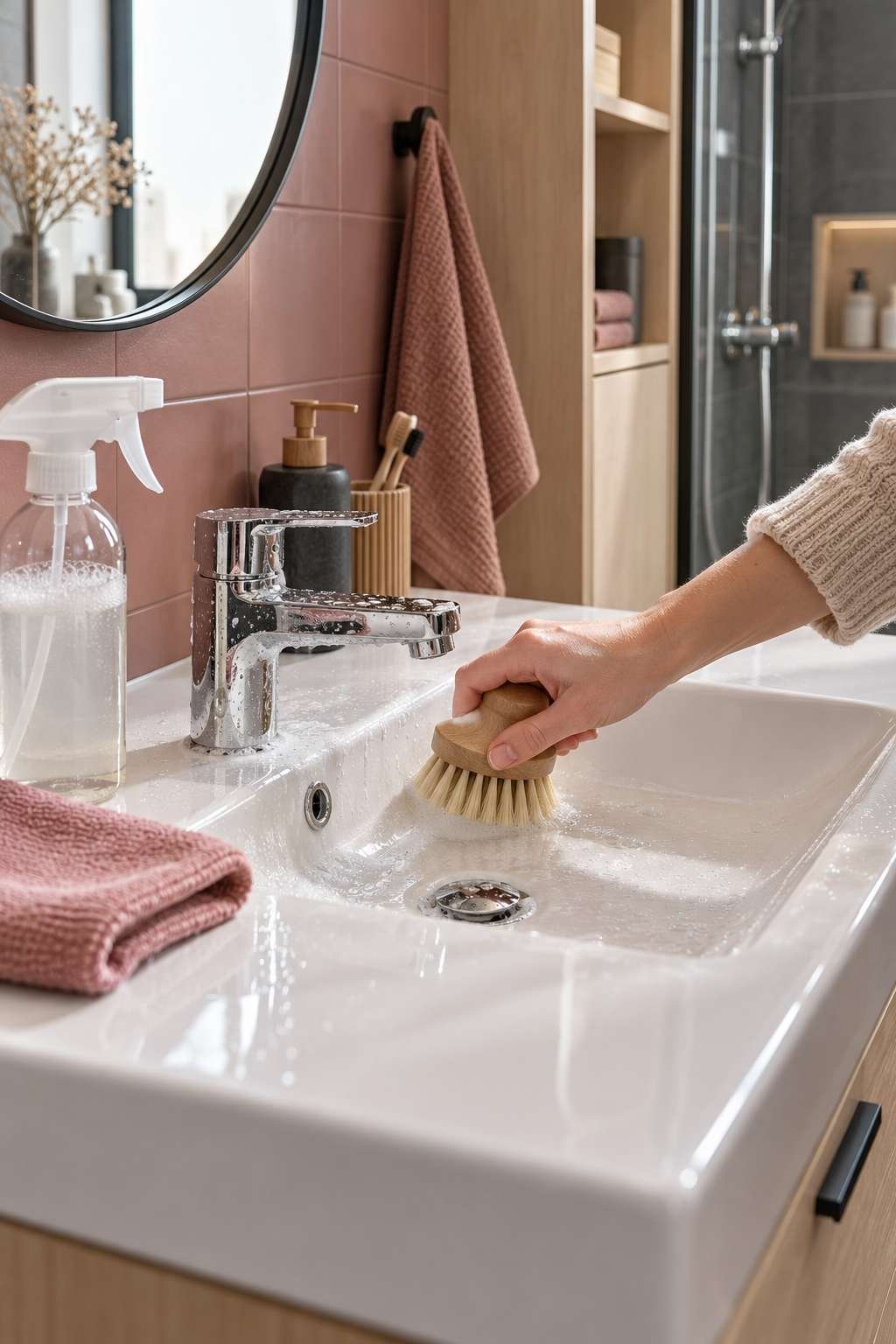
Pay close attention to the faucet base and drain, where grime tends to accumulate unnoticed. A soft toothbrush works well for scrubbing around fixtures without scratching the finish.
- Spray cleaner across the sink and counter
- Scrub around the faucet base with a soft brush
- Clean the drain stopper and surrounding area
- Wipe down soap dishes and toothbrush holders
- Buff the faucet dry to prevent water spots
5. Wash the Bathtub and Shower
Shower walls and tubs are prone to soap scum and mildew buildup because of constant moisture. Spray a bathroom-safe cleaner across all surfaces and let it sit for a few minutes so it can break down grime before you scrub.
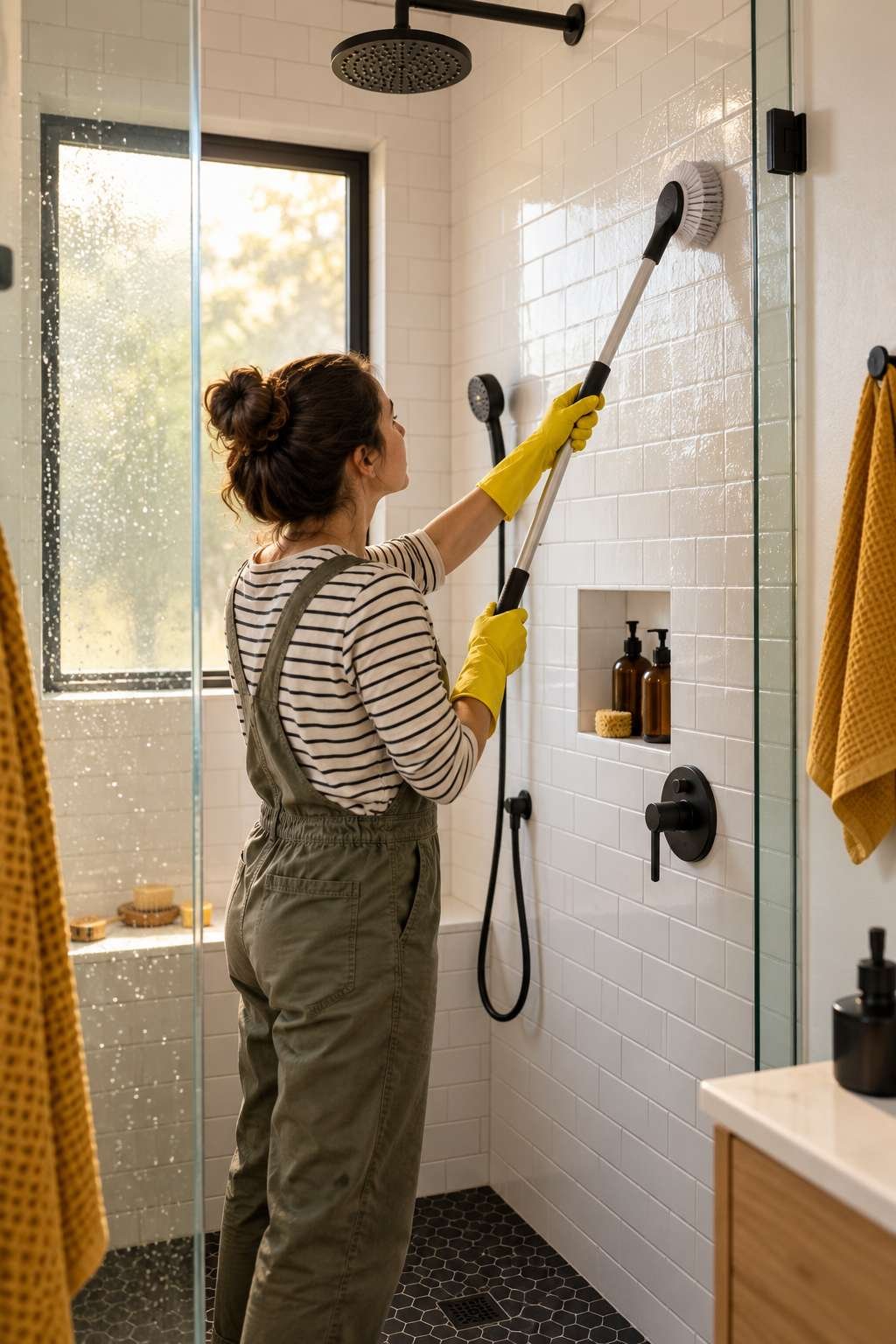
Work from top to bottom with a scrub brush or sponge, paying extra attention to corners and grout lines where mold likes to hide. Rinse thoroughly with warm water once you’re done.
- Spray cleaner on walls, tub, and shower door
- Let the solution sit before scrubbing
- Focus on corners, grout, and caulk lines
- Scrub shower fixtures and showerhead separately
- Rinse everything with warm water and squeegee if possible
6. Clean the Bathroom Mirror and Fixtures
Streaky mirrors and dusty light fixtures can make an otherwise clean bathroom look neglected. Use a glass cleaner or diluted vinegar with a microfiber cloth, wiping in a smooth top-to-bottom motion to avoid streaks.

Don’t forget cabinet hardware, towel bars, and light switches, which collect fingerprints and dust more often than you’d expect. A quick wipe here makes a noticeable difference in the room’s overall polish.
- Spray glass cleaner directly on the cloth, not the mirror
- Wipe in one consistent direction to avoid streaks
- Dust light fixtures and exhaust fan covers
- Wipe down towel bars and cabinet handles
- Clean light switches with a disinfecting wipe
7. Wash Bathroom Walls and Tiles
Walls and tiles often get overlooked in a quick clean, but splashes and steam leave residue over time. If your bathroom has ceramic or stone flooring, our guide on How to Wash Bathroom Floor Tiles walks through the right cleaner and technique for each material without damaging the grout.
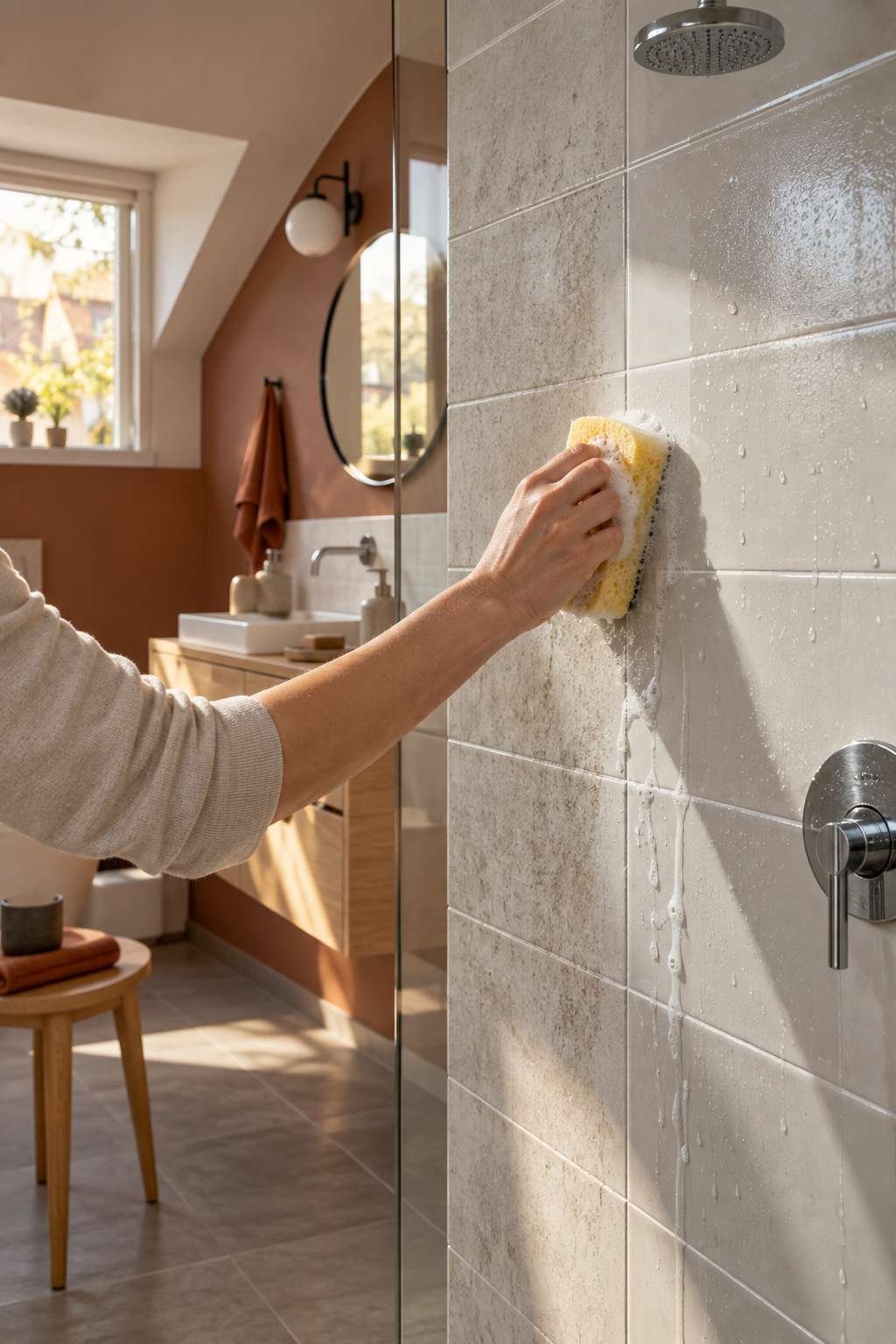
For the walls themselves, spray a mild cleaner and wipe from top to bottom in sections, rinsing your cloth frequently so you’re not spreading grime around the room.
- Test any cleaner on a hidden section of tile first
- Wipe walls top to bottom in manageable sections
- Rinse your cloth often to avoid smearing dirt
- Pay extra attention to areas near the shower
- Dry tiled surfaces to prevent water spotting
8. Wash Bathroom Mats and Rugs
Bath mats and rugs absorb moisture and foot traffic daily, which means they need regular washing to stay fresh and mildew-free. Our dedicated post on How to Wash Bathroom Rugs covers wash settings and drying tips so colors and texture hold up over time.
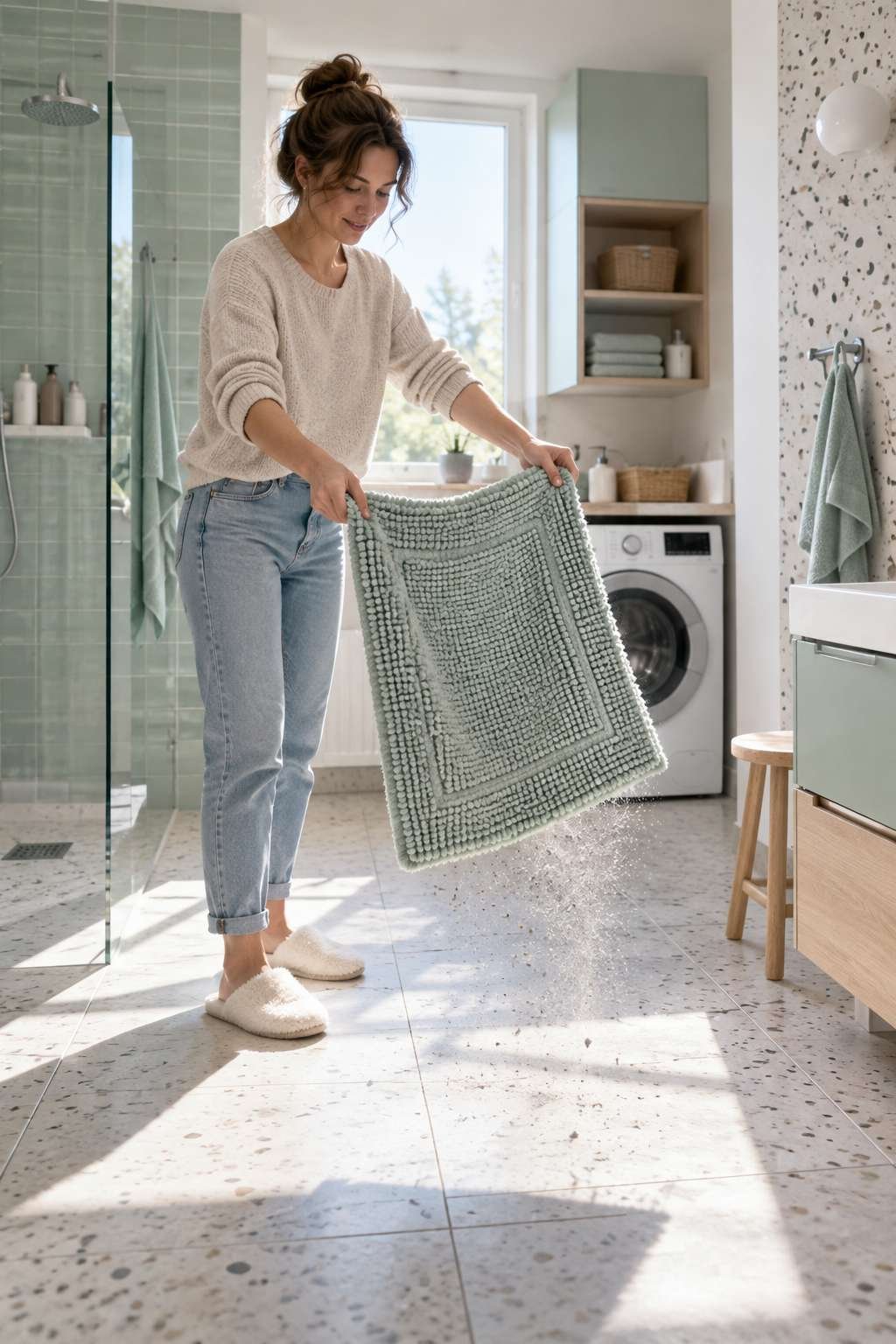
If you have a rubber-backed mat rather than a fabric rug, the approach differs slightly, and our guide to How to Wash Bathroom Mats explains how to avoid cracking the backing.
- Check the care label before choosing a wash cycle
- Wash rugs separately from towels when possible
- Use cold or warm water depending on the material
- Air-dry rubber-backed mats instead of tumble drying
- Shake mats outside before washing to remove loose debris
9. Handle Bathroom Laundry and Textiles
Towels, washcloths, and bathrobes need their own place in your cleaning routine, since they’re in constant contact with skin and moisture. If you’re short on space, our guide on How to Wash Clothes in Bathroom settings offers practical tips for smaller households.

Rotate towels every few days rather than reusing the same one all week, since damp fabric is an easy breeding ground for bacteria and odor.
- Wash towels in hot water for better sanitizing
- Avoid overloading the machine so items rinse fully
- Rotate towels every two to three days
- Hang damp towels to dry rather than folding them wet
- Replace washcloths and bathrobes more frequently than towels
10. Finish with the Floor and Final Touches
Save the floor for last so you’re not walking through a freshly cleaned space while finishing other tasks. Sweep or vacuum first to remove hair and debris, then mop with a bathroom-safe floor cleaner, working your way toward the door.
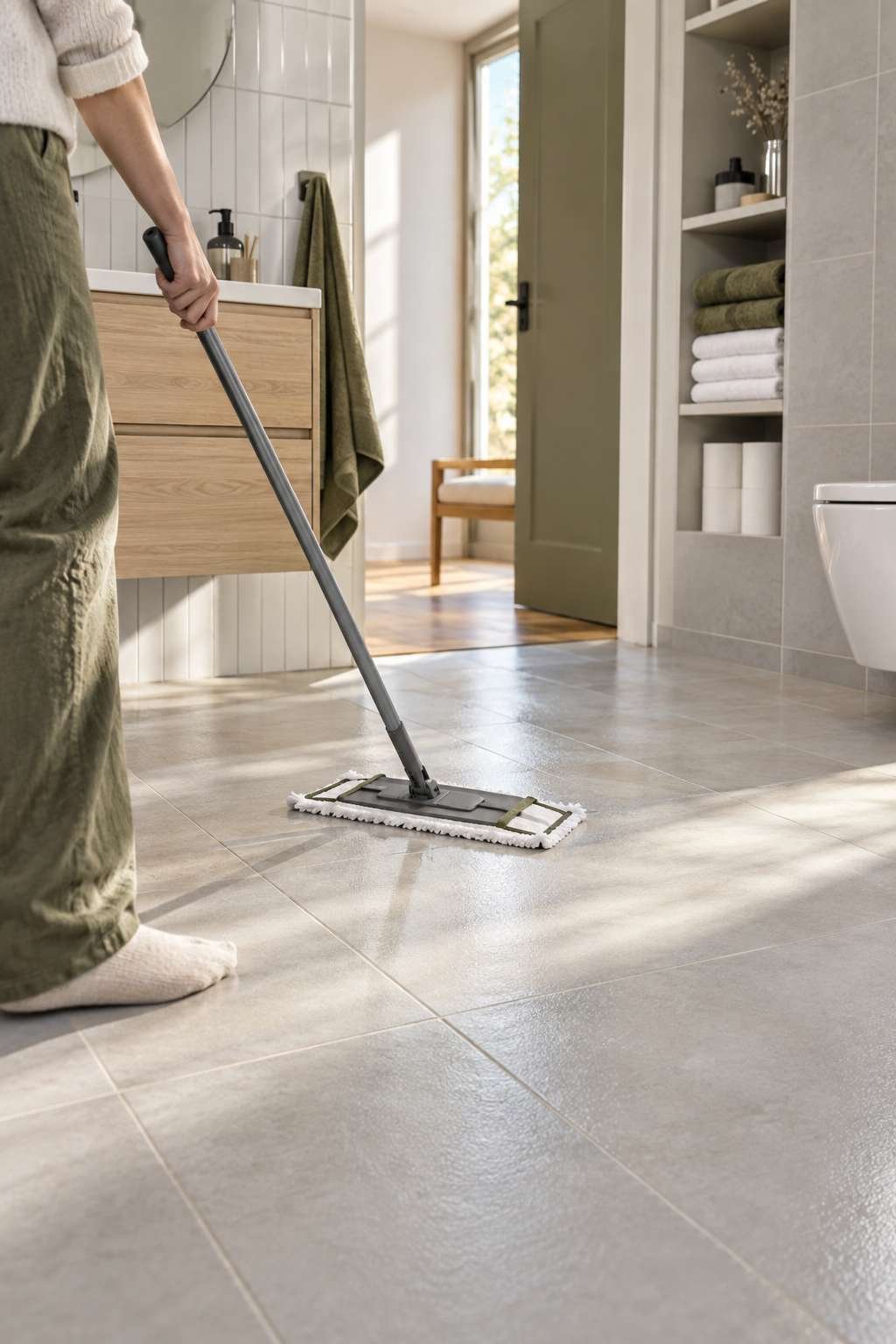
Once the floor is dry, replace mats, restock supplies, and take a final look around for any spots you missed. This last pass is what makes the whole room feel genuinely finished.
- Sweep or vacuum before mopping
- Mop toward the doorway so you don’t retrace steps
- Let the floor air-dry completely before replacing mats
- Restock toilet paper, soap, and towels
- Take a final walkthrough to catch missed spots
Frequently Asked Questions
How do I wash a bathroom rug?
Most bathroom rugs can be machine washed in cold or warm water on a gentle cycle, depending on the fabric. Shake off loose debris first, wash separately from towels, and air-dry rubber-backed rugs to prevent the backing from cracking or peeling over time.
How do I wash bathroom walls?
Spray a mild all-purpose or bathroom cleaner directly on the wall and wipe from top to bottom in small sections using a microfiber cloth or sponge. Rinse your cloth frequently, and always test tiled or painted walls in a hidden spot before applying a new cleaner.
Conclusion
Washing the bathroom doesn’t have to be an overwhelming weekend project once you break it into clear, manageable steps. By working from the top down, tackling the toilet and sink early, and finishing with the floor, you’ll build a routine that keeps the whole room fresh with far less effort over time.
The more consistently you follow this order, the faster each cleaning session becomes. Treat it as a small weekly reset rather than a deep clean every time, and your bathroom will stay inviting, hygienic, and genuinely pleasant to use.