A well-styled center table serves as the focal point of any living room. It anchors the space while reflecting your personal aesthetic. The right decor arrangement transforms a simple coffee table into a conversation starter. Thoughtful styling balances function with visual appeal.
Center tables offer endless opportunities for creative expression. From minimalist single-element displays to layered eclectic arrangements, each approach tells a unique story. The perfect center table decor enhances your room’s overall design while maintaining practical functionality. Your coffee table becomes more than furniture—it becomes art.

This comprehensive guide explores thirty distinctive center table styling concepts. Each design showcases different aesthetics, materials, and creative approaches. Whether you prefer rustic charm, modern minimalism, or bohemian abundance, you’ll discover inspiring ideas. These concepts demonstrate how thoughtful arrangement elevates ordinary spaces into extraordinary environments.
1. Rustic Wooden Charm with Natural Elements
A weathered oak center table provides the perfect foundation for nature-inspired styling. The visible grain patterns and natural imperfections add authentic character. A low ceramic bowl holds fresh eucalyptus branches paired with white roses. The organic arrangement brings the outdoors inside beautifully.

Vintage hardcover books stack on one side of the table. They create visual weight and height variation. A brass candlestick holder adds vertical interest and metallic warmth. The patina on the brass complements the aged wood perfectly. Soft natural window light illuminates the arrangement throughout the day.
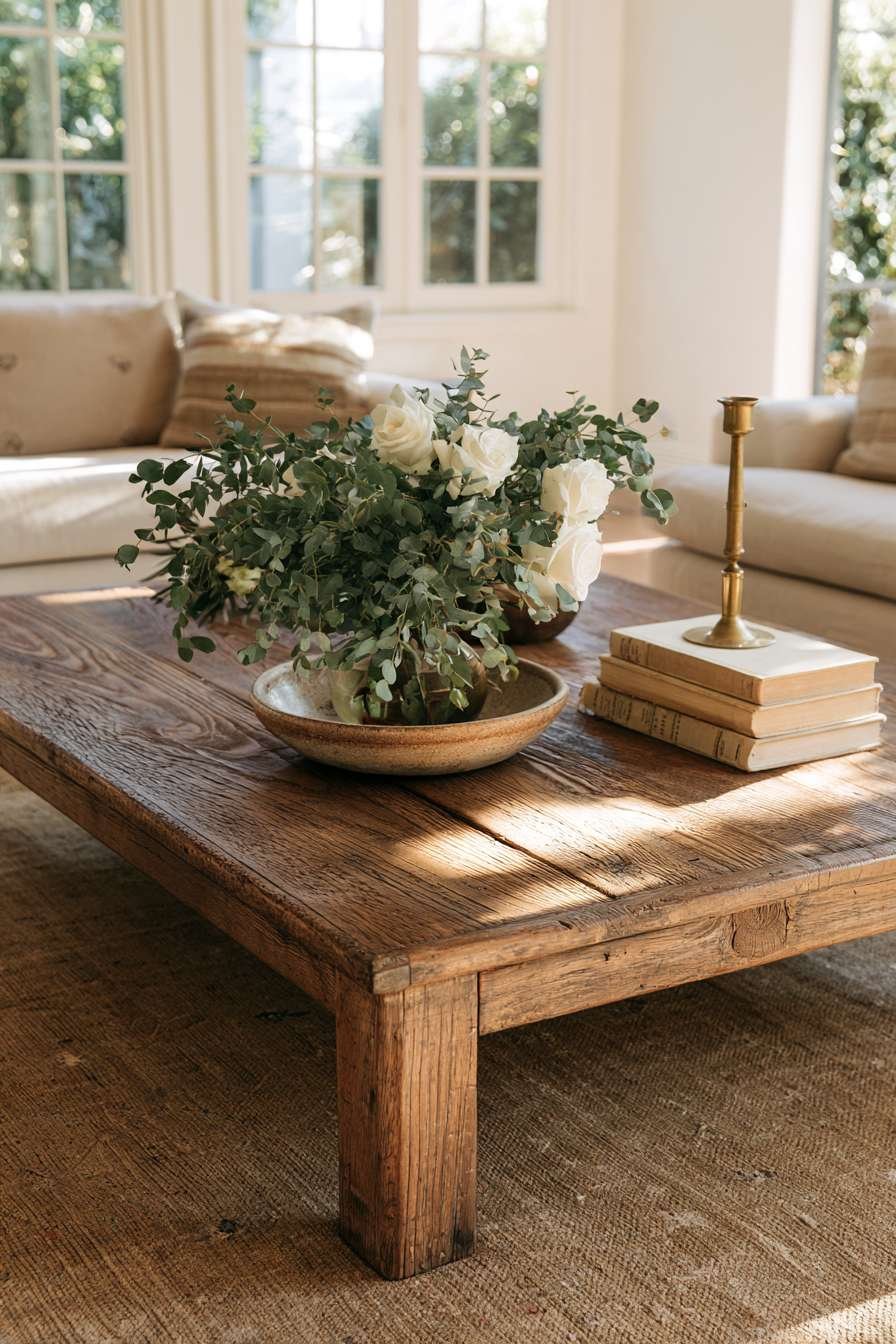
The textures in this display work harmoniously together. Smooth ceramic contrasts with rough wood grain. Delicate rose petals offset sturdy eucalyptus leaves. The brass candlestick introduces reflective surfaces among matte finishes. Each element contributes to a cohesive natural aesthetic.
Key Design Tips:
- Select tables with visible wood grain for authentic rustic appeal
- Combine fresh and dried botanicals for lasting arrangements
- Use books to anchor lighter decorative elements
- Incorporate vintage brass or copper for warm metallic accents
- Allow natural imperfections in wood to enhance character
- Position arrangements to catch natural window light
2. Modern Minimalist Elegance
Clean lines define this contemporary center table approach. A single sculptural ceramic vase in matte white holds three dried pampas grass stems. The simplicity creates powerful visual impact. A marble-top center table reflects subtle light from nearby windows. The polished surface adds luxury through restraint.
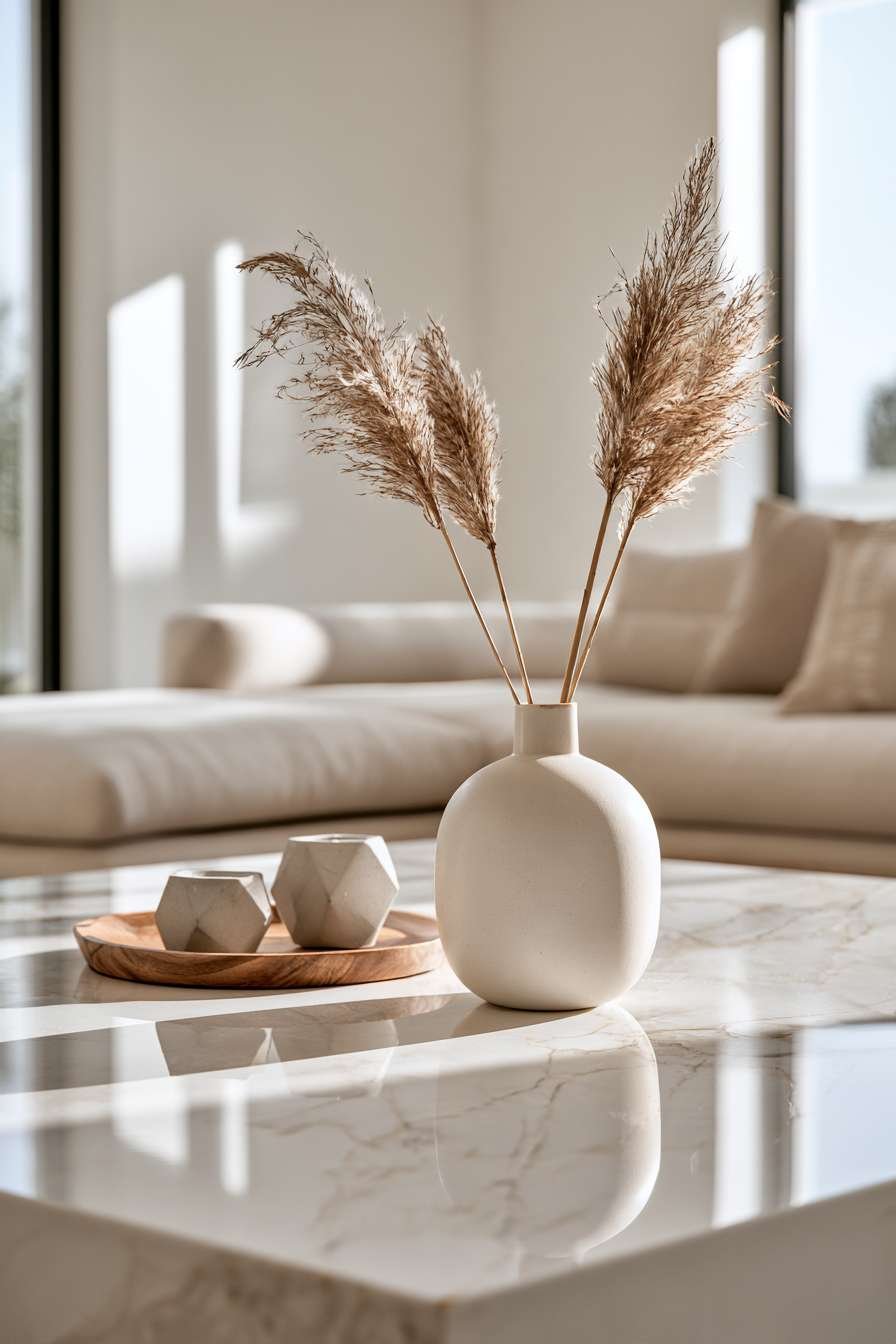
A small round wooden tray organizes two geometric concrete candle holders. The tray prevents visual clutter while defining the arrangement. Negative space plays a crucial role in this design. Empty surfaces allow the eye to rest between focal points. The intentional spacing creates calm sophistication.
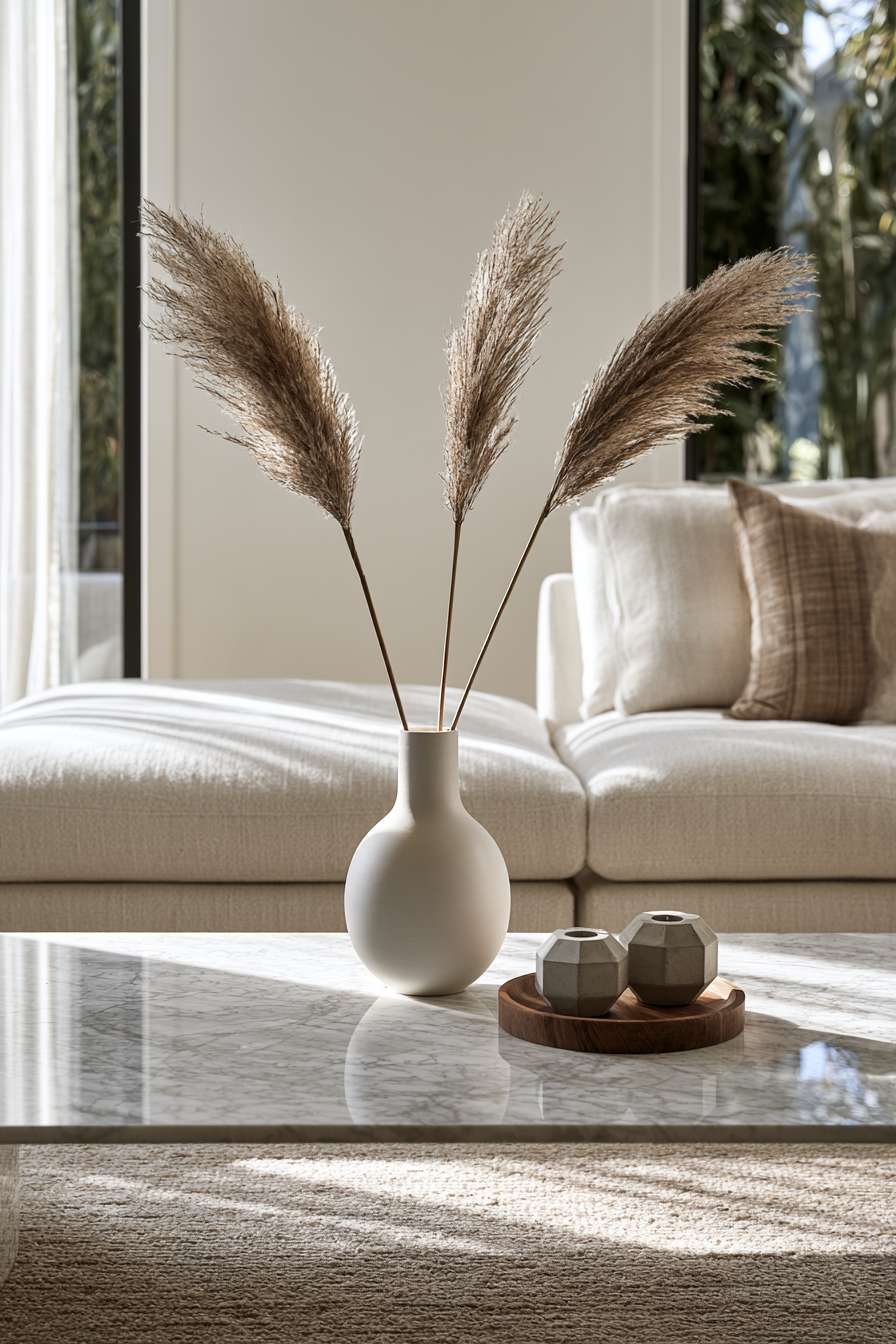
Natural materials ground the modern aesthetic. Wood, marble, and concrete bring earthy elements to contemporary styling. The neutral color palette emphasizes form over decoration. Soft diffused daylight creates clean highlights on polished surfaces. The overall effect is serene and uncluttered.
Key Design Tips:
- Embrace negative space as part of the design
- Choose sculptural pieces that stand alone as art
- Limit arrangements to three main elements maximum
- Select neutral colors for timeless appeal
- Use geometric shapes for contemporary edge
- Invest in quality materials like genuine marble and concrete
3. Bohemian Layered Textiles
A handwoven runner with fringe details creates the foundation for this eclectic display. The textile adds immediate warmth and texture. Terra cotta vessels in varying heights sit atop the runner. Each piece showcases slightly different earth tones. The reclaimed wood table features natural edge details and visible knots.
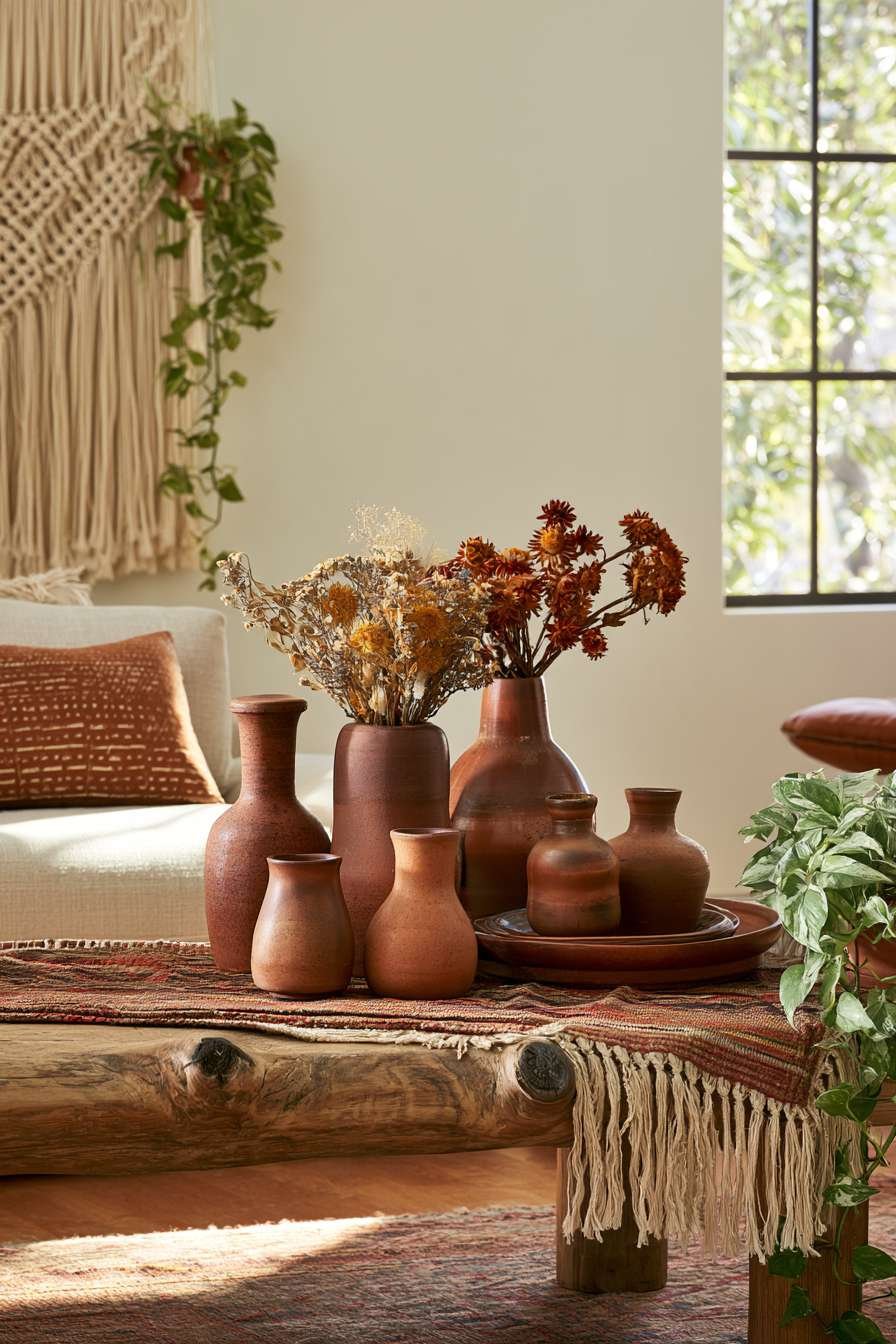
Dried flowers in warm ochre tones mix with trailing pothos vines. Living plants introduce vibrant green against the neutral palette. A macramé plant hanger visible in the background reinforces the bohemian theme. The layered approach creates visual richness and depth.
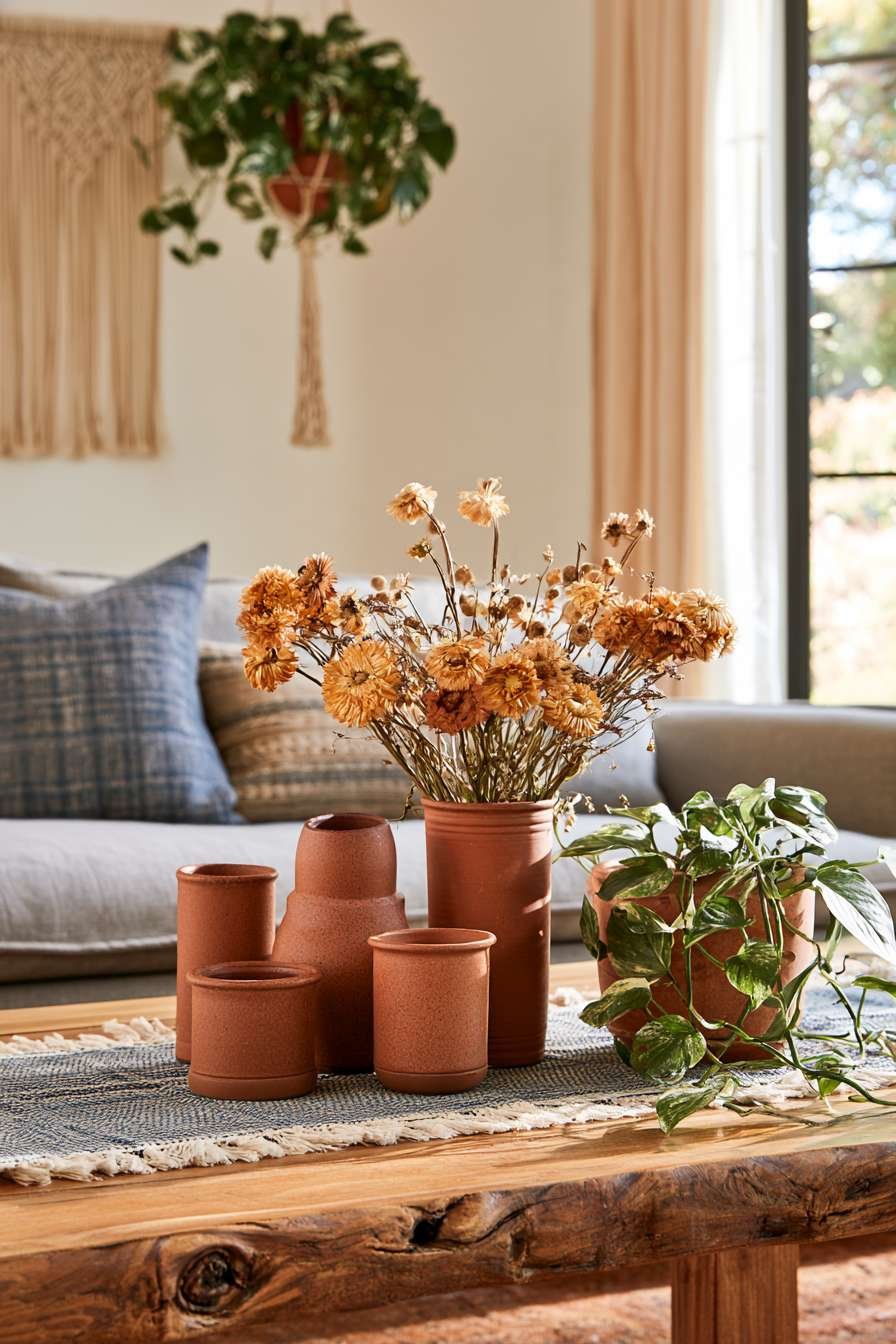
Afternoon light highlights the varied textures throughout the arrangement. Woven fibers cast interesting shadows on smooth ceramic surfaces. The organic shapes of dried flowers contrast with geometric pottery forms. Natural materials dominate this earthy, free-spirited aesthetic.
Key Design Tips:
- Layer textiles as foundations for other decor elements
- Mix dried and living plants for textural variation
- Choose terra cotta for authentic bohemian warmth
- Incorporate macramé or woven elements throughout
- Vary heights dramatically for visual interest
- Embrace imperfect handmade pieces over mass-produced items
4. Contemporary Geometric Symmetry
A glass hurricane lantern serves as the central focal point. Its transparent form allows light to play beautifully. Small potted succulents in concrete planters surround the lantern symmetrically. The arrangement demonstrates balanced composition principles. The walnut center table displays rich wood grain with a satin finish.
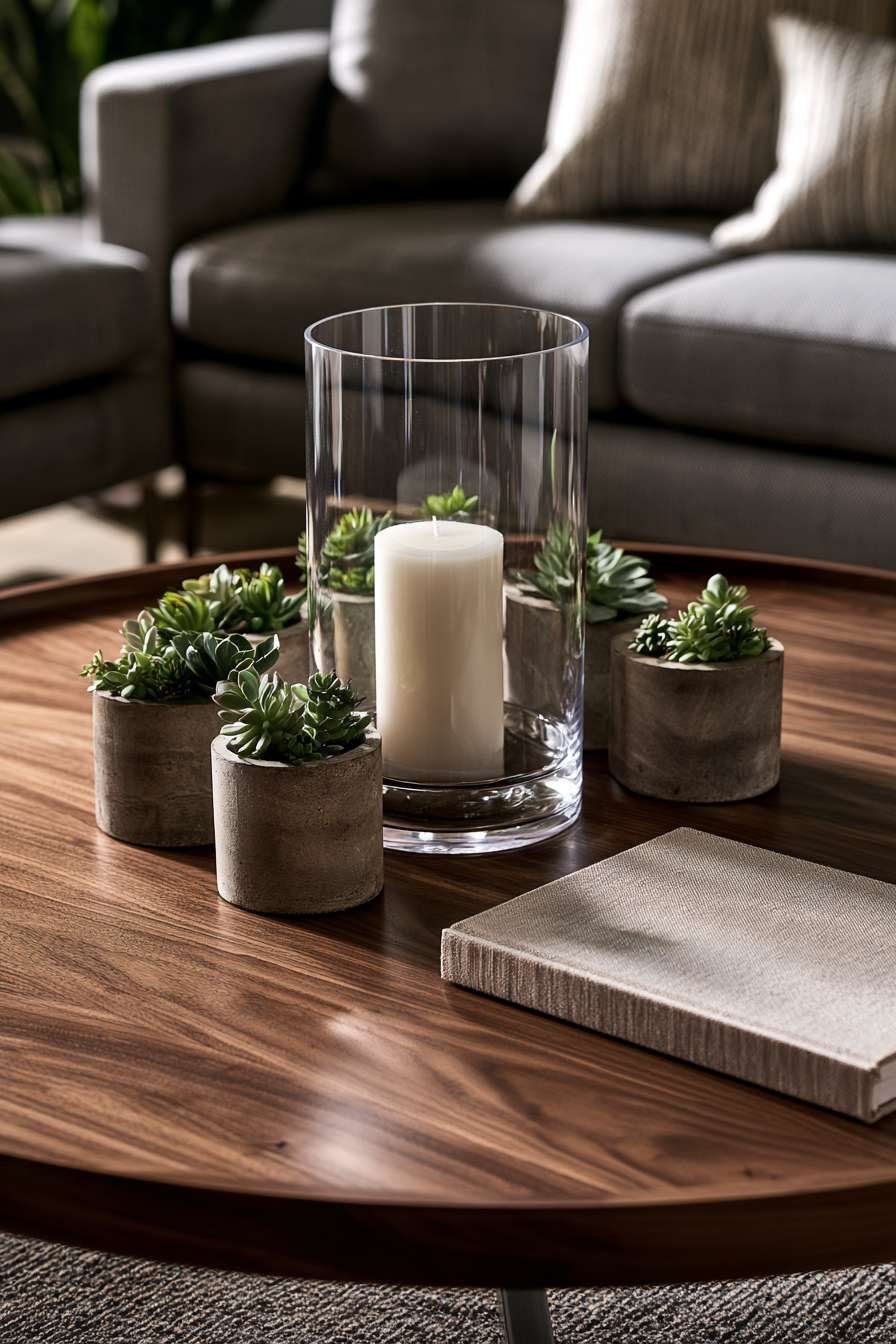
A decorative coffee table book on architecture lies open. Black and white photographs provide visual interest without color competition. The geometric shapes repeat throughout the arrangement. Circles, rectangles, and organic plant forms create rhythmic pattern. Balanced lighting emphasizes these relationships.
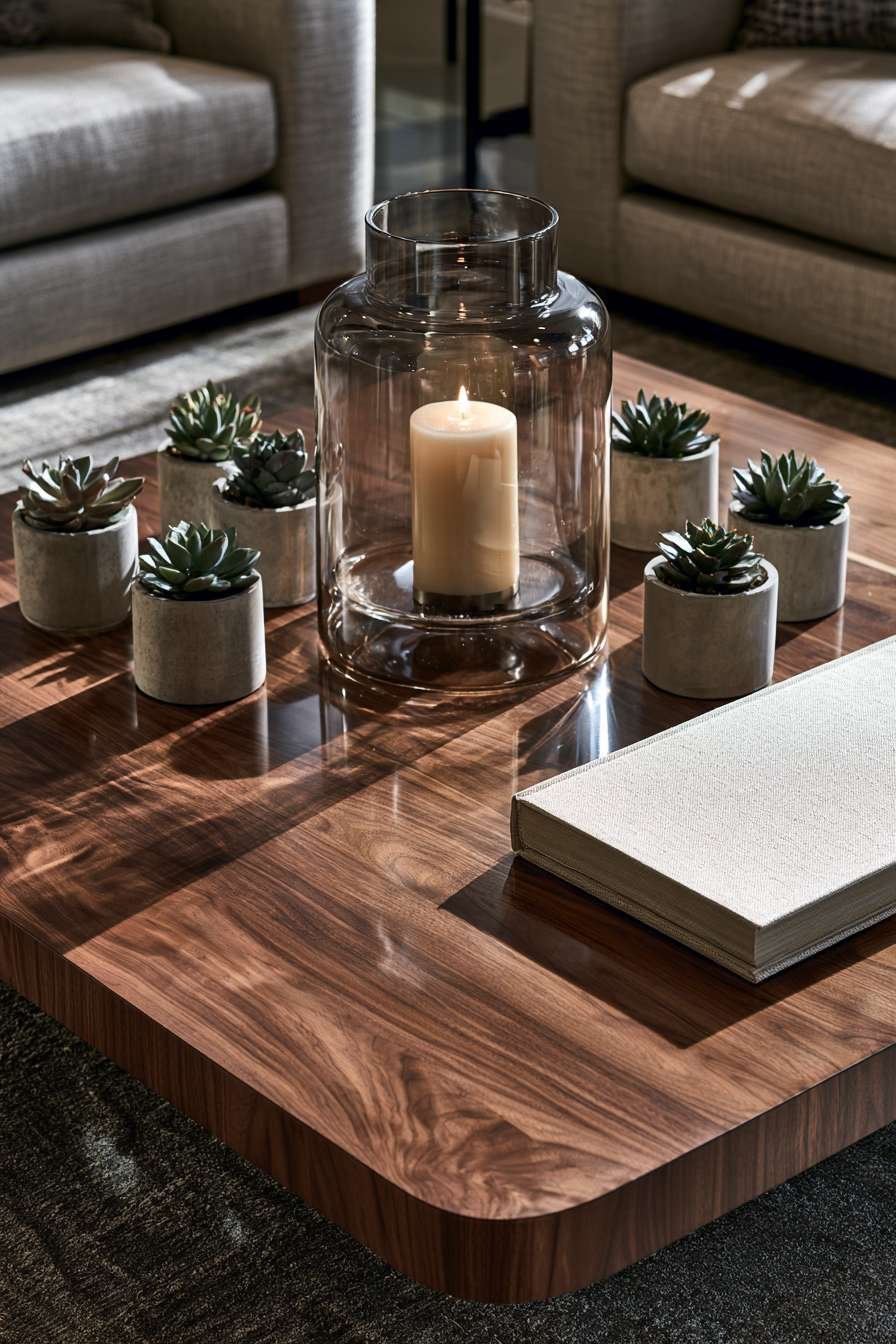
Subtle reflections appear on glass elements. The hurricane vase catches and disperses light attractively. Natural shadows add depth to the carefully composed arrangement. Modern styling meets classical symmetry in this sophisticated display.
Key Design Tips:
- Use symmetrical arrangements for formal contemporary spaces
- Repeat geometric shapes for cohesive design
- Incorporate transparent glass to add lightness
- Select coffee table books that complement your color scheme
- Choose succulents for low-maintenance living elements
- Balance reflective and matte surfaces for visual interest
5. Farmhouse Galvanized Metal Tray
A galvanized metal tray provides industrial contrast to soft farmhouse elements. The tray holds a chunky pillar candle, mason jar with wildflowers, and vintage glass bottle. Each piece tells a story of rural simplicity. The distressed white-painted center table shows intentional worn edges. Wood reveals itself beneath the paint for authentic character.

Natural linen napkins lie casually nearby. They add soft texture against harder metal and wood surfaces. Morning light streaming through windows creates an authentic lived-in atmosphere. The arrangement feels collected rather than purchased all at once.
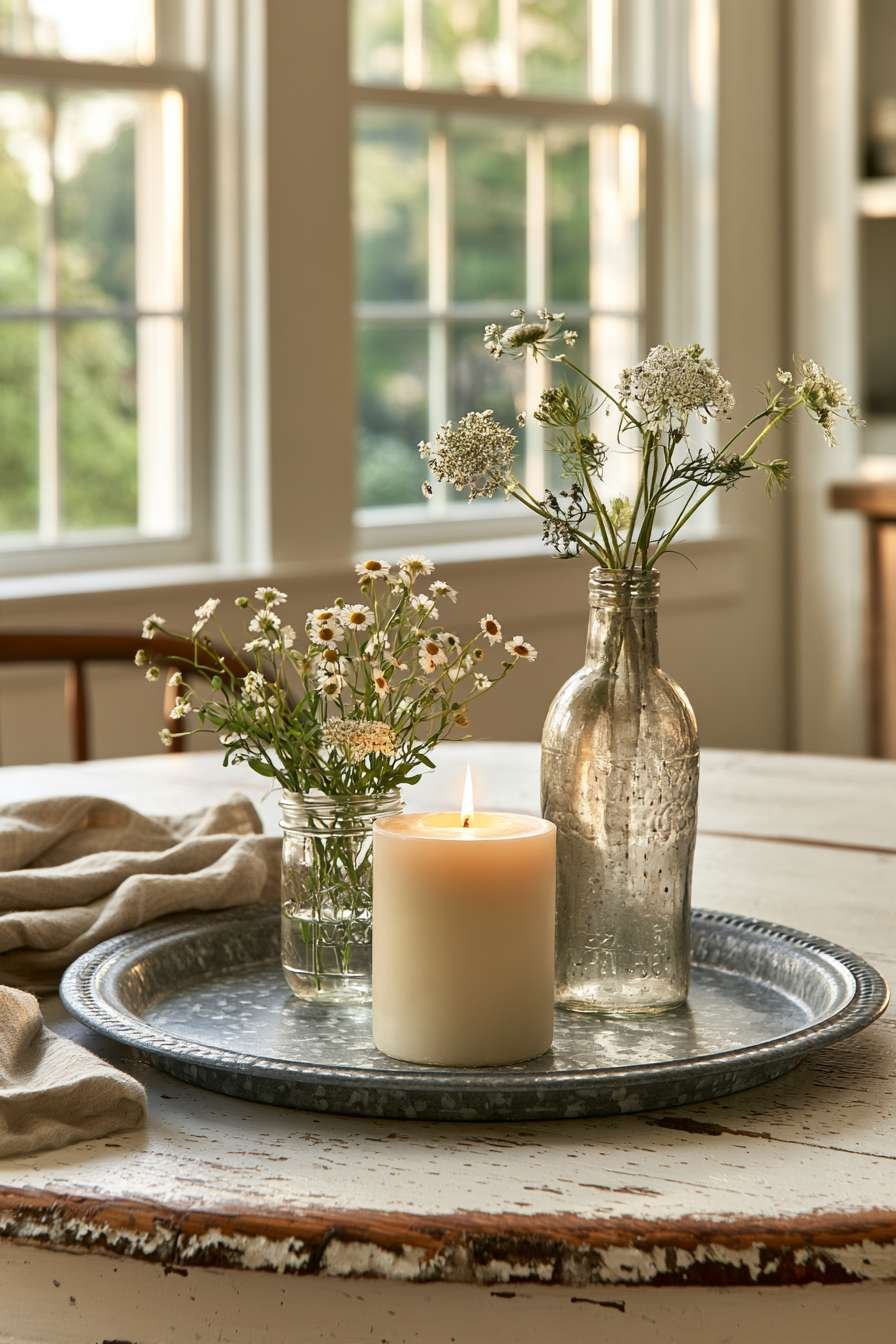
The color palette remains neutral with warm undertones. Creamy whites, soft greys, and natural wood tones dominate. The wildflowers introduce seasonal color that changes throughout the year. This flexibility keeps the arrangement fresh and relevant.
Key Design Tips:
- Use galvanized metal for authentic farmhouse appeal
- Distress painted furniture intentionally for aged character
- Incorporate mason jars as versatile decorative vessels
- Add linen textiles for soft farmhouse texture
- Change fresh flowers seasonally for variety
- Embrace asymmetrical casual arrangements over formal symmetry
6. Coastal Driftwood Sculpture
A large piece of driftwood serves as the sculptural centerpiece. Its weathered grey tones and organic shape draw the eye immediately. White coral specimens and sea glass fill a shallow wooden bowl. These treasures evoke beachside memories and coastal breezes. The whitewashed oak center table complements the beach-themed decor perfectly.
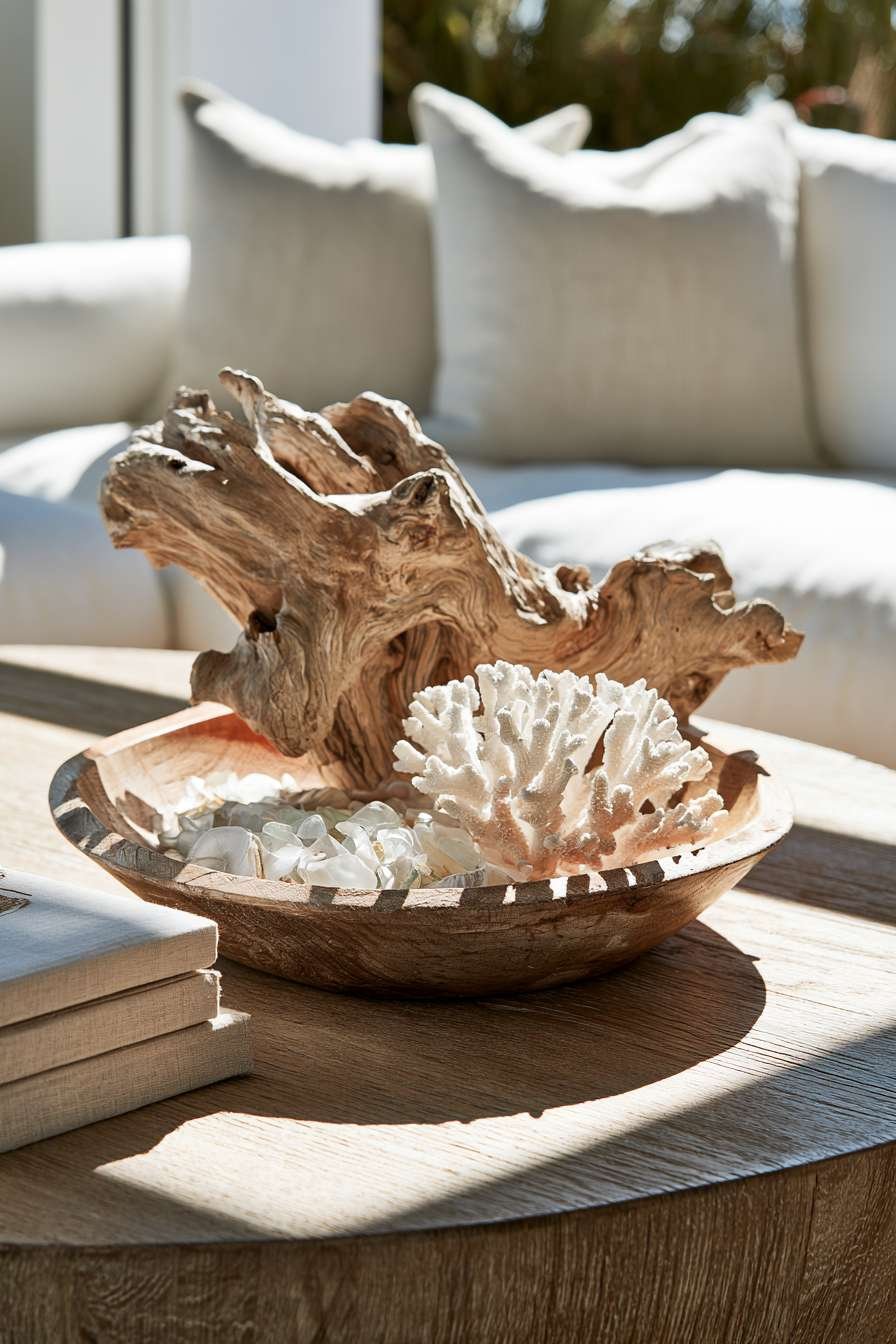
A small stack of design magazines features ocean photography on their covers. The editorial images reinforce the coastal aesthetic. Height variation occurs naturally through the vertical driftwood and horizontal magazine stack. Bright natural light creates the breezy atmosphere of a seaside cottage.
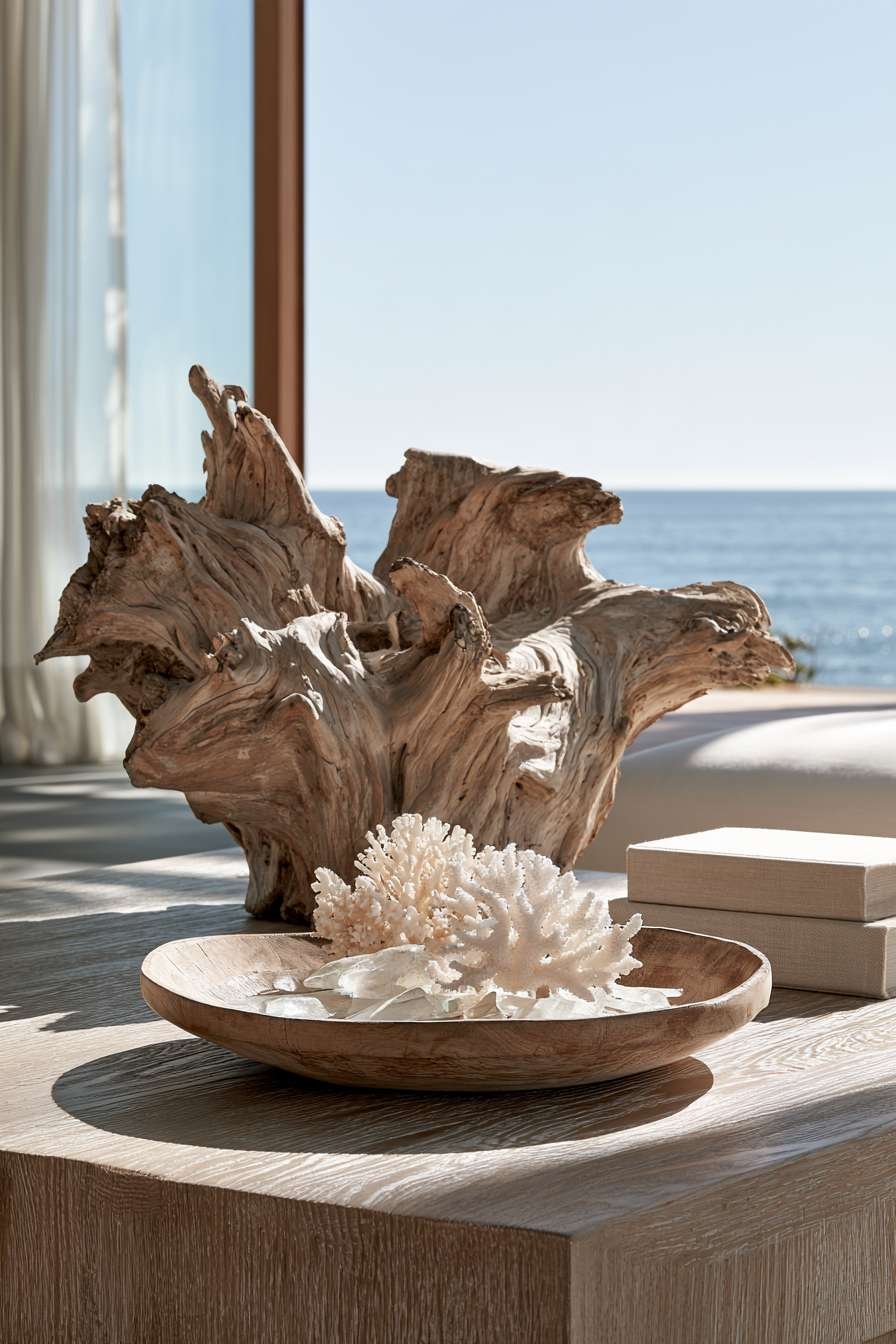
The organic materials throughout this arrangement connect to nature. Weathered wood, coral, and sea glass all bear nature’s marks. Soft shadows emphasize these natural textures and forms. The overall effect transports you to peaceful ocean shores.
Key Design Tips:
- Select substantial driftwood pieces for dramatic focal points
- Collect authentic beach elements rather than artificial substitutes
- Whitewash wood furniture for coastal lightness
- Include ocean-themed books or magazines for context
- Maximize natural light to enhance the breezy aesthetic
- Keep colors light and neutral with blue-green accents
7. Scandinavian Cherry Blossom Simplicity
A single branch of cherry blossoms stands in a simple cylindrical ceramic vase. The soft grey vase embodies Scandinavian restraint. Light ash wood center table displays minimal grain pattern and clean lines. Two small wooden sphere decorative objects sit alongside a linen-bound notebook. The composition demonstrates purposeful simplicity.
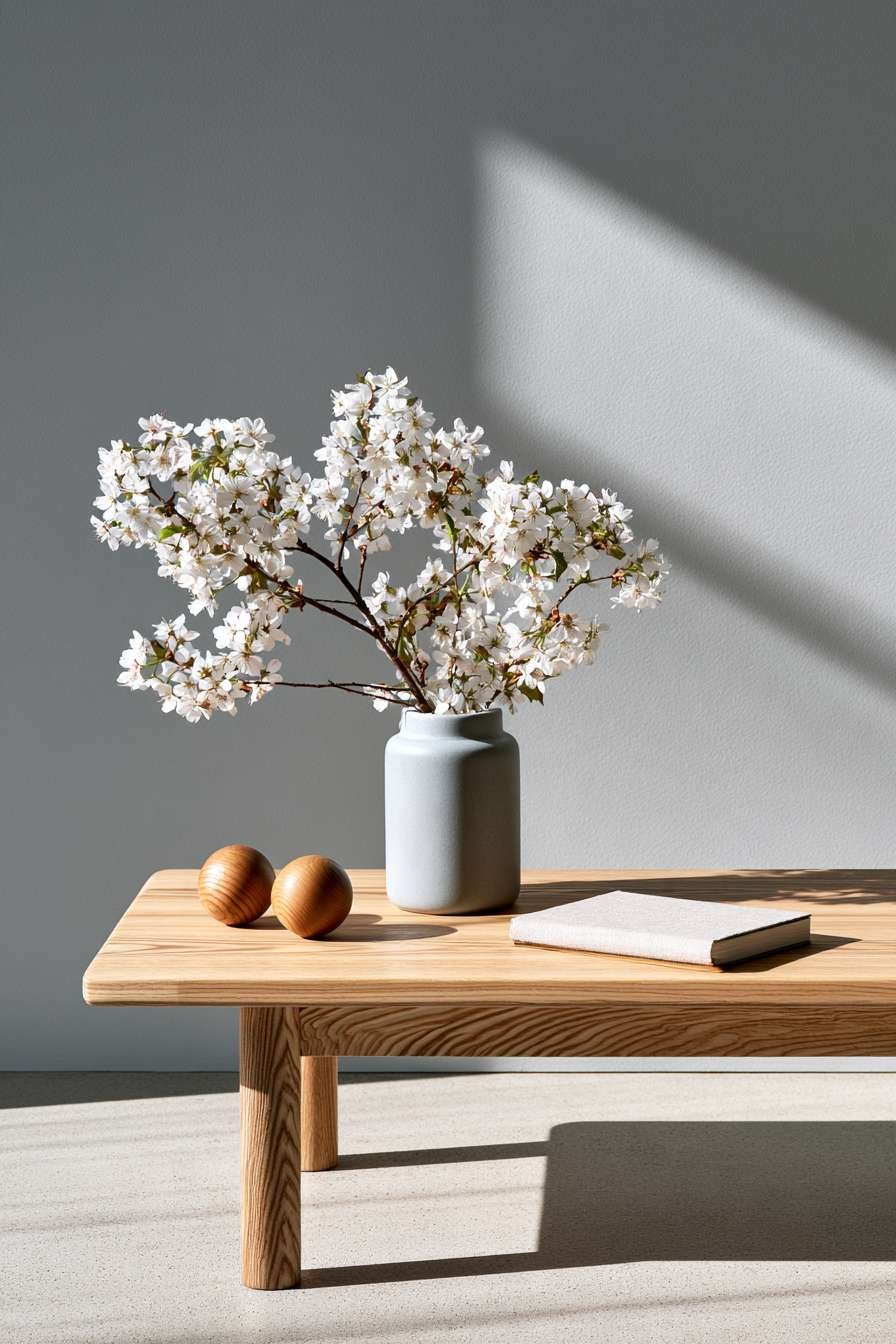
Diffused northern light creates even illumination across the minimal arrangement. No harsh shadows interrupt the peaceful scene. The functional beauty philosophy guides every element choice. Each piece serves both aesthetic and practical purposes. The notebook suggests thoughtful living and intentional creativity.
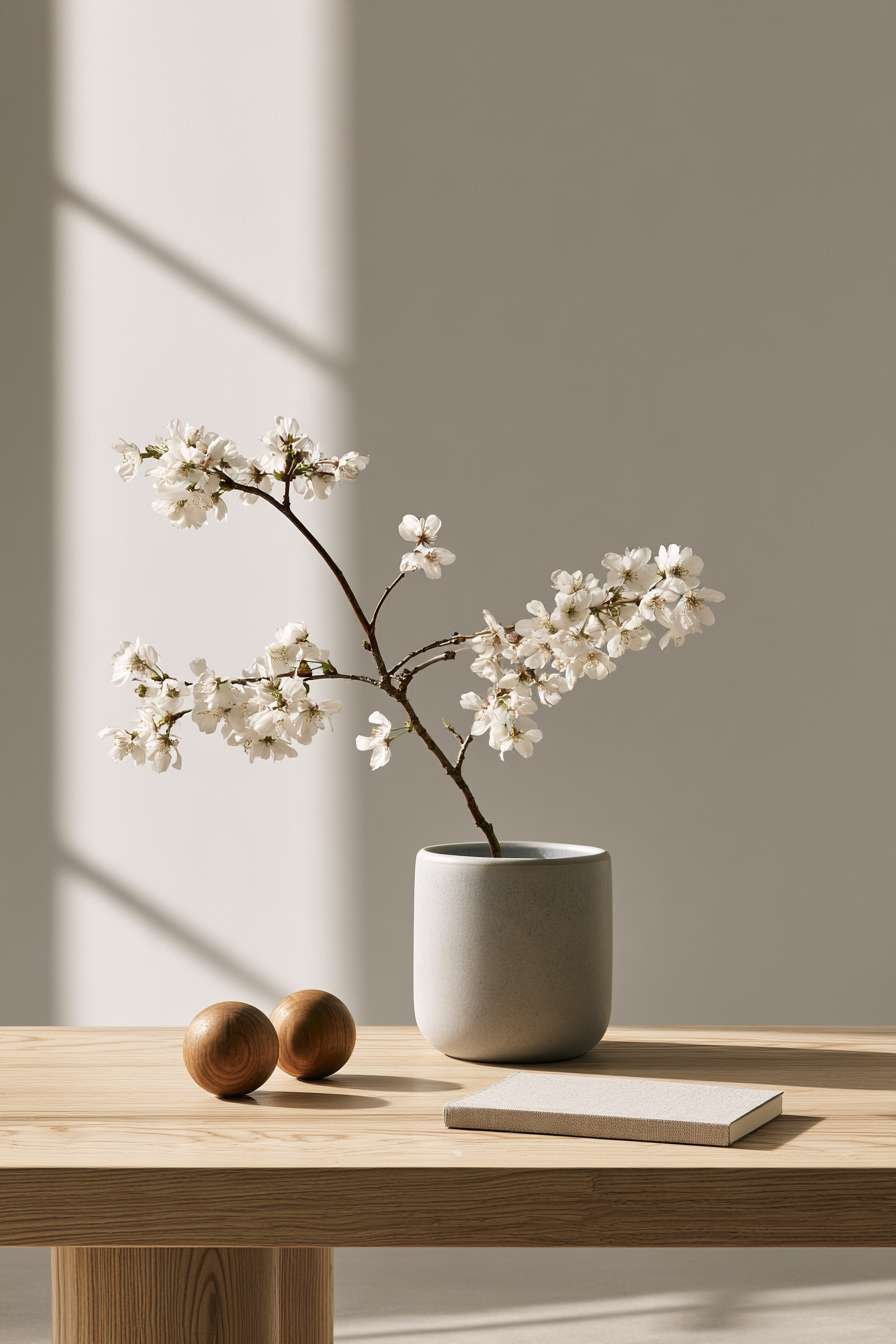
The neutral color palette feels calming and sophisticated. Soft greys, natural wood tones, and white blossoms create harmony. Texture comes from wood grain, linen fabric, and delicate petals. The overall aesthetic celebrates quality over quantity.
Key Design Tips:
- Embrace the “less is more” Scandinavian philosophy
- Choose single stems over large bouquets
- Select functional items that also provide beauty
- Use light wood tones for bright, airy spaces
- Incorporate natural linen for soft texture
- Maintain neutral color palettes with subtle variations
8. Industrial Repurposed Metal Elements
Vintage metal elements define this utilitarian aesthetic. A repurposed gear serves as an unexpected candle platform. Black iron candlesticks add vertical interest and industrial authenticity. The reclaimed factory cart center table features metal wheels and aged wood planking. Visible wear patterns tell stories of previous industrial use.
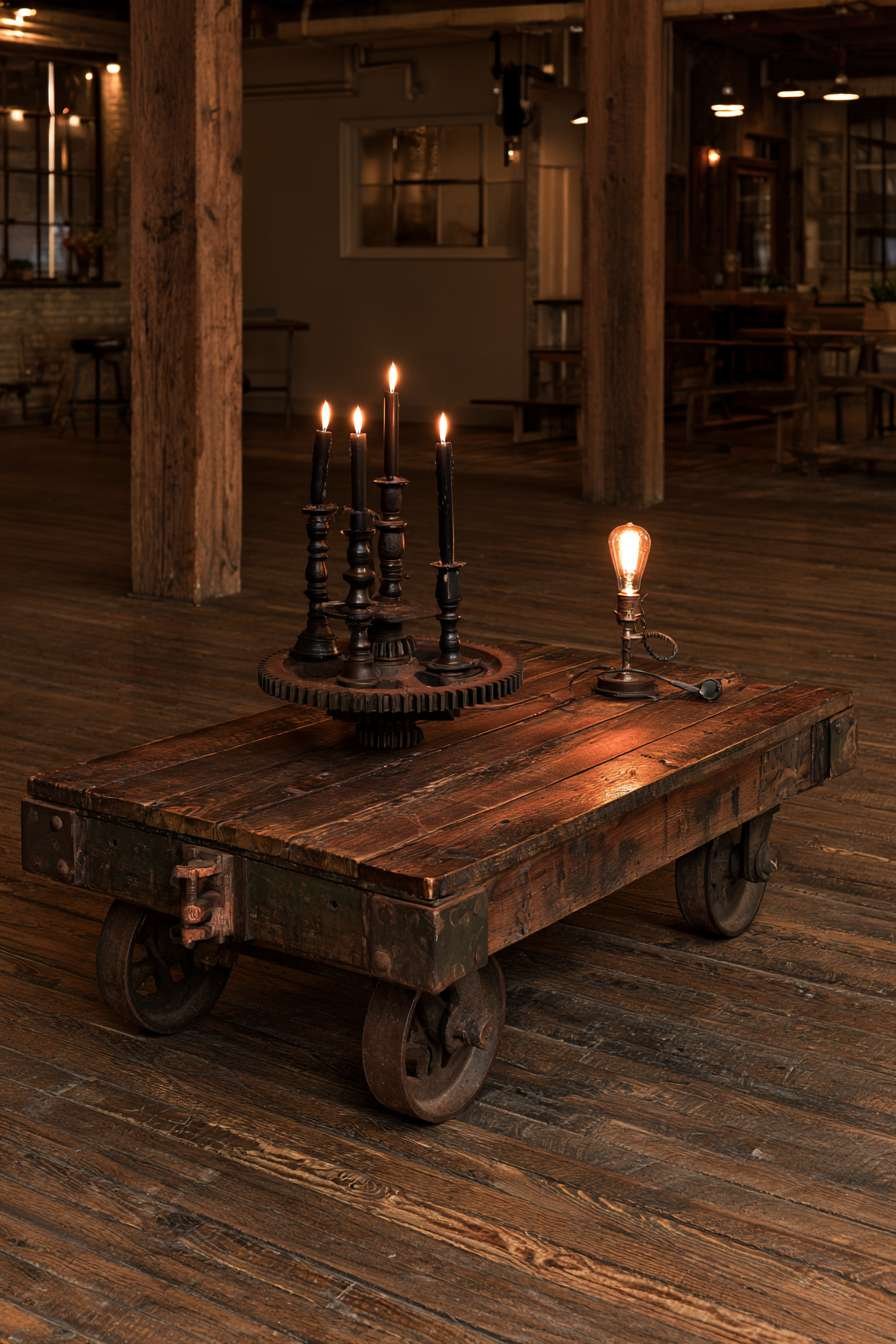
A small Edison bulb lamp with exposed wiring provides accent lighting. The visible mechanics celebrate functional design. Natural warehouse-style lighting emphasizes raw materials throughout. Metal, weathered wood, and minimal decoration create honest, unpretentious style.
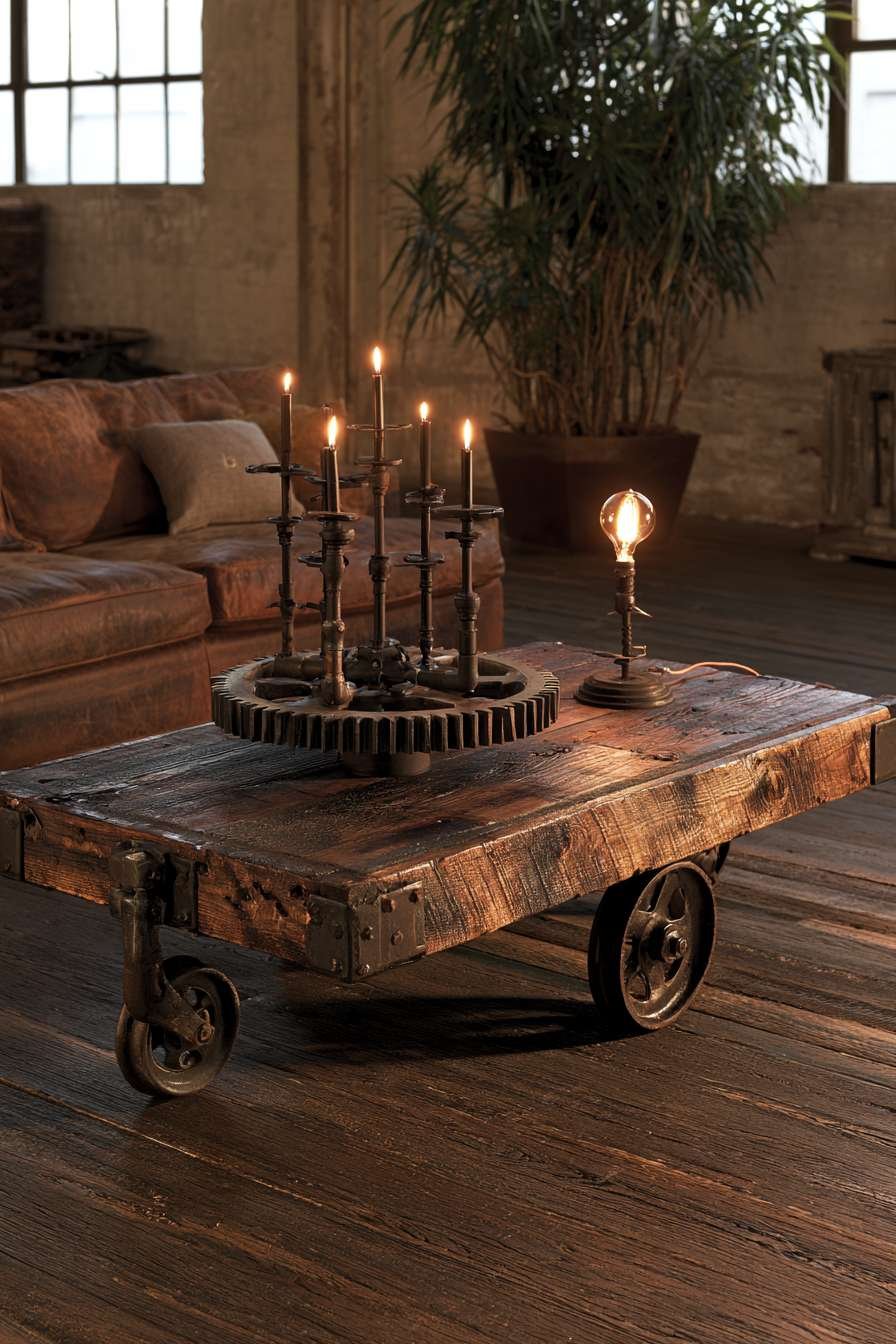
The color palette stays dark and moody. Black metal, aged brown wood, and warm Edison bulb glow dominate. This masculine aesthetic appeals to those who appreciate authentic materials. Every element serves a purpose while displaying industrial beauty.
Key Design Tips:
- Source authentic vintage industrial pieces when possible
- Celebrate visible wear and patina on metal elements
- Use Edison bulbs for warm industrial lighting
- Choose factory carts or industrial tables for authenticity
- Keep color palettes dark with warm lighting accents
- Expose mechanical elements rather than hiding them
9. Traditional Silver Tray Formality
An ornate silver tray provides the foundation for formal traditional styling. Crystal candlesticks and porcelain bowl create elegant symmetry. Seasonal fruit fills the bowl with natural color and organic forms. The dark cherry wood center table showcases fine furniture craftsmanship. Detailed edge molding demonstrates traditional woodworking excellence.
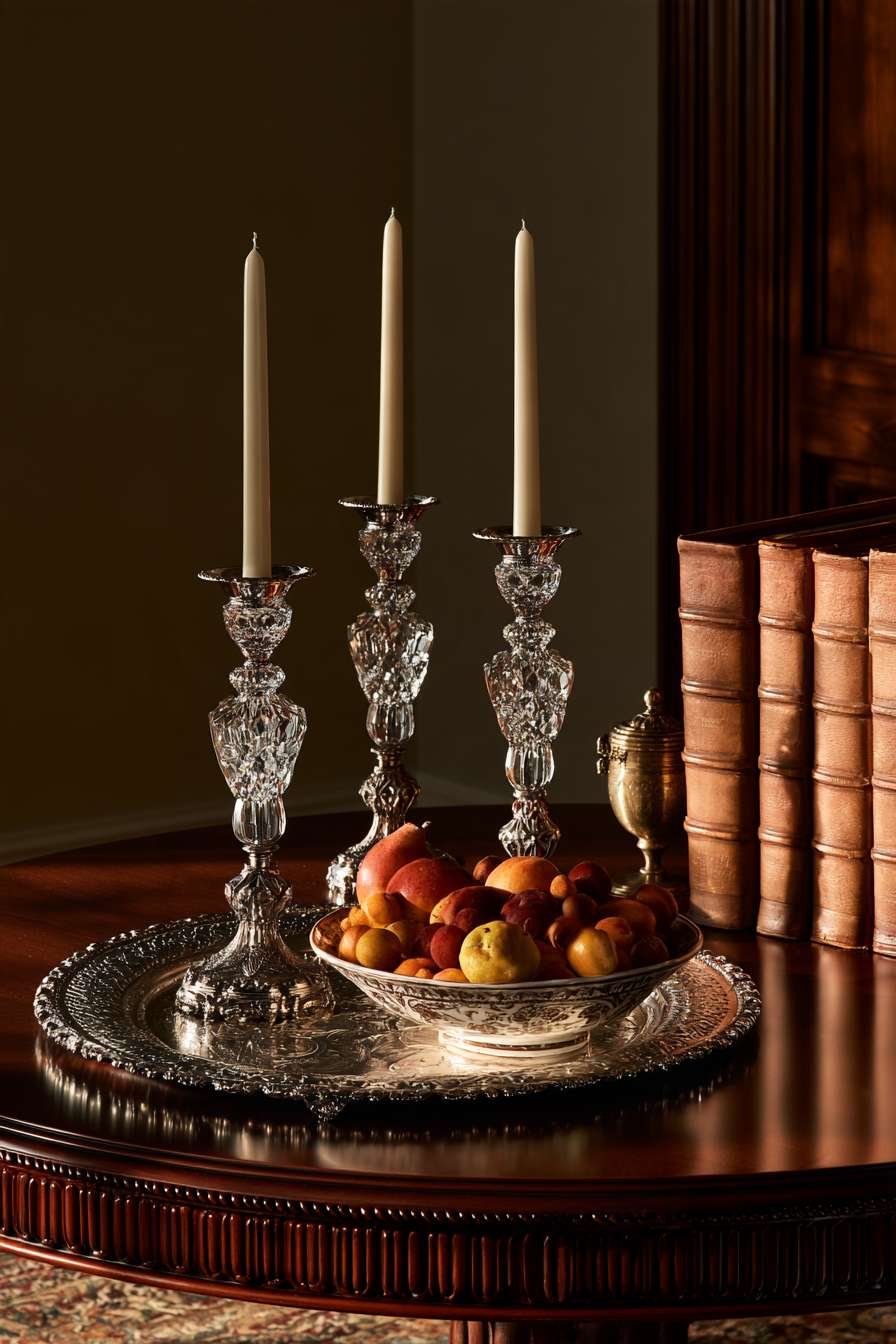
A leather-bound book set adds classic intellectual appeal. A small decorative clock introduces both function and traditional refinement. Warm ambient lighting creates refined shadows on polished surfaces. The formal symmetry speaks to classical design principles and timeless elegance.
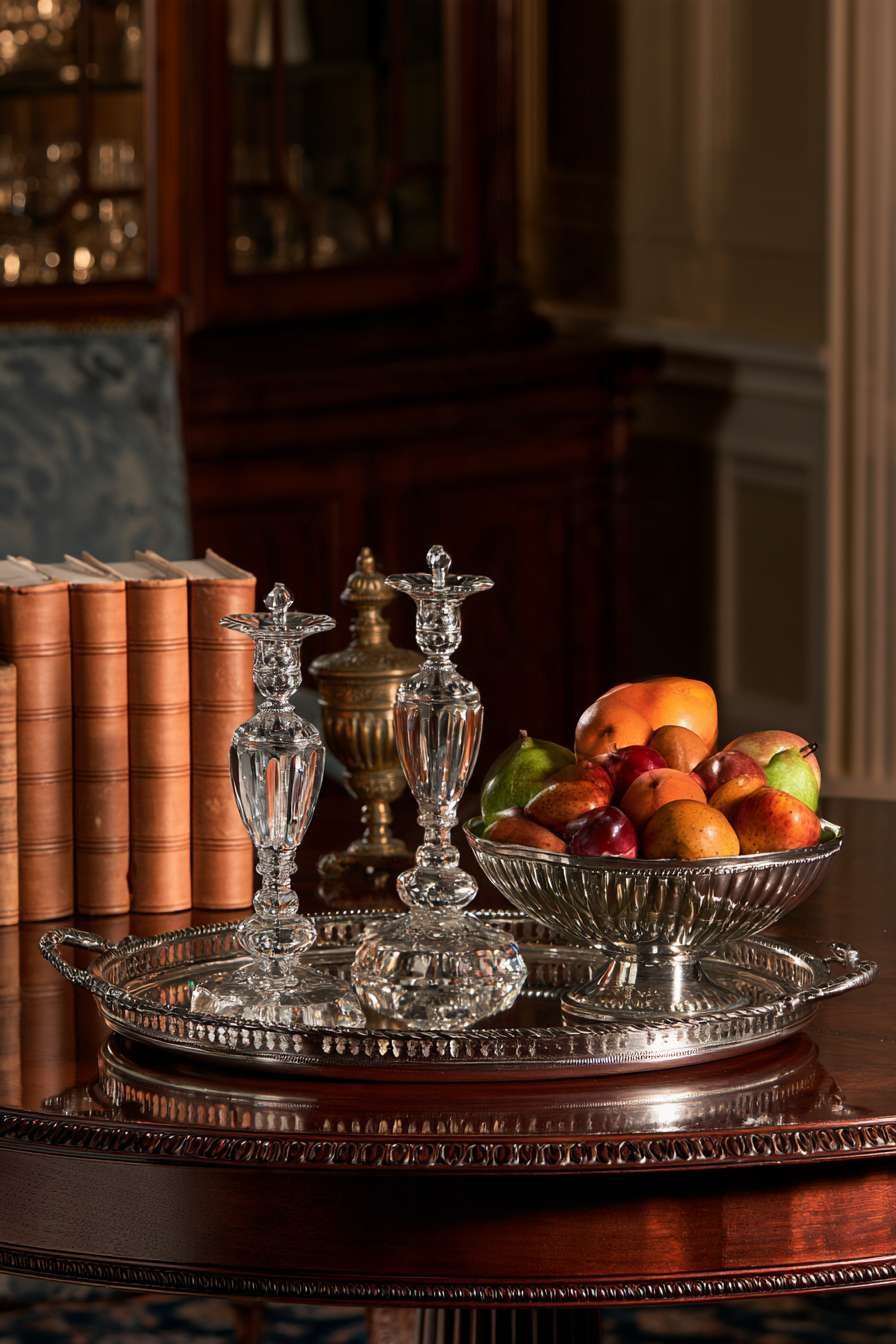
Rich materials throughout demonstrate luxury and permanence. Sterling silver, crystal, porcelain, and leather represent investment pieces. These elements develop character over time rather than showing wear. The traditional aesthetic celebrates enduring quality.
Key Design Tips:
- Use ornate silver trays for traditional foundation pieces
- Arrange elements symmetrically for formal balance
- Invest in crystal and porcelain for lasting elegance
- Choose dark wood furniture with detailed craftsmanship
- Incorporate leather-bound books for classical appeal
- Use warm lighting to enhance rich material finishes
10. Mid-Century Modern Retro Revival
A geometric ceramic planter in burnt orange contains a snake plant. The bold color epitomizes mid-century modern aesthetics. A vintage teak bowl holds decorative wooden balls in various sizes. The walnut center table features tapered legs characteristic of the era. Clean lined design principles guide every element choice.
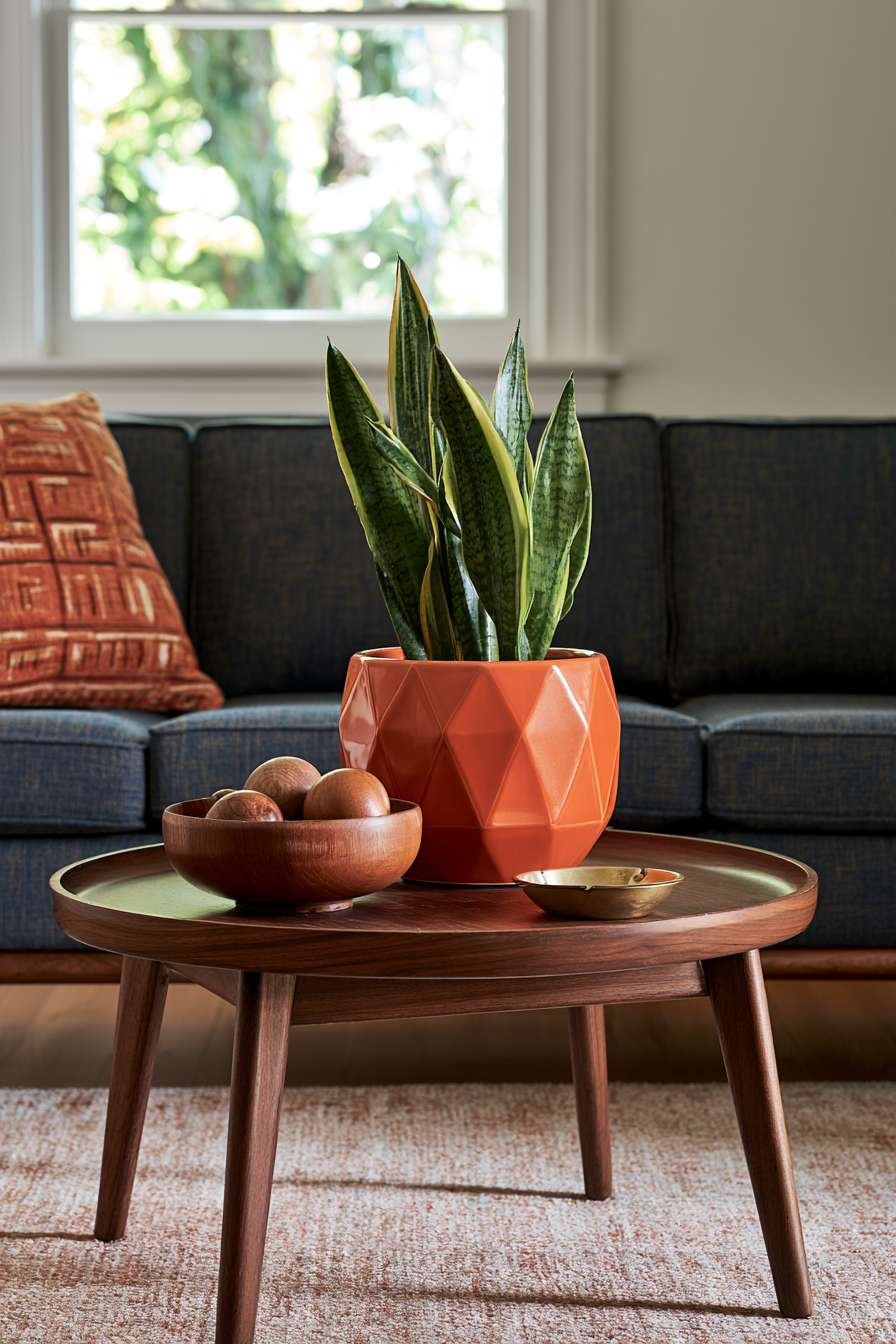
A small brass ashtray repurposed as a trinket dish adds metallic accent. Brass hardware was prevalent during the mid-century period. Balanced natural light showcases the retro color palette beautifully. Burnt orange, walnut brown, and brass gold create period-authentic warmth.

The geometric forms throughout celebrate atomic age design. Circles, spheres, and angular planters reference optimistic modernism. Authentic vintage pieces mix with period-appropriate reproductions. The overall aesthetic captures 1950s-60s design innovation.
Key Design Tips:
- Choose signature mid-century colors like burnt orange and teal
- Select furniture with tapered legs and clean lines
- Incorporate geometric shapes and angular forms
- Use teak and walnut for authentic wood tones
- Add brass accents for warm metallic touches
- Mix authentic vintage with quality reproductions
11. Eclectic Moroccan Brass Treasures
A Moroccan brass tray holds colorful glass tea cups. Small potted cactus and stacked vintage postcards add personal touches. The painted center table in deep teal provides bold color foundation. Slight distressing adds character without appearing damaged. A beaded table runner introduces additional textural interest.

Warm natural light brings out rich colors throughout the arrangement. The globally-inspired collection reflects well-traveled sensibilities. Cultural elements from different regions combine harmoniously. Each piece contributes its own story to the eclectic narrative.

The layered approach creates visual abundance without chaos. Careful curation prevents the arrangement from feeling cluttered. Rich jewel tones dominate the color palette. Brass metallic accents warm the overall composition.
Key Design Tips:
- Mix cultural elements from different global traditions
- Use brass trays and vessels for Moroccan authenticity
- Paint furniture in bold jewel tones for eclectic foundation
- Add beaded or embellished textiles for texture
- Collect meaningful pieces from travels when possible
- Balance abundance with thoughtful curation
12. Luxury Crystal and Mercury Glass
A large crystal bowl serves as the centerpiece focal point. White orchids fill the bowl with exotic elegance. Tall mercury glass candlesticks flank the arrangement symmetrically. The high-gloss lacquer center table in deep navy reflects the elegant display. Gold-rimmed decorative boxes and silk tassel provide refined details.

Soft directional lighting creates dramatic highlights on reflective surfaces. Crystal catches and disperses light beautifully throughout the space. Mercury glass adds vintage glamour with its silvered finish. The sophisticated ambiance feels appropriate for upscale interiors.

The color palette combines deep navy, crystal clear, and gold accents. White orchids provide bright contrast against dark surfaces. Reflective materials multiply the impact of lighting. Luxury materials demonstrate investment in quality design.
Key Design Tips:
- Invest in genuine crystal for light-catching properties
- Use mercury glass for vintage luxe appeal
- Choose high-gloss lacquer finishes for dramatic reflection
- Incorporate gold accents sparingly for refinement
- Select exotic flowers like orchids for special occasions
- Use directional lighting to highlight reflective surfaces
13. Biophilic Petrified Wood Display
A large piece of petrified wood serves as sculptural natural art. Its fossilized beauty bridges organic and mineral worlds. River stones in a shallow bronze dish surround the centerpiece. The live-edge walnut center table celebrates natural wood forms. Visible bark inclusion adds authentic organic character.

Small air plants in geometric holders add living greenery. The contrast between modern holders and organic plants creates interest. Dappled natural light filters through nearby plants. Organic shadows emphasize earthy materials throughout the arrangement.

The biophilic design connects indoor spaces to nature. Natural materials dominate the composition completely. Browns, greys, and green living elements create earthy palette. The overall effect brings outdoor serenity inside.
Key Design Tips:
- Source unique petrified wood or other fossilized elements
- Choose live-edge furniture to celebrate natural forms
- Incorporate air plants for easy-care living elements
- Use bronze vessels for warm metallic earthiness
- Position arrangements near windows with plants outside
- Celebrate natural imperfections in wood and stone
14. Seasonal Autumn Harvest Display
A wooden dough bowl fills with mini pumpkins, pinecones, and burgundy berries. The harvest-themed arrangement celebrates autumn abundance. Copper candle holders add warm metallic glow. A plaid table runner introduces traditional fall pattern. The distressed pine center table provides rustic foundation.

Golden afternoon light enhances warm tones throughout. Oranges, burgundies, and copper browns dominate the palette. Natural textures from pumpkin skins and pinecones add tactile interest. The cozy seasonal styling feels inviting and festive.

Changing seasonal displays keeps center tables fresh year-round. Autumn elements easily swap for winter greenery or spring florals. The dough bowl serves as versatile foundation across seasons. This flexibility maximizes both function and style.
Key Design Tips:
- Use wooden dough bowls for versatile seasonal containers
- Change arrangements with seasons for fresh appeal
- Incorporate natural elements like pinecones and berries
- Add copper metallics for autumn warmth
- Use plaid or seasonal textiles as foundations
- Embrace traditional fall colors like burgundy and orange
15. Zen Minimalist Meditation Space
A single bonsai tree in shallow ceramic pot creates contemplative focal point. The miniature tree embodies patience and careful cultivation. A small sand garden with raked patterns sits nearby. The meditative practice of raking creates peaceful ritual. The low platform center table in black-stained wood emphasizes horizontal lines.

A smooth river stone and incense holder complete the composition. Soft diffused light creates peaceful shadows throughout. The Asian-inspired styling encourages mindfulness and presence. Simplicity allows space for contemplation and calm.

The minimal elements each carry significant meaning. Bonsai represents nature controlled through patient care. Raked sand symbolizes water’s flowing movement. Horizontal lines ground the spirit and calm the mind.
Key Design Tips:
- Choose authentic bonsai trees requiring proper care
- Include sand gardens for meditative interaction
- Use low horizontal furniture for grounded stability
- Select smooth natural stones for tactile simplicity
- Incorporate incense for sensory mindfulness
- Maintain extreme minimalism for contemplative space
16. French Country Lavender Garden
A vintage wire basket fills with fresh lavender bundles. The purple blooms and green stems bring garden freshness indoors. Small terracotta pots with herbs surround the basket. The painted center table in distressed cream shows authentic aging. Worn corners reveal wood underneath for genuine character.

A linen towel with blue stripes and ceramic pitcher add provincial charm. Bright natural window light captures the fresh aesthetic. The romantic textures celebrate French countryside living. Soft colors and natural materials create gentle warmth.

The garden-inspired elements connect to outdoor growing spaces. Fresh herbs provide both beauty and potential culinary use. Lavender introduces soothing fragrance throughout the room. The overall aesthetic feels fresh, romantic, and timelessly charming.
Key Design Tips:
- Use fresh lavender for fragrance and visual appeal
- Incorporate living herbs for functional beauty
- Choose distressed painted furniture in soft colors
- Add vintage wire baskets for authentic French country charm
- Include linen textiles with classic stripes
- Maximize natural light to enhance fresh garden aesthetic
17. Modern Glam Rose Gold Luxe
A mirrored tray holds rose gold geometric candle holders. Clear acrylic decorative object adds transparent dimension. The white marble center table with gold metal base provides luxe foundation. A fashion magazine and small perfume bottle create lifestyle context. The contemporary feminine aesthetic feels glamorous and current.

Bright even lighting creates reflections on metallic and glass surfaces. Rose gold finish adds warmth to modern metallics. The mirrored tray multiplies visual impact through reflection. Clean lines meet luxurious materials in this balanced composition.

The color palette combines white, rose gold, and crystal clear elements. Feminine without being overly delicate, the aesthetic appeals broadly. Reflective surfaces maximize light and create spaciousness. Modern glamour emerges from material choices and clean styling.
Key Design Tips:
- Use rose gold for warm contemporary metallic accents
- Choose mirrored trays to multiply light and reflection
- Incorporate white marble for luxurious natural material
- Add acrylic elements for transparent modern dimension
- Select fashion or lifestyle magazines as casual styling
- Maximize lighting to enhance reflective surfaces
18. Organic Modern Handcrafted Ceramics
A large handthrown ceramic bowl in earthy terracotta holds dried grasses and seed pods. The artisan craftsmanship shows in subtle surface variations. The solid oak center table displays natural grain variations and rounded edges. Linen-wrapped candles and small succulent in stone pot complete the natural palette.

Warm morning light emphasizes handcrafted quality throughout. Organic modern aesthetic celebrates sustainable materials and artisan work. Natural imperfections add character rather than appearing as flaws. Each piece contributes to the cohesive earthy composition.

The textural variety comes entirely from natural materials. Rough ceramic, smooth oak, soft linen, and living succulent create tactile interest. Browns, tans, and green living accents form the simple palette. The overall effect feels grounded and authentic.
Key Design Tips:
- Choose handthrown ceramics over mass-produced alternatives
- Celebrate visible craftsmanship and artisan imperfections
- Use solid oak furniture for substantial natural presence
- Wrap candles in linen for soft organic texture
- Incorporate dried natural elements for lasting arrangements
- Select sustainable materials throughout the composition
19. Maximalist Abundant Pattern and Color
Patterned ceramic plates on stands create vertical visual interest. A vibrant floral arrangement with dahlias and ranunculus bursts with color. Decorative objects including brass animals and colored glass bottles fill the surface. The hand-painted center table in bold pattern provides energetic base. The abundant display celebrates visual richness.

Balanced lighting allows each colorful element to shine individually. Complex composition requires careful curation to avoid chaos. Rich jewel tones, metallics, and vibrant florals create joyful energy. Pattern on pattern demonstrates confident maximalist styling.

The layered approach builds visual interest through abundance. Multiple focal points compete equally for attention. Colorful eclecticism reflects bold personality and confident taste. This style suits those who reject minimalist restraint.
Key Design Tips:
- Layer patterns confidently without fear of excess
- Use vibrant fresh flowers for maximum color impact
- Collect decorative objects that bring personal joy
- Choose hand-painted or patterned furniture as foundations
- Balance competing elements through strategic placement
- Embrace abundance as intentional design choice
20. Transitional Timeless Versatility
A classic hurricane vase with floating candle provides elegant simplicity. Neutral ceramic vessels in varying shapes surround the centerpiece. Small boxwood topiary adds living green element. The grey-washed wood center table bridges traditional and contemporary styles. Leather-bound books and subtle metallic accents add refined touches.

Soft directional light creates sophisticated shadows throughout. The timeless versatility works across different interior styles. Neutral palette allows easy seasonal updates through simple swaps. Balanced proportions create pleasing visual harmony.

Traditional elements like leather books meet contemporary grey-washed finishes. The transitional approach combines best of both design worlds. Classic shapes rendered in modern finishes create enduring appeal. This versatile styling suits evolving tastes.
Key Design Tips:
- Mix traditional forms with contemporary finishes
- Use neutral colors for maximum versatility
- Incorporate both classic and modern materials
- Select timeless shapes over trendy alternatives
- Add living topiaries for structured greenery
- Choose pieces that work across multiple design styles
21. Tropical Resort Bird of Paradise
A tall bird of paradise stem in white ceramic cylinder vase creates dramatic focal point. The exotic flower brings tropical energy indoors. A wooden bowl filled with seed pods adds natural textural interest. The rattan center table with glass top provides airy foundation. Small monstera leaf coasters and bamboo element reinforce botanical theme.

Bright filtered light through sheer curtains creates breezy resort atmosphere. Tropical styling transports you to vacation destinations. Living greenery brings vibrant color to neutral foundations. The overall aesthetic feels relaxed and vacation-inspired.

Natural materials throughout connect to tropical environments. Rattan, bamboo, and exotic florals create cohesive theme. Glass table top keeps visual lightness despite substantial furniture. The resort aesthetic makes everyday living feel like escape.
Key Design Tips:
- Choose exotic flowers for dramatic tropical impact
- Use rattan furniture for authentic tropical texture
- Add glass tops to maintain visual lightness
- Incorporate monstera leaves or tropical botanical elements
- Filter natural light through sheers for soft diffusion
- Select natural materials in light finishes
22. Vintage Curiosity Cabinet Collection
Antique brass candlesticks with ivory taper candles anchor the display. A collection of old glass medicine bottles creates historical interest. Worn leather-bound journals show authentic aging and use. The Victorian-era center table displays original patina on carved legs. A vintage magnifying glass and pocket watch add curiosity appeal.

Warm ambient lighting from nearby table lamp creates nostalgic mood. The collected pieces suggest stories from different eras. Authentic aged character cannot be replicated by new items. Each element appears carefully curated over time.

The vintage aesthetic celebrates history and preservation. Brass patina, worn leather, and aged glass demonstrate genuine age. Browns, ambers, and metallic tones dominate the warm palette. Curiosity cabinet styling encourages examination of each unique piece.
Key Design Tips:
- Collect authentic vintage pieces over time
- Celebrate original patina rather than restoration
- Choose Victorian-era furniture for carved details
- Display collections that tell historical stories
- Use warm ambient lighting for nostalgic atmosphere
- Incorporate functional vintage items like magnifying glasses
23. Monochromatic White Texture Layers
Various textured elements in shades of white and cream create serene composition. A chunky knit throw drapes casually over the table edge. White ceramic vases in different heights add dimensional interest. Bleached driftwood pieces introduce organic natural forms. The weathered white oak center table provides subtle tonal variation.

Natural linen runner adds soft foundation underneath other elements. Bright natural light showcases layered neutral textures throughout. The all-white palette creates peaceful minimalism. Textural variety prevents the monochromatic scheme from feeling flat.

Different whites from ivory to bright white create subtle depth. Matte ceramics contrast with glossy table finish. Rough driftwood offsets smooth knit throws. The serene minimalism feels calm and sophisticated.
Key Design Tips:
- Layer multiple white tones for subtle variation
- Use diverse textures to prevent visual flatness
- Include natural elements like driftwood for organic interest
- Choose chunky knits for substantial soft texture
- Maximize natural light to highlight subtle tonal differences
- Select different ceramic finishes from matte to glossy
24. Artistic Gallery Curator Approach
A unique sculptural ceramic piece serves as statement art object. Art gallery catalogs and small abstract painting prop casually nearby. The modern center table in black metal and glass provides gallery-like display surface. Single stem in test tube vase adds organic counterpoint. The curatorial approach treats the table as exhibition space.

Focused lighting creates museum-quality presentation atmosphere. The artistic styling celebrates creative objects as functional decor. Each piece receives careful consideration for placement and lighting. Gallery aesthetic brings fine art sensibility to living spaces.

The minimal but impactful approach emphasizes quality over quantity. Sculptural ceramic demands attention as focal point. Supporting elements enhance without competing. Museum-inspired styling elevates everyday spaces.
Key Design Tips:
- Choose sculptural ceramics or art objects as focal points
- Display art books and catalogs as contextual elements
- Use gallery-style focused lighting for drama
- Select modern metal and glass furniture for clean display
- Add minimal organic elements to soften artistic severity
- Treat table surface as curated exhibition space
25. Cottage Romantic Vintage Charm
A vintage enamelware pitcher fills with garden roses and lavender. The arrangement sits atop a delicate crochet doily. The painted center table in soft sage green shows gentle distressing. Small china teacup holds tea lights for soft illumination. Lace-trimmed napkins add delicate romantic touches.

Soft diffused window light creates dreamy ambiance throughout. The cottage styling celebrates sweet vintage charm and nostalgia. Delicate elements like lace and doilies add feminine softness. Pastel colors and floral patterns create gentle romance.

The vintage pieces suggest cherished family heirlooms and memories. Enamelware and china reflect earlier domestic traditions. Garden flowers bring outdoor beauty inside. The overall aesthetic feels sweet, nostalgic, and timelessly charming.
Key Design Tips:
- Use vintage enamelware for authentic cottage appeal
- Incorporate crochet doilies for delicate texture
- Paint furniture in soft pastel colors
- Add lace trims and romantic details
- Choose garden flowers like roses and lavender
- Create soft diffused lighting for dreamy atmosphere
26. Geometric Architectural Modern
Angular metal sculptures create architectural interest. Hexagonal marble coasters and triangular concrete planter add geometric forms. The center table combines white lacquer top with brass geometric base. Clear acrylic decorative object adds transparent dimension. The contemporary architectural quality feels sculptural and modern.

Clean studio-style lighting emphasizes sharp lines throughout. Geometric repetition creates rhythmic visual pattern. Modern materials like lacquer, brass, and acrylic feel current. The architectural styling suits contemporary urban spaces.

The angular forms throughout celebrate mathematical precision. Triangles, hexagons, and other geometric shapes dominate. White, brass, and concrete create sophisticated neutral palette. The overall effect feels intentional and designed.
Key Design Tips:
- Choose geometric shapes for modern architectural interest
- Use angular metal sculptures as contemporary art
- Incorporate brass geometric bases for warm metallic
- Add acrylic elements for transparent modern dimension
- Select hexagonal or triangular accessories over round
- Use clean bright lighting to emphasize sharp lines
27. Mediterranean Villa Sun-Drenched
A terracotta olive jar fills with fresh olive branches. Small ceramic bowls in azure blue glaze surround the centerpiece. The rustic wood center table features chunky turned legs in traditional style. A small dish of lemons and linen napkin in Mediterranean blue complete the theme. The coastal European aesthetic feels authentic and warm.

Warm golden hour light through shutters creates villa atmosphere. Sun-drenched colors evoke Mediterranean coastlines and villages. Traditional craftsmanship shows in turned table legs and handmade ceramics. The overall aesthetic transports you to southern European destinations.

Natural elements like olive branches and fresh lemons connect to regional agriculture. Azure blue glaze references Mediterranean waters. Terracotta and rustic wood represent traditional building materials. The warm palette celebrates abundant sunshine.
Key Design Tips:
- Use terracotta vessels for Mediterranean authenticity
- Incorporate azure blue ceramics for coastal water reference
- Choose furniture with traditional turned legs
- Add fresh citrus fruits for regional agricultural connection
- Include olive branches or Mediterranean botanicals
- Maximize warm golden light for villa atmosphere
28. Ultra-Minimal Three Element Restraint
Three carefully chosen elements create sophisticated simplicity. A single architectural plant in minimal white pot provides living element. One hardcover design book adds intellectual appeal. A simple analog clock in brushed steel introduces function. The floating center table in pale oak appears to hover magically.

Perfectly balanced exposure demonstrates photographic precision. The sophisticated restraint requires confident editing and curation. Intentional minimalism celebrates quality over quantity. Each of the three elements earns its place through merit.

The ultra-minimal approach suits those who reject visual clutter completely. Pale oak, white ceramic, and brushed steel create refined palette. Negative space dominates the composition intentionally. The overall effect feels calm, sophisticated, and intentional.
Key Design Tips:
- Limit arrangements to maximum three elements
- Choose each piece with extreme intentionality
- Use floating furniture for visual lightness
- Select architectural plants with strong form
- Incorporate functional items that also provide beauty
- Embrace abundant negative space as design element
29. Textural Natural Materials Focus
A woven seagrass basket provides organic textural foundation. Chunky rope-wrapped candle adds substantial tactile interest. Raw wood slice serves as natural base underneath arrangement. The center table in natural teak shows rich honey tones and visible grain. Burlap runner and jute-wrapped vase add additional woven textures.

Warm natural light emphasizes tactile quality throughout. The texture-focused approach creates dimensional interest without color. Natural materials in their authentic states dominate completely. Browns, tans, and honey tones form the simple organic palette.

The layered textures prevent monotony in the neutral scheme. Smooth teak contrasts with rough burlap. Woven seagrass differs from twisted rope. Raw wood slice adds unfinished natural element. Tactile variety creates sophisticated simplicity.
Key Design Tips:
- Layer multiple natural textures for dimensional interest
- Use seagrass, jute, and burlap for woven variety
- Choose raw wood slices for unfinished natural elements
- Wrap candles in rope for substantial texture
- Select teak furniture for warm honey tones
- Keep color palette neutral to emphasize texture
30. Colorful Maximalist Joyful Energy
A hand-painted ceramic vase with bold florals creates vibrant focal point. Stacked vintage books with colorful spines add literary interest. Small decorative objects in jewel tones scatter across the surface. The center table features multi-colored tile mosaic top with brass edge. A patterned textile runner adds additional color and pattern.

Balanced lighting celebrates the rich color palette throughout. The joyful maximalist energy rejects minimalist restraint completely. Personality-filled character emerges from confident color choices. Bold styling suits those who embrace visual abundance.

The vibrant approach layers pattern, color, and decorative elements freely. Jewel tones dominate with emerald, sapphire, and ruby accents. Hand-painted ceramics and mosaic tiles demonstrate artisan craftsmanship. The overall effect feels celebratory and personally expressive.
Key Design Tips:
- Embrace bold color without restraint or apology
- Layer patterns confidently across multiple elements
- Choose hand-painted ceramics for artisan character
- Use mosaic tile tables for permanent color foundation
- Stack colorful vintage books as decorative elements
- Select jewel tones for rich saturated color impact
Why These Center Table Decor Designs Are the Best
These thirty center table concepts represent the finest approaches to coffee table styling across diverse aesthetics. Each design demonstrates thoughtful consideration of materials, proportions, and spatial composition. The variety showcases how different styles suit different personalities and living spaces.
Material authenticity drives lasting appeal in these arrangements. Natural wood, genuine marble, handthrown ceramics, and authentic brass develop beautiful patina over time. Quality materials represent better investments than synthetic alternatives requiring frequent replacement. Sustainable choices through durable pieces align with environmental consciousness.

Color theory applications appear throughout these designs. Monochromatic schemes rely on textural variation to prevent flatness. Neutral palettes provide flexibility for seasonal accent changes. Bold color approaches demonstrate confidence and personal expression. Understanding how colors interact with natural light throughout the day enhances every arrangement.
Lighting transforms each display fundamentally. Layered lighting combining natural daylight with ambient and accent illumination creates dimensional interest. Strategic placement near windows maximizes natural light benefits. Reflective surfaces multiply lighting impact through mirrors and metallic finishes.
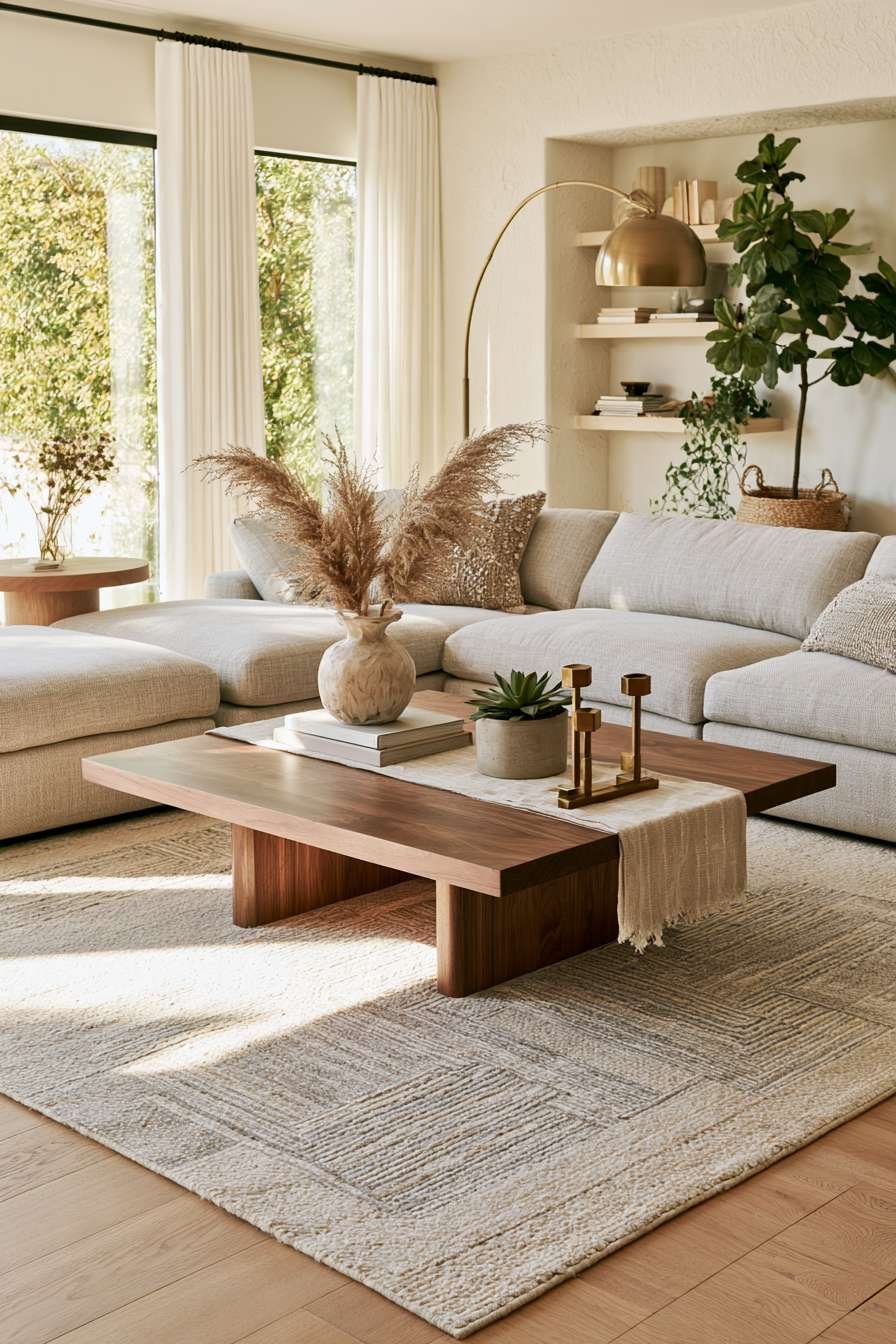
Spatial considerations affect styling choices significantly. Large center tables accommodate abundant layered arrangements. Small tables require restrained minimal approaches. Height variation through stacked books, tall vases, and sculptural elements creates visual interest within any size constraint.
Functional practicality balances aesthetic appeal throughout. Trays organize smaller items while maintaining accessibility. Arrangements allow space for beverages or remote controls. Beautiful spaces must serve daily needs without constant rearrangement. Successful designs integrate storage and function seamlessly.
Style versatility emerges from understanding core principles rather than following trends. Traditional symmetry suits formal spaces. Organic asymmetry fits casual environments. Transitional approaches bridge multiple aesthetics. Recognizing your personal style guides confident choices.
Conclusion
These thirty center table styling concepts demonstrate that thoughtful arrangement transforms ordinary coffee tables into focal points. The key takeaways include balancing function with aesthetics, choosing quality materials over trendy alternatives, and understanding how lighting enhances every display. Personal style expression matters more than following rigid rules.
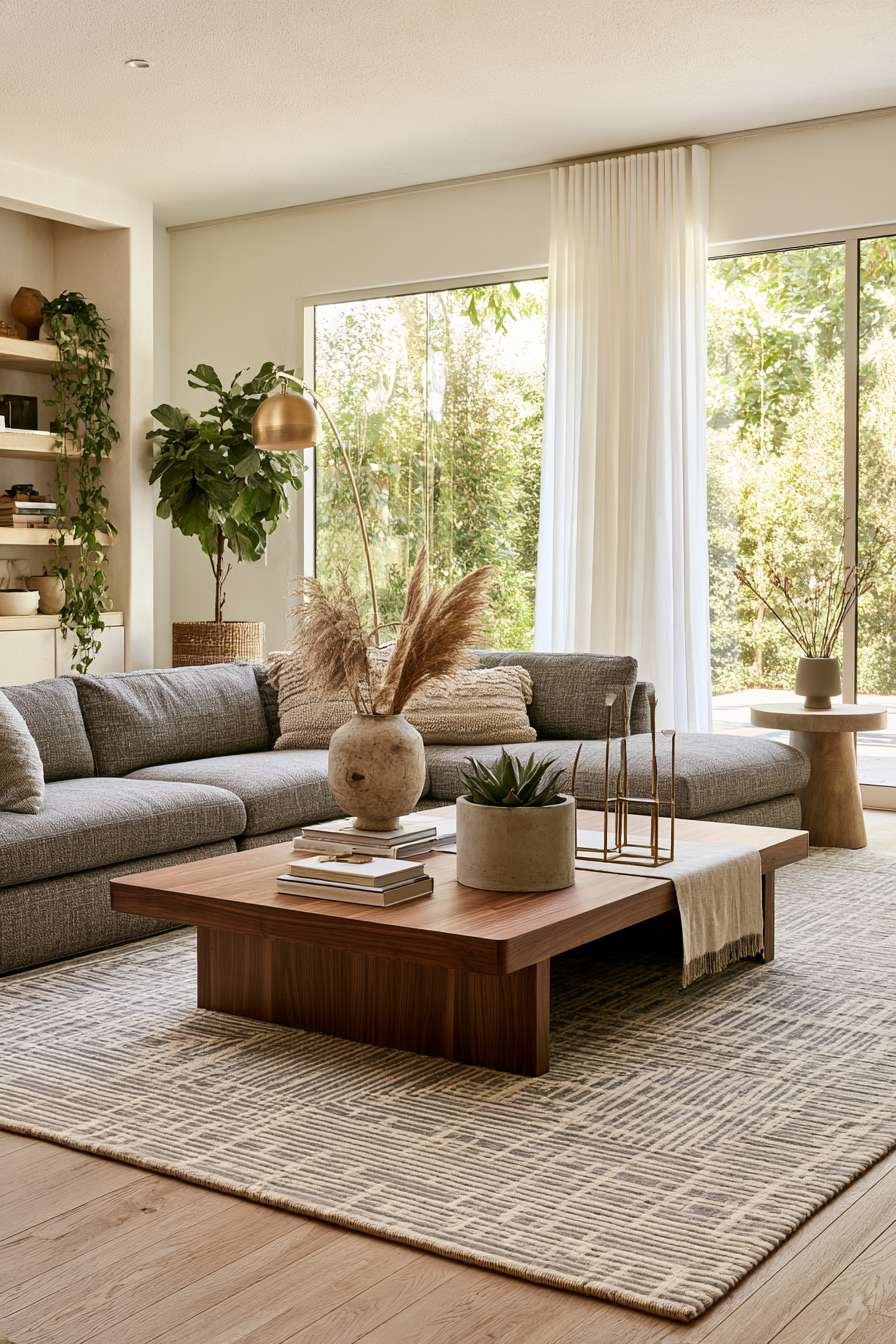
Successful center table decor reflects your unique personality while maintaining practical functionality. Start with one strong focal element that speaks to you. Build around that piece with complementary items that vary in height and texture. Remember that less often creates more impact than cluttered abundance.
Experiment with these ideas by adapting concepts to your existing furniture and decor. Change seasonal elements to keep arrangements fresh throughout the year. Your center table awaits transformation through thoughtful styling and creative expression.