Creating a nursery is one of the most heartfelt projects a parent will ever undertake. It’s a space where practicality meets pure imagination, where every soft texture, gentle color, and playful detail comes together to craft a sanctuary that nurtures both rest and wonder. A well-designed nursery does more than simply house a crib; it sets the emotional tone for countless quiet mornings, midnight feedings, and the everyday magic of watching a child grow.

Whimsical nursery design draws on a rich palette of inspiration, from celestial motifs and woodland creatures to soft pastel rainbows and dreamy canopy beds. Each approach offers its own personality, whether you’re drawn to the earthy warmth of natural materials like rattan and oak, the soft romance of sheer drapery and fairy lights, or the playful charm of hand-painted murals and storybook details. The beauty of these themes lies in their versatility; they can be mixed, layered, or used as standalone inspiration to create a room that feels entirely unique to your family.

In this guide, we’ll explore twenty-one distinct nursery concepts, each one balancing aesthetic beauty with everyday function. From cozy reading nooks to celestial ceiling details, these ideas are designed to spark your creativity while remaining achievable for real homes and real budgets. Let’s dive into the dreamy, detailed world of whimsical nursery design.
1. Cloud Mural Dreamscape with Rattan Star Mobile
There’s something inherently soothing about a hand-painted cloud mural drifting across a nursery wall in soft dove grey and white. This design choice transforms a simple wall into an immersive sky, evoking calm and wonder the moment you step into the room. Positioned above a classic white spindle crib, the mural becomes the visual anchor of the entire space, drawing the eye upward into a gentle, dreamlike atmosphere.

Above the crib, a hanging rattan star mobile catches the afternoon light beautifully, casting delicate shadows that shift throughout the day. The natural texture of rattan adds warmth against the cool tones of the mural, creating a balanced interplay between softness and structure. Nearby, a pastel yellow accent wall behind a vintage-style rocking chair injects cheerful energy, ensuring the room doesn’t feel overly muted or monochromatic.

Sheer linen curtains play an essential role here, diffusing natural daylight into a soft, even glow that flatters every surface in the room. Beneath it all, a plush cream rug with subtle texture invites bare feet and quiet playtime, grounding the ethereal ceiling and wall details with something tactile and comforting. The overall mood is one of gentle serenity, perfect for both daytime play and nighttime calm.
Key Design Tips:
- Use a soft, matte paint finish for cloud murals to enhance the dreamy, diffused effect
- Pair rattan or woven elements with painted surfaces to balance texture and color
- Choose an accent wall color that complements rather than competes with the mural
- Layer natural fiber rugs for warmth underfoot without overwhelming the palette
- Position the mobile within safe distance of the crib per current safety guidelines
2. Whimsical Reading Corner with Blush Canopy Tent
A dedicated reading corner transforms a nursery from a place of sleep into a space of early storytelling and bonding. This design centers on a small canopy tent in blush pink cotton, positioned thoughtfully near a sunlit window to maximize natural light during story time. The soft fabric drapes invitingly, creating a cozy enclosure that feels like a secret hideaway within the larger room.

Beneath the canopy, a low bookshelf crafted from natural birch wood displays colorful picture books and plush toys at child height, encouraging independence and curiosity from an early age. The light birch tones complement the blush pink fabric beautifully, offering a neutral, natural counterpoint to the more playful textile elements. This thoughtful pairing of materials demonstrates how Scandinavian-inspired wood tones can soften even the most whimsical color palettes.

A braided jute rug grounds the entire seating area, its natural fibers and earthy tone adding grounding texture beneath the lighter elements above. A faux fur cushion introduces tactile softness, perfect for little ones learning to sit and explore books independently. Captured in golden hour light, this corner exemplifies how a small, intentional nook can carry as much design weight as an entire room.
Key Design Tips:
- Position reading nooks near natural light sources for both ambiance and function
- Keep bookshelves at child height to encourage early literacy and independence
- Mix natural wood tones with soft textiles for a balanced, layered look
- Use jute or sisal rugs for durability in high-traffic play areas
- Rotate books and toys seasonally to keep the space feeling fresh
3. Sage Green Gallery Wall with Woven Wall Hanging
Gallery walls bring personality and storytelling into a nursery, and this design uses a curated collection of whimsical animal illustrations in mismatched wooden frames to create visual interest above a sage green dresser. The varied frame styles add an eclectic, collected-over-time feel, while the cohesive color palette keeps the arrangement from feeling chaotic. Brass cup pulls on the dresser introduce a subtle metallic accent that elevates the overall composition.

The woven cotton wall hanging with tassel details softens the corner, adding textural contrast against the more structured gallery arrangement. This kind of fiber art has become a beloved staple in modern nursery design, offering handmade charm without overwhelming the space. The interplay between flat, framed illustrations and dimensional, tactile textiles creates a layered visual experience that rewards closer inspection.

Natural light filtering through a nearby window casts soft shadows across textured wallpaper featuring a subtle botanical print, adding yet another layer of pattern without competing for attention. The overall effect is sophisticated yet playful, proving that whimsical nursery design doesn’t have to mean overtly childish. This approach works particularly well for parents seeking a timeless, gender-neutral palette that can evolve as the child grows.
Key Design Tips:
- Mix frame styles and sizes for an organic, collected gallery wall effect
- Choose botanical or subtle-pattern wallpaper to add depth without overwhelming
- Use brass or warm metal hardware to elevate furniture pieces
- Incorporate woven textiles for tactile contrast against framed artwork
- Keep gallery wall color palettes cohesive even when frame styles vary
4. Celestial Constellation Ceiling with Star Garland
For parents drawn to celestial themes, this design elevates the classic moon-and-stars motif into something genuinely sophisticated. A soft fabric star-and-moon garland strings gracefully above a white crib fitted with a breathable mesh bumper, prioritizing both style and safety. The garland’s soft, handmade quality keeps the celestial theme from feeling overly literal or juvenile.

The real showstopper here is the dusty blue walls featuring a hand-stenciled constellation pattern rendered in muted gold. This combination of cool blue and warm metallic creates a sophisticated, twilight-sky effect that feels both magical and refined. Hand-stenciling allows for customization, meaning parents can map real constellations or simply create an organic, scattered pattern that feels authentic to the night sky.

A sheepskin rug adds luxurious tactile warmth atop light oak flooring, ensuring the cool color palette doesn’t feel cold or sterile underfoot. Soft diffused daylight streaming through gauzy curtains illuminates the constellation details beautifully during the day, while the same pattern takes on a more mysterious quality come evening. This room exemplifies how a single cohesive theme, executed with restraint and quality materials, can create maximum visual impact.
Key Design Tips:
- Use metallic stencils sparingly to add shimmer without overwhelming the wall
- Choose breathable, certified-safe bedding and bumpers for crib safety
- Layer sheepskin or faux fur rugs for warmth against cooler color palettes
- Map real constellations for a personalized, meaningful ceiling or wall detail
- Select gauzy, lightweight curtains to maintain airy, diffused lighting
5. Mint Gingham Window Seat with Hidden Storage
Built-in window seats are among the most practical and charming additions to any nursery, and this design showcases a custom cushion in mint green gingham fabric nestled into a sunlit bay window. The classic gingham print adds a touch of vintage nostalgia while remaining fresh and gender-neutral, making it a versatile choice for any nursery aesthetic.

Beneath the seat, woven storage baskets tuck neatly away, offering practical organization for toys, blankets, and seasonal items without sacrificing visual appeal. This kind of multi-functional furniture is essential in nursery design, where space is often at a premium and every element must work as hard as it looks beautiful. The baskets’ natural texture also softens the otherwise crisp lines of the built-in millwork.
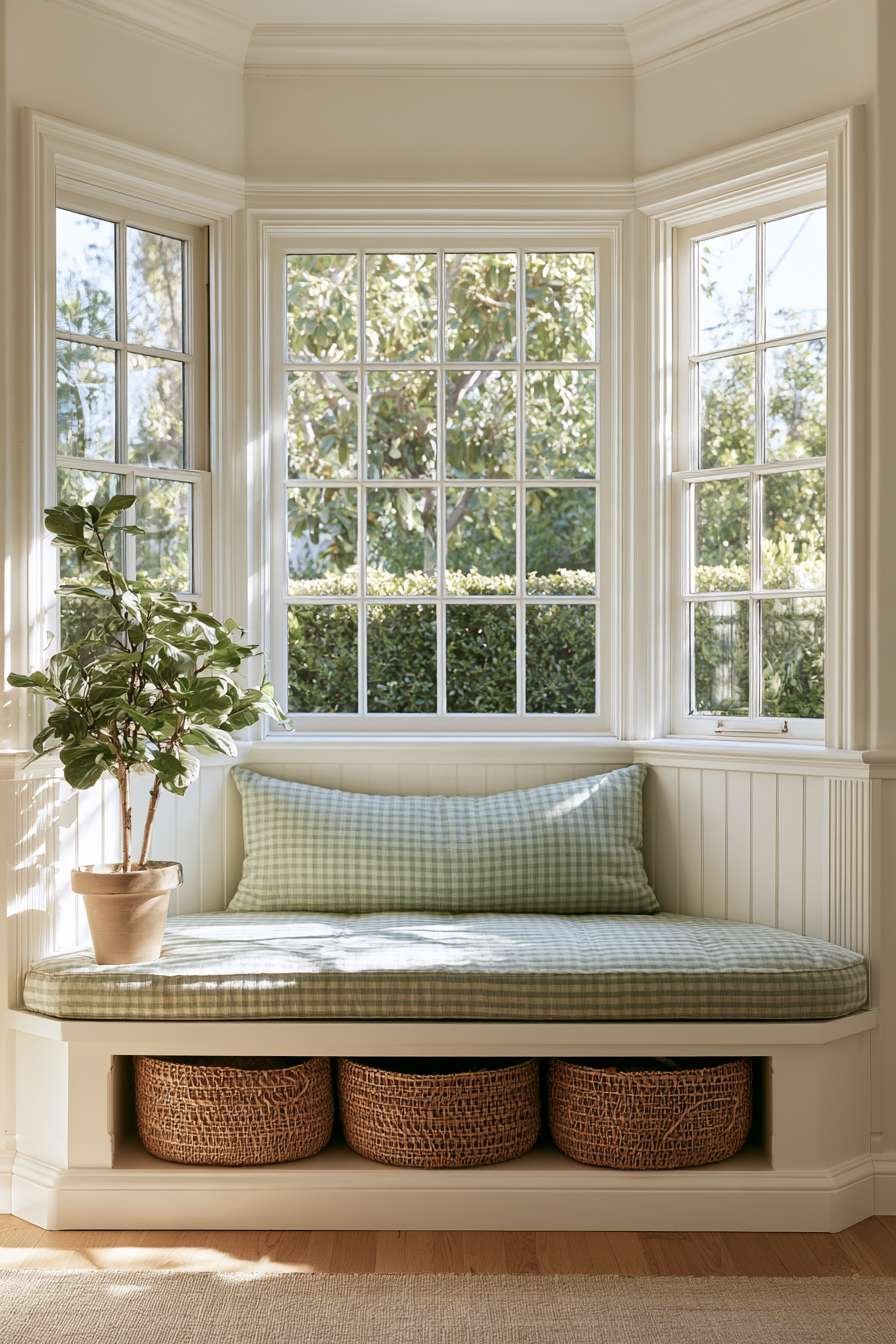
A small potted ficus introduces a touch of living greenery against the soft white wainscoting, bringing organic life into the space and softening the room’s architectural details. The wainscoting itself adds classic, timeless texture to the walls, a detail that will remain stylish long after the nursery transitions into a toddler room. Captured in natural light, this nook beautifully balances function and whimsy.
Key Design Tips:
- Build window seats with hidden storage to maximize small nursery footprints
- Choose classic patterns like gingham for timeless, gender-neutral appeal
- Use wainscoting or board-and-batten detailing for lasting architectural charm
- Add real or faux greenery to soften hard architectural lines
- Select cushion fabrics that are easy to clean and durable over time
6. Mushroom Nightlight Glow with Bouclé Glider Chair
Soft, ambient lighting plays a crucial role in nursery design, and this concept centers on a charming mushroom-shaped nightlight resting on a round wooden side table beside a glider chair upholstered in cream bouclé fabric. The nightlight’s whimsical silhouette adds personality without being overtly thematic, making it a versatile accent piece that suits nearly any nursery style.
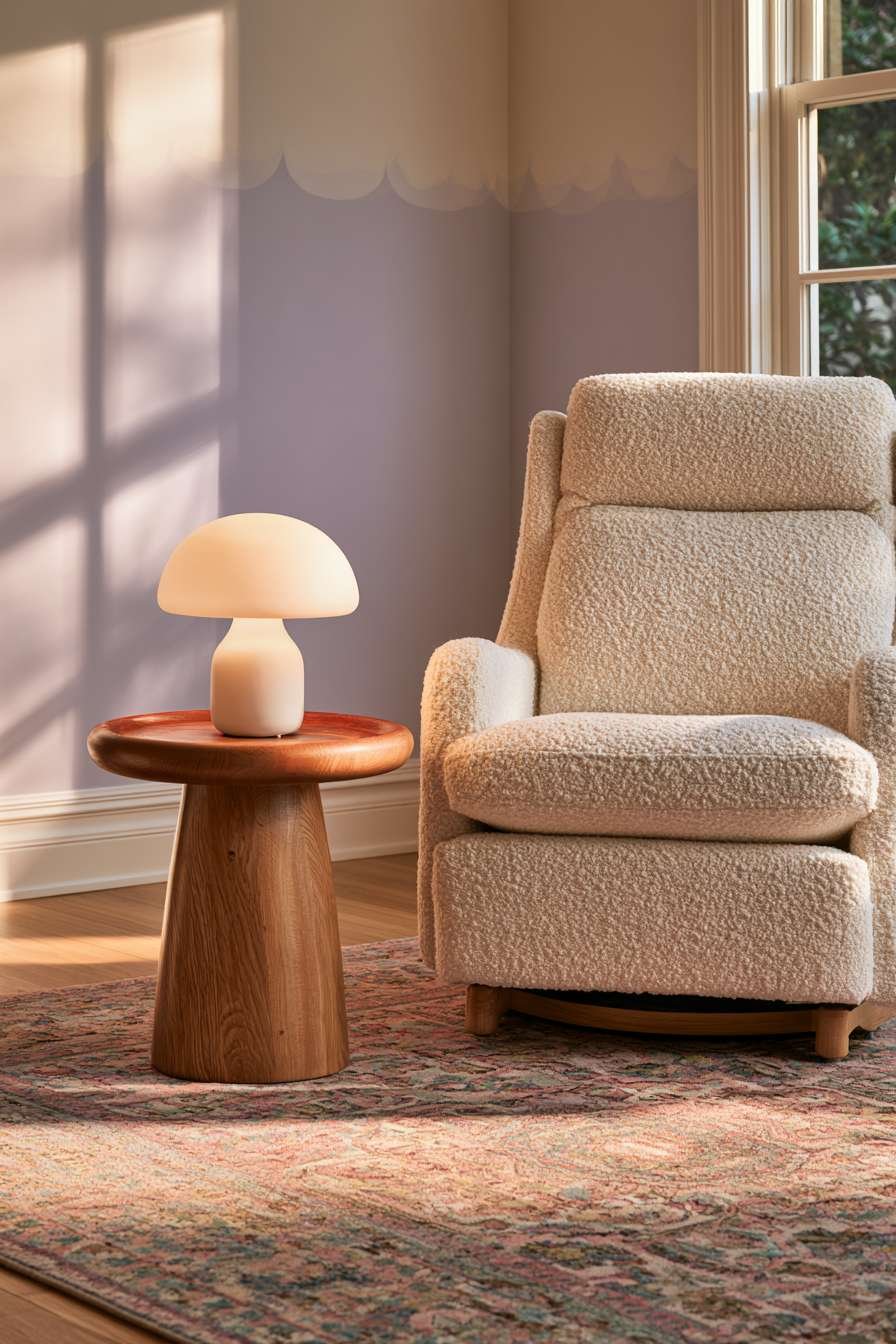
The bouclé fabric on the glider chair has become a beloved choice in modern nursery and nursing chair design, prized for its tactile, nubby texture and cozy visual warmth. This material choice elevates what could be a purely functional piece into a genuine design statement, proving that practical nursing furniture doesn’t have to sacrifice style. Pale lavender walls with subtle scalloped trim add a layer of playful texture without leaning into overly saccharine territory.

A patterned area rug in soft pastel hues anchors the seating area, tying together the lavender walls, cream upholstery, and warm wood tones into a cohesive palette. The interplay of soft shadows and golden hour lighting in this space highlights just how much warmth a few well-chosen materials can bring to a nursery. This design proves that comfort-focused furniture, like a quality glider, can be the foundation for an entire room’s aesthetic direction.
Key Design Tips:
- Invest in a quality glider or rocking chair as a long-term nursing and bonding piece
- Choose bouclé or textured fabrics for tactile warmth and visual interest
- Use scalloped trim or molding details to add subtle architectural whimsy
- Select nightlights with soft, warm-toned bulbs for nighttime feedings
- Layer patterned rugs to unify wall color with furniture upholstery
7. Pastel Toy Display with Handmade Texture Details
Open shelving has become a favorite nursery design strategy, allowing parents to display pastel-colored wooden toys, ceramic animal figurines, and decorative accents as functional art. This particular arrangement includes a small disco-ball-style hanging prism that catches and scatters light throughout the day, adding an unexpected touch of magic to an otherwise classic shelving display.

The shelves themselves are crafted from whitewashed pine, mounted against a soft blush pink wall that provides a gentle, romantic backdrop for the displayed items. Whitewashing the pine allows the natural wood grain to remain visible while lightening the overall tone, a technique that works beautifully in nurseries seeking a soft, airy aesthetic. This approach to shelving also encourages a curated, intentional approach to toy storage rather than cluttered bins.

Natural window light plays a starring role in this design, highlighting the varied textures and gentle imperfections inherent in handmade decor pieces. Wooden toys with visible grain, ceramics with slight variations, and woven baskets all benefit from soft, directional daylight that emphasizes their artisanal qualities. This room demonstrates how thoughtful toy curation can double as wall decor, reducing clutter while adding personality.
Key Design Tips:
- Use open shelving to curate and display toys as intentional decor
- Mix materials like wood, ceramic, and glass for visual variety on shelves
- Choose whitewashed or light wood finishes for an airy, soft aesthetic
- Incorporate light-catching elements like prisms for subtle daytime magic
- Edit toy displays regularly to maintain a curated, uncluttered look
8. Vintage Hot Air Balloon Mobile with Patchwork Quilt
Few motifs capture childhood whimsy quite like the hot air balloon, and this design uses a vintage-inspired mobile suspended gracefully above a white crib. The mobile’s gentle movement and nostalgic silhouette add a sense of adventure and storytelling to the nursery, evoking classic children’s book illustrations without feeling dated or overly themed.

Beneath the mobile, a quilted patchwork blanket in muted rainbow tones drapes across the crib, introducing soft color variation that complements rather than competes with the room’s more neutral backdrop. This kind of heirloom-quality textile often becomes a cherished keepsake, carrying sentimental value well beyond the nursery years. The patchwork technique also allows for personalization, incorporating fabric scraps with special meaning.

Soft grey walls feature a single oversized cloud decal, a minimalist gesture that reinforces the airy, sky-bound theme without overwhelming the space with excessive pattern or color. A round braided rug in cream and dusty rose sits atop light hardwood flooring, adding a soft, circular counterpoint to the room’s more linear architectural lines. This thoughtfully restrained palette allows the patchwork quilt and balloon mobile to remain the visual focal points.
Key Design Tips:
- Choose mobiles with gentle, slow movement to avoid overstimulation
- Use patchwork or quilted textiles to add color without overwhelming the palette
- Limit wall decals to one or two statement pieces for maximum impact
- Select round rugs to soften the geometry of rectangular nursery furniture
- Incorporate heirloom or handmade textiles for sentimental, lasting value
9. Sheer Canopy Bed with Fairy Light Accents
Romantic and ethereal, this nursery concept centers on a canopy bed frame draped in sheer ivory fabric, with delicate fairy lights woven through the drapery for a soft, magical glow. This design choice transforms the crib into a true focal point, evoking the feeling of a storybook bedroom fit for royalty. The sheer fabric maintains visibility and airflow while still creating a sense of enclosed, cozy intimacy.

A pale pink accent wall behind the canopy features a subtle floral stencil pattern, adding gentle dimension without overwhelming the soft, romantic palette. The floral motif echoes classic nursery design while feeling fresh and contemporary thanks to its restrained, tonal execution. This kind of subtle pattern layering is a hallmark of sophisticated whimsical design, where details reward closer attention rather than shouting for it.

Nearby, a vintage wooden rocking horse sits atop a soft shag rug, introducing a classic toy as sculptural decor. The rocking horse’s worn, characterful finish adds warmth and a sense of history to the space, particularly when paired with the more delicate, ethereal canopy details. Captured in golden hour light, this room embodies the dreamy, romantic end of the whimsical nursery spectrum.
Key Design Tips:
- Use battery-operated, low-heat fairy lights for safe ambient nursery lighting
- Choose sheer fabrics for canopies to maintain airflow and visibility
- Layer subtle stencil patterns for dimension without visual overload
- Incorporate vintage furniture pieces as character-rich decorative accents
- Select shag or plush rugs to add softness beneath statement furniture
10. Sage Scalloped Changing Station with Butcher Block Top
Practicality meets charm in this changing station design, featuring a sturdy butcher block wood top that offers durability and warmth in equal measure. Beneath the station, woven storage bins in mixed pastel tones keep diapering essentials organized and easily accessible, proving that functional nursery furniture can still be visually delightful. The natural wood grain of the butcher block adds organic texture against the softer woven baskets.

Overhead, a scalloped fabric valance in soft sage green softens the station’s practical lines, adding a layer of textile charm that ties the piece into the broader whimsical aesthetic. Scalloped details have surged in popularity within nursery design, offering a playful, rounded contrast to typically rectangular furniture silhouettes. This small design gesture demonstrates how even the most utilitarian nursery elements can receive thoughtful styling.
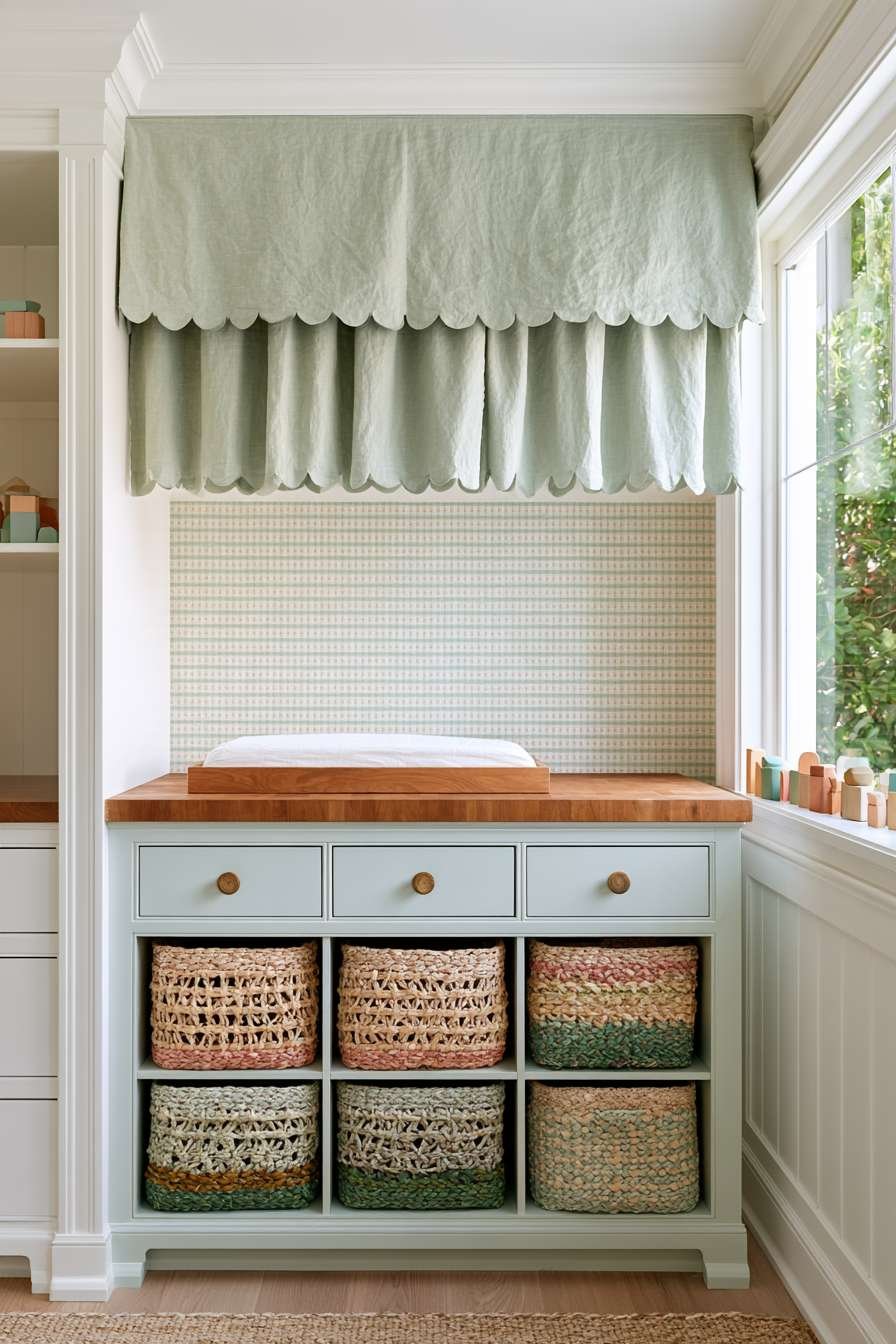
A row of hand-painted wooden alphabet blocks lines a nearby shelf, introducing both educational value and decorative charm. These classic toys serve double duty as both functional learning tools and nostalgic decor accents, their hand-painted detailing adding artisanal warmth. Natural daylight from a side window highlights the tactile materials throughout this station, from the wood grain to the woven bin textures.
Key Design Tips:
- Choose butcher block or sealed wood tops for durable, easy-to-clean changing surfaces
- Use color-coded woven bins to organize diapering and clothing essentials
- Add fabric valances or trim to soften utilitarian furniture pieces
- Incorporate classic wooden toys as both decor and early learning tools
- Position changing stations near natural light for practical visibility
11. Watercolor Forest Mural with Rattan Crib
Woodland themes bring a sense of gentle adventure into nursery design, and this concept showcases a hand-painted wall mural featuring whimsical foxes and owls rendered in soft watercolor tones against a cream backdrop. The watercolor technique lends the mural a dreamy, slightly abstracted quality that feels artistic rather than cartoonish, making it suitable for a sophisticated, design-forward nursery.

Centered beneath the mural, a natural rattan crib introduces organic texture that beautifully complements the woodland theme. Rattan furniture has become increasingly popular in nursery design for its lightweight construction, breathability, and inherently warm, natural aesthetic. Paired with a faux sheepskin throw, the crib area achieves a layered, textural richness that invites touch as much as sight.

A small woven pendant light fixture adds further texture overhead, its natural fiber construction echoing the rattan crib below while introducing a sculptural element to the ceiling plane. This kind of cohesive material storytelling, where natural fibers repeat throughout the room, creates a sense of intentional, considered design. Soft natural lighting captured throughout the space emphasizes the mural’s painterly quality and the furniture’s organic textures.
Key Design Tips:
- Choose watercolor or hand-painted murals for an artistic, non-juvenile woodland theme
- Pair rattan furniture with soft textiles to balance structure and comfort
- Repeat natural fiber materials throughout lighting and furniture for cohesion
- Select muted, earthy color palettes to complement woodland motifs
- Use pendant lighting to add textural interest to ceiling sightlines
12. Dotted Swiss Reading Tent in Peach Tones
This nursery design centers on a dreamy reading tent crafted from dotted Swiss cotton fabric in soft peach tones, creating an intimate, enclosed space within the larger room. Set in a sunlit corner atop whitewashed wood flooring, the tent offers a private retreat for quiet moments, storytime, and imaginative play as the child grows older. The dotted texture of the fabric adds subtle pattern without overwhelming the soft color palette.

A small stack of children’s books rests atop a round rattan stool nearby, creating an inviting, ready-to-use vignette that encourages early reading habits. This styling choice demonstrates how small, intentional details can transform a decorative tent into a genuinely functional space. The rattan stool’s natural texture also helps ground the soft, airy fabric of the tent itself.
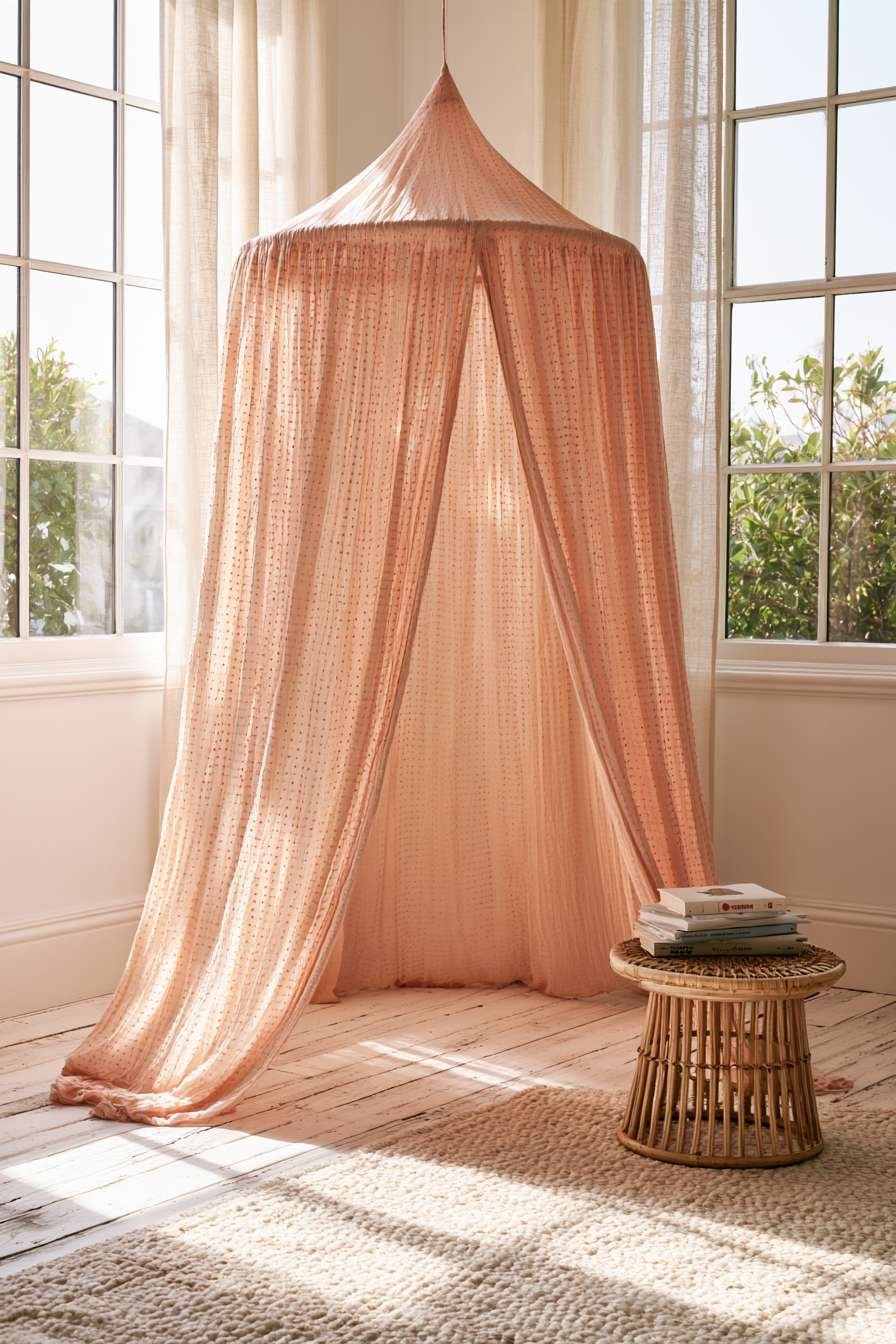
Sheer curtains filter golden hour light across the textured rug below, creating a warm, glowing atmosphere that enhances the tent’s cozy, enclosed feeling. This interplay of soft fabric, natural light, and warm flooring tones exemplifies the kind of achievable, livable styling that makes whimsical nursery design so appealing to real families. The peach and cream palette remains soft and gender-neutral while still feeling distinctly warm and inviting.
Key Design Tips:
- Choose lightweight, breathable fabrics for reading tents and play structures
- Position tents in naturally sunlit corners to maximize daytime use
- Style tents with books and stools to encourage genuine, everyday use
- Select dotted or subtly patterned fabrics for texture without visual overload
- Keep surrounding flooring and rugs neutral to let the tent stand out
13. Felted Wool Cloud Mobile with Cane-Backed Glider
Handcrafted details elevate this nursery design, beginning with a mobile of hand-felted wool clouds and raindrops suspended above a natural wood crib that showcases beautiful visible grain texture. The felted wool technique gives the clouds a soft, dimensional quality that catches light differently than printed or painted alternatives, adding genuine artisanal charm to the nursery’s focal point.

Soft butter-yellow walls feature a scalloped border in crisp white, a classic detail that has graced nursery walls for generations while still feeling fresh in this updated context. This timeless color combination of soft yellow and white remains one of the most universally beloved palettes for gender-neutral nursery design, offering warmth without leaning overly bright or saccharine.
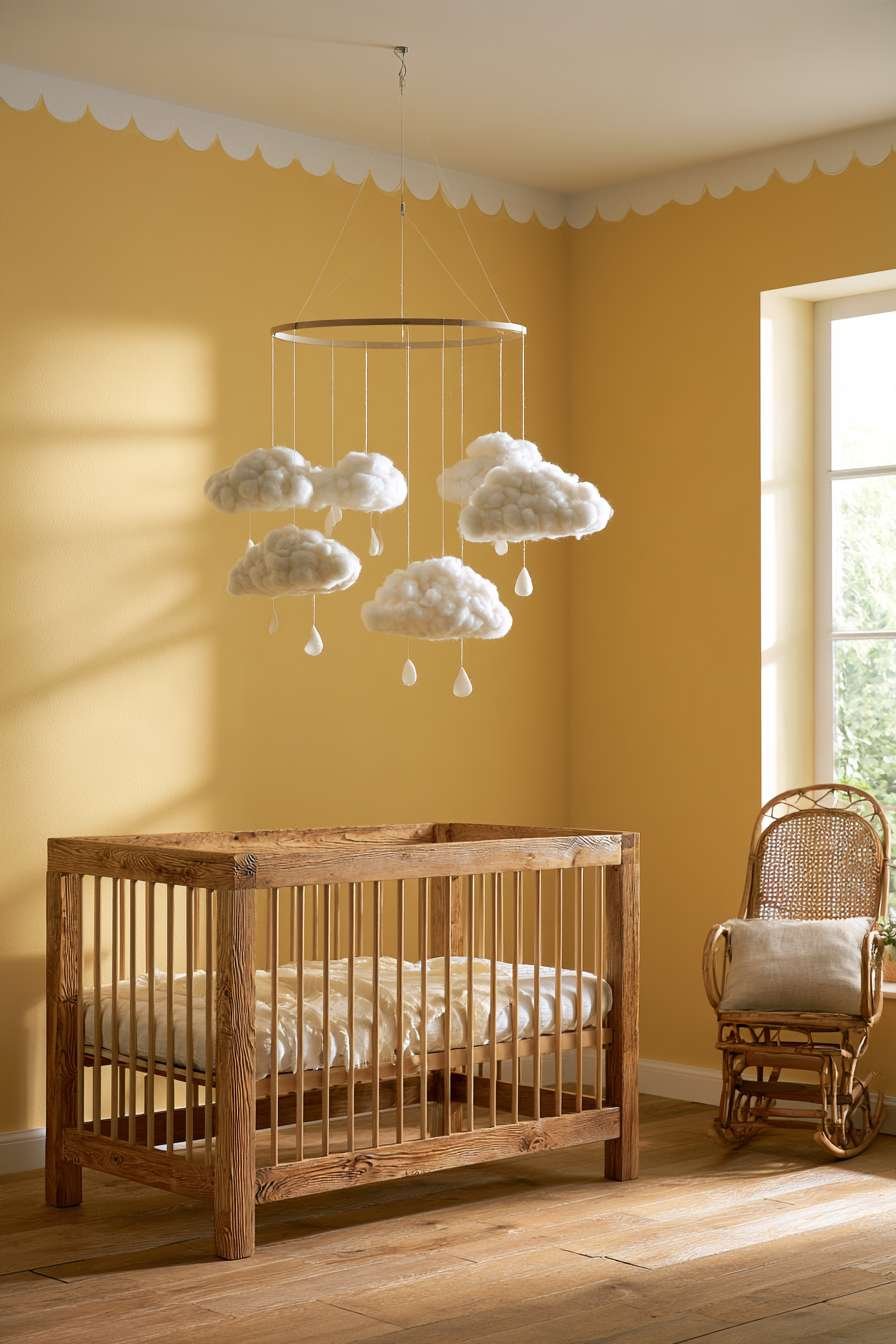
A vintage cane-backed glider chair sits in the corner, dressed with a simple linen cushion that allows the chair’s natural caning texture to remain the star. Cane furniture has experienced a significant resurgence in nursery and home design more broadly, prized for its breathability, lightweight construction, and timeless visual appeal. Natural window light throughout this space creates soft, diffused shadows that highlight every handcrafted texture, from the felted mobile to the woven cane.
Key Design Tips:
- Incorporate felted or fiber-art mobiles for dimensional, artisanal texture
- Choose butter-yellow and white palettes for timeless, gender-neutral warmth
- Select cane or rattan furniture for breathable, lightweight nursery seating
- Keep upholstery simple on textured furniture to let materials shine
- Display visible wood grain on cribs to add natural, organic warmth
14. Built-In Window Bench with Floral Floating Shelves
This design showcases a built-in window bench with hidden storage, upholstered in a small-scale floral print featuring dusty rose and sage tones. Built-in furniture maximizes functionality in nurseries, where storage is often at a premium, while the custom upholstery ensures the piece feels integrated and intentional rather than an afterthought. The floral print adds gentle pattern without overwhelming the room’s broader palette.

Above the bench, floating shelves display an assortment of soft plush toys alongside a delicate pom-pom garland, creating a curated vignette that balances function and whimsy. Floating shelves have become a nursery design staple for their ability to display decor and toys without consuming valuable floor space, an important consideration in smaller nurseries or shared rooms.

Natural light pours through gauzy white curtains, highlighting the rich textures of the floral upholstery and the soft pom-pom details above. This interplay of light and texture demonstrates how even relatively small design elements, like a garland or throw pillow, contribute meaningfully to a room’s overall sensory experience. The combination of built-in storage and decorative styling makes this a particularly practical choice for growing families.
Key Design Tips:
- Invest in built-in storage benches to maximize function in compact nurseries
- Choose small-scale floral prints for pattern that won’t overwhelm young eyes
- Use floating shelves to display decor without sacrificing floor space
- Add garlands or soft trim details for low-cost, high-impact styling
- Select gauzy curtains to maintain soft, diffused natural lighting
15. Pastel Rainbow Arch with Minimalist Oak Crib
Minimalism meets whimsy in this design, which features a soft pastel rainbow arch decal applied directly to a white wall above a streamlined crib with natural oak slats. This approach proves that whimsical nursery design doesn’t require elaborate murals or heavy theming; a single, well-placed decorative element can carry an entire room’s personality. The rainbow motif remains a beloved, joyful symbol that works beautifully in gender-neutral spaces.
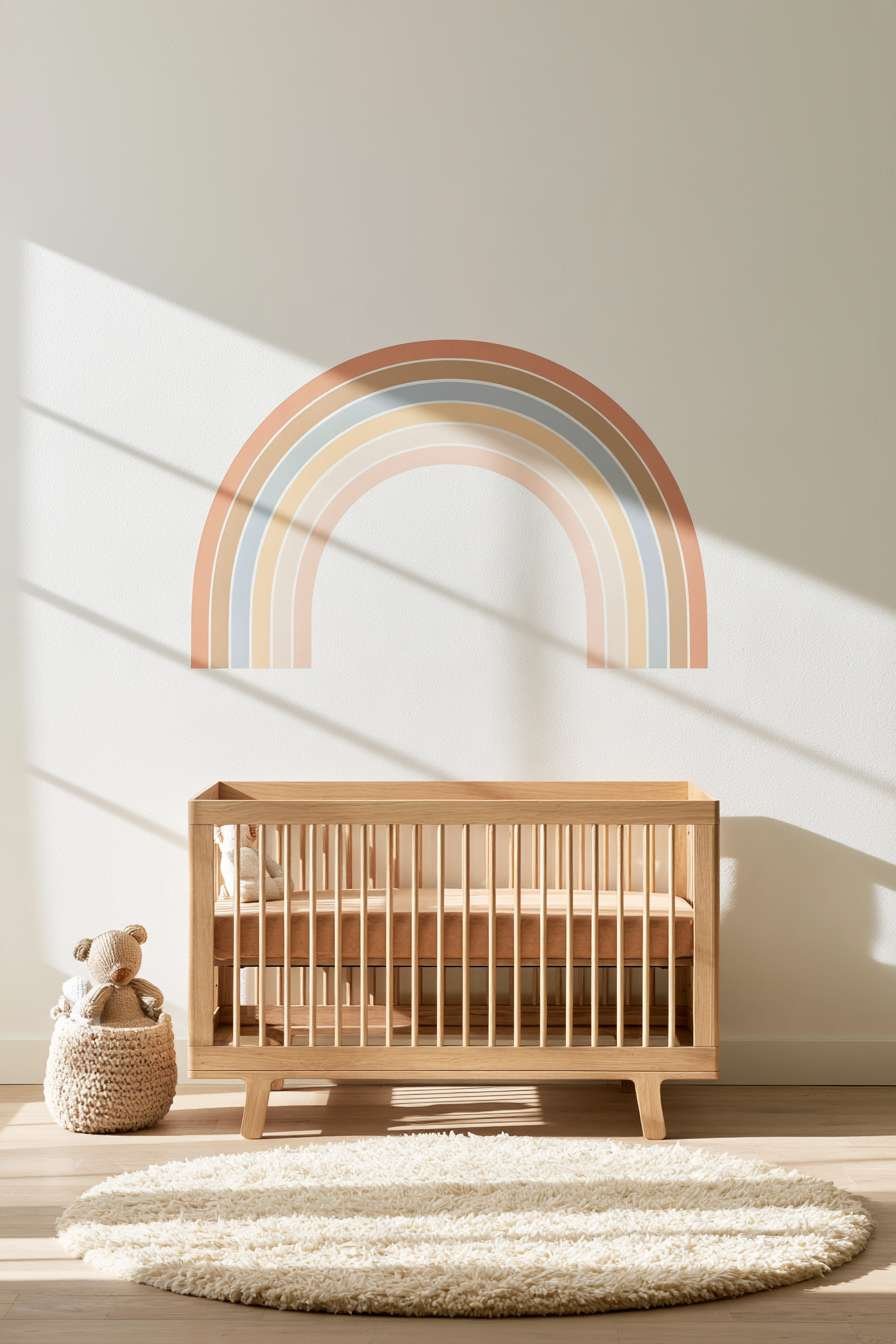
The crib’s minimalist oak construction keeps the furniture itself understated, allowing the rainbow decal to remain the room’s clear focal point. This kind of Scandinavian-influenced simplicity has grown increasingly popular in nursery design, favoring clean lines and natural materials over heavily ornamented furniture. The pairing demonstrates restraint as a design philosophy in itself.

A small woven basket filled with knitted toys sits beside a round shag rug in cream, introducing soft texture at floor level to balance the cleaner lines above. Diffused morning light creates gentle shadows across the textured wall surface, adding subtle dimension even in this pared-back, minimalist space. This room proves that simplicity and whimsy are far from mutually exclusive design philosophies.
Key Design Tips:
- Use a single statement decal or mural to anchor a minimalist nursery
- Choose natural oak or light wood cribs for understated, lasting style
- Balance clean furniture lines with soft, textured rugs and baskets
- Select pastel rainbow motifs for joyful, gender-neutral appeal
- Keep wall colors neutral to let decorative elements stand out clearly
16. Rattan Pom-Pom Chandelier with Board-and-Batten Walls
A statement lighting fixture can transform an entire nursery, and this design features a whimsical chandelier crafted from woven rattan and small fabric pom-poms, hanging centered above a soft grey area rug. This handcrafted lighting piece introduces texture and movement to the ceiling plane, an often-overlooked design opportunity in nursery spaces. The combination of structured rattan and playful pom-poms strikes a balance between sophistication and fun.

White board-and-batten wall paneling adds classic architectural charm to the lower portion of the walls, a detail borrowed from traditional New England design that has found enthusiastic adoption in modern nursery aesthetics. Above the paneling, a pale blue upper wall introduces soft color without overwhelming the room’s predominantly neutral, textural focus. This two-toned wall treatment adds dimension and visual interest even before furniture is considered.

A vintage wooden dresser doubles as a practical changing station, complete with woven bin storage that keeps the room organized without sacrificing style. This kind of multi-purpose furniture is essential in nursery planning, where pieces often need to serve multiple functions as the child grows. Soft natural lighting throughout this space highlights both the architectural paneling details and the handcrafted chandelier above.
Key Design Tips:
- Install board-and-batten paneling for classic, lasting architectural texture
- Choose statement light fixtures crafted from natural materials like rattan
- Select dressers that can double as changing stations for long-term value
- Use two-toned wall treatments to add dimension without excess pattern
- Layer grey or neutral rugs to ground colorful upper wall treatments
17. Canvas Teepee Nook with Stenciled Vine Wall
This cozy nook design centers on a small teepee tent crafted from natural canvas fabric, accented with playful pastel pom-pom trim along its seams. Set against a wall painted in soft sage green and featuring a hand-stenciled vine pattern, this corner creates an immersive, nature-inspired retreat within the nursery. The teepee’s structured silhouette offers a different visual rhythm than softer canopy or tent alternatives, appealing to families seeking a slightly more structured aesthetic.
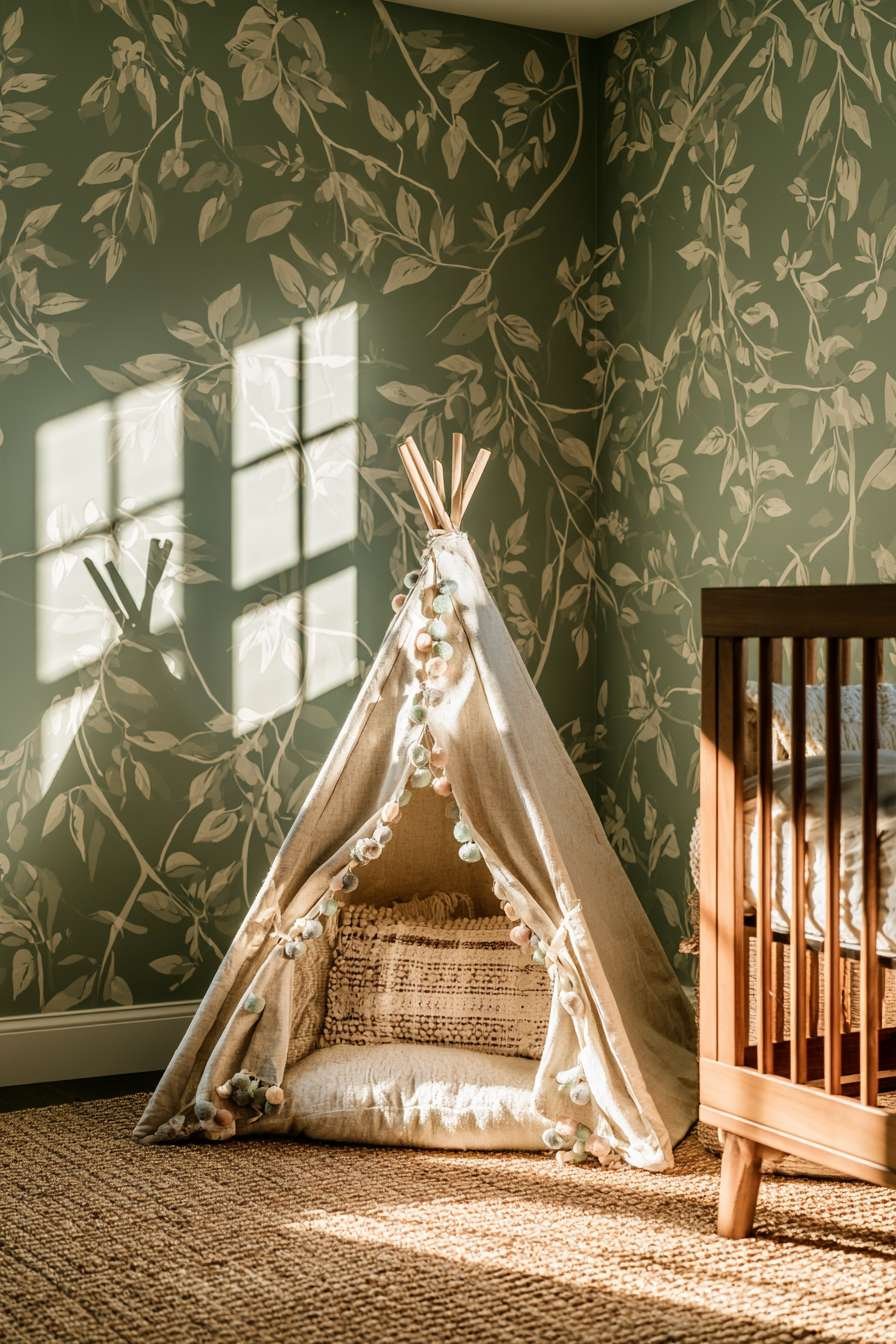
The hand-stenciled vine pattern climbing the sage green wall adds organic, botanical detail that reinforces the natural, earthy mood of the space. Stenciling allows for a level of customization and handcrafted charm that wallpaper often can’t match, particularly for budget-conscious nursery projects. This kind of botanical wall treatment has become increasingly popular as parents seek nature-inspired alternatives to more traditional nursery motifs.

A jute rug grounds the seating area beneath warm afternoon light, its natural fiber texture echoing the canvas teepee material above. This cohesive use of natural, earthy materials throughout the nook, from canvas to jute to hand-painted vines, creates a sense of intentional, grounded design. The overall effect is warm, inviting, and distinctly connected to nature, even within an indoor nursery setting.
Key Design Tips:
- Choose canvas teepees for a structured, durable play nook alternative
- Use hand-stenciling for customizable, budget-friendly botanical wall details
- Select sage green or earthy tones to reinforce nature-inspired themes
- Layer jute or sisal rugs for natural texture beneath play structures
- Add pom-pom or trim accents to soften structured canvas silhouettes
18. Butterfly Wallpaper Accent with Canopy-Draped Crib
Botanical and entomological motifs come together beautifully in this design, which features a whimsical butterfly and floral wallpaper rendered in soft watercolor pastels. Applied as an accent wall behind a white crib, this wallpaper choice introduces rich pattern and color without overwhelming the rest of the room, a key strategy in sophisticated nursery design. The watercolor execution keeps the butterflies and florals feeling artistic rather than overly literal.
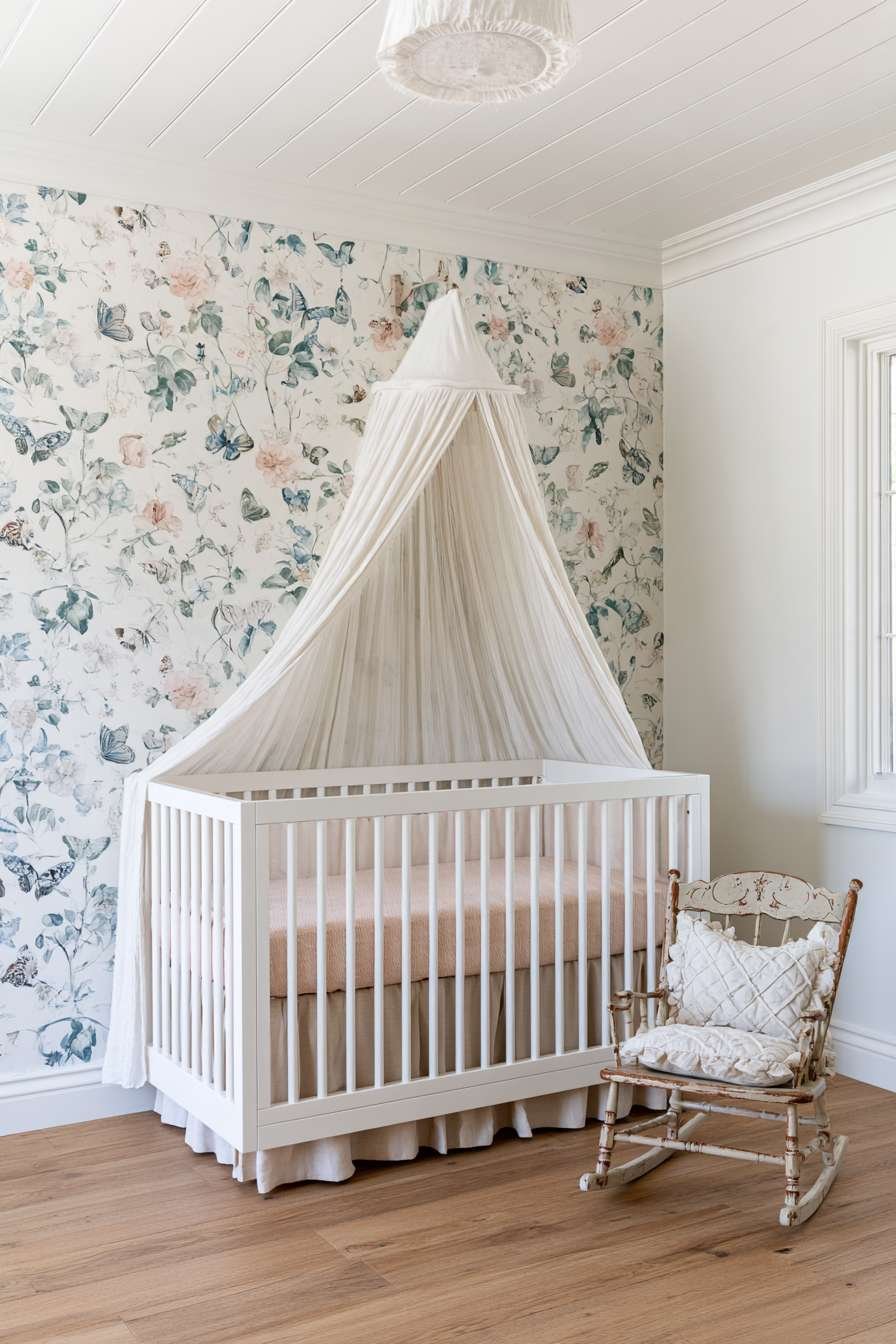
The crib itself features a delicate canopy drape, adding a layer of soft, romantic texture that complements the wallpaper’s gentle color palette. This pairing of patterned wallpaper and sheer draping creates depth and visual interest without requiring multiple competing focal points throughout the room. The canopy also adds a practical benefit, offering a sense of cozy enclosure for the crib itself.

Nearby, a small vintage rocking chair with a quilted cushion sits atop light oak flooring, introducing classic furniture silhouettes that balance the wallpaper’s more contemporary pattern. Natural daylight highlights the wallpaper’s subtle texture and printed detail throughout the day, ensuring the accent wall remains a dynamic focal point as lighting conditions shift. This room demonstrates how pattern, when used thoughtfully as an accent rather than throughout, can elevate an entire nursery.
Key Design Tips:
- Reserve bold wallpaper patterns for a single accent wall to avoid overwhelm
- Choose watercolor-style prints for artistic, sophisticated pattern execution
- Pair patterned walls with simple, sheer crib draping for balance
- Select vintage furniture pieces to ground contemporary wallpaper choices
- Use light flooring to keep patterned walls from feeling too heavy
19. Color-Coded Closet System with Hot Air Balloon Decal
Organization meets whimsy in this practical nursery design, which showcases a color-coded fabric bin system alongside open wire shelving designed for long-term functionality. A hanging rod positioned at child height encourages early independence in dressing, a thoughtful detail that supports the child’s development well beyond the nursery years. This kind of forward-thinking closet design ensures the space remains useful as the child grows into toddlerhood.

Soft white walls keep the closet area visually calm and uncluttered, allowing the color-coded bins to provide gentle, organized pops of pastel color. This approach to closet organization prioritizes both practicality and visual calm, avoiding the chaos that can often accompany nursery storage. A single whimsical wall decal of a hot air balloon adds a touch of playful charm without disrupting the space’s primarily functional purpose.

Natural light from a nearby window illuminates the organized, livable space, highlighting just how much thoughtful planning has gone into this seemingly simple closet area. This design serves as an important reminder that whimsical nursery design extends beyond decorative focal points into the practical, everyday spaces that parents interact with constantly. A well-organized closet can significantly reduce daily stress for new parents.
Key Design Tips:
- Install hanging rods at child height to support early dressing independence
- Use color-coded bins for intuitive, easy-to-maintain organization systems
- Choose open wire shelving for flexible, adjustable closet storage
- Limit decorative elements in closets to maintain visual calm and function
- Prioritize natural light access for practical, everyday closet visibility
20. Pressed Botanical Gallery with Bouclé Glider Chair
This sophisticated nursery design features a curated gallery of pressed botanical art, displayed in thin gold frames above a soft pink upholstered glider chair. The botanical prints introduce delicate, nature-inspired pattern in a refined, gallery-style presentation that feels more akin to fine art than typical nursery decor. The thin gold frames add a subtle metallic shimmer that elevates the entire arrangement.

The glider chair itself, upholstered in bouclé texture, continues the room’s commitment to tactile, sophisticated materials. This nubby, textured fabric has become a favorite among designers for its ability to add visual and physical interest without relying on bold color or pattern. The soft pink tone of the upholstery pairs beautifully with both the gold frame accents and the botanical artwork’s natural color palette.

A round wool rug in cream and blush sits beneath natural ash wood flooring, completing this room’s sophisticated, layered material palette. Soft diffused window light creates gentle highlights across both the textured fabric and the frame details throughout the day, ensuring this gallery-inspired space remains visually dynamic. This design proves that nursery decor can draw direct inspiration from fine art display conventions while remaining warm and family-friendly.
Key Design Tips:
- Display pressed botanical art for refined, gallery-style nursery decor
- Choose thin gold frames to add subtle metallic sophistication
- Select bouclé or textured upholstery for tactile, visually rich seating
- Pair soft pink tones with natural wood and wool for balanced warmth
- Use round rugs to soften the geometry of gallery wall arrangements
21. Macrame Swing Chair with Sunlit Window Views
Closing out our collection is one of the most distinctive whimsical nursery features: a ceiling-mounted swing chair crafted from natural macrame, suspended gracefully beside a sunlit window. This statement piece brings genuine movement and playfulness into the nursery, offering a unique spot for gentle rocking and bonding that goes beyond the traditional glider chair. The macrame’s intricate knotwork adds significant textural interest to the room.
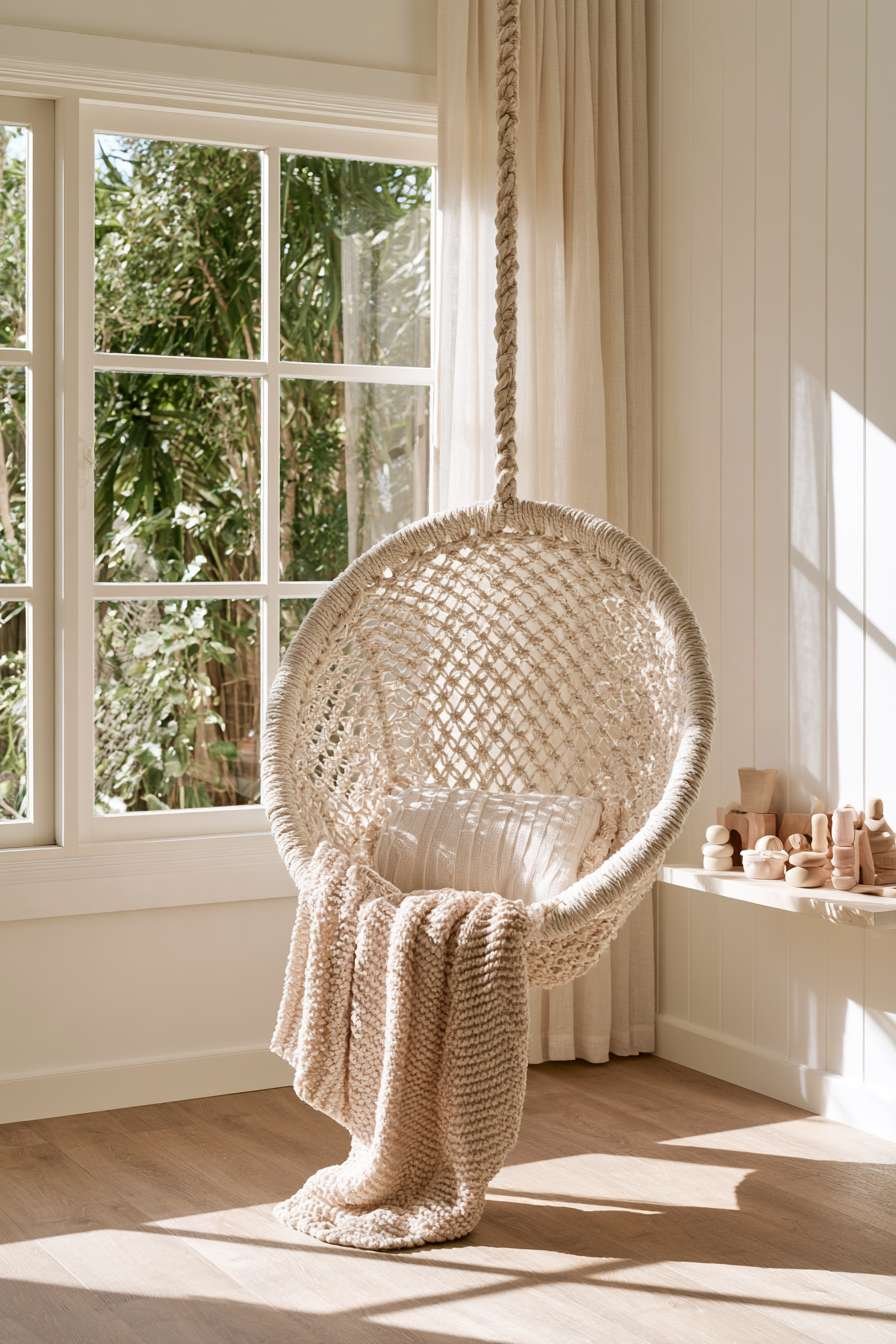
Sheer curtains filter soft light around the swing, creating a dreamy, sun-dappled atmosphere throughout the day. Nearby, a small shelf displays a curated collection of pastel wooden toys, while a soft knit blanket draped over the swing itself adds an extra layer of cozy, inviting texture. This combination of elements creates a genuinely magical corner that feels distinctly different from more traditional nursery seating arrangements.

Light oak flooring and soft white walls keep the overall space feeling airy and uncluttered, ensuring the macrame swing remains the room’s clear visual centerpiece without competing distractions. This restrained backdrop approach allows the swing’s intricate texture and gentle movement to take center stage. The combination of practical, livable styling with one truly distinctive statement piece exemplifies the best of whimsical nursery design.
Key Design Tips:
- Ensure ceiling-mounted swings are professionally installed and weight-rated
- Choose macrame or woven swings for textural, statement-making seating
- Keep surrounding walls and flooring neutral to highlight unique furniture
- Layer knit blankets and cushions for added comfort and visual softness
- Position swings near windows for natural light and a sense of openness
Designing a whimsical nursery is ultimately about striking a balance between dreamy imagination and everyday practicality. Whether you’re drawn to celestial ceilings, woodland murals, or the soft romance of a sheer canopy bed, the most successful nurseries layer texture, color, and natural materials with genuine function. Storage solutions, reading nooks, and changing stations deserve just as much design attention as statement mobiles and accent walls, ensuring the space truly serves your family’s daily life.

As you plan your own nursery, consider mixing elements from several of these twenty-one concepts rather than feeling tied to a single theme. A rattan light fixture might pair beautifully with a watercolor mural, or a bouclé glider might find its perfect home beneath a constellation ceiling. The most memorable nurseries reflect genuine personality and intention rather than rigid adherence to a single aesthetic formula. Above all, trust your instincts, embrace soft and natural materials, and create a space that feels as warm and welcoming as the new addition it’s designed to celebrate.