The washroom cabinet serves as the functional heart of any bathroom space. It provides essential storage while defining the room’s aesthetic character. A well-chosen cabinet transforms ordinary bathrooms into organized, beautiful retreats.

Selecting the perfect washroom cabinet involves balancing practical needs with design preferences. Storage capacity, material durability, and visual appeal must work together harmoniously. The right cabinet elevates daily routines while maintaining long-term functionality.
This comprehensive guide explores thirty distinct washroom cabinet designs. Each concept showcases unique materials, finishes, and organizational approaches. From modern minimalism to vintage charm, these designs inspire transformation for bathrooms of every size and style.
1. Modern Floating Cabinet with Brushed Gold Accents
The modern floating cabinet creates an illusion of spaciousness through wall-mounted installation. Matte white surfaces provide a clean canvas for daily life. Brushed gold hardware introduces subtle warmth without overwhelming the minimalist aesthetic. Soft-close drawers glide silently, adding luxury to everyday interactions.

Natural oak grain appears on interior shelving, creating visual interest when drawers open. This hidden detail rewards users with unexpected warmth. The white porcelain vessel sink sits atop the cabinet with sculptural presence. A waterfall faucet in matching gold finish completes the coordinated design story.
Morning light filters through frosted windows, casting gentle shadows across clean lines. The interplay of light and shadow emphasizes the cabinet’s geometric precision. Reflective surfaces multiply available light, making compact spaces feel generous. This design demonstrates that minimalism need not sacrifice warmth or personality.

The floating installation offers practical advantages beyond aesthetics. Floor space beneath remains accessible for easy cleaning. The visual lightness prevents small bathrooms from feeling cramped or heavy. Modern engineering ensures sturdy mounting despite the weightless appearance.
Key Design Tips:
- Choose wall-mounted cabinets to maximize floor space and create visual lightness
- Coordinate metal finishes between hardware and plumbing fixtures for cohesive design
- Incorporate natural wood tones in hidden areas for warmth without compromising minimalism
- Install soft-close mechanisms for quiet operation and extended hardware longevity
- Use vessel sinks to add sculptural interest while maintaining clean lines
2. Traditional Walnut Vanity with Marble Countertop
Rich walnut wood establishes immediate presence in traditional bathroom design. Raised panel doors showcase classic craftsmanship that transcends temporary trends. Antique brass knobs provide authentic period detail. The freestanding vanity stands confidently on its own merits.

Carrara marble countertop introduces cool grey veining against warm wood tones. This contrast creates visual balance and timeless elegance. Open shelving on one side displays rolled white towels with hotel-like precision. Woven baskets add texture while concealing less attractive necessities.
The large framed mirror above reflects craftsmanship details throughout the space. Crown molding caps the cabinet with architectural distinction. Decorative corbels provide structural support while adding ornamental interest. These traditional elements demonstrate attention to detail.

Natural daylight from adjacent windows highlights wood grain patterns beautifully. Traditional joinery techniques remain visible in dovetail corners and precise panel work. This cabinet rewards close inspection with evidence of quality construction. The design proves that traditional doesn’t mean outdated.
Key Design Tips:
- Select raised panel doors for authentic traditional character and visual depth
- Combine warm wood tones with cool stone countertops for balanced contrast
- Include open shelving to break up solid cabinet fronts and display towels
- Choose antique brass hardware for period-appropriate metallic warmth
- Add architectural details like crown molding and corbels for refined finish
3. Compact Vertical Storage Solution
Small bathrooms demand creative solutions that maximize every vertical inch. This floor-to-ceiling cabinet design answers space constraints with intelligent organization. Light grey lacquer finish reflects available light, preventing dark corners. The narrow footprint preserves precious floor area.

Stacked drawer units provide compartmentalized storage without wasted space. Chrome handles offer contemporary contrast against soft grey surfaces. Each drawer accommodates specific items from toiletries to cleaning supplies. Integrated LED strip lighting illuminates each shelf level automatically.
The vertical emphasis draws eyes upward, creating perceived height. This optical trick makes low-ceiling bathrooms feel more generous. The slim profile allows installation beside wall-mounted sinks. Detail-focused design demonstrates that small spaces can achieve big impact.

Organizational features include adjustable dividers and pull-out trays. These customizable elements adapt to changing storage needs over time. The cabinet proves that compact doesn’t require compromising functionality. Thoughtful planning transforms limitations into design opportunities.
Key Design Tips:
- Maximize vertical space in small bathrooms with floor-to-ceiling storage
- Choose light colors to reflect light and prevent cramped feelings
- Install LED lighting inside cabinets for visibility and ambiance
- Include adjustable organizers that adapt to changing needs
- Select narrow profiles that preserve walking space and accessibility
4. Rustic Reclaimed Barnwood Character
Reclaimed barnwood brings authentic history into contemporary bathroom design. Weathered textures tell stories of previous lives and purposes. Natural color variations range from silvered grey to honey brown. Each plank contributes unique character that cannot be manufactured.

The open-shelf configuration displays vintage glass apothecary jars with pride. Folded linen towels stack neatly on middle tiers. Potted succulents add living elements to the rustic composition. Black iron pipe brackets support shelves while reinforcing industrial farmhouse aesthetic.
A concrete vessel sink provides unexpected modern contrast against aged wood. Exposed plumbing becomes intentional design feature rather than hidden necessity. Oil-rubbed bronze fixtures complement both rustic wood and industrial concrete. This combination demonstrates successful material mixing.

Natural window light creates dramatic shadows that emphasize texture. The reclaimed wood’s authentic patina catches light differently throughout the day. Each viewing angle reveals new details in the weathered surface. This cabinet celebrates imperfection as beauty.
Key Design Tips:
- Source authentic reclaimed wood for genuine character and sustainability
- Embrace natural color variations rather than forcing uniform appearance
- Combine rustic wood with industrial metal elements for farmhouse appeal
- Display functional items like towels and jars as decorative elements
- Allow exposed plumbing to contribute to the overall aesthetic story
5. Contemporary Navy Blue High-Gloss Statement
Bold navy blue lacquer makes an unforgettable design statement. High-gloss finish creates mirror-like reflections that multiply light. Handleless push-to-open drawers maintain seamless surface continuity. The cabinet demonstrates that contemporary design embraces color fearlessly.

Built-in LED-lit mirror cabinet above provides illuminated grooming area. Touch-sensitive controls offer intuitive operation without visible switches. White quartz countertop creates striking contrast against saturated blue. The integrated undermount rectangular sink preserves clean horizontal lines.
Polished chrome faucet and accessories echo the mirror’s metallic frame. Recessed ceiling lighting creates subtle surface reflections. The glossy cabinet catches and plays with available light dynamically. This design transforms functional storage into sculptural presence.

The bold color choice requires confidence but rewards with personality. Navy blue reads as sophisticated rather than juvenile or trendy. The high-gloss finish demands regular maintenance but delivers dramatic impact. Contemporary design proves that bathrooms need not be neutral.
Key Design Tips:
- Choose bold cabinet colors to create focal points in neutral bathrooms
- Select high-gloss finishes to maximize light reflection in dim spaces
- Coordinate countertop color for strong contrast rather than monochrome matching
- Install touch-sensitive controls for clean surfaces without visible hardware
- Balance bold color with crisp white elements for sophisticated contrast
6. Scandinavian Pale Ash Minimalism
Pale ash wood embodies Scandinavian design principles perfectly. Natural finish showcases prominent grain patterns without artificial enhancement. The cabinet combines open cubbies with closed storage thoughtfully. Simple round wooden knobs maintain organic material continuity.

Woven rattan baskets fit precisely in open compartments. These natural fiber elements add textural warmth to minimal design. The baskets provide practical organization while remaining visually light. Scandinavian design proves that minimalism includes warmth.
A white ceramic drop-in sink partners with vintage-style cross-handle faucet. This combination honors traditional forms with contemporary simplification. Large windows flood the space with abundant natural light. The cabinet’s light wood tone glows warmly in Nordic sunshine.

Hygge philosophy influences every design decision toward comfort and coziness. Hidden storage maintains clutter-free surfaces that calm the mind. The design demonstrates that minimalism serves wellbeing rather than austerity. Scandinavian approach values quality over quantity consistently.
Key Design Tips:
- Select pale woods that maximize natural light reflection
- Combine open and closed storage for visual variety and practical function
- Use natural fiber baskets for warm texture in minimal schemes
- Incorporate vintage-inspired fixtures that honor traditional forms simply
- Prioritize natural light through generous windows and light finishes
7. Luxury Double-Sink Cherry Wood Vanity
Dark espresso stained cherry wood announces luxury without apology. Soft-close European hinges operate with whisper-quiet precision. Custom organization inserts transform drawers into perfectly fitted systems. This double-sink vanity accommodates couples without morning conflicts.

Pull-out hamper drawers hide laundry elegantly until needed. Electrical outlet drawer provides convenient access for styling tools. Divided organizer trays keep cosmetics and toiletries perfectly arranged. Polished granite countertop in absolute black creates dramatic sophistication.
Brushed nickel hardware and matching mirror frame complete refined coordination. Under-cabinet LED lighting illuminates interior organization systems. The cabinet’s impressive scale commands attention in master bathroom settings. Thoughtful functional details justify the luxury investment.

Wide-angle perspective reveals the cabinet’s comprehensive approach to storage. Every drawer and compartment serves specific purposes. The design demonstrates that true luxury means eliminating daily frustrations. Quality construction ensures decades of reliable performance.
Key Design Tips:
- Invest in soft-close mechanisms for long-term hardware durability and quiet operation
- Include specialized drawers for hampers and electrical styling tools
- Choose absolute black granite for dramatic contrast with dark wood
- Install under-cabinet lighting to showcase interior organization systems
- Design custom inserts for specific items rather than generic storage
8. Coastal Sage Green Shabby-Chic
Soft sage green paint with distressed finish evokes beachside cottages. White paint reveals itself beneath strategic wear points. This authentic shabby-chic character cannot be rushed or faked. Chicken wire inset panels provide vintage charm with transparent storage.

Bead board backing adds architectural texture behind displayed items. Vintage porcelain knobs contribute period-appropriate hardware. A hammered copper vessel sink introduces warm metallic contrast. Oil-rubbed bronze faucet complements both green paint and copper patina.
Decorative rope basket handles reinforce nautical coastal themes. The weathered finish suggests years of salt air exposure. Natural light from nearby windows enhances the beach cottage aesthetic. Layered paint finish rewards close inspection with subtle complexity.

The design celebrates imperfection as evidence of authentic age. Distressing techniques require artistic judgment rather than random sanding. Coastal style balances relaxed informality with intentional composition. This cabinet proves that shabby-chic demands sophisticated execution.
Key Design Tips:
- Layer paint colors and distress strategically for authentic aged appearance
- Include chicken wire panels for vintage character and visible storage
- Combine warm metals like copper and oil-rubbed bronze for coastal warmth
- Add nautical elements like rope handles without overwhelming the design
- Embrace imperfection as essential character rather than defect
9. Minimalist Concrete Grey Floating Design
Concrete grey finish creates architectural presence through restraint. Ultra-thin profile drawers demonstrate precision engineering. Invisible recessed handles maintain uninterrupted surface continuity. The wall-hung installation appears to defy gravity.

White porcelain tile flooring emphasizes the cabinet’s floating effect. Integrated lighting beneath creates subtle atmospheric glow. A sleek trough-style integrated sink carves directly into the surface. This seamless continuity eliminates visual interruptions completely.
Matte black wall-mounted faucet provides the sole contrasting element. The minimalist composition relies on shadow and proportion. Professional lighting emphasizes the cabinet’s sculptural qualities. Minimalism here means maximum impact through minimum elements.

The design demands precise installation and flawless finishing. Any imperfection becomes immediately visible in such restraint. This approach suits confident designers who understand less-is-more philosophy. The cabinet transforms functional storage into architectural sculpture.
Key Design Tips:
- Choose concrete grey for contemporary architectural presence
- Install floating cabinets to create dramatic weightless appearance
- Integrate sinks directly into countertops for seamless minimalism
- Limit contrasting elements to single focal points like black fixtures
- Ensure flawless installation as minimalism reveals every imperfection
10. Farmhouse Antique White Cottage Charm
Creamy antique white paint establishes farmhouse foundation immediately. Open lower shelving displays galvanized metal bins with practical charm. Vintage enamelware adds authentic period detail to display areas. Glass-front upper doors reveal organized towel stacks.

Apothecary-style containers organize cotton balls and swabs visibly. Butcher block countertop in natural maple adds warmth and durability. The white farmhouse sink features exposed apron front proudly. Gooseneck faucet in brushed nickel completes the cottage aesthetic.
Morning light streams through sheer cafe curtains romantically. The cabinet’s inviting farmhouse charm welcomes family and guests. Open shelving encourages styled displays that personalize the space. Cottage-style design proves that storage can be beautiful.

The combination of open and closed storage provides display flexibility. Glass-front doors show organization while protecting contents from moisture. Butcher block countertop develops rich patina with use. Farmhouse style values authentic materials that age beautifully.
Key Design Tips:
- Paint cabinets in creamy antique white for authentic farmhouse warmth
- Include open shelving for displaying decorative storage containers
- Choose butcher block countertops that develop character with age
- Install farmhouse sinks with exposed apron fronts as focal points
- Add glass-front upper cabinets to display organized towels and containers
11. Industrial Repurposed Metal Locker
Repurposed metal locker brings unexpected urban edge to bathrooms. Matte black refinishing updates industrial salvage respectfully. Original ventilation slats and number plates preserve authentic character. Welded pipe shelf brackets reinforce industrial aesthetic commitment.

Thick reclaimed wood plank countertop features live edge detail. This raw natural element contrasts beautifully with refined metal. Concrete vessel sink sits on industrial wood surface confidently. Exposed copper pipe plumbing adds warmth to cool industrial palette.
Vintage-style Edison bulb lighting fixture illuminates the space dramatically. Natural light from factory-style window highlights authentic materials. The cabinet celebrates honest materials without pretense. Industrial style proves that utility possesses inherent beauty.

The unique repurposed character ensures no two cabinets match exactly. Original locker hardware operates smoothly despite decades of use. Urban loft aesthetic appeals to those who value authenticity. This design demonstrates creative reuse at its finest.
Key Design Tips:
- Source authentic industrial salvage rather than manufactured reproductions
- Preserve original details like number plates and ventilation slats
- Combine industrial metal with natural wood for material balance
- Embrace exposed plumbing as intentional design feature
- Install Edison bulb fixtures for period-appropriate industrial lighting
12. Mid-Century Modern Teak Vintage
Warm teak wood with tapered legs defines mid-century modern instantly. Distinctive brass pulls feature geometric patterns from the era. The cabinet combines open shelving with sliding door compartments. Period-appropriate organizational systems remain surprisingly functional today.

White ceramic countertop maintains the era’s clean lines. Integrated oval sink demonstrates mid-century streamlined thinking. A starburst mirror above contributes iconic atomic-age symbolism. Vintage wall sconce completes the 1960s time capsule.
Original wood grain and color preservation uses natural oil finish. This authentic approach honors the cabinet’s historical significance. The design demonstrates mid-century modern’s enduring appeal. Clean lines and honest materials never truly go out of style.

Geometric brass hardware catches light with mathematical precision. Sliding doors operate smoothly on original hardware mechanisms. The cabinet represents an era when design optimism flourished. Mid-century modern proves that great design transcends decades.
Key Design Tips:
- Preserve original finishes with natural oils rather than modern polyurethanes
- Choose geometric hardware that reflects atomic-age design optimism
- Combine teak wood with white ceramic for classic contrast
- Include sliding doors for space efficiency and period authenticity
- Add iconic accessories like starburst mirrors for era-appropriate styling
13. Japanese-Inspired Bamboo Zen
Bamboo construction with horizontal grain pattern embodies Japanese aesthetics. Minimalist design philosophy guides every decision toward simplicity. Sliding shoji-style doors feature frosted acrylic panels. Dark bronze hardware provides subtle metallic accent.

Natural stone vessel sink in river rock grey sits serenely. Waterfall-edge detail on bamboo surface demonstrates craftsmanship. Pebble tile accent behind cabinet adds organic texture. Soft indirect lighting creates zen-like ambiance throughout.
Hidden compartments follow Japanese space-efficient design principles. Every element serves specific purpose without excess. The cabinet demonstrates that minimalism requires maximum thoughtfulness. Japanese design proves less truly becomes more.

Bamboo sustainability aligns with environmental consciousness. The fast-growing grass regenerates quickly without deforestation. Natural material harmony creates calming bathroom retreat. Zen philosophy influences practical design decisions consistently.
Key Design Tips:
- Choose bamboo for sustainable material with distinctive grain patterns
- Install sliding shoji-style doors for authentic Japanese character
- Select natural stone sinks that echo organic river rocks
- Include pebble tile accents for textural organic interest
- Design hidden storage following Japanese space-efficiency principles
14. Art Deco Glossy Black Glamour
Glossy black lacquer creates immediate dramatic impact. Gold metallic inlay forms geometric patterns across surfaces. Stepped pyramid profile references Art Deco architectural motifs. Octagonal mirror panels on drawer fronts multiply visual interest.

Sleek horizontal chrome bar pulls demonstrate streamlined moderne design. Black and white marble countertop continues dramatic 1920s aesthetic. Bold veining patterns create natural artwork in stone. Sculptural chrome faucet features geometric forms throughout.
Strategically placed accent lighting highlights luxurious finishes. The cabinet’s glamorous Art Deco design transports viewers to jazz age. Sophisticated shadows and reflections play across glossy surfaces. Professional photography emphasizes period-appropriate drama.

The design celebrates excess and ornamentation unapologetically. Art Deco luxury contrasts sharply with minimalist restraint. Geometric patterns create mathematical precision in decoration. This style suits those who embrace theatrical glamour.
Key Design Tips:
- Choose glossy black lacquer for maximum dramatic reflection
- Add gold metallic inlays in geometric Art Deco patterns
- Select black and white marble for bold period-appropriate contrast
- Install sculptural chrome fixtures with geometric forms
- Use accent lighting to create sophisticated shadows and highlights
15. Transitional Grey-Blue Shaker Style
Soft grey-blue paint bridges traditional and contemporary aesthetics. Classic shaker-style doors provide timeless architectural detail. Modern brushed brass hardware updates traditional forms. The cabinet combines historical craftsmanship with current proportions.
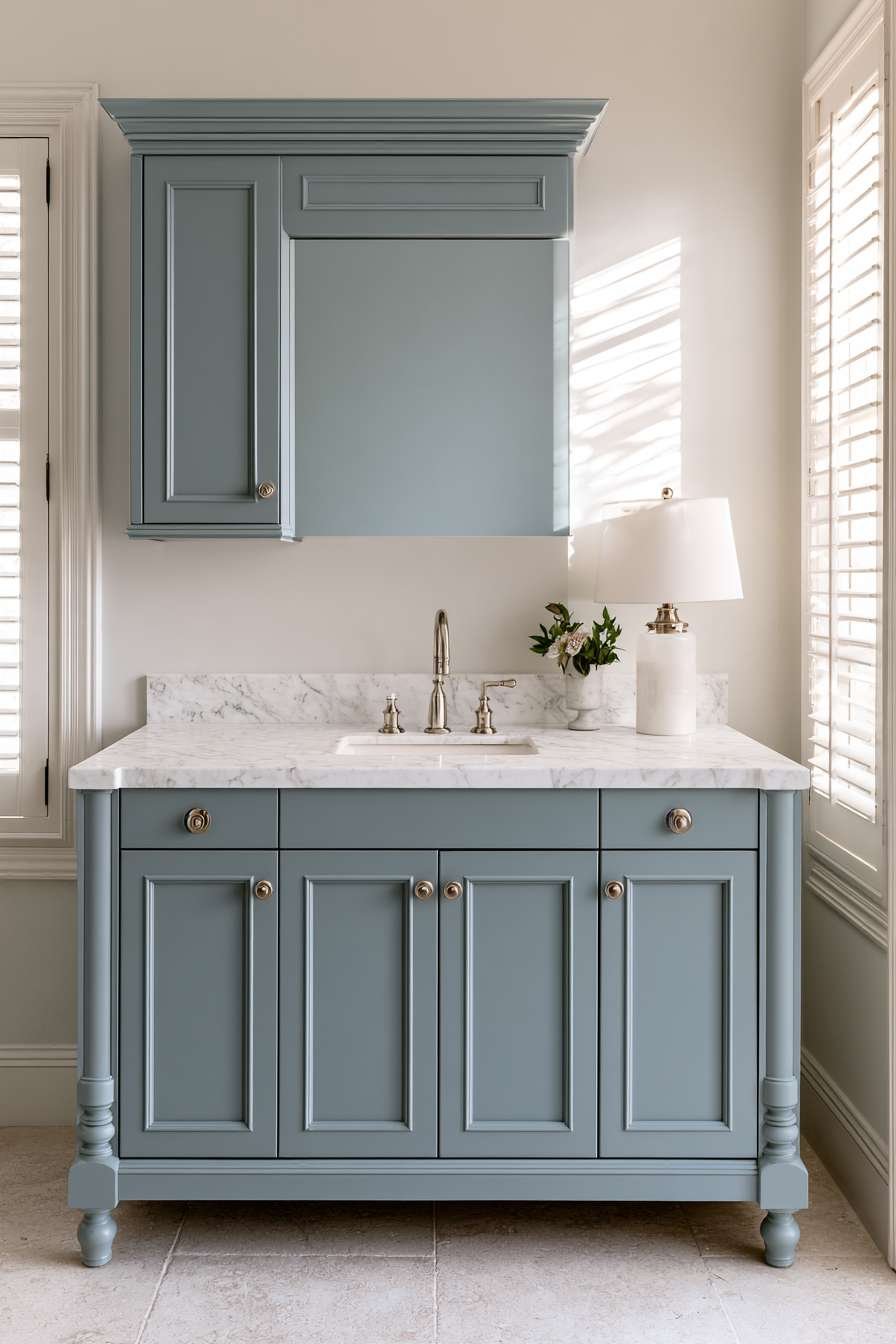
Furniture-like base features turned feet and crown molding. White marble countertop with subtle grey veining maintains balance. Polished nickel faucet provides enduring appeal without trend-chasing. Both open and closed storage demonstrate versatile functionality.
Natural daylight through plantation shutters creates soft shadows. The cabinet’s transitional design qualities satisfy multiple tastes. Traditional details ground the design in historical precedent. Modern proportions ensure contemporary relevance and freshness.

Shaker construction principles emphasize honest joinery and quality. The design proves that tradition and modernity coexist peacefully. Transitional style appeals to those who resist extremes. This balanced approach suits timeless bathroom design.
Key Design Tips:
- Paint cabinets in soft grey-blue for transitional color sophistication
- Combine shaker-style doors with modern hardware finishes
- Add furniture details like turned feet and crown molding
- Choose marble with subtle veining for understated elegance
- Balance traditional craftsmanship with contemporary proportions
Why These Washroom Cabinet Designs Are the Best
These washroom cabinet designs represent comprehensive approaches to bathroom storage across all styles and budgets. Each concept demonstrates thoughtful consideration of materials, functionality, and aesthetic impact. The diversity ensures solutions for every bathroom size and personal preference.
Material choices range from sustainable bamboo and reclaimed wood to luxurious marble and exotic hardwoods. These selections balance environmental responsibility with durability and visual appeal. Natural materials like solid wood, stone, and metal develop character over time rather than deteriorating like synthetic alternatives.
The designs showcase versatile organizational approaches from minimalist floating cabinets to comprehensive double-vanity systems. Vertical storage solutions maximize small spaces while expansive designs accommodate luxury master bathrooms. Customizable modular systems adapt to changing needs over years of use.

Color theory applications span from bold navy and turquoise statements to subtle Scandinavian neutrals. Light colors maximize brightness in compact bathrooms while dark dramatic tones create sophisticated focal points. Two-tone combinations add visual interest without overwhelming spaces.
Traditional styles including Shaker, farmhouse, and mid-century modern provide timeless appeal that transcends trends. Contemporary designs embrace technology and bold color choices that reflect current lifestyles. Transitional approaches successfully bridge historical and modern aesthetics.
Sustainability appears throughout these designs via reclaimed materials, repurposed vintage pieces, and quality construction ensuring longevity. Investing in well-crafted cabinets proves more economical and environmentally sound than frequent replacement. Authentic materials age beautifully rather than simply wearing out.

Practical considerations include soft-close mechanisms, integrated lighting, specialized organizers, and moisture-resistant materials. These functional features enhance daily use while protecting long-term cabinet integrity. Smart technology integration addresses modern convenience needs without sacrificing design quality.
The cabinet concepts accommodate various installation types from freestanding traditional vanities to wall-mounted floating designs. This versatility suits different bathroom layouts and structural requirements. Professional installation ensures proper mounting and plumbing integration.
Conclusion
These thirty washroom cabinet designs demonstrate that bathroom storage combines essential functionality with design expression. Material authenticity, quality craftsmanship, and thoughtful organization create cabinets that serve beautifully for decades. The key takeaways emphasize investing in natural materials, choosing appropriate styles for your space, and prioritizing organizational features.

Successful cabinet selection balances aesthetic preferences with practical needs and budget realities. Start by assessing your storage requirements and spatial constraints. Consider which style resonates with your overall bathroom vision and personal taste.
Transform your bathroom with these inspiring cabinet designs. Whether you choose modern minimalism, traditional elegance, or eclectic creativity, the perfect cabinet awaits. Begin planning your washroom transformation today through thoughtful material selection and creative design application.