


Turkish carpets represent centuries of artistic tradition and masterful craftsmanship. These hand-woven treasures bring warmth, color, and cultural richness to any interior. The intricate patterns and vibrant hues create focal points that elevate entire rooms.
Understanding Turkish carpet design opens doors to endless decorating possibilities. From bold geometric kilims to elegant floral Oushaks, each style tells a unique story. These versatile textiles adapt beautifully to both traditional and contemporary settings. The natural materials age gracefully, developing character over time.
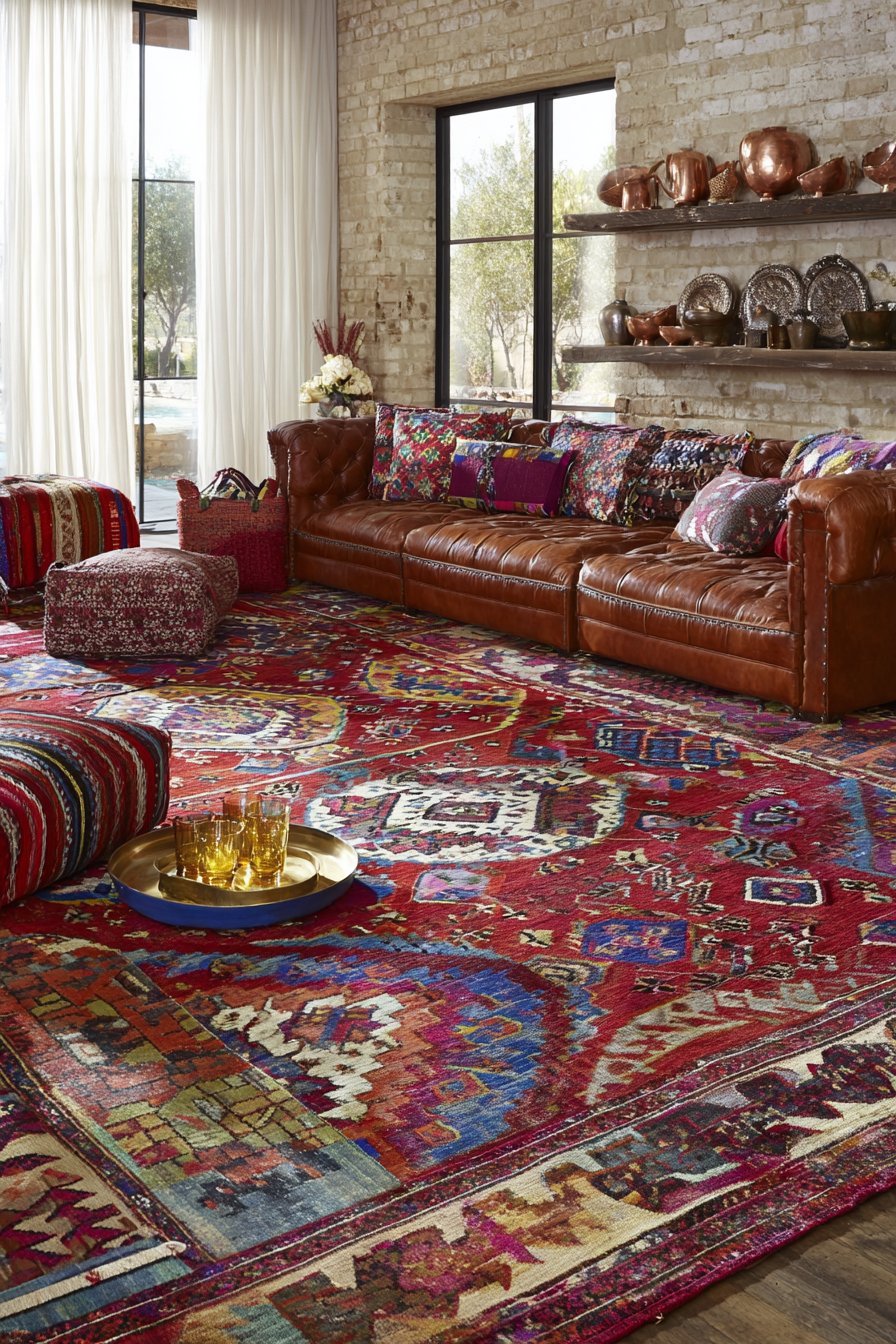
This comprehensive guide explores thirty distinct approaches to incorporating Turkish carpets into your home. You’ll discover how these timeless pieces complement various design aesthetics. Whether you prefer bohemian maximalism or minimalist sophistication, Turkish carpets offer solutions for every style preference.
1. Bohemian Living Room with Vintage Turkish Carpet
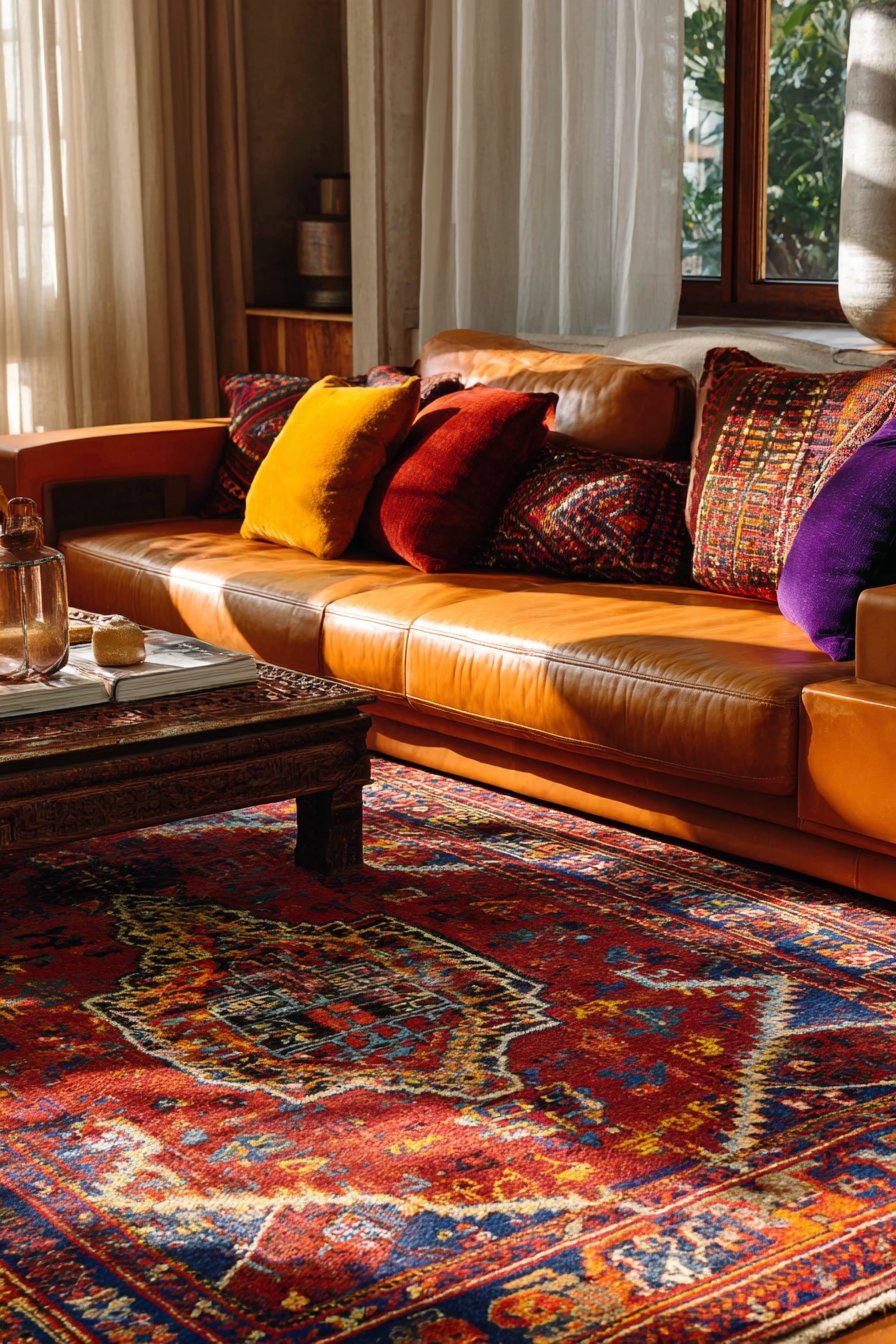
The foundation of this bohemian living room begins with an oversized vintage Turkish carpet. Deep ruby red, indigo blue, and ivory tones create visual drama. The hand-knotted wool displays intricate geometric patterns and authentic wear. Natural color fading showcases the carpet’s age and remarkable craftsmanship.
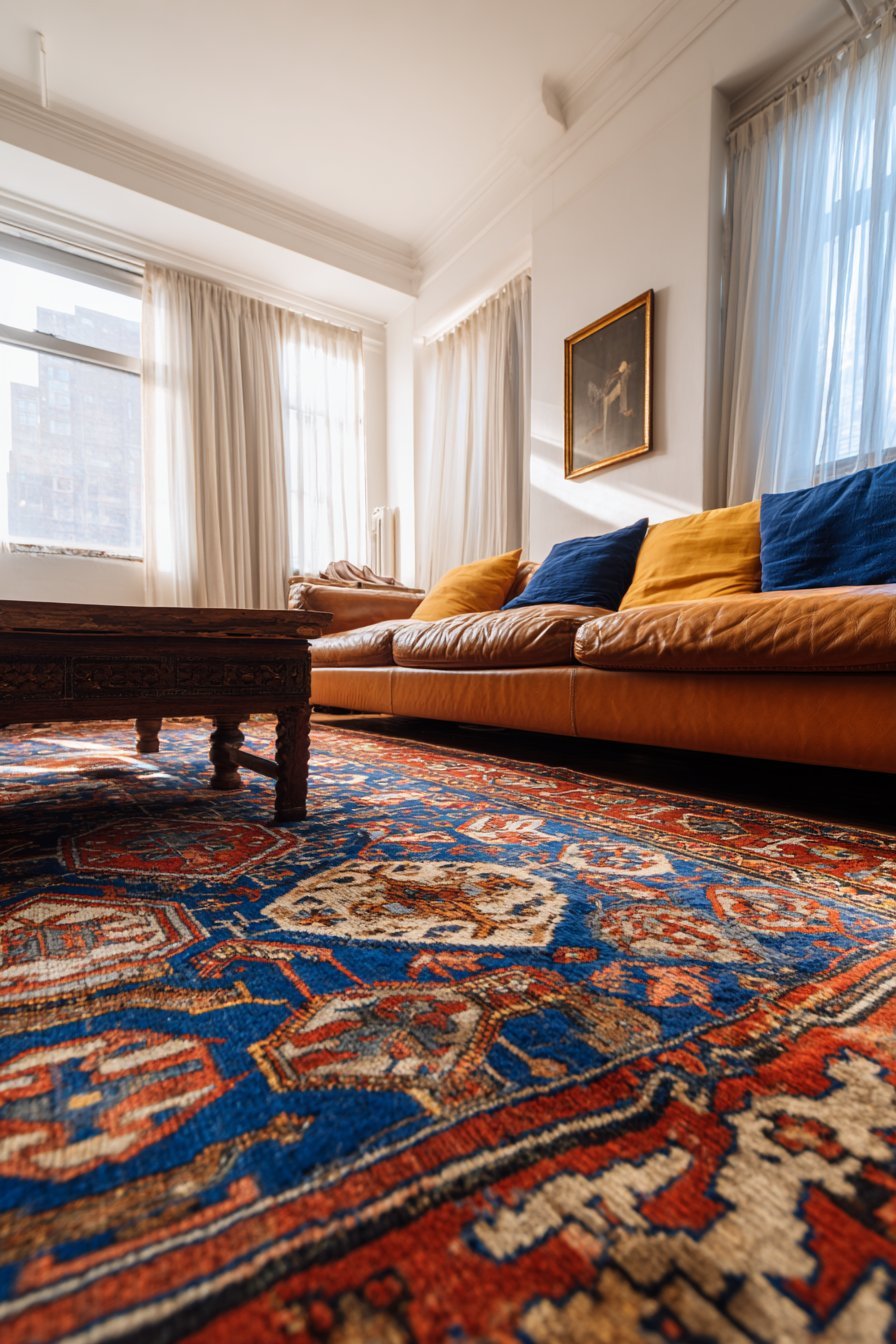
A low-profile cognac leather sofa sits comfortably atop the carpet. The carved wooden coffee table adds organic texture to the arrangement. Jewel-toned velvet cushions echo the carpet’s rich color palette beautifully. These coordinated elements create layers of visual interest throughout the space.
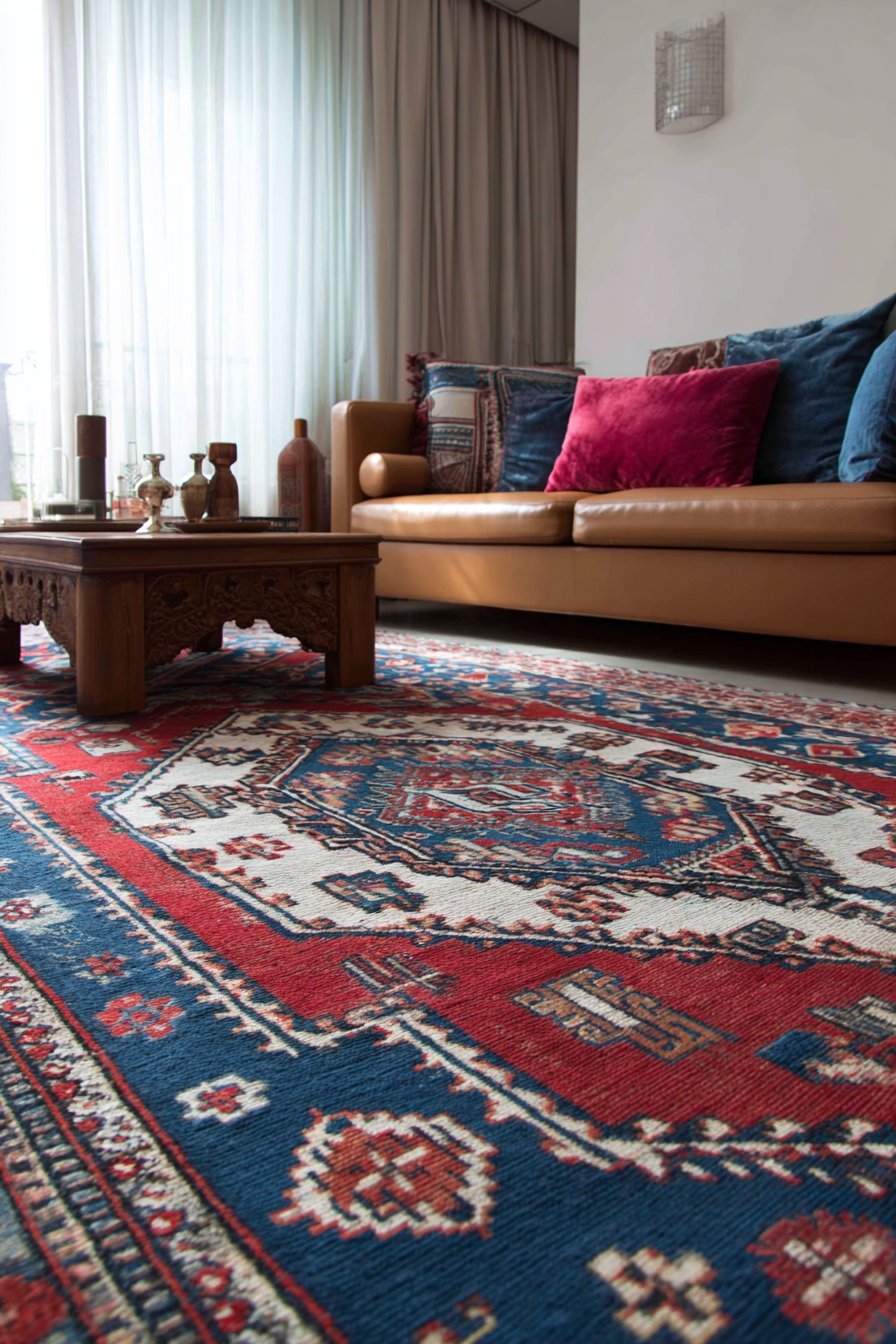
Natural afternoon light streams through sheer linen curtains. The illumination highlights the carpet’s detailed medallion center pattern perfectly. Complex border work becomes clearly visible in this flattering light. The authentic texture variations and time-worn patina contrast beautifully against whitewashed walls.
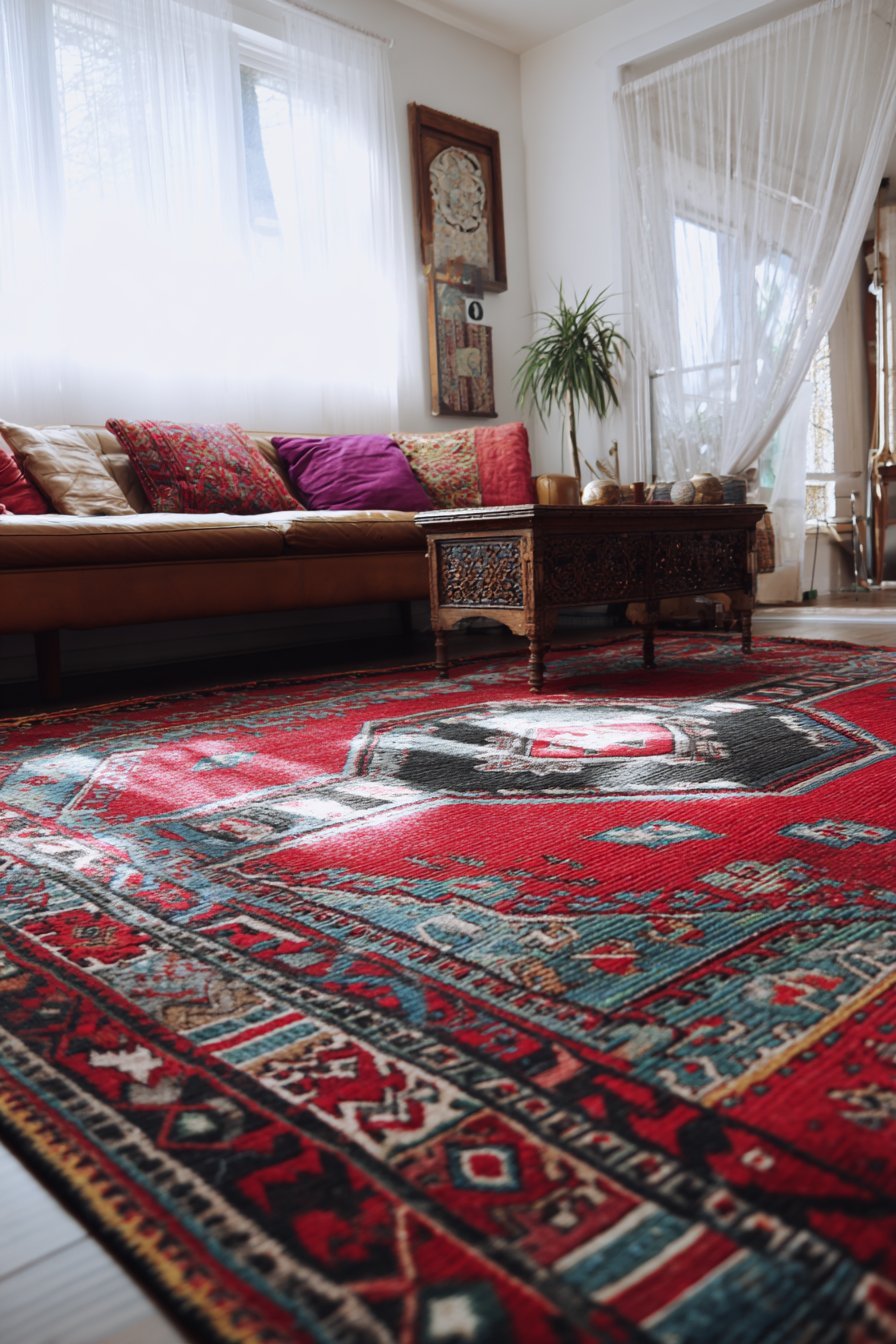
This design celebrates the collected aesthetic of global travelers. The carpet serves as the room’s anchor and conversation starter. Every element works together to create an inviting, culturally rich environment.
Key Design Tips:
- Select carpets with visible wear patterns that demonstrate authentic age
- Position furniture to showcase the carpet’s central medallion design
- Use jewel-toned accessories to complement the carpet’s color palette
- Allow natural light to highlight intricate pattern details
- Choose low-profile furniture that doesn’t overwhelm the carpet’s presence
- Balance bold carpet patterns with neutral wall colors
2. Minimalist Scandinavian Dining Room with Faded Oushak
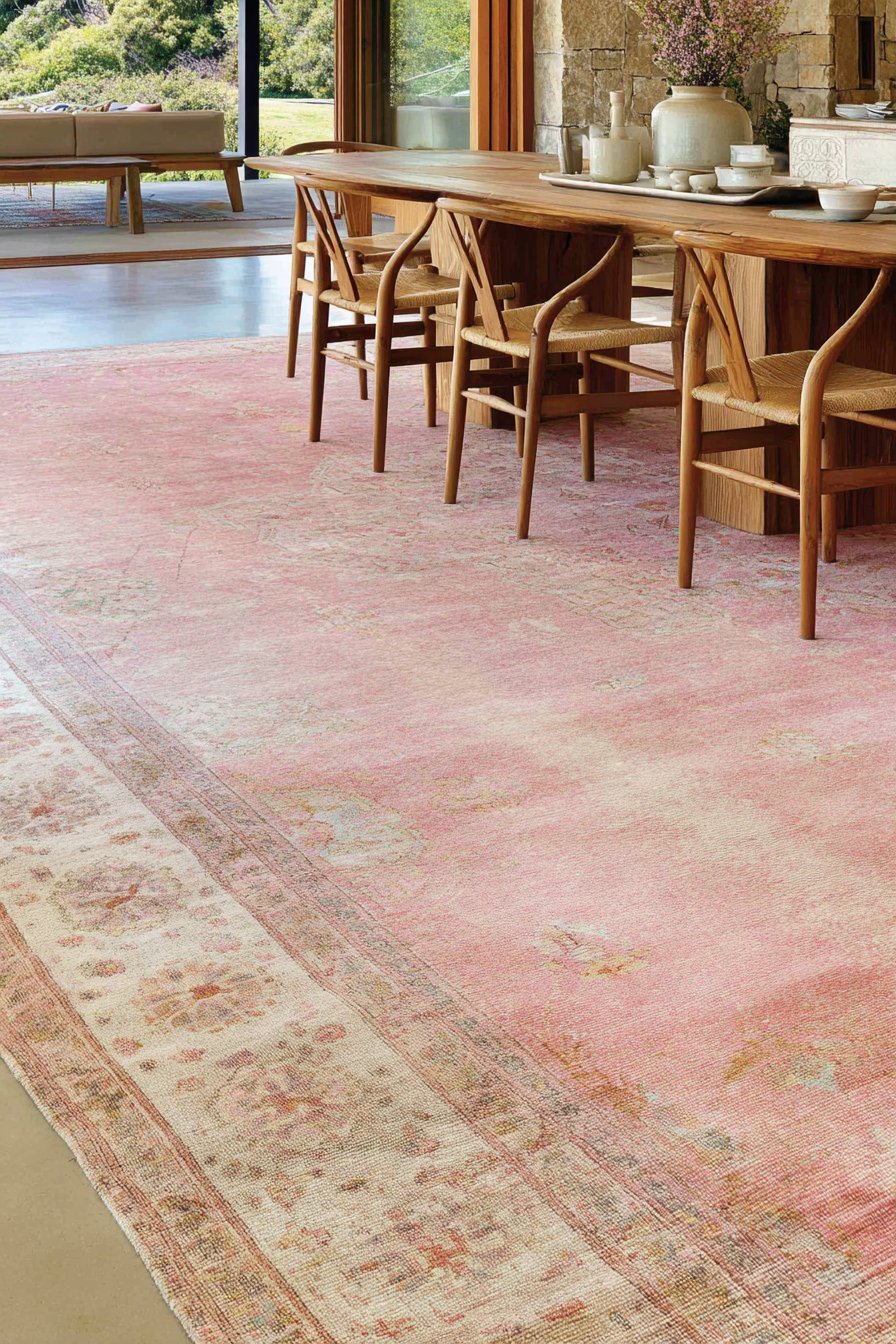
A faded Turkish Oushak carpet in soft blush pink and cream anchors this minimalist dining room. The antique carpet’s gentle abrash color variations create subtle visual interest. The low pile integrates seamlessly beneath the simple oak dining table. Ladder-back chairs maintain the clean-lined Scandinavian aesthetic perfectly.
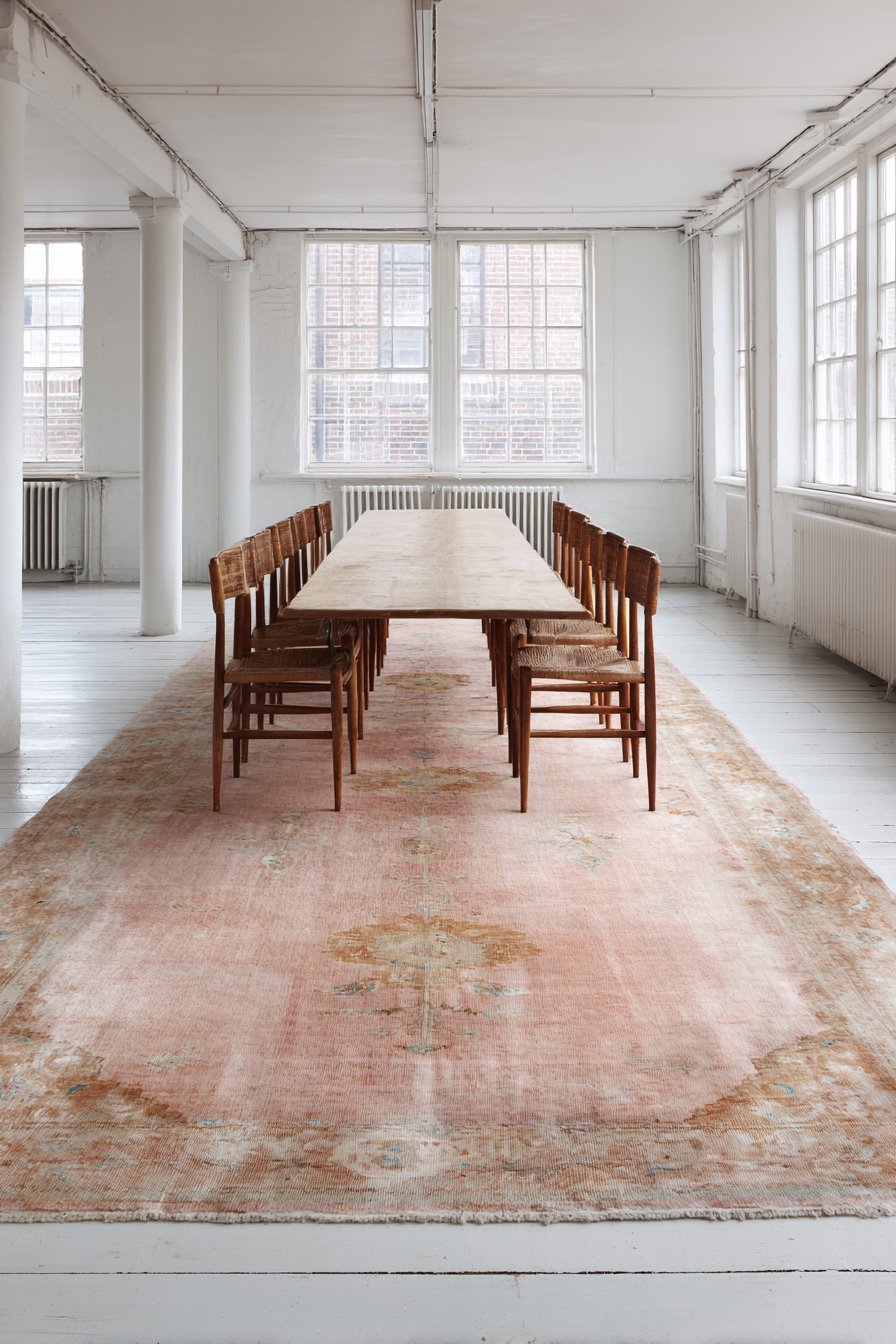
Morning sunlight from tall windows illuminates delicate floral motifs beautifully. Botanical corner details emerge in the favorable lighting conditions. The muted palette complements whitewashed oak flooring visible at the edges. This careful color coordination creates harmony throughout the space.
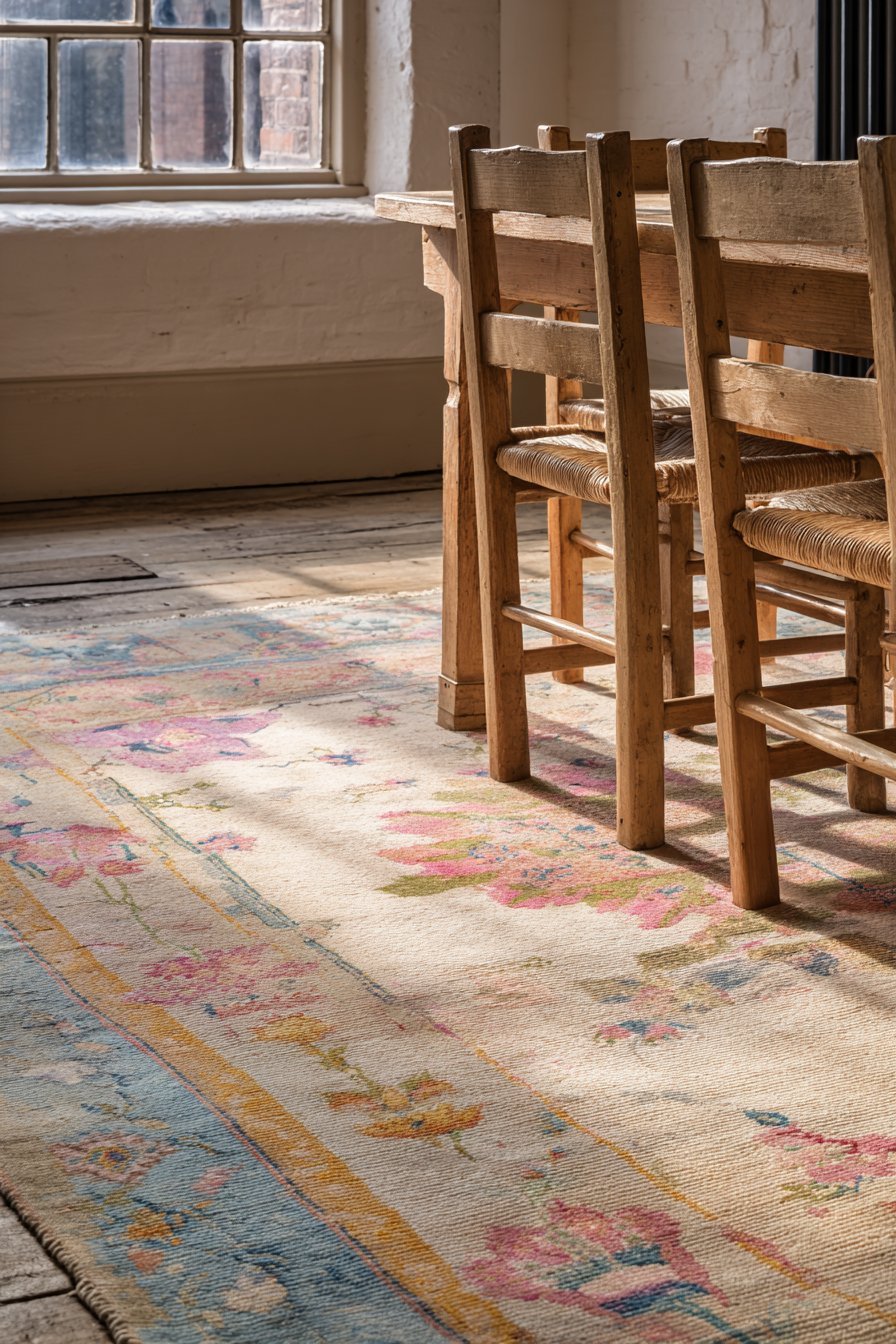
The contrast between old and new design elements creates compelling visual tension. The vintage Turkish carpet adds warmth and history to contemporary Nordic furniture. The combination feels fresh rather than contrived or forced.
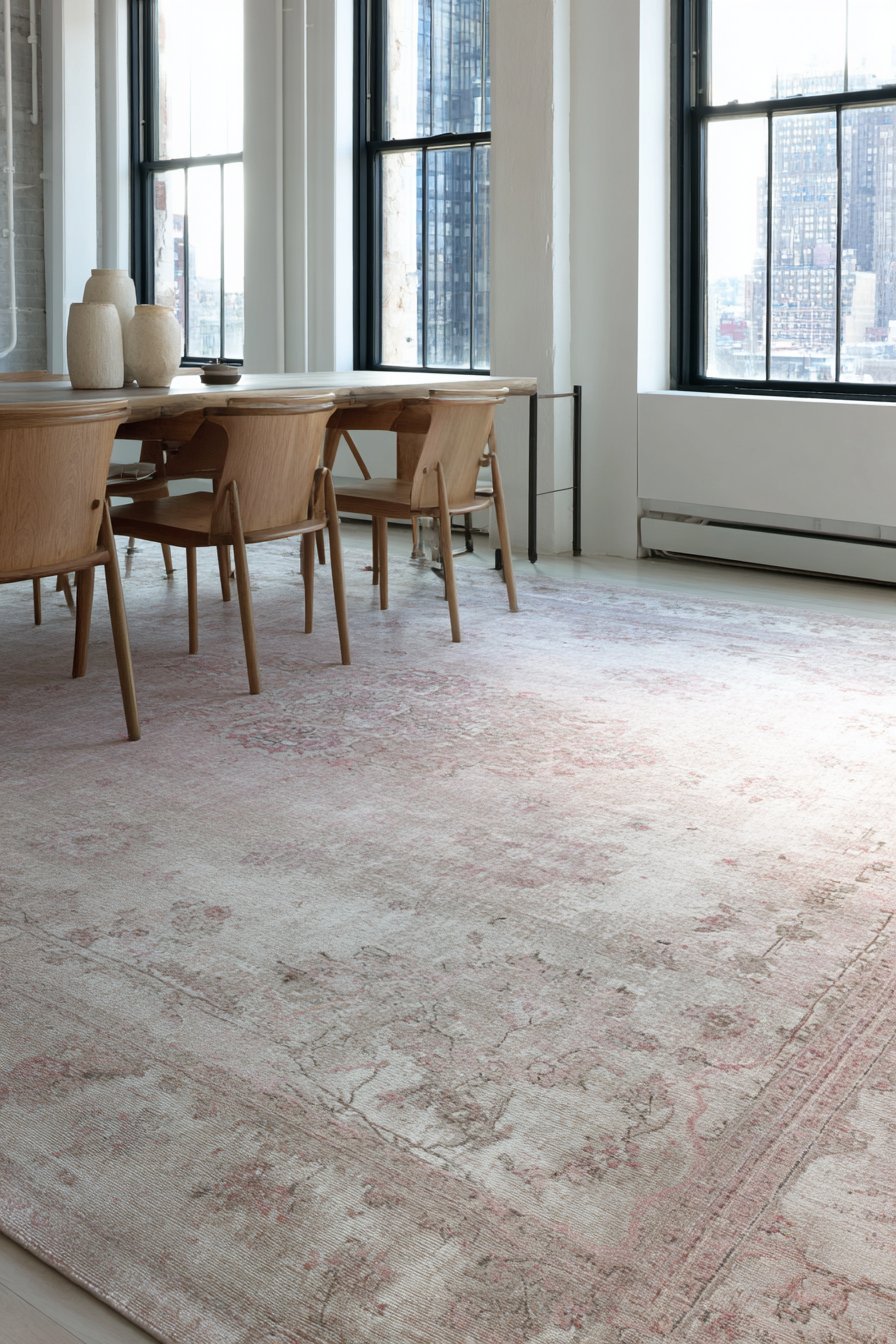
This approach demonstrates how Turkish carpets adapt to minimalist interiors. The key lies in selecting pieces with subdued color palettes. Restraint in furniture placement allows the carpet’s beauty to shine through.
Key Design Tips:
- Choose Oushak carpets with soft, faded colors for minimalist spaces
- Select low-pile options that integrate smoothly with modern furniture
- Position the carpet to show floor edges for visual breathing room
- Use natural wood furniture to complement the carpet’s organic materials
- Maximize natural light to illuminate delicate pattern work
- Maintain color harmony between carpet and surrounding elements
3. Cozy Reading Nook with Turkish Prayer Rug
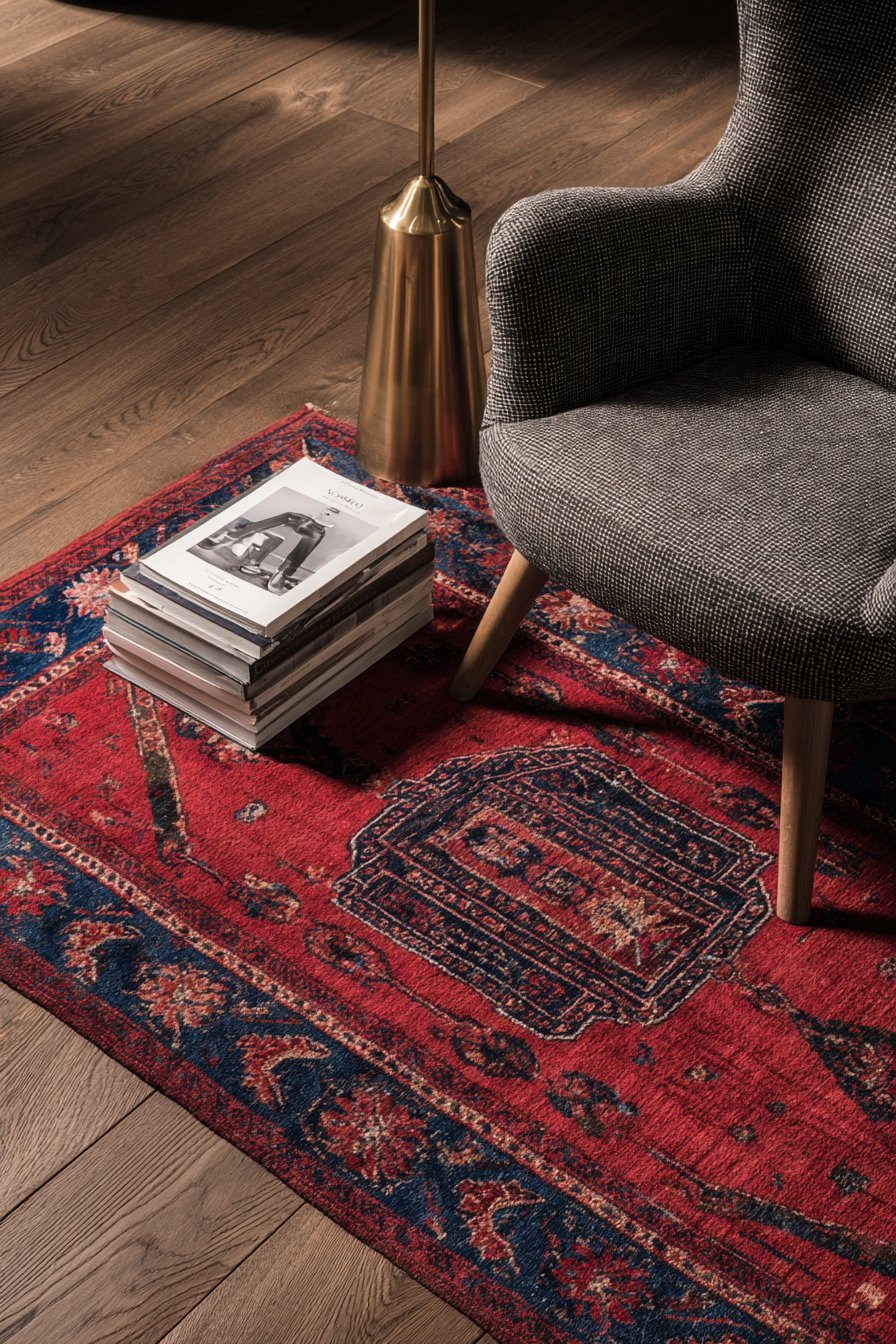
A small Turkish prayer rug in deep crimson and navy creates intimacy. The traditional mihrab arch design adds spiritual dimension to the space. Hand-knotted construction displays characteristic Turkish knot density and wool texture. Natural luster variations become visible across the carpet’s surface.
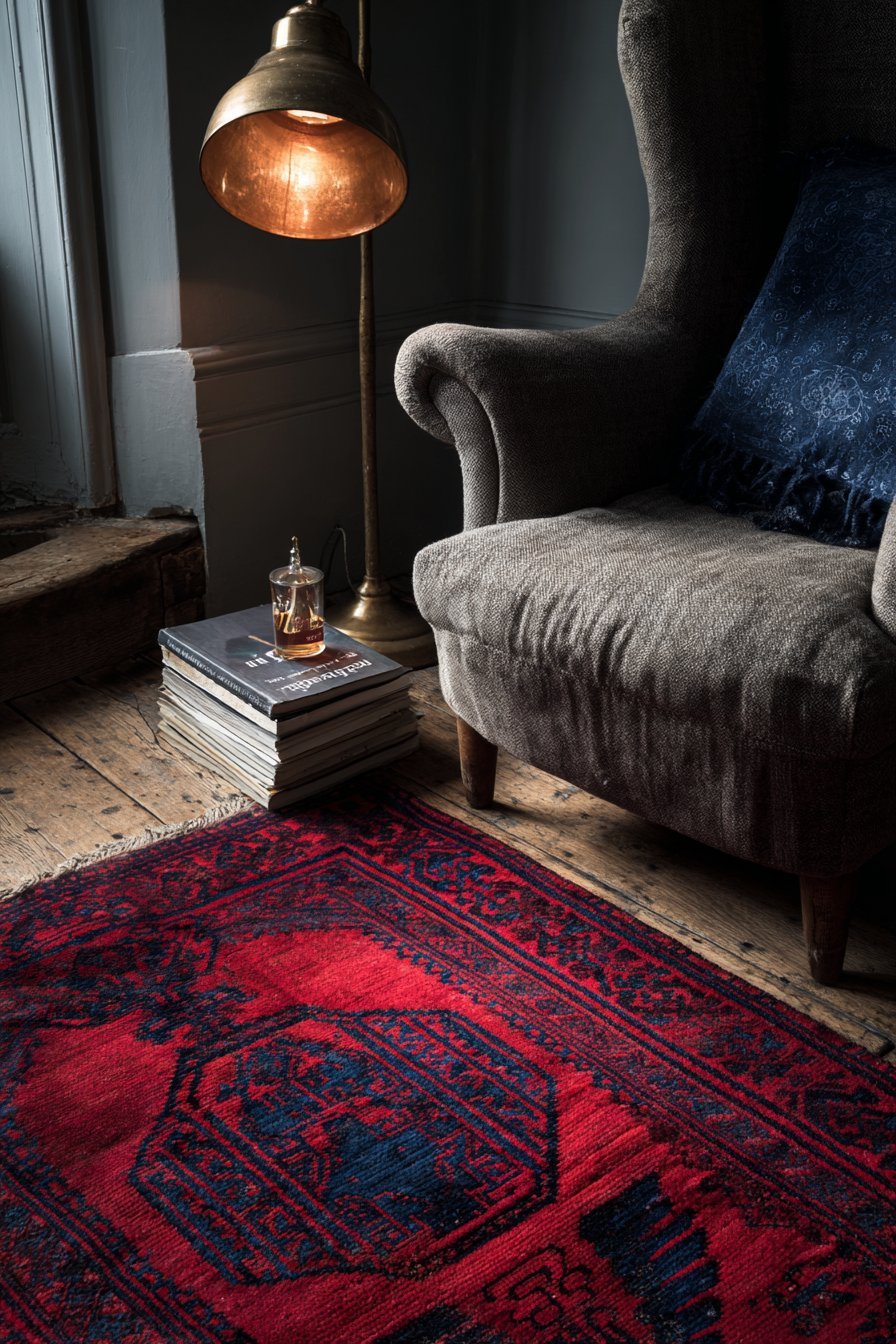
The prayer rug positions perfectly beside a wingback chair upholstered in charcoal linen. A brass floor lamp casts warm light highlighting intricate border patterns. The central medallion emerges beautifully under this focused illumination. A stack of vintage books rests casually on the corner.
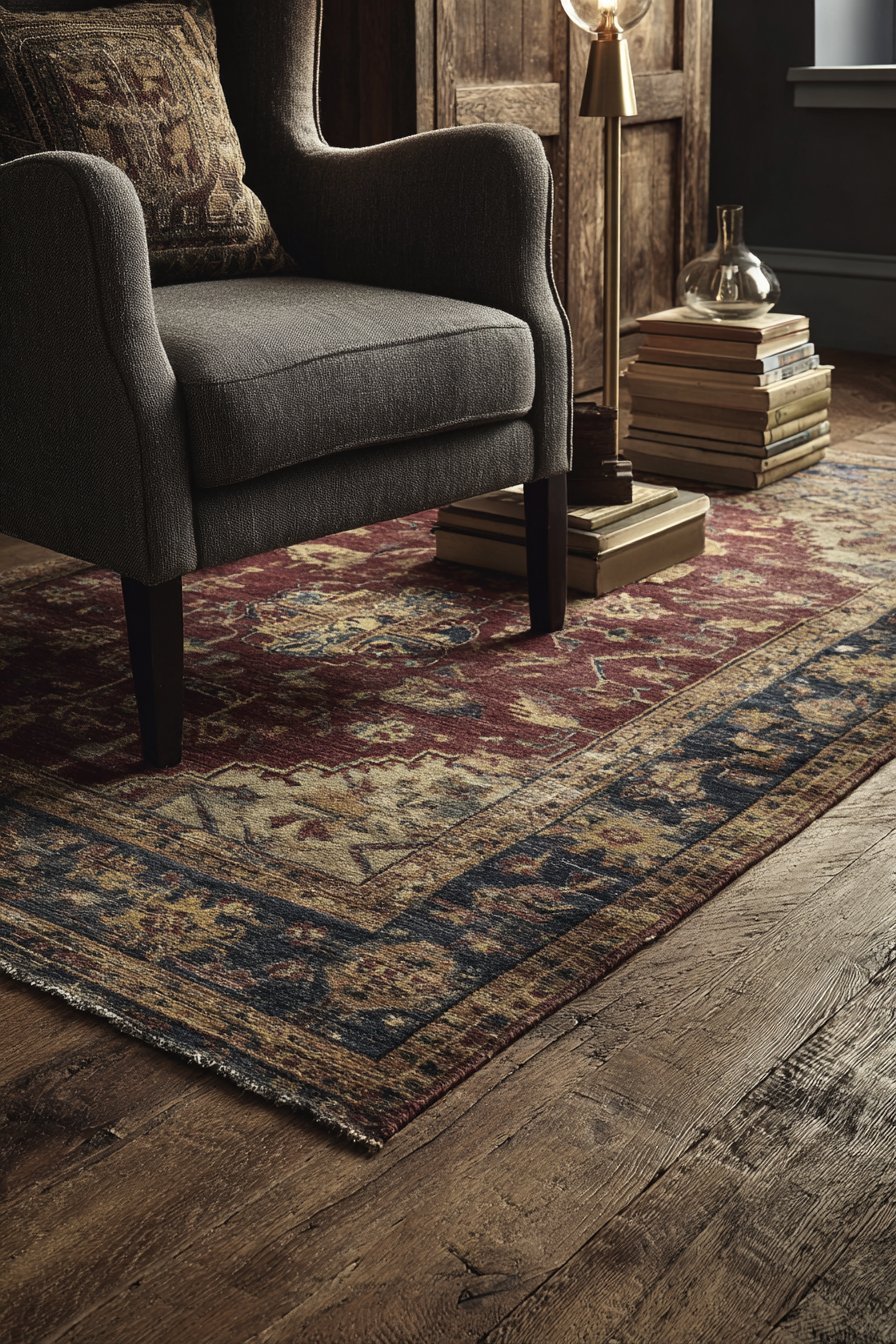
Wide-plank walnut flooring provides a neutral backdrop for the jewel-toned carpet. The wood grain’s natural variation complements the carpet’s handcrafted irregularities. Together these elements create a reading sanctuary that invites contemplation.
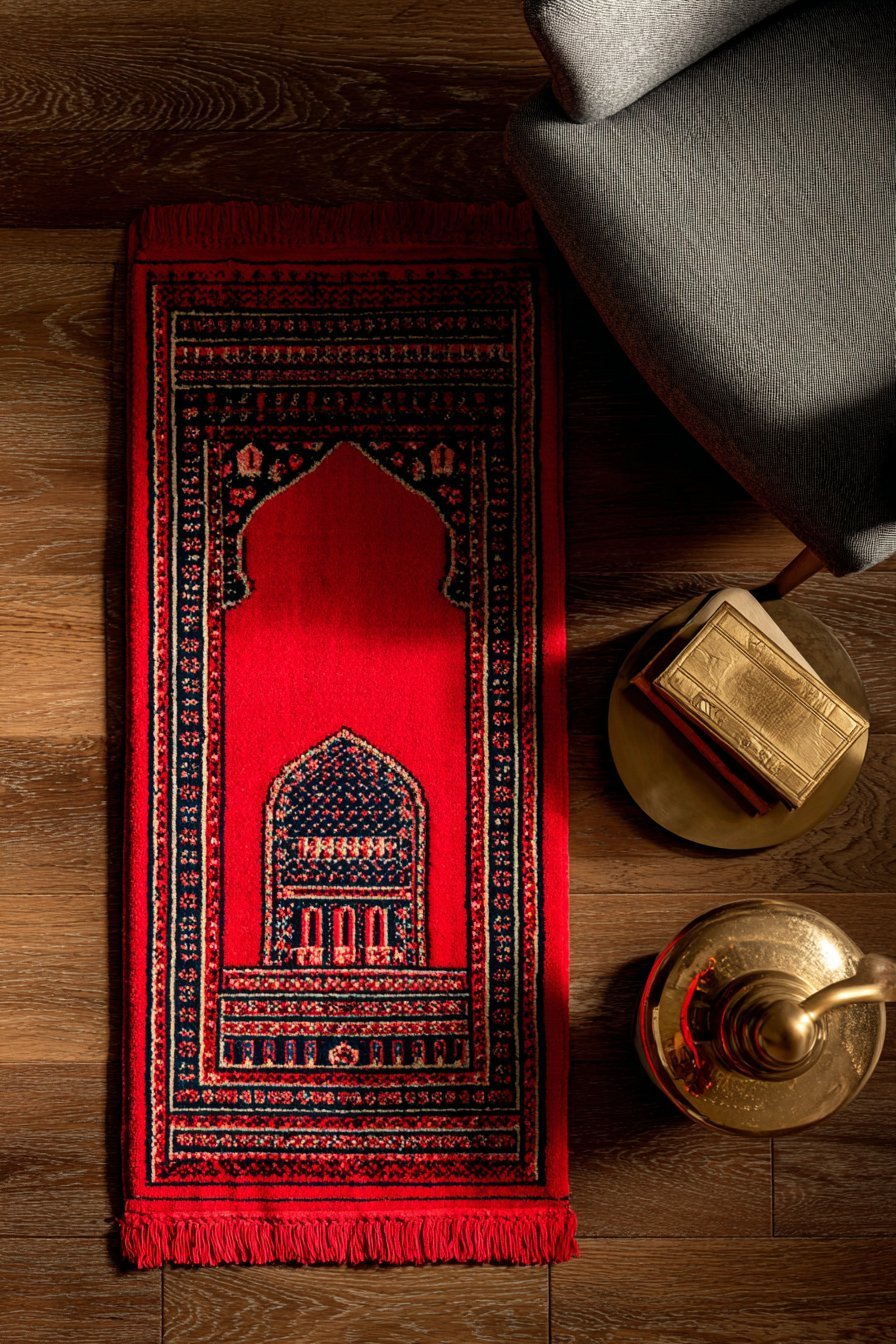
Detail-focused lighting emphasizes authentic craftsmanship throughout this intimate space. The rich jewel tones create warmth without overwhelming the small area. Every element contributes to an atmosphere of quiet comfort and reflection.
Key Design Tips:
- Use prayer rugs to define small, intimate spaces within larger rooms
- Position lighting to highlight the carpet’s central medallion and borders
- Choose furniture in neutral tones to balance vibrant carpet colors
- Select appropriately scaled carpets for compact reading nooks
- Incorporate natural wood flooring to complement handwoven textiles
- Add personal touches like books to make the space feel lived-in
4. Modern Bedroom with Layered Turkish Carpets
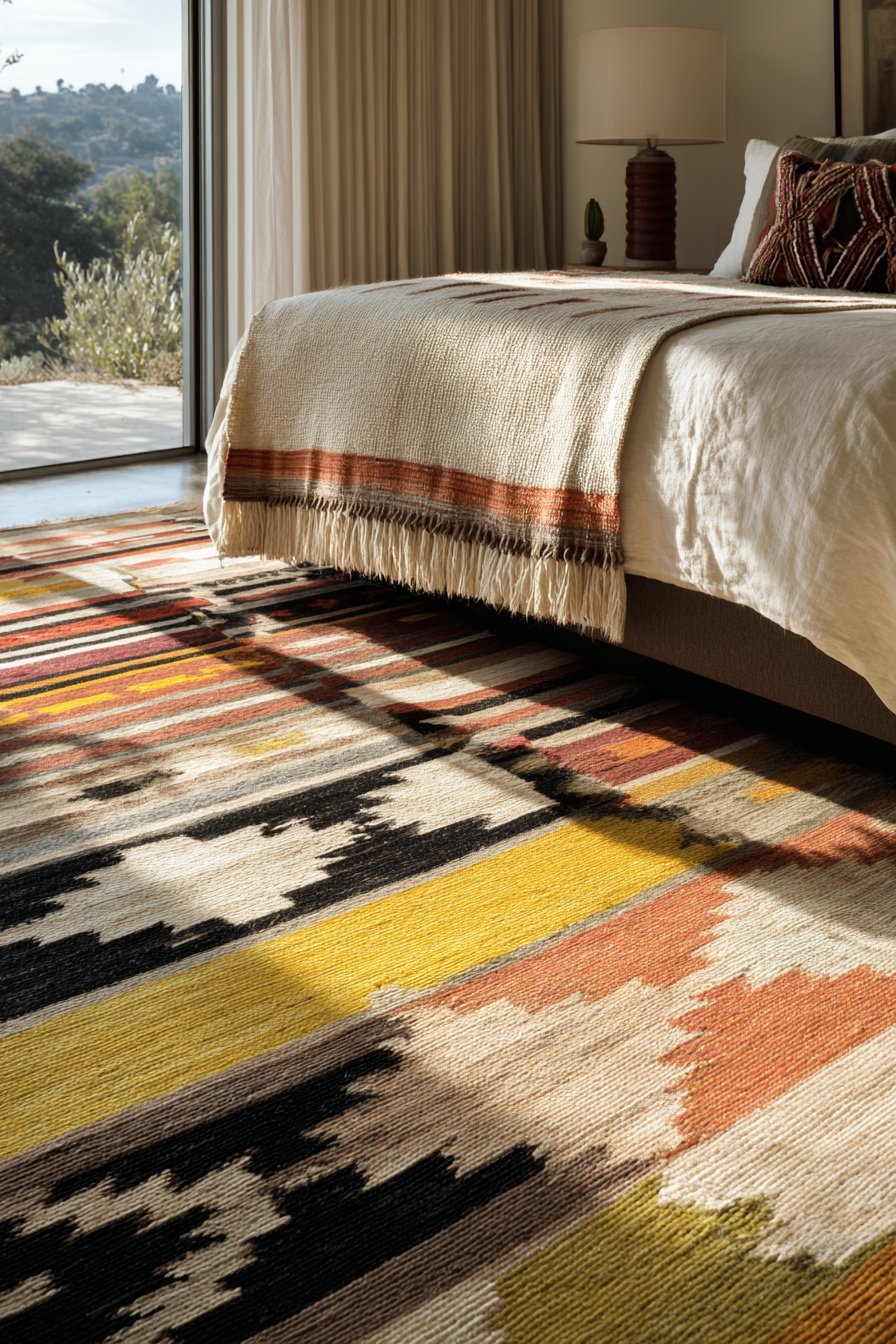
Layered Turkish carpets create sophisticated depth in this modern bedroom. A large vintage Anatolian kilim in terracotta, saffron yellow, and charcoal serves as base. A smaller hand-knotted Turkish pile carpet in complementary earth tones layers above. This arrangement positions perfectly at the foot of a platform bed.
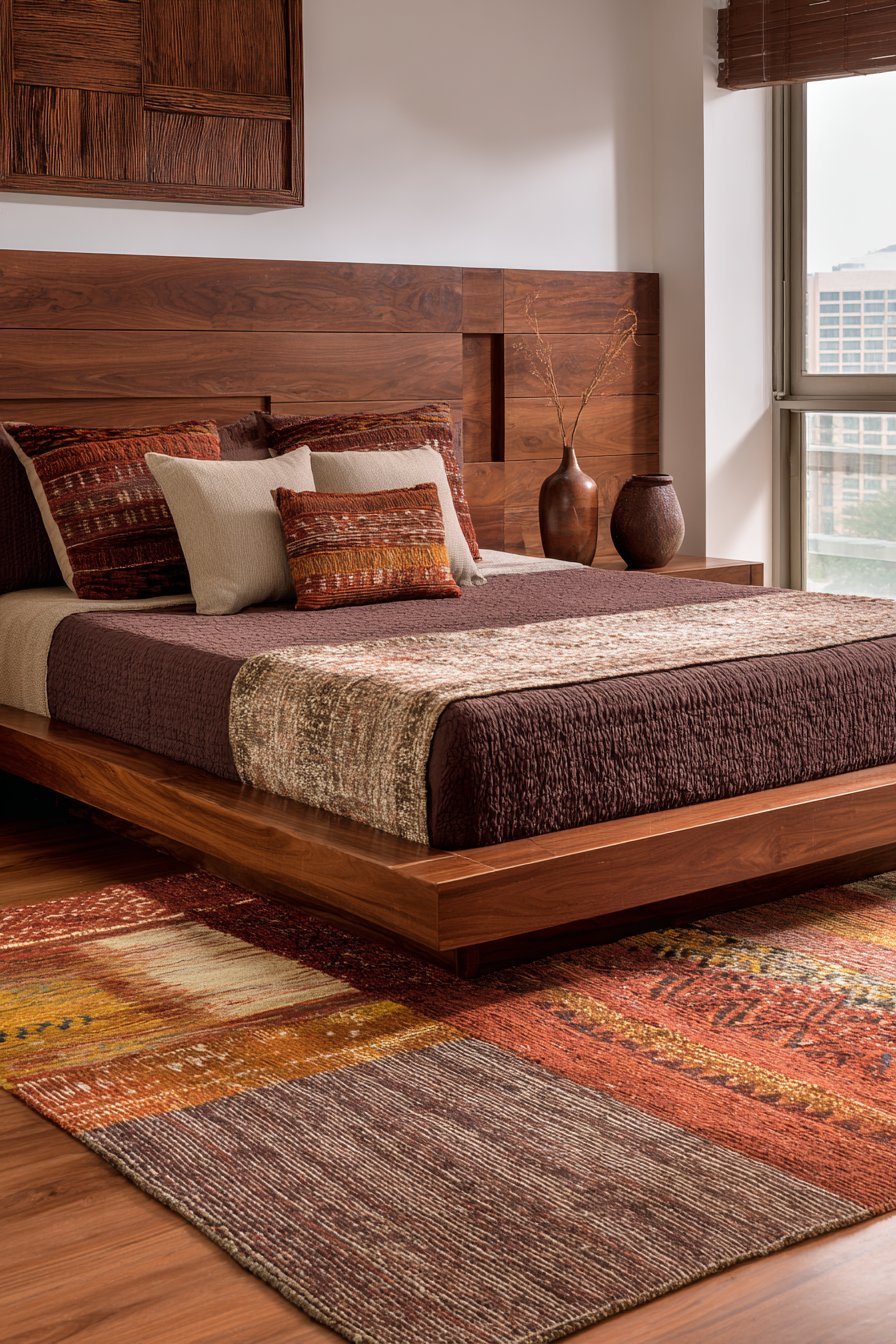
The flat-weave kilim’s geometric patterns create textural contrast with plush pile carpet. Visible slits characteristic of Turkish weaving technique add authentic detail. Natural morning light reveals vegetable dye variations and subtle color gradations. Both carpets showcase distinct weaving methods and regional pattern traditions.
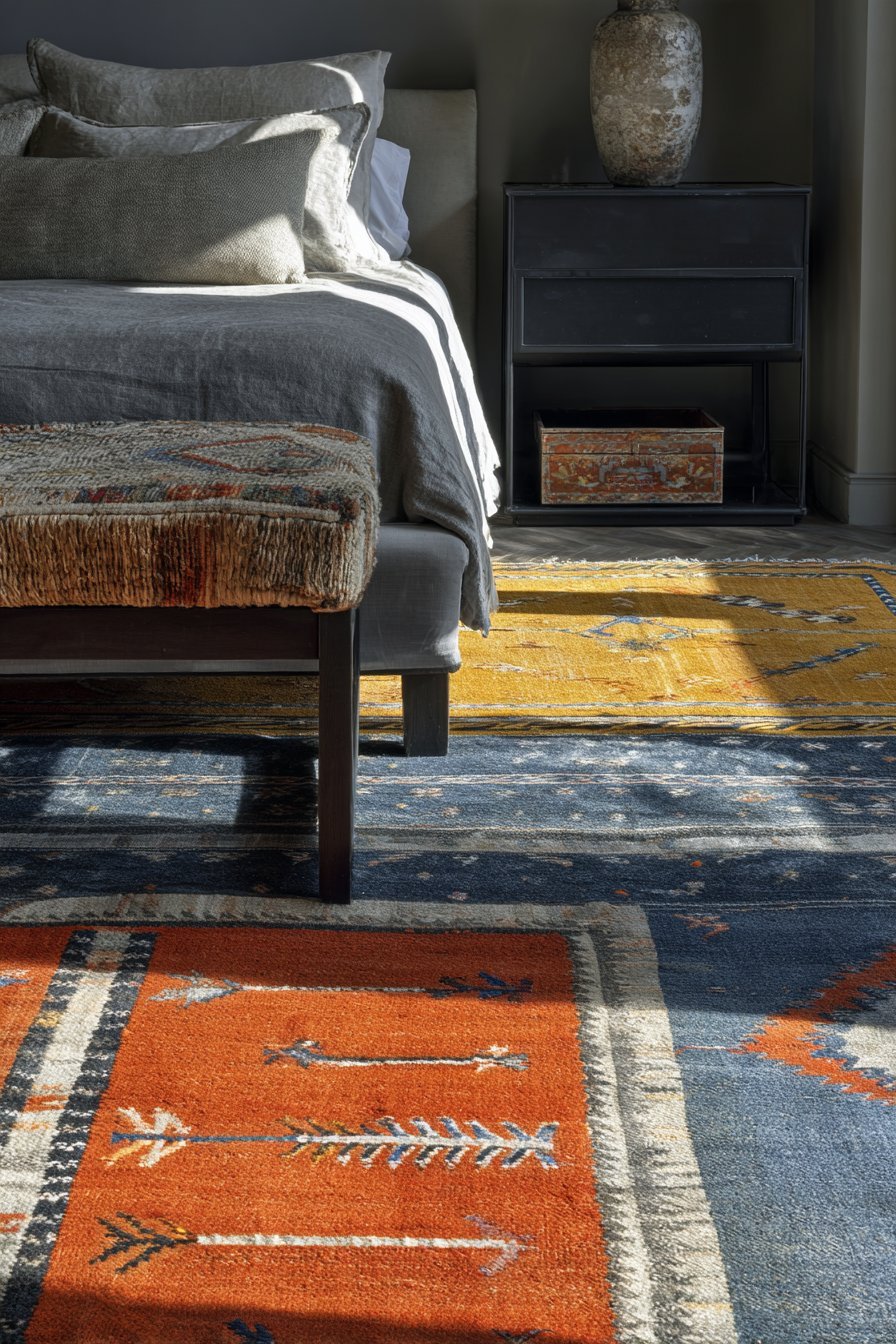
This layering technique demonstrates an advanced understanding of textile design principles. The combination provides both visual interest and practical functionality. The flat-weave base protects flooring while the pile carpet adds softness.
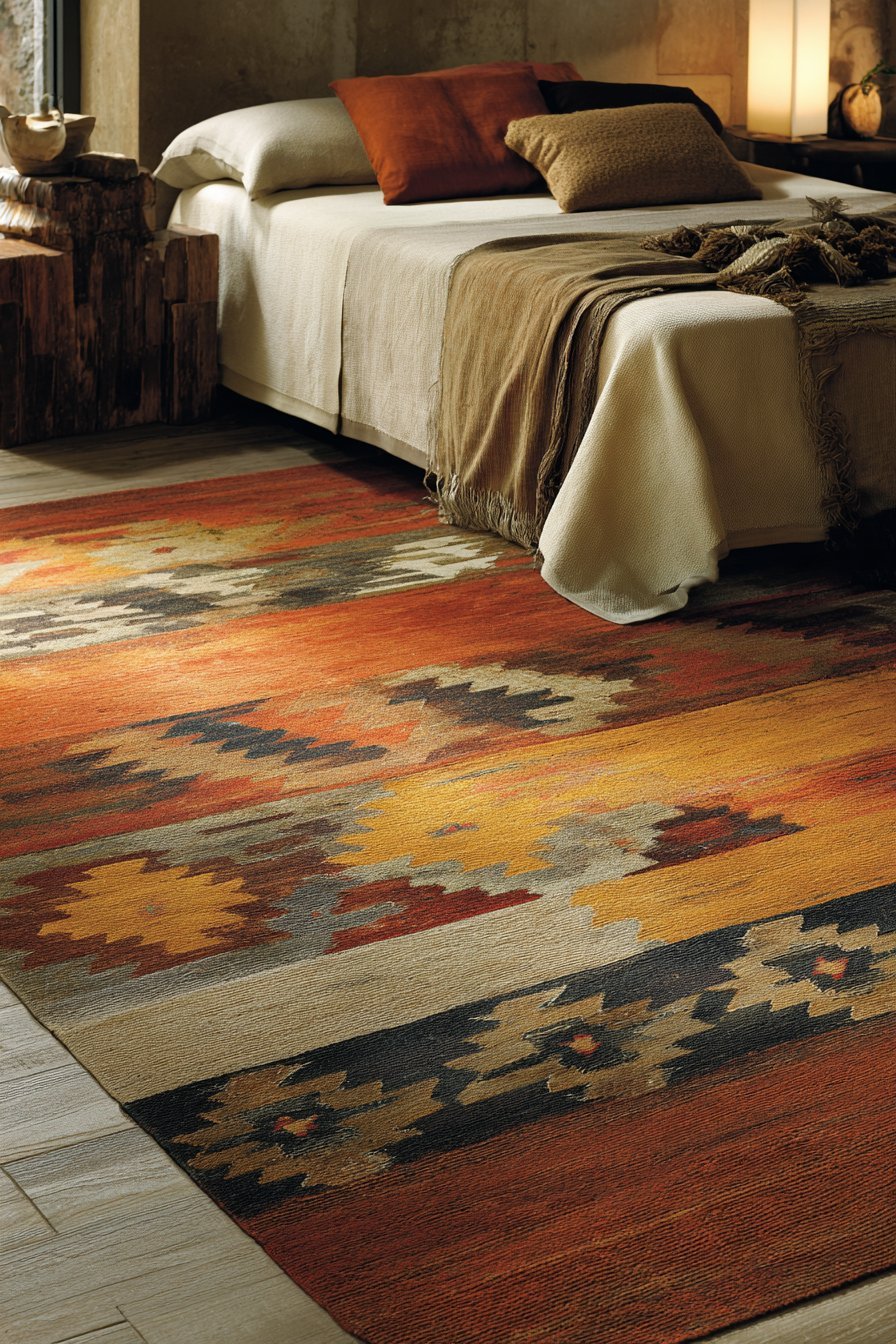
The earth-tone palette creates a calming bedroom environment conducive to rest. Different textures engage multiple senses throughout the space. This sophisticated approach elevates carpet display beyond simple floor covering.
Key Design Tips:
- Layer flat-weave kilims under pile carpets for added dimension
- Choose complementary color palettes when combining multiple carpets
- Position layered carpets at bed’s foot for visual grounding
- Mix different weaving techniques to showcase textile diversity
- Use natural light to reveal subtle dye variations
- Select earth tones for bedroom spaces requiring calm atmosphere
5. Gallery Wall Hallway with Mounted Turkish Carpet
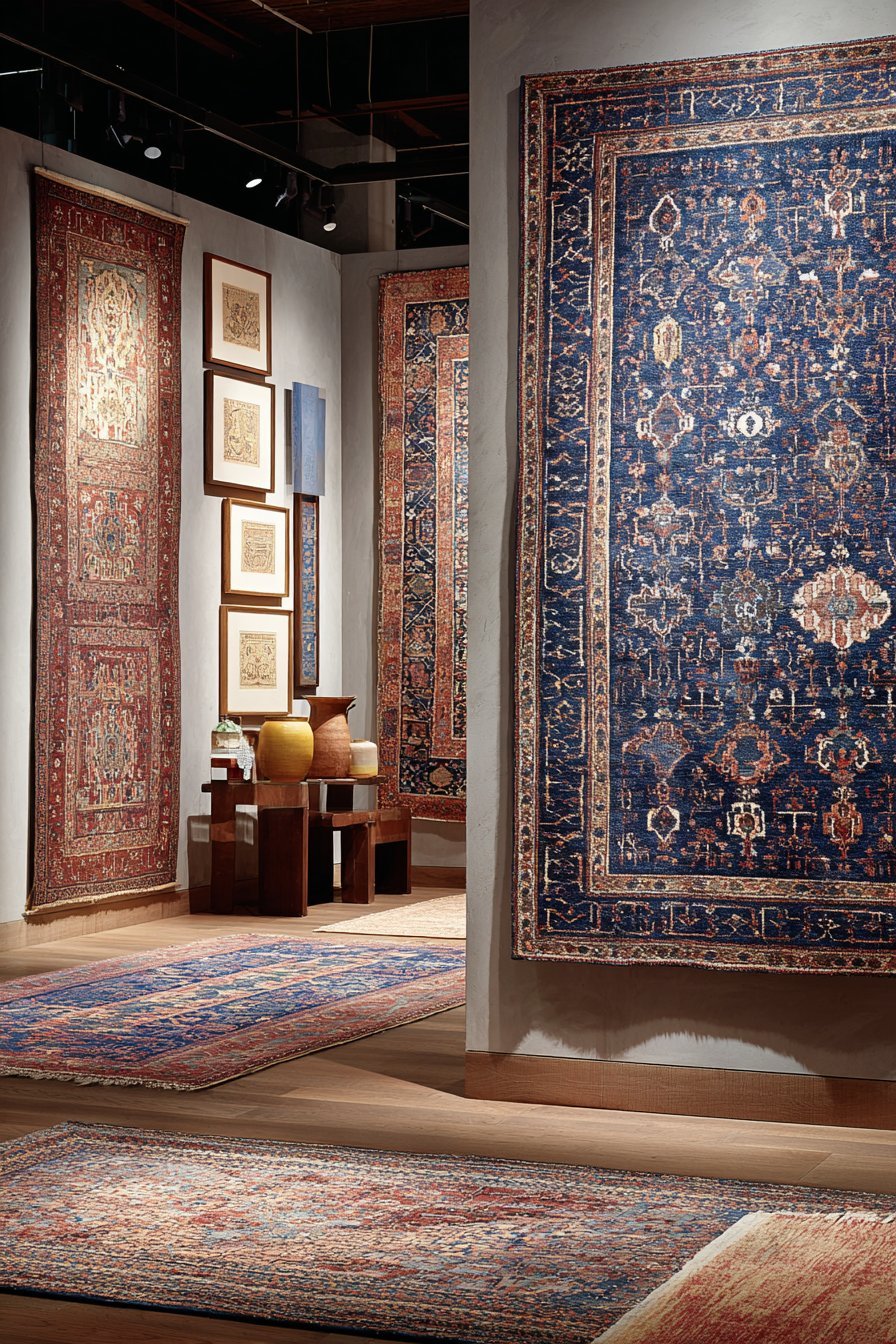
A vintage Turkish carpet mounted as textile art transforms this hallway. Repeating guls and geometric borders display in rich burgundy, navy, and cream. The neutral gray wall provides perfect backdrop for the carpet’s intricate patterns. Hand-knotted construction and natural wool texture become clearly visible.
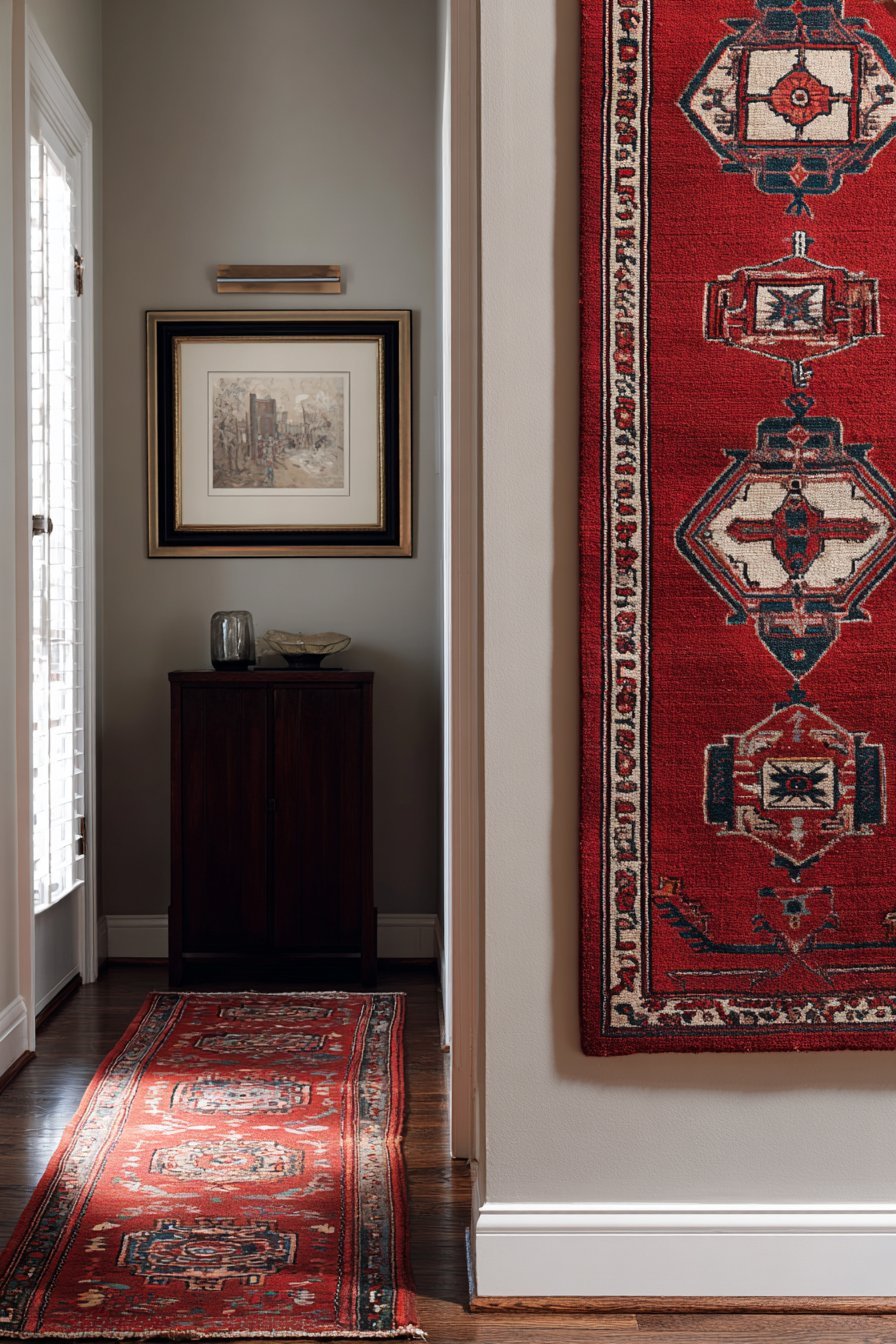
Professional lighting creates subtle shadows emphasizing the three-dimensional pile structure. These shadows add depth and bring patterns to life. Oak floorboards below feature a coordinating Turkish runner in similar tones. This creates visual continuity throughout the corridor space.
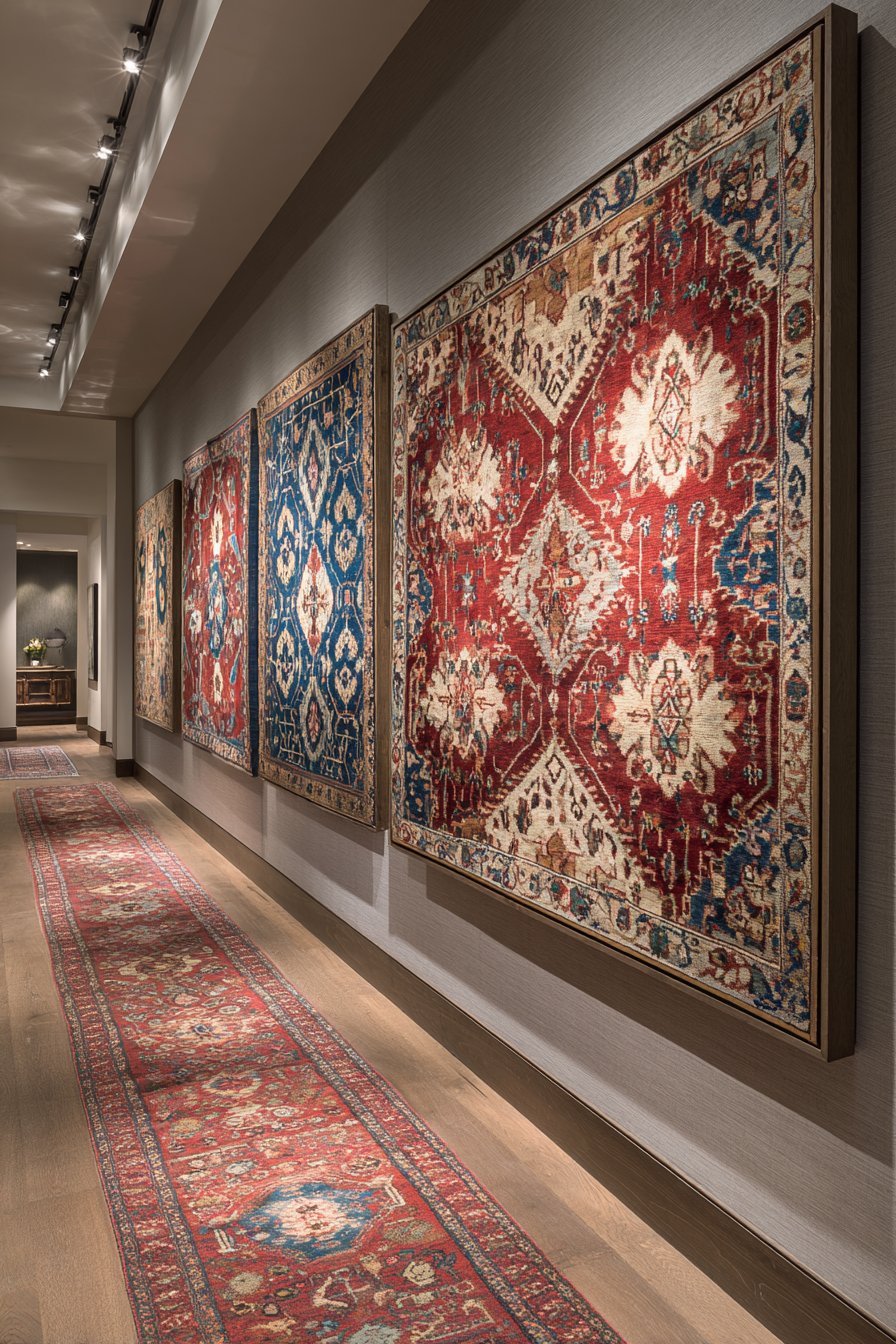
The carpet functions simultaneously as floor covering and wall art. This dual approach maximizes the decorative impact of Turkish textiles. The arrangement demonstrates creative thinking about traditional home furnishings.
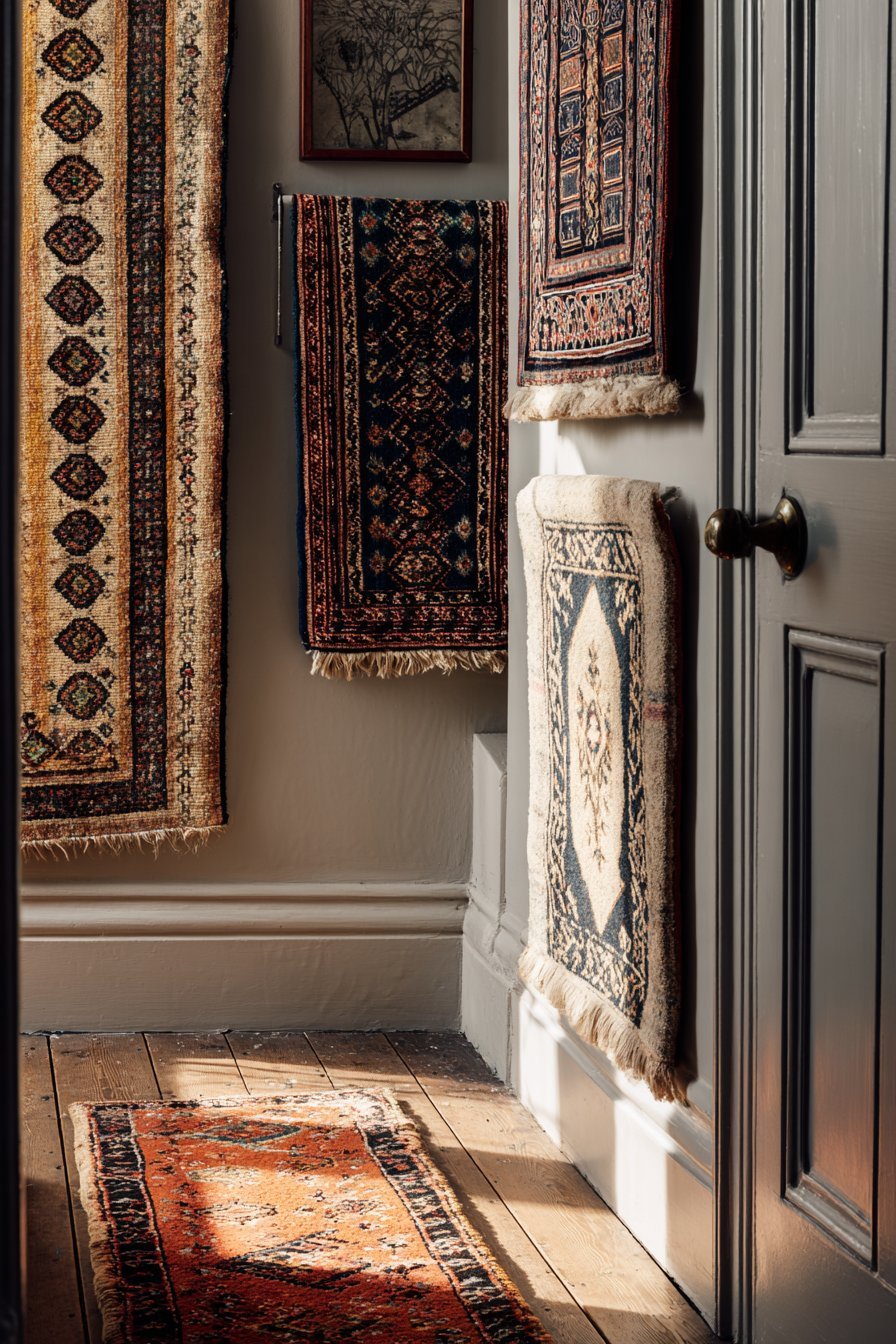
Architectural photography captures how mounting elevates carpet display. The intricate pattern work receives proper attention at eye level. Authentic age-related color mellowing becomes an artistic feature rather than flaw.
Key Design Tips:
- Mount Turkish carpets on walls to showcase patterns as textile art
- Use professional lighting to create shadows emphasizing pile texture
- Coordinate wall-mounted pieces with floor runners for continuity
- Choose neutral wall colors to enhance carpet pattern visibility
- Position mounted carpets at eye level for optimal viewing
- Treat vintage carpets as valuable art pieces deserving proper display
6. Sun-Drenched Entryway with Hereke Silk Carpet
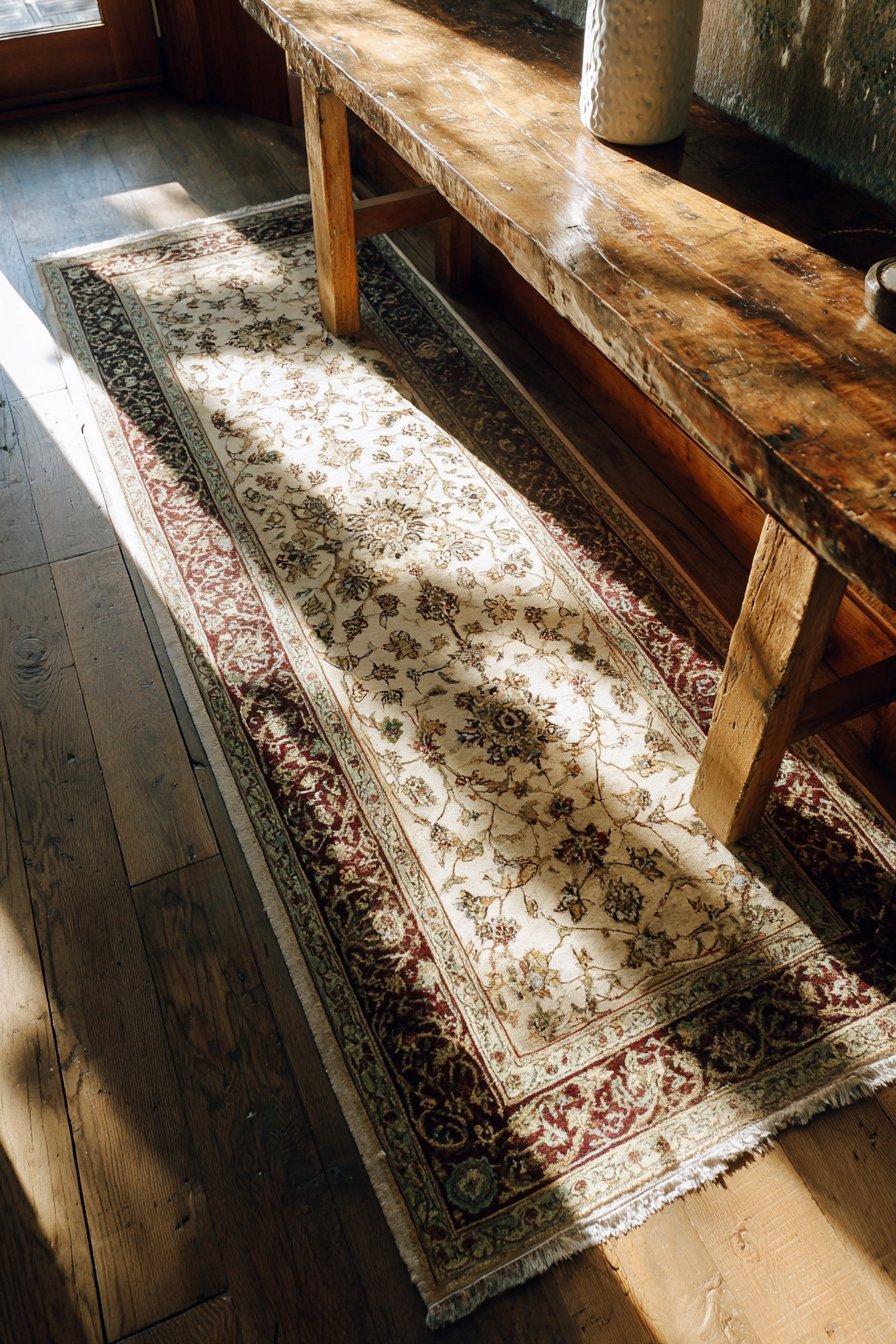
A Turkish Hereke carpet with silk and wool blend elevates this entryway. The exceptionally high knot count creates incredibly detailed floral patterns. Jewel tones of emerald, ruby, and sapphire shine against ivory background. Natural light from nearby windows creates subtle sheen variations across silk.
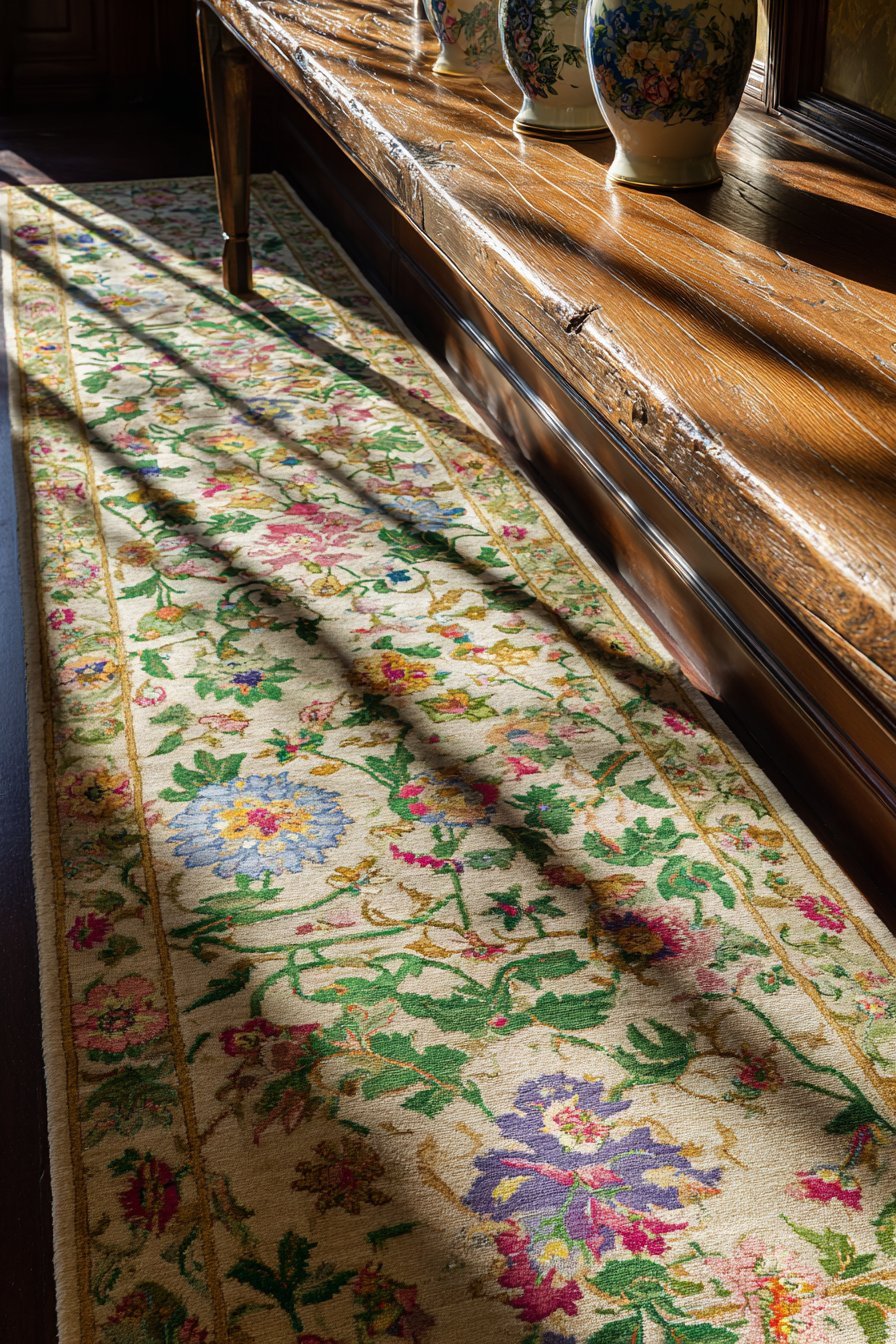
The carpet positions beneath a rustic wooden console table perfectly. Wool portions provide matte contrast to the lustrous silk elements. Authentic signs of careful use include slight pile direction changes. Gentle wear patterns in high-traffic areas demonstrate real-world functionality.
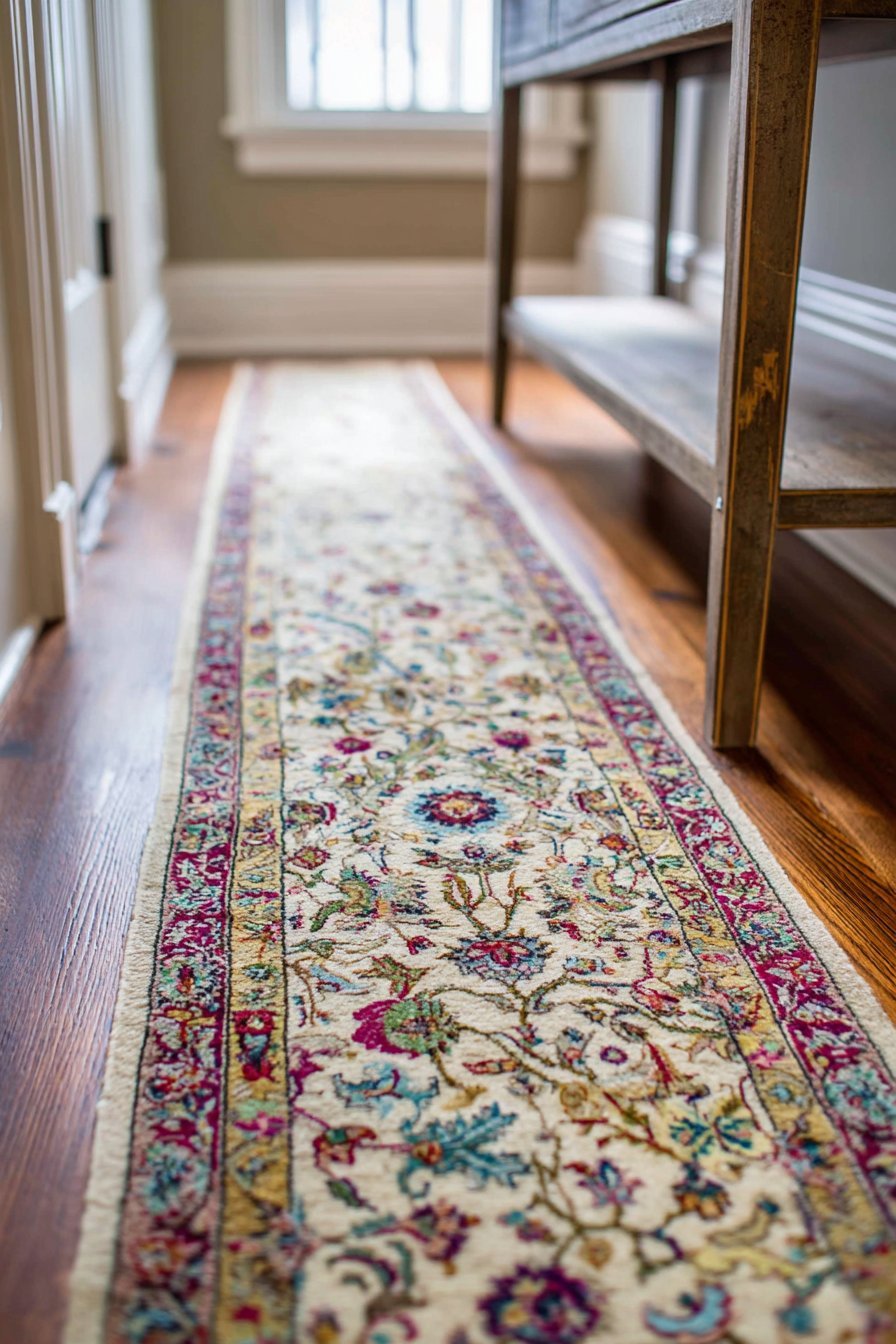
This luxurious carpet greets guests with immediate visual impact. The fine craftsmanship signals attention to quality throughout the home. The combination of rustic furniture and refined carpet creates an intriguing contrast.
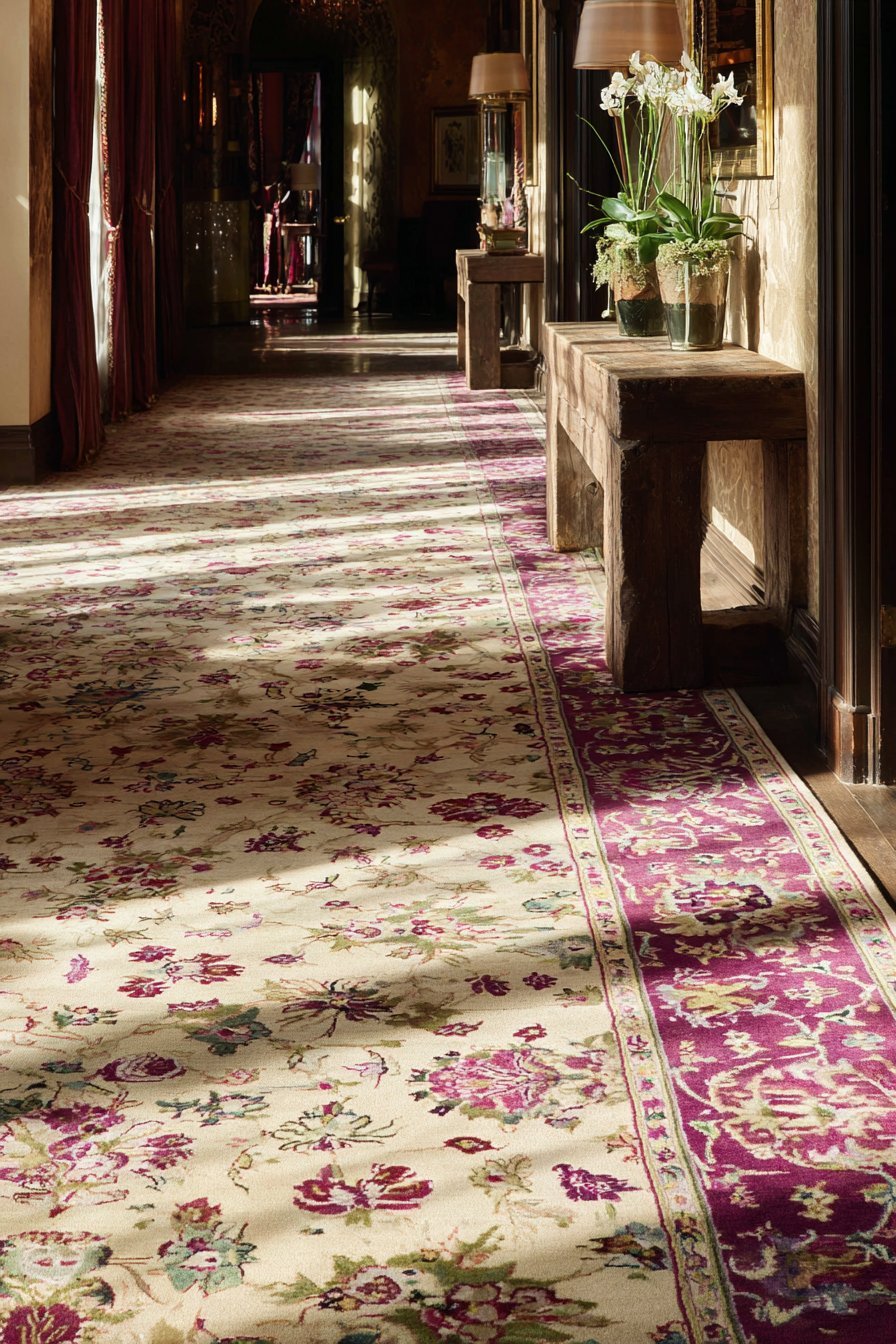
Museum-quality craftsmanship deserves prominent placement in entry spaces. The carpet’s exceptional detail rewards close examination upon arrival. This first impression sets sophisticated tone for entire home.
Key Design Tips:
- Position fine silk carpets in entryways for immediate impact
- Use natural light to highlight silk’s characteristic sheen
- Pair refined carpets with rustic furniture for an interesting contrast
- Accept gentle wear patterns as signs of authentic use
- Choose high-knot-count pieces for areas receiving close examination
- Display museum-quality craftsmanship in prominent locations
7. Transitional Living Room with Turkish Sivas Carpet
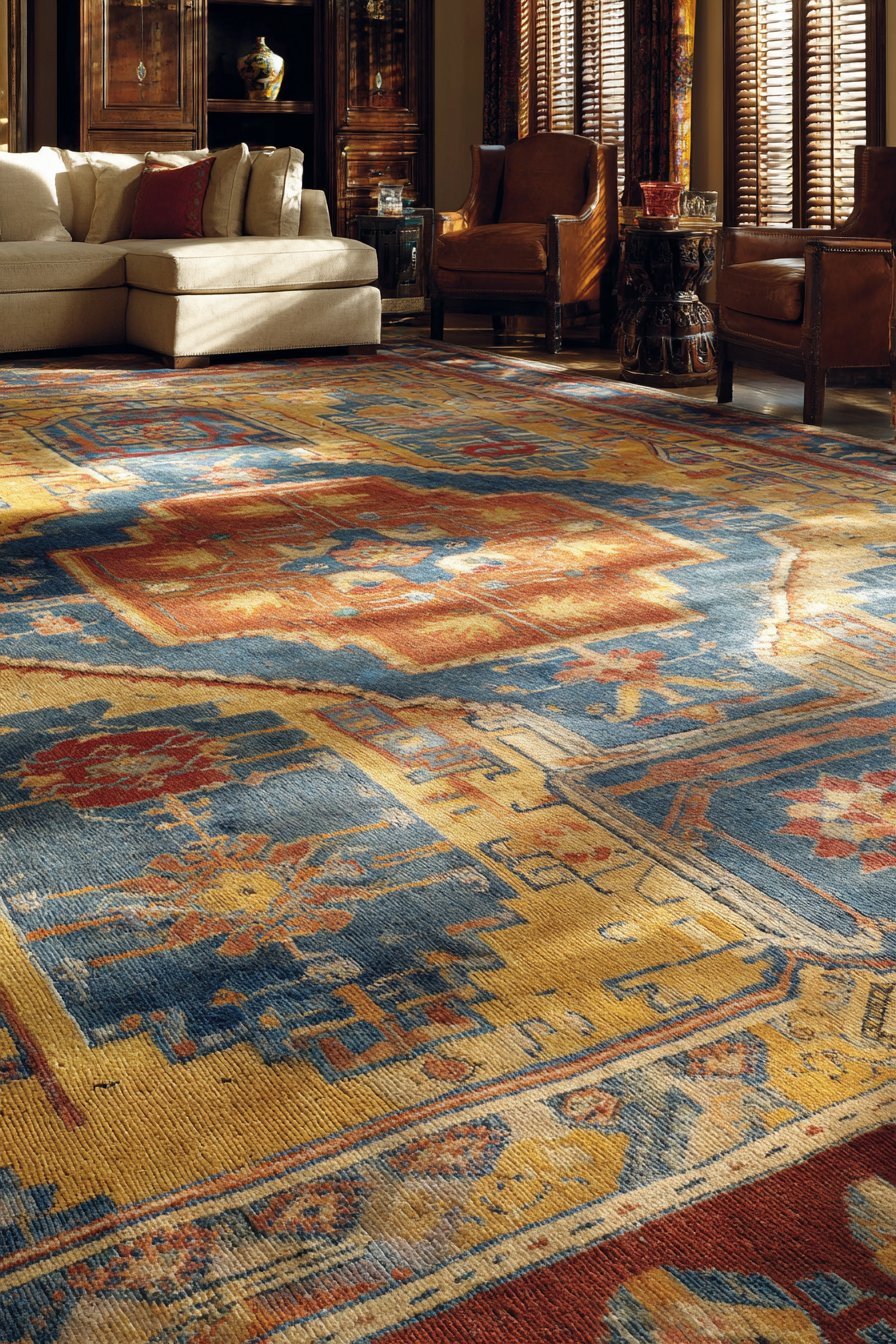
A large Turkish Sivas carpet in warm camel, rust orange, and slate blue grounds this seating area. The central medallion design demonstrates classic Turkish weaving patterns beautifully. Elaborate corner spandrels showcase traditional craftsmanship and attention to detail. Hand-spun wool shows natural luster variations and subtle abrash striping.
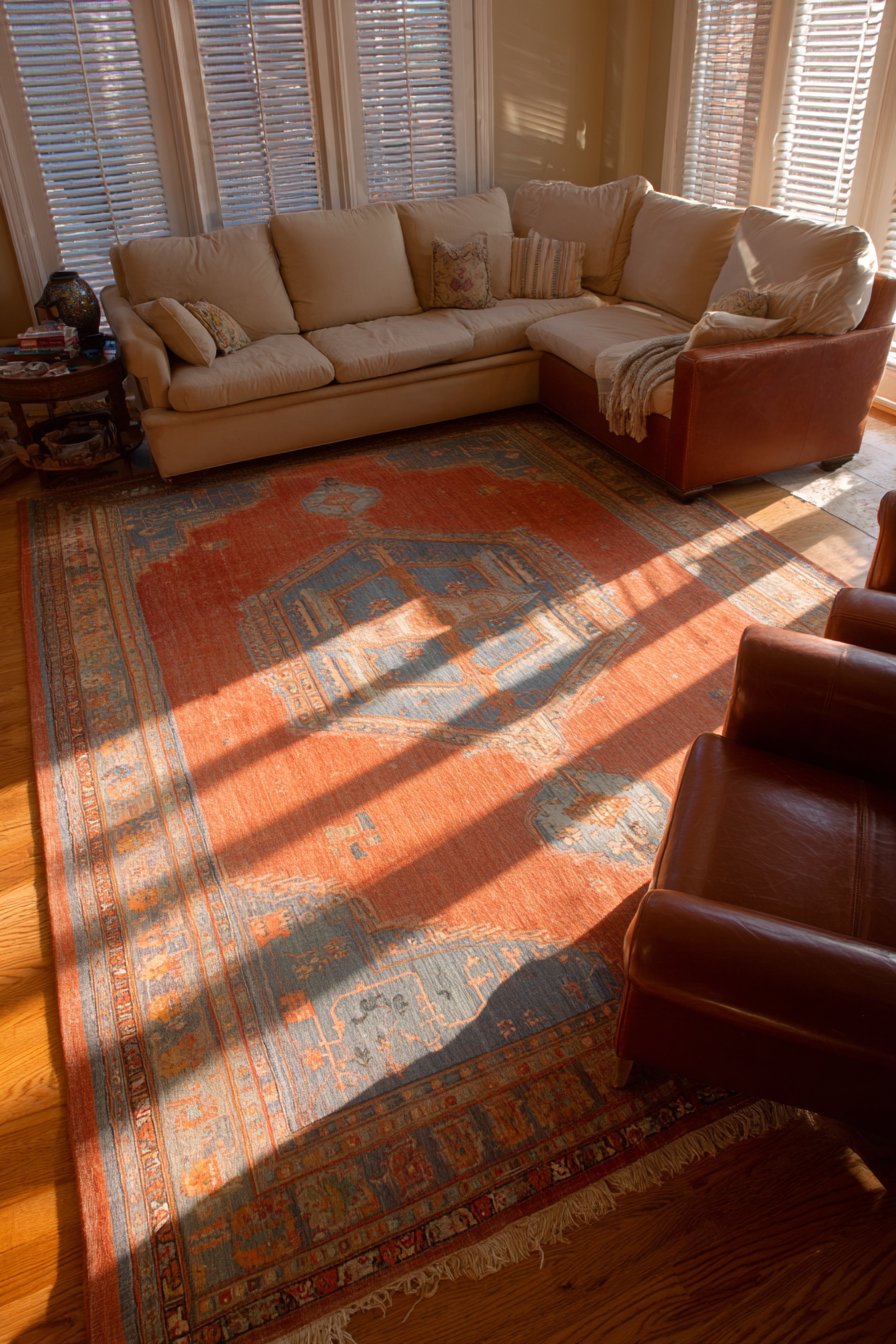
The carpet anchors a seating arrangement featuring neutral linen sectional and vintage leather armchairs. This furniture combination bridges traditional and contemporary design aesthetics. Afternoon golden hour light streaming through plantation shutters highlights dimensional pile. Intricate border details become clearly visible in this warm illumination.
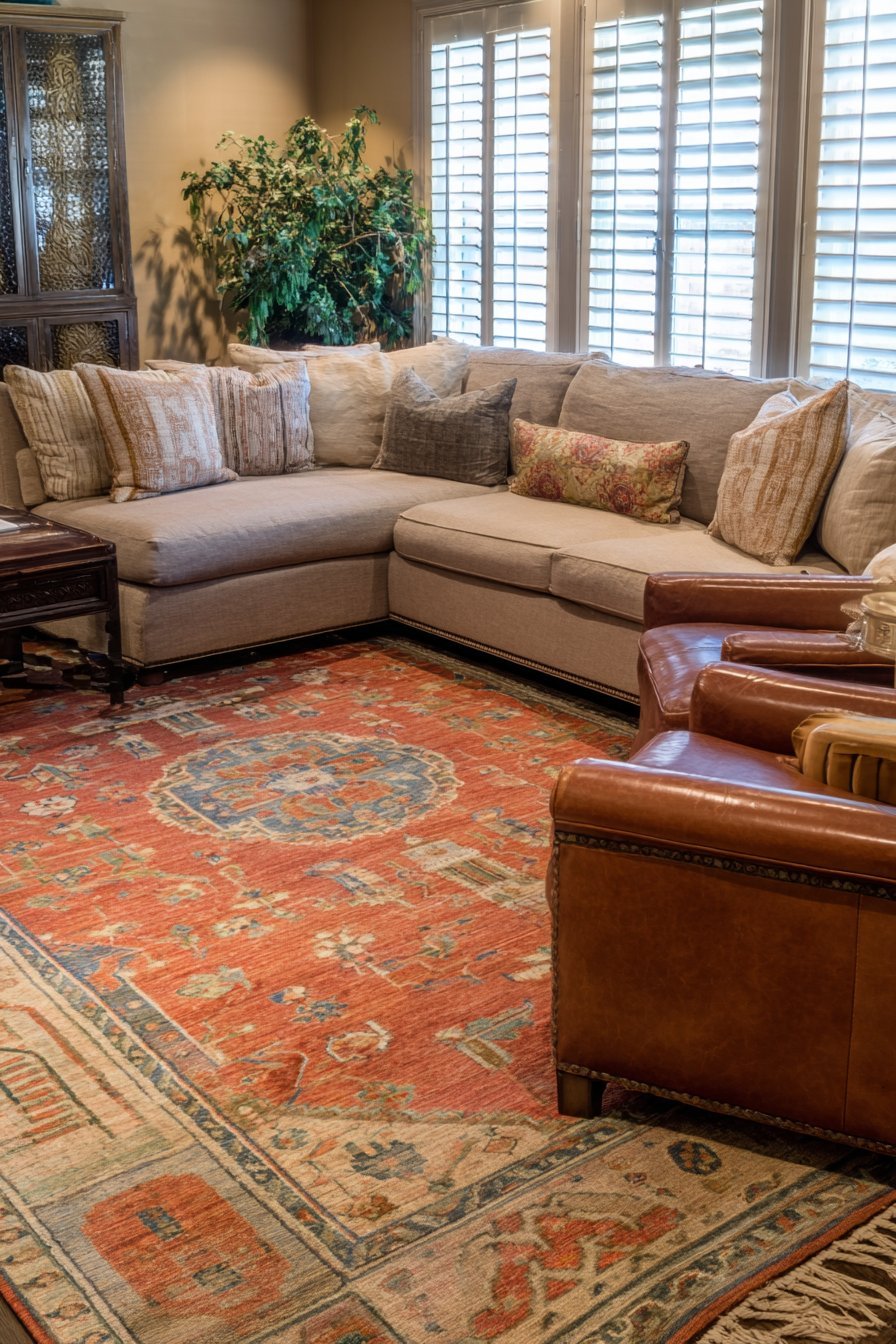
The transitional style allows flexibility in decorating choices moving forward. The carpet’s traditional patterns harmonize with both contemporary and vintage pieces. This versatility makes the space adaptable to changing preferences over time.
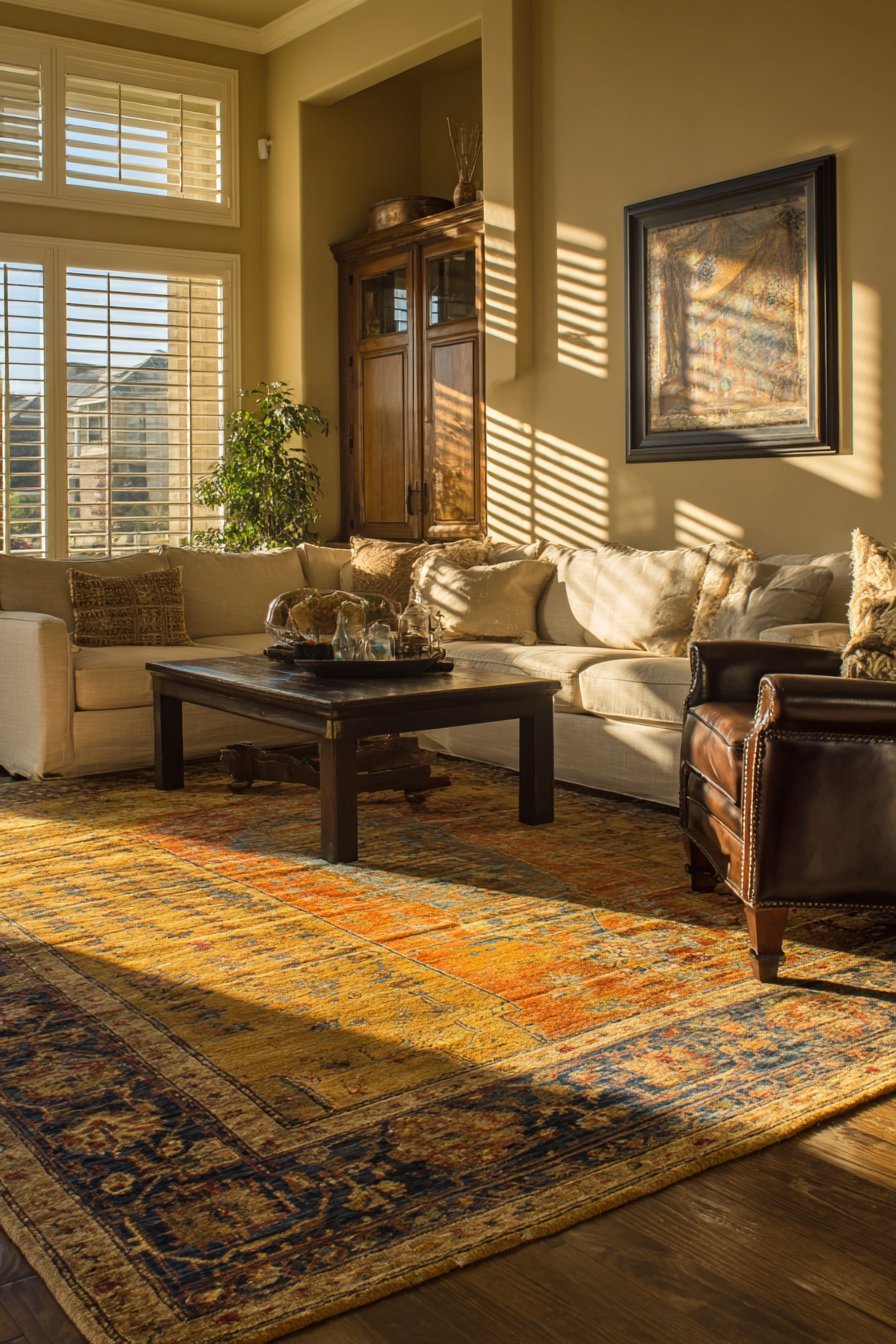
Wide-angle photography captures the successful integration of diverse furniture styles. The Turkish carpet provides common ground connecting different design periods. The warm color palette creates inviting atmosphere suitable for family gatherings.
Key Design Tips:
- Select carpets with warm earth tones for transitional spaces
- Mix contemporary and vintage furniture over traditional carpets
- Use plantation shutters to control natural light highlighting patterns
- Choose central medallion designs for balanced room compositions
- Appreciate hand-spun wool’s natural luster variations as design features
- Create flexibility through transitional style, accommodating future changes
8. Home Office with Repurposed Turkish Yastik
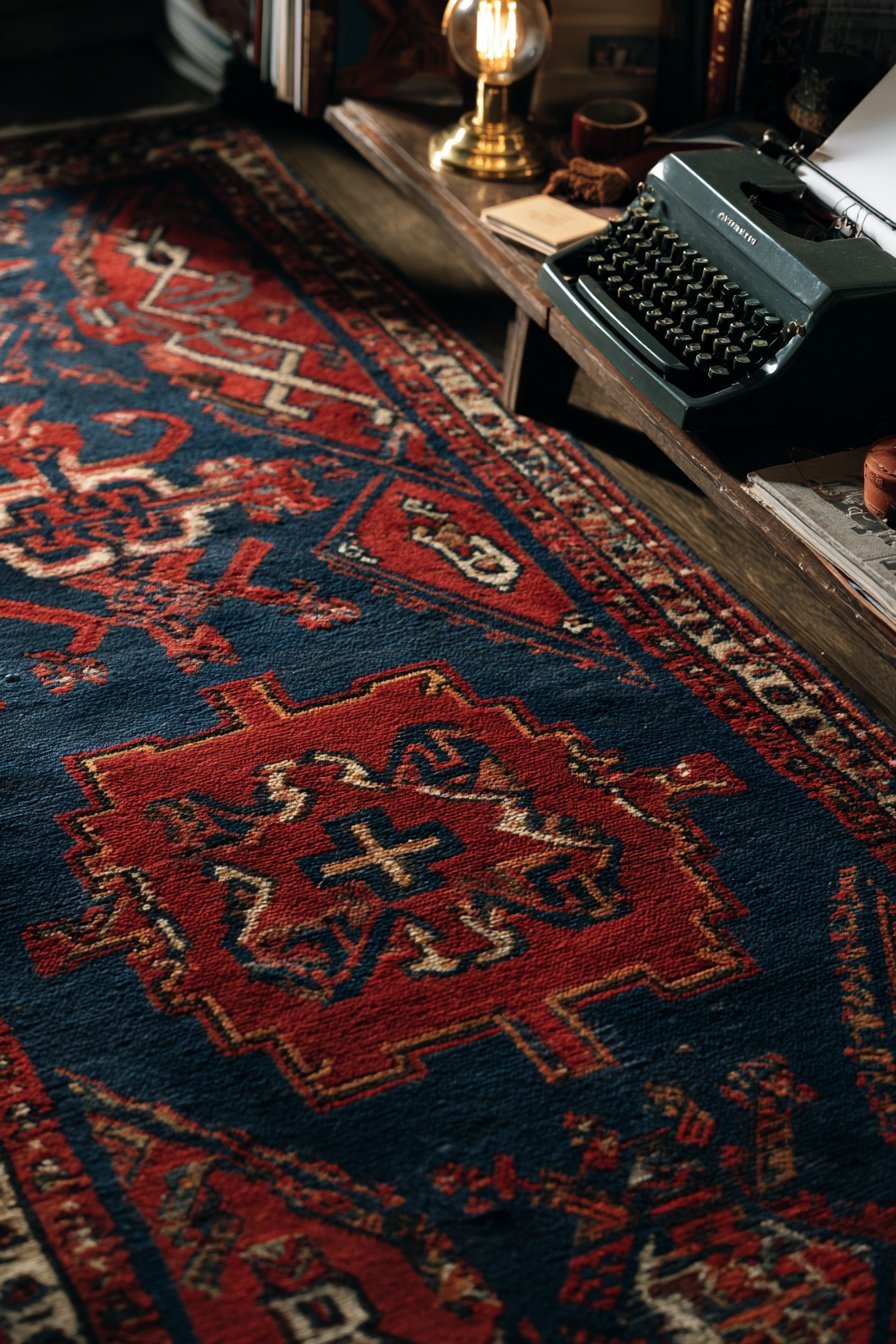
A Turkish Yastik cushion cover carpet repurposed as desk pad creates unique interest. Bold geometric patterns in deep indigo, brick red, and cream command attention. The small-format Turkish weaving shows traditional bag face design characteristics. Offset patterns and natural dye variations demonstrate authentic village craftsmanship.
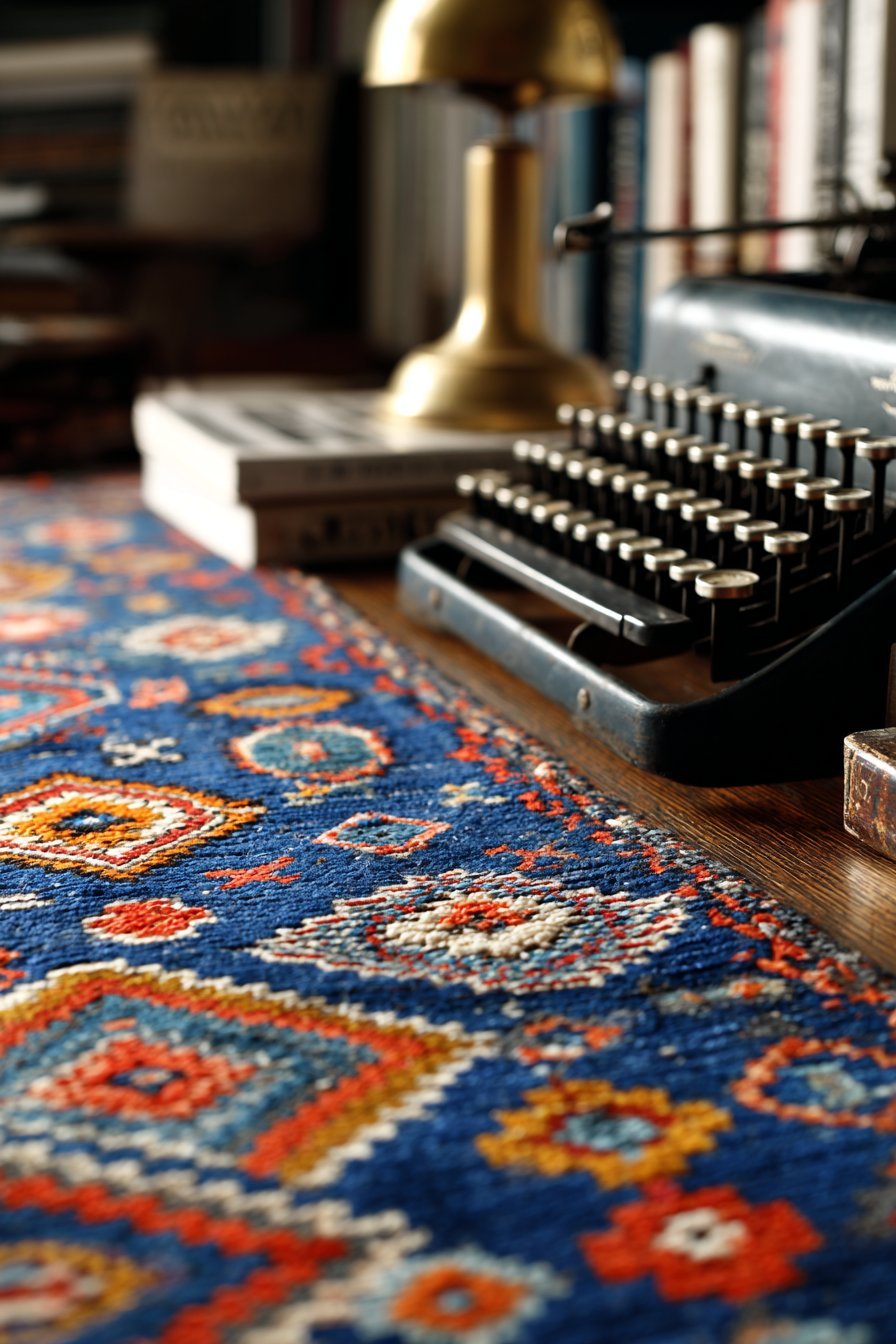
A brass desk lamp illuminates the carpet’s fine knot work perfectly. Rich wool texture becomes clearly visible beneath vintage typewriter and leather accessories. The weathered oak desk surface provides neutral backdrop for colorful textile. This unexpected application demonstrates creative thinking about Turkish carpet uses.
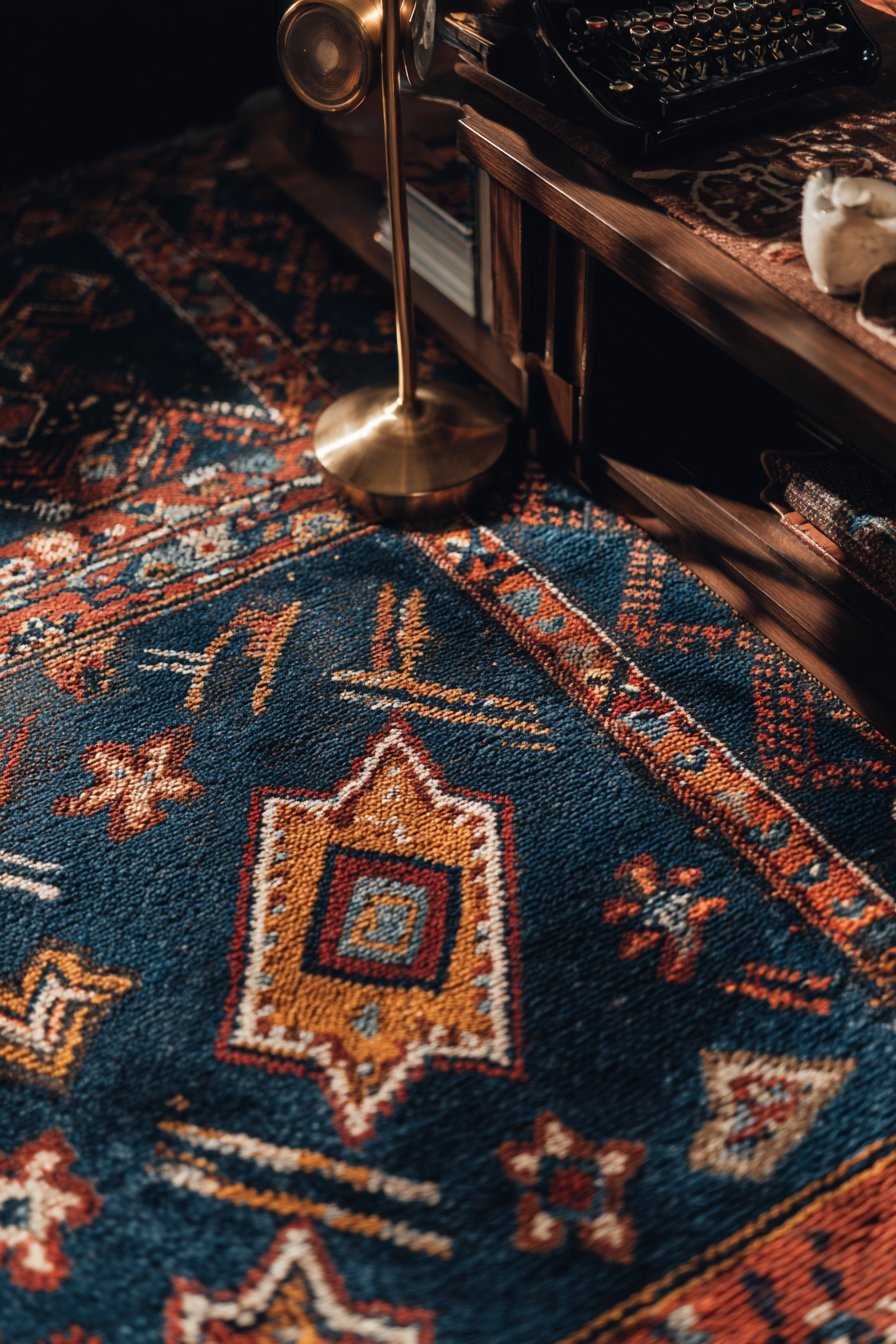
Detail macro photography captures authentic craftsmanship and rich color saturation. The small scale makes this approach accessible for budget-conscious decorators. Functional artistry combines practical desk protection with visual interest.
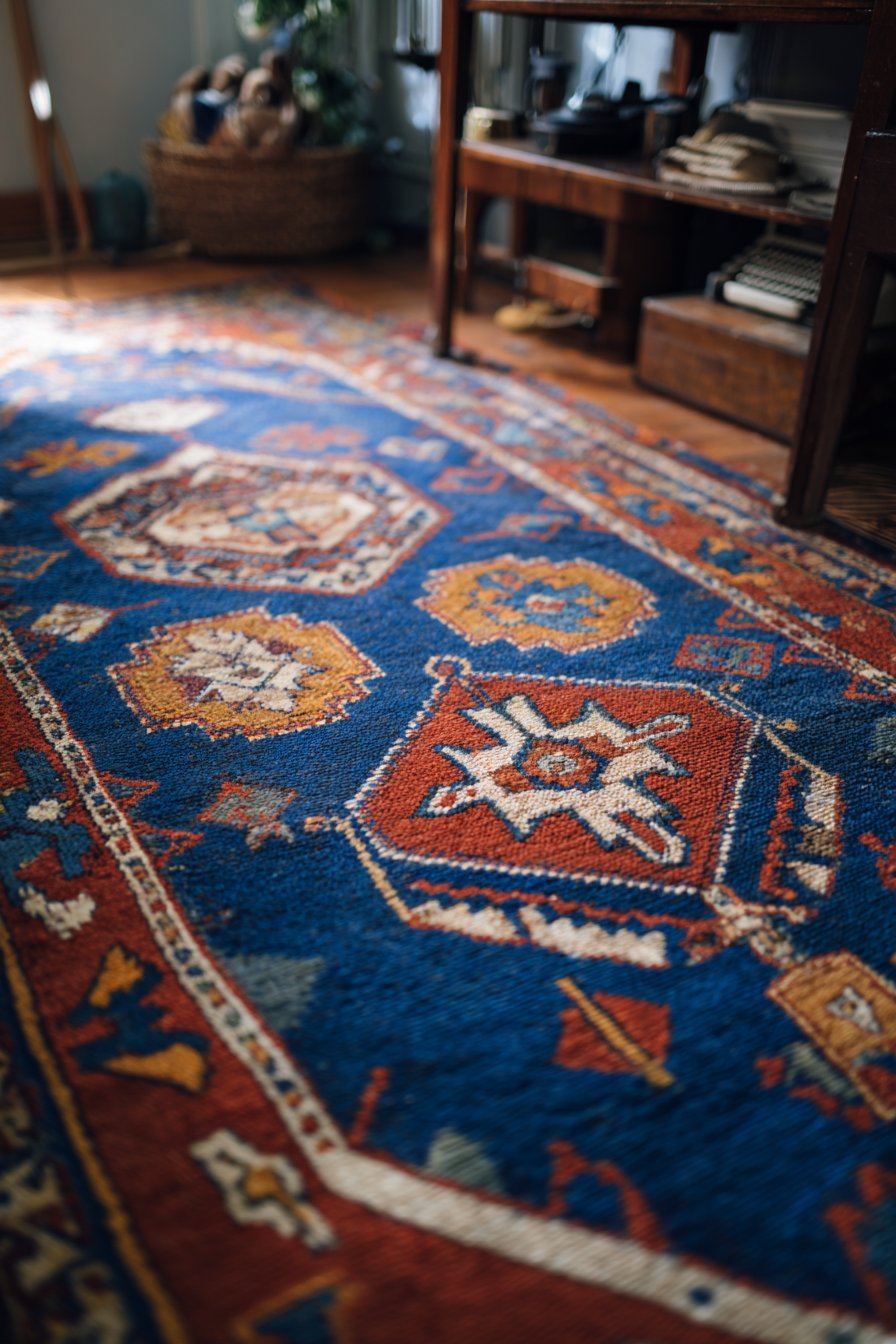
This creative repurposing extends Turkish carpet utility beyond traditional floor covering. The intimate scale allows close appreciation of intricate pattern work. Personal workspace gains character through this thoughtful design choice.
Key Design Tips:
- Repurpose small Turkish textiles as desk pads or table runners
- Use brass lighting to warm up indigo and red color combinations
- Position vintage accessories to complement traditional carpet patterns
- Choose weathered wood surfaces to harmonize with aged textiles
- Appreciate small-format pieces for budget-friendly decorating solutions
- Explore creative applications beyond traditional floor covering uses
9. Mediterranean Sunroom with Coastal Turkish Carpet
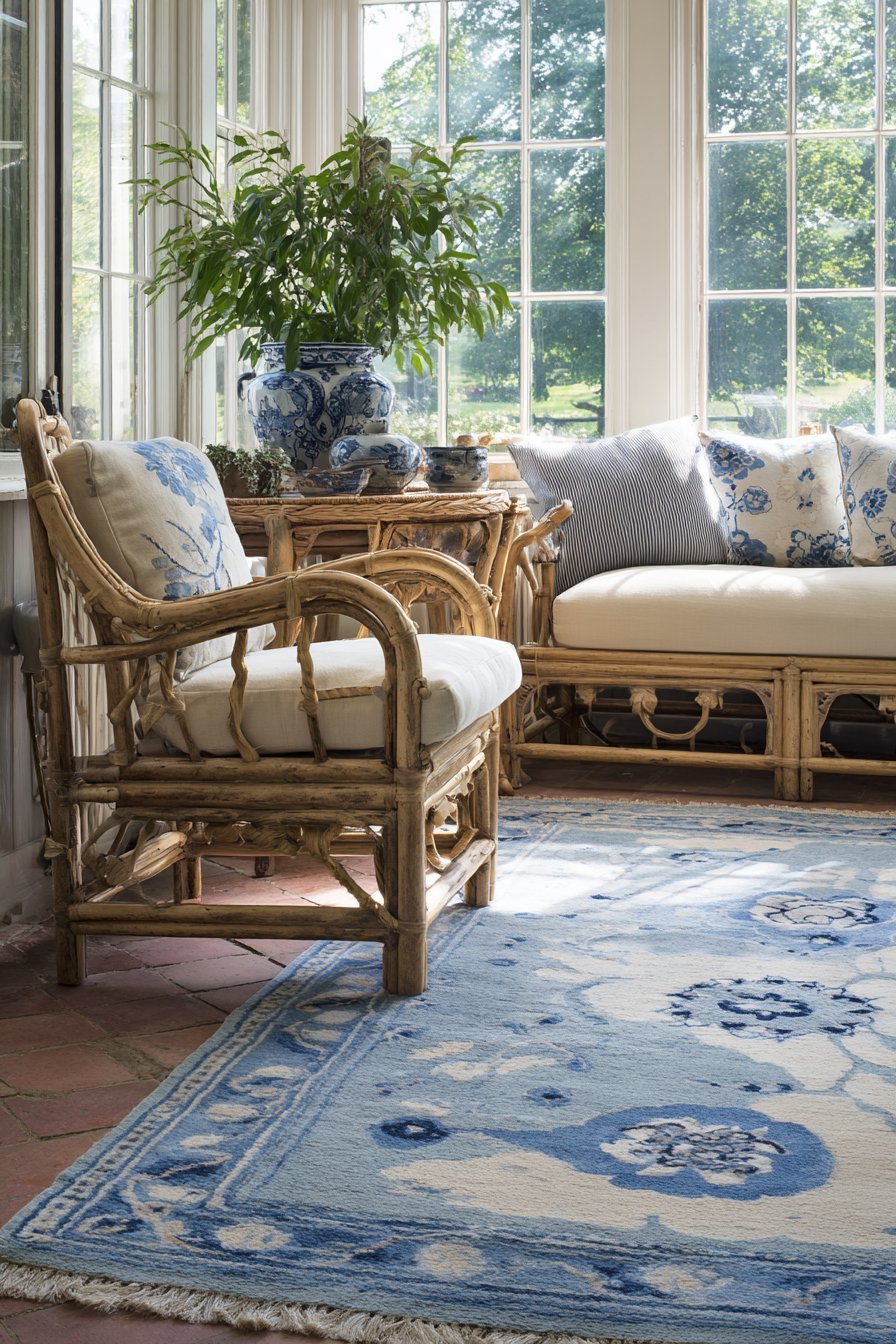
A Turkish carpet in oceanic blues and sandy beiges creates coastal atmosphere. Wave-like patterns and stylized floral motifs evoke Mediterranean sensibility. The relaxed weaving style and visible cotton warp threads indicate authentic village craftsmanship. Hand-finished selvedges and irregular edges add rustic charm.
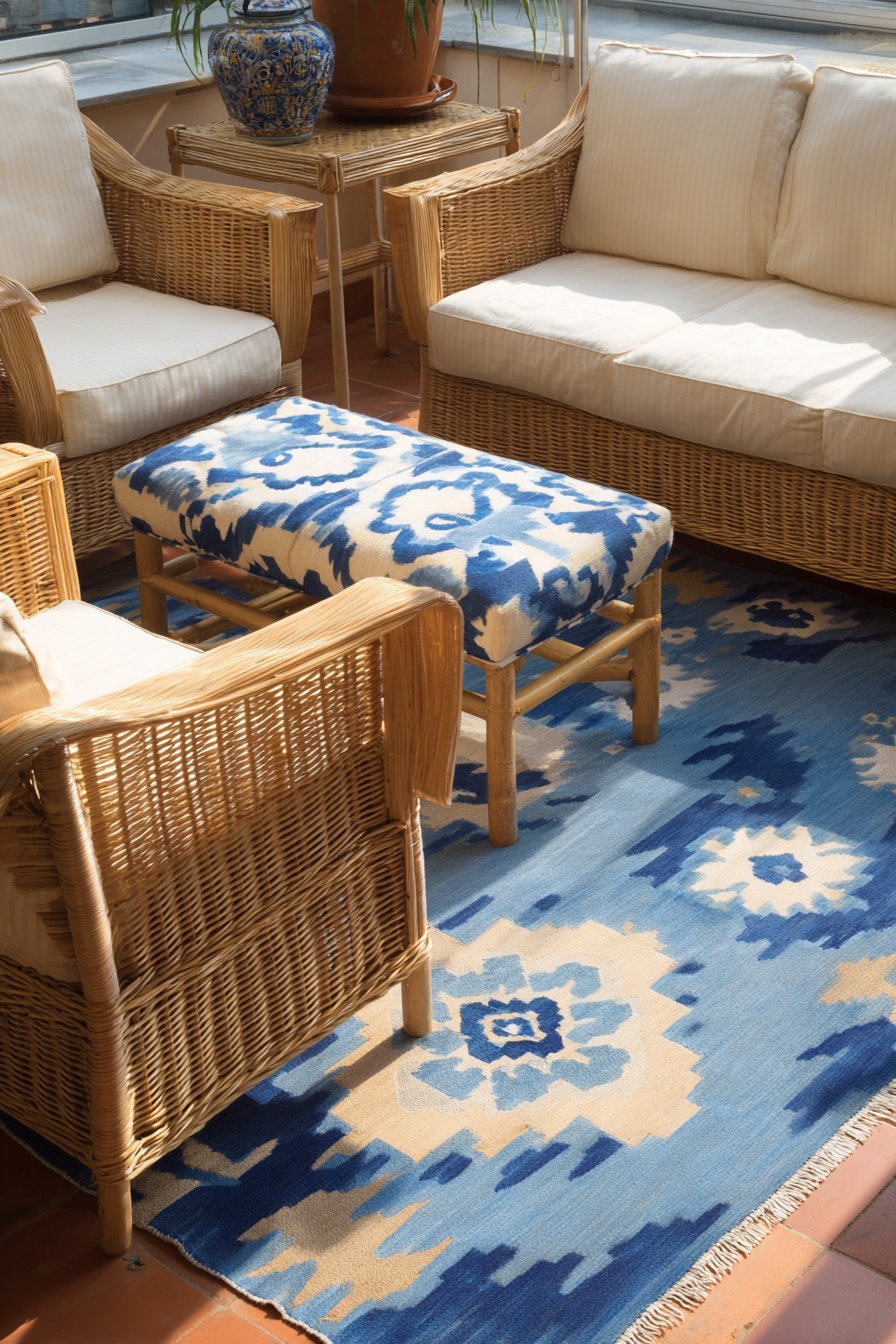
Rattan furniture with cream cushions sits comfortably atop the carpet. Bright natural daylight reveals the color palette inspired by Turkish coastal regions. Natural fade variations add character rather than diminishing value. Surrounding terracotta tile flooring frames the carpet’s organic edges beautifully.
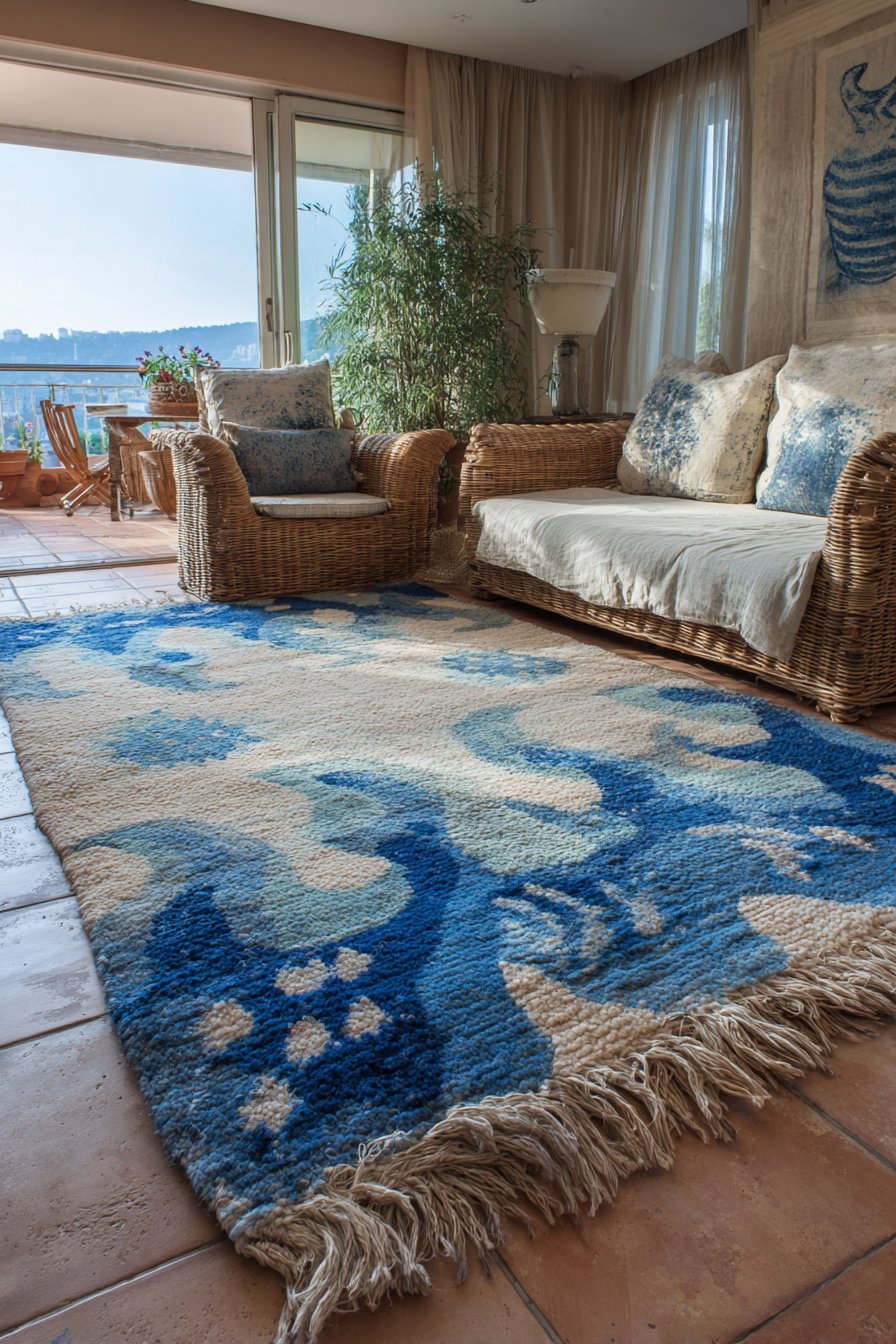
This casual approach celebrates imperfection and handmade authenticity. The light-filled space feels relaxed and vacation-inspired year-round. Coastal color palette connects interior space with outdoor environment.
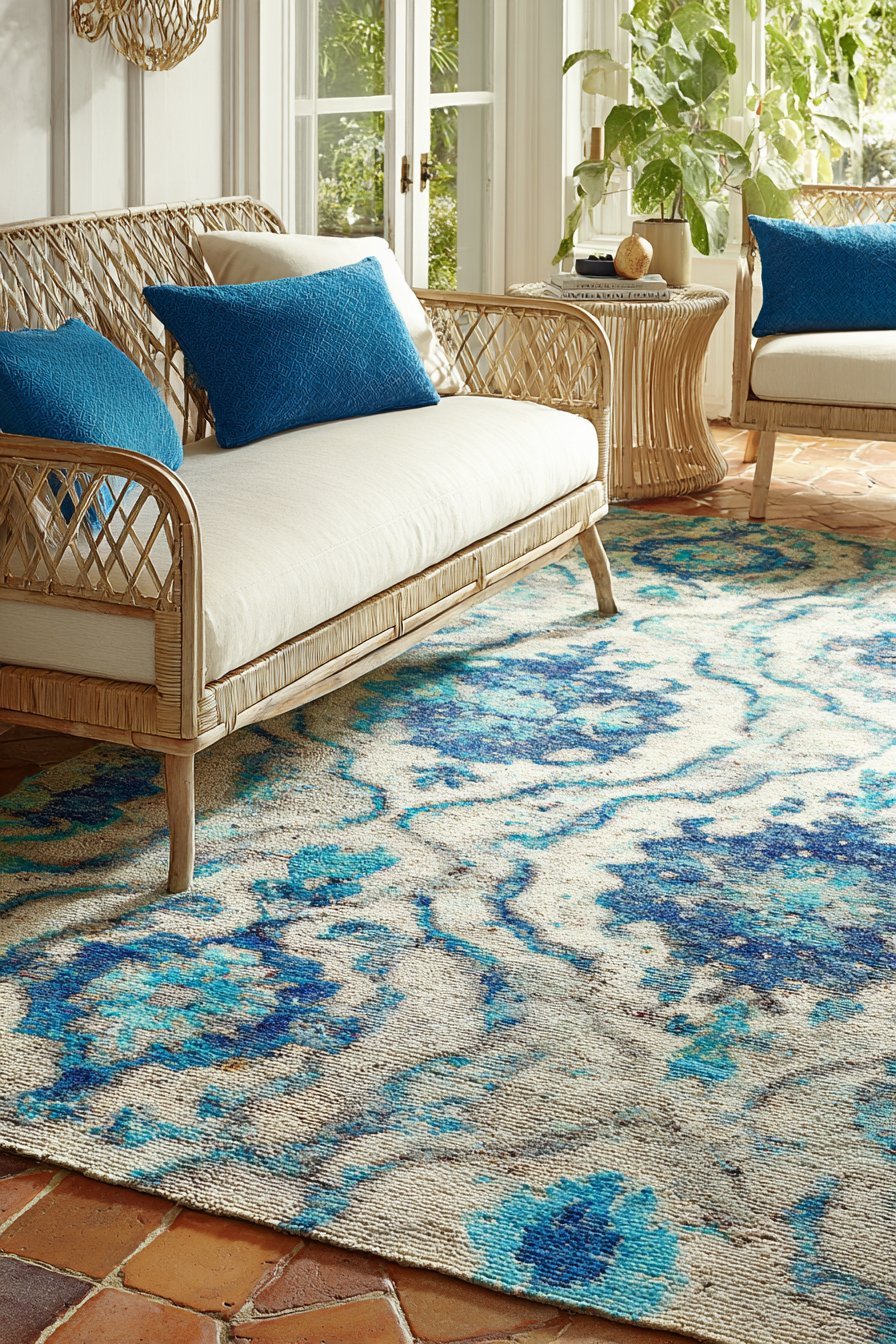
High-key lighting captures the casual elegance of authentic handmade qualities. The combination of natural materials creates cohesive Mediterranean aesthetic. Every element contributes to relaxed, sun-soaked atmosphere.
Key Design Tips:
- Choose carpets with coastal color palettes for sunroom spaces
- Embrace natural fade variations as authentic character features
- Pair Turkish textiles with natural rattan furniture
- Frame carpets with complementary tile flooring
- Maximize natural light to create bright, airy atmospheres
- Celebrate irregular edges and handmade imperfections
10. Maximalist Bedroom with Bergama Carpet
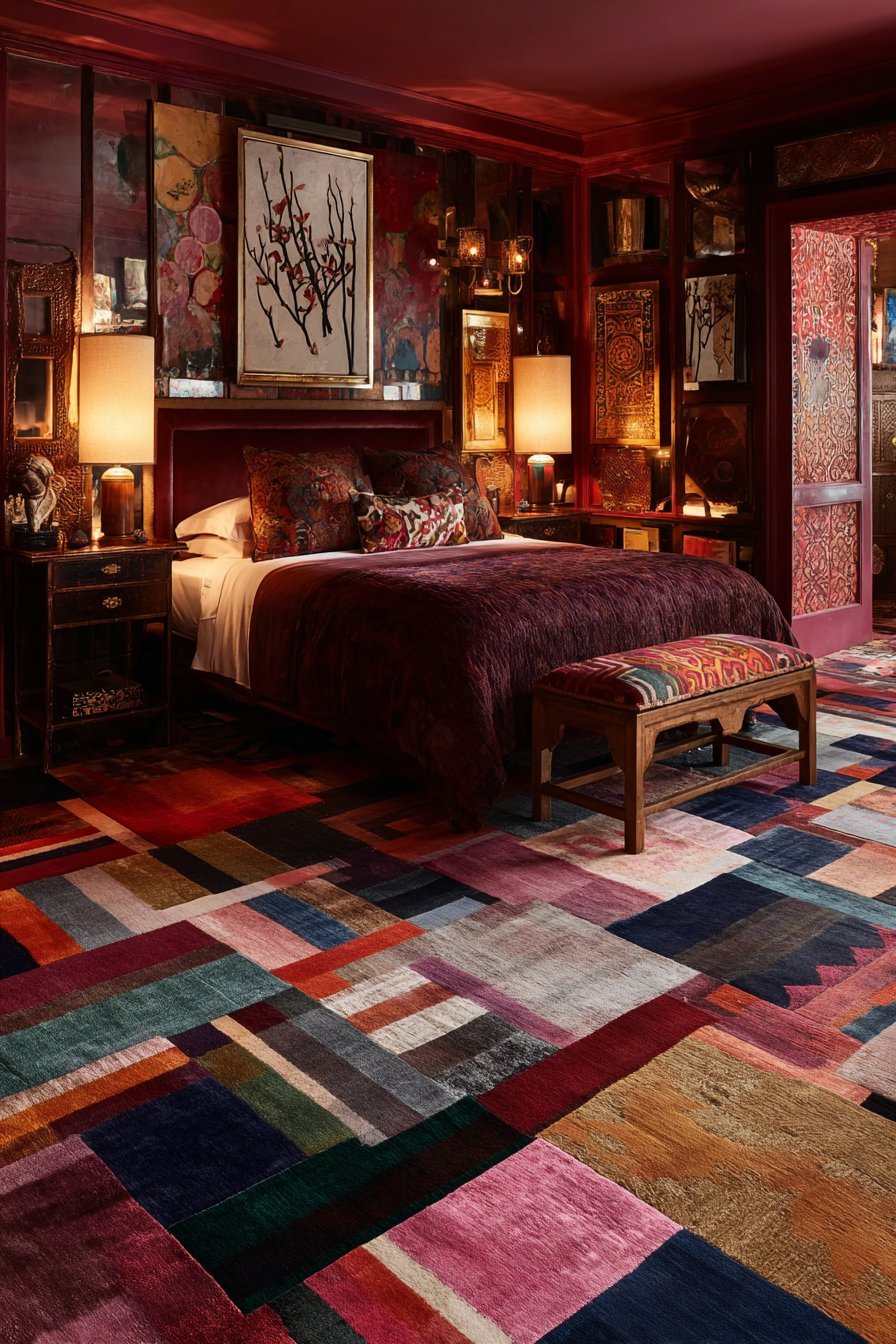
A large Turkish Bergama carpet with bold geometric patterns anchors this maximalist bedroom. Burgundy, navy, and gold tones create rich visual foundation. The antique carpet’s abraded pile reveals underlying foundation colors, adding depth. Chunky hand-spun wool shows authentic texture variations throughout the surface.
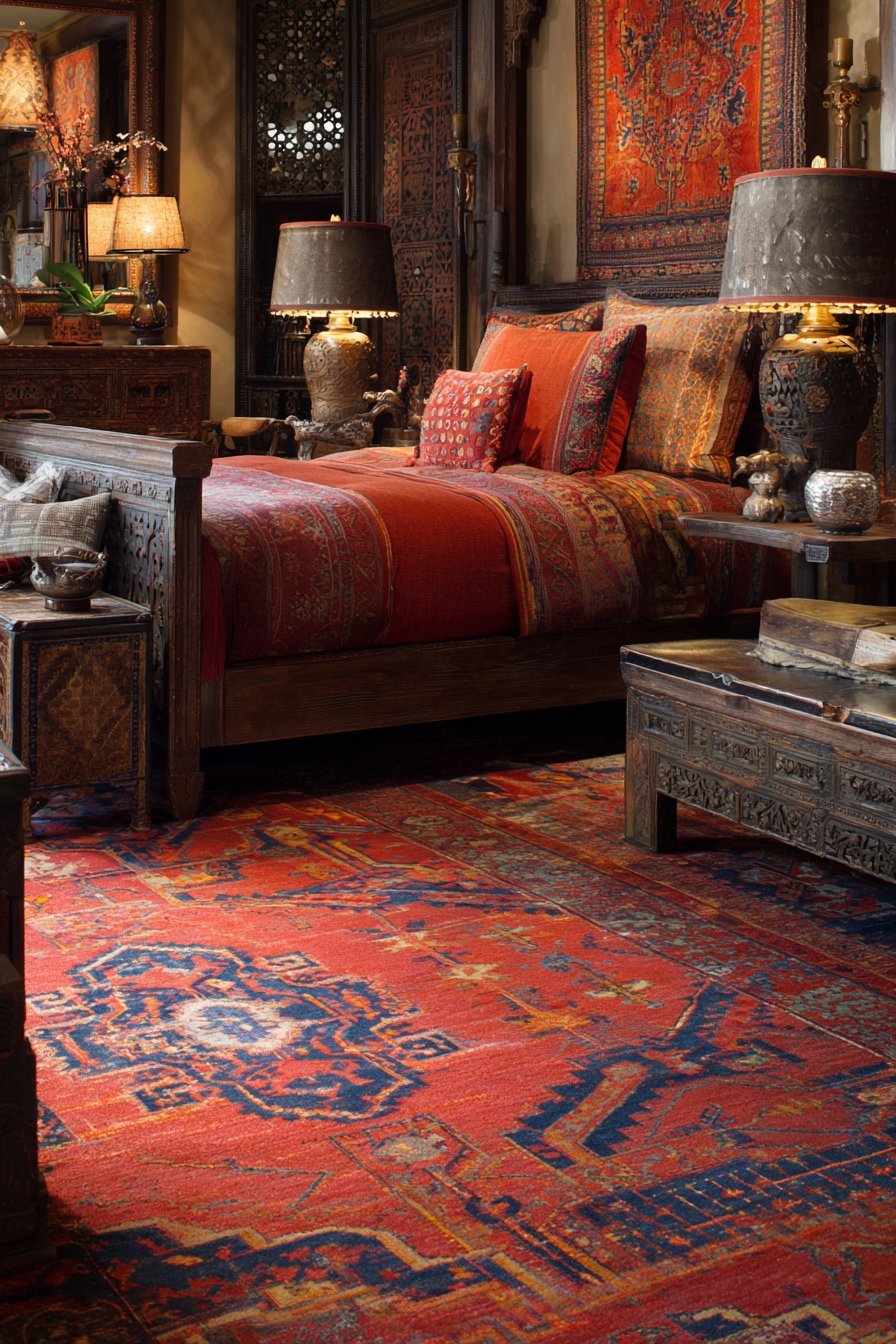
The carpet layers over sisal wall-to-wall carpeting for added dimension. This base provides practical comfort while showcasing the decorative Turkish piece. Eclectic mix of carved wooden furniture, embroidered textiles, and brass accessories echo rich colors. Every element contributes to collected, well-traveled aesthetic.
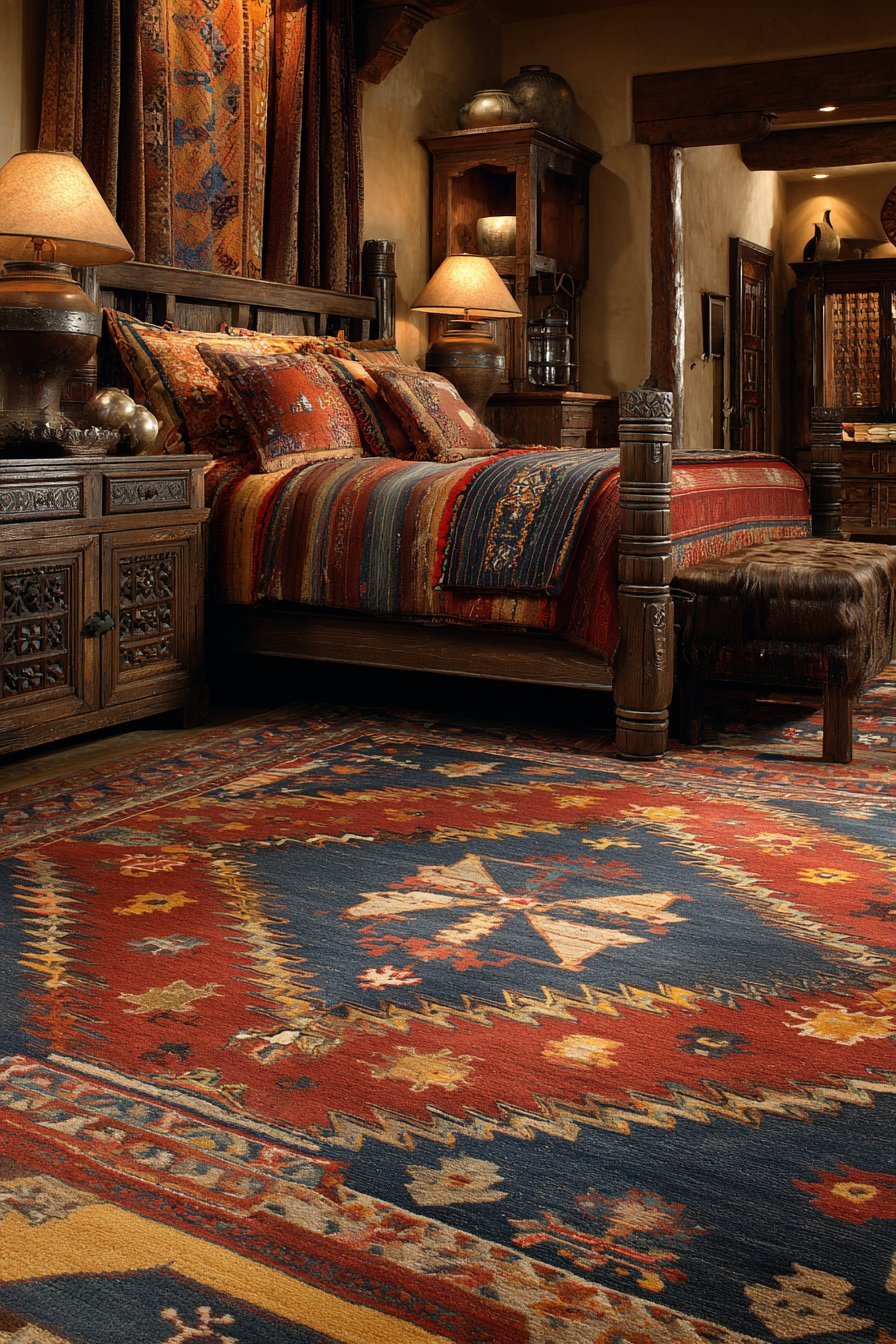
Warm ambient lighting from bedside lamps highlights dimensional surface perfectly. Time-worn patina becomes design feature rather than flaw in maximalist context. The layered approach demonstrates confidence in bold design choices.
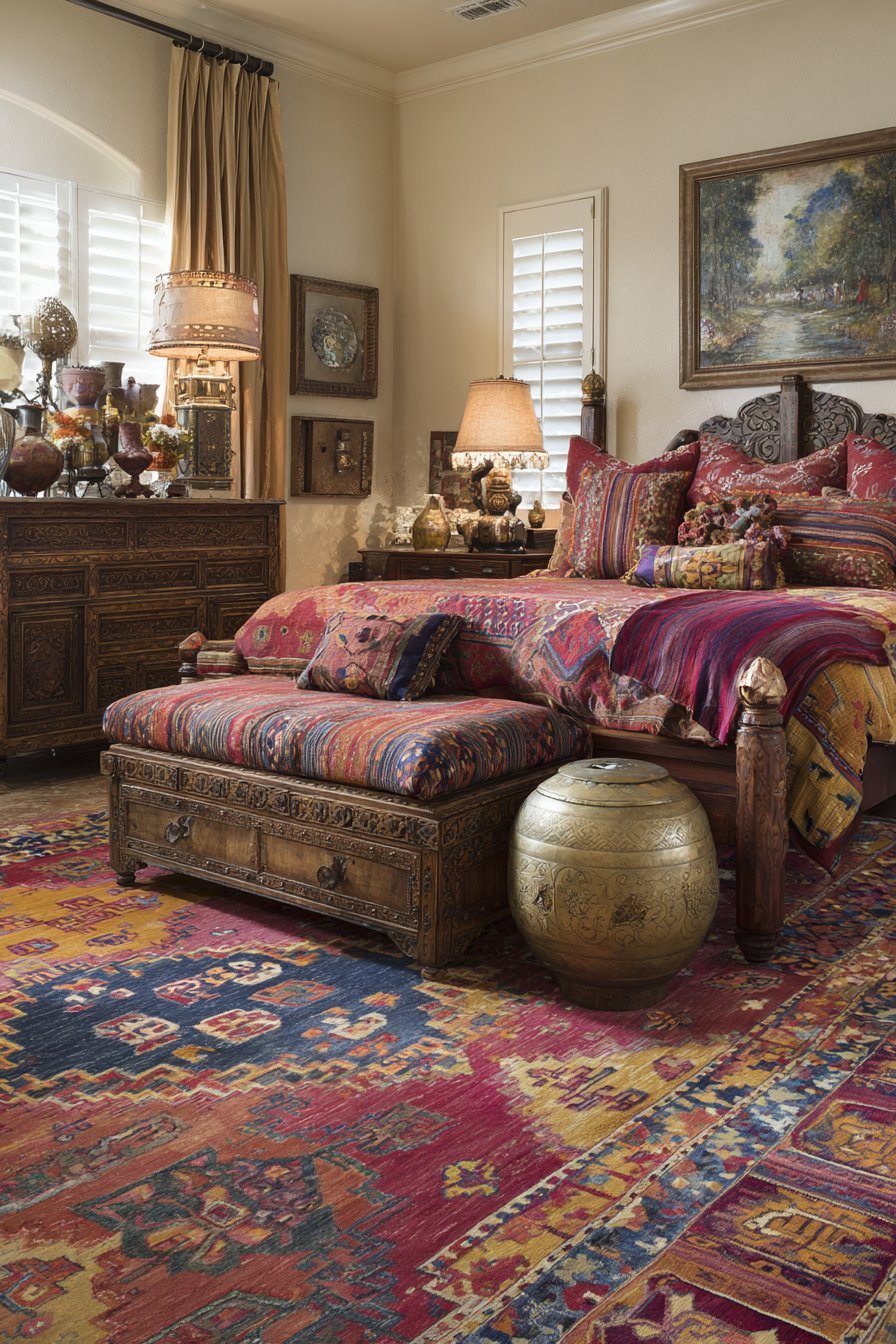
Professional interior photography captures the collected aesthetic where Turkish carpet serves foundation. The colorful base allows creative freedom in accessory selection. This approach suits personalities embracing abundant pattern and color.
Key Design Tips:
- Layer decorative carpets over neutral base for maximalist impact
- Embrace abraded pile revealing foundation colors as design feature
- Echo carpet colors throughout accessories and textiles
- Use warm ambient lighting to enhance rich jewel tones
- Collect eclectic furniture pieces unified by carpet’s color palette
- Celebrate time-worn patina in maximalist, collected spaces
11. Contemporary Loft with Graphic Black and White Kilim
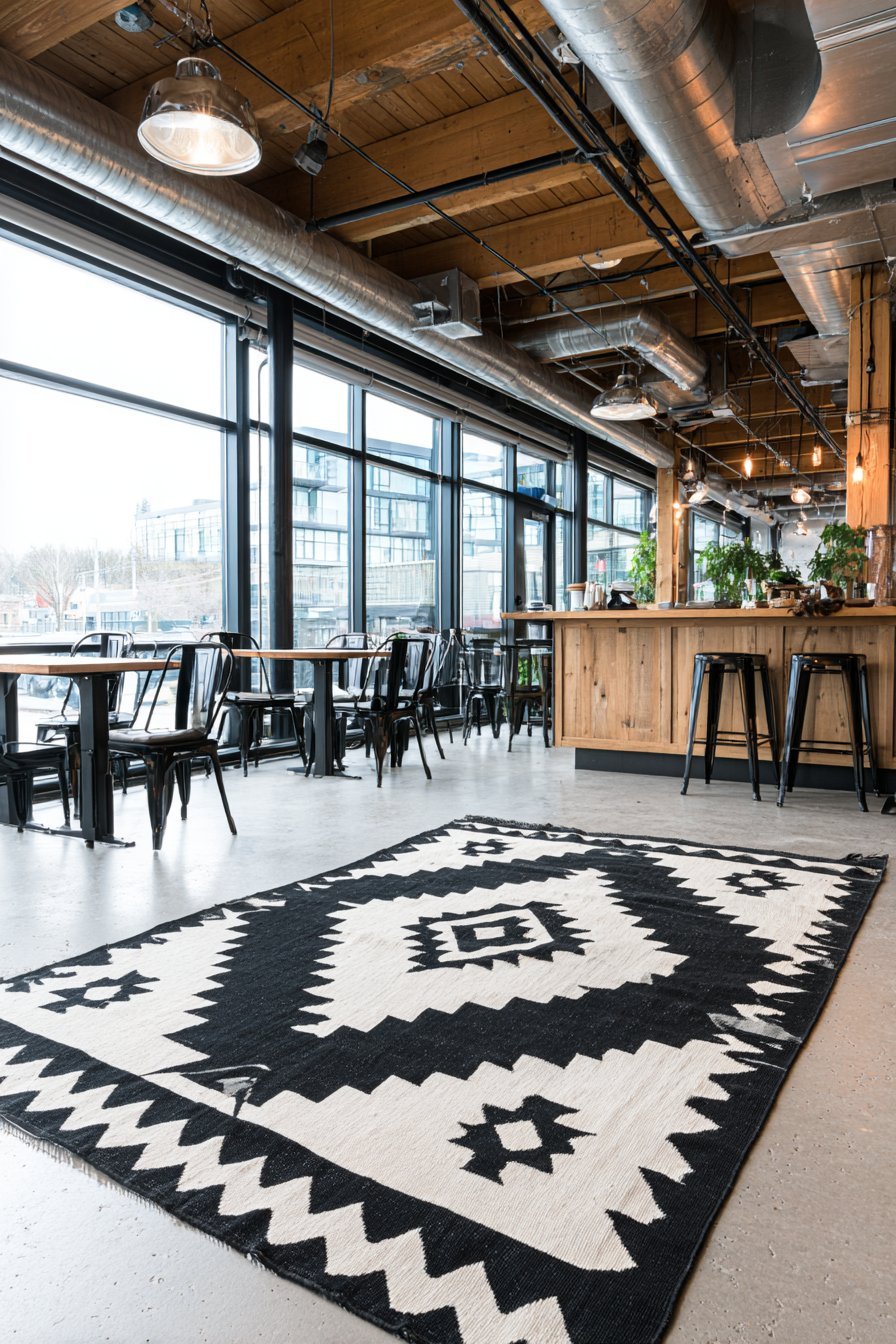
A graphic Turkish kilim in bold black and white creates striking contrast. The flat-weave carpet’s traditional reciprocal design demonstrates authentic construction techniques. Visible weft slits prove genuine Turkish kilim craftsmanship. Industrial metal furniture provides modern counterpoints to traditional textile.
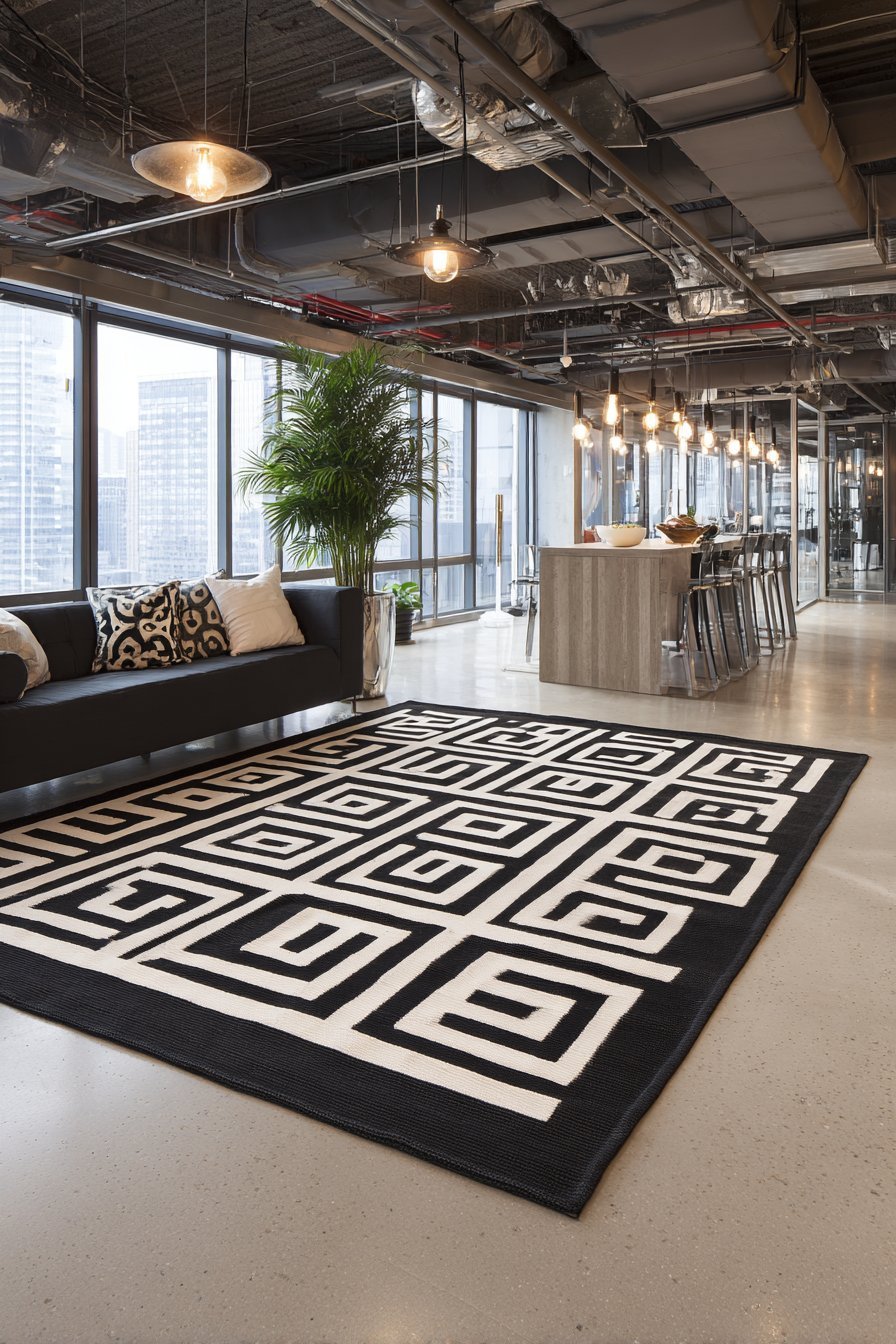
Polished concrete floors offer neutral backdrop for dramatic pattern. Edison bulb lighting adds industrial character while providing functional illumination. Natural light from floor-to-ceiling windows emphasizes crisp pattern definition. Slight warp irregularities reveal handmade origin, adding authenticity.
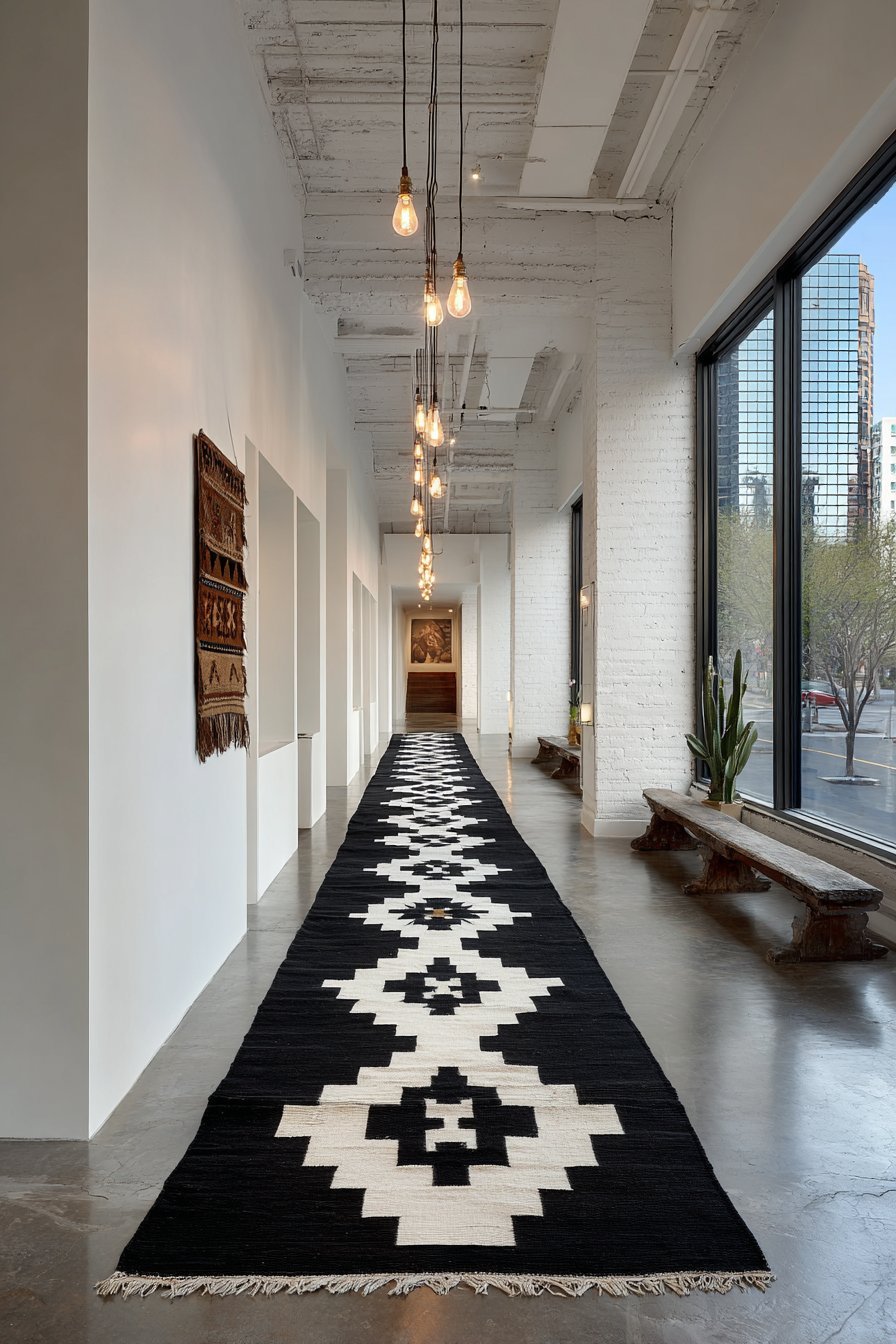
The unexpected pairing of vintage Turkish textile with industrial modern elements works beautifully. The monochromatic palette bridges traditional and contemporary design languages. This approach demonstrates how Turkish carpets adapt to cutting-edge interiors.
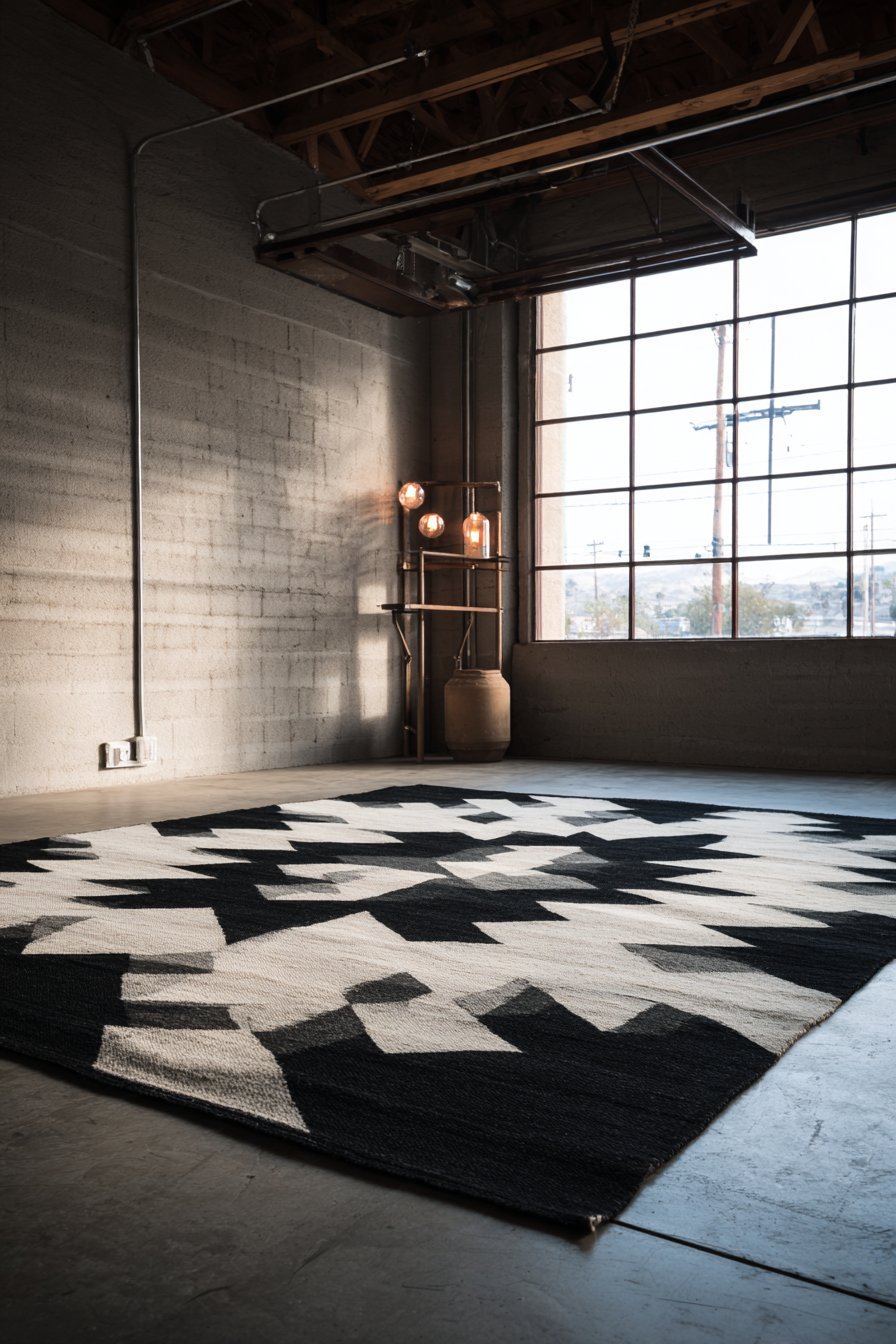
Wide-angle architectural photography captures the successful style fusion. The graphic pattern holds its own against industrial materials and forms. This bold design choice makes strong statement about appreciating traditional craftsmanship.
Key Design Tips:
- Choose monochromatic kilims for contemporary industrial spaces
- Pair traditional textiles with modern industrial furniture
- Use concrete floors to enhance graphic pattern impact
- Maximize natural light to emphasize pattern clarity
- Appreciate warp irregularities as proof of handmade authenticity
- Bridge design eras through unexpected material combinations
12. Bedroom Alcove with Faded Turkish Runner
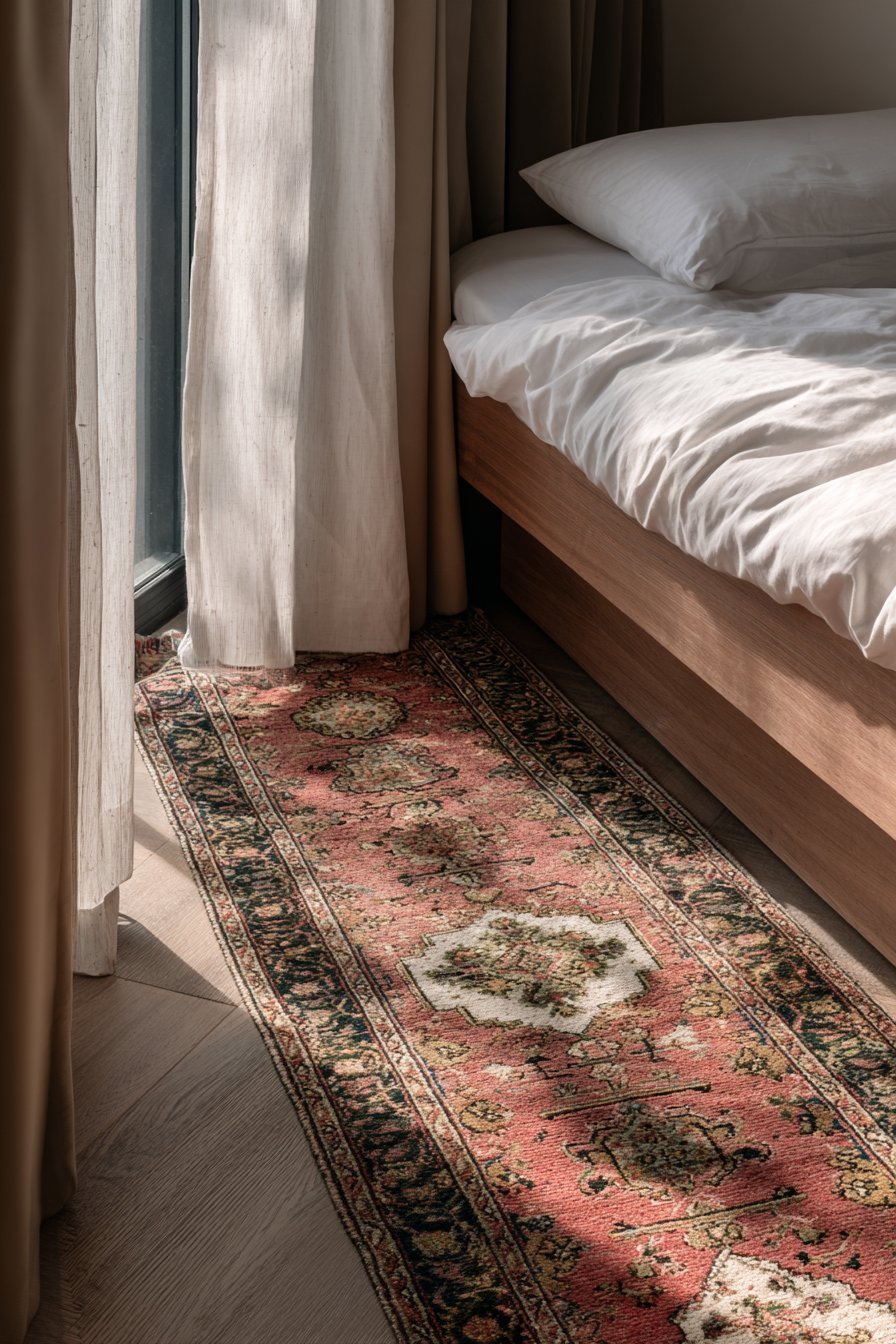
A Turkish carpet runner in faded rose, sage green, and cream defines this intimate alcove. The narrow-format carpet is positioned beside the bed as a comfortable step-down surface. Traditional herati pattern features repeating floral clusters in characteristic Turkish colors. Low pile and soft wool texture provide barefoot comfort.
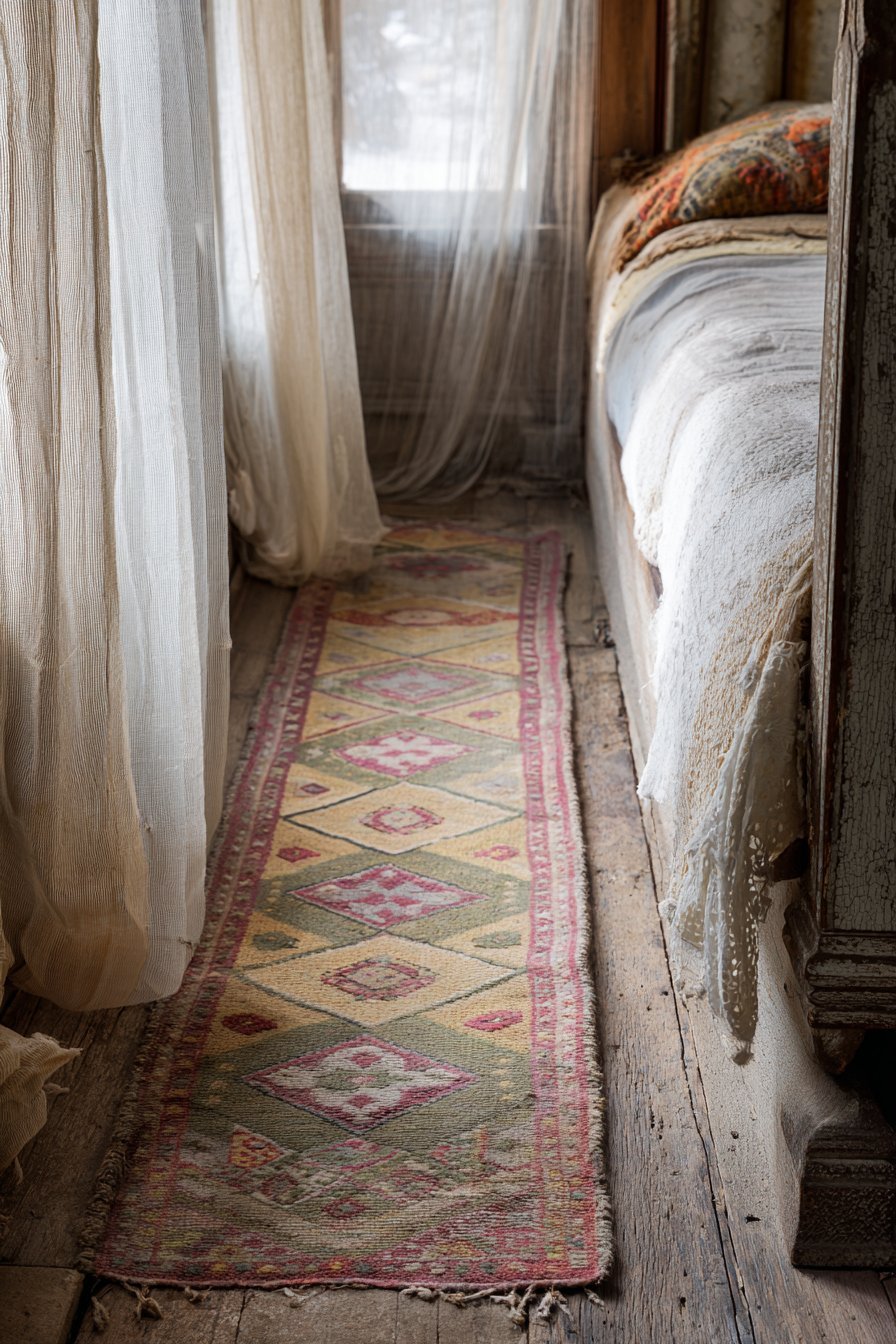
Natural aging has created gentle color variations throughout the runner. Worn areas demonstrate authentic use, adding character rather than diminishing value. Morning light through gauze curtains softly illuminates muted palette. Subtle pattern work emerges gradually in this gentle illumination.
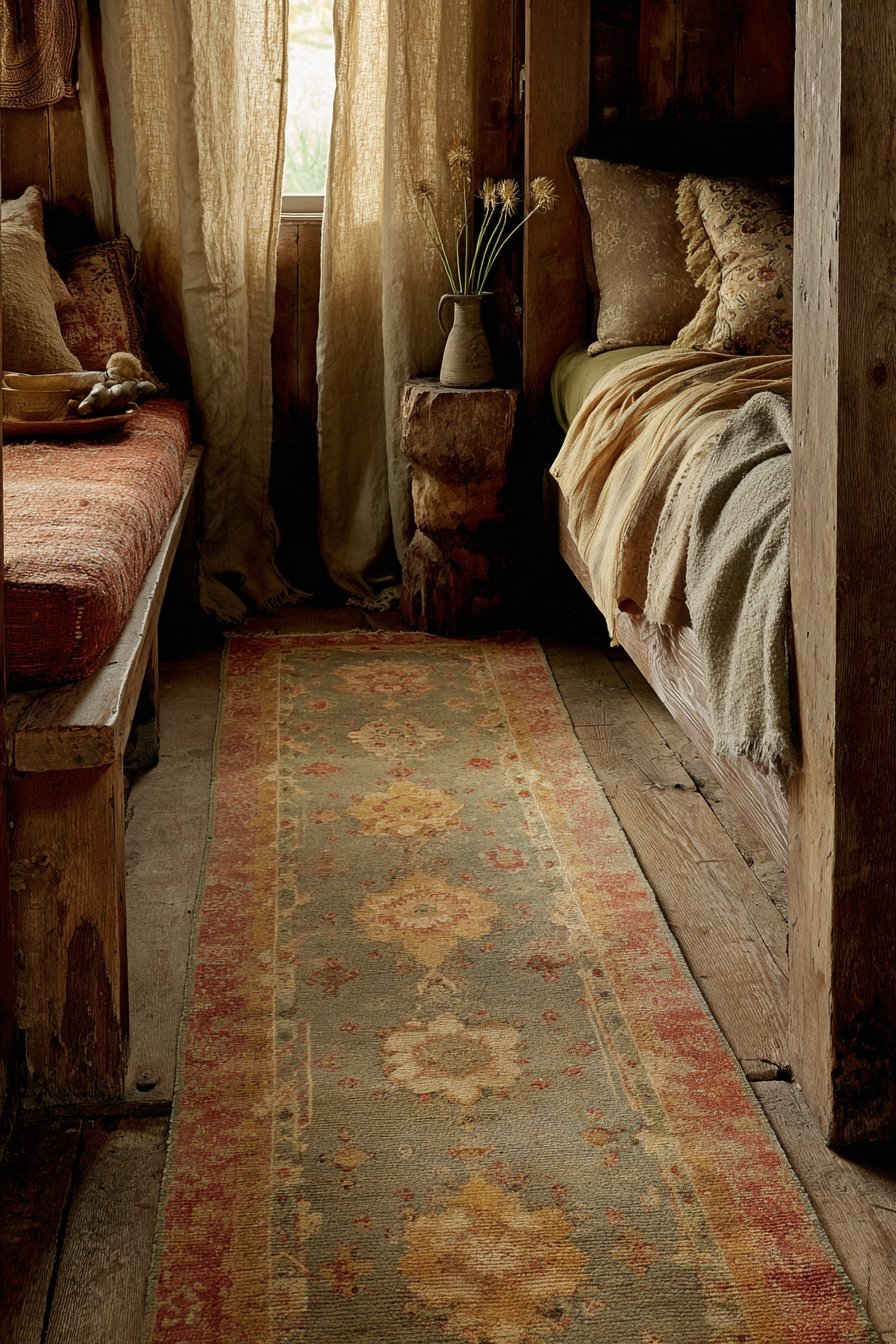
This practical placement combines functionality with aesthetic appeal beautifully. The narrow runner perfectly suits bedside placement without overwhelming small space. Honest wear patterns demonstrate real-world use and durability.
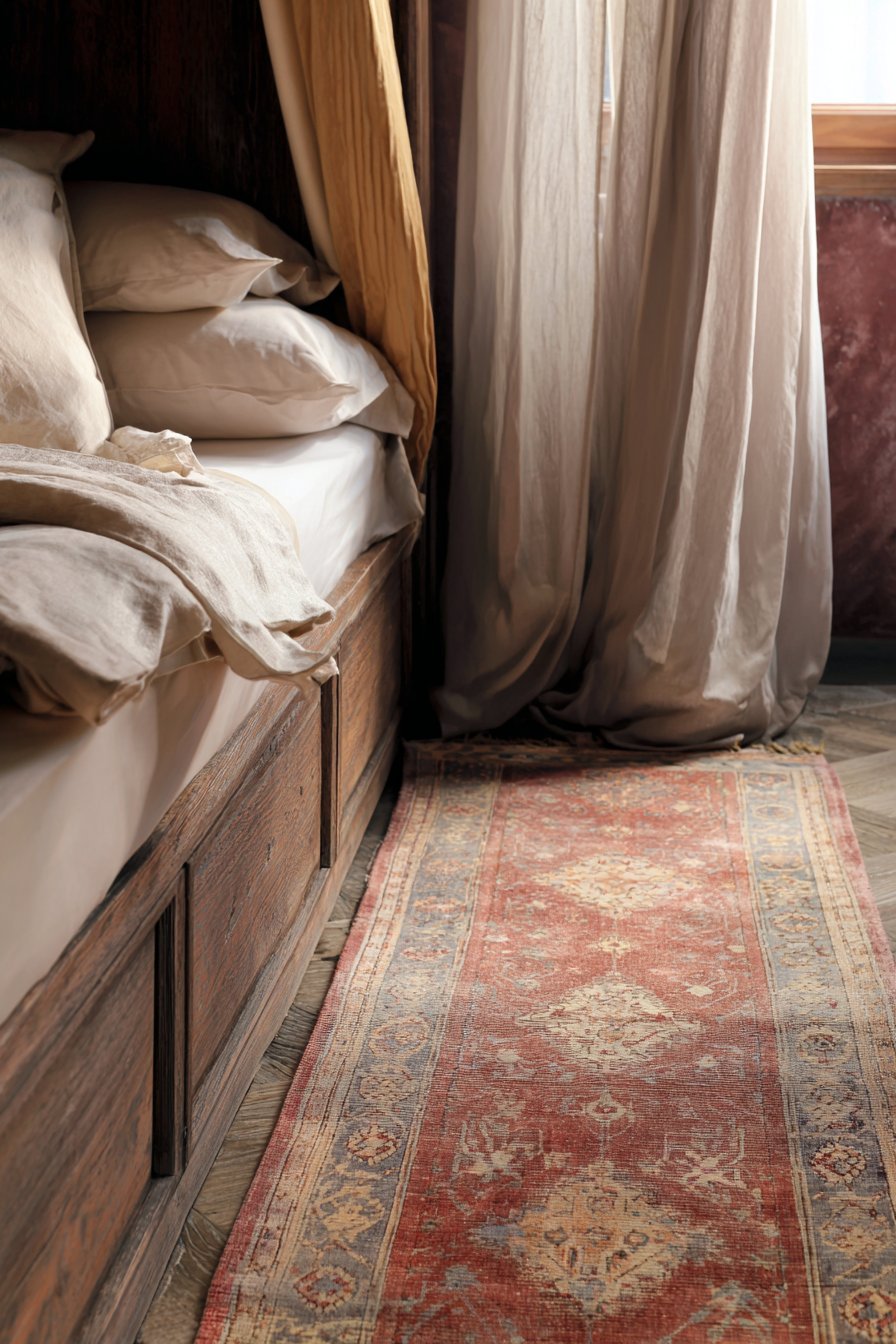
Detail interior photography focuses on practical placement and authentic vintage condition. The muted palette creates calm atmosphere conducive to restful sleep. This approach values genuine aging over pristine condition.
Key Design Tips:
- Use narrow runners as comfortable bedside step-down surfaces
- Choose faded palettes for calming bedroom environments
- Position runners to provide barefoot comfort upon rising
- Value authentic wear patterns as character features
- Filter morning light through gauze curtains for soft illumination
- Select low-pile options for practical bedroom applications
13. Moroccan-Inspired Sitting Room with Spice-Toned Carpet
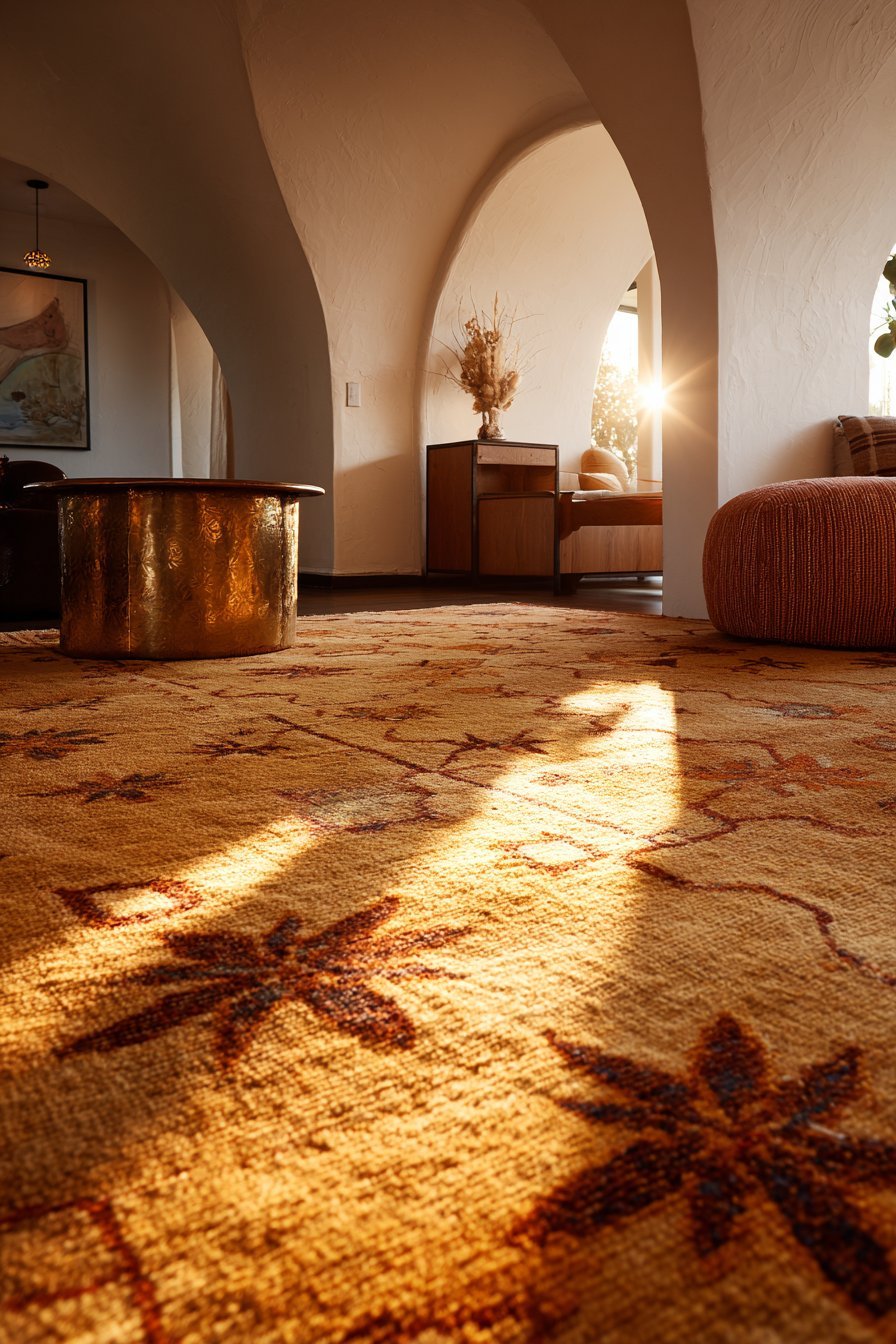
A Turkish carpet in warm spice tones creates an exotic atmosphere. Cinnamon, turmeric gold, and paprika red evoke North African sensibility. Traditional star and cross motifs demonstrate eastern Anatolian regional patterns. Dense pile and rich vegetable dyes show a characteristic Turkish quality.
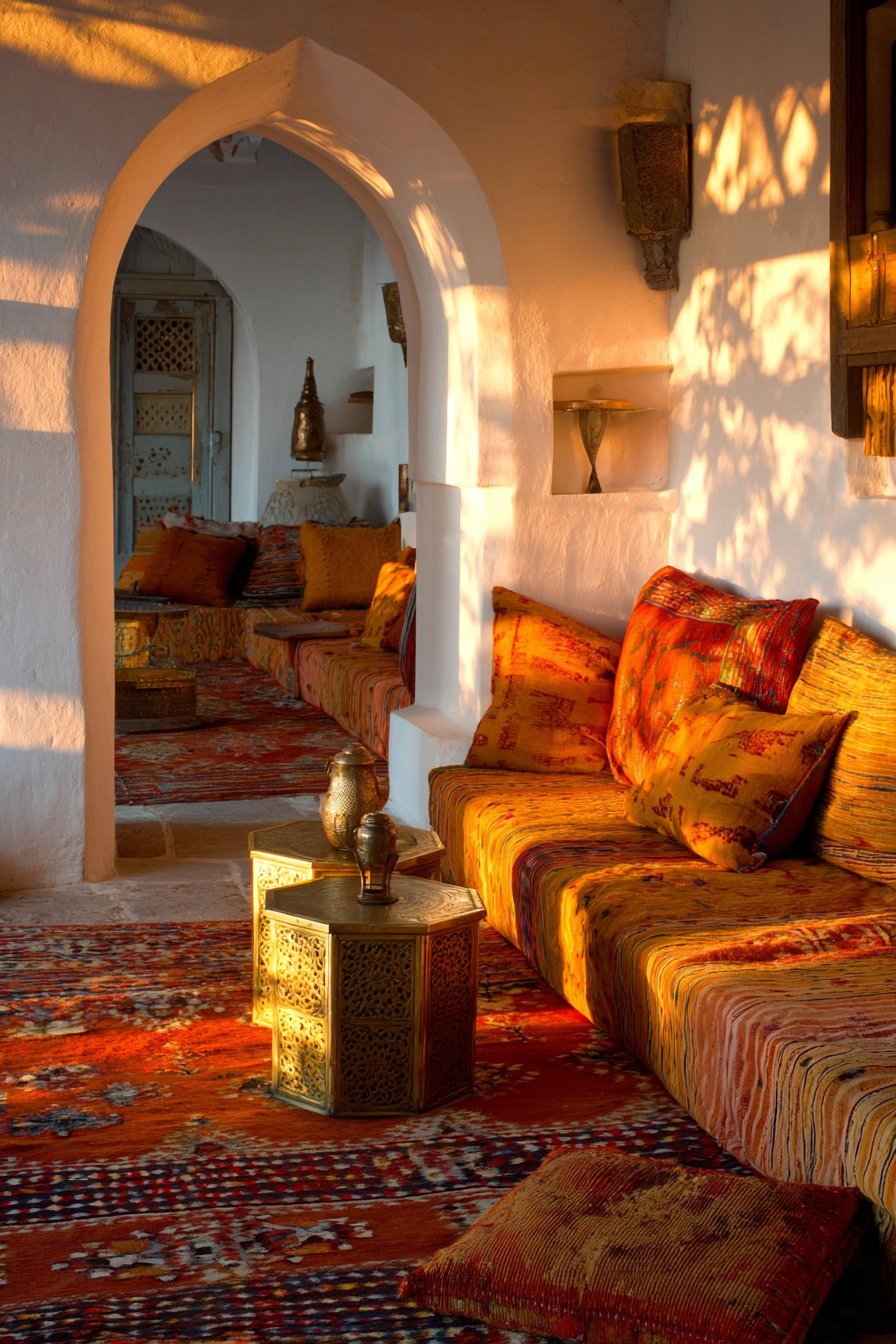
Natural wool lanolin creates subtle surface luster throughout the carpet. Low brass tables and embroidered floor cushions surround in coordinating colors. A whitewashed archway frames the scene, adding architectural interest. Warm late afternoon light creates long shadows emphasizing textured pile.
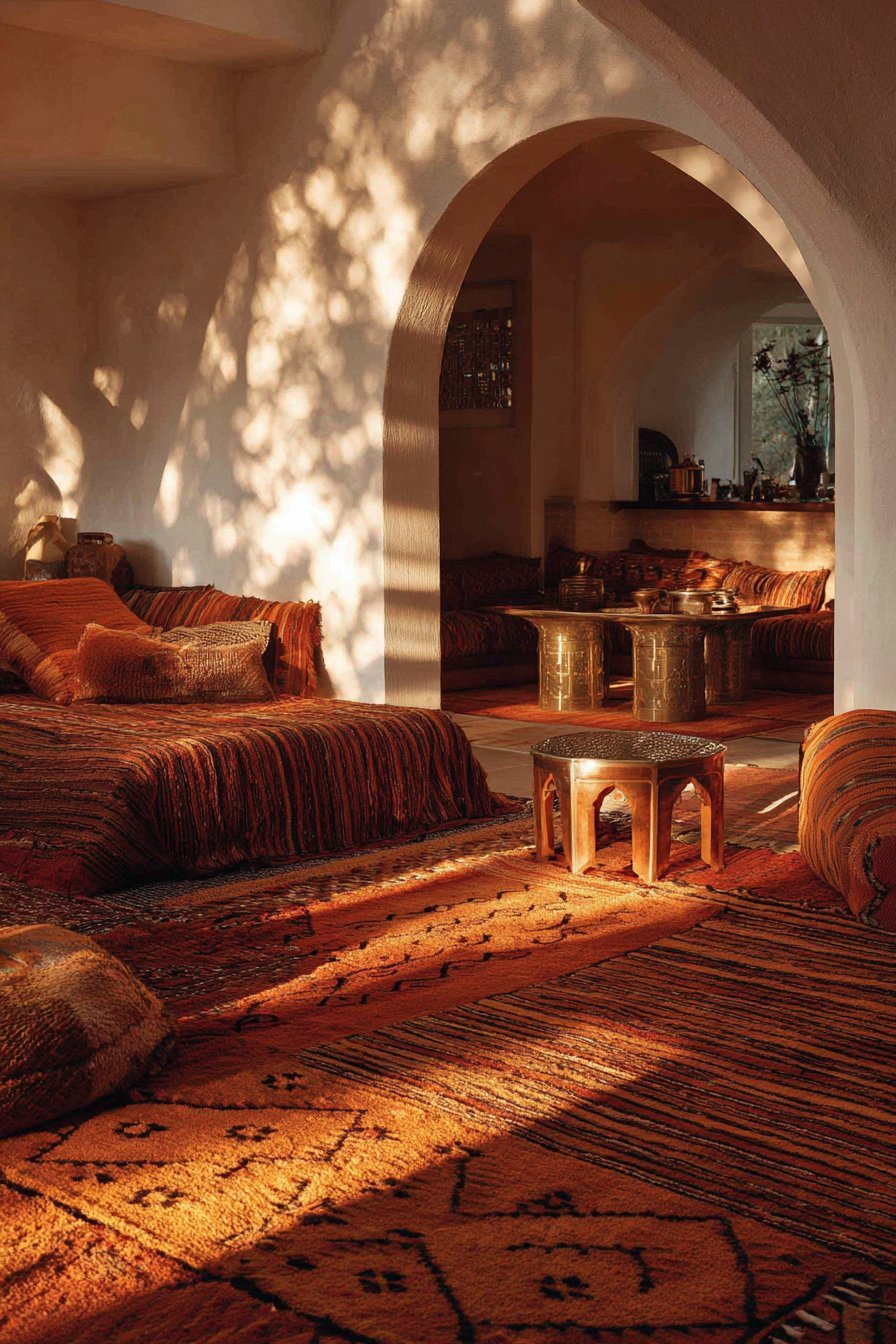
This globally-inspired space celebrates cross-cultural design influences. The Turkish carpet provides an authentic foundation for layered textile aesthetic. Every element contributes to exotic, well-traveled atmosphere.
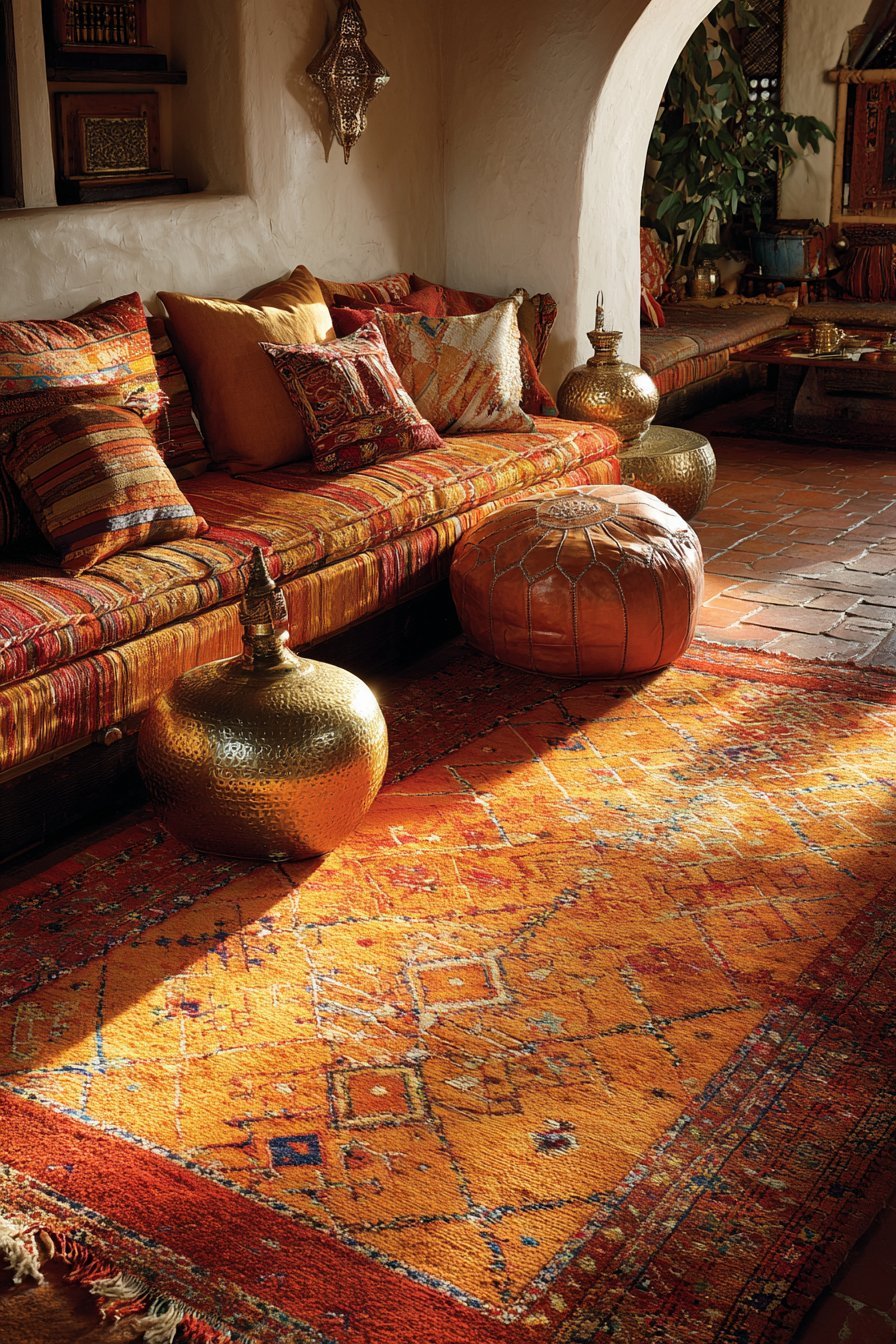
Interior design photography captures the layered aesthetic and three-dimensional pattern work. The warm color palette creates inviting atmosphere for intimate conversations. This approach suits personalities drawn to global design influences.
Key Design Tips:
- Select spice-toned carpets for globally-inspired rooms
- Layer embroidered textiles to enhance exotic atmosphere
- Use brass accessories to complement warm carpet colors
- Position furniture low to ground for Moroccan aesthetic
- Capture late afternoon light creating dramatic pattern shadows
- Frame spaces with architectural elements like arches
14. Modern Farmhouse with Soft Oushak Carpet
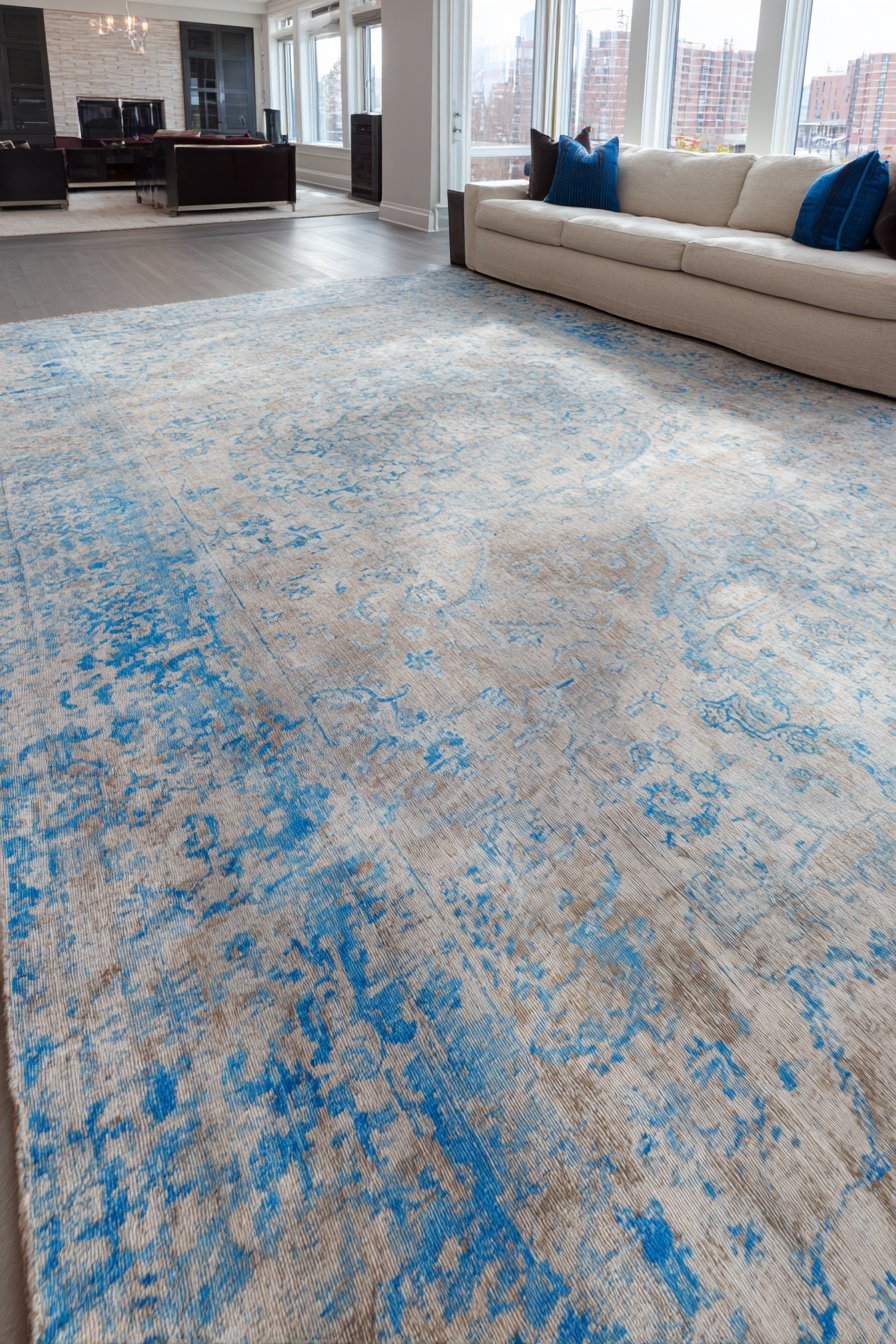
A Turkish Oushak carpet in dove gray, pale butter yellow, and weathered turquoise bridges styles. The large-scale vine scroll pattern demonstrates classic Oushak design characteristics. Abraded pile reveals antique status with beautiful color variations. Natural wear creates texture changes adding visual interest throughout surface.
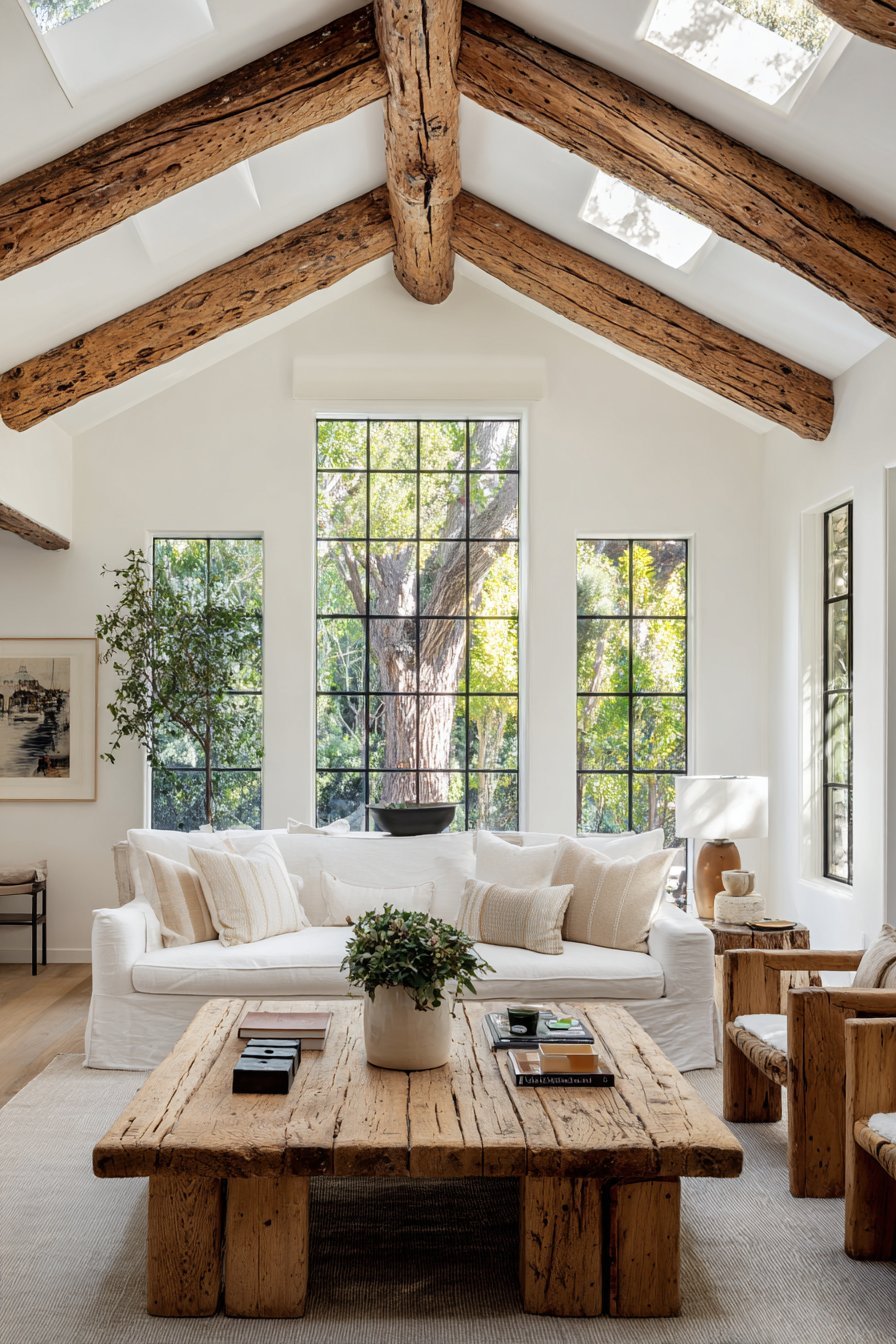
The carpet positions beneath the slipcovered sofa and reclaimed wood coffee table perfectly. Original wide-plank pine flooring frames the carpet’s irregular hand-knotted edges. Natural daylight from multiple windows highlights subtle palette. The muted colors bridge rustic and refined design elements successfully.
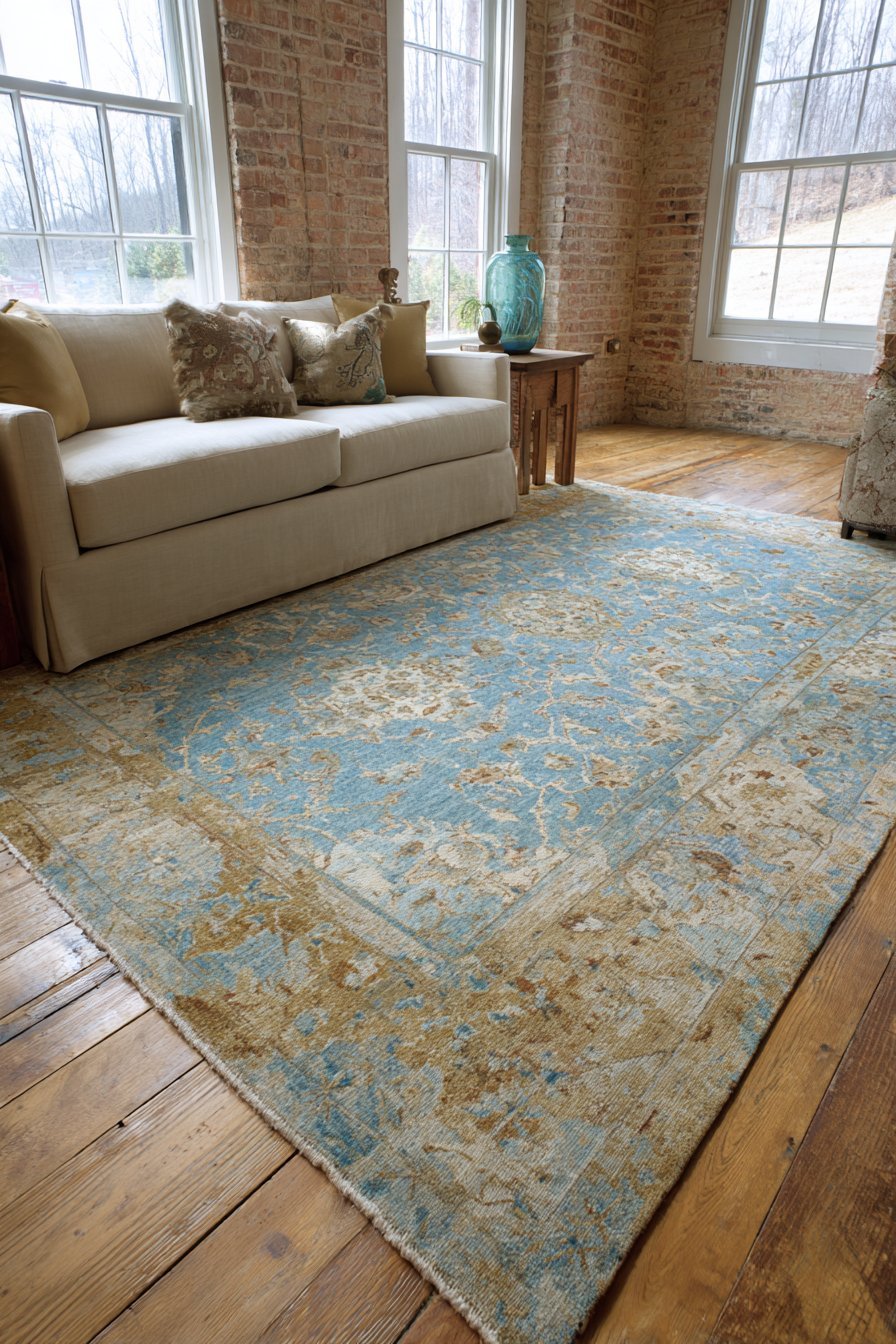
This approach demonstrates how Turkish carpets adapt to farmhouse aesthetics. The soft palette complements neutral modern farmhouse color schemes. Historical depth balances contemporary furniture choices beautifully.
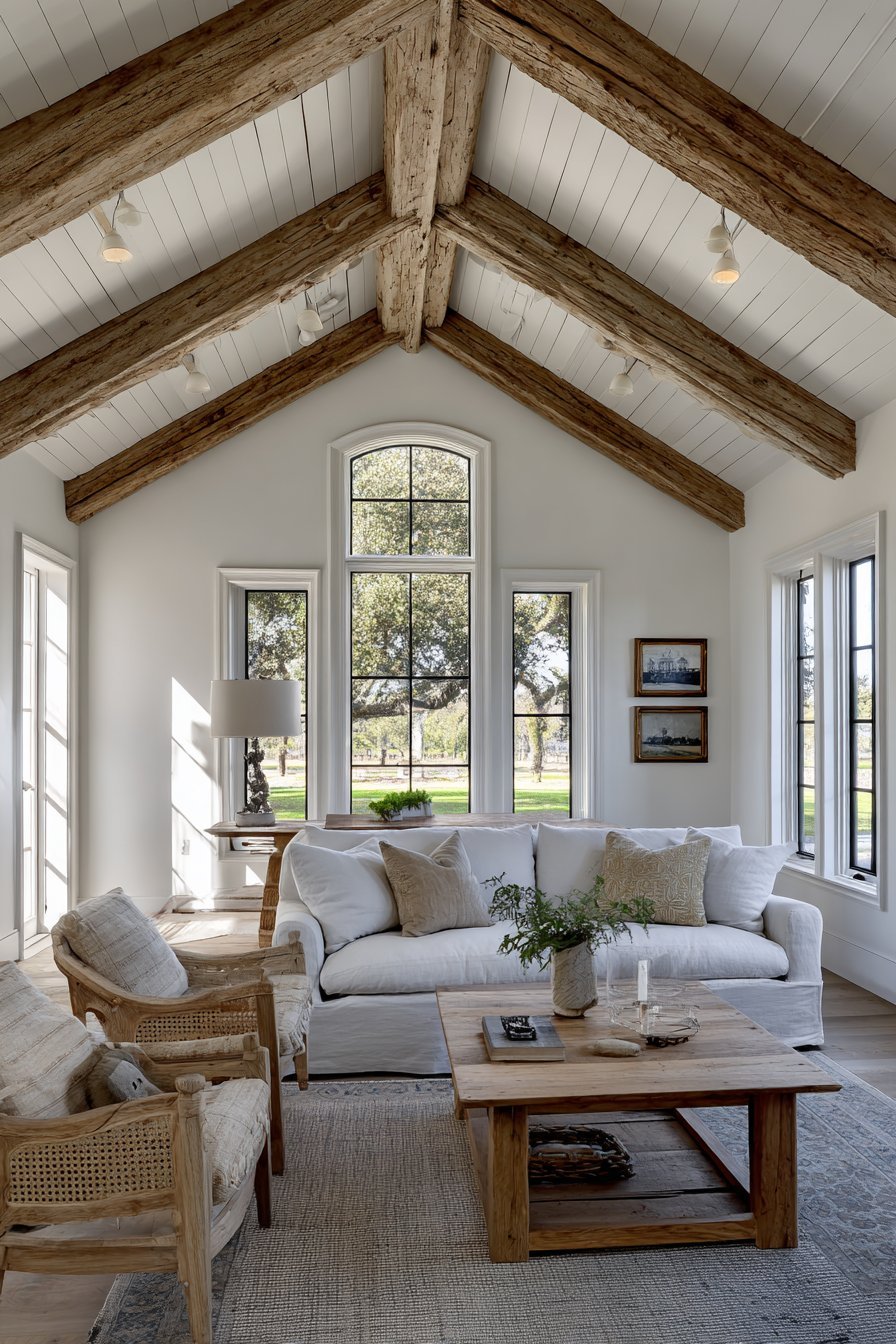
Wide-angle professional photography captures successful style integration. The carpet grounds contemporary farmhouse furnishings while adding sophisticated color. This versatile approach suits various personal style preferences.
Key Design Tips:
- Choose soft Oushak palettes for modern farmhouse interiors
- Frame carpets with original wood flooring showing natural edges
- Select large-scale patterns appropriate to room proportions
- Use natural light from multiple windows to reveal subtle colors
- Balance rustic furniture with refined carpet choices
- Appreciate abraded pile as authentic antique characteristic
15. Traditional Library with Persian-Influenced Turkish Carpet
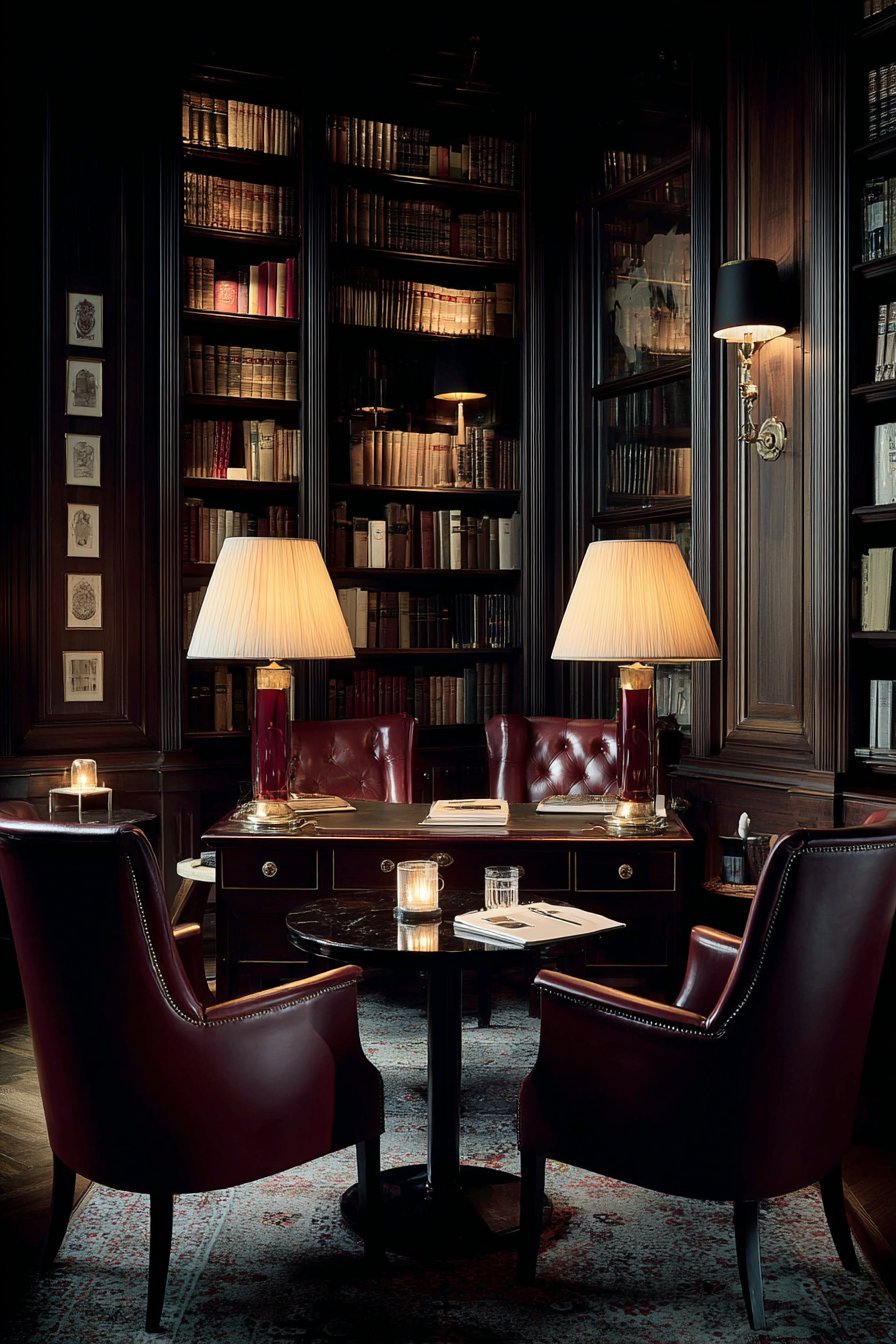
A Turkish carpet in deep forest green, burgundy, and gold creates scholarly atmosphere. The intricate herati fish pattern demonstrates Persian design influence on Turkish weaving. Exceptional knot density and fine wool create a luxurious plush surface. Traditional craftsmanship shows meticulous attention to every detail.
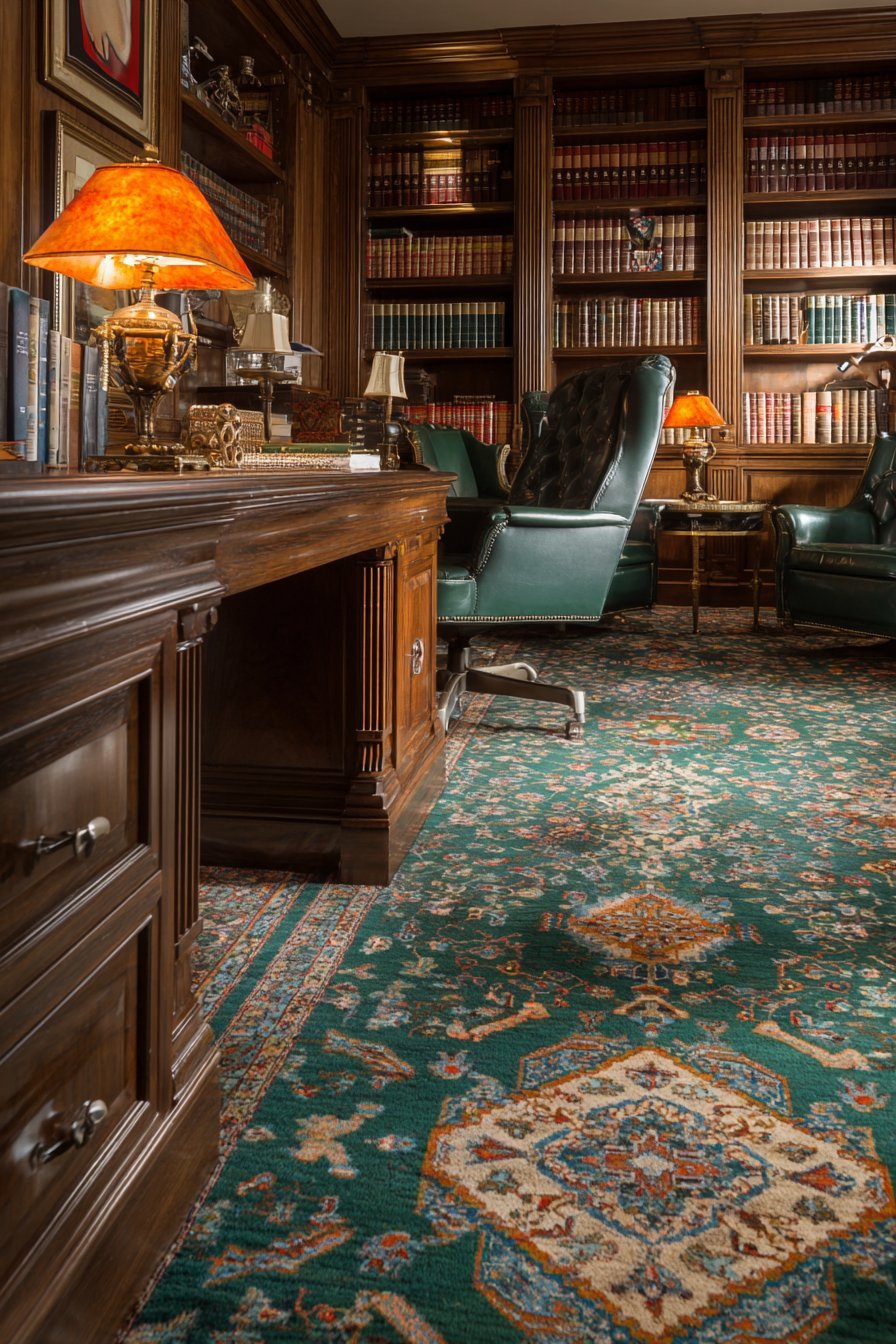
The carpet covers floor beneath mahogany partners desk and leather wing chairs. Table lamps with amber glass shades cast warm pools of light. The illumination brings out jewel-tone depth and metallic gold highlights. Built-in bookshelves filled with leather-bound volumes provide backdrop.
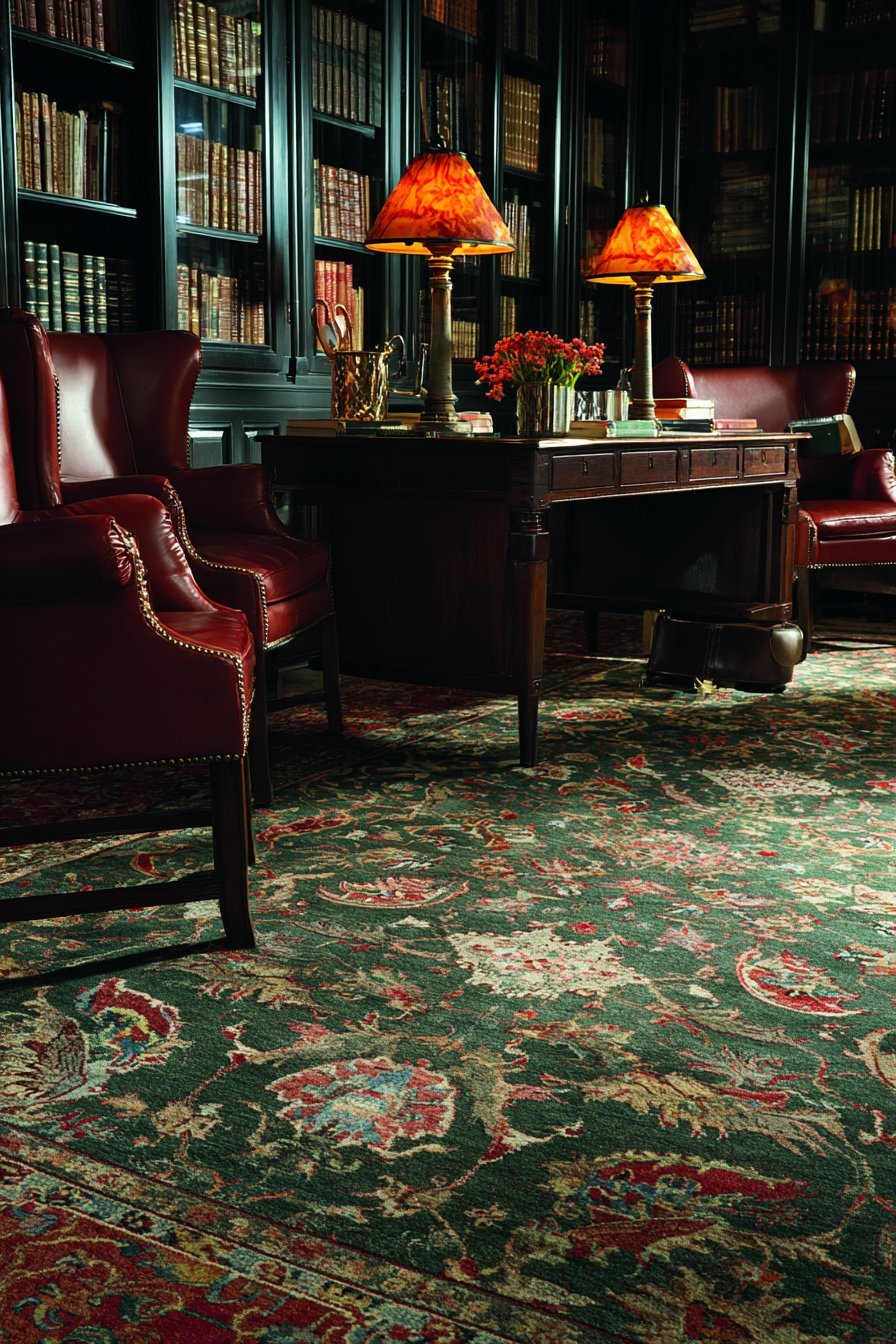
This traditional setting showcases Turkish carpets in classic library environments. The rich colors and formal patterns suit serious study spaces. Every element contributes to timeless scholarly aesthetic.
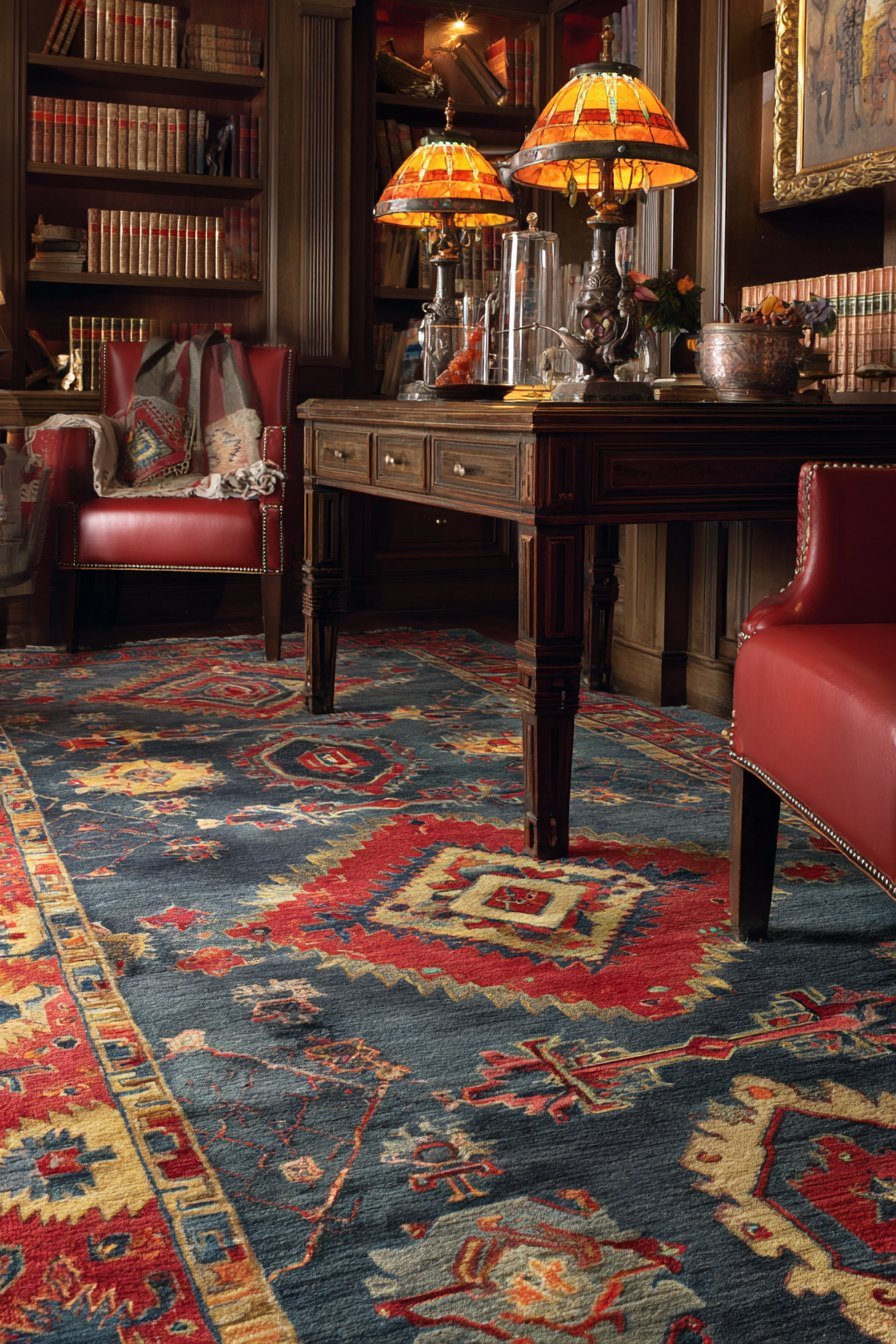
Professional interior photography with balanced ambient lighting captures the atmosphere. The Turkish carpet’s traditional elegance grounds the intellectual space. This approach appeals to those valuing classic design principles.
Key Design Tips:
- Select jewel-tone carpets for traditional library spaces
- Choose Persian-influenced patterns for formal study areas
- Use warm amber lighting to enhance rich carpet colors
- Pair fine Turkish carpets with quality leather furniture
- Create ambient pools of light rather than harsh overhead illumination
- Surround carpets with wooden elements reinforcing traditional aesthetic
16. Scandinavian Nursery with Gentle Turkish Carpet
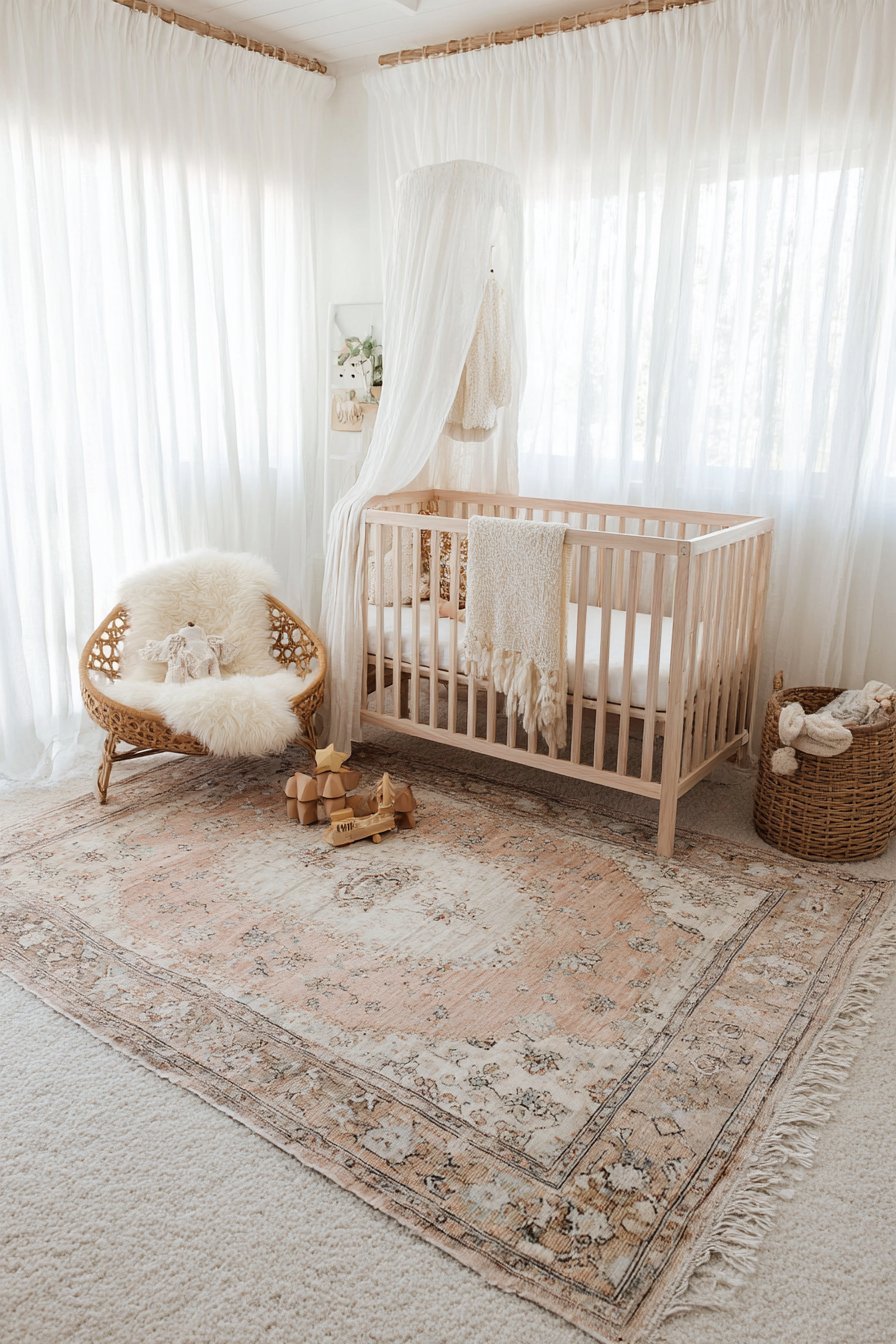
A soft Turkish carpet in pale pink, cream, and light gray creates peaceful nursery. Gentle floral vine patterns suit infant environments perfectly. The low pile and cotton foundation make practical choices for crawling babies. Authentic Turkish design elements include reciprocal border patterns.
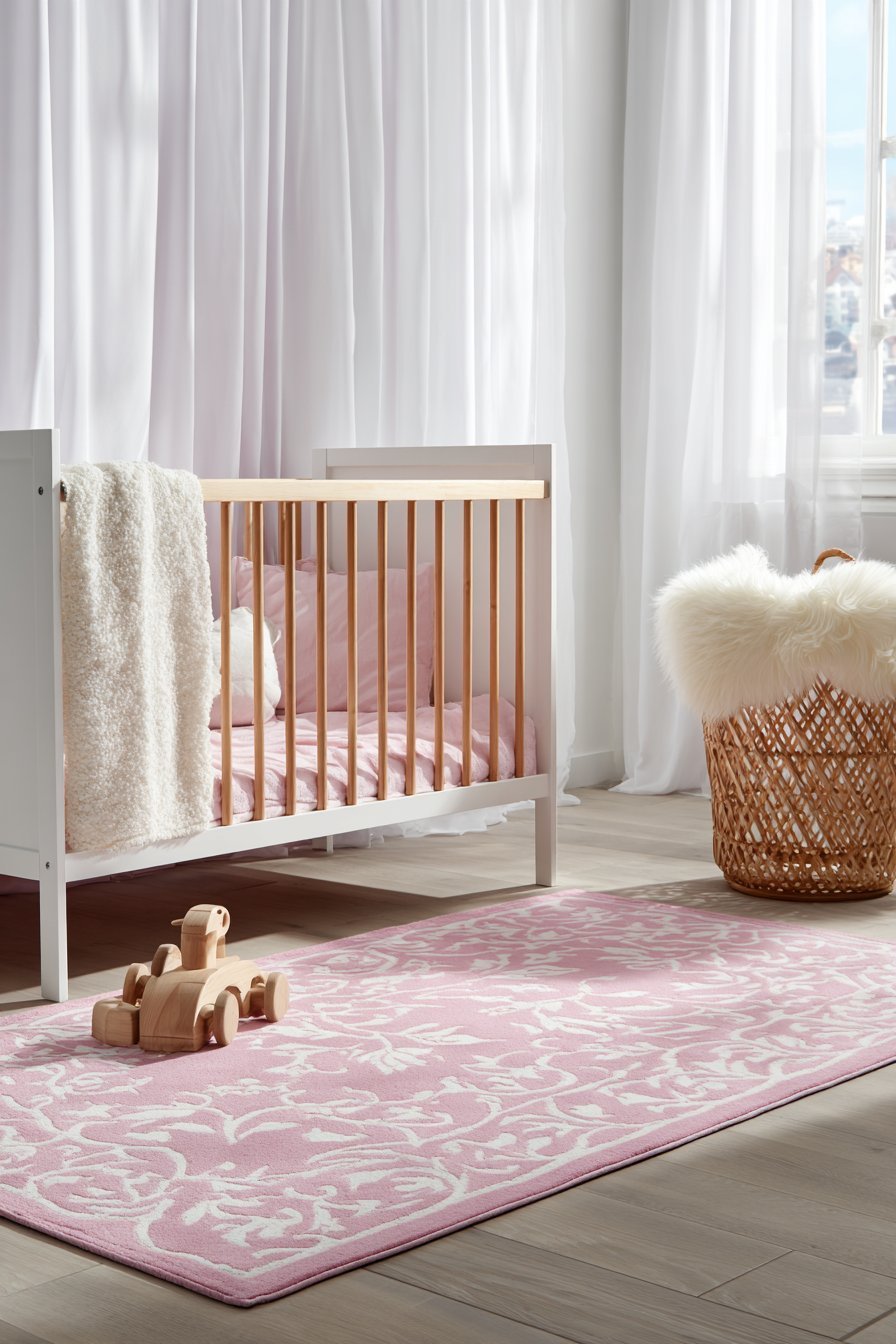
The carpet is positioned beneath white wooden crib and natural rattan bassinet. Sheer white curtains filter soft natural light revealing delicate color transitions. Hand-knotted texture becomes visible in this gentle illumination. A sheepskin throw and wooden toys rest on surface.
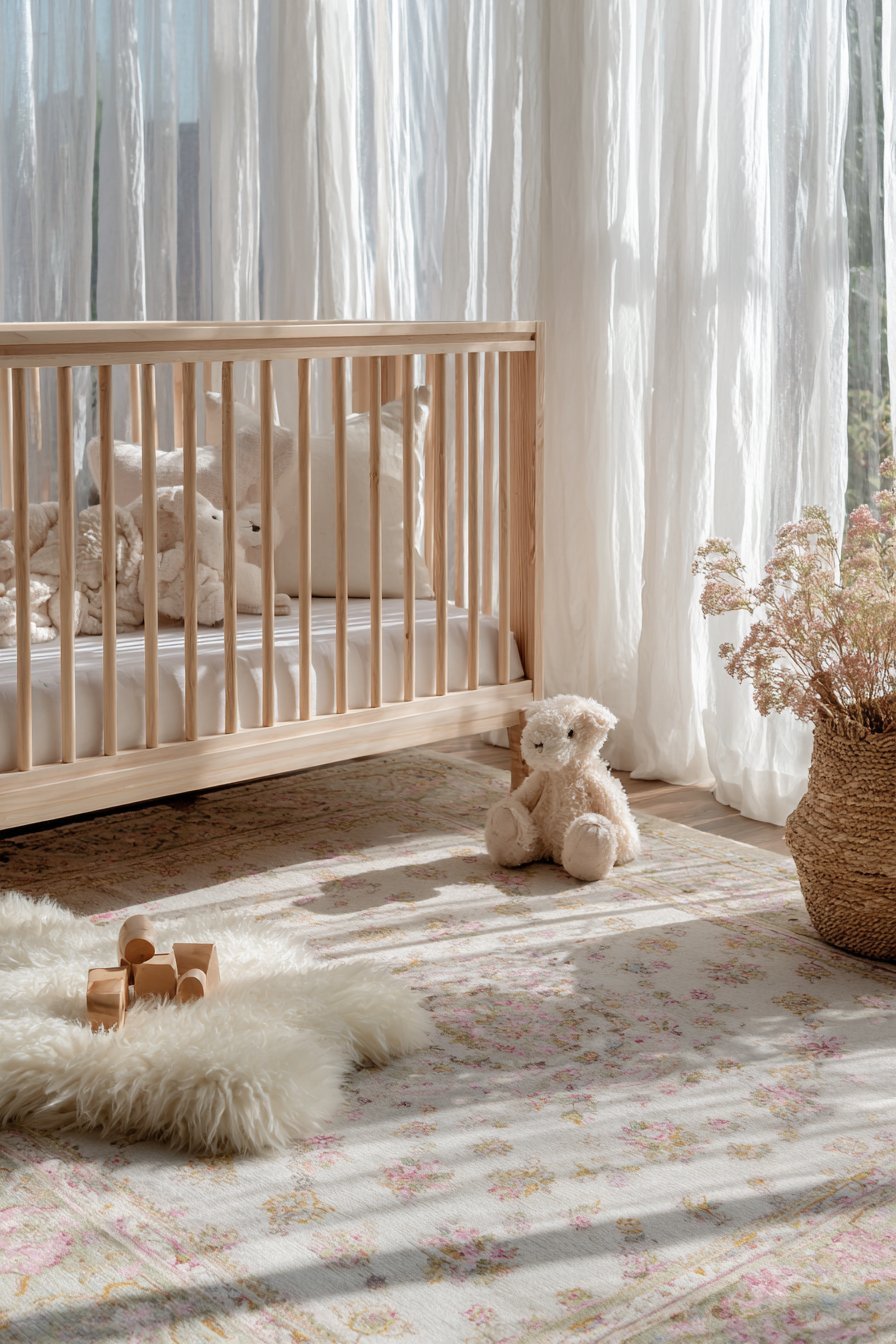
This child-friendly application demonstrates Turkish carpet versatility. The gentle palette creates calm atmosphere conducive to infant rest. Practical considerations don’t sacrifice authentic design quality.
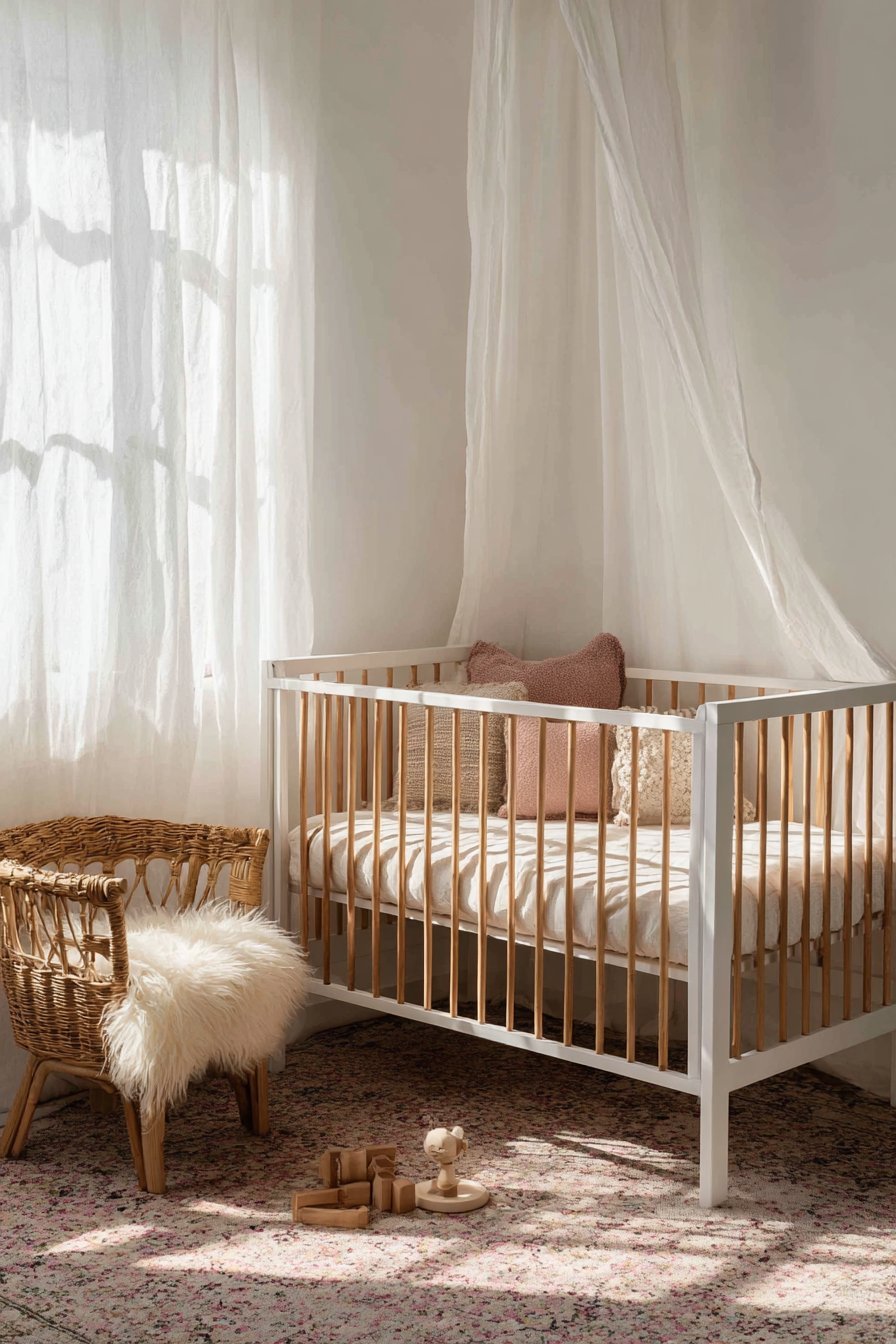
High-key natural lighting emphasizes gentle palette and functionality. The nursery showcases how Turkish weaving adapts to contemporary family needs. This approach values both aesthetics and practical requirements.
Key Design Tips:
- Choose low-pile carpets with cotton foundations for nurseries
- Select gentle color palettes promoting calm infant environments
- Ensure carpets are practical for crawling and play activities
- Filter natural light through sheer curtains for soft illumination
- Combine Turkish carpets with natural materials like wood and rattan
- Value authentic design even in highly functional family spaces
17. Dramatic Dining Room with Kars Carpet
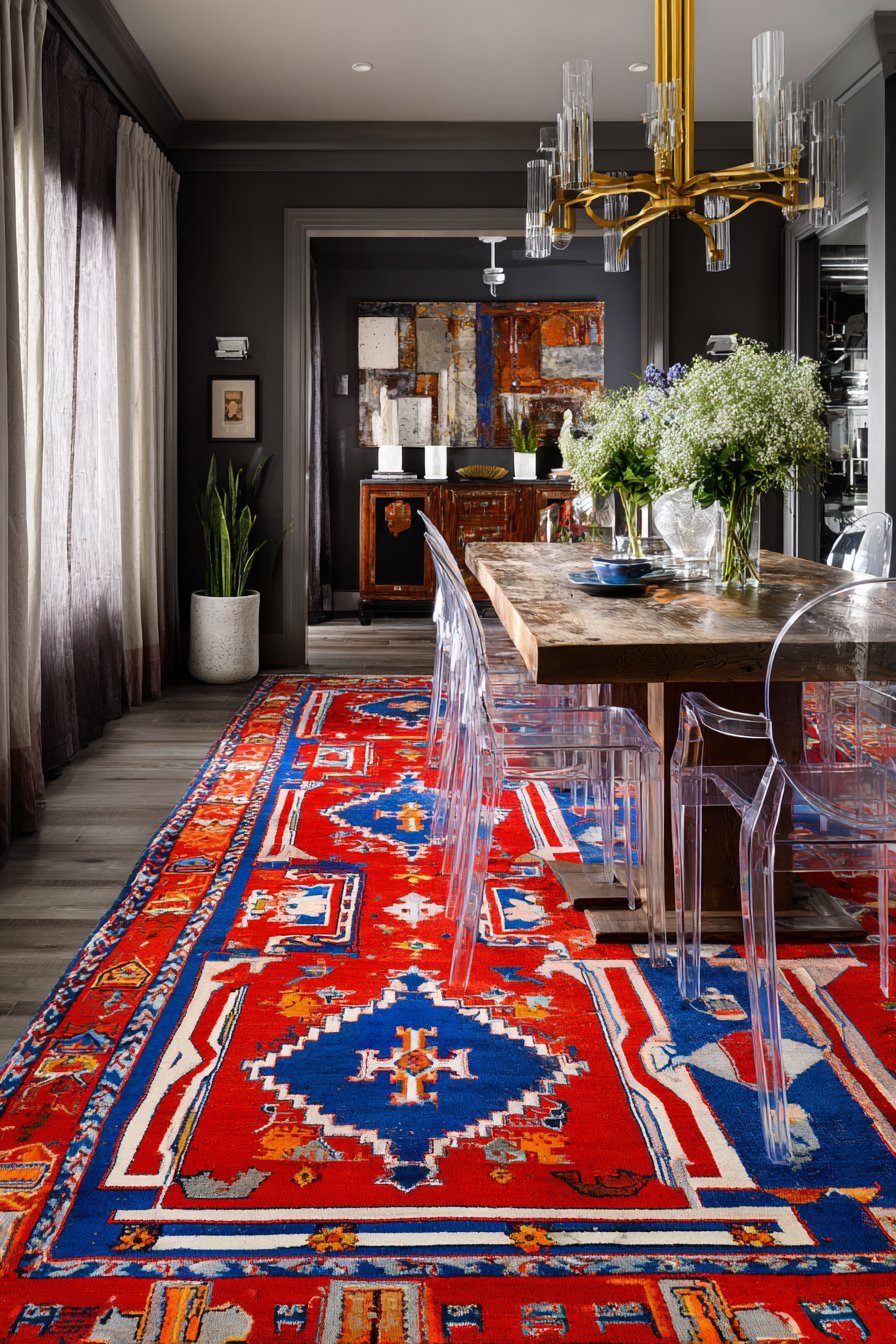
A large Turkish Kars carpet in bold cobalt blue, ruby red, and ivory creates drama. Striking geometric medallions demonstrate regional Turkish design characteristics. The saturated jewel tones and graphic patterns create powerful visual impact. Hand-knotted construction shows slight irregularities proving authentic craftsmanship.
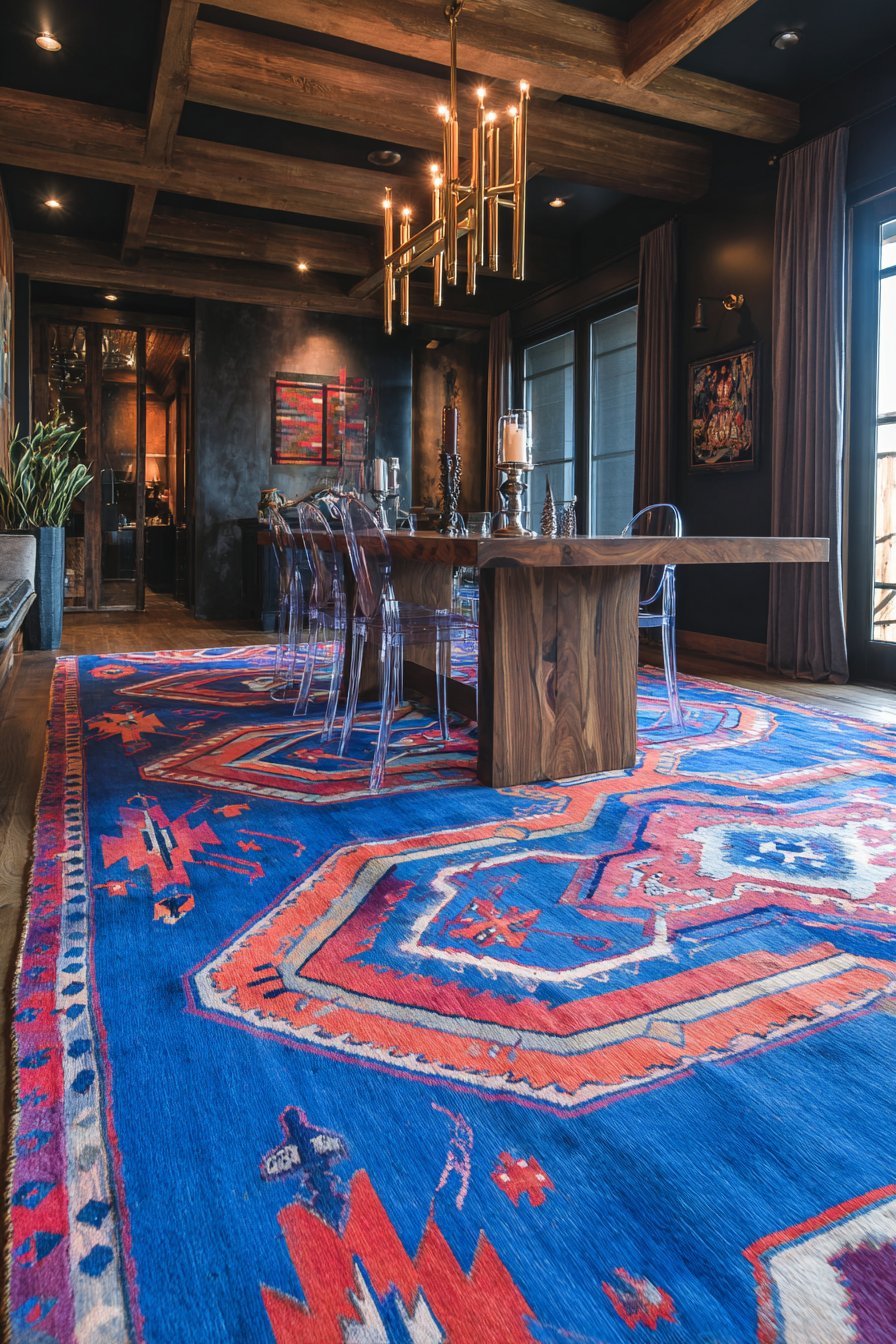
The carpet is positioned beneath live-edge walnut dining table and modern acrylic chairs. A modern brass chandelier illuminates the space from above. Light reflects off the carpet’s natural wool sheen creating dimension. Deep charcoal walls intensify the carpet’s vibrant colors dramatically.
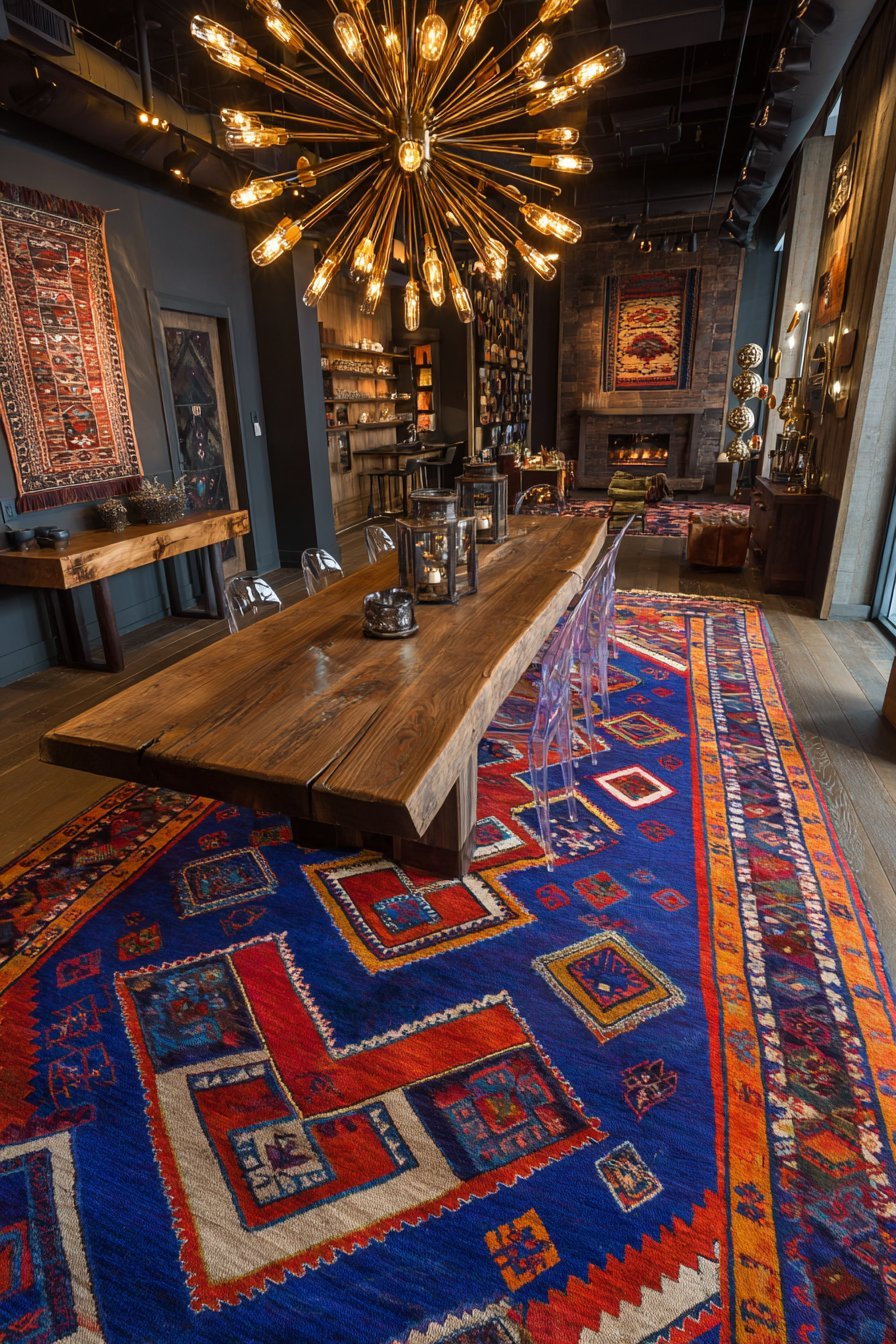
This eclectic maximalist aesthetic combines rustic wood, modern furniture, and traditional carpet. The unexpected combination creates memorable dining environment. Bold design choices demonstrate confidence and personal style.
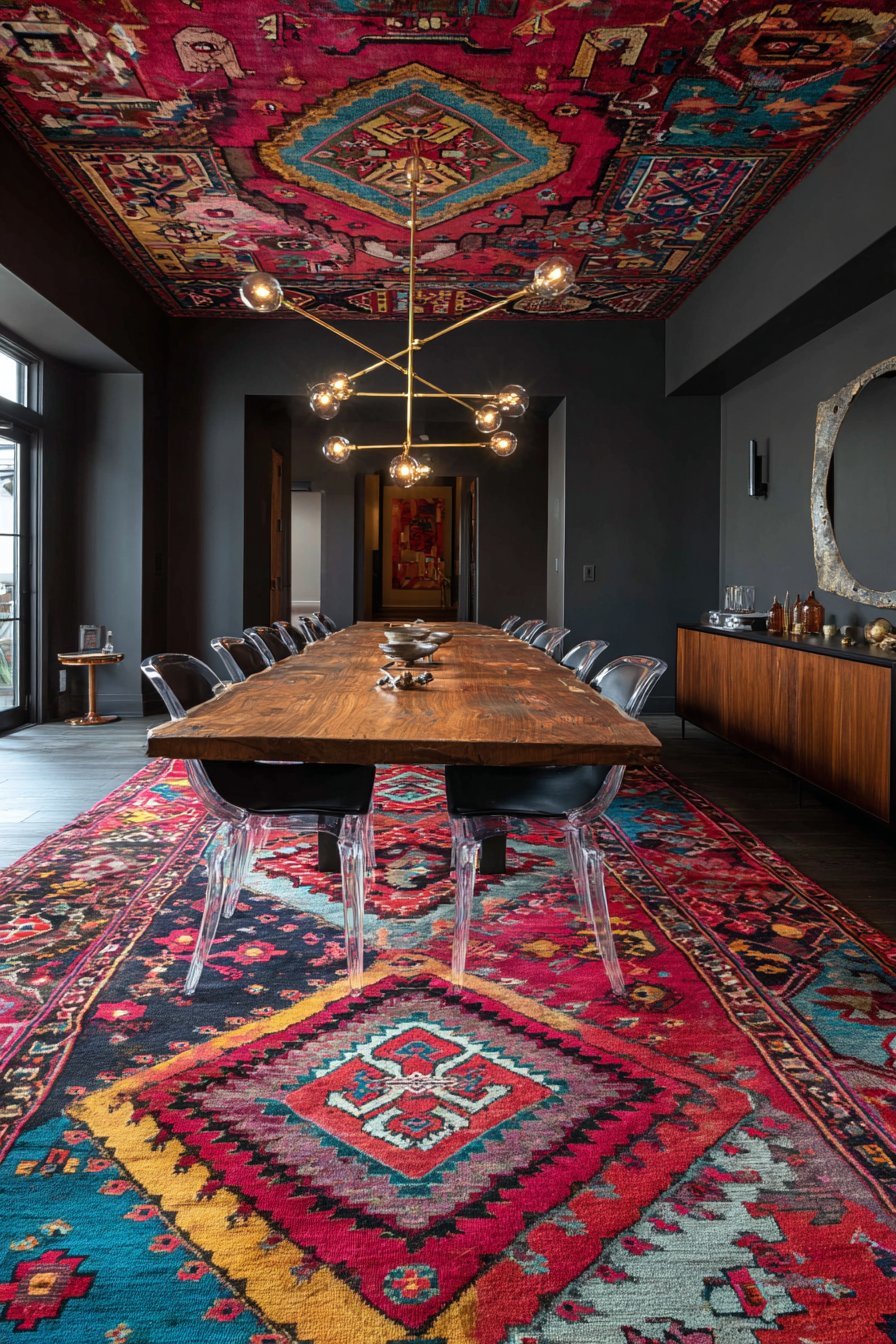
Wide-angle interior photography captures the successful fusion of diverse elements. The Turkish carpet anchors the space while making strong statement. This approach suits personalities embracing bold design decisions.
Key Design Tips:
- Select saturated jewel-tone carpets for dramatic dining rooms
- Pair traditional carpets with unexpected modern furniture
- Use dark wall colors to intensify carpet vibrancy
- Choose brass lighting to complement warm carpet tones
- Embrace slight irregularities as proof of handmade quality
- Combine rustic, modern, and traditional elements confidently
18. Minimalist Meditation Space with Prayer Rug
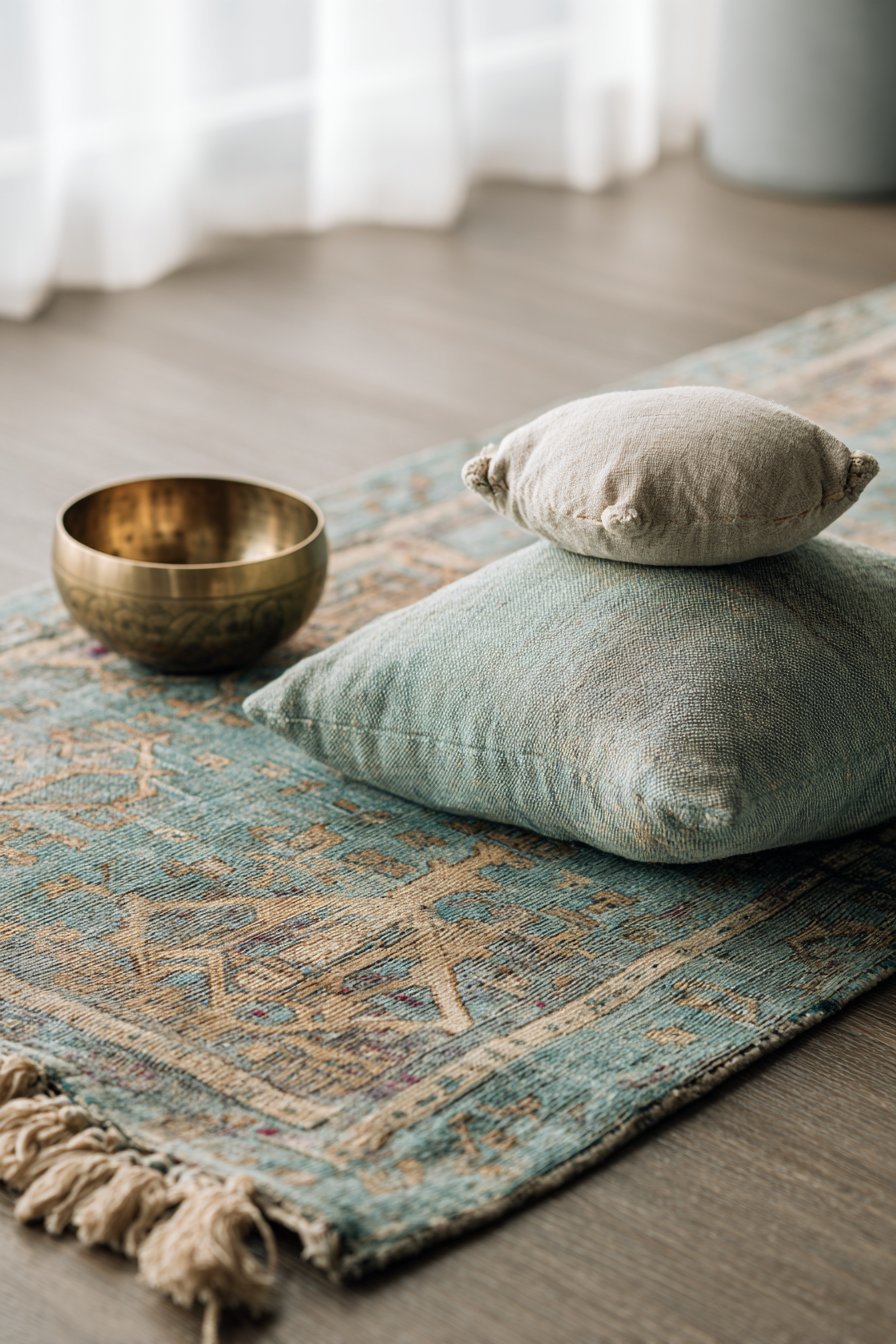
A small Turkish prayer rug in faded indigo and cream creates contemplative atmosphere. The simplified geometric tree of life design suits spiritual practice. Cotton warp and wool weft show authentic hand-knotting with natural edges. Slightly uneven edges and natural fringe prove handmade authenticity.
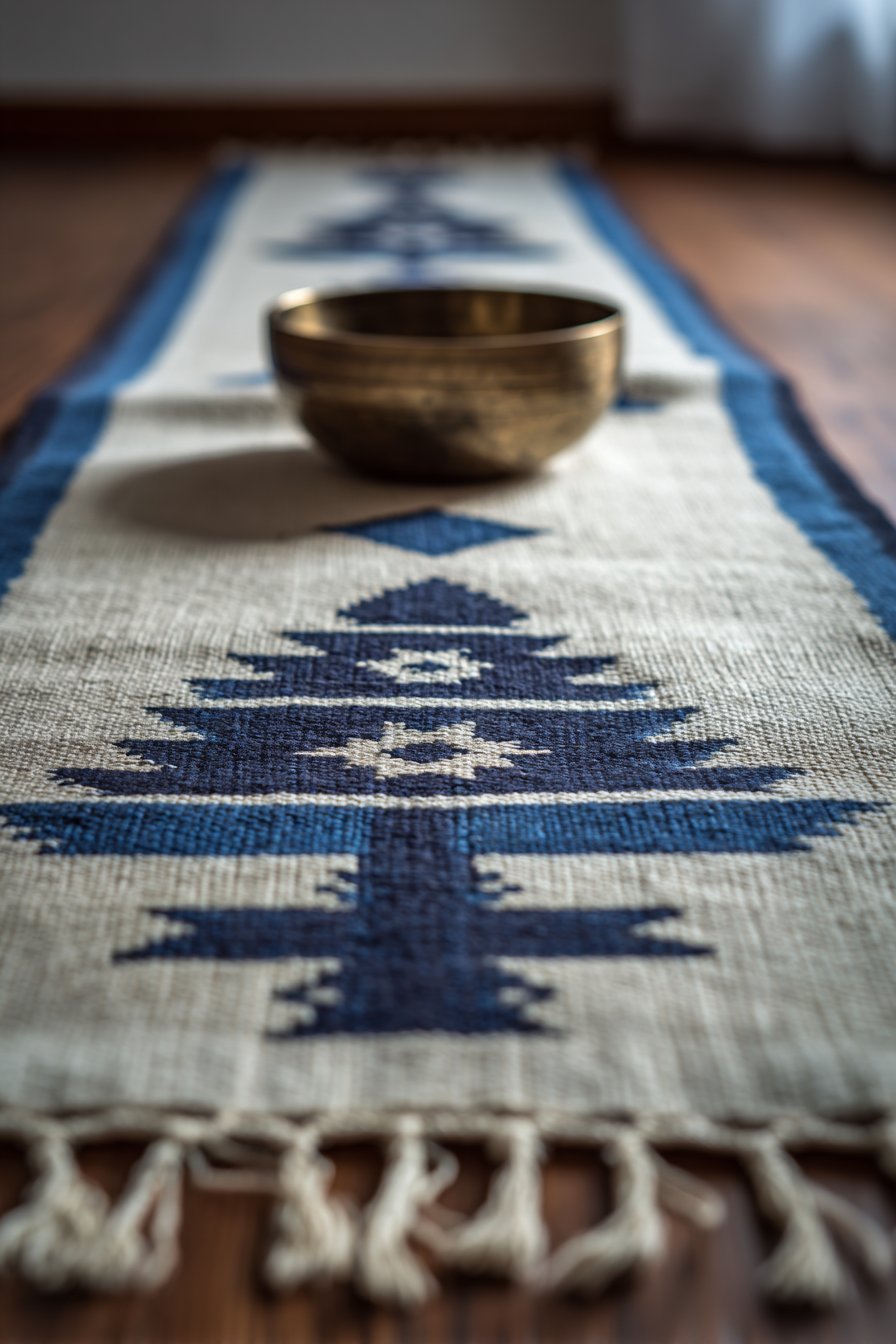
The carpet is positioned on polished bamboo flooring creating defined meditation area. A simple meditation cushion in linen and brass singing bowl rest on surface. Soft diffused morning light from paper screen creates gentle illumination. The peaceful worn quality and muted colors result from natural aging.
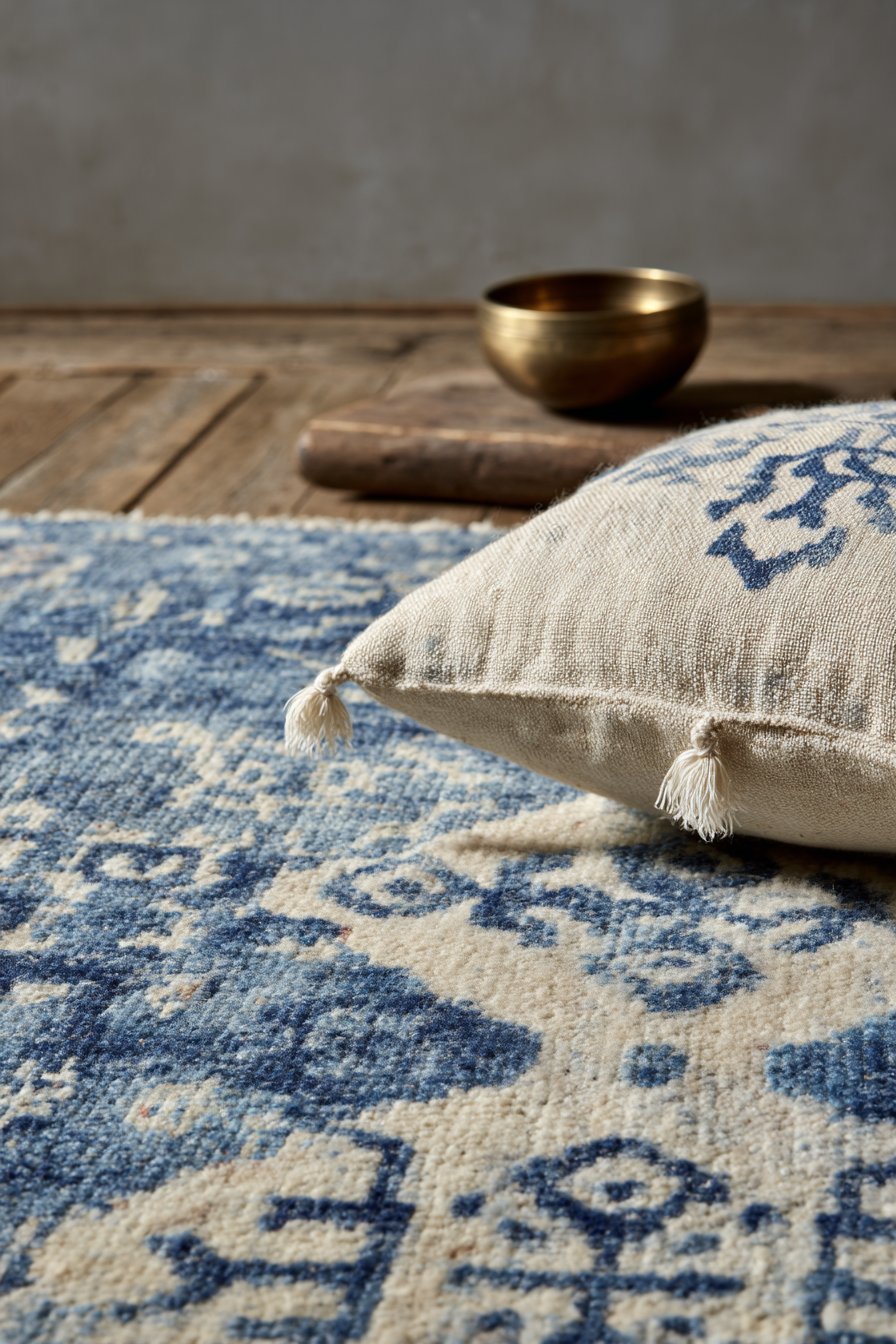
This meditative simplicity celebrates Turkish carpet spiritual design elements. The small scale suits personal practice spaces perfectly. Authentic patina enhances rather than detracts from contemplative use.
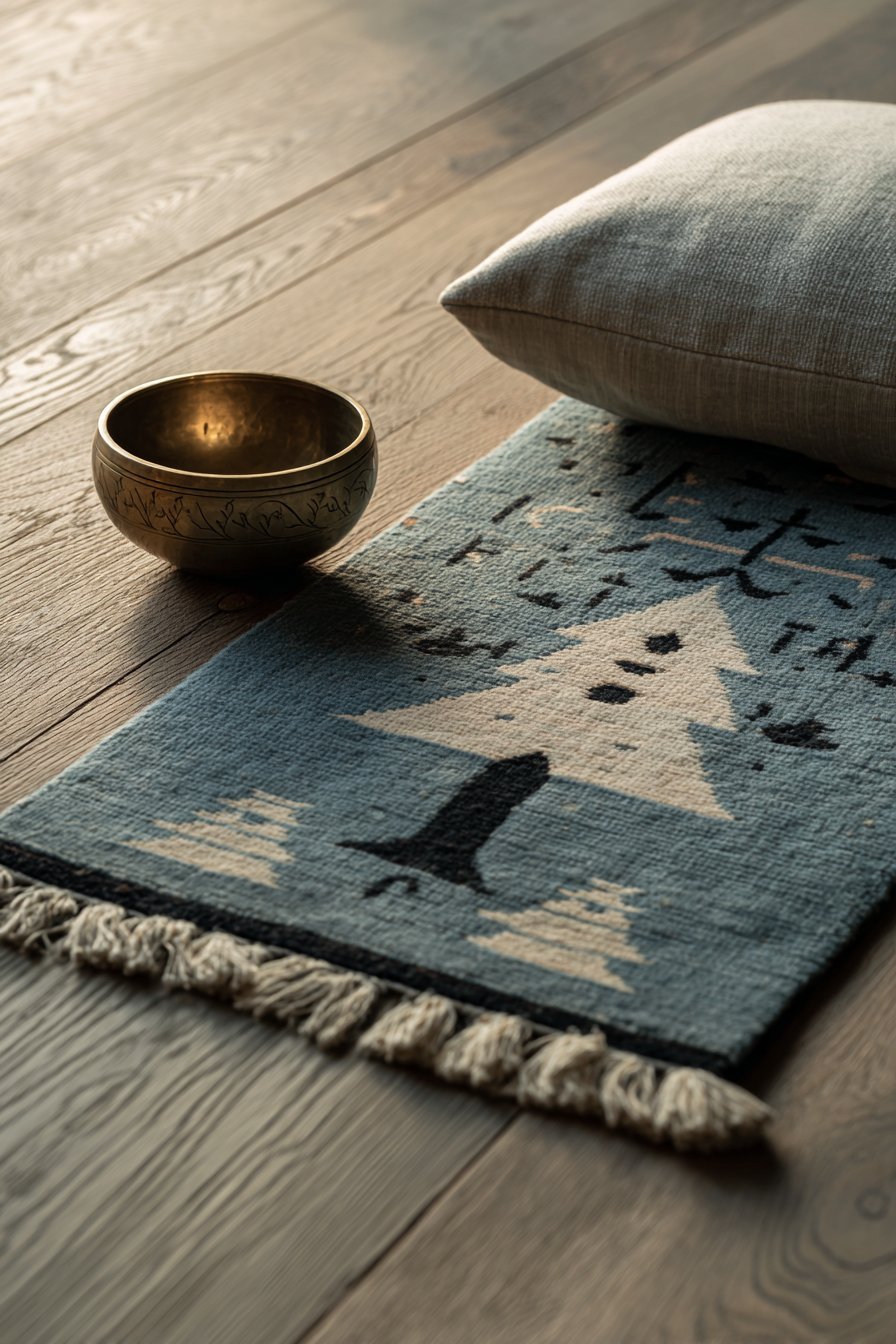
Detail photography with shallow depth of field focuses on meditative simplicity. The carpet’s spiritual design elements support mindfulness practice. This approach values quiet beauty and functional spirituality.
Key Design Tips:
- Choose prayer rugs with spiritual motifs for meditation spaces
- Position carpets on polished floors defining practice areas
- Use diffused natural light for gentle contemplative atmosphere
- Select faded colors promoting peaceful mindfulness
- Appreciate natural fringe and uneven edges as authentic features
- Combine Turkish carpets with minimal meditation accessories
19. Contemporary Bedroom with Modern Turkish Carpet
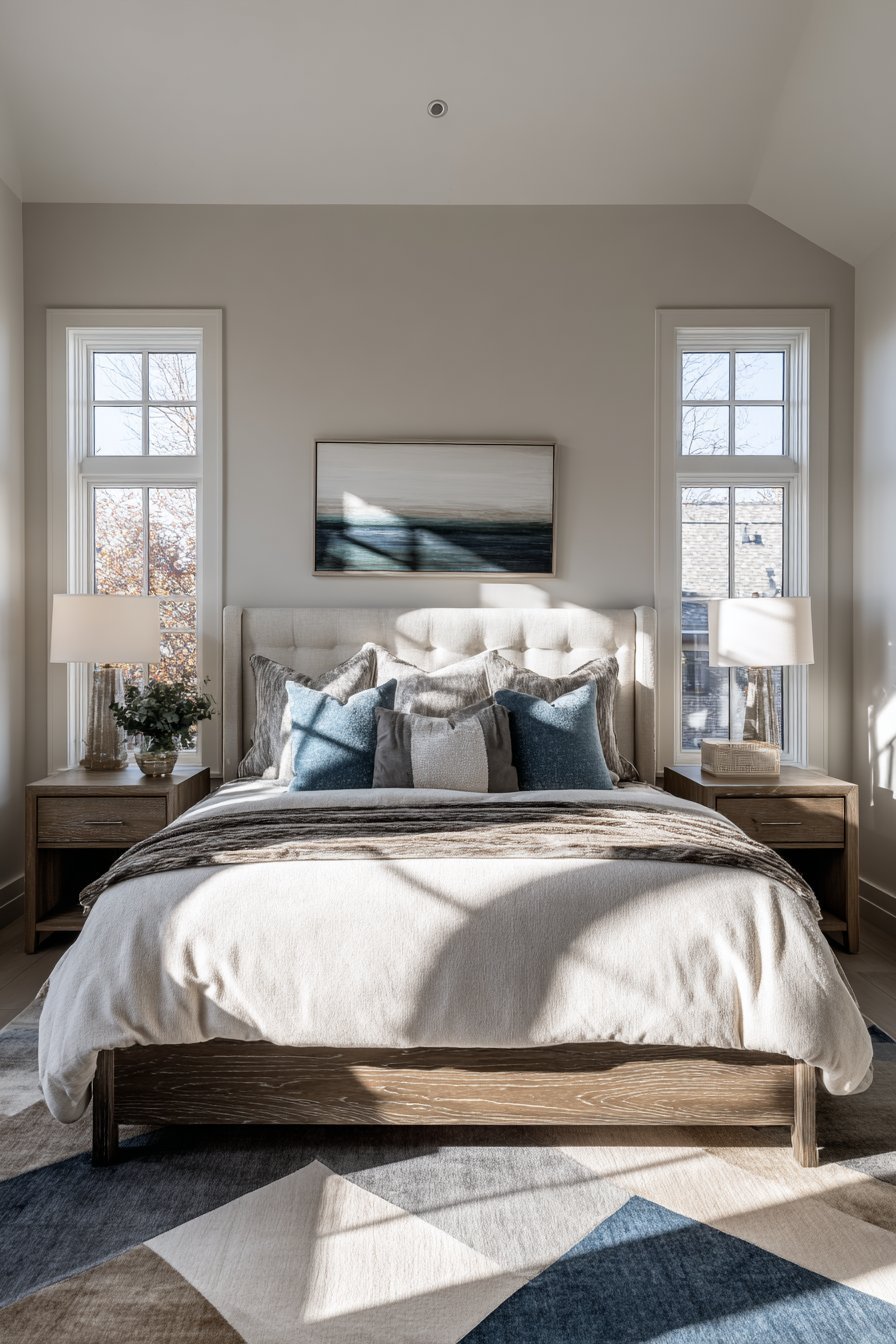
A Turkish carpet in sophisticated gray-blue, taupe, and cream anchors this bedroom. Angular geometric patterns interpret traditional Turkish motifs in contemporary style. Expert hand-knotting in high-quality wool shows subtle luster variations. The refined palette demonstrates the evolution of traditional Turkish design.
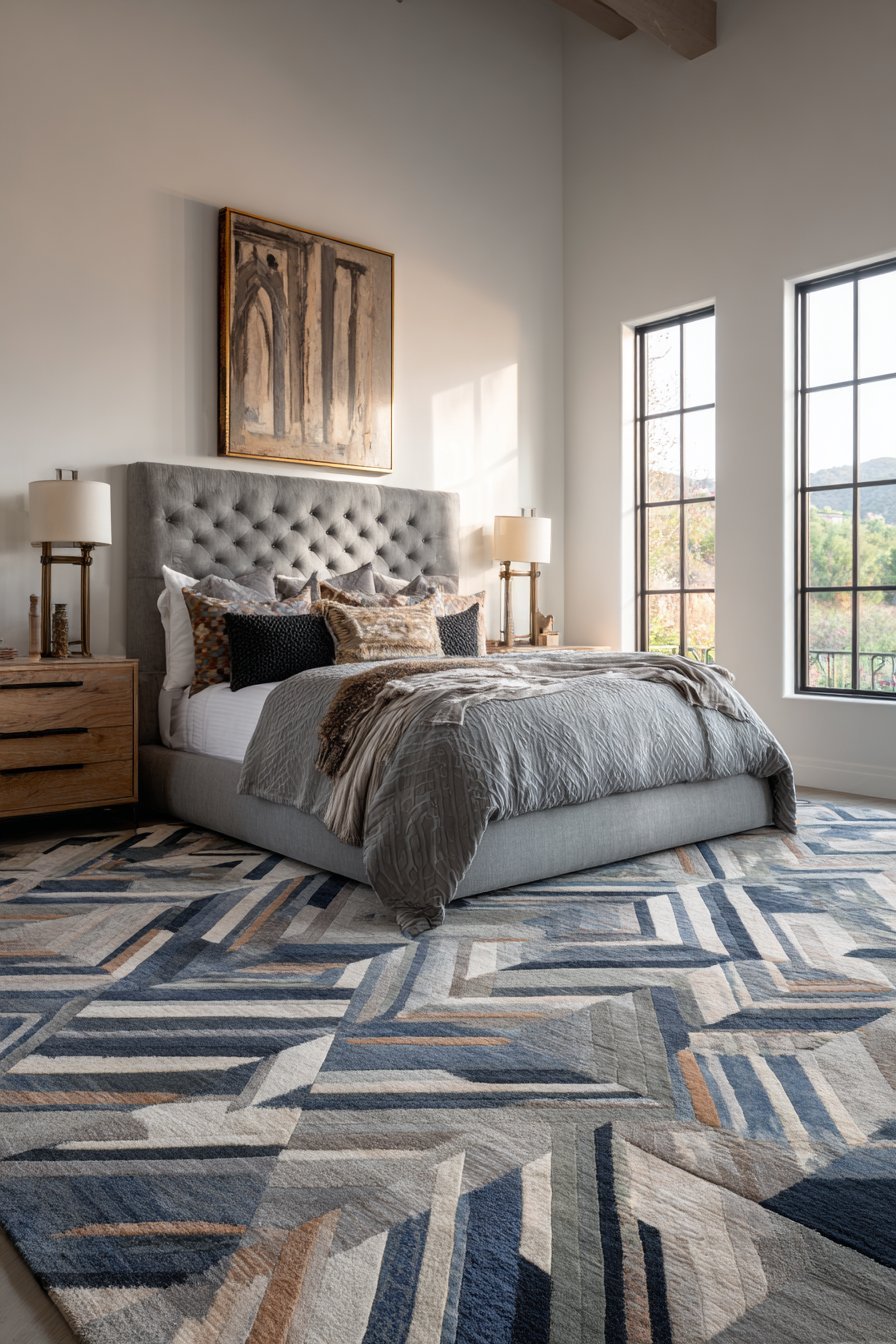
The carpet is positioned beneath an upholstered platform bed with tufted headboard. Flanking nightstands in cerused oak complement the carpet’s sophisticated tones. Linen-shaded lamps provide soft ambient lighting. Natural light from tall windows highlights dimensional pile creating soft shadows.
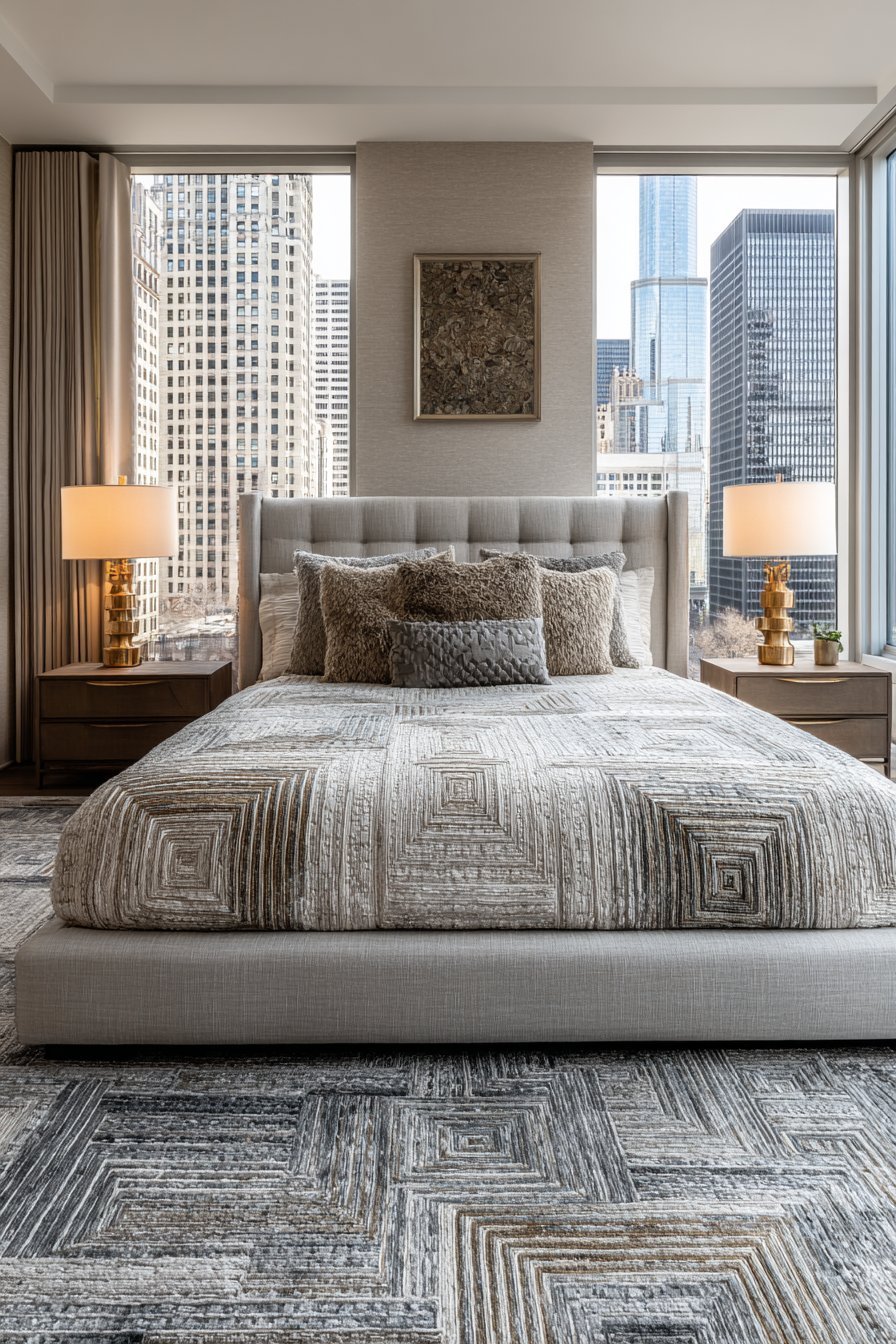
This modern interpretation bridges traditional craftsmanship and contemporary color sensibilities. The carpet demonstrates how Turkish weaving evolves with design trends. Timeless quality ensures long-term relevance despite current styling.
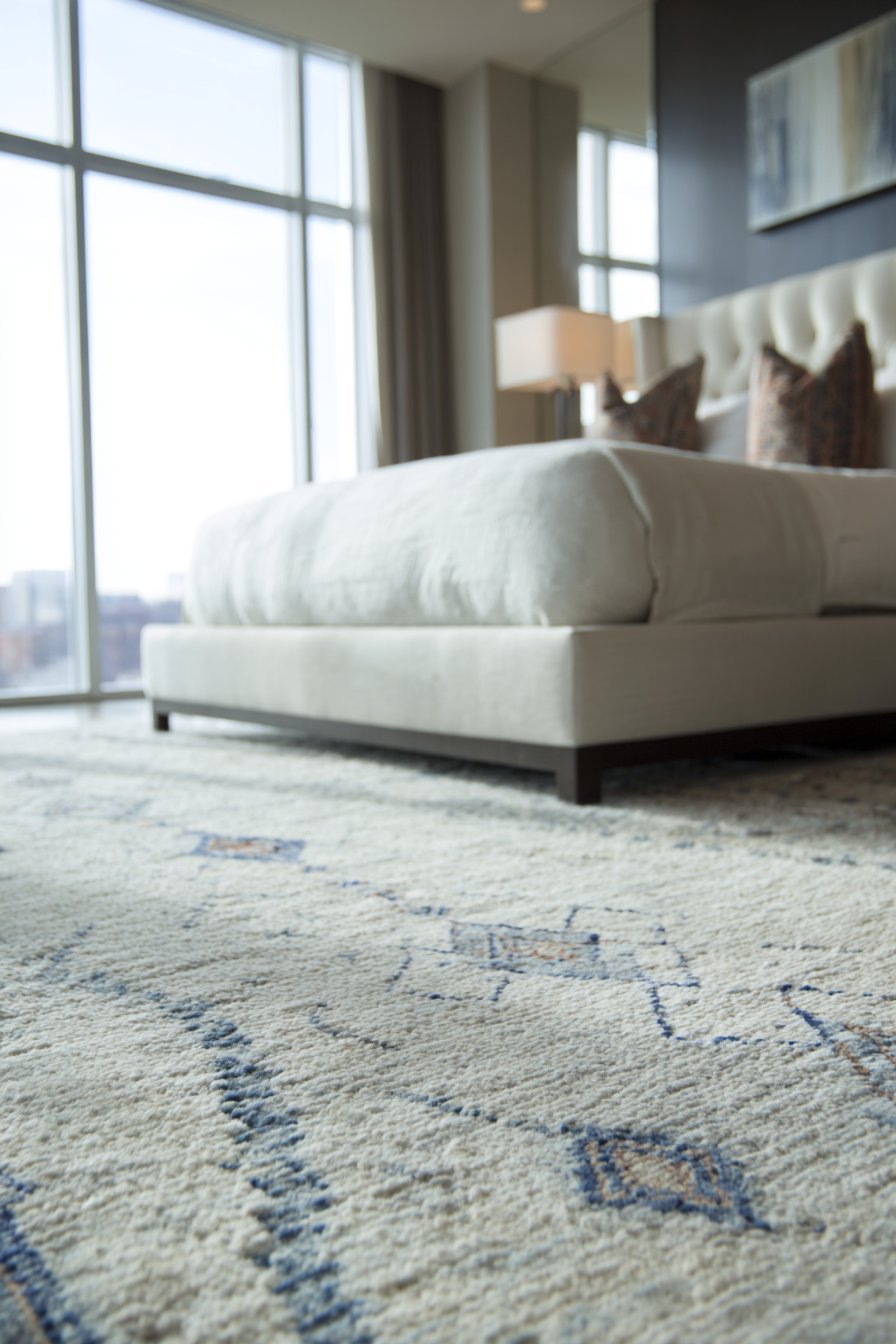
Professional interior photography with balanced exposure captures successful style integration. The contemporary Turkish carpet grounds an elegant bedroom setting. This approach suits those appreciating modern interpretations of traditional crafts.
Key Design Tips:
- Choose contemporary Turkish carpets in sophisticated neutral palettes
- Select angular geometric patterns for modern bedroom settings
- Pair traditional textiles with contemporary upholstered furniture
- Use natural light to highlight dimensional pile creating shadows
- Appreciate modern interpretations maintaining quality craftsmanship
- Balance traditional techniques with current color sensibilities
20. Casual Breakfast Nook with Striped Kilim
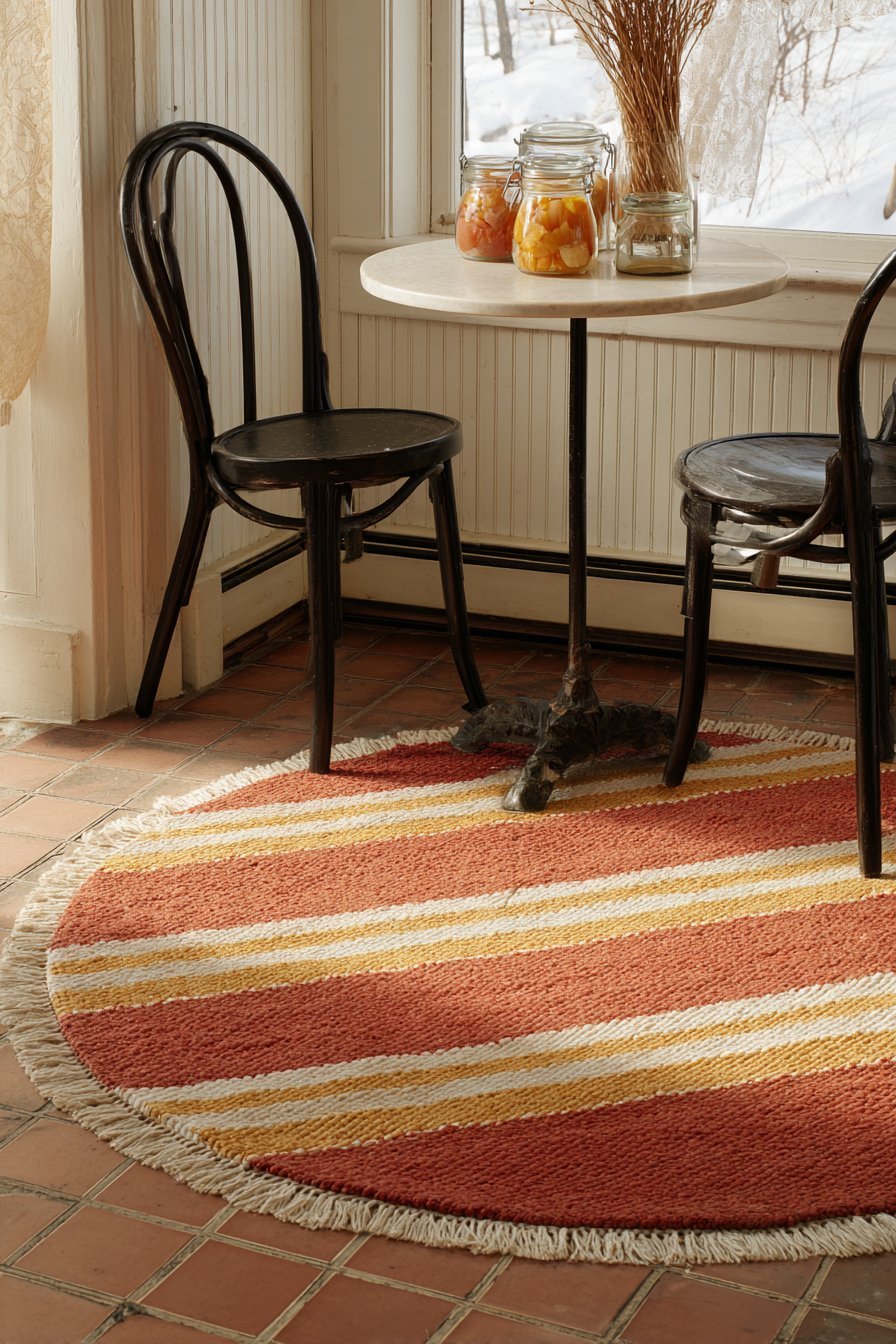
A small Turkish kilim in warm terracotta, golden yellow, and charcoal stripes defines this breakfast nook. The flat-weave carpet’s traditional striped design demonstrates authentic kilim construction. Visible reciprocal weaving technique shows genuine Turkish craftsmanship. Cotton warp threads create natural fringe at both ends.
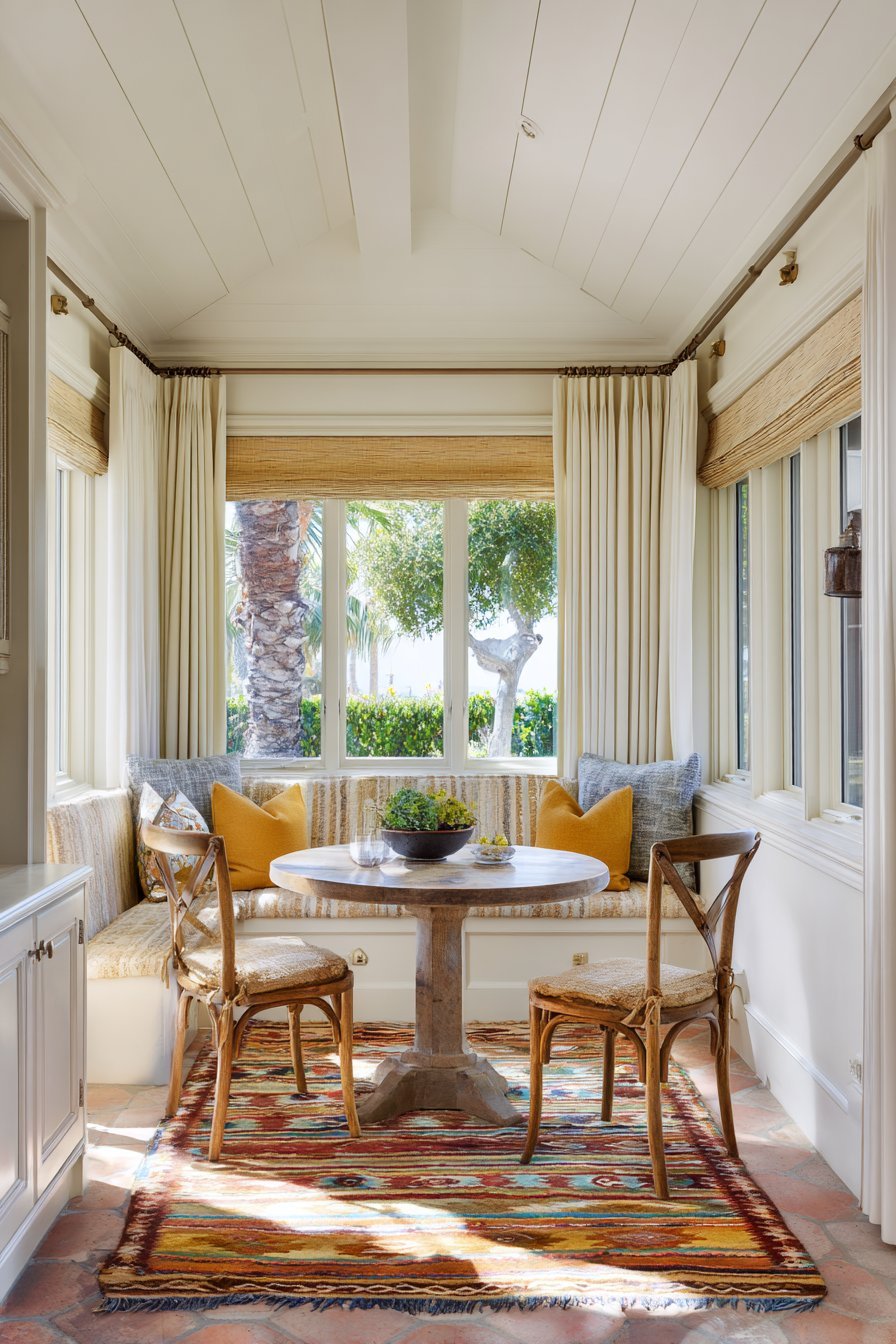
The carpet is positioned beneath round pedestal table and bistro chairs. Morning sunlight streaming through cafe curtains illuminates vibrant vegetable-dyed colors. Tight weave structure becomes clearly visible in favorable lighting. Terracotta tile flooring and white beadboard walls frame the cozy space.
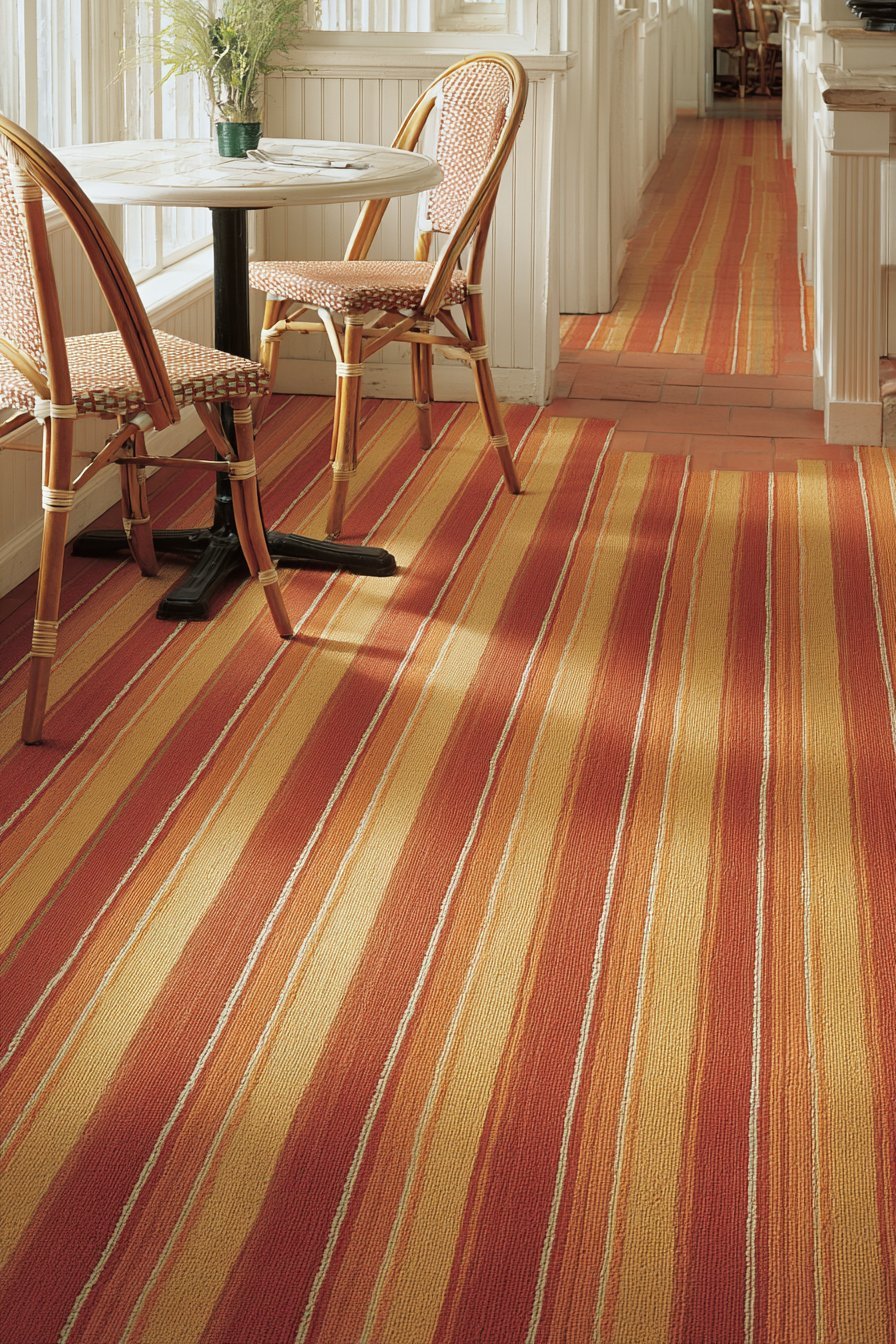
This casual approach celebrates Turkish kilim durability in high-traffic areas. The striped design suits informal dining settings perfectly. Easy-care properties make flat-weave carpets practical kitchen choices.
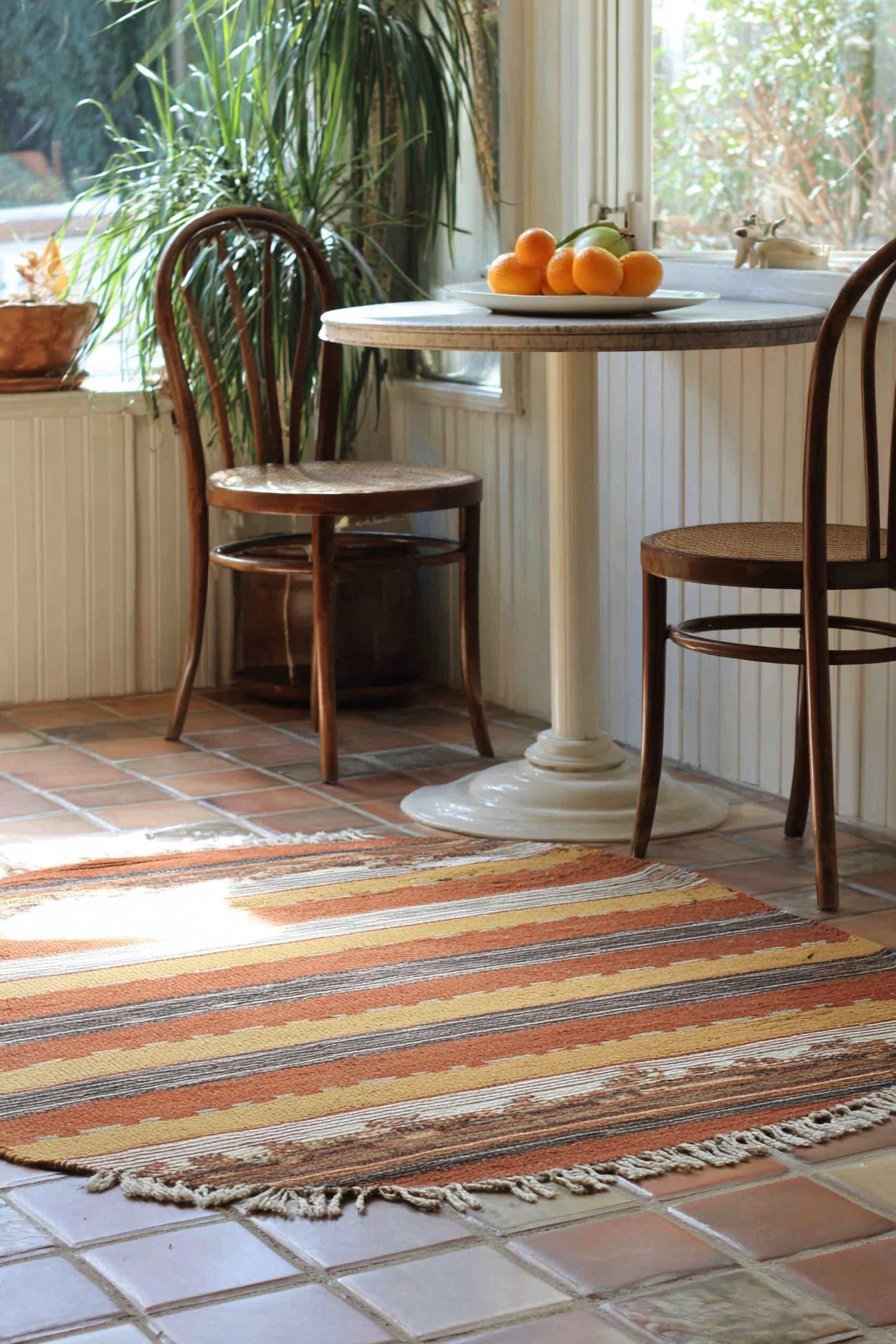
Interior design photography captures casual elegance in an informal dining setting. The striped Turkish kilim complements rather than competes with simple furniture. This practical approach balances aesthetics with real-world functionality.
Key Design Tips:
- Choose striped kilims for casual, high-traffic eating areas
- Select flat-weave options for easy-care kitchen applications
- Position carpets to complement rather than compete with simple furniture
- Use natural fringe as an authentic decorative element
- Maximize morning light to illuminate vibrant vegetable dyes
- Frame compact carpets with complementary tile flooring
21. Luxurious Living Room with Floral Turkish Carpet
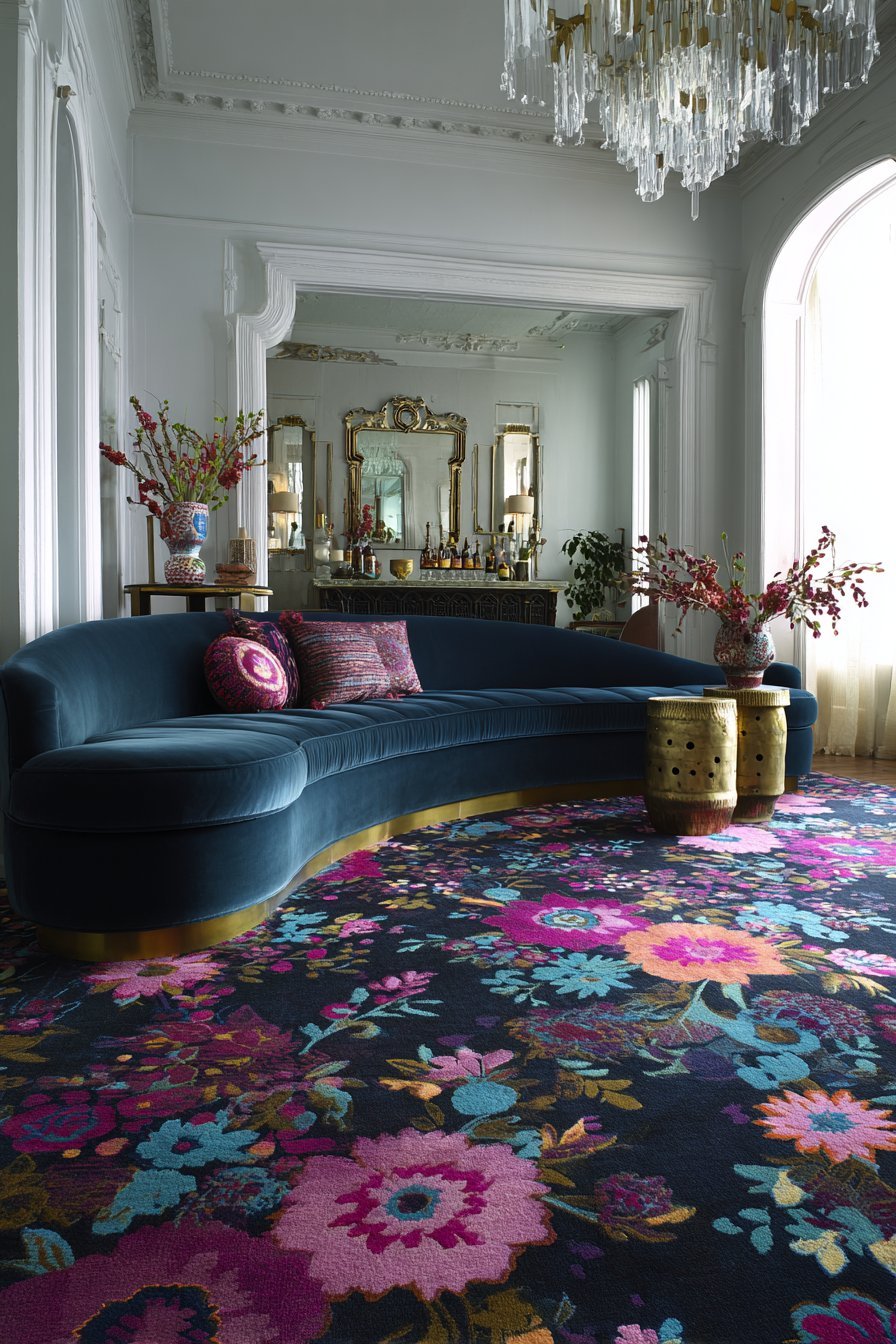
A Turkish carpet with multicolored floral spray design creates an opulent atmosphere. Jewel tones of emerald, sapphire, and ruby shine against midnight navy field. The all-over pattern demonstrates fine Turkish city weaving. Exceptionally high knot count produces intricate, detailed surface.
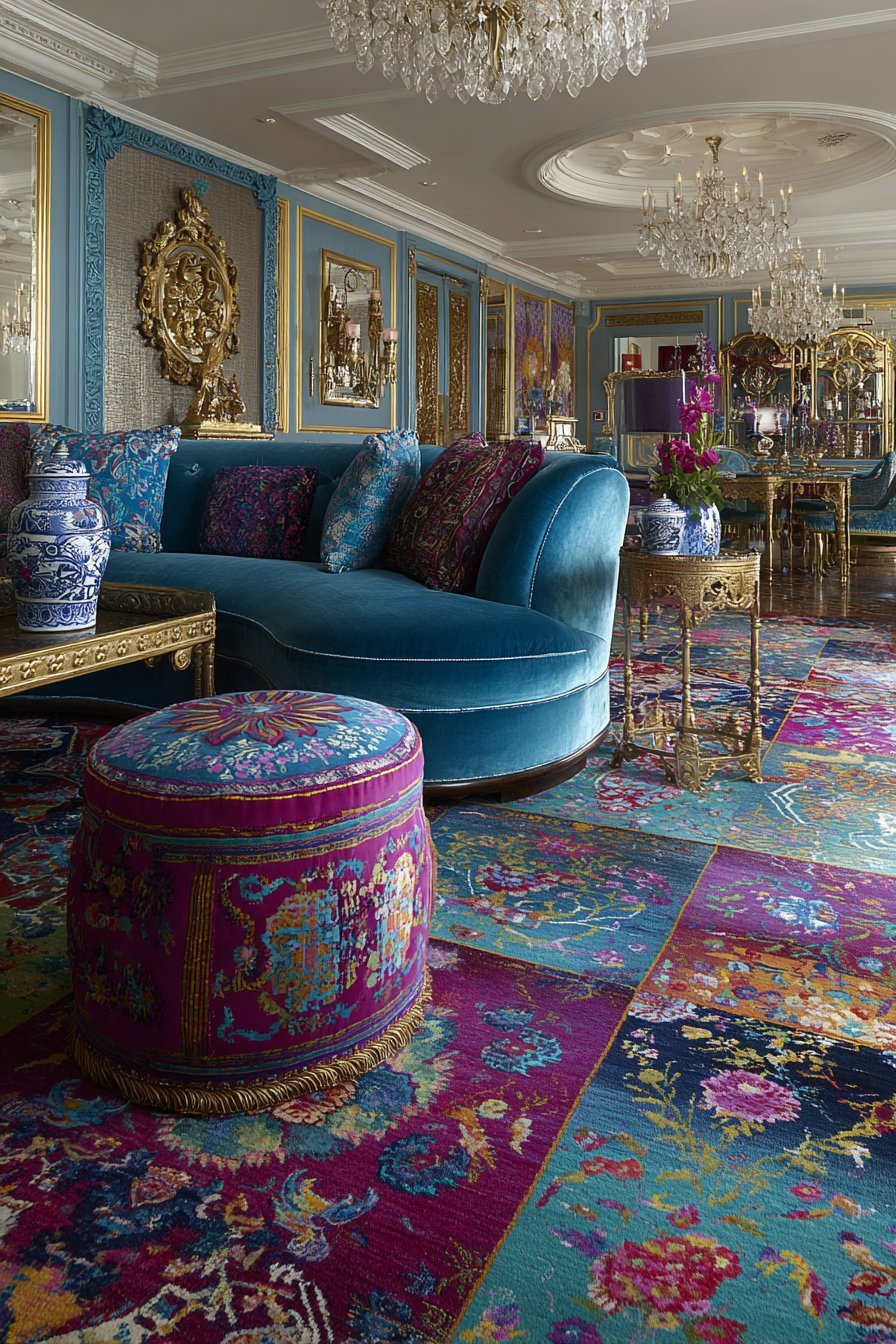
The carpet anchors curved velvet sofa in peacock blue creating cohesive palette. Gilded mirrors, ceramic garden stools, and brass accent tables surround the space. Crystal chandelier lighting creates sparkle, emphasizing rich surface and color depth. White crown molding provides visual breathing room balancing maximalist elements.
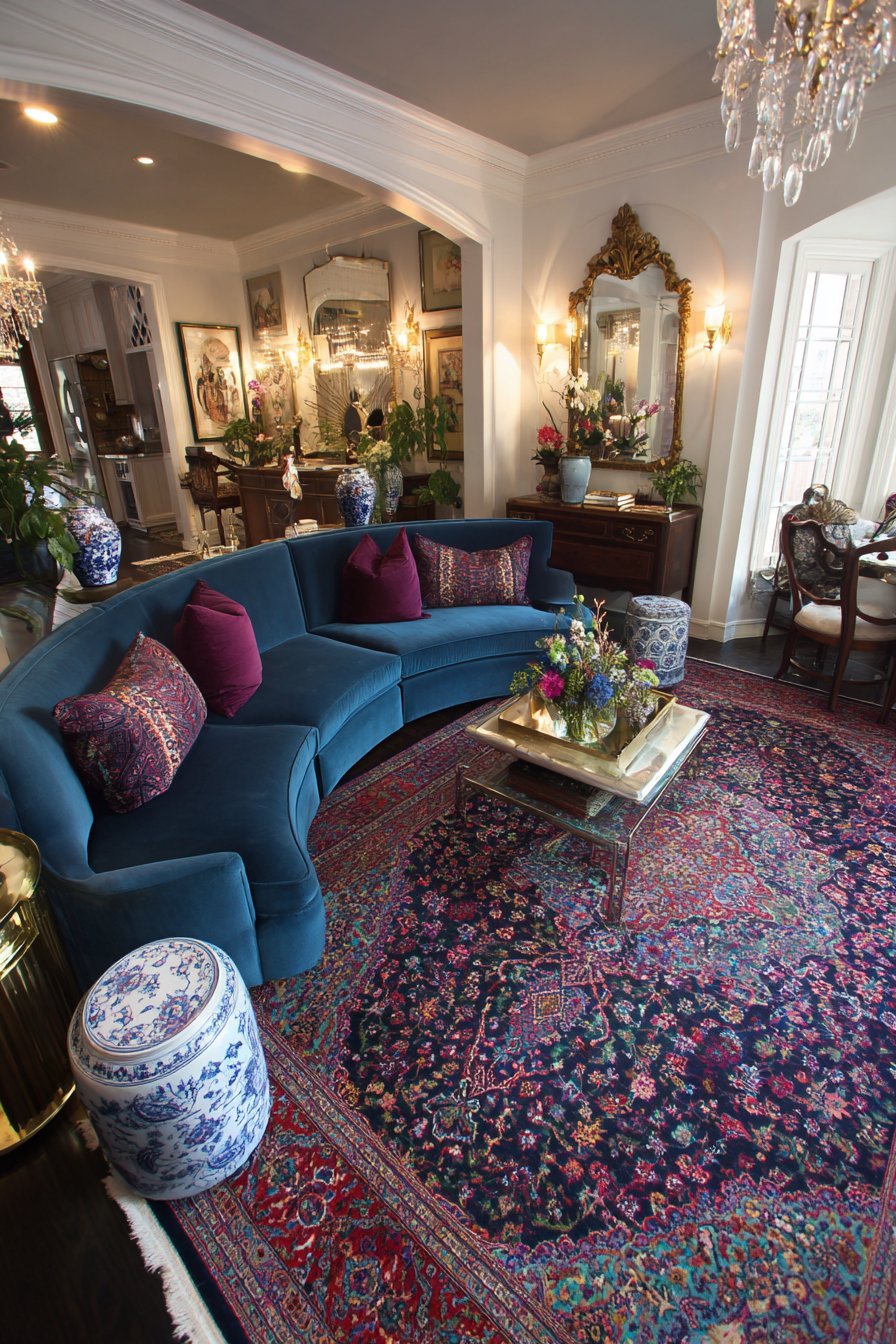
This luxurious layered aesthetic celebrates abundance and sophisticated color coordination. The Turkish carpet’s saturated colors set the room’s opulent tone. Every element contributes to glamorous, collected interior.
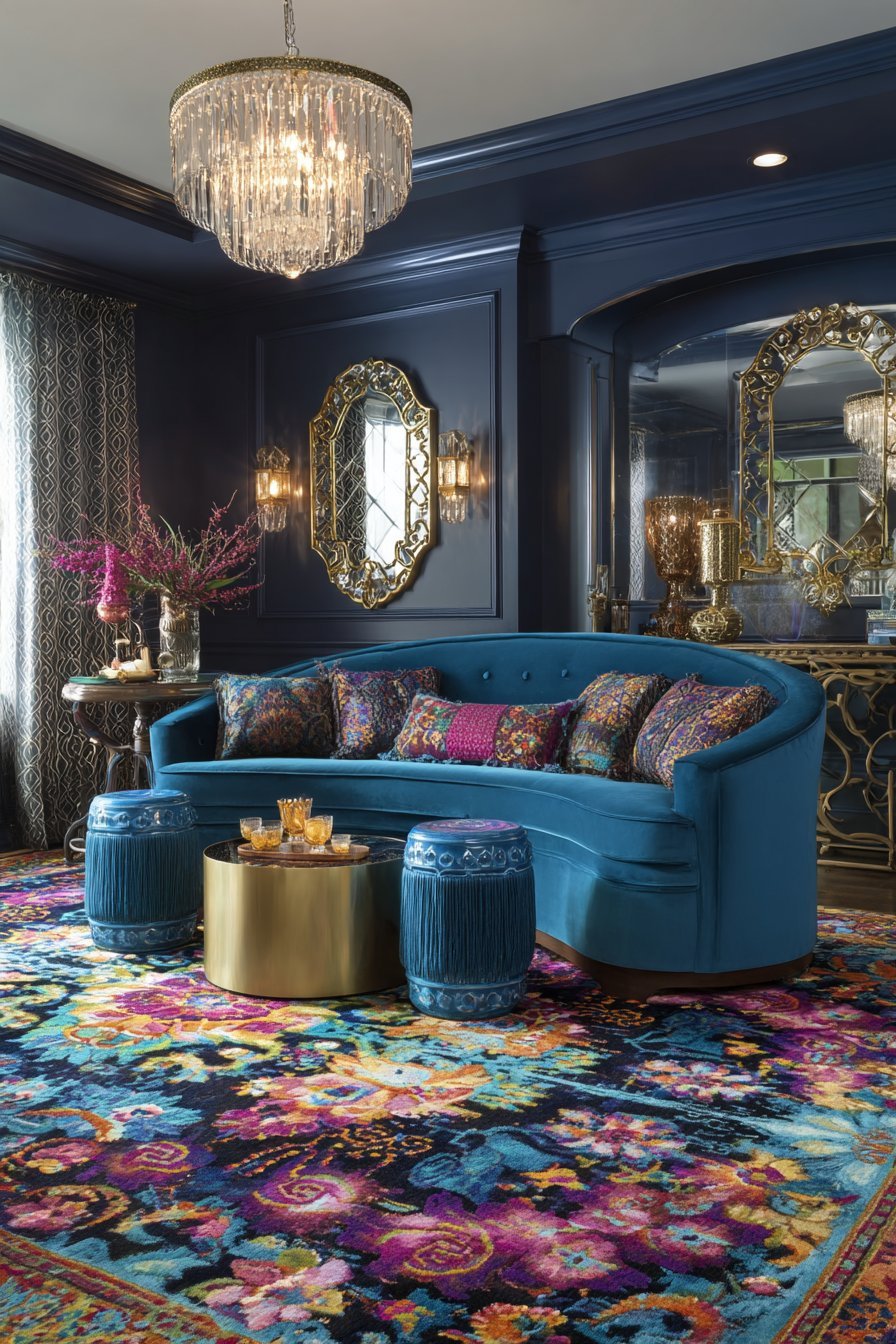
Wide-angle photography captures successful integration of luxurious elements. The carpet provides colorful foundation unifying diverse accessories. This approach suits personalities embracing glamorous maximalist design.
Key Design Tips:
- Select jewel-tone carpets for luxurious maximalist spaces
- Echo carpet colors in upholstery and accessories throughout room
- Use crystal lighting to create sparkle enhancing richness
- Balance saturated colors with white architectural trim
- Choose high-knot-count pieces for exceptional detail
- Layer gilded and brass accessories over colorful carpet foundation
22. Modern Hallway with Geometric Runner
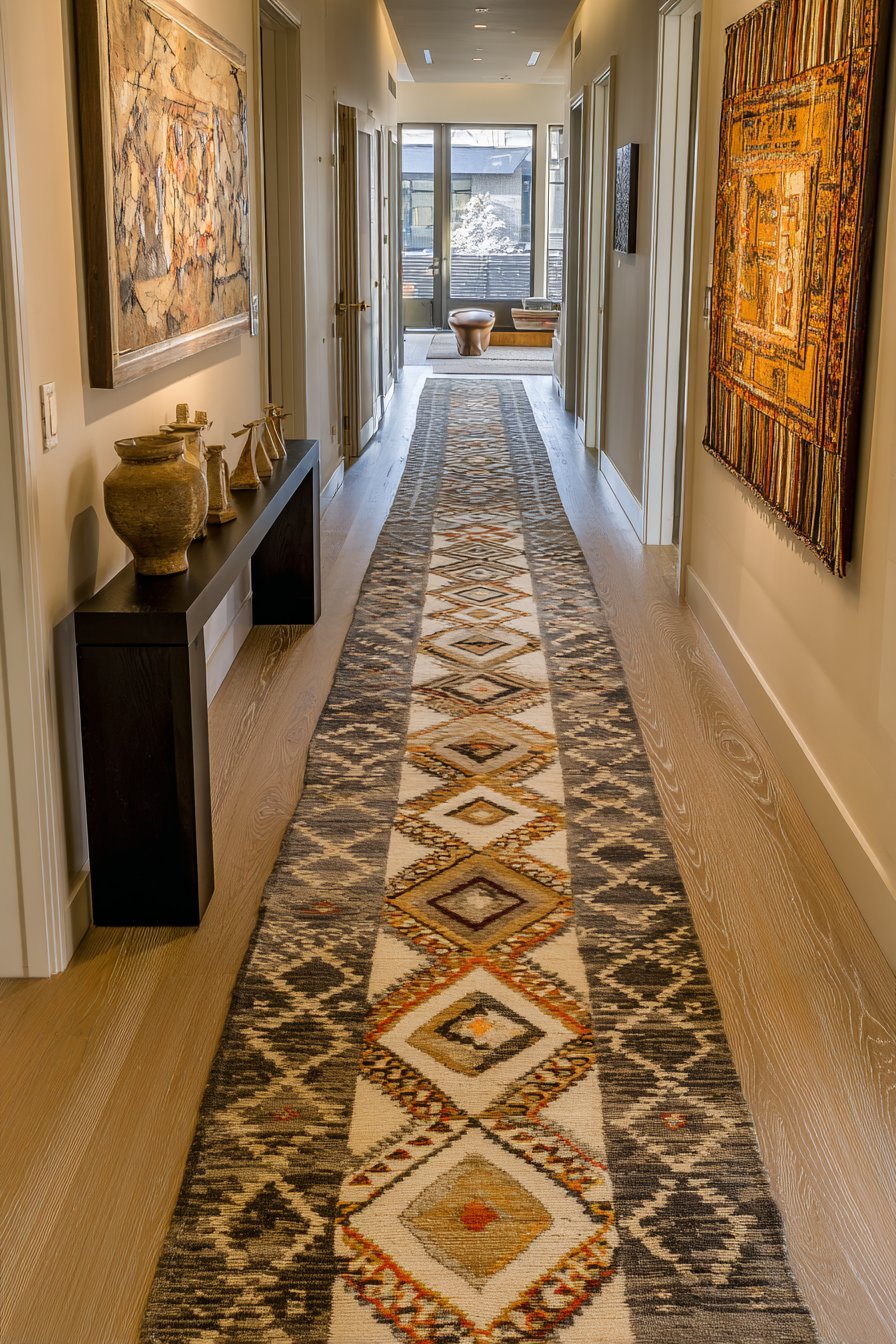
A Turkish carpet runner in geometric patterns extends down this corridor. Charcoal, rust, and cream colors create sophisticated hallway palette. The repeating diamond and triangle motifs show Caucasian-influenced Turkish design. Narrow width and elongated format suit hallway proportions perfectly.
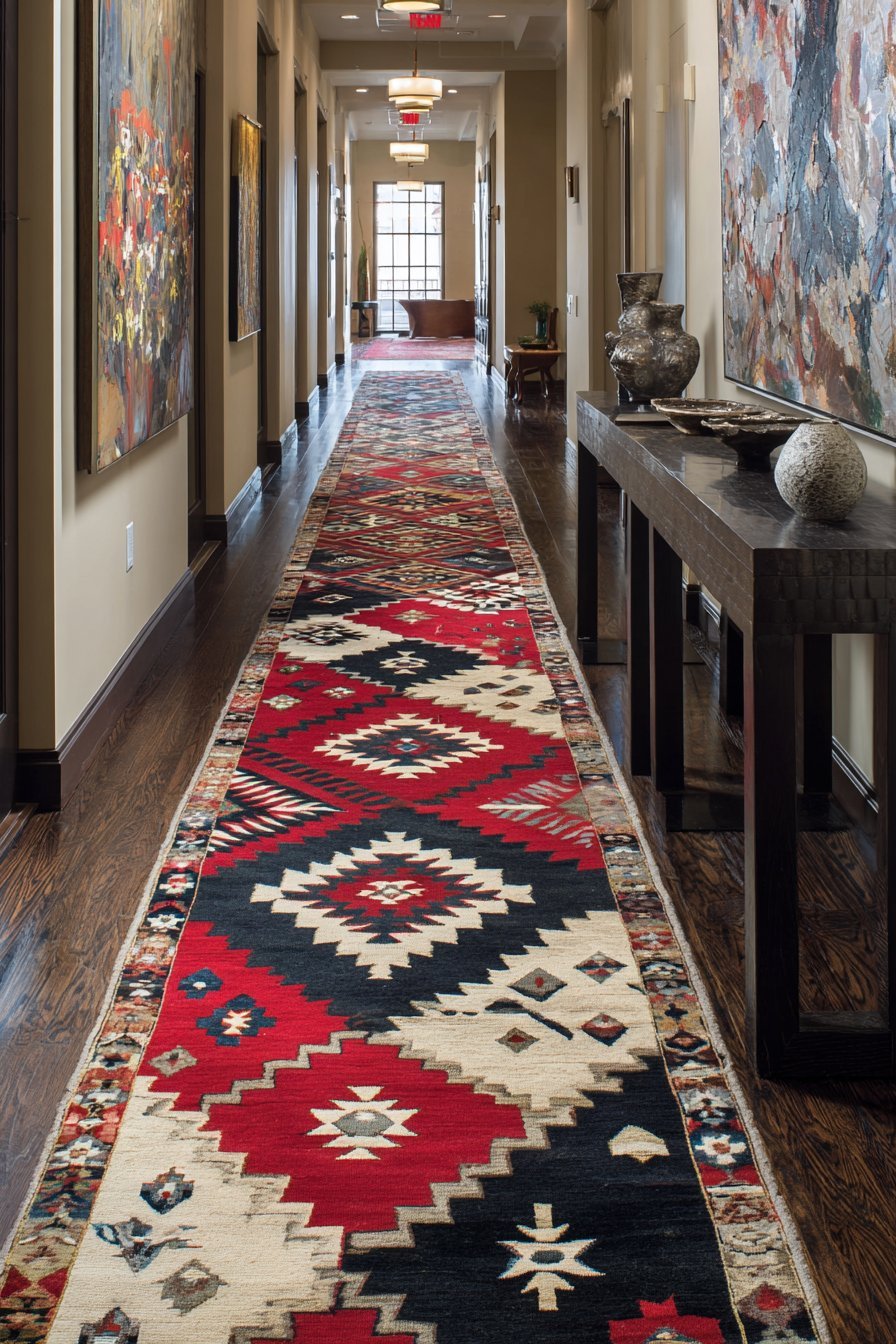
Natural side lighting from doorways creates alternating light and shadow patterns. This dynamic illumination emphasizes textured surface and pattern variations. Console tables with modern ceramics provide contemporary contrast. Abstract art on walls balances traditional carpet with current aesthetics.
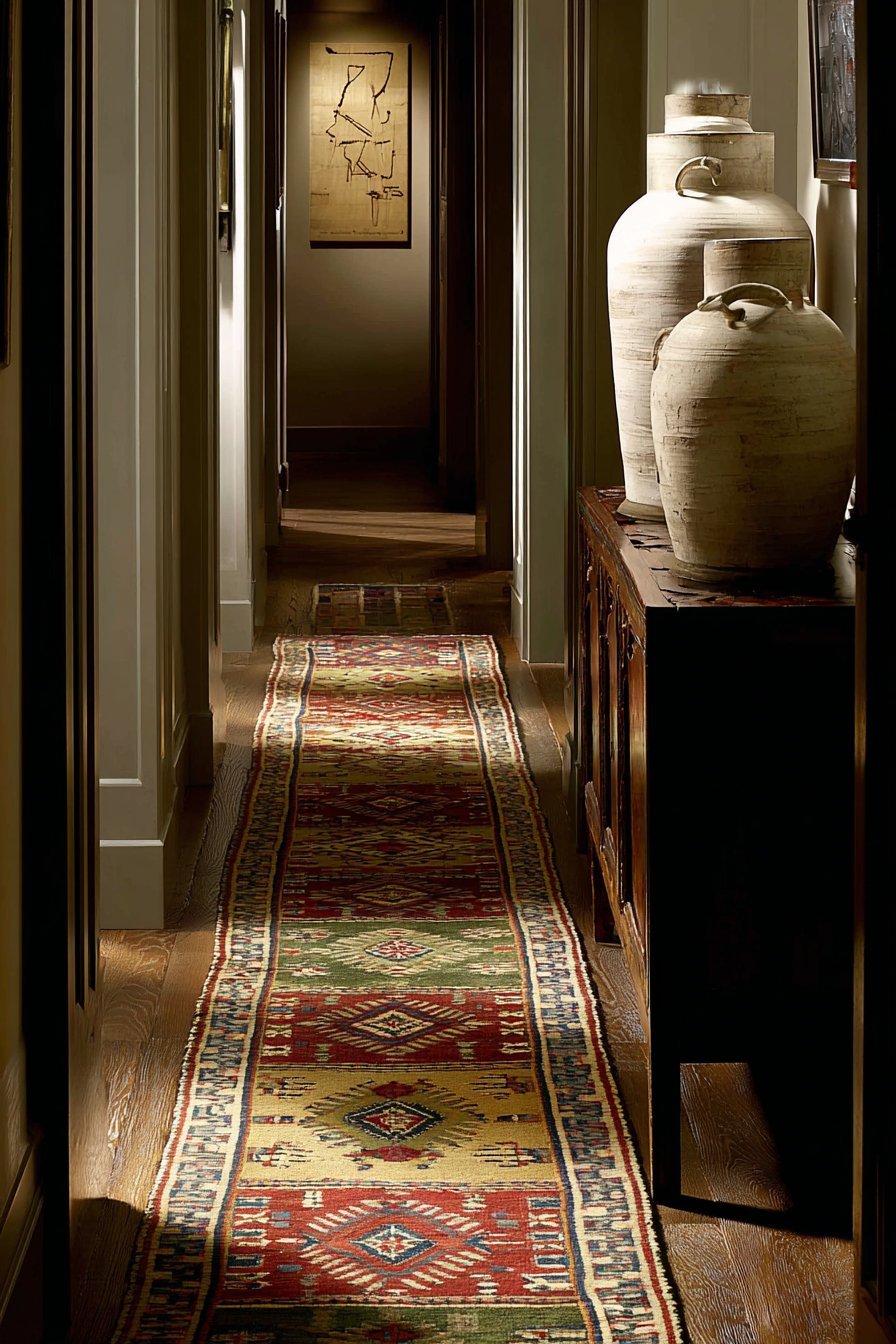
The runner defines circulation space while adding color and pattern. This practical application demonstrates Turkish carpet versatility in transitional areas. Proper proportions ensure runner doesn’t overwhelm narrow corridor.
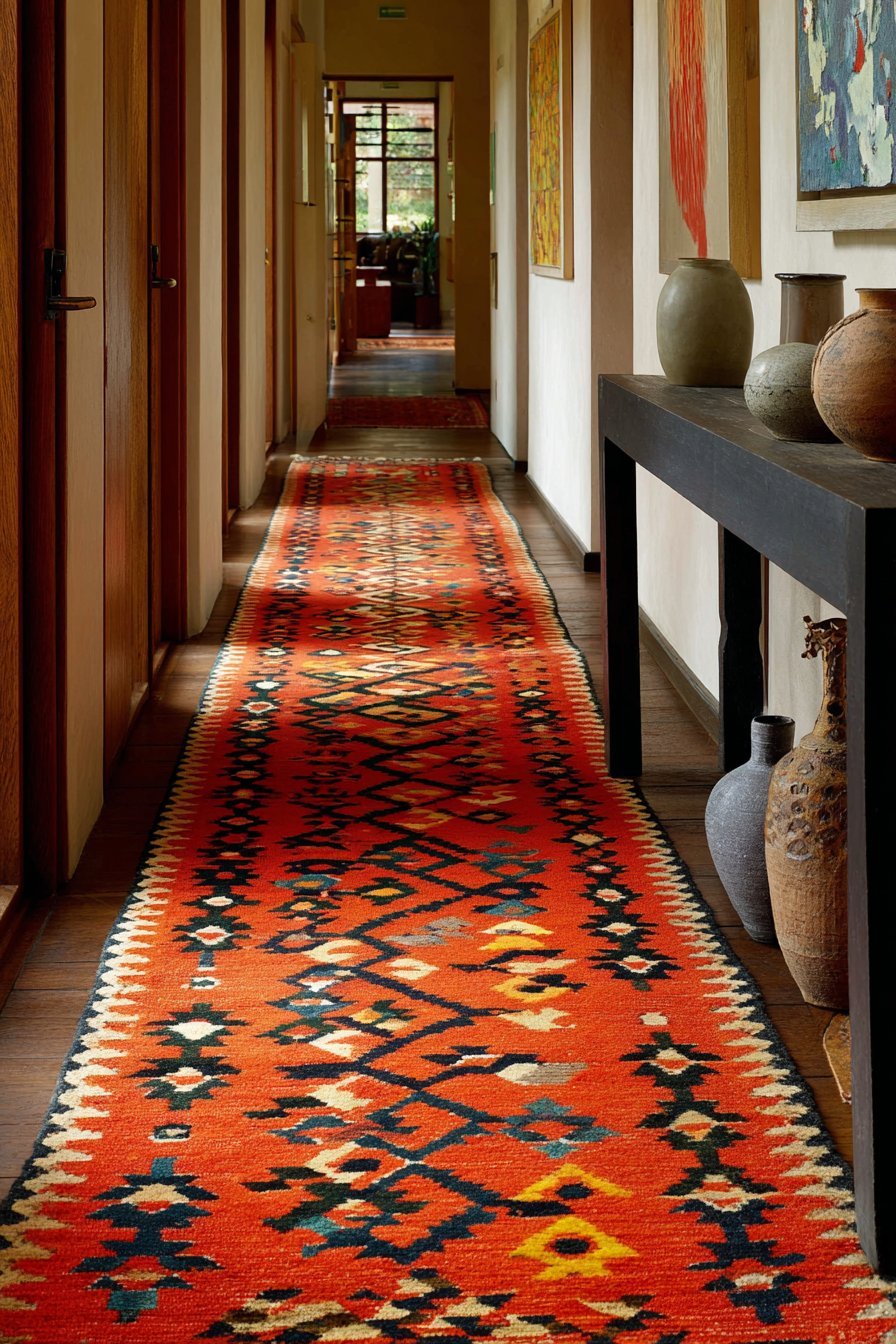
Architectural photography captures linear perspective showing effective space definition. The Turkish runner transforms functional corridor into designed space. This approach maximizes decorative impact in often-overlooked areas.
Key Design Tips:
- Choose narrow runners appropriately proportioned for hallway widths
- Select geometric patterns creating movement along corridors
- Use natural side lighting to create dynamic shadow patterns
- Balance traditional carpets with contemporary art and accessories
- Define circulation spaces through strategic carpet placement
- Transform functional corridors into designed transitional spaces
23. Coastal Cottage with Sun-Faded Turkish Carpet
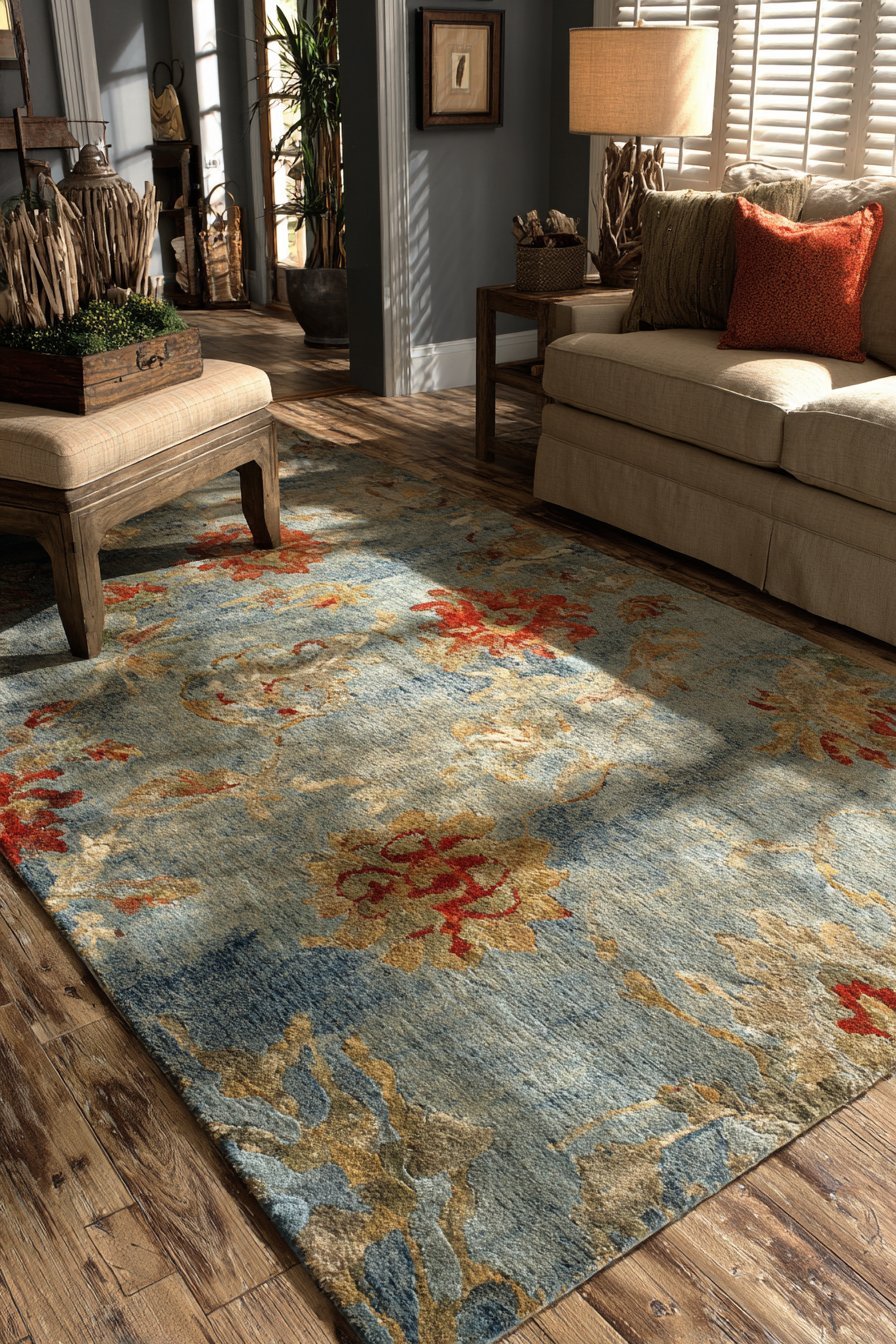
A Turkish carpet in faded aqua, sandy beige, and soft coral creates beachy atmosphere. Weathered floral patterns evoke relaxed coastal sensibility. The sun-faded appearance demonstrates natural aging process. Hand-knotted wool construction shows authentic age including slight edge fraying.
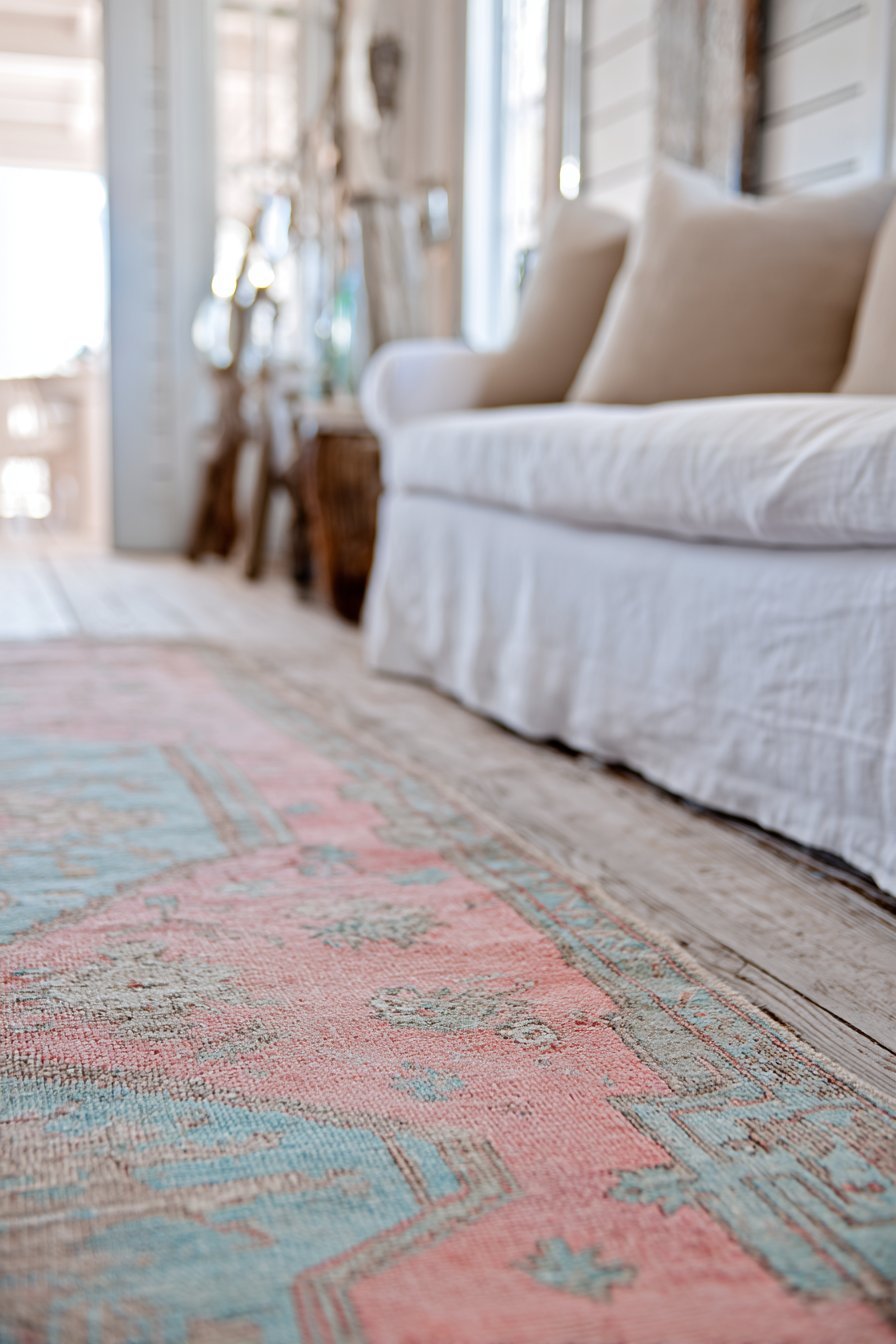
The carpet rests on whitewashed pine floors creating casual coastal foundation. Slipcovered furniture in natural linen and driftwood accents surround the space. Bright coastal light through plantation shutters emphasizes soft muted palette. The colors evoke seaside environments naturally.
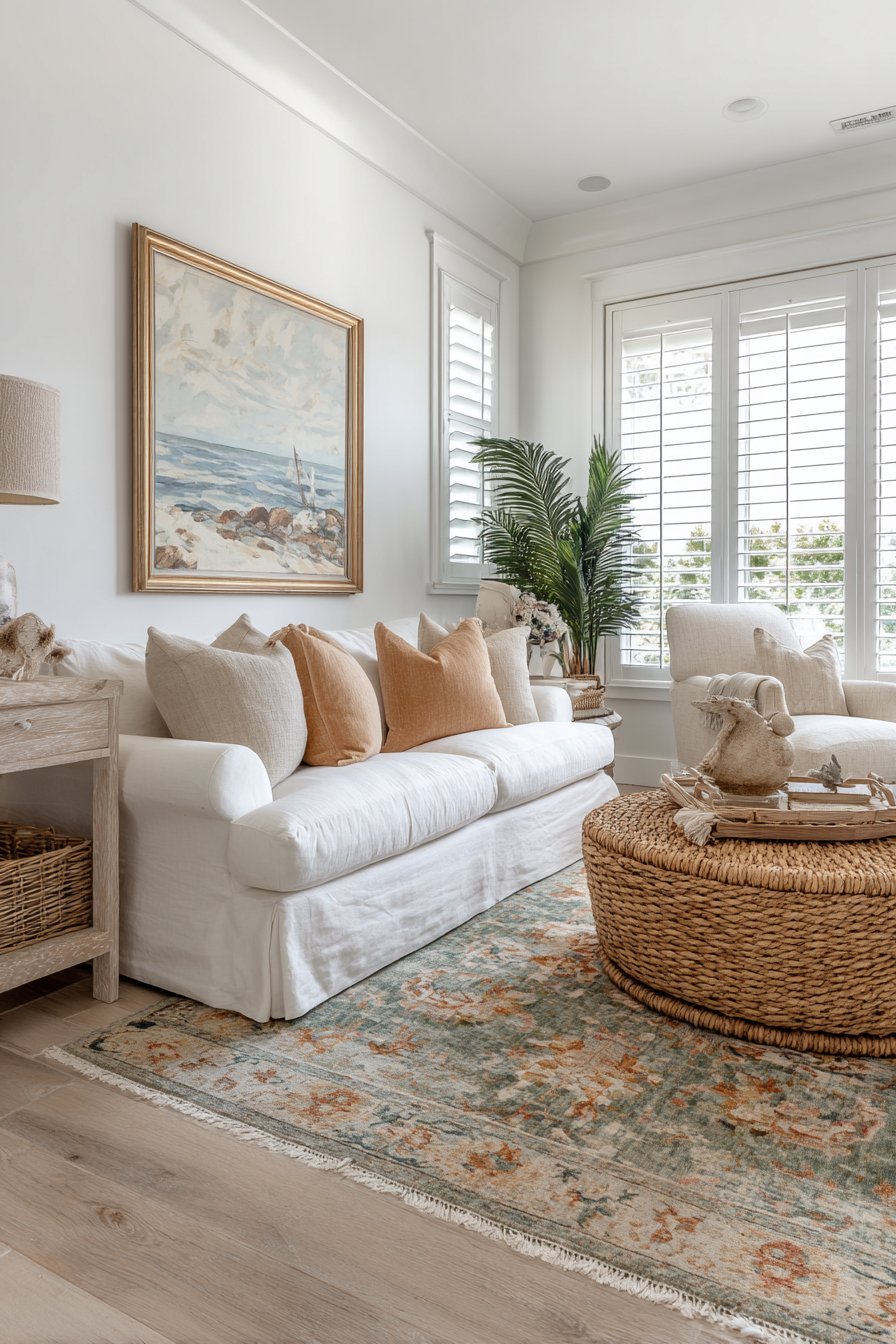
This casual approach values authentic aging over pristine condition. The light-filled space feels vacation-inspired throughout the year. Natural fade variations become design assets in coastal contexts.
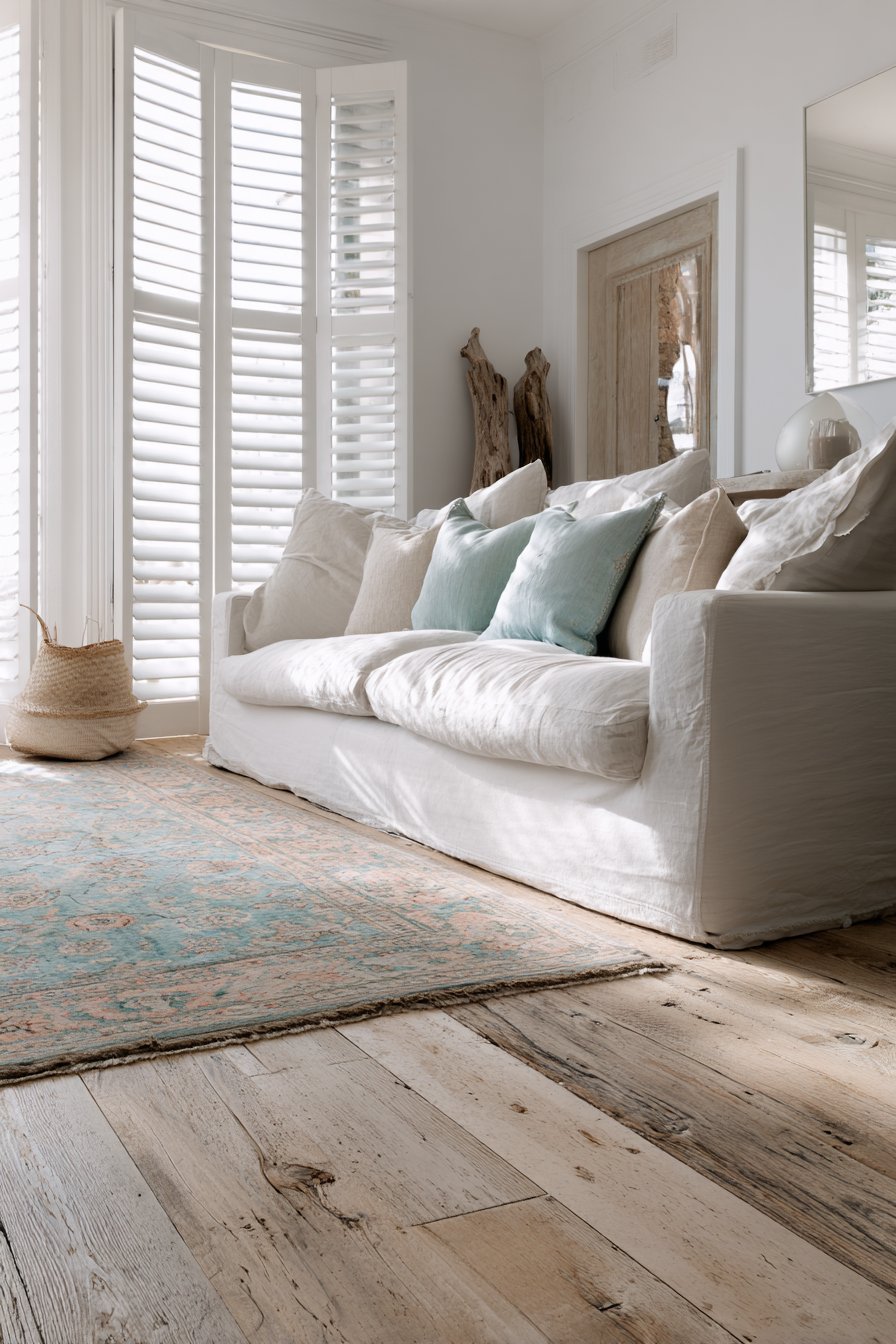
Interior photography with airy natural lighting captures casual elegance. The vintage Turkish carpet adapts perfectly to beach-inspired interiors. This approach demonstrates color palette flexibility across design styles.
Key Design Tips:
- Choose sun-faded Turkish carpets for coastal cottage interiors
- Embrace natural aging and fade variations as design features
- Pair aged carpets with whitewashed wood flooring
- Use slipcovered furniture maintaining casual coastal aesthetic
- Maximize bright natural light emphasizing muted color palettes
- Accept slight fraying as an authentic characteristic adding charm
24. Contemporary Office with Modern Turkish Carpet
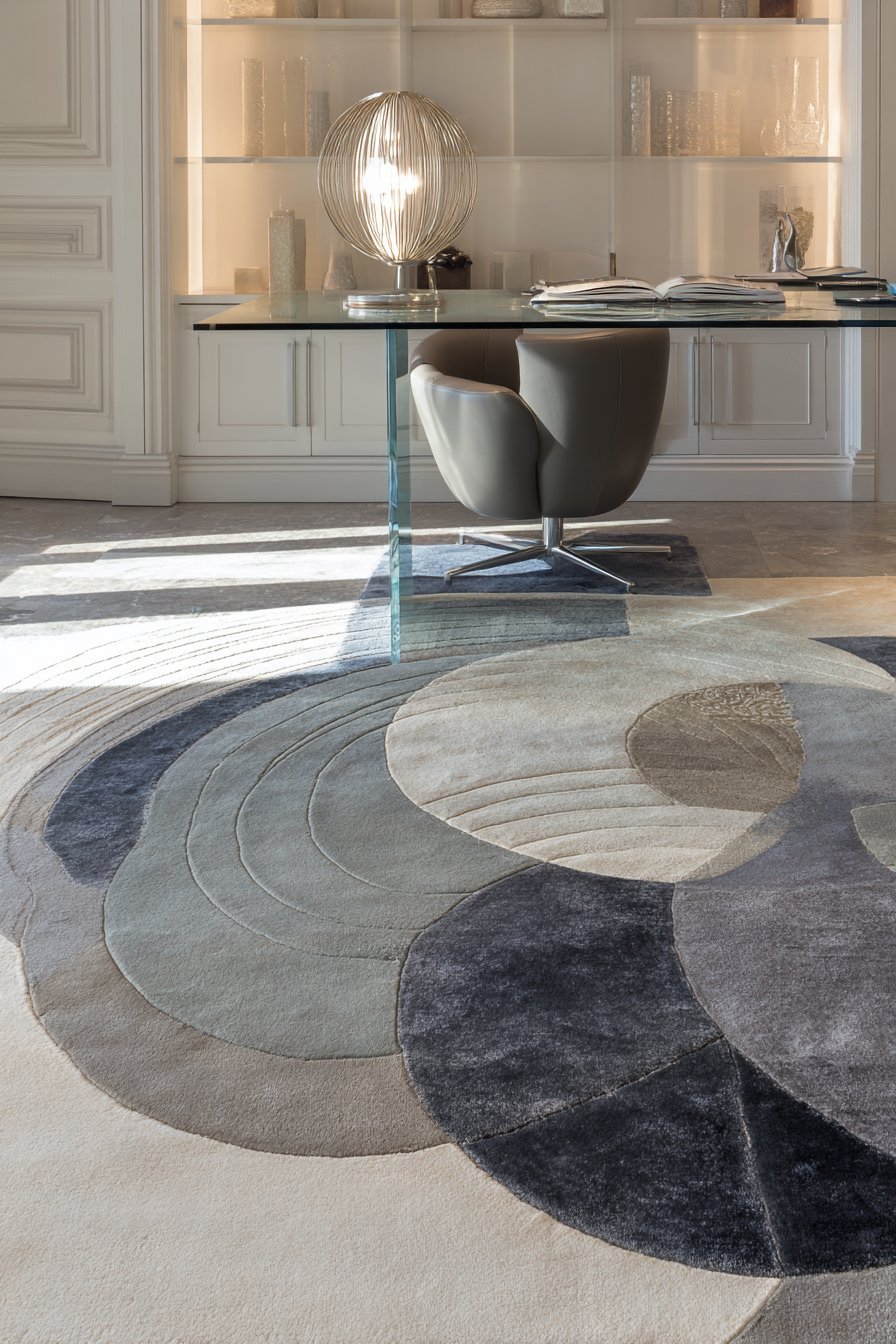
A Turkish carpet in sophisticated charcoal gray and cream anchors this workspace. Abstract modernist patterns reinterpret traditional Turkish motifs. Wool and silk blend creates subtle sheen variations catching window light. Contemporary design simplifies geometric forms while maintaining quality craftsmanship.
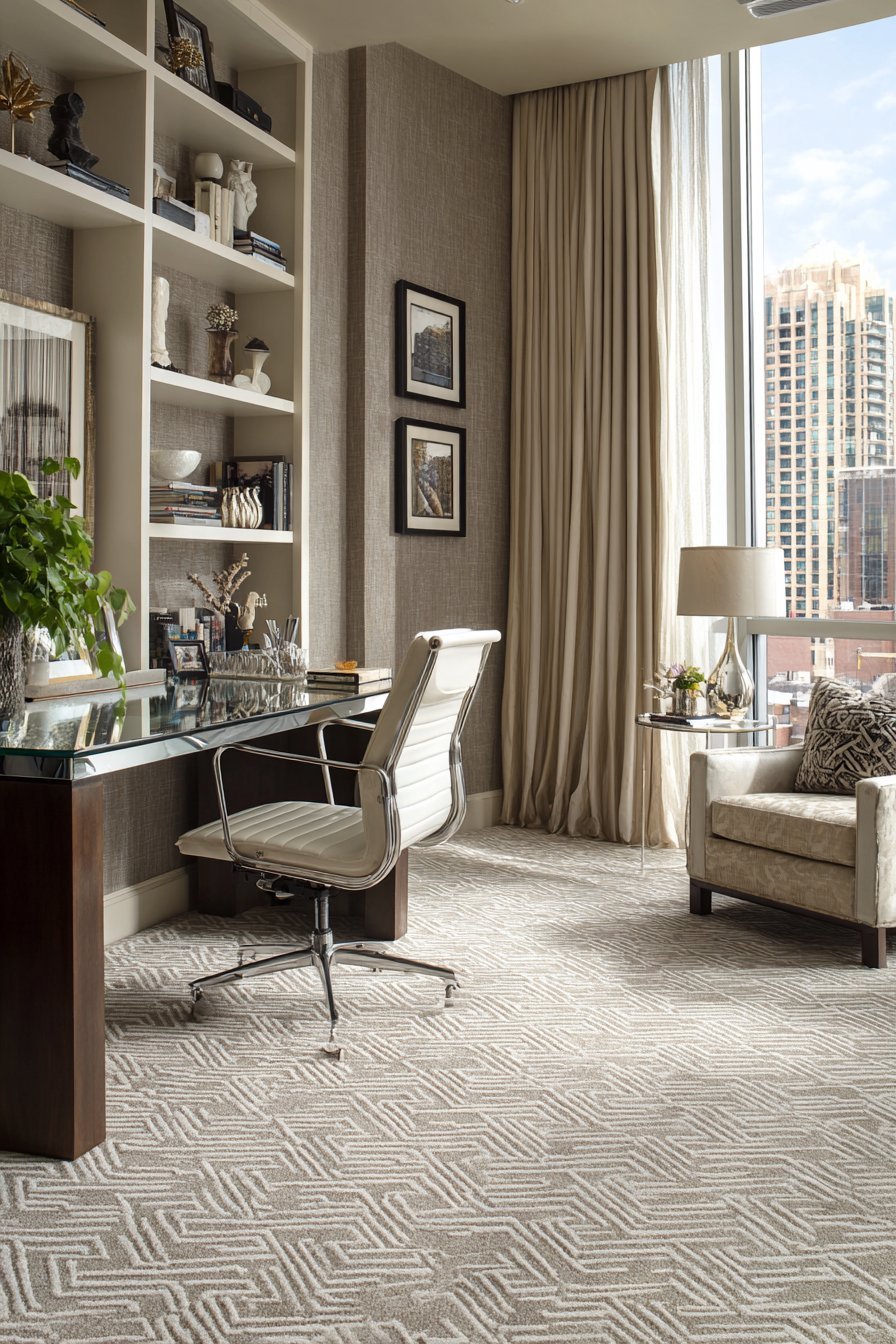
The carpet positions beneath glass desk and ergonomic leather chair. Built-in shelving in white lacquer maintains clean modern lines. Minimal desk accessories prevent visual clutter. Natural light combined with task lighting highlights refined texture.
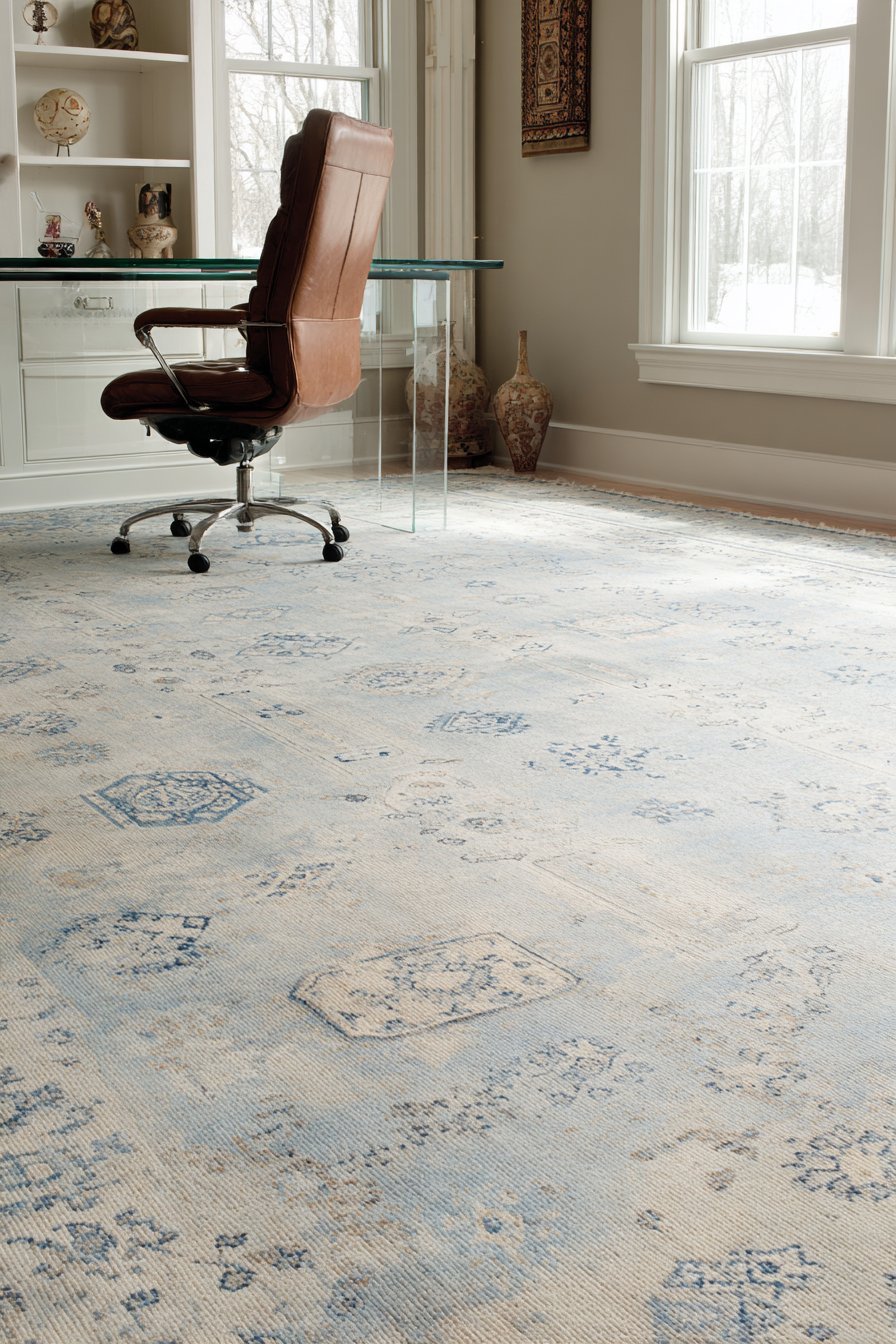
This evolution demonstrates Turkish carpet craftsmanship adapting to contemporary aesthetics. The minimalist approach suits professional home office environments. Traditional techniques produce modern design outcomes successfully.
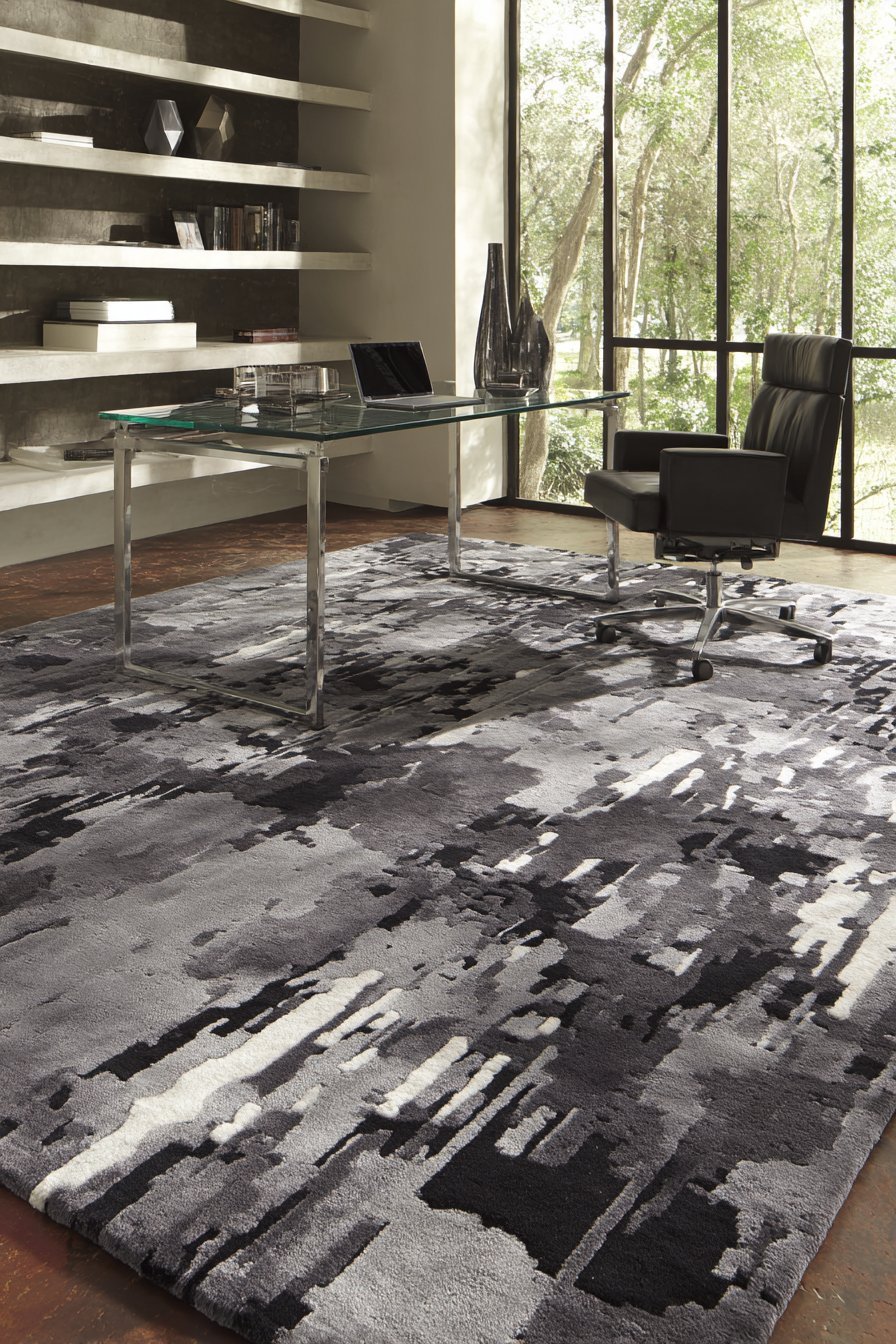
Professional photography captures successful integration within minimalist workspace design. The contemporary Turkish carpet grounds the space without visual heaviness. This approach bridges traditional craft with current design sensibilities.
Key Design Tips:
- Select contemporary Turkish carpets in sophisticated neutral palettes
- Choose abstract patterns interpreting traditional motifs modernly
- Use wool-silk blends for subtle sheen in professional spaces
- Pair traditional textiles with glass and lacquer furniture
- Combine natural and task lighting highlighting carpet texture
- Appreciate evolution of traditional techniques into contemporary designs
25. Bold Powder Room with Vibrant Turkish Carpet
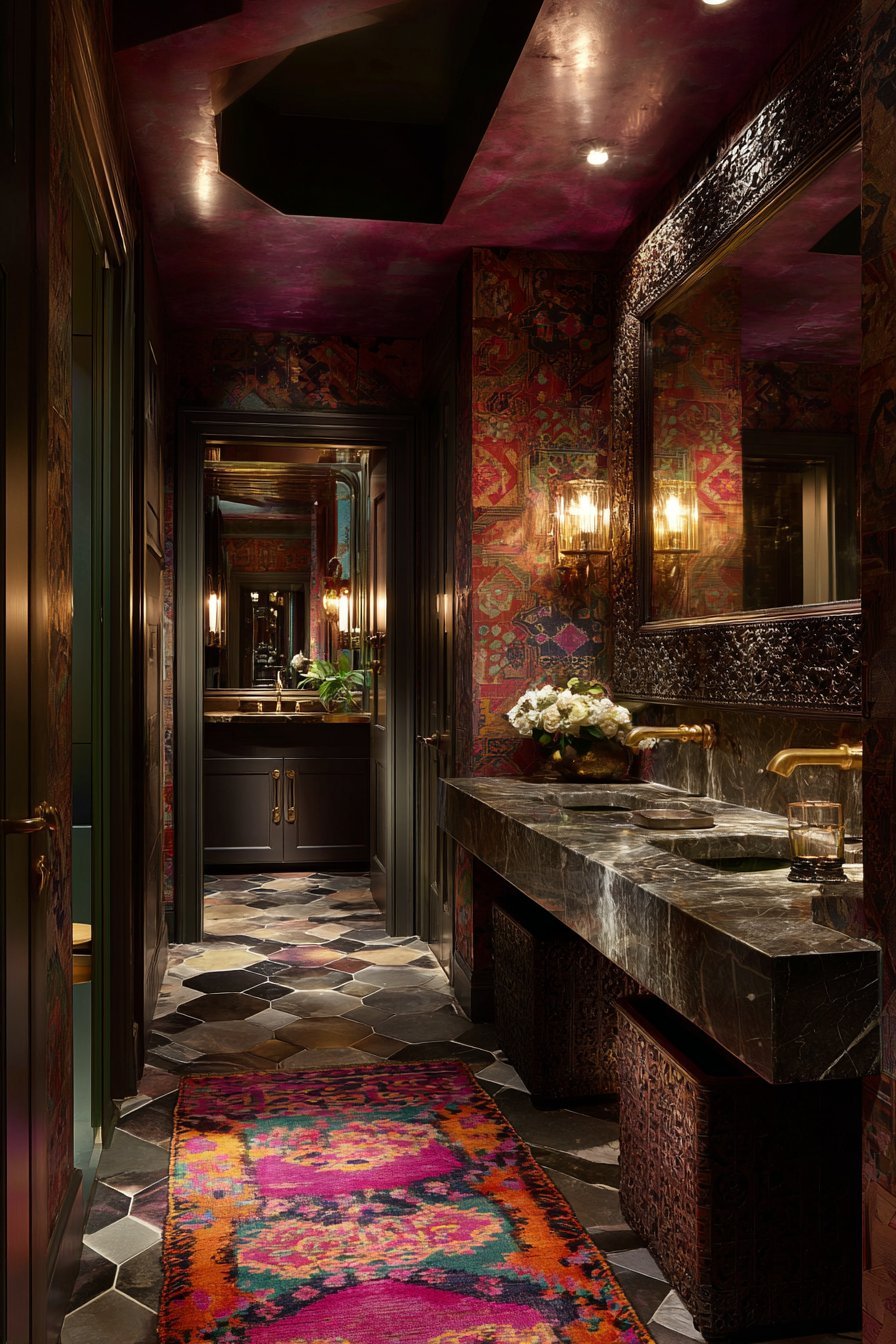
A small Turkish carpet in vibrant fuchsia, orange, and turquoise transforms this powder room. Bold tribal patterns create jewel-box intensity in compact space. Dense pile and saturated colors make strong design statement. Authentic hand-knotted construction shows slight edge irregularities.
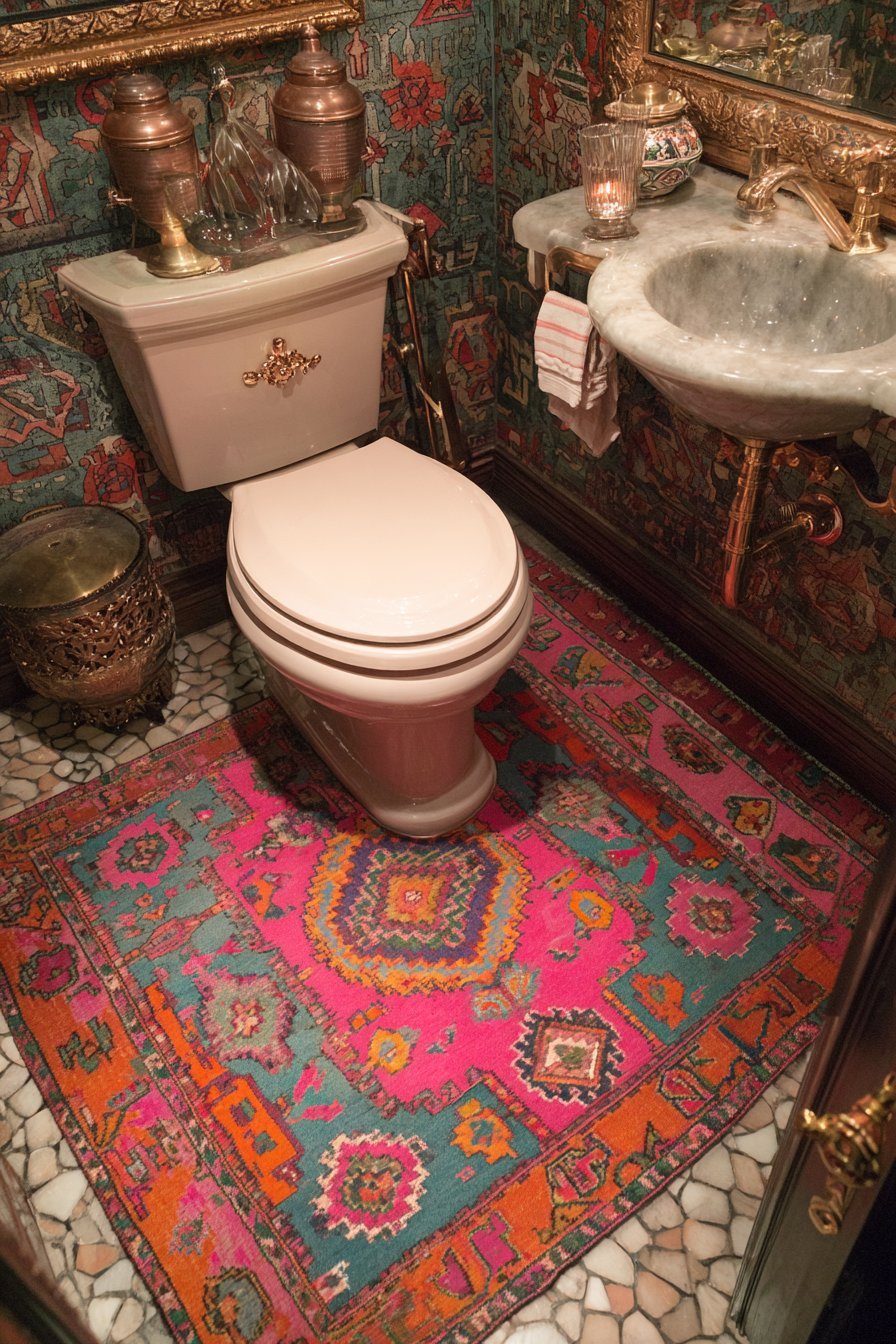
The carpet is positioned on hexagonal marble floor tiles creating pattern mix. Brass fixtures, carved wood mirror, and patterned wallpaper layer visual richness. Coordinating colors throughout create cohesive maximalist aesthetic. Sconce lighting creates dramatic shadows emphasizing the textured surface.
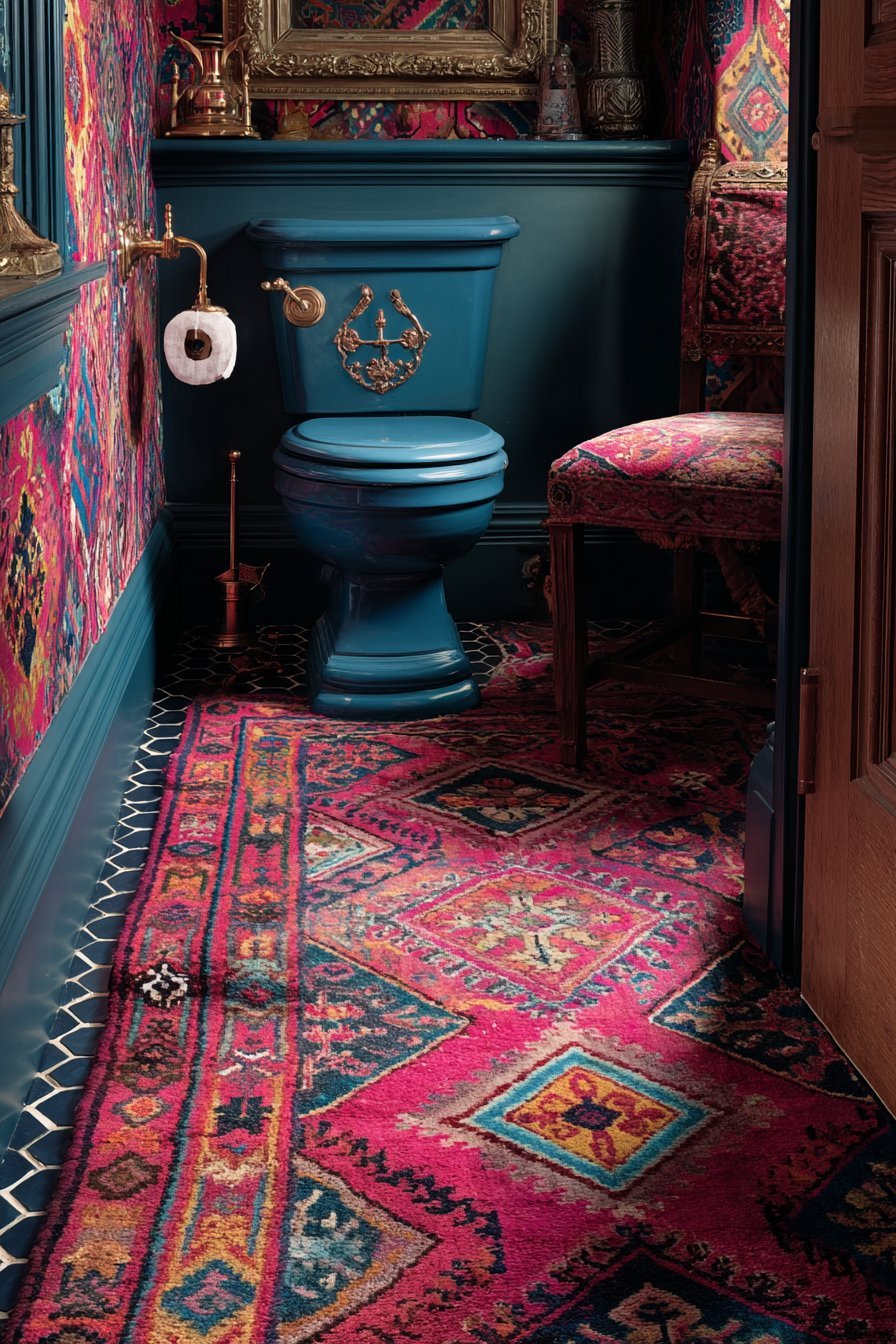
This unexpected application demonstrates Turkish carpet versatility in utility spaces. The small format suits powder room proportions perfectly. Bold design choice adds personality to functional area.
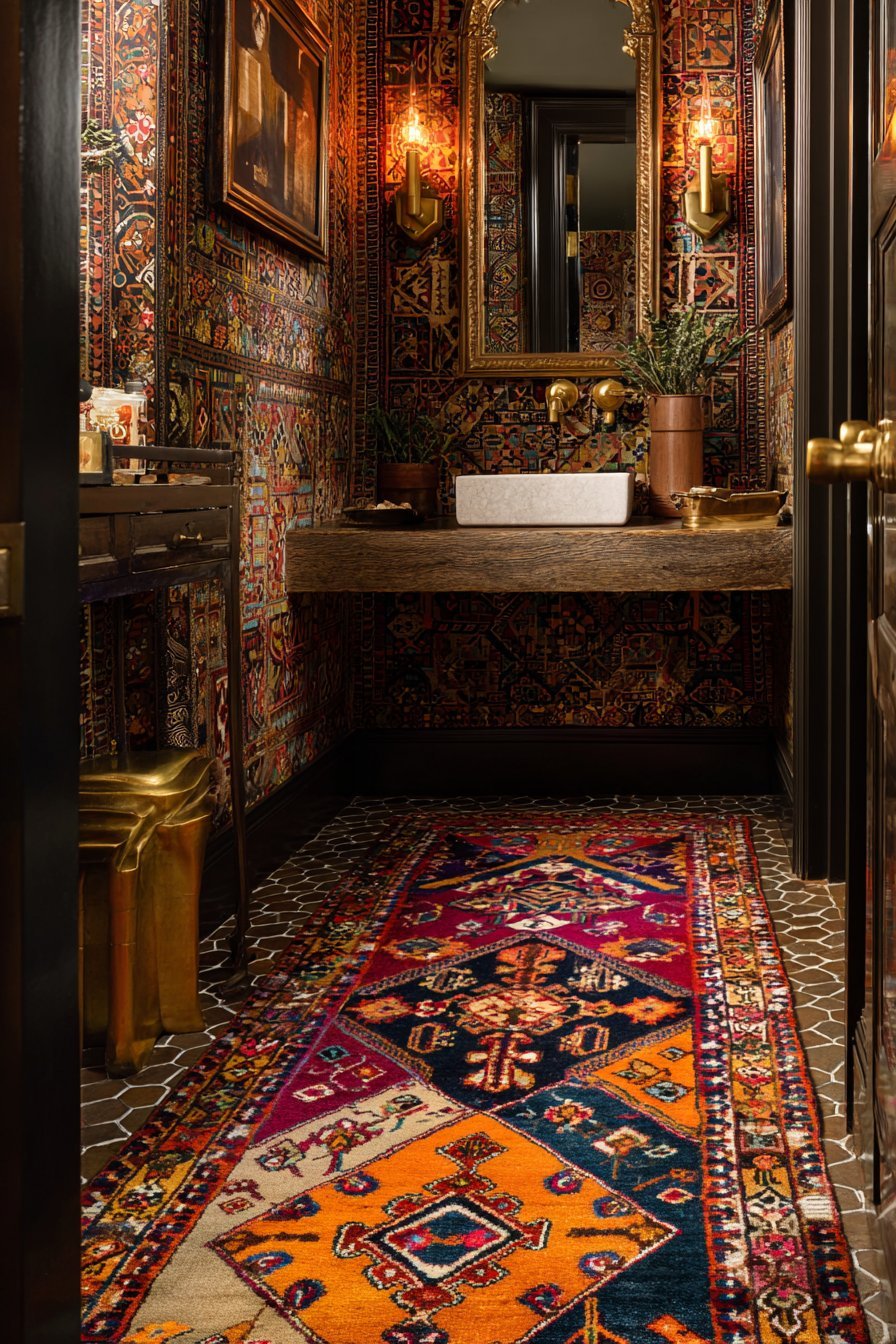
Detail interior photography captures an unexpected powder room application. The colorful Turkish carpet transforms mundane space into design moment. This approach encourages creative thinking about carpet placement.
Key Design Tips:
- Use small Turkish carpets to add personality to powder rooms
- Select saturated colors creating jewel-box intensity in compact spaces
- Layer patterns through carpet, tile, and wallpaper confidently
- Coordinate colors across multiple surfaces for cohesion
- Use dramatic lighting to emphasize carpet texture
- Think creatively about unexpected carpet placement locations
26. Rustic Lodge with Tribal Bergama Carpet
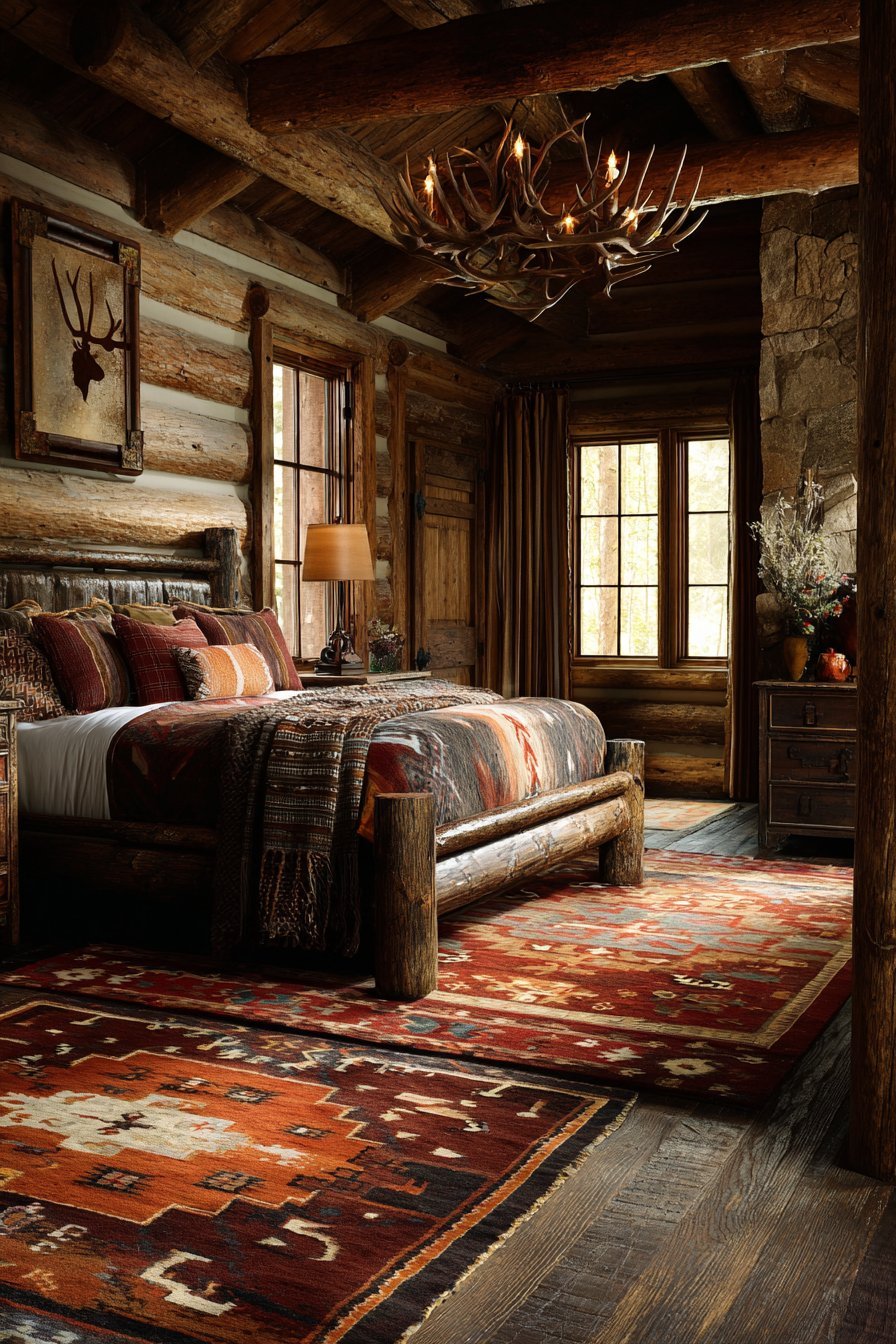
A large Turkish Bergama carpet in deep burgundy, navy, and burnt orange anchors this mountain retreat. Chunky geometric patterns demonstrate village-level Turkish weaving. Thick hand-spun wool shows intentional asymmetry and color variations. The bold primitive designs suit rustic lodge aesthetic perfectly.
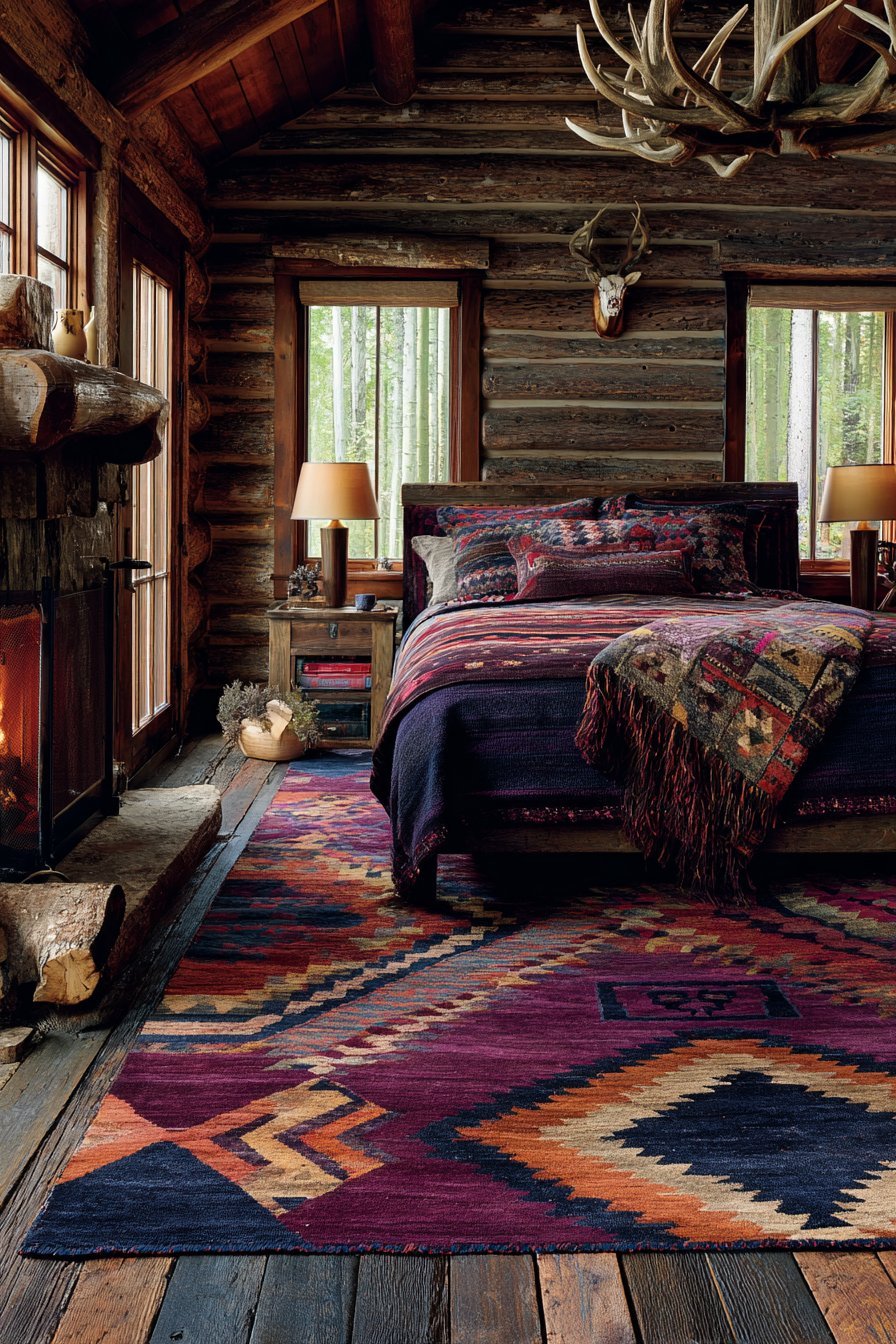
The carpet rests on reclaimed barn wood flooring creating textural layers. Log bed frame, plaid wool blankets, and antler chandelier complete cabin atmosphere. Warm fireplace light and natural daylight create dynamic illumination. Rich saturated colors and dimensional pile emerge in varied lighting.
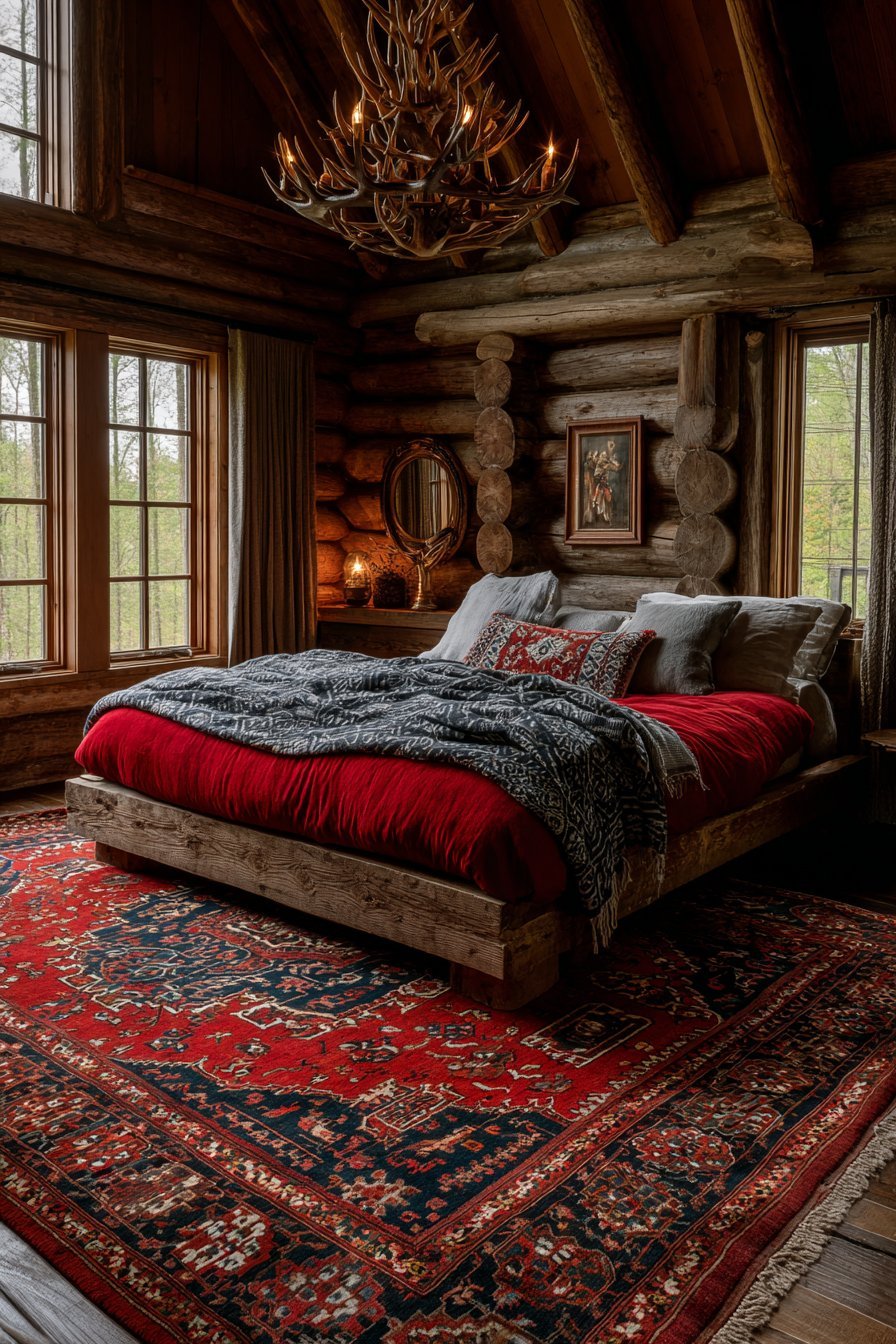
This pairing demonstrates shared appreciation for handcraft and natural materials. Turkish tribal carpet enhances American rustic style through cultural connection. Authentic ethnic textiles elevate cabin interiors beyond expected design choices.
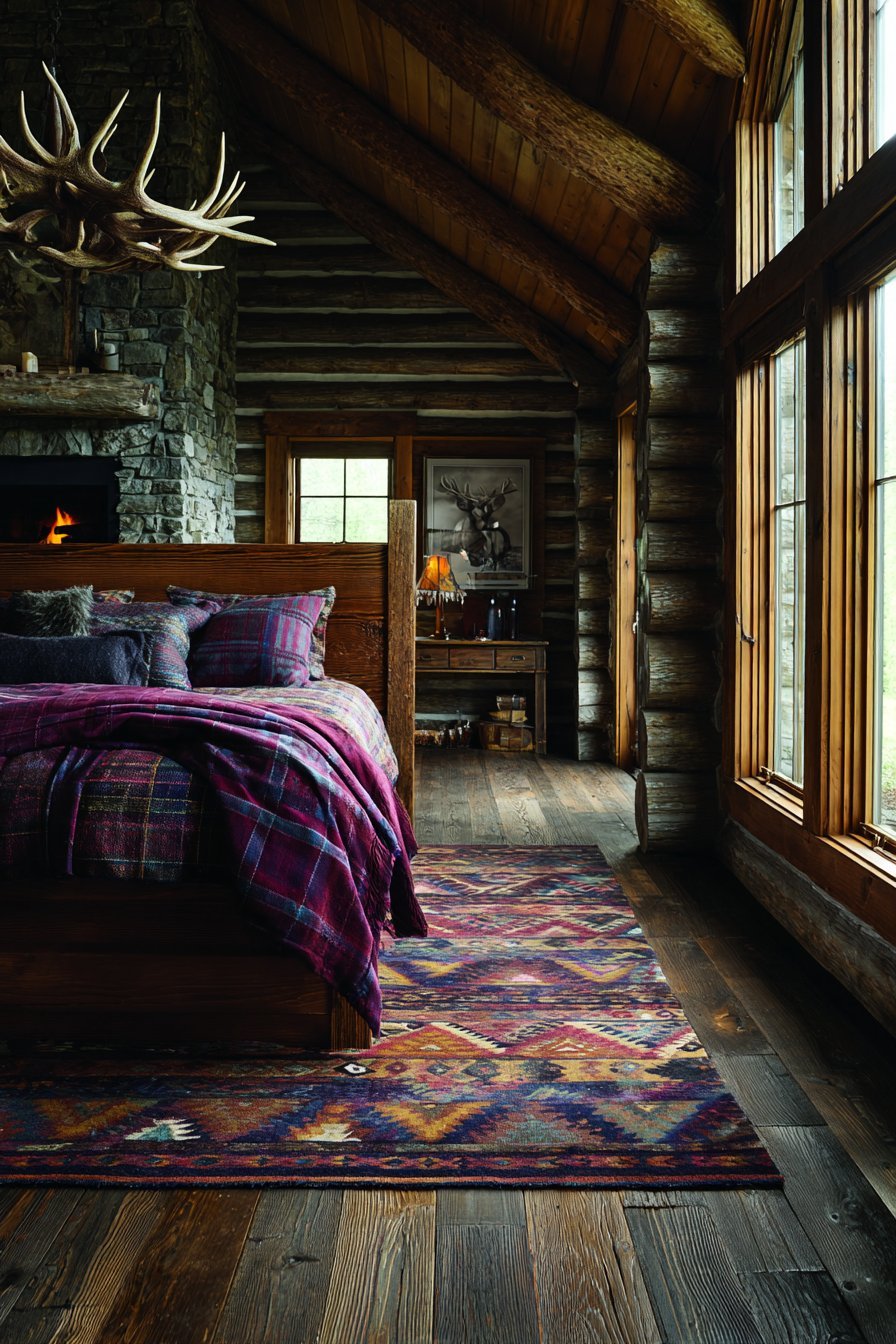
Wide-angle photography captures harmonious style integration. The carpet’s bold patterns hold their own against substantial rustic furniture. This approach celebrates handcraft across different cultural traditions.
Key Design Tips:
- Select tribal Turkish carpets with bold geometric patterns for lodges
- Pair ethnic textiles with rustic American furniture confidently
- Use reclaimed wood flooring to complement handwoven carpets
- Combine fireplace and natural light for dynamic illumination
- Celebrate intentional asymmetry as authentic village-level craftsmanship
- Connect cultures through shared appreciation of handcraft traditions
27. Elegant Transitional Living Room with Navy Oushak
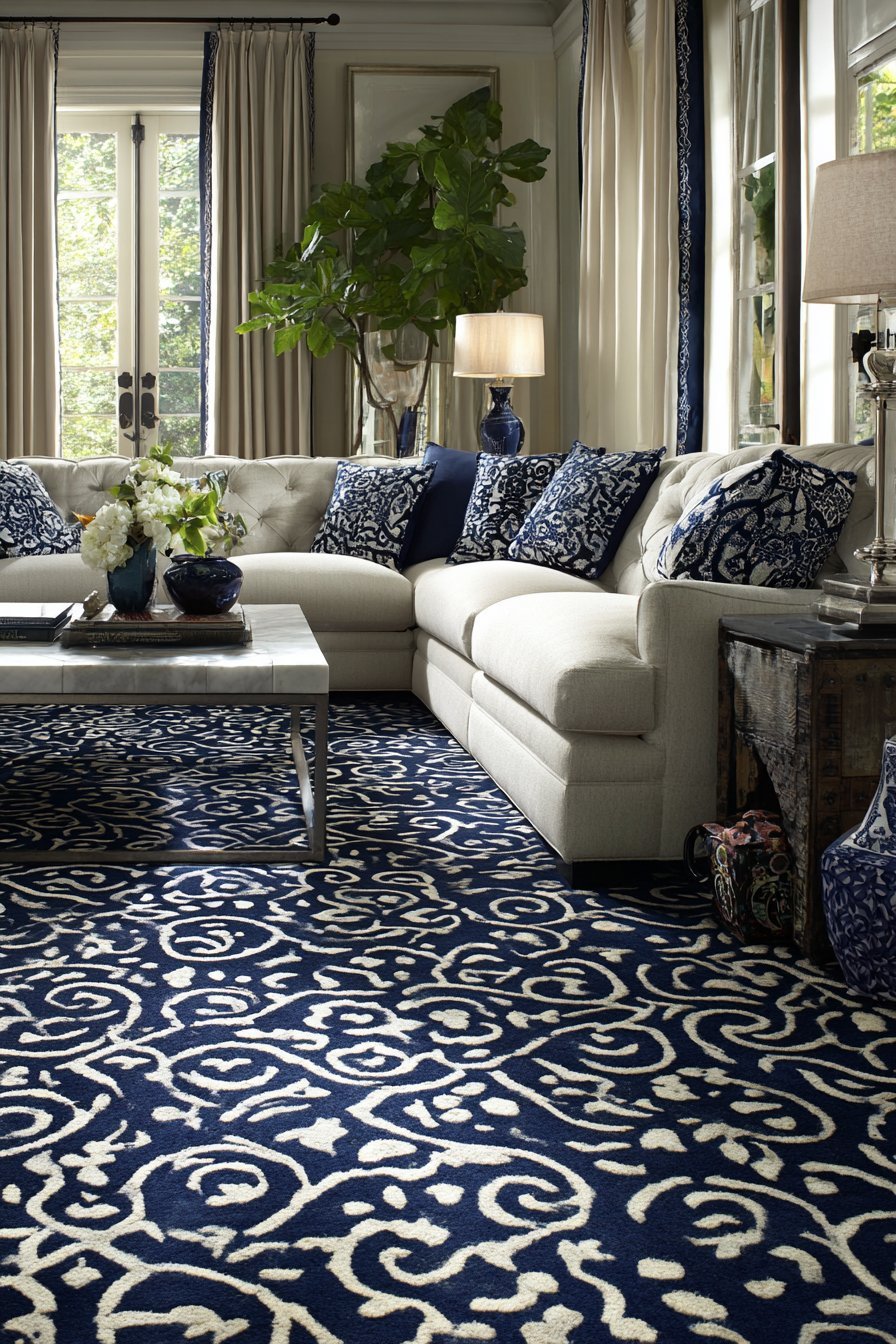
A Turkish carpet in sophisticated navy blue and cream creates refined atmosphere. Intricate curvilinear patterns and delicate floral details demonstrate urban workshop quality. Fine Turkish knot work produces lustrous wool pile. Rich indigo achieved through multiple dye baths shows exceptional color depth.
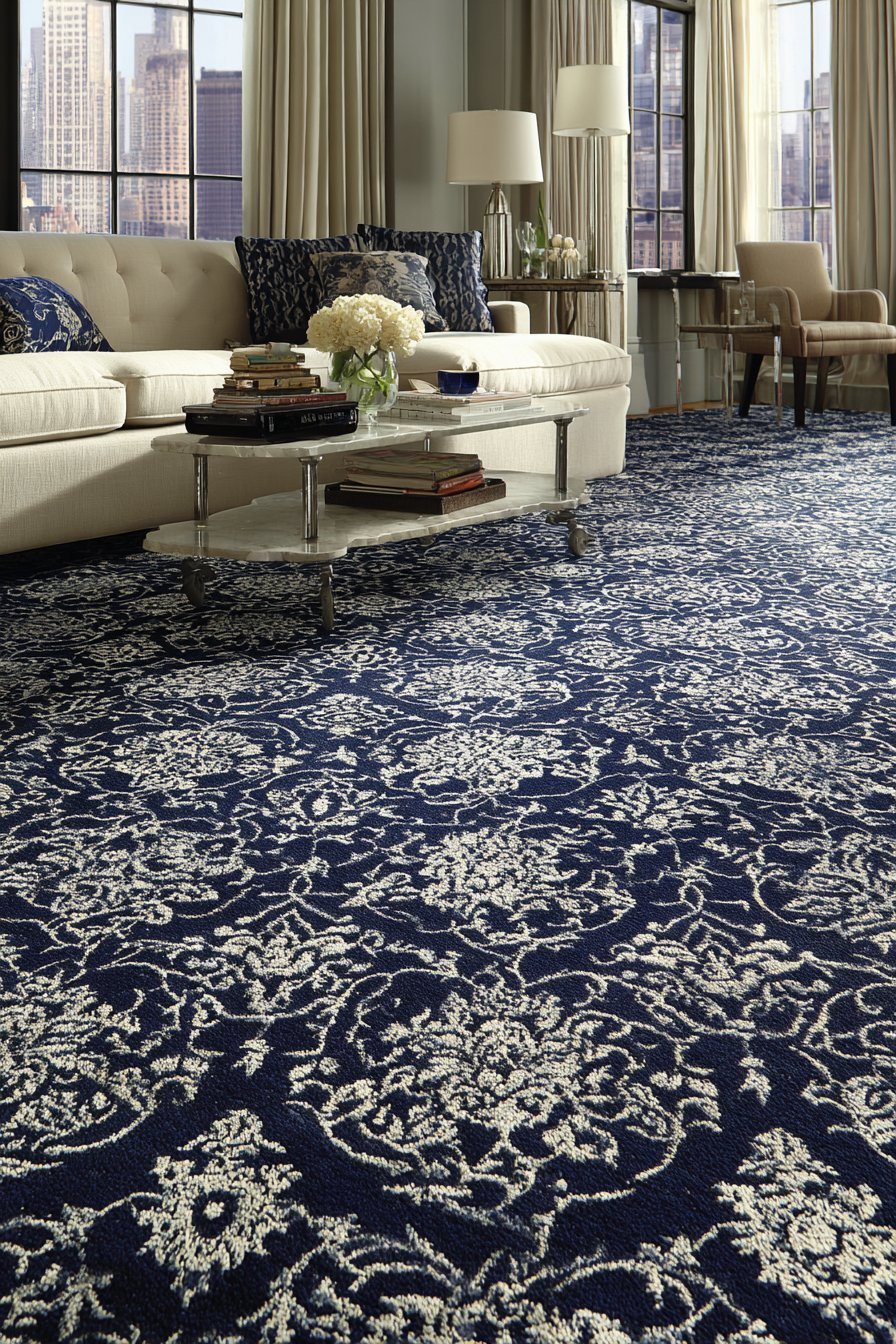
The carpet anchors tufted linen sectional and marble coffee table. Polished nickel floor lamps and silk draperies add refined details throughout. Natural window light combined with ambient lighting emphasizes depth of field. Subtle pattern shadows create dimensional visual interest.
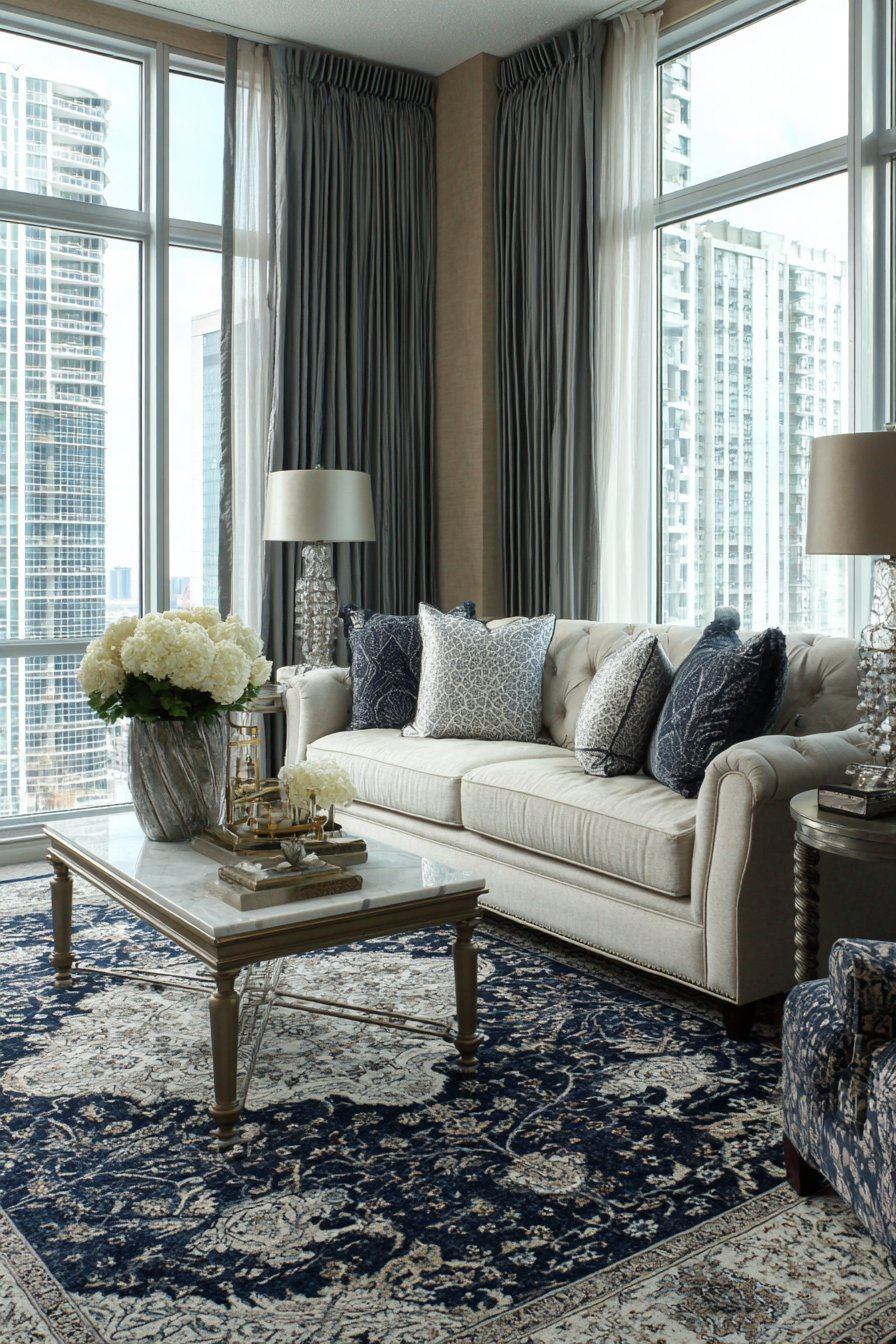
This elegant restraint demonstrates timeless navy-and-cream color combination. The Turkish carpet elevates contemporary furnishings through masterful craftsmanship. Traditional design proves compatible with current furniture styles.
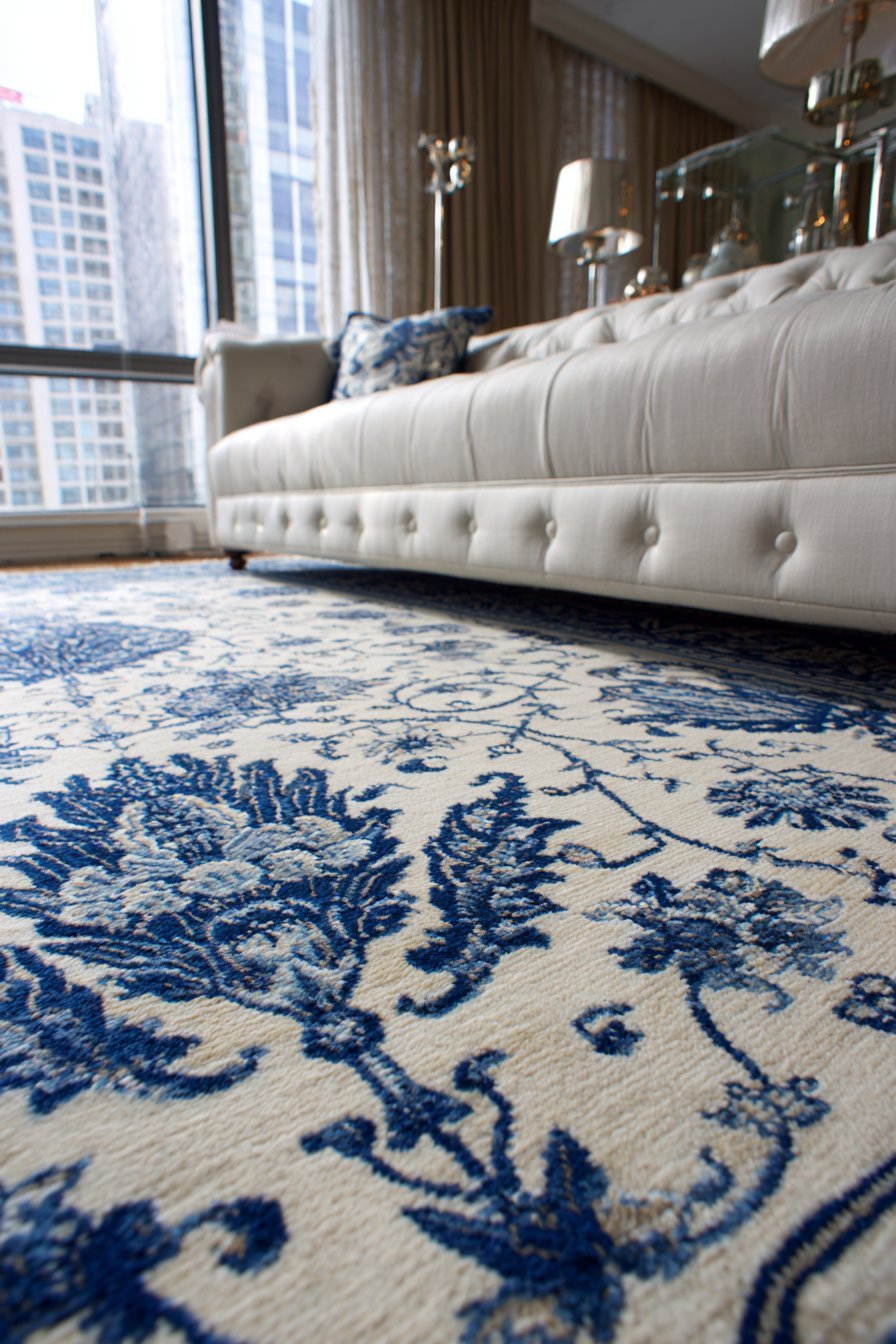
Professional interior photography captures sophisticated color restraint. The carpet’s precise pattern execution demonstrates exceptional skill. This approach suits those valuing refined traditional elegance.
Key Design Tips:
- Choose navy and cream Turkish carpets for timeless elegance
- Select urban workshop pieces demonstrating fine knot work
- Pair traditional carpets with contemporary upholstered furniture
- Use natural and ambient lighting to create pattern shadows
- Appreciate multiple dye baths creating rich indigo depth
- Value precise pattern execution as sign of exceptional craftsmanship
28. Bohemian Studio with Rainbow Kilim
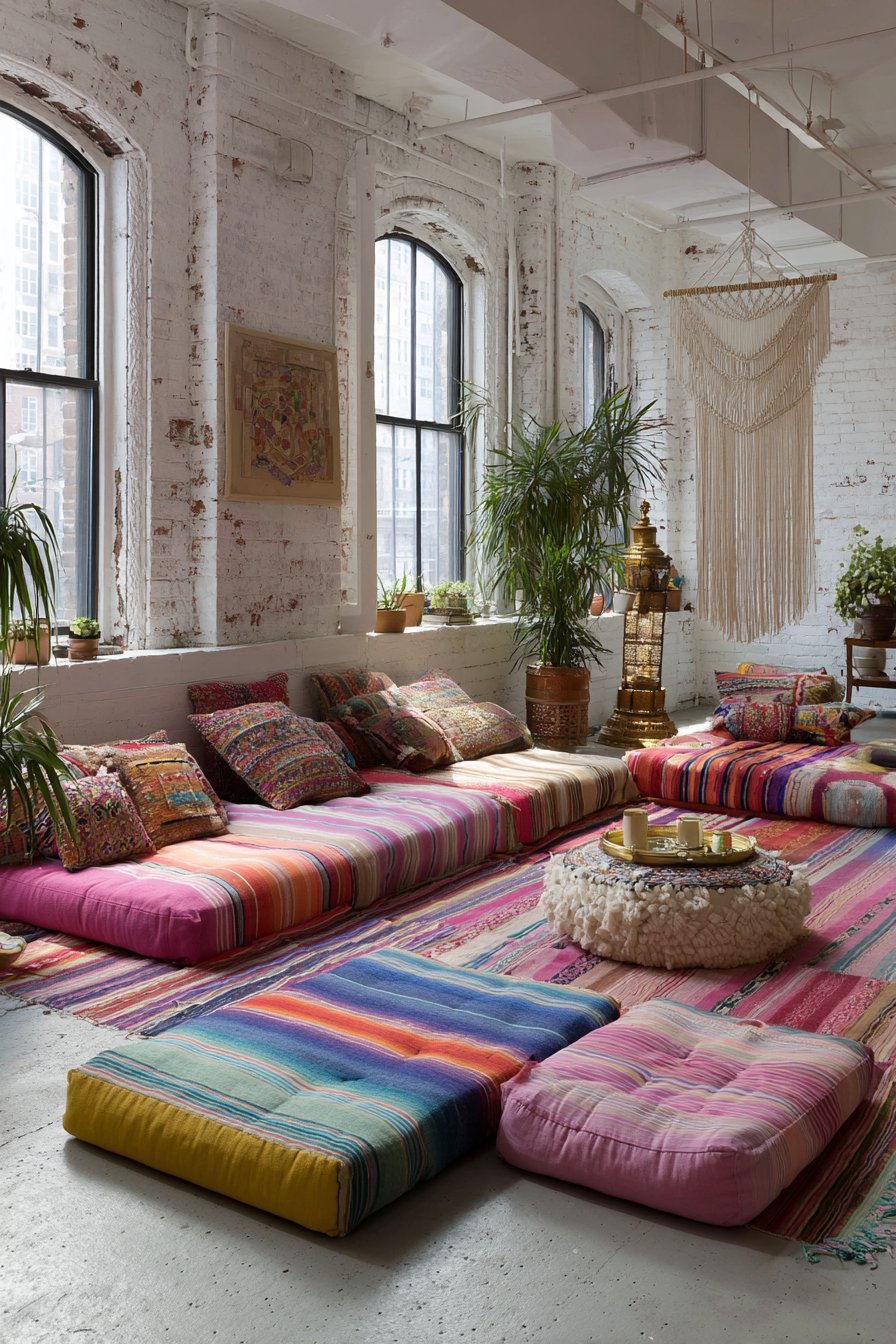
A Turkish kilim in rainbow stripes creates a vibrant studio atmosphere. Red, orange, yellow, green, blue, and purple bands demonstrate vegetable dye range. The flat-weave carpet functions as both floor covering and casual seating. Visible warp threads prove authentic Turkish village construction.
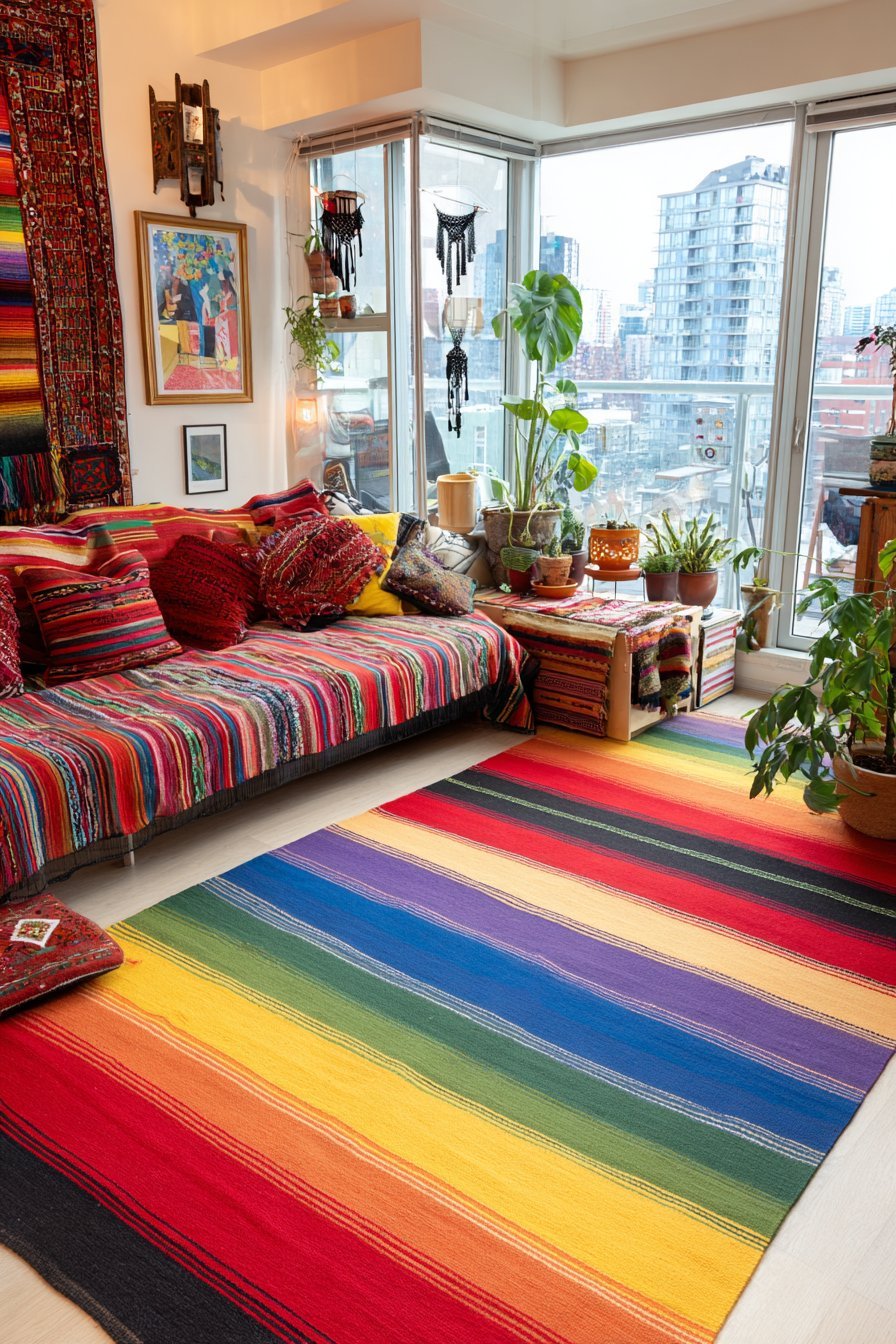
Floor cushions, macramé wall hangings, and vintage textiles create eclectic layers. Potted plants add natural elements throughout the space. Large windows flood the area with natural light. Saturated colors and a reciprocal weaving pattern become clearly visible.
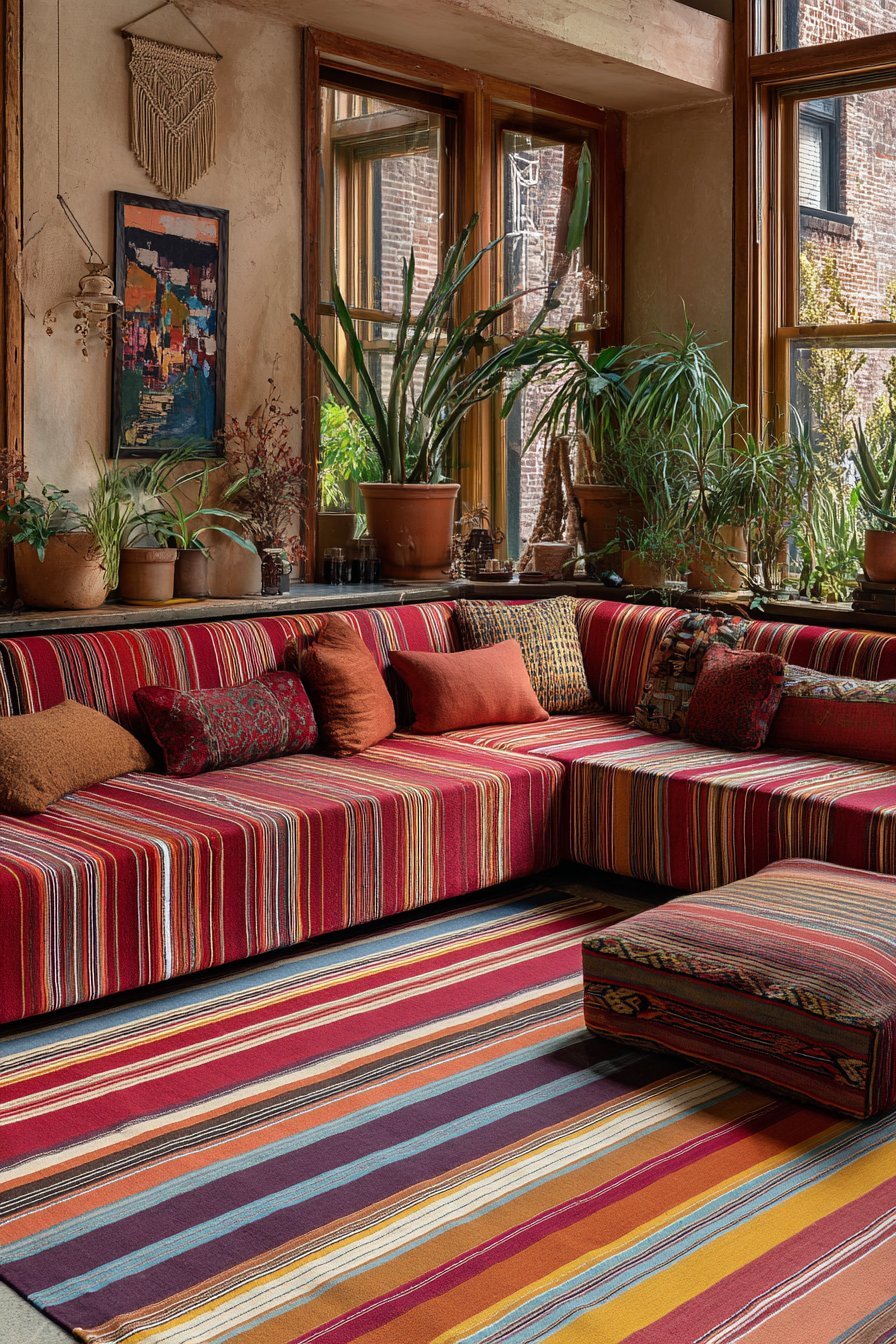
This casual lifestyle aesthetic values versatility and visual impact. The Turkish kilim adapts to multi-functional small space living. Durability suits informal floor seating and varied activities.
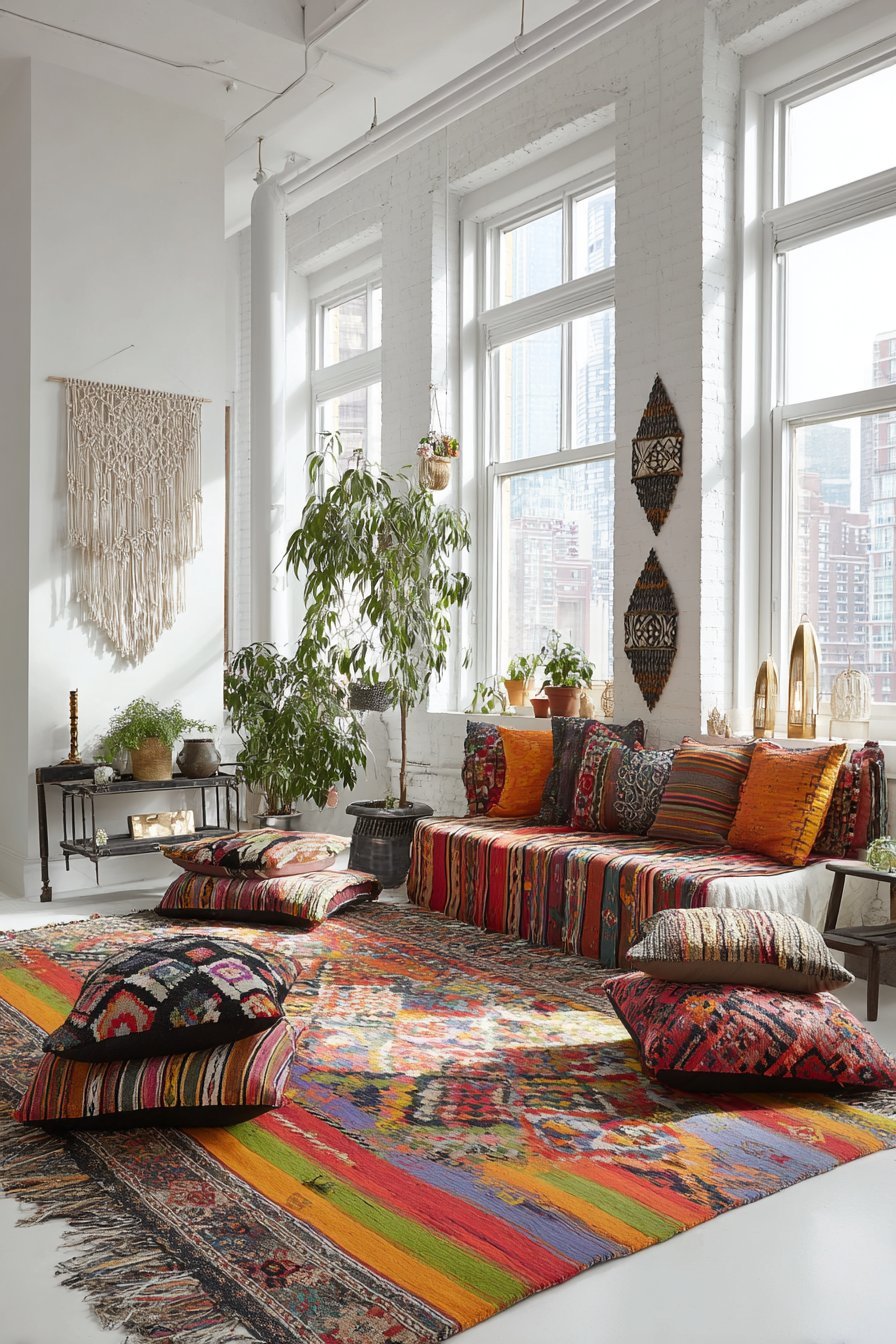
Wide-angle photography captures casual collected atmosphere. The rainbow kilim provides colorful foundation for eclectic styling. This approach suits creative personalities embracing bohemian aesthetics.
Key Design Tips:
- Choose rainbow-striped kilims for vibrant bohemian spaces
- Use flat-weave carpets for multi-functional floor seating areas
- Layer eclectic textiles creating collected aesthetic
- Maximize natural light illuminating saturated vegetable dyes
- Value durability for informal living and varied activities
- Embrace kilim versatility in small studio environments
29. French Country Dining with Soft Oushak
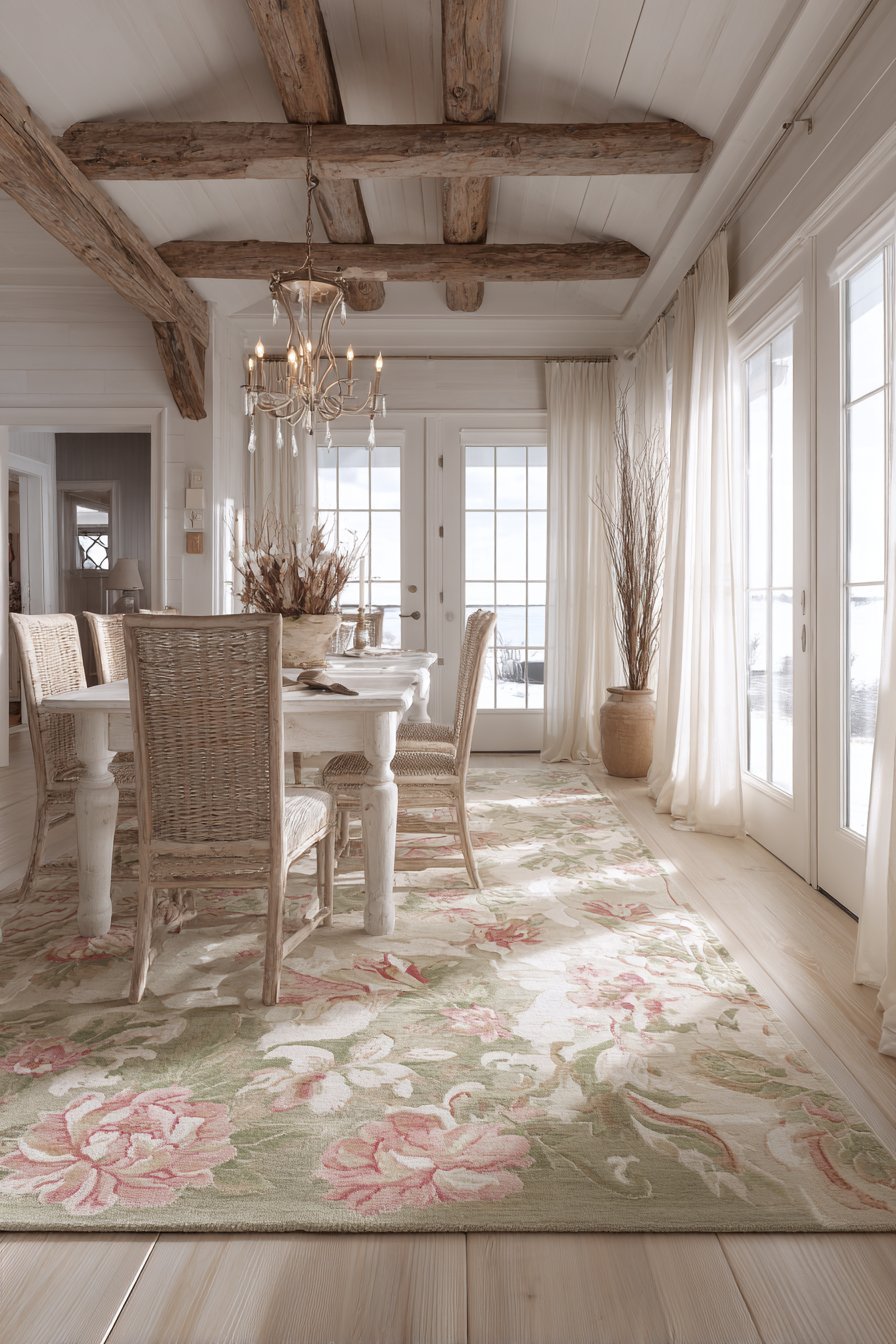
A Turkish Oushak carpet in pale celadon green, blush pink, and cream creates refined dining space. Large-scale floral arabesques demonstrate classic Oushak design characteristics. Soft muted palette shows characteristic color mellowing. Generous size extends beyond furniture creating visual breathing room.
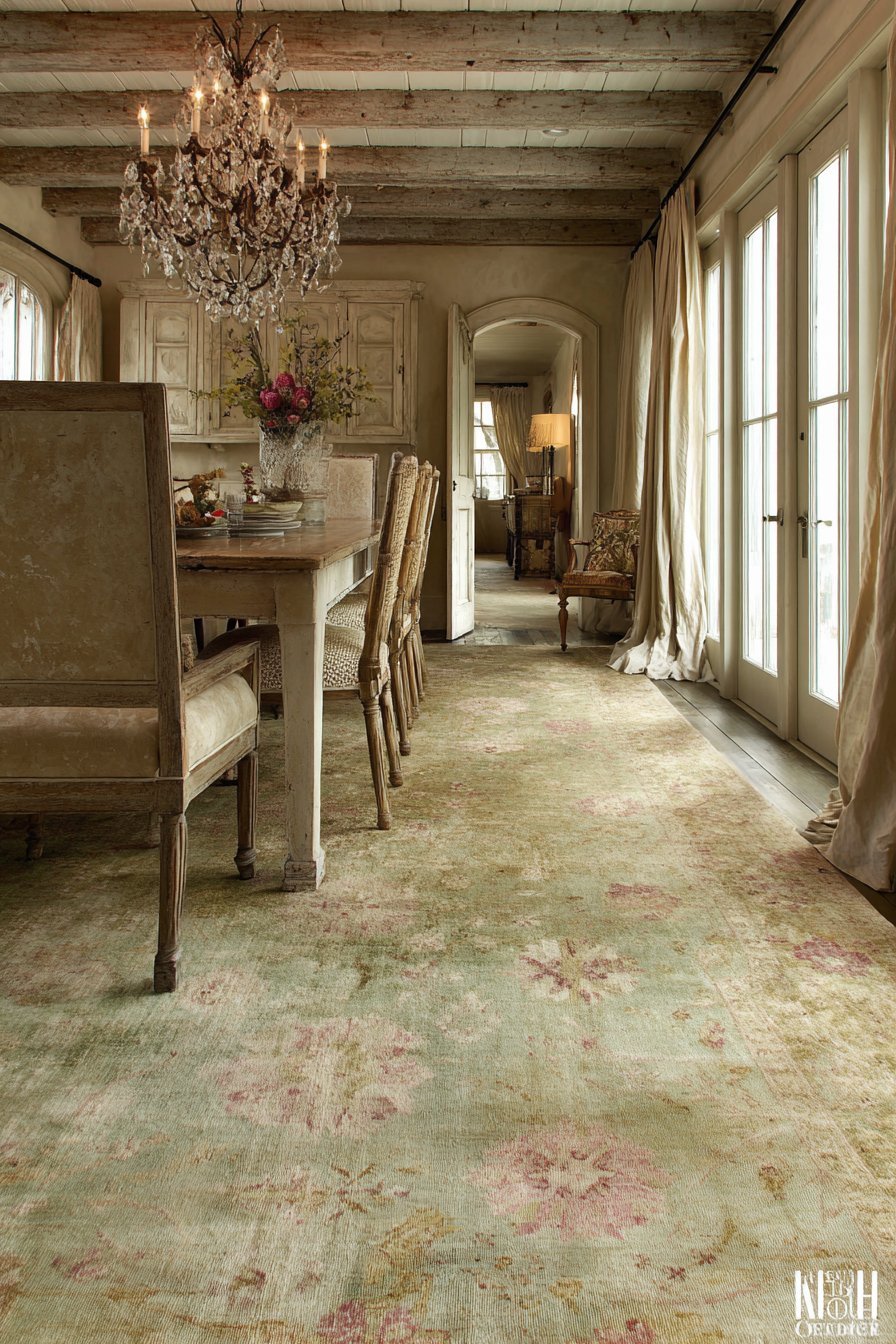
The carpet positions beneath painted farmhouse table and rush-seat chairs. Exposed ceiling beams, rustic chandelier, and linen curtains complete French country aesthetic. Soft natural light from French doors highlights delicate color transitions. Low pile texture integrates smoothly with casual dining setting.
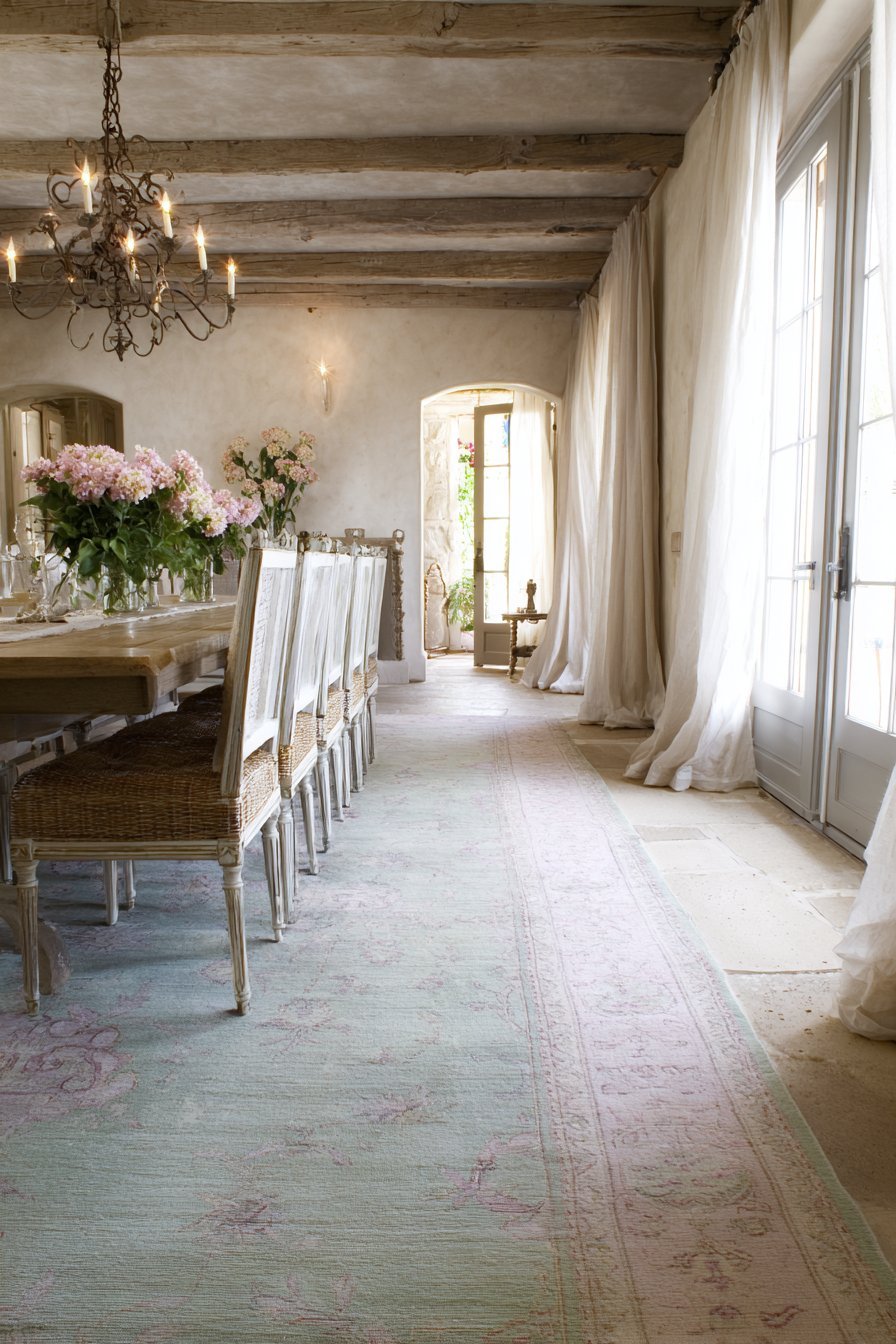
This perfect marriage combines Turkish Oushak sophistication with French country charm. Shared appreciation for soft colors and natural materials creates harmony. Lived-in beauty values authentic age over perfection.
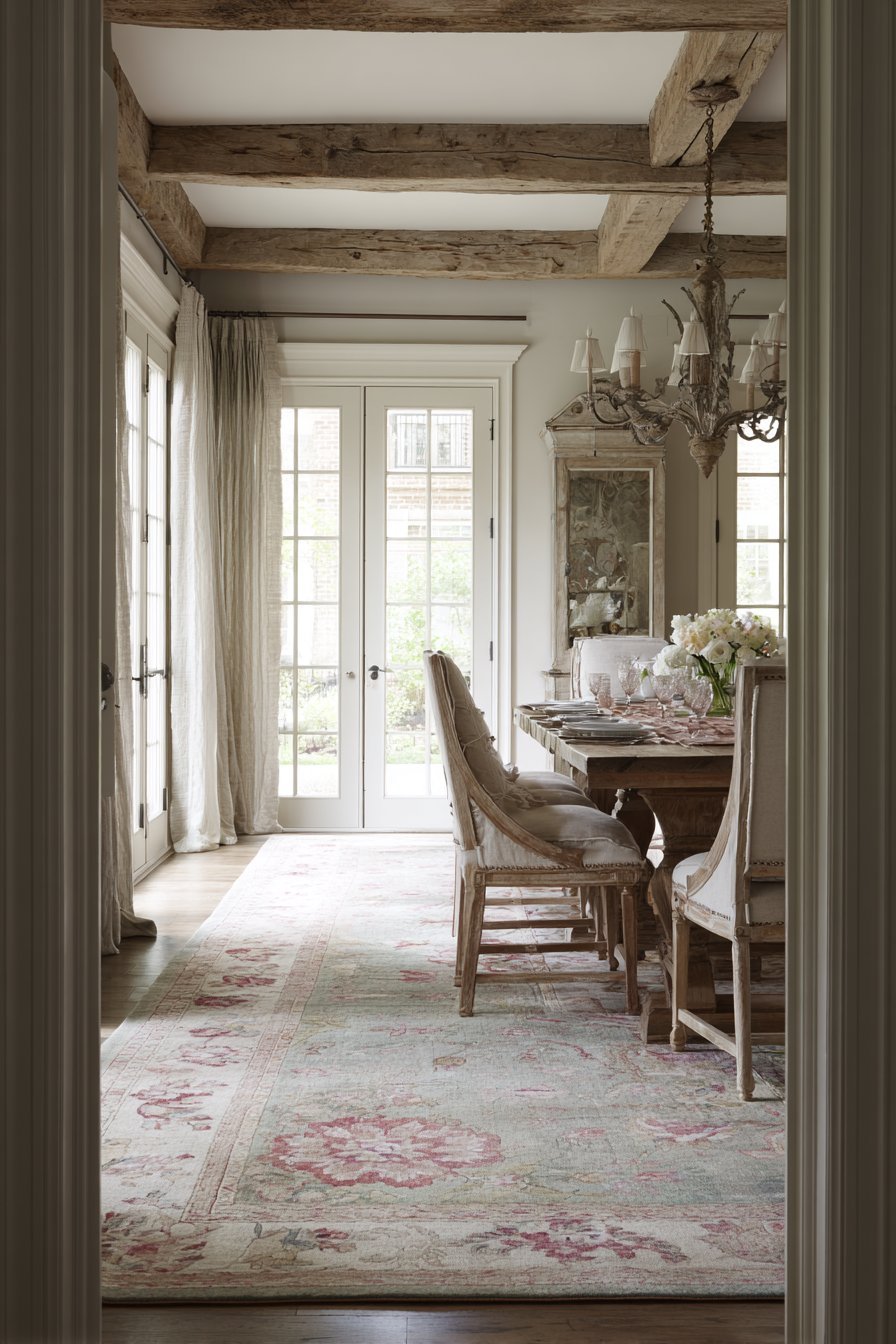
Interior design photography captures successful style fusion. The Oushak carpet bridges Turkish and French design traditions naturally. This approach demonstrates international design compatibility.
Key Design Tips:
- Select pale Oushak carpets for French country dining rooms
- Choose large-scale floral patterns appropriate to room scale
- Extend carpet beyond furniture creating visual breathing room
- Pair Turkish textiles with painted farmhouse furniture
- Use natural light from French doors highlighting color transitions
- Value lived-in beauty over pristine condition
30. Modern Gallery with Artistic Color-Block Carpet
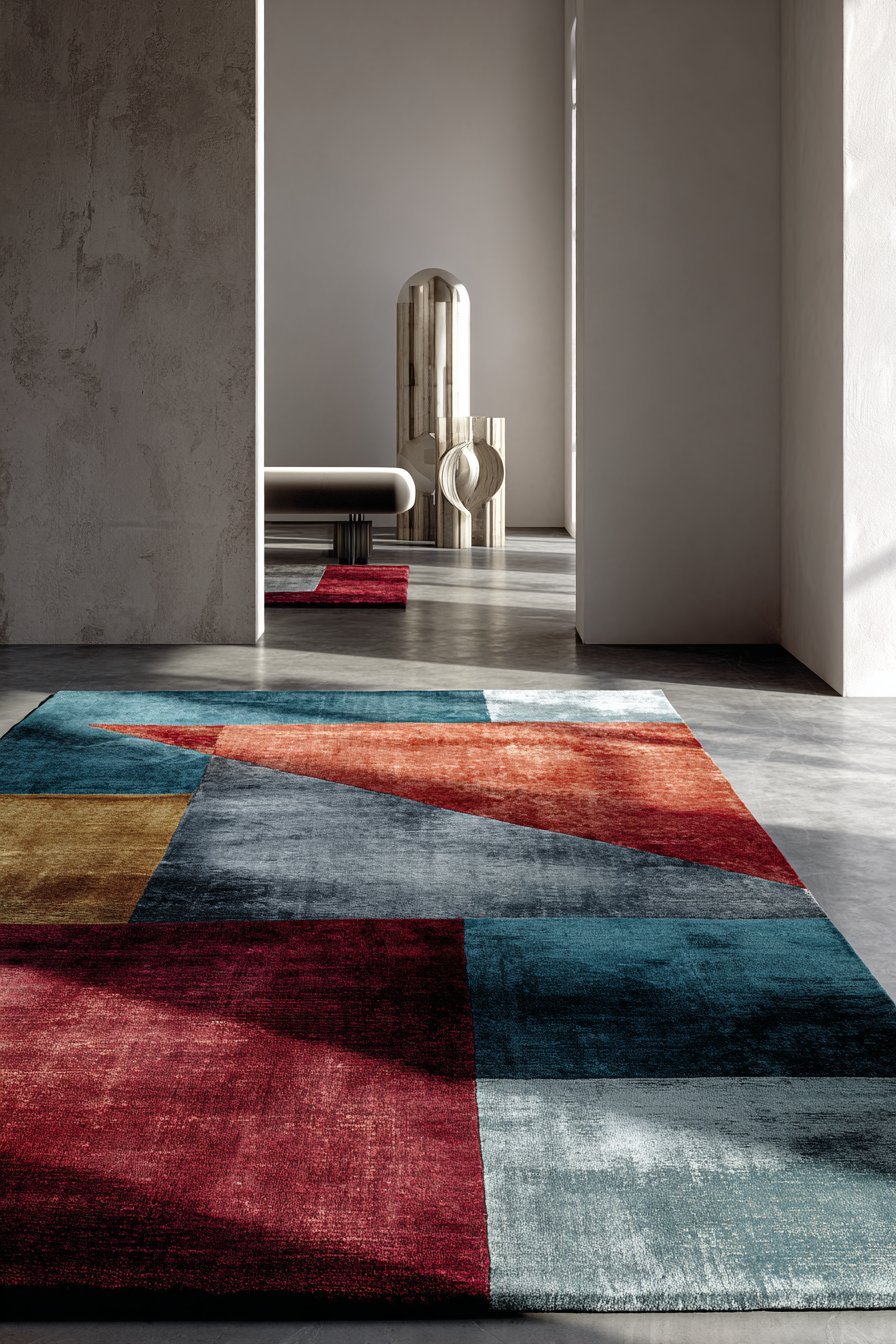
A Turkish carpet in an abstract color-block design creates floor-based art installation. Deep teal, burnt sienna, and charcoal sections create asymmetric divisions. Contemporary artistic interpretation pushes traditional weaving into modern art territory. Hand-knotted construction techniques maintain authentic craft methods.
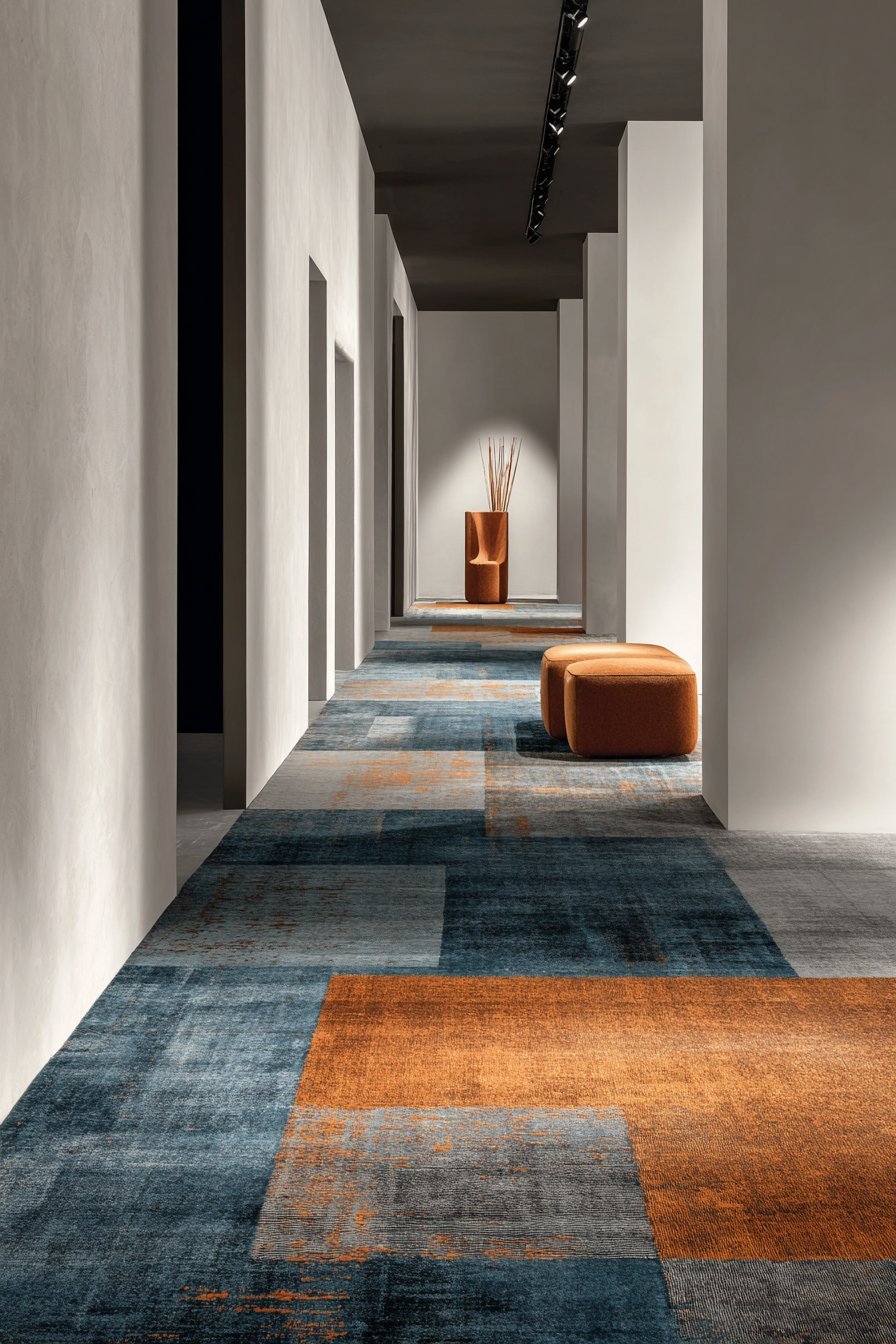
The carpet rests on polished concrete flooring in minimal gallery space. White walls, sculptural bench, and dramatic track lighting allow artistic focus. Carefully controlled lighting emphasizes bold color transitions. Textured wool surface becomes sculptural element in minimalist environment.
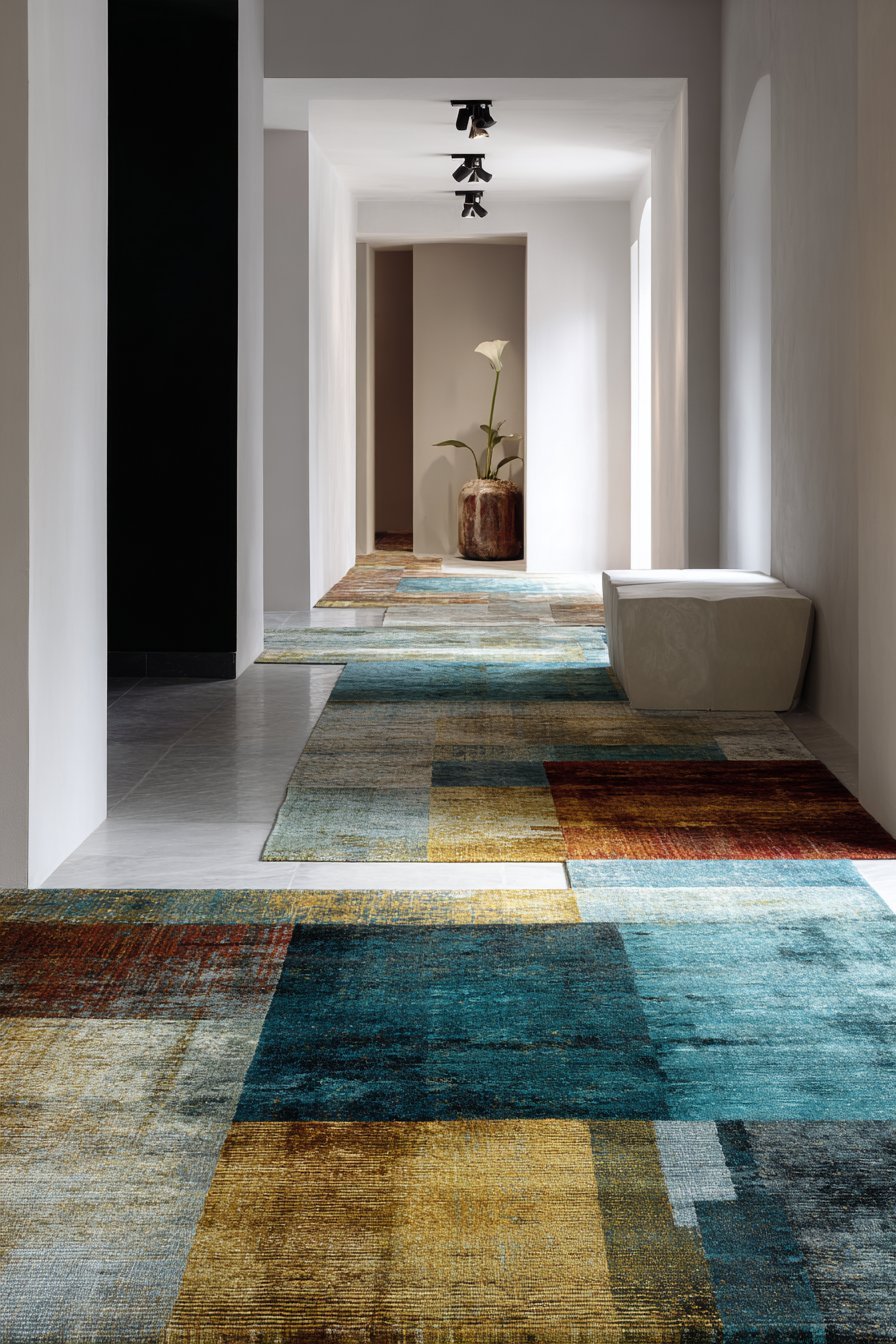
This artistic statement demonstrates Turkish weaving evolution beyond traditional patterns. The carpet functions as contemporary art while preserving handcraft quality. Material quality remains paramount despite radical design departure.
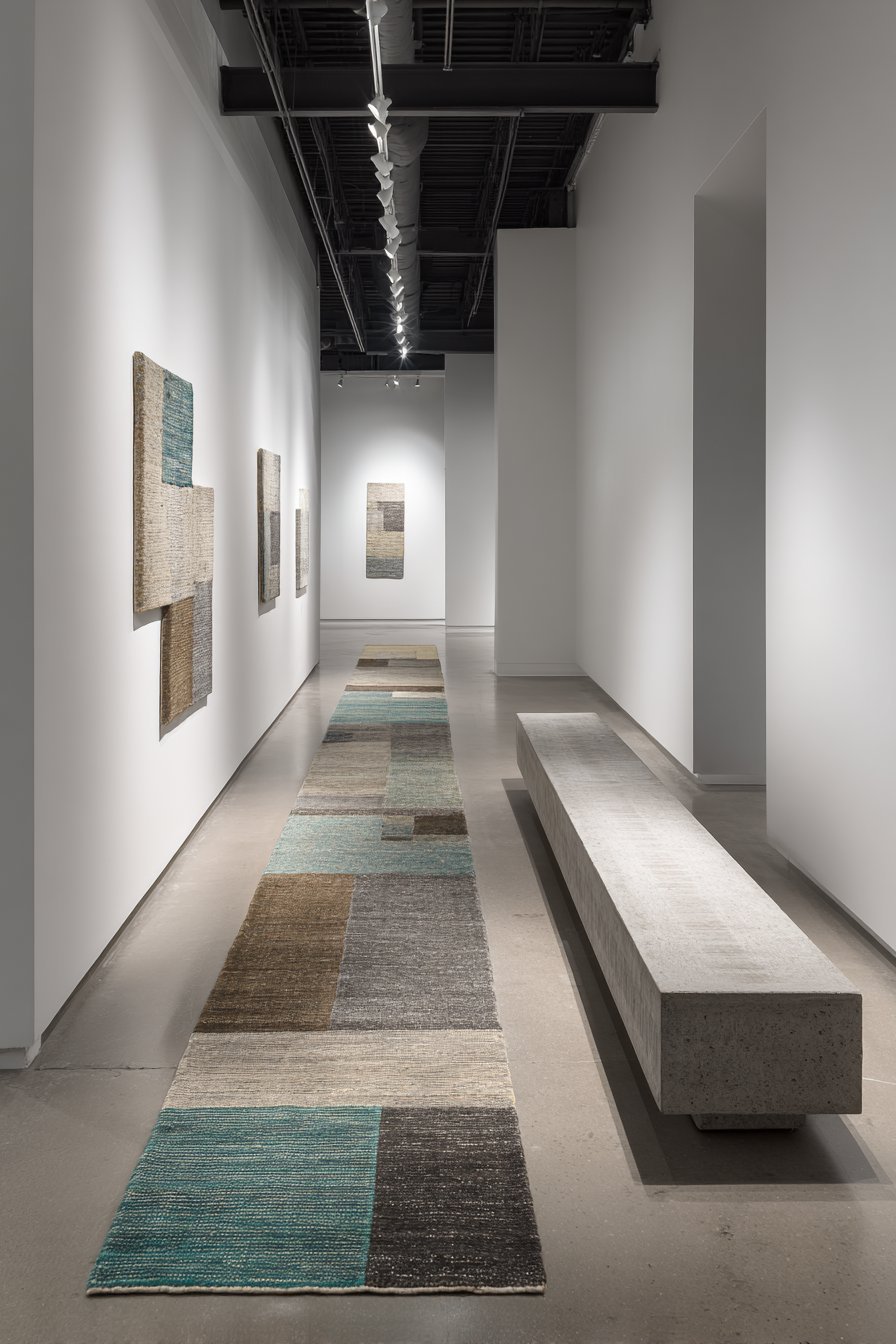
Architectural photography with high contrast captures artistic presentation. The Turkish carpet bridges traditional craft and contemporary art successfully. This approach celebrates innovation while respecting traditional techniques.
Key Design Tips:
- Choose color-block Turkish carpets as contemporary art pieces
- Display artistic carpets in minimal gallery-like settings
- Use controlled lighting emphasizing color transitions dramatically
- Position carpets on polished concrete for modern aesthetic
- Appreciate the evolution of traditional techniques into contemporary art
- Value handcraft methods regardless of radical design innovation
Why These Turkish Carpet Designs Are the Best
These Turkish carpet designs represent exceptional approaches to incorporating traditional textiles into contemporary homes. Each concept demonstrates thoughtful consideration of color theory, spatial planning, and material quality. The designs showcase remarkable versatility spanning bohemian maximalism to Scandinavian minimalism successfully.
Turkish carpets excel due to superior natural materials that develop character through use. Hand-knotted wool construction creates durability surpassing machine-made alternatives significantly. Vegetable dyes produce colors that mellow beautifully rather than fading harshly over time. Authentic craftsmanship ensures each piece possesses unique irregularities proving handmade origin.
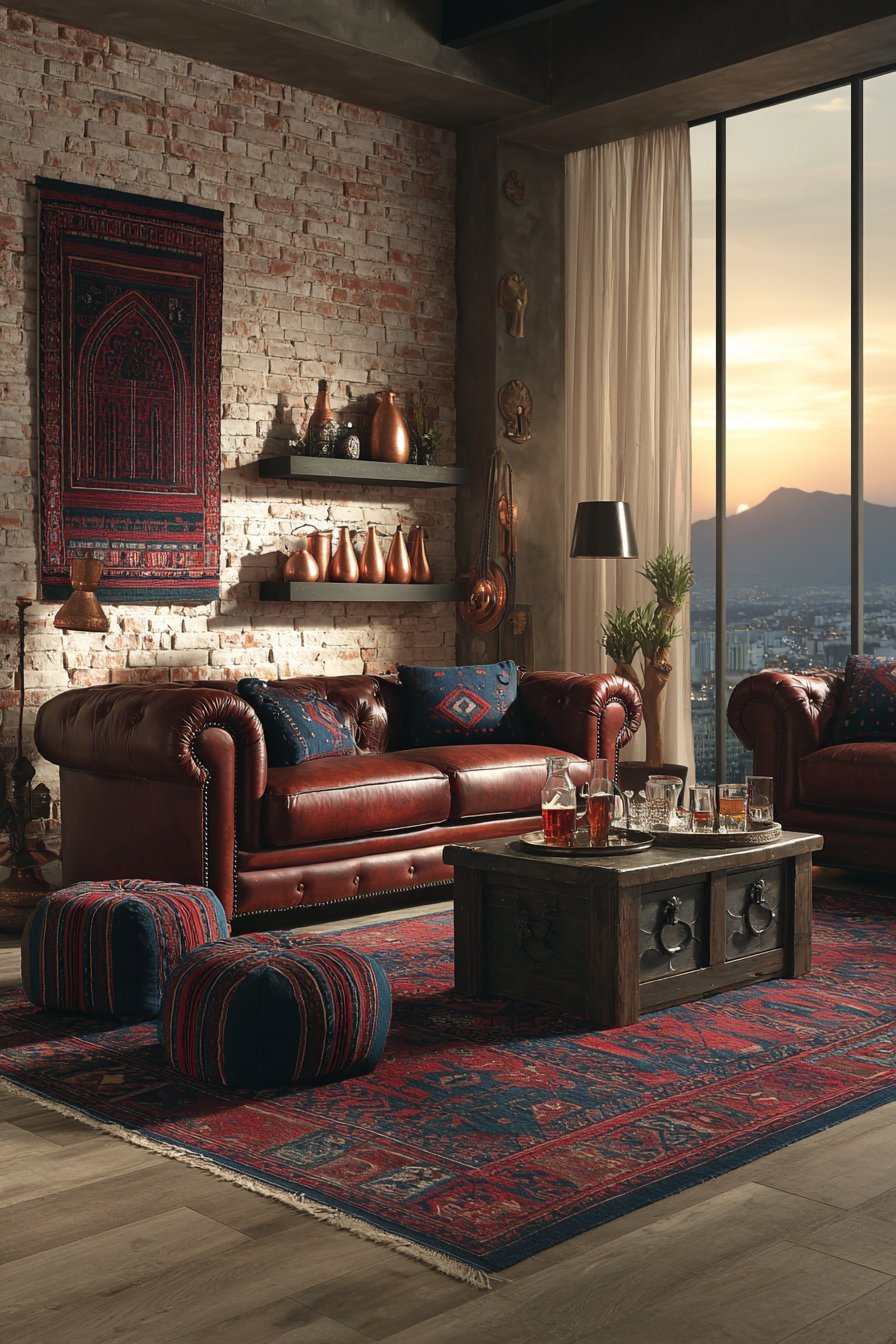
The color palettes work universally across design styles from jewel tones to muted neutrals. Traditional patterns adapt surprisingly well to modern interiors when thoughtfully selected. Flat-weave kilims suit high-traffic areas while pile carpets provide luxurious softness. Regional variations offer diverse aesthetic options from geometric Caucasian designs to floral Oushak patterns.
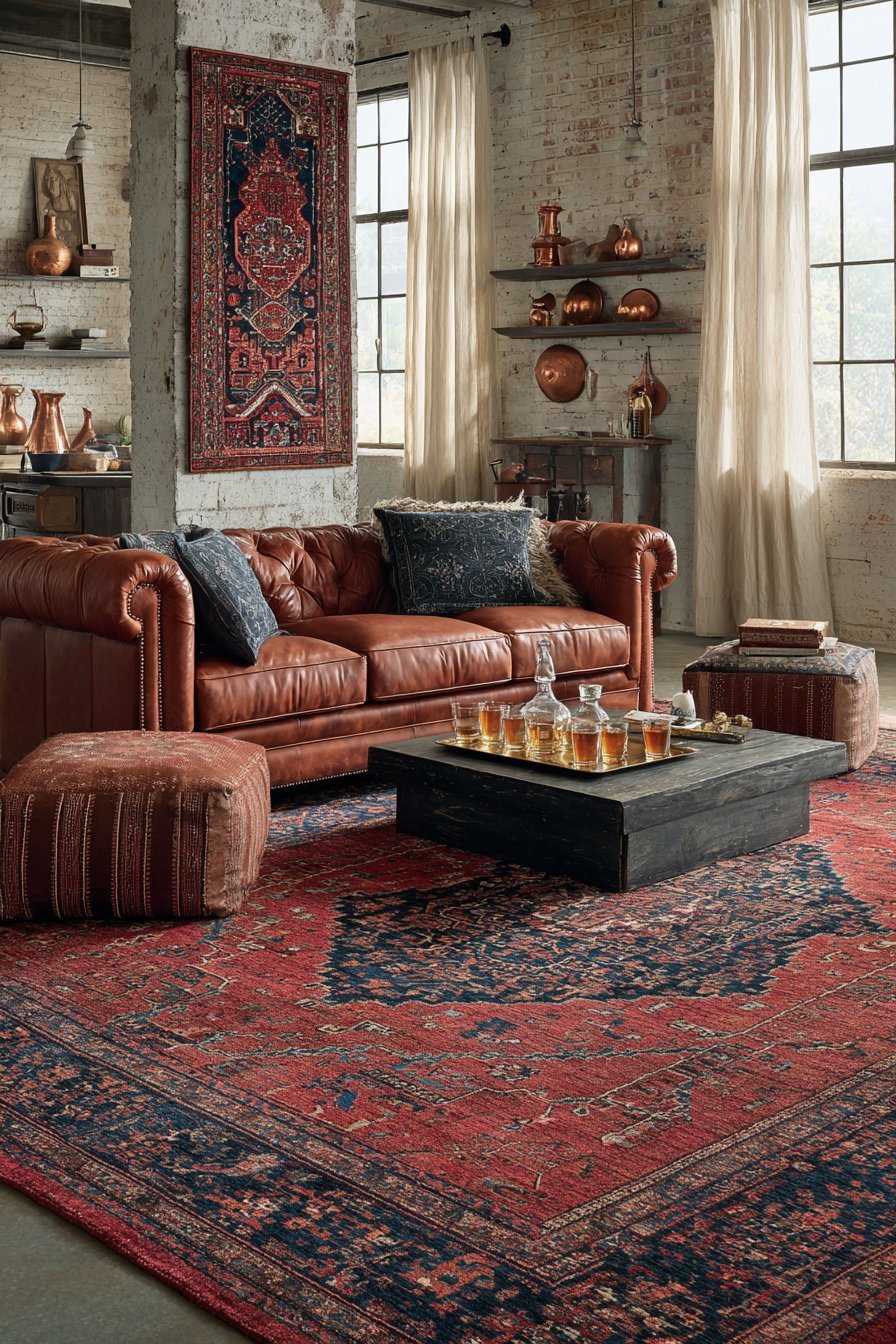
Practical considerations enhance Turkish carpet appeal beyond aesthetic value. Natural wool resists staining and cleans more easily than synthetic fibers. Low pile options work perfectly in dining rooms and entryways. Layering techniques add visual depth while protecting primary flooring investment.
Sustainability advocates appreciate quality Turkish carpets as heirloom pieces lasting generations. Authentic vintage examples demonstrate decade-long durability through real-world use. Investment in single-quality carpet proves more economical than replacing inferior pieces repeatedly. The designs featured demonstrate proper placement, maximizing both aesthetic impact and functional longevity.
Conclusion
These thirty Turkish carpet designs demonstrate the remarkable versatility of this timeless textile tradition. From dramatic jewel-toned statement pieces to subtle neutral foundations, Turkish carpets adapt beautifully to any interior style. The key takeaways emphasize quality natural materials, authentic craftsmanship, and thoughtful color coordination.
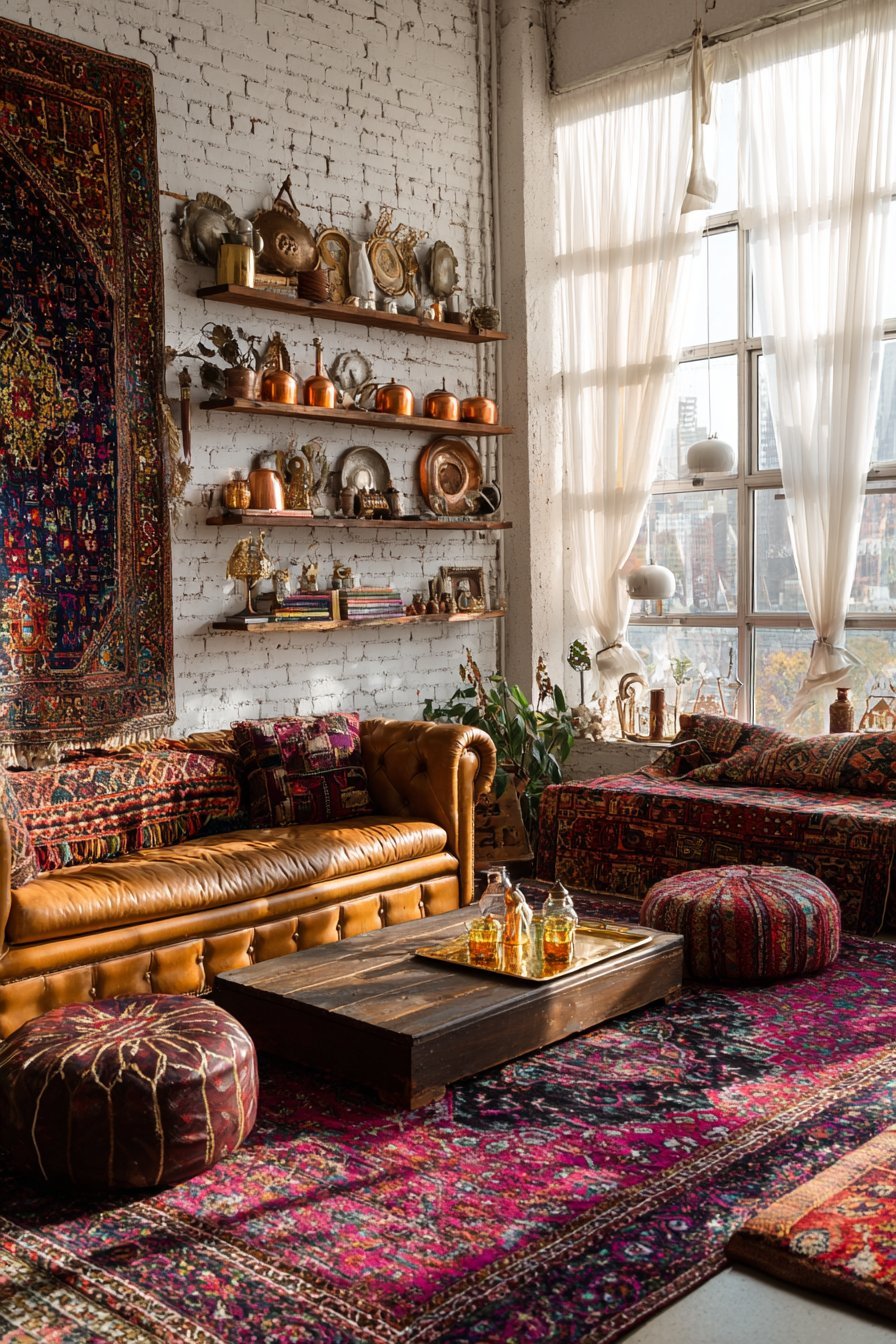
Successful Turkish carpet integration requires understanding your space’s specific needs and aesthetic goals. Consider traffic patterns, existing color palettes, and furniture scale when selecting pieces. Don’t fear mixing traditional carpets with contemporary furnishings or vice versa. The most compelling interiors often result from unexpected combinations.
Start your Turkish carpet journey by identifying which design approach resonates with your personal style. Whether you embrace maximalist bohemian layers or minimalist Scandinavian restraint, perfect Turkish carpet awaits discovery. These traditional textiles continue evolving while maintaining centuries-old quality standards. Your home deserves the warmth, color, and cultural richness that only authentic Turkish carpets provide.