


Wooden flooring represents one of the most significant design decisions you’ll make for your home. The right choice creates a foundation that influences every other element in your space. From warm honey tones to rich dark browns, wood floors bring natural beauty indoors.
The timeless appeal of wooden flooring transcends fleeting design trends. These natural surfaces add warmth, character, and value to any home. Whether you prefer traditional planks or contemporary patterns, wood floors adapt to countless interior styles.
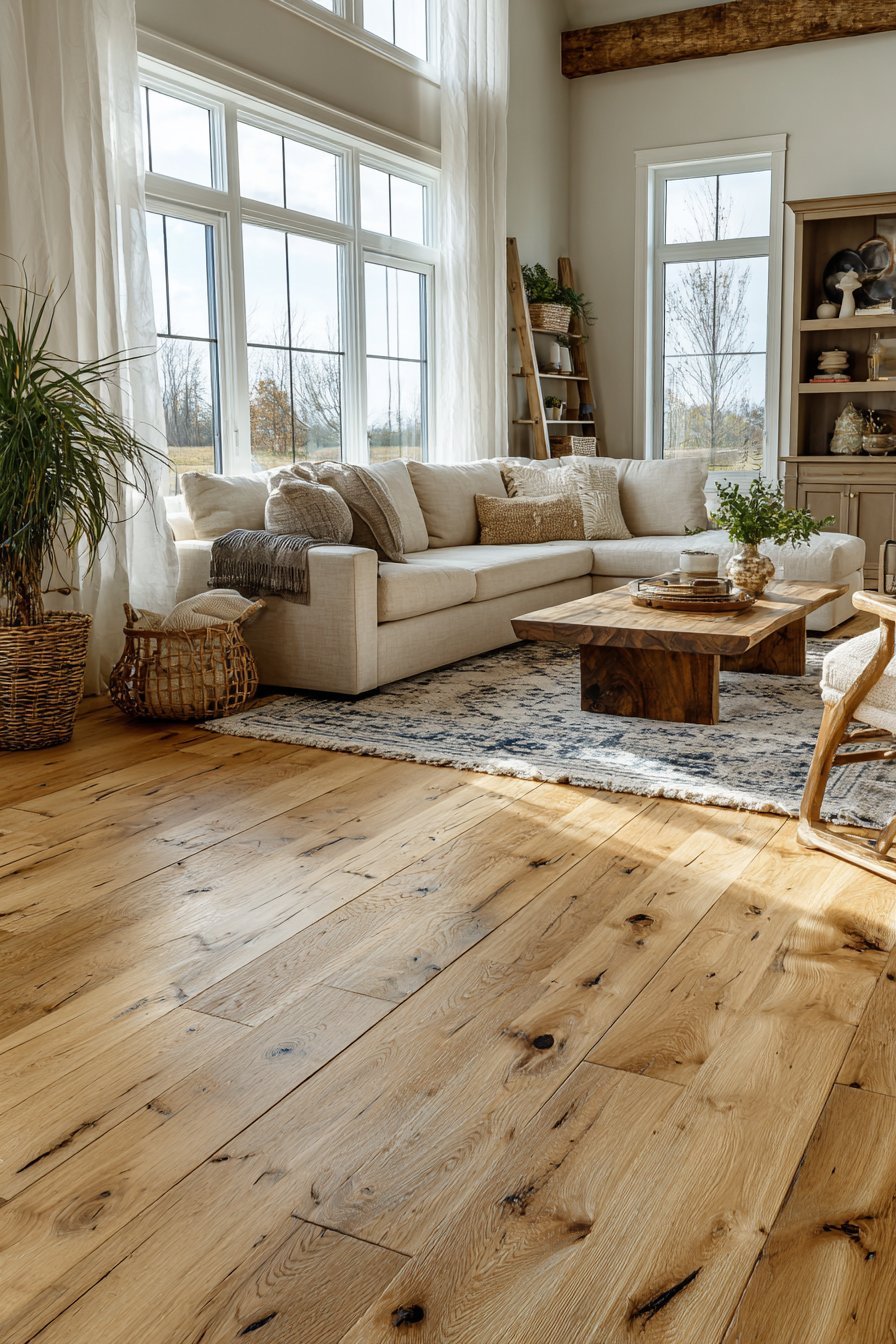
This comprehensive guide explores thirty distinctive wooden flooring concepts. Each design showcases unique wood species, installation patterns, and finish treatments. You’ll discover options ranging from rustic reclaimed barn wood to sleek Scandinavian oak. These ideas demonstrate how the right flooring choice transforms ordinary rooms into extraordinary living spaces.
1. Scandinavian White Oak Brightness
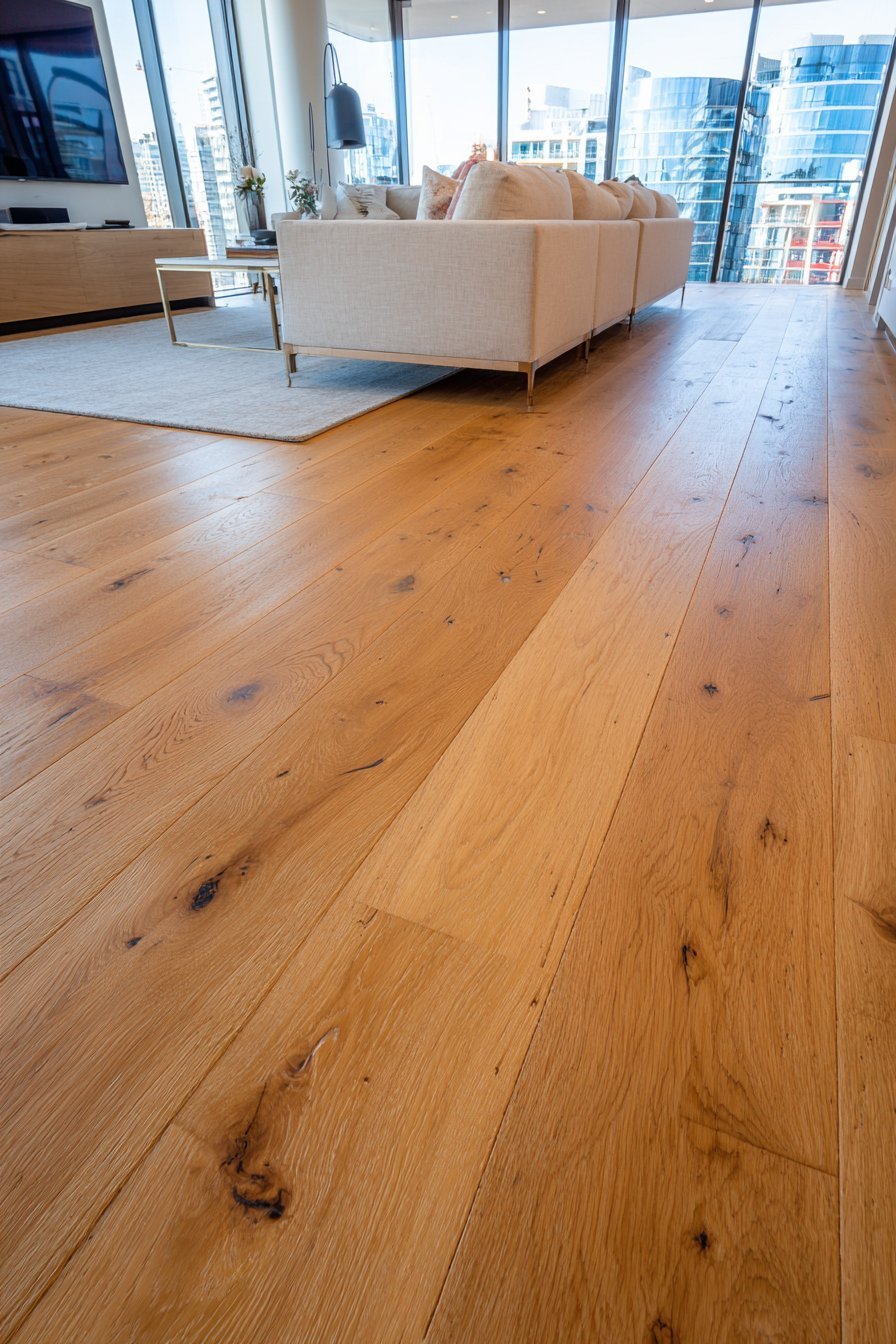
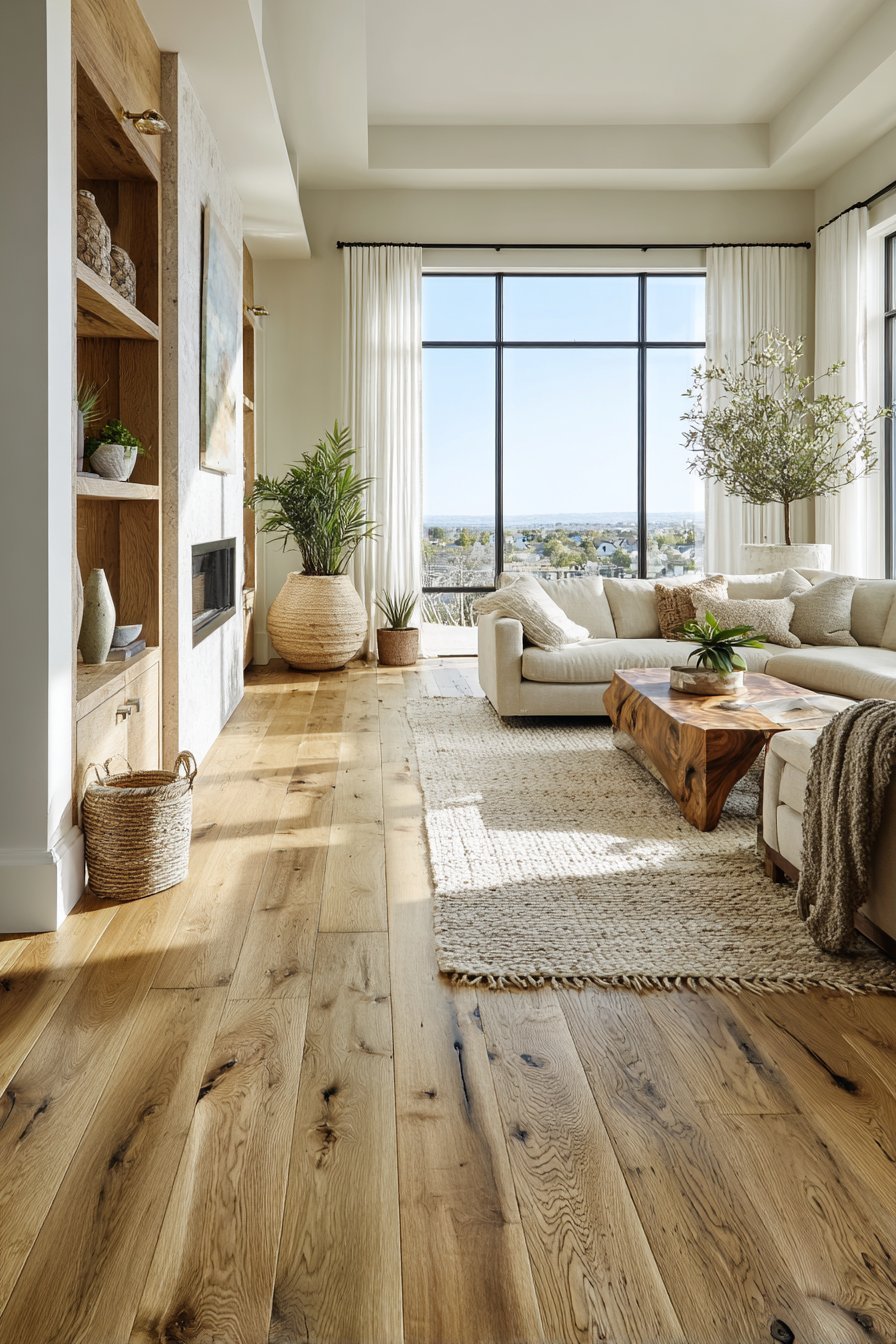
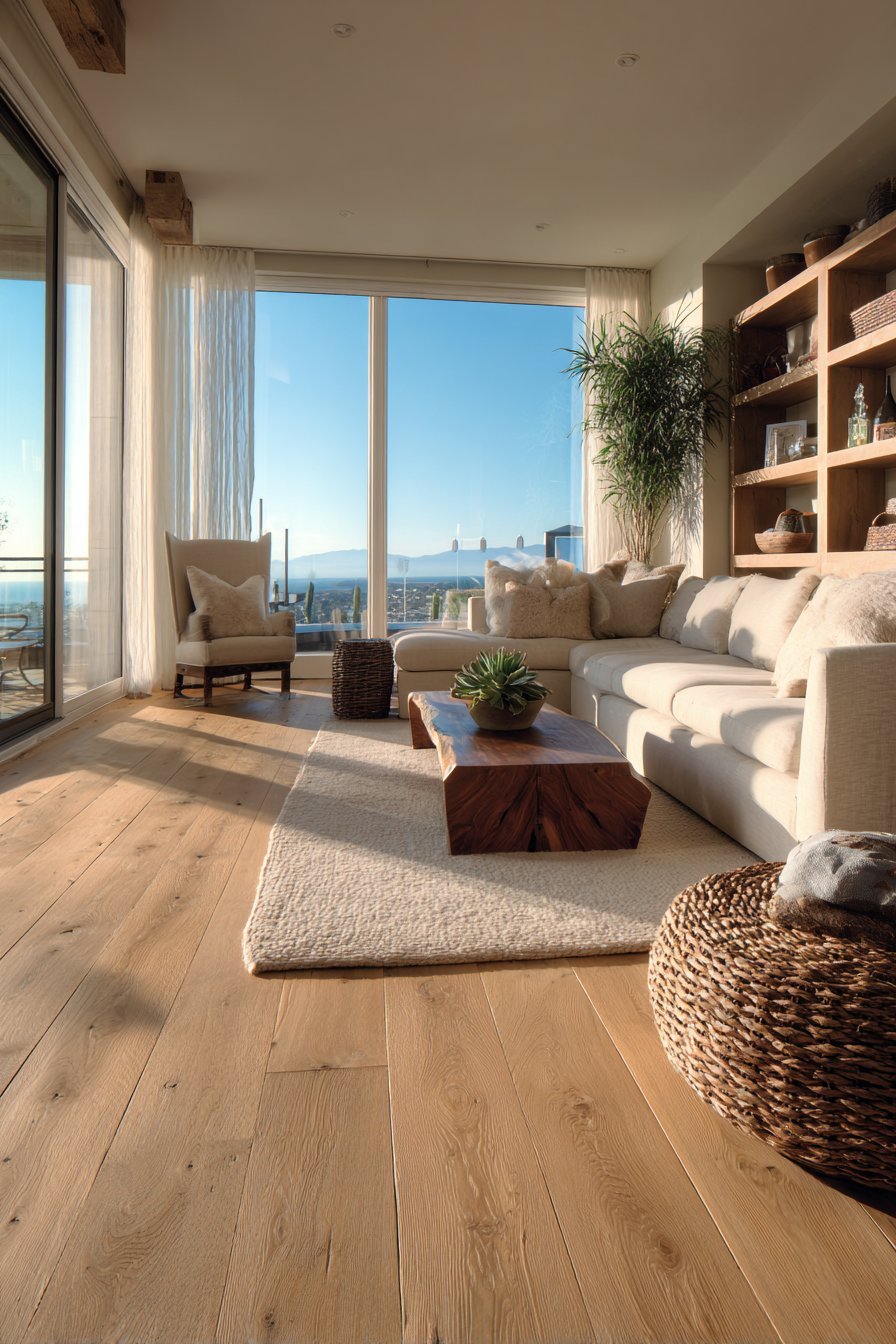
Imagine a bright Scandinavian living room where honey-toned white oak planks create a luminous foundation. Wide boards stretch across the space in straight patterns. Natural grain variations and subtle knots add authentic character. Morning light streams through floor-to-ceiling windows. The illumination highlights each plank’s unique texture.
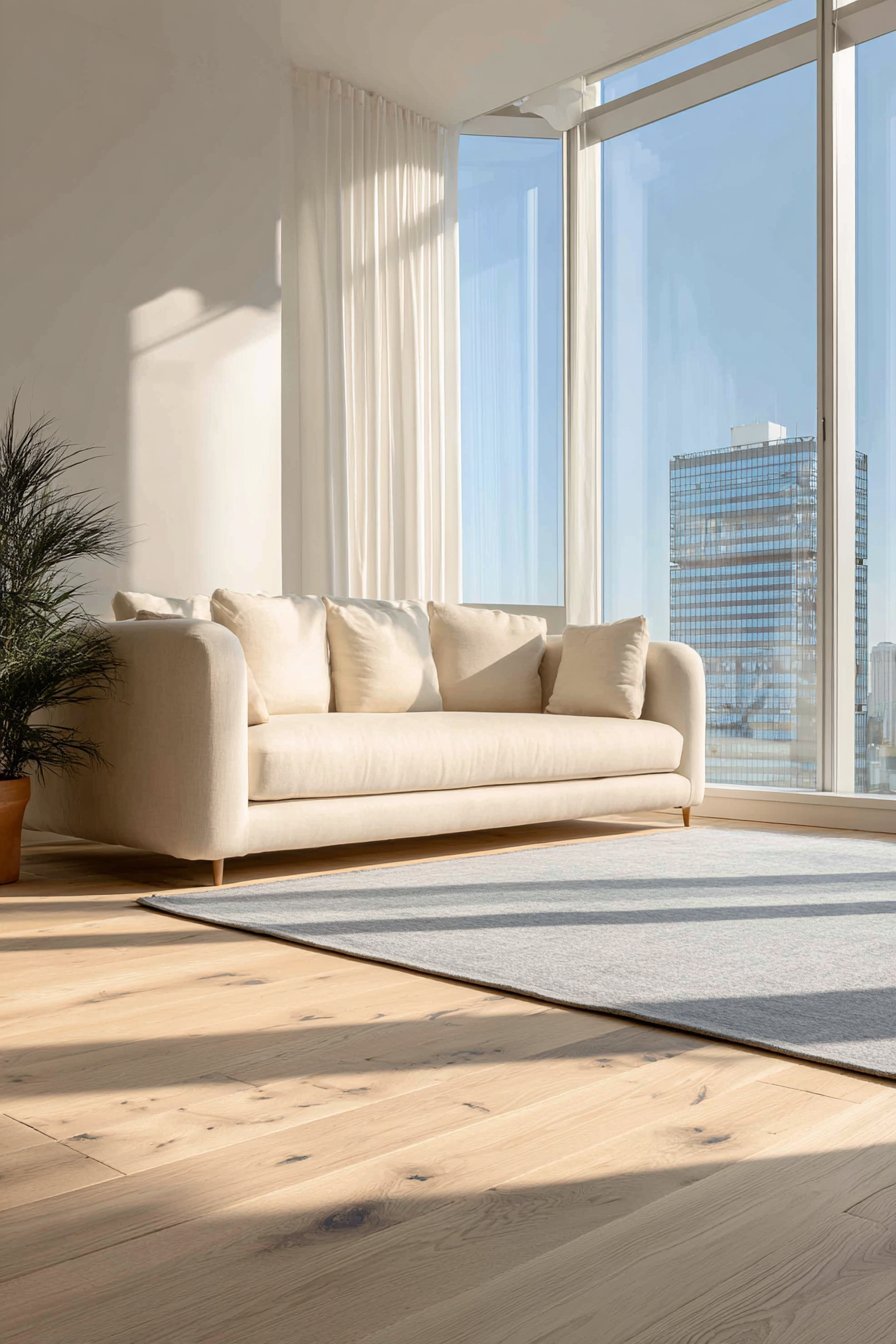
The white oak’s warm honey tones complement minimalist furniture perfectly. A cream linen sofa rests atop a light grey wool rug. The natural wood continues seamlessly beneath these pieces. This continuity creates visual flow throughout the entire room. The flooring becomes part of the overall design harmony.
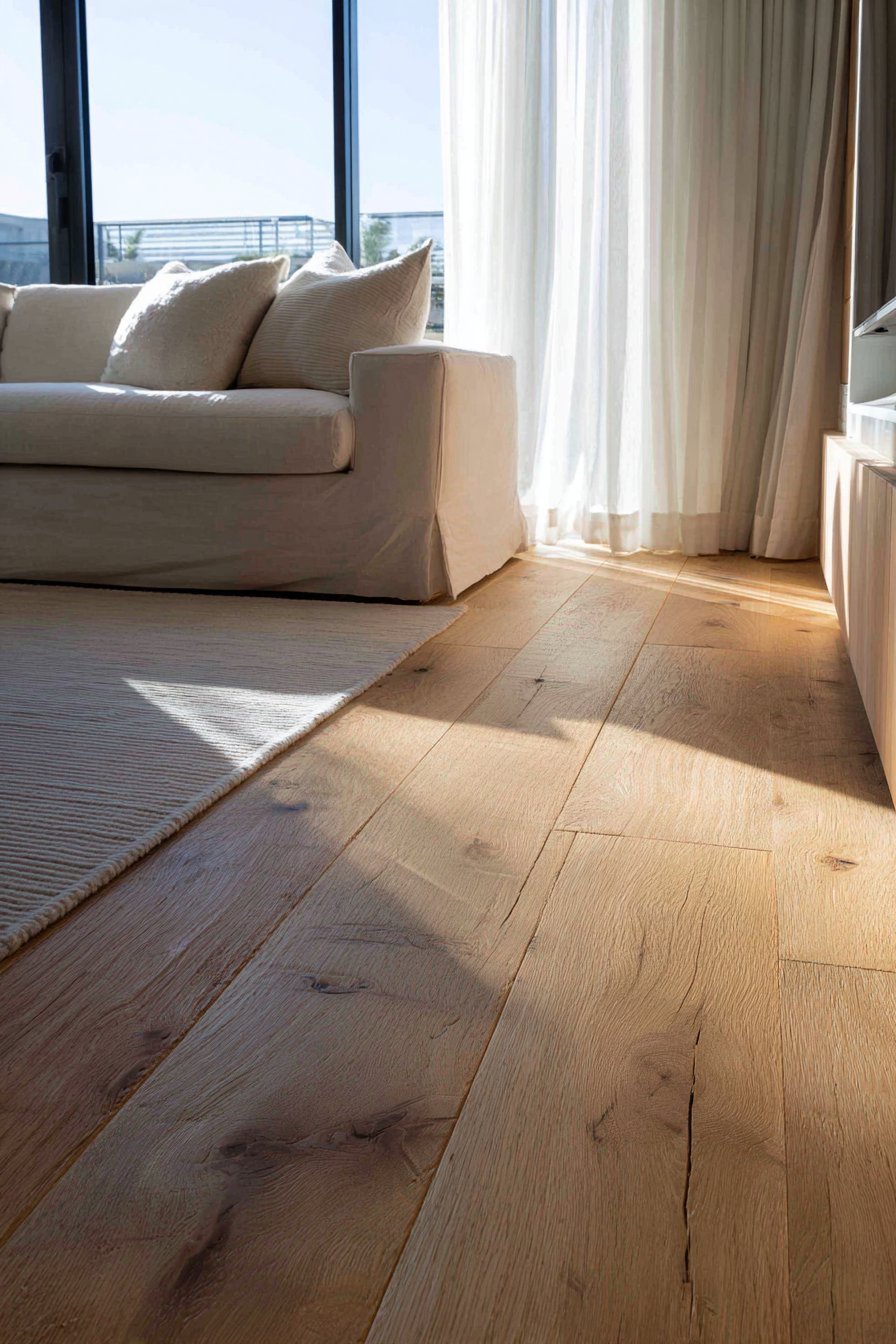
Natural daylight plays a crucial role in this space. Gentle shadows emphasize the wood’s dimensional quality. Subtle color variations between boards become visible. The grain patterns tell nature’s story across the floor surface. This interplay between light and wood creates ever-changing beauty.
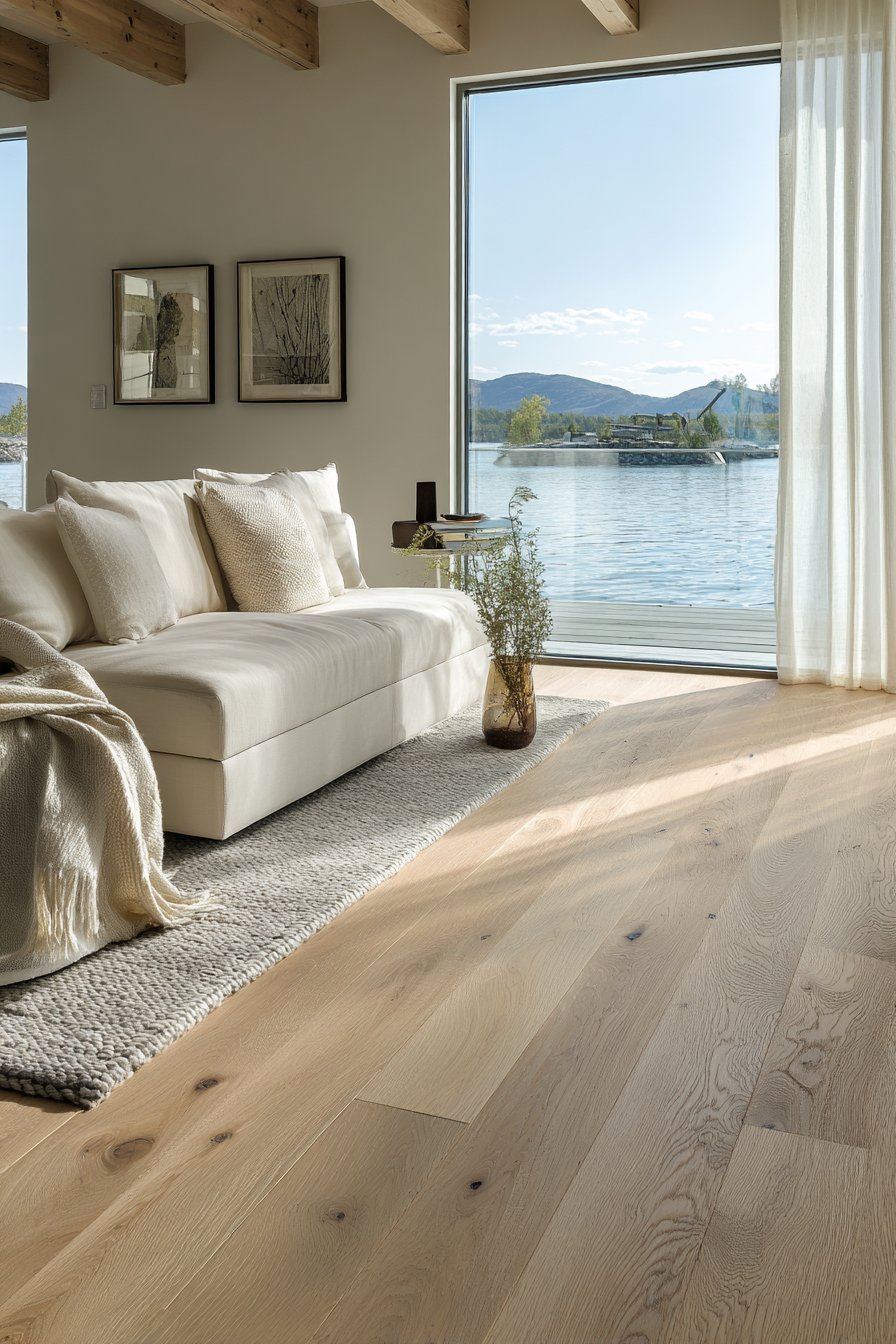
The finish on these planks enhances their natural characteristics. Neither too glossy nor completely matte, the treatment protects while revealing. Wood character shines through without artificial enhancement. The result feels authentic and inviting simultaneously.
Key Design Tips:
- Select wide planks to minimize seams and create contemporary appeal
- Choose straight lay patterns for clean, uncluttered aesthetics
- Maintain natural finishes that reveal grain without heavy gloss
- Position furniture to allow flooring visibility and showcase the wood
- Maximize natural light to highlight oak’s warm honey tones
- Embrace natural knots and variations as character features
2. Rustic Reclaimed Barn Wood
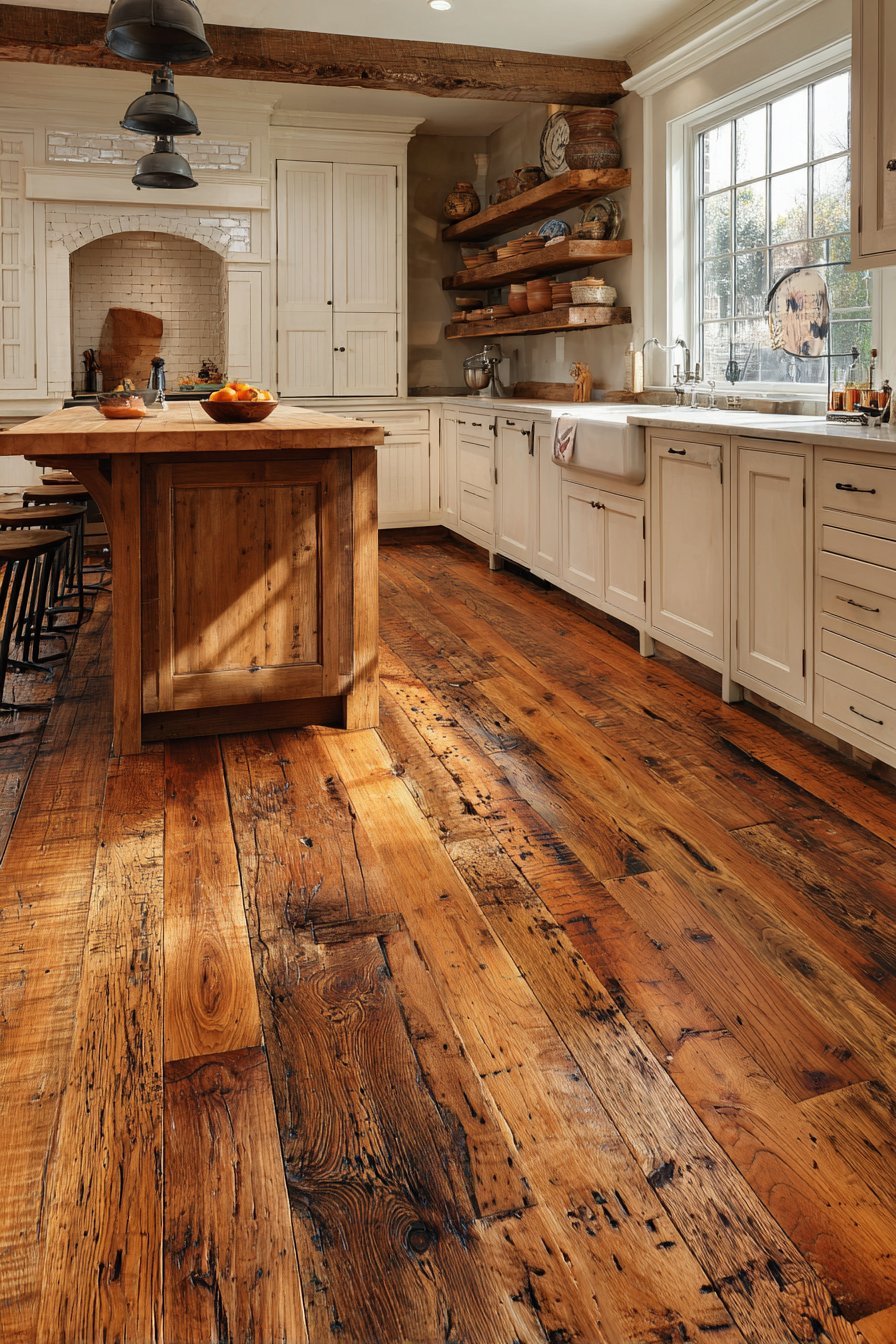
Step into a rustic farmhouse kitchen where reclaimed barn wood tells decades of stories. Mixed-width planks display incredible patina from years of use. Colors range from warm amber to deep tobacco brown. Visible nail holes and weathering marks add authentic history. Each board carries its own narrative.
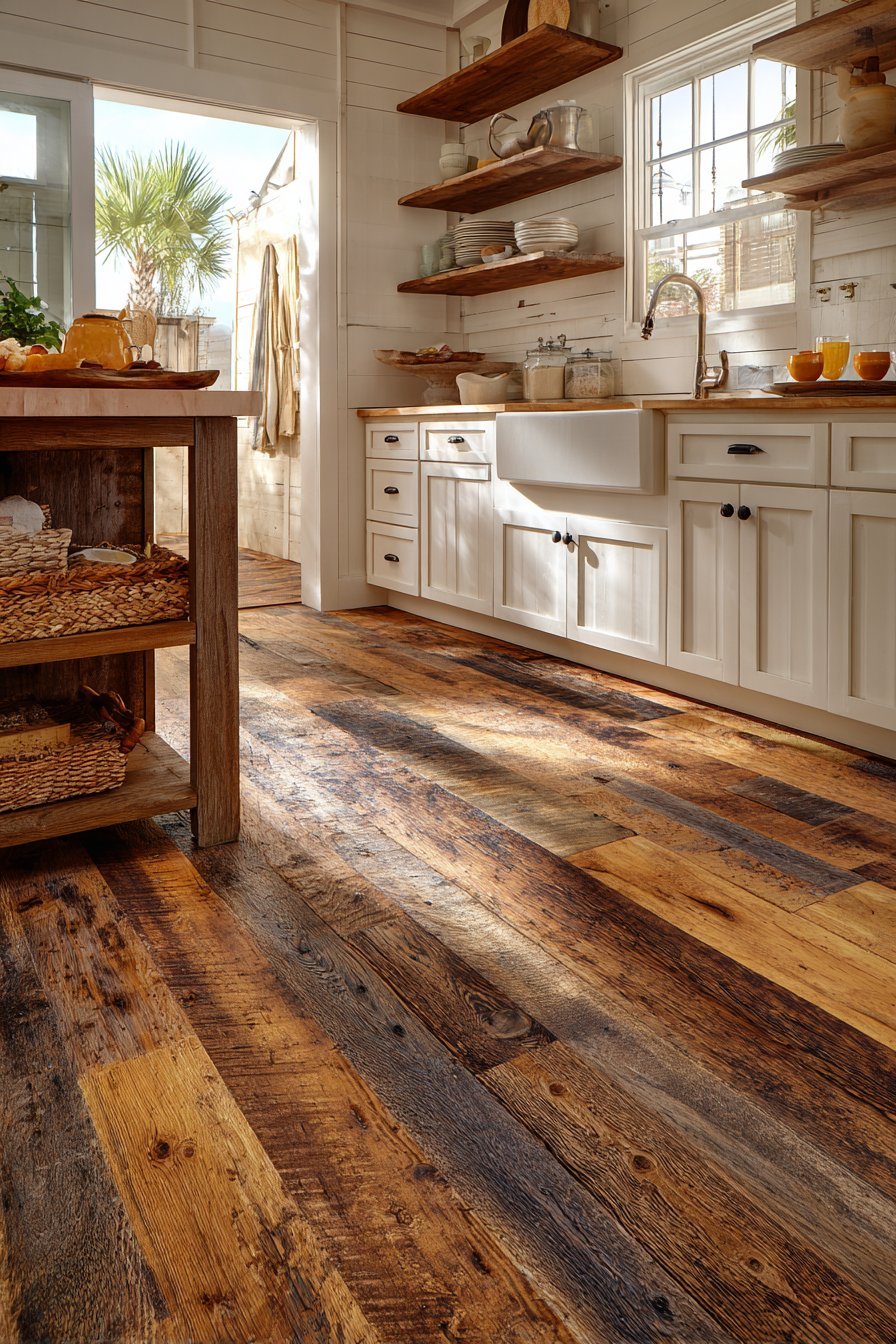
A butcher block island anchors the center of this space. White shaker cabinets line the walls with classic appeal. Open shelving displays earthenware collections above. The aged flooring grounds these elements with timeless character. Natural light from the farmhouse sink window illuminates textured surfaces.
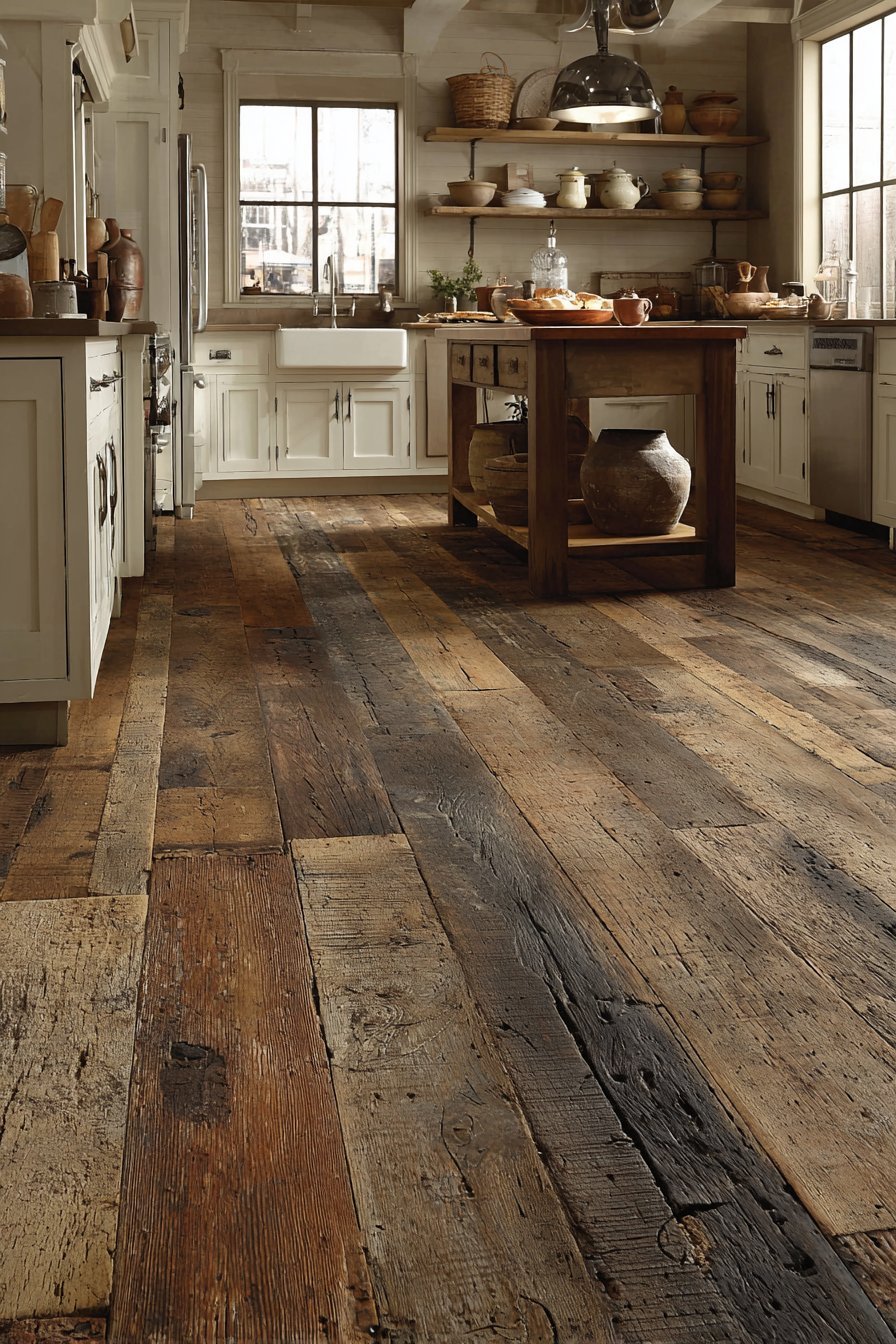
The varied plank widths create organic visual rhythm. No two boards look identical in color or texture. Cracks and weathering patterns contribute genuine rustic charm. This authenticity cannot be replicated by new materials. The floor’s history becomes part of your home’s story.
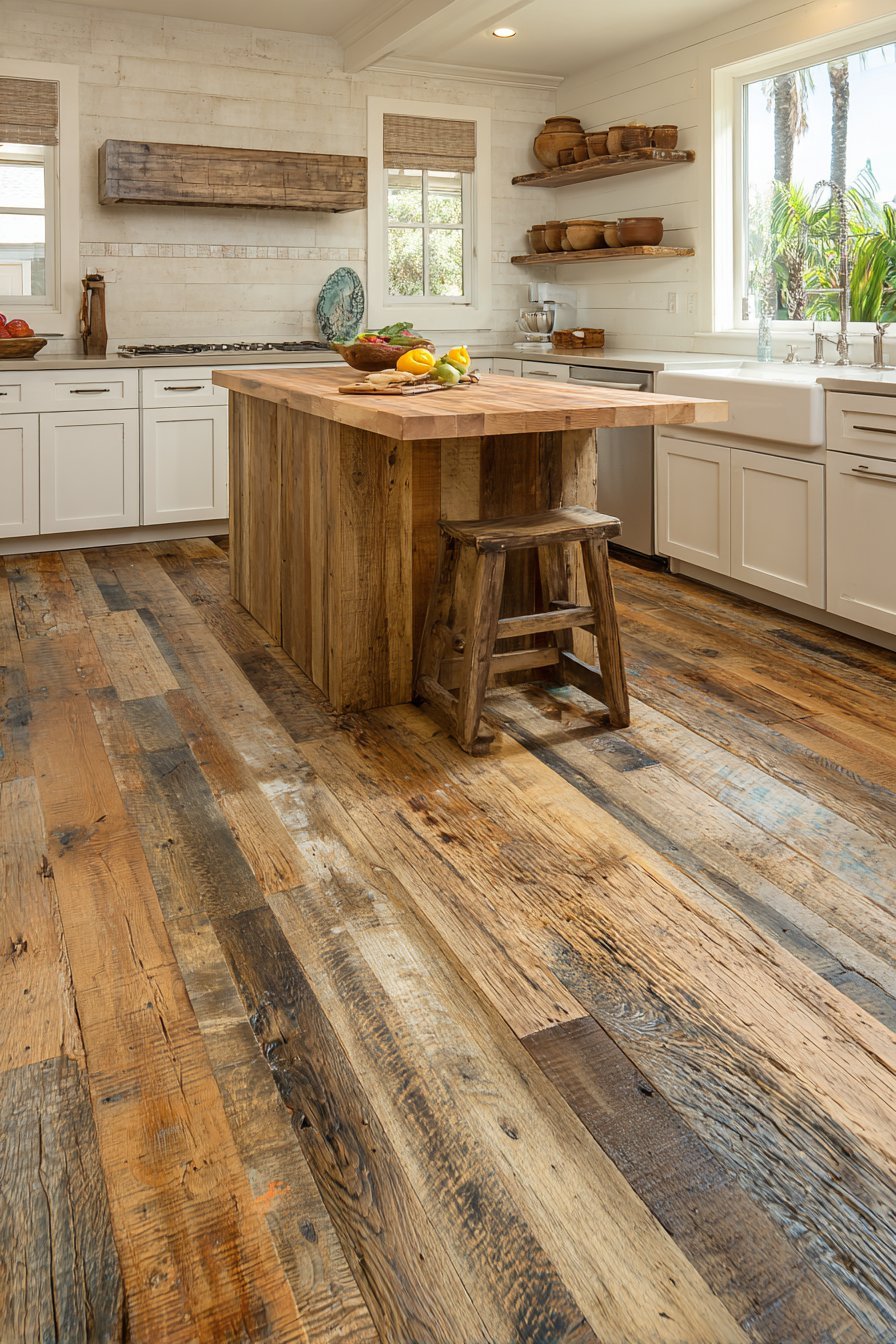
Shadows cast by natural light emphasize surface irregularities. Each imperfection becomes a design feature worth celebrating. The reclaimed wood’s genuine age provides immediate character. Time has already done the work of creating beauty.
Key Design Tips:
- Source authentic reclaimed barn wood from reputable suppliers
- Embrace mixed widths for organic, non-uniform appearance
- Preserve existing nail holes and weathering as historical features
- Pair with white cabinetry to balance rustic elements
- Use natural light to emphasize texture and patina
- Accept surface irregularities as part of authentic character
- Choose matte finishes that don’t hide the wood’s age
3. Contemporary Walnut Herringbone
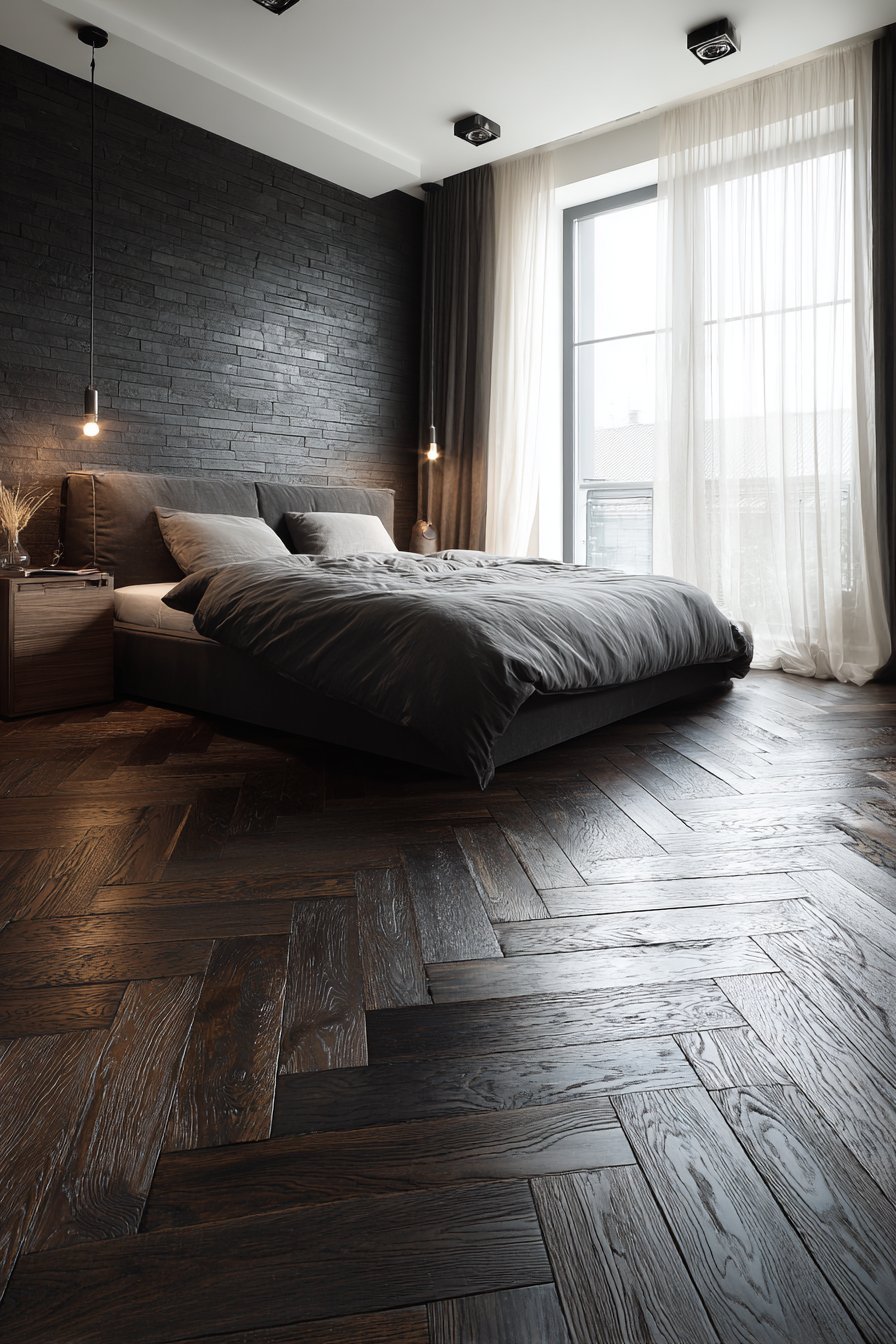
A contemporary bedroom showcases herringbone-patterned walnut flooring creating dynamic movement. Dark chocolate-brown planks feature consistent grain running diagonally. The classic chevron effect displays precise joints and expert installation. Each intersection demonstrates exceptional craftsmanship. The pattern draws eyes across the entire space.
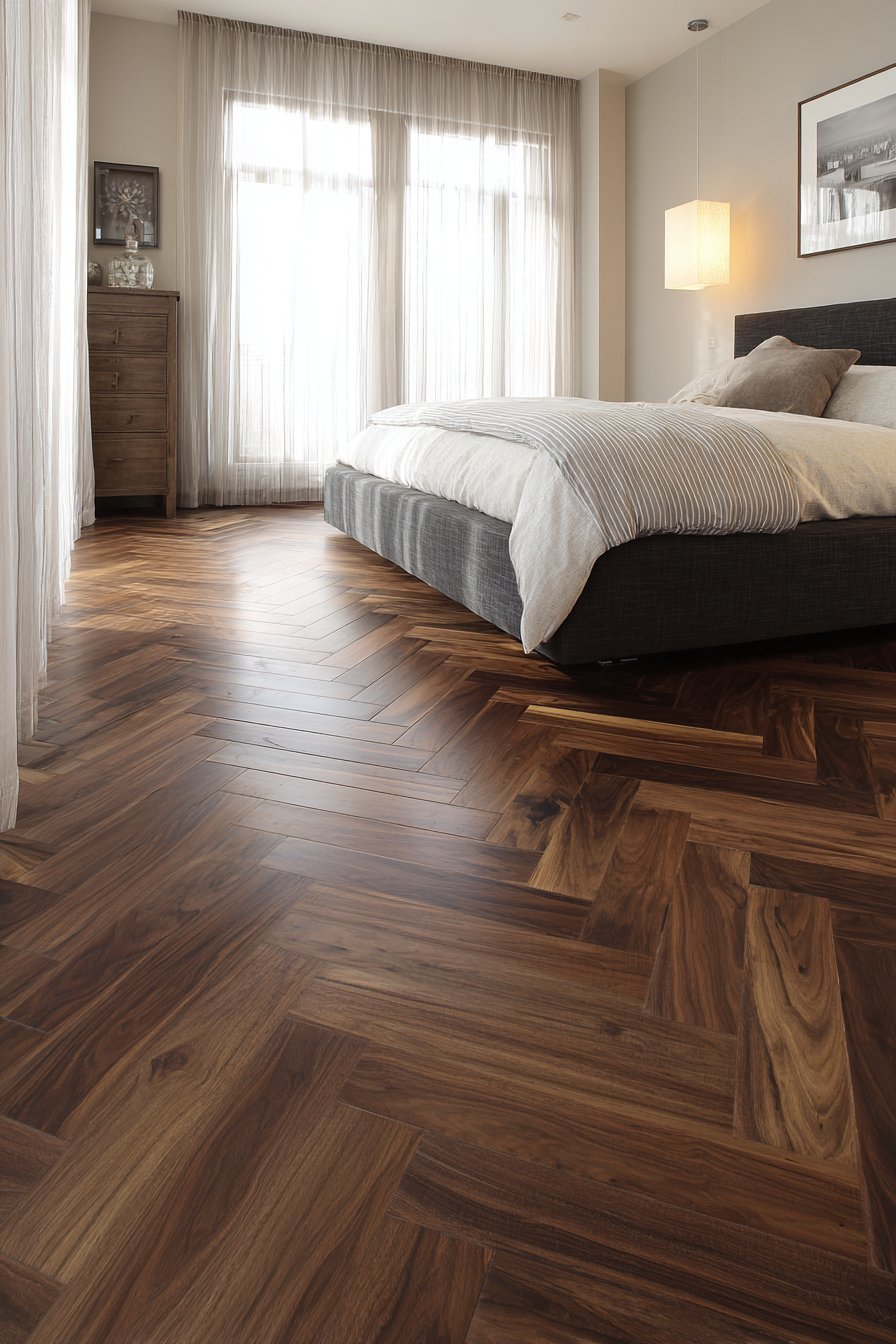
A low-profile upholstered bed frame in charcoal grey provides subtle contrast. The positioning allows the intricate floor pattern to remain focal. No competing elements distract from this architectural feature. The walnut’s natural luster catches available light beautifully.
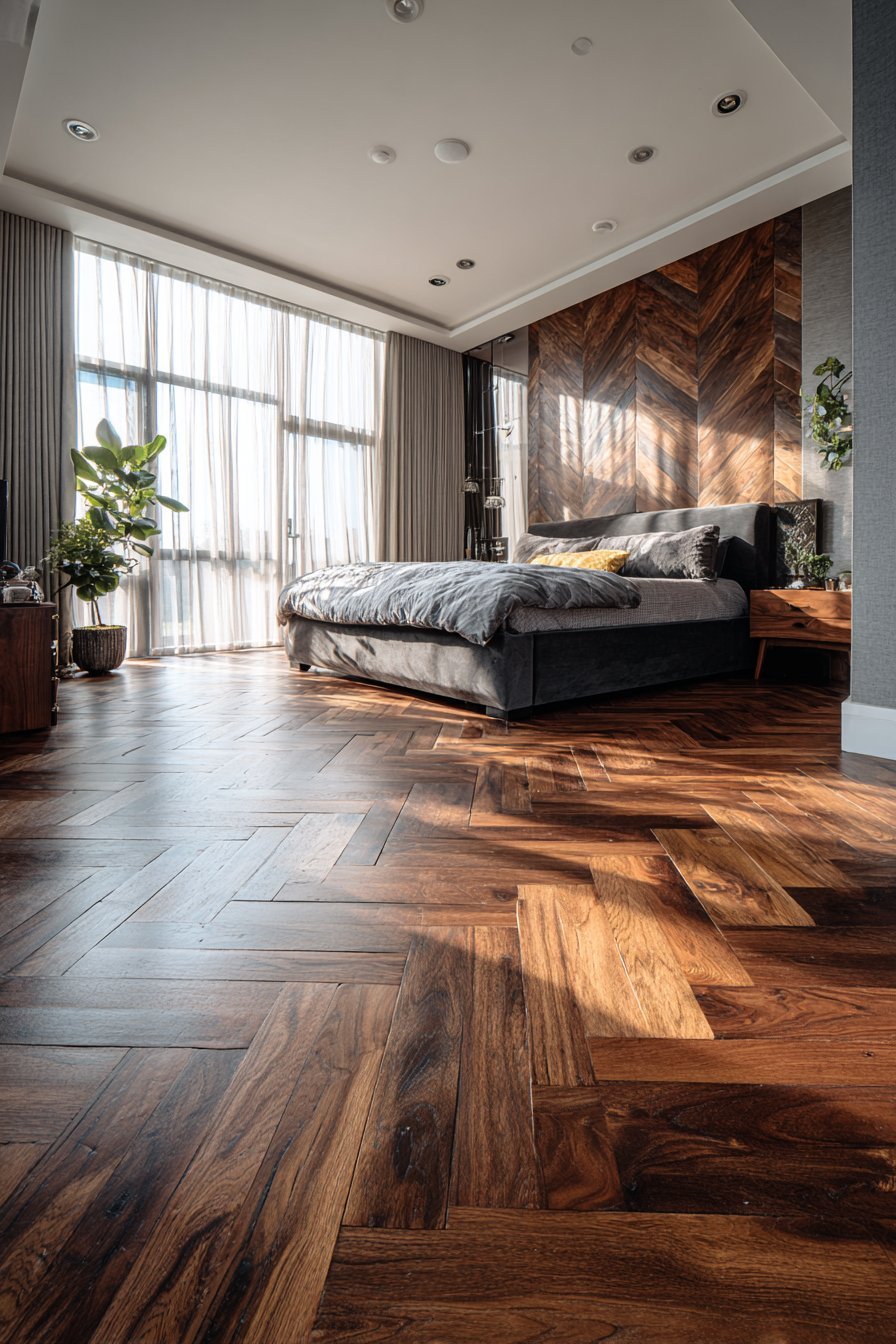
Soft afternoon light enters through sheer curtains with gentle diffusion. The illumination highlights the herringbone pattern’s dimensional quality. Each angled plank casts subtle shadows on its neighbor. This creates depth and visual interest across the floor. The walnut finish reflects light without excessive shine.
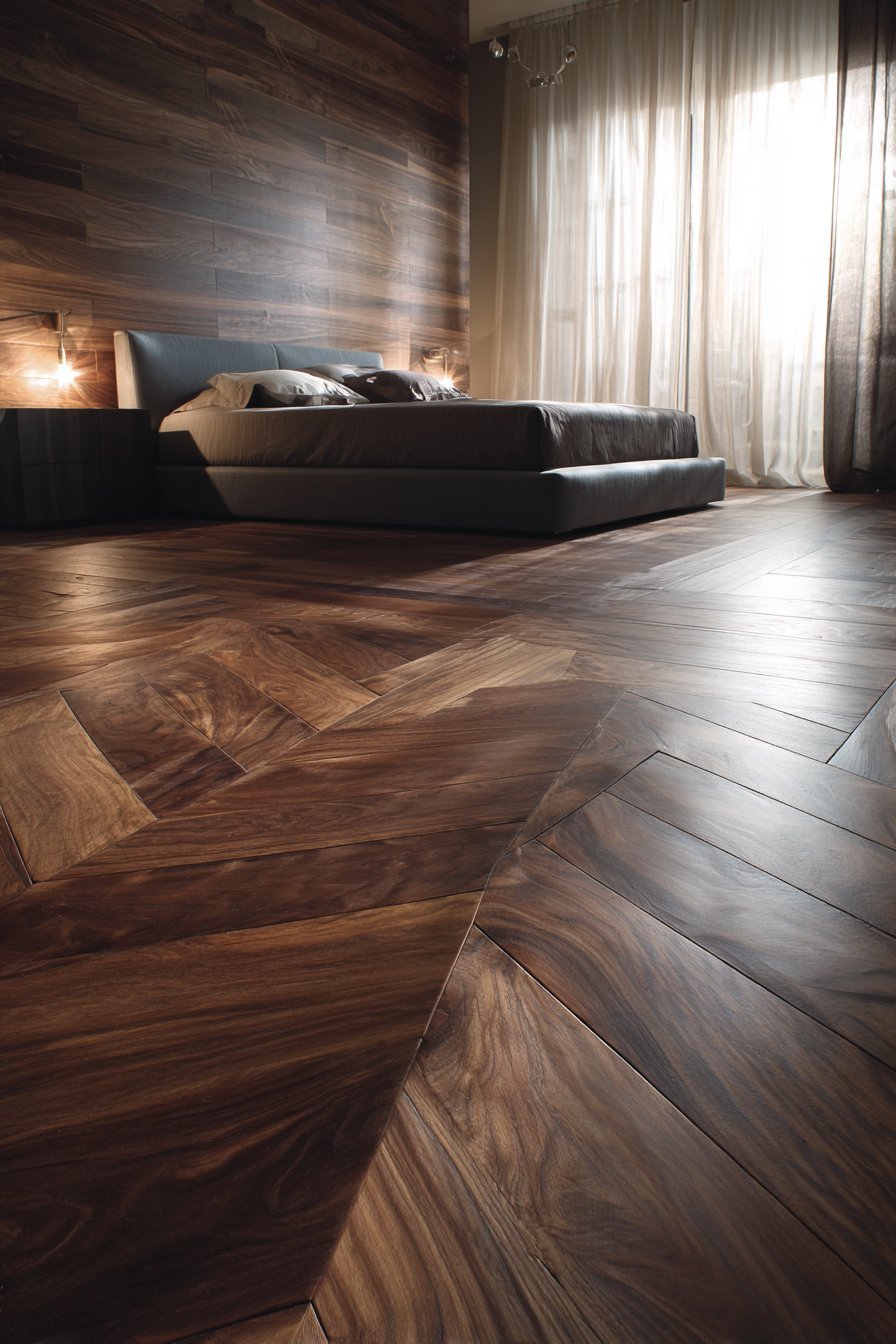
The dark walnut tones anchor the room with sophisticated warmth. The herringbone installation transforms simple planks into art. This pattern requires precision cutting and careful alignment. The investment in skilled installation pays dividends in visual impact.
Key Design Tips:
- Choose professional installation for precise herringbone alignment
- Select consistent-grain walnut for uniform appearance
- Keep furniture low-profile to showcase floor pattern
- Use sheer window treatments for soft, revealing light
- Maintain the flooring as the room’s primary focal point
- Apply finishes that enhance natural luster without excessive gloss
- Consider the pattern’s directionality when planning room layout
4. Sustainable Bamboo Entryway
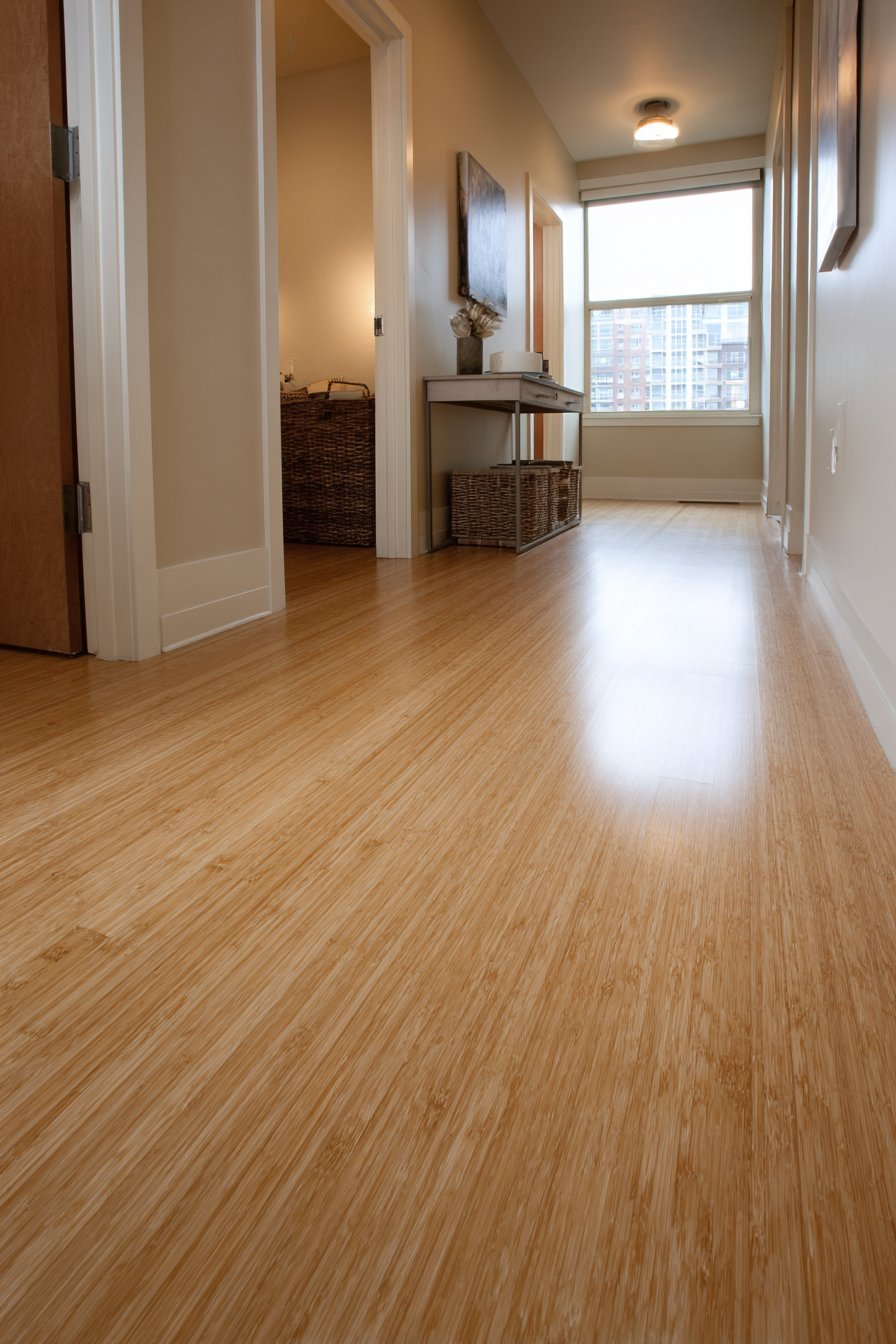
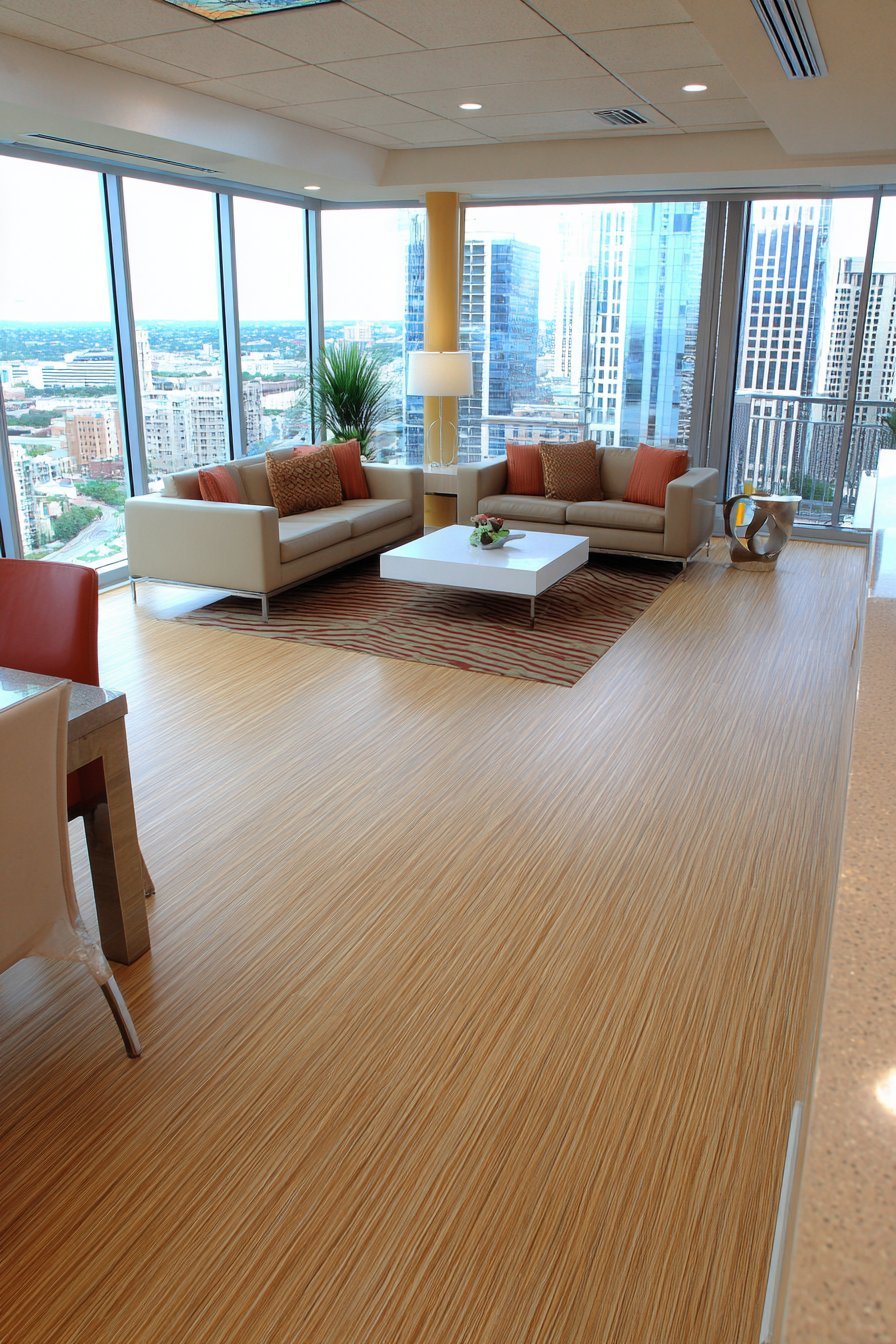
A small apartment entryway features engineered bamboo flooring in natural blonde tones. Vertical grain patterns provide sustainable beauty and exceptional durability. The narrow horizontal planks show consistent coloring throughout. Subtle striping reflects bamboo’s natural growth characteristics. This eco-friendly choice combines practicality with contemporary aesthetics.
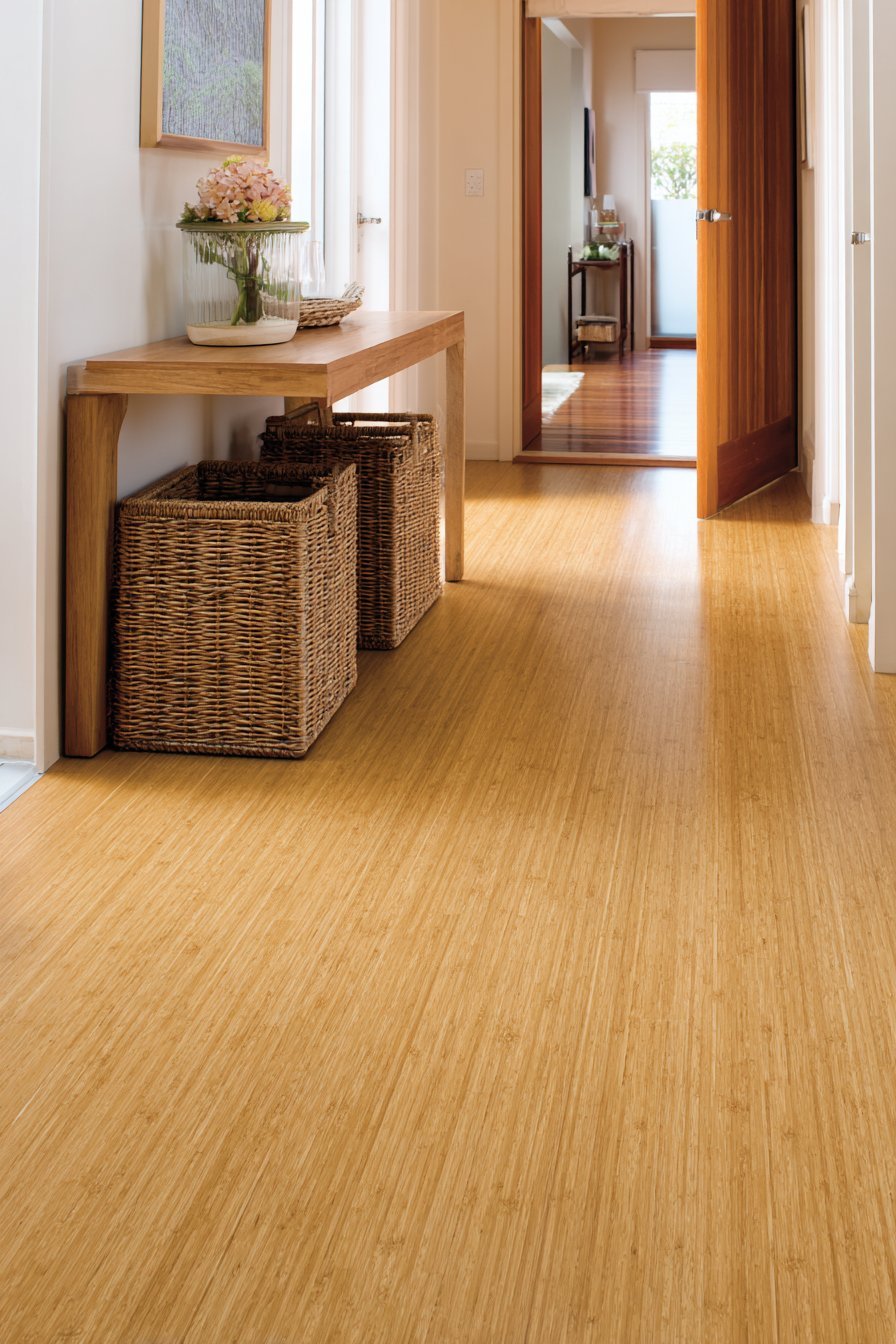
A simple console table with storage baskets occupies wall space. The smooth bamboo flooring transitions cleanly to adjacent rooms. No jarring visual breaks interrupt the flow. Morning light from nearby windows illuminates the space. The flooring’s contemporary appearance welcomes visitors immediately.
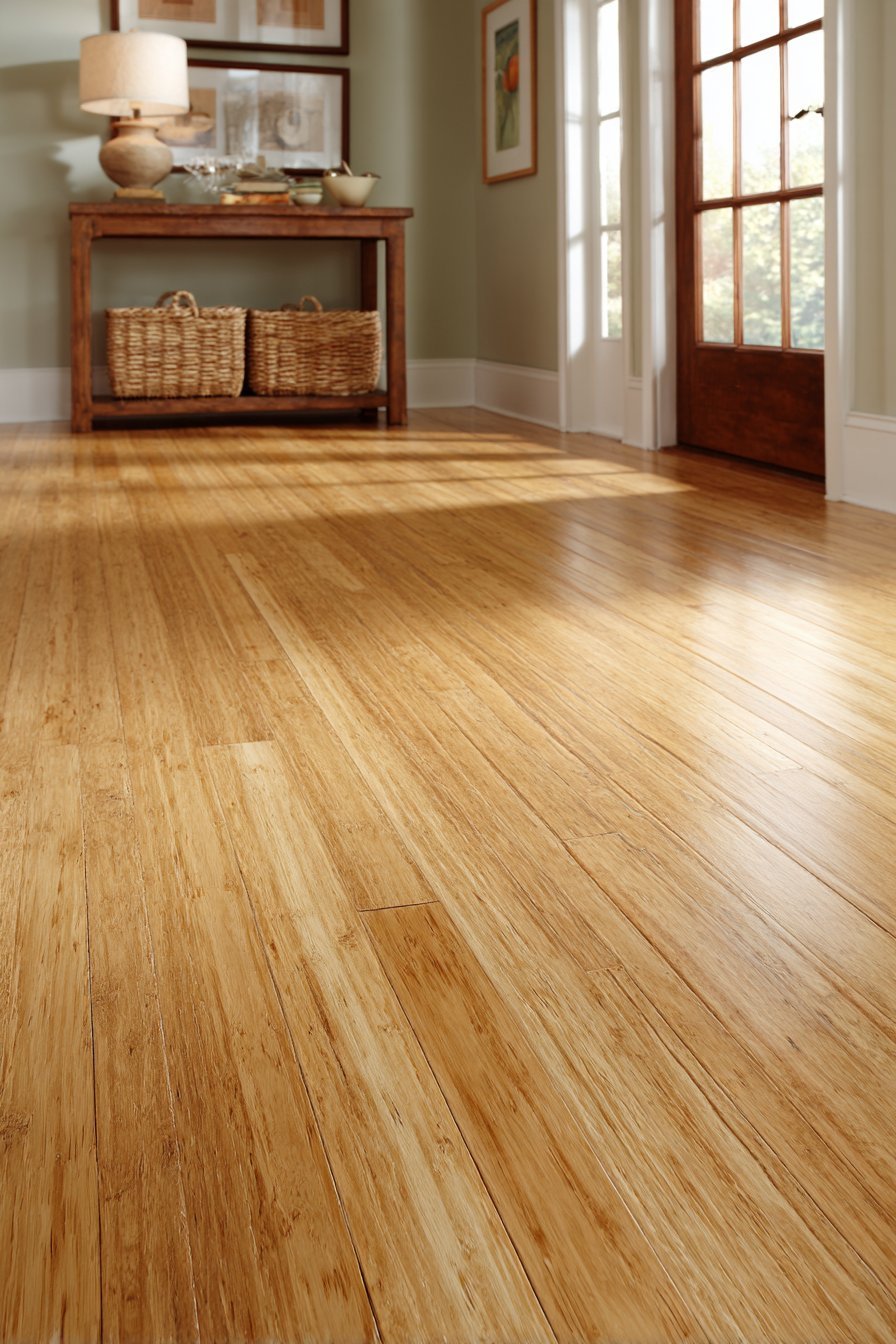
Bamboo’s hardness surpasses many traditional hardwoods surprisingly. This resilience suits high-traffic entryways perfectly. The material’s rapid renewability appeals to environmentally conscious homeowners. Sustainable choices need not sacrifice beauty or durability.
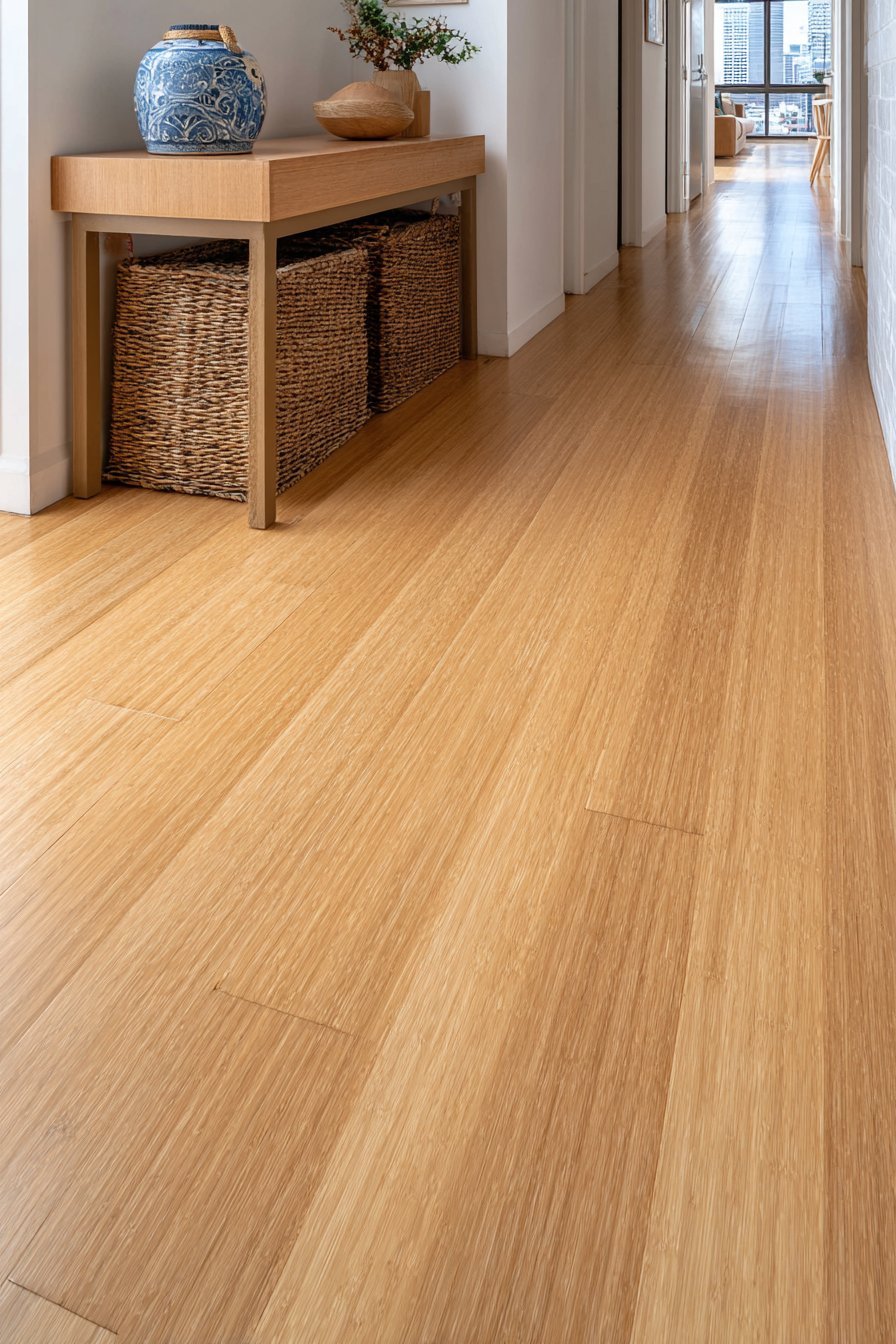
The blonde tones create brightness in compact spaces. Light colors make small entryways feel more spacious. The smooth surface requires minimal maintenance while looking polished. Contemporary design meets practical performance in this application.
Key Design Tips:
- Select vertical grain bamboo for consistent appearance
- Choose engineered construction for dimensional stability
- Use in high-traffic areas to benefit from bamboo’s hardness
- Maintain smooth finishes for easy cleaning in entryways
- Pair with simple furniture to highlight sustainable flooring
- Ensure clean transitions to adjacent rooms
- Consider blonde tones to brighten small spaces
5. Traditional Mahogany Elegance
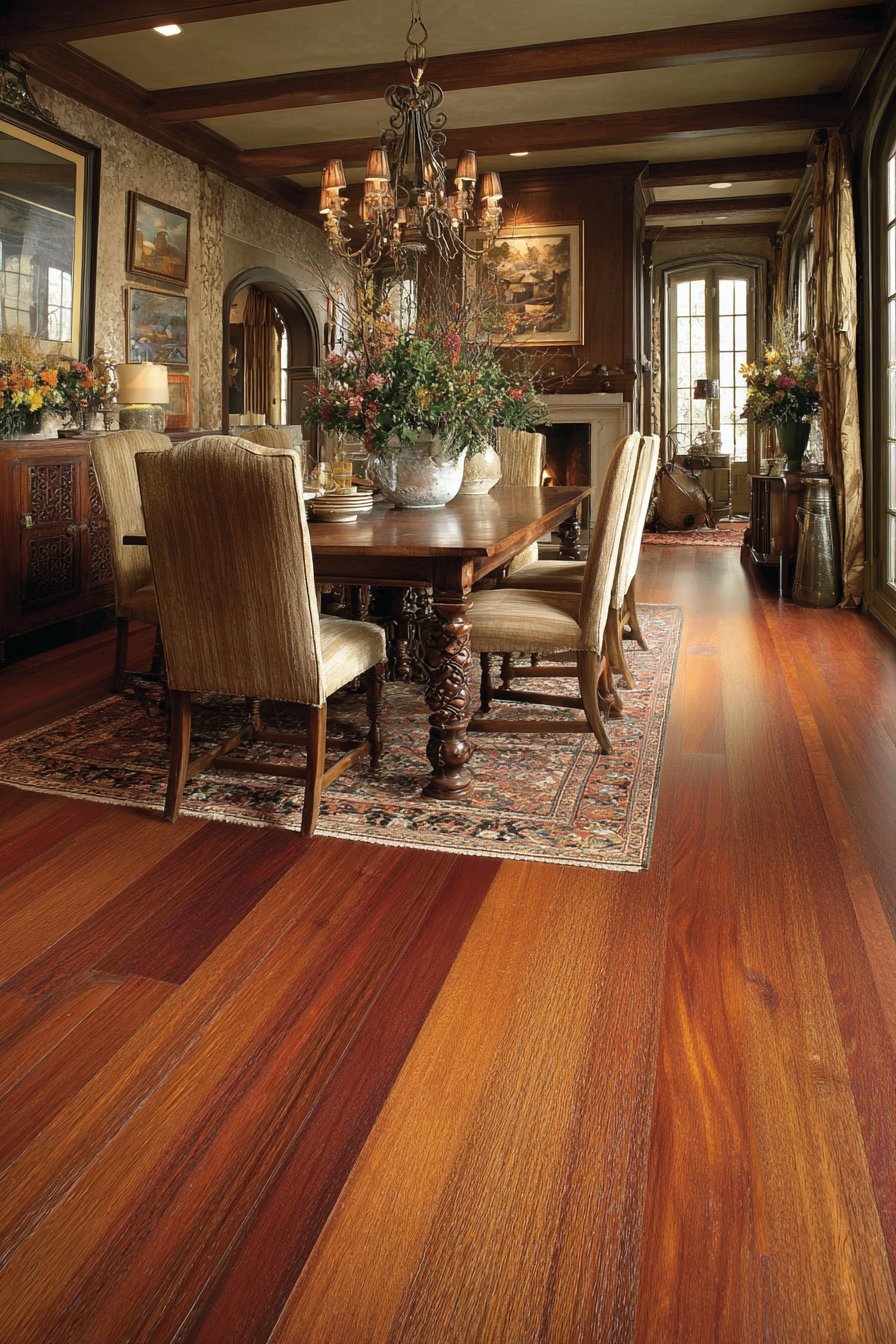
A traditional dining room displays rich mahogany flooring with deep reddish-brown tones. Wide planks feature straight grain patterns characteristic of premium hardwood. The wood’s natural color depth varies subtly between individual boards. Classic straight installation emphasizes the material’s inherent beauty. This formal choice exudes timeless elegance.
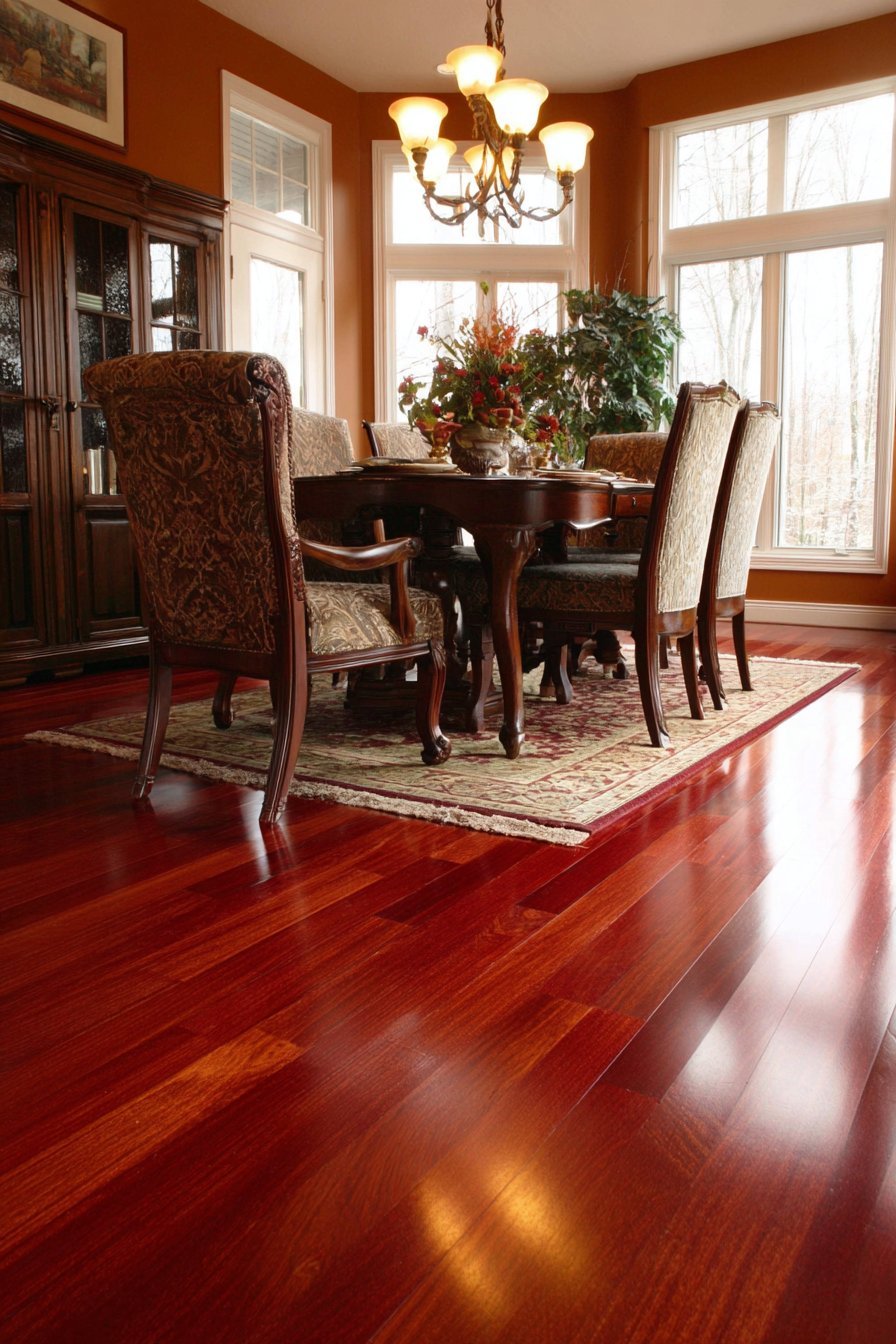
An antique dining table with carved legs commands the space. Persian rugs partially cover the glossy finished mahogany. The layering adds texture while showcasing the wood. Chandelier light combines with natural daylight creating warm reflections. The polished surface enhances the room’s luxurious atmosphere.
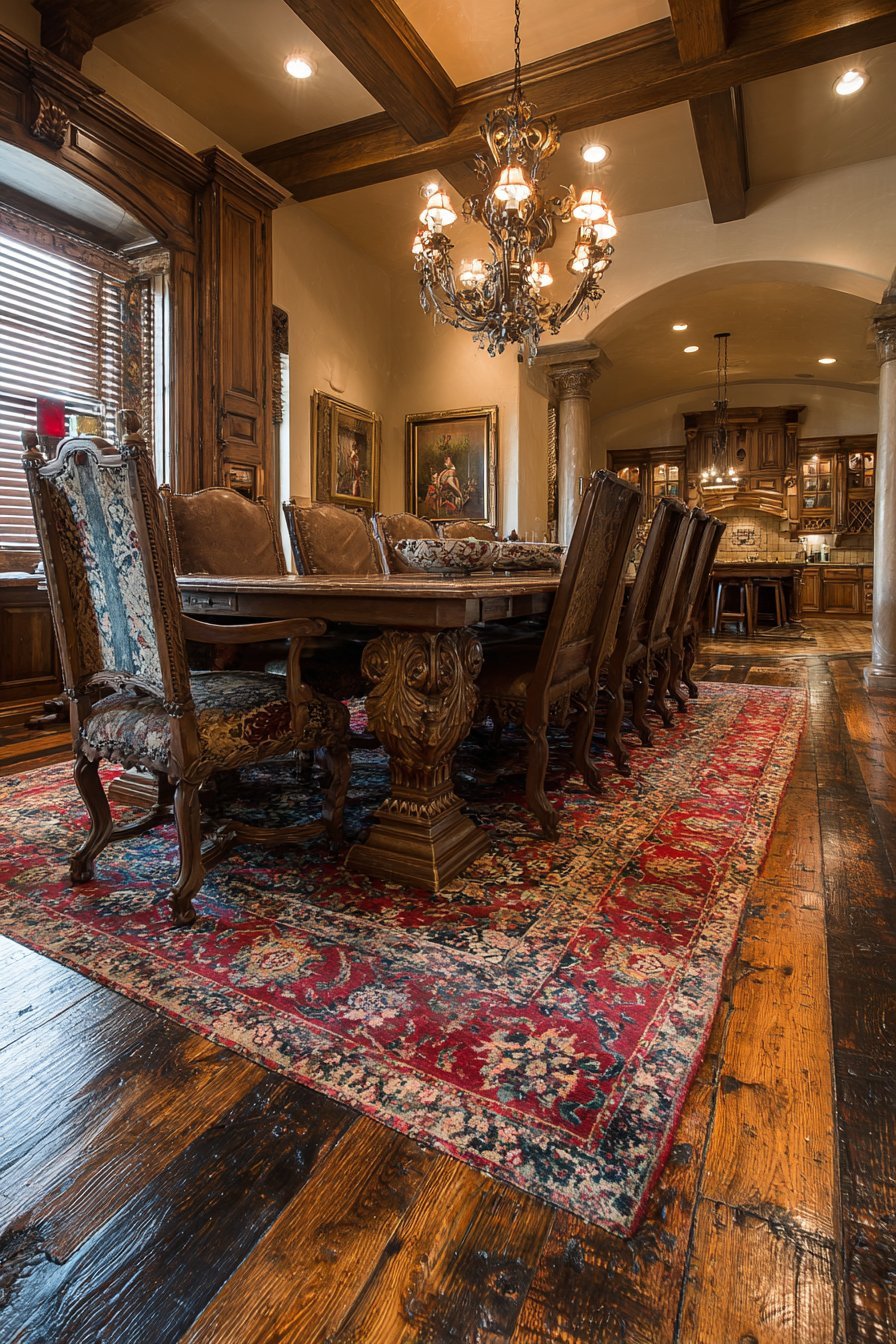
Mahogany’s reddish undertones bring warmth to formal spaces. The color deepens over time with light exposure. This evolution adds to the wood’s distinguished character. The straight grain provides subtle visual interest without busyness.
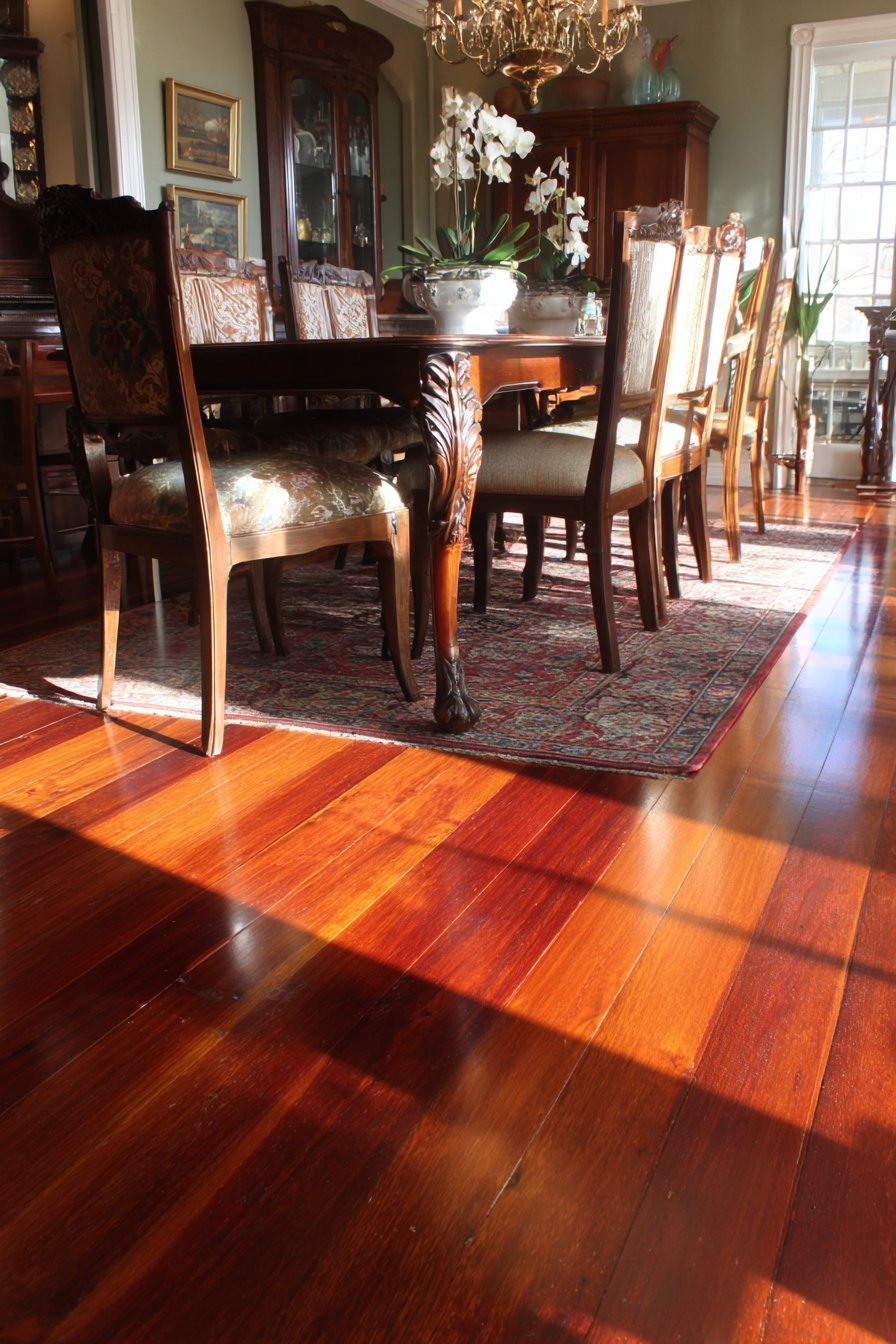
The glossy finish reflects light dramatically across surfaces. This treatment suits traditional interiors perfectly. The formality matches the dining room’s ceremonial purpose. Guests immediately sense the room’s refined sophistication.
Key Design Tips:
- Choose wide planks to showcase mahogany’s premium quality
- Apply glossy finishes for traditional formal appearance
- Layer with area rugs to add texture and protection
- Combine artificial and natural lighting for warm reflections
- Select straight grain for classic, refined look
- Pair with antique furniture that matches the formality
- Allow color to deepen naturally over time
6. Modern Ash Office Space
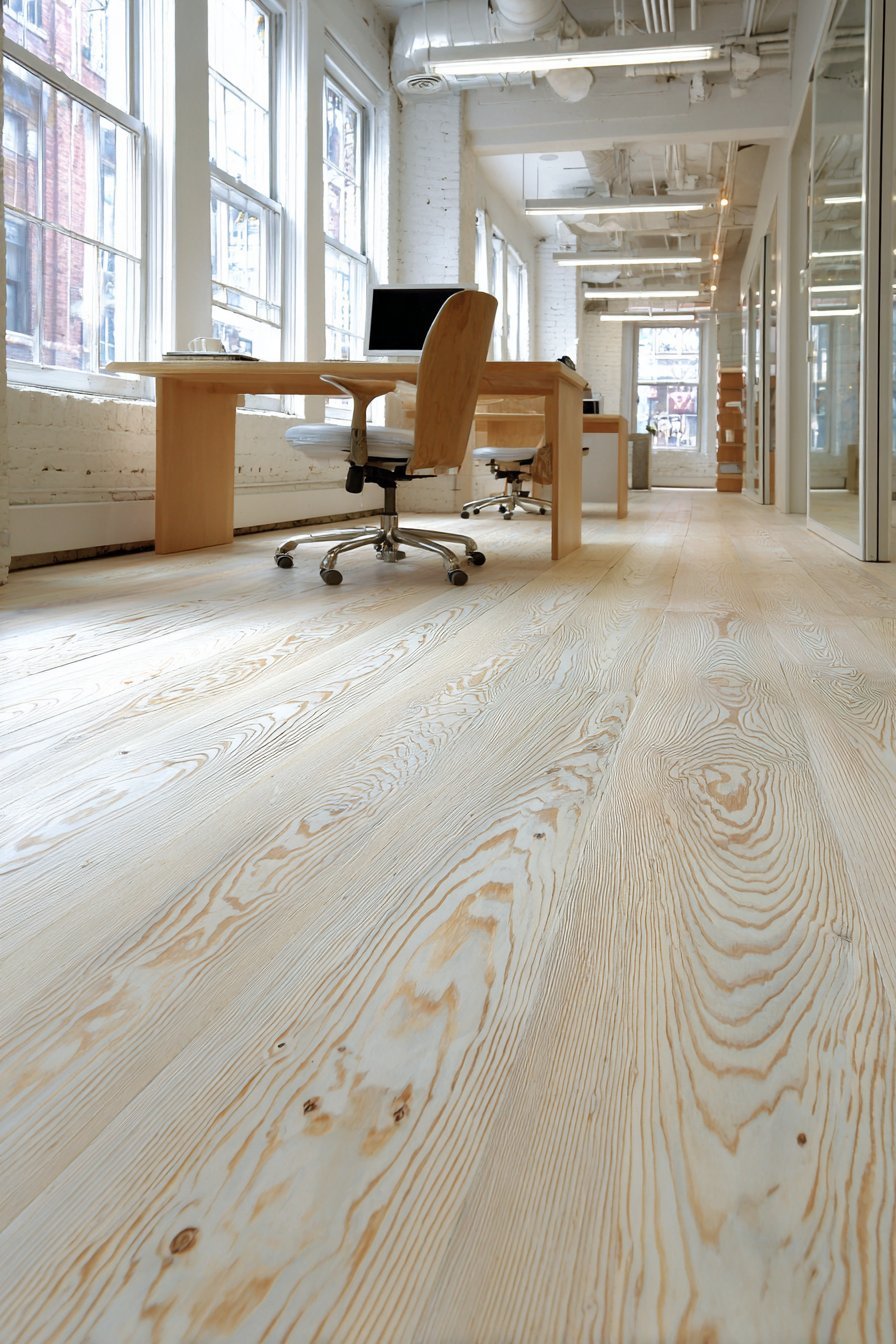
A modern home office features pale ash hardwood with distinctive cathedral grain. Light creamy-grey undertones create an airy foundation. The smooth-finished planks support a minimalist workspace aesthetic. A floating desk and ergonomic chair occupy the space simply. The ash wood’s subtle variations provide interest without overwhelming.
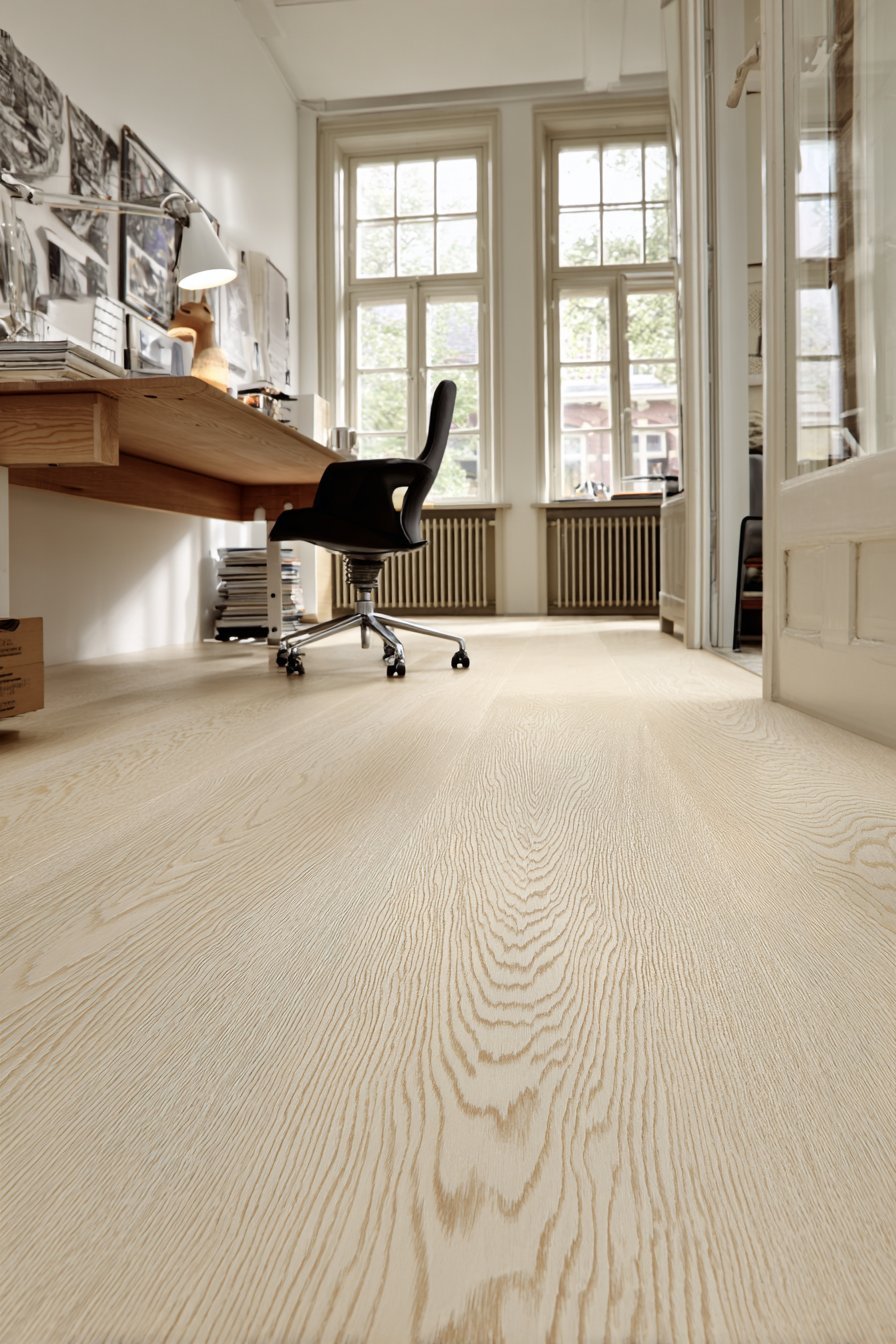
Large windows flood the area with abundant natural light. The illumination reveals the flooring’s delicate grain structure perfectly. Cool-toned finishes enhance the room’s spacious feeling. The pale wood maintains warmth through natural characteristics. This balance creates an ideal working environment.
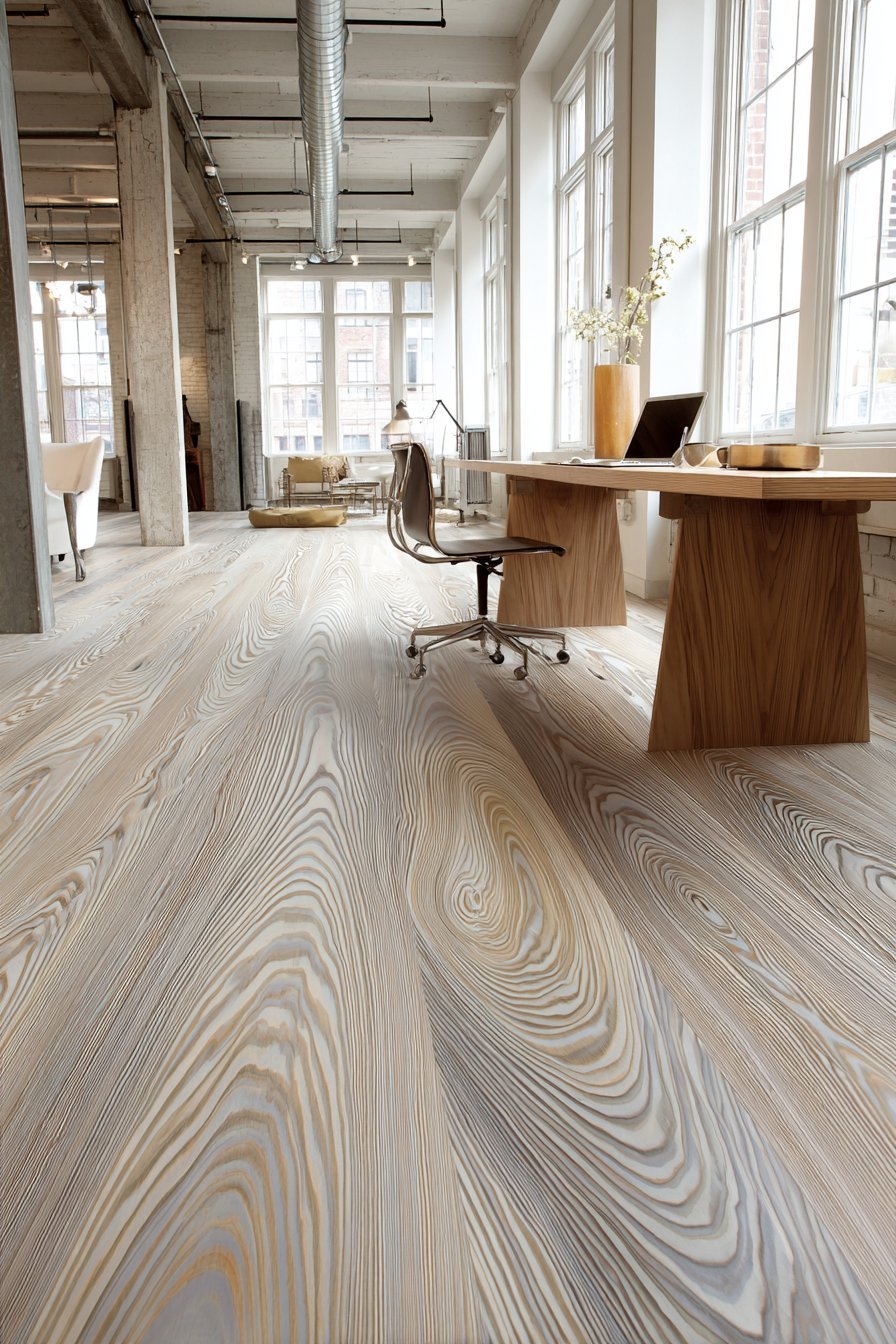
Cathedral grain patterns add visual movement to clean spaces. The organic forms contrast with geometric furniture beautifully. This interplay between natural and designed elements creates harmony. The ash wood bridges these two design philosophies effectively.
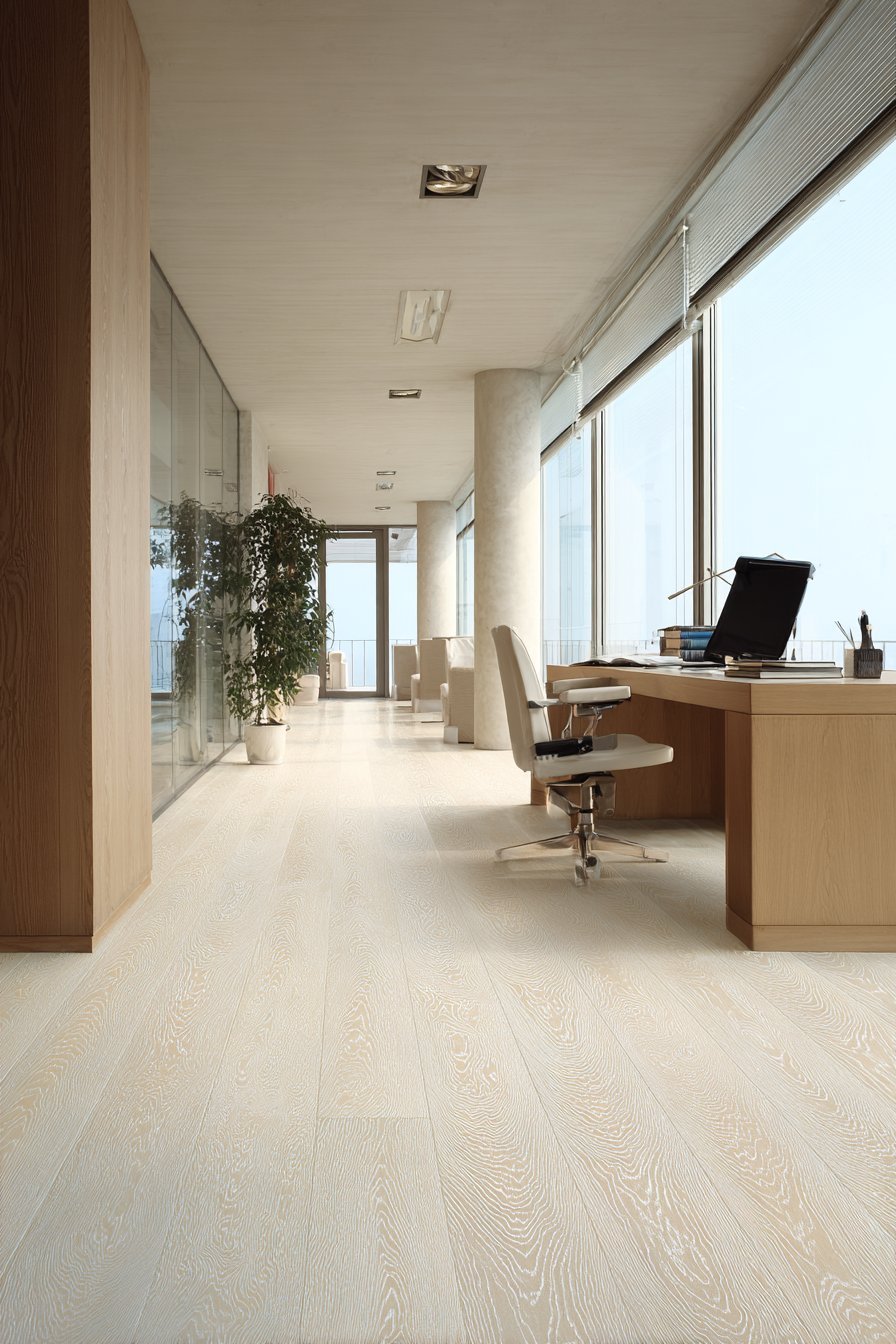
The light tones reflect sunlight throughout the workspace. This amplification reduces the need for artificial lighting. Energy efficiency combines with aesthetic appeal. The practical benefits support the visual choices seamlessly.
Key Design Tips:
- Select cathedral grain ash for subtle visual interest
- Choose smooth finishes for contemporary clean aesthetics
- Use pale tones to enhance natural light and spaciousness
- Pair with minimalist furniture for cohesive design
- Maximize window exposure to reveal grain details
- Apply cool-toned finishes for modern appeal
- Keep the space uncluttered to showcase the flooring
7. Rustic Hand-Scraped Hickory
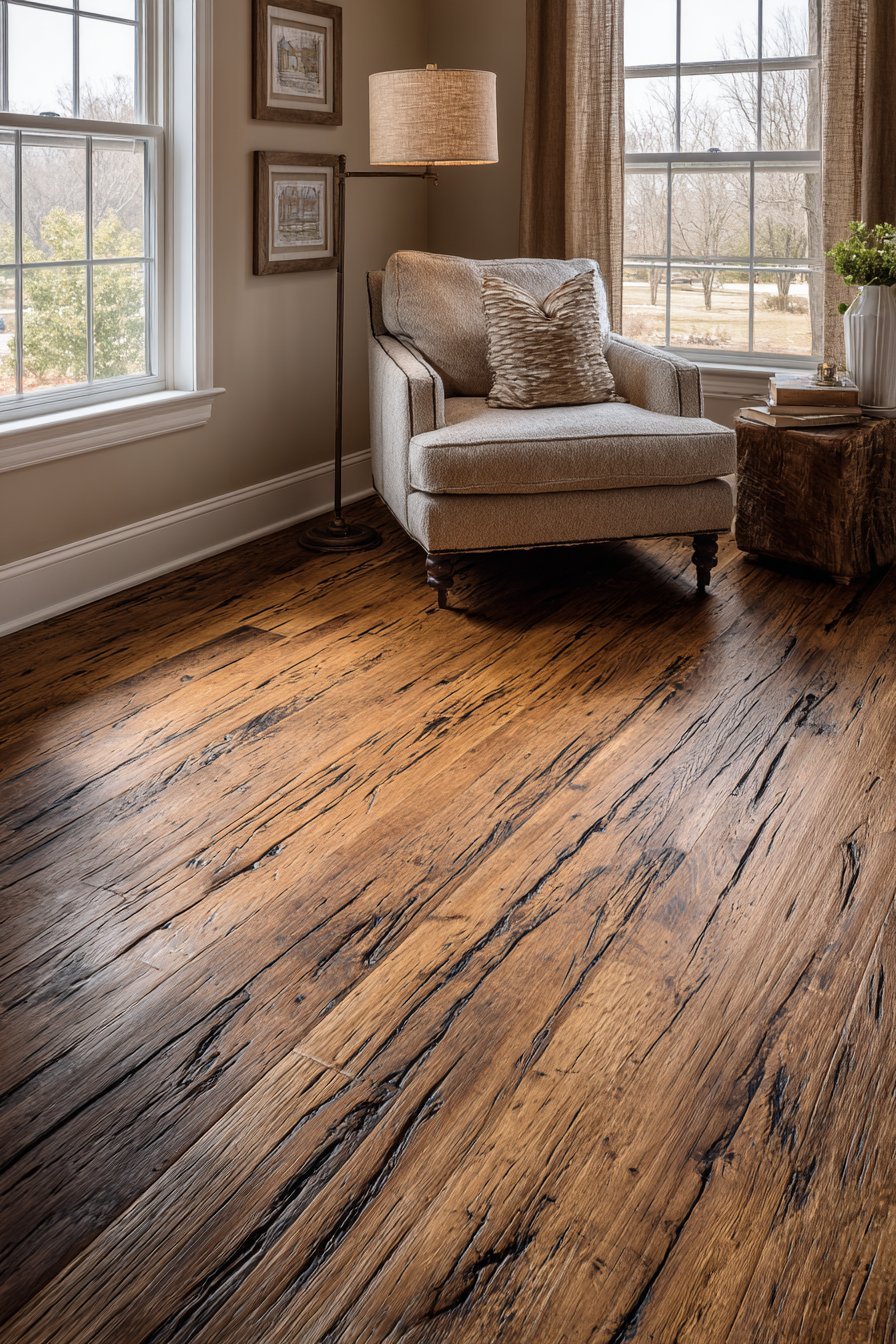
A cozy reading nook features hand-scraped hickory flooring with pronounced texture. Medium-toned planks display natural color variations extensively. Pale tan to rich brown tones often appear within single boards. The distressed surface reveals lighter sapwood beneath darker areas. This creates dimensional interest underfoot.
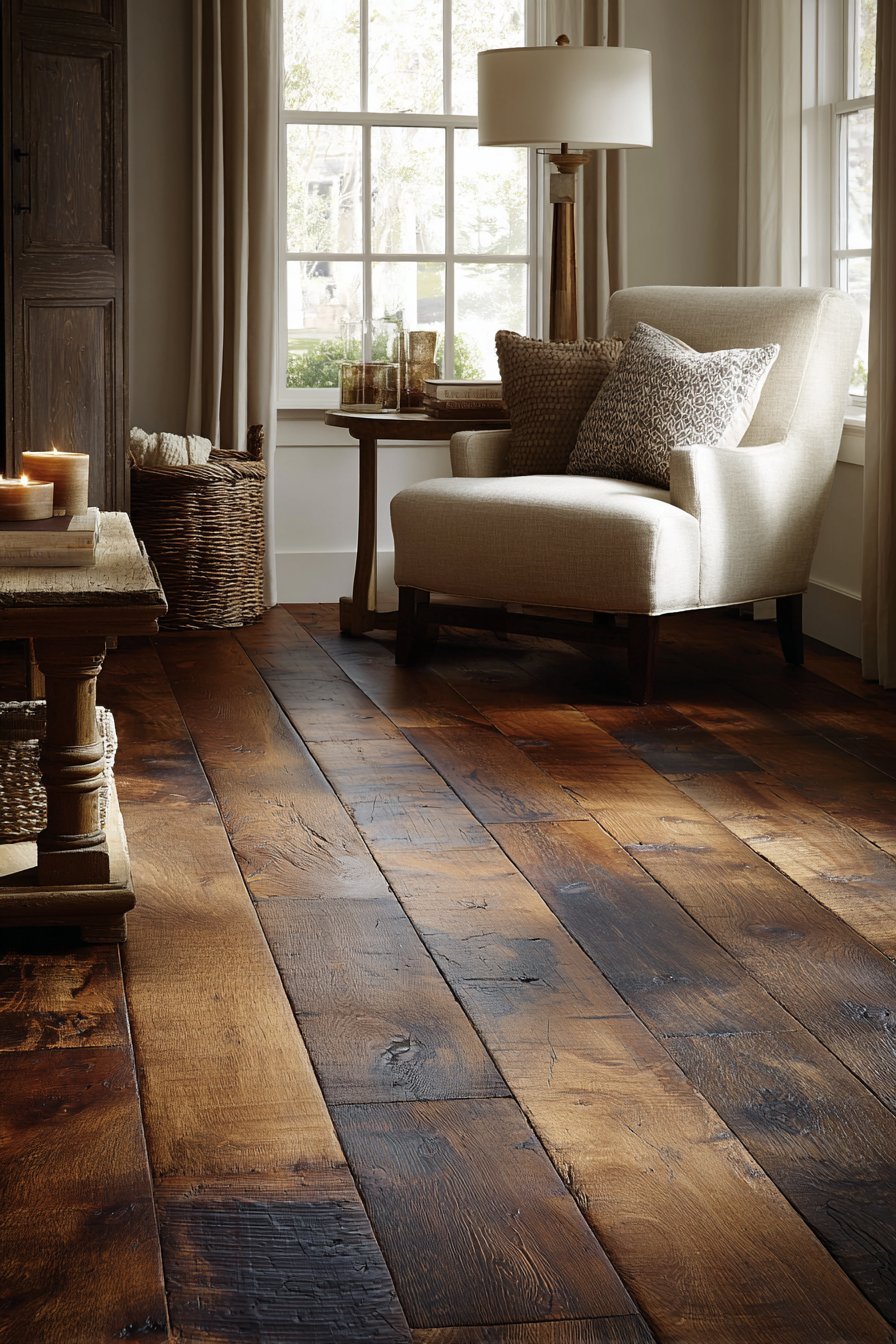
A comfortable armchair and floor lamp create an intimate corner. The textured wooden flooring adds tactile richness to the space. Soft natural light from adjacent windows highlights dimensional qualities. Each scrape and distress mark becomes visible in proper lighting. The artisanal treatment celebrates imperfection beautifully.
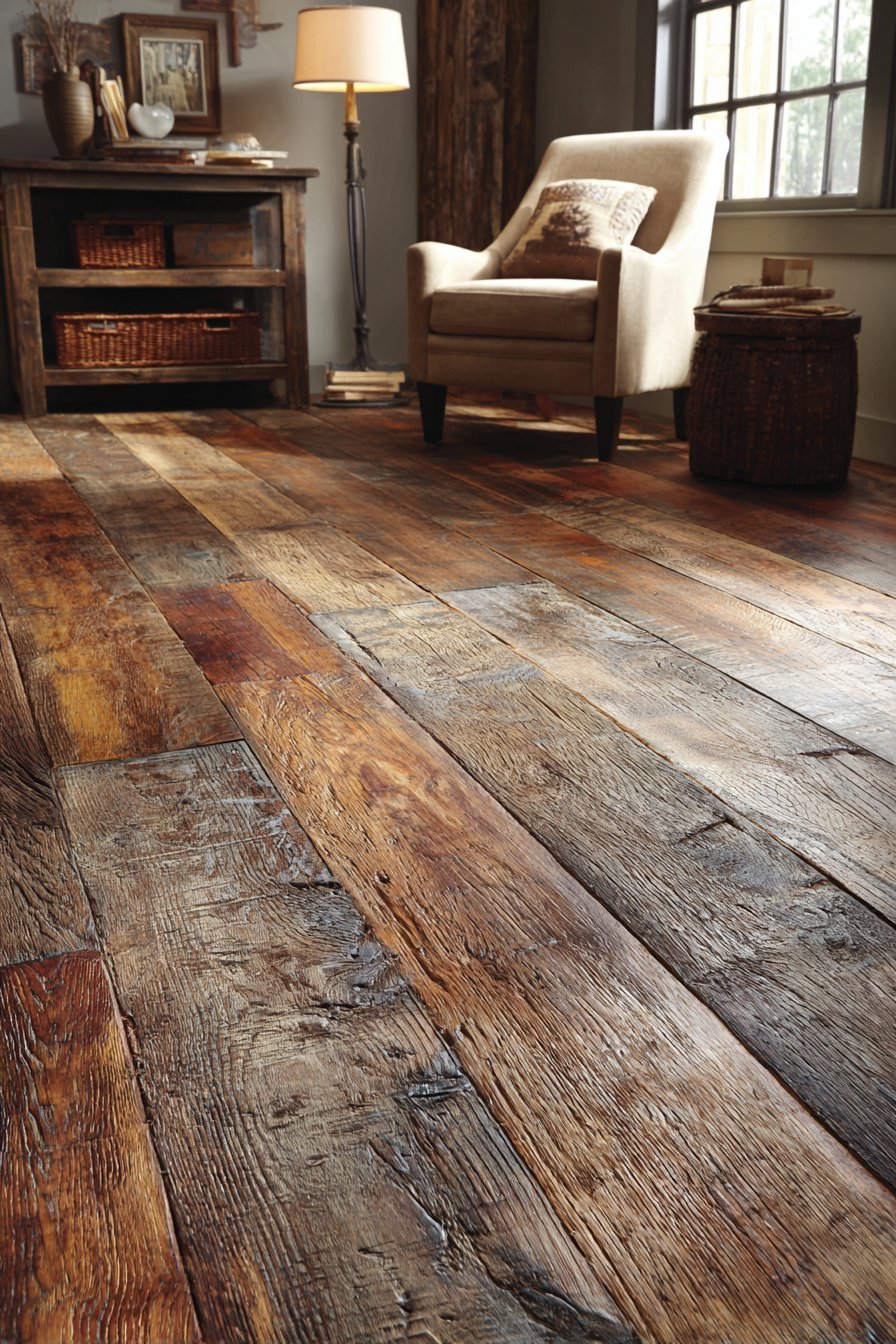
Hickory’s naturally occurring color diversity provides organic appeal. No two planks look identical in this installation. The hand-scraped technique enhances these natural variations further. Machine-made uniformity has no place in this design approach.
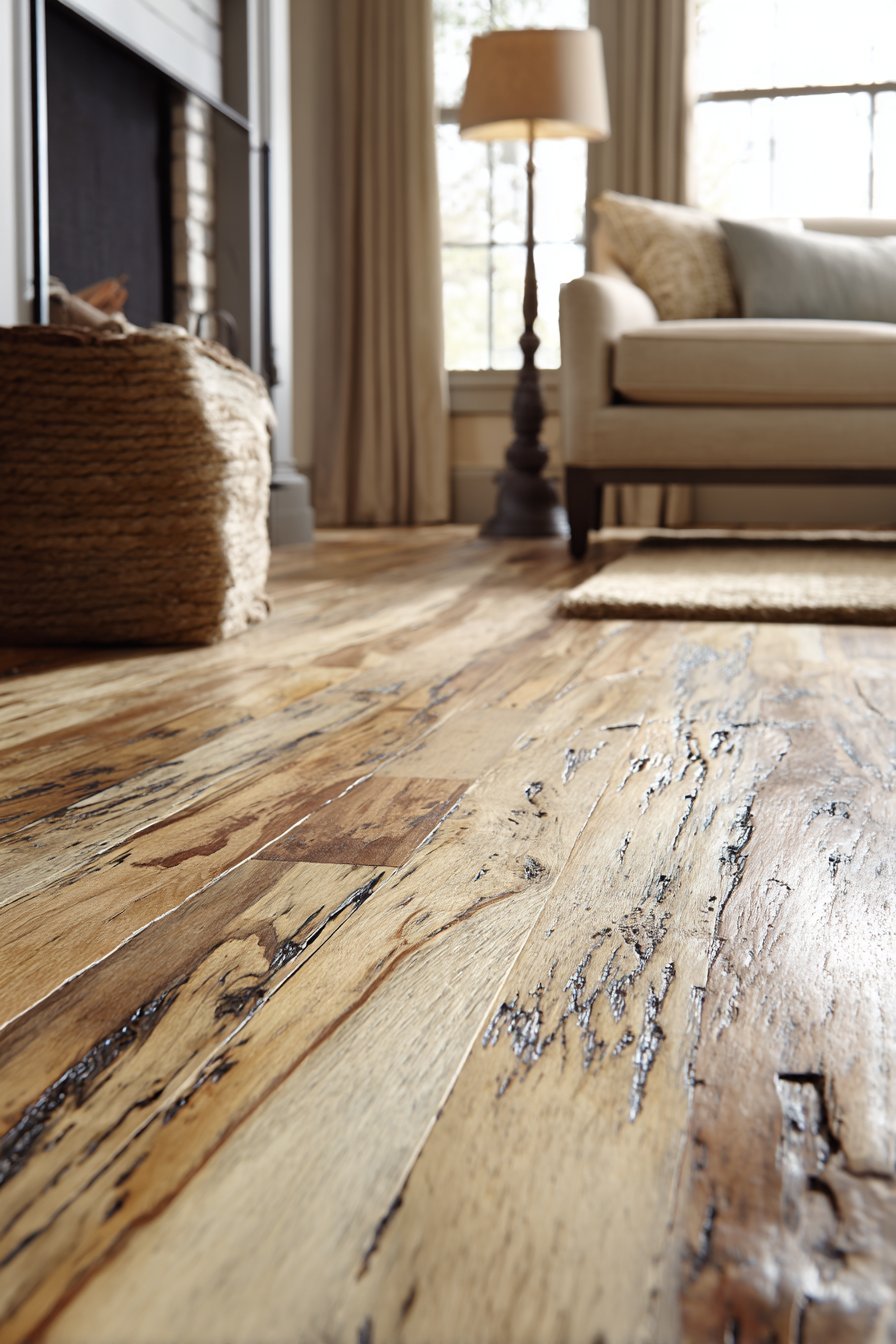
The pronounced texture feels substantial and authentic underfoot. This tactile quality distinguishes hand-scraped floors from smooth alternatives. The sensory experience reinforces the rustic aesthetic visually. Form and function unite in this traditional treatment.
Key Design Tips:
- Embrace hickory’s natural color variations as design features
- Choose hand-scraped finishes for authentic rustic texture
- Use natural light to reveal surface dimensionality
- Create intimate spaces that suit the cozy aesthetic
- Accept color diversity as part of hickory’s character
- Pair with comfortable, casual furniture
- Celebrate imperfections rather than hiding them
8. Coastal Grey-Washed Pine
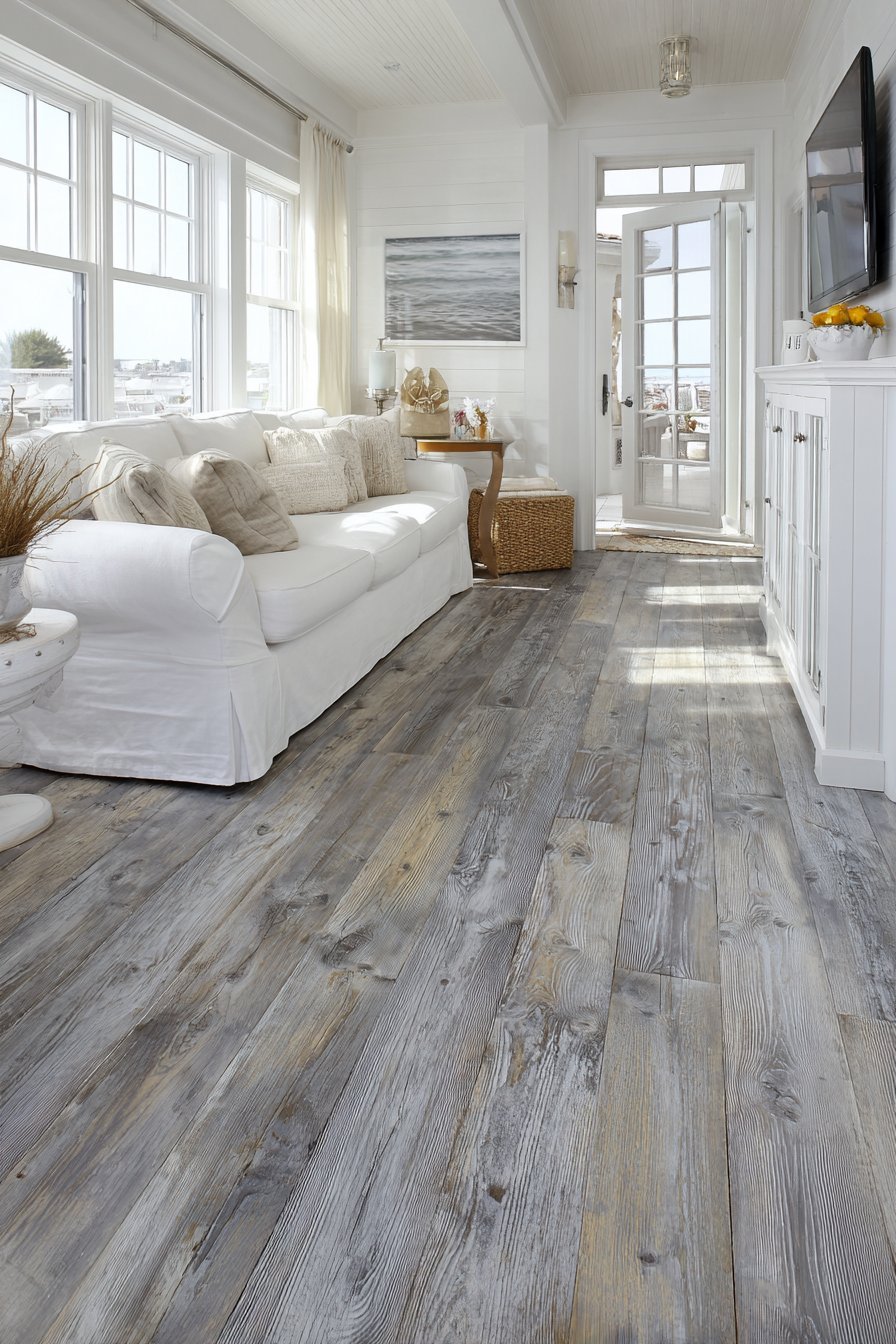
A beach house living area showcases weathered grey-washed pine flooring. The treatment mimics driftwood aged by ocean elements beautifully. Wide planks display distinct grain patterns through translucent grey finish. Knots and natural imperfections add authentic coastal character. The silvery tones evoke seaside living perfectly.
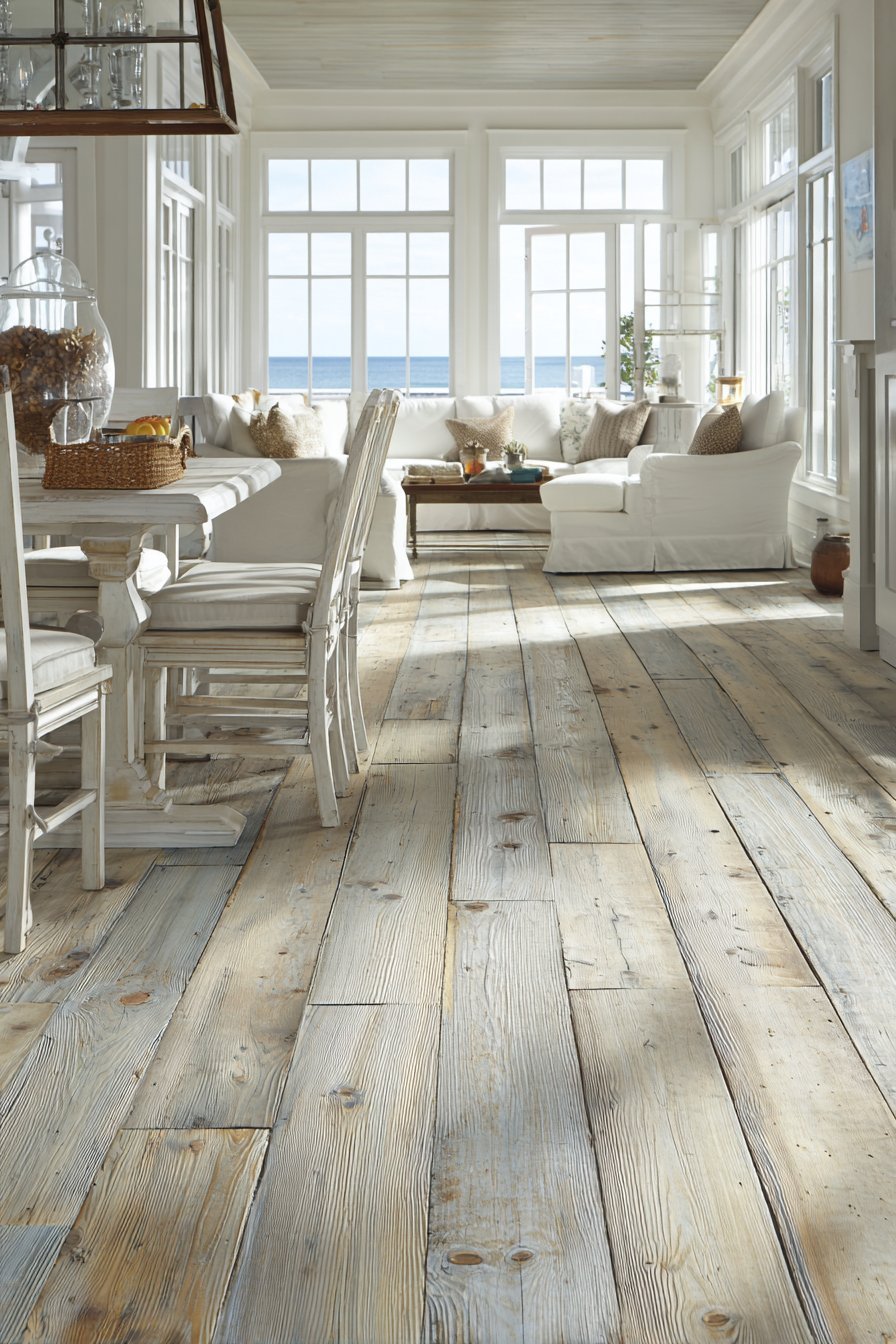
White slipcovered furniture complements the casual elegance naturally. Natural fiber textiles layer texture throughout the space. Abundant natural light through multiple windows emphasizes grey tones. The bleached appearance suits the relaxed coastal aesthetic. Ocean-inspired design feels genuine in this treatment.
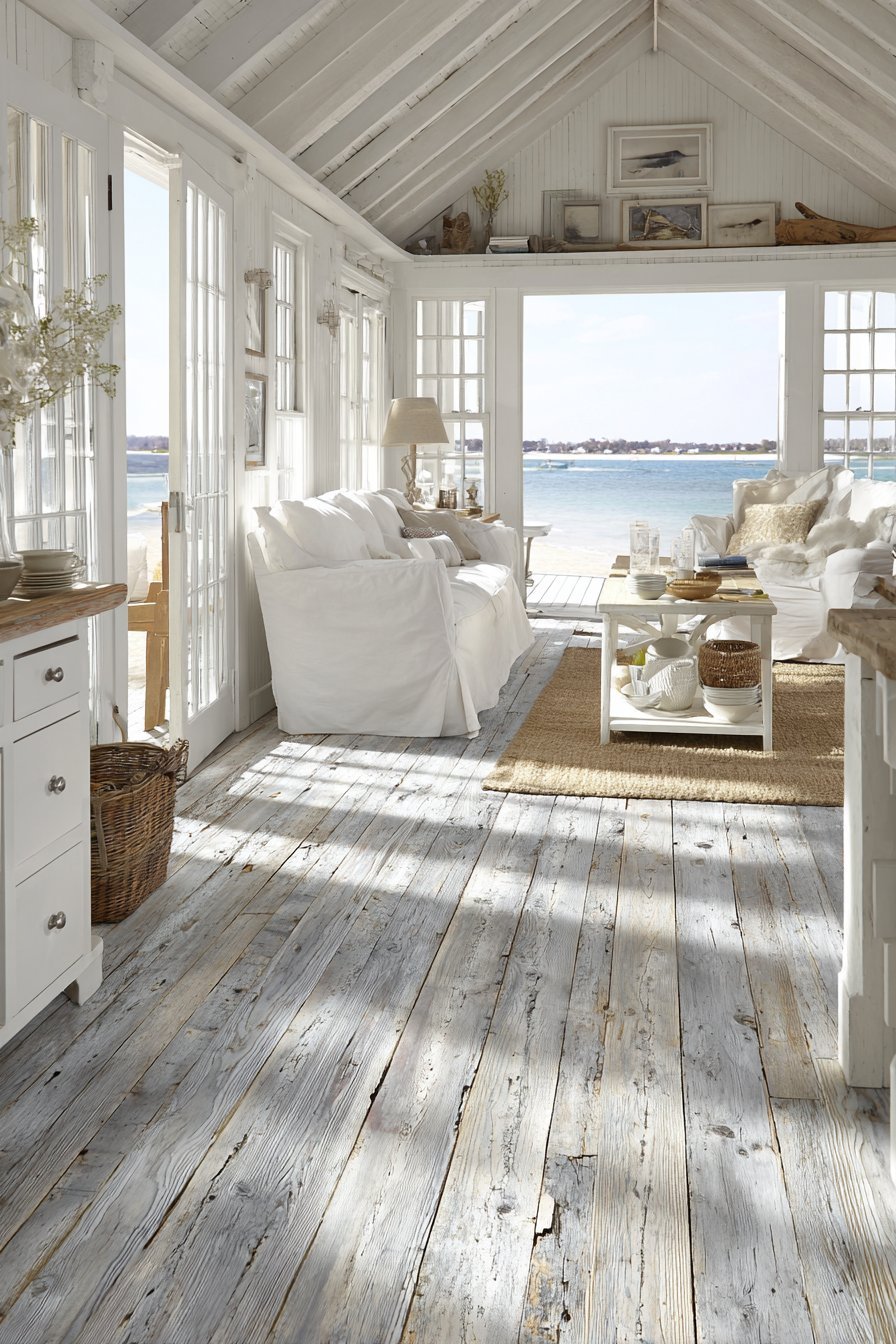
The grey wash allows underlying wood grain to remain visible. This transparency maintains connection to natural materials. The finish provides color without obscuring the pine’s character. Both elements contribute to the overall design success.
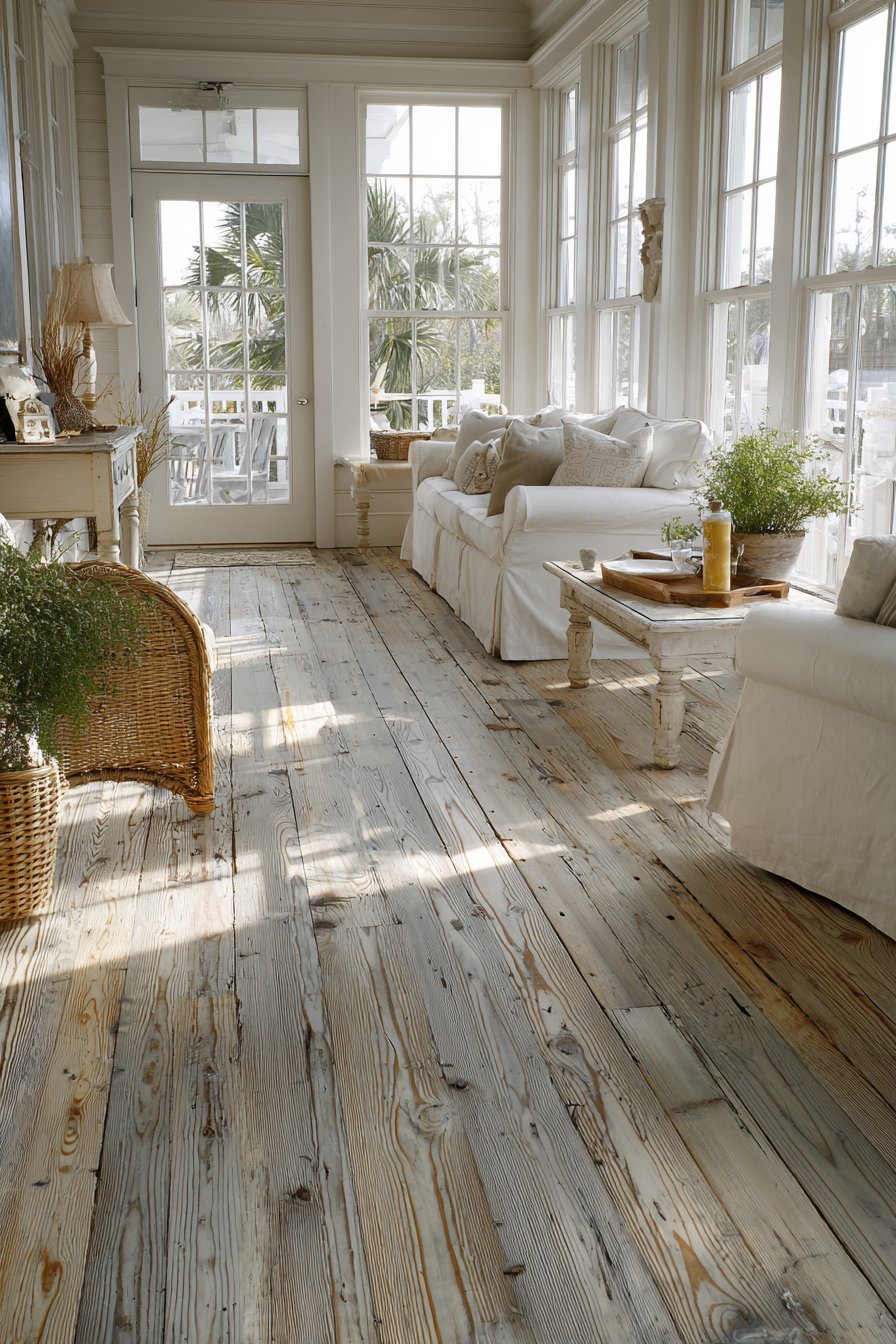
The casual elegance suits vacation homes and primary residences equally. Beach house style translates well beyond coastal locations. The grey-washed treatment brings seaside feelings to any setting. Geography becomes less important than atmosphere.
Key Design Tips:
- Choose translucent grey washes that reveal grain beneath
- Select wide planks for contemporary coastal appeal
- Pair with white and natural fiber furnishings
- Maximize natural light to emphasize silvery tones
- Embrace knots and imperfections as coastal character
- Use throughout open spaces for visual continuity
- Consider this treatment for both coastal and inland homes
9. Mid-Century Teak Parquet
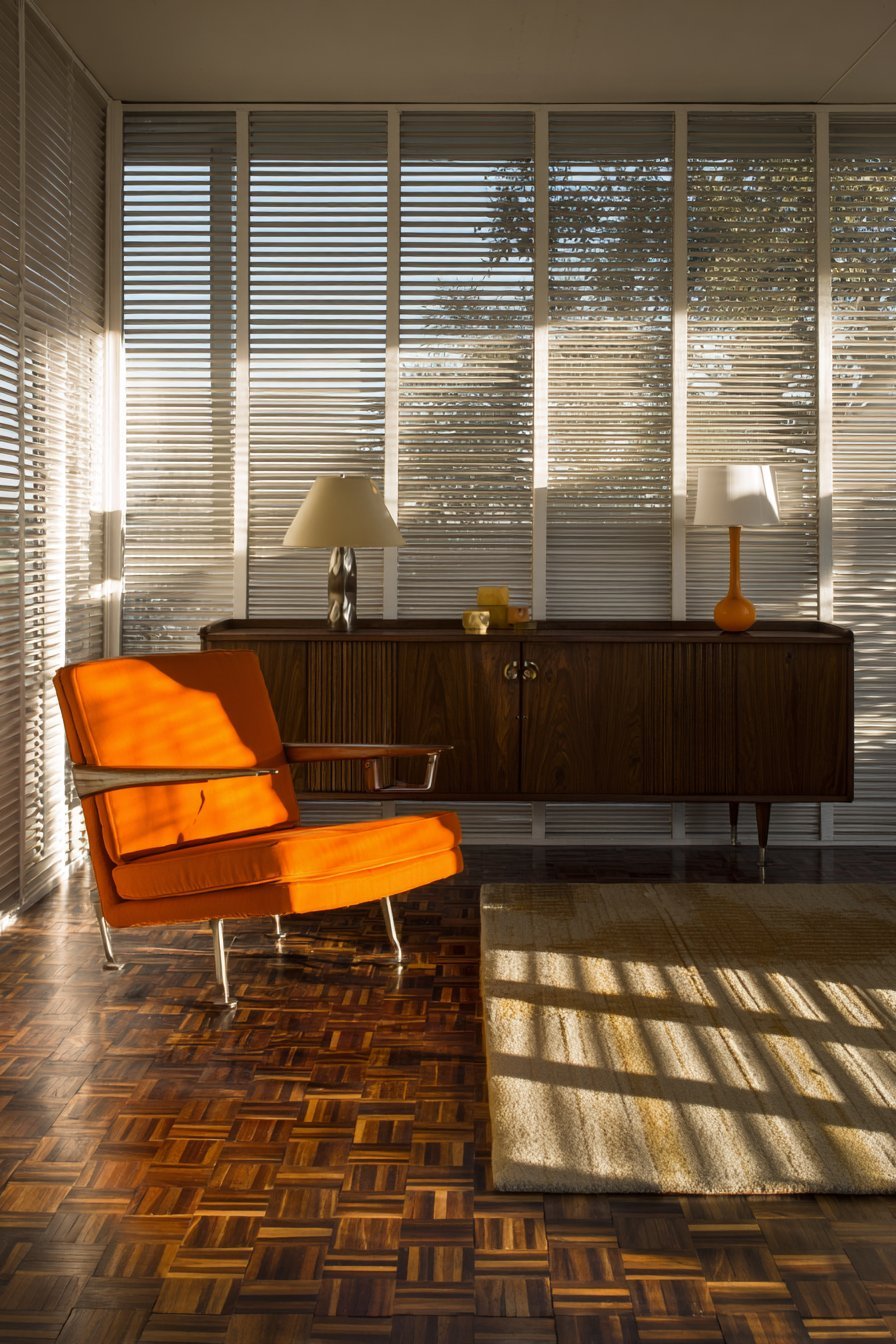
A mid-century modern den features teak parquet in sophisticated basket-weave pattern. Orange-brown wood displays teak’s characteristic straight grain throughout. Natural oils give the surface a subtle sheen. Period-appropriate furniture including low credenzas complements the geometric design. Iconic lounge chairs complete the authentic aesthetic.
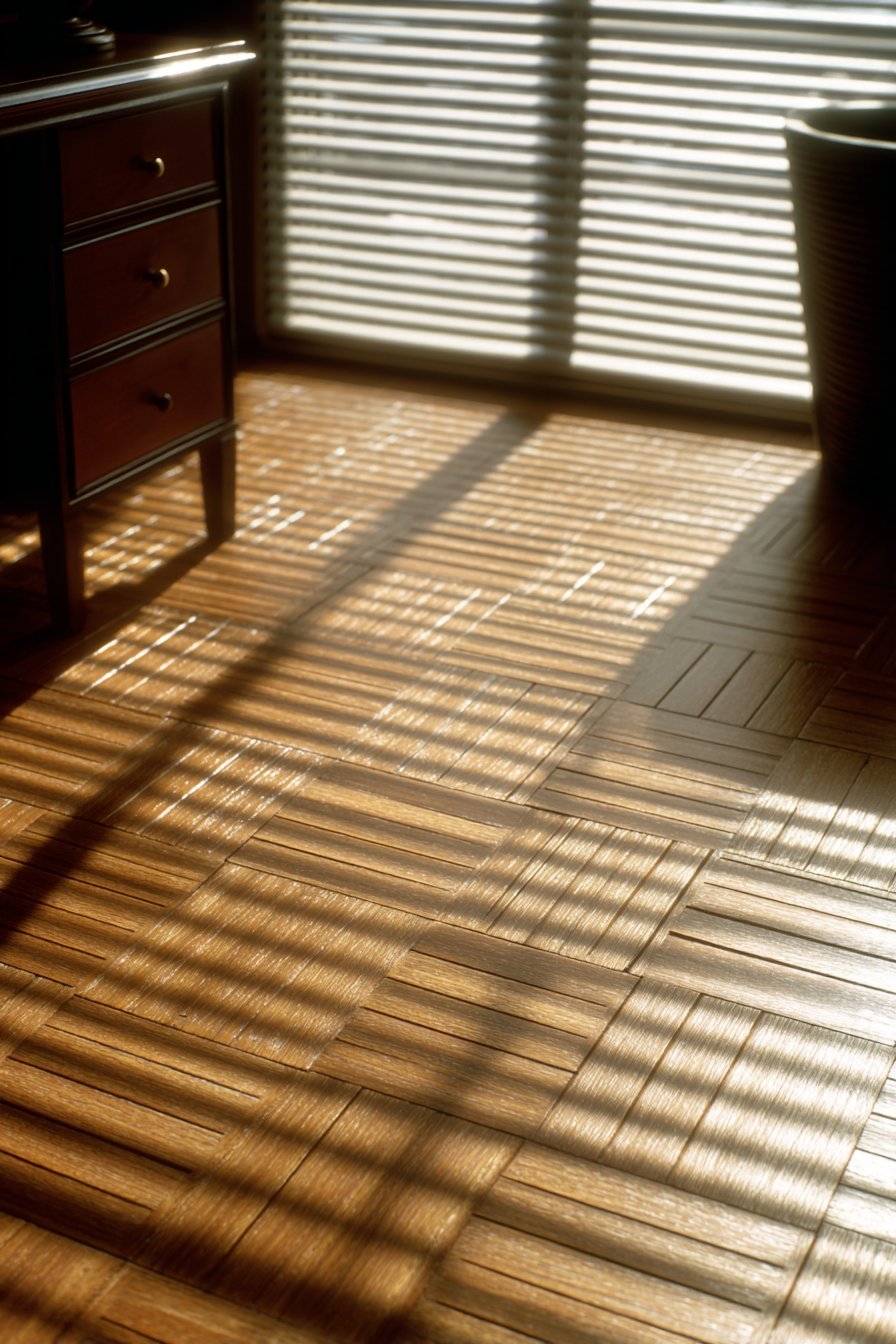
Afternoon light streams through horizontal blinds creating striped shadows. The illumination plays across the intricate parquet pattern dramatically. The geometric floor design creates strong visual rhythm. Each carefully arranged tile contributes to the overall composition.
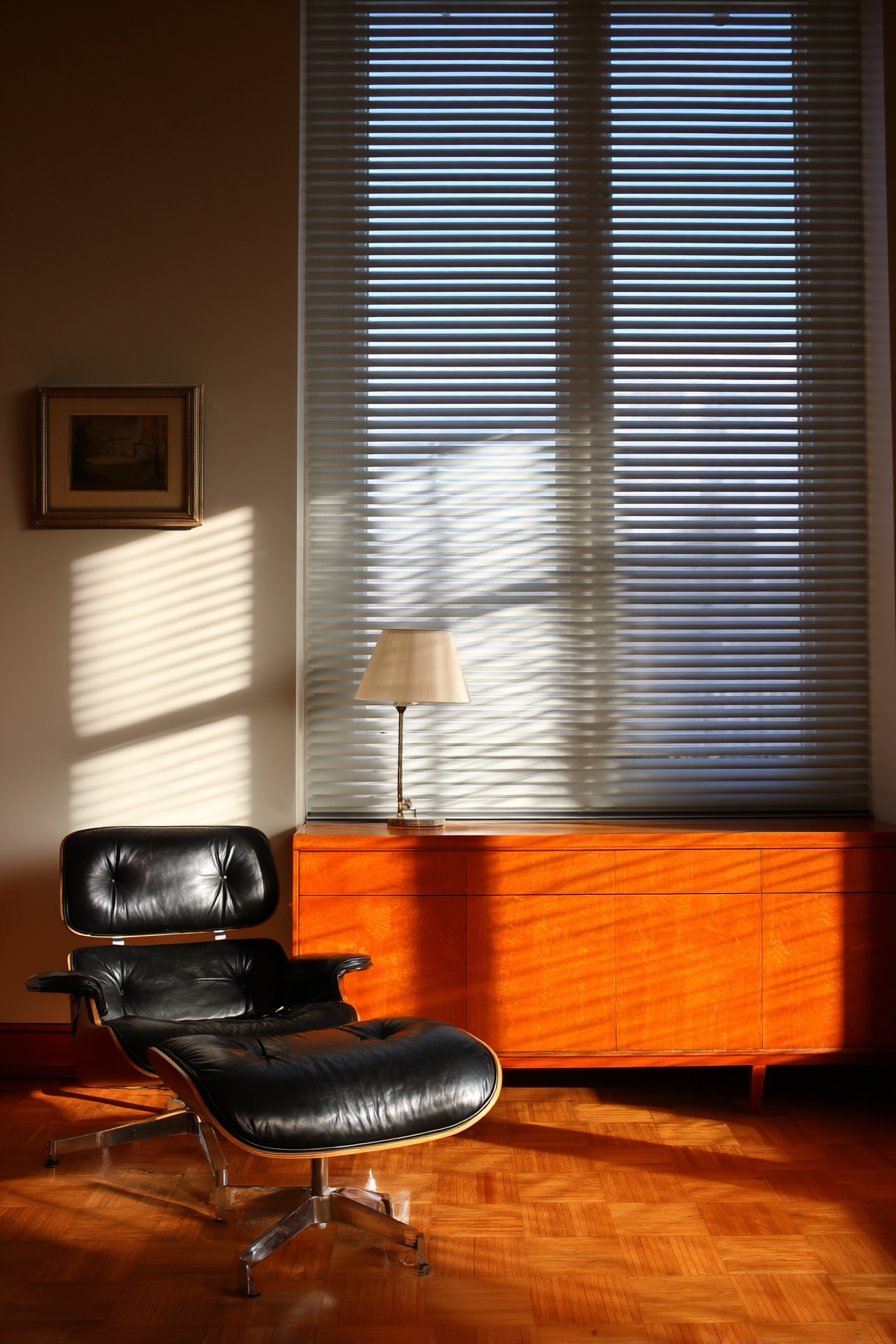
Teak’s natural oils provide inherent moisture resistance. This characteristic suited the material for mid-century applications. The wood’s durability matches its distinctive appearance. Practical performance and aesthetic appeal unite perfectly.
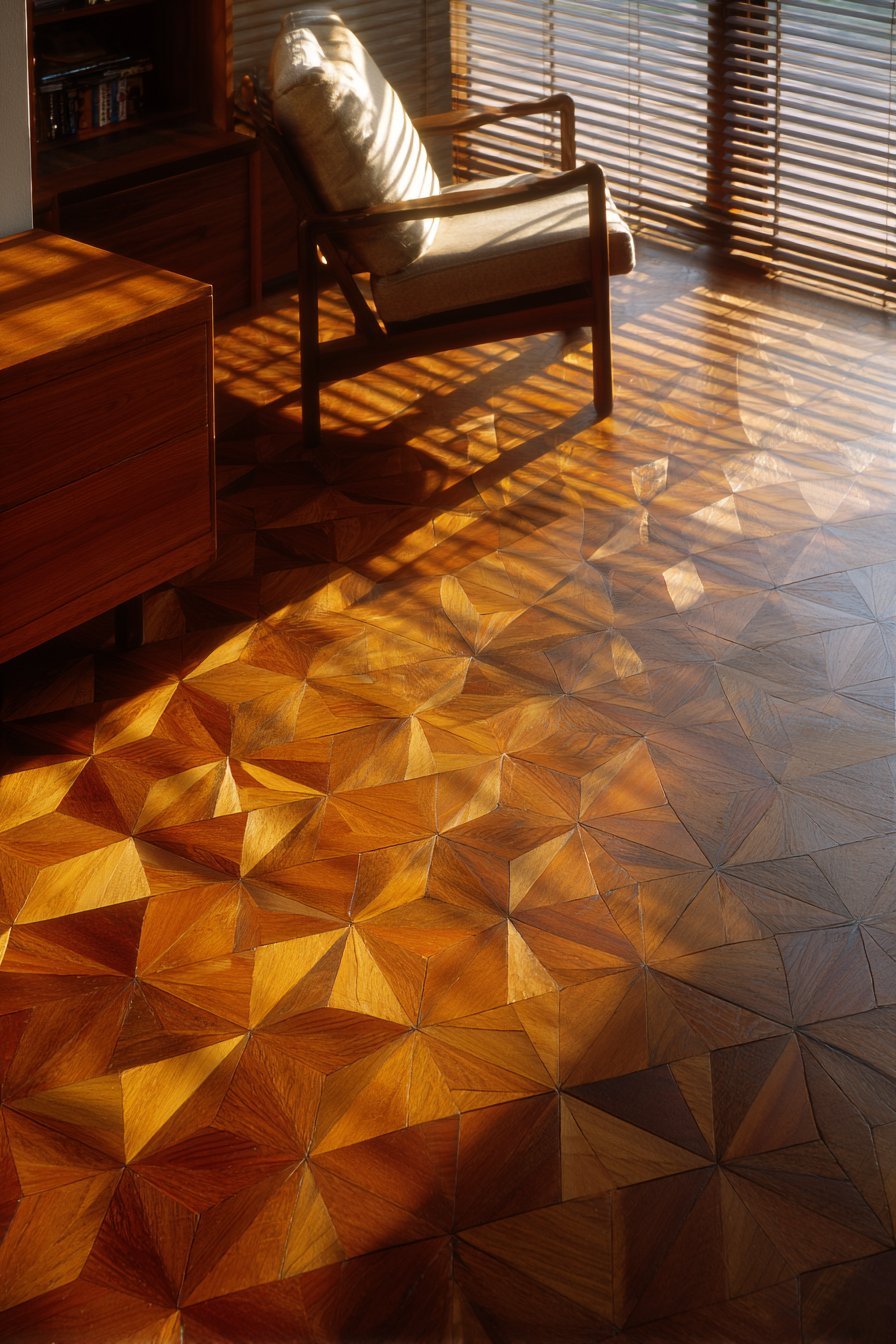
The basket-weave pattern represents sophisticated geometric design. This arrangement requires precise cutting and careful installation. The investment in craftsmanship creates lasting visual interest. The pattern remains engaging across decades.
Key Design Tips:
- Choose authentic teak for natural oils and durability
- Select basket-weave patterns for geometric mid-century appeal
- Pair with period-appropriate furniture for cohesive design
- Use horizontal blinds to create dynamic shadow patterns
- Embrace teak’s natural orange-brown tones
- Apply finishes that enhance natural sheen subtly
- Consider the pattern’s complexity when planning installation
10. Soft Maple Nursery Foundation
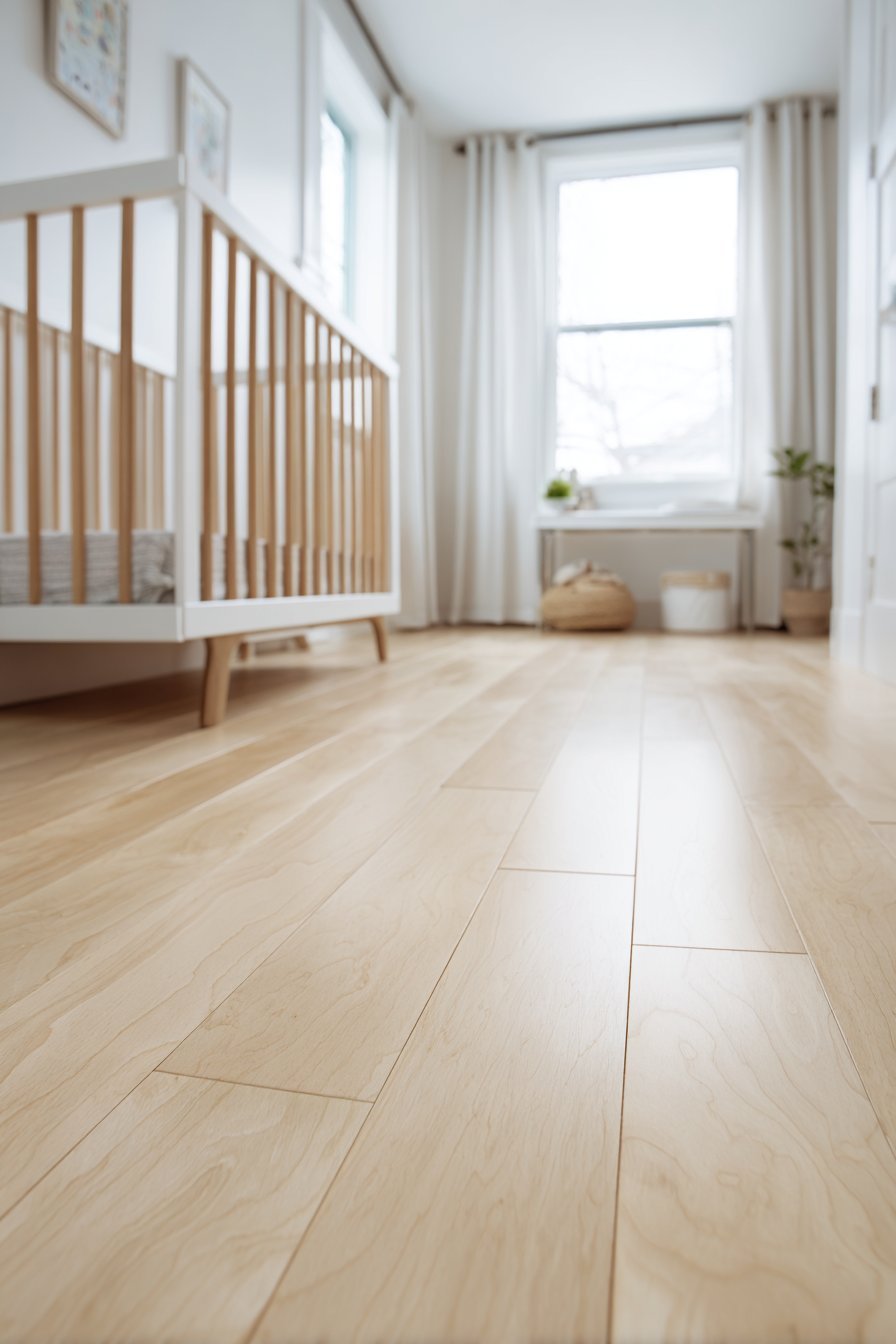
A nursery features soft maple hardwood in natural light tones. Fine, consistent grain creates a gentle, soothing foundation. The smooth-finished planks show minimal color variation throughout. This clean appearance suits a baby’s peaceful environment. Brightness and calmness define the space.
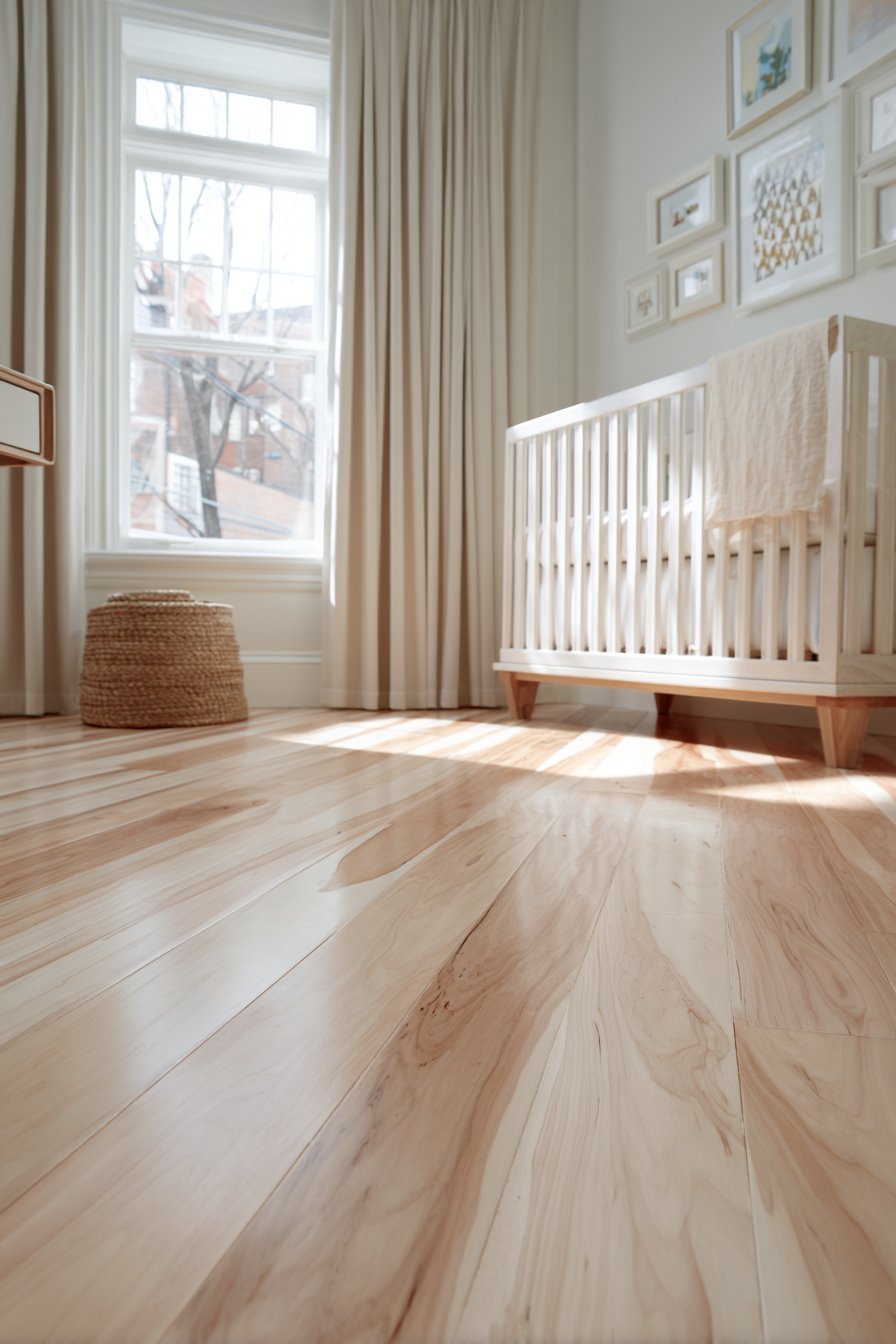
A white crib and changing table rest on pale wooden floors. Soft morning light from curtained windows reflects gently upward. The maple’s subtle grain provides texture without visual stimulation. The calm environment supports restful sleep and quiet activities.
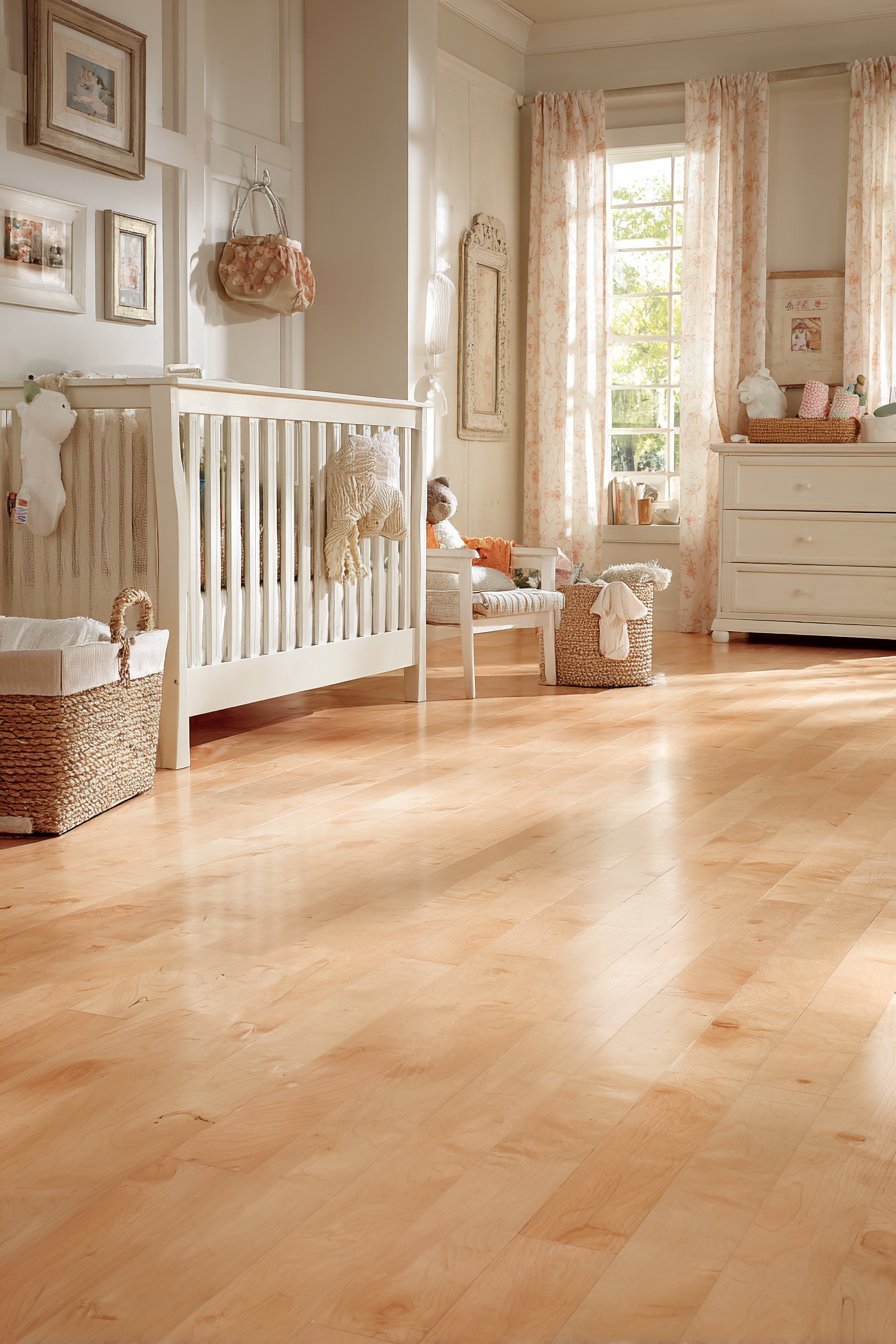
Maple’s pale honey color creates inherent brightness. This quality benefits nurseries without abundant natural light. The light tones make spaces feel more open. Small nurseries appear larger with proper flooring choices.
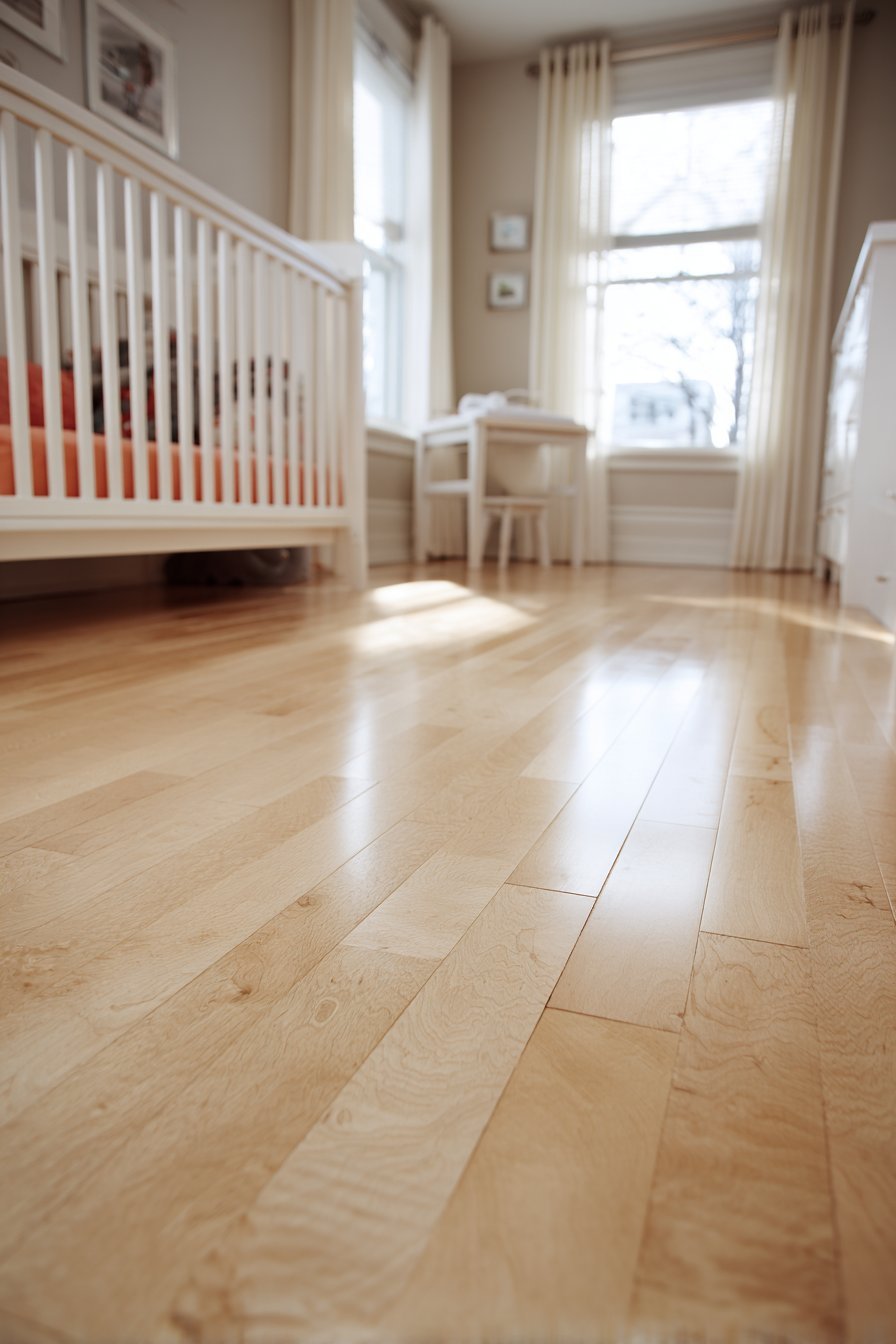
The smooth finish simplifies cleaning and maintenance significantly. Nurseries require hygienic surfaces that resist staining. Maple’s hardness withstands inevitable impacts and wear. Beauty and practicality combine in this application.
Key Design Tips:
- Select soft maple for consistent, calm appearance
- Choose smooth finishes for easy cleaning
- Use minimal color variation for peaceful environments
- Pair with white furniture for cohesive brightness
- Position near windows to maximize natural light reflection
- Consider pale tones to make small nurseries feel spacious
- Prioritize finishes that resist staining and damage
11. Expansive Heart Pine Greatroom
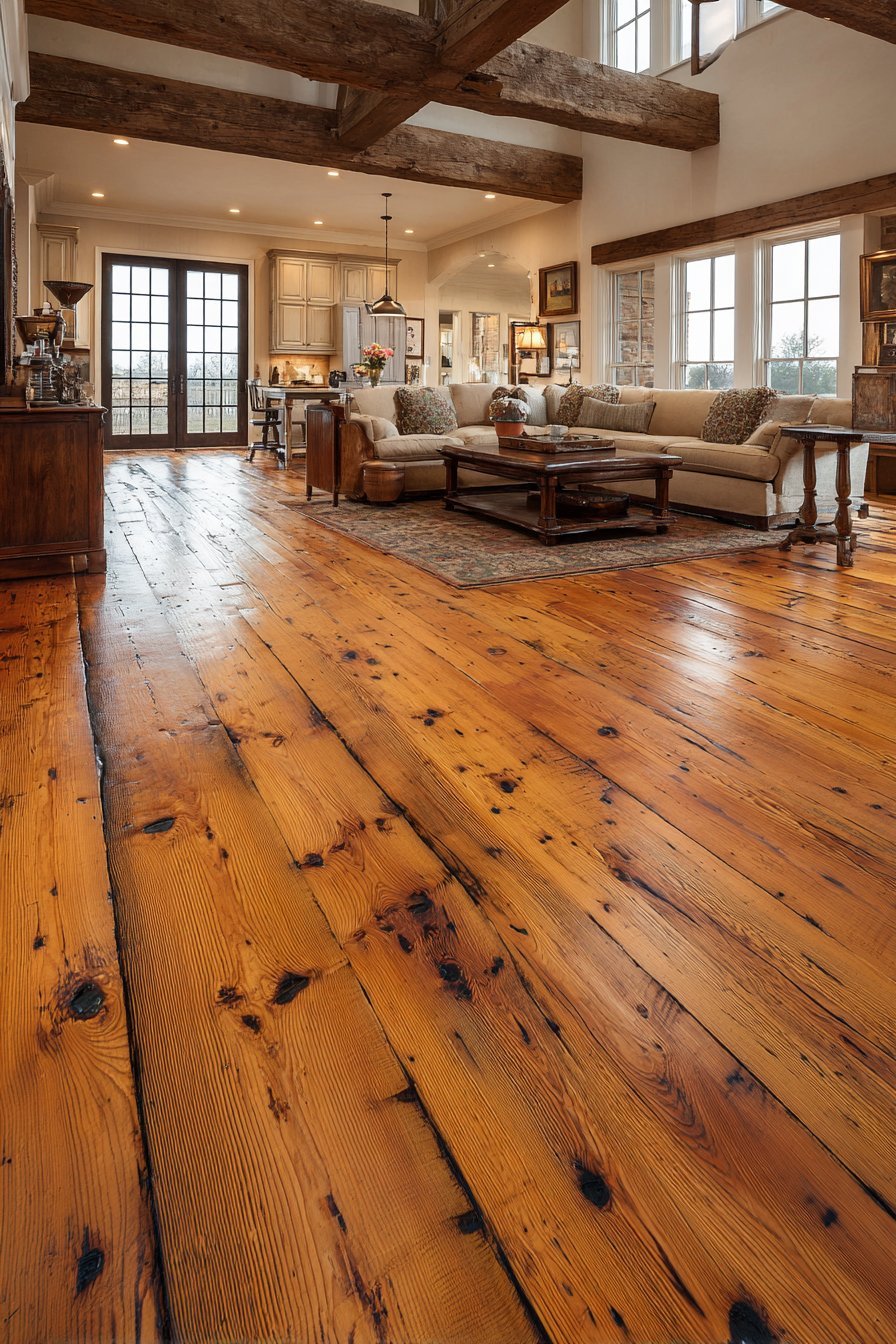
A great room features wide-plank heart pine with warm amber tones. Distinctive resin pockets characterize this antique pine beautifully. Planks vary from eight to twelve inches wide. This generous scale demonstrates reclaimed material possibilities. Random-width installation adds visual interest across the expanse.
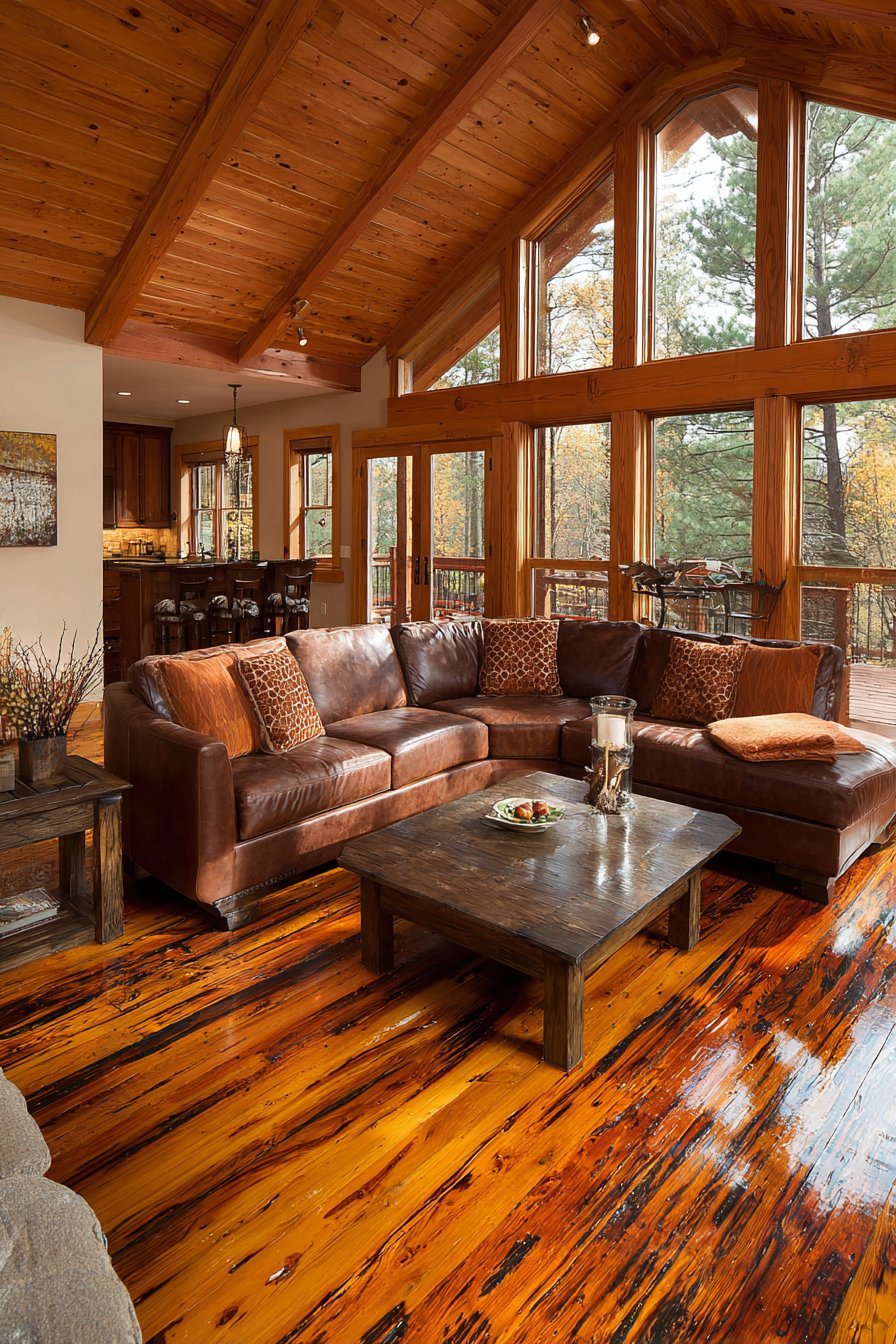
Furniture groupings including sectional sofas define zones within open space. Coffee tables and accent pieces create conversation areas. The continuous wooden flooring unifies disparate functional zones. Natural light from multiple exposures reveals heart pine’s golden color. The wide planks emphasize the room’s generous proportions.
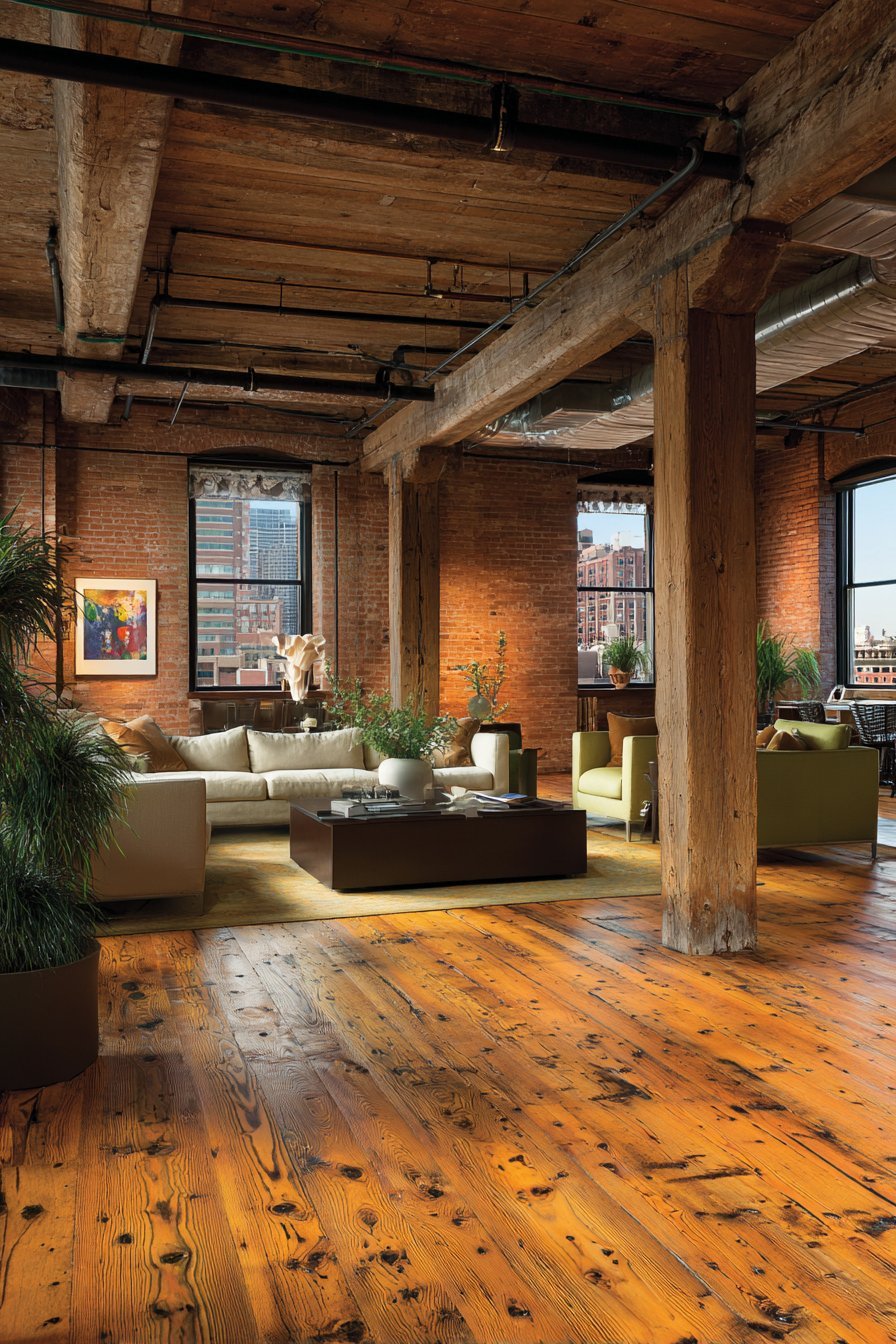
Heart pine’s warm tones create inviting atmosphere in large spaces. The color prevents expansive rooms from feeling cold. Resin pockets add character unique to this wood species. These natural features distinguish heart pine from other options.
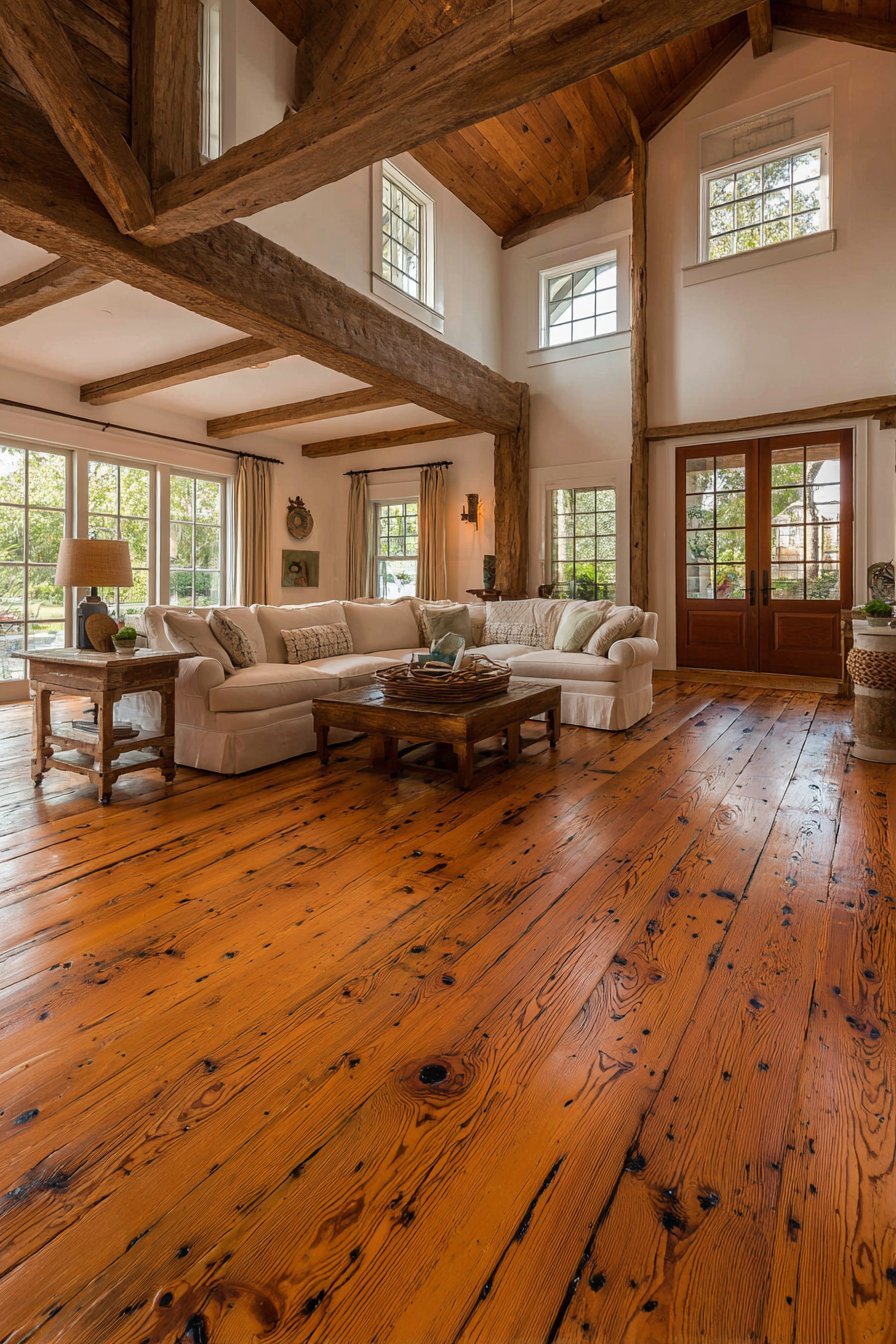
The random-width installation prevents monotony in large areas. Varied plank sizes create organic visual rhythm. This approach suits open floor plans particularly well. The flooring adapts to modern living patterns effectively.
Key Design Tips:
- Choose reclaimed heart pine for authentic character and resin pockets
- Select wide planks eight to twelve inches across
- Use random-width installation in large open spaces
- Define functional zones with furniture while maintaining floor continuity
- Maximize natural light from multiple exposures
- Embrace warm amber tones to prevent coldness in large rooms
- Consider heart pine specifically for great rooms and open concepts
12. Wire-Brushed European Oak Kitchen
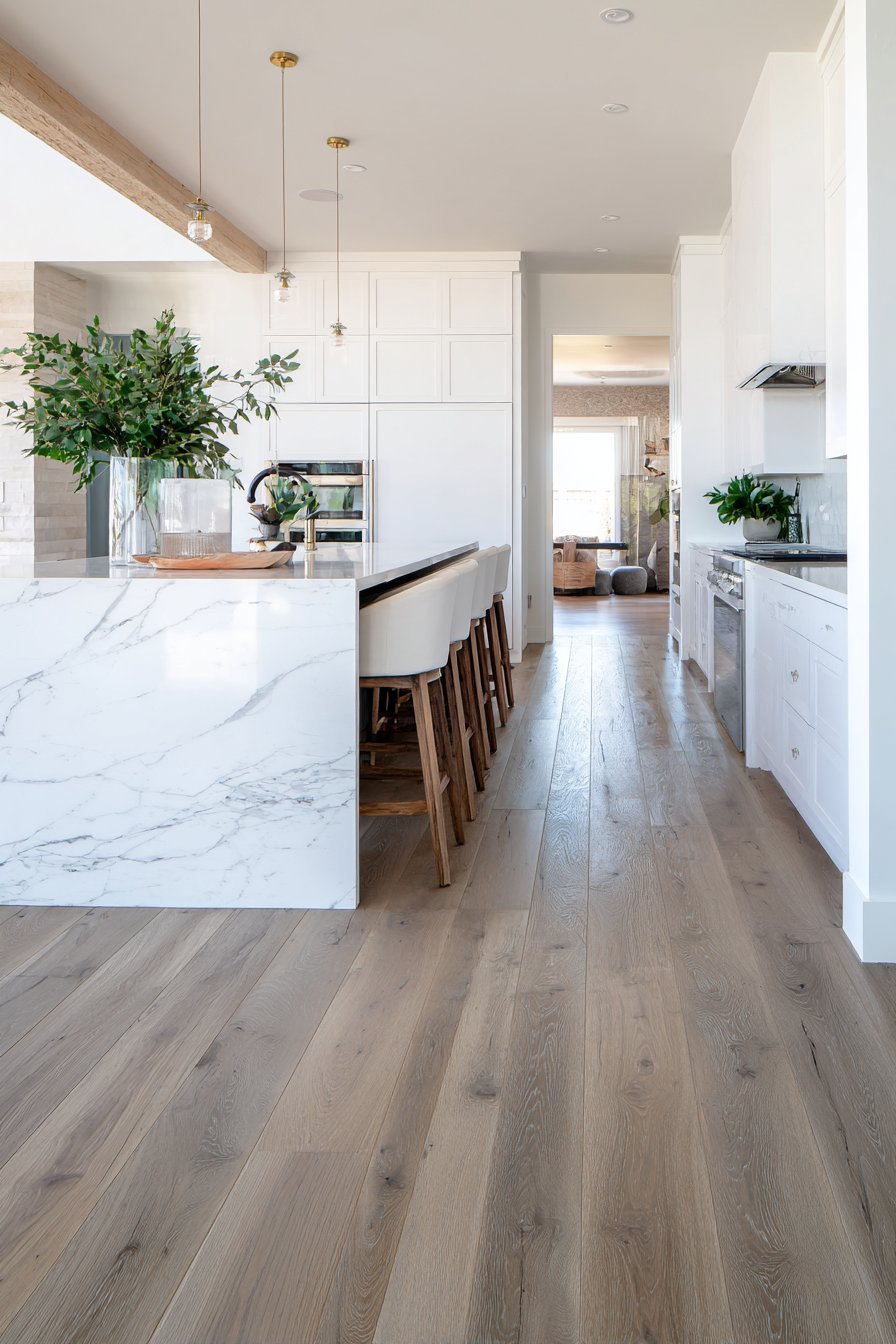
A contemporary kitchen features European oak with wire-brushed finish. The treatment enhances natural grain while adding subtle texture. Medium-toned planks show cathedral and straight grain patterns. Gentle color variations occur naturally between boards. White minimalist cabinetry creates clean contrast.
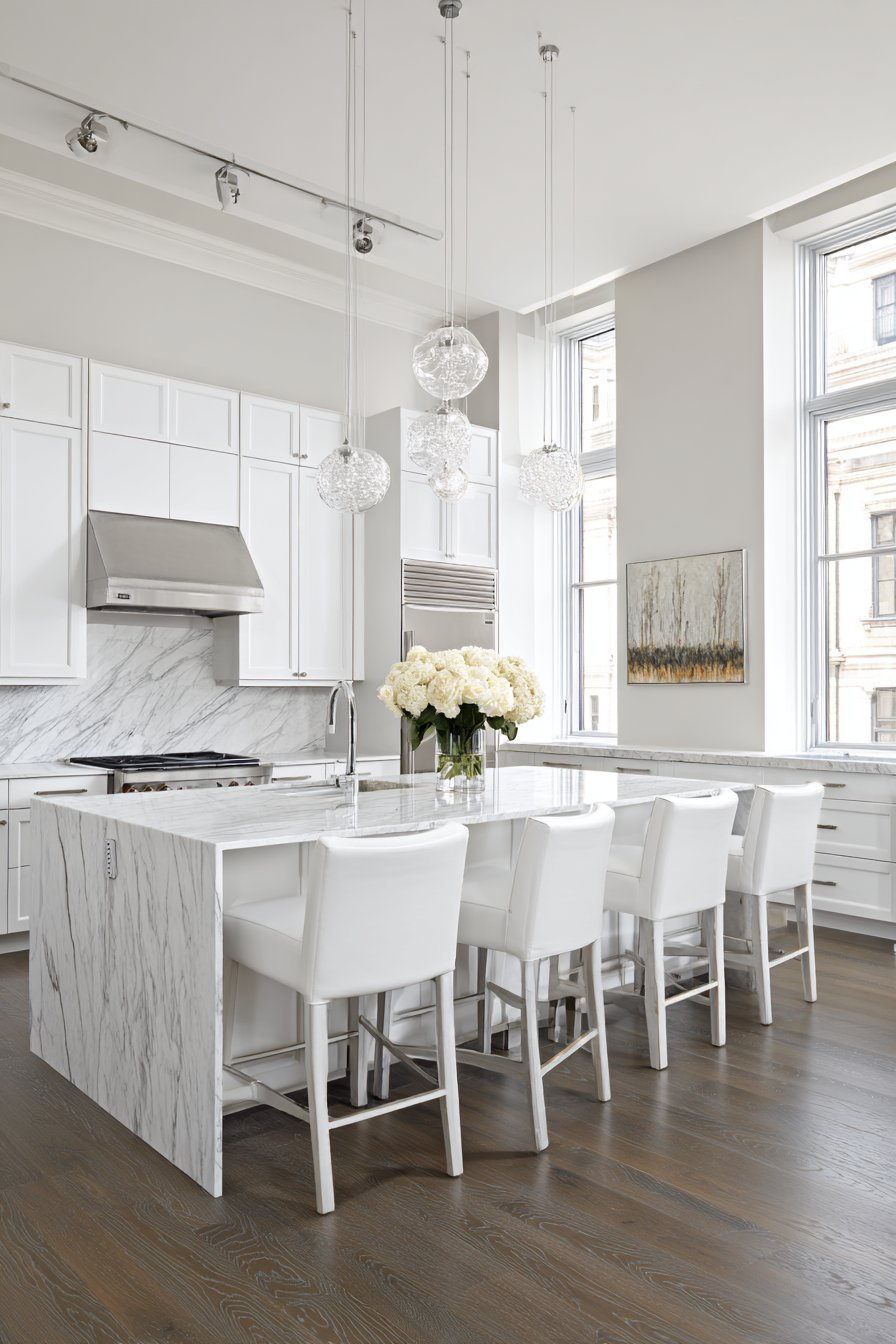
Marble countertops complement the organic wooden floor beautifully. Task lighting and natural daylight combine strategically. The illumination highlights dimensional quality created by wire-brushing. The textured surface adds warmth to sleek modern design. Natural character balances contemporary minimalism effectively.
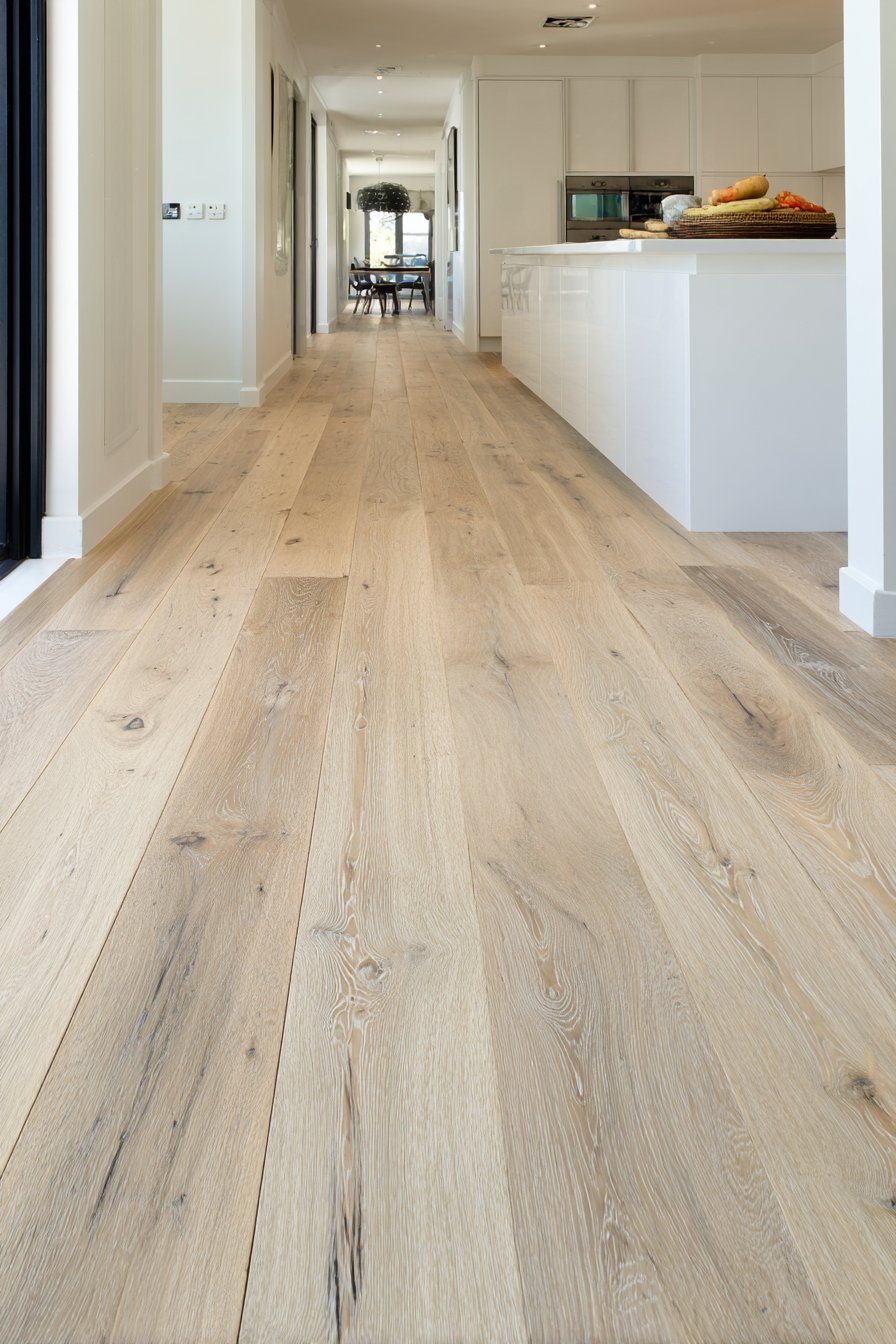
Wire-brushing removes softer grain portions mechanically. This process reveals harder grain structure in relief. The technique adds subtle dimensionality without heavy distressing. The result feels contemporary rather than rustic.
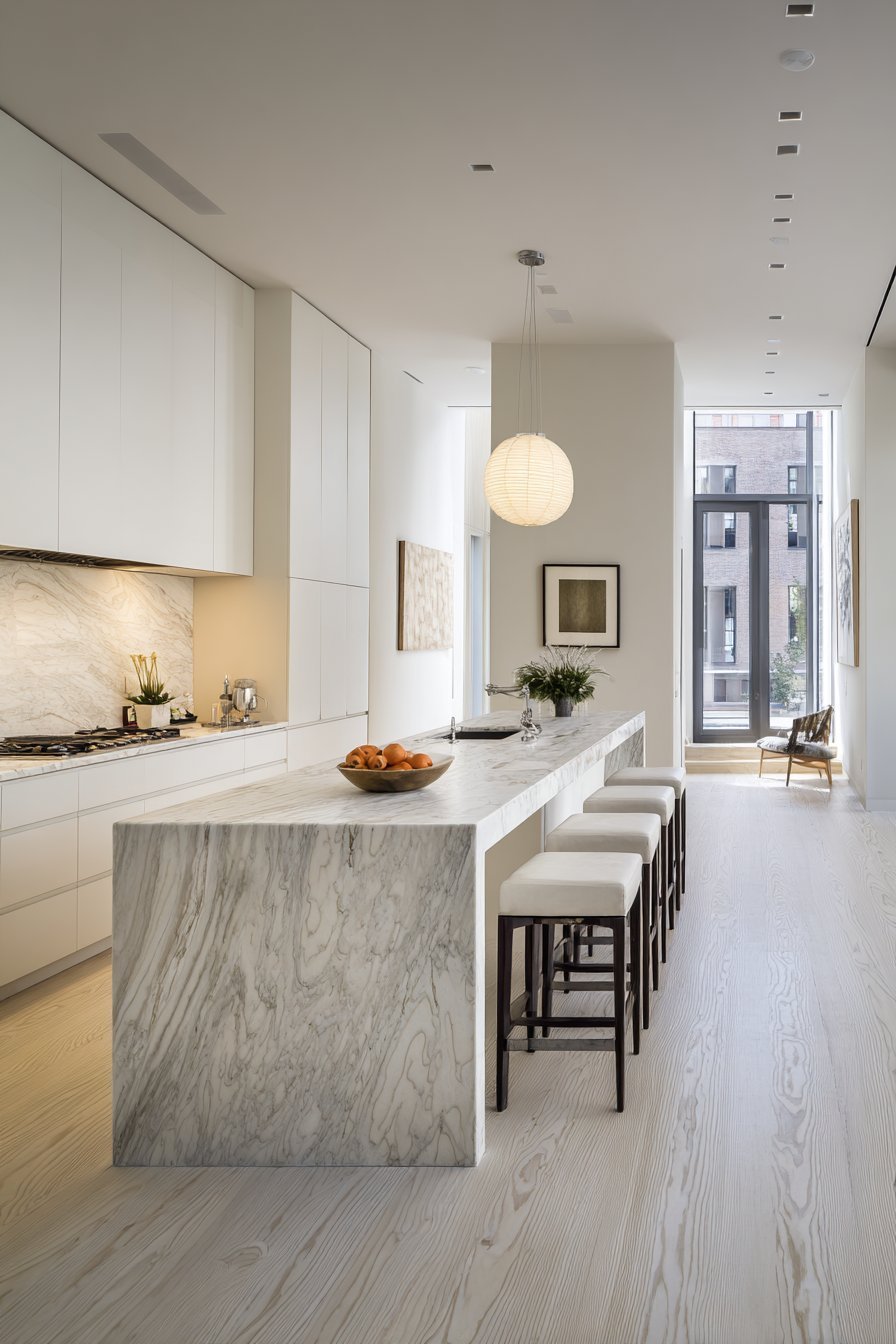
The textured surface provides practical benefits beyond aesthetics. The relief pattern helps hide minor scratches and wear. This durability suits kitchens particularly well. Beauty and function combine in this finishing technique.
Key Design Tips:
- Select wire-brushed finishes for subtle texture and durability
- Choose European oak for quality and consistent grain
- Pair with white cabinetry for clean contemporary contrast
- Combine task and natural lighting to reveal texture
- Use in kitchens where scratch resistance matters
- Balance natural wood warmth with minimalist design
- Apply finishes that enhance rather than hide grain
13. Durable Acacia Mudroom
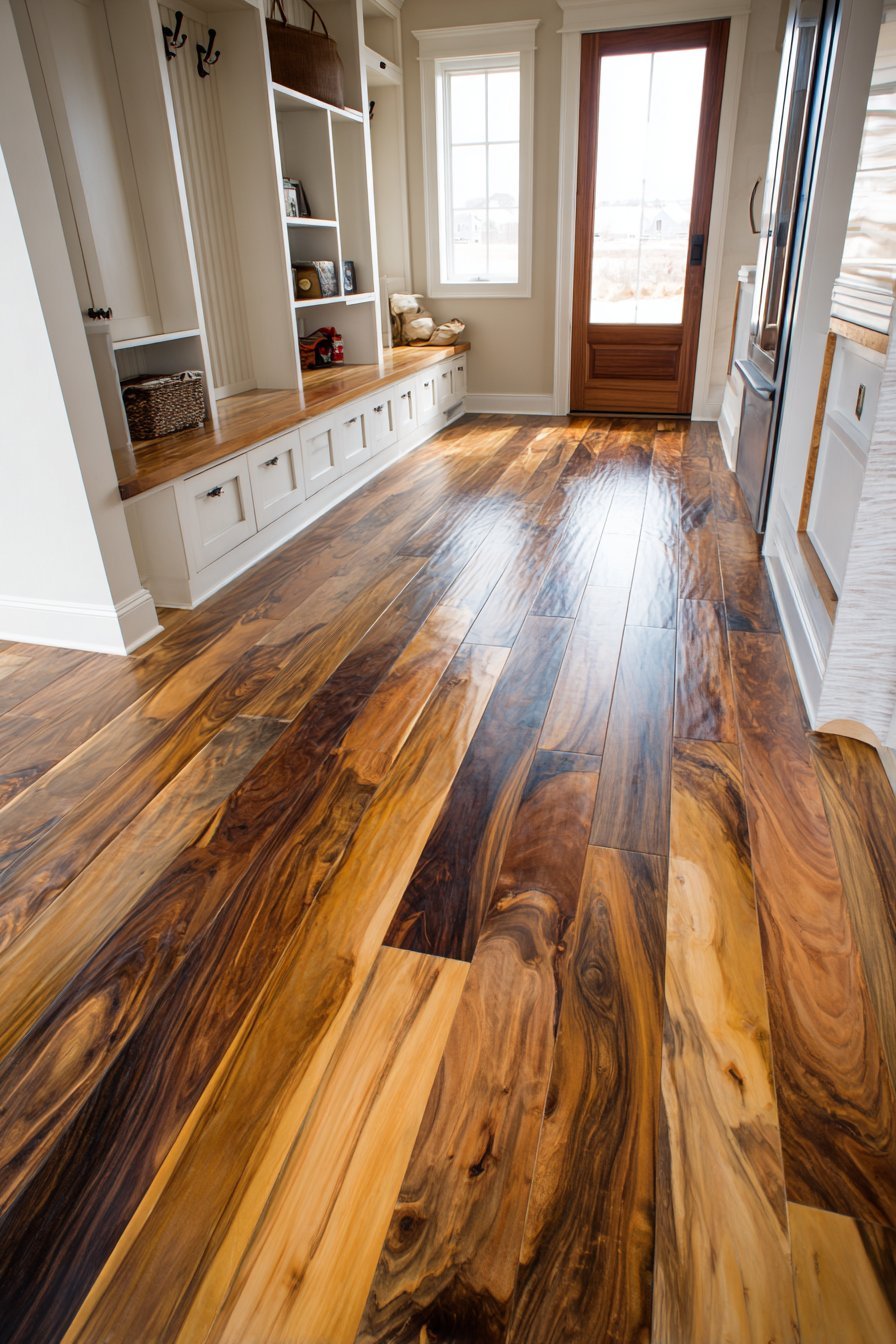
A mudroom features slate-toned acacia hardwood flooring. This species offers exceptional durability for high-traffic areas. Planks display dramatic color diversity from chocolate brown to amber gold. Natural variations often occur within individual boards. This organic visual interest suits casual spaces perfectly.
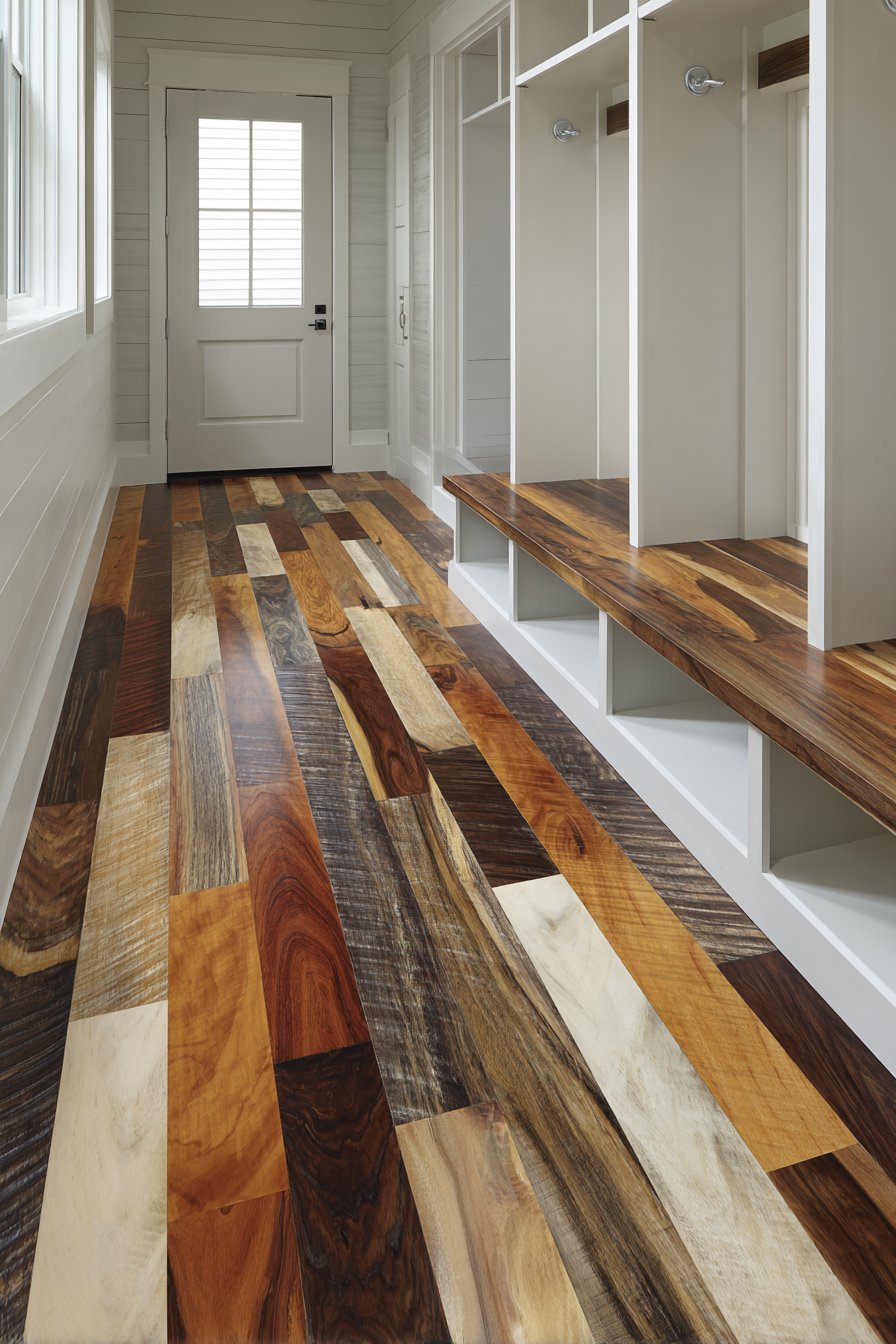
Built-in cubbies and bench seating in white painted wood contrast beautifully. The richly colored floor grounds the light upper elements. Natural light from a nearby door emphasizes dramatic grain patterns. Color transitions within single planks become clearly visible. The wood’s natural beauty requires no enhancement.
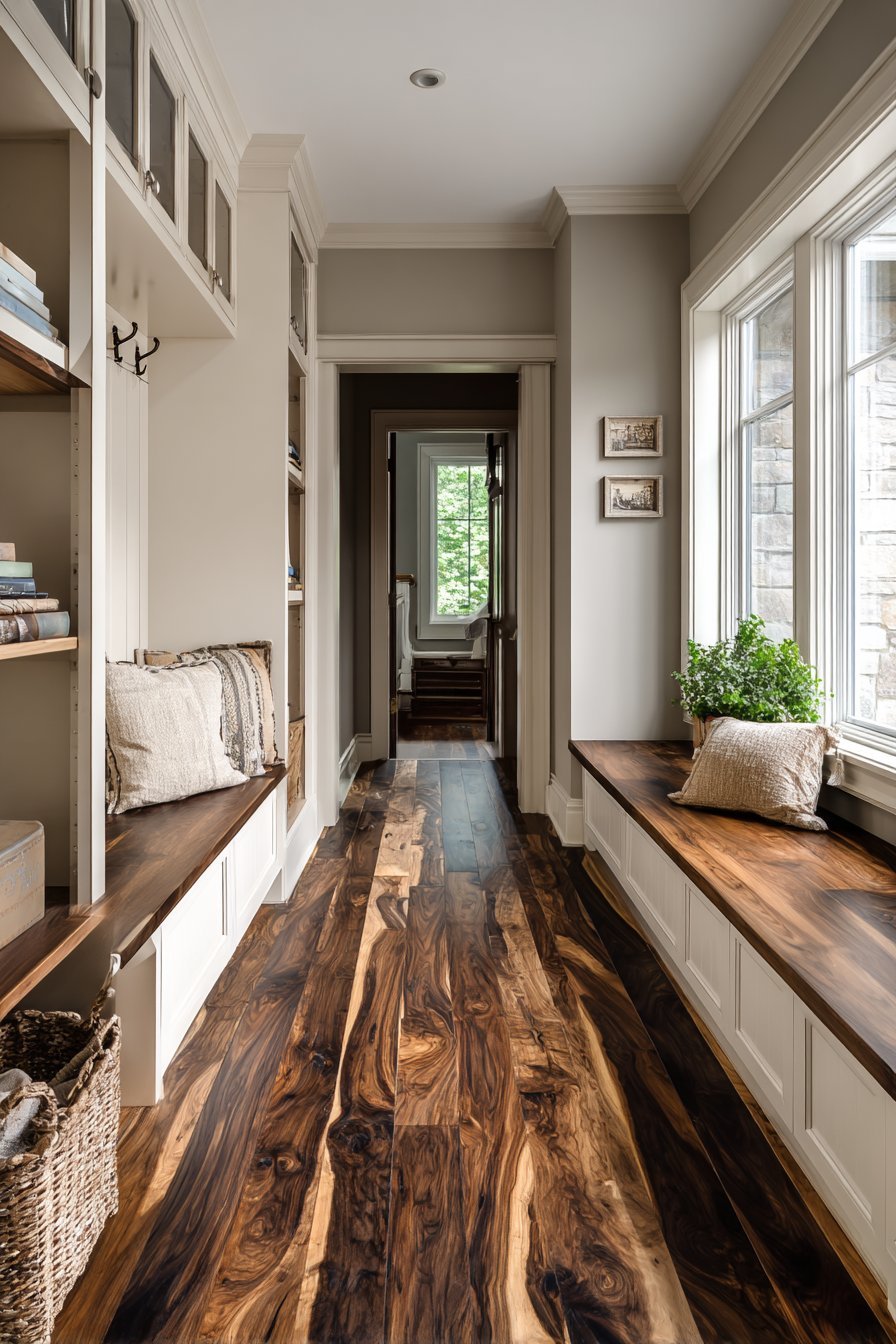
Acacia’s hardness surpasses many traditional hardwood species significantly. This resilience suits mudrooms and entryways particularly well. Heavy traffic and weather exposure require durable materials. Acacia delivers performance without sacrificing beauty.
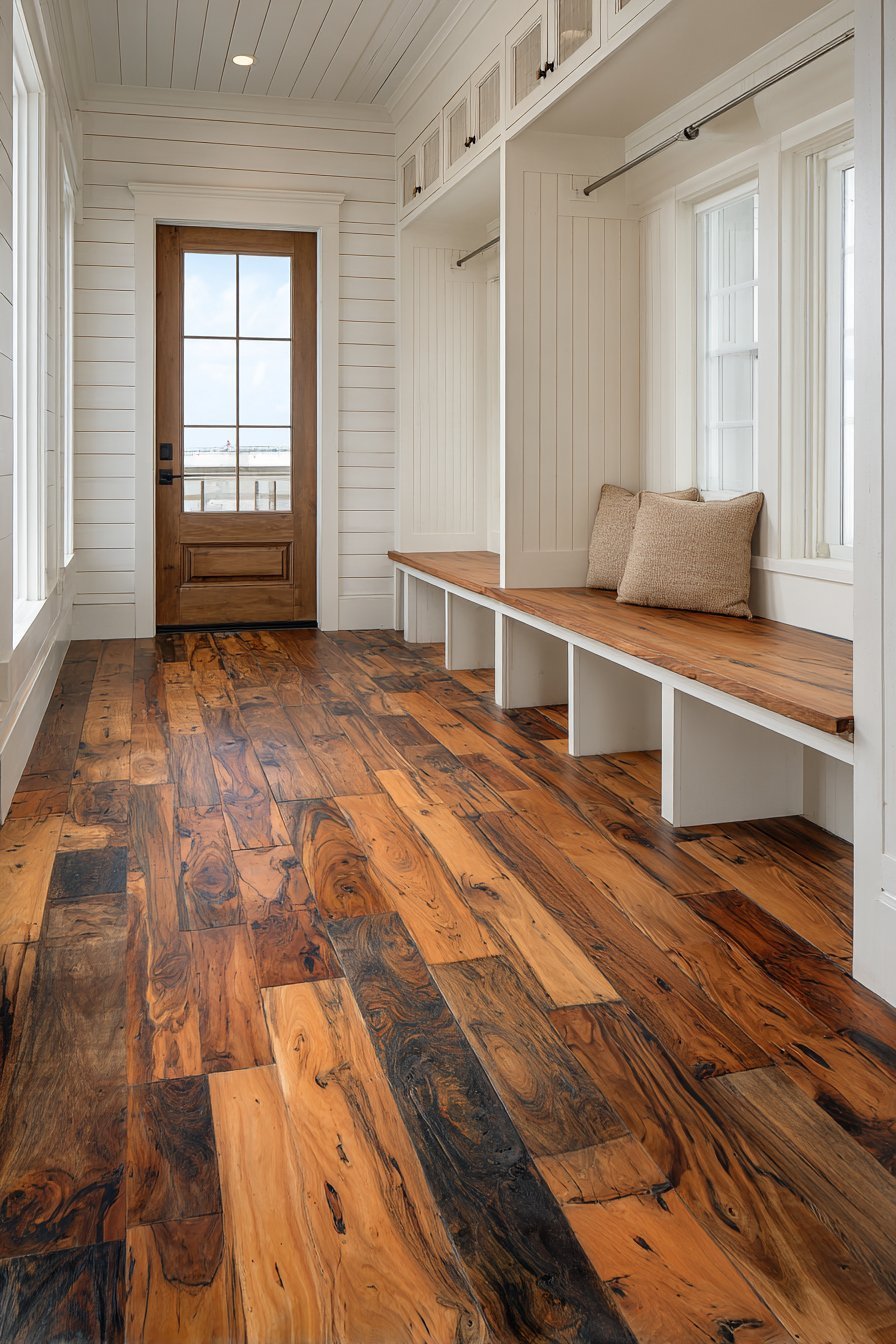
The color diversity eliminates monotony in functional spaces. Visual interest comes naturally from the wood itself. No additional design elements compete for attention. The flooring provides sufficient visual engagement independently.
Key Design Tips:
- Choose acacia specifically for high-traffic durability
- Embrace dramatic color variations as design features
- Pair with white built-ins for color contrast
- Use near doors where natural light reveals grain
- Accept color diversity within individual planks
- Consider slate-toned varieties for contemporary appeal
- Prioritize hardness ratings for mudrooms and entryways
14. Brazilian Cherry Sunroom
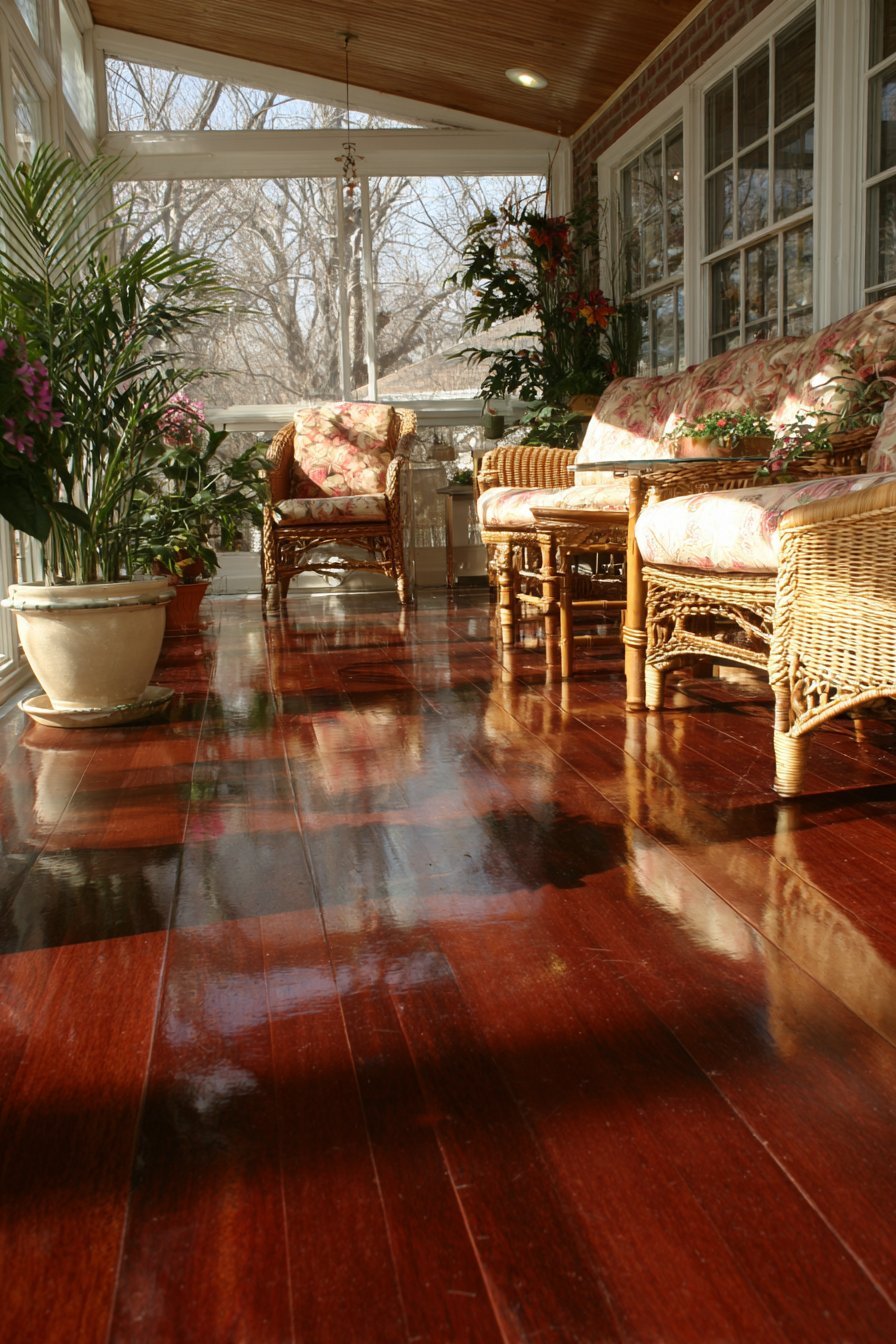
A sunroom addition displays Brazilian cherry flooring with signature deep reddish tones. The wood darkens and enriches over time with light exposure. Fine, consistent grain features occasional darker mineral streaks. These natural markings add character without overwhelming. The exotic wood creates warmth in bright spaces.
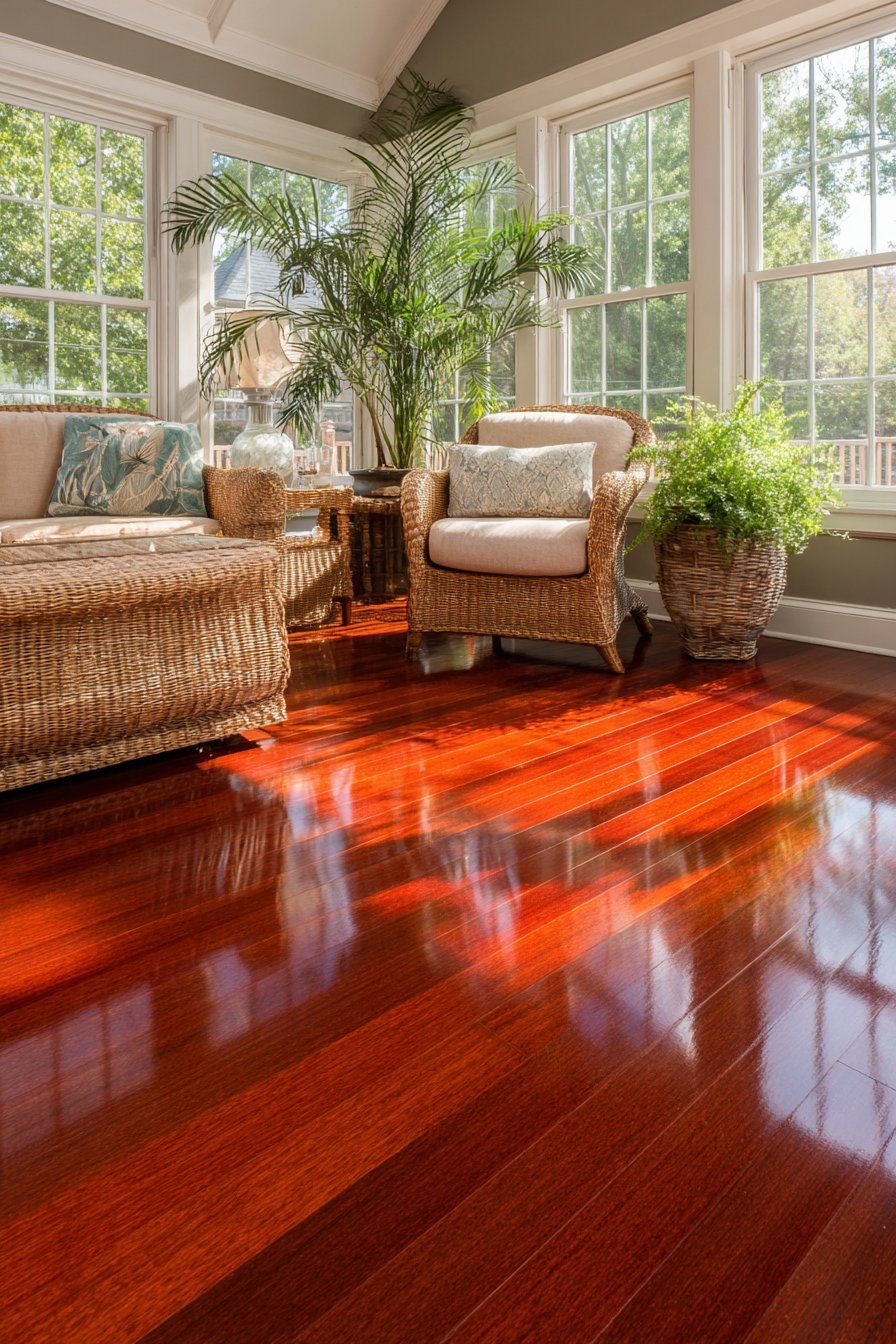
Wicker furniture and potted plants populate the sun-filled room. Large windows provide abundant light that develops cherry’s distinctive color. The flooring’s natural luster reflects daylight beautifully. Warm glows spread throughout the space from reflective surfaces. The evolution of color becomes part of ownership experience.
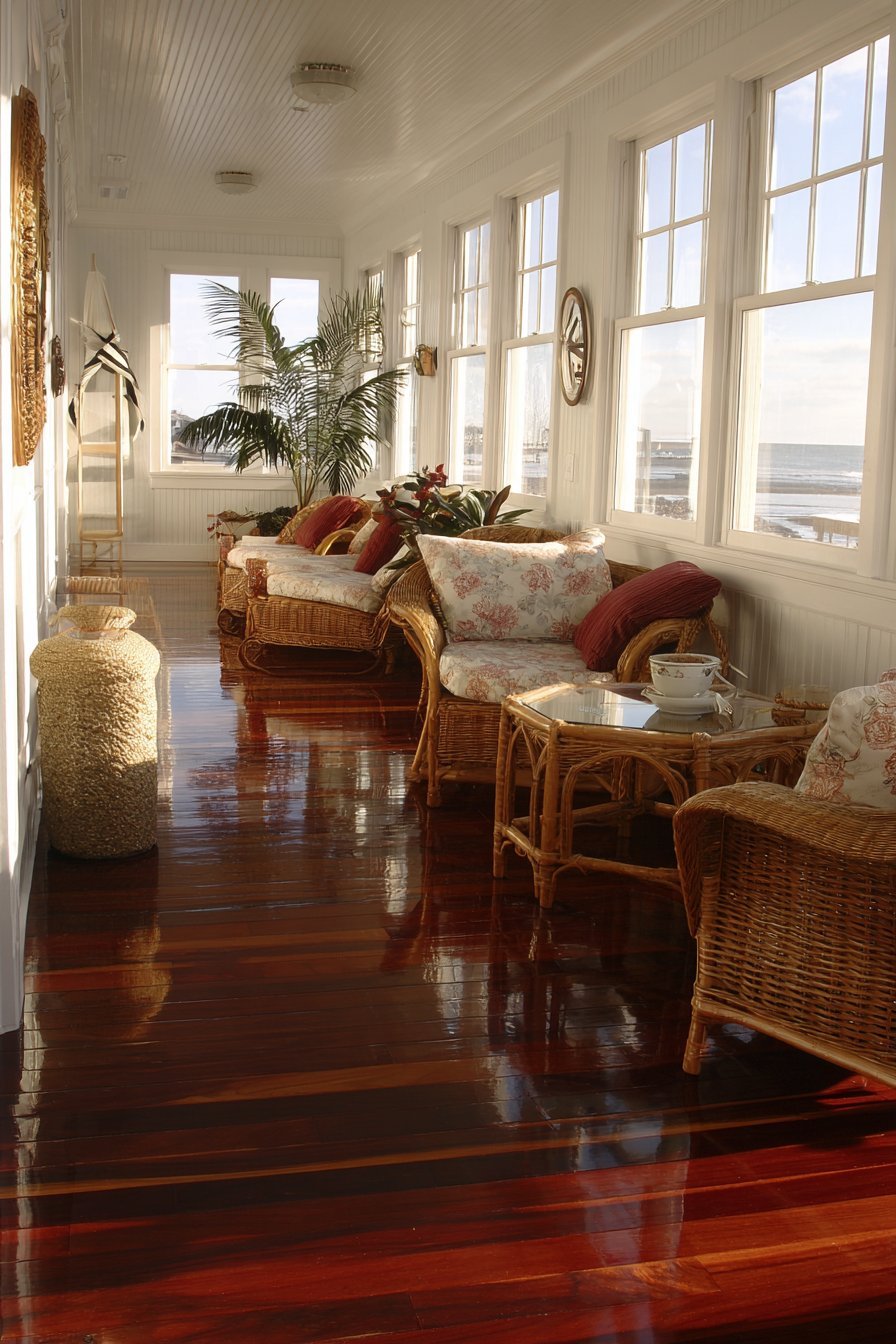
Brazilian cherry’s vibrant color intensifies with sunlight exposure. This characteristic suits sunrooms perfectly where windows dominate. The wood responds to its environment by becoming richer. This living quality distinguishes it from static materials.
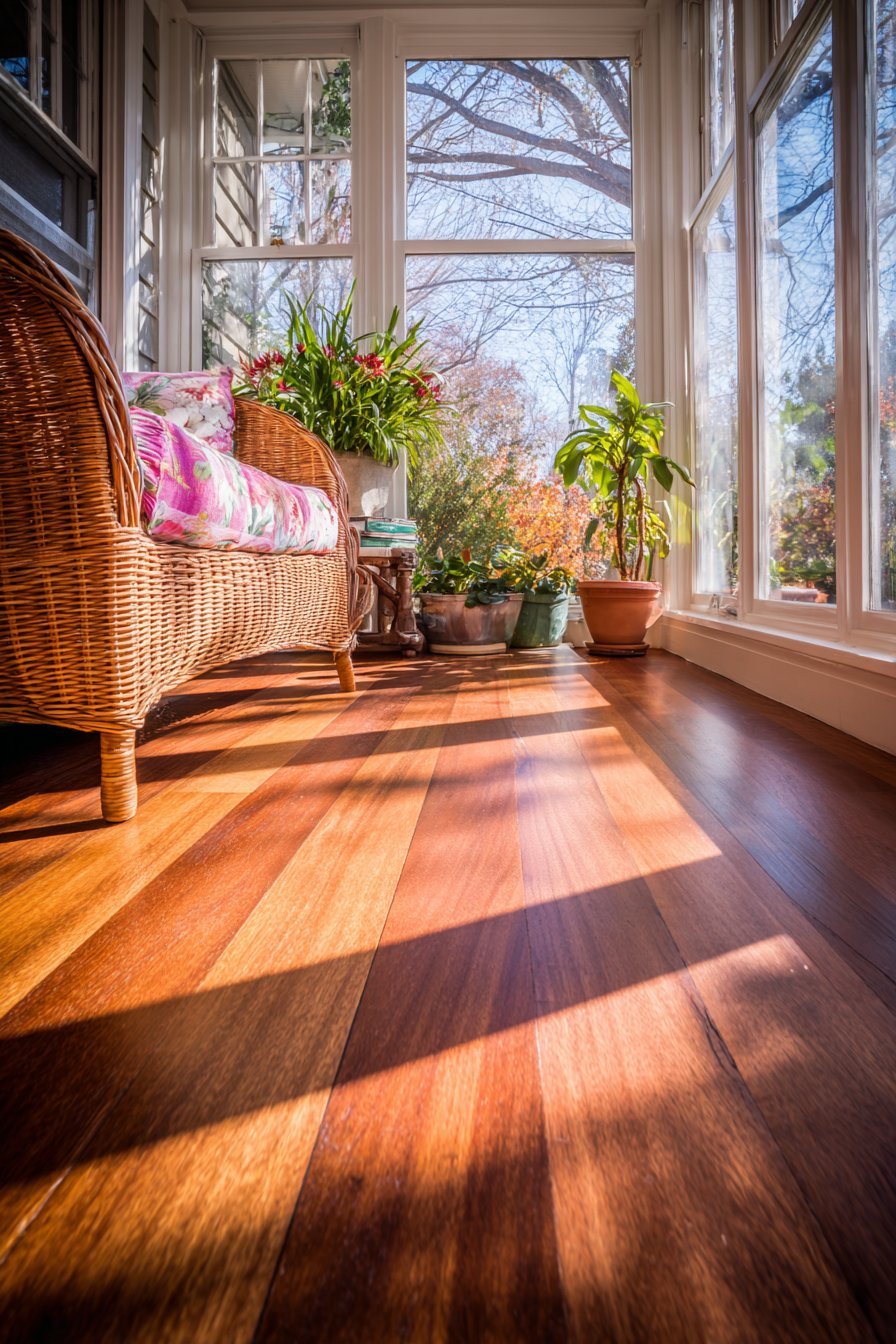
The exotic species brings sophistication to casual spaces. Sunrooms often feature relaxed furnishings and tropical plants. The Brazilian cherry elevates these elements with refined flooring. Casual elegance results from this unexpected combination.
Key Design Tips:
- Choose Brazilian cherry for spaces with abundant natural light
- Expect and embrace color deepening over time
- Pair with wicker and natural materials for balance
- Position in sunrooms where windows provide exposure
- Apply finishes that enhance natural luster
- Accept mineral streaks as authentic character marks
- Plan for color evolution as part of design process
15. Industrial Loft Mixed-Width Oak
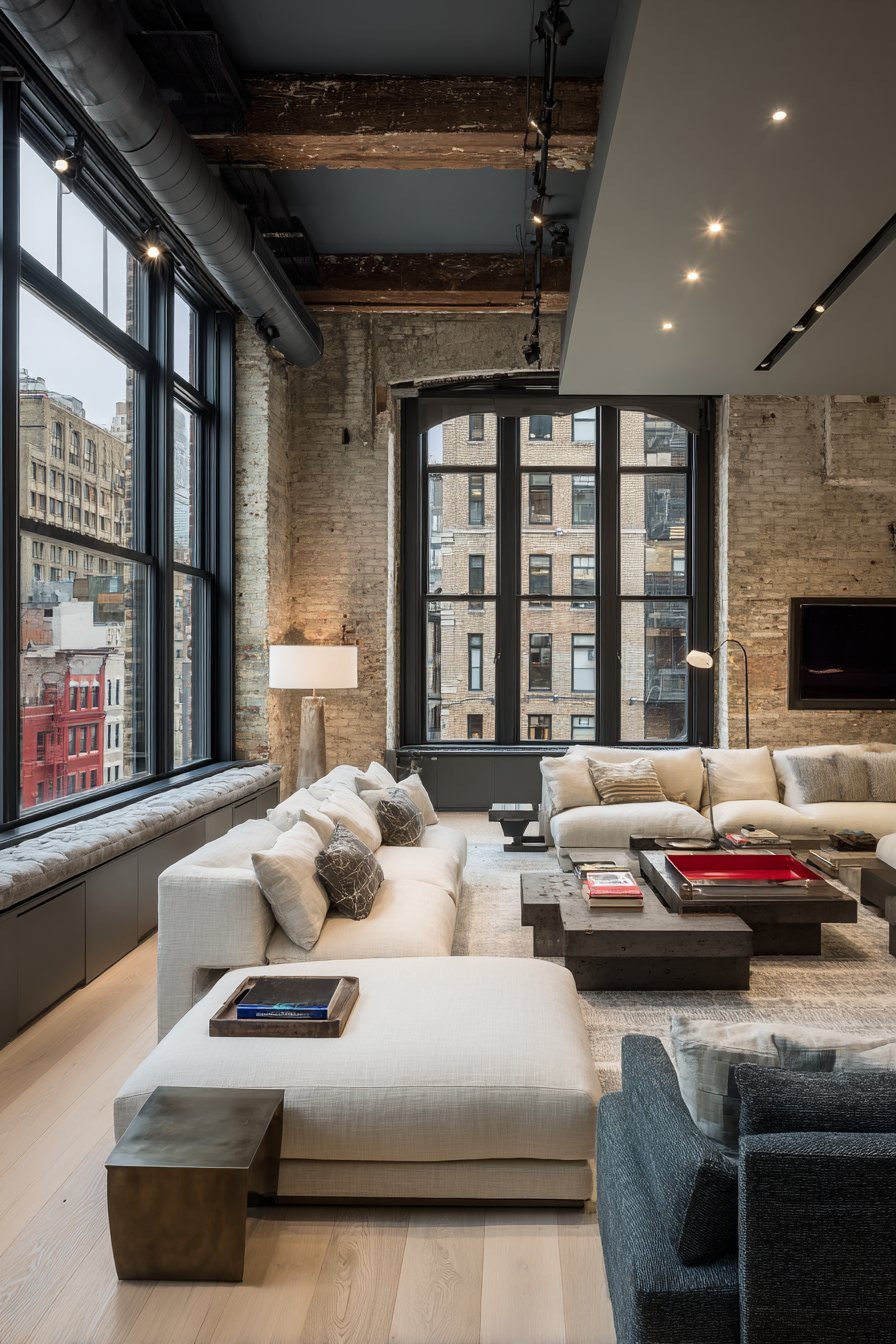
A loft apartment features mixed-width engineered oak in smoked grey finish. Varied plank widths from five to eight inches create dynamic rhythm. The contemporary color treatment combines with traditional wood character. Industrial elements including exposed ductwork and brick provide contrast. Large industrial windows flood the space with revealing light.
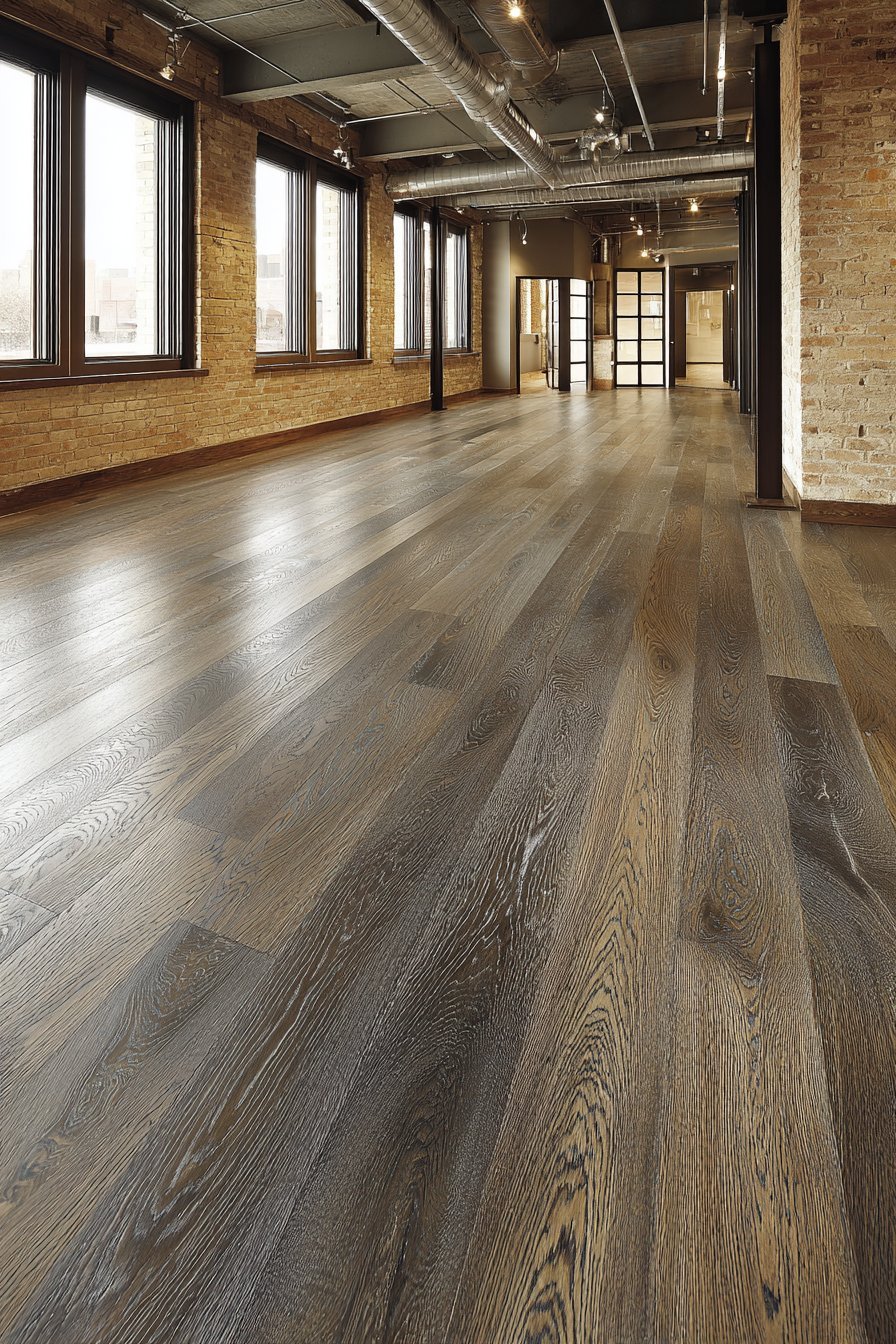
The grey finish maintains transparency over oak grain beneath. This allows wood character to show through modern color. The smoked treatment adds sophistication without hiding material authenticity. Contemporary aesthetics meet traditional warmth in this approach.
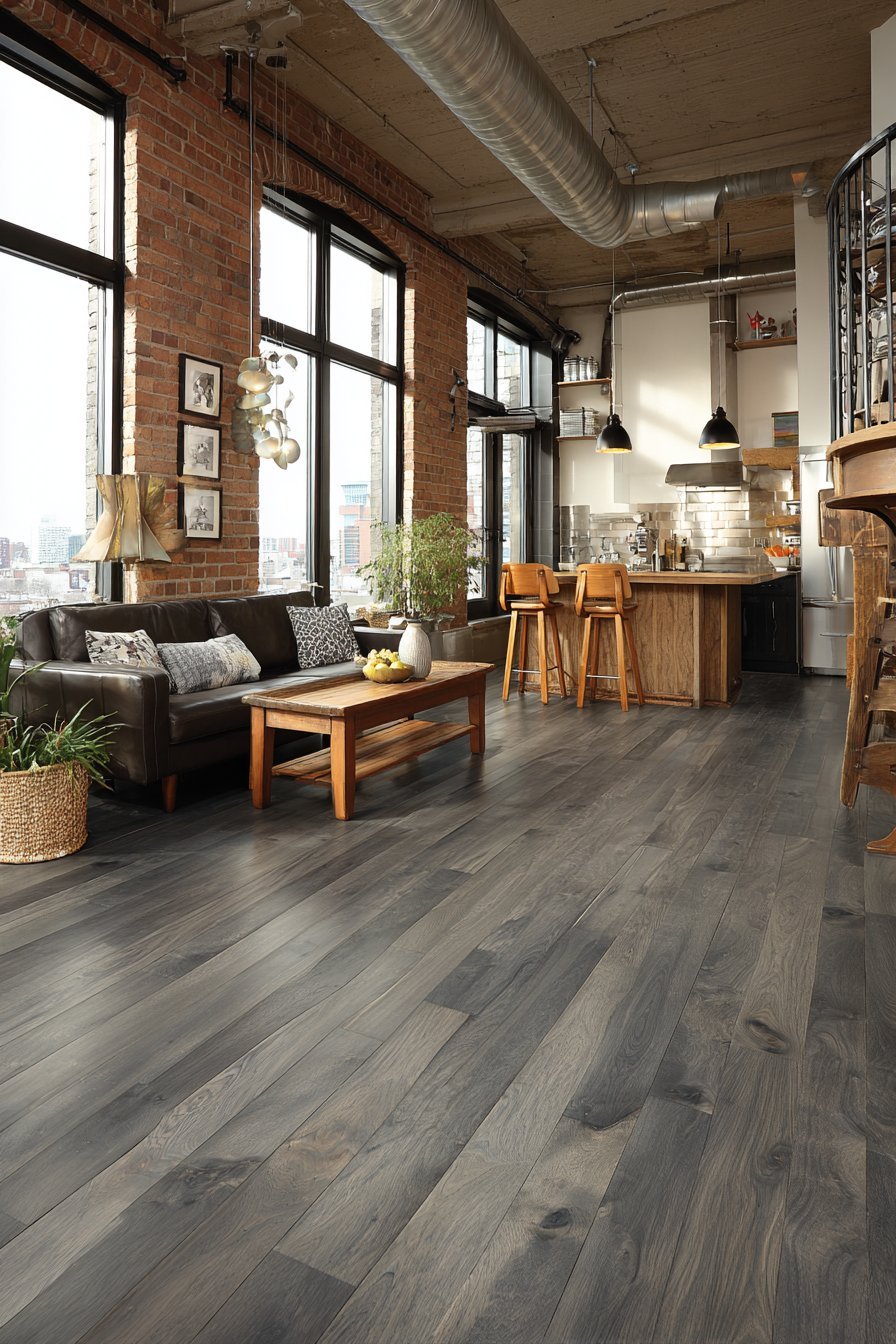
Mixed-width installation prevents monotony in expansive loft spaces. The varied dimensions create visual interest across open areas. This technique suits modern open floor plans particularly well. The dynamic quality matches the loft lifestyle.
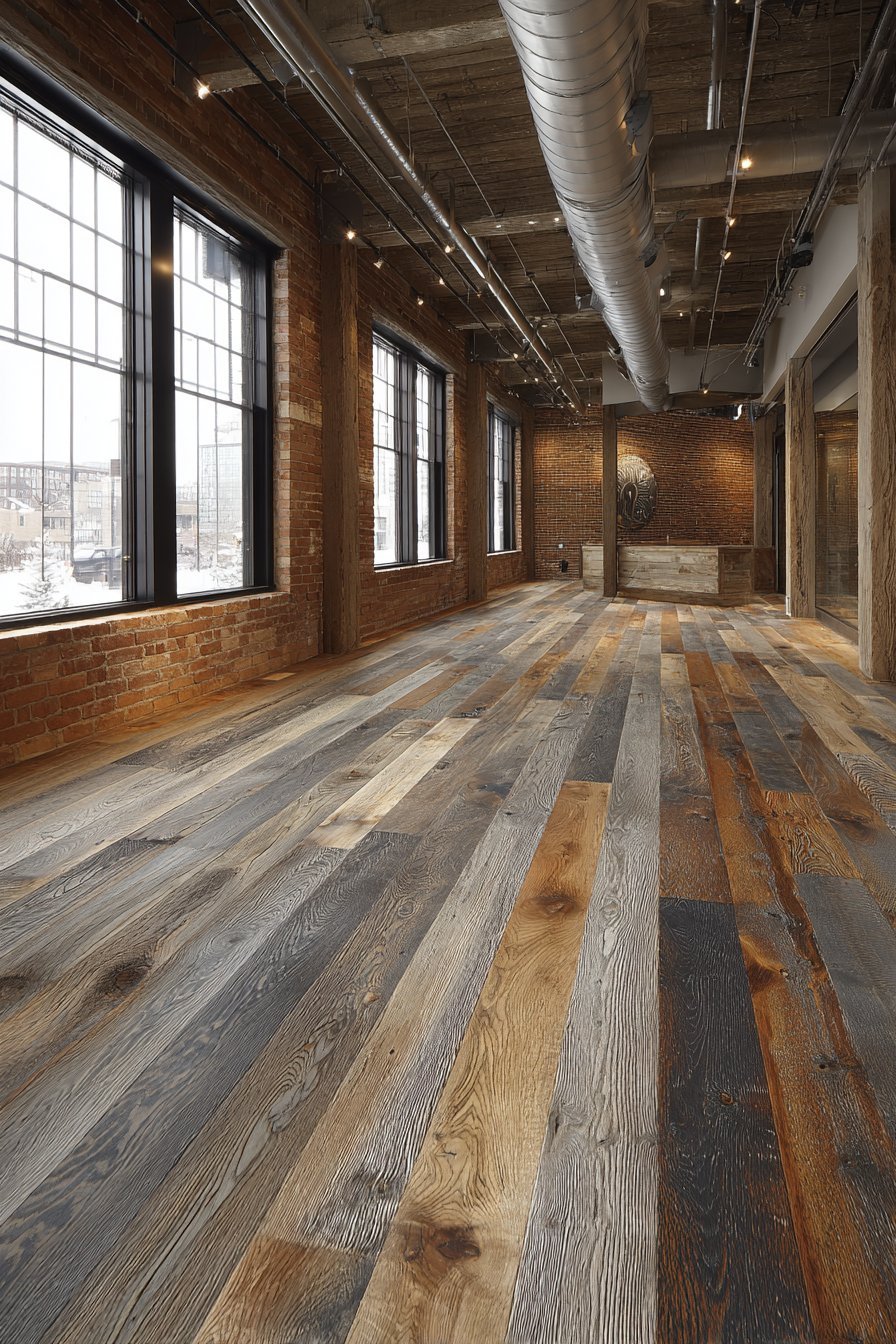
Industrial architectural elements contrast beautifully with refined flooring. Exposed systems and raw materials play against finished wood. This tension creates the distinctive industrial-chic aesthetic. The flooring bridges rough and refined successfully.
Key Design Tips:
- Select mixed widths from five to eight inches for loft spaces
- Choose smoked grey finishes for industrial-contemporary appeal
- Use engineered construction in lofts with concrete subfloors
- Contrast refined flooring with industrial architectural elements
- Maximize window exposure to reveal grain through finish
- Vary plank widths for dynamic visual rhythm
- Balance grey tones with warm undertones
16. Classic Strip Oak Hallway
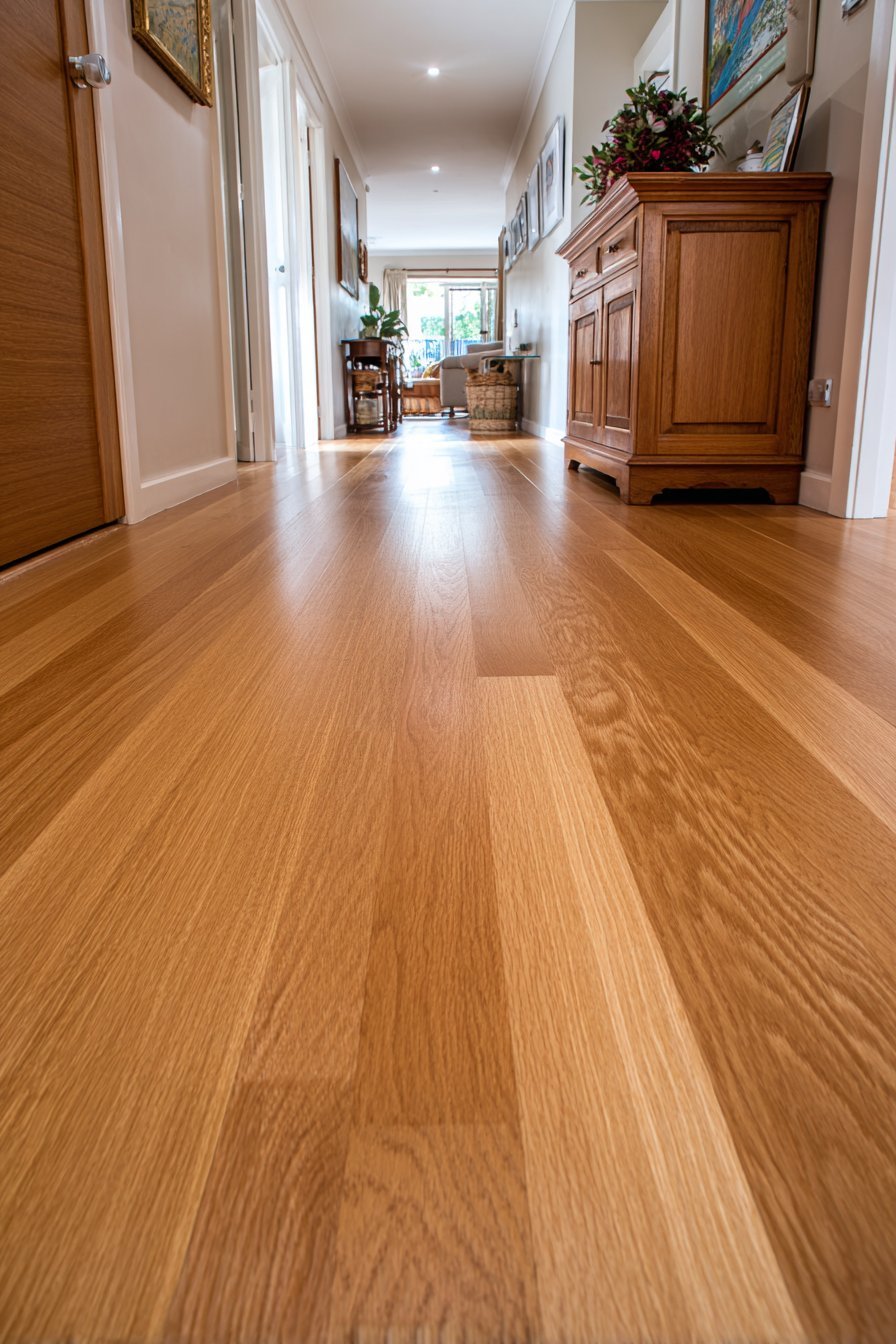
A hallway gallery features narrow strip oak in traditional width. The 2.25-inch planks create clean lines throughout the corridor. Classic honey finish provides timeless warmth and appeal. Uniform planks visually elongate the confined space. Subtle color variation between pieces adds natural interest.
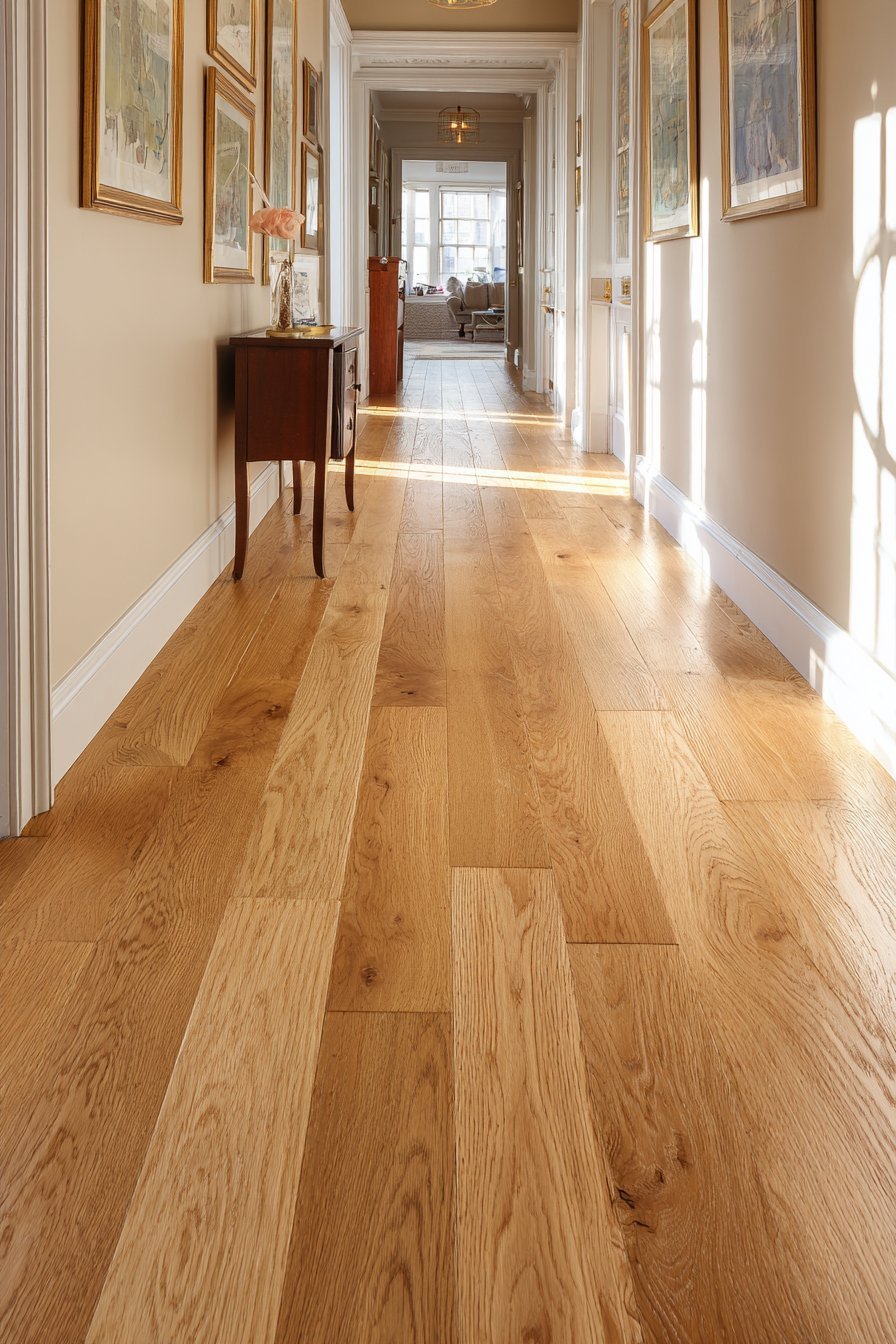
Framed artwork lines the walls above the timeless floor. Natural light from rooms at either end illuminates the passage. The oak’s warm golden tones glow in proper lighting. Straight grain patterns run the hallway’s length. The traditional installation maintains correct proportions.
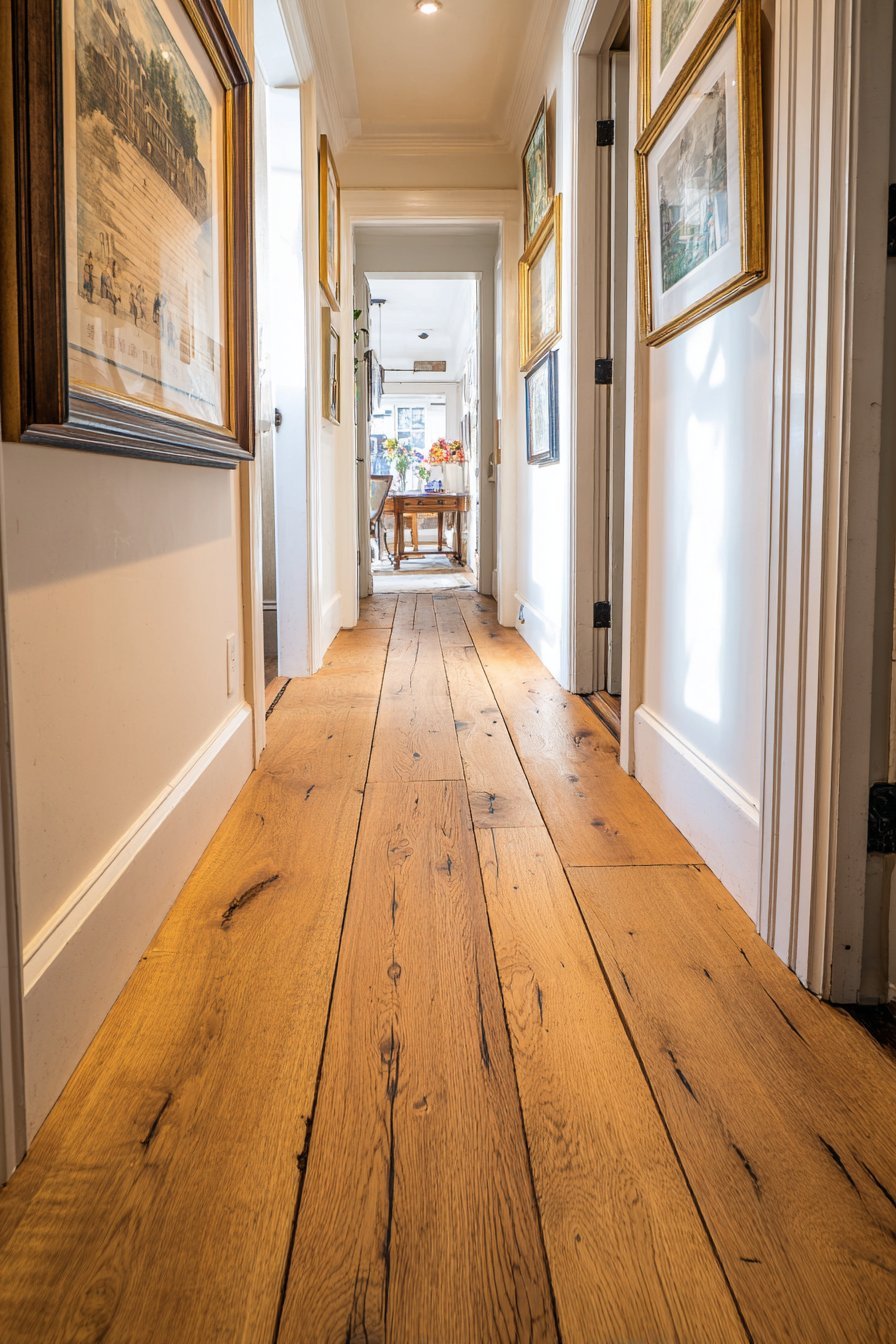
Narrow strip flooring suits hallways and confined spaces particularly well. The proportions prevent visual overwhelm in tight areas. Traditional widths have endured because they work effectively. Classic design choices rarely disappoint when properly applied.
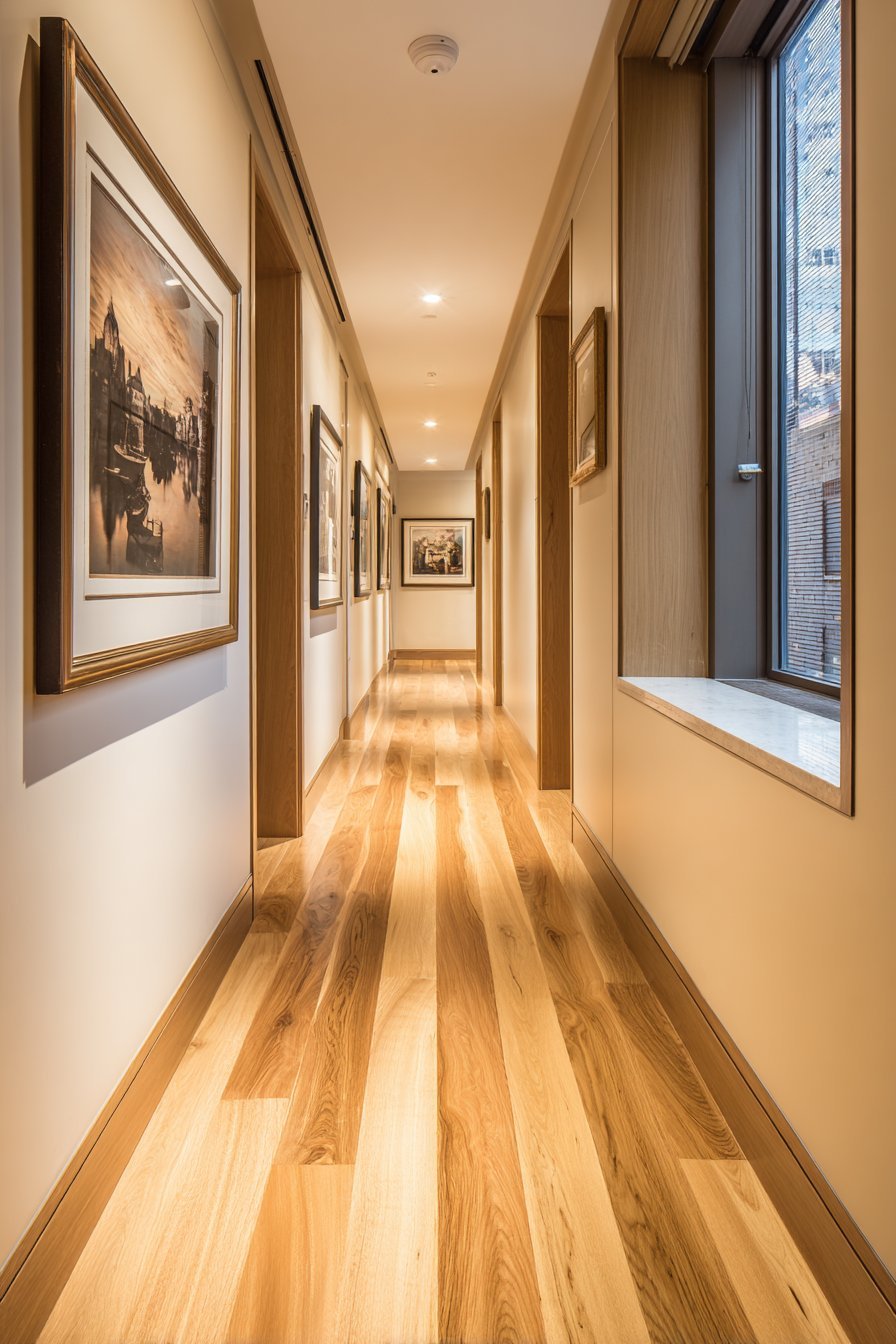
The honey finish represents timeless oak treatment. This coloring neither trends too light nor too dark. The middle ground suits traditional and transitional interiors equally. Versatility contributes to this finish’s enduring popularity.
Key Design Tips:
- Choose 2.25-inch width for traditional hallway proportions
- Select honey finishes for timeless warmth
- Use in corridors where narrow planks suit the dimensions
- Run planks lengthwise to visually elongate hallways
- Frame with artwork to create gallery effect
- Rely on end-room lighting to illuminate passages
- Trust traditional proportions in confined spaces
17. Craftsman Quarter-Sawn White Oak
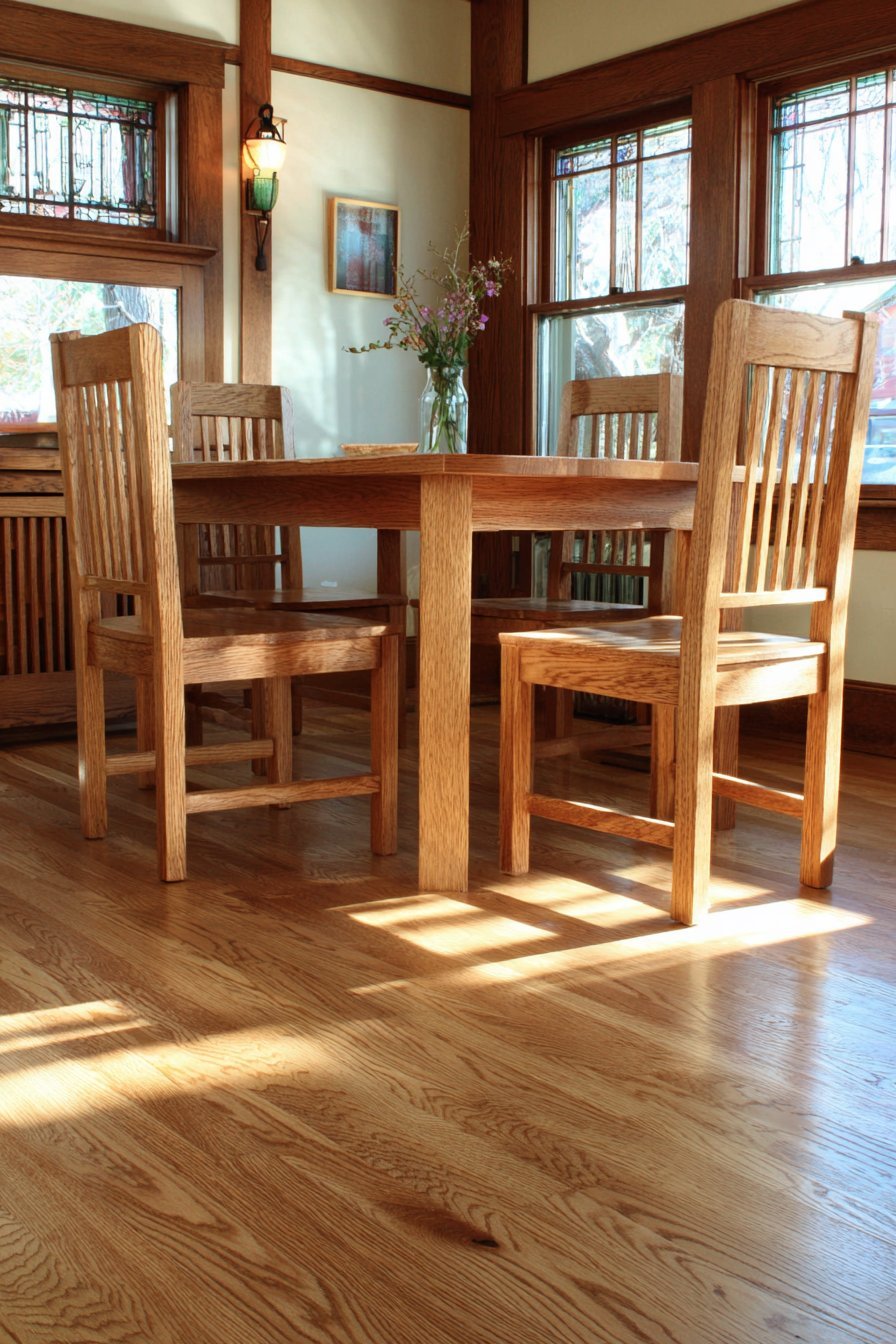
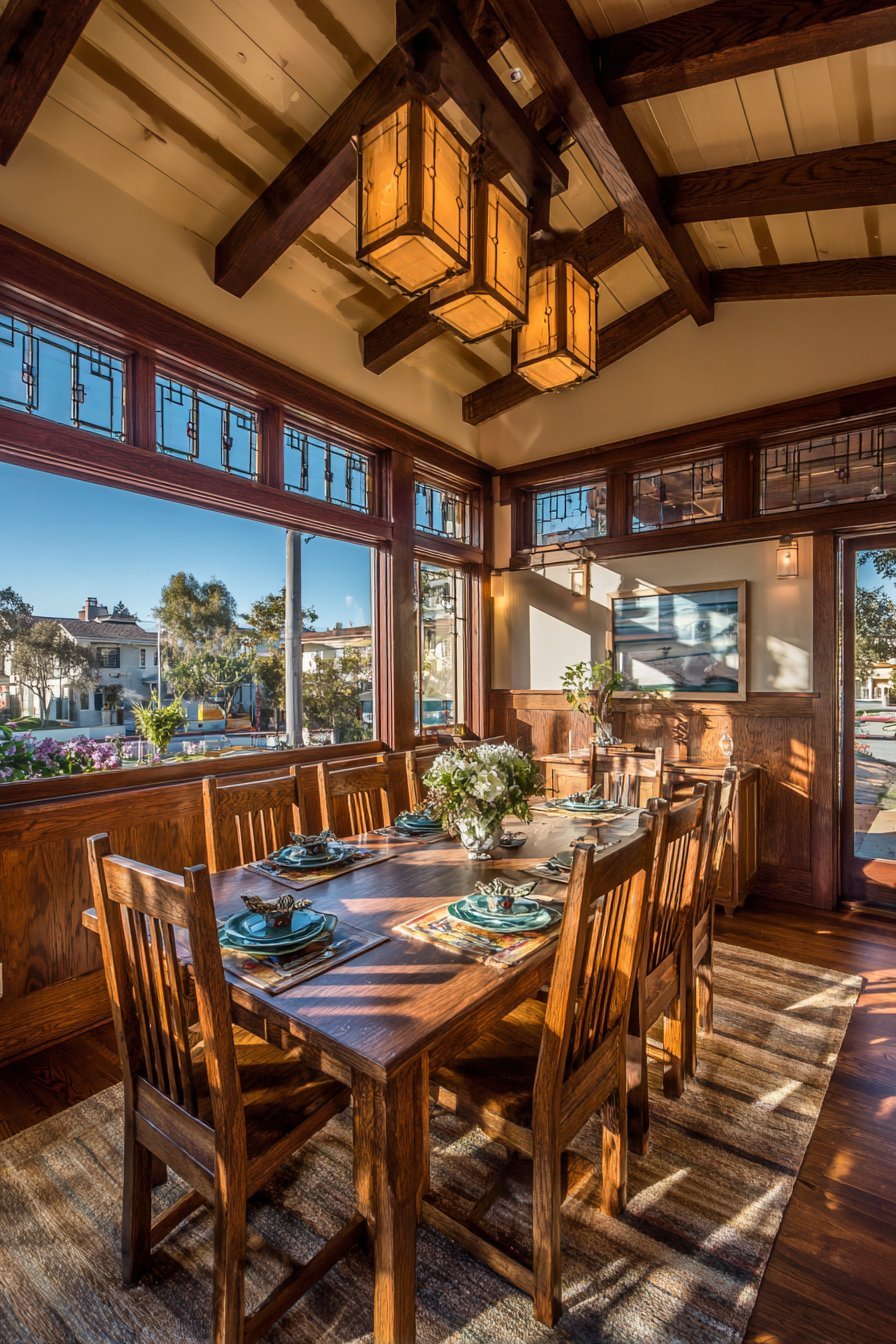
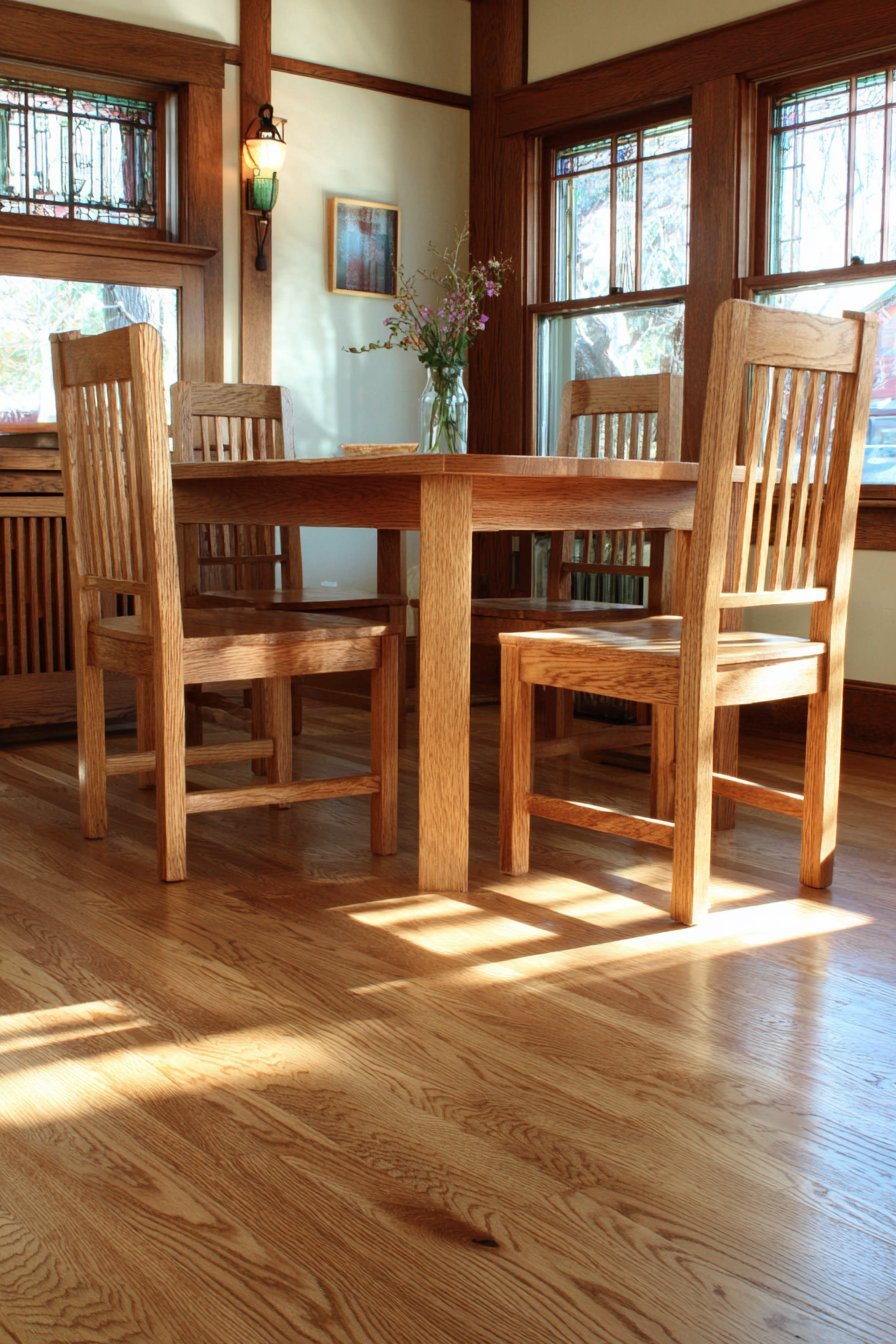
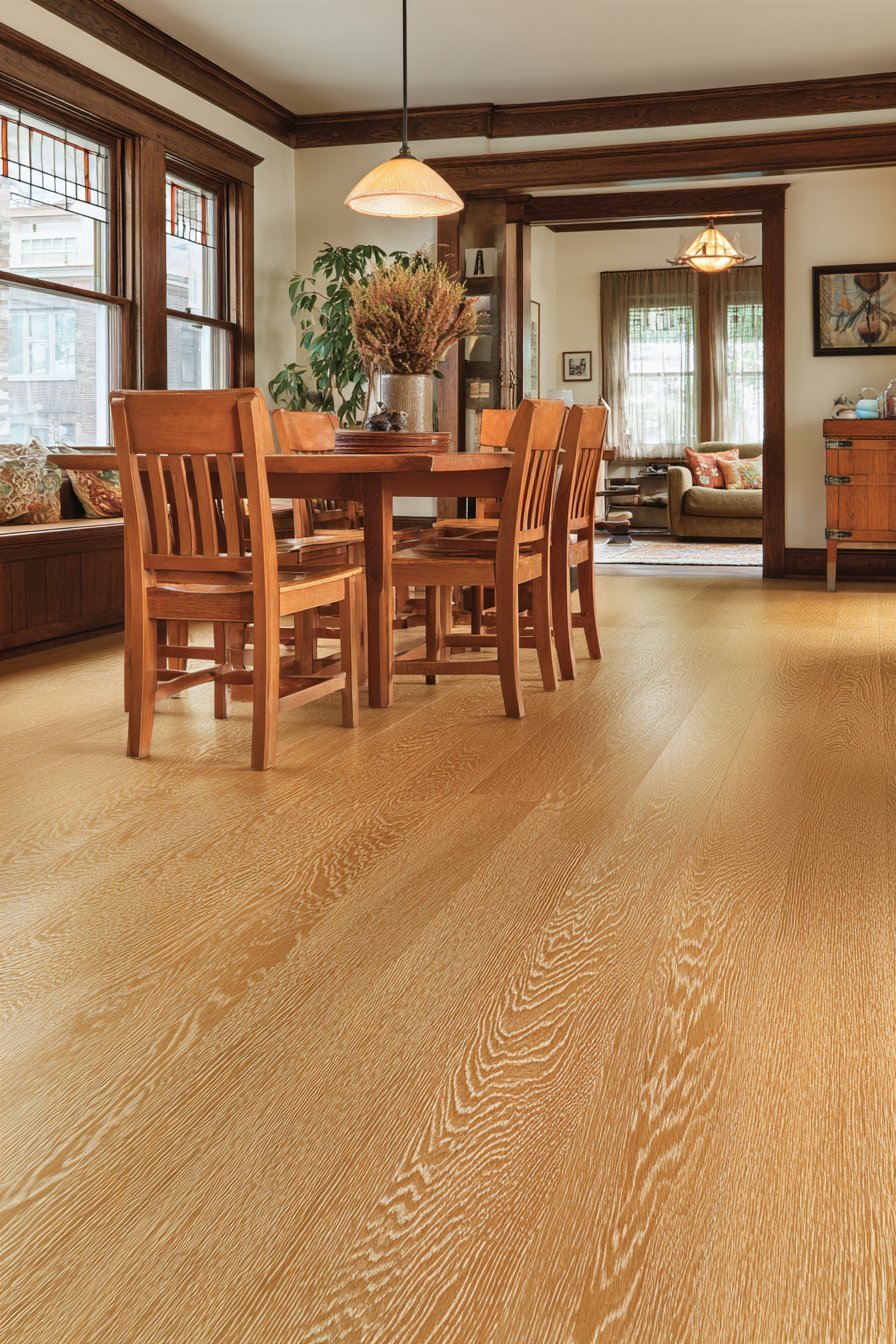
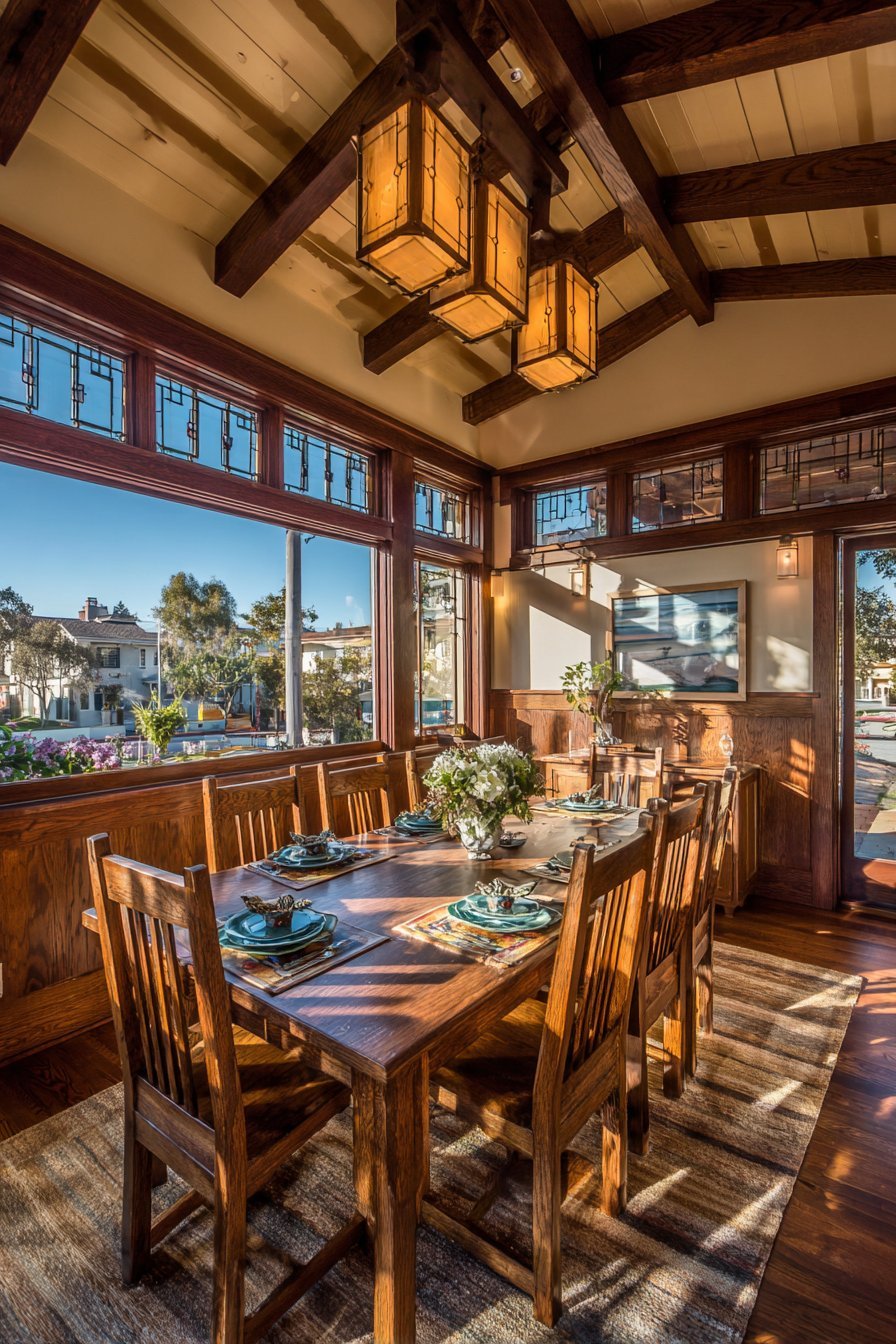
A craftsman-style dining room features quarter-sawn white oak flooring. The cutting method displays distinctive ray fleck figure. Straight-grained planks show characteristic silver flecks throughout. These medullary rays catch light with sparkling effect. Mission-style dining furniture in matching oak creates cohesion.
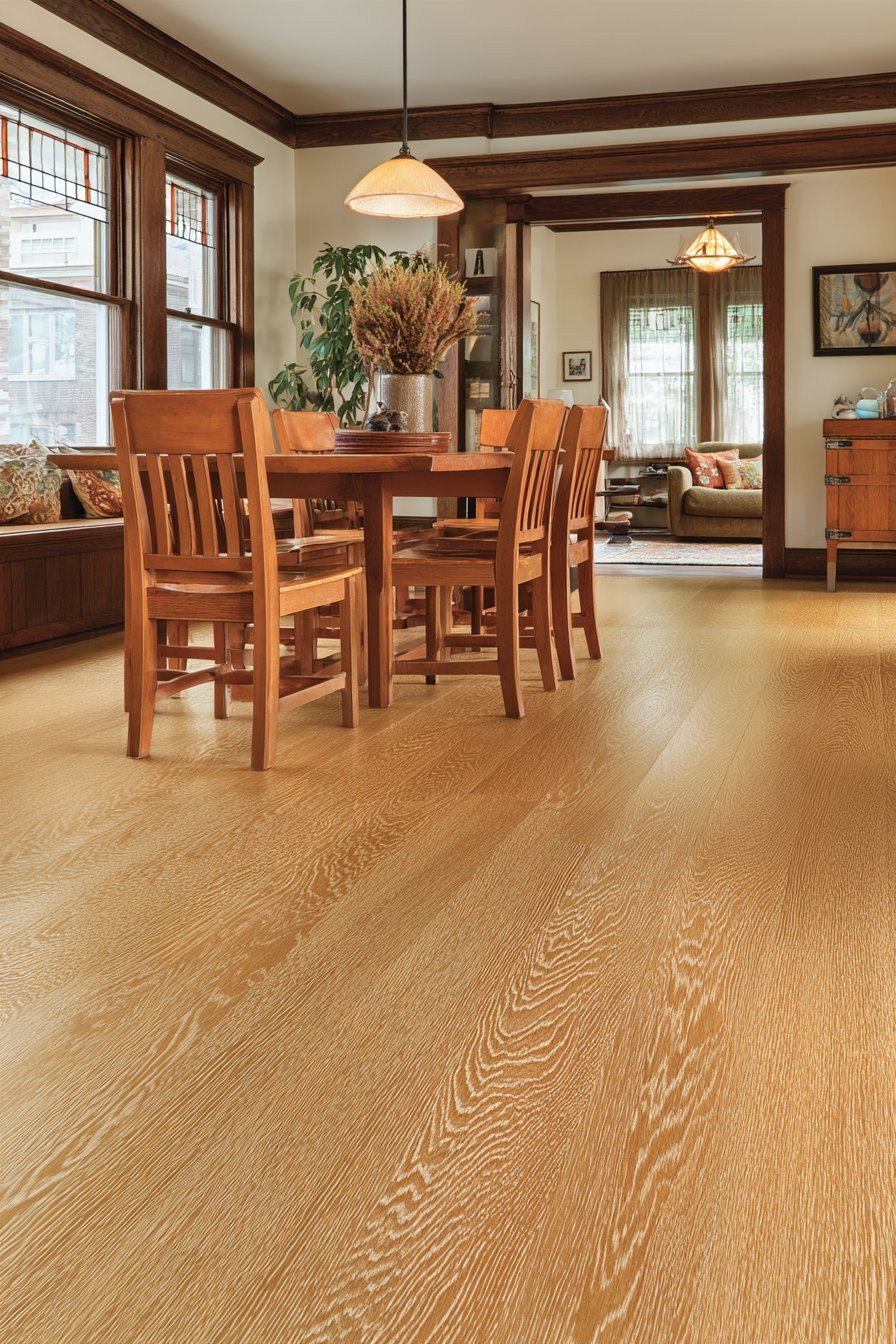
Soft natural light from prairie-style windows highlights unique figuring. The ray flecks become more visible in proper illumination. This distinctive pattern distinguishes quarter-sawn from plain-sawn oak. The premium cutting method suits period architecture perfectly.
Quarter-sawing reveals radial grain and medullary rays. This cutting technique produces straight grain with ray fleck. The result costs more but provides superior stability. The investment suits craftsman interiors where authenticity matters.
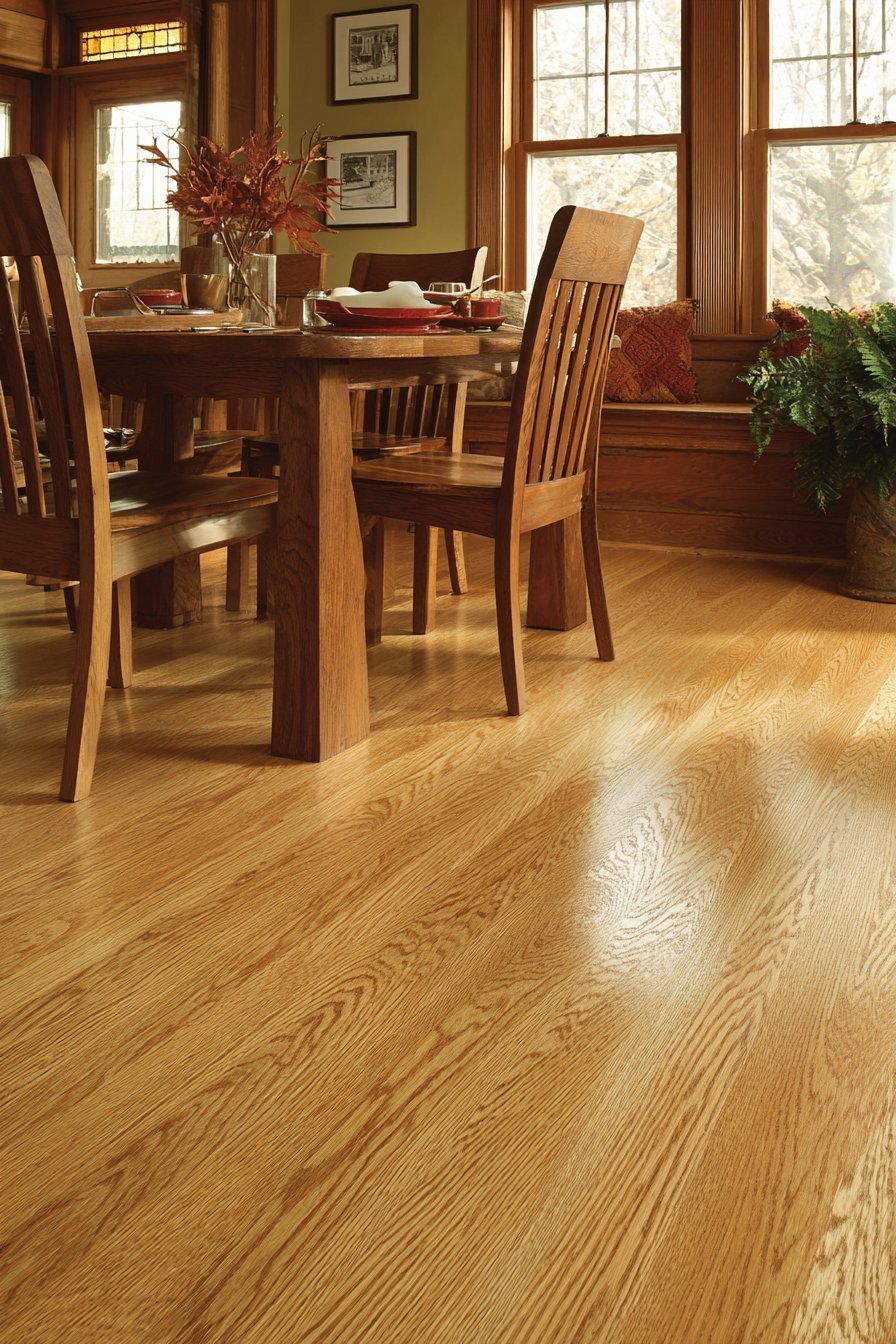
The matching oak furniture and flooring create architectural integrity. Craftsman style emphasized natural wood and honest materials. The quarter-sawn flooring honors these original design principles. Period-appropriate choices respect the home’s architectural heritage.
Key Design Tips:
- Select quarter-sawn oak specifically for craftsman interiors
- Appreciate ray fleck as the distinctive characteristic
- Match furniture wood species to flooring for cohesion
- Use prairie-style windows to provide revealing light
- Invest in premium cutting for superior stability
- Choose straight grain patterns for period authenticity
- Respect architectural heritage with appropriate materials
18. Sustainable Cork Yoga Studio
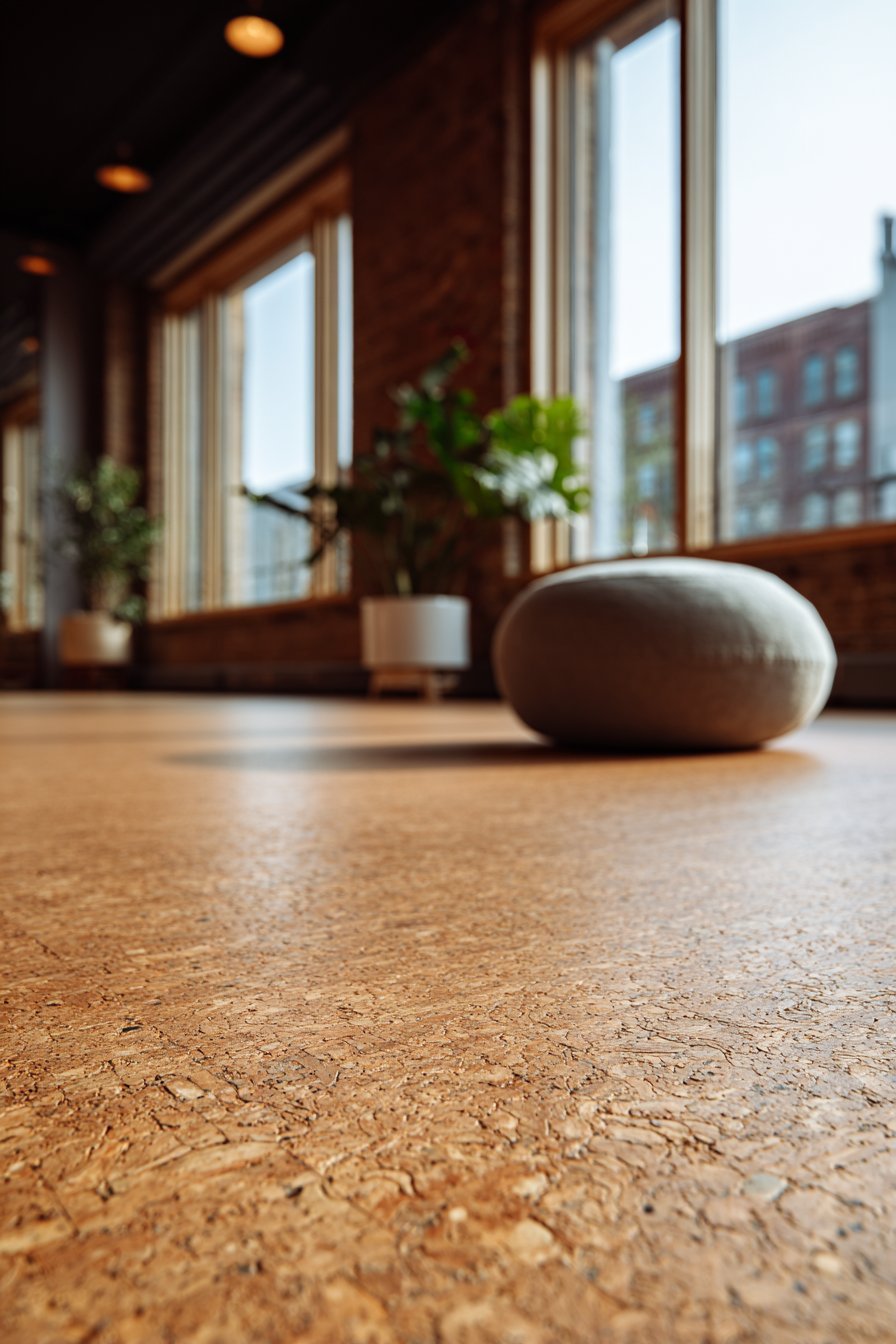
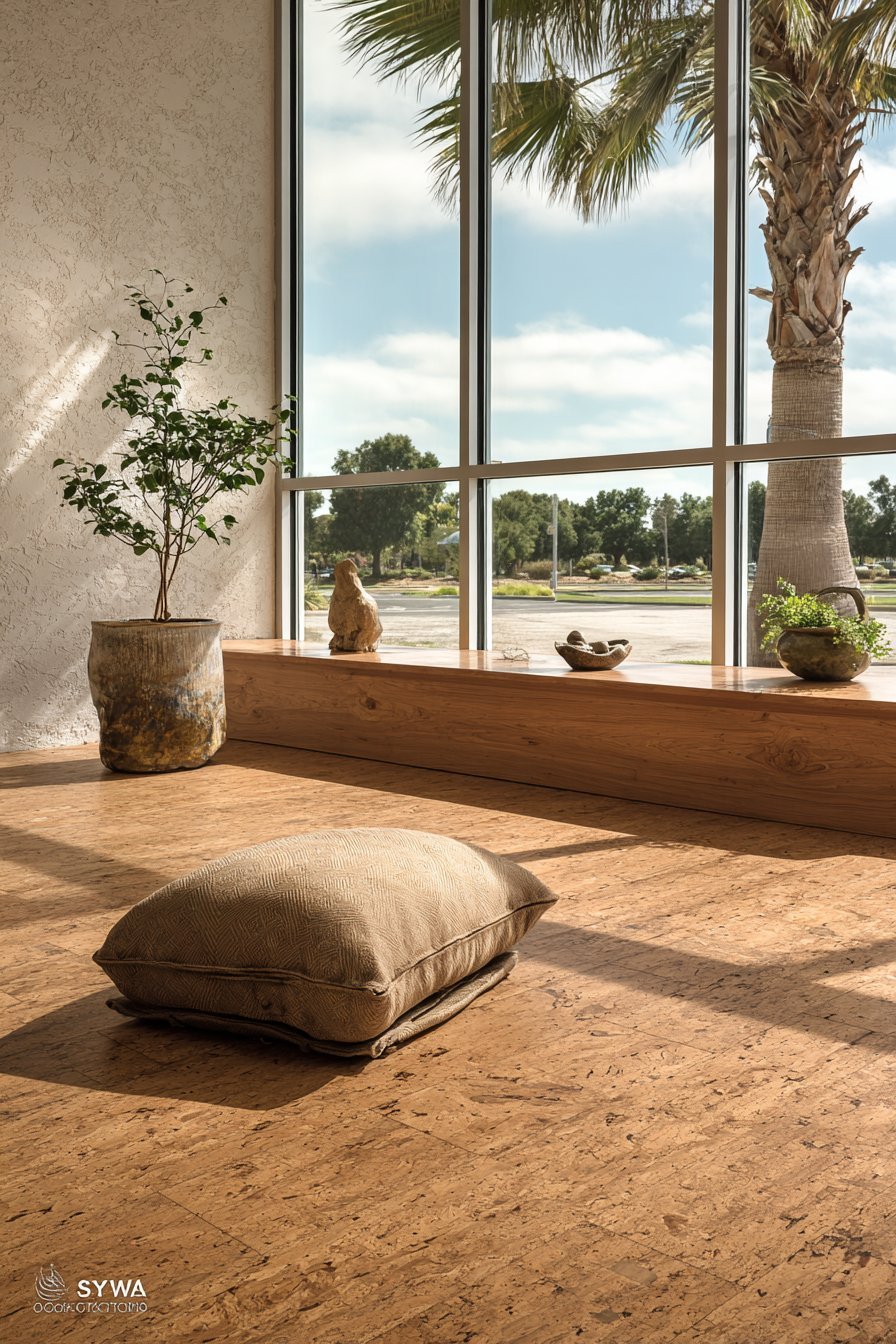
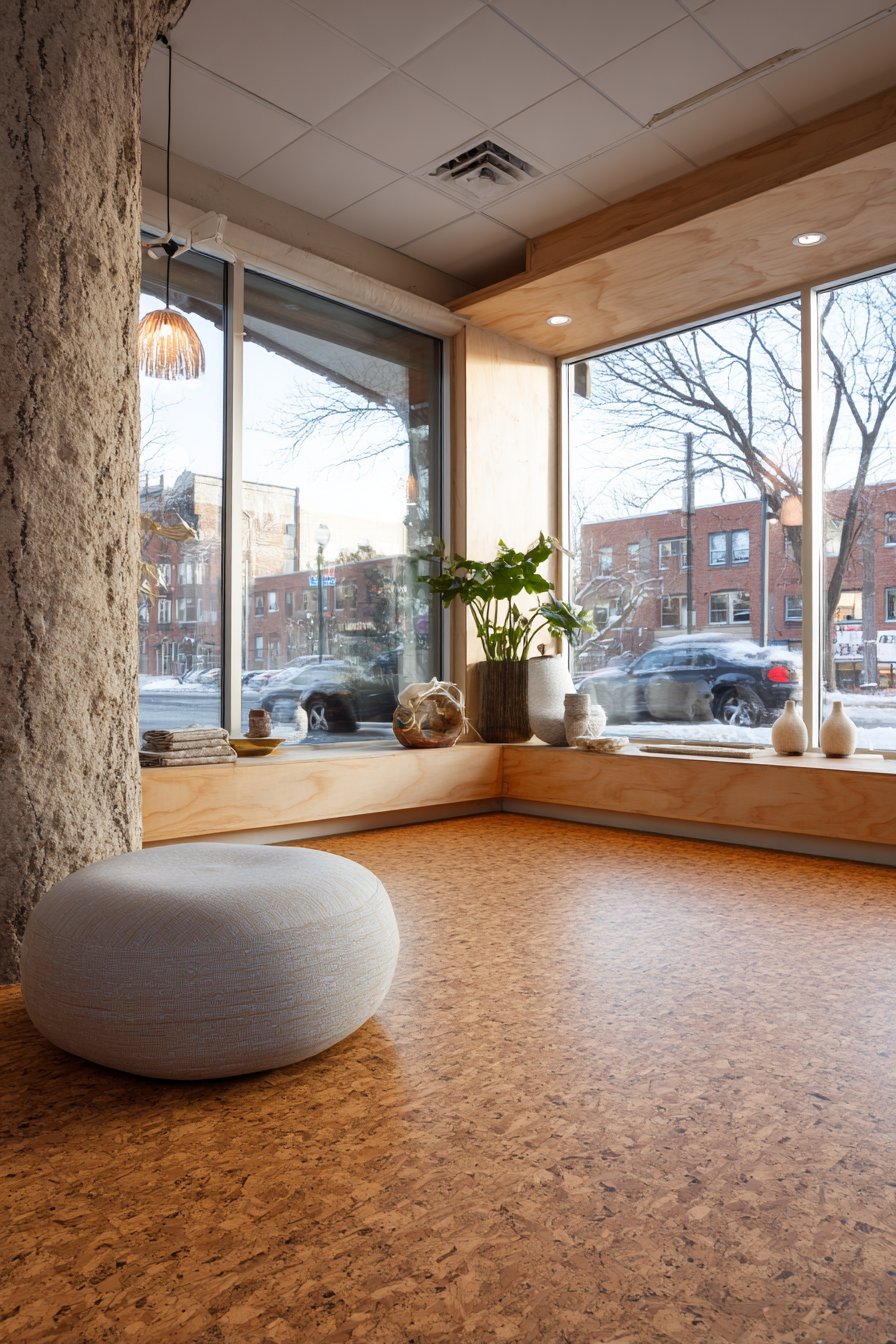
A yoga studio features cork flooring in natural honey tones. The compressed bark material provides sustainable wooden alternative. Subtle surface variations reflect cork’s organic composition. The cushioned comfort benefits barefoot activities significantly. Minimal furnishings allow the unique flooring to shine.
Large windows provide abundant natural light for practice. The illumination shows cork’s warm, matte surface beautifully. Slight textural irregularities add organic character. The eco-friendly material suits wellness-focused spaces perfectly. Sustainability and functionality unite in this application.
Cork’s cellular structure provides natural cushioning. This quality reduces joint stress during yoga practice. The material feels warmer underfoot than traditional hardwood. Comfort and sustainability both recommend this choice.
The honey tones create warm, inviting atmosphere for practice. Cork’s matte surface reduces glare from windows. The practical benefits support the wellness activities. Material choices can enhance the intended use effectively.
Key Design Tips:
- Choose cork for cushioned comfort in yoga studios
- Embrace natural honey tones for warm atmosphere
- Select sustainable materials for wellness spaces
- Use in barefoot areas where comfort matters
- Maximize natural light to reveal cork’s texture
- Keep furnishings minimal to showcase unique flooring
- Accept slight irregularities as organic character
19. Waterproof Luxury Vinyl Plank
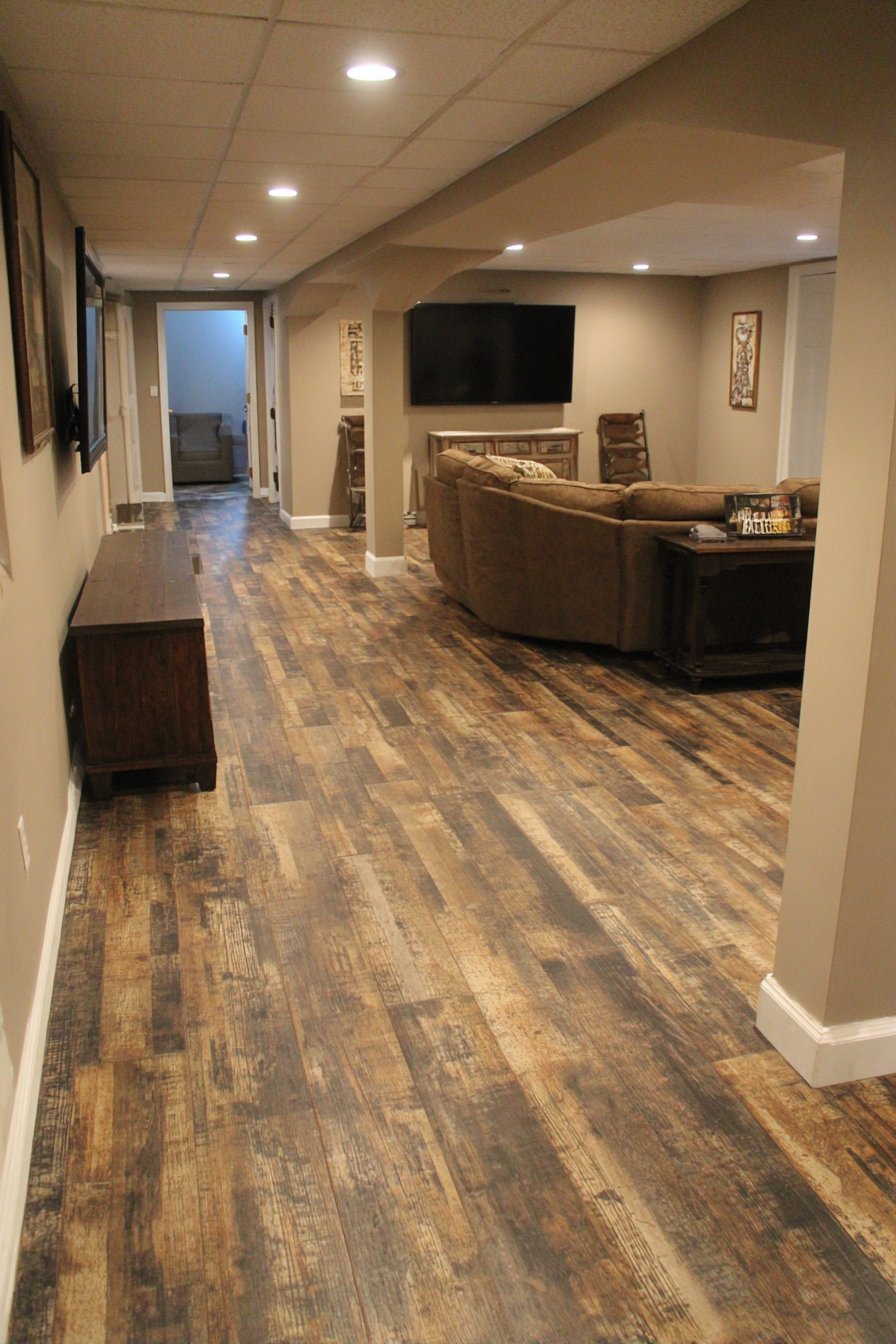
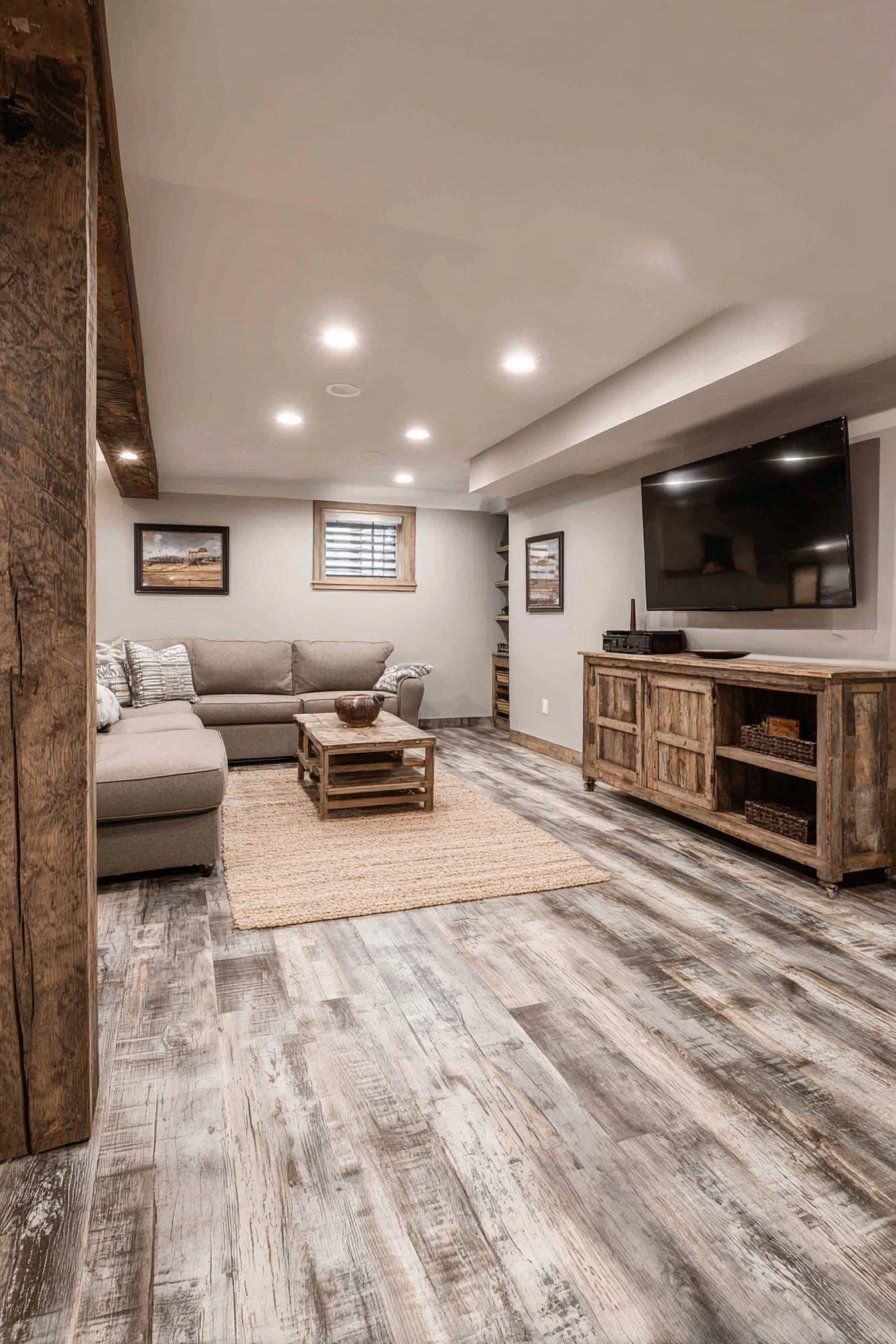
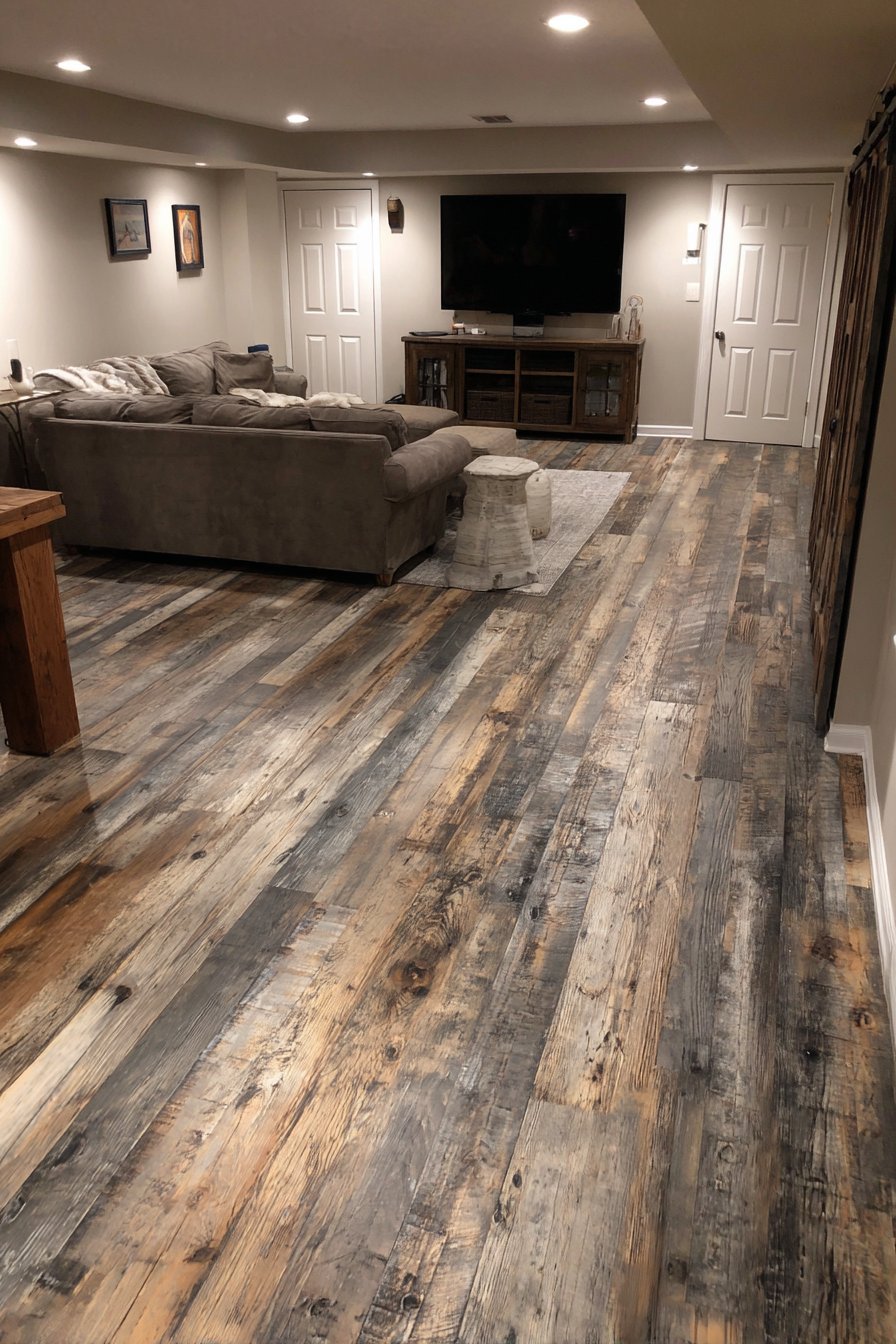
A basement renovation features luxury vinyl plank flooring. The design replicates weathered barn wood with remarkable realism. Planks show convincing grain patterns and knots throughout. Colors vary from grey to warm brown tones naturally. The appearance mimics authentic reclaimed lumber successfully.
A casual seating area with sectional sofa occupies the space. Entertainment centers and comfortable furniture suit basement living. The waterproof, practical surface handles below-grade moisture. Recessed lighting creates even illumination throughout. The realistic texture embossing adds visual depth.
Advanced manufacturing creates convincing wood aesthetics effectively. Modern vinyl planks surpass previous generations dramatically. The technology now replicates authentic wood character successfully. Practical benefits no longer require aesthetic sacrifice.
Waterproof construction suits basements and moisture-prone areas. Traditional hardwood risks damage in these locations. Luxury vinyl provides wood appearance without moisture concerns. Practical reality sometimes requires alternative materials.
Key Design Tips:
- Select luxury vinyl plank for below-grade installations
- Choose realistic wood-look designs from quality manufacturers
- Use in moisture-prone areas where hardwood fails
- Embrace waterproof benefits for basements and bathrooms
- Consider texture embossing for added realism
- Pair with casual furniture suited to basement living
- Accept alternatives when moisture makes hardwood impractical
20. Refined Rift-Sawn Oak Transition
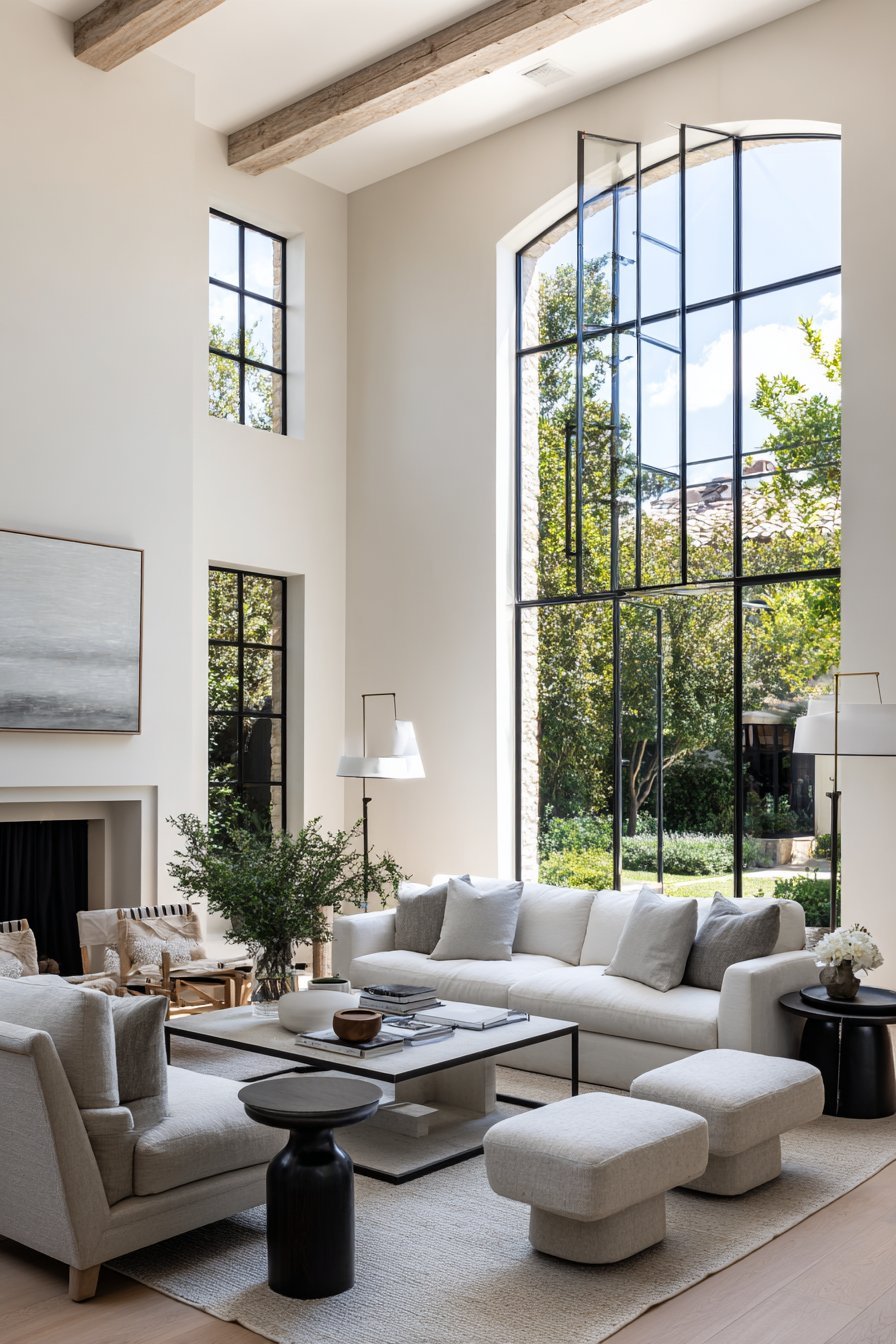
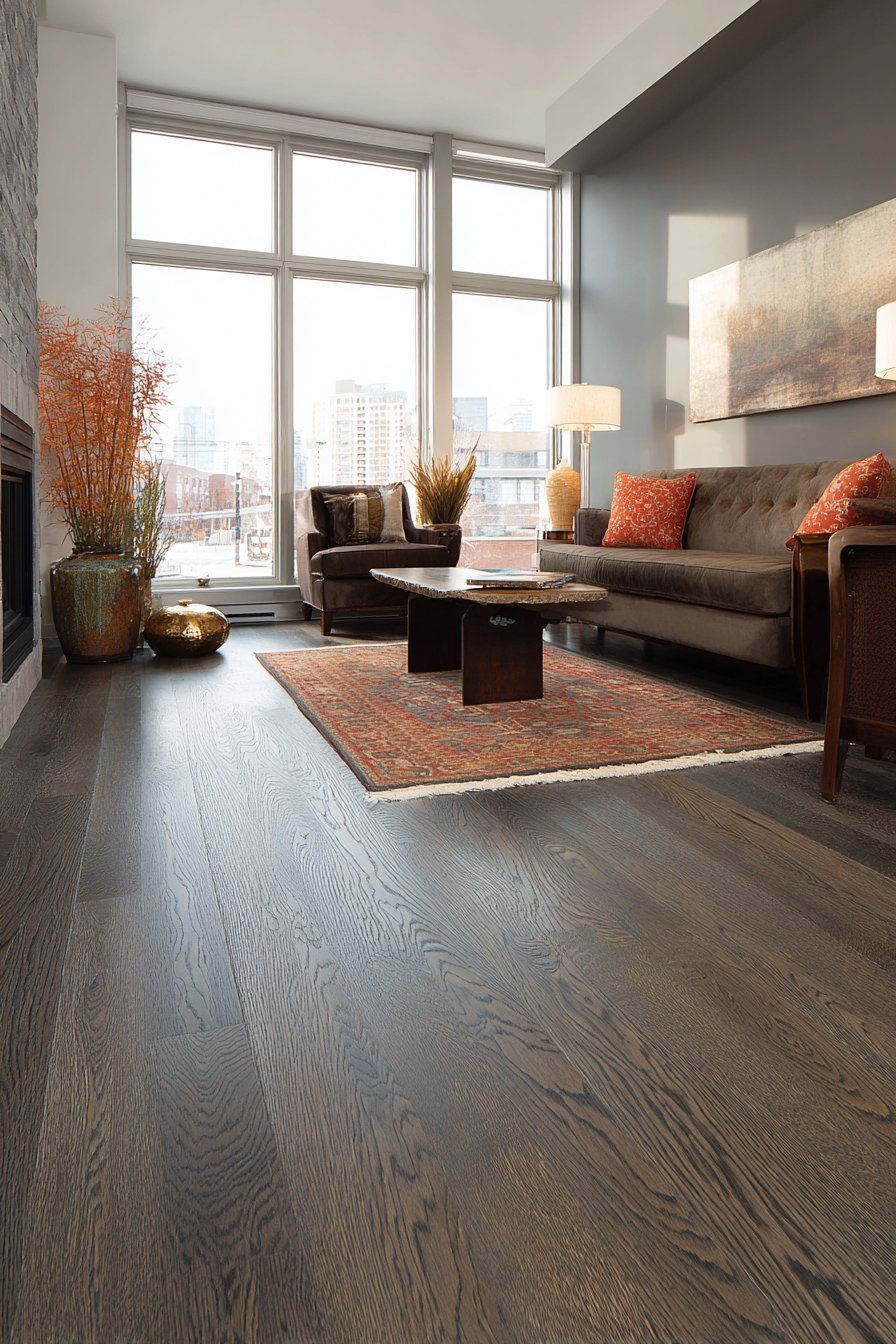
A transitional living room features rift-sawn oak with consistently straight grain. Minimal cathedral patterns create refined, contemporary appearance. Uniform color in warm medium tones spreads throughout. Vertical grain provides subtle linear texture. Modern furniture with clean lines complements the sophisticated choice.
Natural daylight from multiple windows emphasizes straight grain’s regularity. The calming consistency suits both traditional and contemporary furnishings. Area rugs define conversation zones within the open space. The oak’s natural warmth prevents coldness in modern settings.
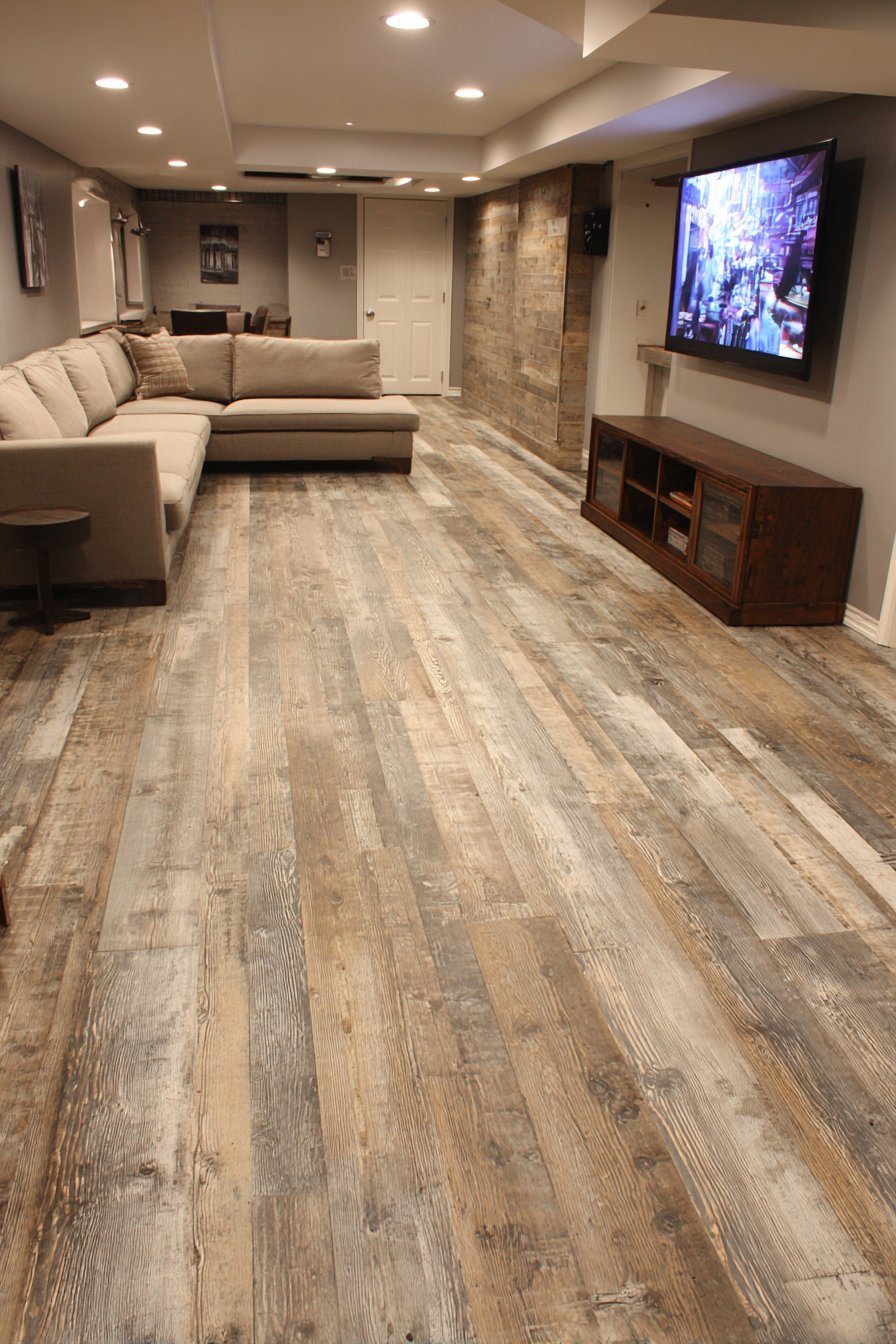
Rift-sawing produces consistently straight grain patterns. This cutting method minimizes cathedral grain appearance. The result looks more contemporary than plain-sawn alternatives. The refined aesthetic suits transitional design perfectly.
The versatility of rift-sawn oak suits changing tastes. Homeowners can update furnishings without replacing flooring. The neutral grain pattern adapts to evolving preferences. This flexibility justifies the premium investment.
Key Design Tips:
- Choose rift-sawn oak for consistently straight grain
- Use in transitional spaces that blend design styles
- Select warm medium tones for versatile foundation
- Pair with both traditional and contemporary furniture
- Define zones with area rugs over continuous flooring
- Maximize natural light from multiple window exposures
- Invest in refined cuts that adapt to changing tastes
21. Charming Maple Breakfast Nook
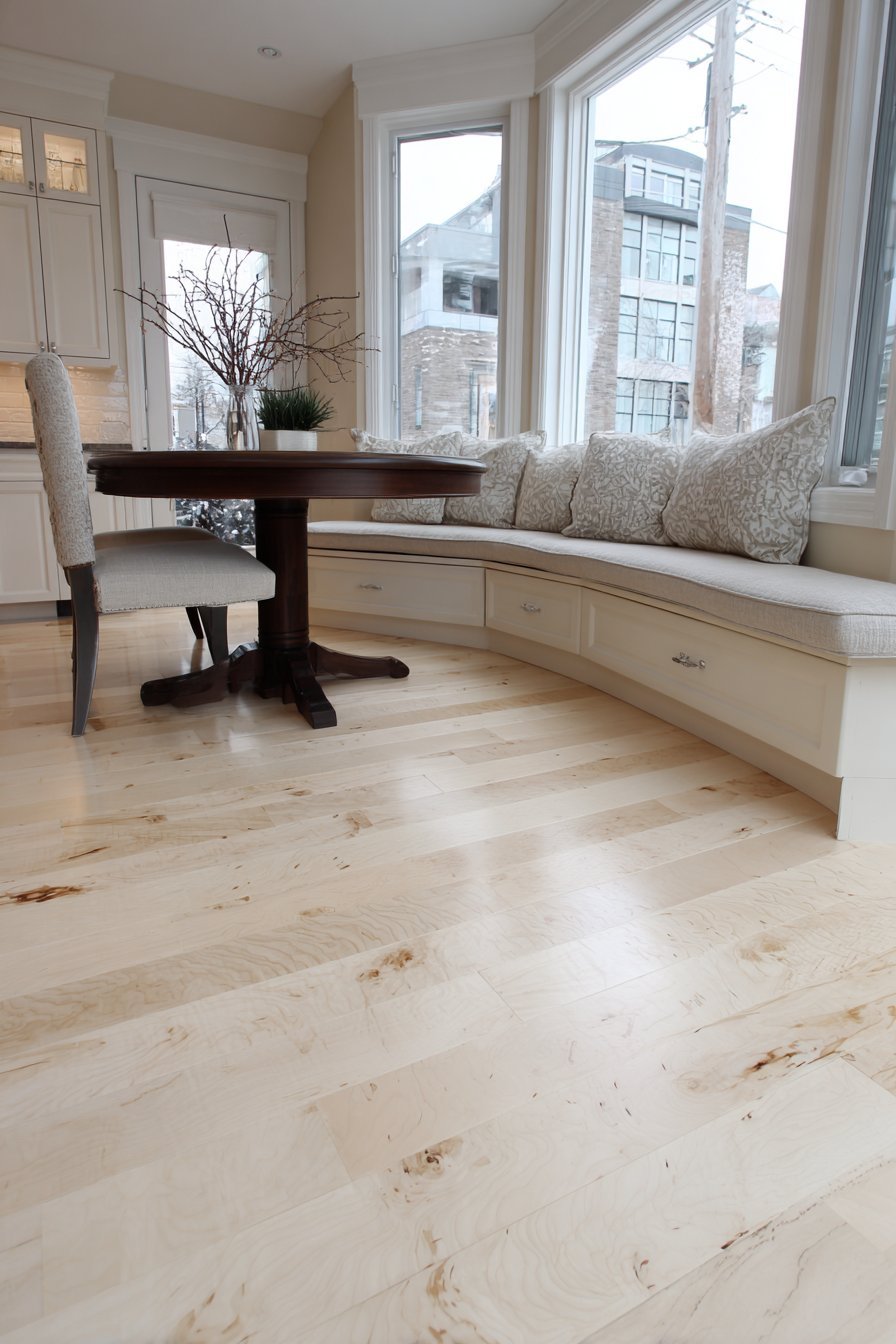
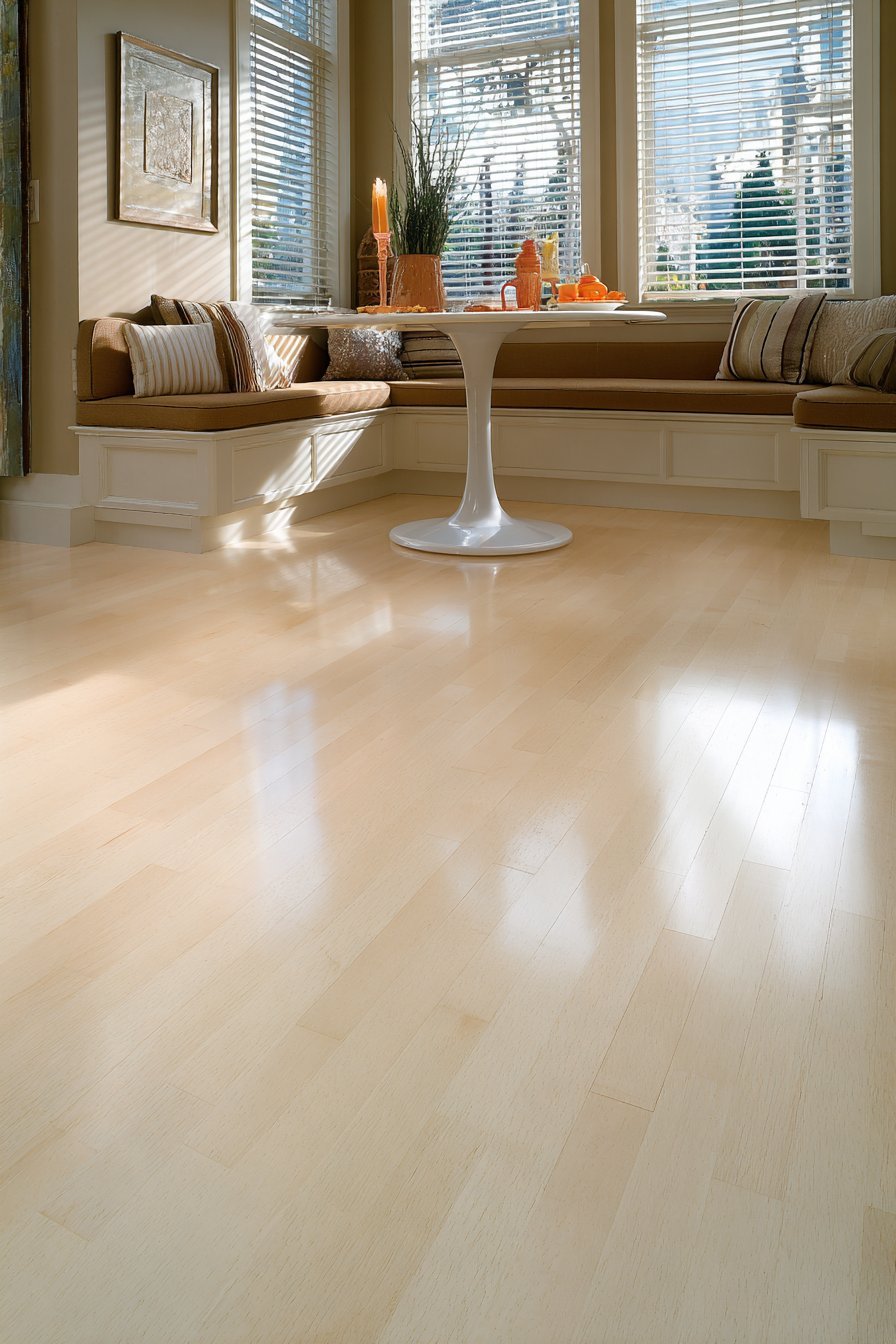
A breakfast nook features honey-toned maple hardwood flooring. Subtle bird’s eye figure adds delicate visual interest. Tight, consistent grain creates a clean backdrop. Built-in banquette seating with cushions invites comfortable dining. A round pedestal table completes the cozy space.
Morning sunlight streams through nearby windows beautifully. The illumination brings out maple’s natural pale color. Faint figuring patterns become visible in proper light. The wooden floor’s smooth finish reflects light softly. This creates a cheerful morning atmosphere.
Bird’s eye maple features small circular patterns. These subtle markings add interest without overwhelming. The delicate figure suits intimate breakfast spaces. The refined character matches the nook’s cozy purpose.
The pale maple brightens compact eating areas. Light tones make small spaces feel more generous. The smooth surface simplifies morning cleanup. Beauty and practicality combine in this cheerful application.
Key Design Tips:
- Select bird’s eye maple for subtle figuring
- Choose honey tones for cheerful morning spaces
- Use smooth finishes that reflect light softly
- Pair with built-in seating for cozy breakfast nooks
- Position near windows to reveal delicate figure
- Keep tight, consistent grain for clean appearance
- Brighten small spaces with pale maple tones
22. Luxurious Extra-Wide European Oak
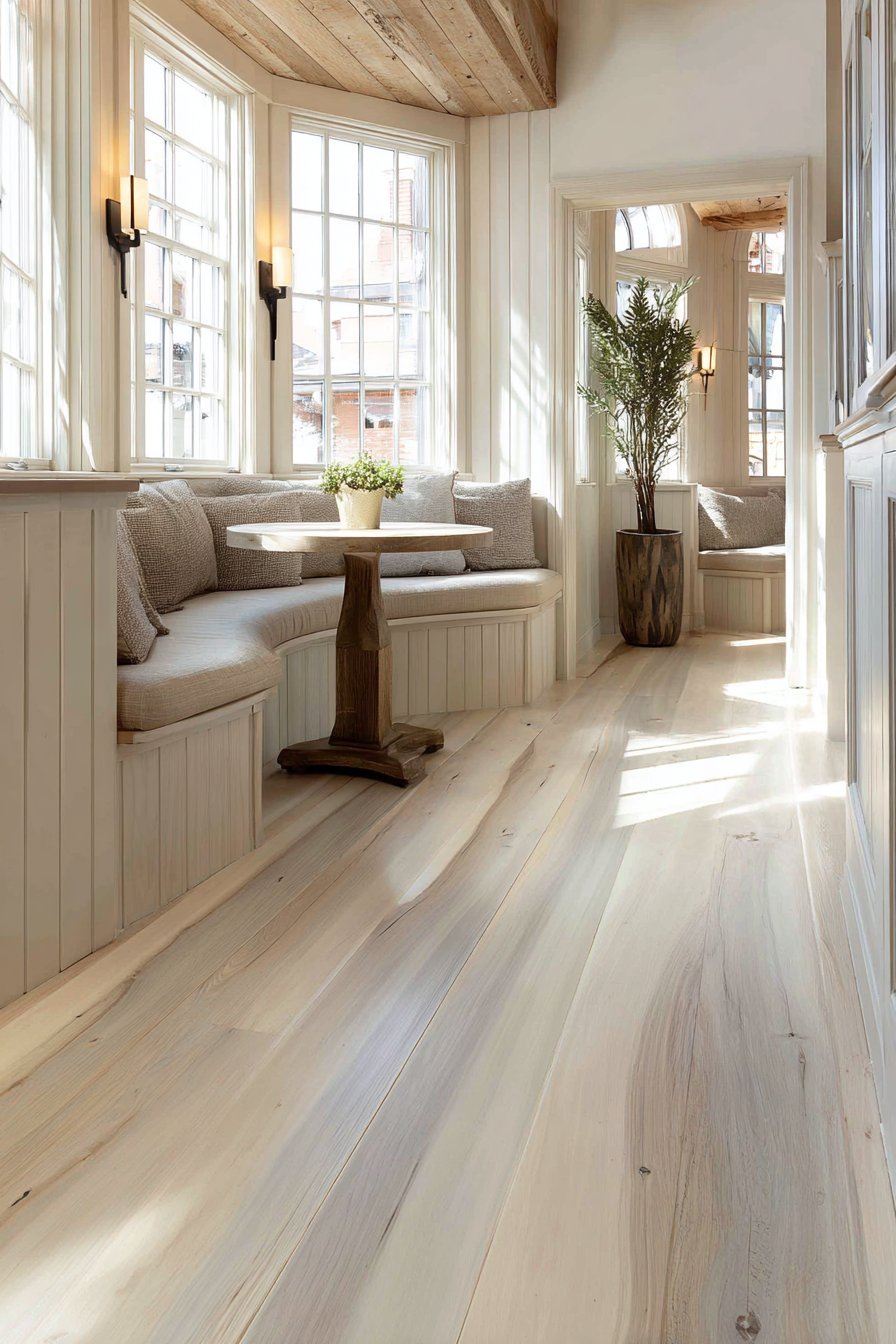
A master bedroom retreat features extra-wide European oak planks. The boards measure ten inches across creating luxurious aesthetic. Natural color variation from cream to light tan occurs. Subtle grain figuring adds character without busyness. A low platform bed allows the statement flooring to shine.
Soft diffused light from floor-to-ceiling curtains reveals wood character. The expansive scale of individual boards becomes apparent. Fewer seams create cleaner, more contemporary appearance. Natural characteristics show clearly in wide formats. The premium quality commands attention appropriately.
Extra-wide planks represent premium flooring investment. The scale creates modern sophistication naturally. Fewer joints mean simpler installation appearance. The generous dimensions suit spacious master bedrooms perfectly.
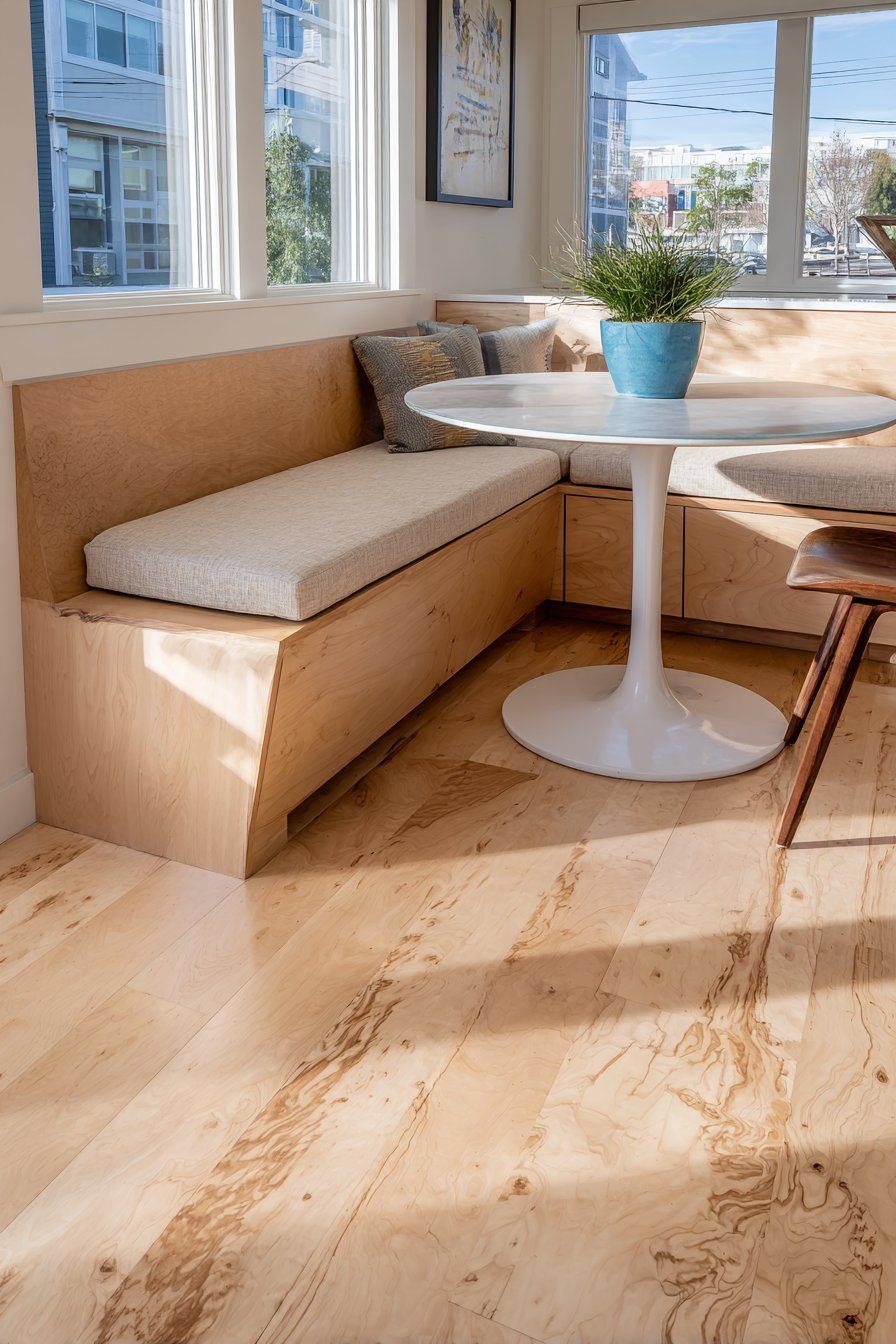
The wide format emphasizes horizontal lines in rooms. This can make spaces feel broader than actual dimensions. The visual effect complements contemporary bedroom design. Scale and proportion work together effectively.
Key Design Tips:
- Choose ten-inch-wide planks for luxurious contemporary appeal
- Use in master bedrooms and primary spaces
- Select European oak for premium quality
- Keep furniture low-profile to showcase flooring
- Use diffused natural light to reveal wood character
- Embrace cream to light tan color variations
- Consider wide planks to make rooms feel broader
23. Bespoke Book-Matched Walnut Library
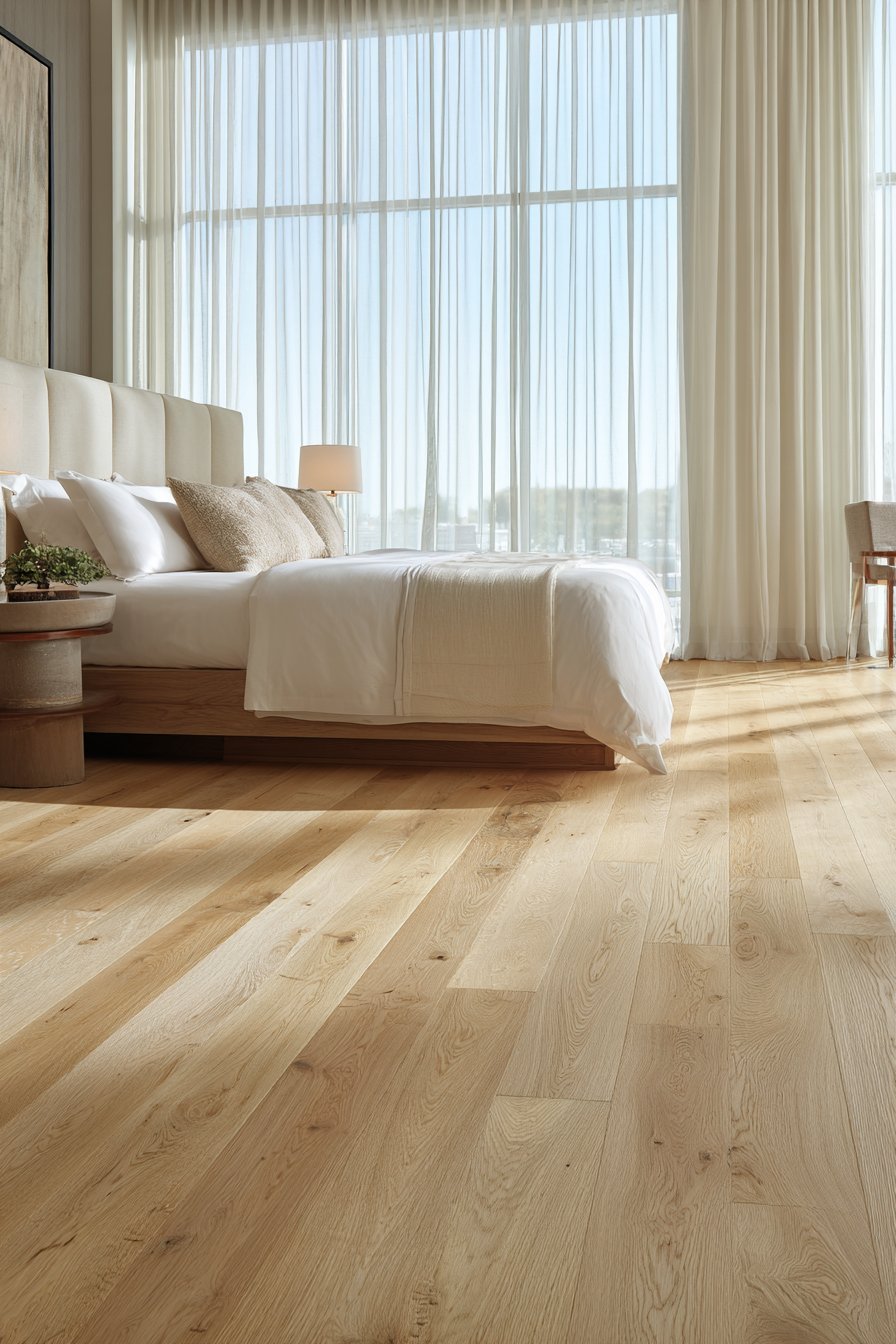
A library den features walnut plank flooring with book-matched installation. Adjacent boards mirror each other’s grain patterns perfectly. Rich brown planks create symmetrical visual effects. The bespoke craftsmanship suits the scholarly space. Built-in bookshelves and leather seating complete the refined environment.
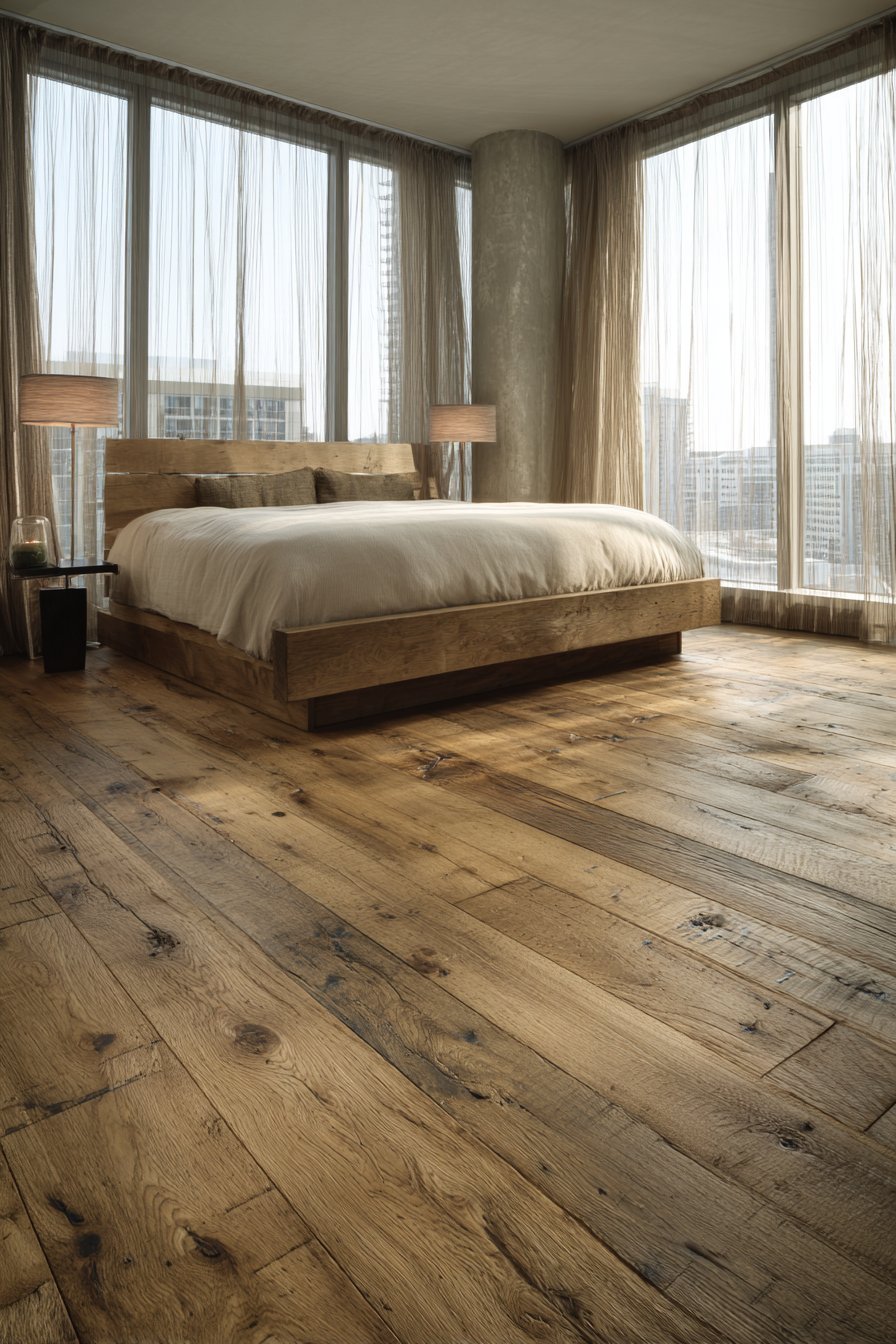
Natural light from a reading window combines with lamp illumination. The lighting highlights intentional grain matching beautifully. Walnut’s deep coloring provides sophisticated backdrop. The artistry of book-matching becomes clearly apparent. Premium installation techniques create lasting impressions.
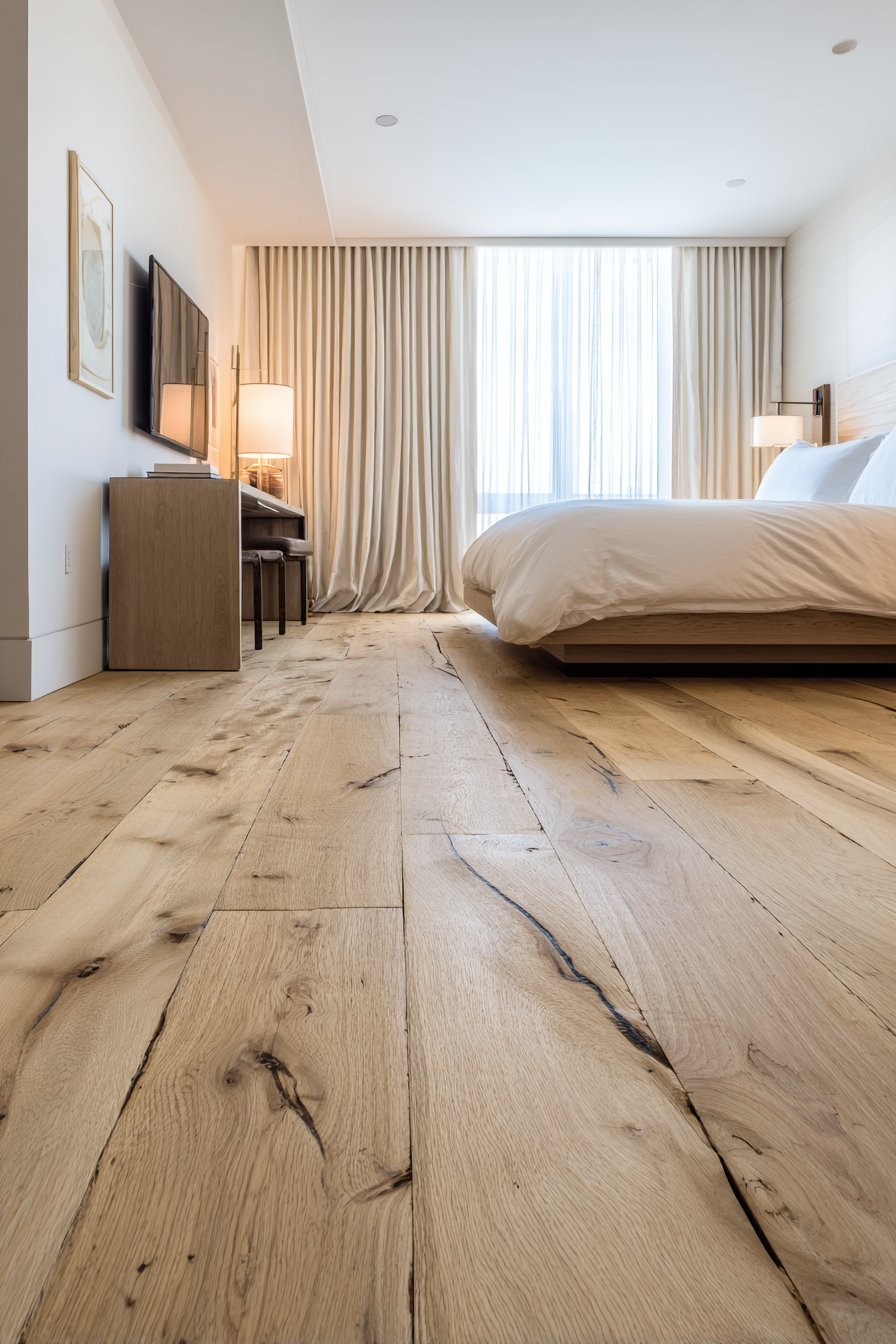
Book-matching requires careful board selection and placement. Each plank’s grain must mirror its neighbor’s pattern. This technique transforms individual boards into unified composition. The artistry elevates standard installation to bespoke level.
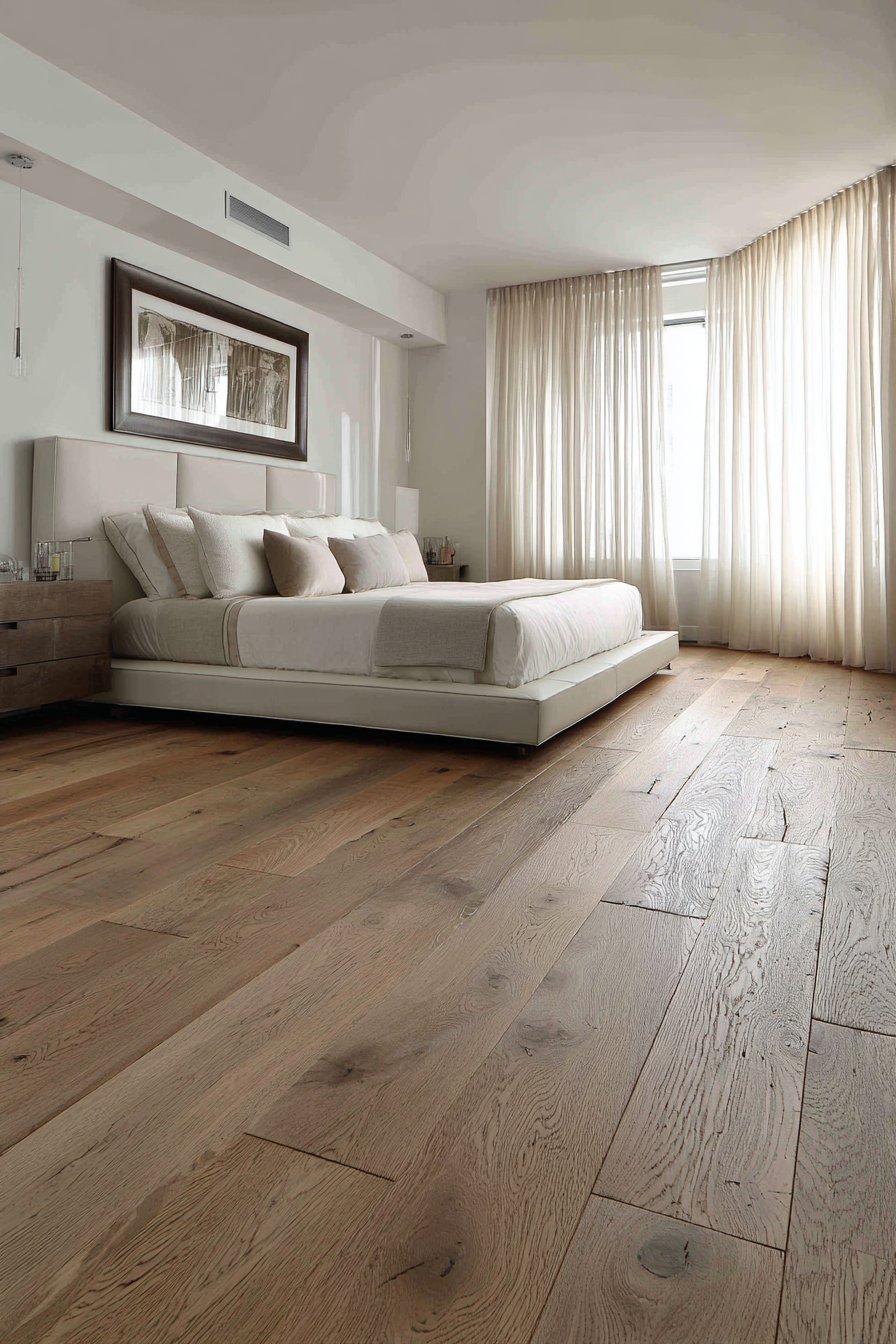
The symmetrical patterns create visual harmony in libraries. The balanced aesthetic suits spaces dedicated to reading. Book-matched floors demonstrate commitment to craftsmanship. The investment shows in the refined final result.
Key Design Tips:
- Select book-matched installation for library sophistication
- Choose rich walnut for deep, scholarly coloring
- Combine natural and artificial lighting strategically
- Pair with built-in bookshelves and leather furniture
- Appreciate grain matching as premium craftsmanship
- Invest in careful board selection and placement
- Create symmetrical visual effects through mirrored patterns
24. Historical Reclaimed Chestnut Kitchen
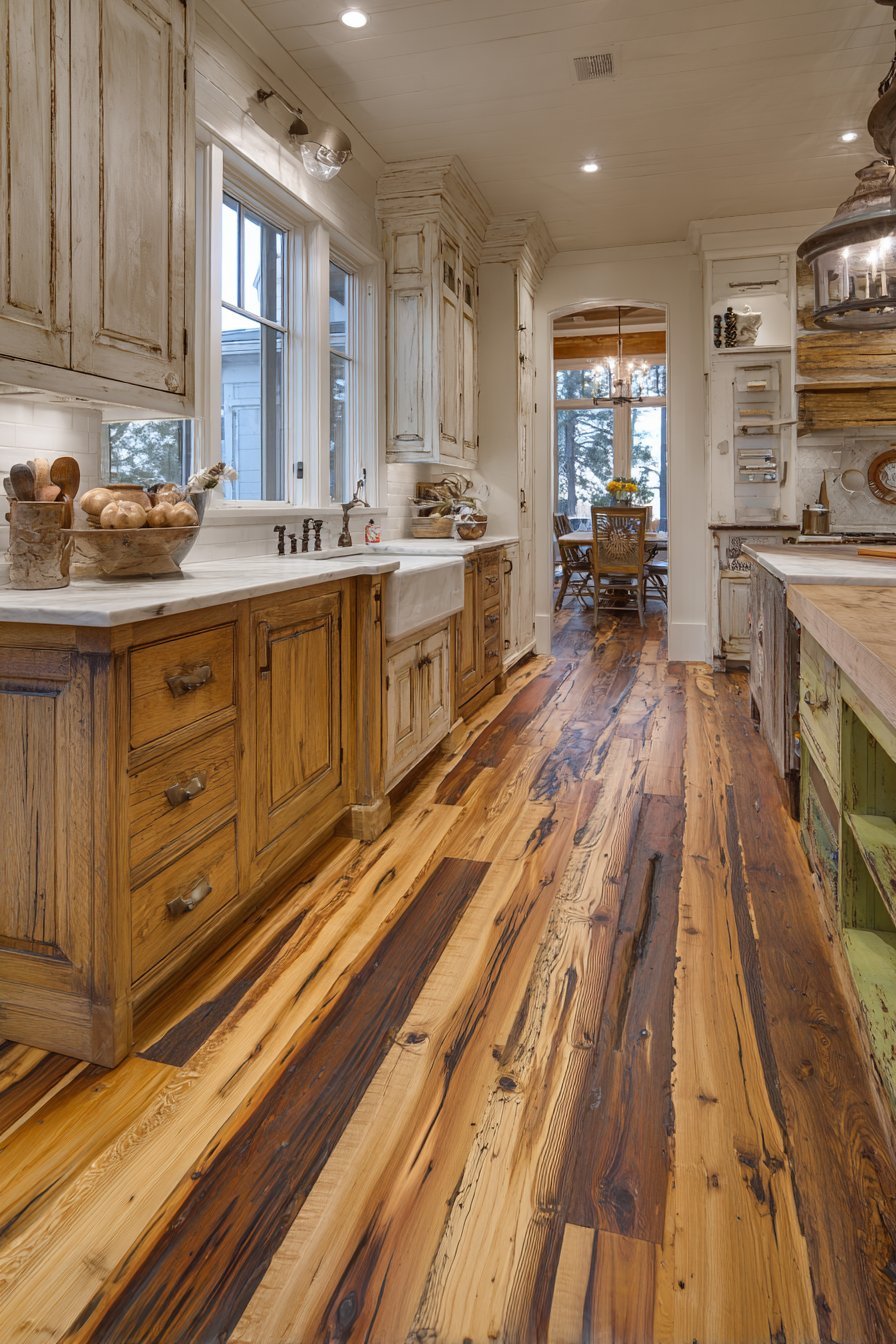
A country kitchen features reclaimed chestnut flooring with authentic history. Wormholes, mineral streaks, and color variations tell stories. Wide planks range from pale tan to chocolate brown. Each board carries patina from its previous life. Impossible-to-replicate character defines this floor.
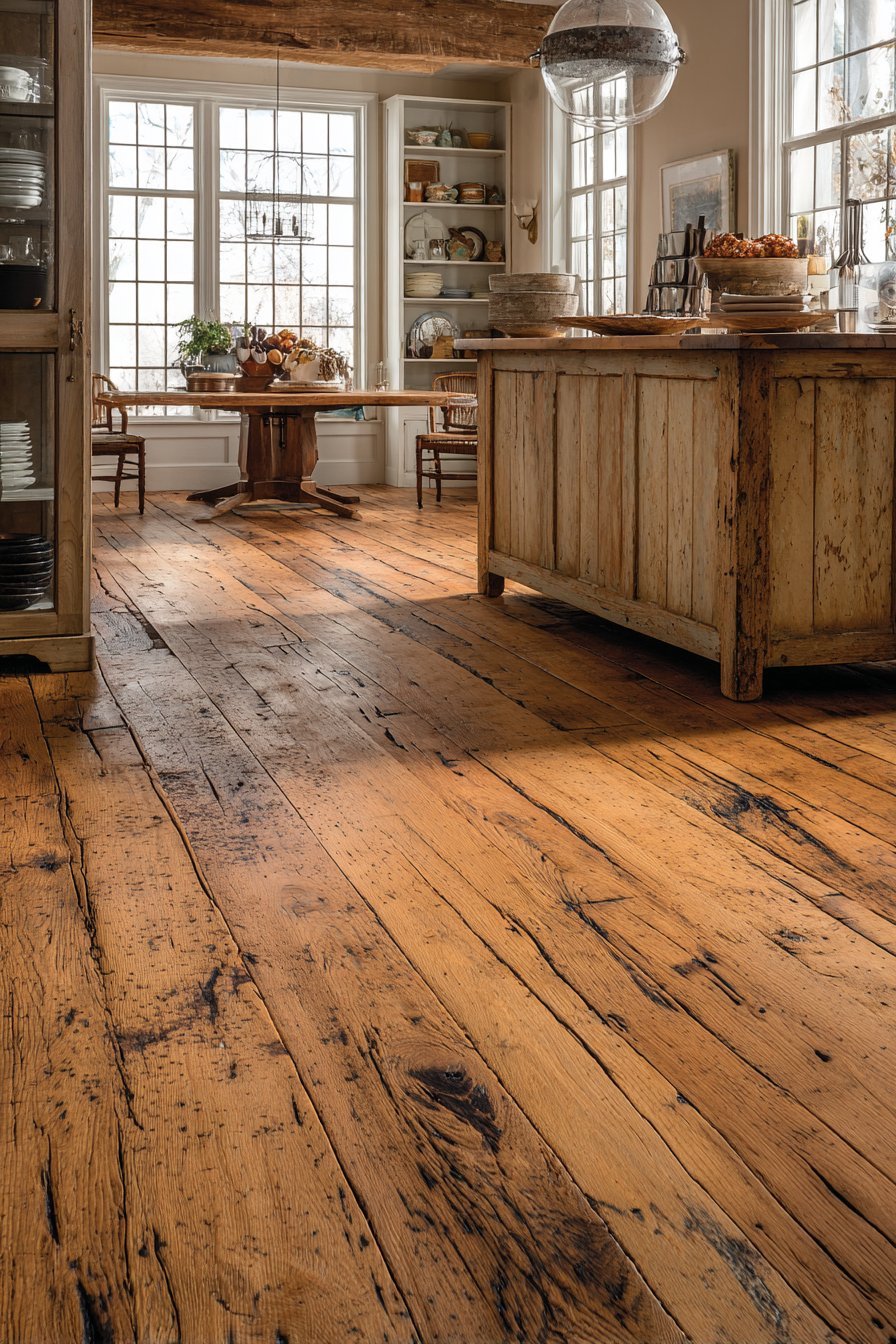
A farmhouse table and vintage hutch embrace the historical aesthetic. Natural light through multi-pane windows emphasizes unique markings. Each plank’s authentic imperfections become design features. The aged beauty surpasses any manufactured appearance. Genuine history adds value beyond monetary investment.
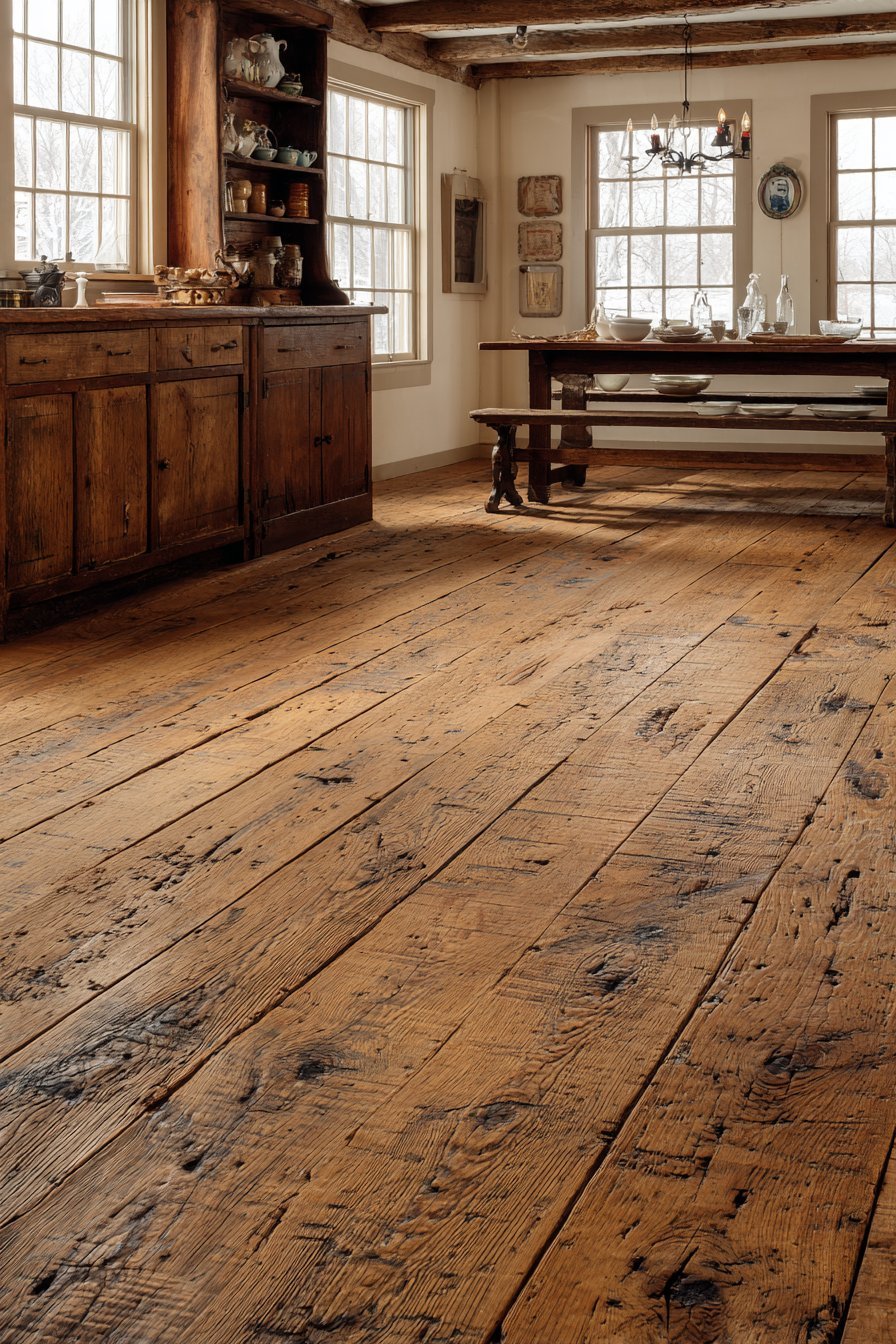
Reclaimed chestnut represents rare flooring material currently. American chestnut trees largely disappeared from forests decades ago. Salvaged barn wood provides the only available source. This scarcity makes the material particularly special.
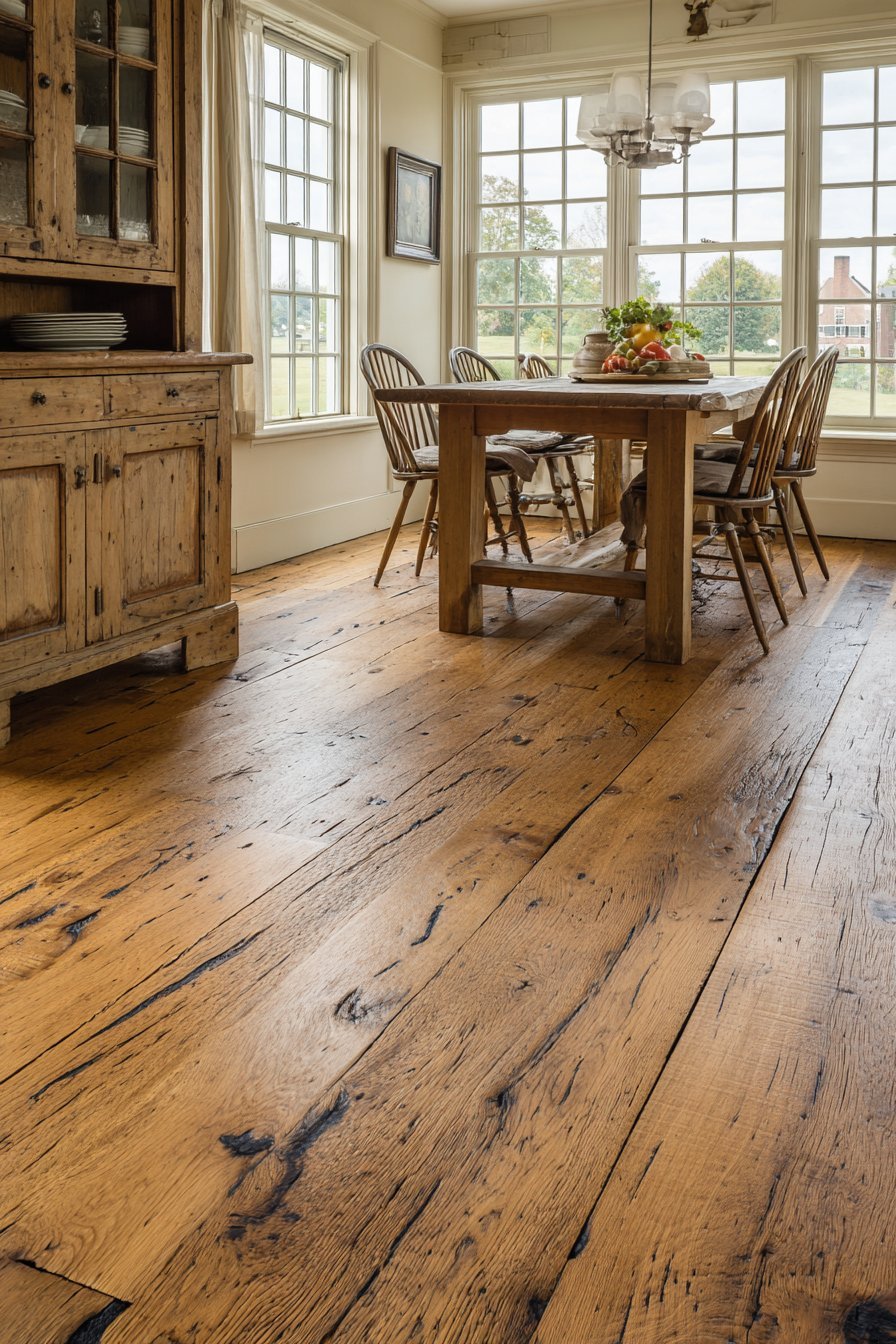
The authentic patina develops over decades of use. Surface character reflects genuine wear and weathering. No manufacturing process can replicate this authenticity. The floor’s history becomes part of your home’s narrative.
Key Design Tips:
- Source authentic reclaimed chestnut from reliable suppliers
- Embrace wormholes and mineral streaks as historical features
- Accept wide color variation as authentic characteristic
- Pair with farmhouse and vintage furniture
- Use multi-pane windows for character-revealing light
- Celebrate imperfections rather than hiding them
- Appreciate the material’s rarity and historical significance
25. Ethereal Bleached Ash Entryway
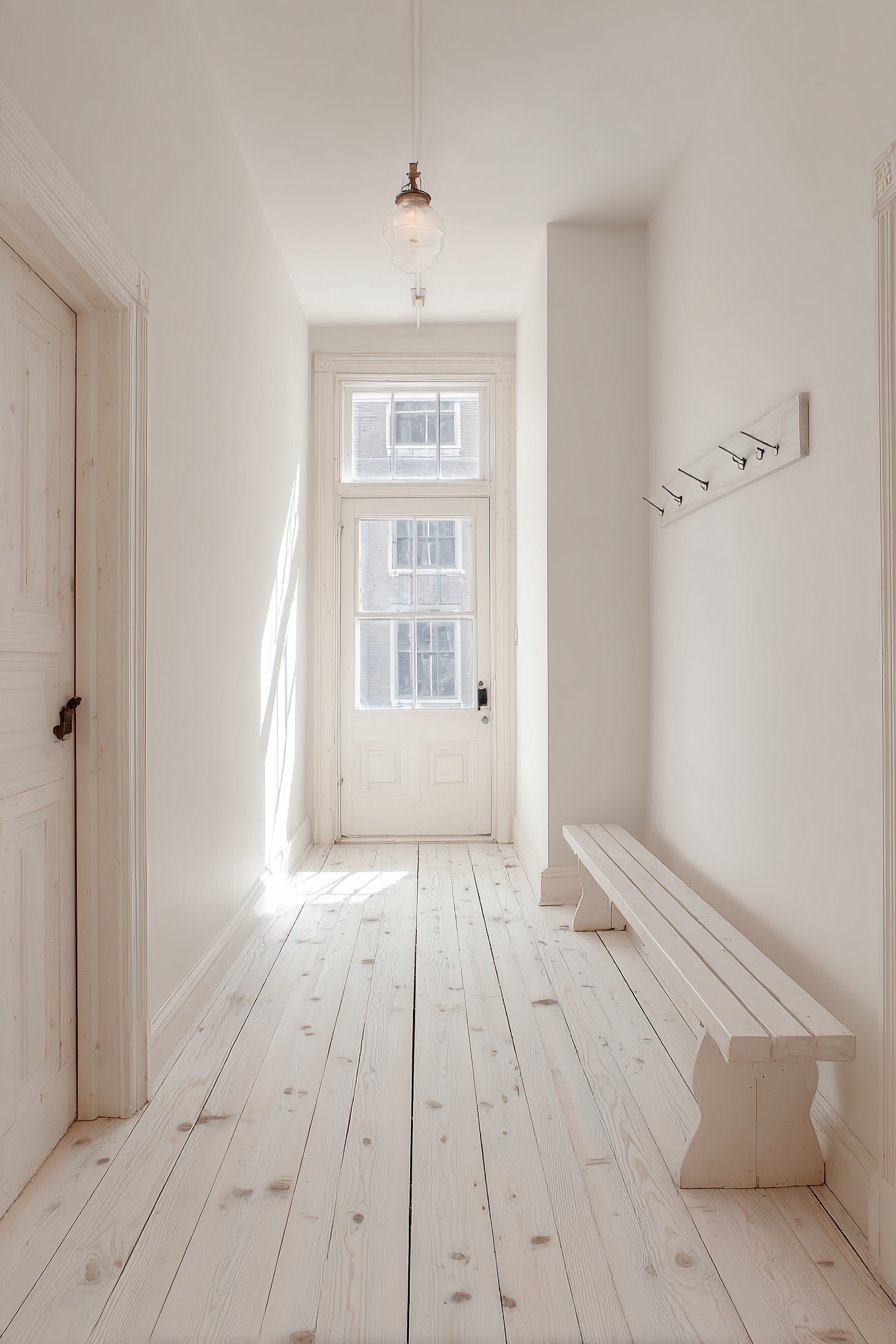
A minimalist entryway features bleached ash creating almost-white foundation. Subtle grey undertones complement the pale finish. Faint grain remains visible beneath the light treatment. The clean, light planks enhance contemporary openness. A simple coat rack and bench maintain monochromatic simplicity.
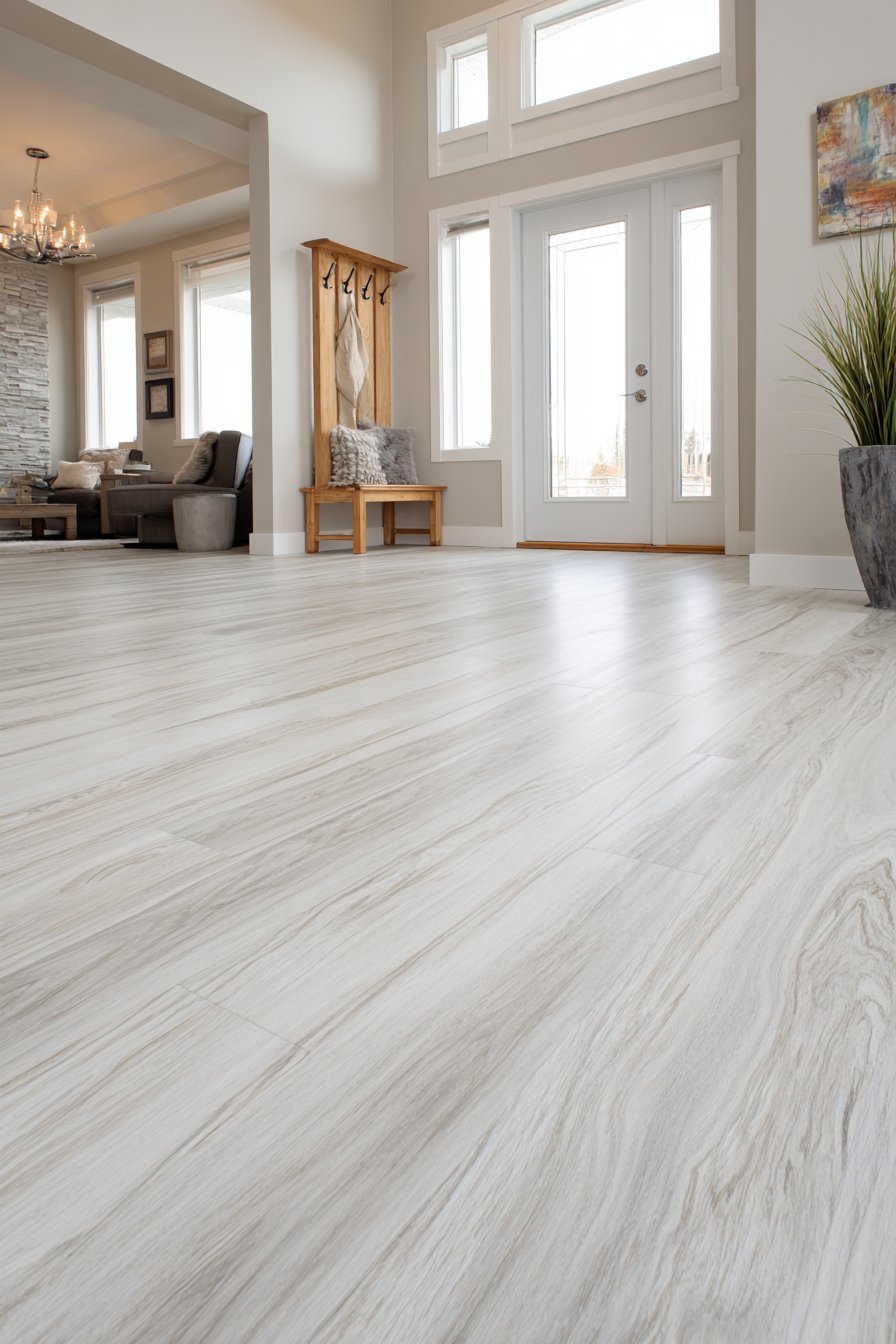
Abundant natural light from a transom window emphasizes pale quality. The flooring’s ethereal character suits Nordic-inspired aesthetics. The ultra-light appearance maximizes perceived spaciousness. Fresh, clean feelings welcome visitors immediately. The brightness creates positive first impressions.
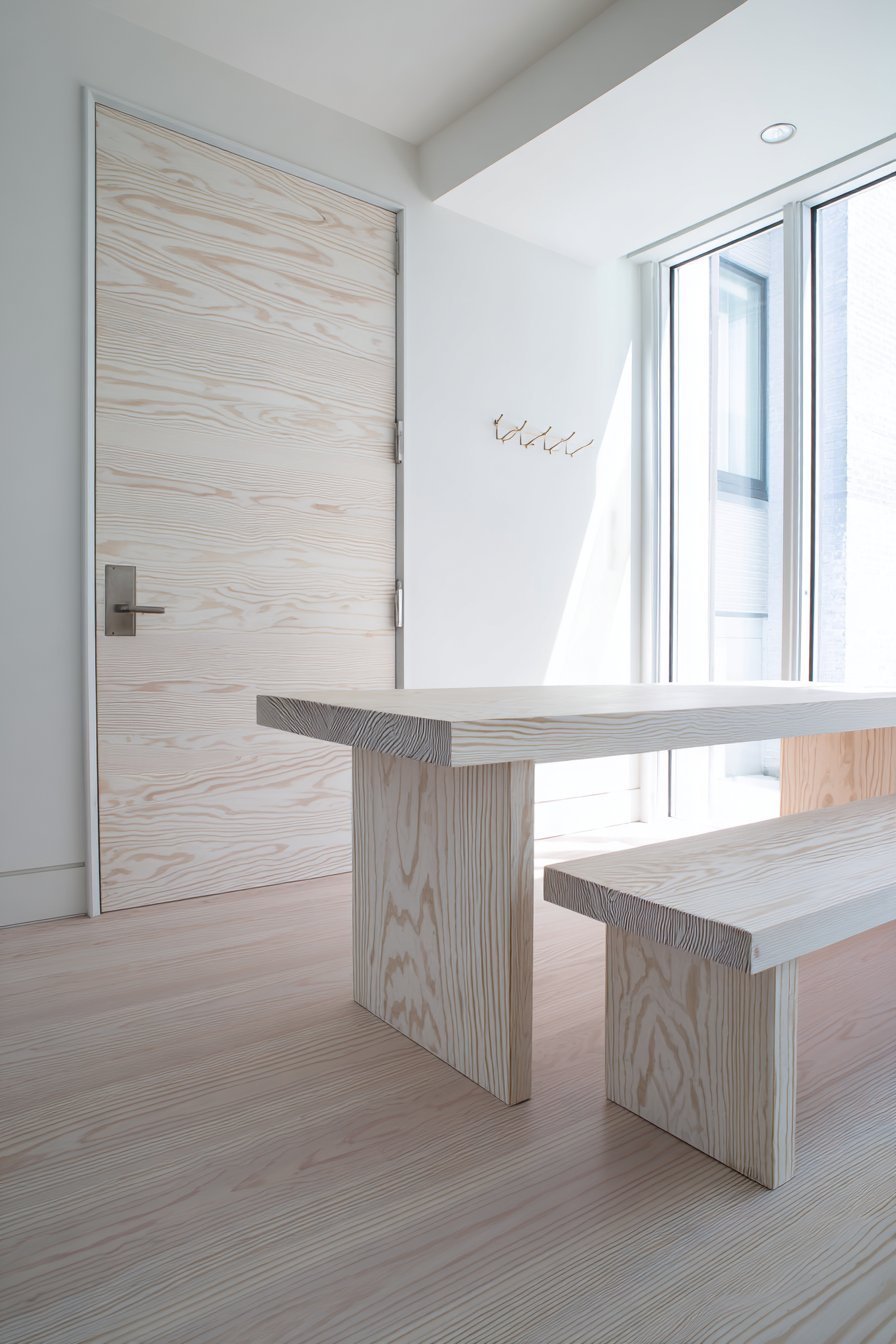
Bleaching removes ash’s natural color while preserving grain. The treatment creates nearly white appearance without paint. The transparency maintains wood character subtly. The finish achieves lightness without losing material authenticity.
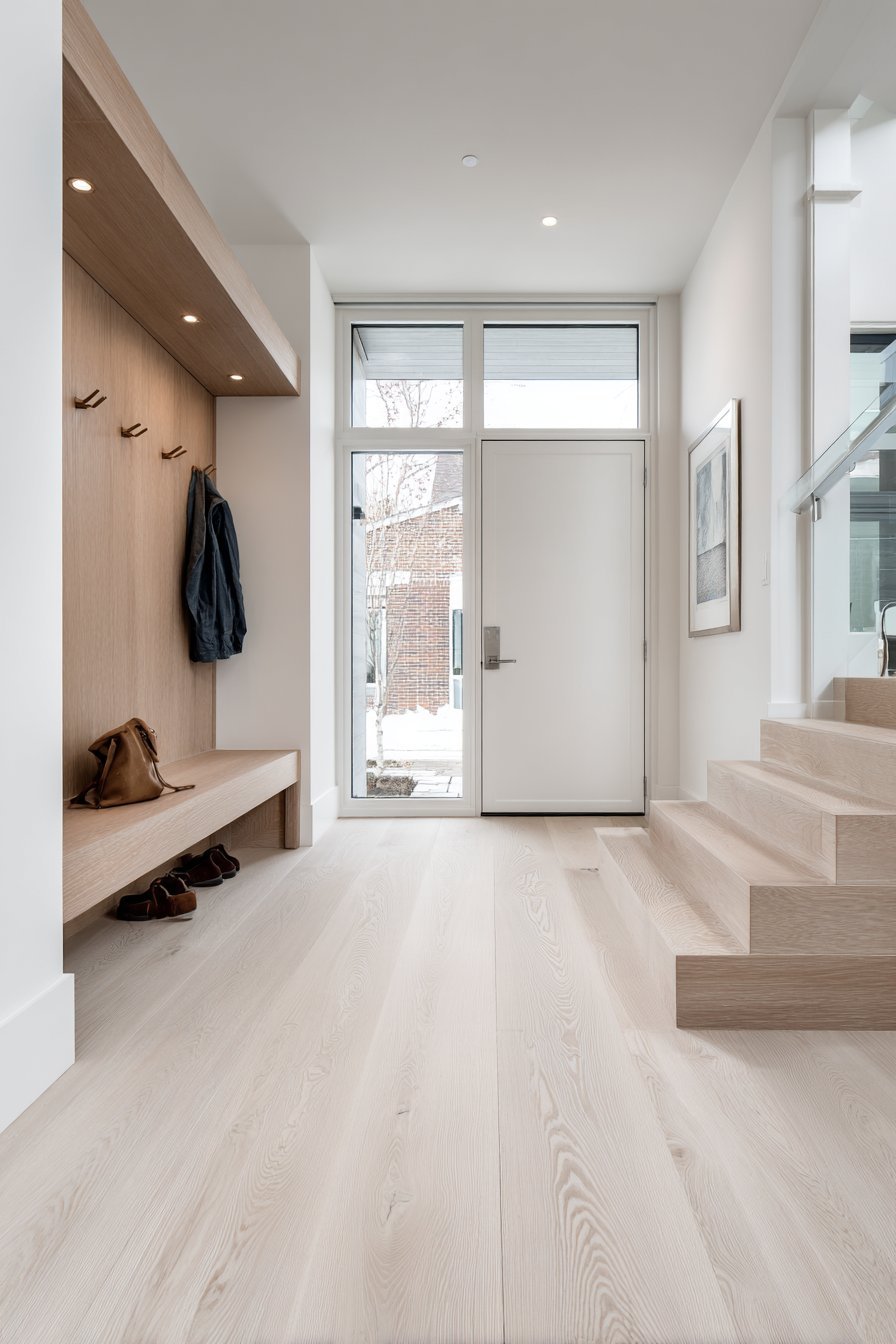
The pale tones suit small entryways particularly well. Light flooring makes compact spaces feel more generous. The brightness reflects available light throughout. Color choice significantly impacts spatial perception.
Key Design Tips:
- Select bleached ash for nearly white contemporary appearance
- Use in entryways to maximize perceived spaciousness
- Maintain monochromatic schemes with matching furniture
- Maximize natural light through transom windows
- Choose Nordic-inspired aesthetics for cohesive design
- Preserve subtle grain visibility through transparent treatment
- Create fresh, welcoming first impressions with pale tones
26. Heritage Antique Heart Pine Cellar
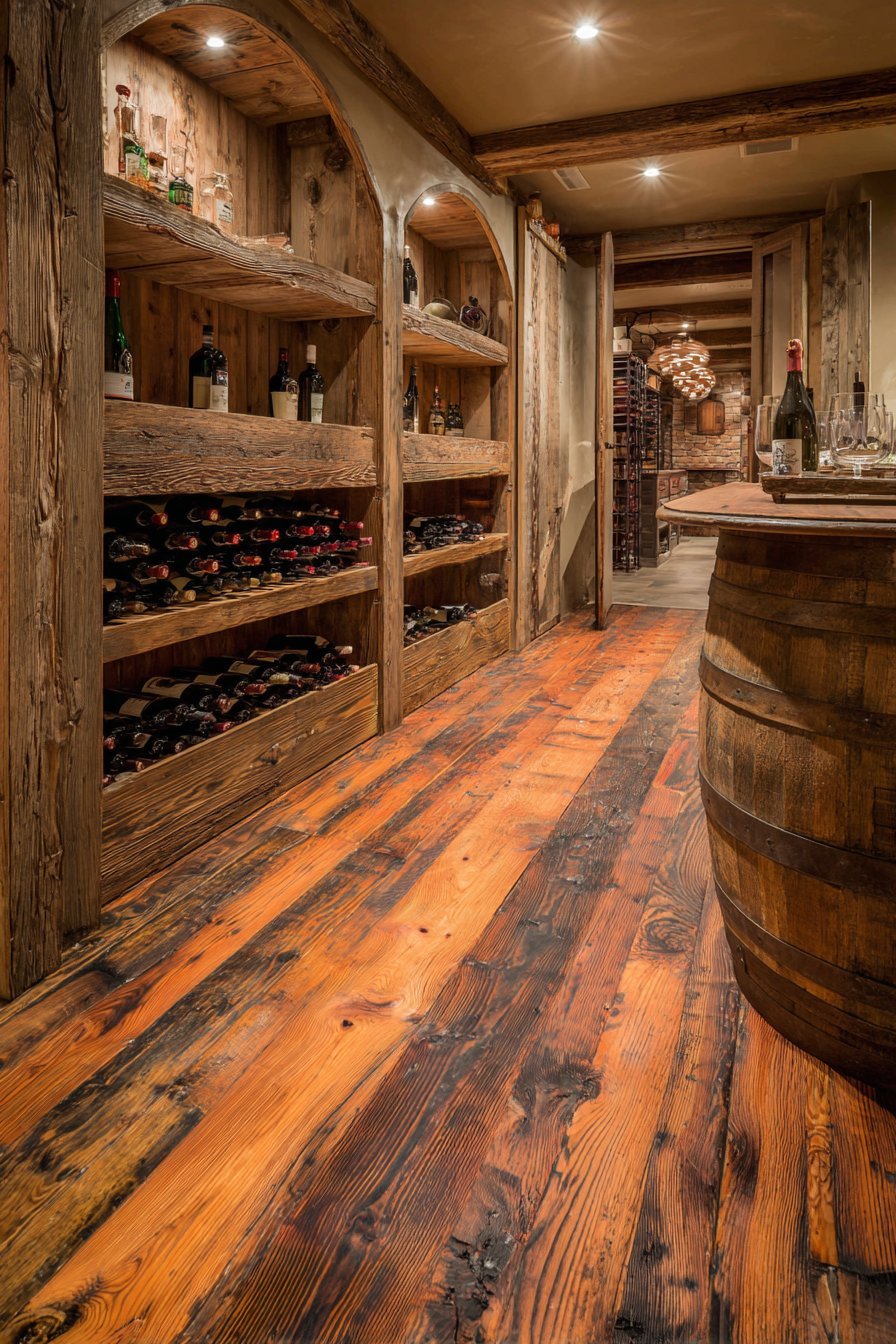
A wine cellar features antique heart pine with century-old patina. Rich caramel to deep amber tones glow warmly. Tight grain patterns characteristic of old-growth pine show throughout. Wine racks made from matching reclaimed wood complement the floor. Subtle ambient lighting reveals depth of color beautifully.
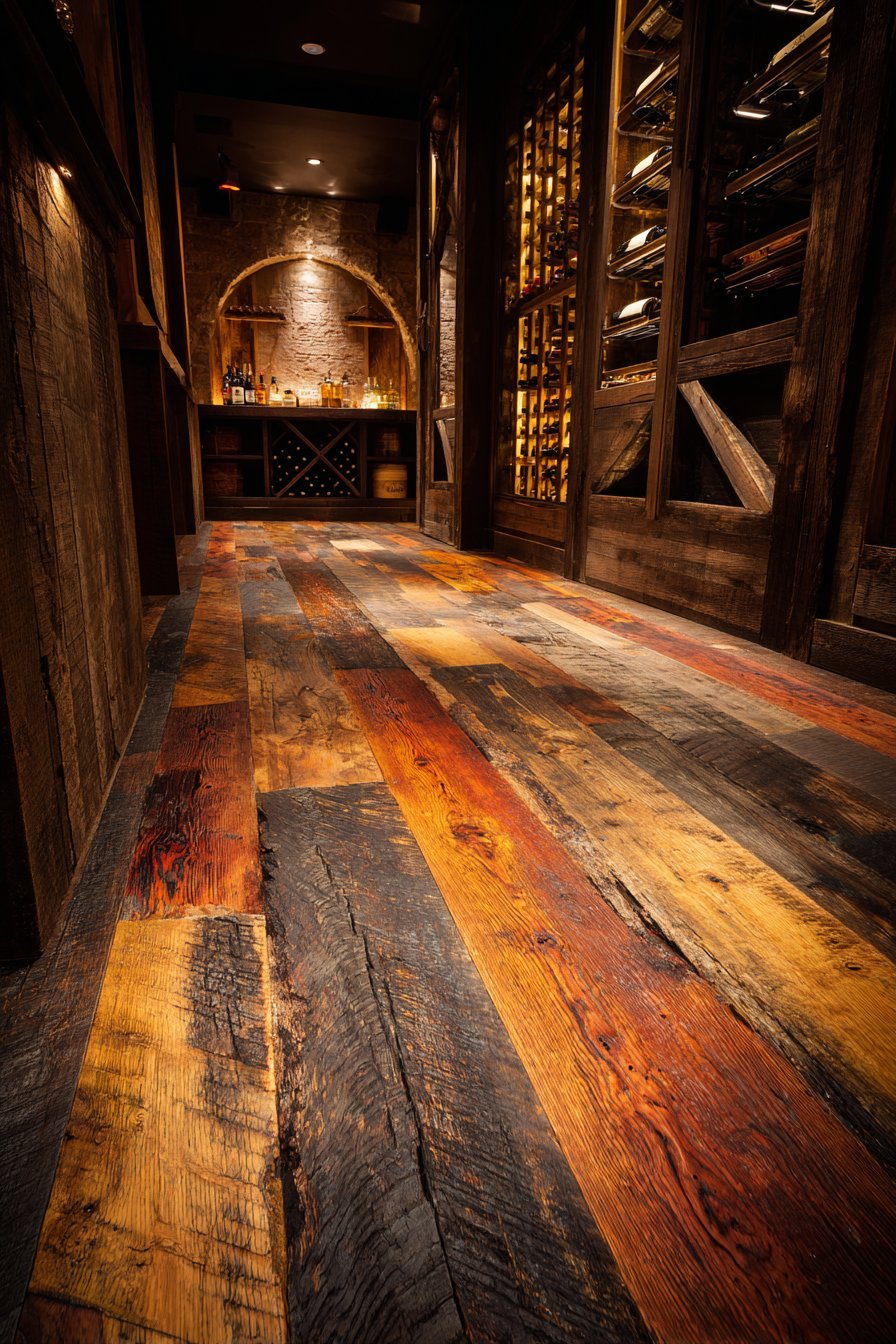
The wood’s age contributes genuine heritage quality. Time has enriched the surface beyond any artificial treatment. The warmth suits the intimate cellar setting perfectly. The glow creates inviting atmosphere for wine appreciation. History and functionality unite in this application.
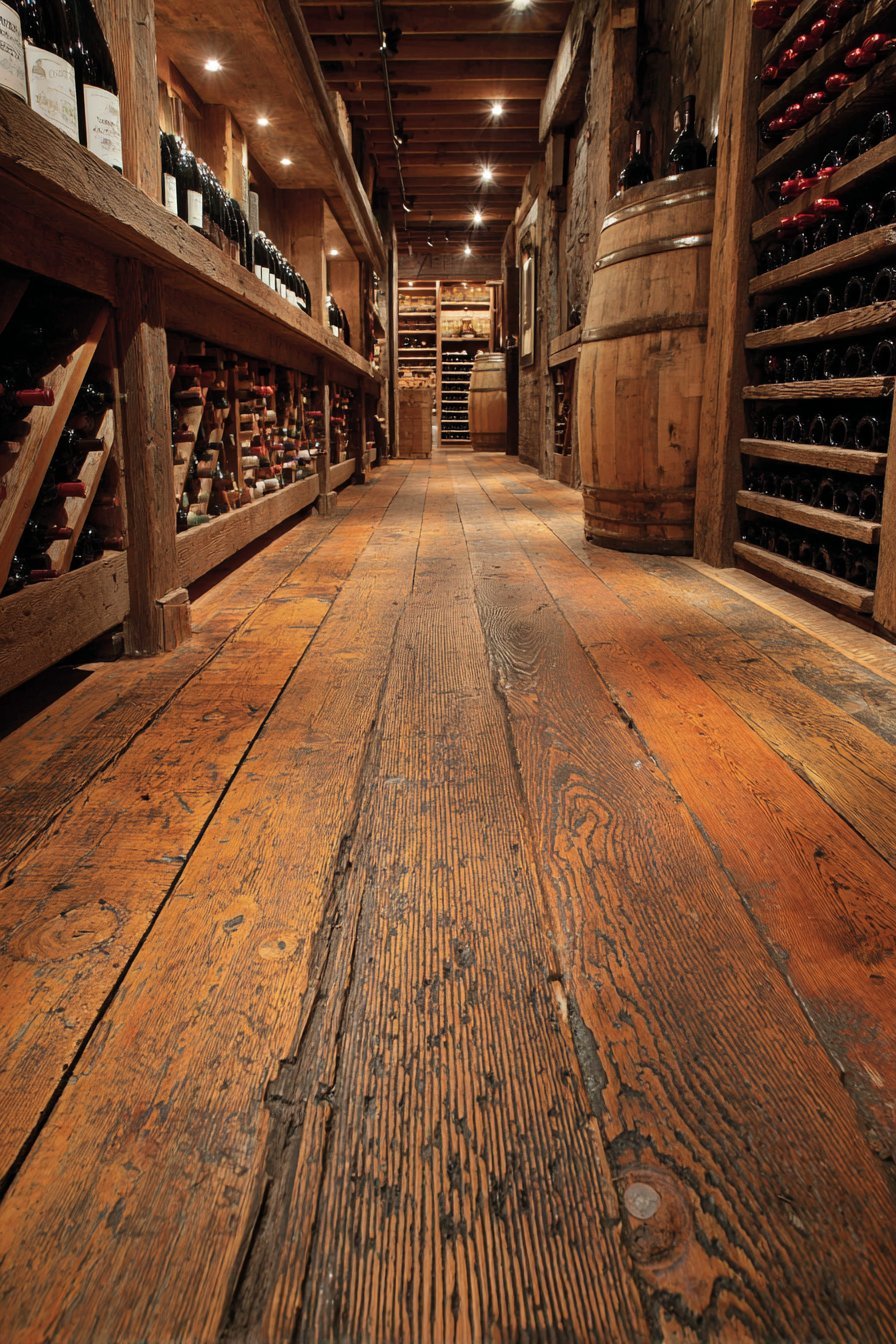
Antique heart pine displays exceptionally tight growth rings. Old-growth trees matured slowly creating dense, stable wood. This quality surpasses modern fast-growth pine significantly. The material represents premium reclaimed lumber category.
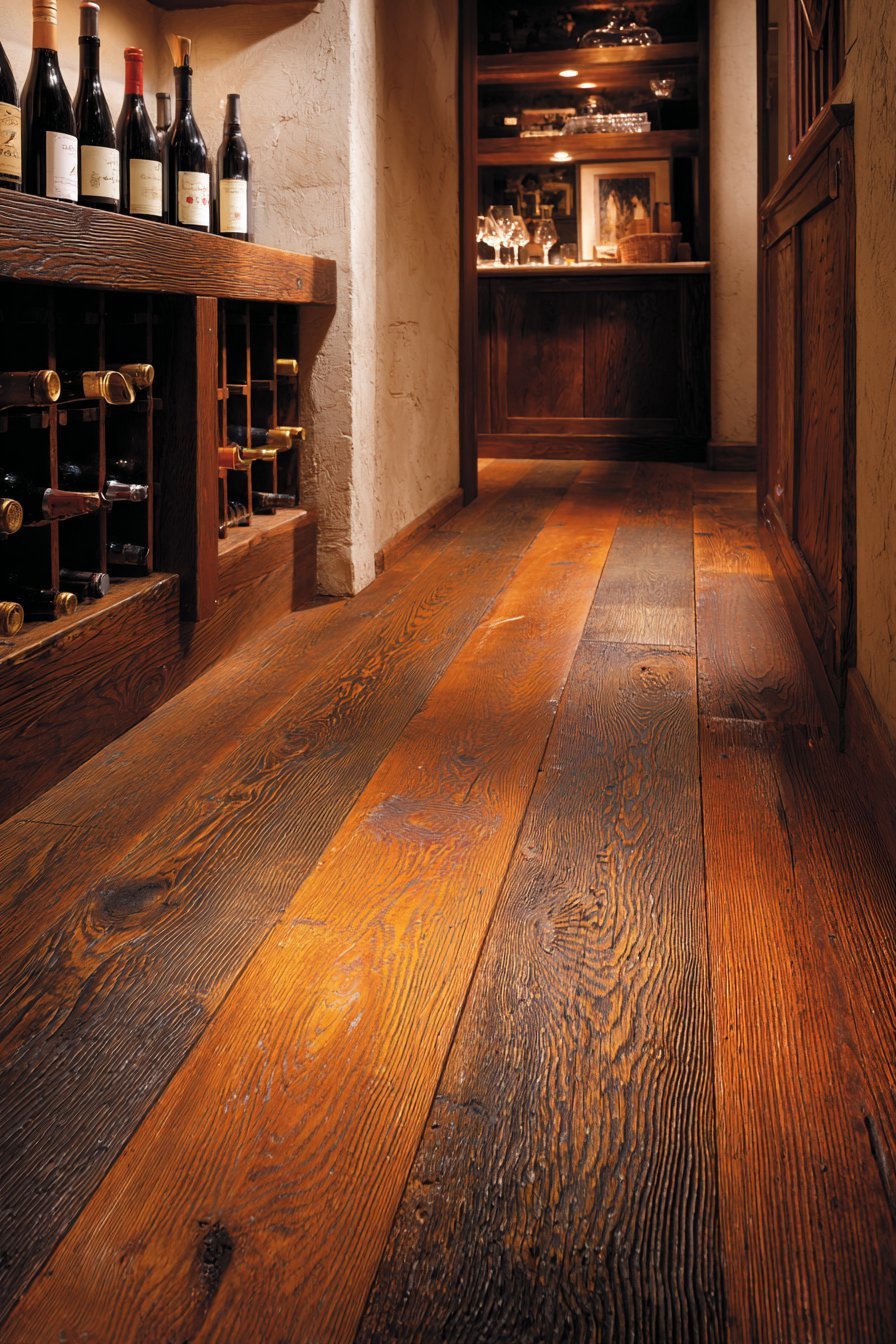
The cellar’s subtle lighting enhances warm tones. The intimate space benefits from rich, glowing colors. The flooring contributes to the room’s special atmosphere. Material choices can elevate functional spaces remarkably.
Key Design Tips:
- Choose antique heart pine for genuine heritage quality
- Appreciate tight grain from old-growth trees
- Use in wine cellars and intimate spaces
- Select rich caramel to amber tones
- Complement with matching reclaimed wine racks
- Apply subtle ambient lighting to reveal color depth
- Value old-growth quality over modern alternatives
27. Family-Friendly Red Oak Playroom
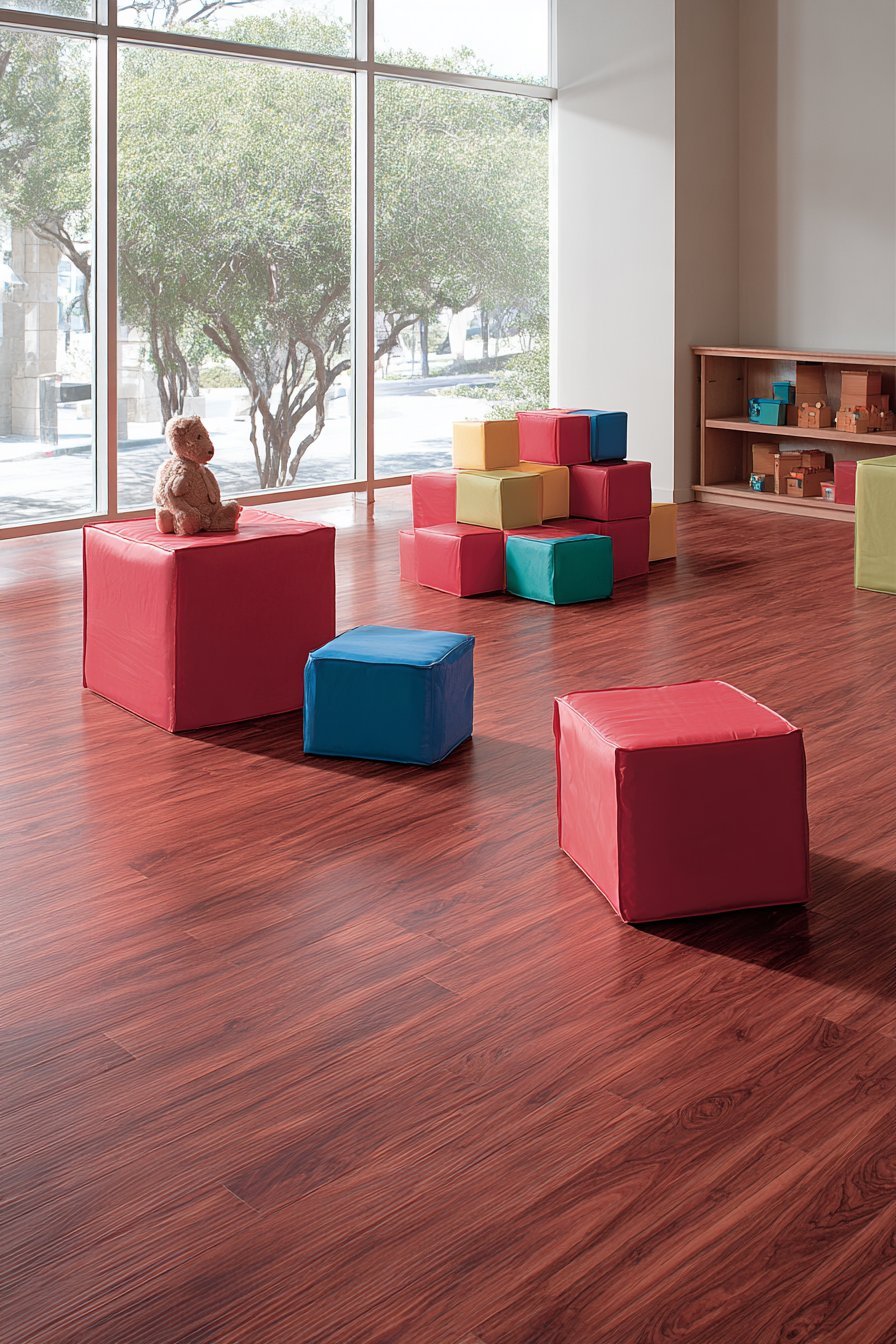
A playroom features durable red oak with medium reddish-brown tones. Prominent cathedral grain patterns characterize this classic American hardwood. The resilient surface withstands active family use. Colorful storage cubes and play mats partially cover the floor. Natural daylight from large windows shows true color.
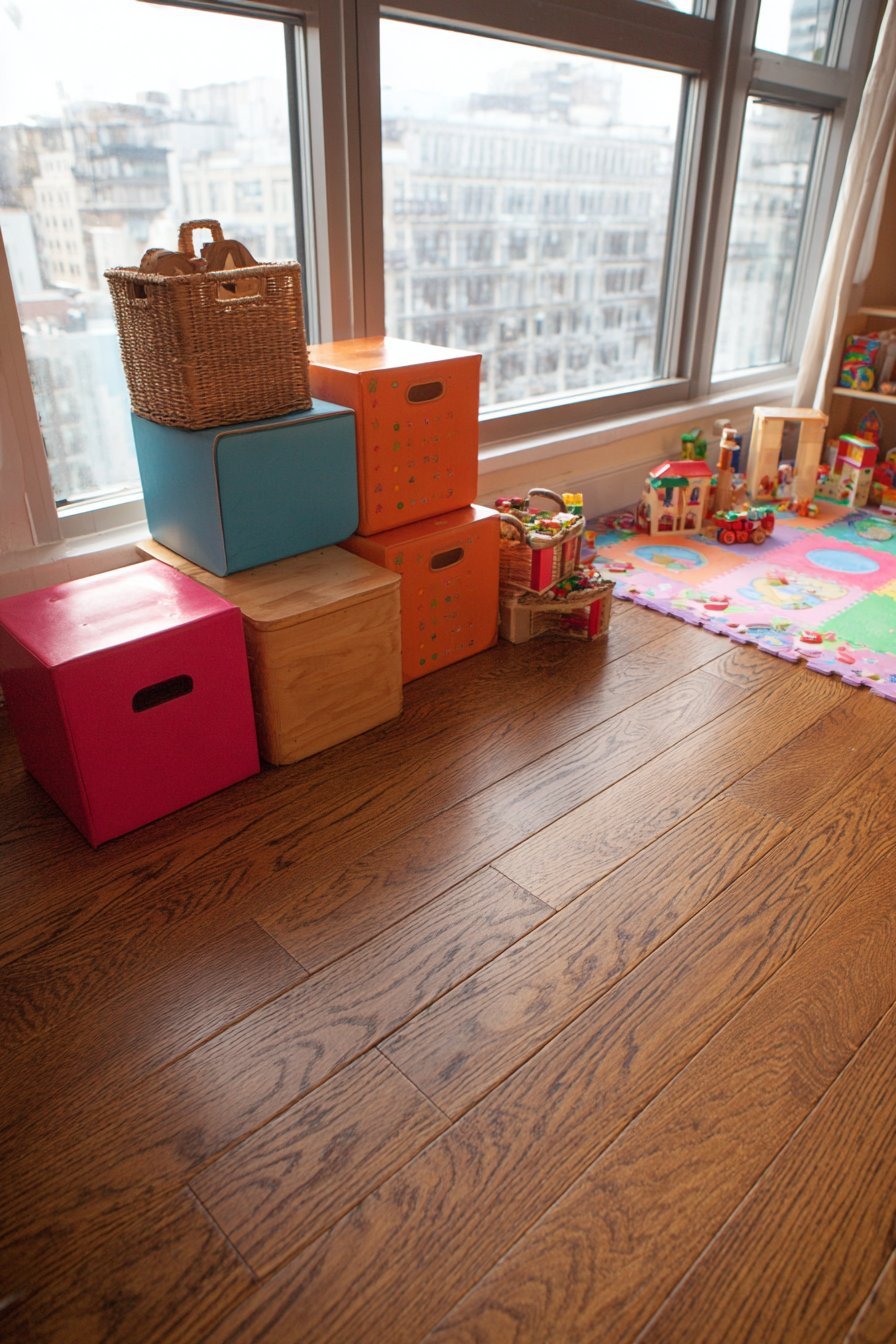
Red oak’s hardness suits high-impact areas effectively. Children’s activities demand durable flooring materials. The practical choice maintains natural beauty simultaneously. Functionality and aesthetics combine in family applications.
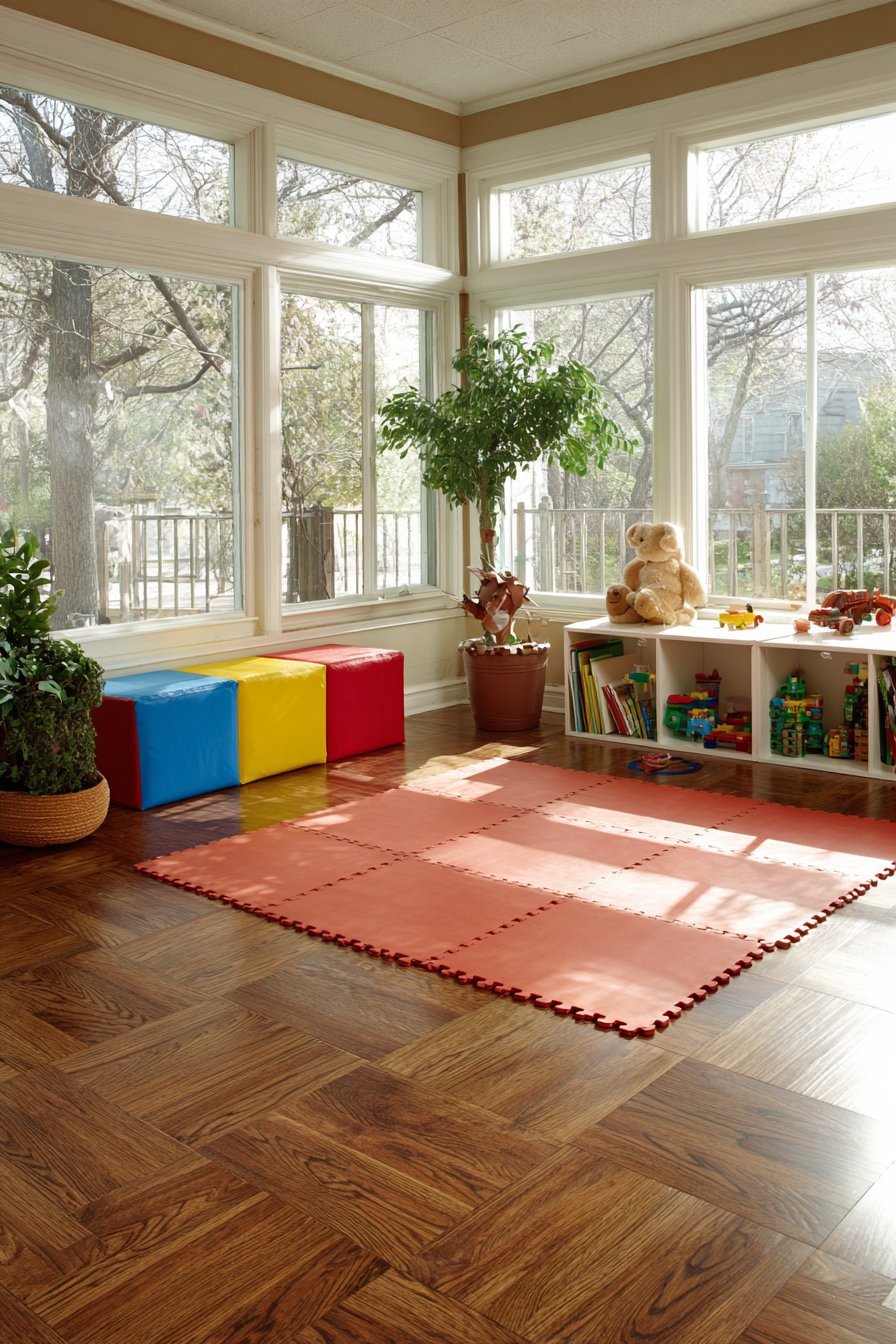
The cathedral grain provides visual interest without requiring attention. The floor serves as backdrop for colorful play items. The neutral wood character doesn’t compete with toys. Proper material selection supports room function effectively.
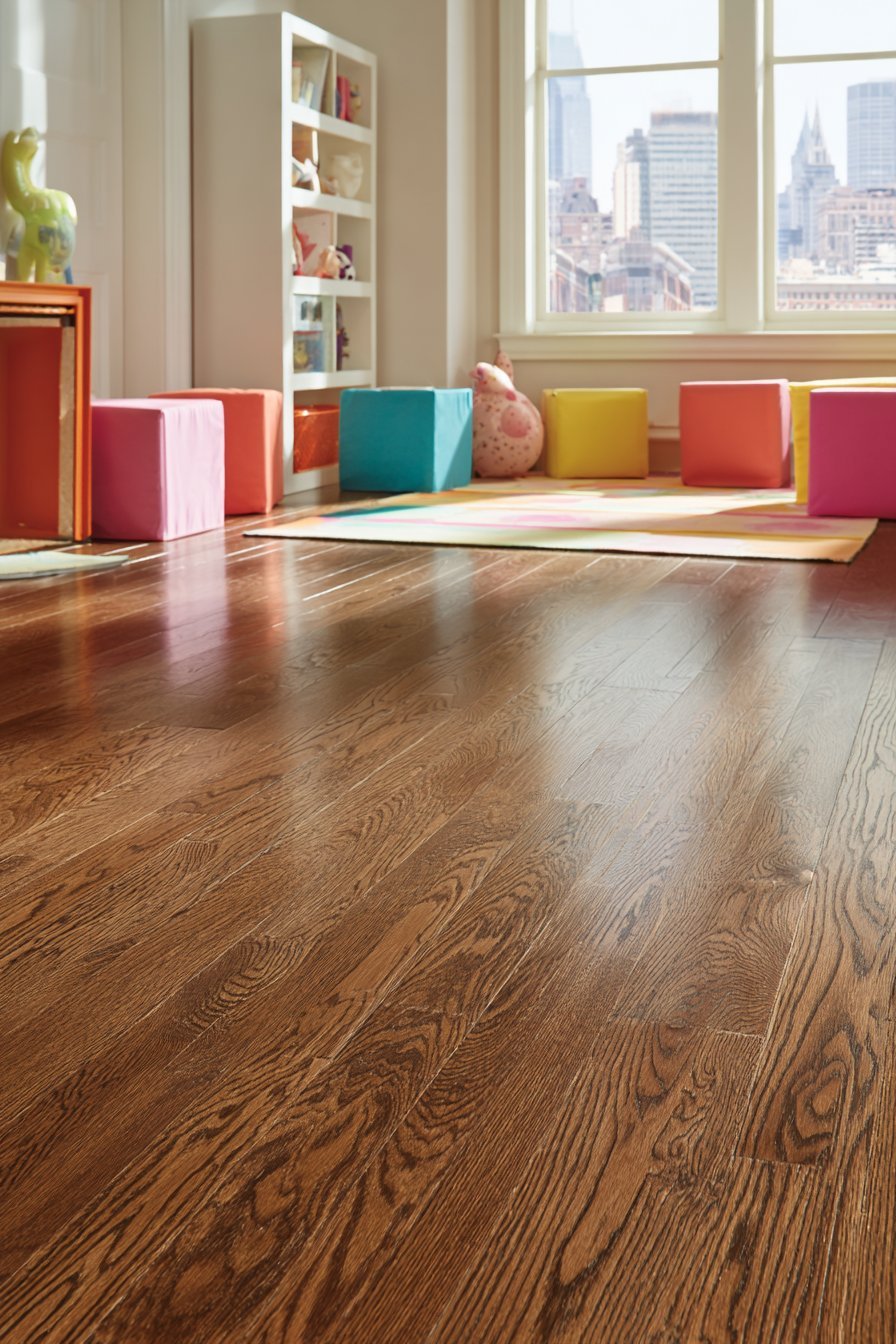
The traditional choice endures because it performs reliably. Red oak has served American homes for generations. The track record demonstrates proven dependability. Conservative choices rarely disappoint in family spaces.
Key Design Tips:
- Choose red oak for durability in playrooms
- Accept cathedral grain as characteristic feature
- Use in high-impact family areas
- Select medium reddish-brown tones for warmth
- Cover partially with play mats for comfort
- Rely on natural hardness for child-resistant surface
- Trust traditional materials with proven performance
28. Outdoor Ipe Screened Porch
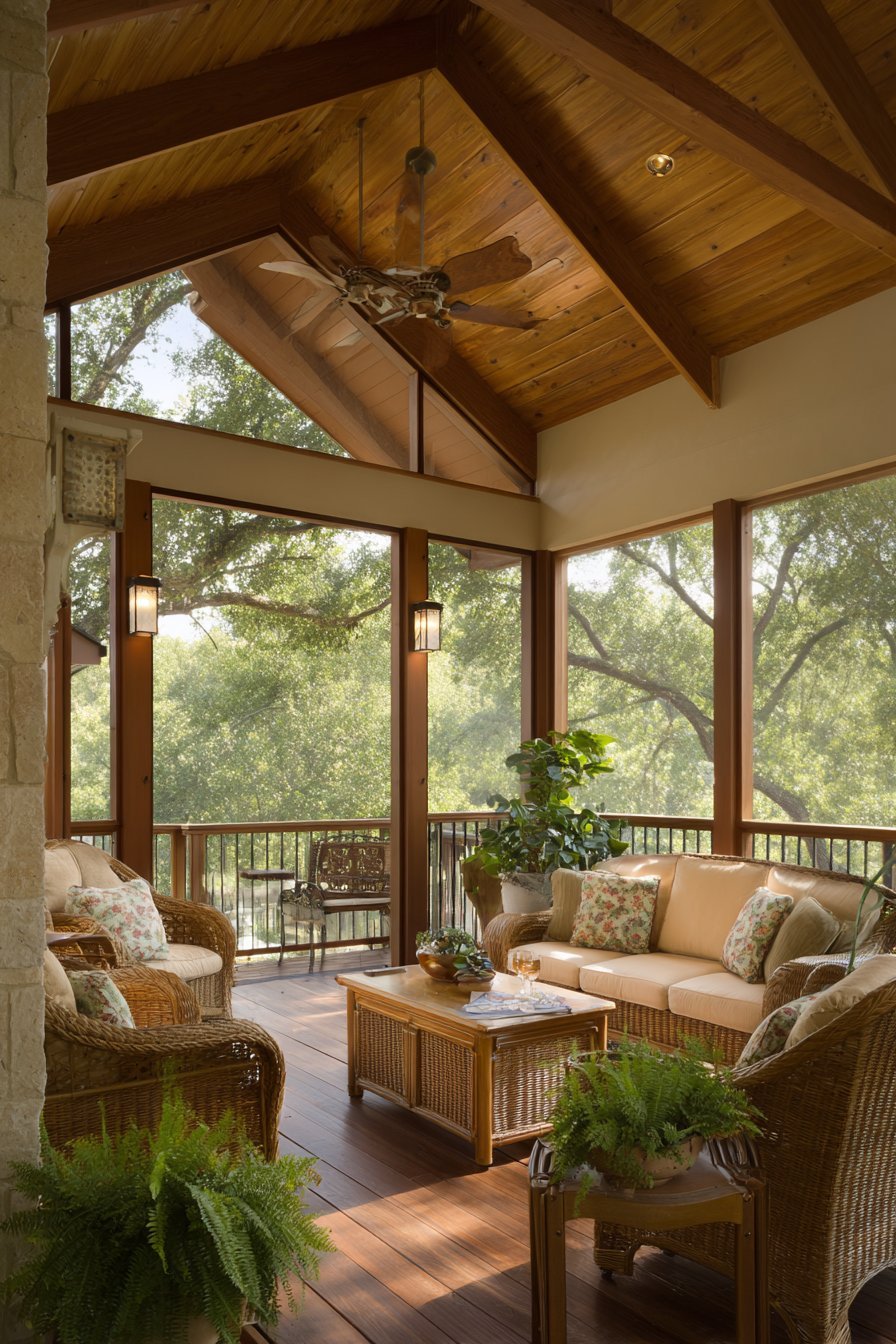
A screened porch features ipe decking with exceptional weather resistance. Natural dark brown color shows subtle olive undertones. The extremely dense tropical hardwood requires no additional finishing. Fine, tight grain and natural oils allow outdoor installation. Wicker furniture and potted ferns create comfortable outdoor rooms.
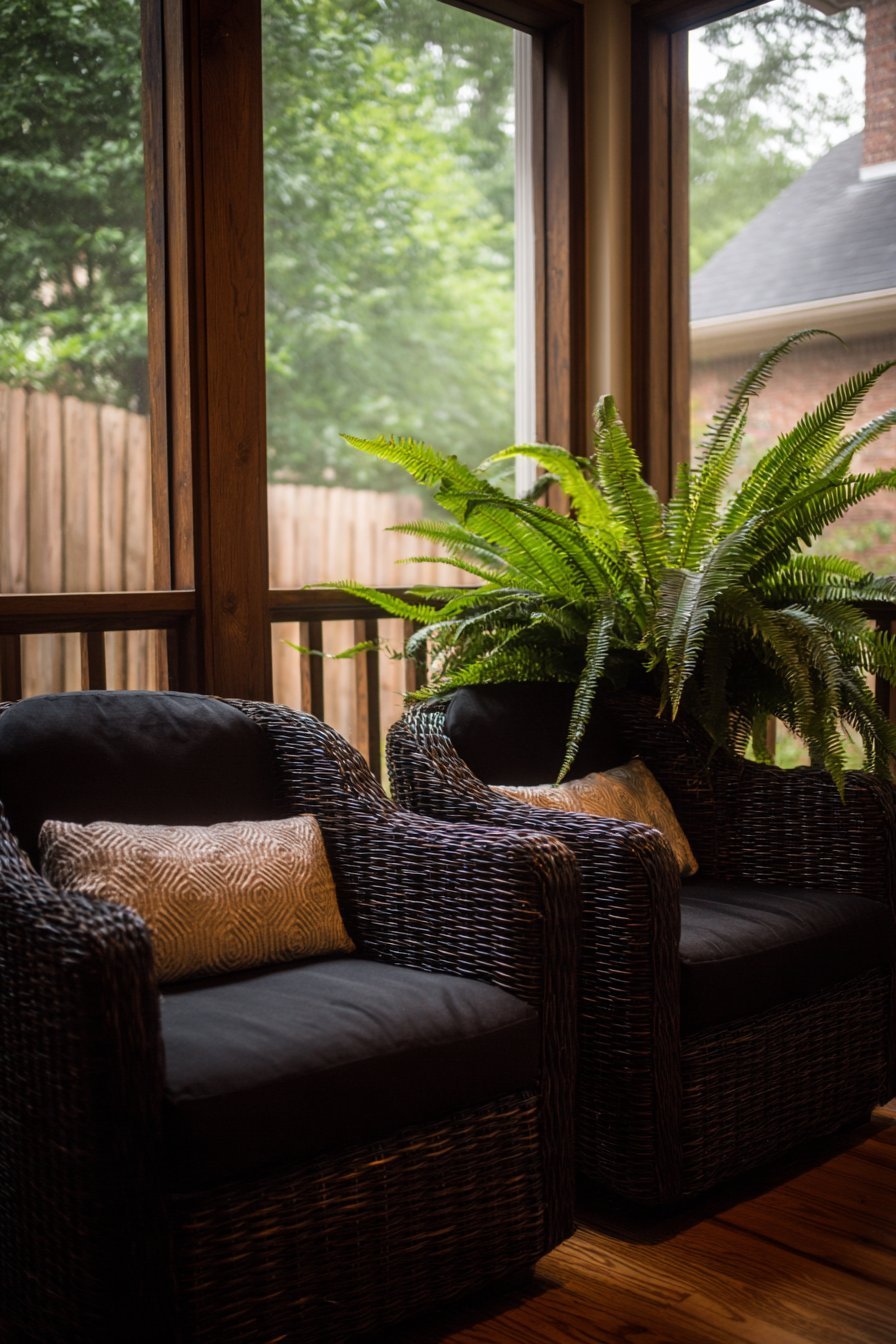
Filtered natural light through screens reveals rich color. The smooth surface demonstrates ipe’s premium quality. The exotic hardwood transitions indoor comfort outdoors seamlessly. The material bridges architectural boundaries effectively.
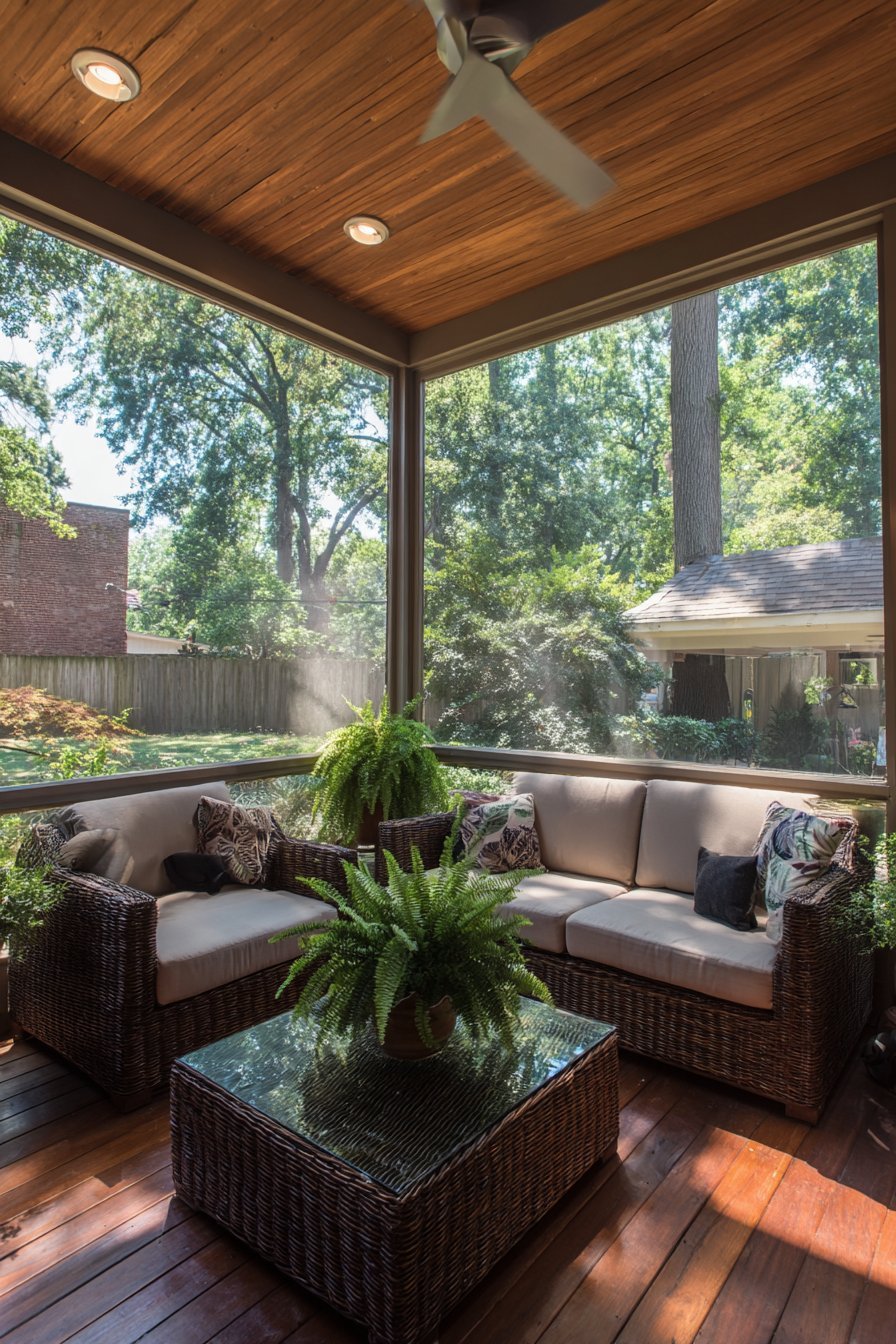
Ipe’s density surpasses most temperate hardwoods dramatically. This characteristic provides superior weather and insect resistance. The natural oils repel moisture without treatment. Premium performance justifies the material investment.
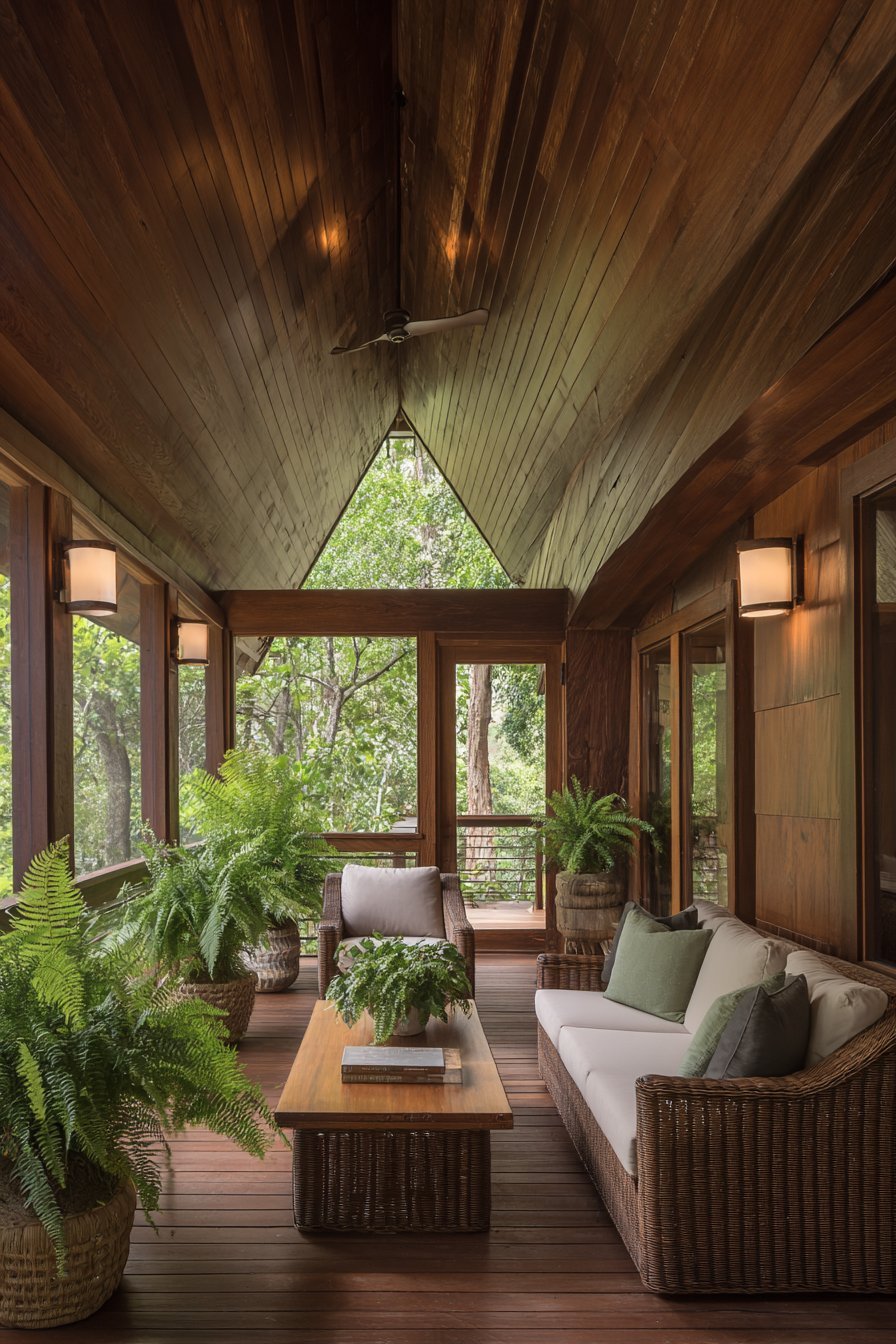
The outdoor application requires specialized materials. Traditional indoor hardwoods fail in exterior conditions. Ipe delivers wood aesthetics with outdoor durability. The right material makes challenging applications possible.
Key Design Tips:
- Select ipe specifically for outdoor applications
- Embrace dark brown color with olive undertones
- Use in screened porches and covered exterior spaces
- Appreciate natural oils that eliminate finishing requirements
- Pair with wicker furniture for seamless indoor-outdoor transition
- Accept premium pricing for superior outdoor performance
- Choose extremely dense woods for weather resistance
29. Nordic Whitewashed Pine Bedroom
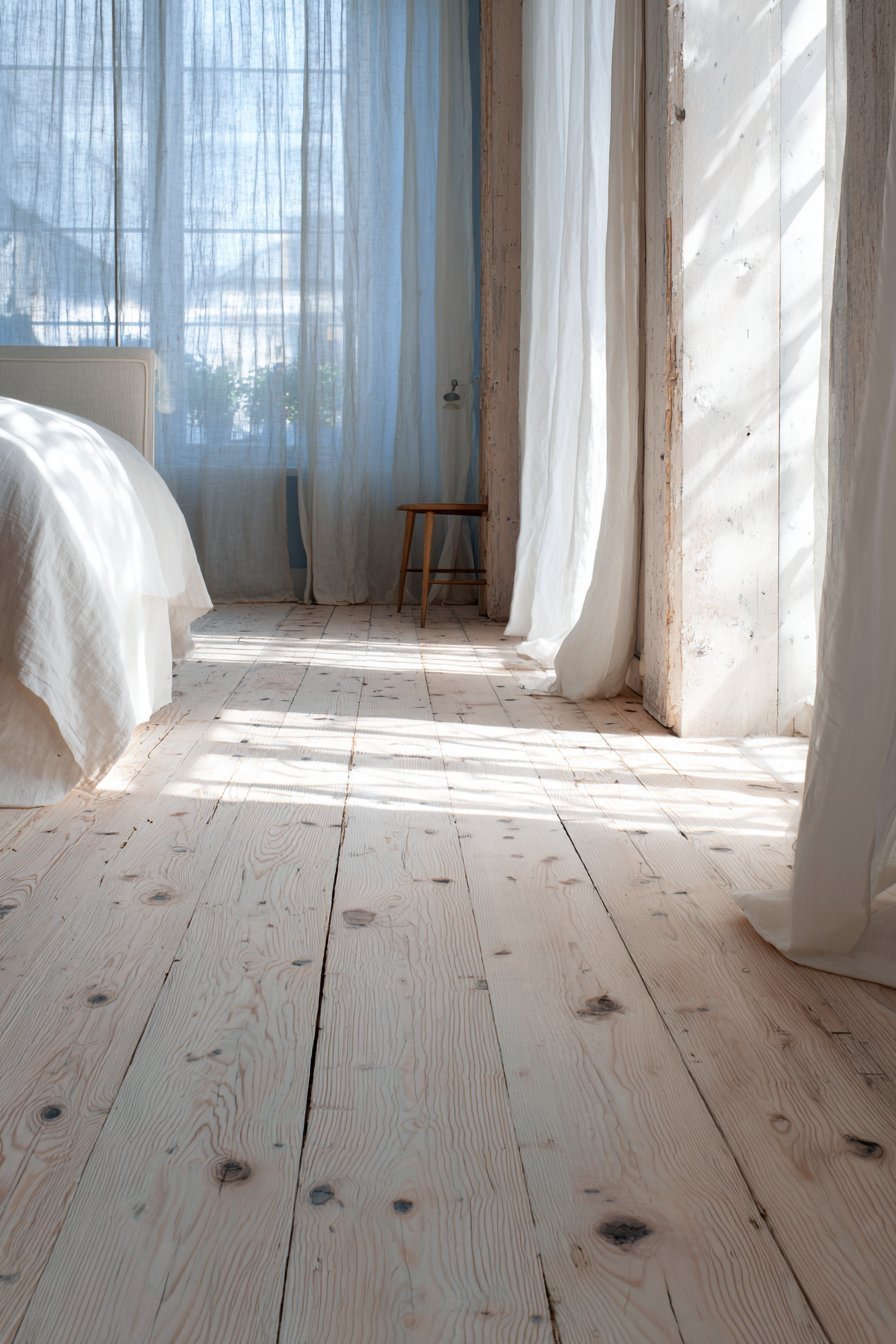
A Scandinavian-inspired bedroom features whitewashed pine flooring. Visible grain and knots show beneath translucent white finish. The treatment preserves wood’s natural texture beautifully. Simple furnishings in white and natural linen complement the floor. Soft morning light through gauze curtains emphasizes organic character.
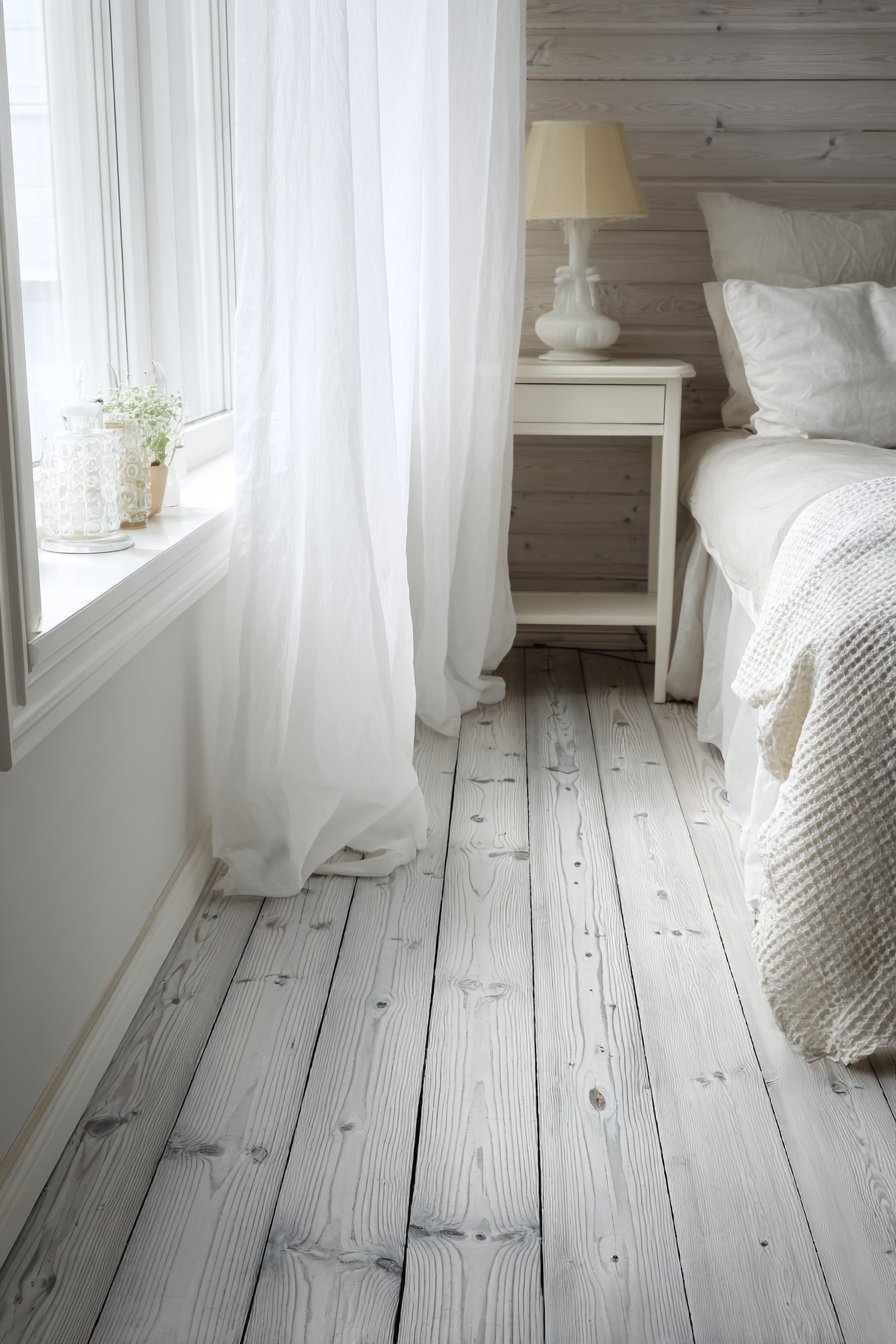
The whitewash maintains pine’s deliberately imperfect nature. The casual elegance suits relaxed bedroom environments. The Nordic aesthetic celebrates natural materials with light treatment. The finish brightens without hiding wood character completely.
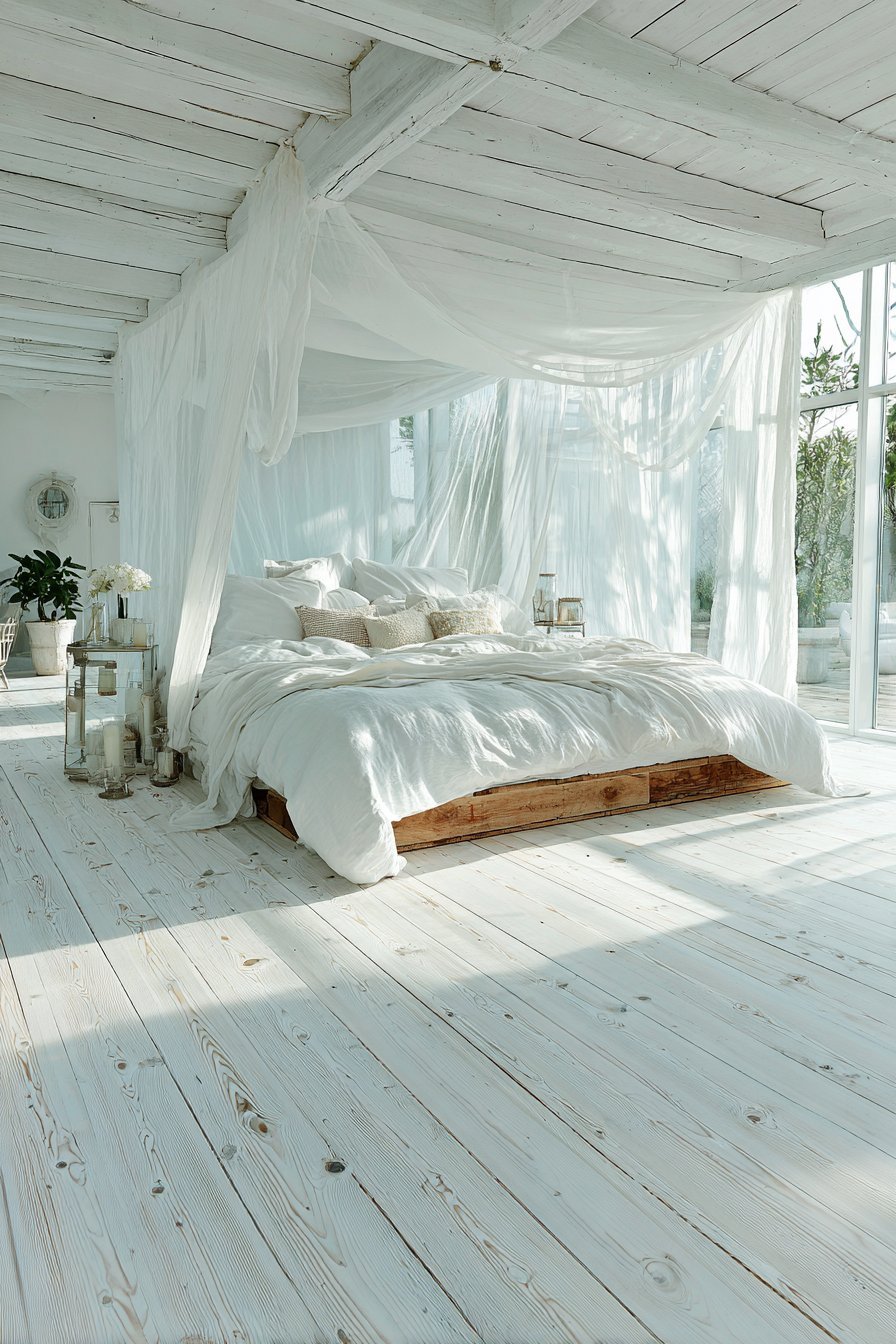
Whitewashing differs from painting by remaining translucent. Wood grain and character show through the white coating. This technique adds color while preserving texture. The result feels authentic rather than concealed.
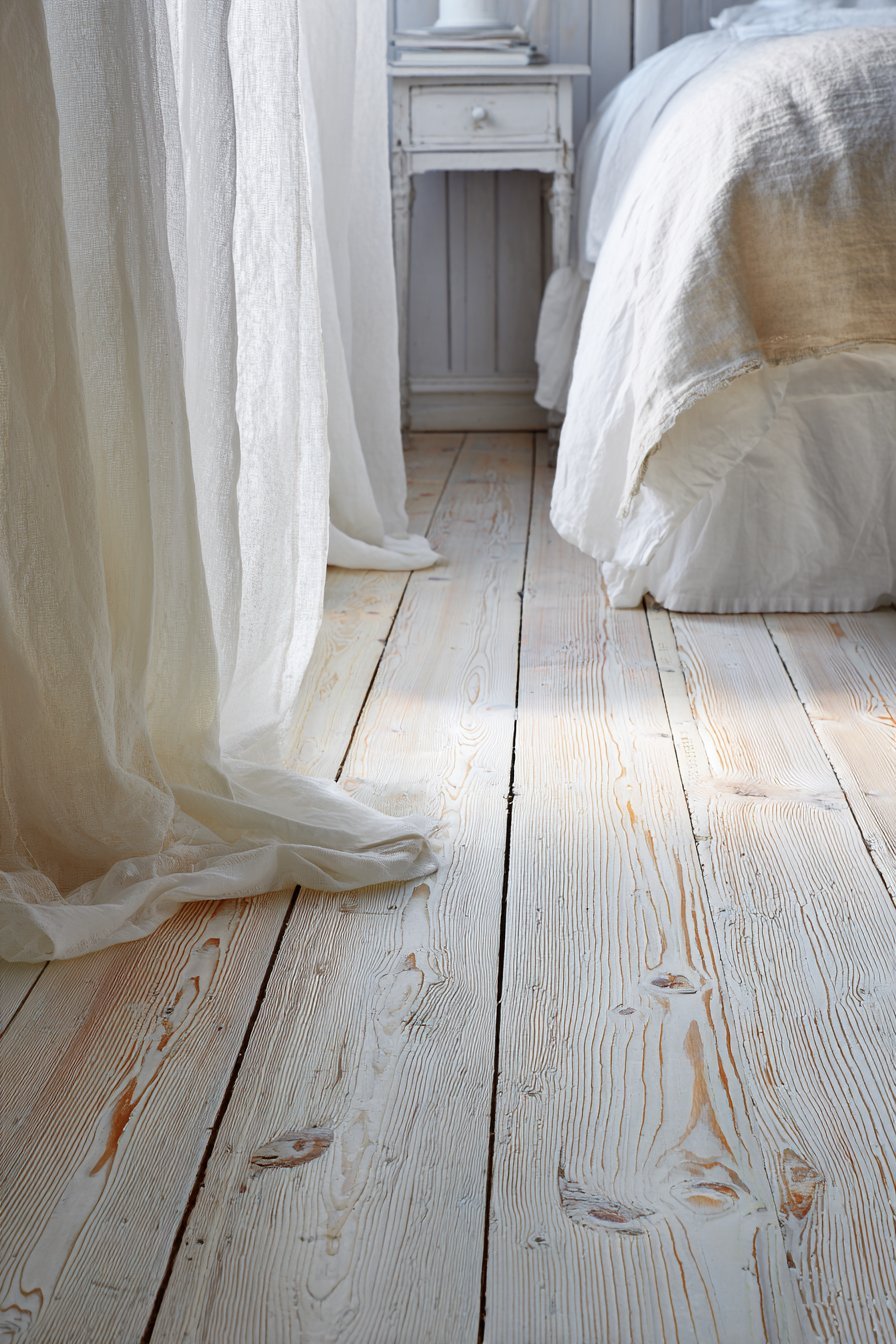
The relaxed sophistication suits restful bedroom purposes. The treatment creates calm without sterility. Natural character prevents the coldness of pure white. The balance creates peaceful sleeping environments.
Key Design Tips:
- Choose whitewashed finishes over opaque paint
- Maintain grain and knot visibility through translucent treatment
- Use in Scandinavian-inspired bedroom designs
- Pair with simple white and linen furnishings
- Maximize soft morning light with gauze curtains
- Embrace deliberately imperfect organic character
- Create calm without sacrificing natural warmth
30. Expansive Douglas Fir Great Room
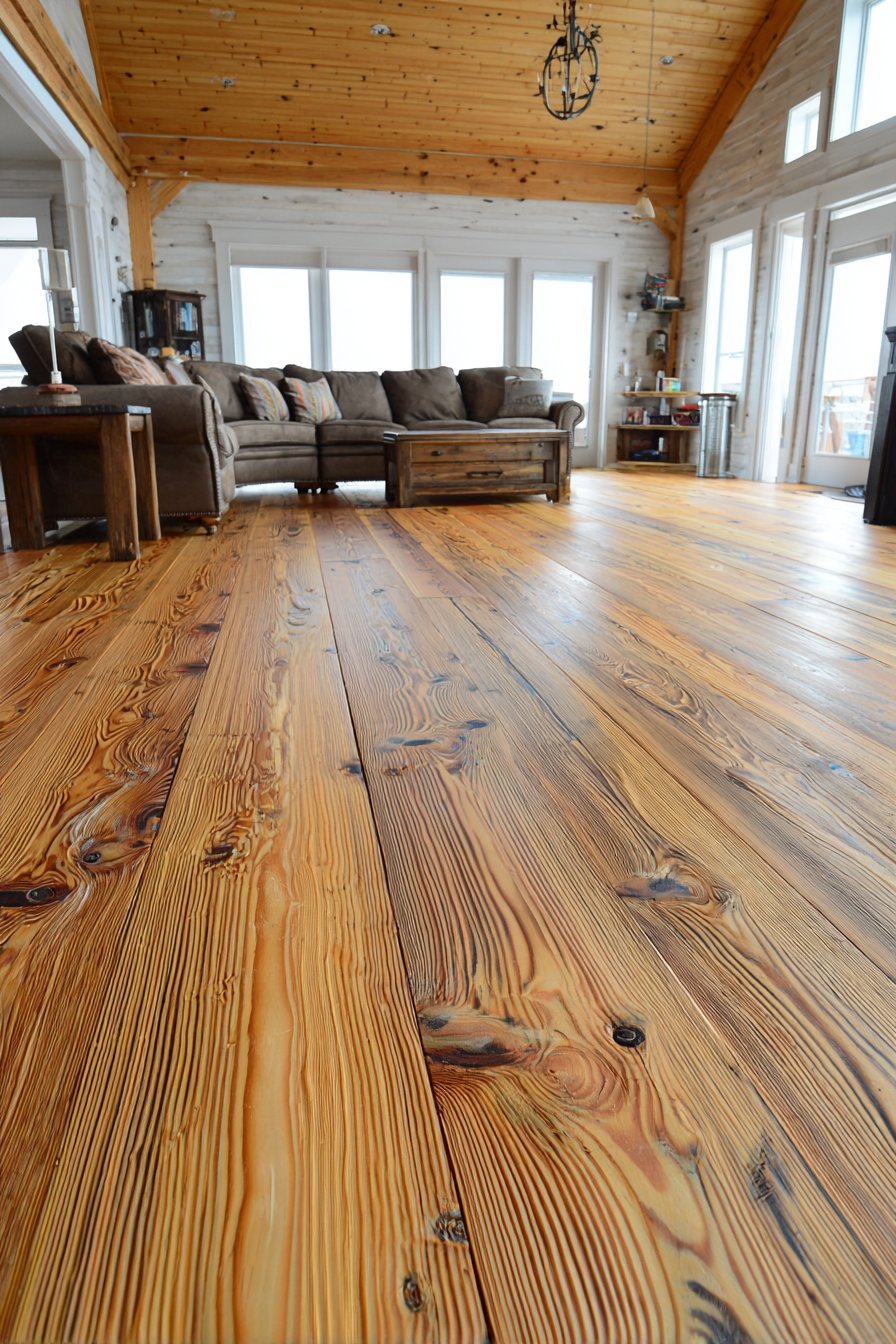
A great room addition features Douglas fir with distinctive vertical grain. Warm honey to reddish-brown color variations spread naturally. The softwood planks show straight, consistent grain characteristic of quality fir. Occasional small knots add character without overwhelming. Large-scale furniture defines zones within open space.
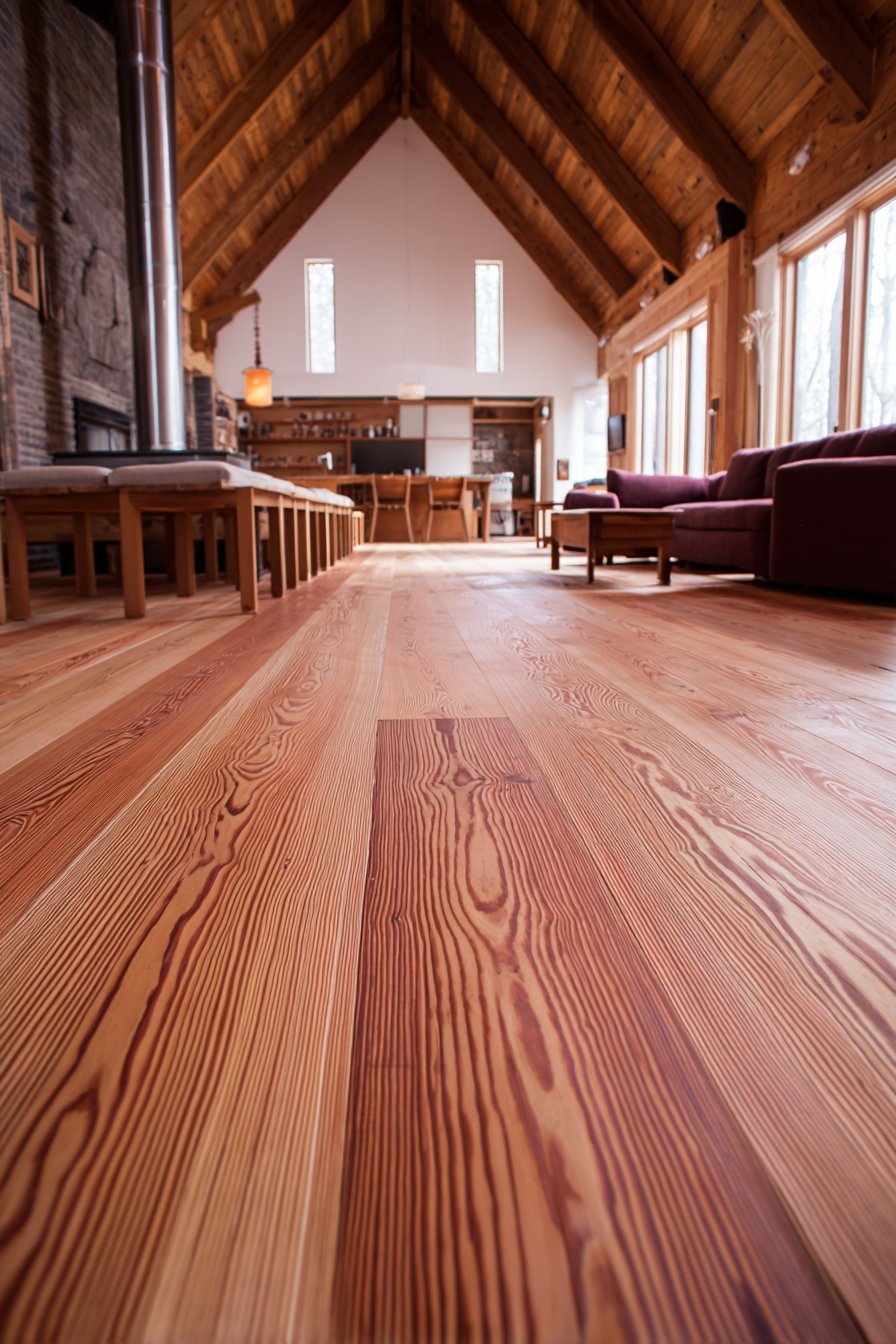
Vaulted ceilings with exposed beams complement the natural wood aesthetic. Natural light from clerestory windows reveals fir’s natural luster. The grain detail becomes visible in proper illumination. The expansive installation creates warm, inviting atmosphere. Contemporary open living suits this traditional material perfectly.
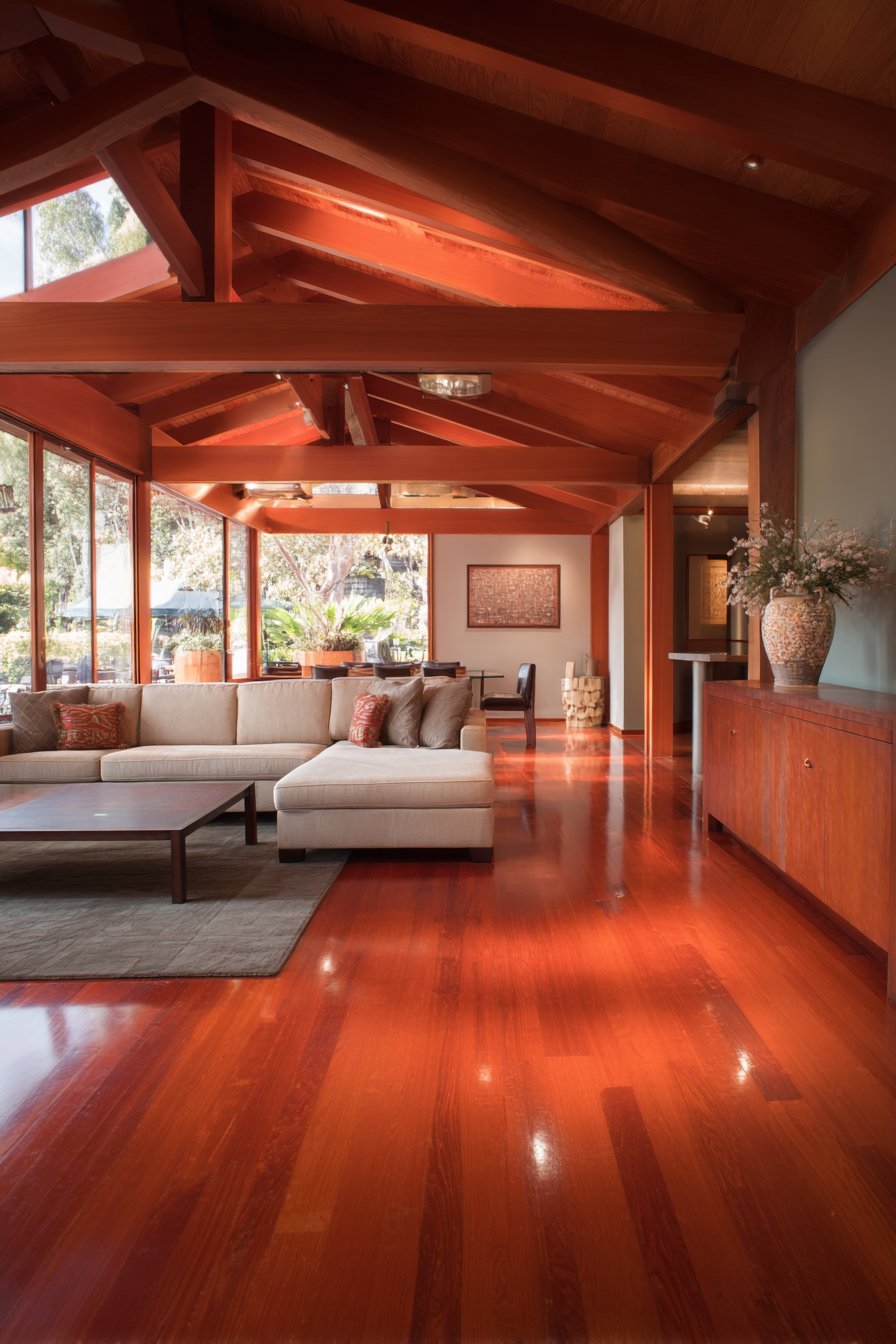
Douglas fir provides economical alternative to premium hardwoods. The softwood classification doesn’t diminish its appeal. The straight grain and warm tones create beautiful floors. Performance suits residential applications effectively.
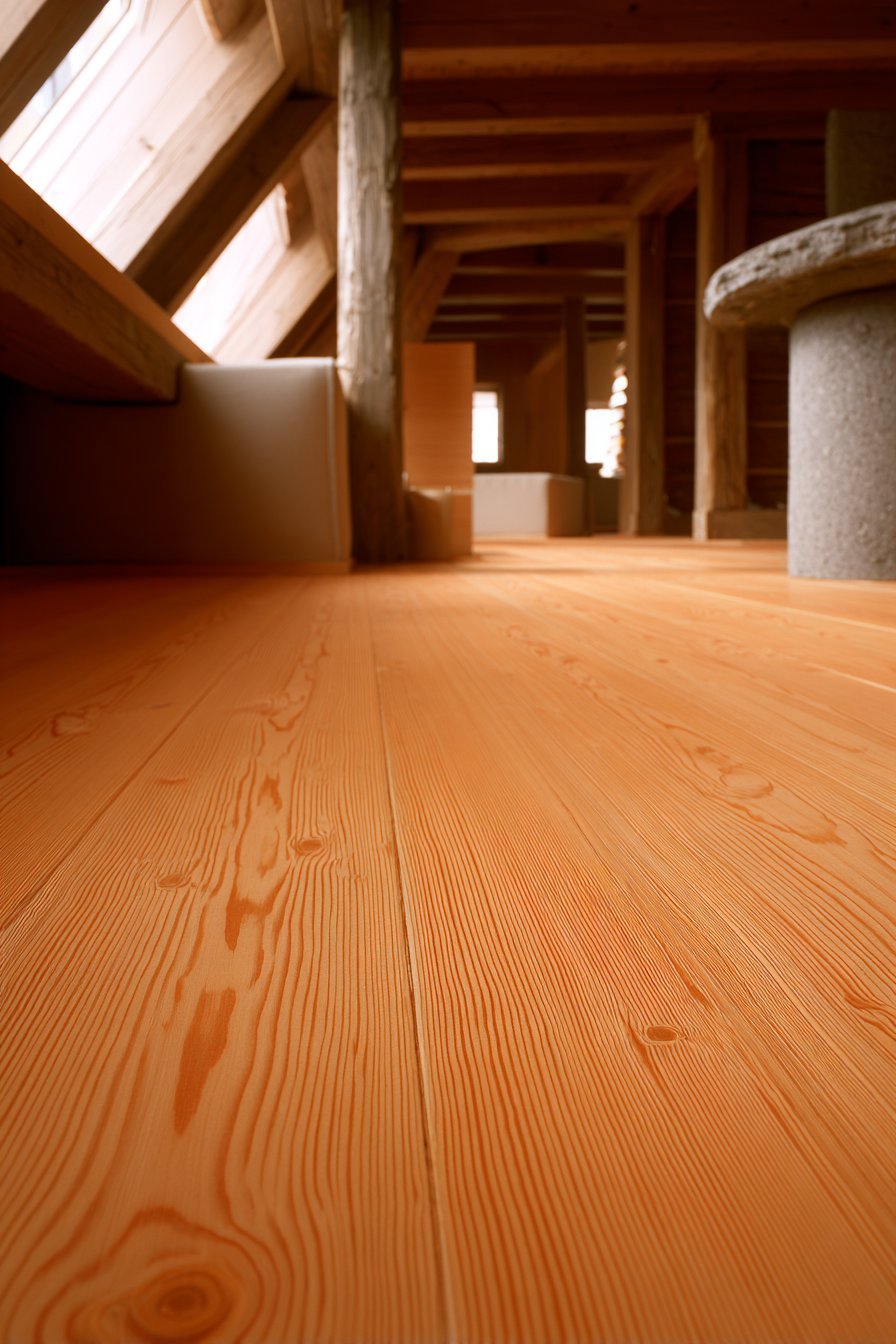
The vertical grain provides visual consistency across large areas. This regularity prevents monotony through warm color variations. The combination of pattern and color creates interest. Large spaces benefit from this balanced approach.
Key Design Tips:
- Select Douglas fir for economical quality flooring
- Appreciate vertical grain’s consistent pattern
- Use in great rooms and open living spaces
- Complement with exposed beam ceiling treatments
- Maximize clerestory windows for revealing illumination
- Embrace warm honey to reddish-brown variations
- Define zones with furniture over continuous flooring
Why These Wooden Flooring Designs Are the Best
These wooden flooring concepts represent comprehensive approaches to creating beautiful, functional foundations. Each design demonstrates thoughtful consideration of wood species characteristics, grain patterns, and finish treatments. The variety showcases how different approaches suit diverse architectural styles and practical needs.
The selection spans sustainable bamboo and cork to premium mahogany and ipe. This range addresses both environmental consciousness and traditional luxury preferences. Reclaimed materials like barn wood and antique heart pine provide historical character. Contemporary treatments including grey washes and bleached finishes offer modern aesthetics. The breadth ensures suitable options for every design philosophy.
Installation patterns from simple straight-lay to complex herringbone and book-matching demonstrate craftsmanship’s role. Wide planks create contemporary sophistication while narrow strips maintain traditional proportions. Mixed widths add organic rhythm to expansive spaces. The techniques transform basic materials into architectural features.
Color theory plays crucial roles in these selections. Pale blonde bamboo and bleached ash maximize light and spaciousness. Rich mahogany and walnut provide formal elegance and warmth. Grey-washed pine evokes coastal relaxation. Understanding color psychology helps match floors to intended atmospheres effectively.
Practical considerations including hardness, moisture resistance, and maintenance requirements informed every choice. Acacia and hickory suit high-traffic areas through exceptional durability. Ipe enables outdoor applications traditional hardwoods cannot handle. Luxury vinyl provides wood aesthetics where moisture makes authentic wood impractical. Functionality drives material selection as much as appearance.
Spatial considerations determine appropriate choices for different room sizes. Wide planks suit expansive great rooms while narrow strips fit hallways properly. Herringbone patterns create interest in moderate spaces. Scale relationships between flooring and room dimensions affect visual success significantly.
Sustainability emerges through multiple approaches including rapidly renewable bamboo, reclaimed materials, and long-lasting premium hardwoods. Quality investments that endure decades prove more sustainable than frequent replacements. The environmental impact extends beyond initial material sourcing to include longevity considerations.
Conclusion
These thirty wooden flooring designs demonstrate the remarkable versatility of natural wood materials. From sustainable bamboo to exotic ipe, each option brings unique characteristics to residential spaces. The variety of species, finishes, and installation patterns ensures suitable choices for every design preference and practical requirement.
Key takeaways include the importance of matching wood characteristics to room functions and traffic patterns. Consider color’s psychological impact when selecting tones for different spaces. Appreciate craftsmanship in premium installation techniques like book-matching and herringbone patterns. Balance aesthetic desires with practical requirements including hardness and moisture resistance.
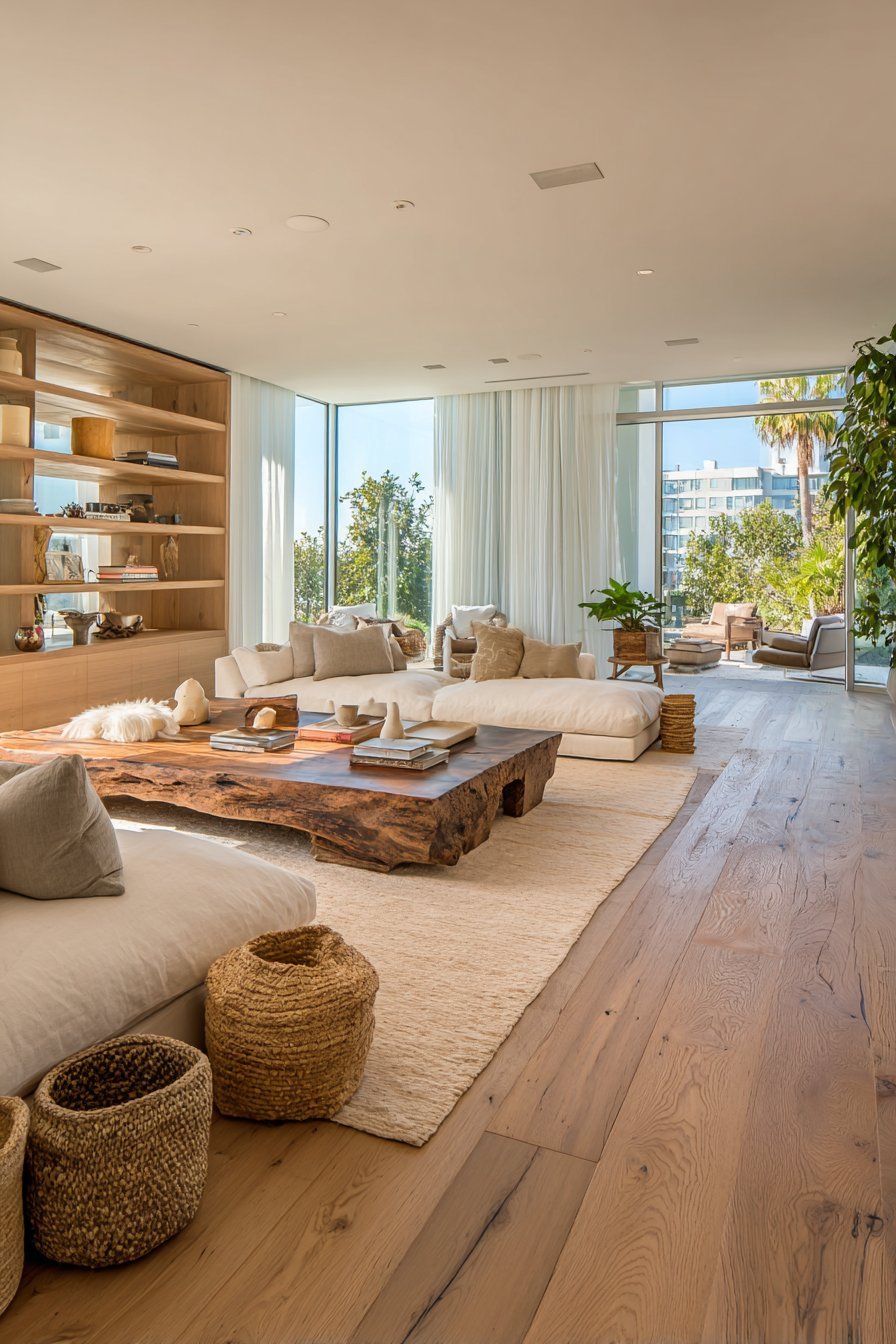
Natural materials like wood develop character over time through aging and patina development. This living quality distinguishes authentic wood from synthetic alternatives. Quality flooring investments provide foundations that adapt to evolving design preferences while maintaining inherent beauty.
Experiment with these concepts in your own home by starting with small areas or single rooms. Visit showrooms to experience actual samples under different lighting conditions. Consult with professional installers about species and pattern suitability for your specific spaces. Your dream wooden floor awaits through thoughtful planning and careful material selection.