


The entrance to your home makes the first and most lasting impression on guests. A luxury door serves as more than just a functional element. It becomes a statement piece that reflects your personal style and sets the tone for your entire home. The right door combines exceptional craftsmanship, premium materials, and timeless design.
Luxury doors have evolved beyond simple barriers between indoor and outdoor spaces. They now represent architectural focal points that showcase artistry and attention to detail. From hand-carved mahogany masterpieces to sleek contemporary steel designs, the possibilities are endless. Each style offers unique character and sophistication.
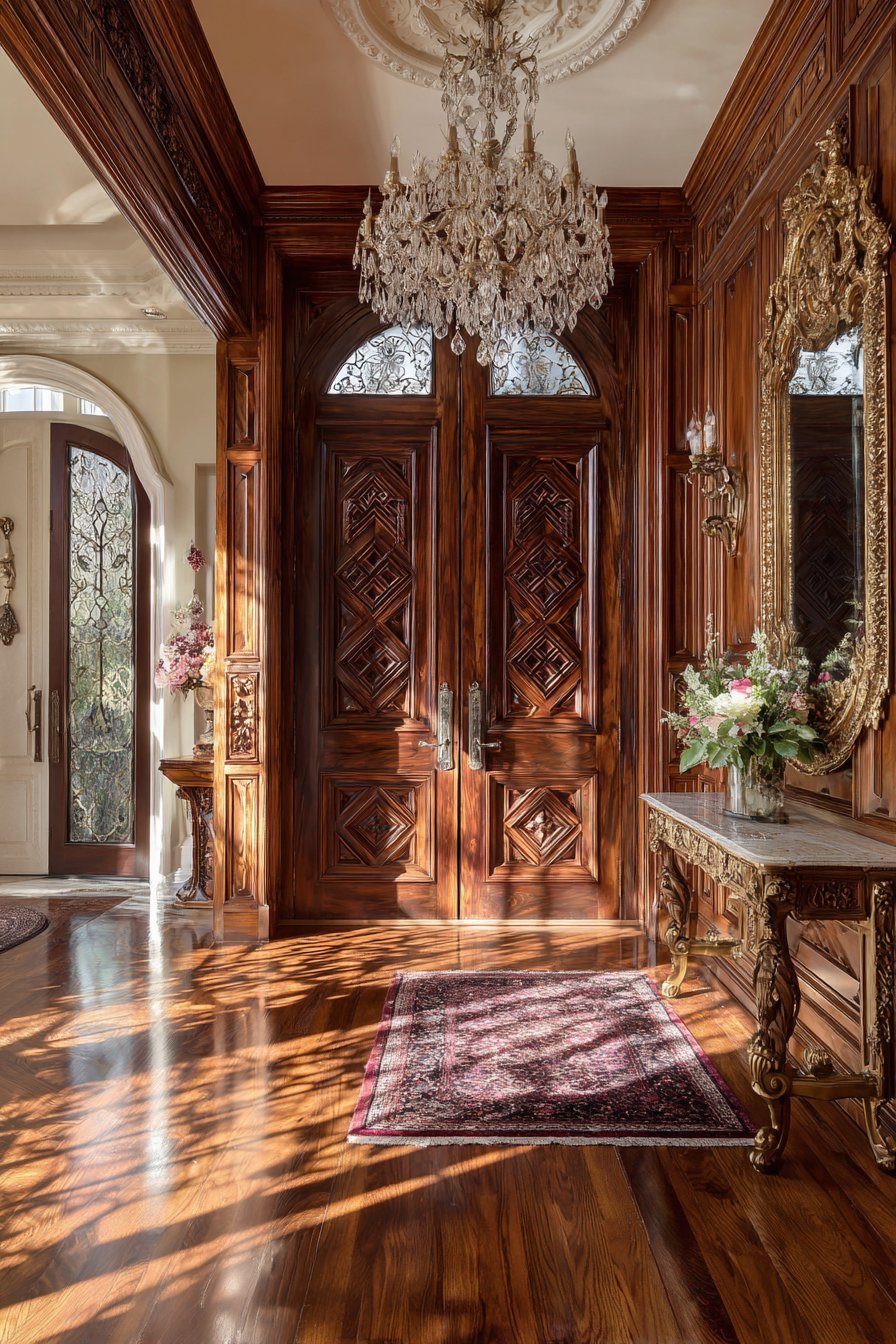
This comprehensive guide explores 30 extraordinary luxury door designs. We’ll journey through various aesthetic approaches, from traditional to ultra-modern. Each concept demonstrates how premium materials, expert craftsmanship, and thoughtful design create entrances worthy of the finest homes. These ideas will inspire you to elevate your home’s entrance to new heights of elegance.
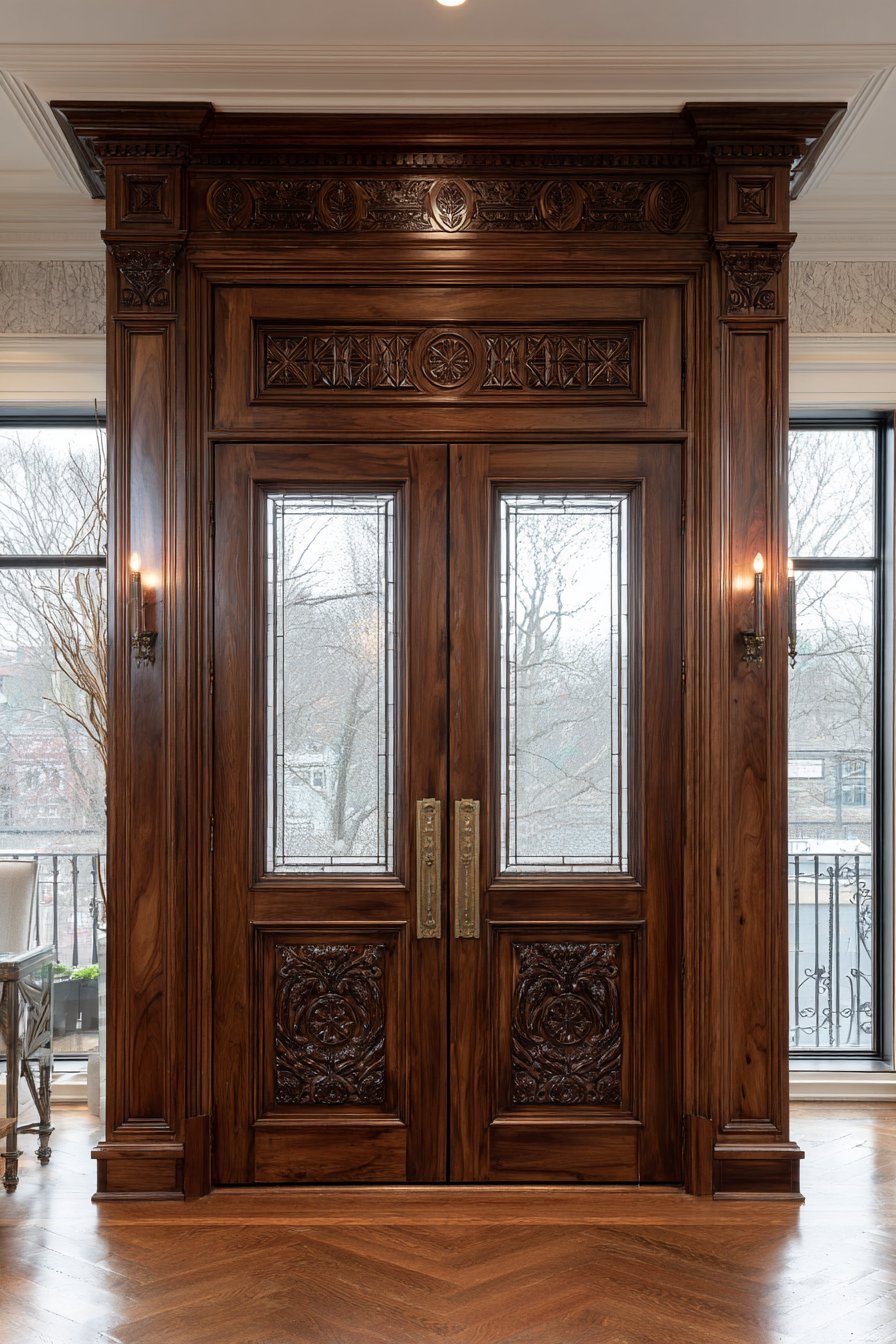
1. Grand Mahogany Double Door with Hand-Carved Details
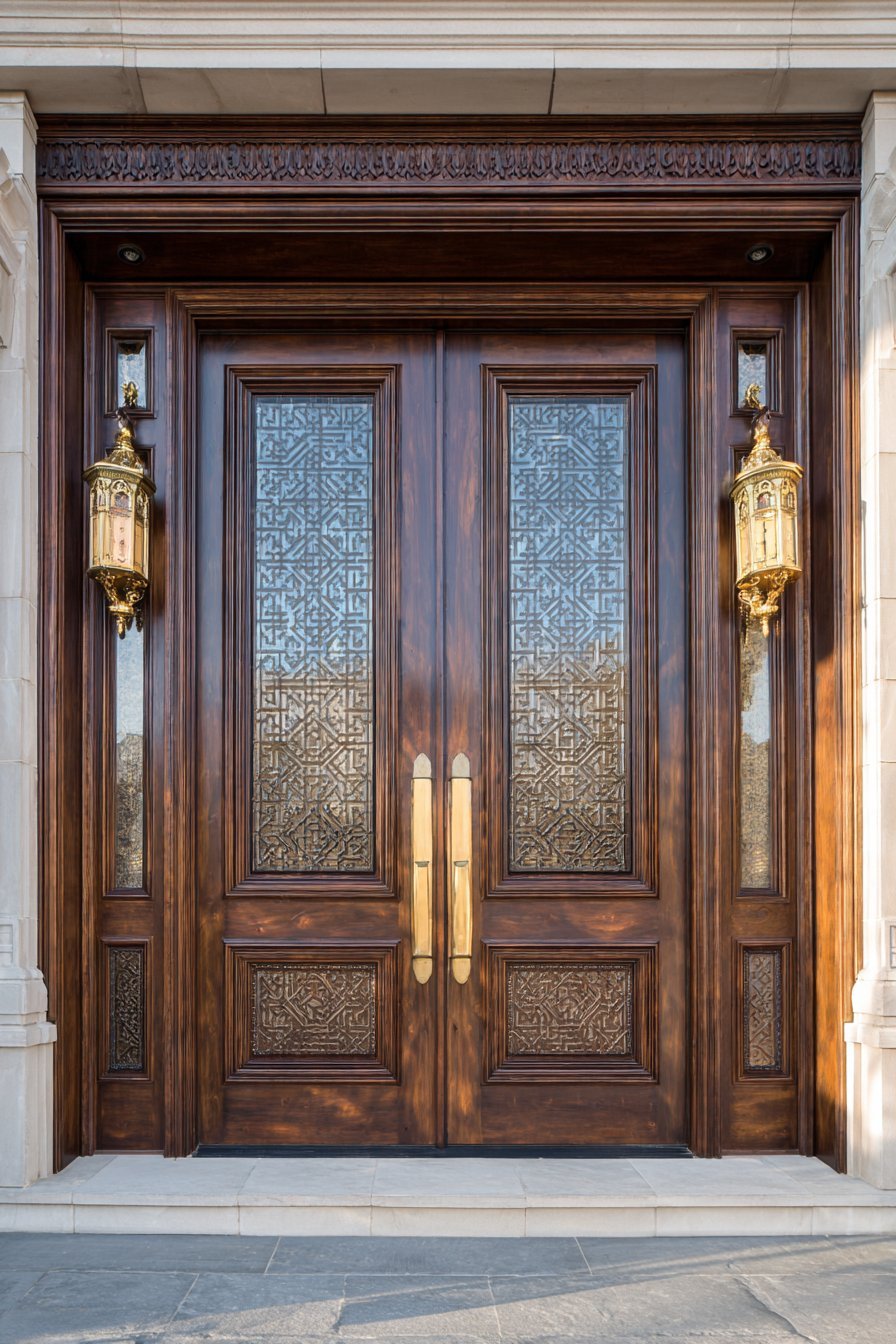
A magnificent entrance featuring custom solid mahogany double doors commands attention immediately. The intricate hand-carved geometric patterns showcase master craftsmanship at its finest. Brushed brass hardware adds warmth and sophistication to the rich wood tones. These doors stand an impressive 10 feet tall, creating dramatic vertical impact.
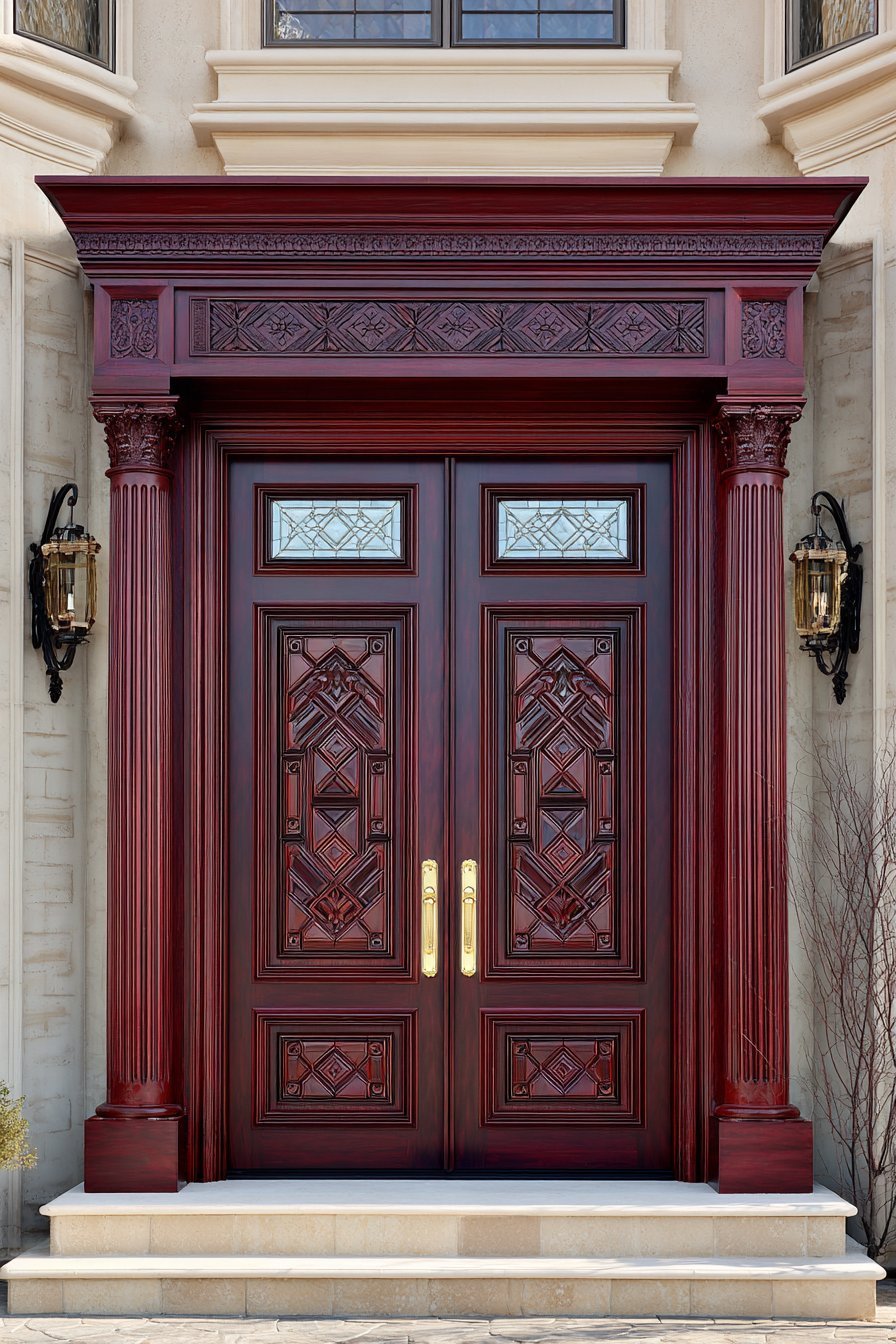
Beveled glass inserts in the upper panels serve both aesthetic and practical purposes. They allow natural light to filter through while maintaining privacy. The glass catches and refracts sunlight, creating beautiful prismatic effects throughout the day. Flanking sidelights with matching carved details complete this statement entry.
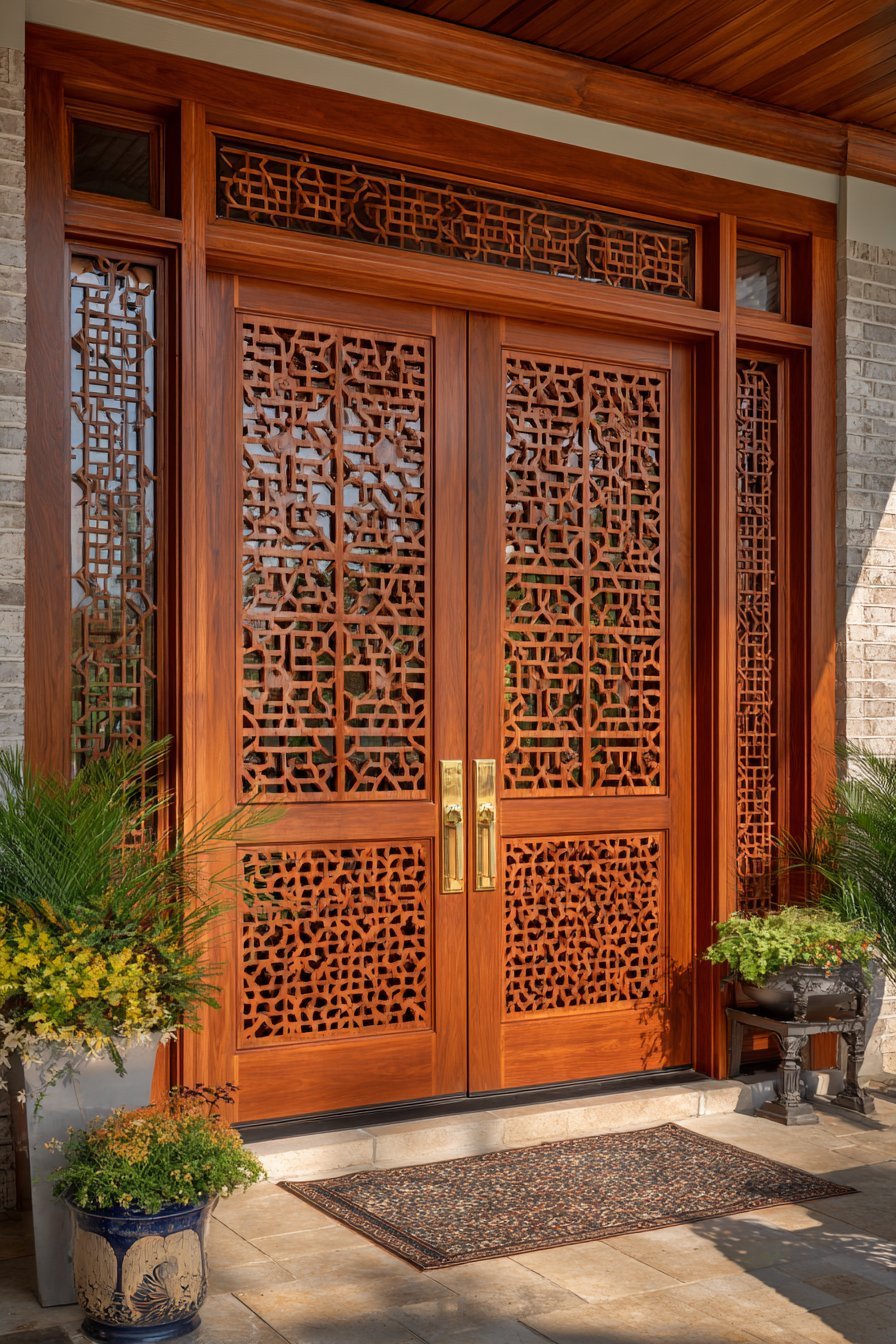
The surrounding doorframe crafted from coordinating mahogany ties the entire composition together. Subtle crown molding details add architectural refinement without overwhelming the carved door patterns. The wood grain variations in mahogany create natural visual interest. Each door becomes a unique work of art.
Professional lighting design enhances this entrance’s grandeur. Natural light highlights the rich wood grain and metalwork details beautifully. The scale and craftsmanship create an impressive first impression. This design suits traditional estates and luxury homes seeking timeless elegance.
Key Design Tips:
- Select solid mahogany for durability and rich color that deepens with age
- Commission hand-carved patterns that reflect your personal style and architectural period
- Choose brushed brass hardware for warmth that complements mahogany’s reddish tones
- Install beveled glass for light transmission with privacy and visual interest
- Ensure proper sealing and finishing to protect wood from weather elements
2. Modern Minimalist Blackened Steel Pivot Door
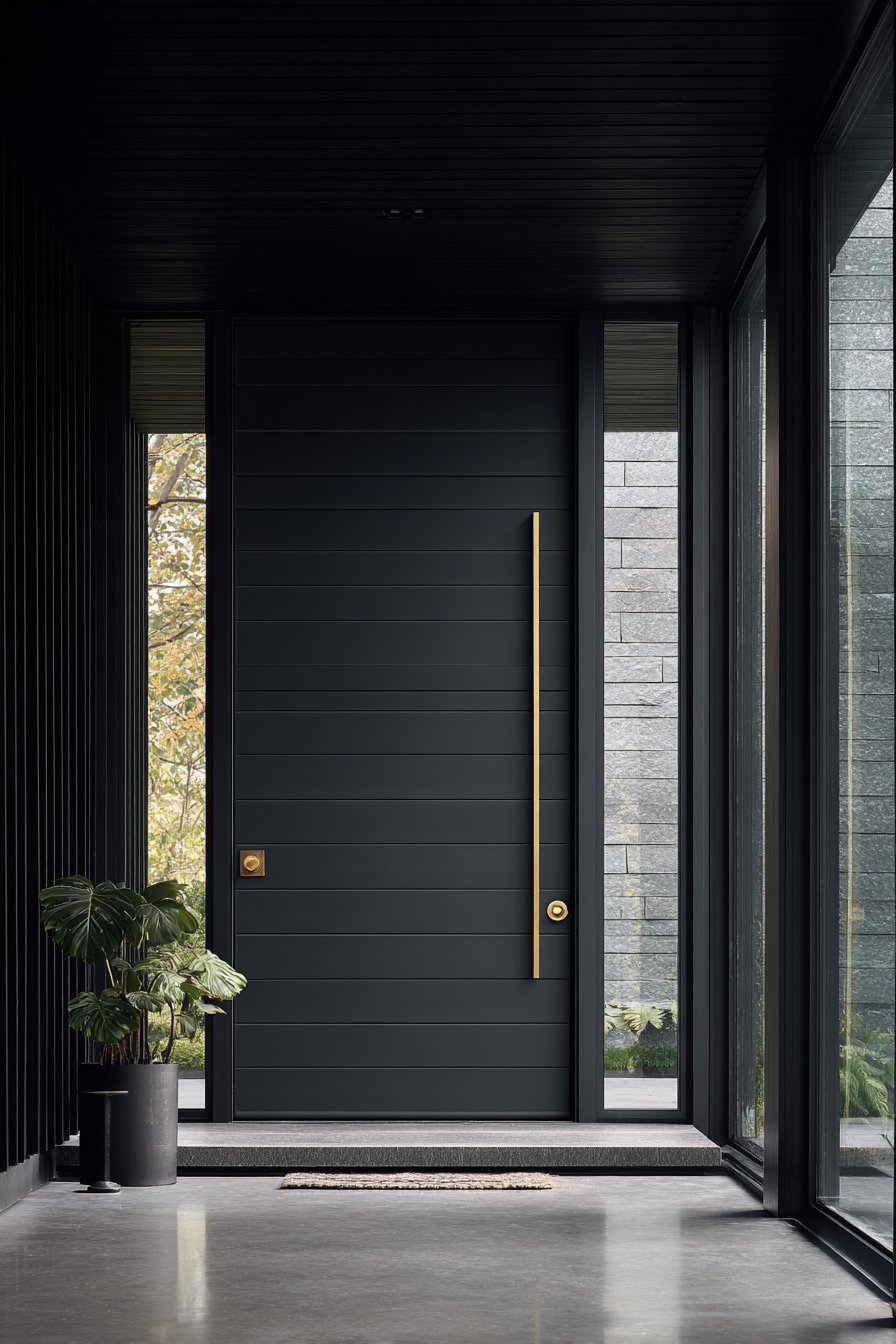
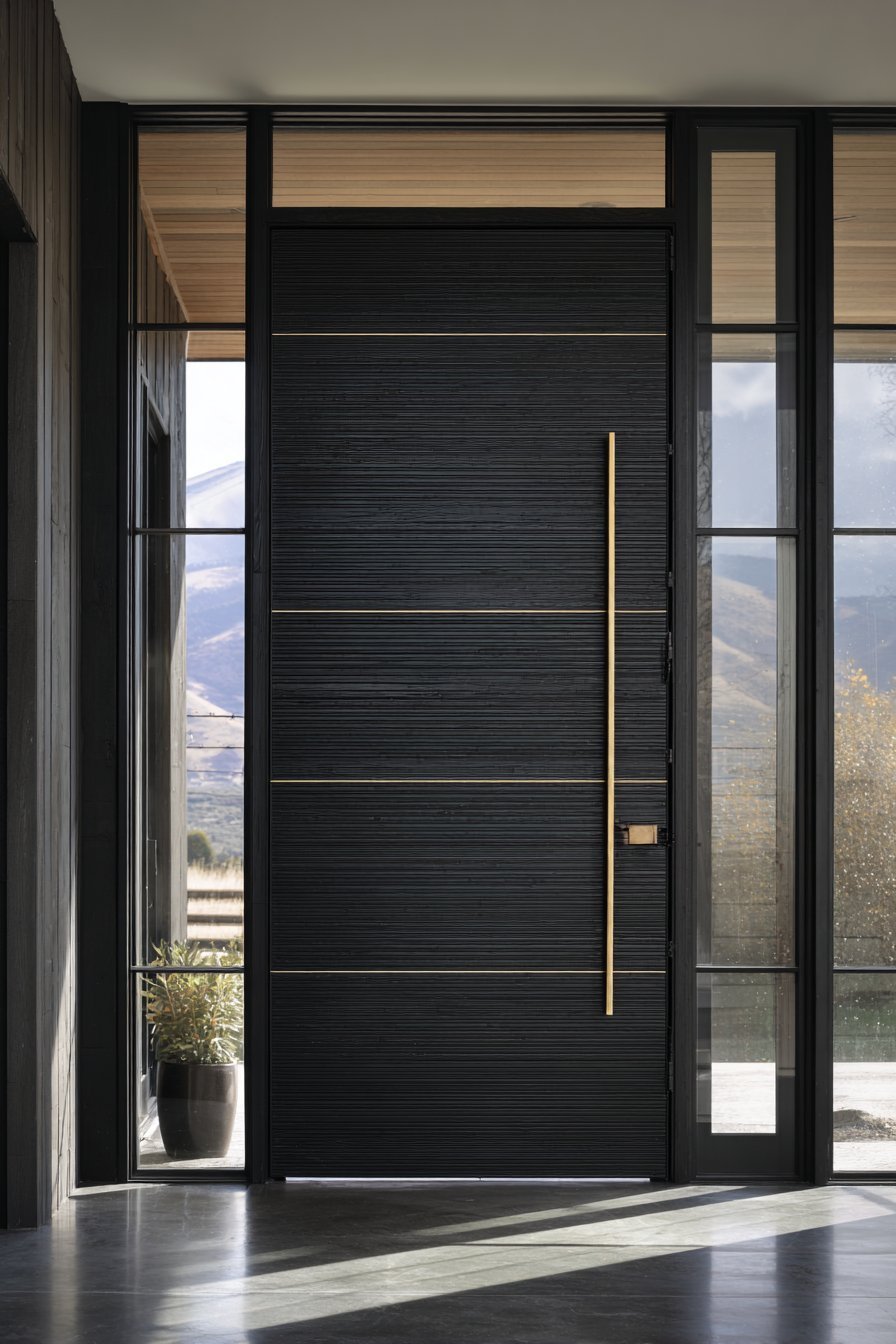
Contemporary luxury finds perfect expression in this blackened steel pivot door design. The 9-foot height creates monumental presence while maintaining sleek proportions. Minimalist horizontal ribbing adds subtle texture across the matte black surface. This design proves that modern luxury thrives on restraint and precision.
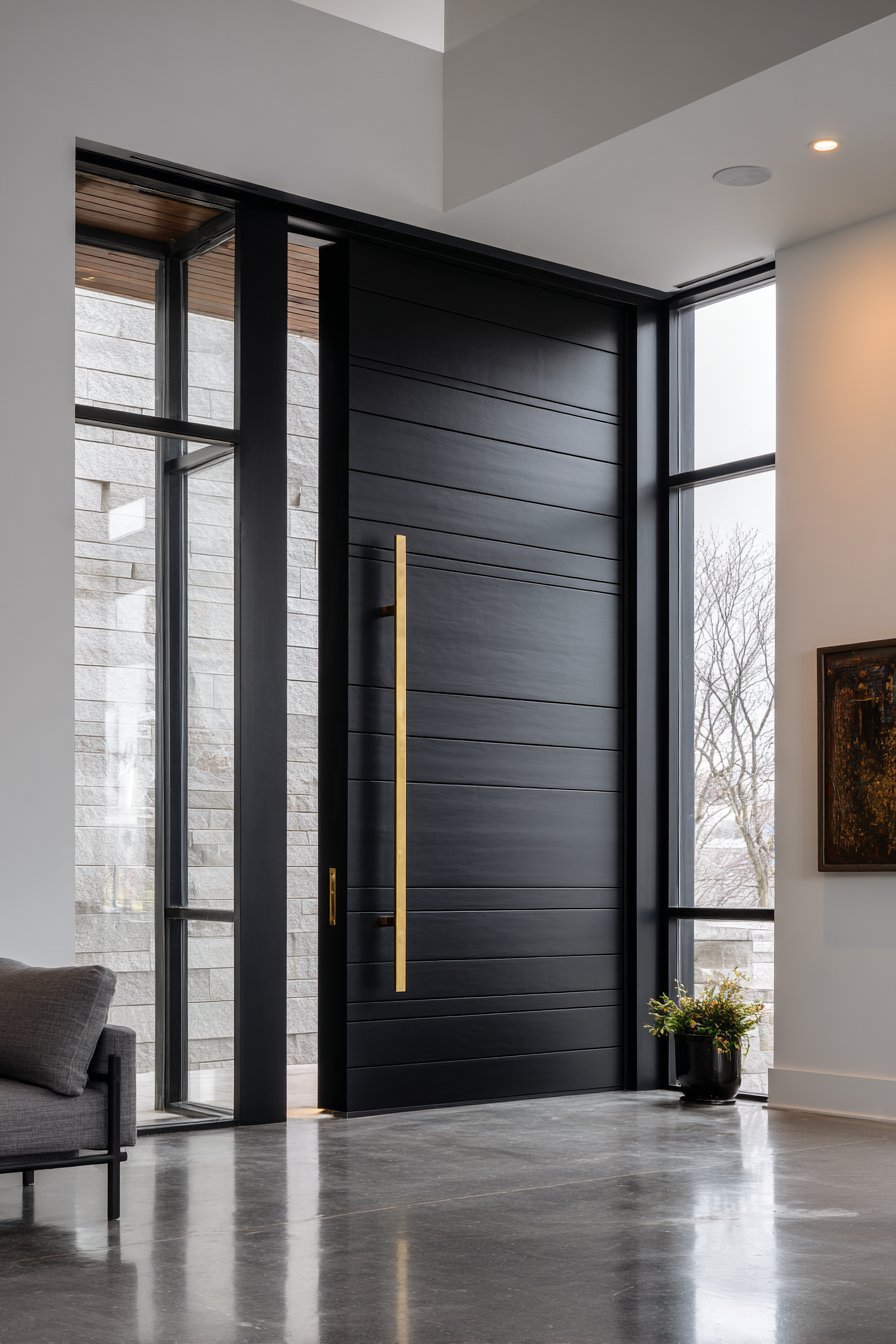
The concealed pivot hinge system represents engineering excellence meeting aesthetic purity. Unlike traditional hinges, the pivot mechanism allows smooth, effortless operation. An elongated brass pull handle runs vertically along one edge. This brass accent provides striking contrast against the blackened steel.
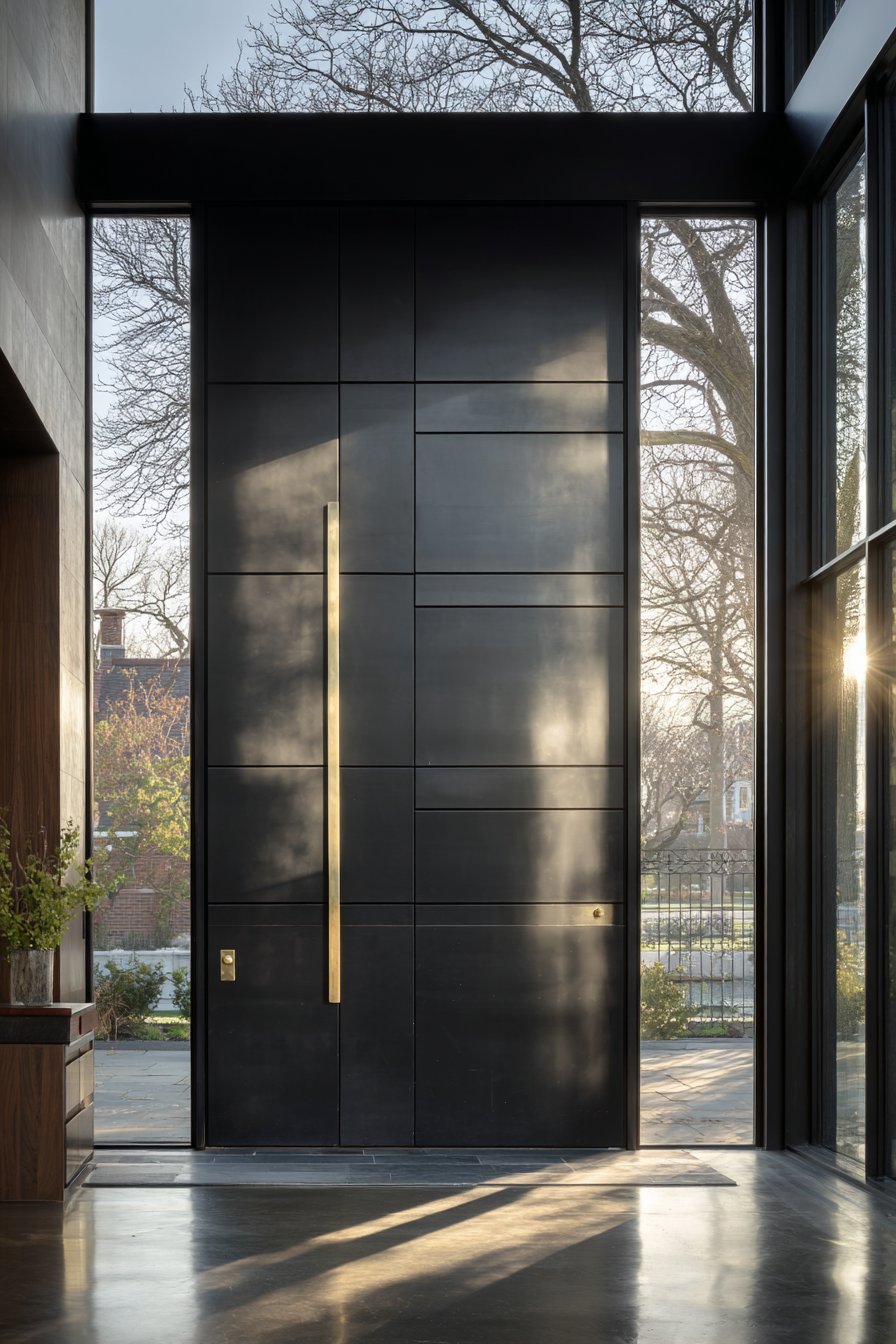
Adjacent floor-to-ceiling glass panels maintain the contemporary aesthetic throughout the entrance. These panels flood the entryway with natural light while preserving the modern vocabulary. Polished concrete flooring reflects the door’s dramatic presence. The material palette remains intentionally limited for maximum impact.
The matte steel finish requires specific maintenance but rewards with timeless beauty. Soft diffused lighting highlights the material’s subtle texture and depth. This design suits contemporary homes, urban lofts, and modern architectural statements. The pivot door becomes sculptural art as much as functional architecture.
Key Design Tips:
- Invest in quality pivot hardware rated for the door’s substantial weight
- Choose blackened or oxidized steel finishes that develop character over time
- Balance the dark door with abundant natural light from adjacent glazing
- Select polished concrete or stone flooring that complements industrial materials
- Consider the door’s swing radius when planning furniture placement in the entry
3. Coastal Weathered Teak with Nautical Details
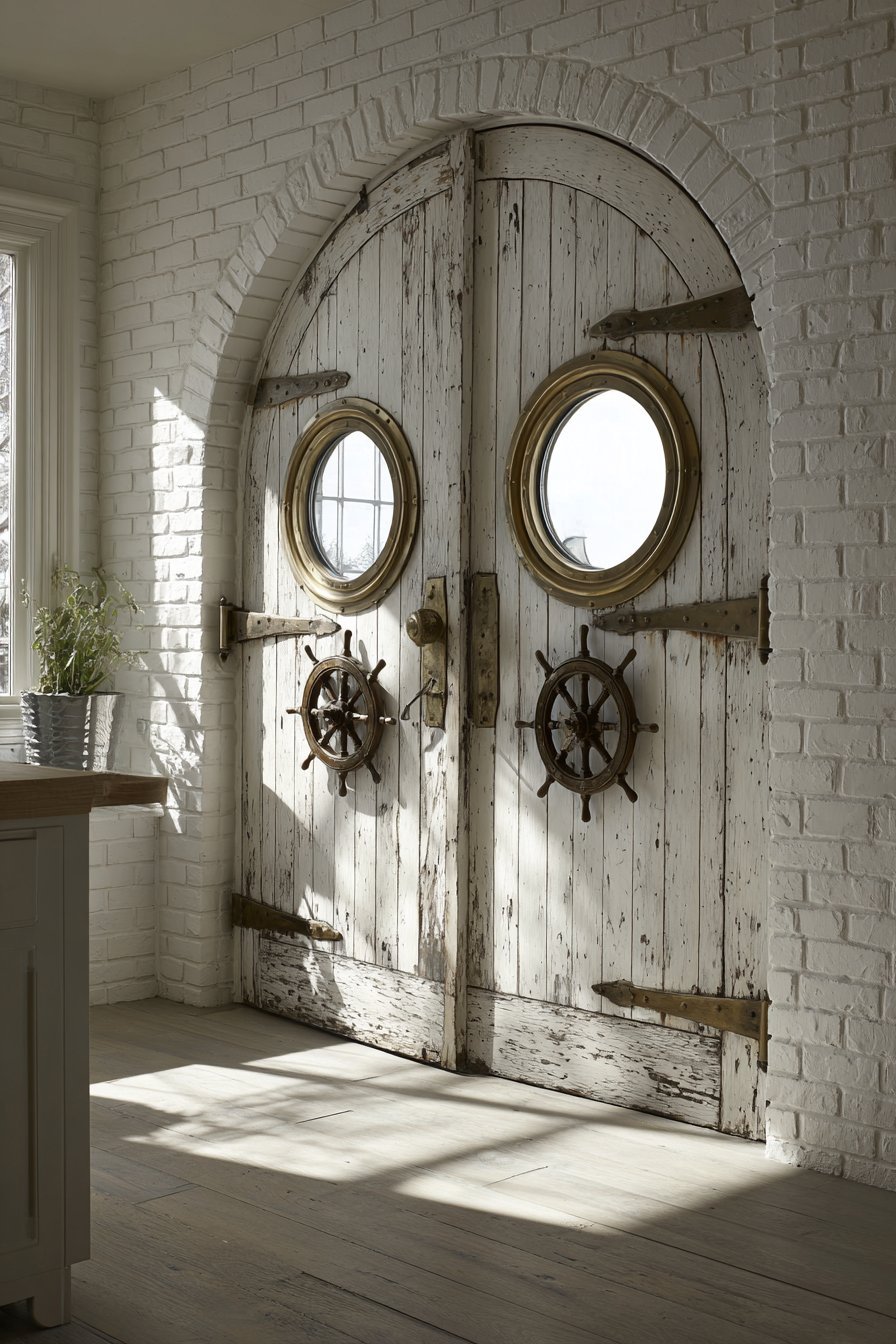
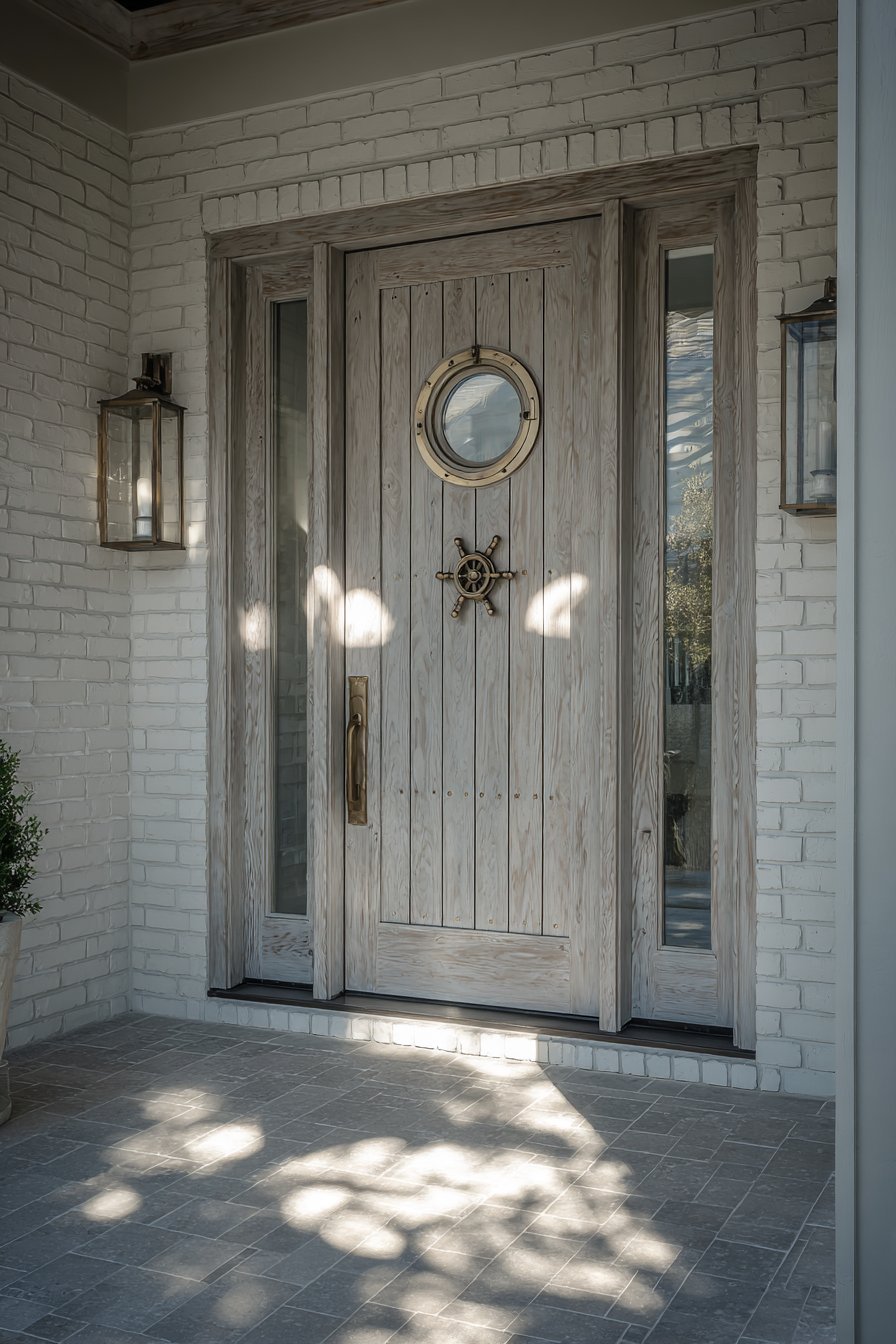
This coastal luxury entrance celebrates maritime heritage with weathered teak double doors. The natural silvery-gray patina develops as teak ages gracefully. Marine-grade varnish protects while enhancing this beautiful weathered appearance. Nautical-inspired brass porthole windows add authentic character and functional light.
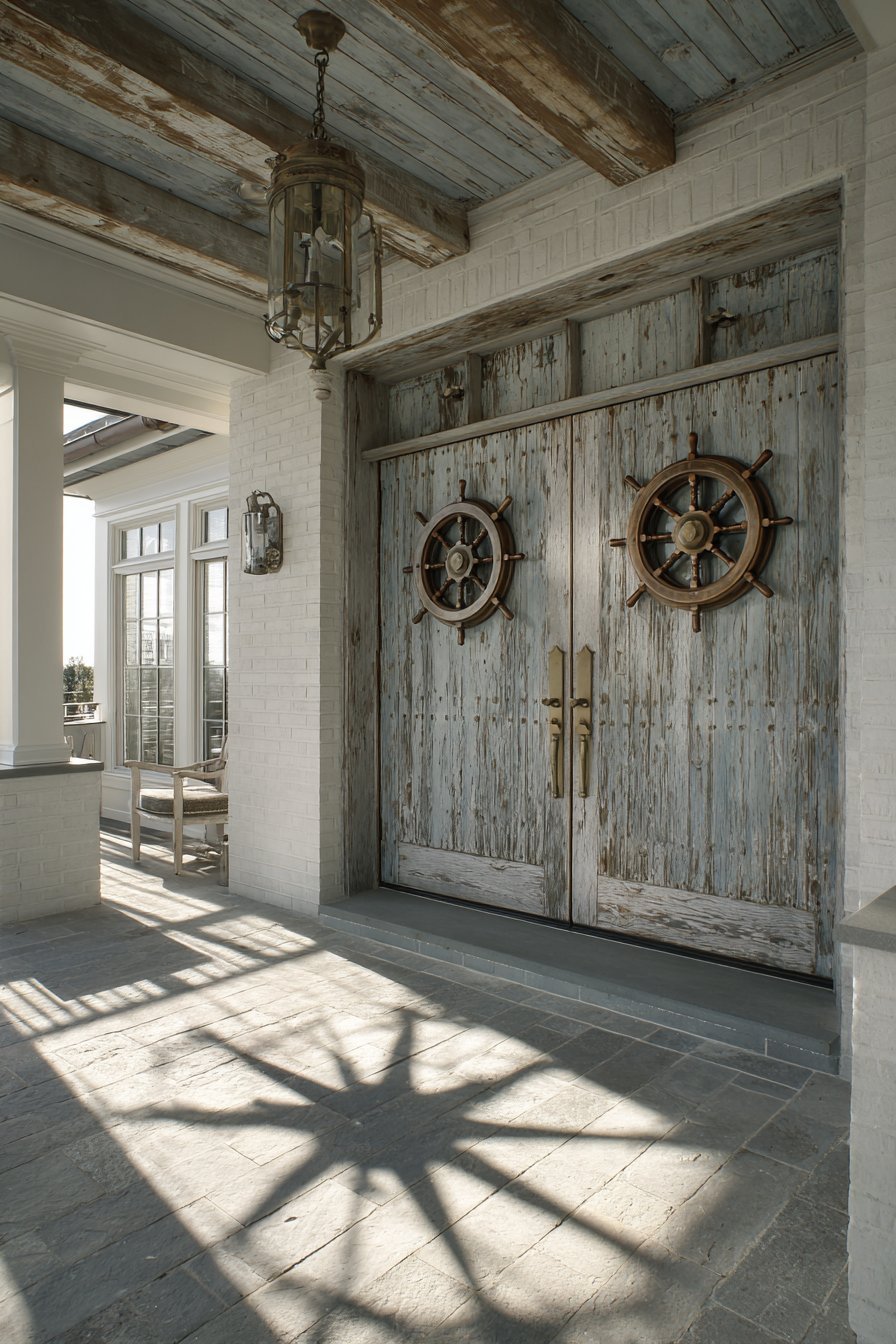
Ship-lap detailing references classic boat construction techniques adapted for architectural use. Heavy-duty brass hinges demonstrate the quality hardware needed for coastal environments. A classic ship’s wheel door knocker adds whimsical charm without sacrificing sophistication. Every detail reinforces the maritime aesthetic.
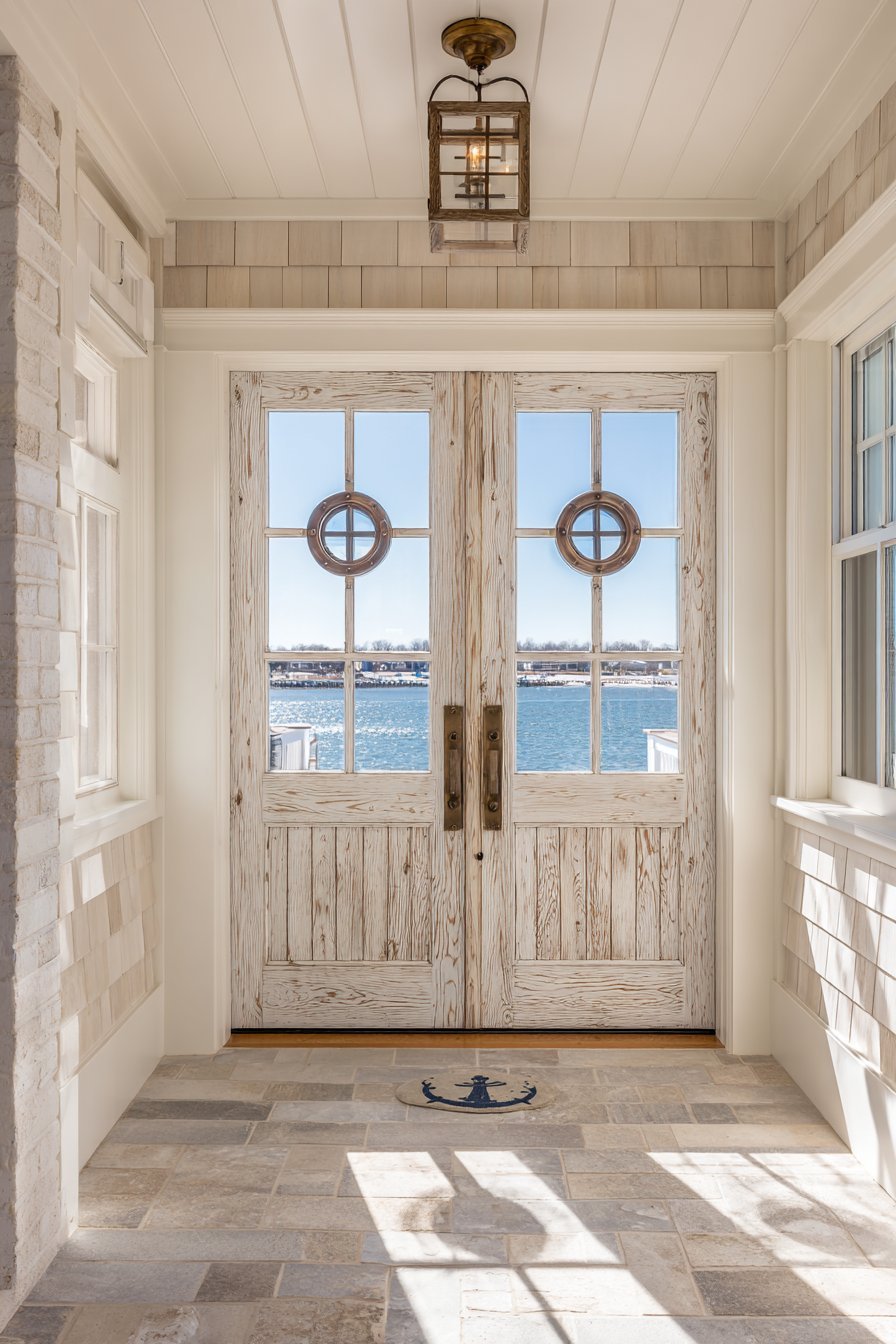
White-painted brick surrounds provide clean contrast to the weathered wood tones. A limestone threshold offers durability against sand, salt, and foot traffic. Natural daylight streams through porthole windows, creating circular light patterns. These patterns shift throughout the day, adding dynamic visual interest.
The weathered teak develops richer patina over years of coastal exposure. This living finish means the door improves with age rather than deteriorating. Brass hardware develops verdigris patina that enhances the nautical character. This design suits coastal estates, beach houses, and homes embracing maritime traditions.
Key Design Tips:
- Choose marine-grade teak rated for exterior coastal applications
- Apply marine varnish annually to protect wood while maintaining weathered appearance
- Select solid brass hardware that develops authentic patina in salt air
- Install proper drainage and ventilation to prevent moisture accumulation
- Embrace the natural aging process as part of the design’s authentic character
4. Art Deco Black Lacquer with Brass Inlay
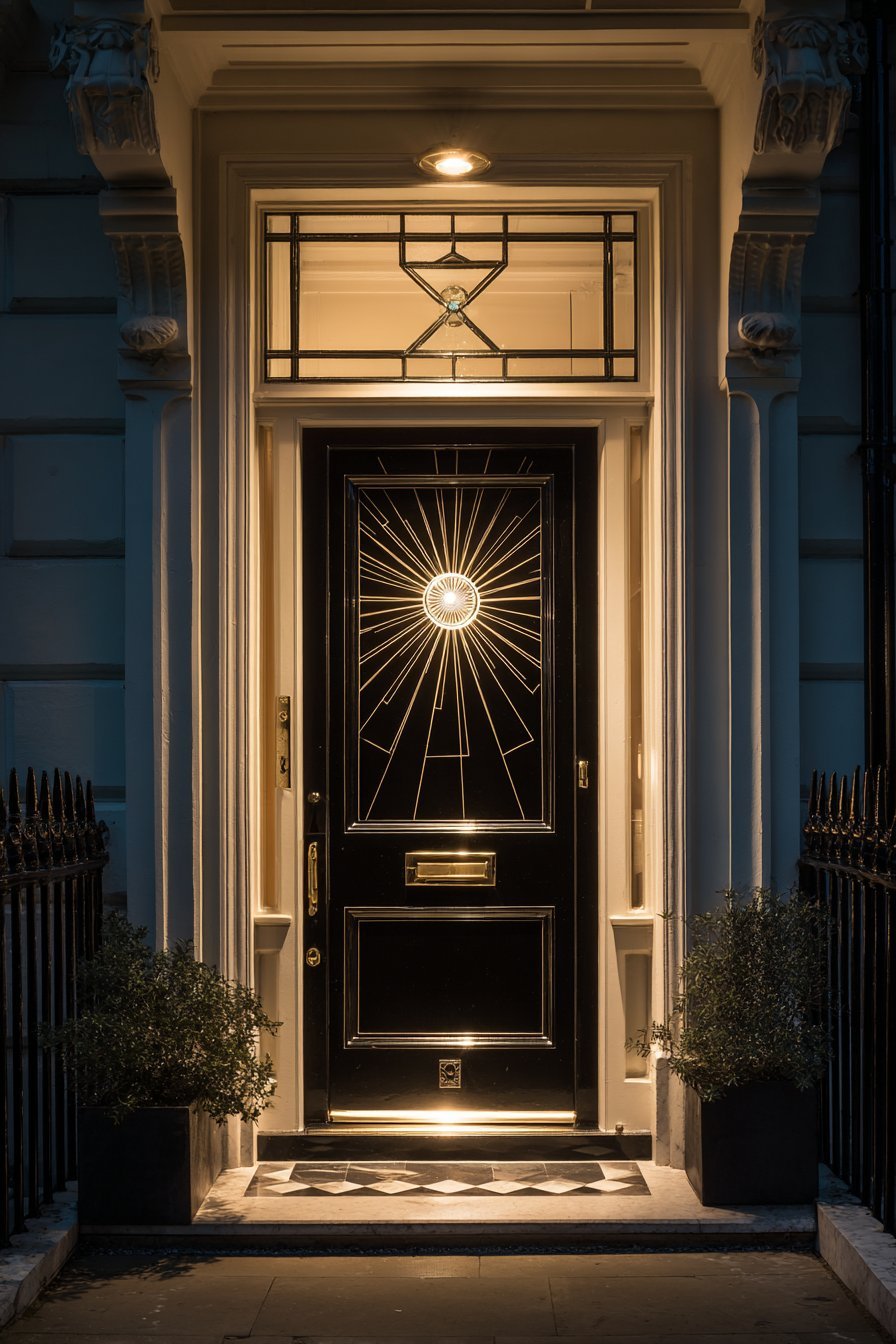
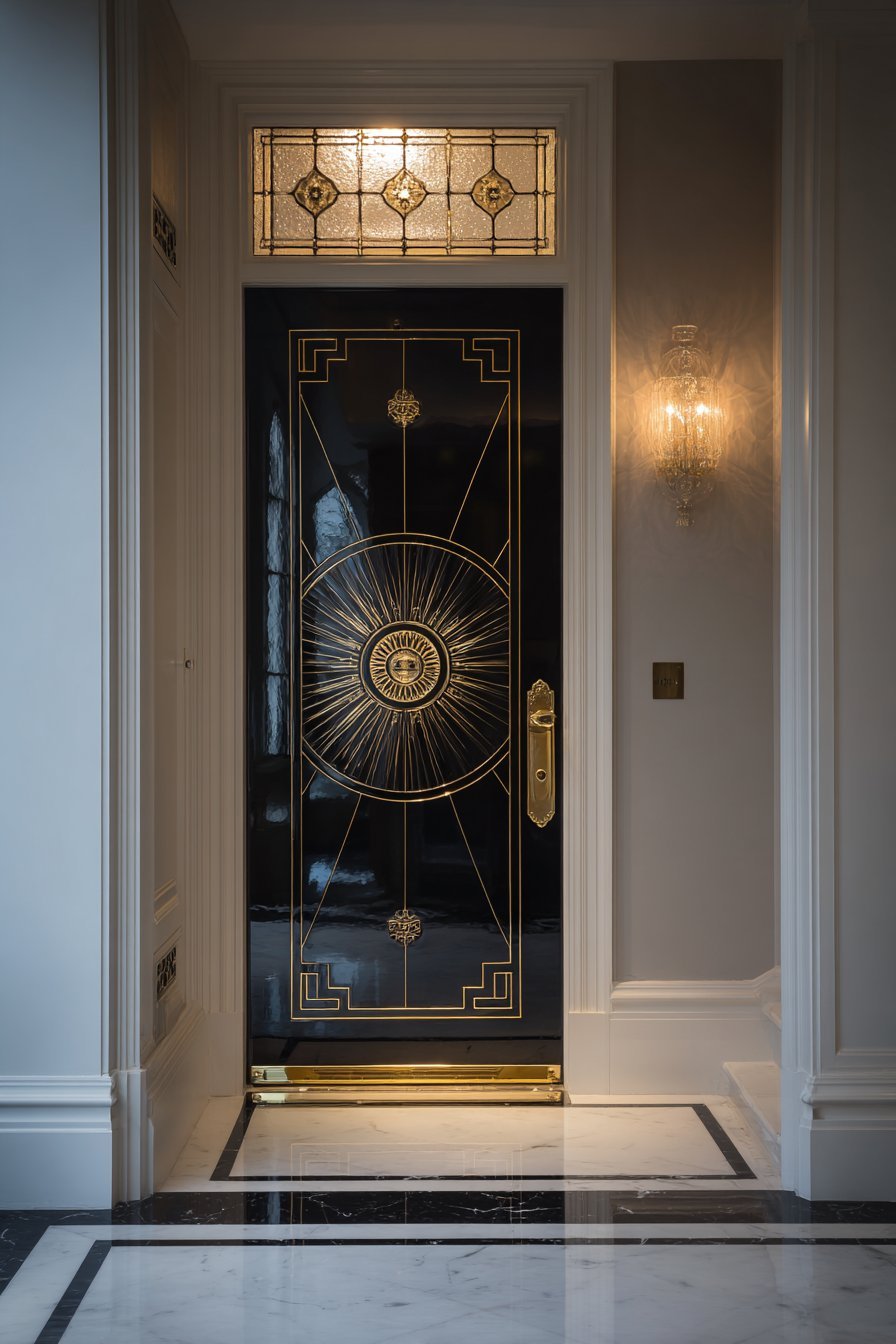
Glamorous luxury from the 1920s and 1930s inspires this Art Deco masterpiece. Glossy black lacquer creates a mirror-like reflective surface. Geometric brass inlay forms a stunning sunburst pattern radiating from center. This design captures the optimism and geometric precision of the Art Deco era.
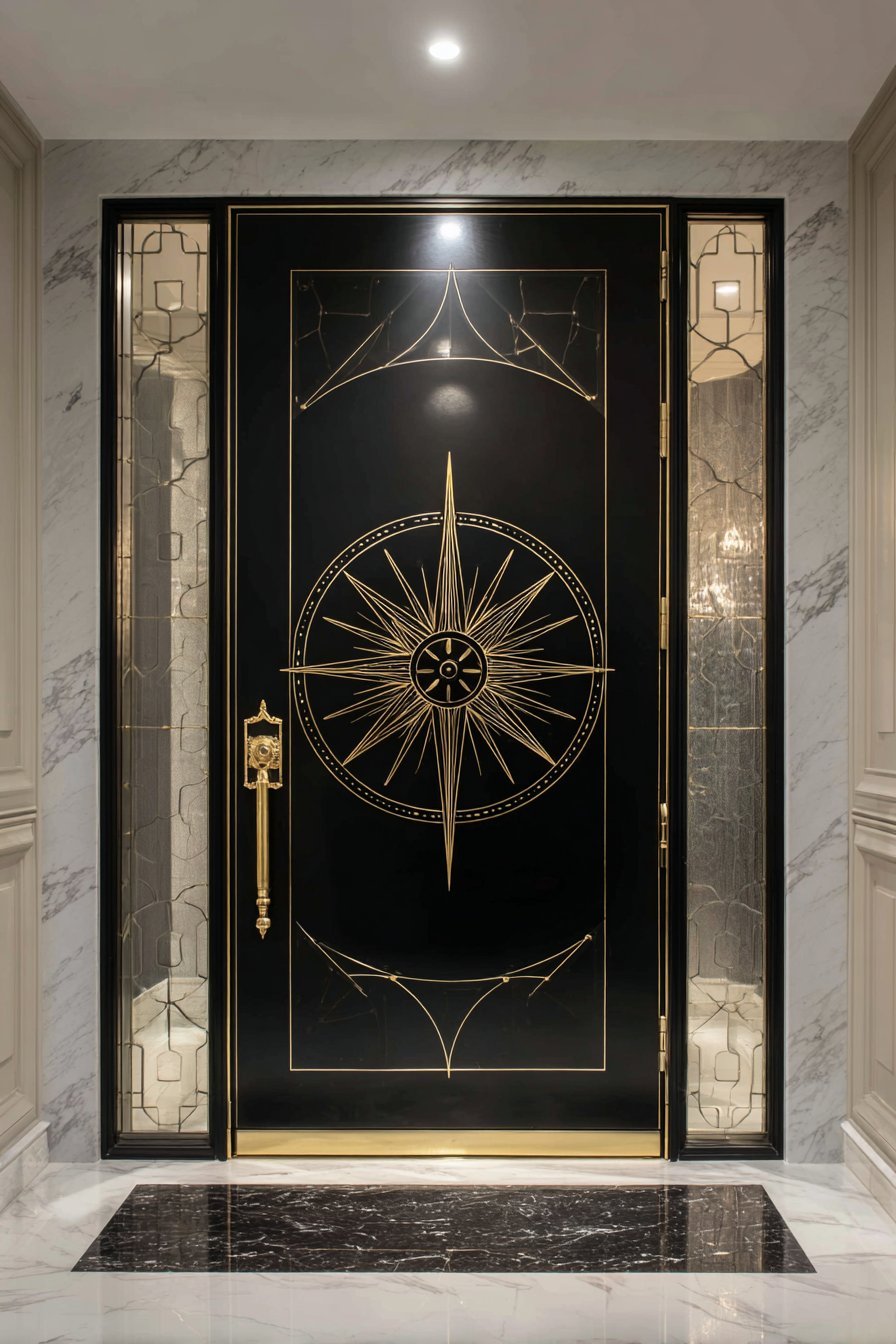
The single oversized door measures 8 feet tall for dramatic impact. A polished brass lever handle and matching kick plate complete the period-appropriate hardware. Marble surrounds in contrasting white with black veining frame the entrance elegantly. An overhead fanlight window repeats the geometric sunburst pattern.
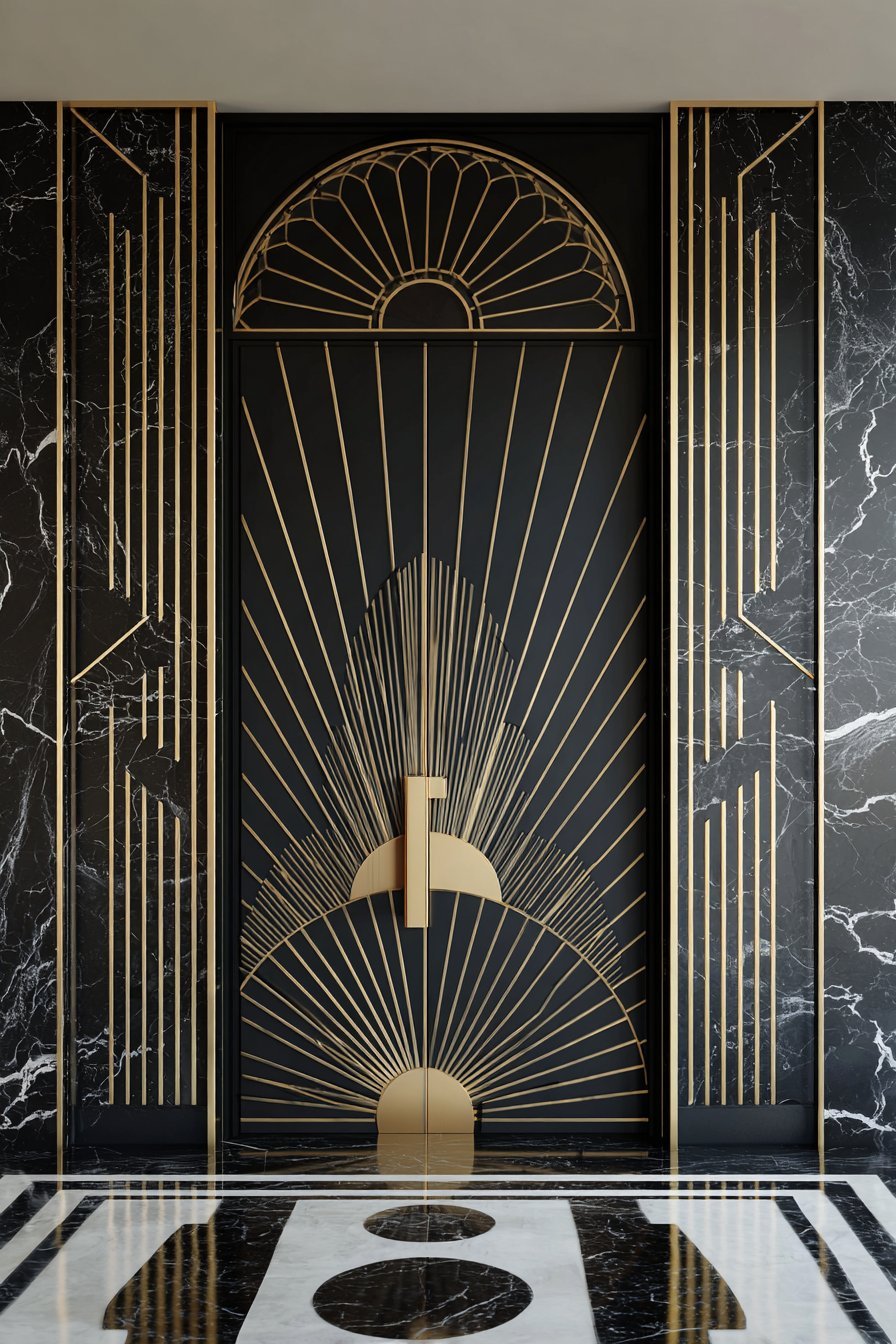
Multiple lacquer coats build depth in the glossy black finish. This labor-intensive process creates the characteristic Art Deco shine. The brass inlay work requires precision cutting and fitting by skilled craftspeople. Warm ambient lighting emphasizes the reflective lacquer surface.
Metallic details catch and reflect light throughout the day and evening. The geometric patterns create strong visual impact from both interior and exterior. This design suits Art Deco homes, contemporary spaces embracing vintage glamour, and collectors of period design. The door becomes a functional art installation.
Key Design Tips:
- Apply multiple thin lacquer coats rather than few thick ones for best results
- Commission custom brass inlay patterns that complement your home’s architecture
- Install lighting that highlights the reflective lacquer and metallic details
- Maintain lacquer finish with gentle cleaning to preserve glossy appearance
- Choose white or light-colored marble surrounds for maximum contrast and drama
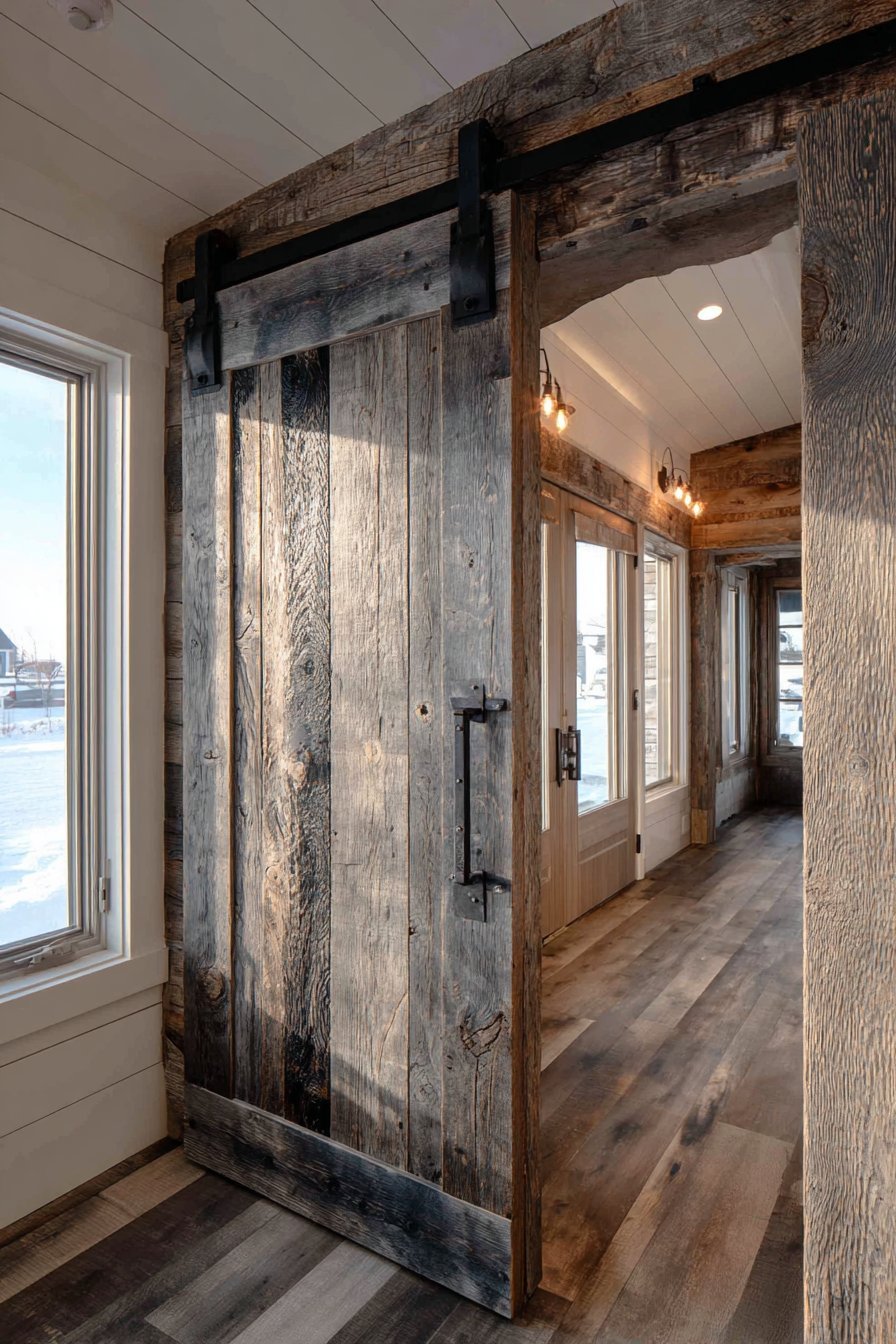
5. Rustic Reclaimed Oak Barn Door with Iron Hardware
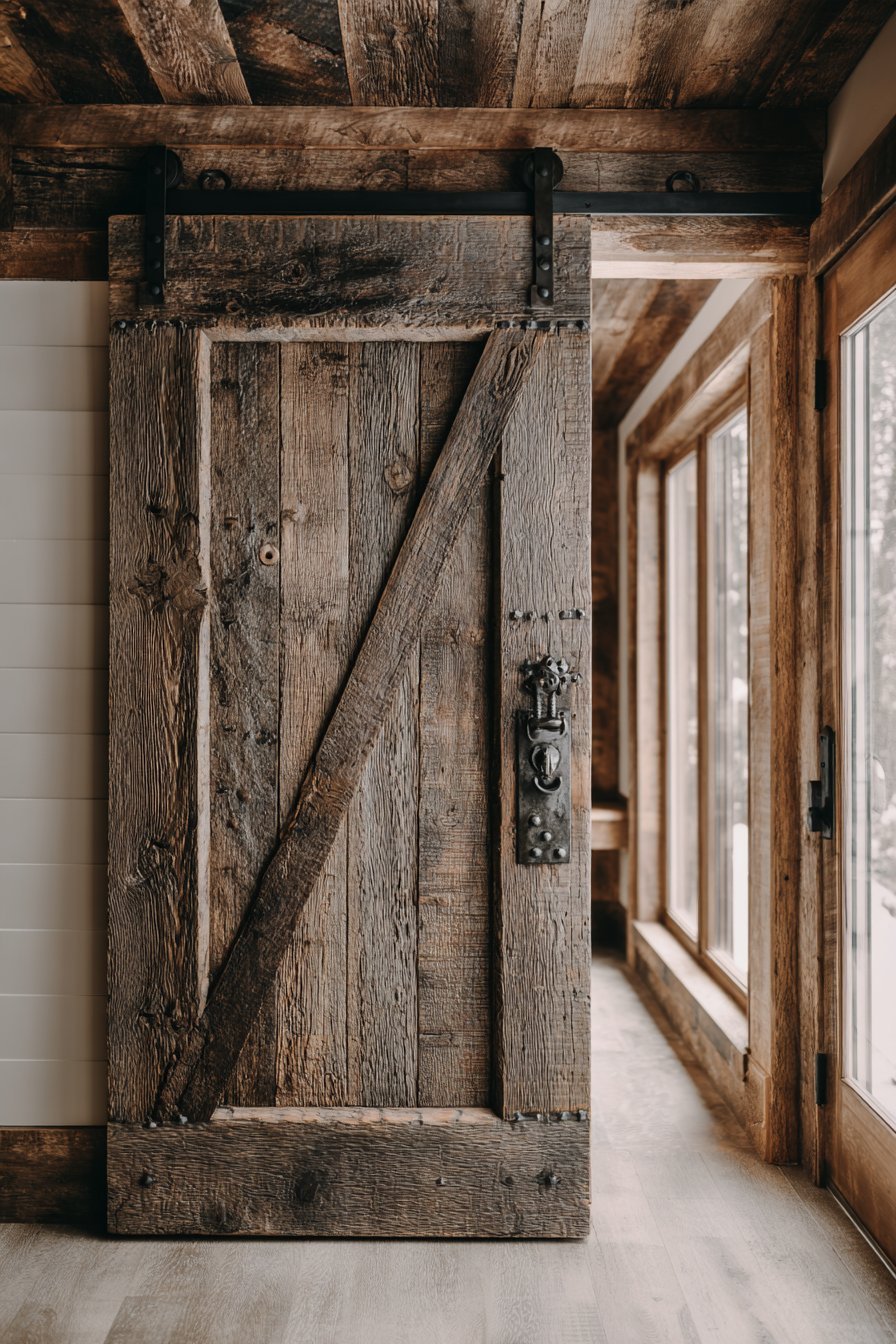
Rustic luxury embraces authentic materials and honest construction in this barn-style sliding door. Reclaimed oak preserves original saw marks and weathered texture. The 10-foot width makes a bold architectural statement. Matte protective finish protects while allowing the wood’s character to shine through.
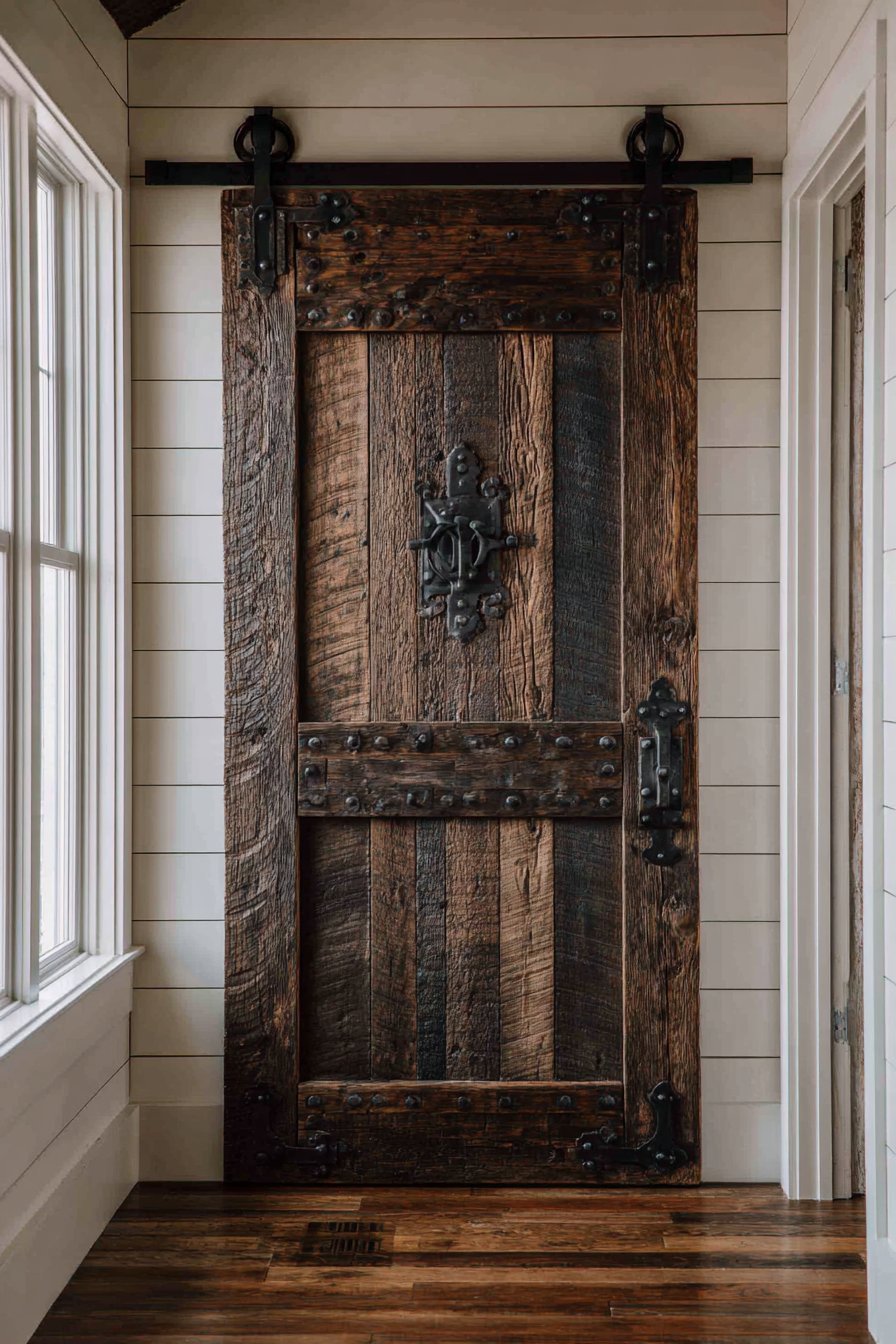
Heavy-duty wrought iron hardware includes decorative strap hinges that extend across the door. A custom iron pull handle offers substantial grip and visual weight. The industrial-style track system becomes an intentional design element. Black steel brackets mount the exposed track securely.
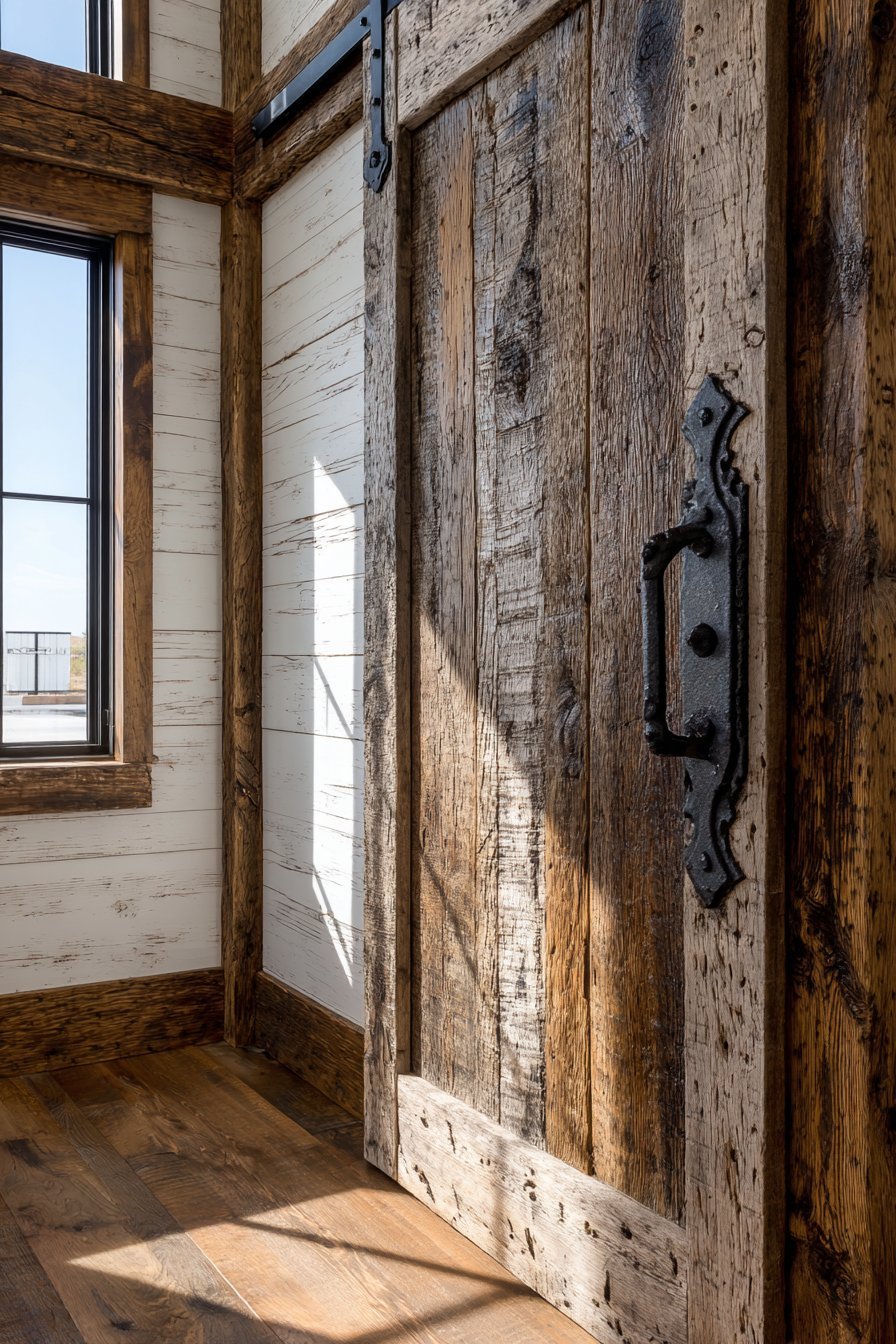
Whitewashed shiplap walls provide bright contrast to the dark weathered oak. This juxtaposition highlights both materials effectively. Natural light from adjacent windows emphasizes the authentic wood character. The substantial ironwork creates satisfying visual weight.
Each piece of reclaimed oak tells a story through its unique weathering patterns. Knots, nail holes, and color variations add authenticity that new wood cannot replicate. The sliding mechanism saves space while making a design statement. This approach suits modern farmhouses, industrial lofts, and homes celebrating reclaimed materials.
Key Design Tips:
- Source reclaimed oak from reputable suppliers who verify wood origin and treatment
- Seal reclaimed wood properly while preserving its weathered character and texture
- Install heavy-duty track systems rated for substantial door weight and daily use
- Ensure adequate wall space for the door to slide completely open
- Balance rustic materials with refined details to achieve sophisticated rusticity
6. Contemporary Frosted Glass with Embedded Patterns
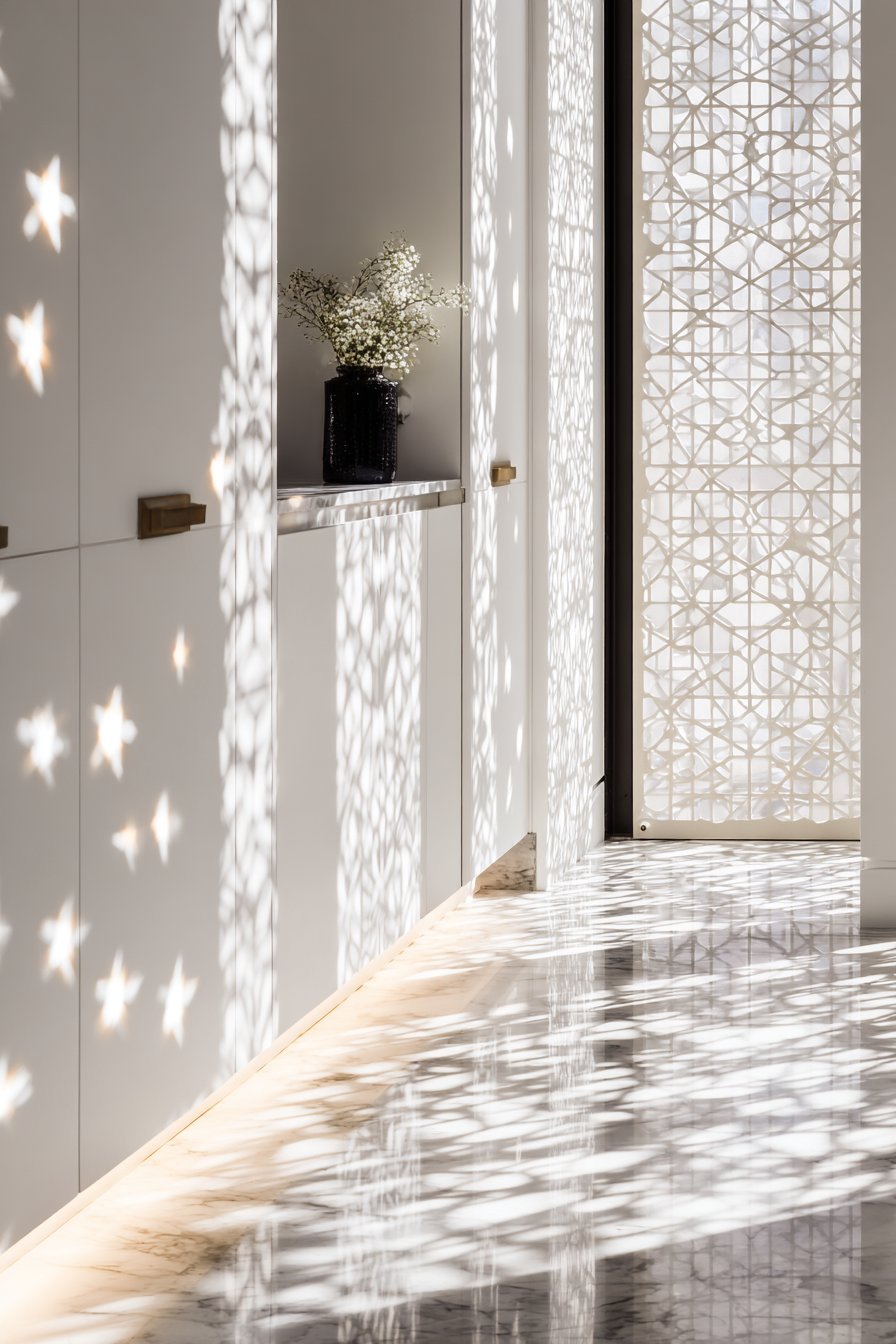
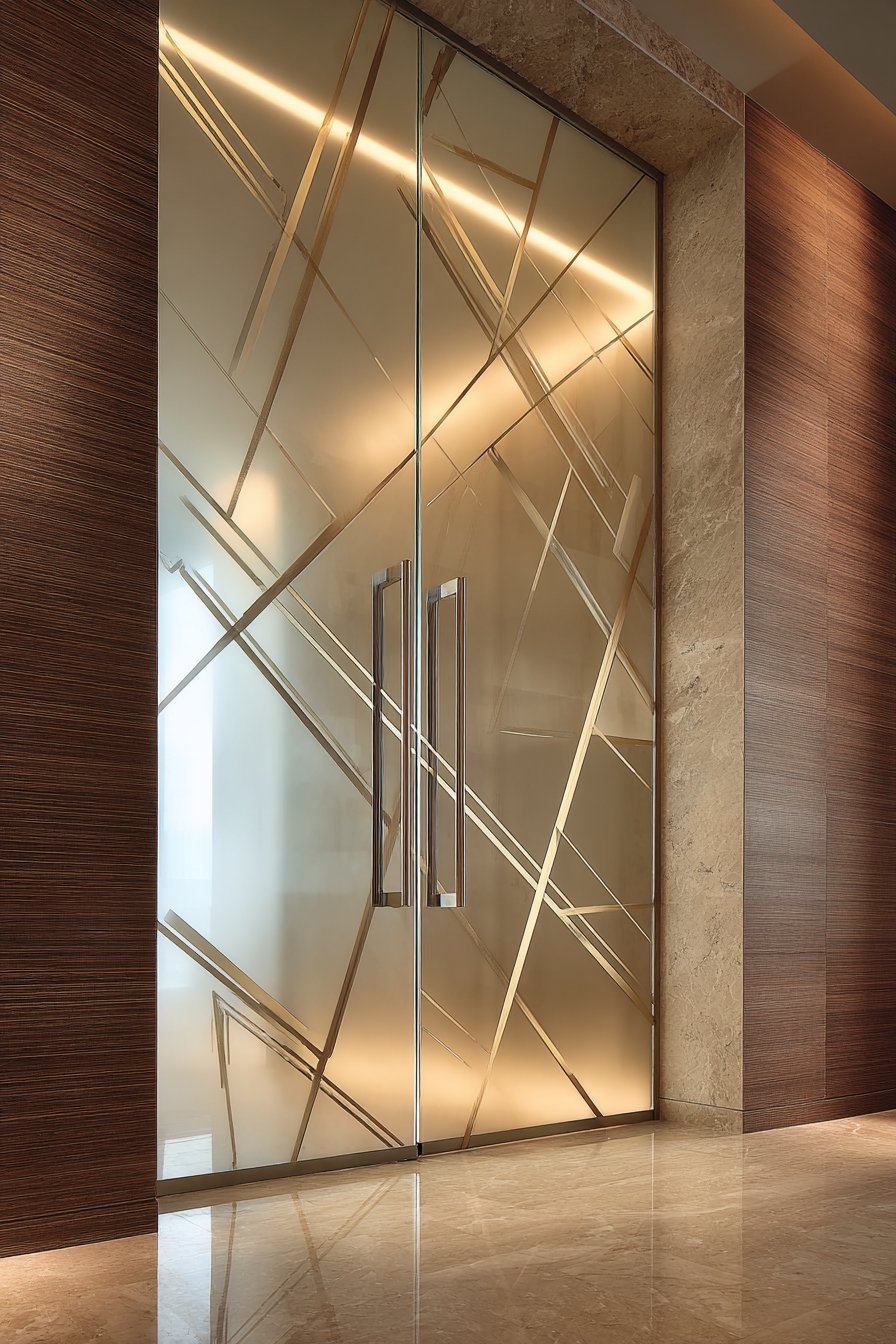
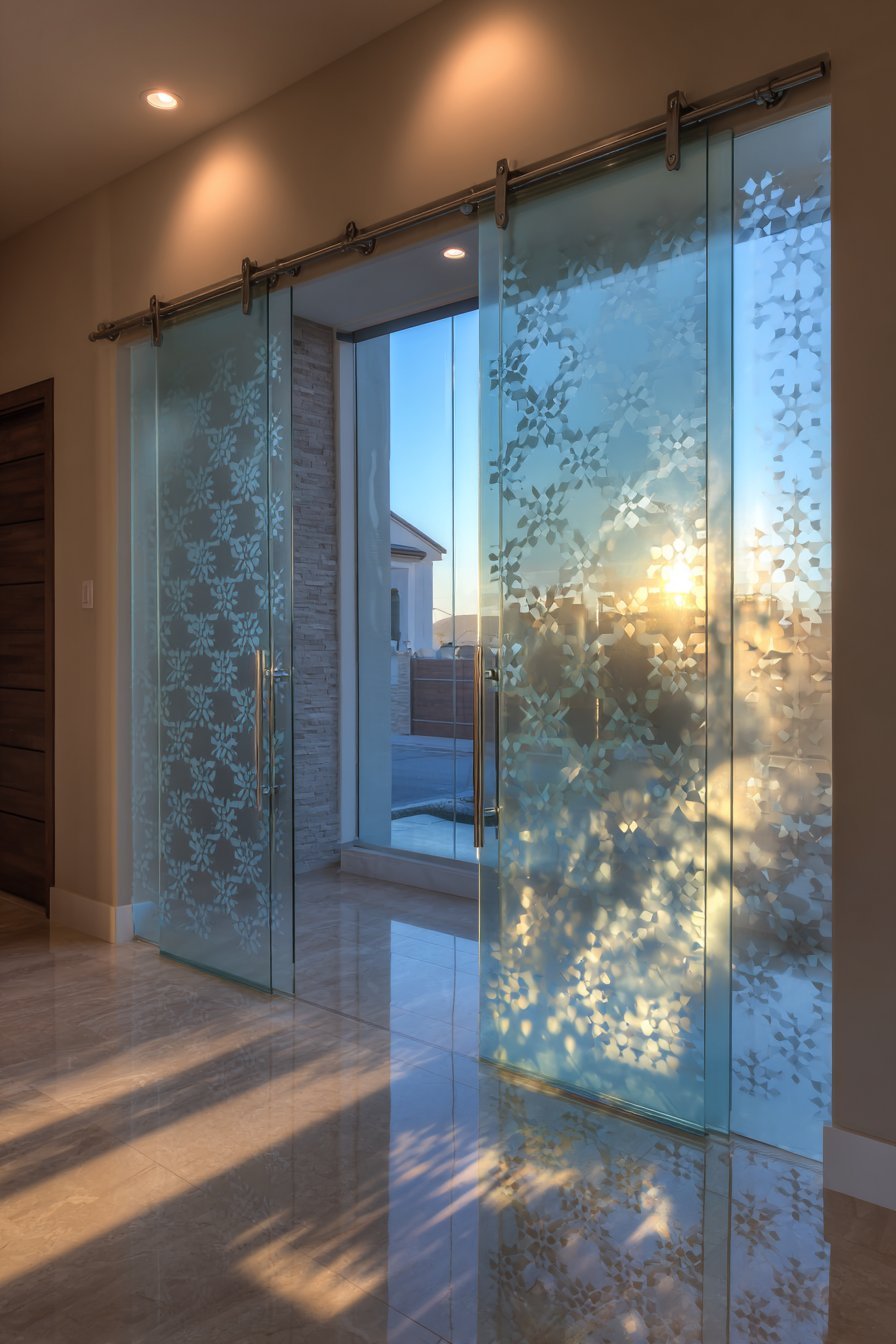
Modern transparency meets privacy in this innovative frosted glass door design. Floor-to-ceiling panels of frosted tempered glass create ethereal beauty. Embedded metallic geometric patterns add visual interest and light refraction. The frameless design with minimal stainless steel channels maximizes the glass effect.
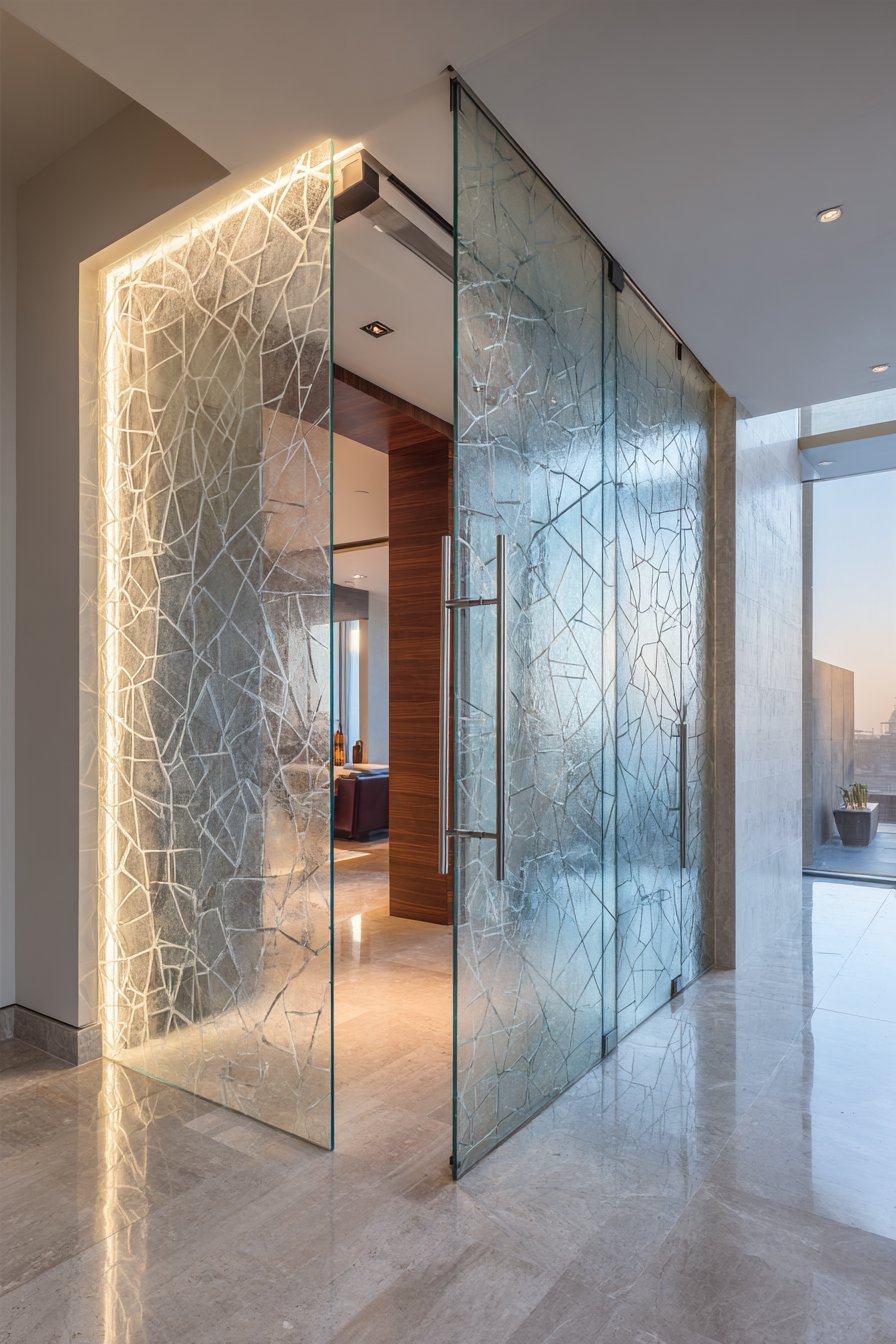
The frosted glass treatment allows light transmission while maintaining complete privacy. This dual functionality makes it perfect for entrance applications. A sleek horizontal pull bar in brushed stainless steel provides minimal hardware. LED strip lighting integrated into the door frame creates stunning backlighting effects.
The glass creates ethereal shadows on polished marble entryway flooring. These shadows shift throughout the day as natural light changes. The embedded metallic patterns catch light and create subtle sparkle. Professional photography captures the interplay of transparency and translucency.
This design suits contemporary homes valuing both openness and privacy. The glass can be customized with various pattern densities and designs. Temperature control considerations require proper insulation around the glass panels. The LED backlighting transforms the door into a glowing art piece at night.
Key Design Tips:
- Specify tempered or laminated glass for safety in door applications
- Choose embedded pattern density that balances privacy with light transmission
- Install LED systems with dimming capabilities for ambiance control
- Ensure proper weather sealing around frameless glass edges
- Consider double-glazing in climates requiring temperature control
7. Traditional Walnut Six-Panel with Antique Hardware
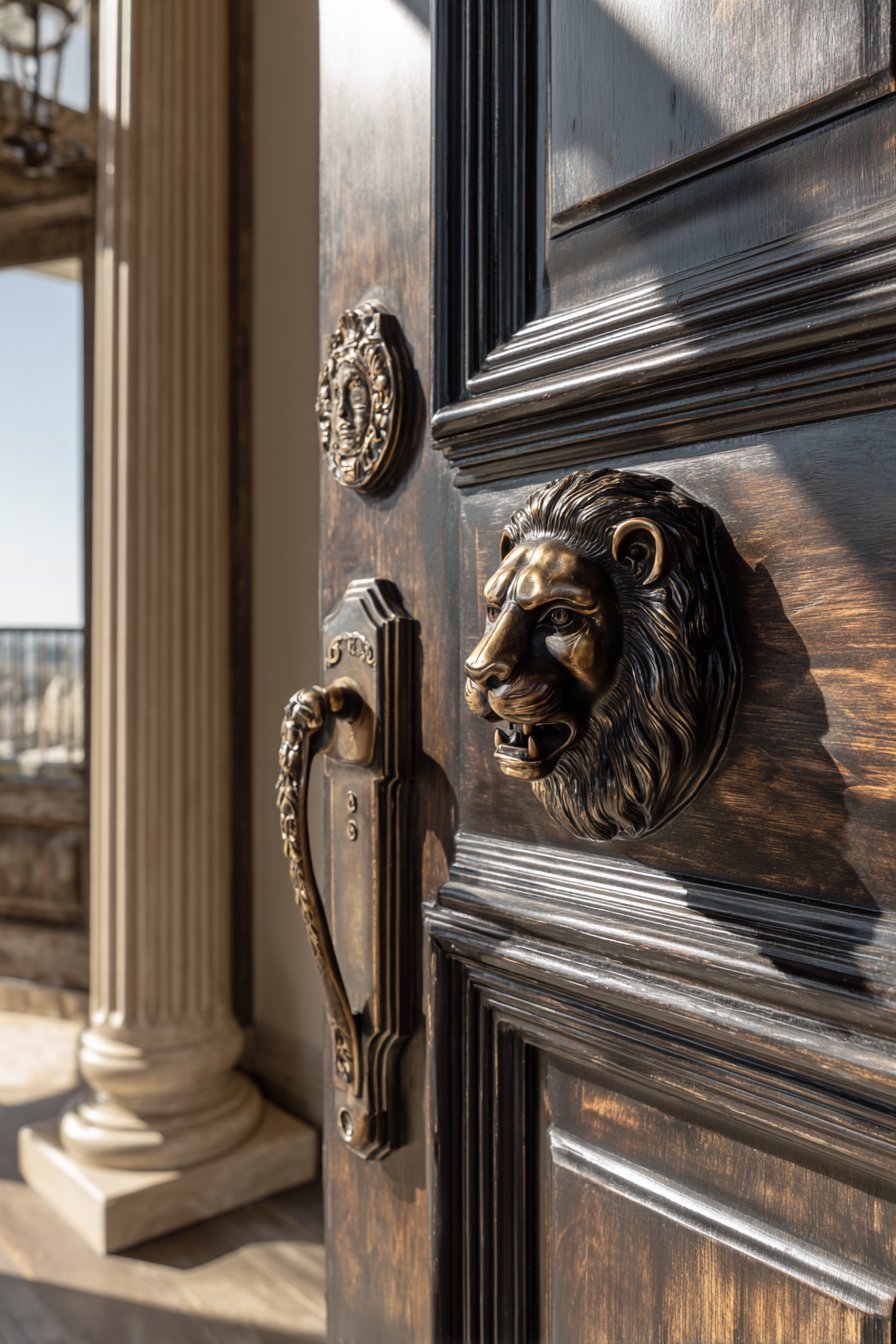
Classic American door design reaches luxury status through premium materials and craftsmanship. Solid walnut construction offers beautiful grain patterns and rich brown tones. Raised panel construction creates traditional shadow lines and dimensional interest. Hand-applied antique finish shows subtle color variations across the surface.
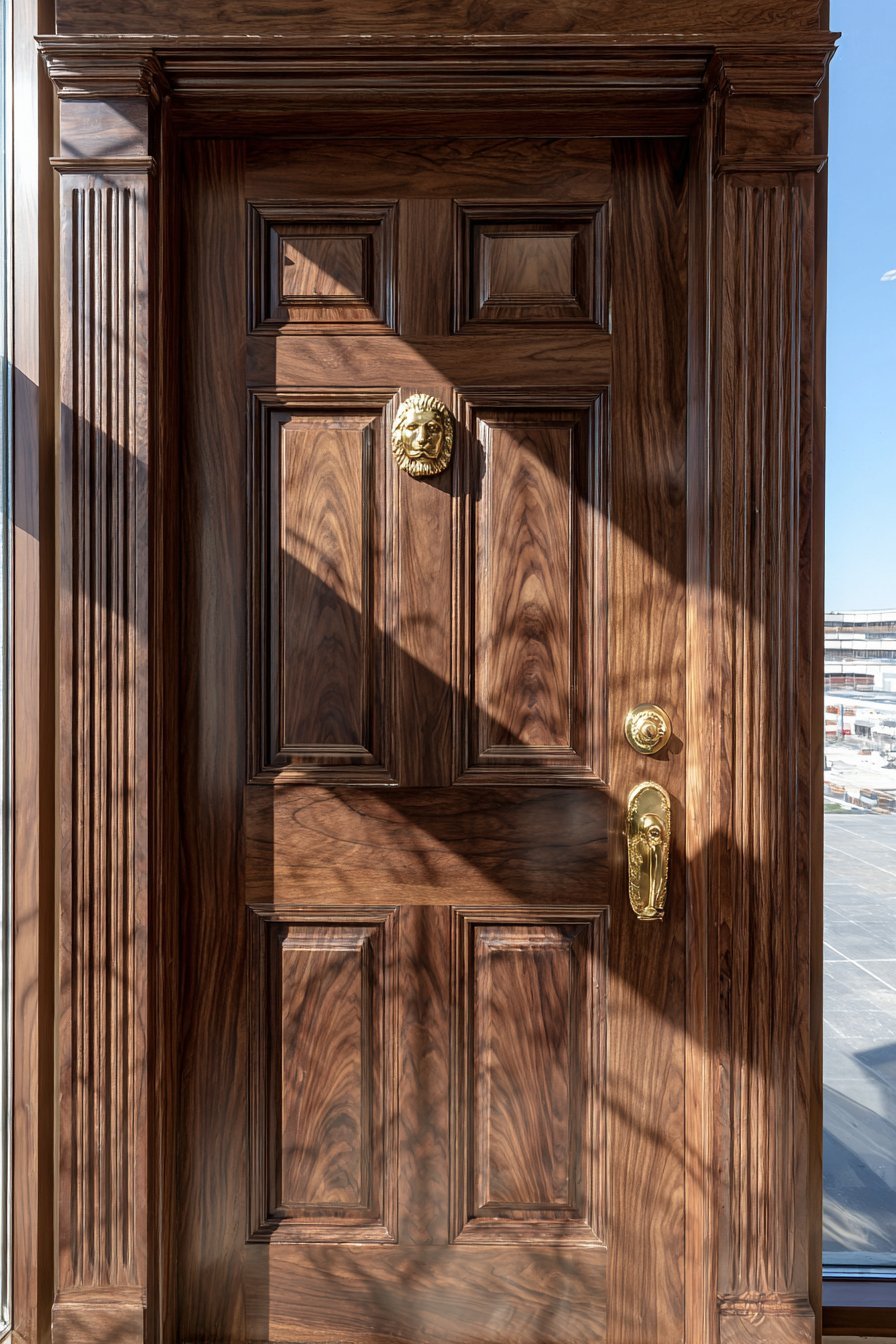
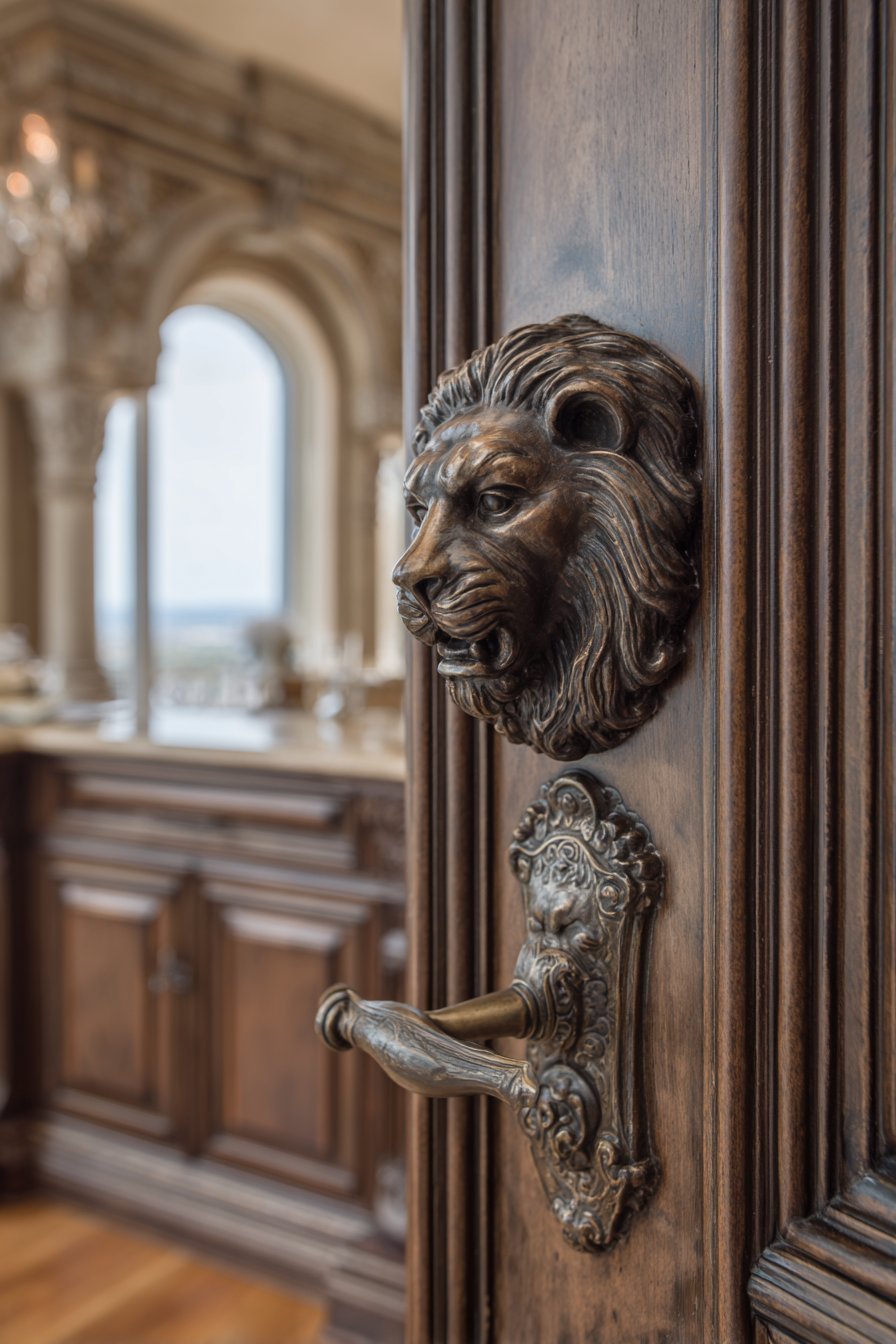
Ornate brass door furniture includes a vintage-style lever handle with substantial weight. The decorative escutcheon plate features traditional detailing. A traditional door knocker with lion’s head design adds gravitas and classical reference. Book-matched walnut veneer showcases the natural grain pattern symmetrically.
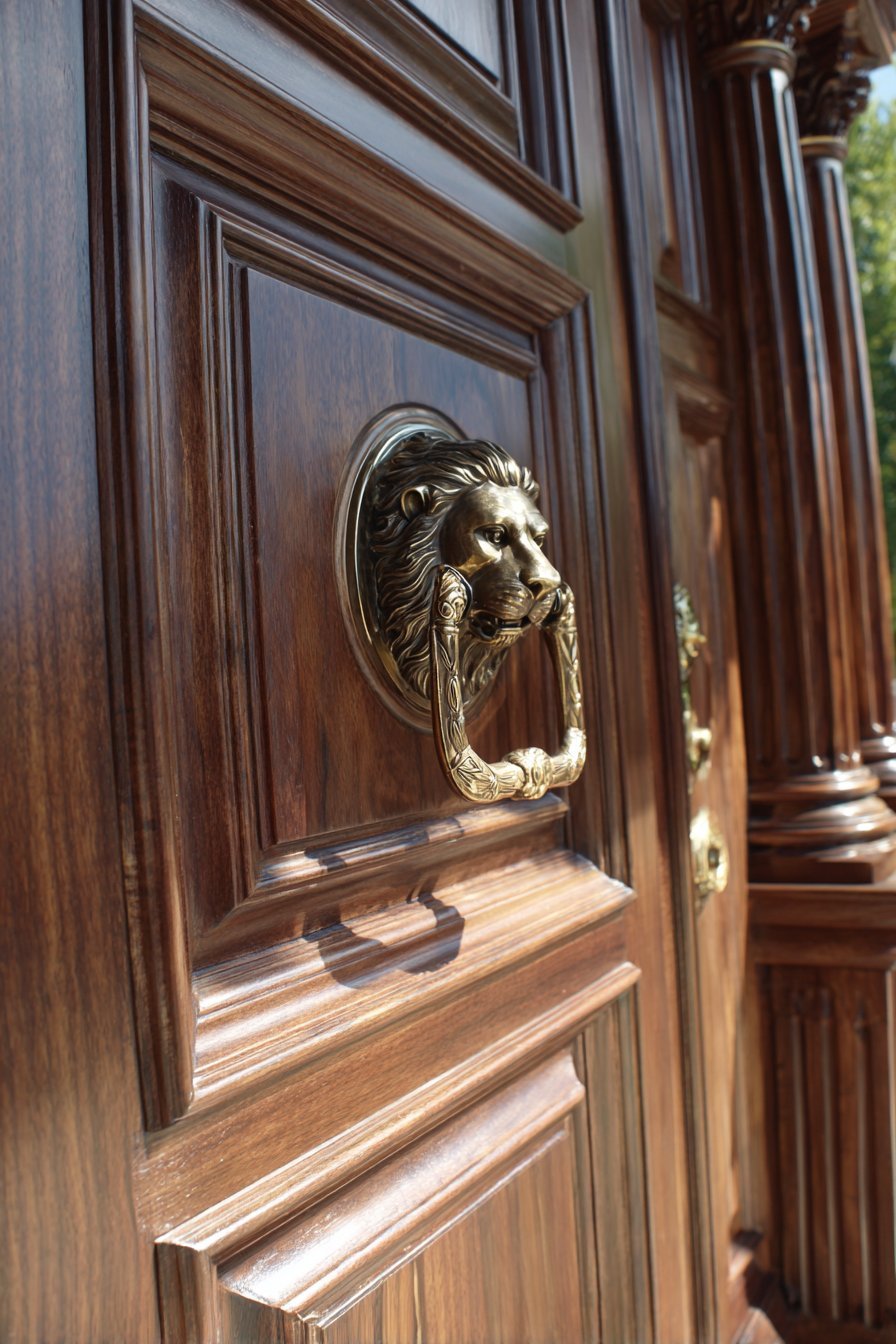
Surrounding millwork in matching walnut includes fluted pilasters adding vertical elegance. A detailed pediment crowns the entrance with classical proportions. Natural daylight from nearby windows creates depth-revealing shadows across raised panels. These shadows change throughout the day, animating the static surface.
The six-panel configuration follows proportions refined over centuries of door design. Each panel’s dimensions relate mathematically to the overall door size. This attention to proportion creates subconscious visual satisfaction. The design suits traditional homes, colonial revivals, and spaces celebrating timeless American style.
Key Design Tips:
- Select solid walnut construction rather than veneer for longevity and refinement
- Commission book-matched veneer panels for symmetrical grain patterns
- Choose antique brass hardware with substantial weight that feels quality
- Ensure surrounding millwork matches the door’s wood species and finish
- Apply hand-rubbed finishes that allow wood’s natural character to develop over time
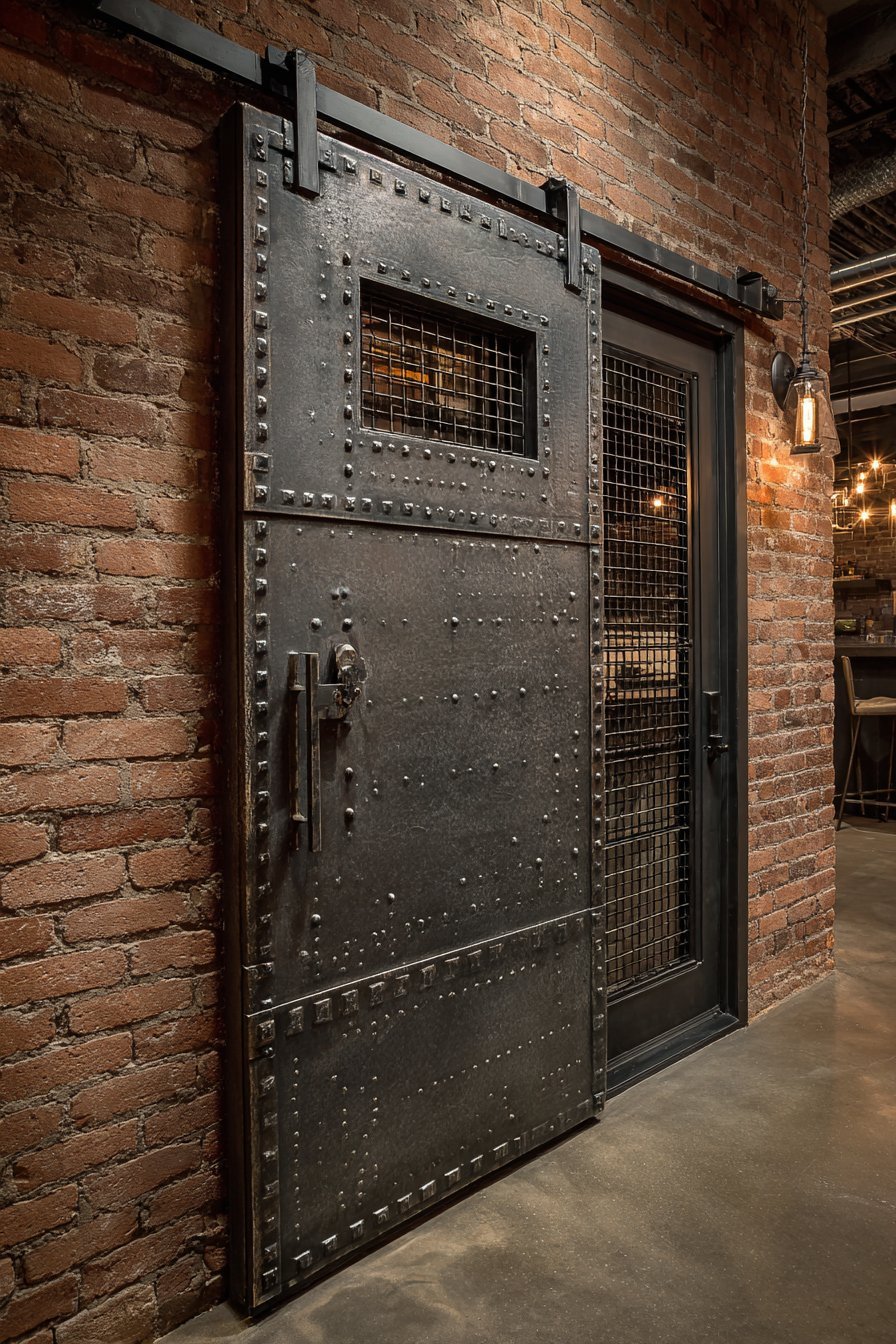
8. Industrial Steel Door with Riveted Panels
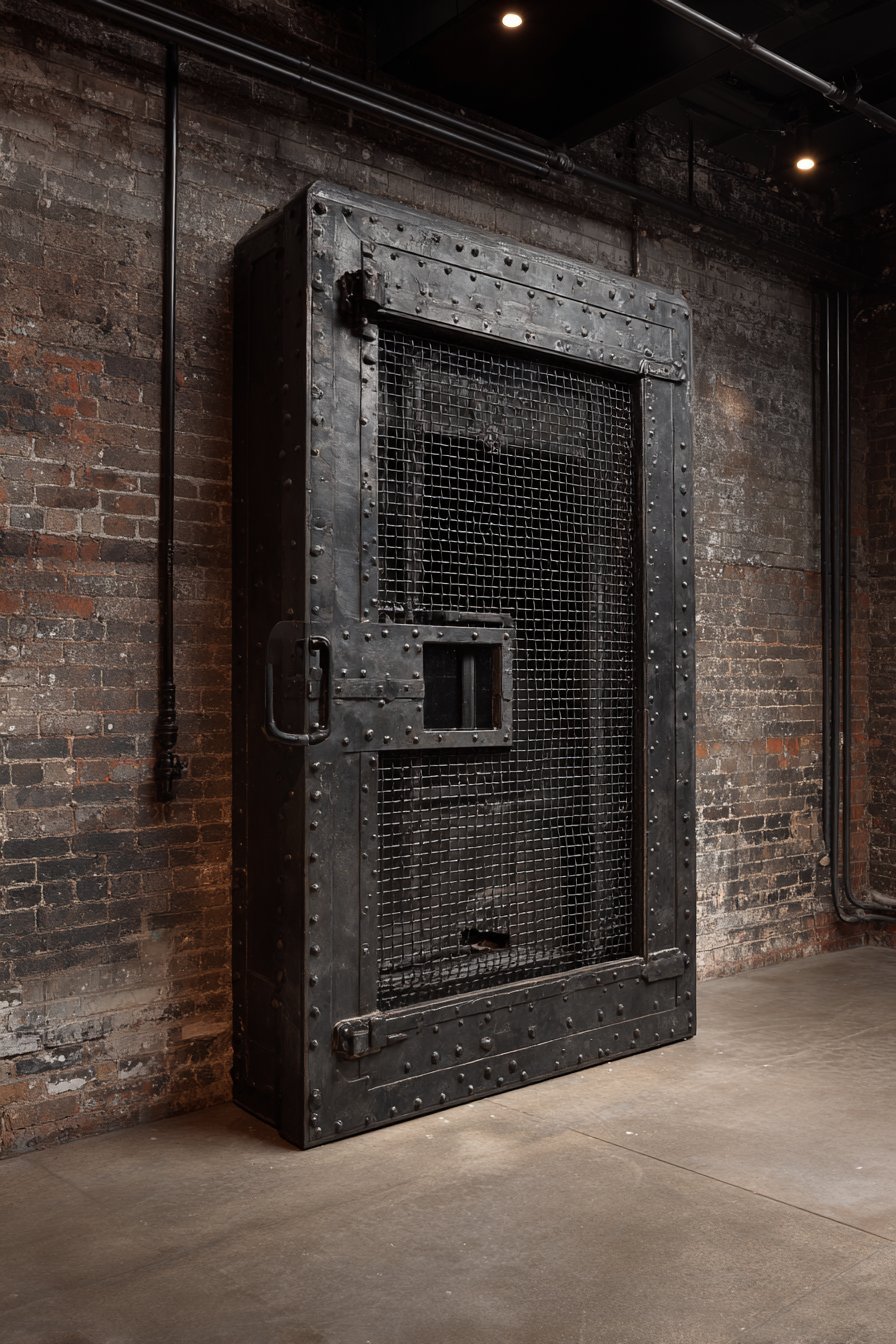
Raw industrial beauty transforms into refined luxury through careful execution and material selection. Aged bronze finish on steel panels creates authentic factory aesthetic. Riveted metal panels reference early 20th-century industrial construction. Exposed bolt heads become decorative elements rather than necessary evils.
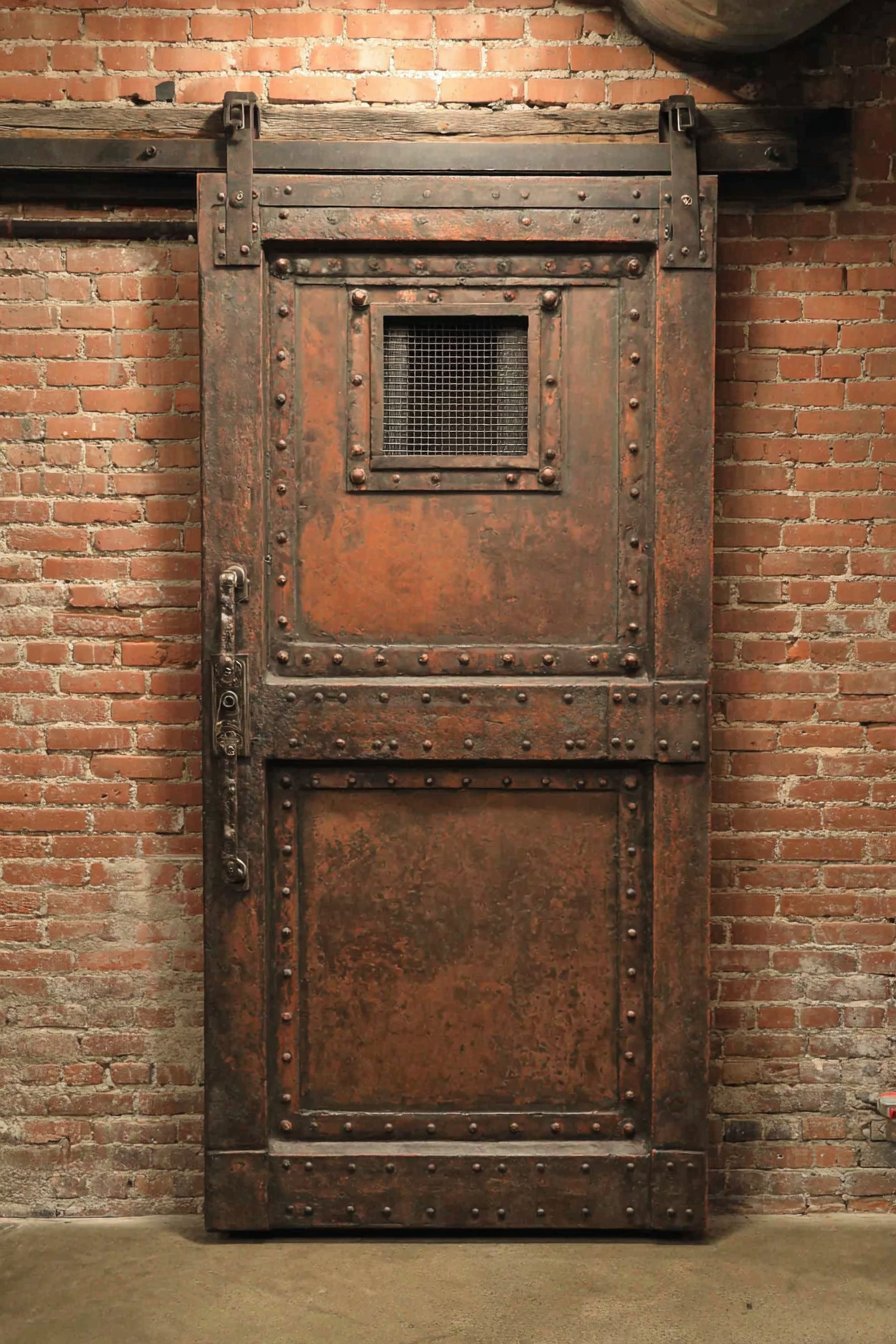
Reinforced corners add both structural integrity and visual interest. A substantial sliding bolt lock serves as functional hardware and design element. The small rectangular window with steel grid pattern allows limited visibility. Surrounding exposed brick wall and concrete floor enhance industrial character.
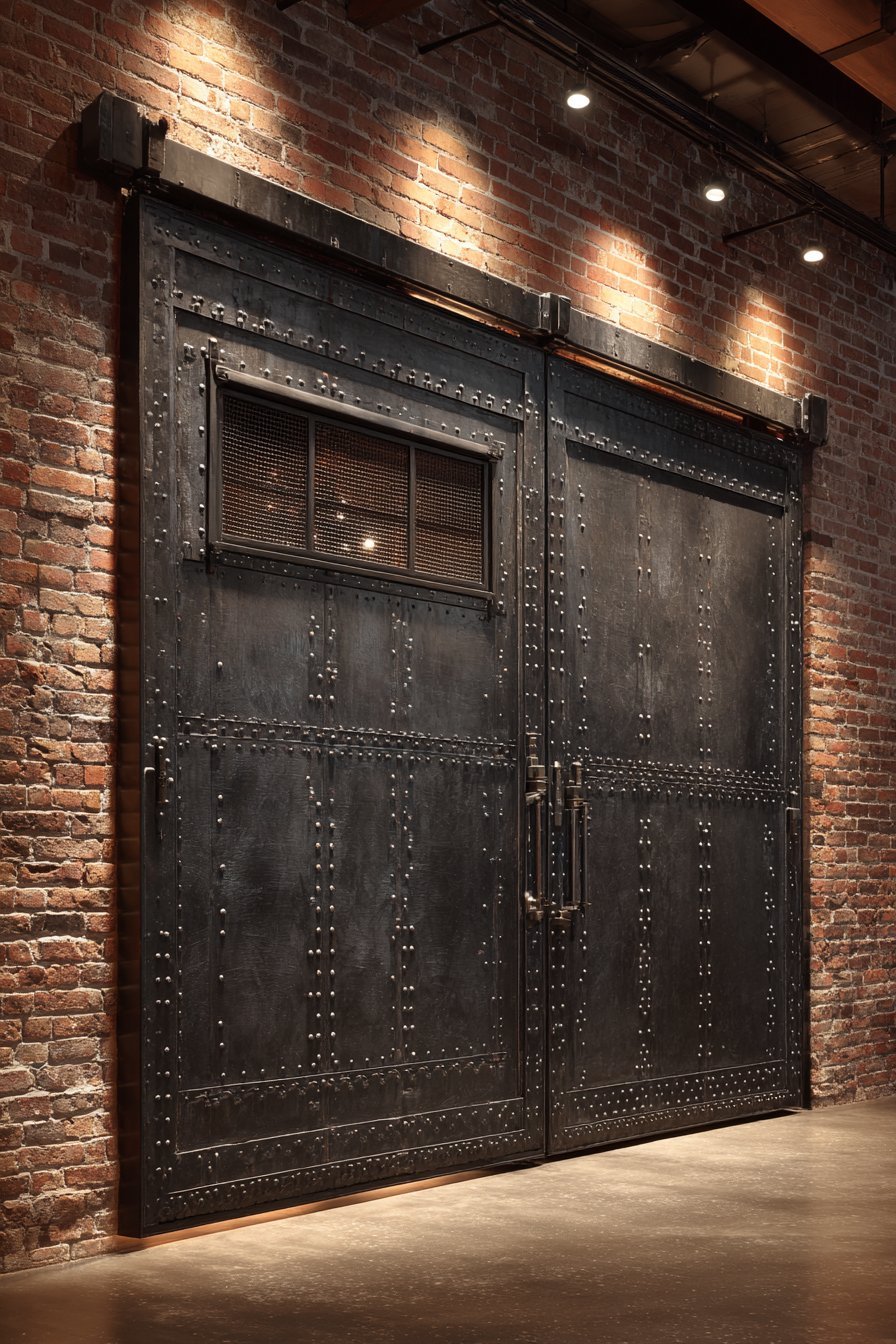
Dramatic side lighting emphasizes the door’s texture and dimensional rivets. The aged bronze finish develops richer patina over time. This living finish means the door evolves rather than deteriorates. The raw material beauty appeals to those appreciating honest construction.
This design suits converted industrial spaces, urban lofts, and modern homes embracing industrial aesthetics. The substantial construction provides excellent security alongside visual impact. Sound insulation may require additional measures due to steel’s acoustic properties. The door makes an uncompromising statement about material honesty.
Key Design Tips:
- Apply aged bronze or oxidized finishes that develop authentic patina over time
- Ensure proper structural support for heavy steel door weight
- Consider acoustic dampening treatments if sound transmission is a concern
- Balance industrial elements with refined details to elevate beyond merely utilitarian
- Install dramatic accent lighting to emphasize texture and dimensional details
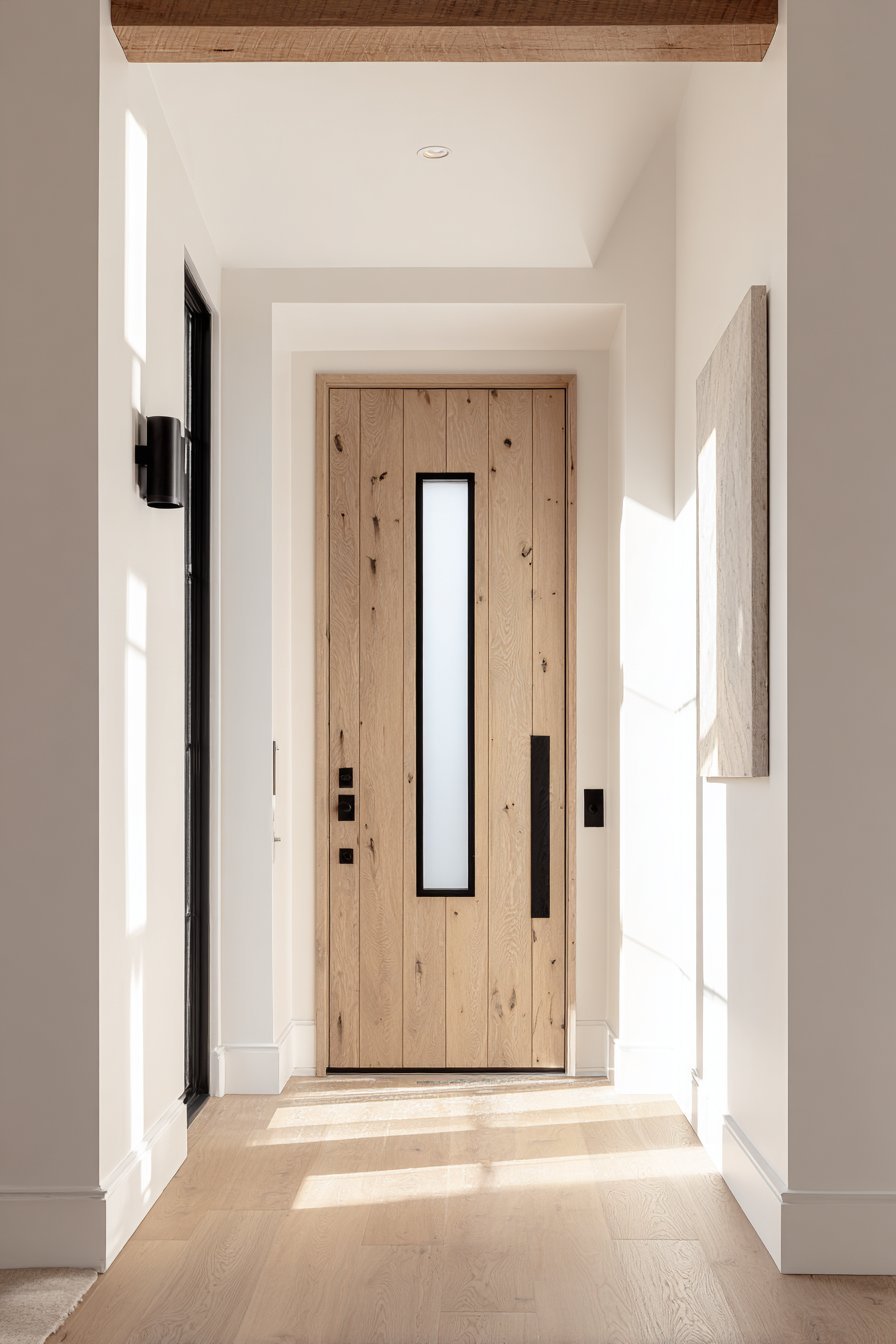
9. Scandinavian Oak with Minimalist Black Hardware
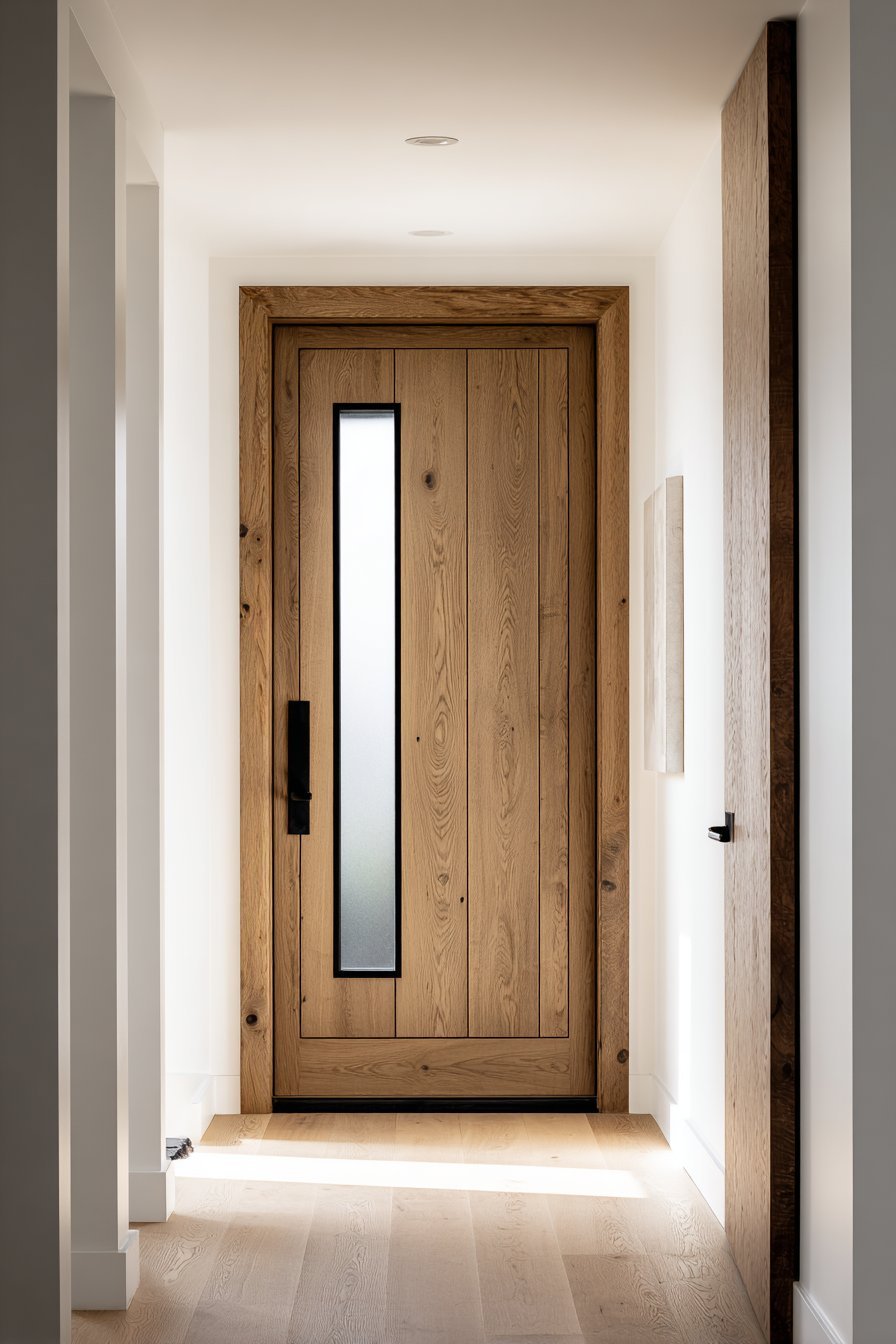
Nordic design philosophy celebrates simplicity, natural materials, and functional beauty. Solid oak door with clean lines embodies these principles perfectly. Natural light wood finish highlights oak’s beautiful grain and warm honey tones. Minimalist black steel hardware provides necessary contrast and visual anchoring.
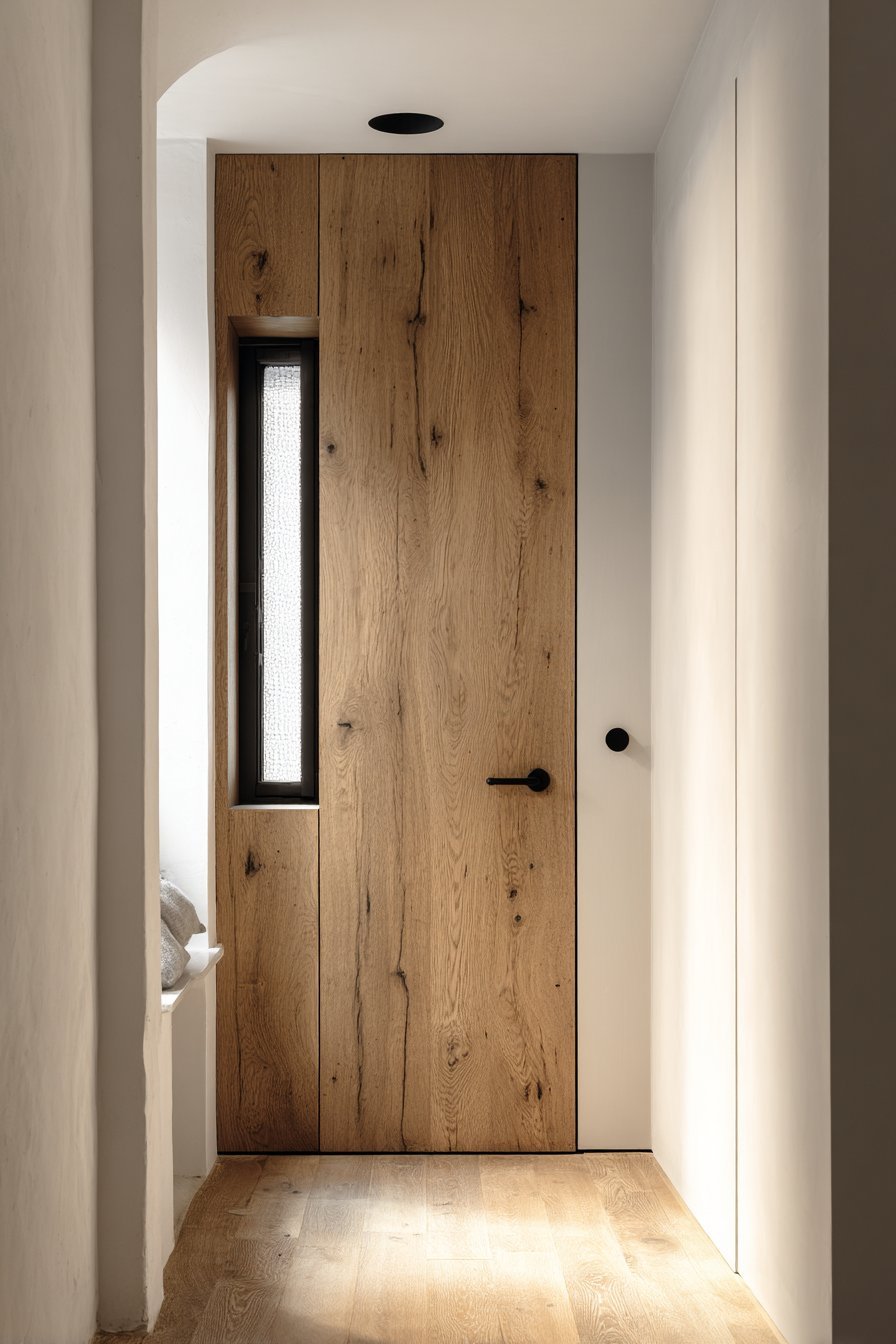
The design emphasizes vertical wood grain through careful material selection. Simple recessed panel detail adds subtle dimension without complexity. A sleek cylindrical door handle in matte black feels substantial yet refined. A narrow vertical window with frosted glass provides natural light while maintaining privacy.
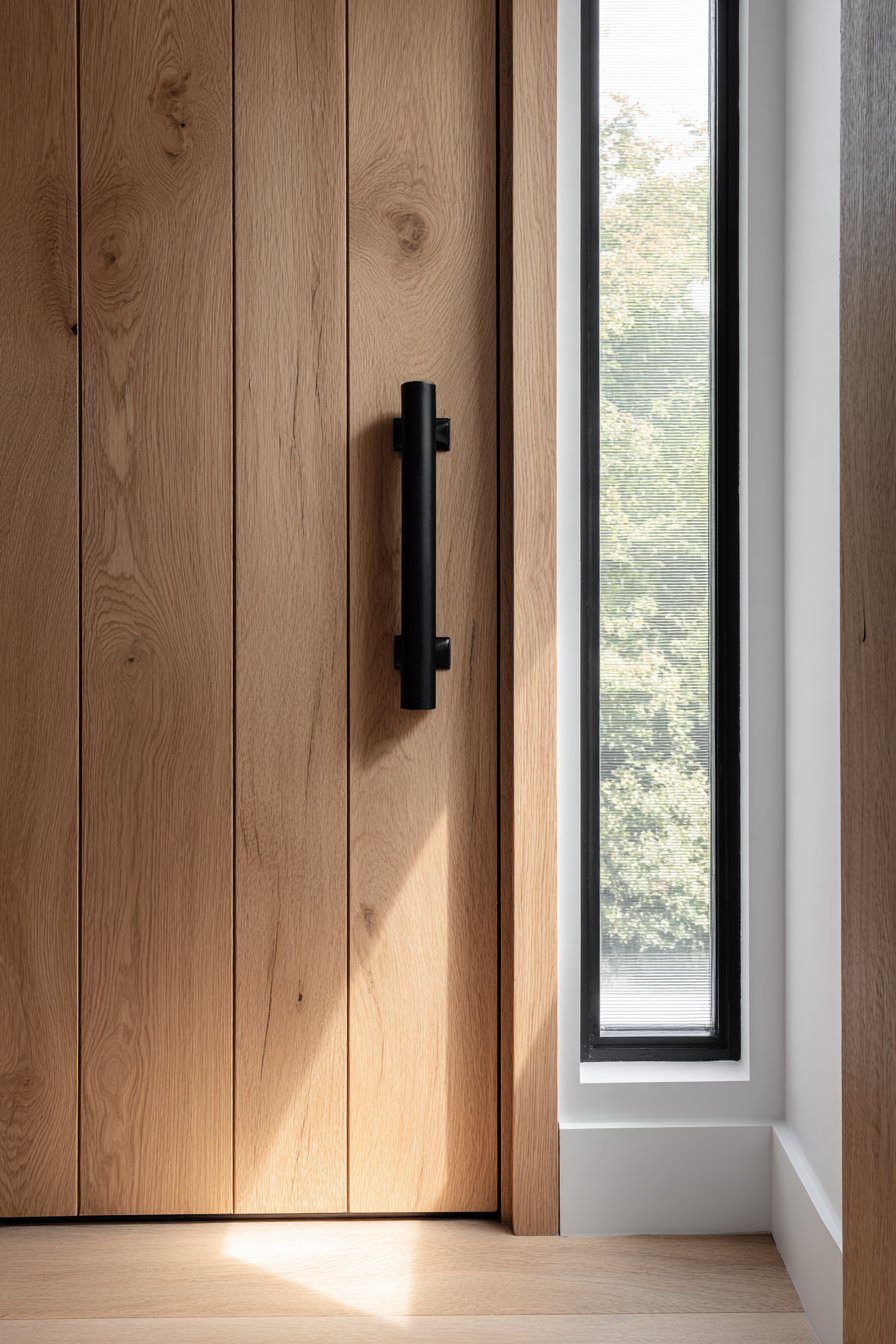
White-painted walls create the characteristic Nordic palette of light and natural wood. Light oak flooring extends from the doorway, creating visual continuity. Soft diffused natural lighting highlights warm wood tones and simple hardware. The overall effect is calm, welcoming, and uncluttered.
This minimalist aesthetic requires precision in execution since there’s nowhere to hide flaws. Every joint, edge, and surface must be perfectly executed. The restrained palette focuses attention on material quality and proportion. This design suits contemporary homes, urban apartments, and anyone appreciating Scandinavian design principles.
Key Design Tips:
- Select solid oak with consistent grain pattern for cohesive appearance
- Apply natural oil or matte polyurethane finishes that enhance wood without shine
- Choose matte black hardware with cylindrical or geometric profiles
- Maximize natural light to showcase warm wood tones throughout the day
- Maintain restrained color palette allowing wood and black hardware to dominate
10. Mediterranean Mesquite with Wrought Iron Details
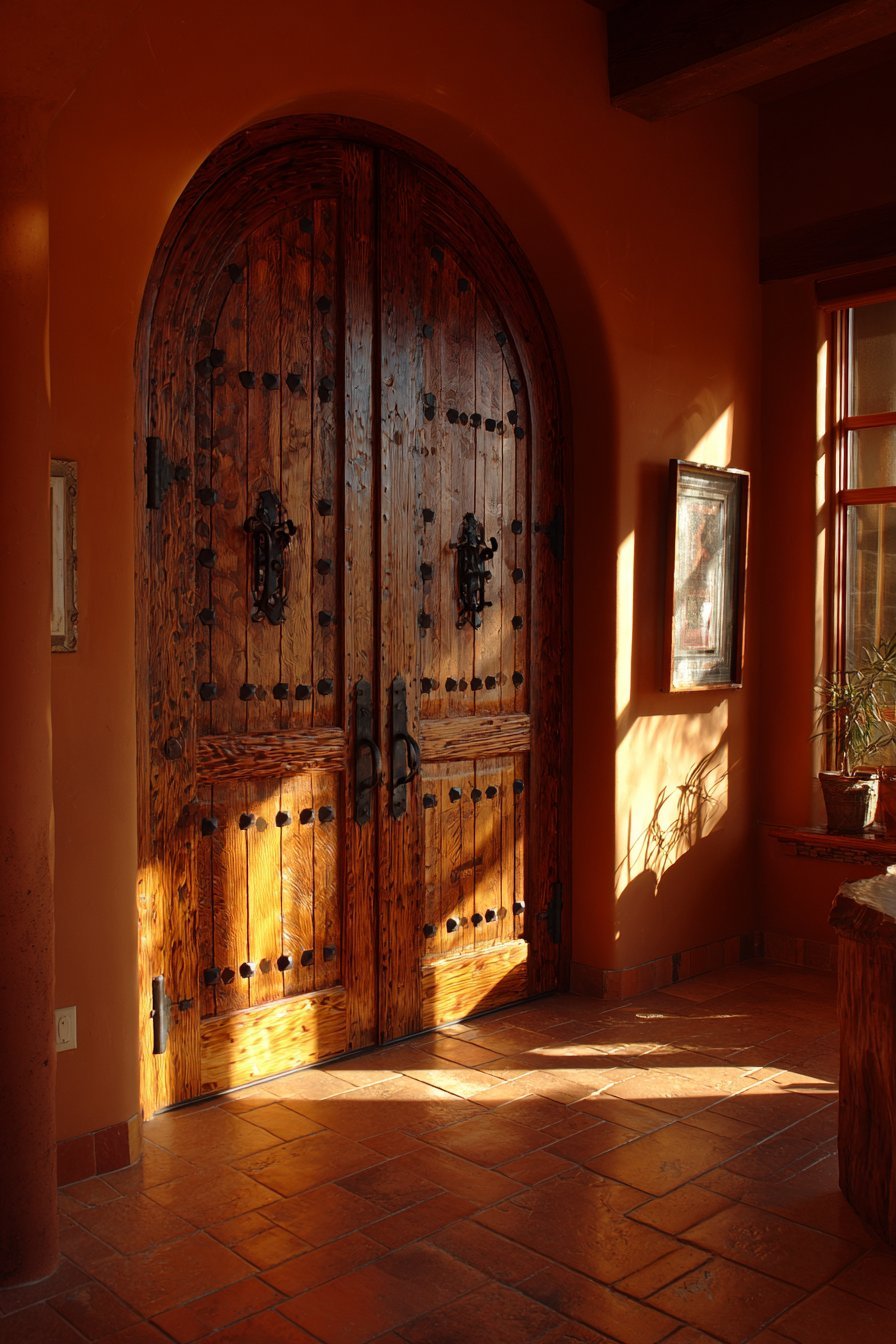
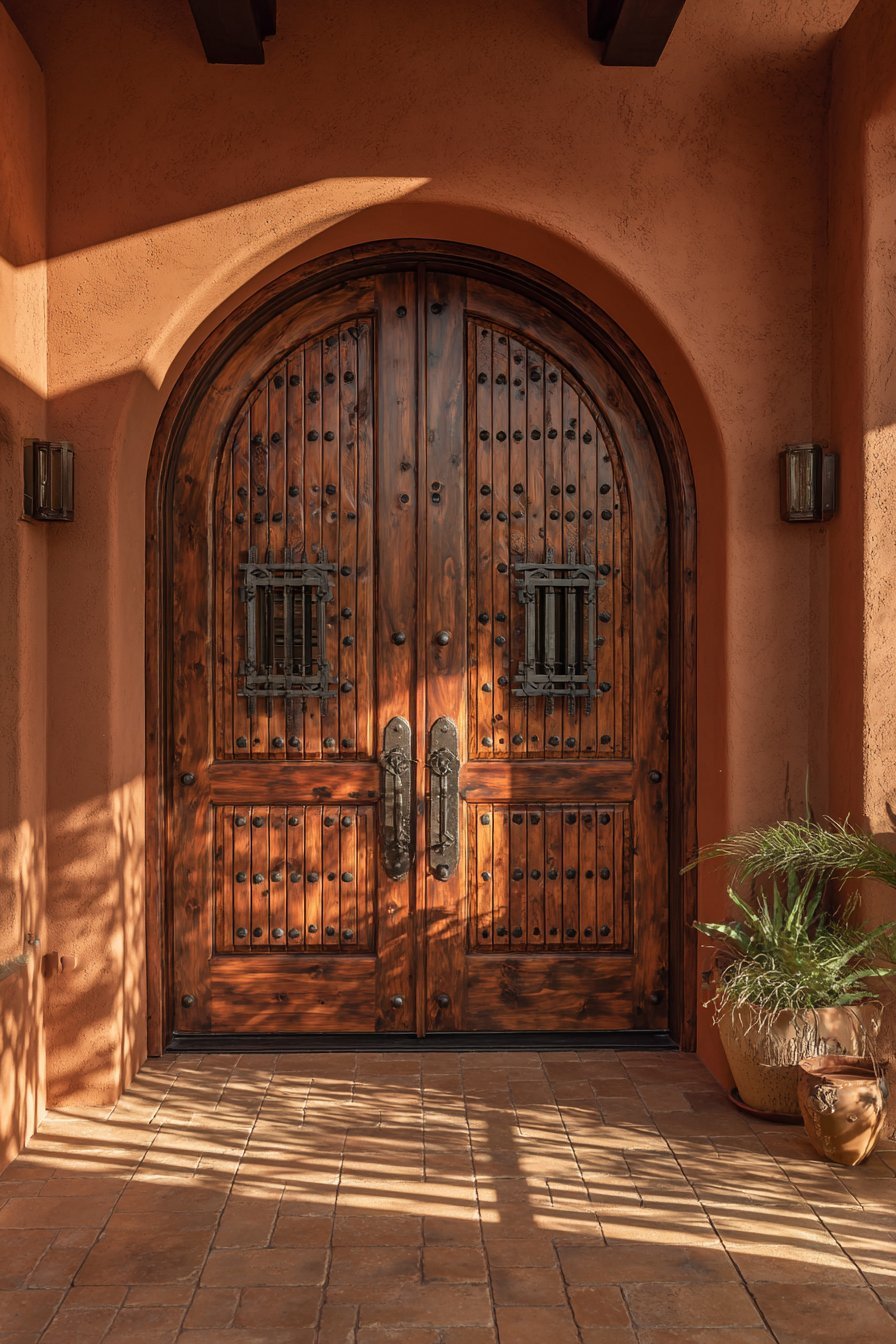
Old World charm meets contemporary luxury in this Mediterranean-inspired arched entrance. Solid mesquite wood displays distinctive grain patterns and color variation. Natural wood finish shows mesquite’s range from honey tones to deep brown. Hand-forged wrought iron speakeasy grille adds authentic period character.
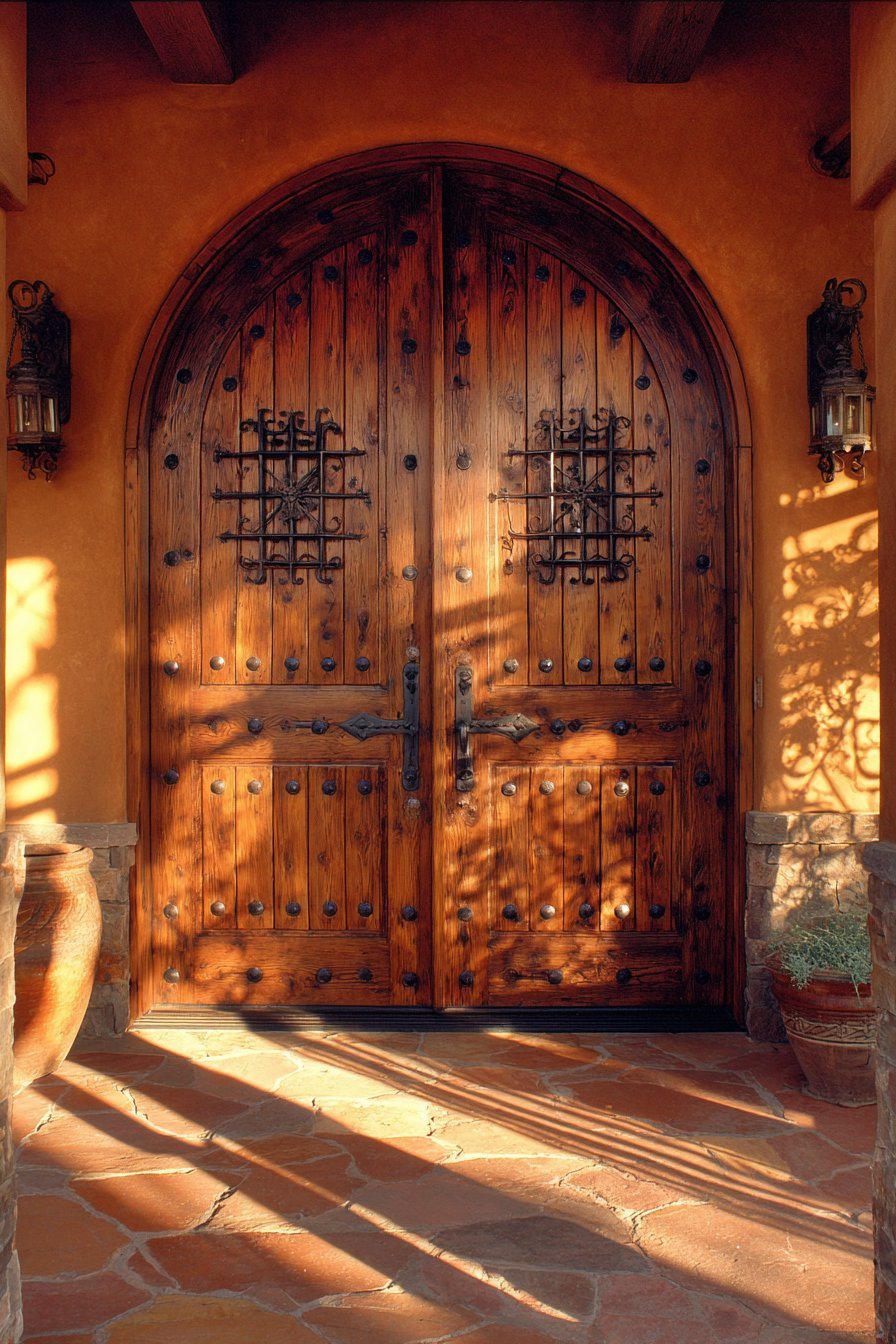
Decorative clavos (iron nail heads) create patterns across the door surface. Ornate iron strap hinges extend across the door face as functional decoration. These hinges reference medieval door construction adapted for modern use. Surrounding stucco walls in warm terracotta tones complete the Mediterranean palette.
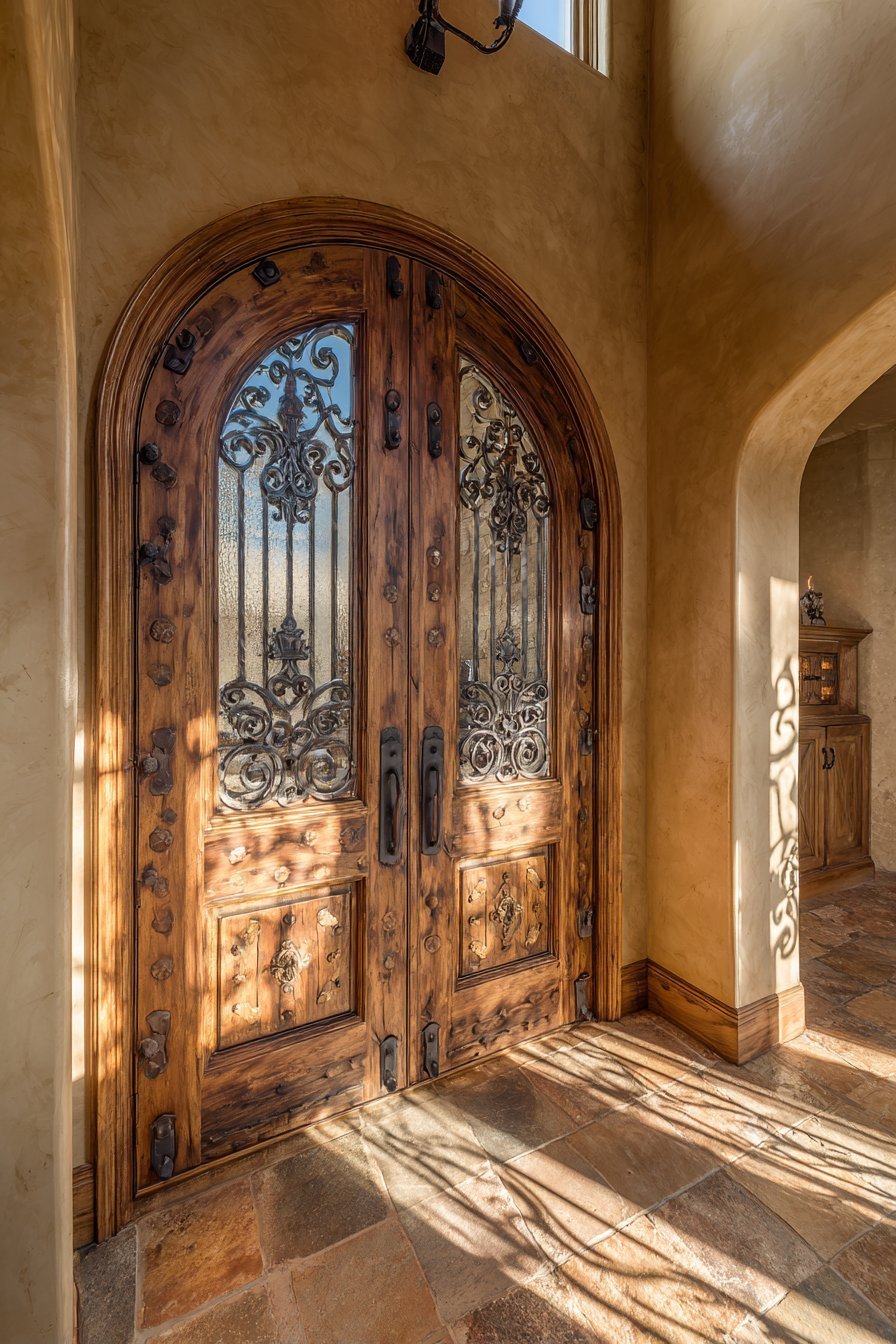
Terracotta tile flooring extends from exterior to interior, blurring boundaries. Golden hour sunlight streams through the iron grille creating dramatic shadow patterns. These patterns shift throughout the day, animating the entrance space. The handcrafted iron details demonstrate traditional blacksmithing skills.
Mesquite wood’s natural durability suits warm climates without extensive maintenance. The wood’s color variation ensures each door is unique. Hand-forged iron develops patina that enhances rather than detracts from appearance. This design suits Mediterranean villas, Spanish Colonial homes, and Southwestern estates.
Key Design Tips:
- Choose mesquite from sustainable sources for environmental responsibility and quality
- Commission hand-forged iron details from skilled blacksmiths for authentic character
- Embrace mesquite’s natural color variation as feature rather than flaw
- Apply UV-protective finish to prevent fading in sunny climates
- Install under covered entry to extend wood and iron longevity
11. Contemporary White Lacquer with LED Lighting
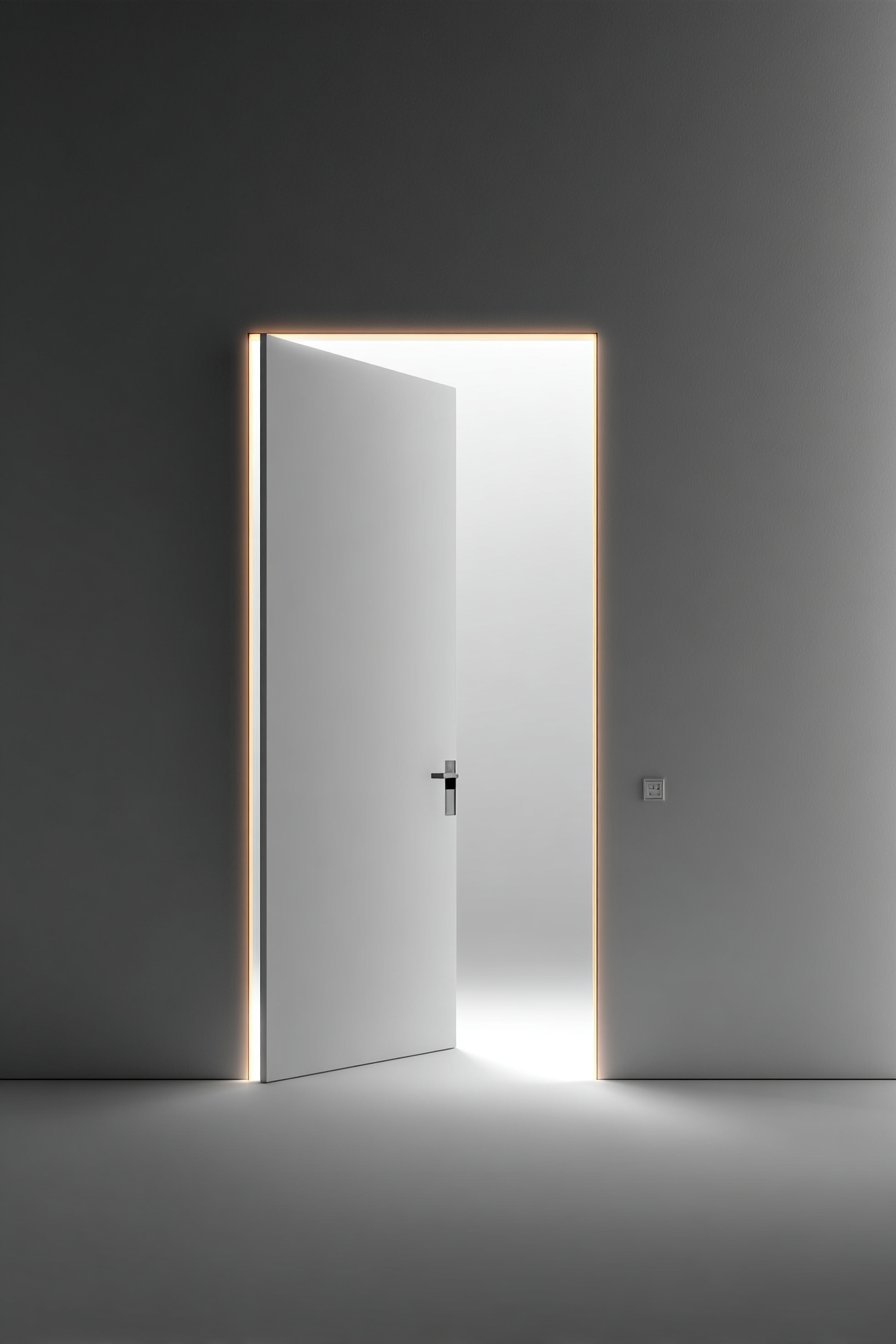
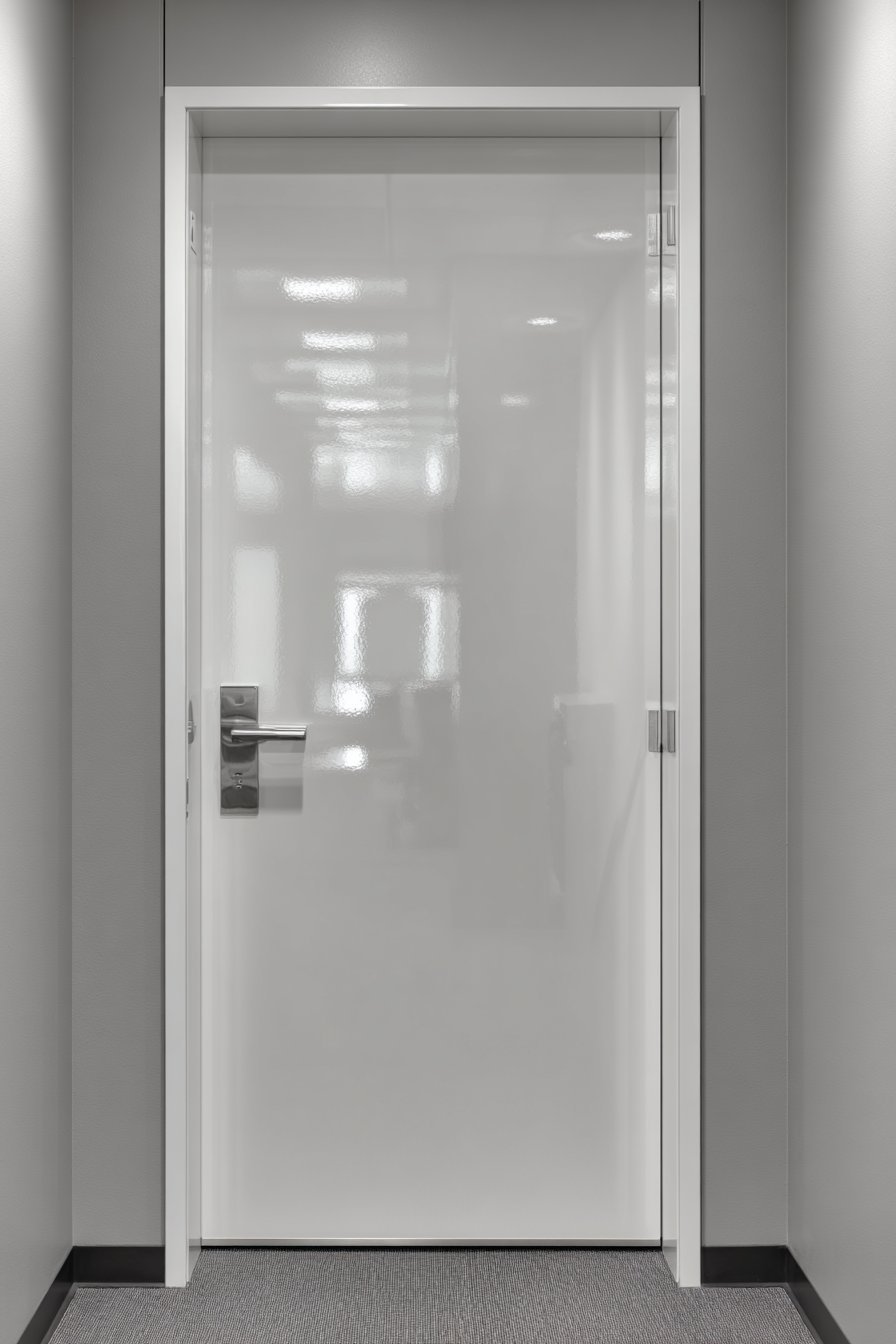
Cutting-edge technology integrates seamlessly with contemporary design in this innovative door. High-gloss white lacquer creates pristine reflective surface. Integrated LED edge lighting creates dramatic illuminated frame effect. The flush-mounted door with invisible hinges appears to float.
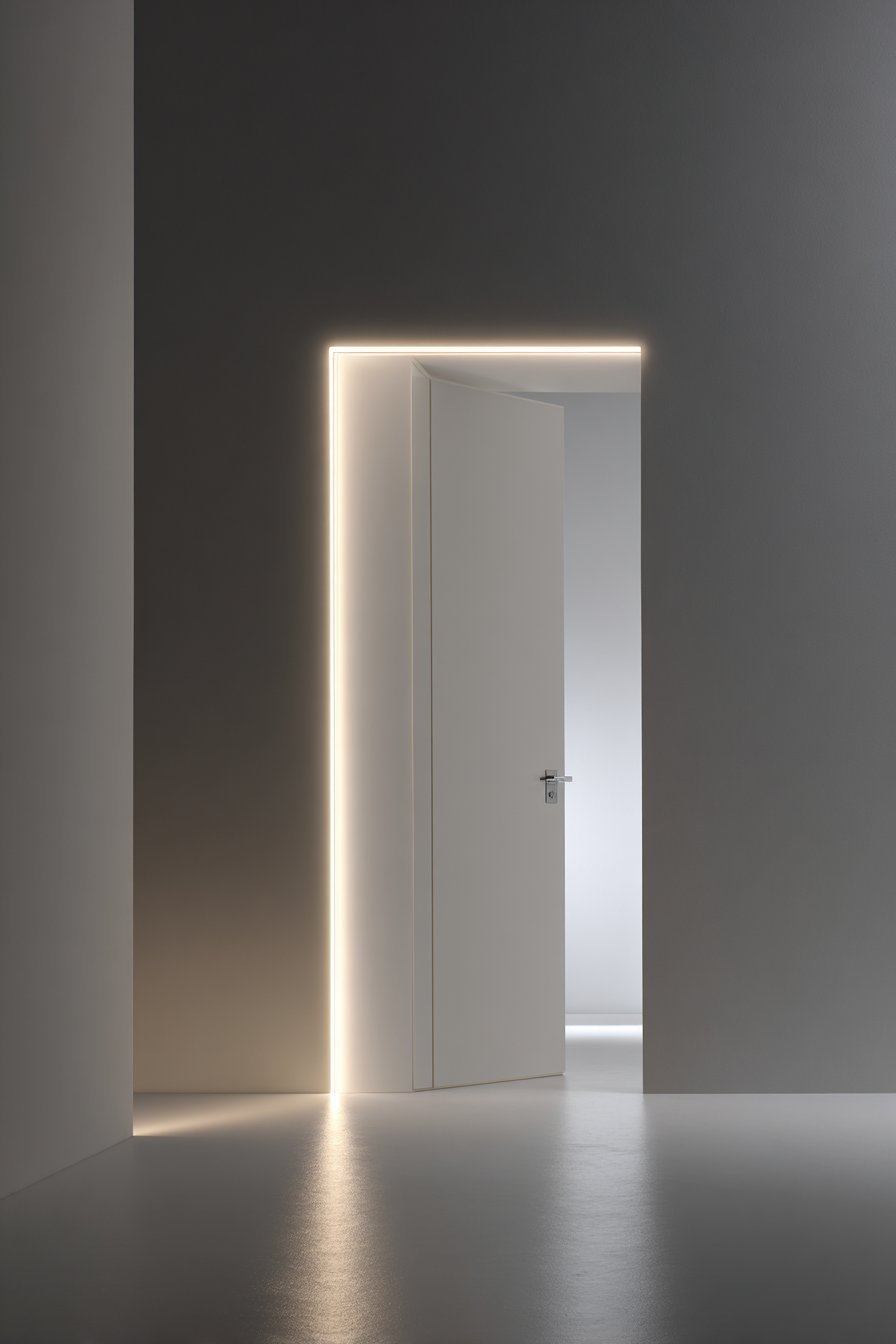
A minimalist recessed pull handle in polished chrome maintains clean lines. Touch-sensitive electronic lock system eliminates visible traditional hardware. Adjacent walls in soft gray provide subtle contrast to pristine white. The LED lighting transitions through various color temperatures for different moods.
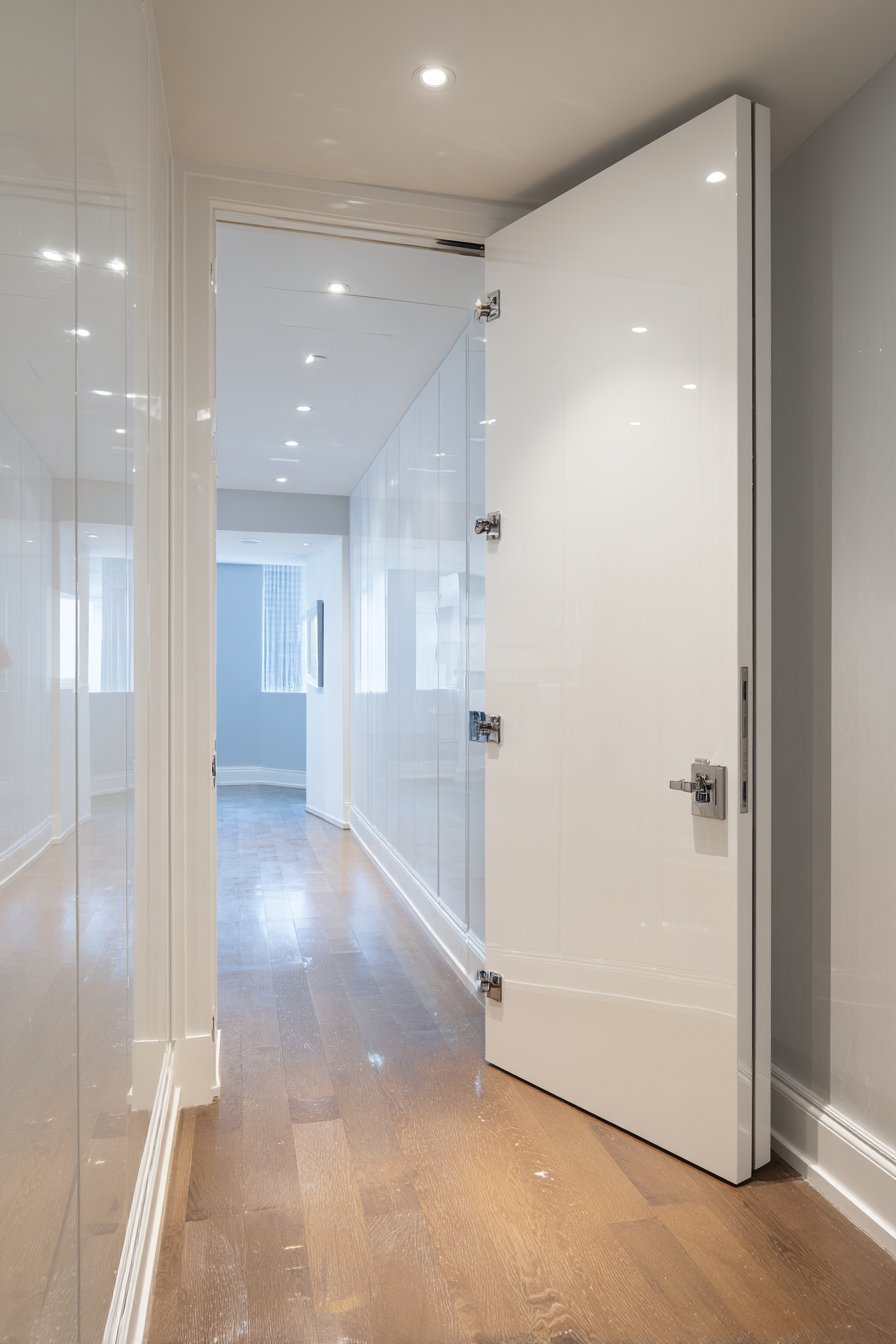
The illuminated frame effect transforms the door into glowing art at night. Warm white LED setting creates welcoming ambiance for arrivals. Cool white setting provides contemporary edge for entertaining. The reflective lacquer surface bounces light throughout the entrance space.
This design represents the intersection of technology, craftsmanship, and contemporary aesthetics. The invisible hinges require precise installation and quality hardware. Electronic systems should include manual backup for reliability. This approach suits ultra-modern homes, smart houses, and technology enthusiasts.
Key Design Tips:
- Invest in quality LED systems with long lifespan and color temperature control
- Ensure electronic lock systems include manual backup access methods
- Apply multiple thin lacquer coats for flawless reflective finish
- Install systems allowing LED color and intensity adjustment
- Consider smart home integration for automated lighting control
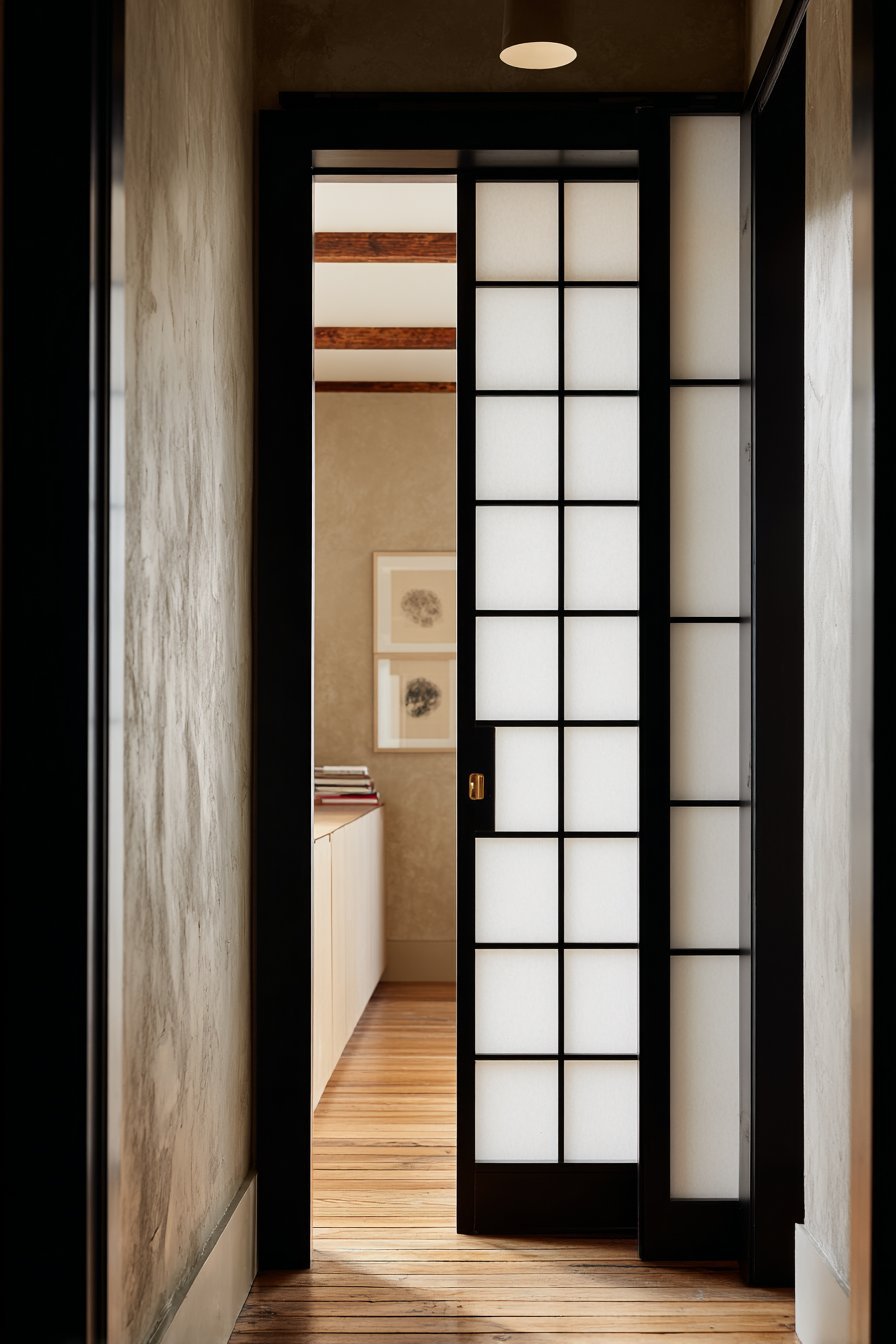
12. Japanese Shoji Door with Rice Paper Panels
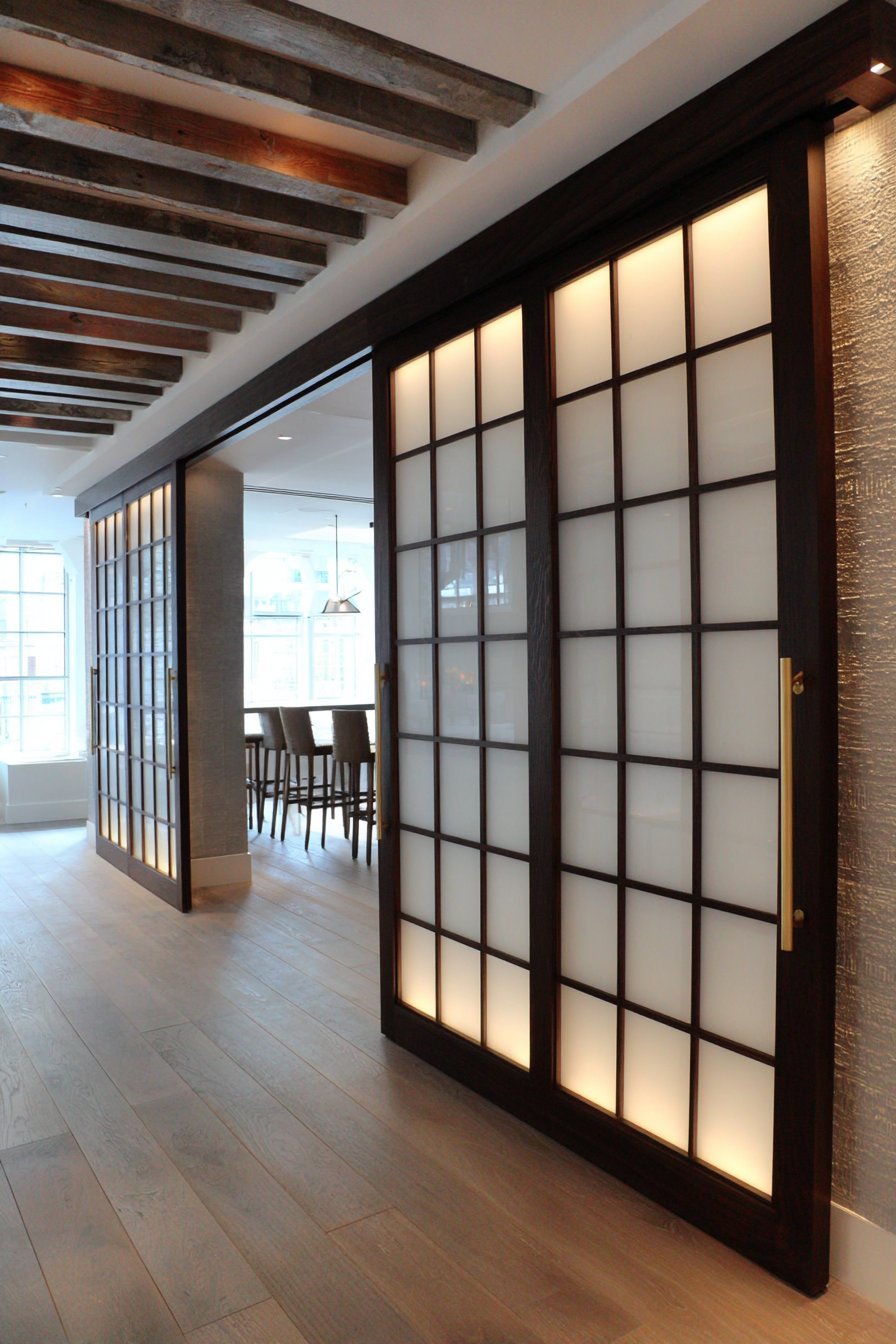
Eastern design wisdom creates serene beauty in this Japanese-inspired sliding door. Traditional lattice framework in dark-stained oak provides structural elegance. Translucent rice paper panels allow diffused light transmission creating soft ambiance. The oversized door measures 8 feet tall for impressive scale.
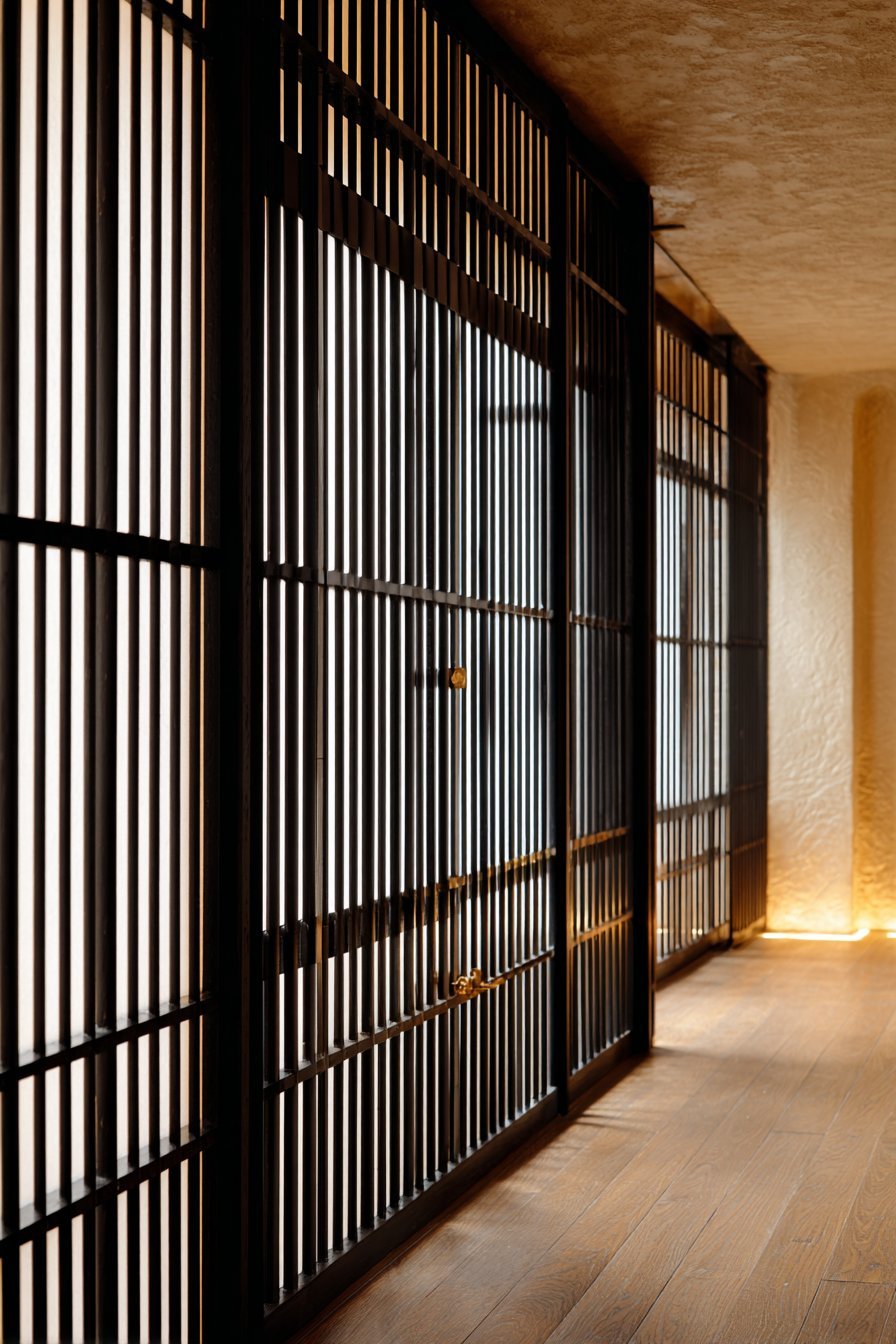
The door slides smoothly on recessed floor track system, eliminating visible mechanisms. Delicate brass hardware includes minimalist pull handles respecting the design’s restraint. Decorative corner brackets add subtle ornamentation without overwhelming simplicity. Surrounding space features complementary natural materials.
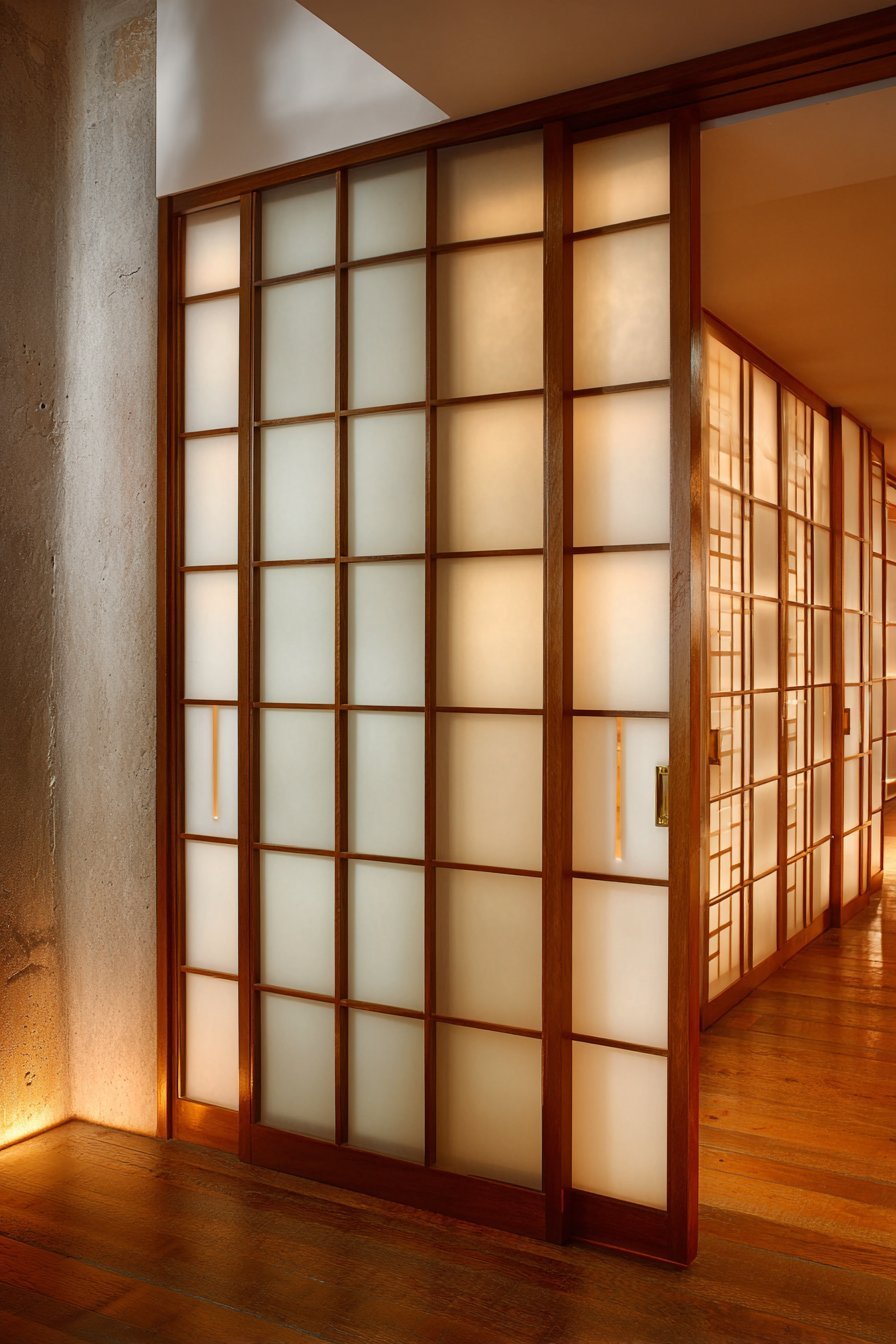
Bamboo flooring adds texture while maintaining the natural material palette. Textured plaster walls in neutral tones provide soft backdrop. Soft natural backlight creates warm glow through rice paper panels. This backlighting transforms the door into a luminous screen.
The shoji door represents centuries of refined Japanese design philosophy. The rice paper requires gentle handling but rewards with ethereal beauty. Diffused light creates a peaceful atmosphere throughout adjacent spaces. This design suits meditation rooms, bathrooms, bedrooms, and spaces valuing tranquility.
Key Design Tips:
- Source authentic rice paper or modern alternatives that mimic its translucent quality
- Install dark-stained oak framework for contrast with light paper panels
- Ensure recessed floor tracks are precisely level for smooth operation
- Position door where backlighting creates optimal diffused glow effect
- Accept rice paper’s delicacy as part of the design’s intentional impermanence
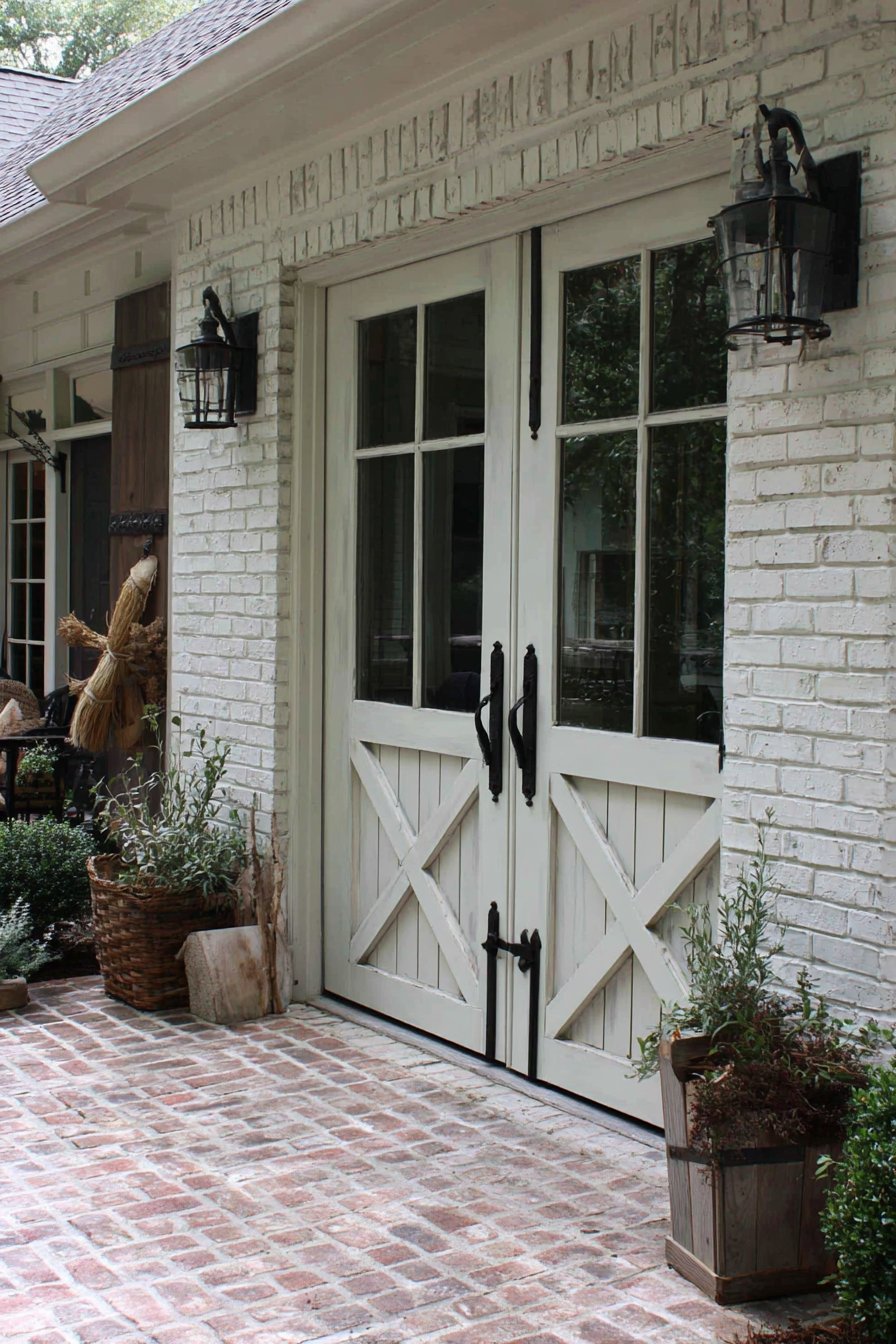
13. Farmhouse White Shiplap with X-Brace Design
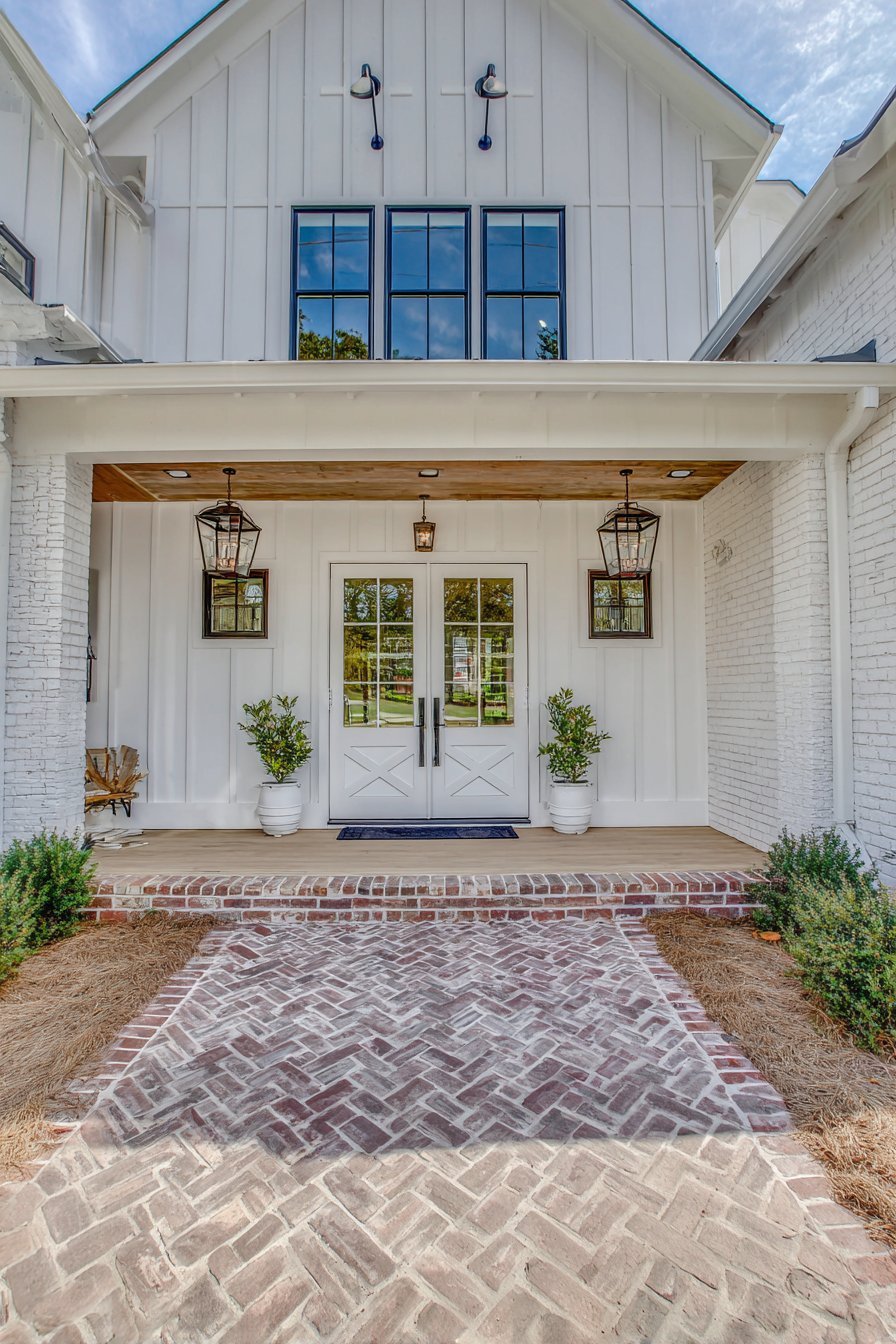
American farmhouse tradition receives luxury interpretation through refined execution and quality materials. Painted white shiplap doors feature classic X-brace design. Double doors include upper glass panels with true divided lights. Lower solid panel sections display the decorative X pattern prominently.
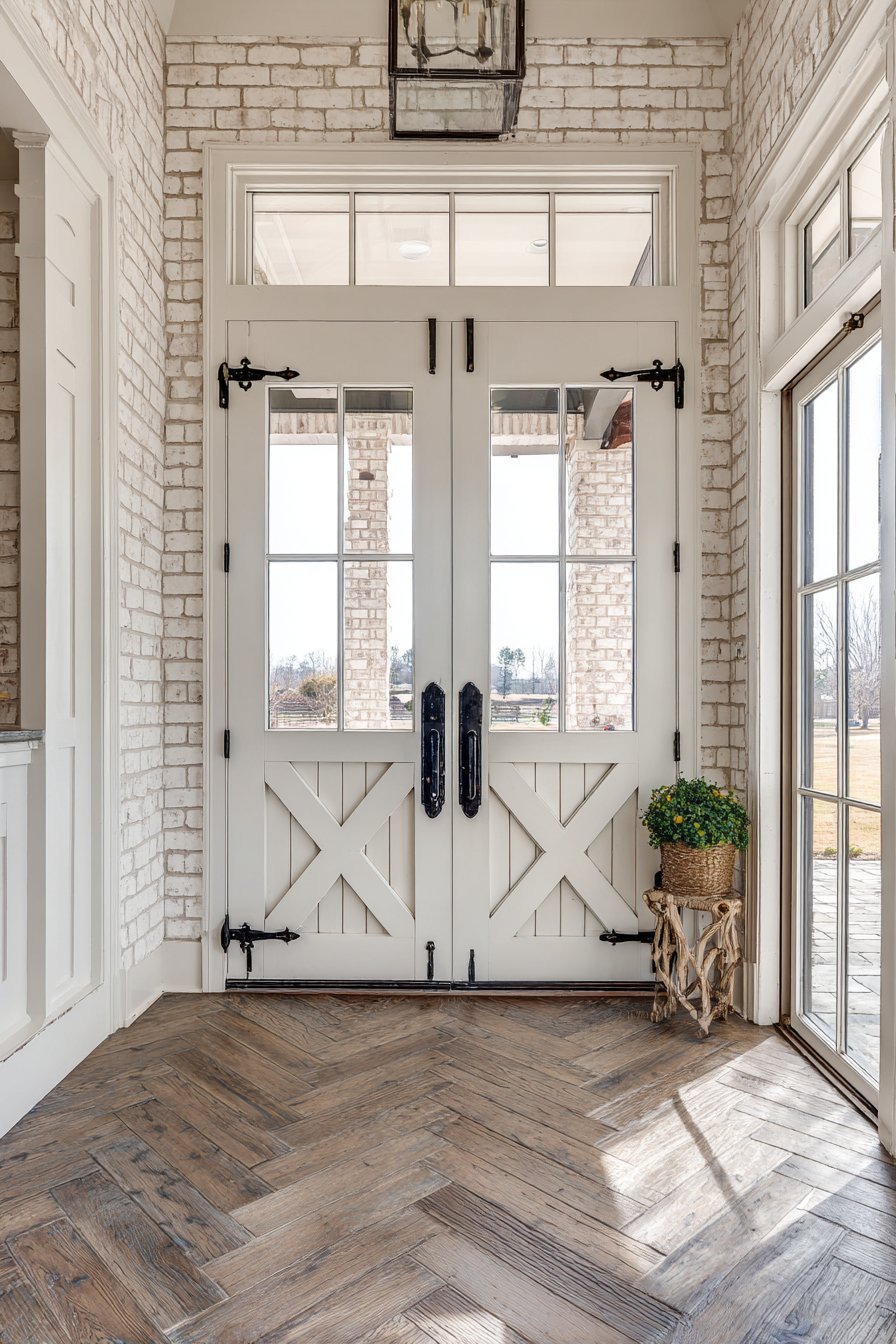
Substantial black iron strap hinges extend across door faces creating visual impact. A black iron handle set and decorative thumb latch complete authentic farmhouse hardware. Surrounding painted brick in soft white enhances the country luxury aesthetic. Reclaimed oak flooring grounds the design with natural warmth.
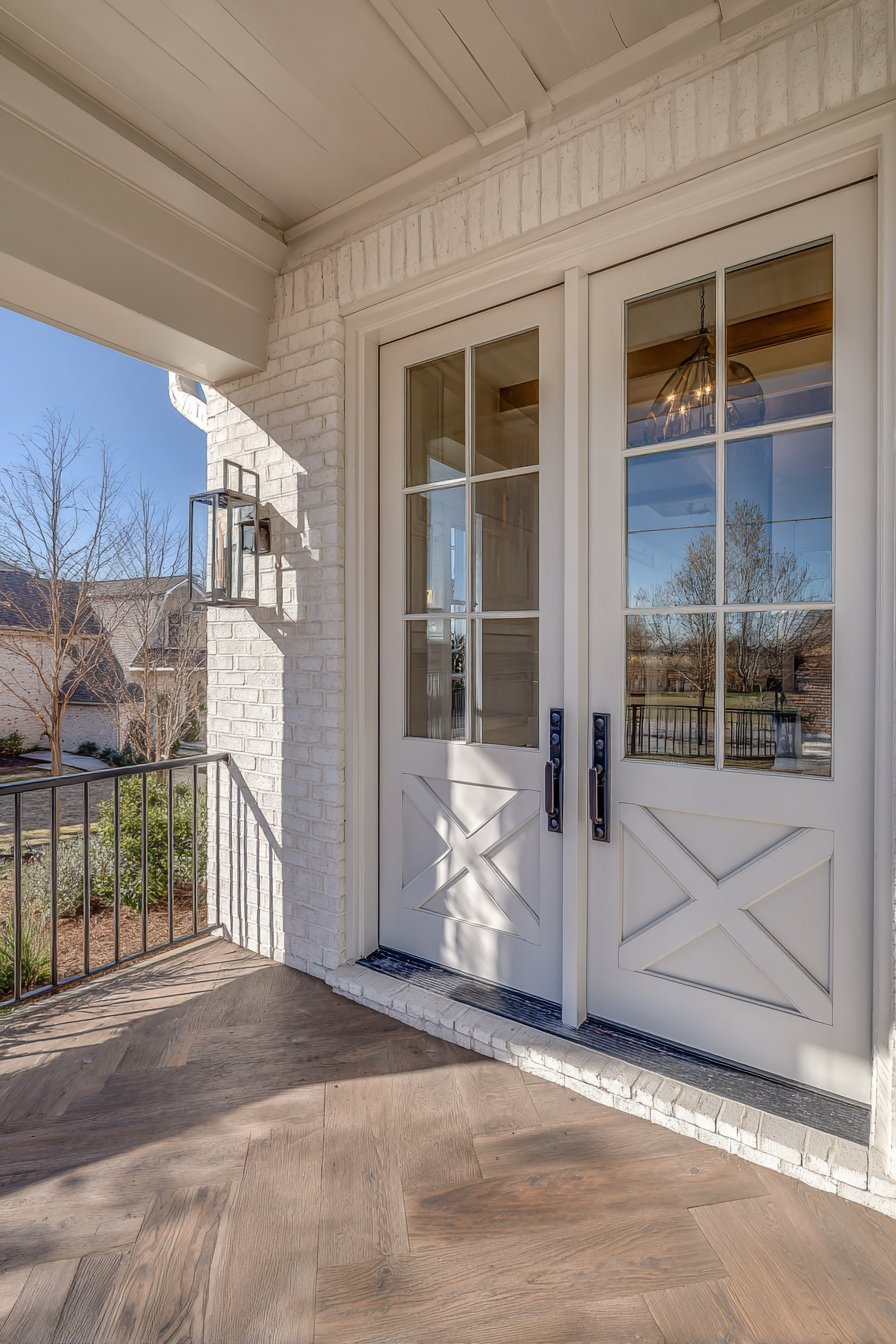
Natural light filters through upper glass panels creating soft shadow patterns. True divided lights reference historical construction methods rather than applied grilles. The X-brace pattern adds structural reinforcement and visual interest simultaneously. Fresh white paint provides clean backdrop for black hardware drama.
This design elevates farmhouse style from rustic to refined through attention to detail. Quality materials and precise construction separate luxury from merely rustic. The timeless appeal ensures relevance beyond passing trends. This approach suits modern farmhouses, country estates, and homes celebrating American vernacular architecture.
Key Design Tips:
- Use solid wood construction rather than hollow core for authentic weight and quality
- Install true divided light glass panels rather than applied muntins for authenticity
- Choose hand-forged or high-quality cast iron hardware in matte black finish
- Paint with durable exterior-grade paint formulated for wood doors
- Balance white doors with natural wood or brick surrounds for visual interest
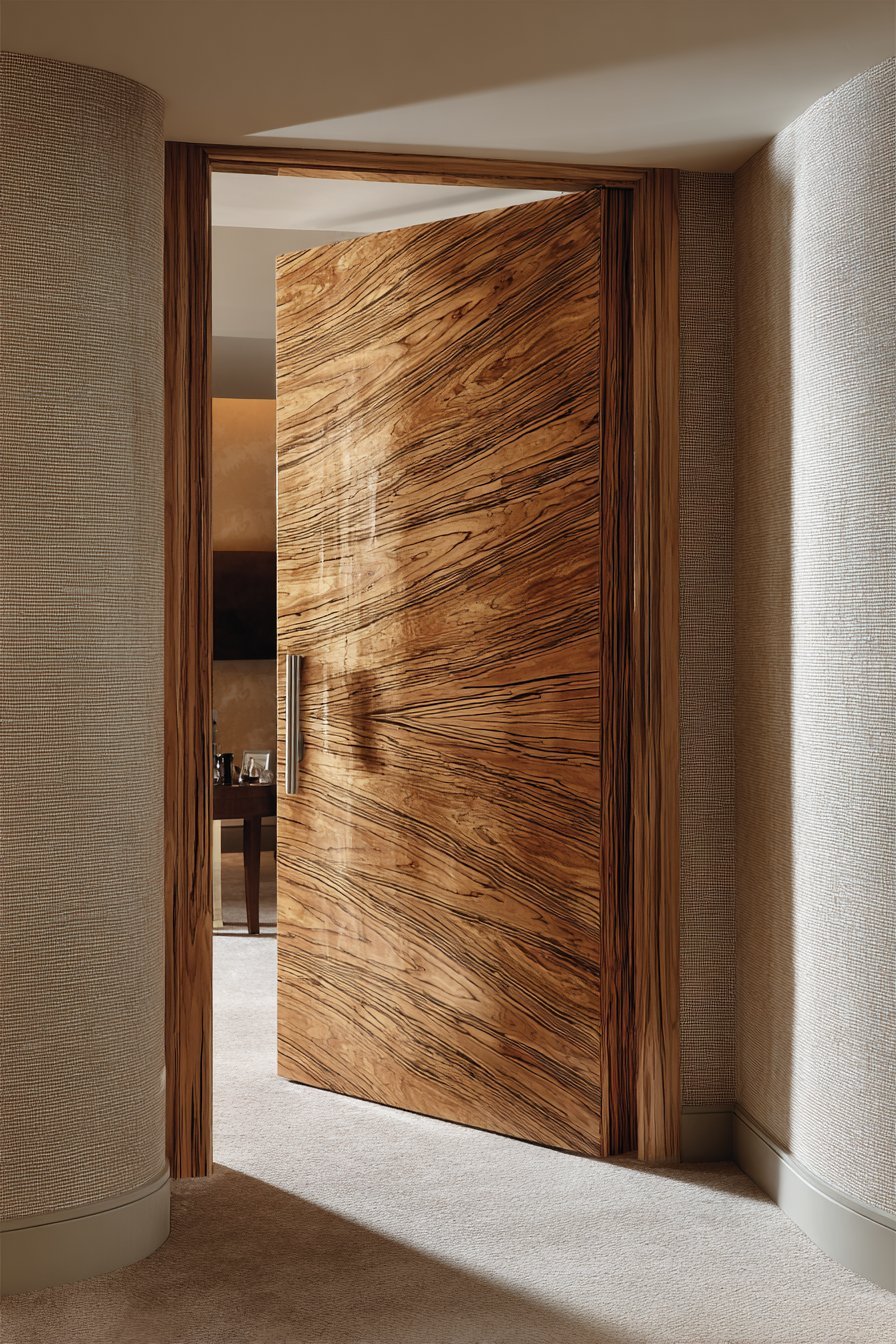
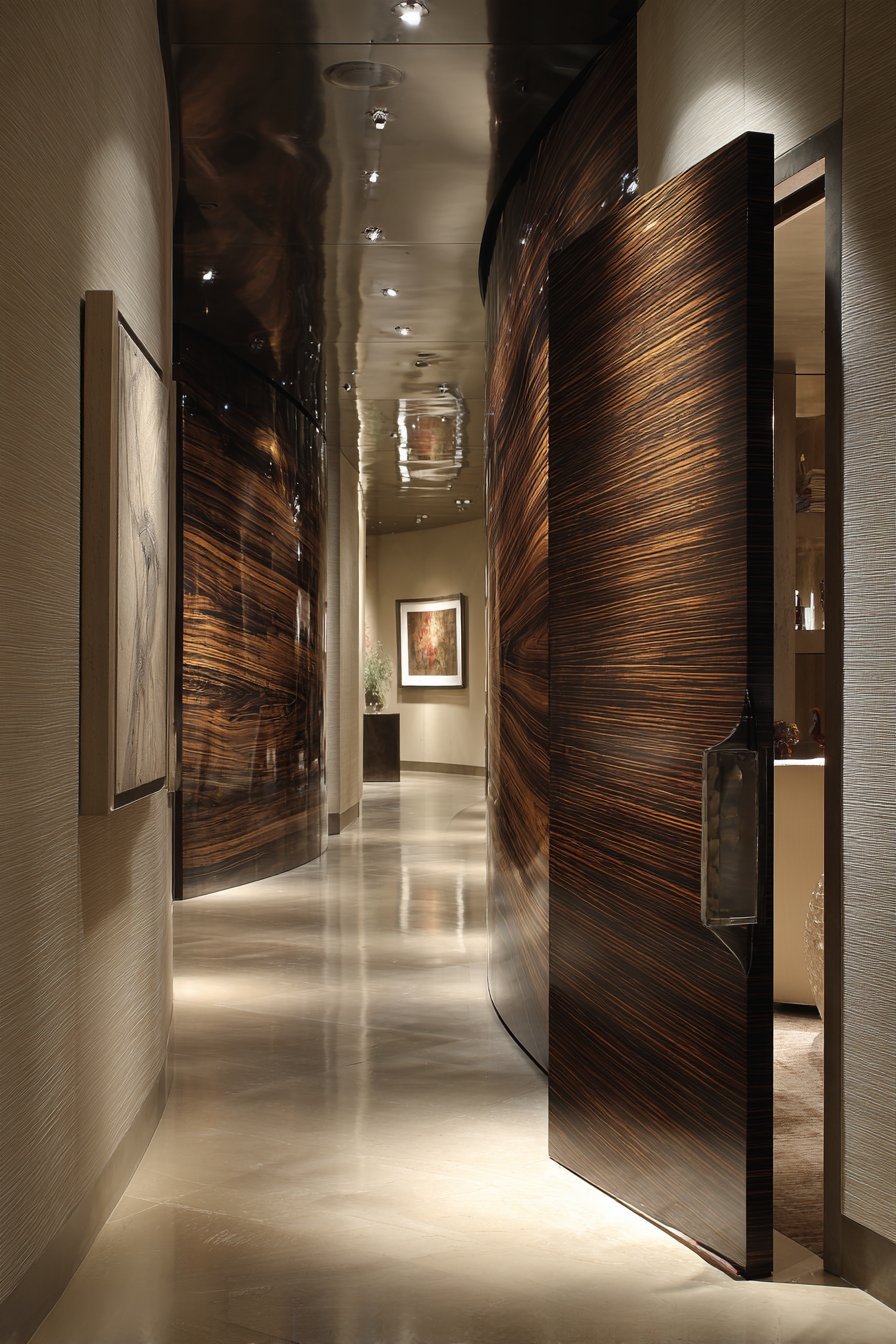
14. Curved Zebrawood Door with Custom Hardware
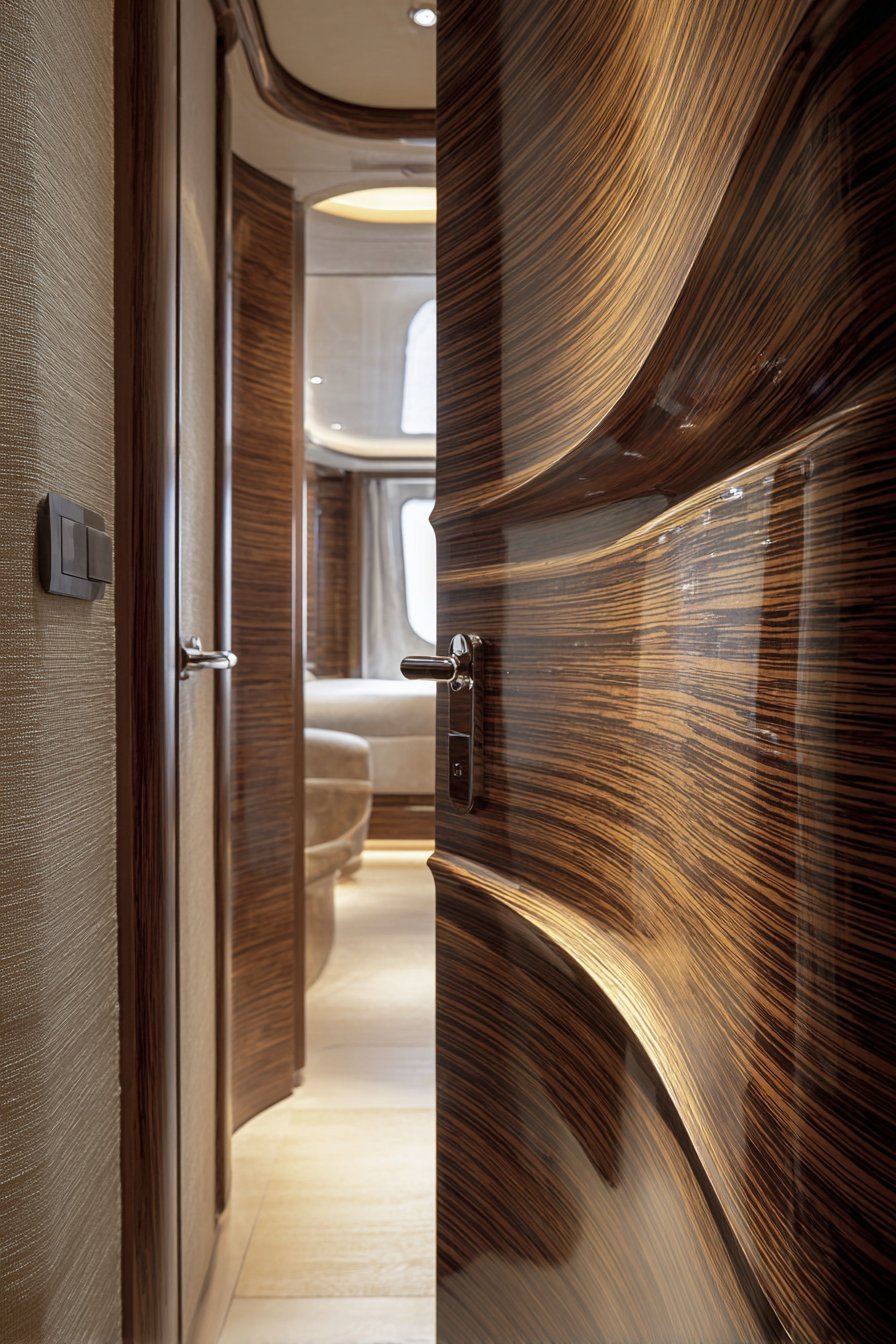
Exotic materials and unconventional form create an unforgettable entrance statement. Exotic zebrawood veneer displays a distinctive striped grain pattern. The slightly bowed door form adds sculptural quality to a functional element. Concealed European hinges maintain clean lines without visible hardware interruption.
A custom curved lever handle in brushed nickel follows the door’s contour. This detail demonstrates commitment to cohesive design execution. High-gloss polyurethane finish emphasizes striking grain pattern and color contrast. Surrounding walls in neutral linen fabric wallcovering allow door prominence.
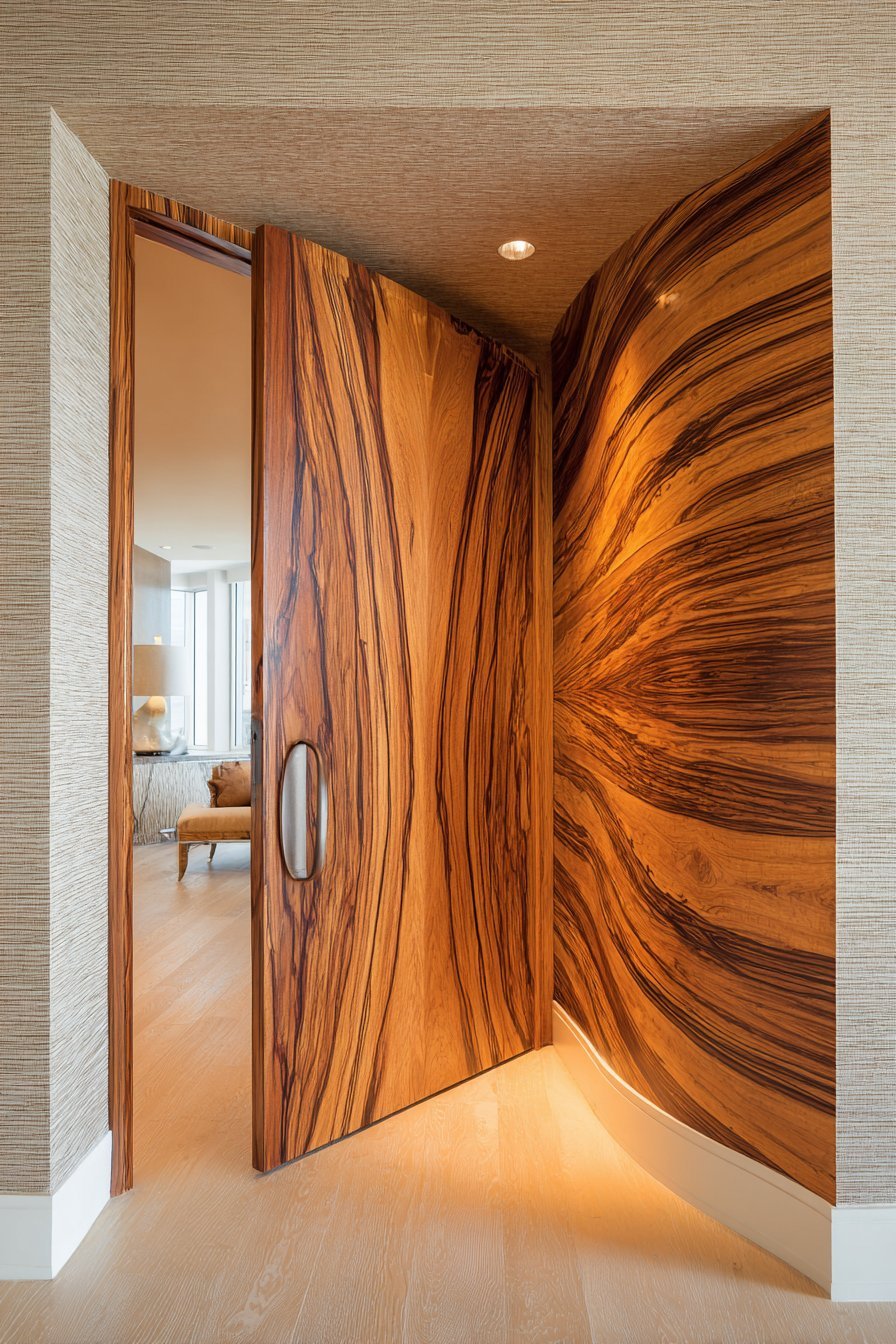
Carefully positioned lighting creates highlights following wood’s natural striping. These highlights emphasize the door’s curved form and exotic material. The zebrawood’s bold pattern makes an immediate visual impact. Professional installation ensures proper operation of curved door geometry.
This design suits contemporary homes, art collectors, and those desiring unique statements. The exotic wood requires careful sourcing and finishing. Curved construction increases complexity and cost but delivers unmatched impact. The door becomes a conversation piece and functional art simultaneously.
Key Design Tips:
- Source zebrawood from certified sustainable forestry operations
- Apply high-gloss finish that emphasizes rather than obscures grain pattern
- Commission custom curved hardware that follows door’s unique geometry
- Install specialized hinges rated for curved door applications
- Position lighting to highlight both curve and grain pattern effectively
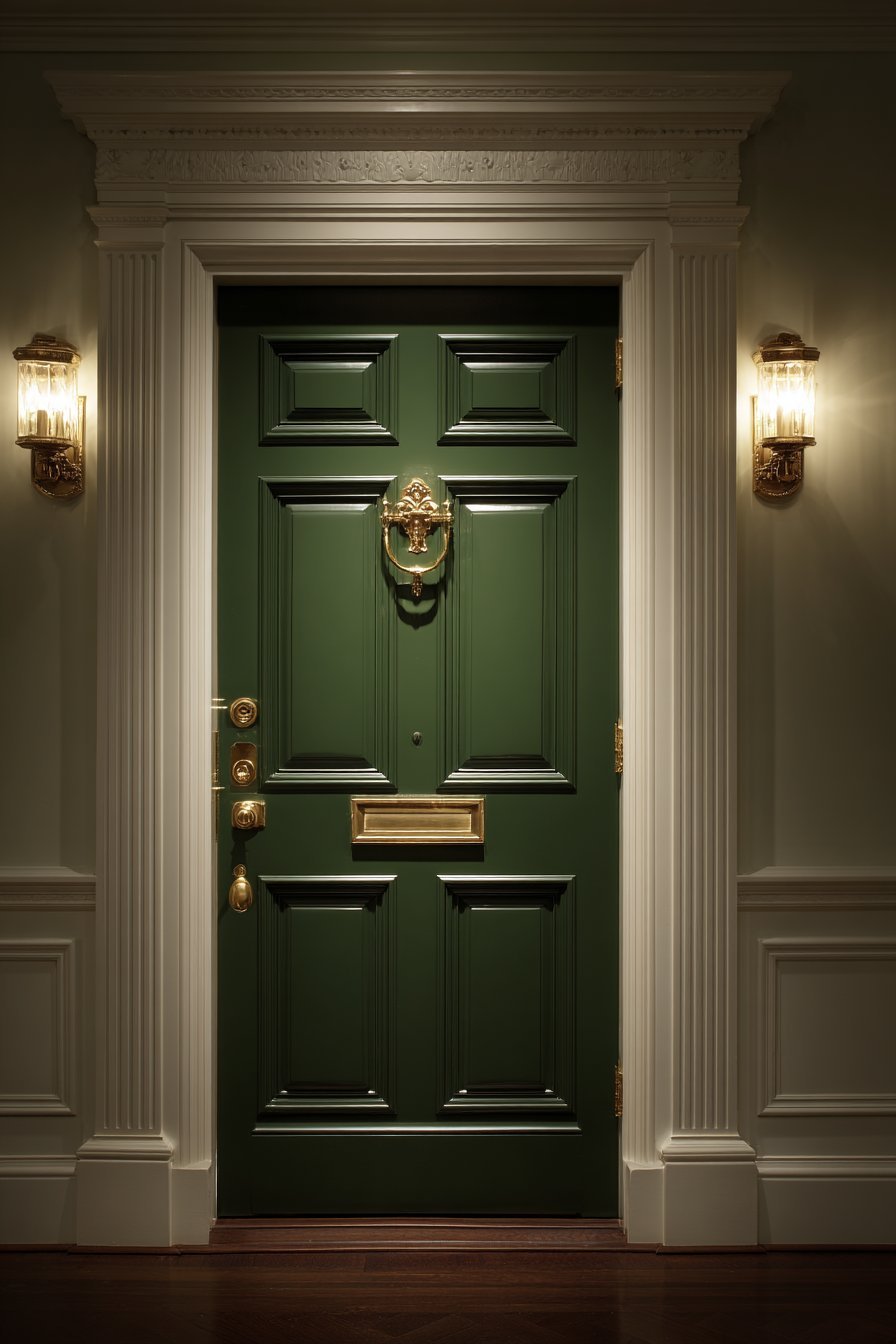
15. Colonial Forest Green with Traditional Brass
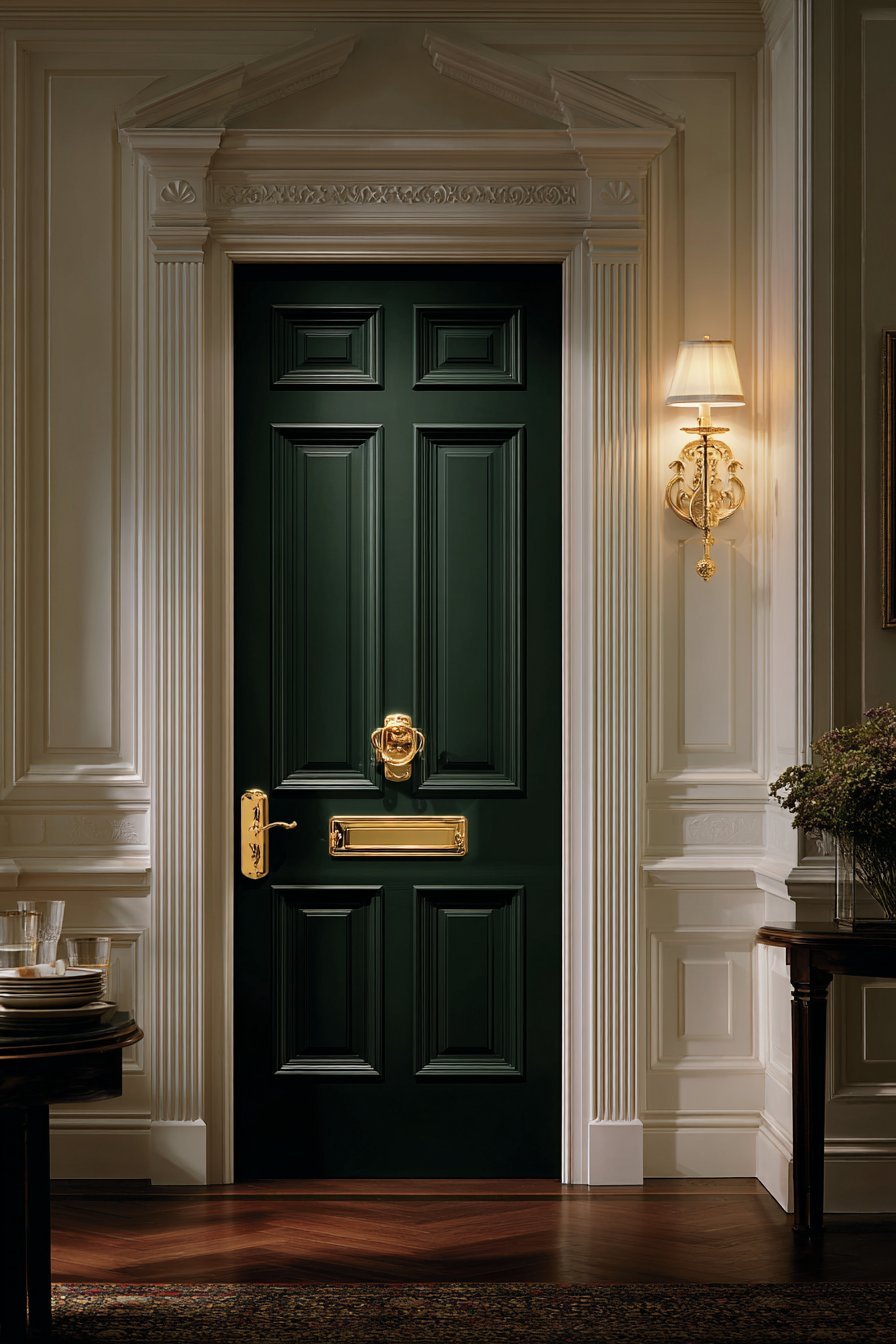
American colonial tradition manifests in this deeply colored traditional entrance. Forest green paint adds unexpected sophistication to classic six-panel design. Traditional brass hardware includes polished lever set, kick plate, and an oversized knocker. Hand-rubbed paint finish shows subtle color variation adding depth.
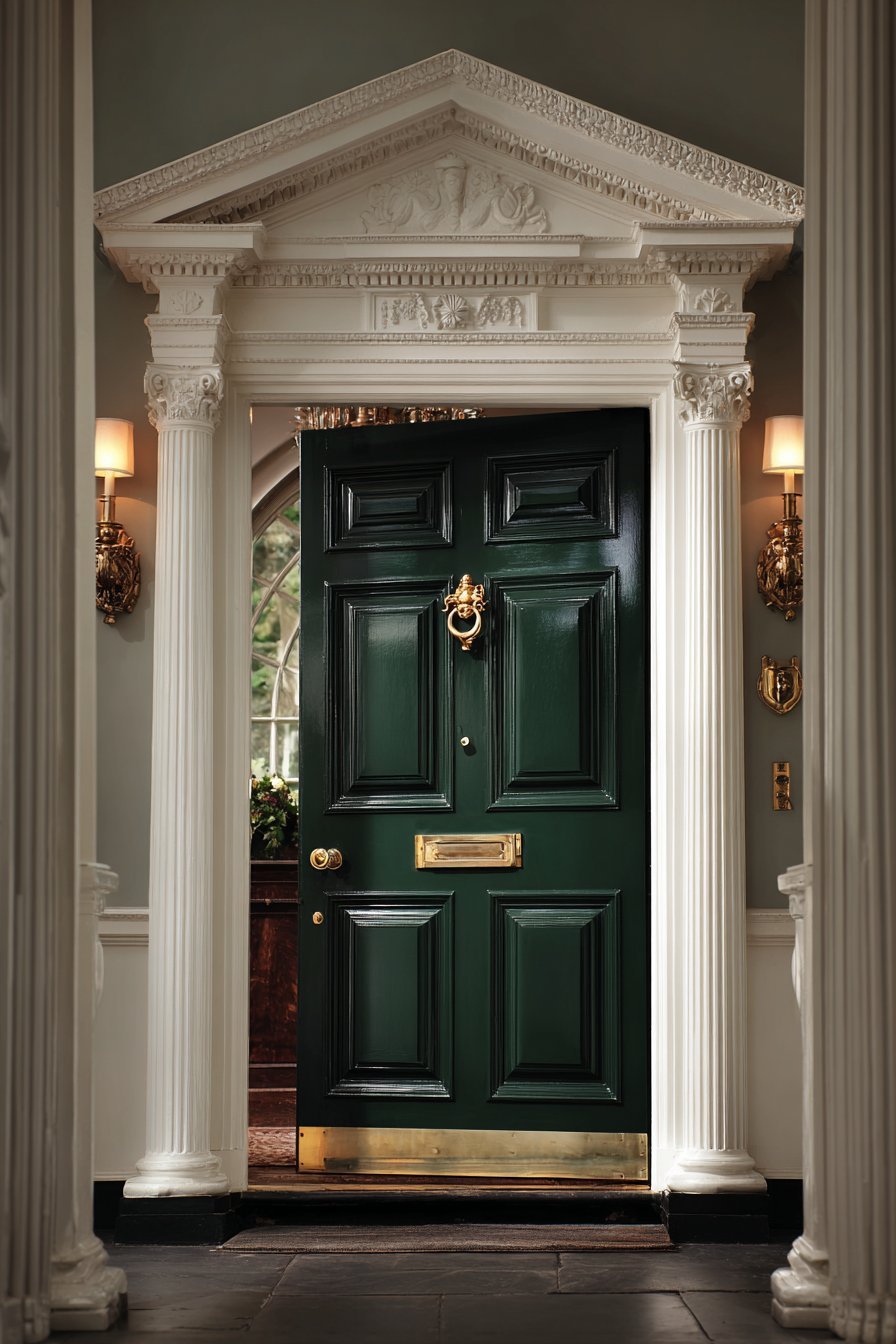
Each raised panel follows symmetrical proportions refined through centuries. White-painted door surround with fluted trim creates formal framing. A decorative broken pediment adds architectural gravitas above the entrance. Brass wall sconce provides warm ambient lighting complementing brass hardware.
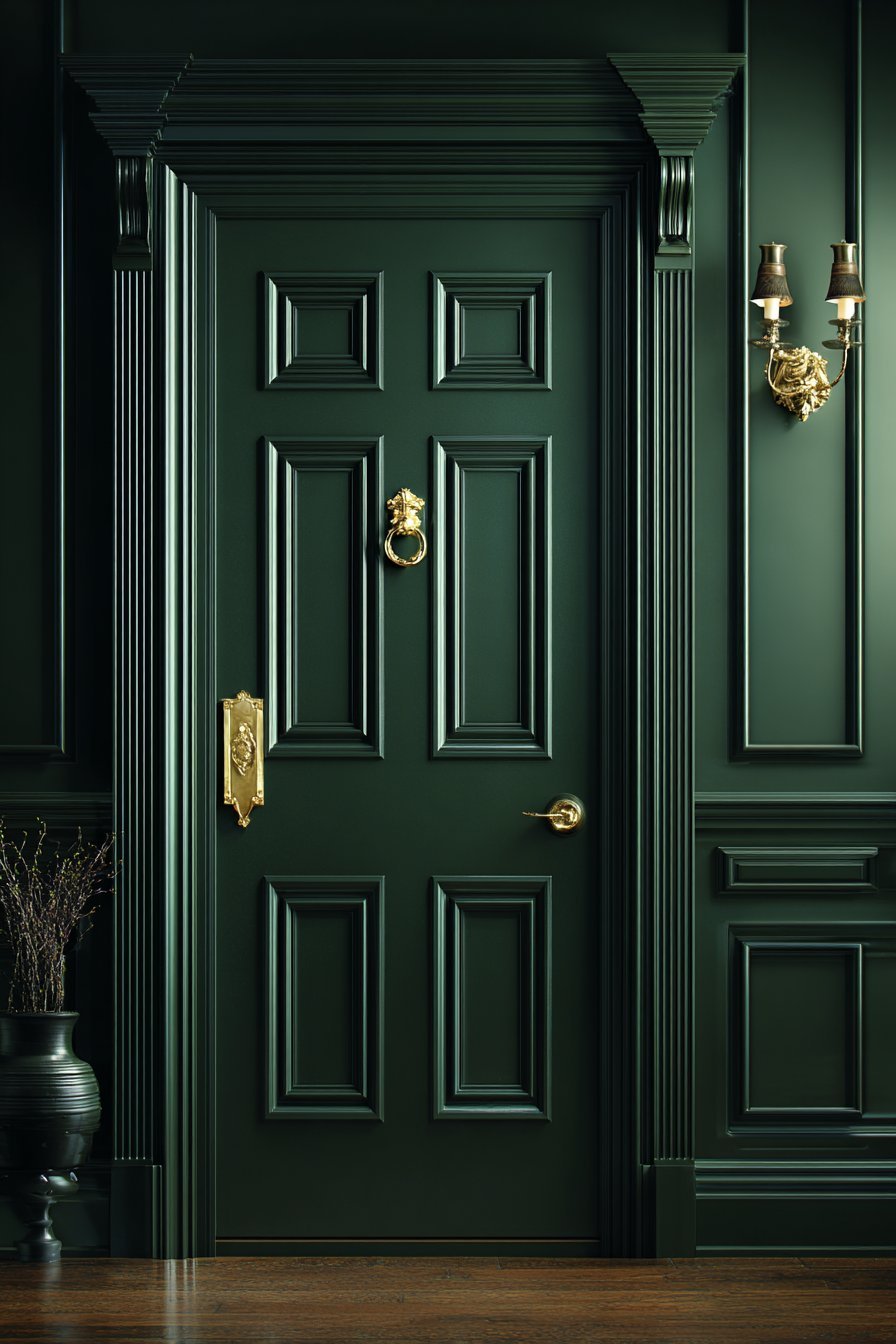
The deep forest green offers refined alternative to common door colors. Hand-rubbed finish technique adds subtle texture and depth. Polished brass develops warm patina over time enhancing character. Classical proportions create subconscious visual satisfaction.
This design suits colonial homes, traditional residences, and lovers of historical architecture. The color choice demonstrates confidence while respecting period appropriateness. Quality brass hardware represents an investment in lasting beauty. Proper paint preparation and application ensure longevity in exterior applications.
Key Design Tips:
- Choose deep saturated colors that complement home’s architectural style and the surrounding landscape
- Apply hand-rubbed paint technique in subtle tonal variations for depth
- Invest in solid brass hardware that develops authentic patina over time
- Ensure surrounding millwork proportions balance door size and architectural scale
- Apply multiple primer and paint coats for durability in weather exposure
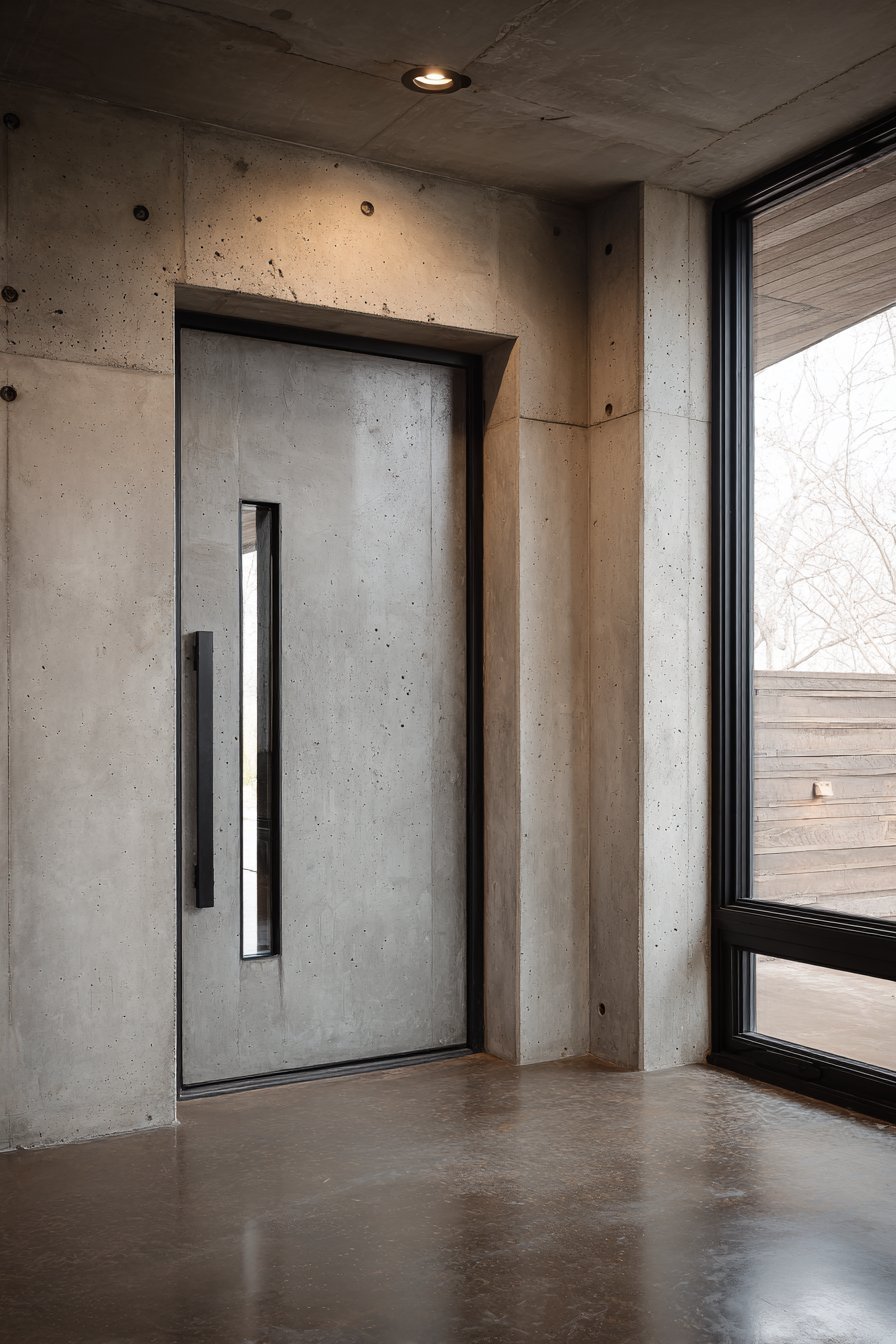
16. Textured Concrete Door with Aggregate Finish
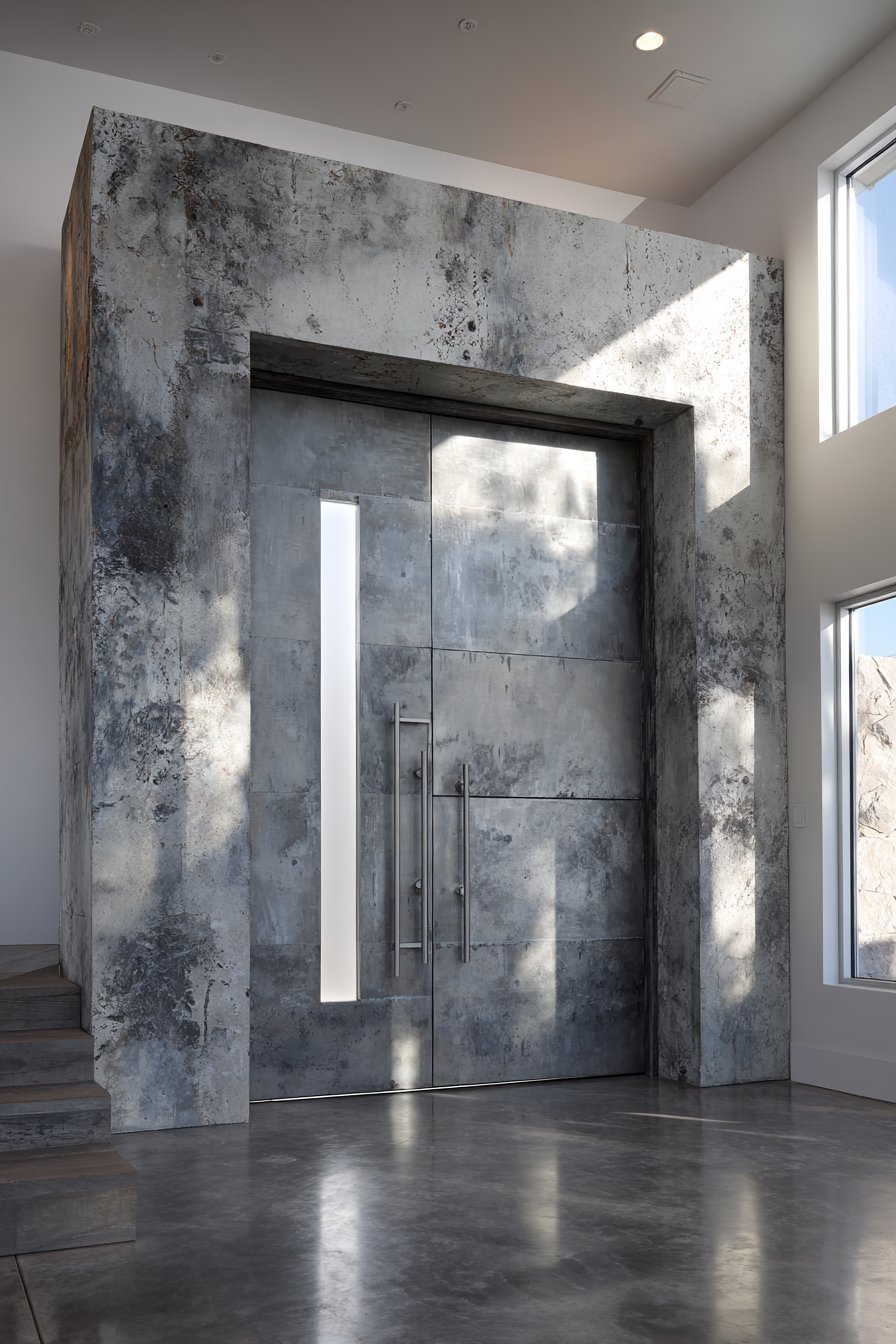
Industrial materials achieve refined luxury through thoughtful execution and detail. Textured concrete with exposed aggregate finish reveals polished stones. Subtle color variations throughout surface create natural visual interest. The massive door demonstrates concrete’s structural capabilities in door applications.
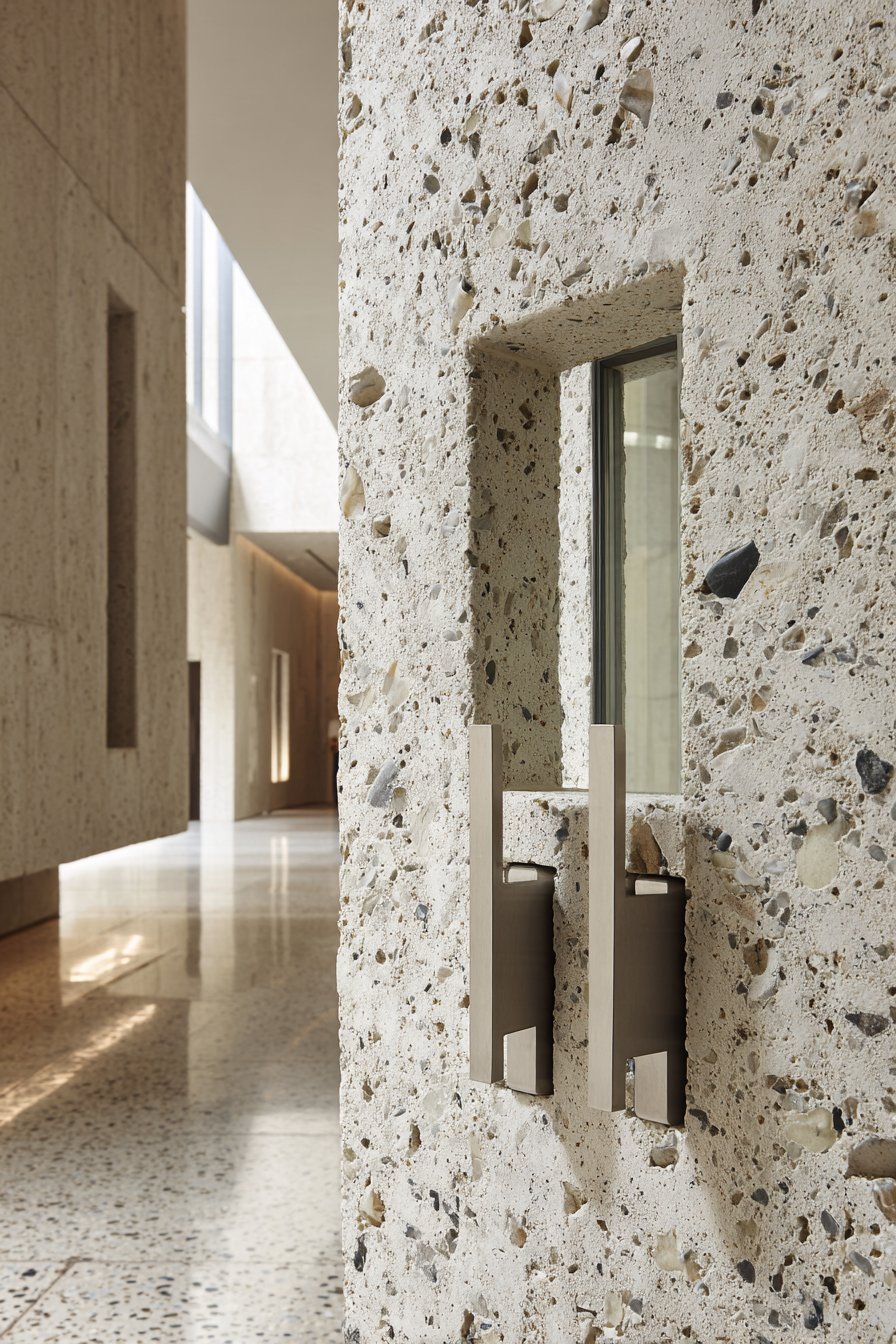
Integrated stainless steel handles recess into concrete surface maintaining minimal profile. Concealed heavy-duty hinges allow smooth operation despite substantial weight. A narrow vertical window slot with clear glass provides minimalist design accent. Raw concrete aesthetic pairs with polished concrete flooring.
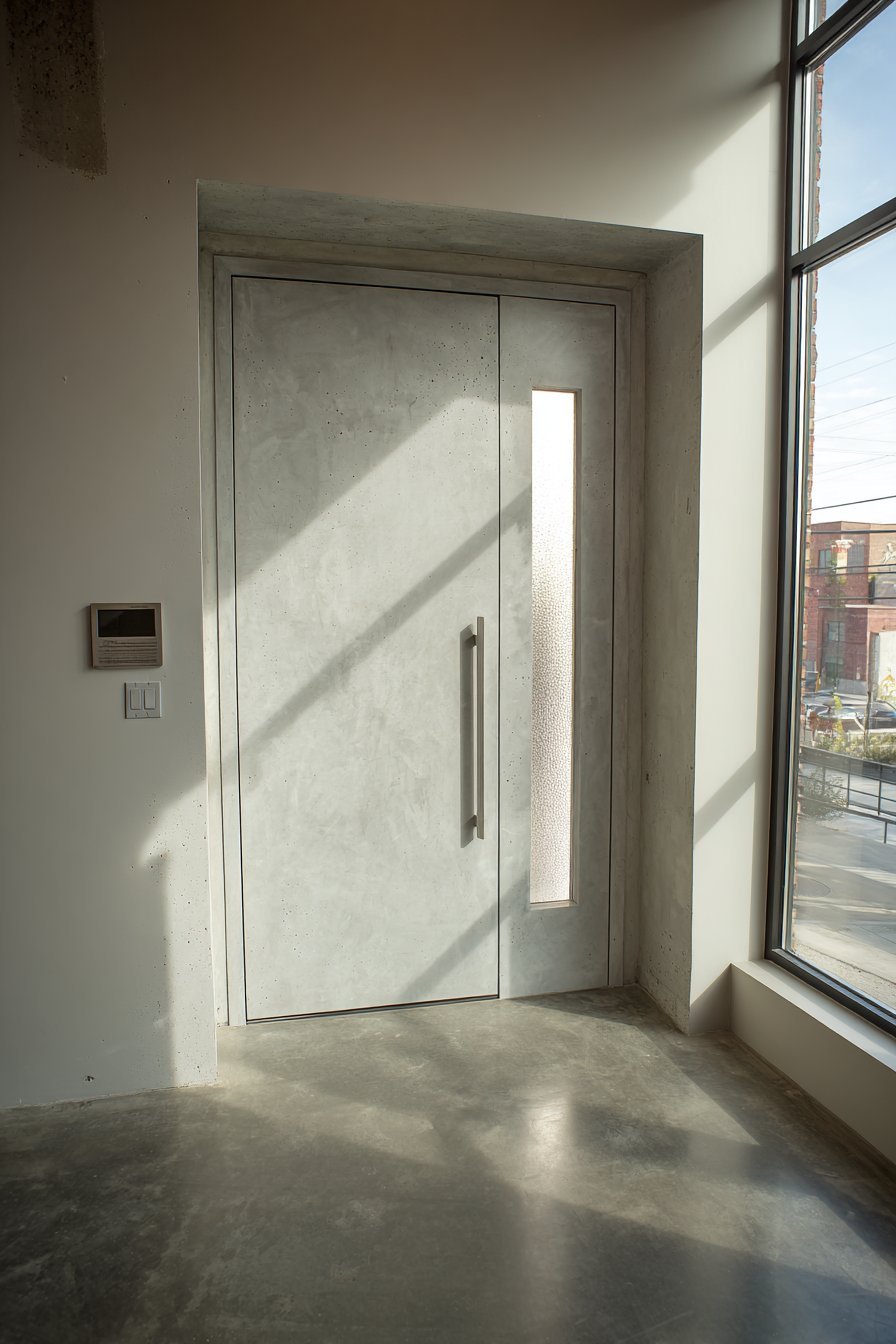
Smooth plaster walls provide textural contrast to rough concrete surface. Directional natural lighting emphasizes concrete’s texture and dimensional quality. The exposed aggregate creates tactile interest inviting closer examination. This honest material expression appeals to modernist sensibilities.
Concrete door construction requires specialized fabrication and installation expertise. The material provides excellent thermal mass and sound insulation. Sealing protects against moisture while preserving raw aesthetic. This design suits contemporary homes, architectural statements, and industrial aesthetic enthusiasts.
Key Design Tips:
- Work with concrete fabricators experienced in architectural door applications
- Select aggregate size and color that complements overall design aesthetic
- Apply quality sealer protecting concrete while maintaining raw appearance
- Ensure structural support is adequate for the substantial concrete door weight
- Install heavy-duty hinges specifically rated for concrete door mass
17. Victorian Carved Mahogany with Stained Glass
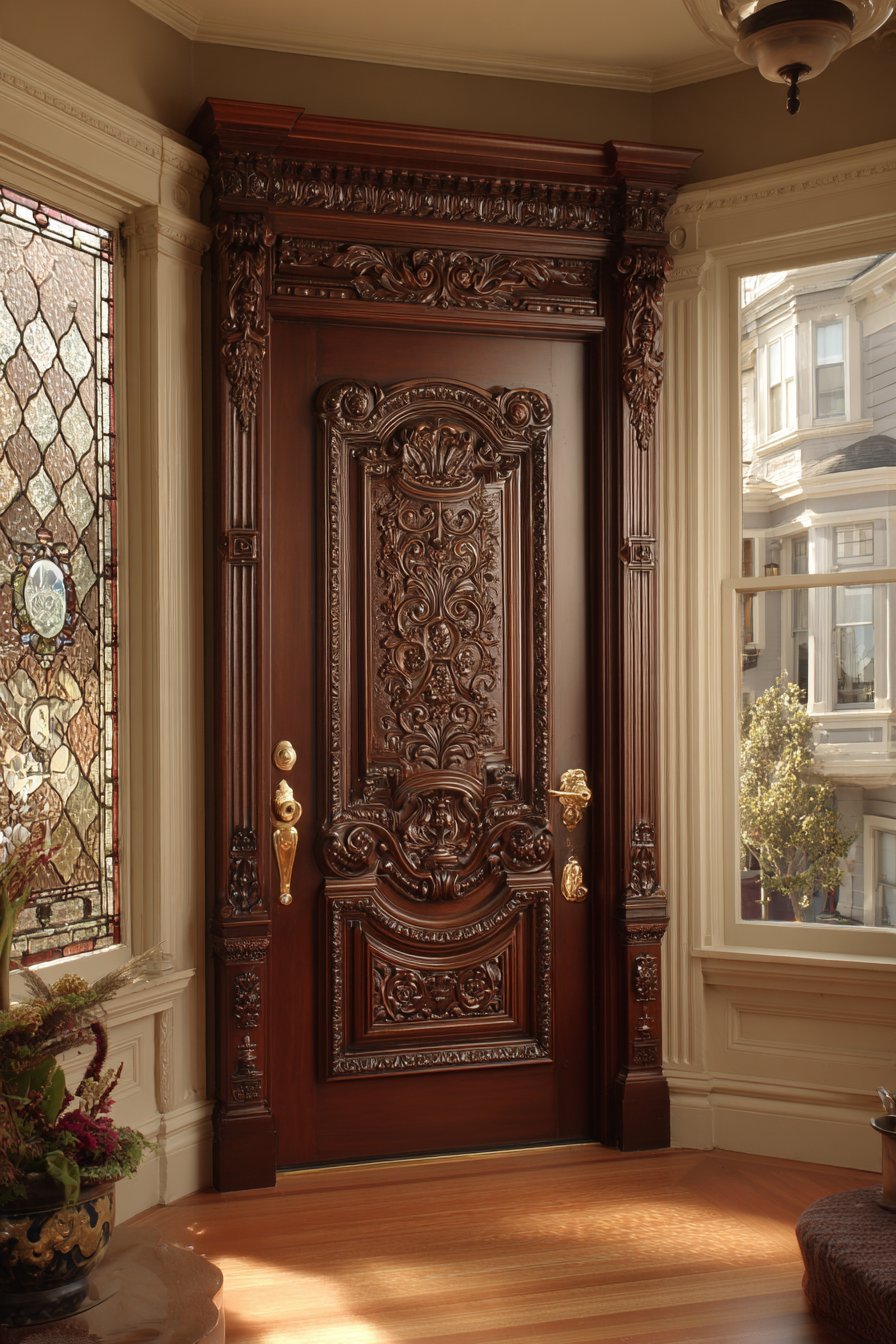
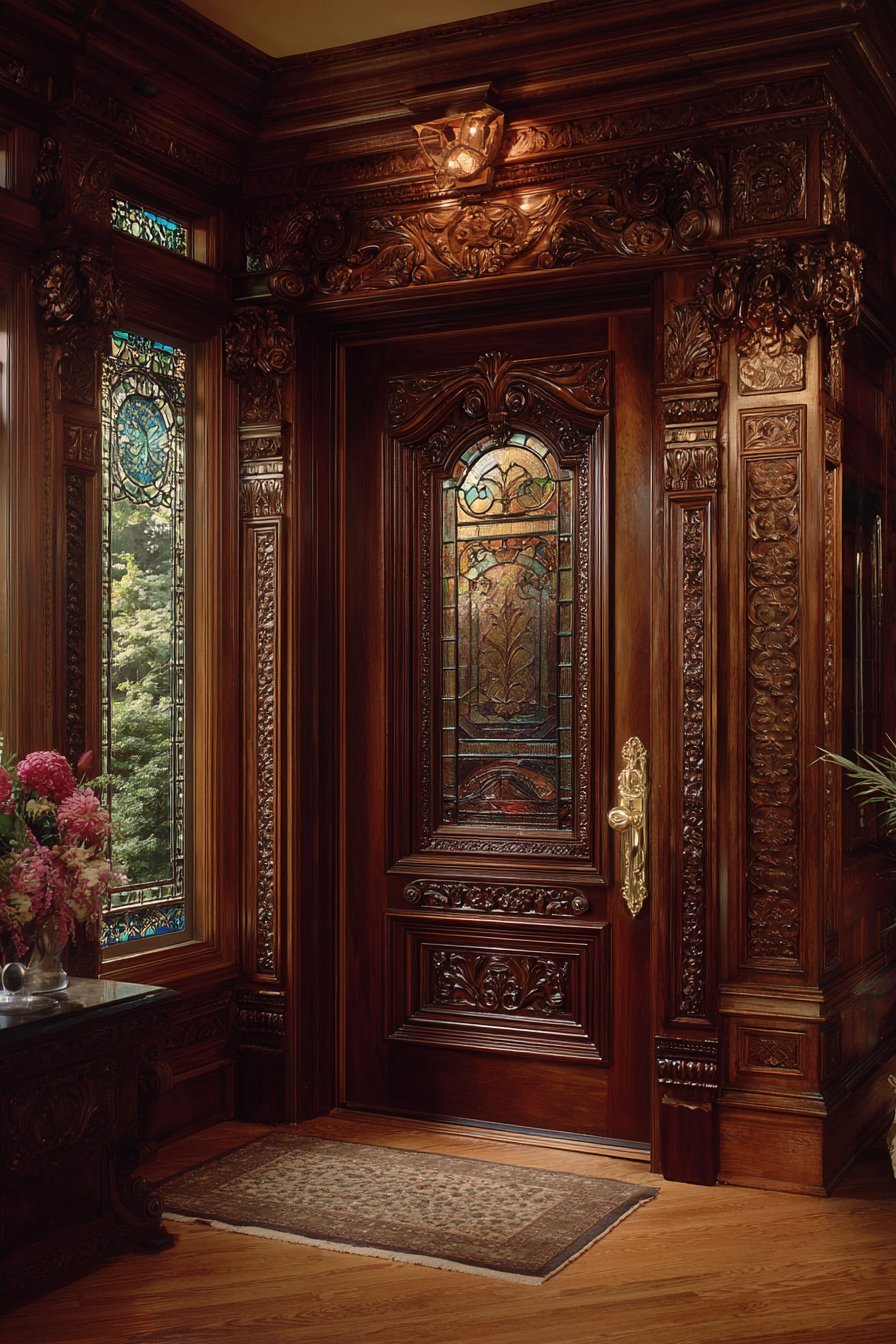
Victorian era craftsmanship and ornamental excess find perfect expression here. Ornate carved mahogany features elaborate acanthus leaf motifs. Egg-and-dart molding and raised panels showcase master woodcarving skills. Decorative corner blocks add visual complexity and period authenticity.
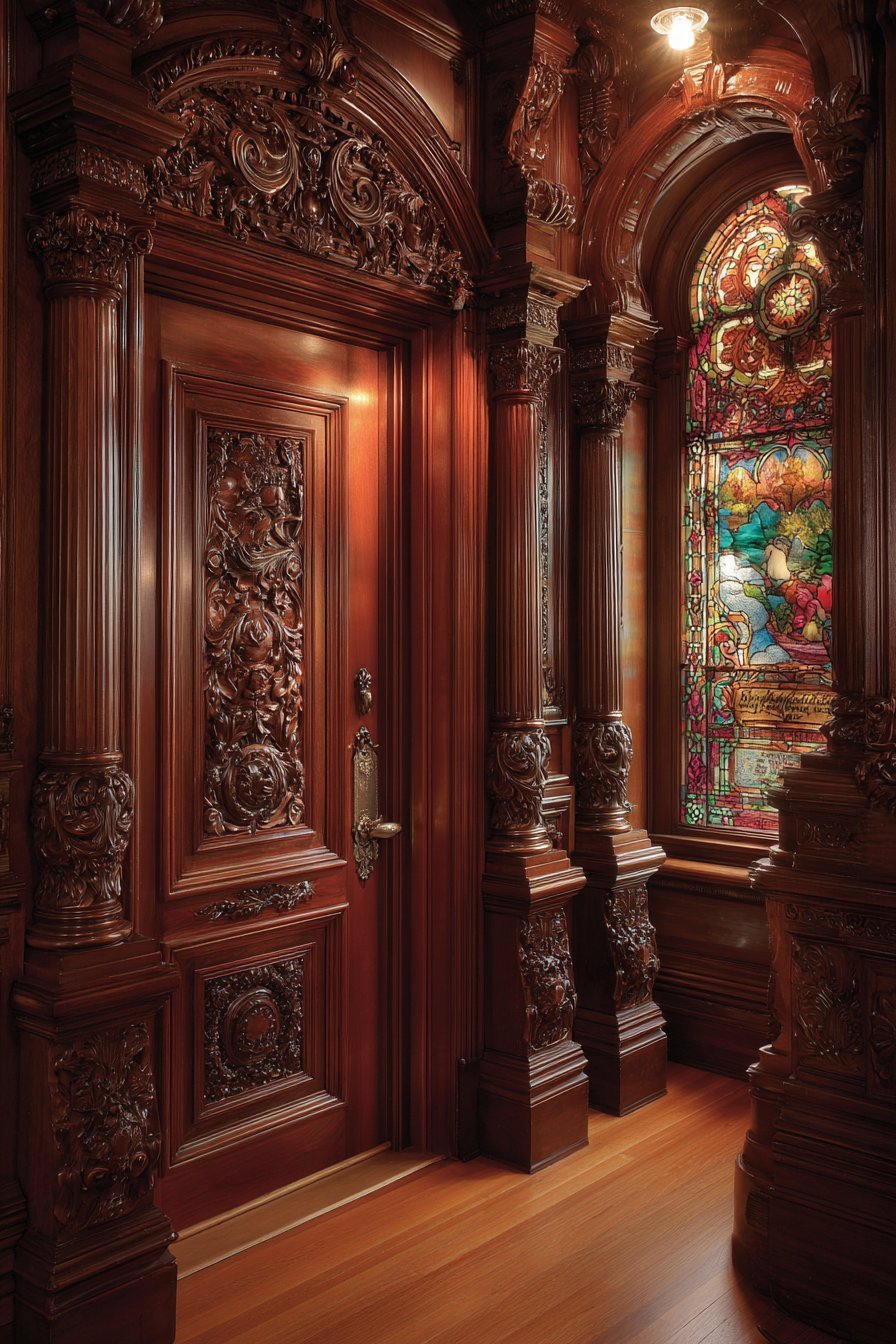
Rich reddish-brown stain highlights intricate carving detail throughout. Antique brass hardware includes an ornamental lever handle with Victorian scrollwork. A matching door knocker and decorative escutcheon complete the ensemble. Stained glass inserts in jewel tones add color and light.
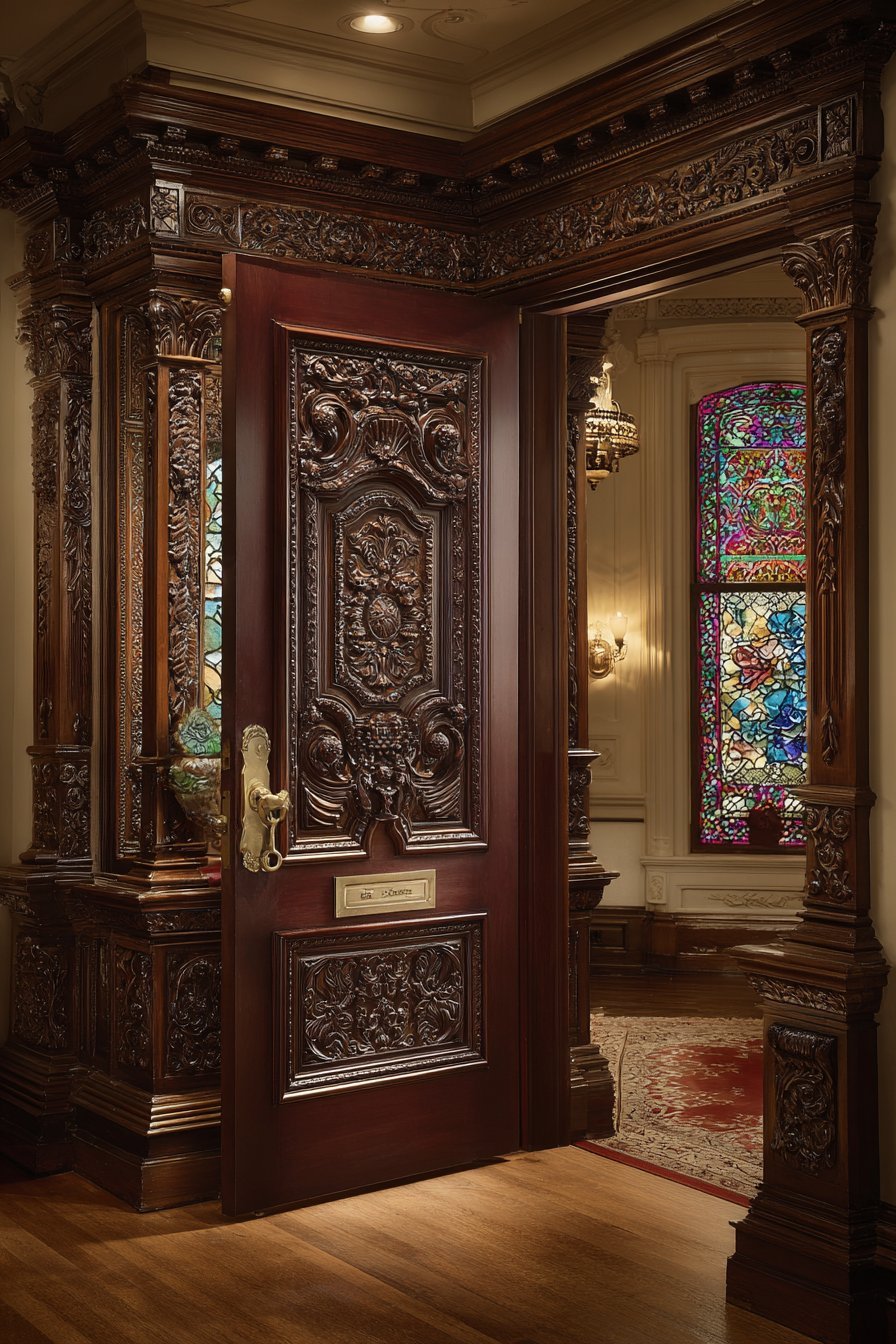
Surrounding millwork features equally detailed carved trim and pilasters. Natural light through stained glass creates colorful shadow patterns. The jewel-toned glass filters and transforms daylight throughout the day. Every surface demonstrates the Victorian commitment to ornamental embellishment.
This design suits Victorian homes, historical restorations, and lovers of ornate detailing. Authentic reproduction requires skilled woodcarvers and artisans. The stained glass should be commissioned to complement the carving details. Proper maintenance preserves the intricate details for generations.
Key Design Tips:
- Commission skilled woodcarvers experienced in Victorian period detailing and techniques
- Select stained glass artists who understand Victorian color palettes and patterns
- Choose solid mahogany for carving depth and detail that veneer cannot achieve
- Apply traditional finishing techniques appropriate to Victorian period authenticity
- Invest in regular maintenance protecting carved details from dust accumulation and damage
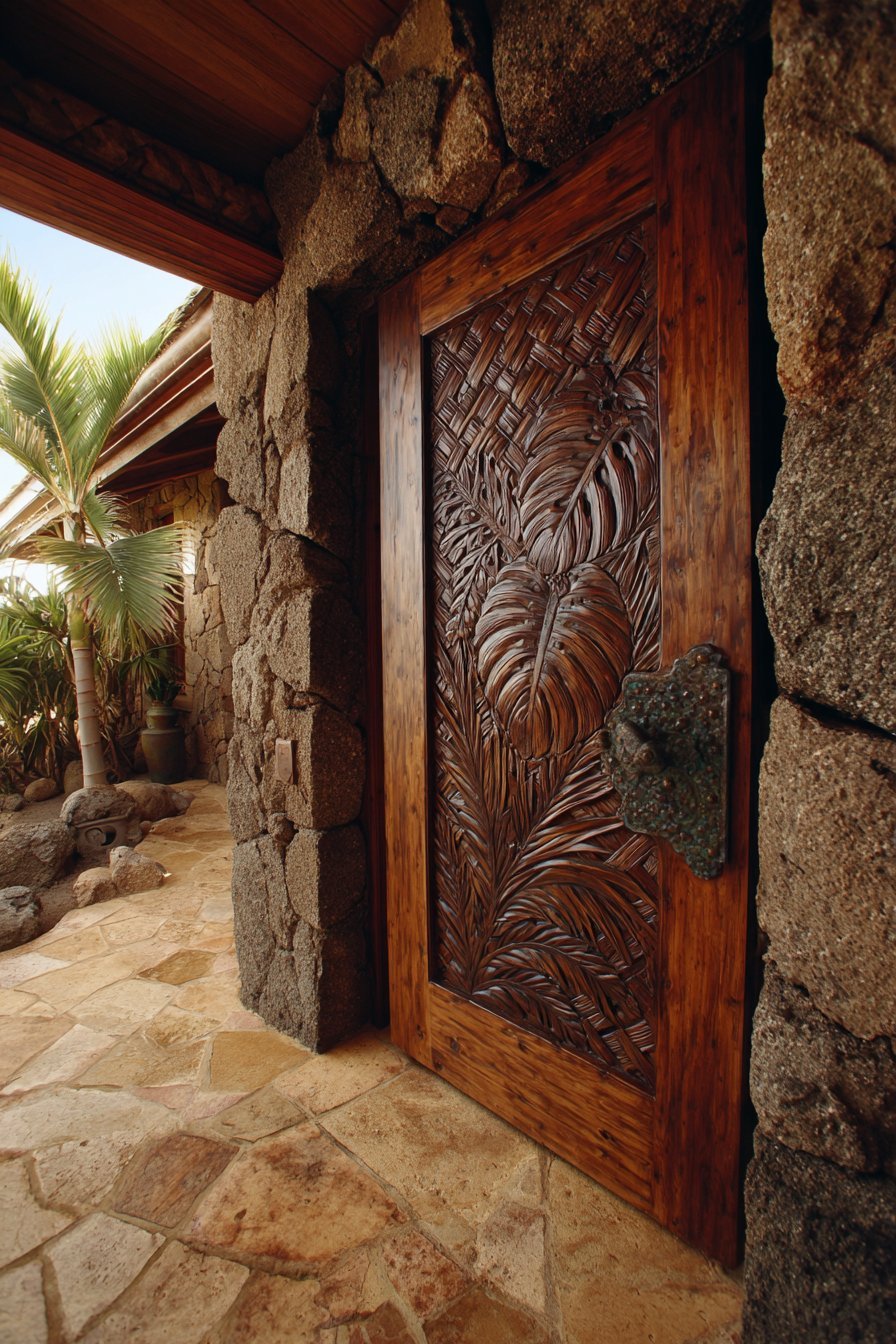
18. Tropical Teak with Botanical Carvings
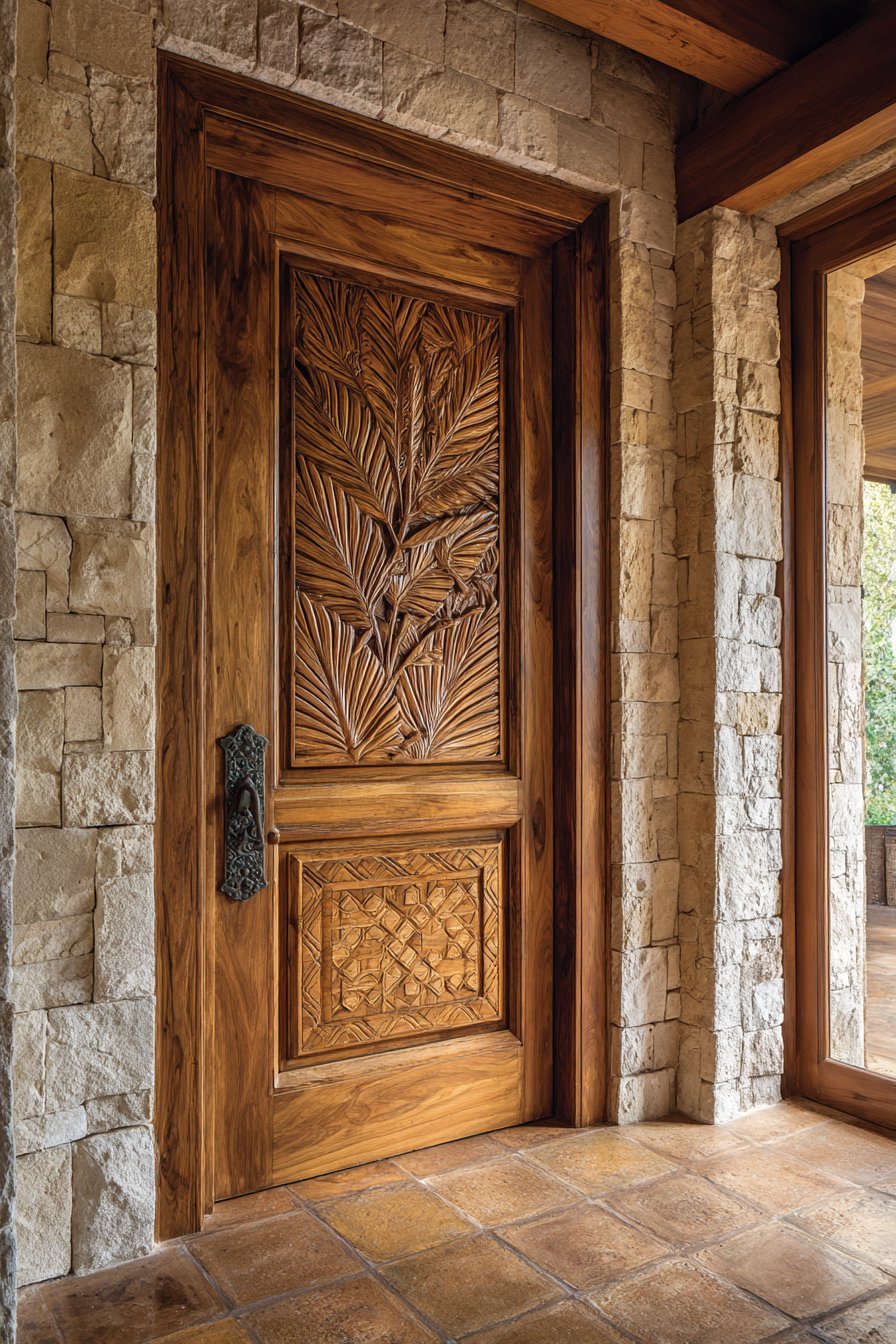
Island luxury celebrates natural materials and handcrafted artistry in this tropical entrance. Solid teak with natural oil finish displays golden honey tones. Custom carved panel depicts tropical botanical motifs including palm fronds. Monstera leaves add organic sculptural interest to the wood surface.
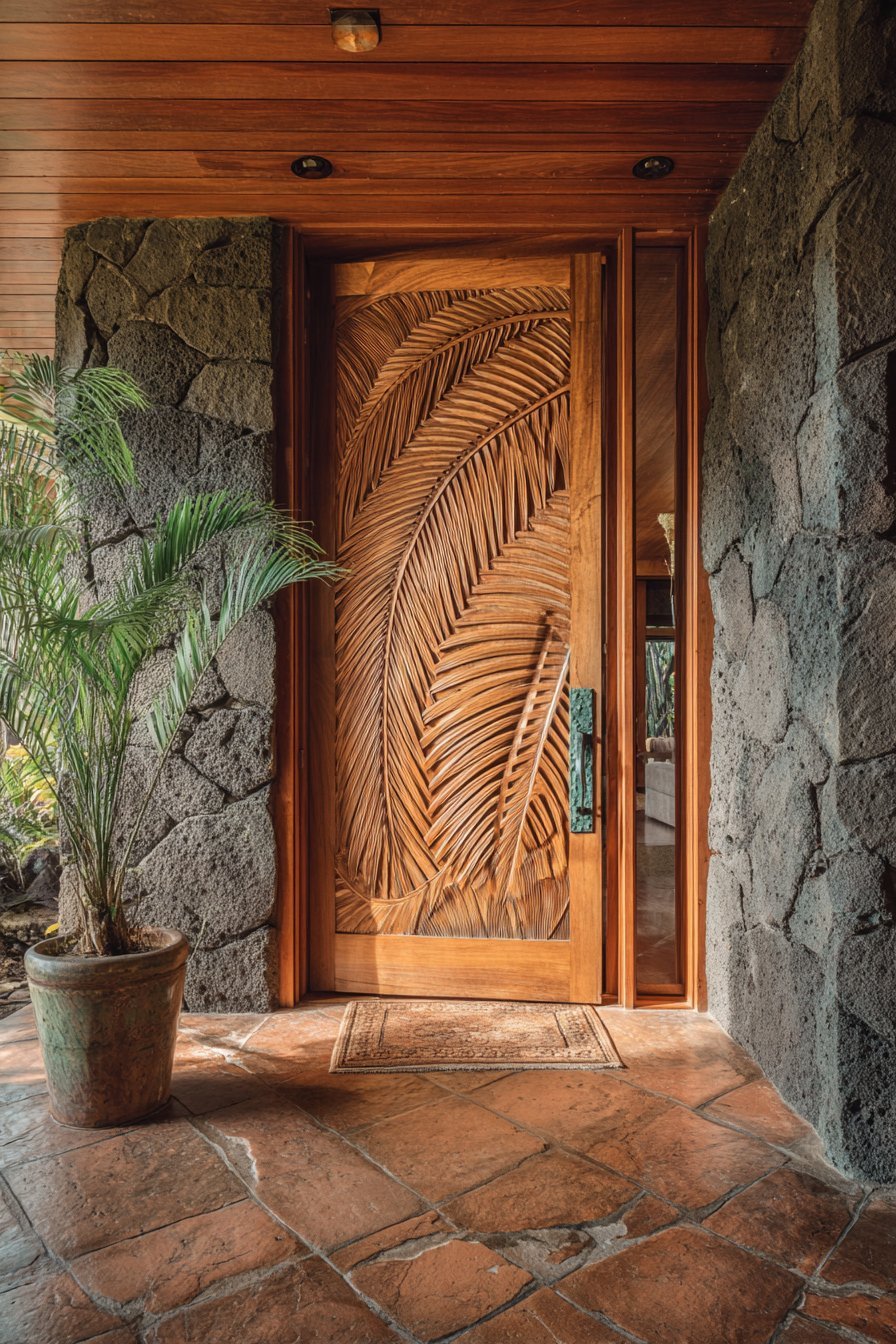
Bronze hardware with verdigris patina provides age and character. The oversized dimensions at 9 feet tall create impressive vertical scale. Surrounding natural stone walls reinforce tropical aesthetic. Terracotta tile flooring completes the warm earthy palette.
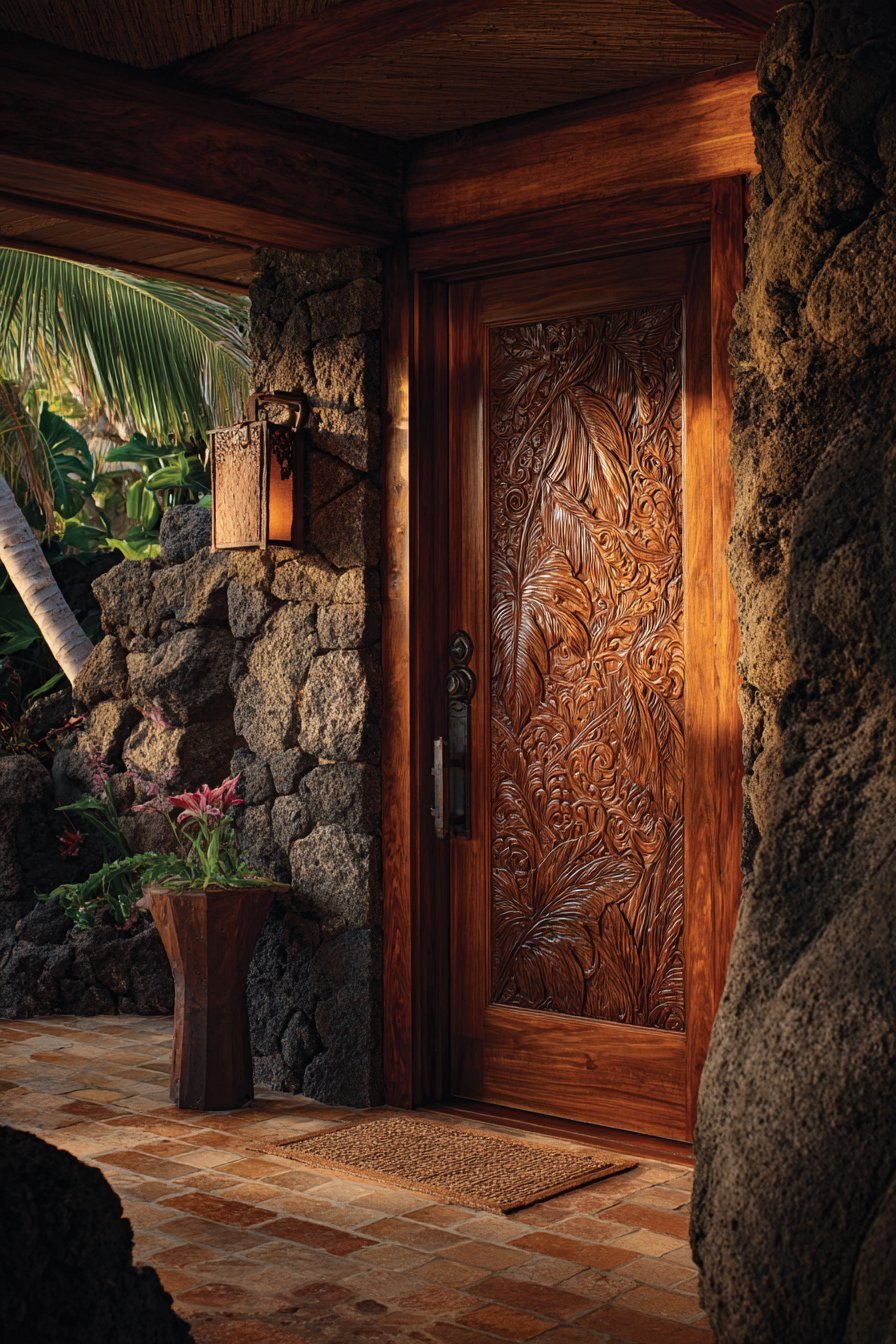
Warm natural lighting highlights teak’s natural luster and carved detail depth. The botanical carvings create dimensional shadows across the door surface. Teak’s natural oils provide inherent weather resistance perfect for tropical climates. The bronze patina develops richer character over time.
This design suits tropical estates, island homes, and anyone embracing resort luxury. Teak represents sustainable choice when sourced responsibly from managed forests. The carved details should be sealed to prevent dirt accumulation. This entrance creates an immediate vacation atmosphere.
Key Design Tips:
- Source plantation teak from certified sustainable forestry operations for environmental responsibility
- Commission local artisans familiar with tropical botanical motifs for authentic carving
- Apply natural oil finishes that protect while allowing wood’s character to develop
- Choose bronze hardware that develops natural patina in humid tropical climates
- Design covered entry protecting carved details from direct rainfall and intense sun
19. Bronze-Framed Glass Wall Door System
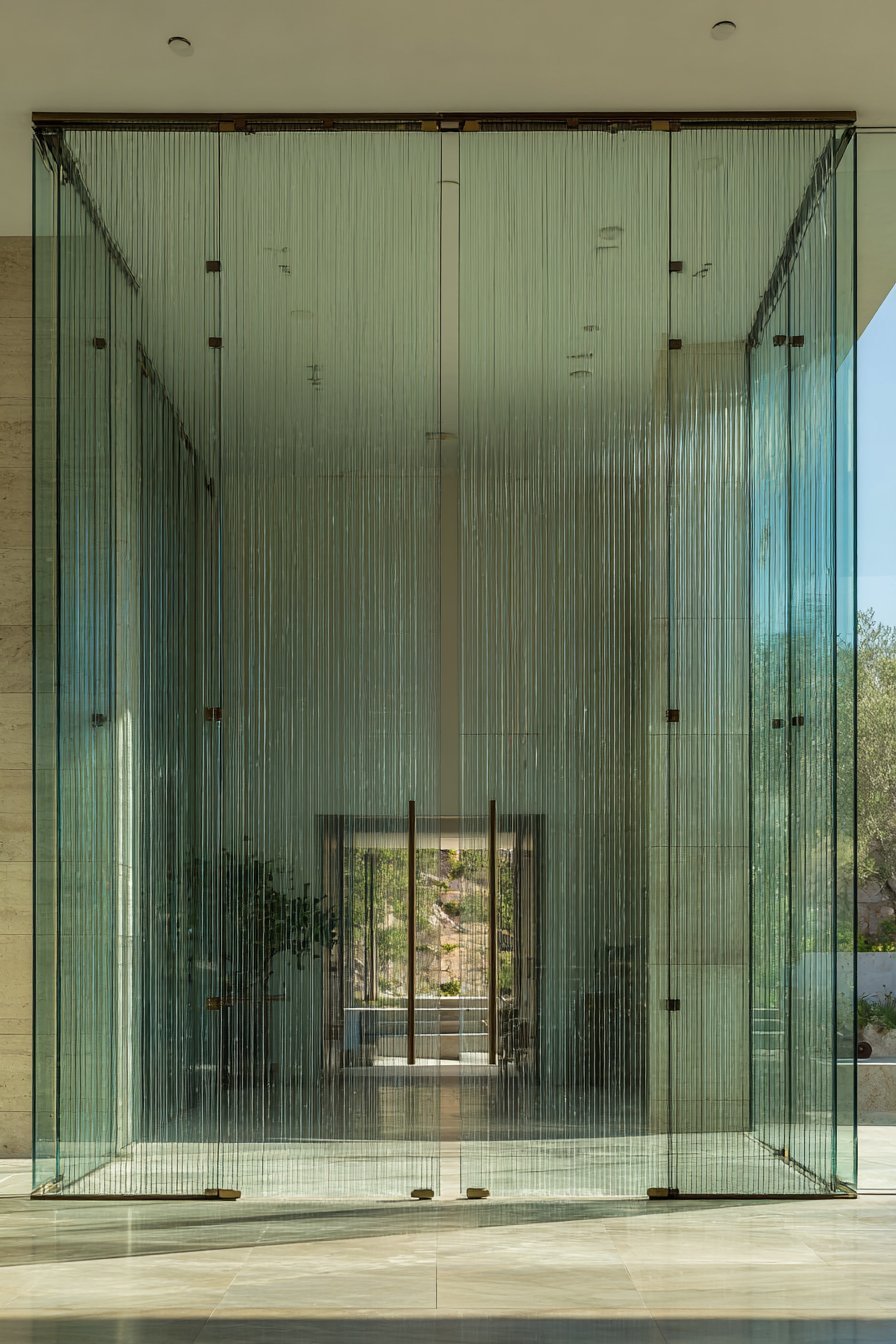
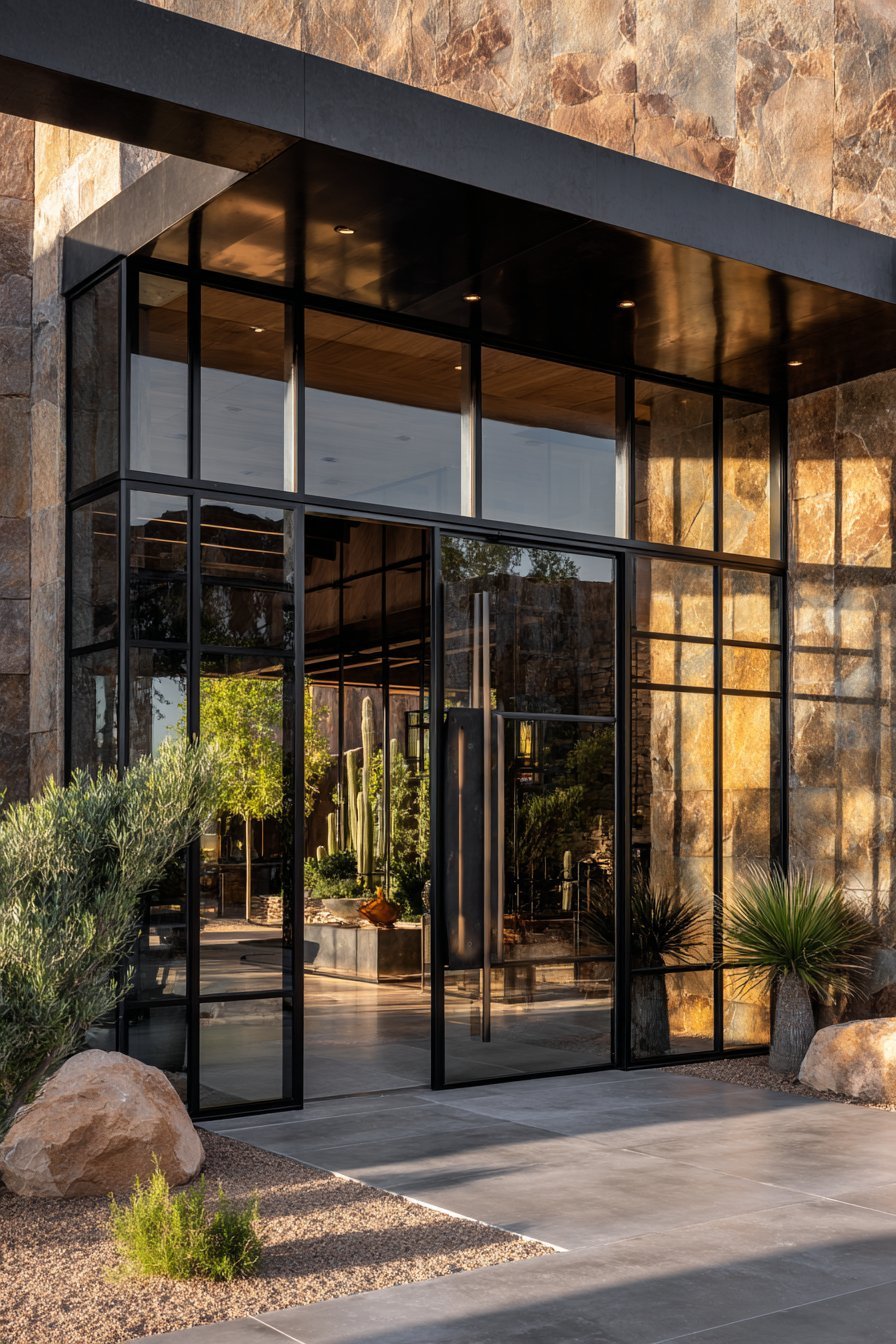
Maximum transparency defines this contemporary door system approach. Bronze-framed glass creates wall of transparency flooding the entrance with light. The main entry door integrates seamlessly within floor-to-ceiling sidelights. Subtle vertical mullions divide glass panels maintaining human scale.
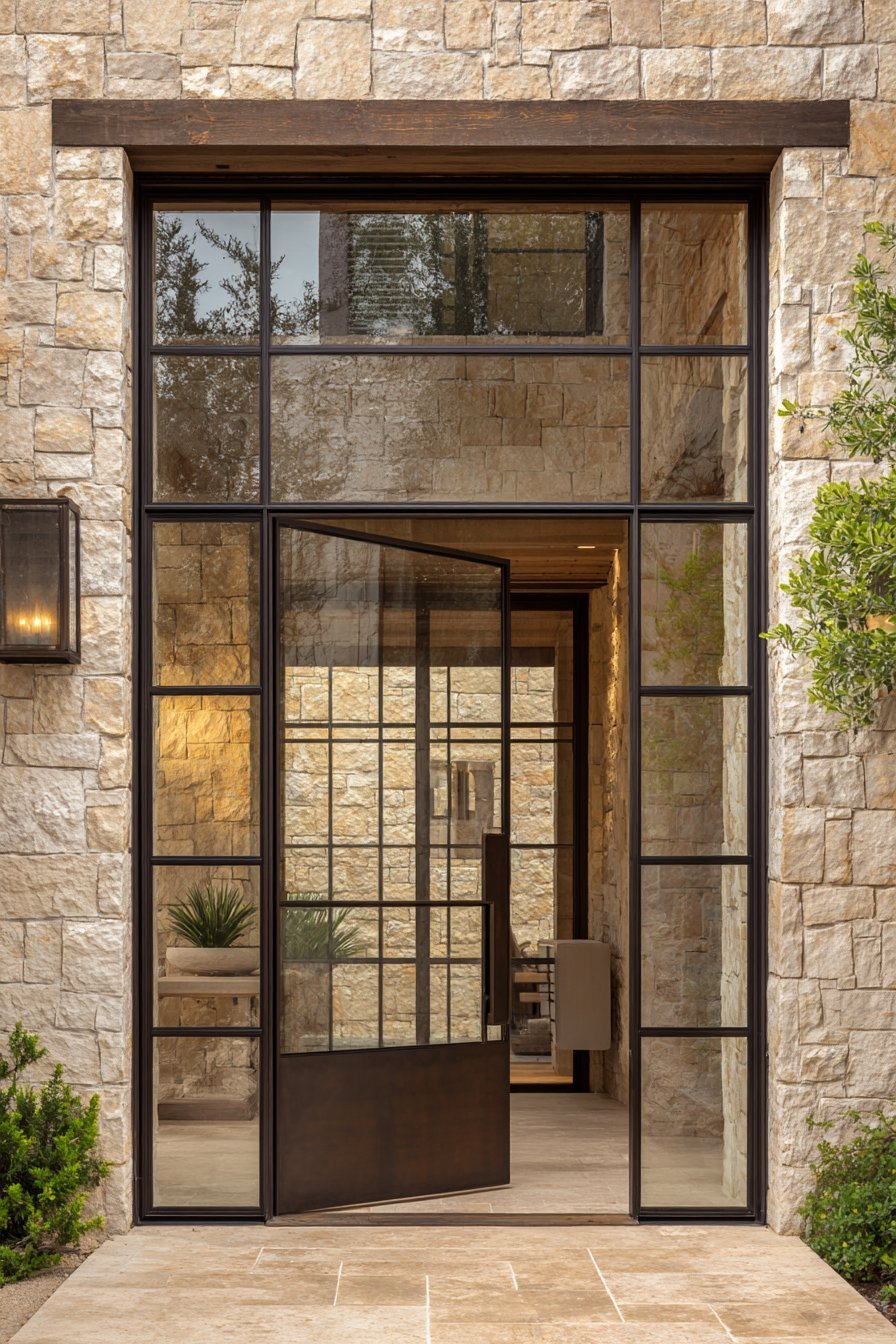
Ultra-clear low-iron glass provides maximum transparency and light transmission. Sleek bronze hardware includes architectural pull handle spanning full door height. The handle’s vertical emphasis complements the overall proportions. Interior views showcase abundant natural light flooding the entry.
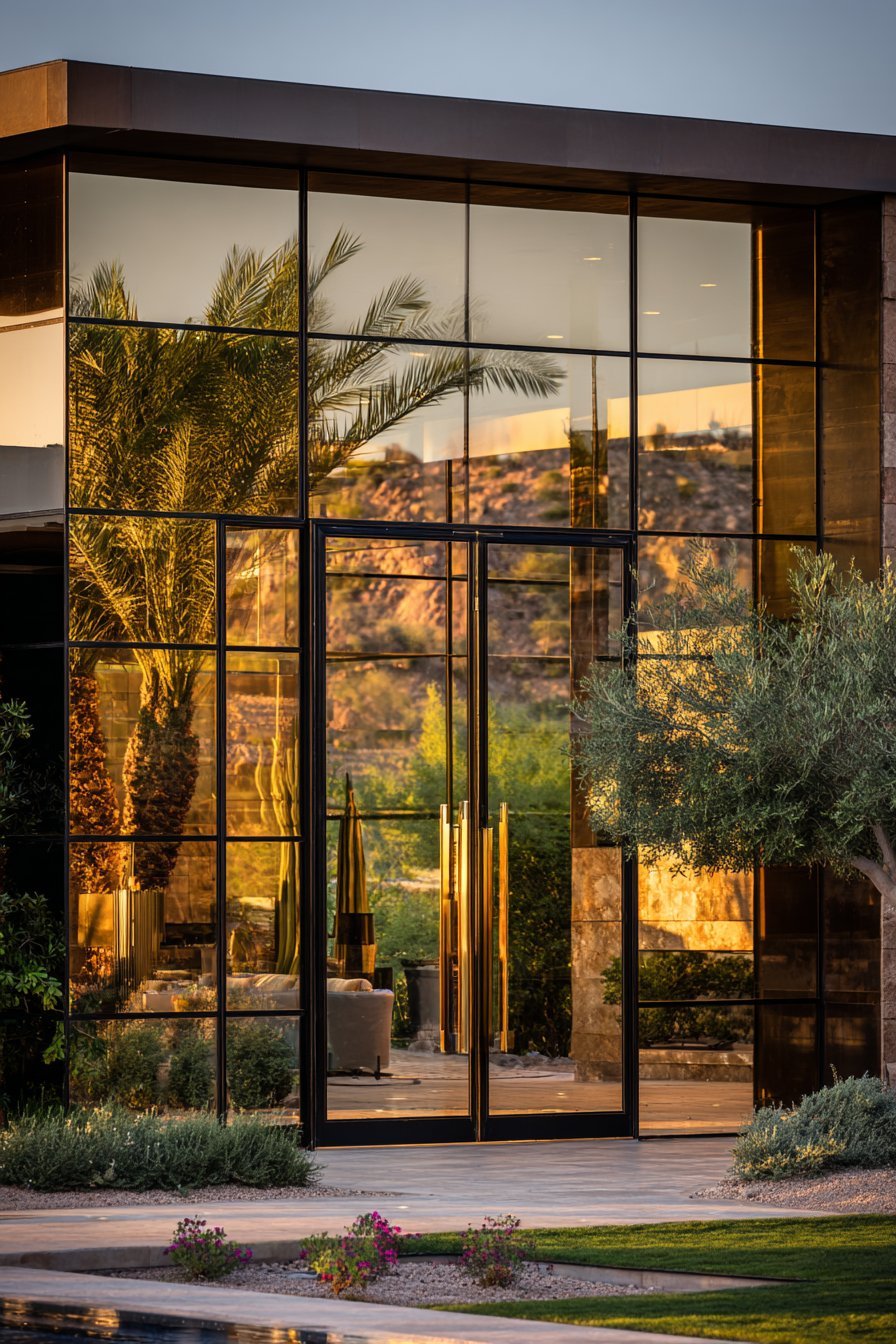
The transparent system maintains sense of enclosure while maximizing openness. Bronze frames develop rich patina adding warmth to contemporary design. The minimal framing allows glass to dominate the composition. This approach transforms the entrance into light-capturing lens.
This design suits contemporary homes, modernist architecture, and light-focused design approaches. Privacy considerations require strategic landscaping or secondary interior barriers. The bronze framing requires occasional maintenance preserving its finish. Structural considerations ensure safe glass installation.
Key Design Tips:
- Specify ultra-clear low-iron glass for maximum clarity and light transmission quality
- Choose bronze finishes that develop living patina adding character over time
- Design landscape screening maintaining privacy without blocking natural light
- Install structural glazing systems appropriate for full-height glass applications
- Consider laminated or tempered glass for safety in door applications
20. Moroccan Cedar with Geometric Inlay
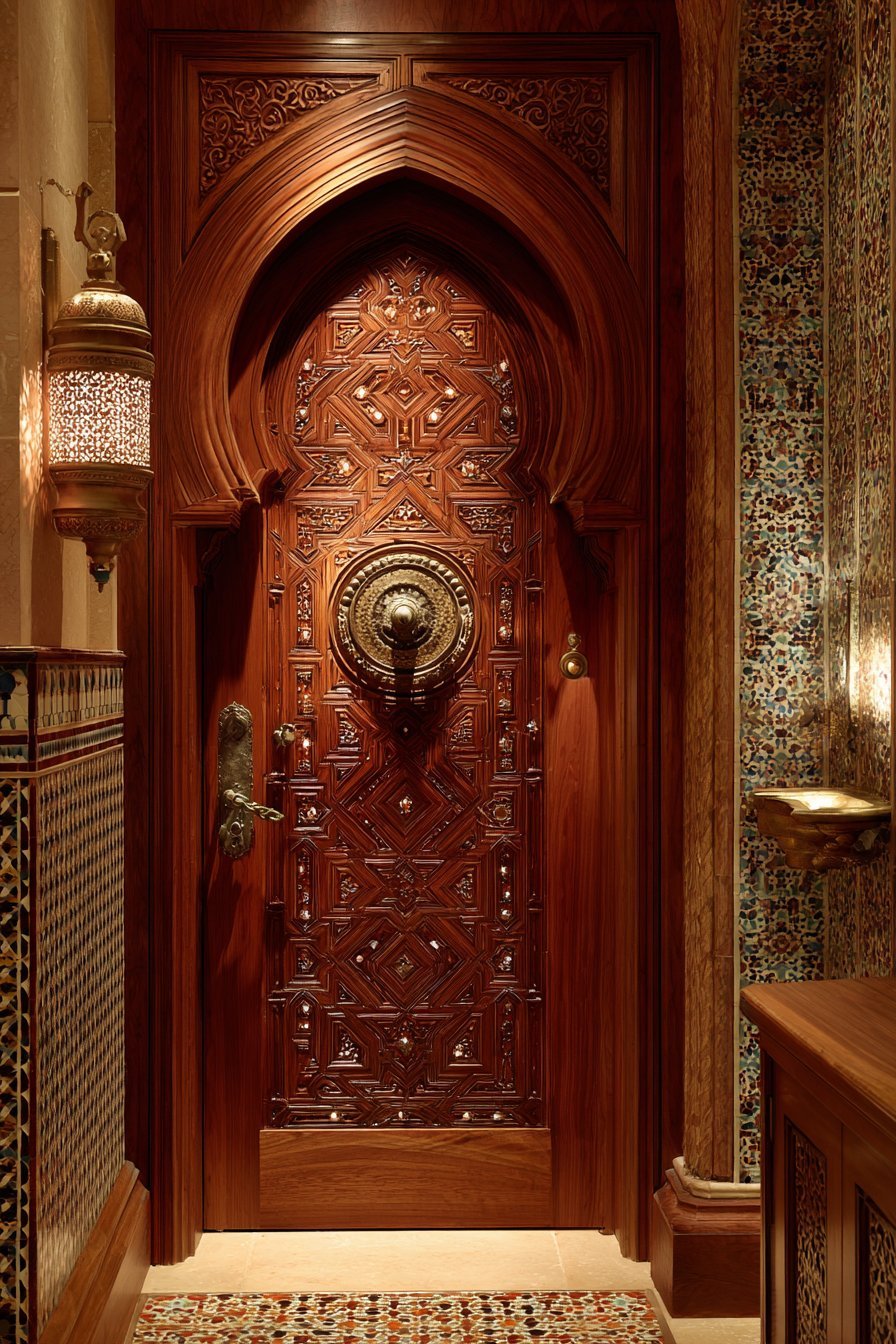
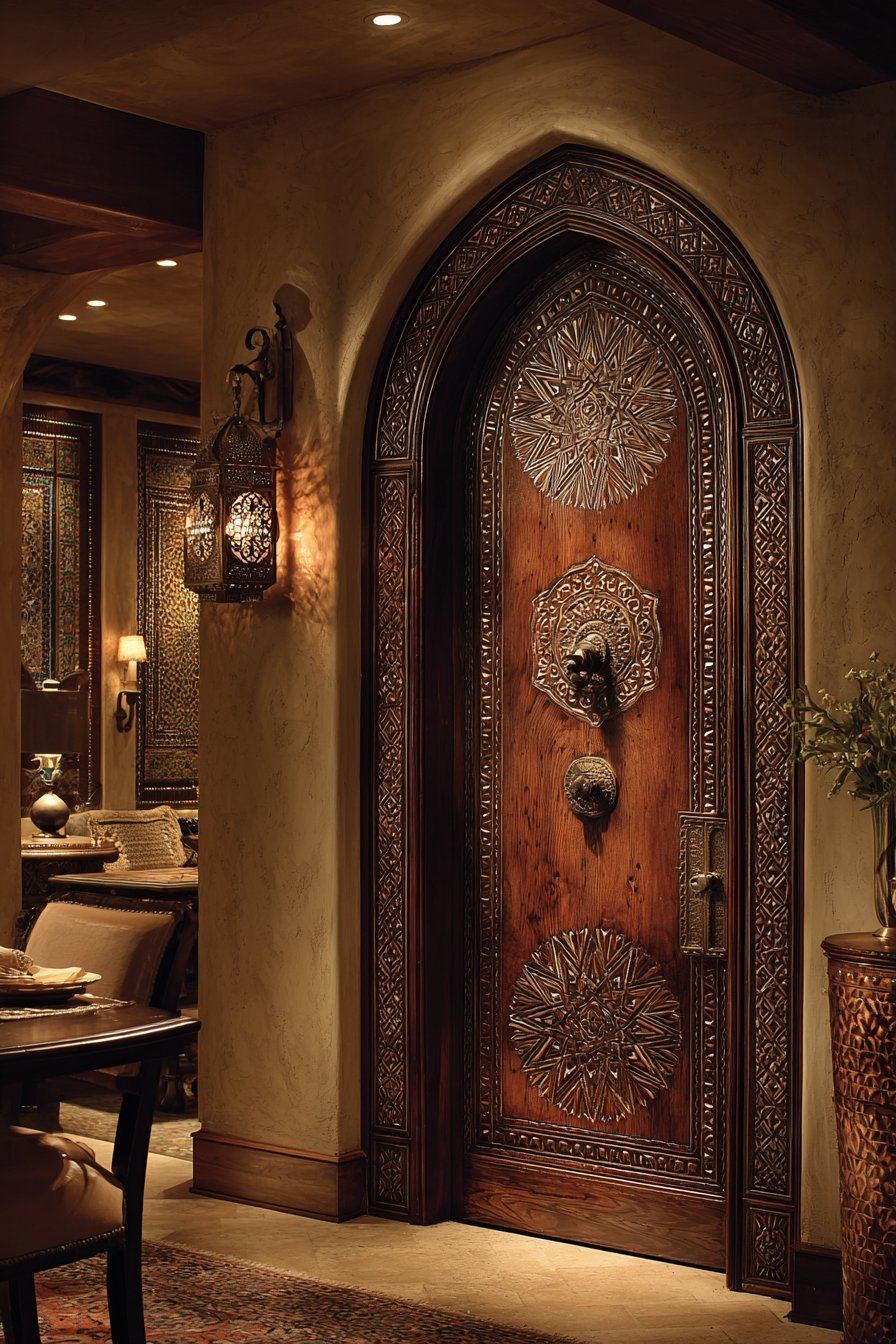
North African design tradition creates a mesmerizing entrance through intricate craftsmanship. Solid cedar features geometric inlay patterns of contrasting materials. Bone, mother-of-pearl, and ebony wood create complex geometric compositions. The scalloped arch top references traditional Islamic architectural forms.
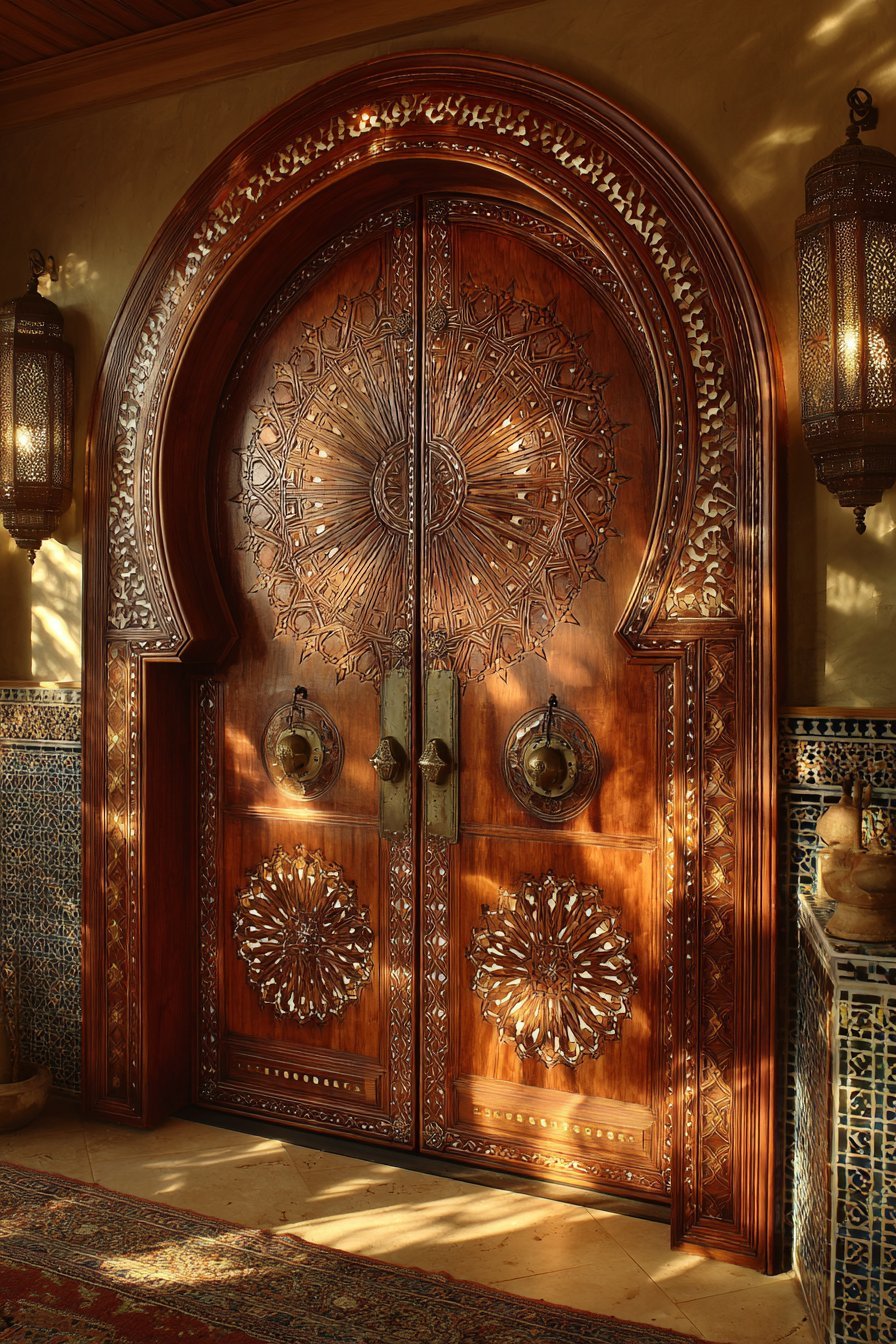
Traditional Islamic geometric patterns radiate from central medallion. Hand-hammered brass hardware includes decorative nail heads creating additional pattern. An ornate door knocker and traditional keyhole cover complete authentic details. Surrounding walls feature authentic Moroccan zellige tilework.
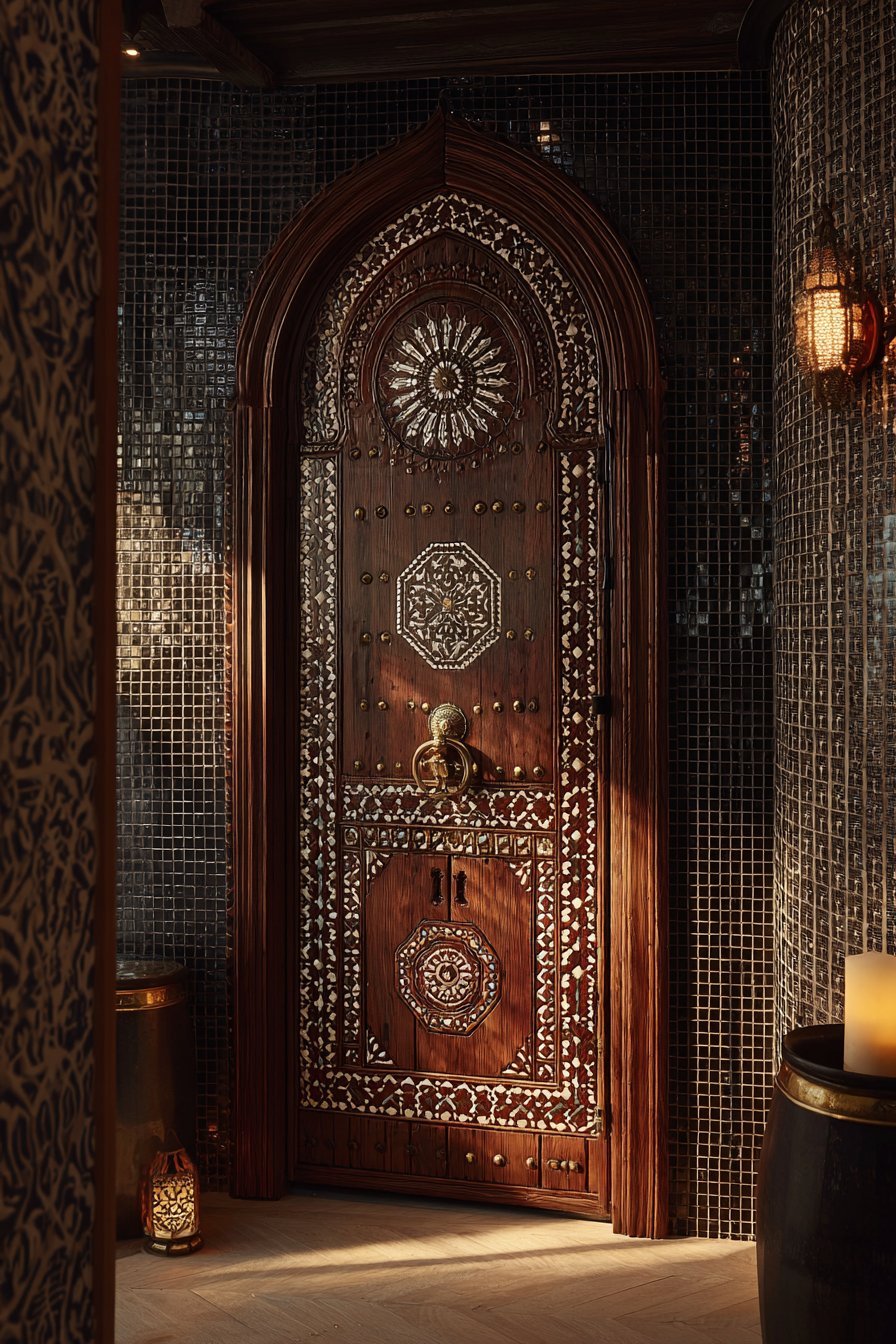
Warm ambient lighting from nearby Moroccan lantern creates dramatic shadow play. The intricate inlay work demonstrates traditional Moroccan craftsmanship at its finest. Each geometric piece is individually cut and fitted by hand. The result is hypnotic pattern work of extraordinary precision.
This design suits homes embracing global influences, Moroccan-inspired interiors, and pattern enthusiasts. Authentic execution requires craftspeople trained in traditional Moroccan techniques. The inlay work represents significant time investment reflecting in its beauty. This entrance transports viewers to Moroccan riads and palaces.
Key Design Tips:
- Commission artisans trained in traditional Moroccan inlay techniques for authentic execution
- Select contrasting inlay materials that create clear pattern definition and visual interest
- Incorporate authentic zellige tilework surrounding door for cohesive Moroccan aesthetic
- Install warm-toned lighting emphasizing pattern shadows and dimensional inlay work
- Apply protective finish over inlay work preventing piece displacement or damage
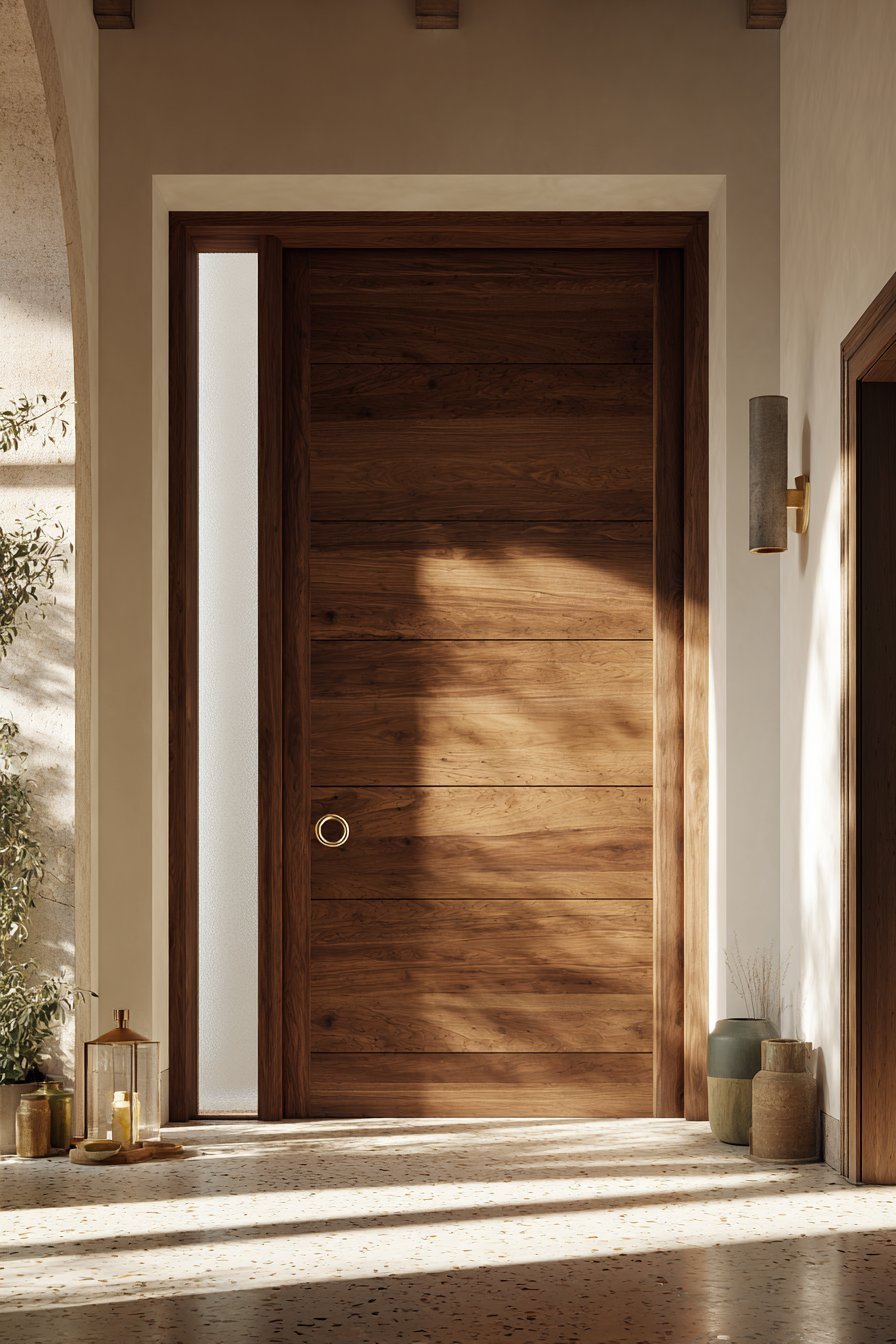
21. Mid-Century Modern Walnut with Atomic Hardware
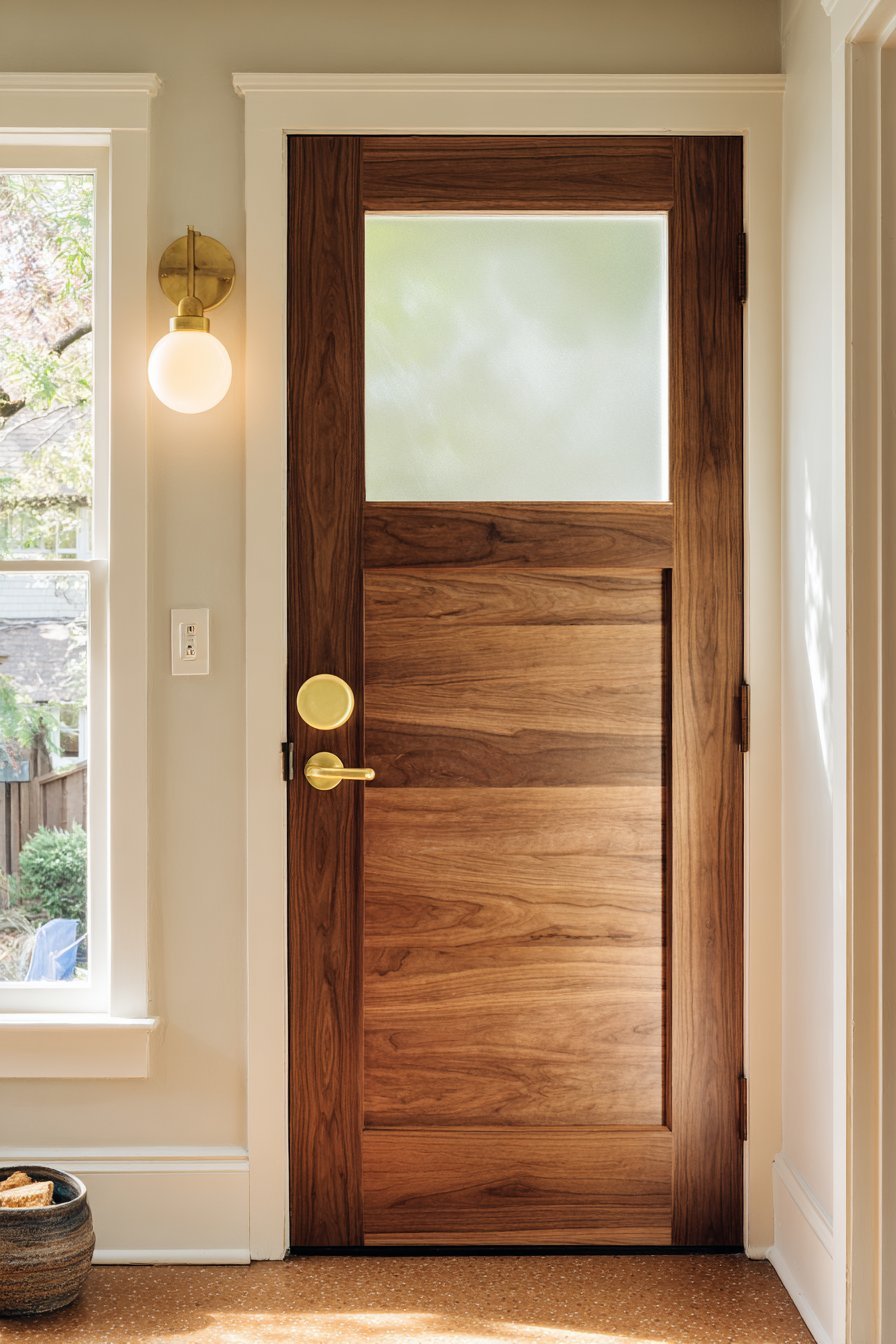
Post-war American design optimism expresses itself in this mid-century entrance. Solid walnut with horizontal grain orientation emphasizes width over height. Simple recessed panel creates clean geometric composition. Natural walnut finish with hand-rubbed Danish oil shows color variation.
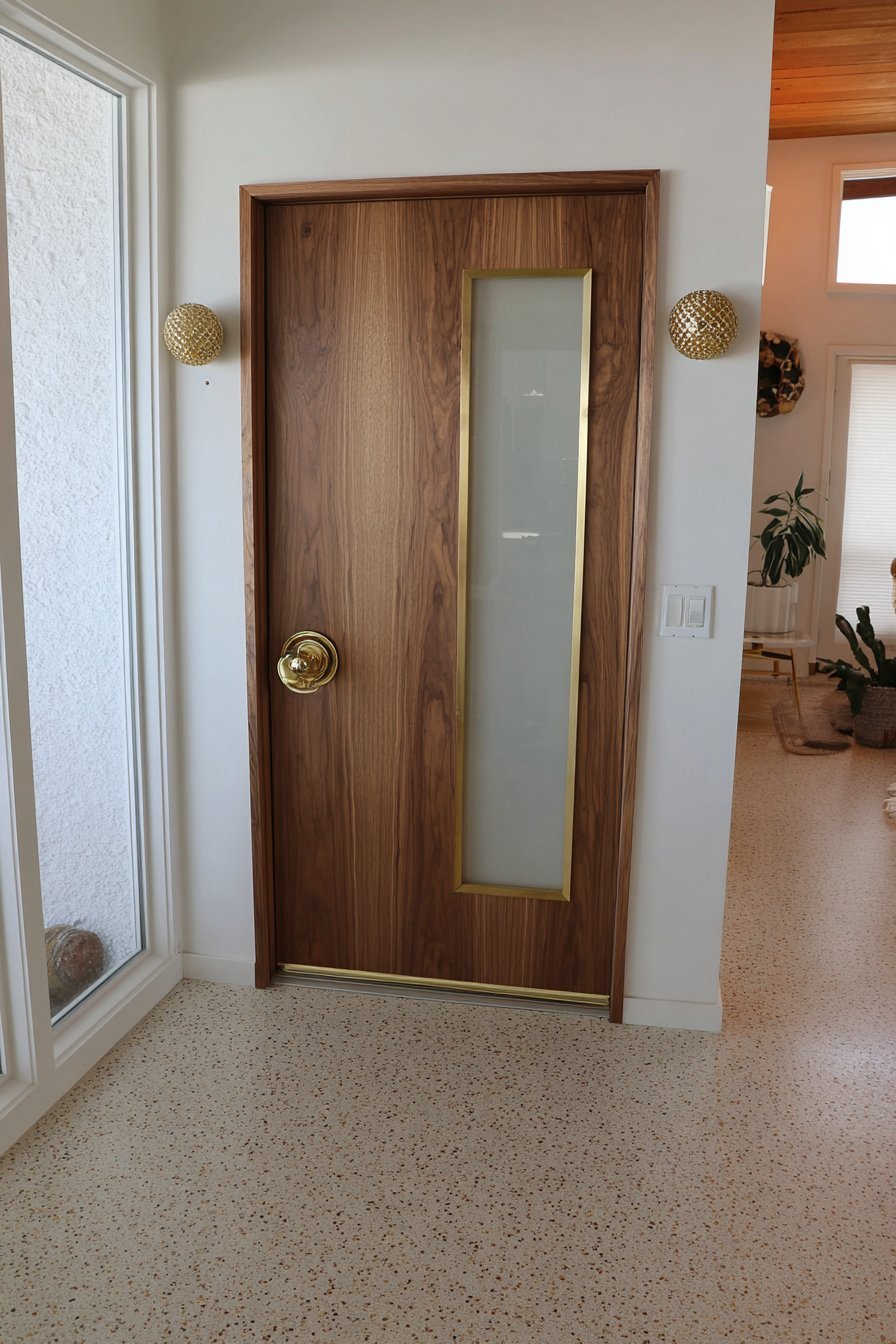
Original period brass hardware includes a distinctive atomic-era lever handle. The circular escutcheon references mid-century geometric vocabulary. A rectangular frosted glass panel at eye level provides functional light. Terrazzo flooring and period-appropriate wall sconces complete the setting.
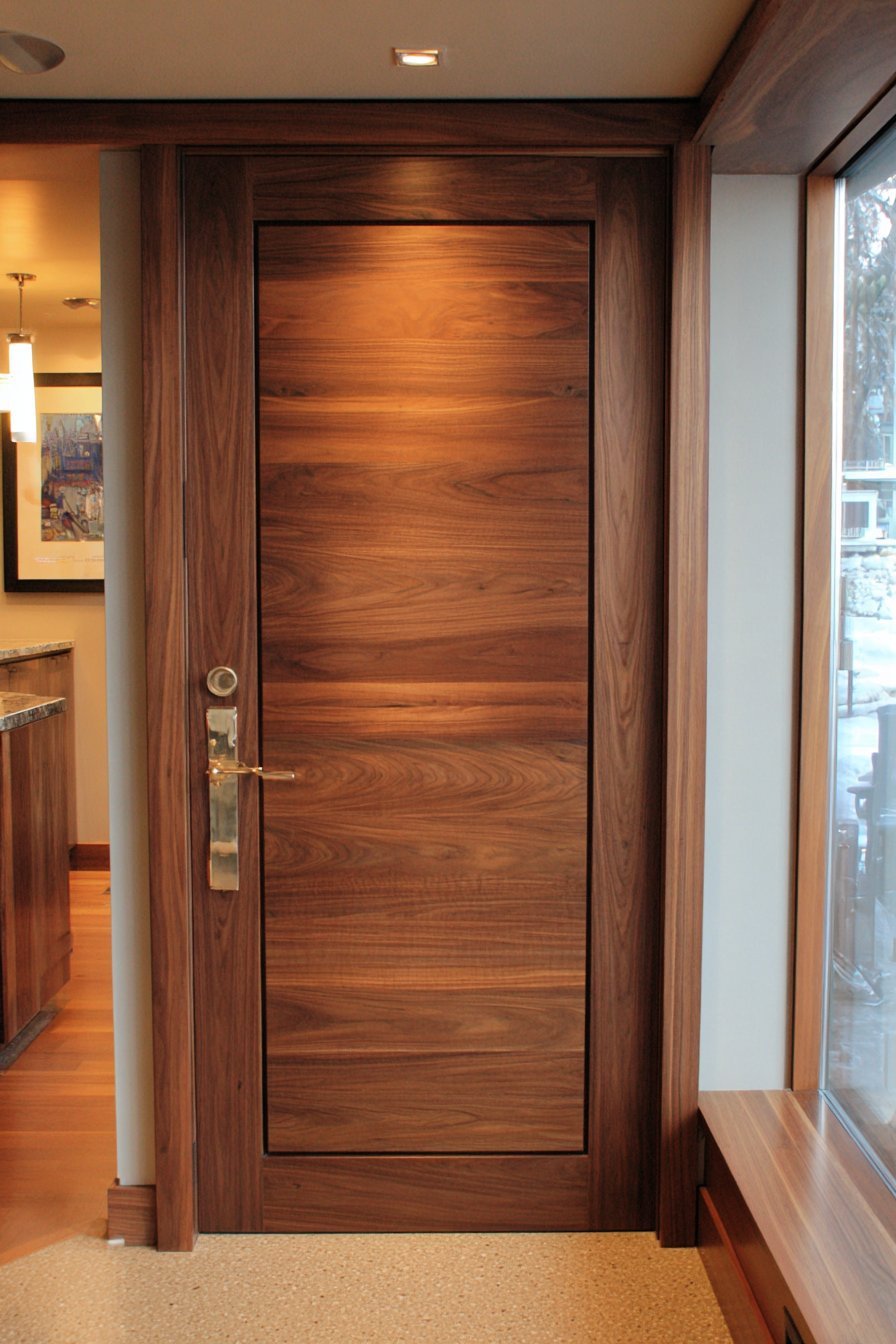
Soft natural lighting emphasizes wood grain patterns and brass hardware gleam. The horizontal grain orientation creates calming visual flow. Danish oil finish brings out walnut’s natural warmth without high gloss. The atomic-era hardware represents an iconic mid-century design moment.
This design suits mid-century modern homes, retro enthusiasts, and architectural purists. Authentic period hardware has become collectible, requiring careful sourcing. Reproduction hardware of quality can substitute when originals are unavailable. The design’s restraint demonstrates mid-century modernism’s essential character.
Key Design Tips:
- Select solid walnut with horizontal grain orientation for an authentic mid-century appearance
- Source authentic period hardware or high-quality reproductions capturing atomic-era design
- Apply traditional Danish oil finish allowing wood’s natural character to develop
- Install period-appropriate terrazzo or cork flooring extending mid-century aesthetic
- Maintain restraint in design, avoiding excessive ornamentation contrary to mid-century principles
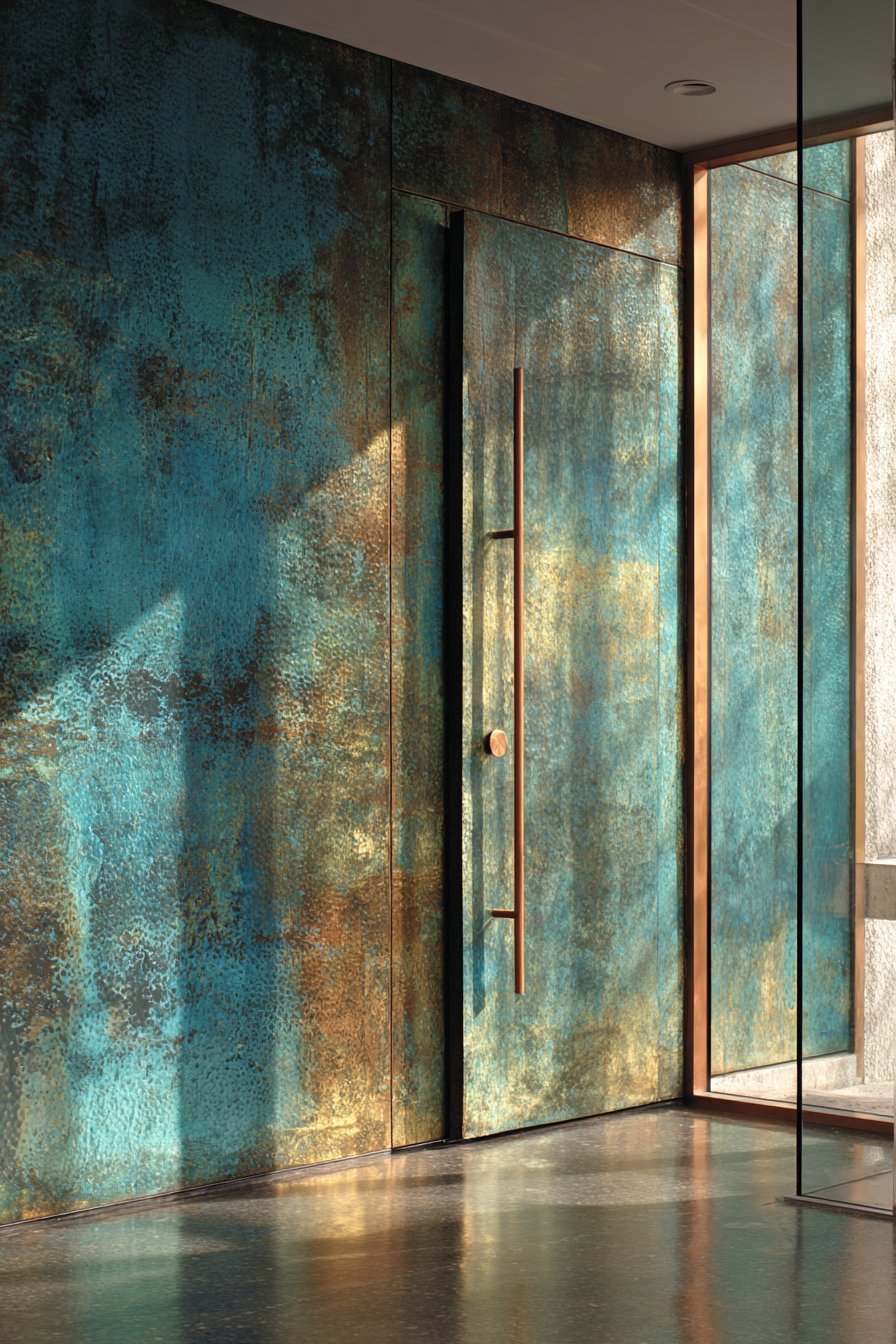
22. Blackened Copper with Living Patina
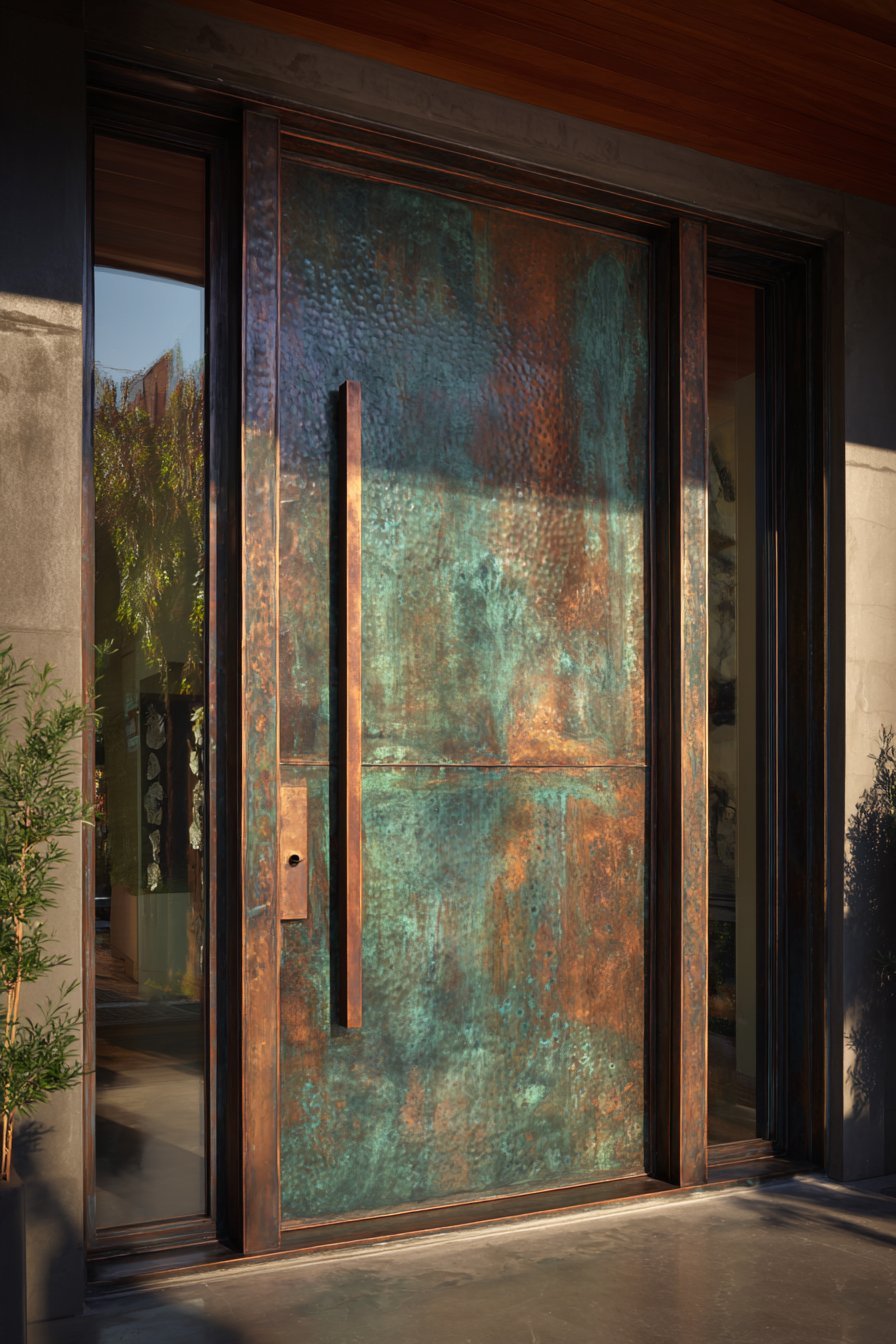
Material evolution over time defines this contemporary entrance approach. Blackened copper develops natural patina showing verdigris color shifts. The surface transitions from dark bronze to blue-green naturally. Hammered texture across the surface creates organic visual interest.
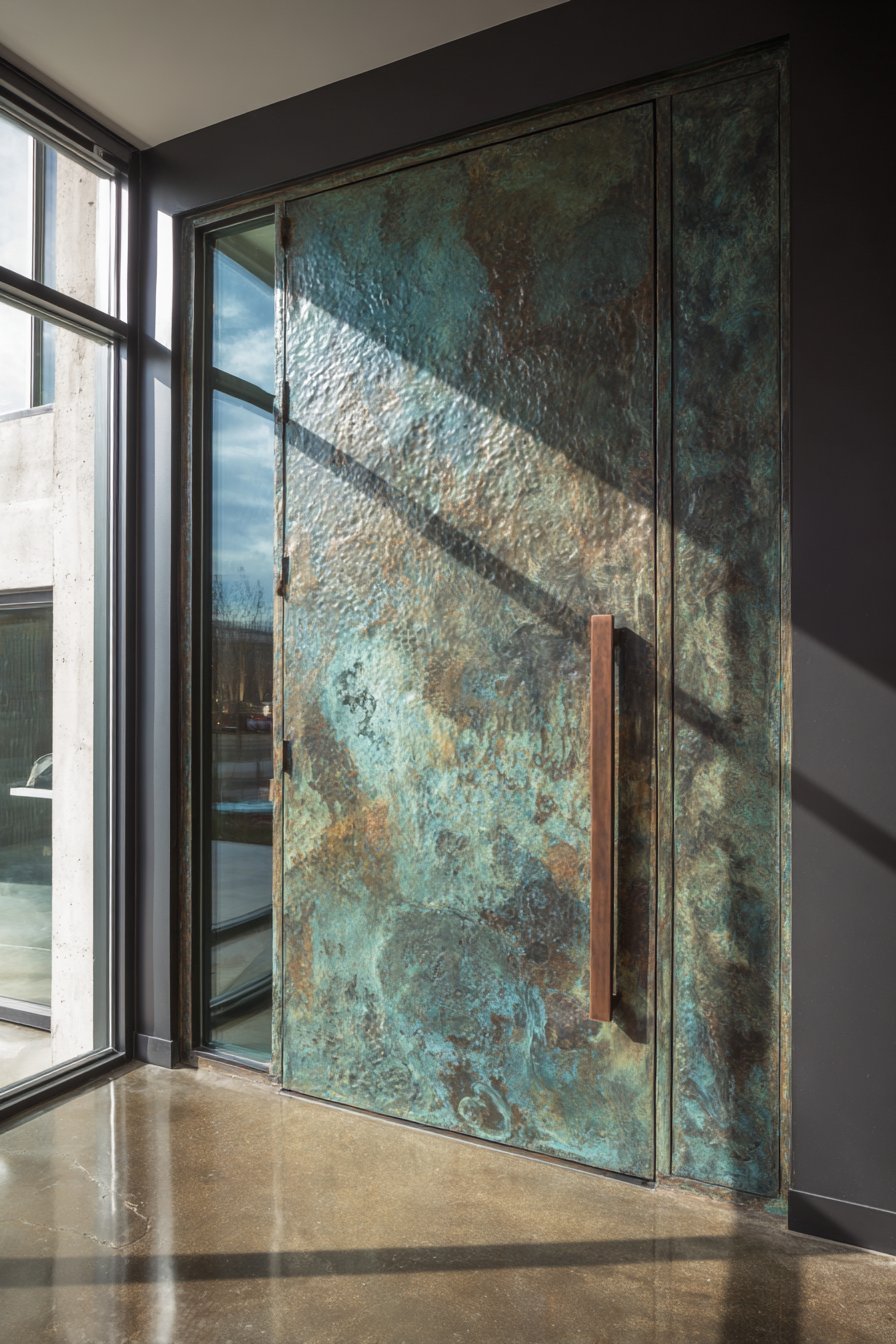
Integrated copper handle extends vertically along door edge sharing patinated finish. Clear glass sidelights with minimal copper framing maintain material consistency. Polished concrete floors reflect the door’s unique evolving coloring. Directional natural light highlights patina’s color complexity.
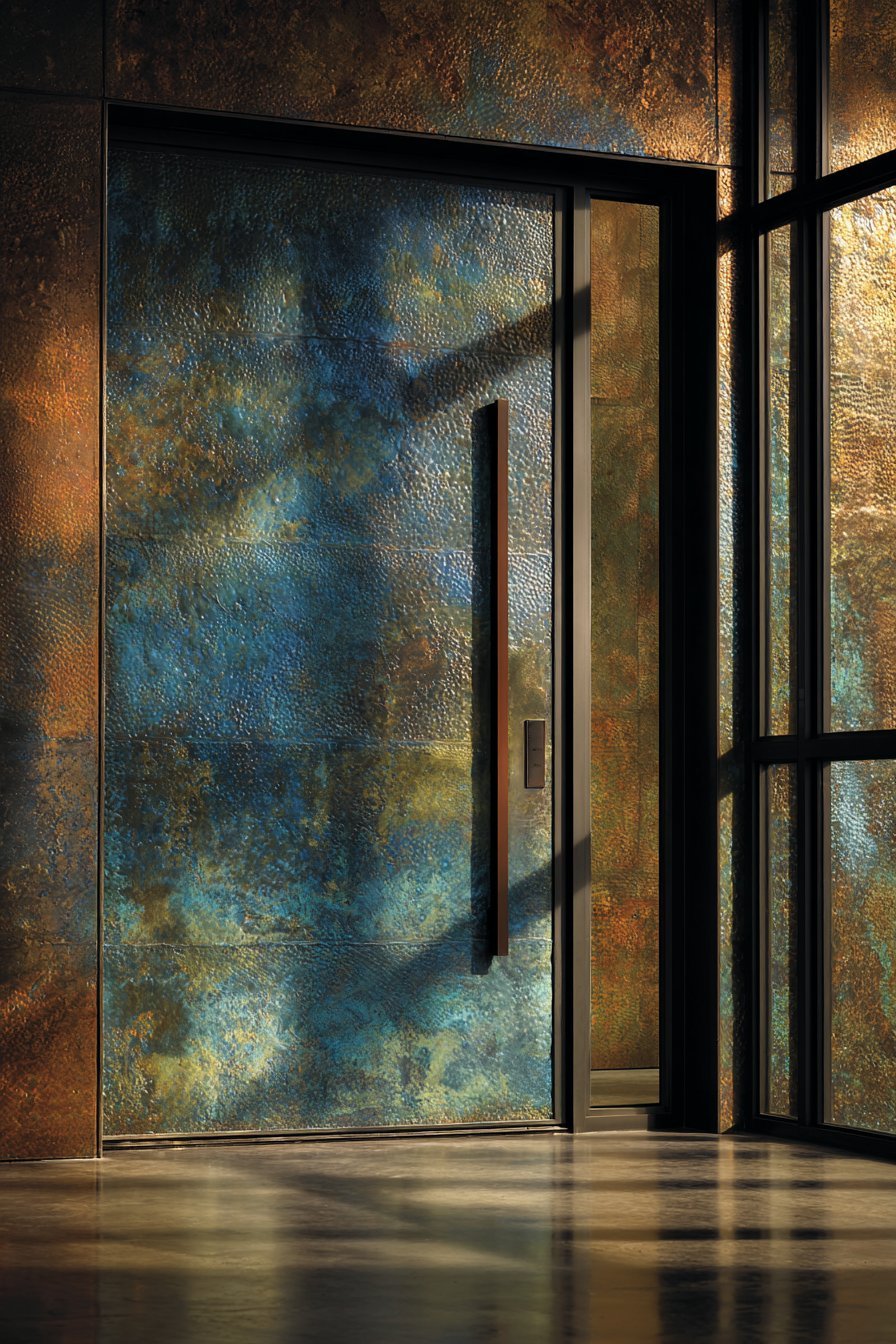
The living finish means the door continues developing character over years. No two copper doors age identically creating unique expressions. The hammered texture adds handcrafted quality to industrial material. This approach celebrates material authenticity and natural processes.
This design suits contemporary homes, material enthusiasts, and those appreciating evolving beauty. The patina development requires patience as full character emerges gradually. Sealing can halt patina development if desired appearance is achieved. This entrance makes philosophical statement about beauty and time.
Key Design Tips:
- Choose copper thickness appropriate for door application structural requirements and longevity
- Decide whether to accelerate patina development or allow natural aging process
- Apply hammered texture before patina development for an integrated appearance
- Install in location where natural aging visible and appreciated daily
- Accept variation in patina development as an inherent feature rather than flaw
23. French Provincial with Cremone Bolts
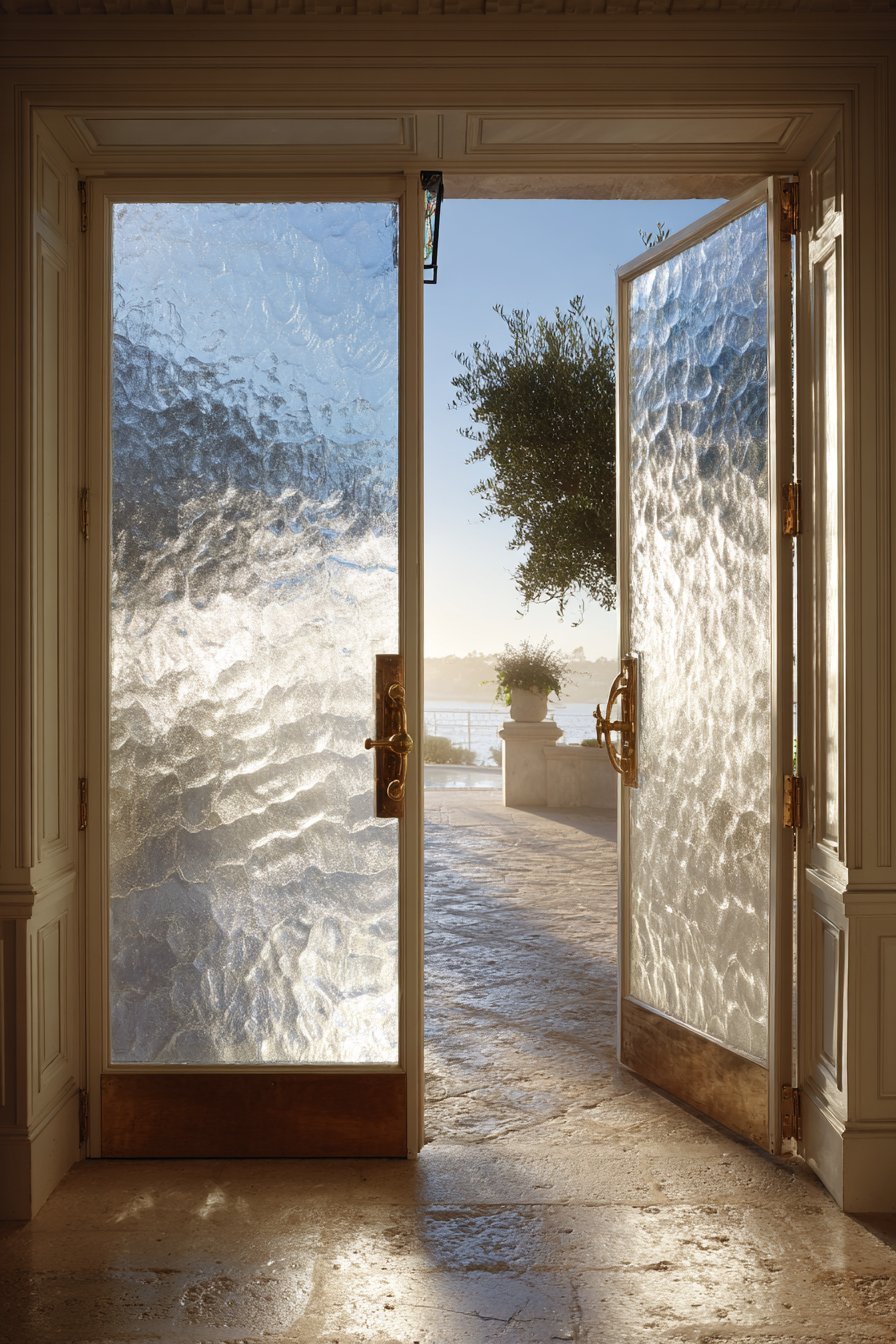
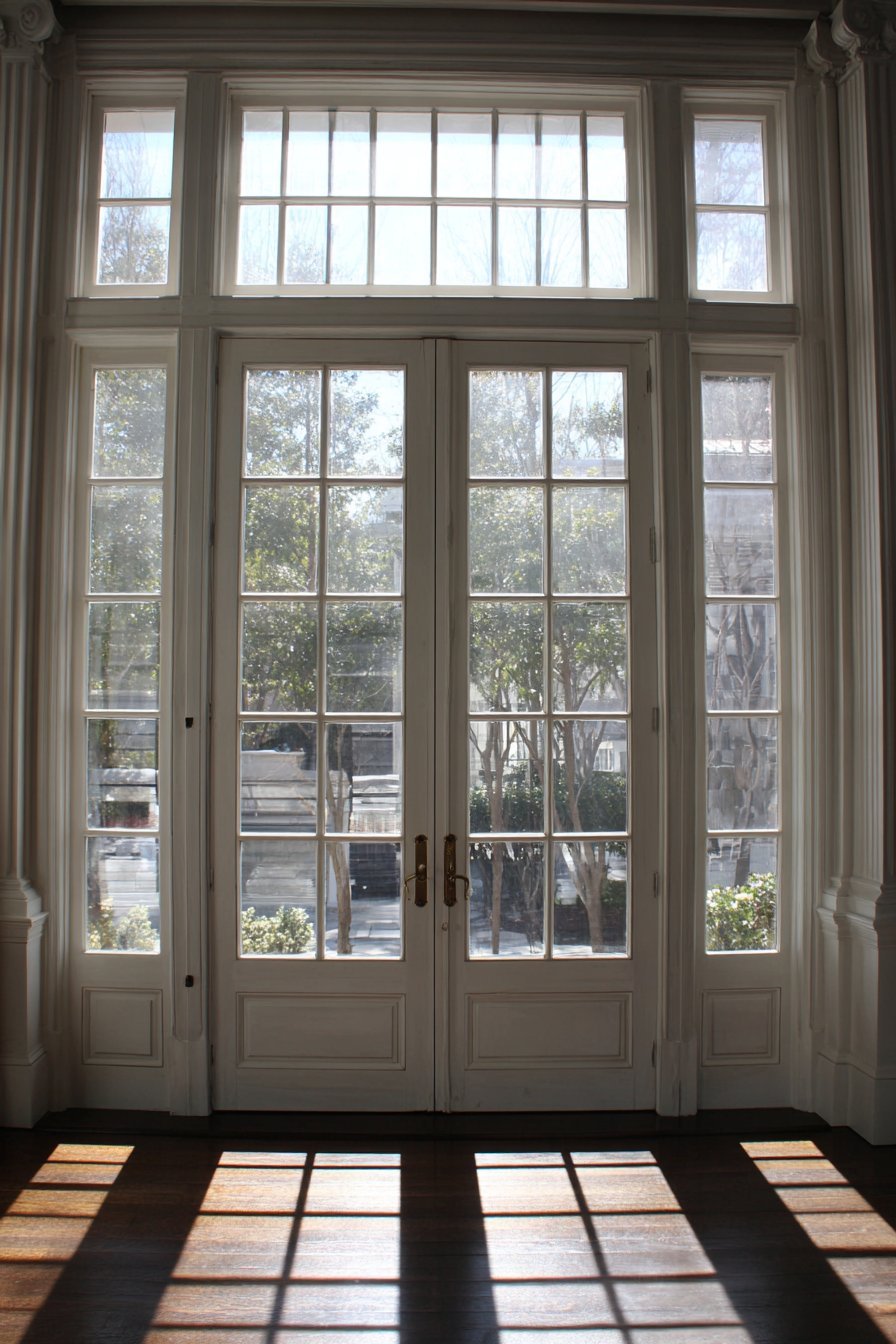
European sophistication finds residential application in this French-inspired entrance. Full-length glass panels divided by slender muntins create classic proportions. Old-growth Douglas fir construction with custom white paint finish. Hand-rubbed paint quality shows subtle texture and depth.
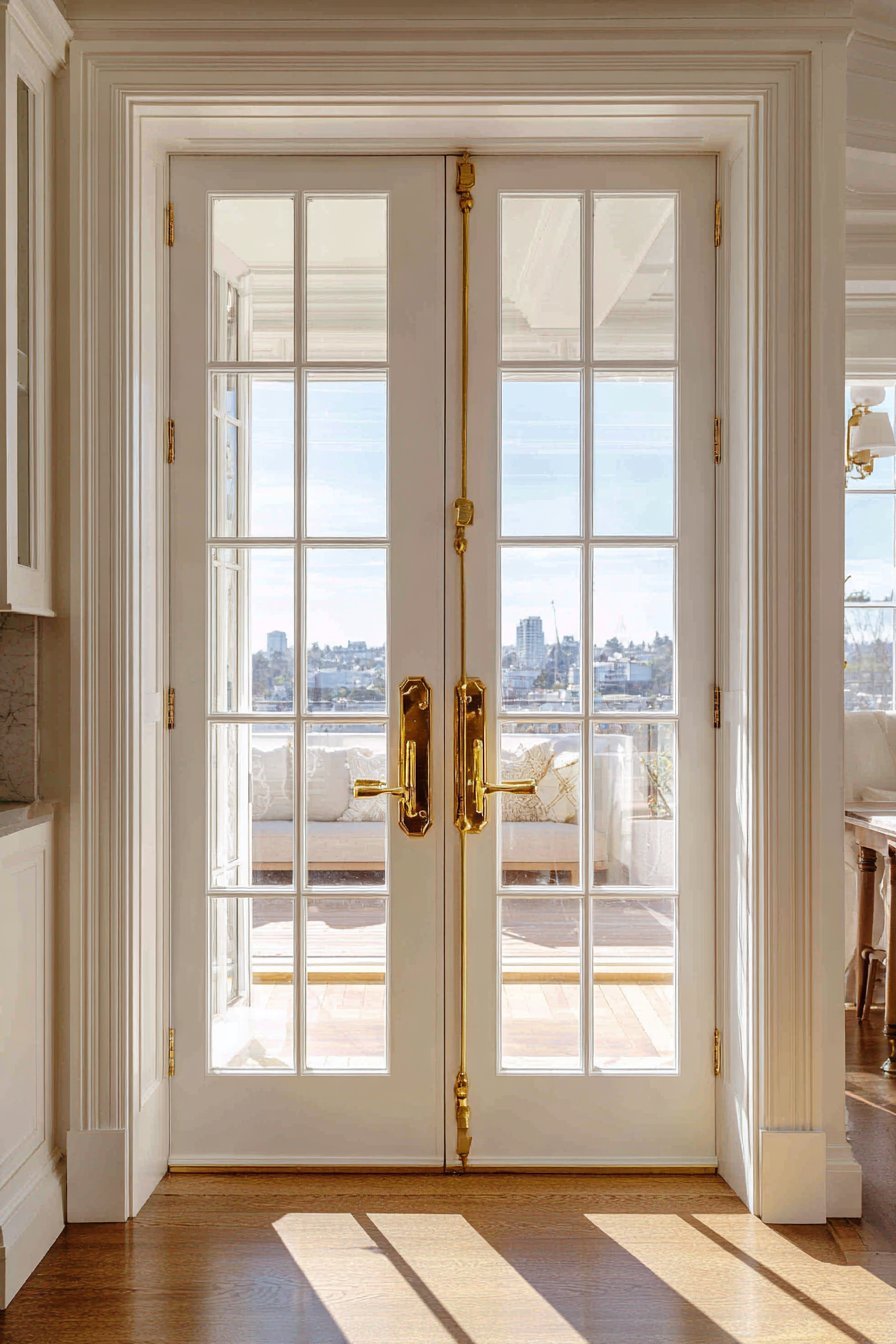
Authentic cremone bolt hardware in antique brass runs full door height. This traditional French hardware becomes functional sculpture. Individual glass panes use hand-blown restoration glass with subtle waves. These imperfections add character, impossible with modern float glass.
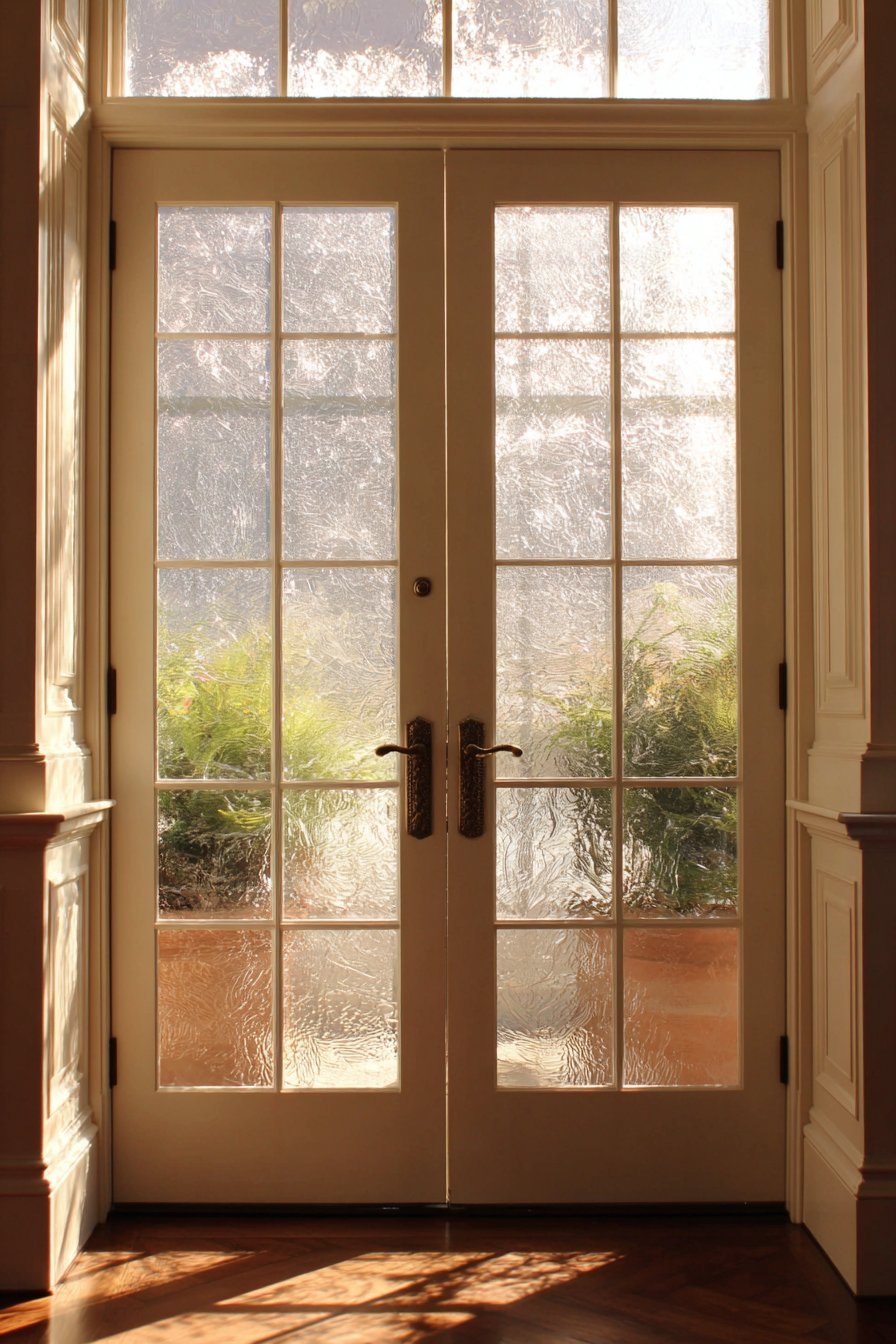
Limestone threshold and surrounding painted millwork complete French provincial aesthetic. Natural backlight creates a silhouette effect highlighting framework and glass divisions. The traditional proportions demonstrate refined European sensibilities. Each glass pane catches light differently throughout the day.
This design suits French-inspired homes, Francophiles, and lovers of European architecture. Authentic cremone bolts require proper installation for smooth operation. Hand-blown glass represents premium investment adding significant character. The design transports viewers to French countryside estates.
Key Design Tips:
- Select old-growth Douglas fir for stability and fine grain quality
- Commission hand-blown restoration glass for authentic character and light refraction
- Install authentic cremone bolt hardware ensuring proper adjustment and smooth operation
- Apply multiple thin paint coats with hand-rubbing for subtle texture depth
- Choose limestone or bluestone threshold materials appropriate to French aesthetic
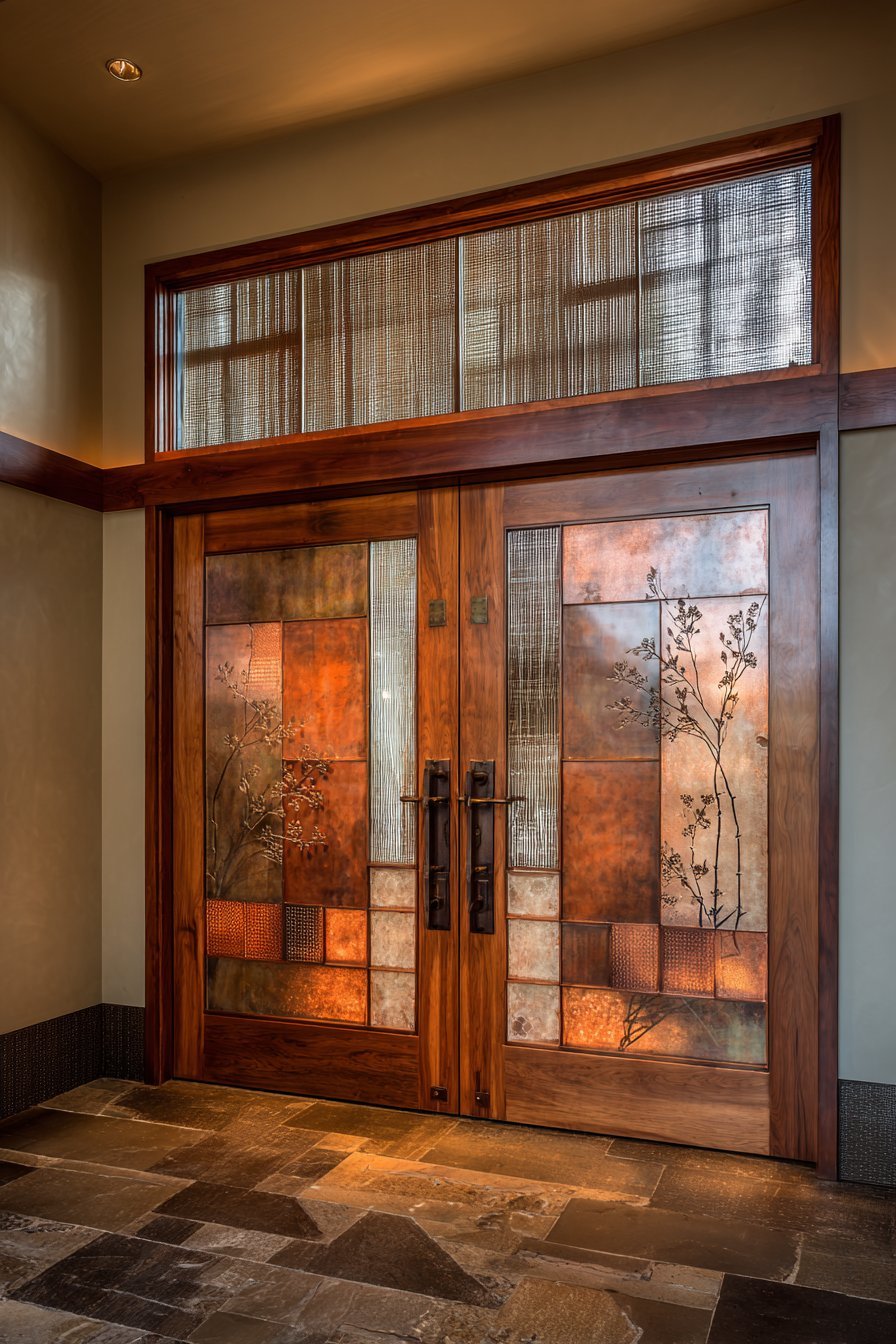
24. Asian Fusion Bronze Relief Panels
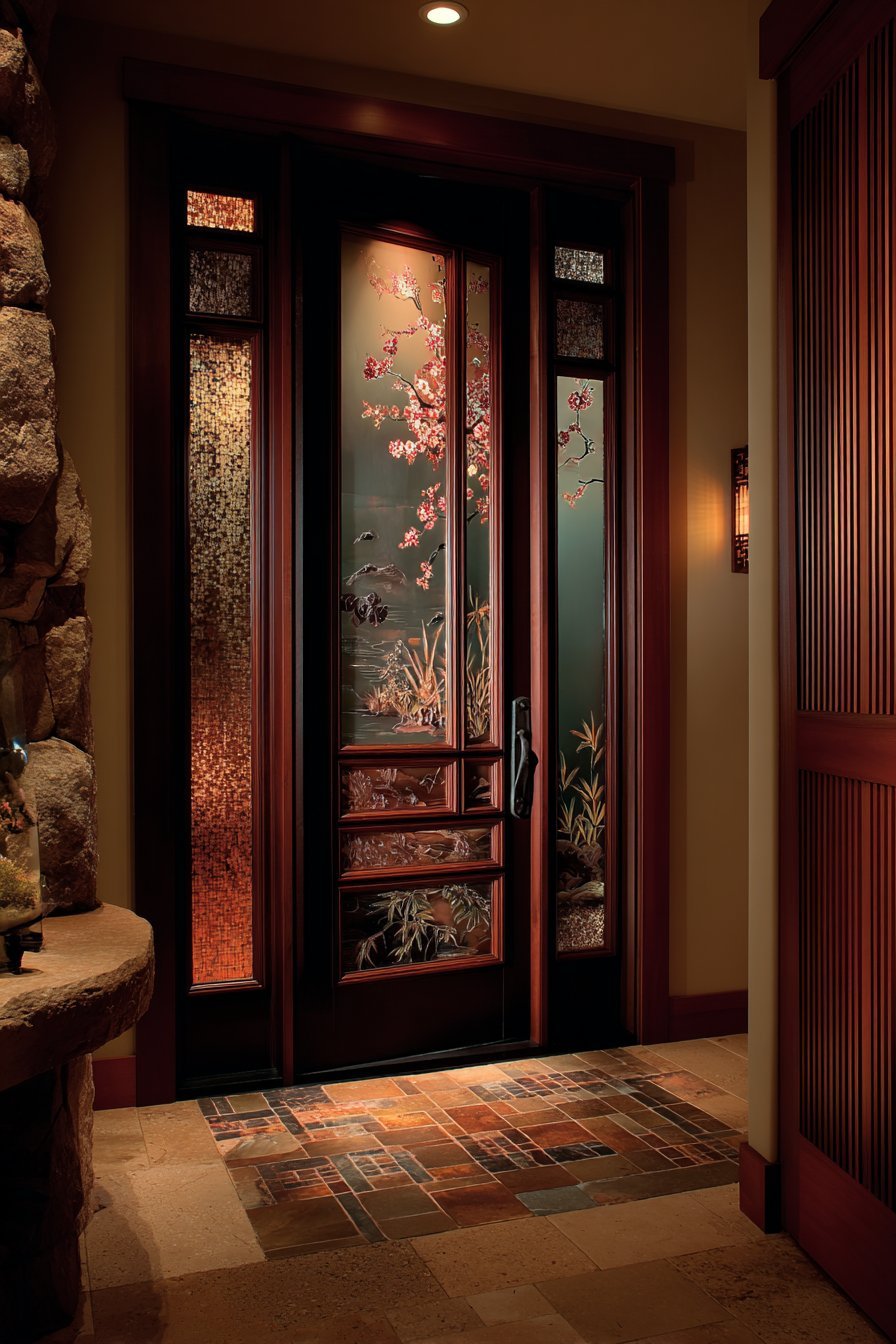
East-meets-West design synthesis creates sophisticated contemporary entrance. Dark-stained mahogany framework provides structural elegance and rich color. Decorative bronze panels feature raised relief nature motifs including bamboo. Cherry blossoms add seasonal and cultural symbolism to composition.
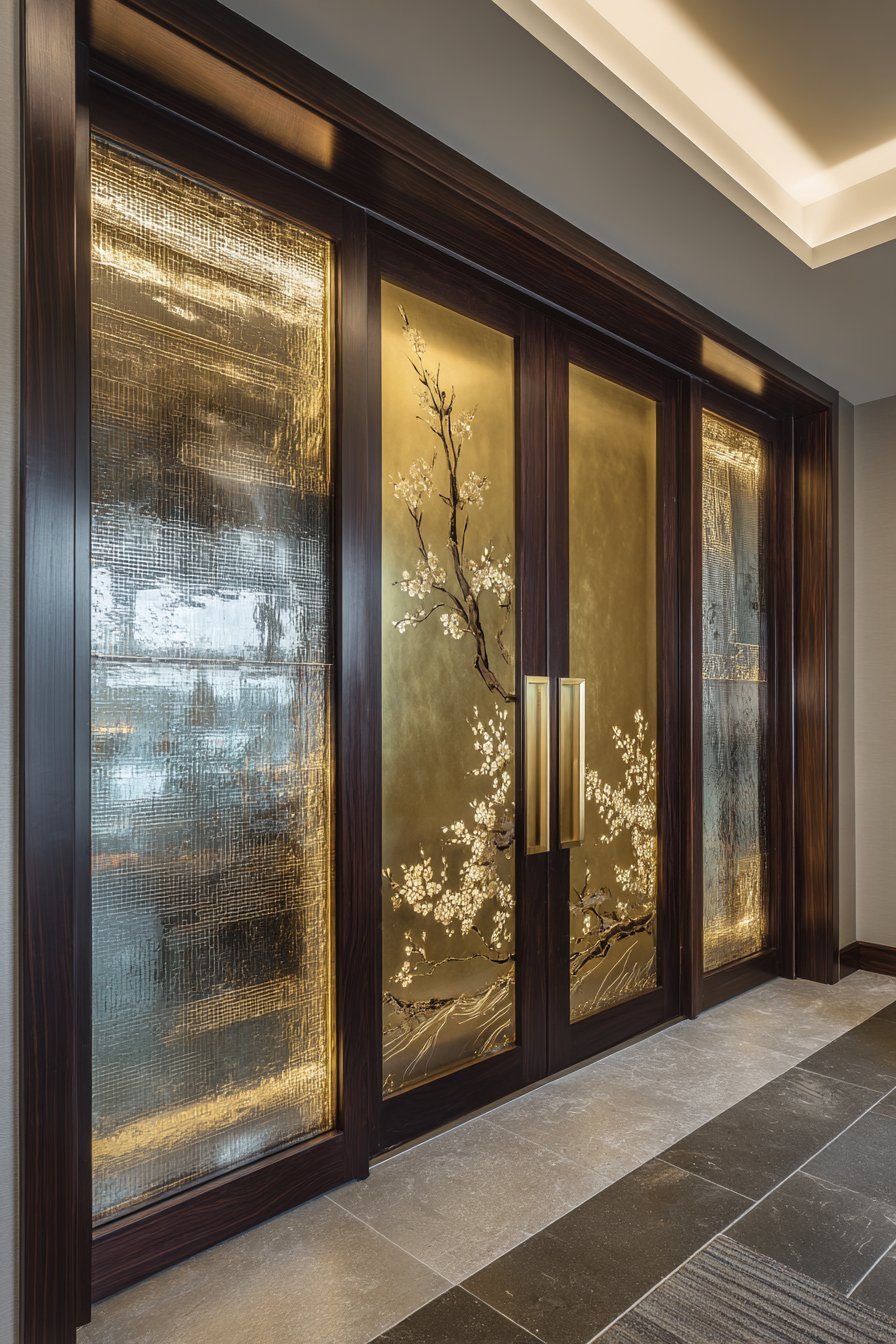
The design balances solid privacy panels with translucent bronze mesh sections. This allows filtered light while maintaining enclosure. Custom bronze hardware echoes the door panel nature designs. Stone tile flooring with Asian-inspired patterns grounds the entrance.
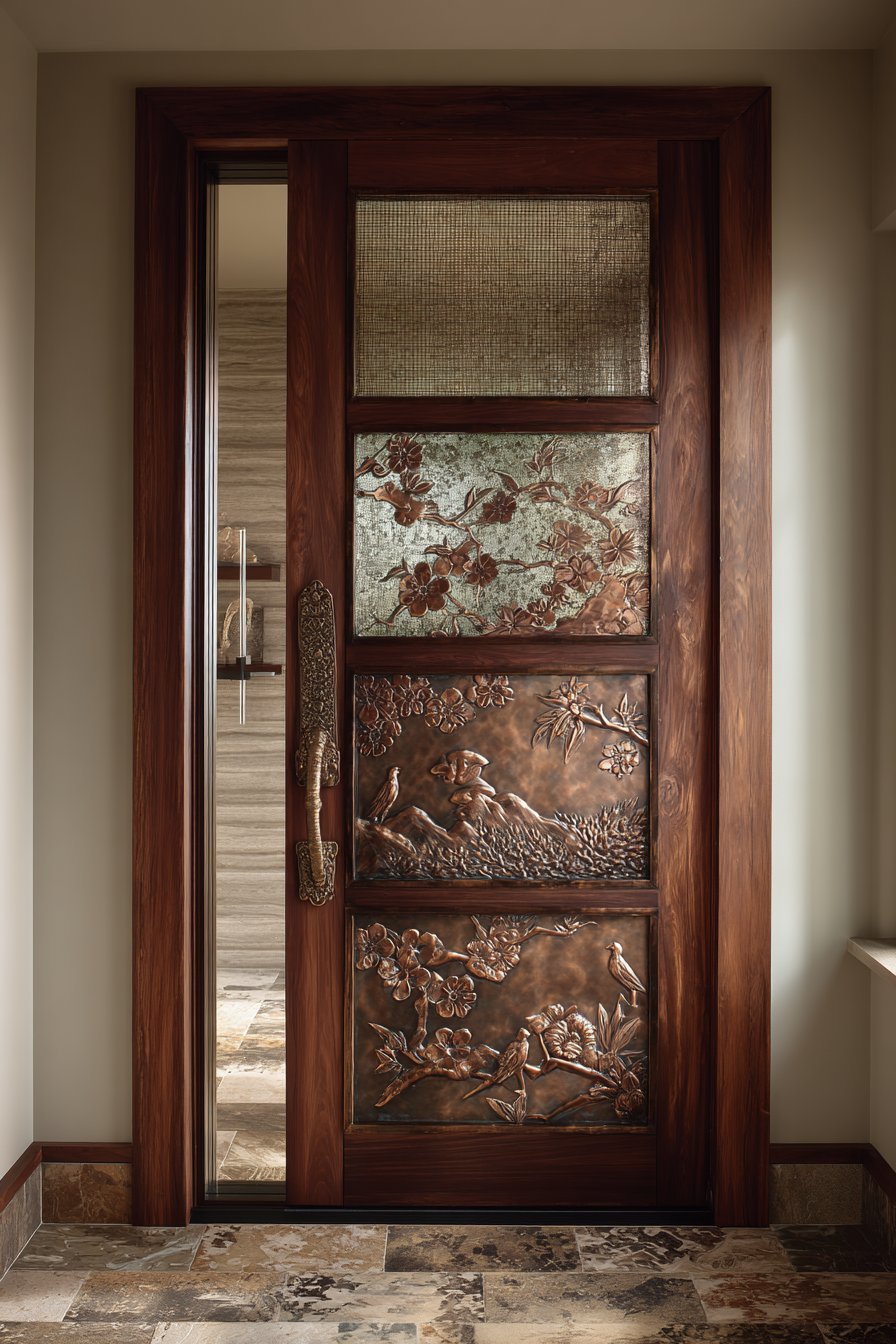
Minimalist surrounding walls allow the door to dominate as focal point. Ambient lighting from concealed sources creates dramatic relief across bronze panels. The dimensional relief work demonstrates traditional metalworking skills. Nature motifs connect interior to outdoor world symbolically.
This design suits homes embracing global design synthesis and cultural fusion. The bronze relief work requires skilled metalworking artisans. The mahogany framework should complement rather than compete with bronze panels. This entrance bridges Eastern and Western design traditions successfully.
Key Design Tips:
- Commission bronze relief work from artisans experienced in Asian decorative motifs
- Balance solid and translucent sections for privacy with natural light admission
- Coordinate mahogany stain tone with bronze patina for cohesive color palette
- Install concealed lighting, emphasizing bronze relief dimensional qualities
- Incorporate complementary Asian design elements in surrounding entry space
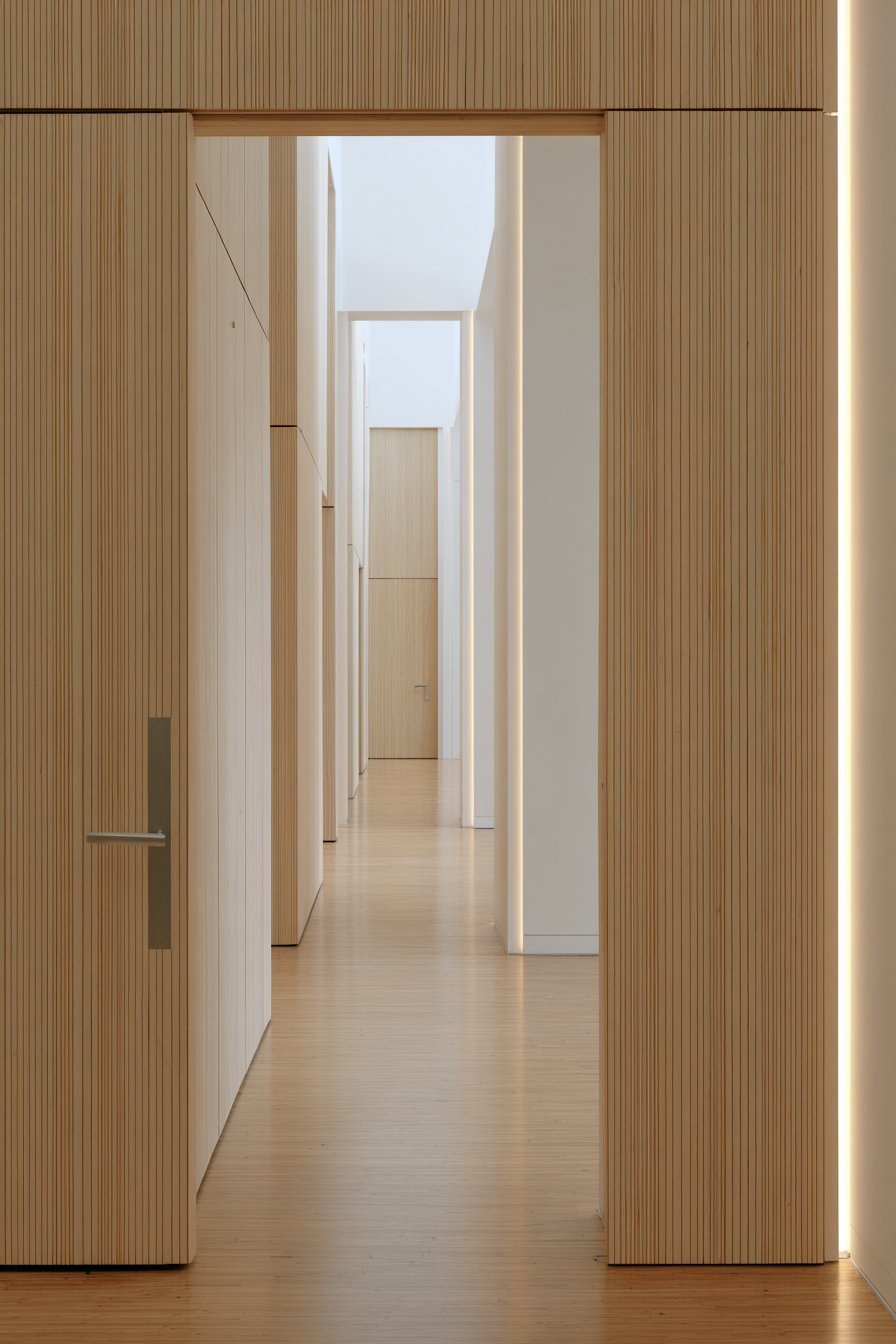
25. Vertical-Grain Douglas Fir Minimalist
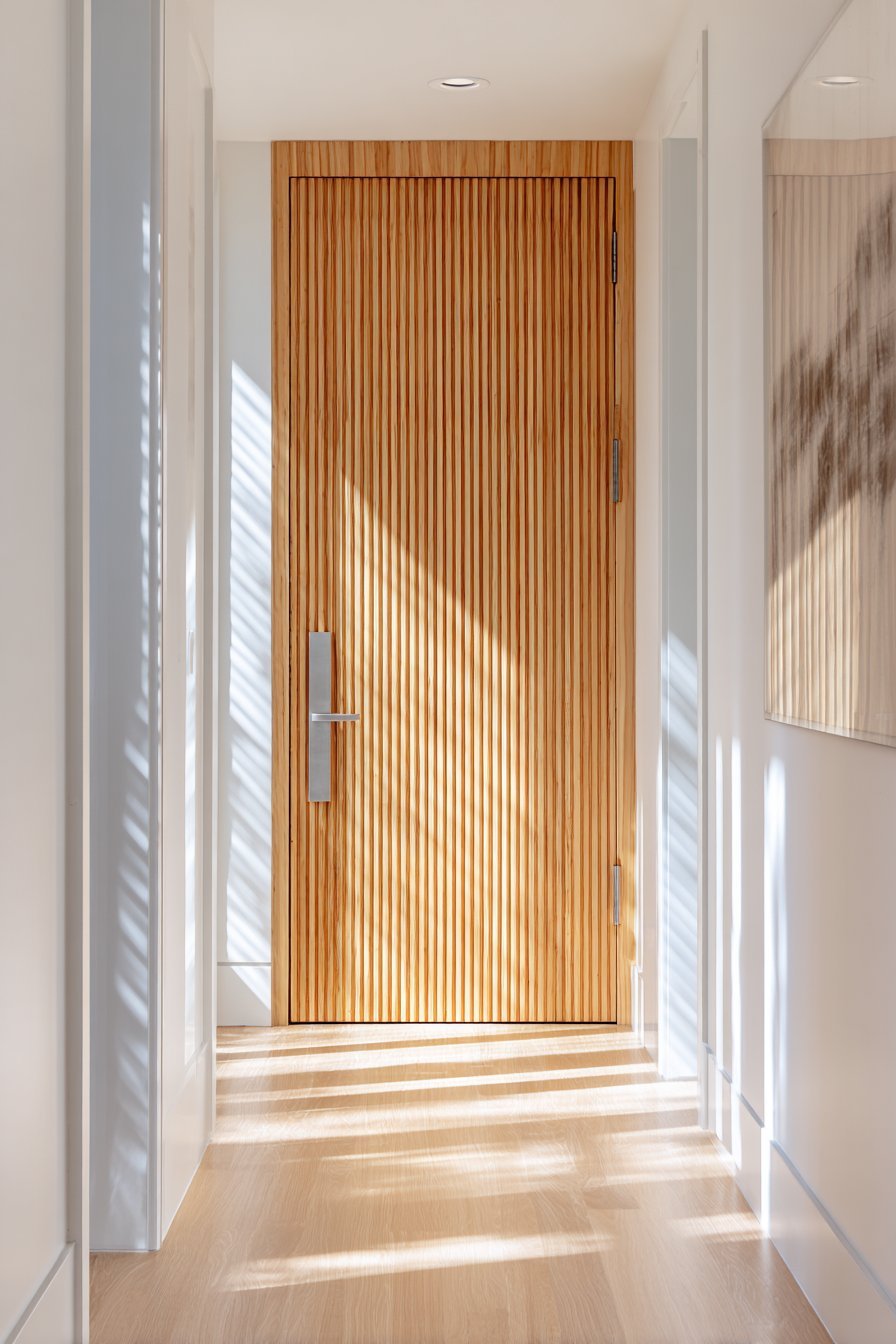
Material purity defines this contemporary minimalist entrance approach. Vertical-grain Douglas fir with rift-cut pattern shows straight grain lines. Natural clear finish with matte polyurethane displays pale honey color. Ultra-minimalist stainless steel hardware includes simple horizontal pull bar.
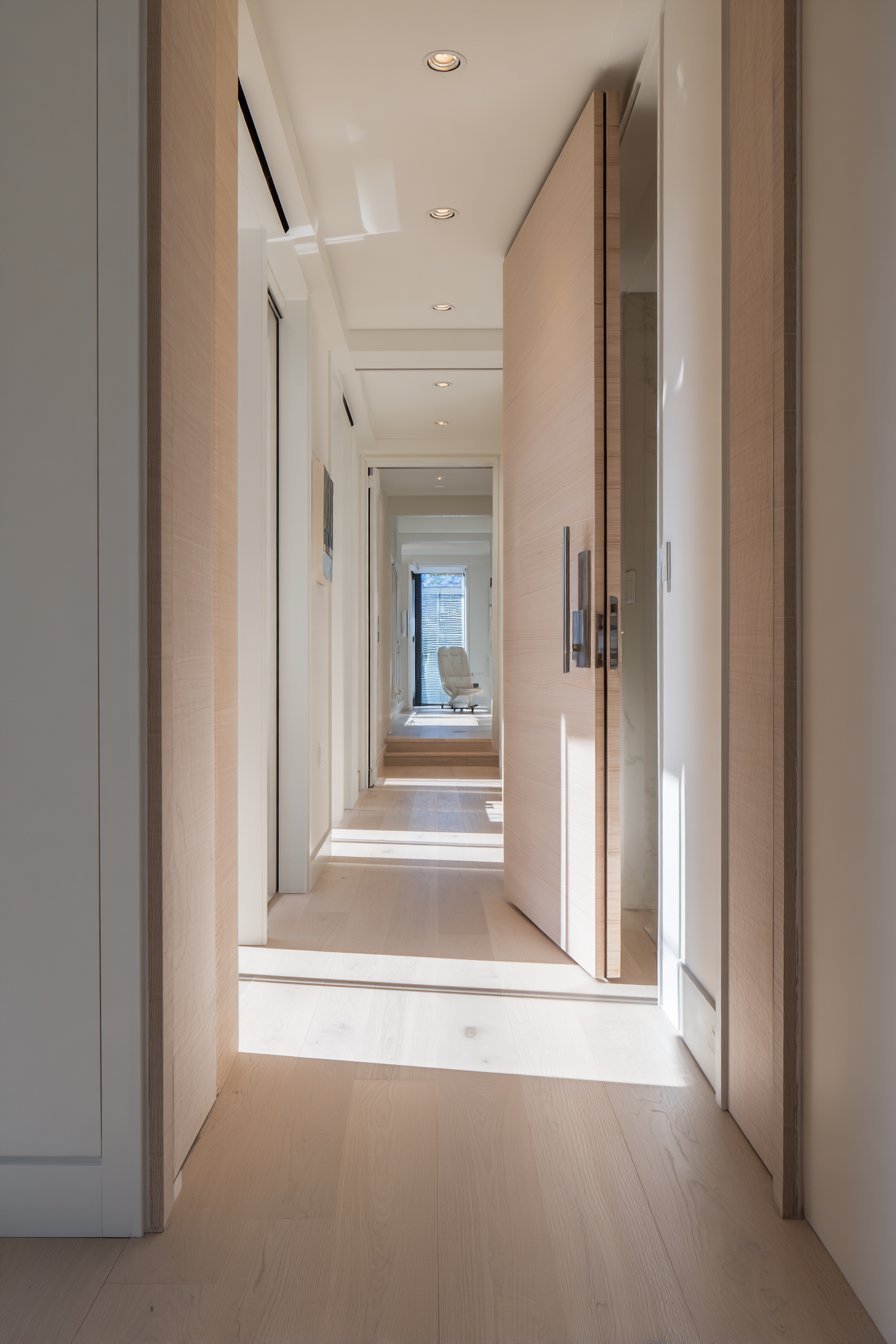
Concealed European hinges eliminate visible hardware maintaining clean aesthetic. The door’s 9-foot height emphasizes vertical grain pattern dramatically. Surrounding white walls and light oak flooring maintain a minimalist palette. Soft diffused natural lighting runs along grain lines creating subtle shadow play.
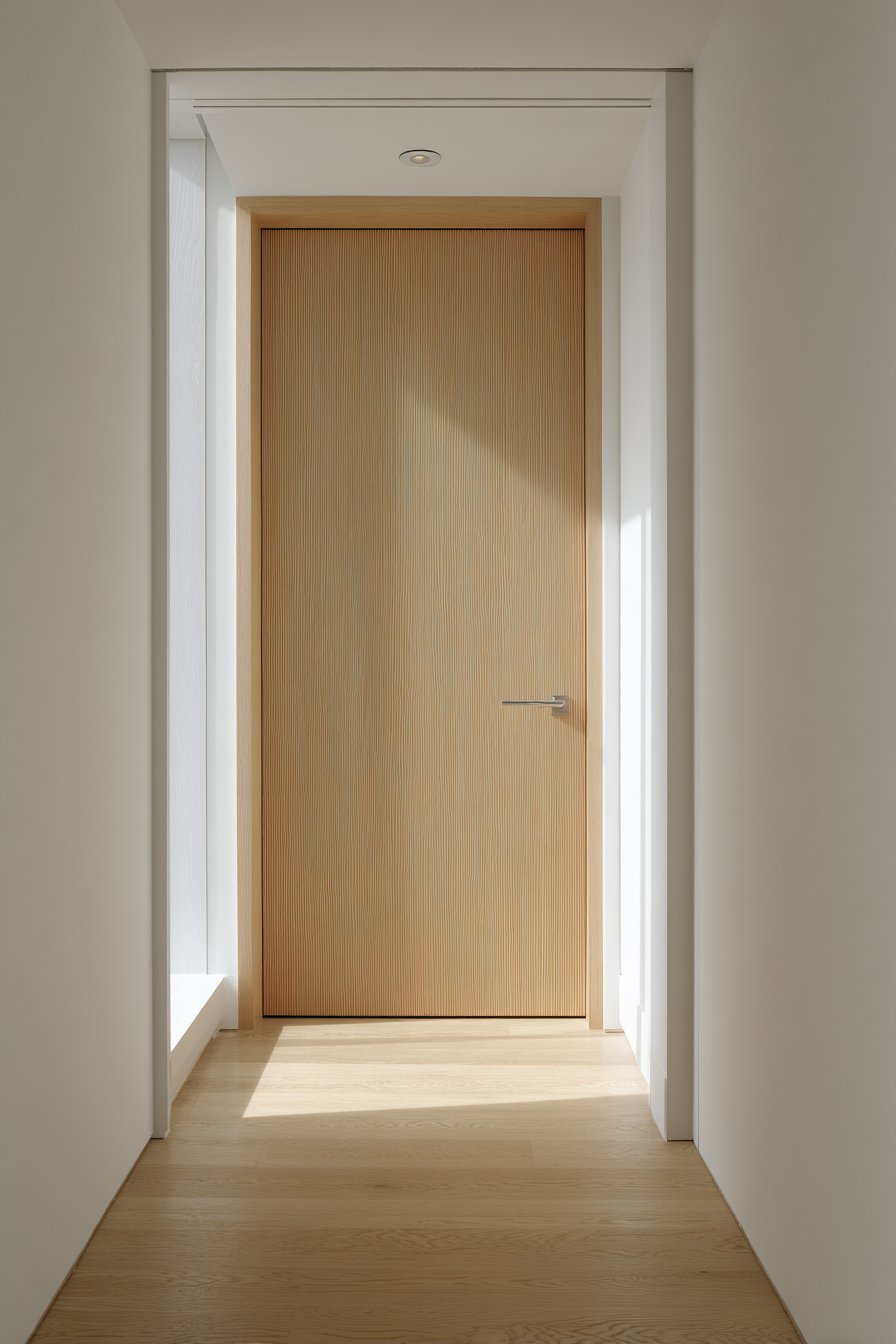
The rift-cut pattern ensures perfectly straight grain without variation. This precision suits minimalist aesthetic’s demand for visual calm. Matte polyurethane protects without glossy distraction. The material speaks for itself without ornamental interference.
This design suits contemporary minimalist homes, Scandinavian-influenced spaces, and material purists. Achieving straight grain requires careful lumber selection and cutting. The minimalist approach demands flawless execution since flaws have nowhere to hide. This entrance demonstrates “less is more” philosophy.
Key Design Tips:
- Specify rift-cut vertical-grain Douglas fir for perfectly straight grain pattern
- Apply matte finish protecting wood while avoiding glossy appearance
- Install concealed European hinges, maintaining an uninterrupted, clean door surface
- Maximize natural light, emphasizing wood’s natural grain pattern and honey tones
- Maintain minimal hardware and ornamentation letting material quality dominate
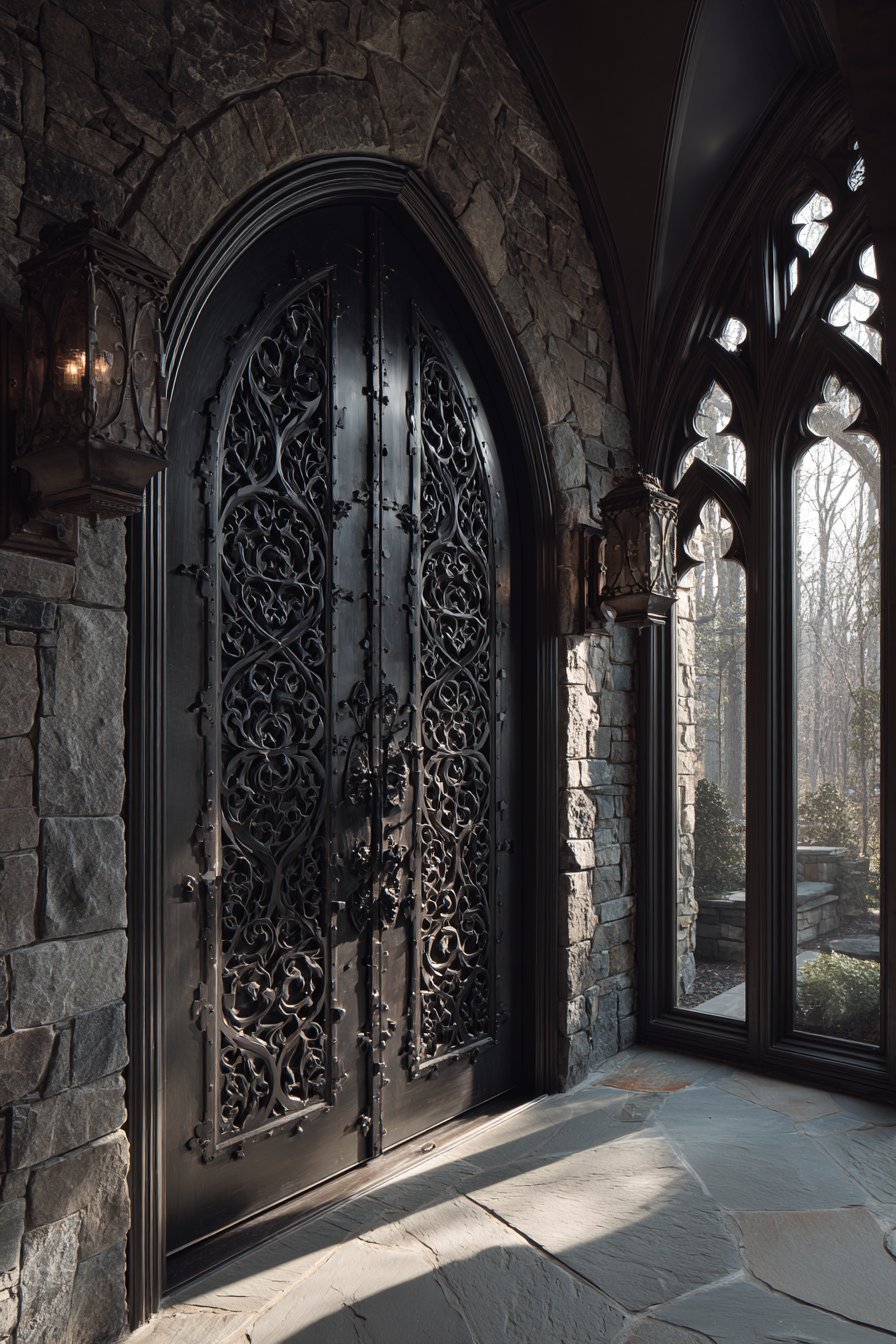
26. Gothic Revival with Carved Tracery
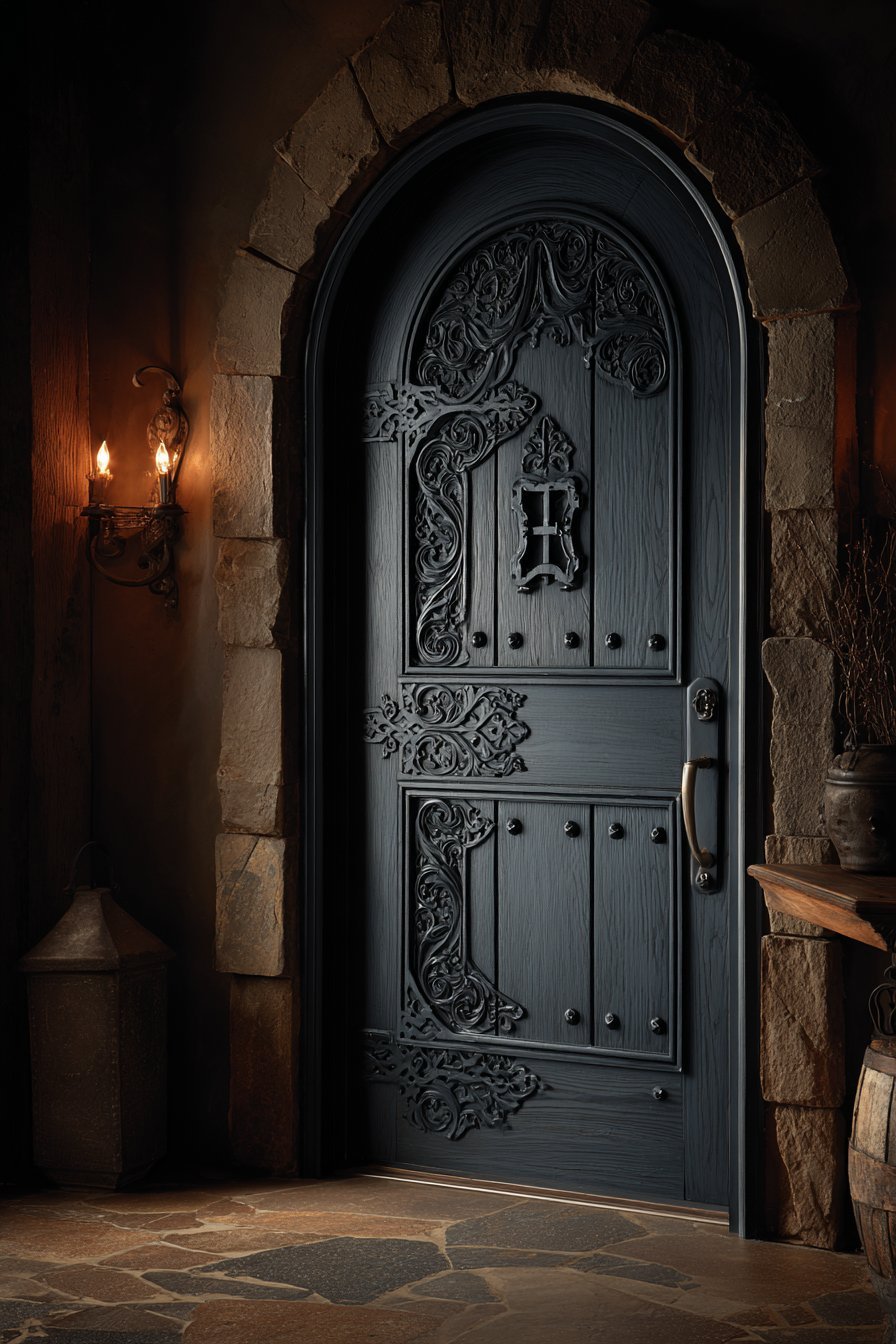
Medieval inspiration creates dramatic romantic entrance in this Gothic design. Arched solid oak door features hand-carved Gothic tracery patterns. Iron strap hinges with decorative fleur-de-lis terminals reference medieval construction. Traditional milk paint in deep charcoal gray shows subtle brush strokes.
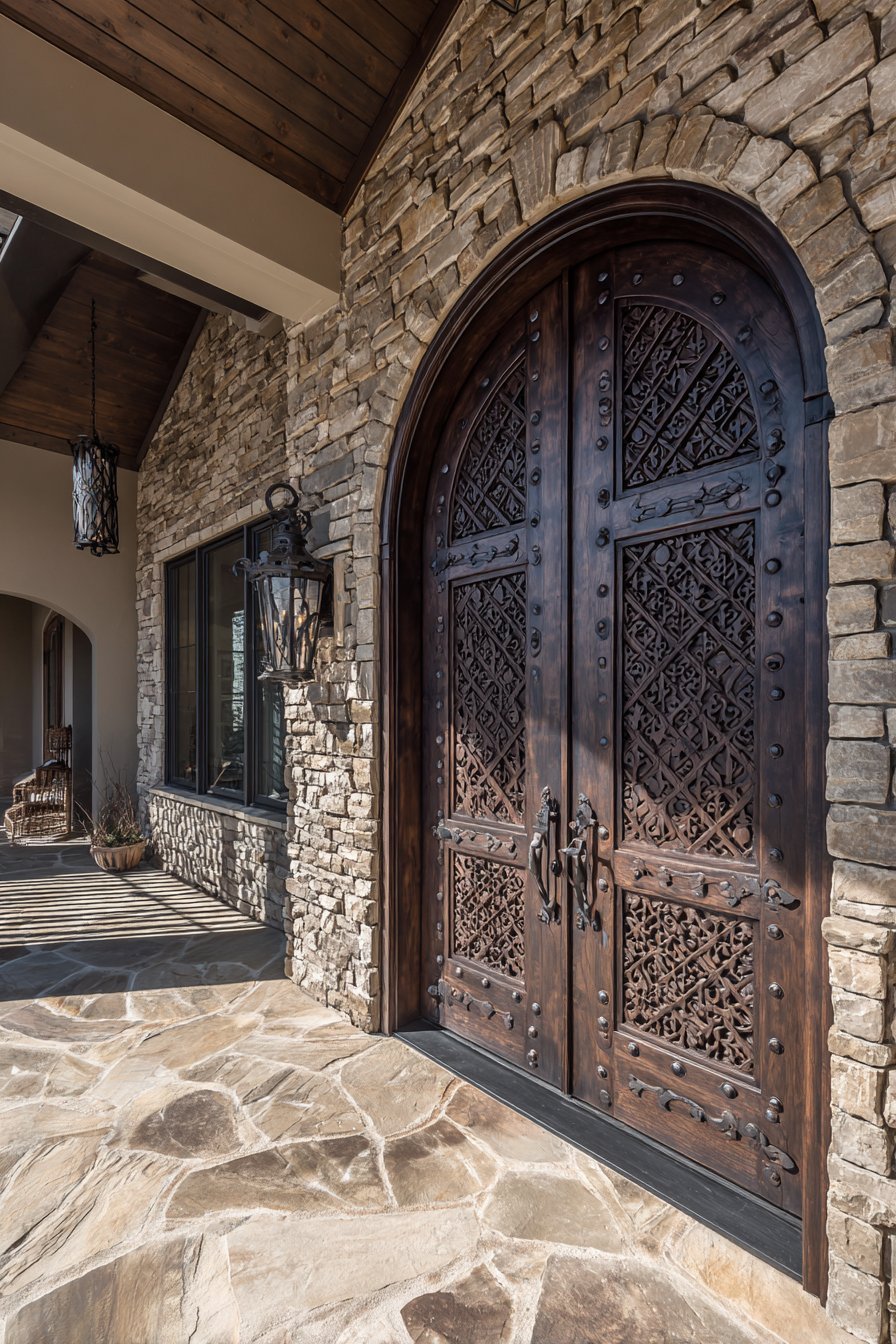
Wrought iron hardware includes Gothic-style ring pull and decorative nail heads. The working strap hinges function as structural elements and design features. Surrounding stone archway and flagstone flooring complete medieval aesthetic. Dramatic side lighting creates deep shadows in carved tracery.
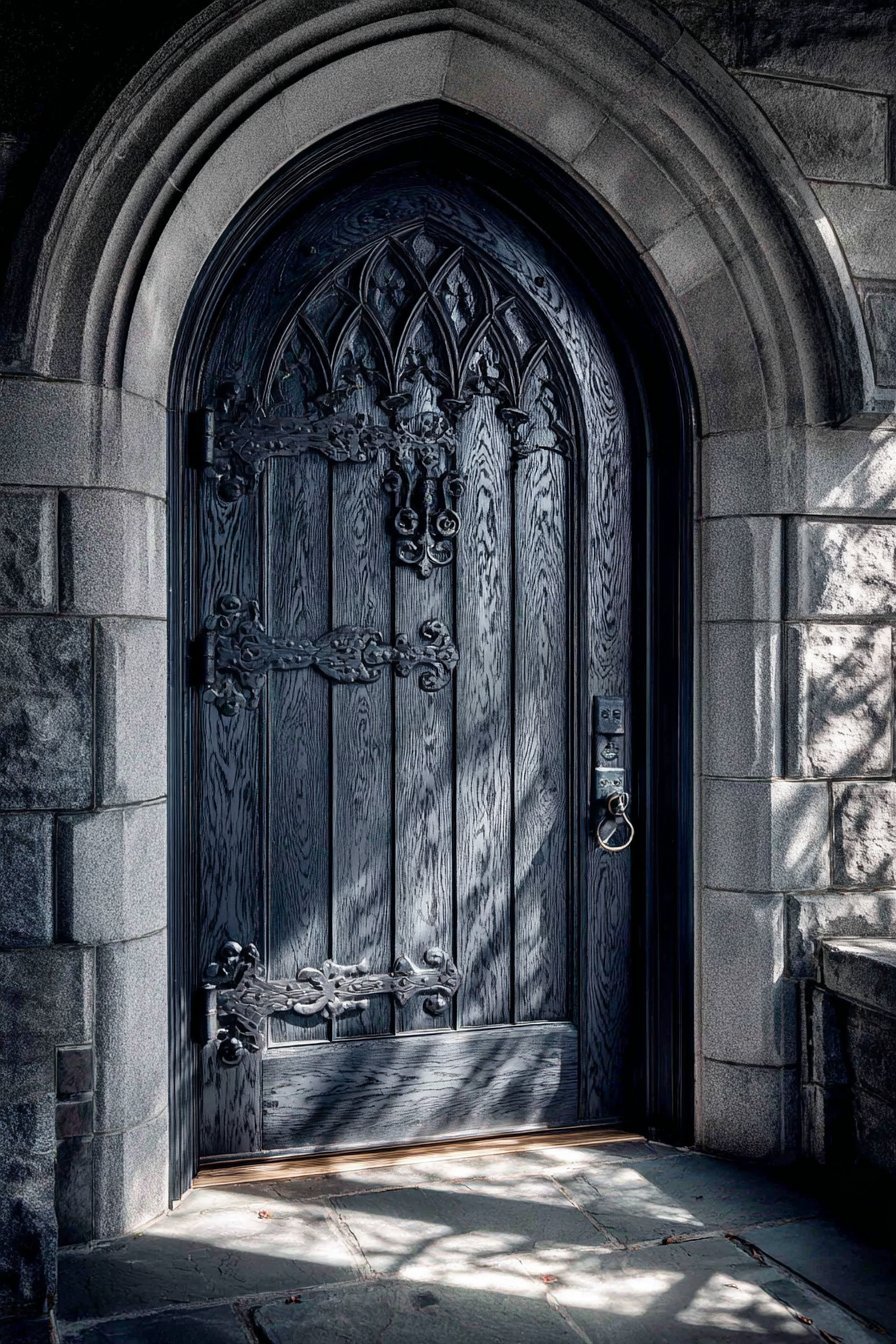
The hand-carved tracery demonstrates traditional woodworking skills nearly lost. Each pointed arch and quatrefoil receives individual attention. The milk paint finish creates authentic aged appearance. Wrought iron develops natural patina adding to period character.
This design suits Gothic Revival homes, romantic architecture enthusiasts, and historical purists. Authentic execution requires craftspeople understanding Gothic architectural vocabulary. The carved details demand regular maintenance preventing dust accumulation. This entrance evokes European cathedrals and medieval castles.
Key Design Tips:
- Commission woodcarvers familiar with Gothic architectural tracery patterns and proportions
- Apply traditional milk paint finish for an authentic period appearance and subtle texture
- Install hand-forged wrought iron hardware with proper Gothic decorative terminals
- Ensure stone archway surrounds use appropriate medieval masonry techniques
- Light dramatically emphasizes carved depth and creating atmospheric shadows
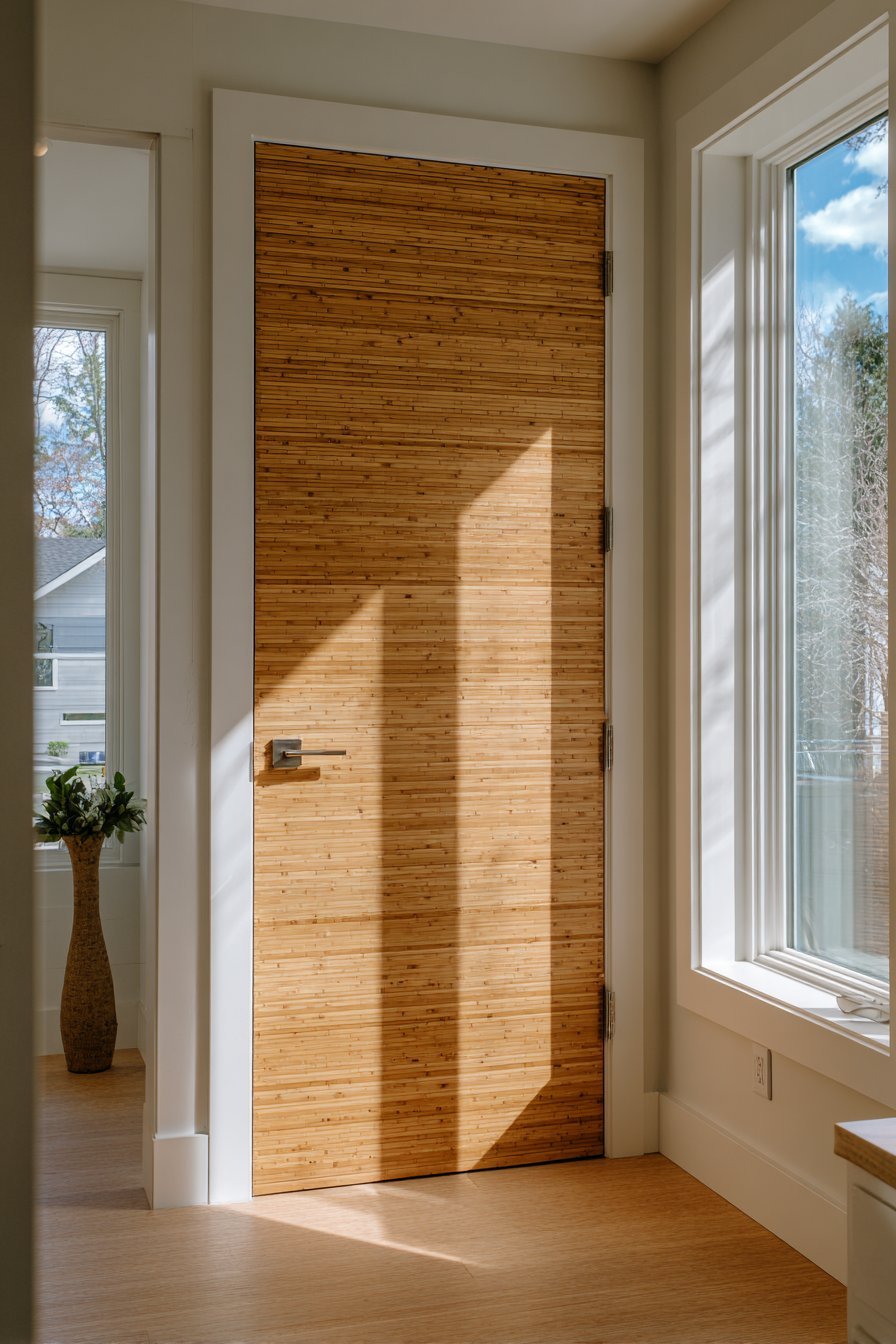
27. Sustainable Bamboo Contemporary
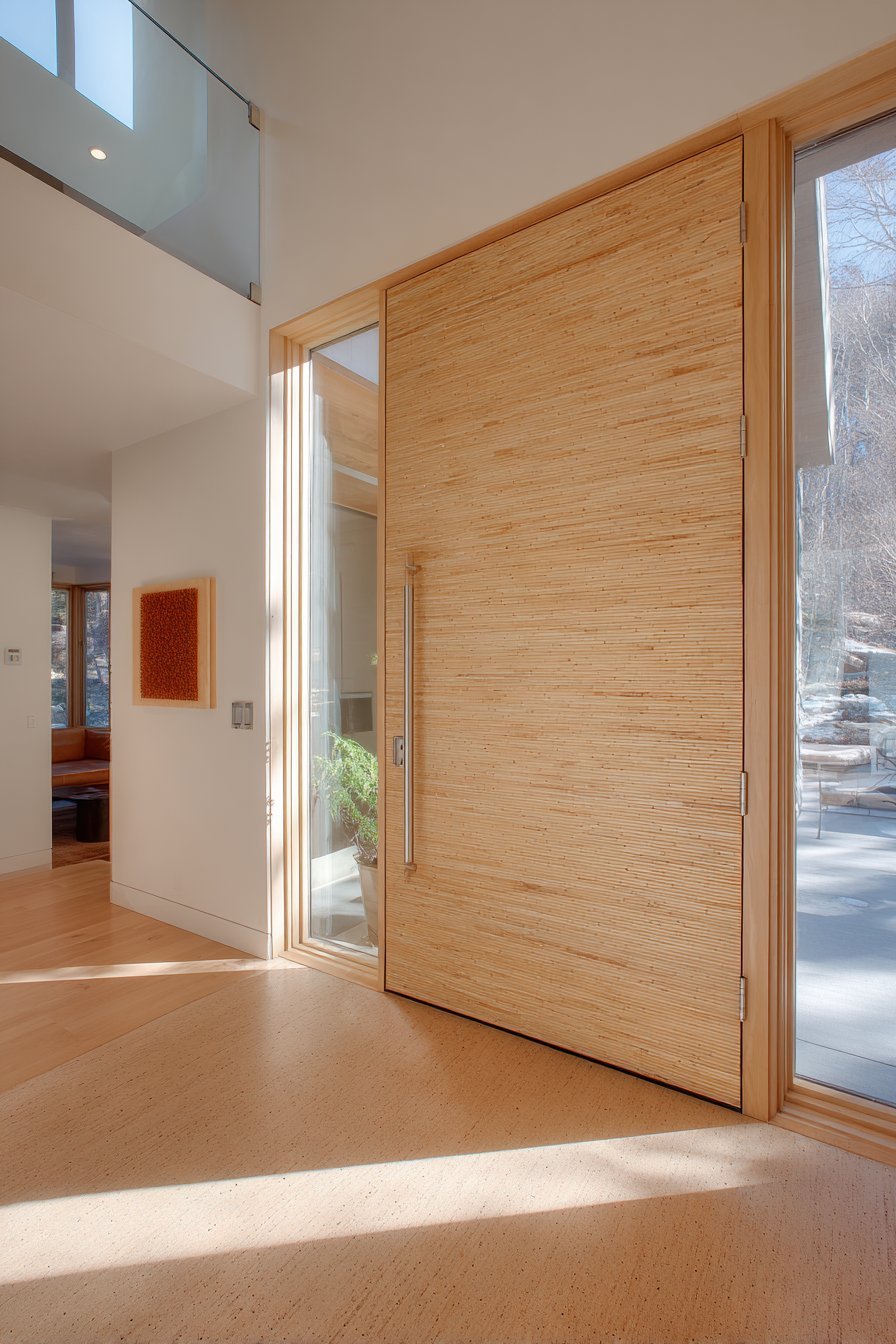
Environmental responsibility meets contemporary luxury in this bamboo entrance. Horizontal plank construction shows bamboo’s natural node patterns clearly. The blonde coloring creates light bright entrance aesthetic. Modern square-edge detailing emphasizes contemporary clean lines.
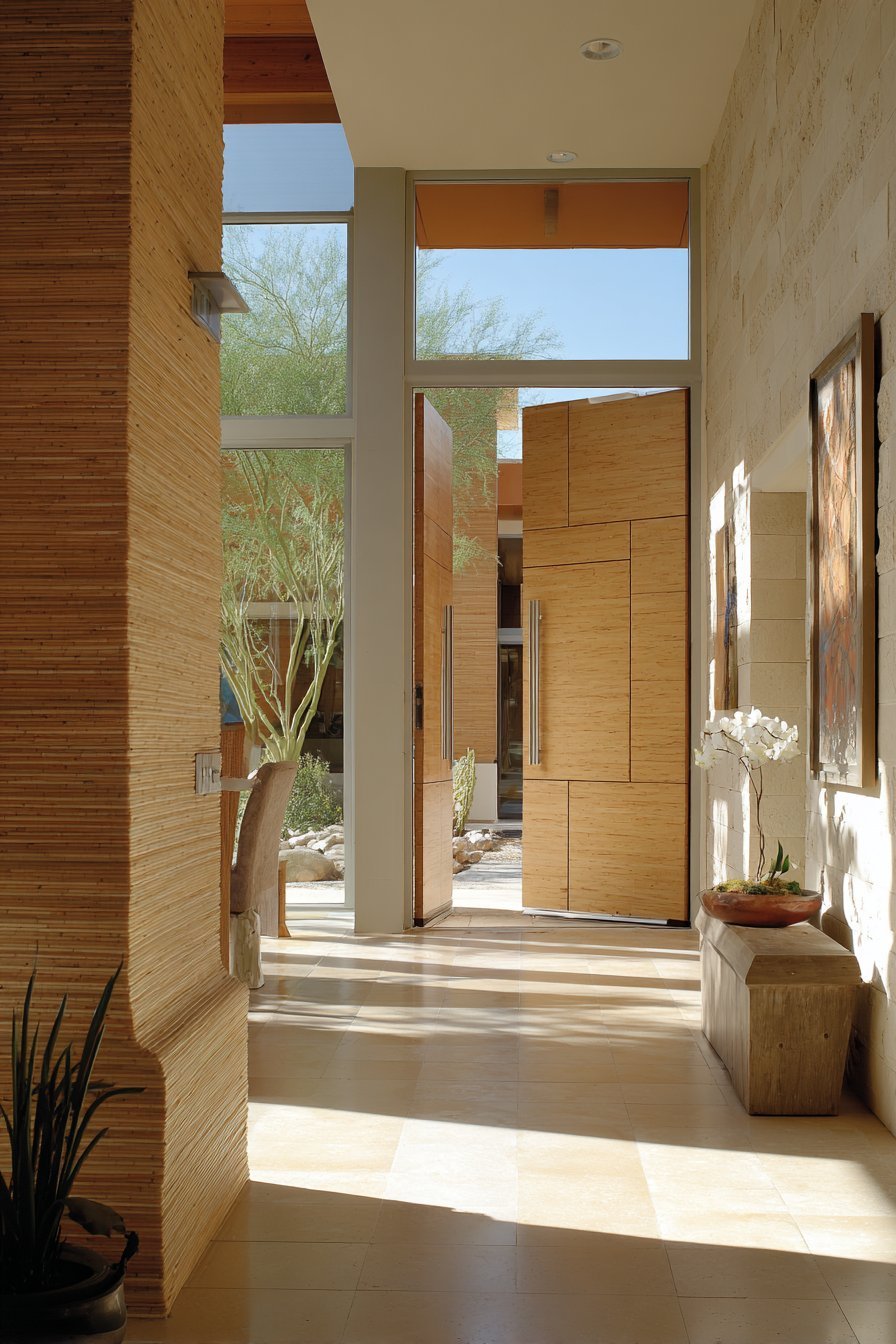
Concealed hinges maintain smooth uninterrupted surface appearance. Satin nickel hardware includes cylindrical door lever and matching deadbolt. Clear-coat finish protects while allowing bamboo’s texture to remain visible. Surrounding cork flooring and low-VOC painted walls emphasize eco-luxury.
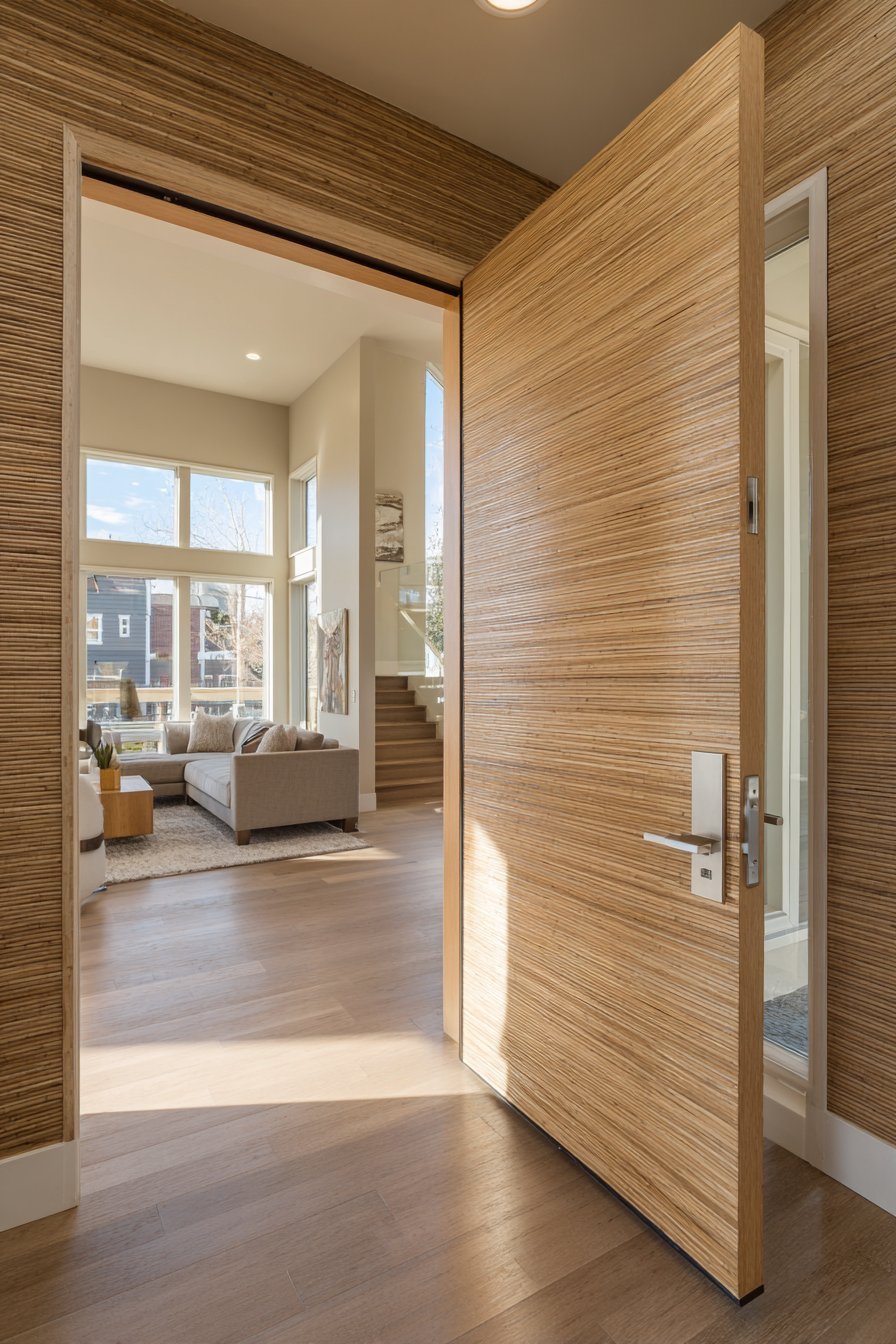
Natural daylight from adjacent windows highlights bamboo’s grain pattern. The sustainable material grows to harvest maturity rapidly compared to hardwoods. Bamboo’s natural hardness rivals traditional hardwood door materials. The eco-friendly approach doesn’t compromise luxury or durability.
This design suits environmentally conscious homeowners and LEED-certified construction projects. Bamboo represents rapidly renewable resource with lower environmental impact. The natural nodes create organic pattern unique to bamboo. This entrance makes statement about values and aesthetics simultaneously.
Key Design Tips:
- Source bamboo from certified sustainable operations ensuring responsible harvesting practices
- Apply clear-coat finish protecting bamboo while showcasing natural texture and nodes
- Choose contemporary square-edge details rather than traditional profiles for modern aesthetic
- Coordinate with other sustainable materials like cork flooring and low-VOC paints
- Educate visitors about bamboo’s environmental benefits and rapid renewability
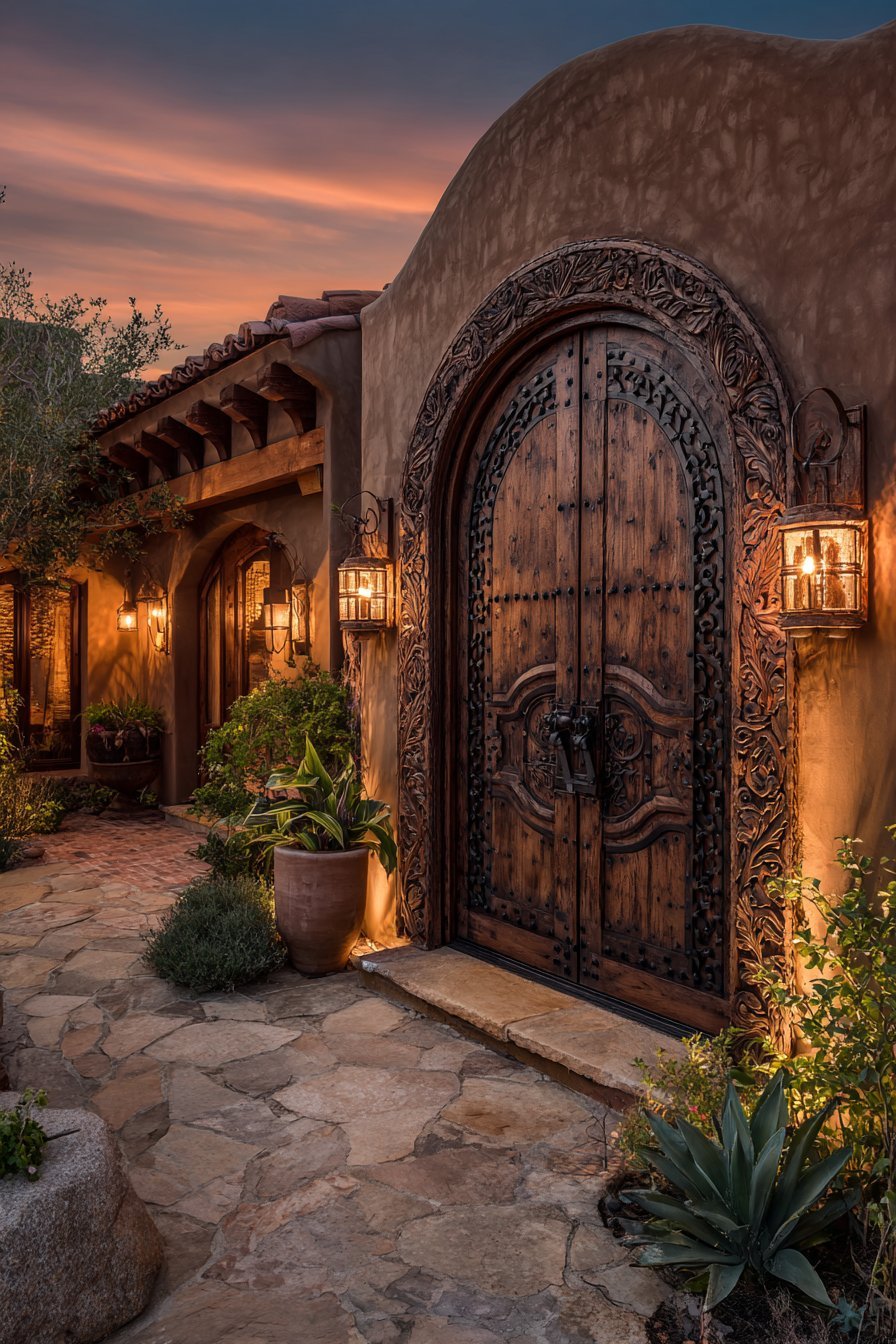
28. Spanish Colonial Mesquite with Iron Details
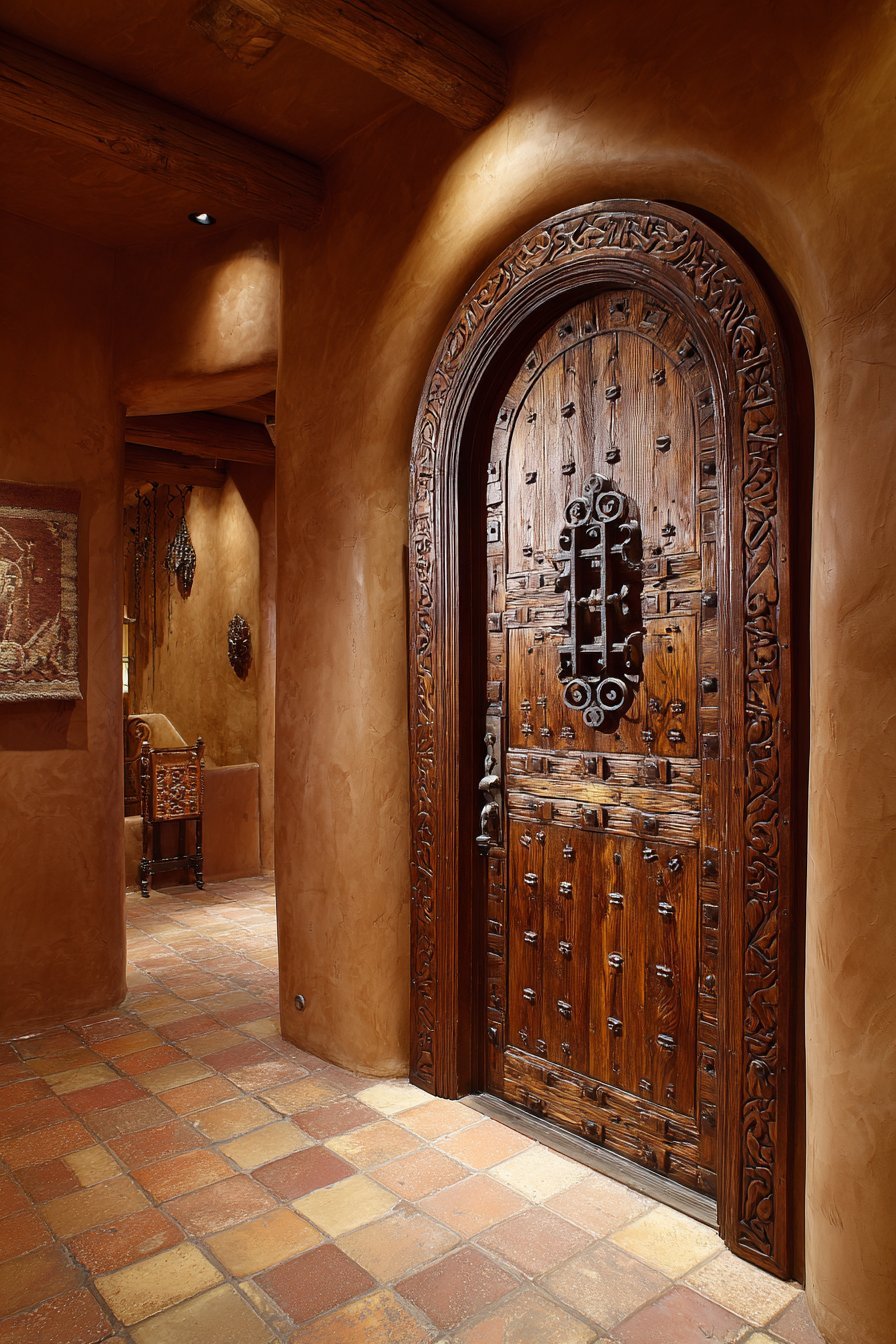
Southwestern luxury celebrates regional materials and handcrafted traditions. Carved solid mesquite with arched top references Spanish Colonial architecture. Decorative iron nail head patterns outline raised panels creating visual rhythm. Natural mesquite finish shows dramatic color variation naturally.
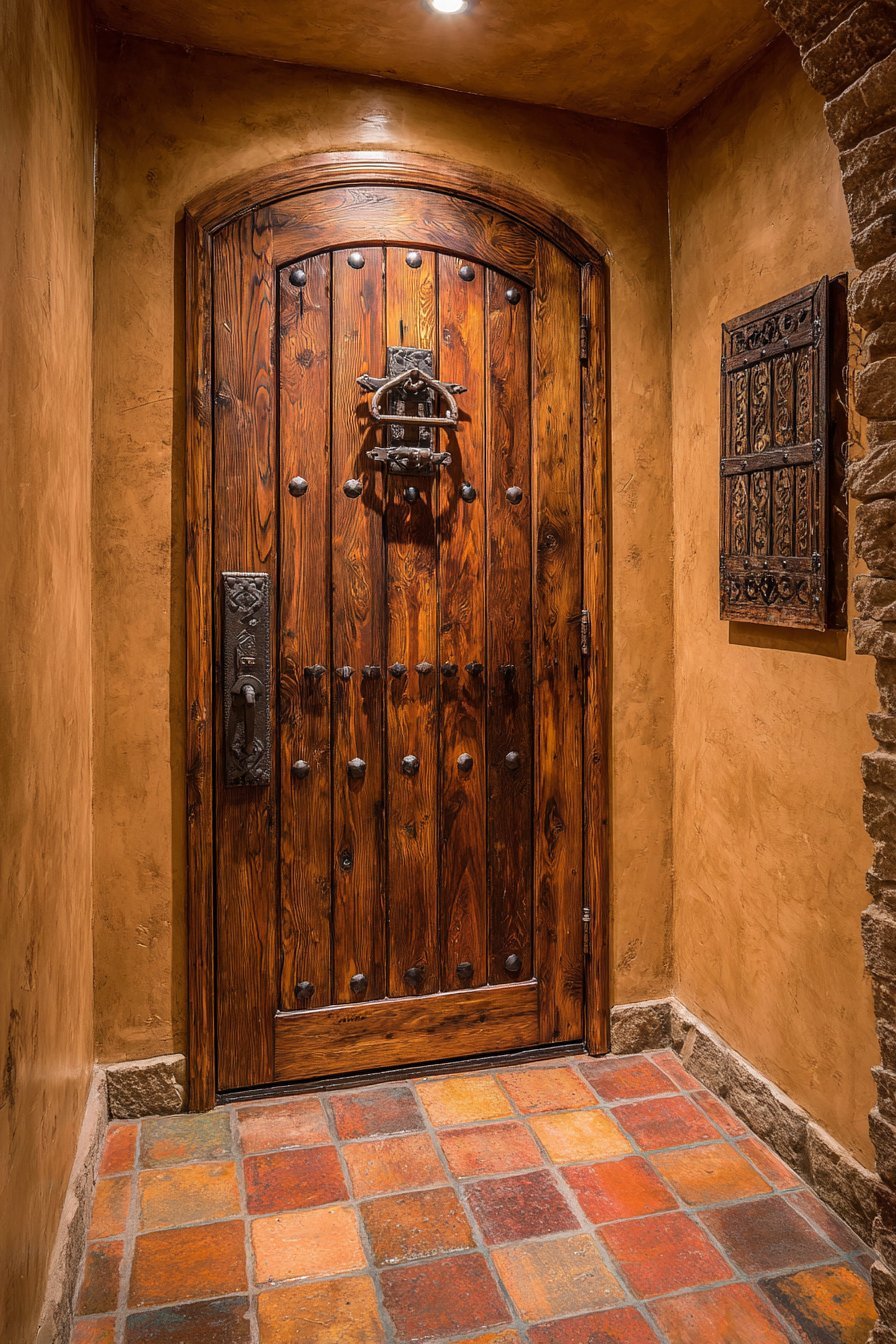
Hand-forged iron hardware includes substantial ring pull with authentic character. Decorative strap hinges and wrought iron speakeasy grille add functional ornamentation. Surrounding adobe-style walls in warm terracotta plaster complete aesthetic. Saltillo tile flooring extends Southwestern material palette.
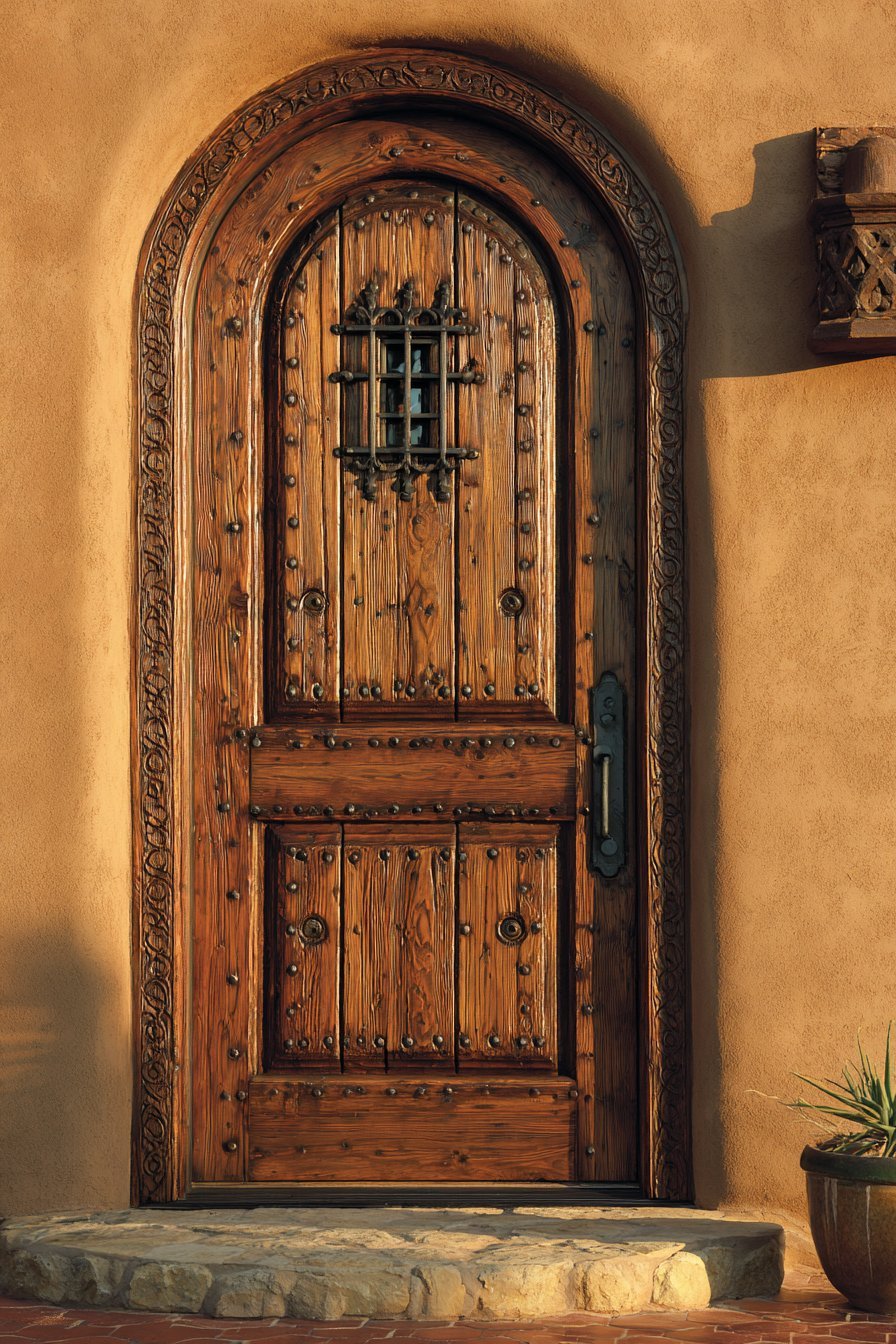
Golden hour lighting creates warm glow on mesquite’s varied wood tones. The color variation from cream sapwood to chocolate heartwood ensures uniqueness. Hand-forged iron develops patina adding authenticity and age. The carved details reference Spanish Colonial decorative traditions.
This design suits Southwestern homes, Spanish Colonial revivals, and regional architecture enthusiasts. Mesquite’s natural durability suits warm dry climates perfectly. The hand-forged iron requires skilled blacksmiths maintaining traditional techniques. This entrance celebrates American Southwest’s rich architectural heritage.
Key Design Tips:
- Select mesquite celebrating rather than hiding natural dramatic color variation
- Commission hand-forged iron hardware from blacksmiths understanding Spanish Colonial forms
- Apply natural finish protecting mesquite while showcasing wood’s distinctive character
- Coordinate terracotta plaster walls and saltillo tile extending Southwestern aesthetic
- Design covered entry protecting wood and iron from direct weather exposure
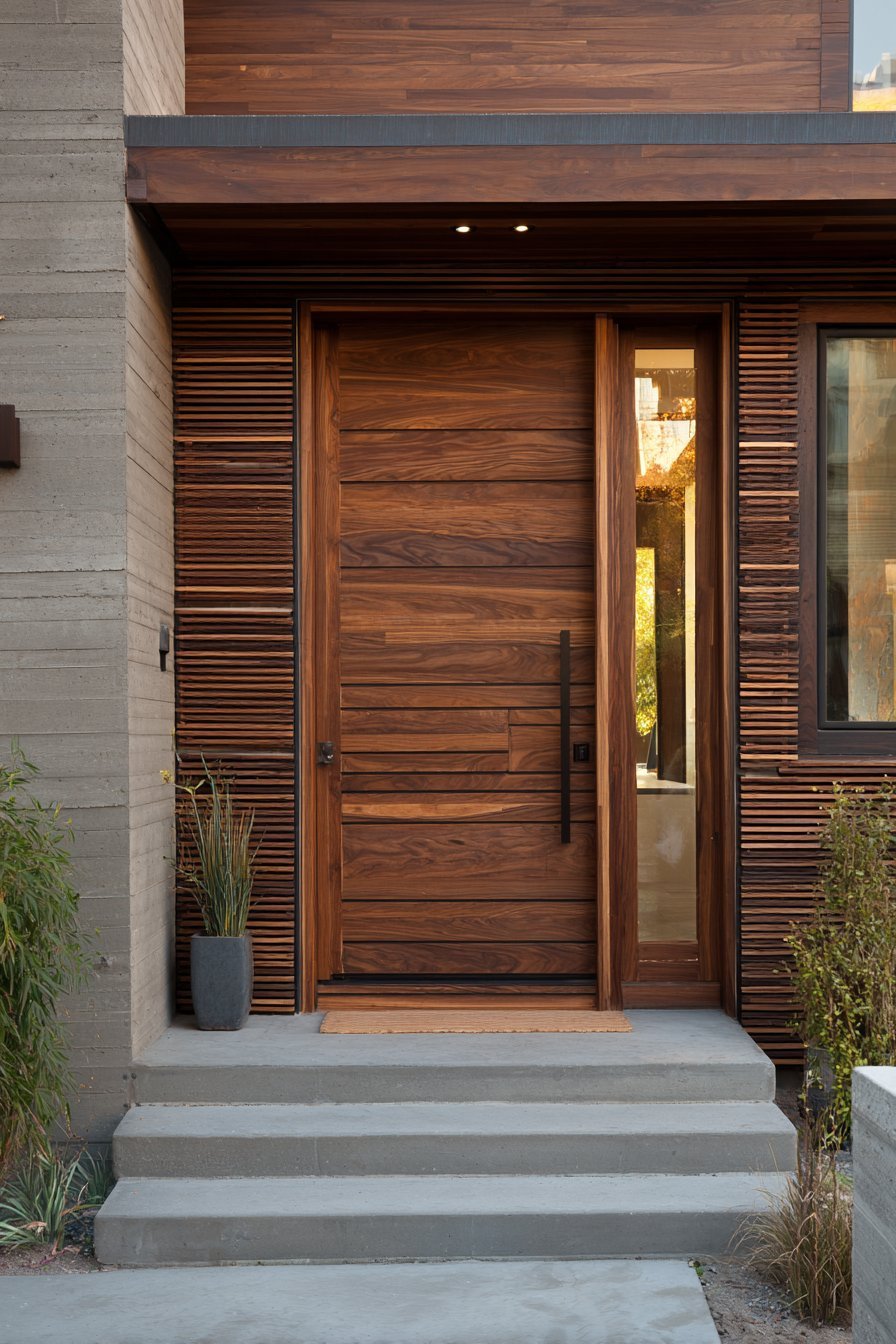
29. Contemporary Walnut with Integrated LED Strips
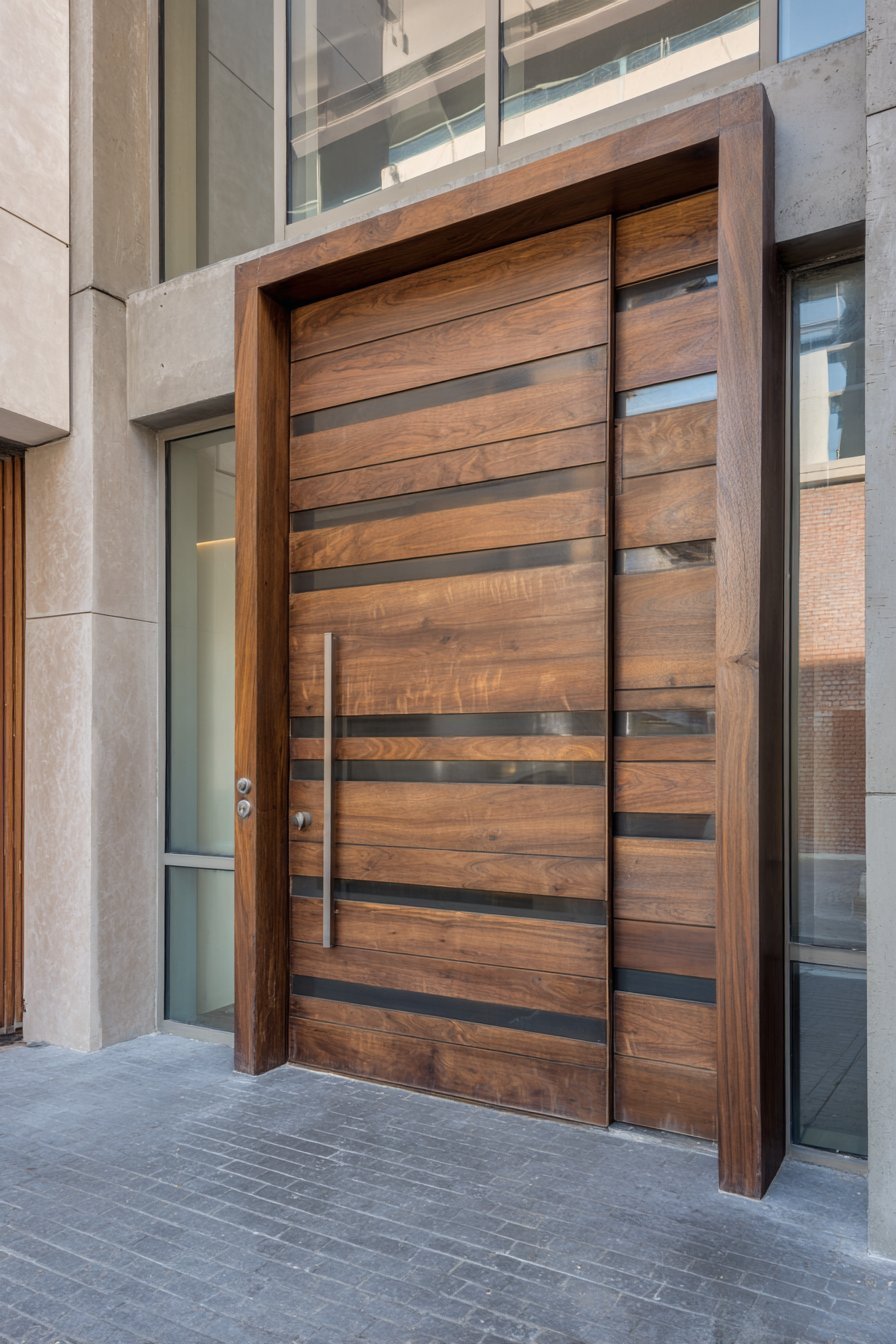
Technology integration reaches new sophistication in this contemporary entrance. Horizontal-grain walnut with integrated LED strips between slats creates modern louvered effect. Alternating solid walnut slats and recessed LED channels provide privacy and illumination. Touch-sensitive opening mechanism eliminates visible handle hardware.
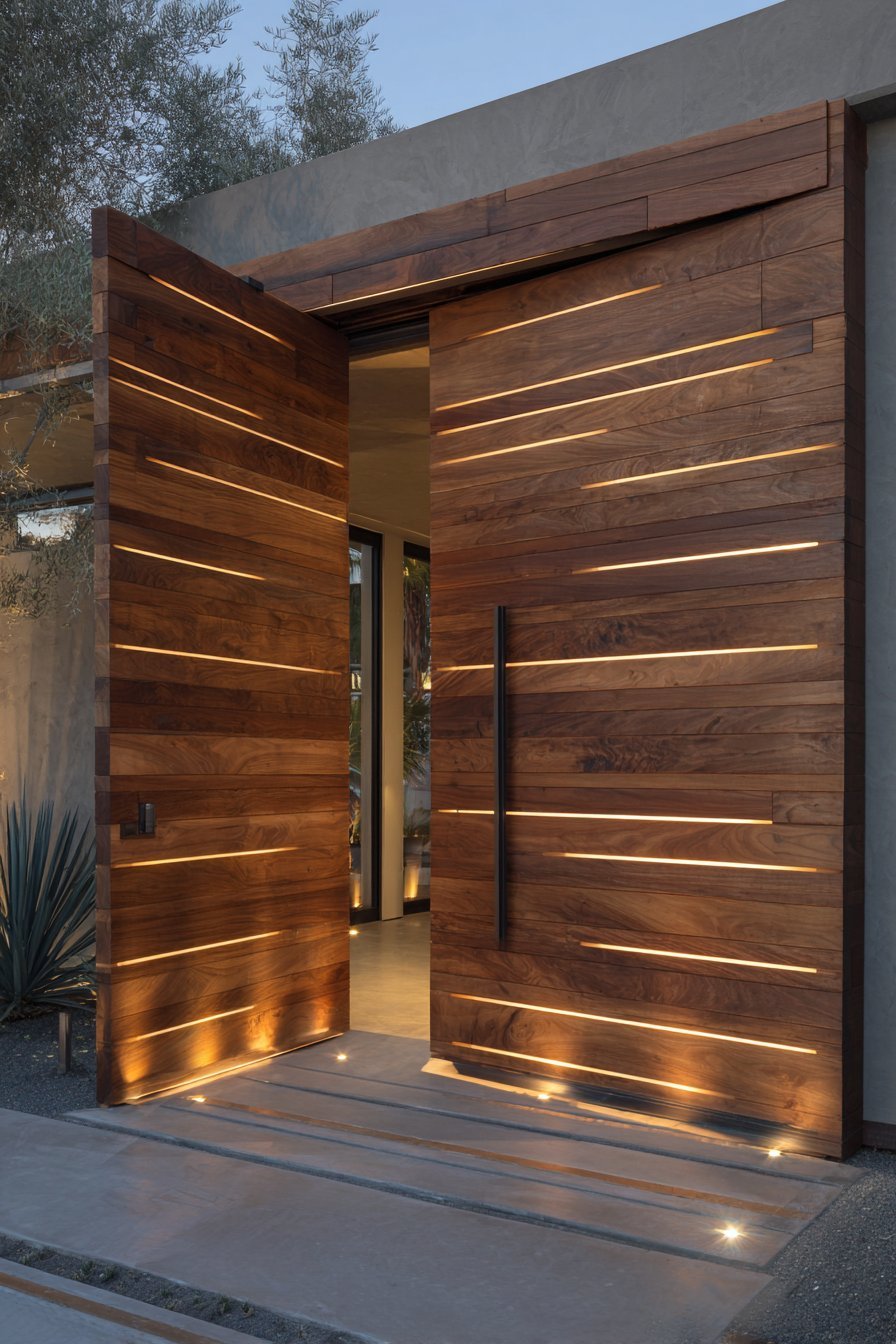
The walnut receives natural oil finish showing rich brown tones. Polished concrete surrounds and minimalist architecture frame door as sculpture. The LED system adjusts color temperature from warm to cool white. This flexibility adapts ambiance for different occasions and times.
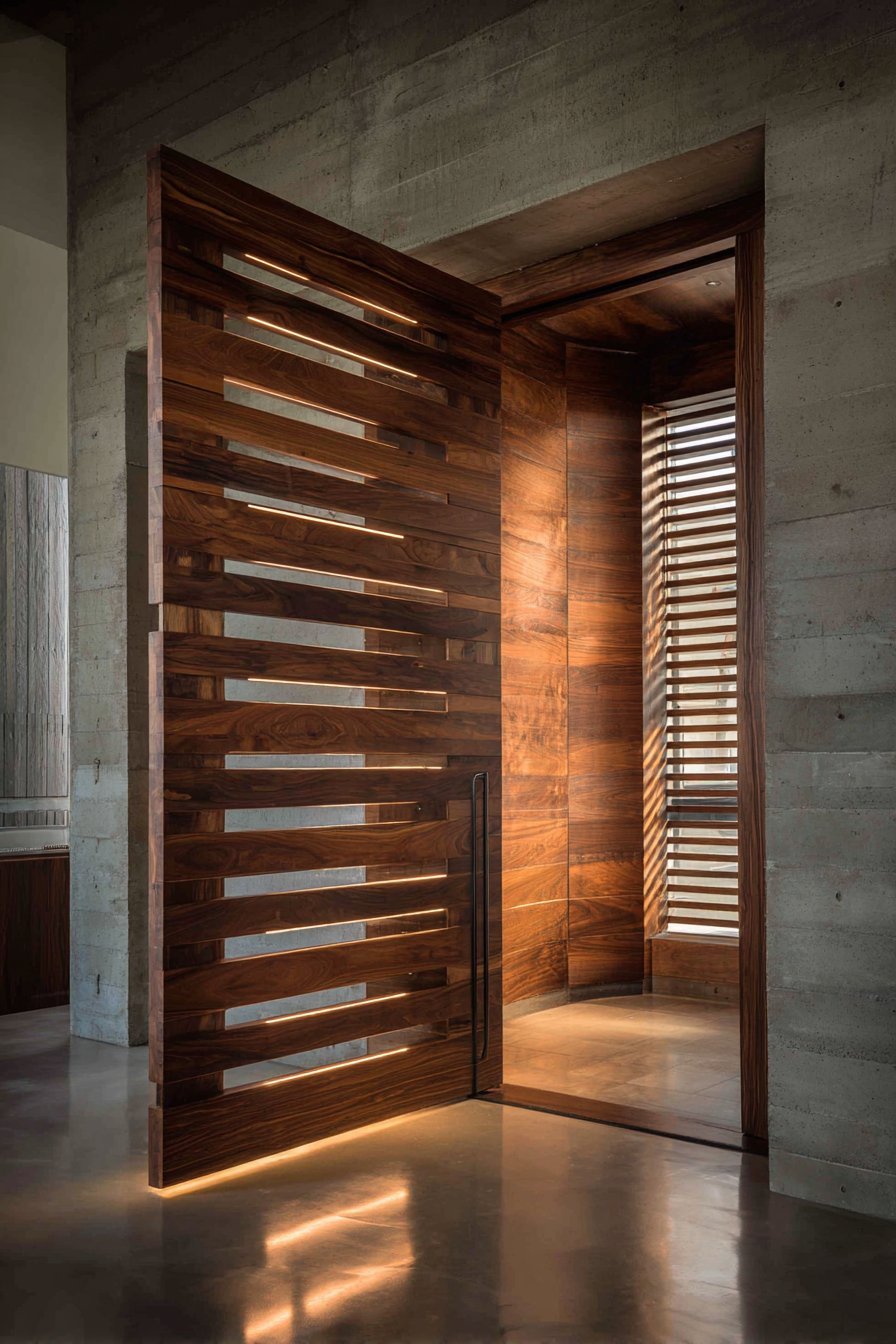
The horizontal slat arrangement creates strong geometric composition. LED channels recess perfectly between walnut slats requiring precision fabrication. At night the door glows with controlled artificial light. During day the walnut’s natural beauty dominates.
This design suits ultra-contemporary homes, smart house integrations, and technology enthusiasts. The LED systems require quality components ensuring longevity and reliability. Touch-sensitive mechanisms should include manual backup systems. This entrance represents cutting-edge residential door design.
Key Design Tips:
- Install quality LED systems rated for architectural applications and long lifespan
- Ensure precision fabrication allowing LED channels to recess perfectly between wood slats
- Apply natural oil finish on walnut allowing grain visibility and tactile experience
- Include smart home integration allowing LED control through home automation
- Provide manual backup access methods for touch-sensitive electronic systems
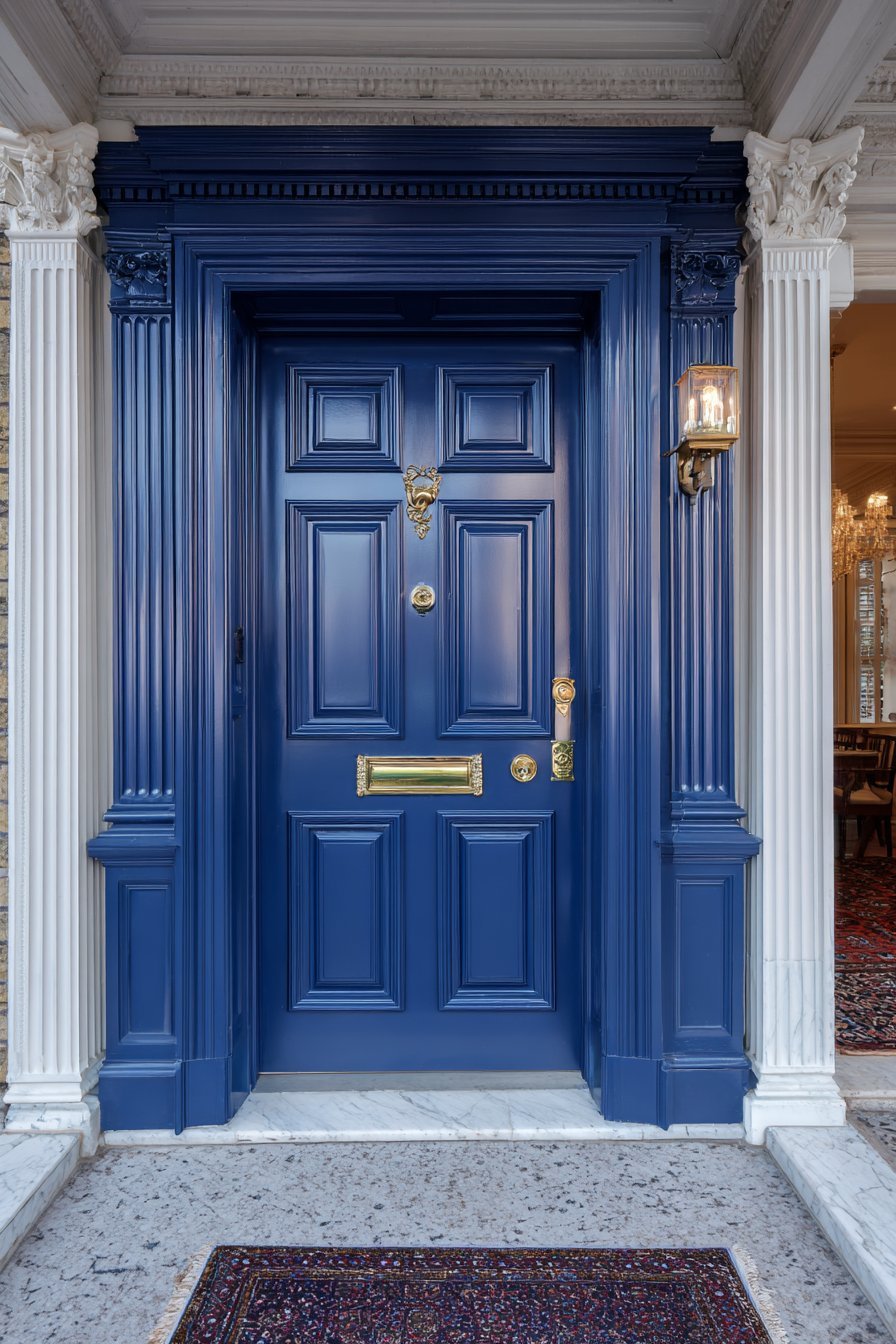
30. English Manor Navy Blue with Georgian Hardware
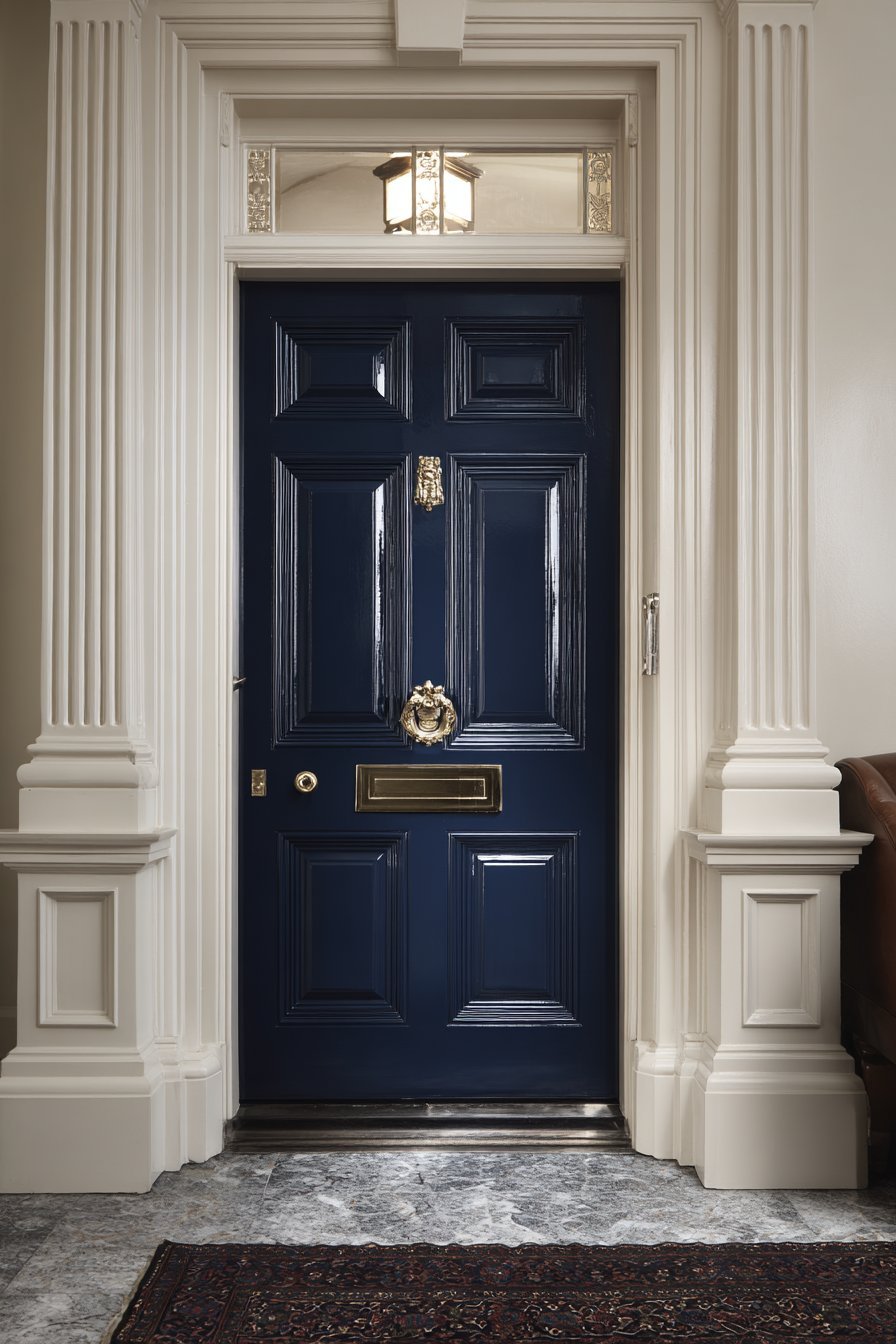
British country house elegance inspires this refined traditional entrance. Painted solid oak in custom mixed deep navy blue creates sophisticated statement. Six raised panels follow classical British design proportions precisely. Traditional brass hardware includes polished letter slot and period lever.
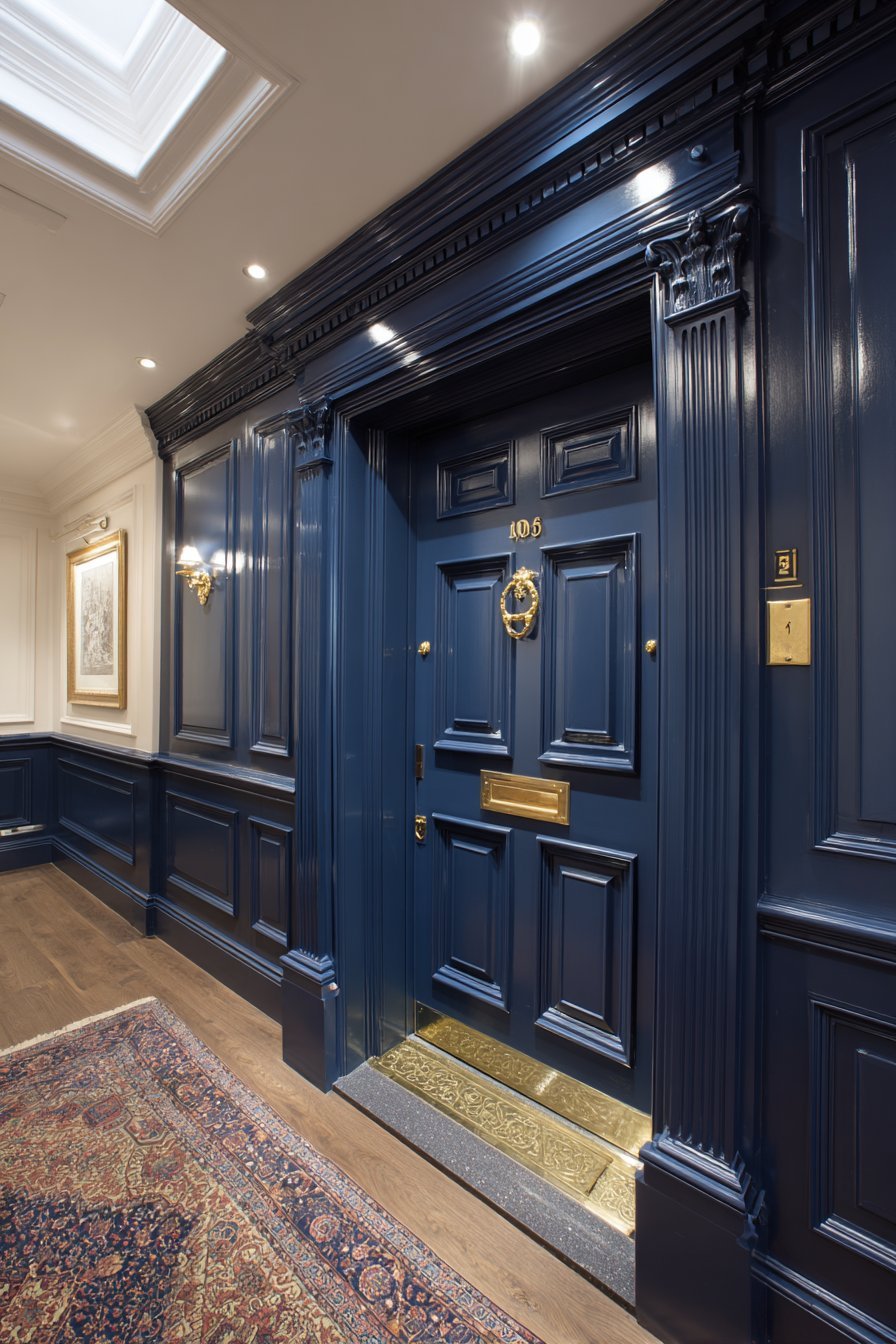
A decorative kick plate and substantial door knocker complete Georgian ensemble. Each raised panel receives precise proportioning following classical British conventions. Surrounding painted millwork in coordinating navy and white includes fluted pilasters. Detailed pediment crowns the entrance with aristocratic bearing.
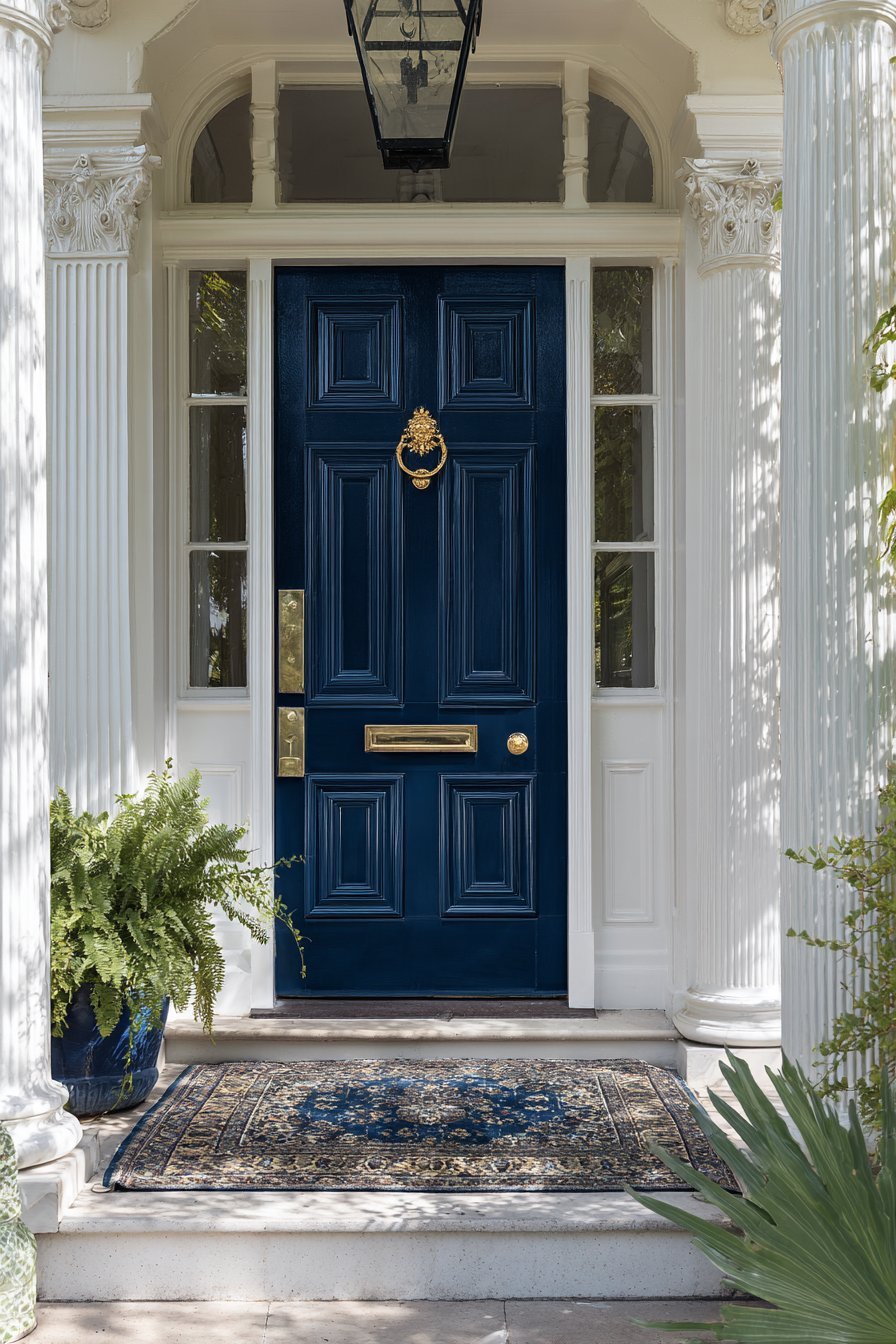
Polished marble threshold and antique Persian runner complete refined setting. Natural light from overhead fanlight creates soft illumination throughout entry. The deep navy provides sophisticated alternative to common black or white. Polished brass hardware gleams against dark painted background.
This design suits traditional homes, Anglophiles, and lovers of British country house style. The custom navy paint requires expert color mixing for depth. Quality brass hardware represents investment in lasting refinement. Proper classical proportions separate authentic design from mere imitation.
Key Design Tips:
- Commission custom paint color mixing, achieving the desired depth and sophistication in navy
- Source quality polished brass hardware appropriate to Georgian period styling
- Ensure raised panel proportions follow classical British design mathematical relationships
- Install an overhead fanlight window providing natural light to the entrance hall
- Coordinate surrounding millwork paint colors creating cohesive traditional color scheme
Why These Luxury Door Designs Excel
These luxury door designs represent the finest approaches to creating memorable entrances. Each concept demonstrates thoughtful consideration of materials, craftsmanship, and architectural context. The designs showcase remarkable versatility adapting to diverse architectural styles and personal preferences.
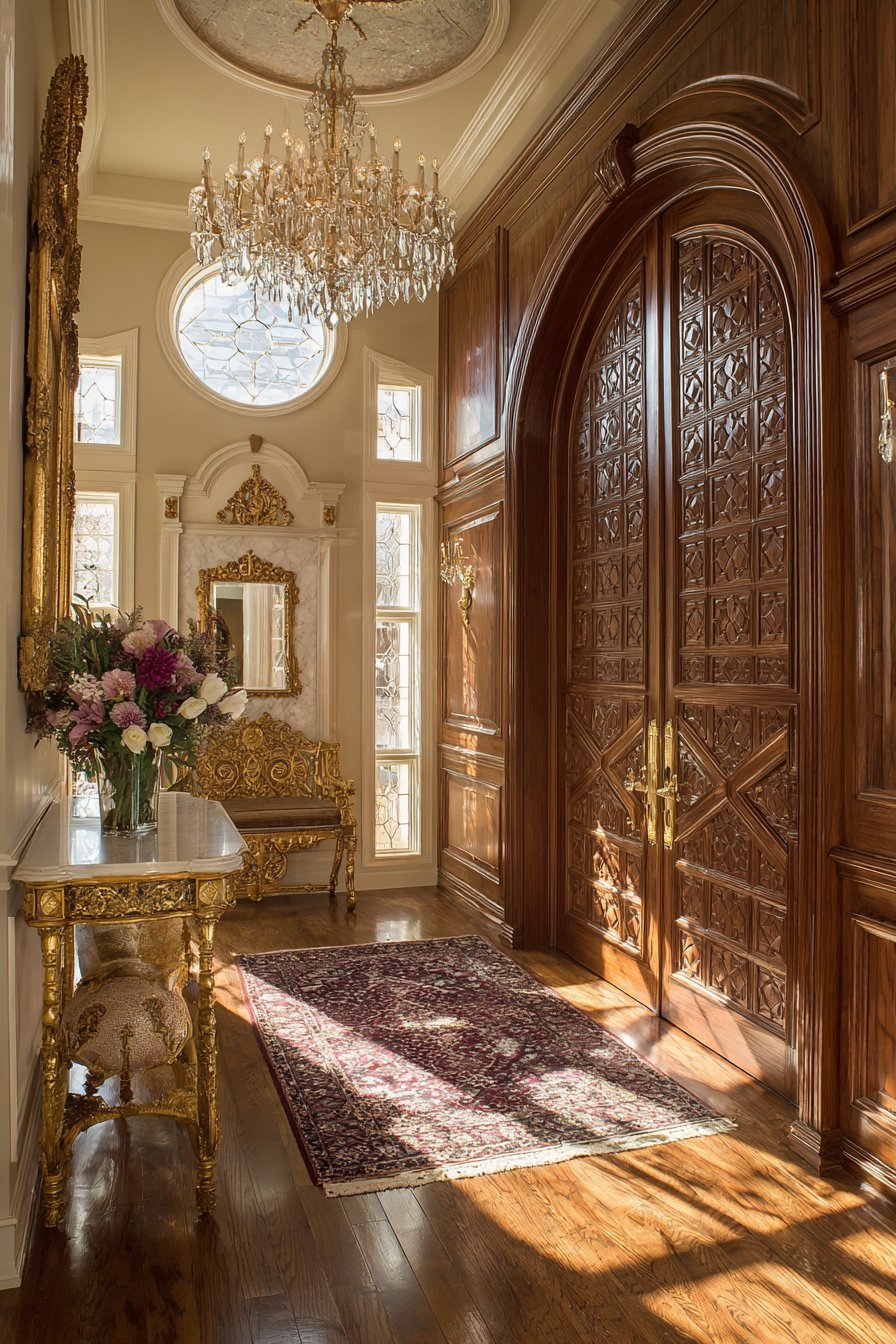
Material selection forms the foundation of luxury door excellence. Solid hardwoods like mahogany, walnut, and oak provide durability alongside natural beauty. These materials develop richer character over decades rather than deteriorating. Exotic options including zebrawood and mesquite, offer distinctive grain patterns impossible to replicate. Contemporary materials like blackened steel, bronze, and textured concrete bring industrial sophistication. Glass applications from frosted panels to hand-blown restoration glass control light while adding luxury.
Craftsmanship separates luxury doors from standard offerings consistently. Hand-carved details demonstrate skills refined over generations of practice. Traditional joinery methods ensure structural integrity lasting centuries. Custom hardware fabrication creates a unique functional sculpture. Multiple finish coats build depth and protection simultaneously. These labor-intensive processes justify investment through lasting beauty and performance.
Design principles guide successful luxury door installations across varied contexts. Proportion and scale ensure doors complement rather than overwhelm architecture. Classical mathematical relationships create subconscious visual satisfaction. Material combinations balance contrast with harmony thoughtfully. Lighting integration enhances rather than competes with natural door beauty. Hardware selection coordinates finish, scale, and period appropriateness.
Spatial considerations influence the design approach significantly. Small entrances benefit from glass integration, maximizing light without overwhelming scale. Grand foyers accommodate oversized doors making dramatic statements. Contemporary open plans suit minimalist designs with clean lines. Traditional compartmentalized homes welcome ornate carved details and rich colors. Climate requirements affect material selection and protective finishing approaches.
Sustainability and longevity increasingly influence luxury door selection. Certified sustainable forestry operations provide hardwoods without environmental compromise. Rapidly renewable materials like bamboo offer eco-friendly alternatives. Quality construction and timeless design ensure relevance beyond fleeting trends. Proper maintenance preserves investment for multiple generations. These considerations align luxury with environmental and financial responsibility.
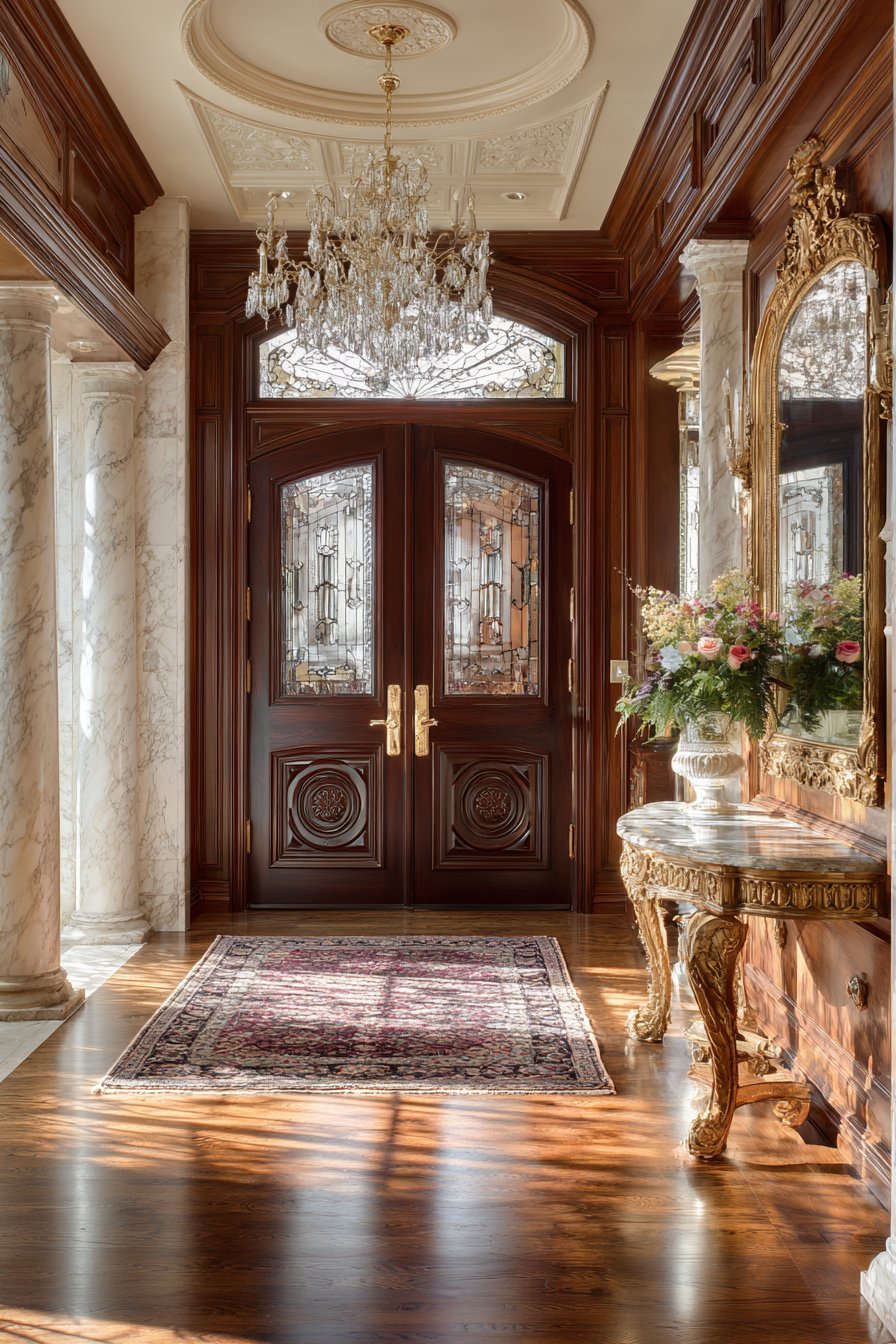
The versatility demonstrated across these thirty designs proves luxury transcends single aesthetic. Traditional approaches celebrate historical craftsmanship and proven proportions. Contemporary designs embrace new materials and technological integration. Cultural influences from Japanese shoji to Moroccan inlay expand design vocabulary. This diversity ensures appropriate luxury solutions for every architectural context and personal preference.
Conclusion
These thirty luxury door designs demonstrate that exceptional entrances combine premium materials, expert craftsmanship, and thoughtful design. The key takeaways emphasize material authenticity, proportional harmony, and detailed execution. Quality construction ensures these investments provide beauty and function for generations.
Successful luxury door selection requires evaluating architectural context, personal aesthetic preferences, and practical requirements. Climate considerations, maintenance capabilities, and budget constraints influence appropriate choices. Professional consultation ensures proper installation and long-term performance.
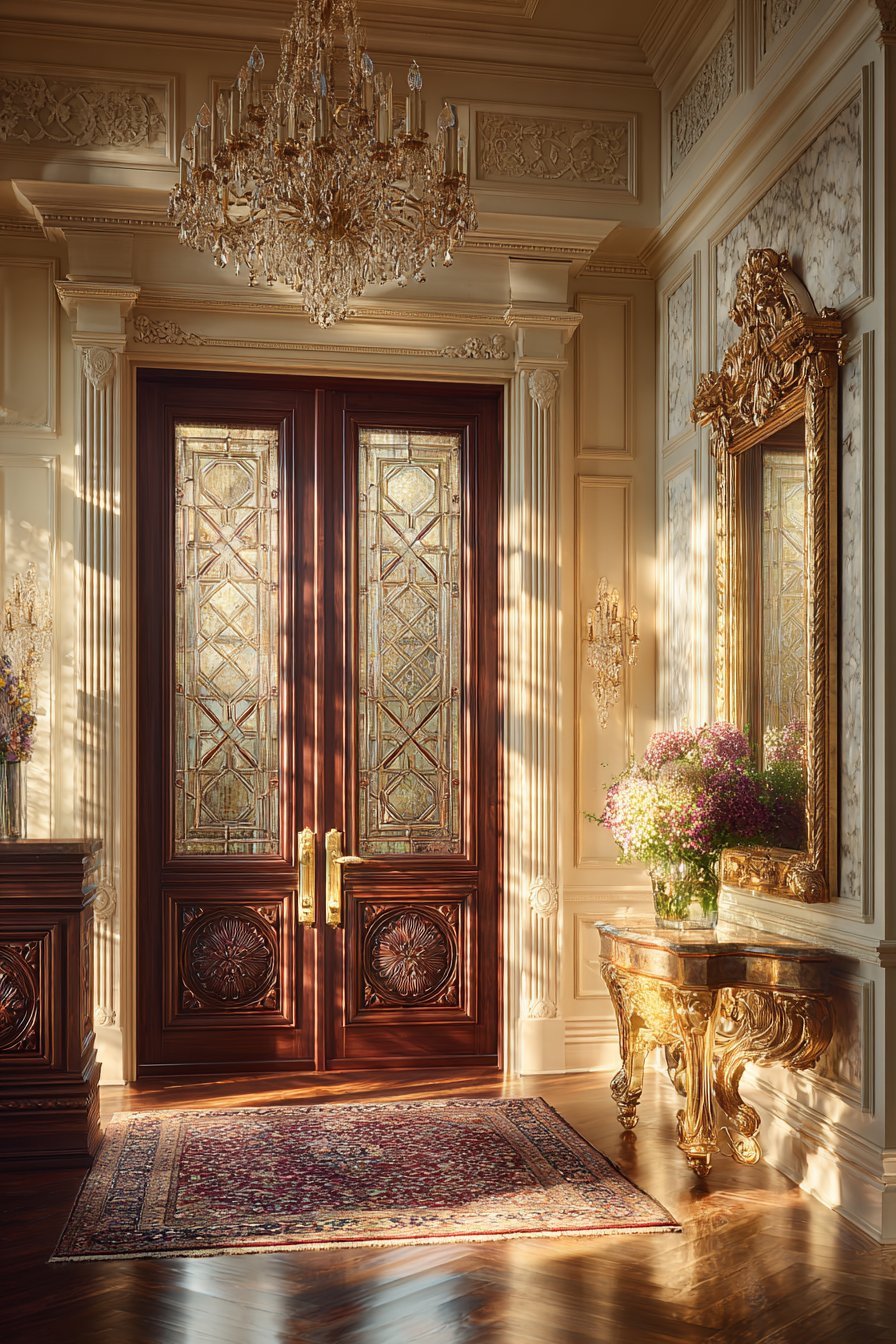
Begin your entrance transformation by identifying which design approaches resonate with your home’s architecture and your personal style. Consider starting with quality hardware upgrades if full door replacement isn’t immediately feasible. Your dream luxury entrance awaits creation through informed selection and expert execution.