


The facade of your home serves as its first impression and architectural signature. It communicates your design philosophy before guests step through the door. A well-designed facade balances aesthetic appeal with functional performance, weather protection, and energy efficiency.
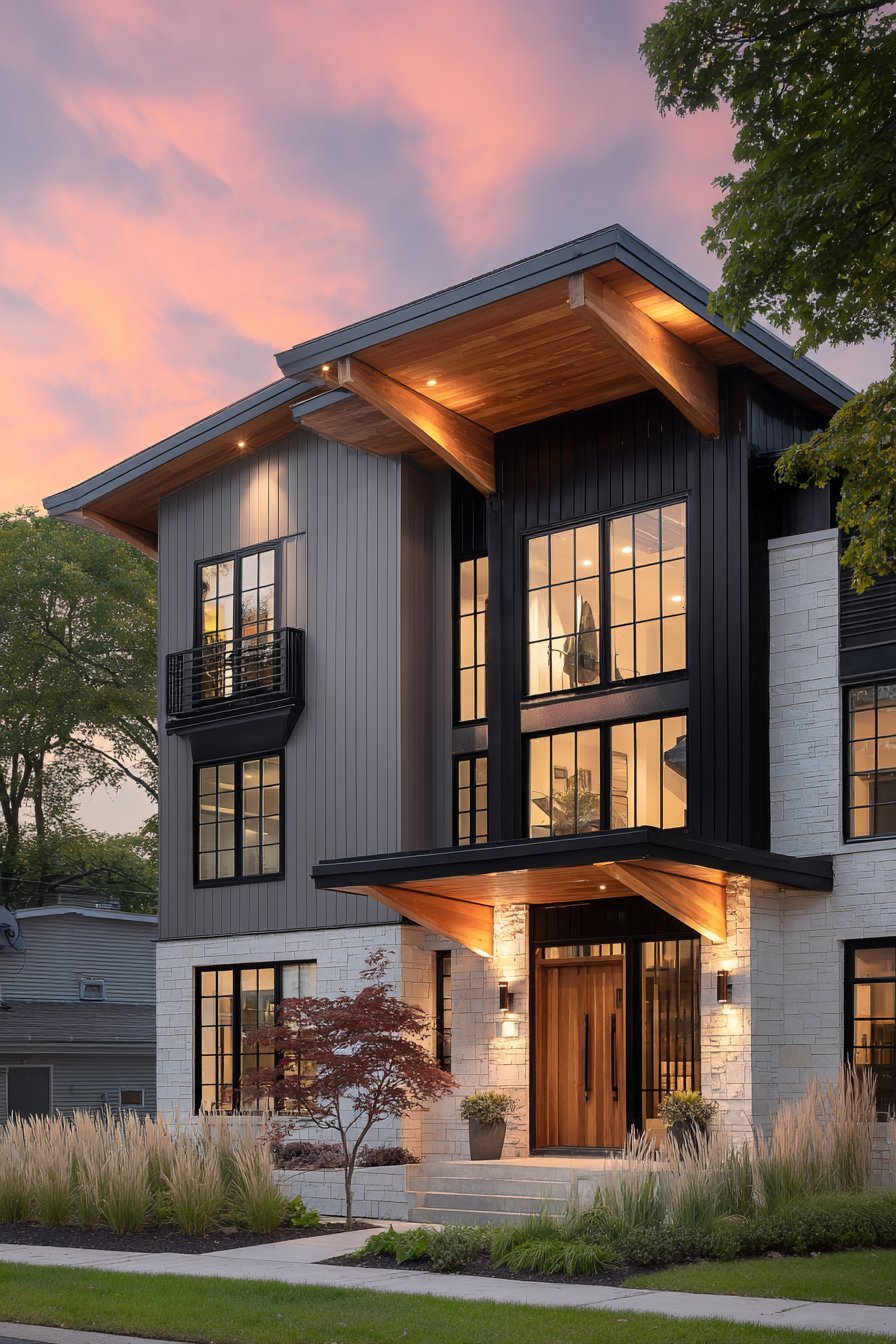
Contemporary facade design has evolved beyond simple exterior cladding. Today’s architectural approaches integrate diverse materials, innovative construction techniques, and sustainable practices. From traditional brick patterns to modern metal panels, each facade style tells a unique story. The variety of options allows homeowners to express individual taste while respecting neighborhood context.
This comprehensive guide explores thirty distinctive facade design concepts spanning multiple architectural styles. Whether you’re planning new construction, major renovation, or simply seeking inspiration, these designs demonstrate the transformative power of thoughtful exterior composition. Each concept showcases different material combinations, proportional relationships, and detail approaches that define memorable residential architecture.
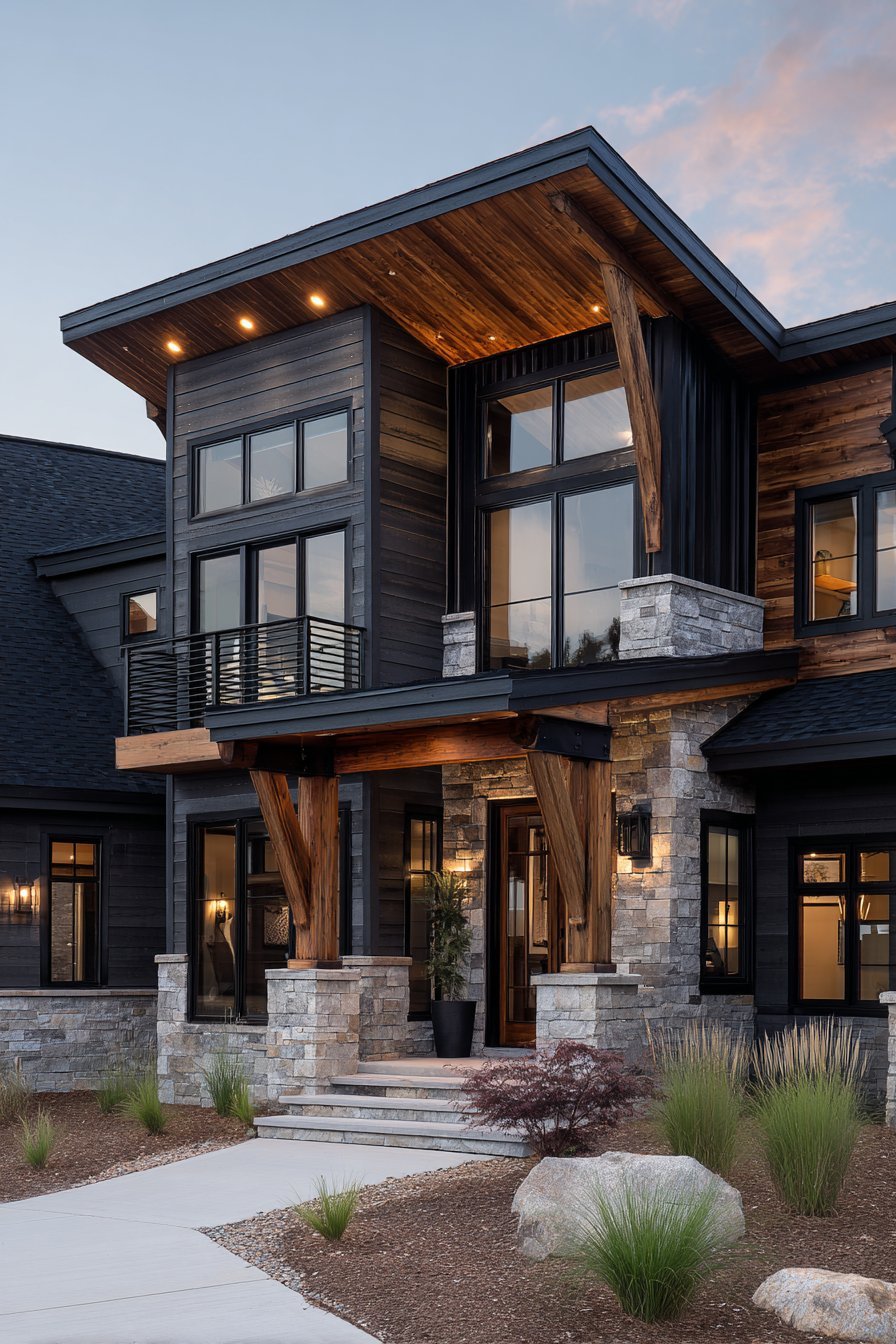
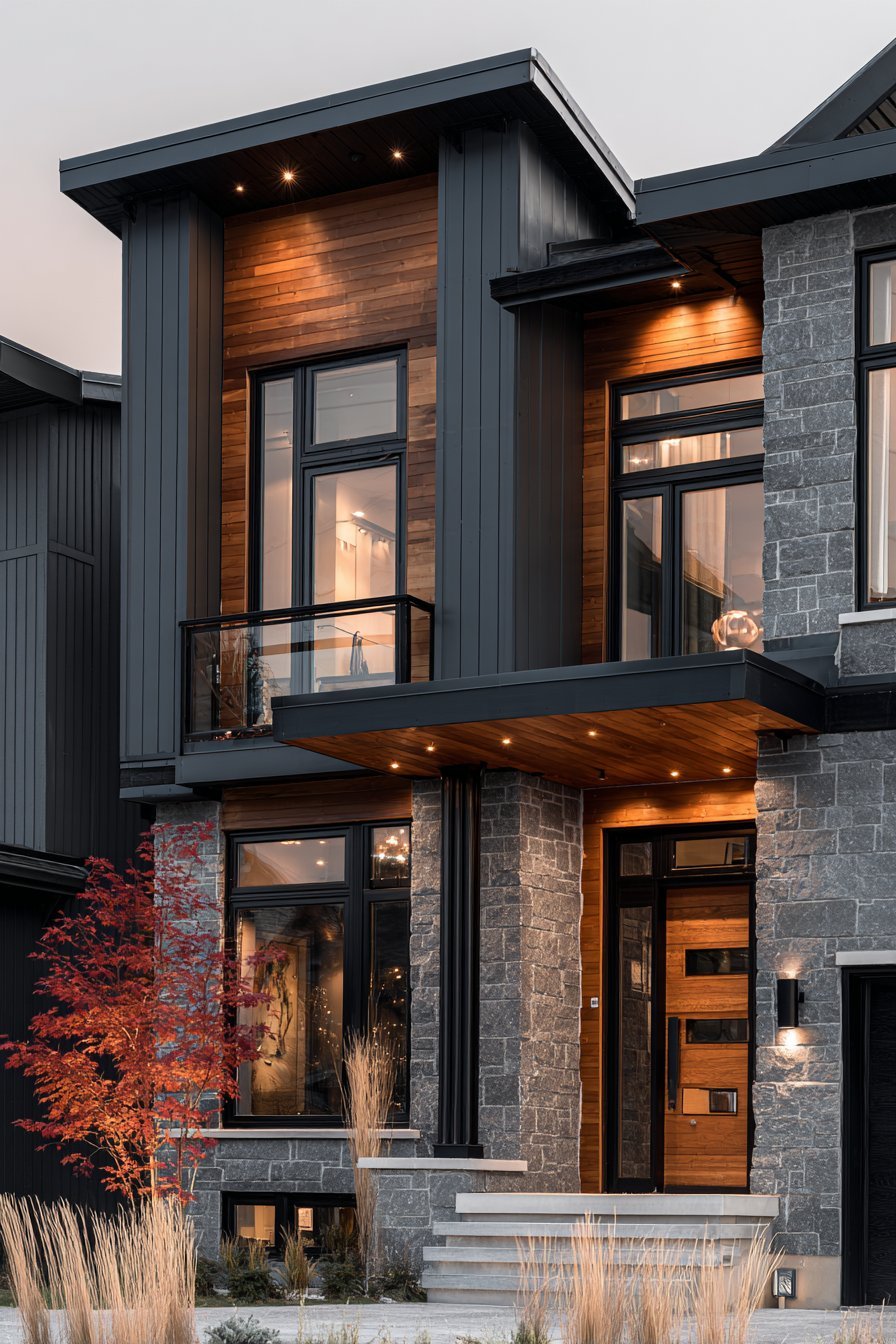
1. Modern Horizontal Lines with Charcoal Grey Siding
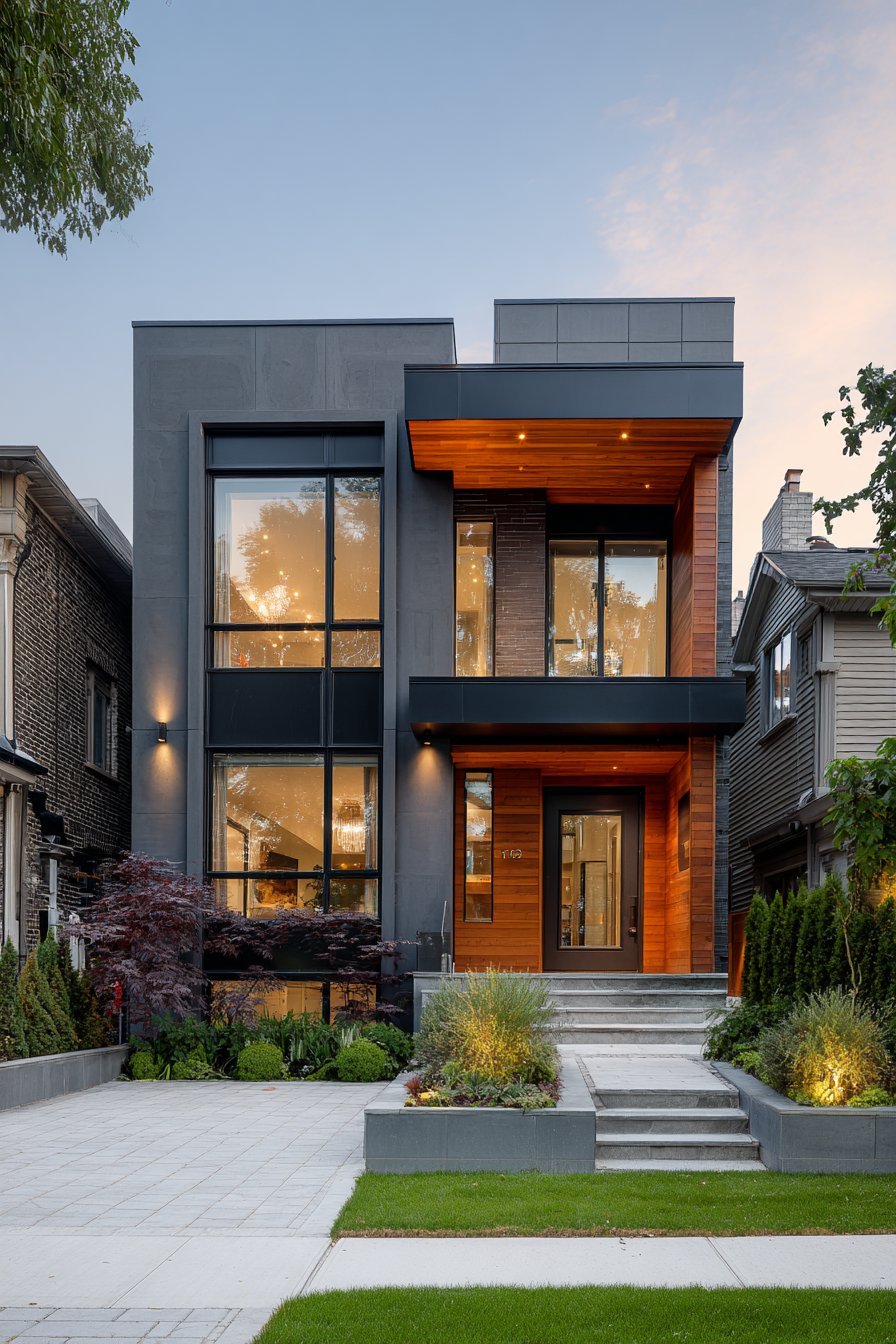
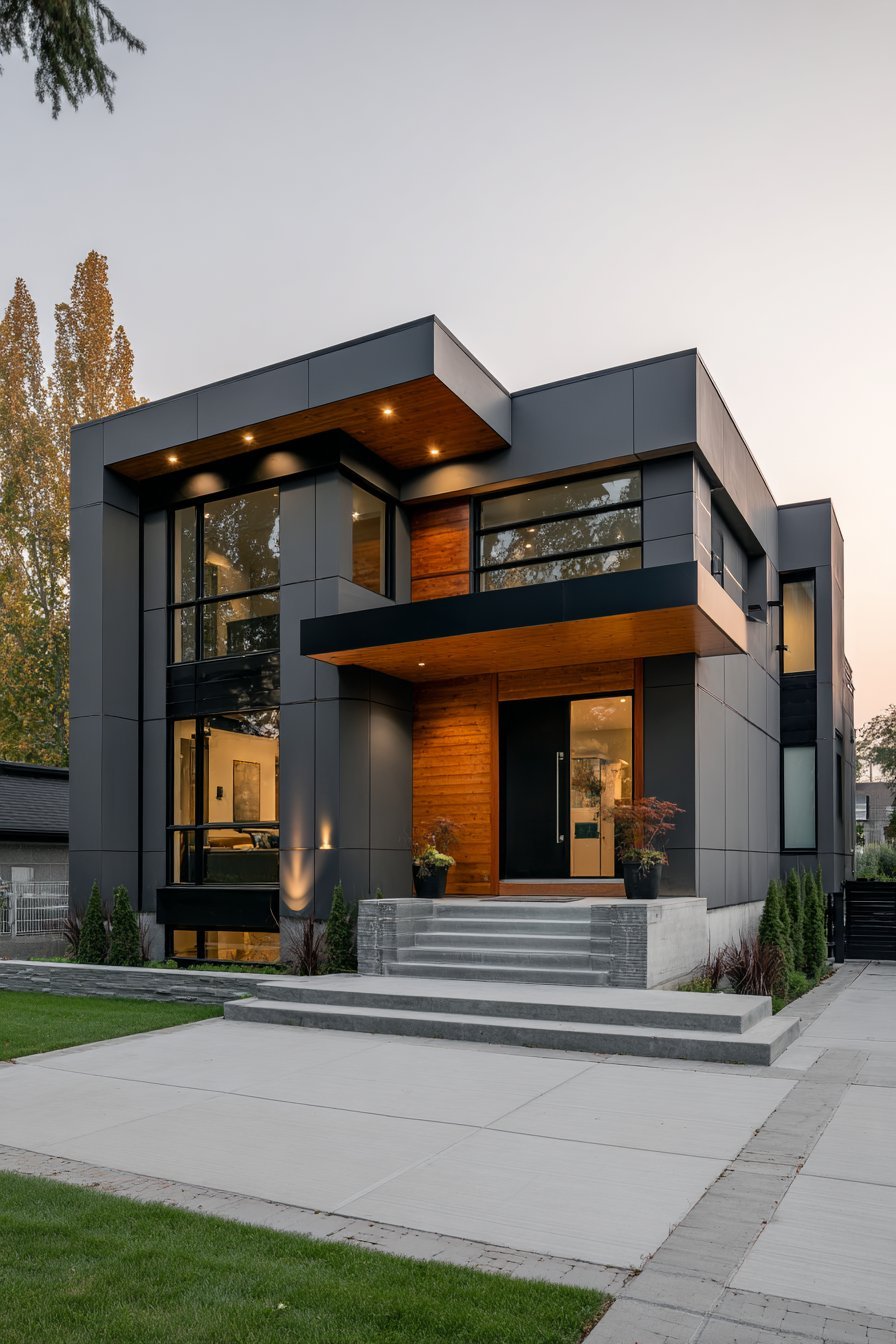
Clean horizontal lines define this contemporary facade design. Charcoal grey fiber cement siding creates the primary surface. The material offers durability without sacrificing aesthetic refinement. Large floor-to-ceiling windows with black aluminum frames punctuate the grey exterior. The contrast between solid and transparent creates visual drama.
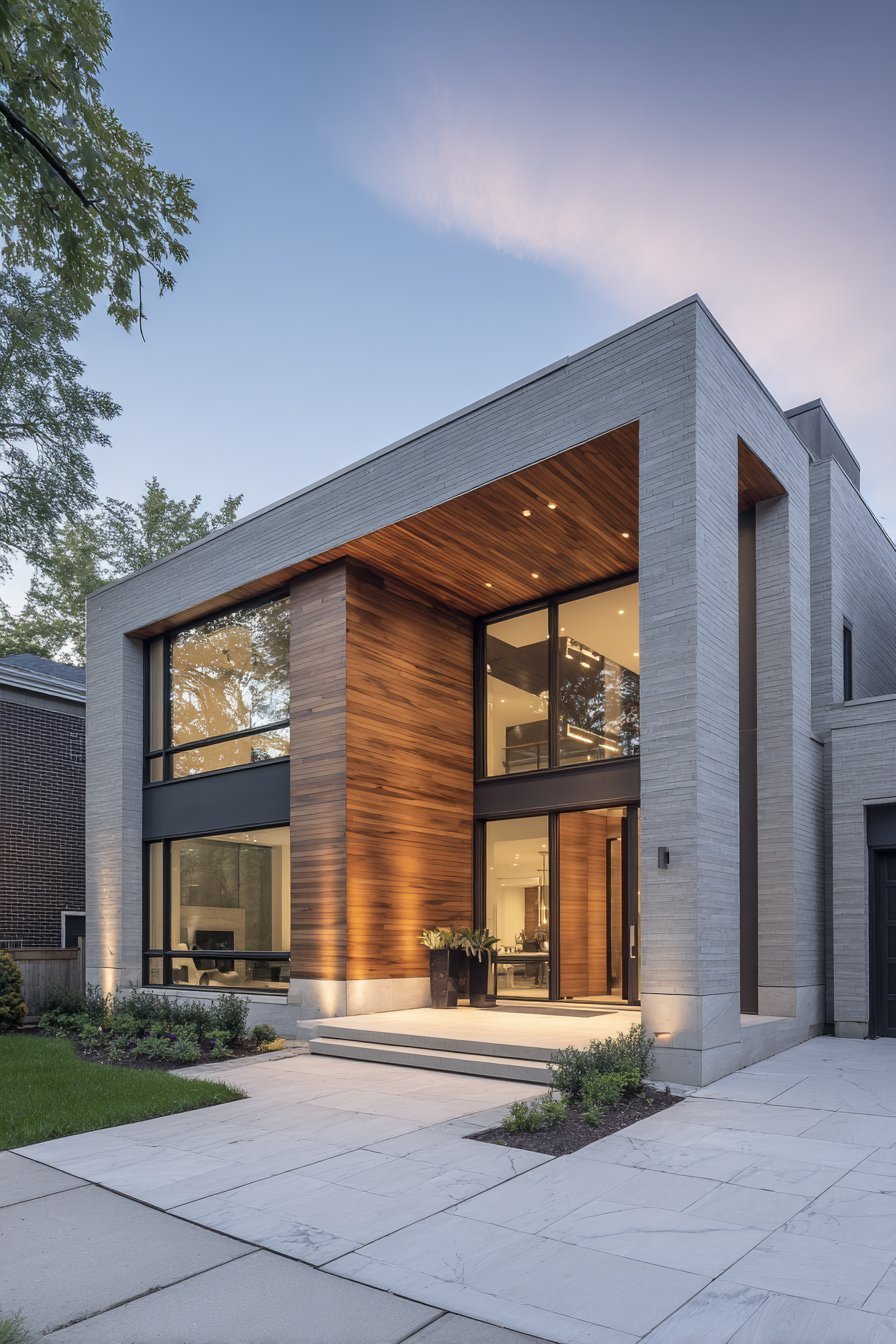
A cantilevered wooden overhang in natural cedar marks the entrance. This warm wood element provides essential contrast to the cool grey palette. The overhang serves both functional and aesthetic purposes. It protects the entry from weather while adding architectural depth. Recessed lighting highlights these details during evening hours.
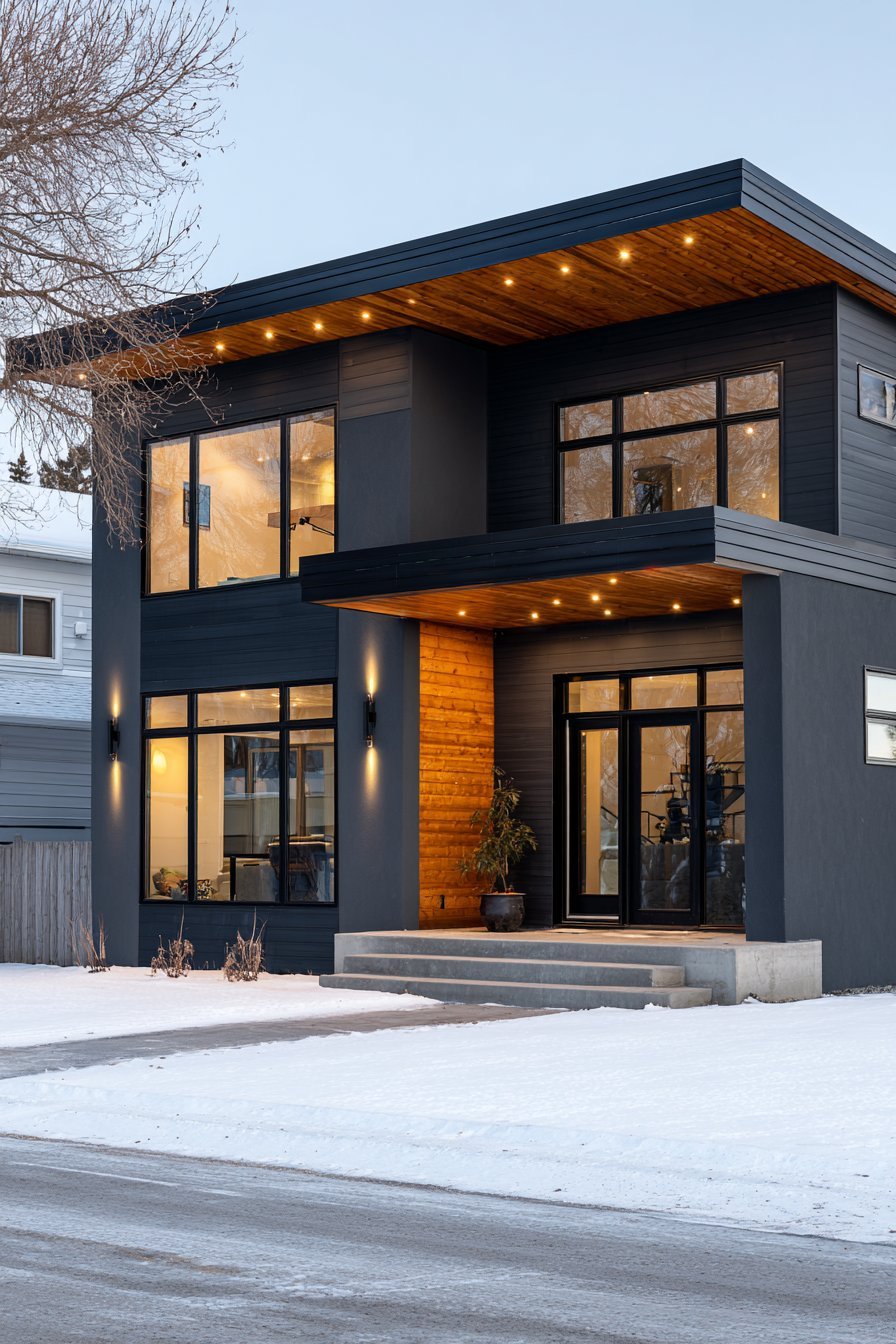
The interplay between manufactured and natural materials demonstrates sophisticated material thinking. Fiber cement provides low maintenance and weather resistance. Cedar brings organic warmth and ages beautifully over time. The black window frames tie these elements together visually.
Soft evening light creates gentle shadows that emphasize depth and layering. The facade reveals its three-dimensional quality through careful attention to shadow lines. This architectural photography captures how materials respond to changing light conditions throughout the day.
Key Design Tips:
- Use fiber cement siding for durable, low-maintenance exterior surfaces
- Incorporate natural cedar accents to warm contemporary grey palettes
- Install floor-to-ceiling windows to maximize natural light penetration
- Add recessed lighting to highlight architectural details after dark
- Choose black aluminum frames for clean, modern window detailing
- Design cantilevered overhangs to create shelter while emphasizing horizontal lines
2. Traditional Red Brick with Classical Symmetry
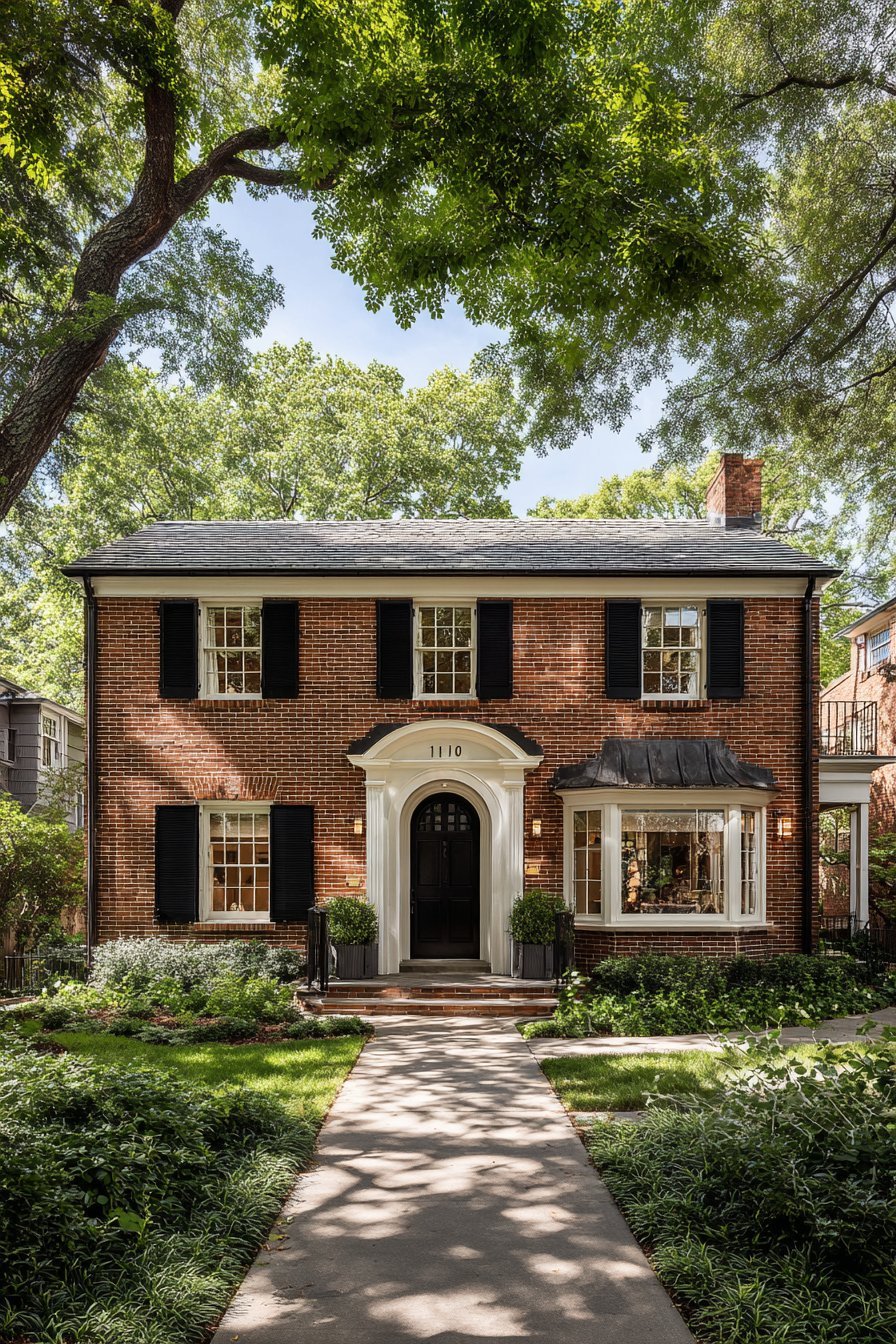
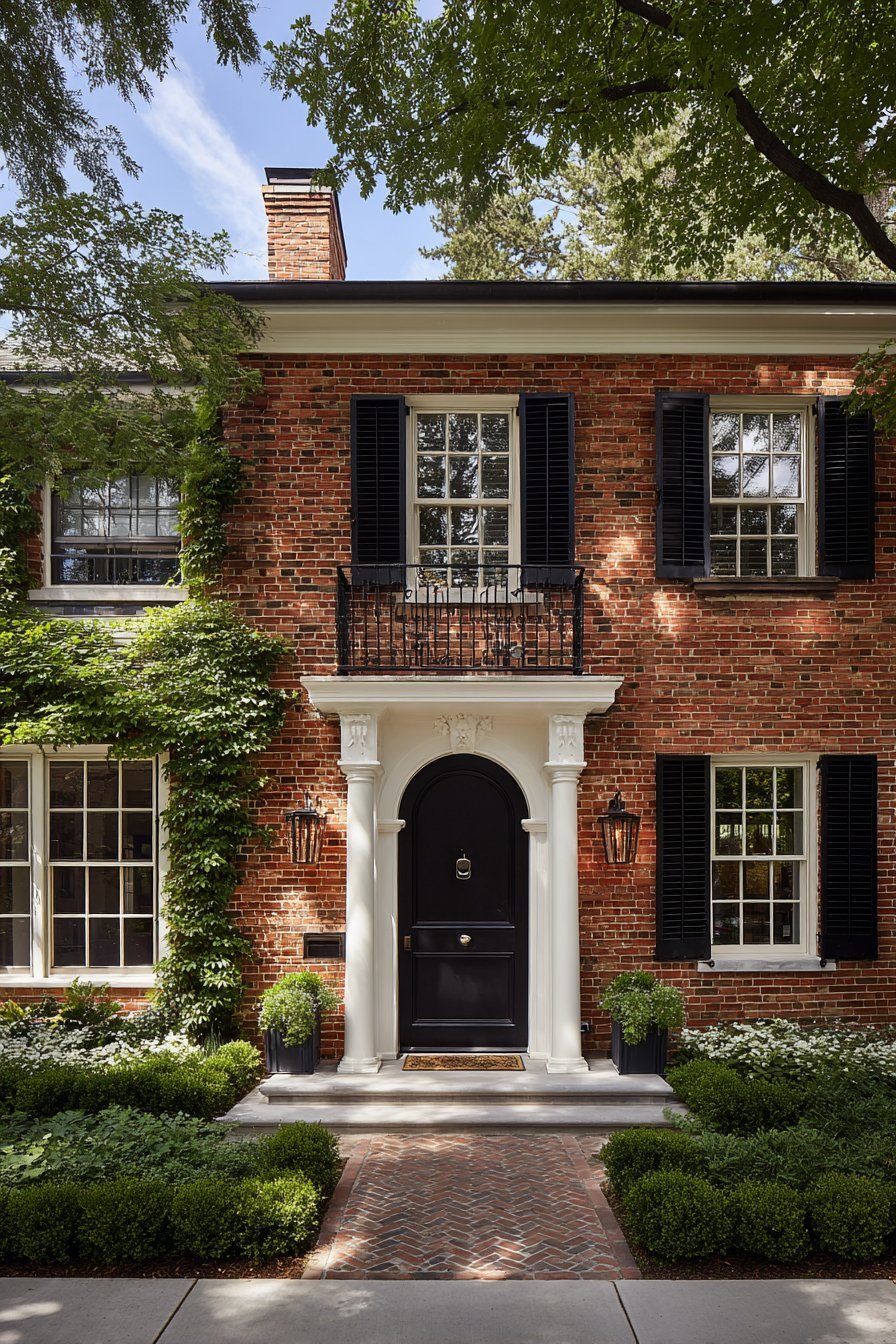
Red clay bricks laid in running bond pattern create timeless facade character. White mortar joints provide crisp definition between individual bricks. The symmetrical composition reflects classical design principles. Black painted wood shutters frame double-hung windows on both levels.
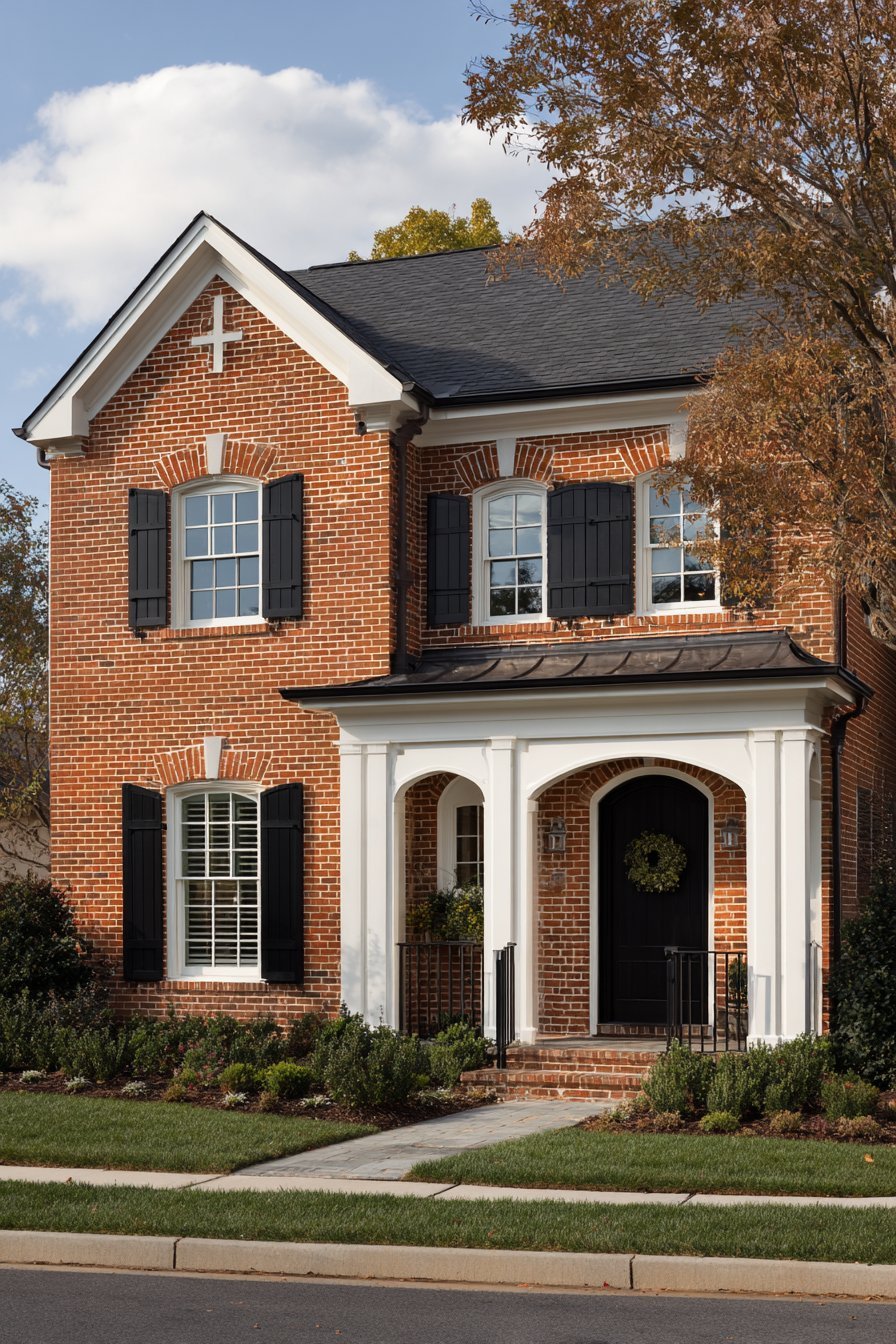
A covered front porch adds architectural weight to the entrance. White columns support the porch roof structure. Black metal railings provide safety without visual heaviness. The porch creates a transitional space between public and private realms.
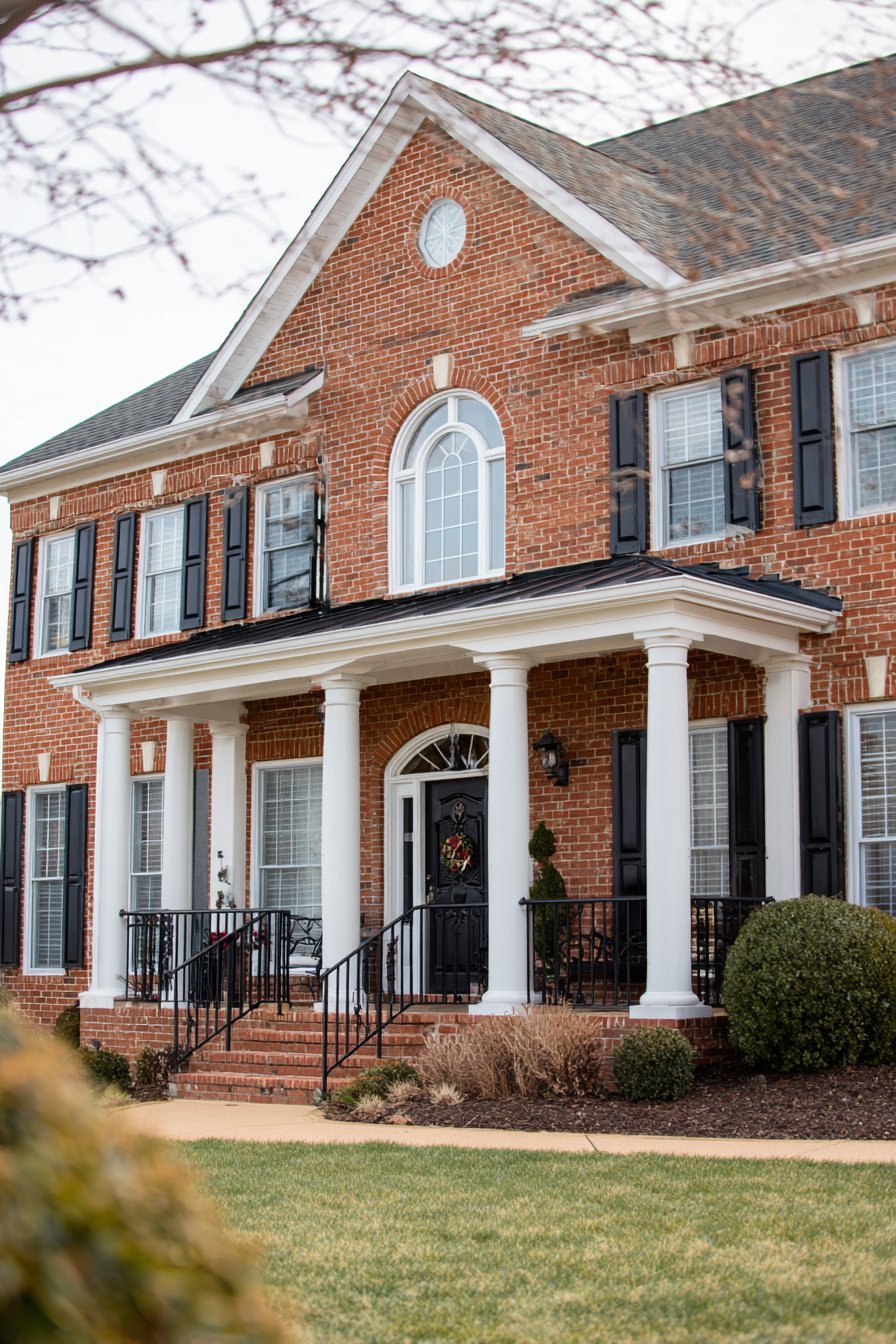
Decorative keystones above windows demonstrate attention to traditional detailing. A prominent arched transom window sits above the black front door. These elements reference historical architectural vocabulary. The craftsmanship visible in brick laying and trim work speaks to construction quality.
Natural daylight photography captures the texture inherent in brick masonry. Each brick shows slight color variation that adds visual richness. The balanced proportions create pleasing relationships between windows, walls, and architectural elements.
Key Design Tips:
- Select red clay bricks for authentic traditional facade character
- Use running bond pattern for classic brick laying technique
- Paint shutters and doors black for strong architectural contrast
- Incorporate white trim around windows to define openings clearly
- Add decorative keystones above windows for classical detailing
- Design covered porches to create welcoming transitional spaces
- Maintain symmetrical window placement for formal composition
3. Contemporary Farmhouse with Mixed Materials
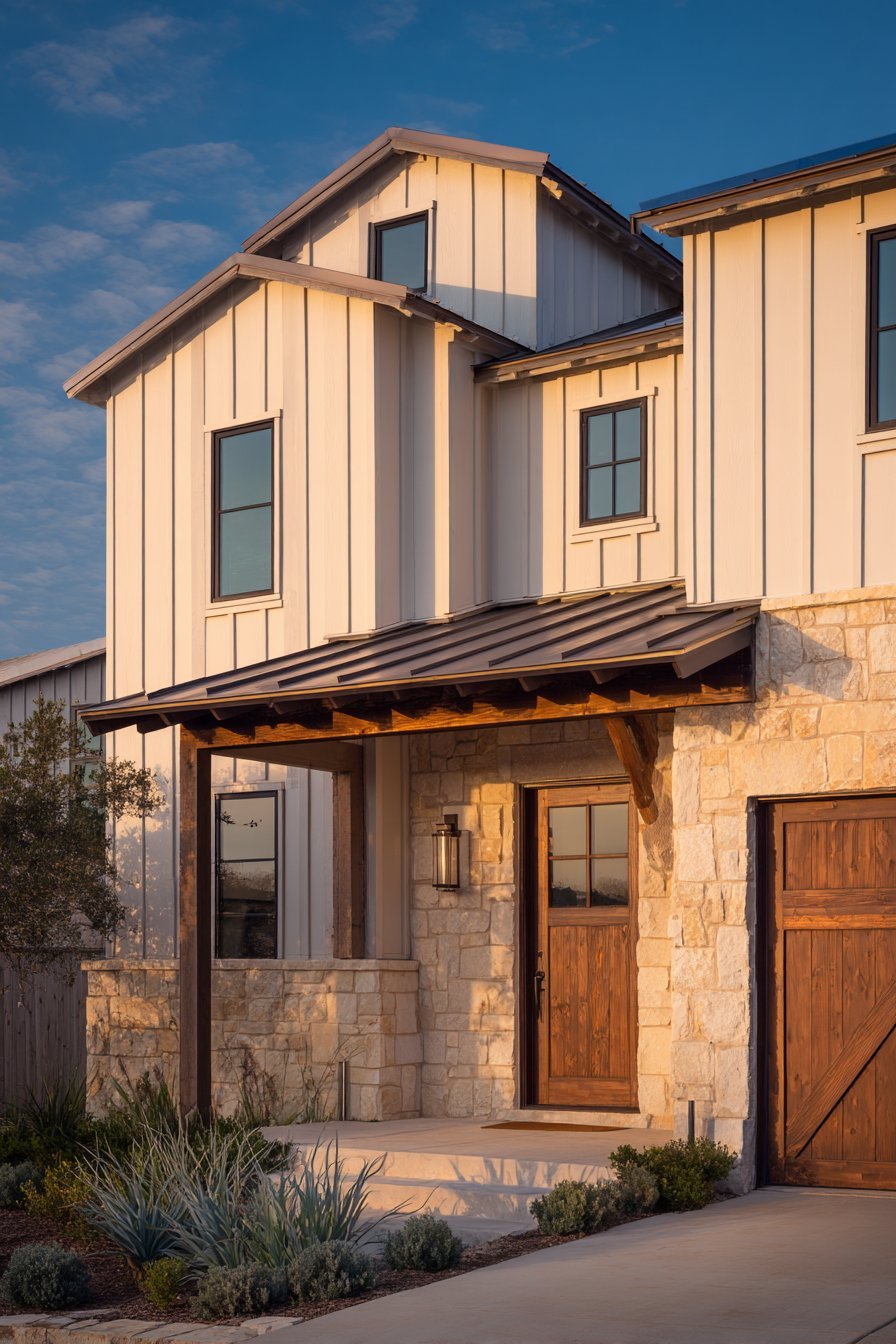
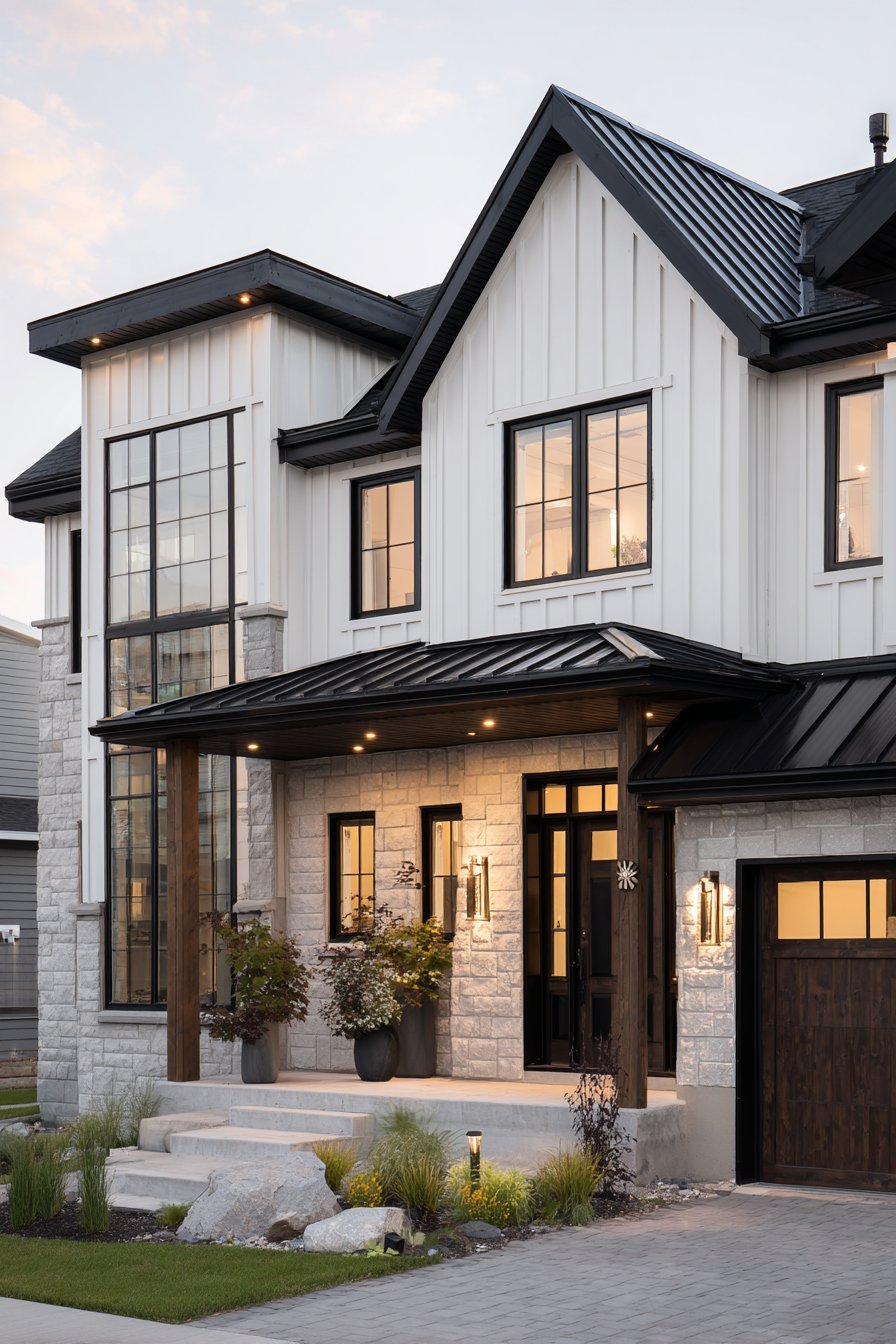
White board-and-batten siding covers the upper portions of this facade. Natural stone veneer accents the lower third of the structure. This material division creates visual weight and grounding. Black metal roofing provides strong contrast while ensuring weather protection.
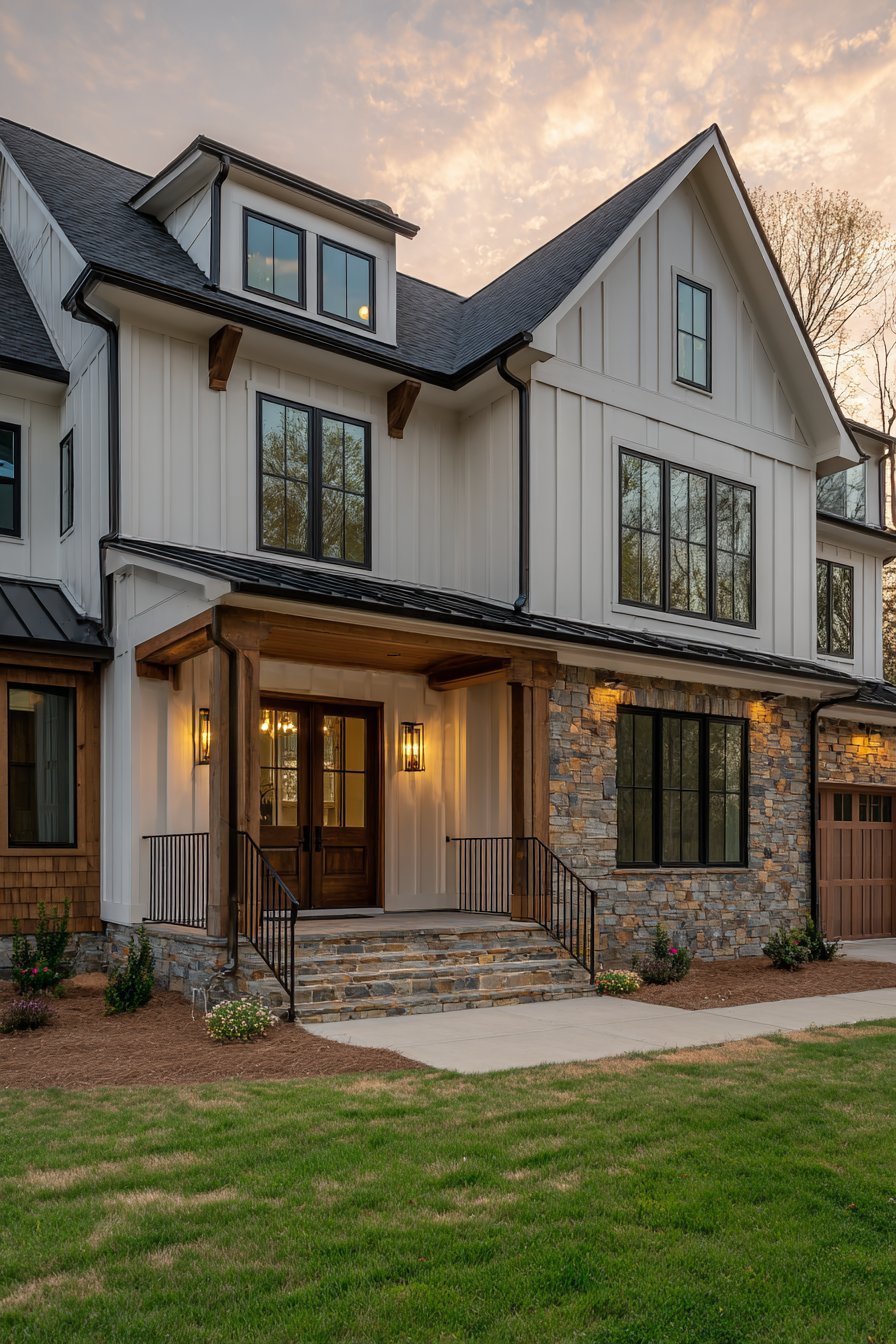
Modern black-framed windows of varying sizes create purposeful asymmetry. The window sizes respond to interior room functions. A stained wood garage door adds warmth to the neutral palette. The matching front door reinforces this organic material thread.
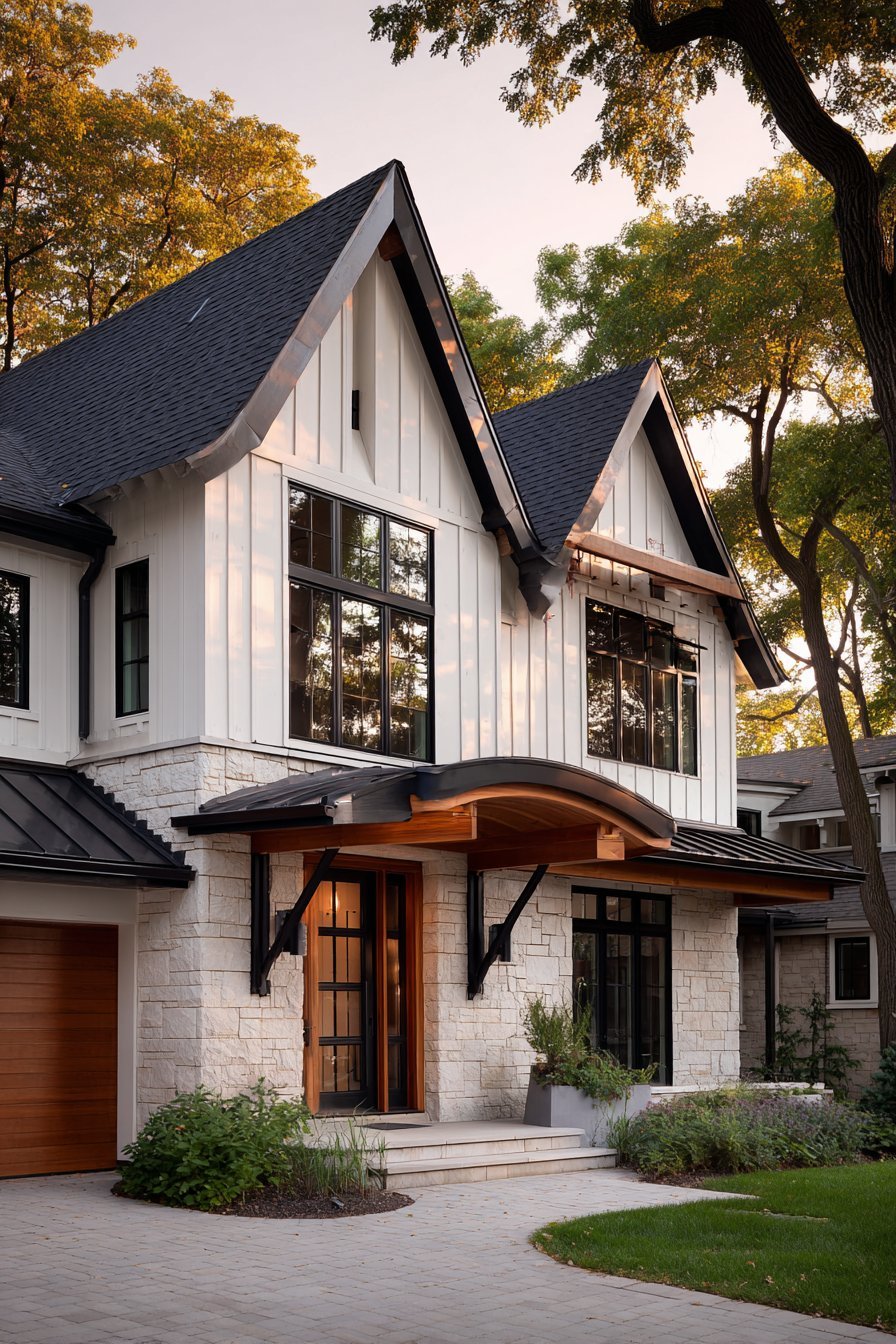
The covered front porch features exposed wooden beams overhead. Metal post supports provide structural clarity while maintaining visual lightness. This combination of wood and metal references both traditional and contemporary construction methods.
Golden hour photography captures how natural light enhances material textures. The stone veneer reveals individual stone shapes and color variations. Wood grain becomes more prominent under warm directional lighting. The white siding reflects changing light conditions throughout the day.
Key Design Tips:
- Combine board-and-batten siding with stone veneer for material contrast
- Use black metal roofing for durability and modern aesthetic
- Vary window sizes based on interior functional requirements
- Stain wood doors to complement natural stone earth tones
- Expose structural beams to celebrate honest construction methods
- Photograph during golden hour to showcase material textures
- Balance traditional materials with contemporary proportions
4. Minimalist Japanese-Inspired Cedar Rainscreen
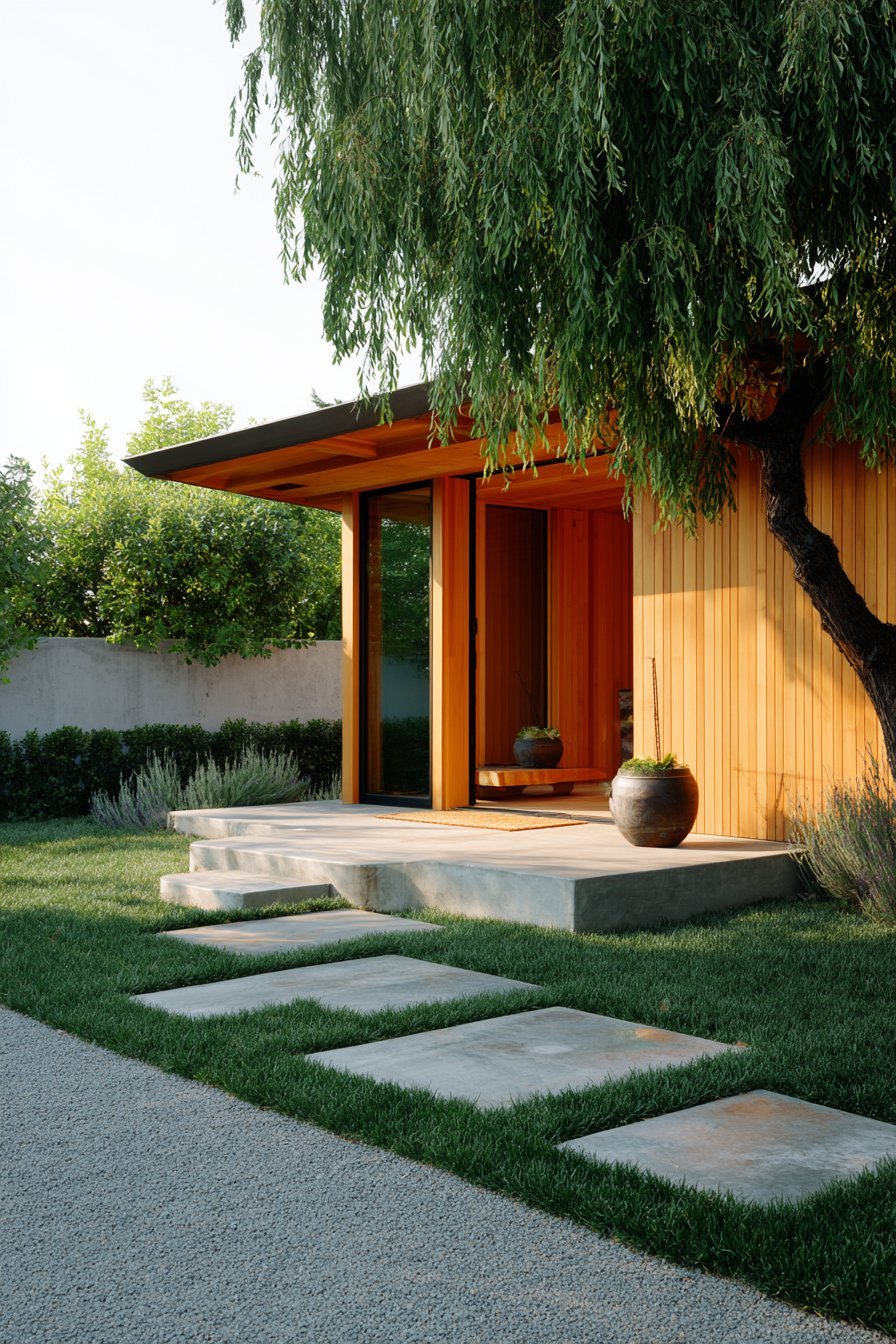
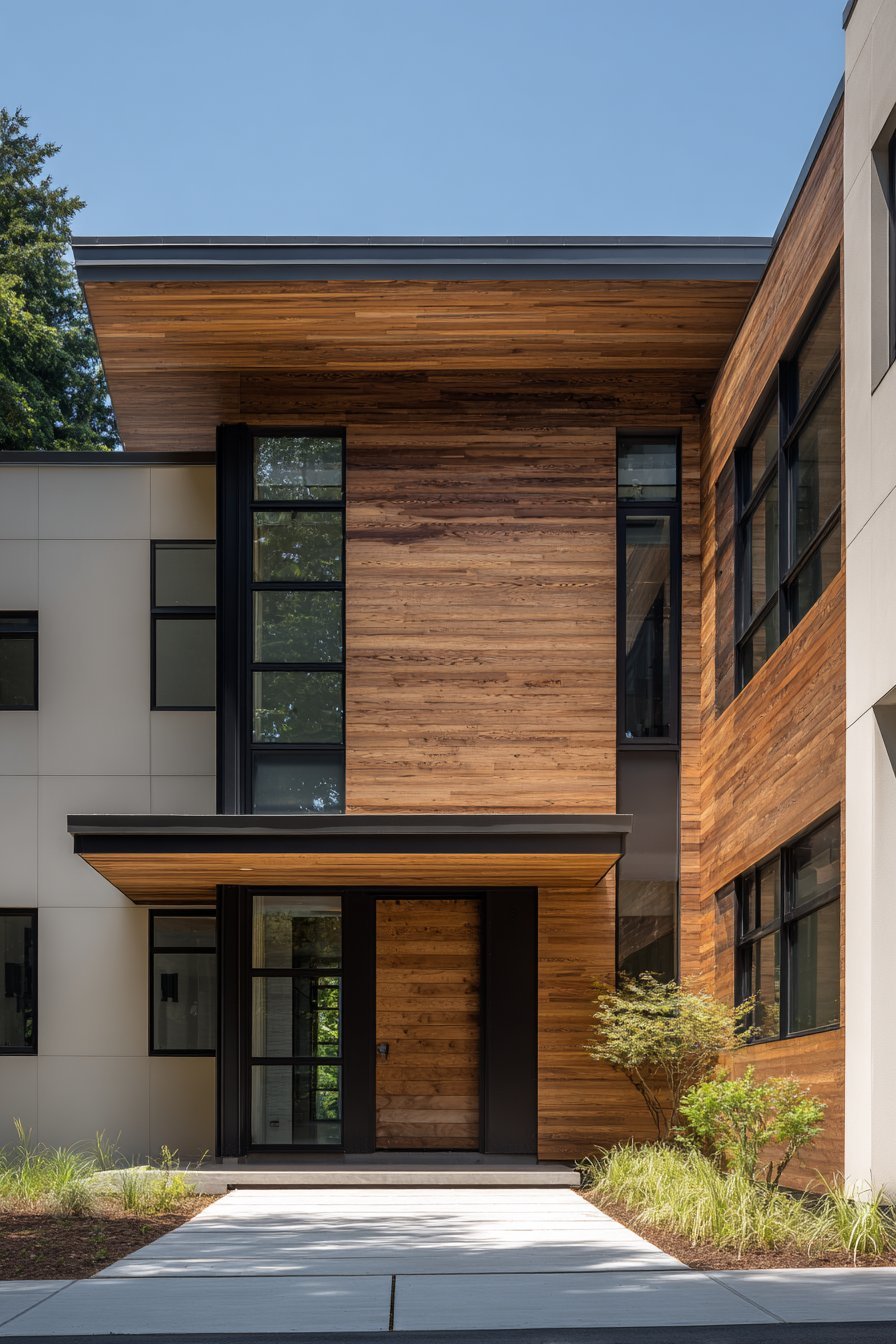
Natural cedar rainscreen cladding with vertical orientation defines this minimalist facade. The wood weathers naturally to silver-grey patina over time. This aging process adds character while eliminating maintenance painting. Large sliding glass doors with slim black frames connect interior to exterior.
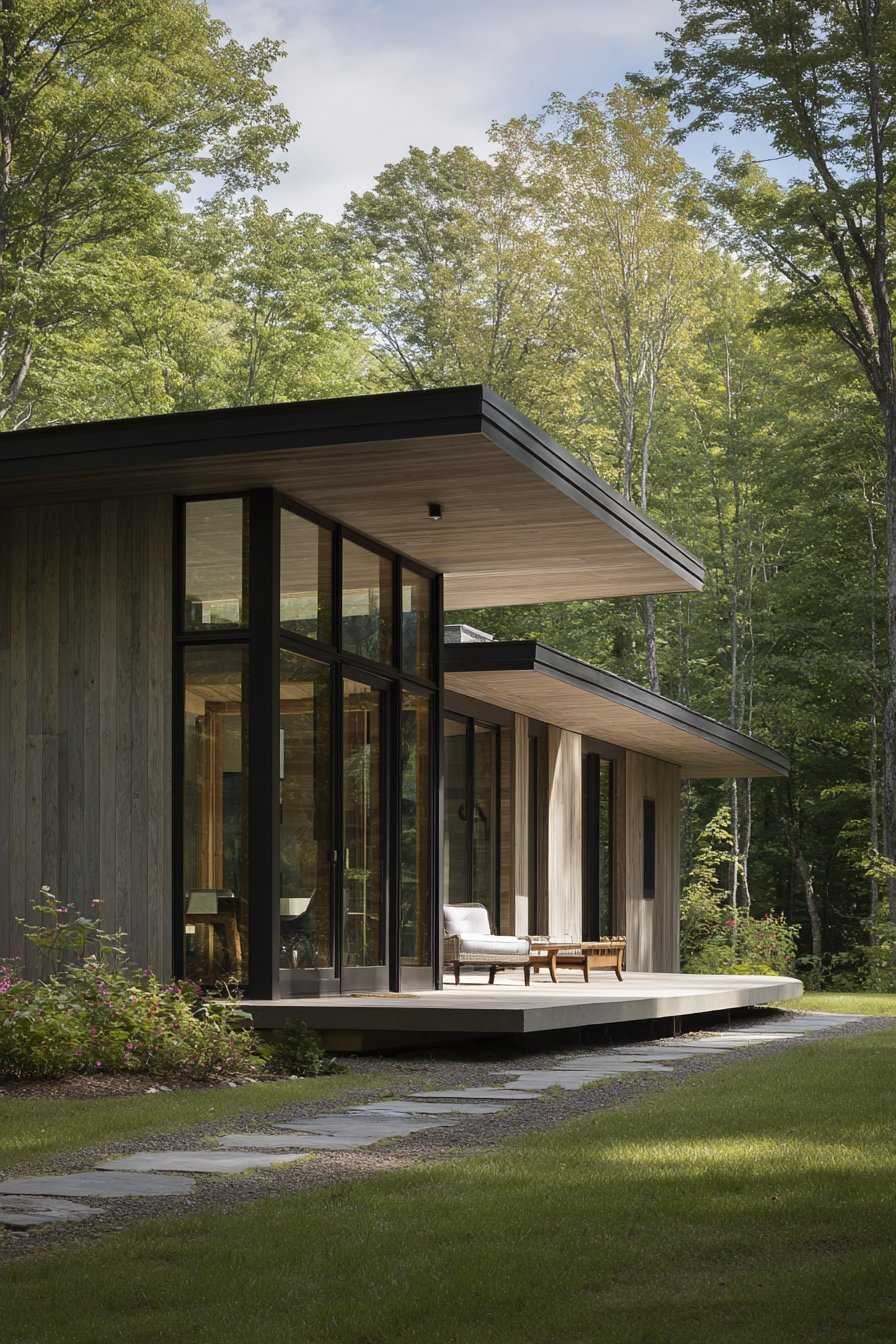
Strategic placement of solid cedar panels alternates with glazed sections. This creates rhythmic pattern across the facade surface. The composition balances privacy with transparency. A flat roof with deep overhangs provides sun protection.
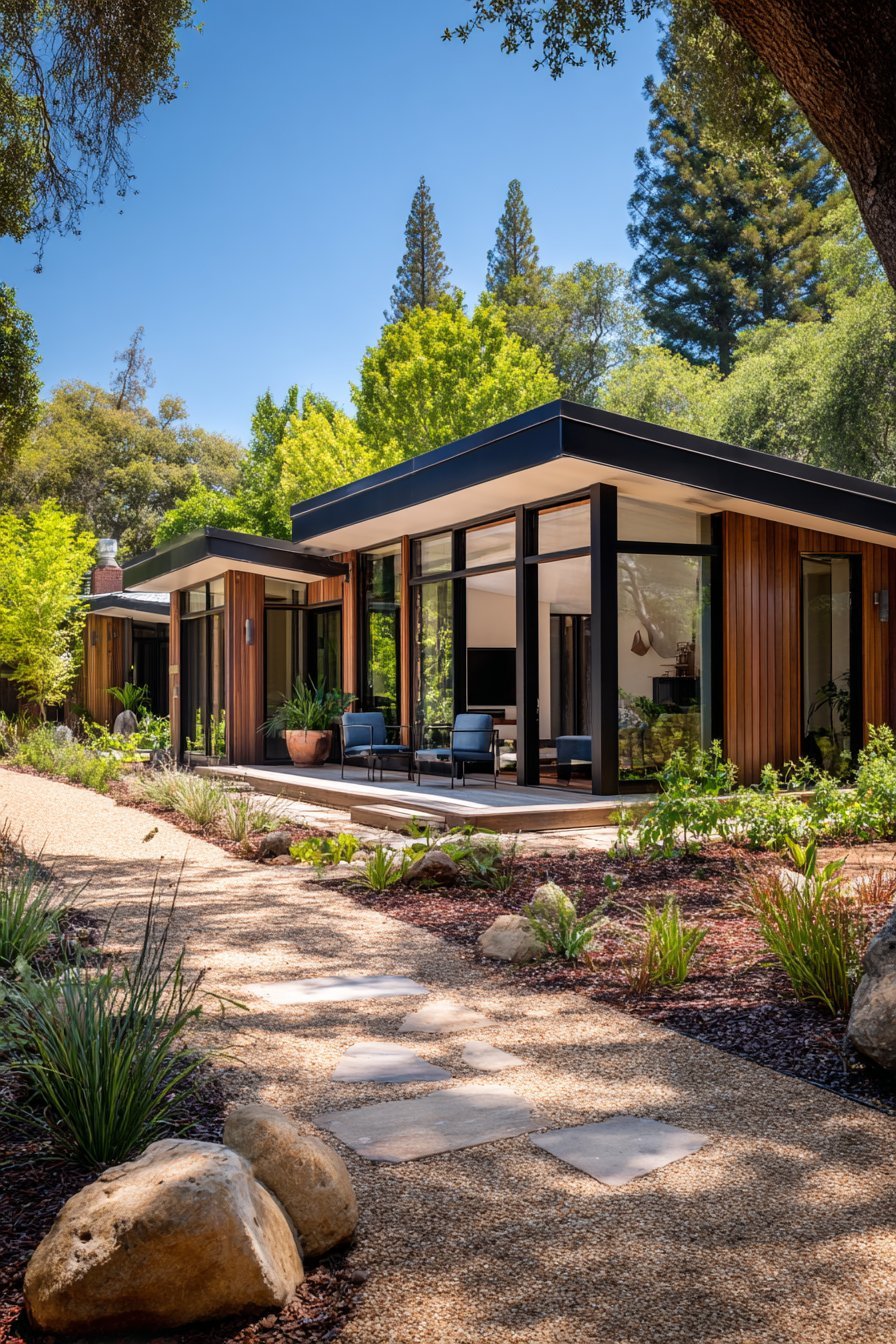
The overhangs emphasize strong horizontal lines that contrast with vertical wood orientation. This interplay creates visual tension and interest. The design demonstrates restraint and careful editing. Every element serves clear purpose without excess ornamentation.
Soft diffused daylight showcases natural wood grain texture beautifully. The photography captures subtle color variations within the cedar. The relationship between interior and exterior spaces becomes apparent through the transparent sections.
Key Design Tips:
- Choose vertical cedar cladding for rainscreen installation systems
- Allow natural weathering to silver-grey for authentic material expression
- Install slim-profile black frames to minimize visual interruption
- Design deep roof overhangs for sun protection and shadow lines
- Create rhythmic patterns through strategic solid and glazed panel placement
- Embrace natural wood aging as design feature rather than maintenance issue
- Photograph in diffused light to capture subtle material qualities
5. Mediterranean Villa with Terracotta and Stucco
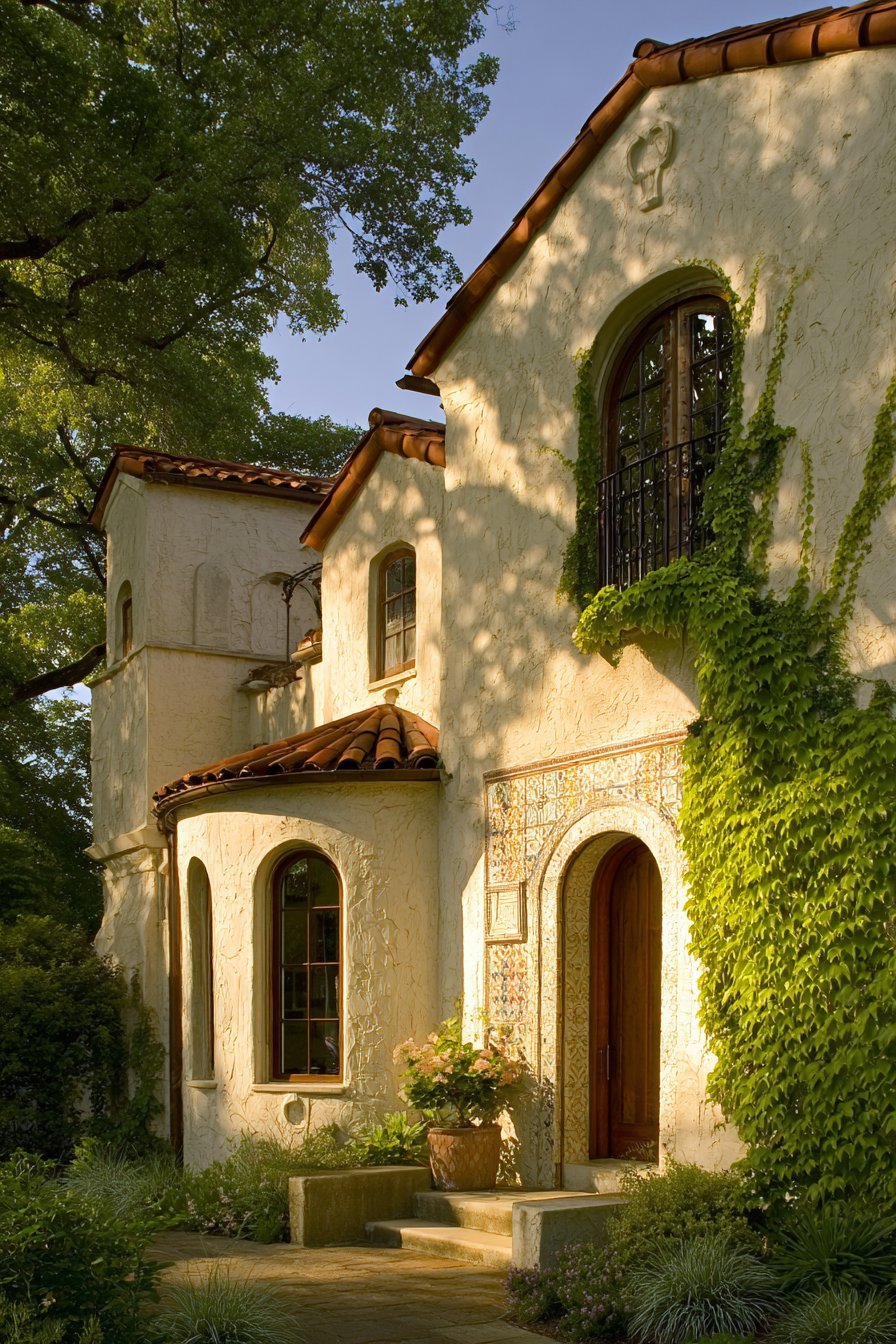
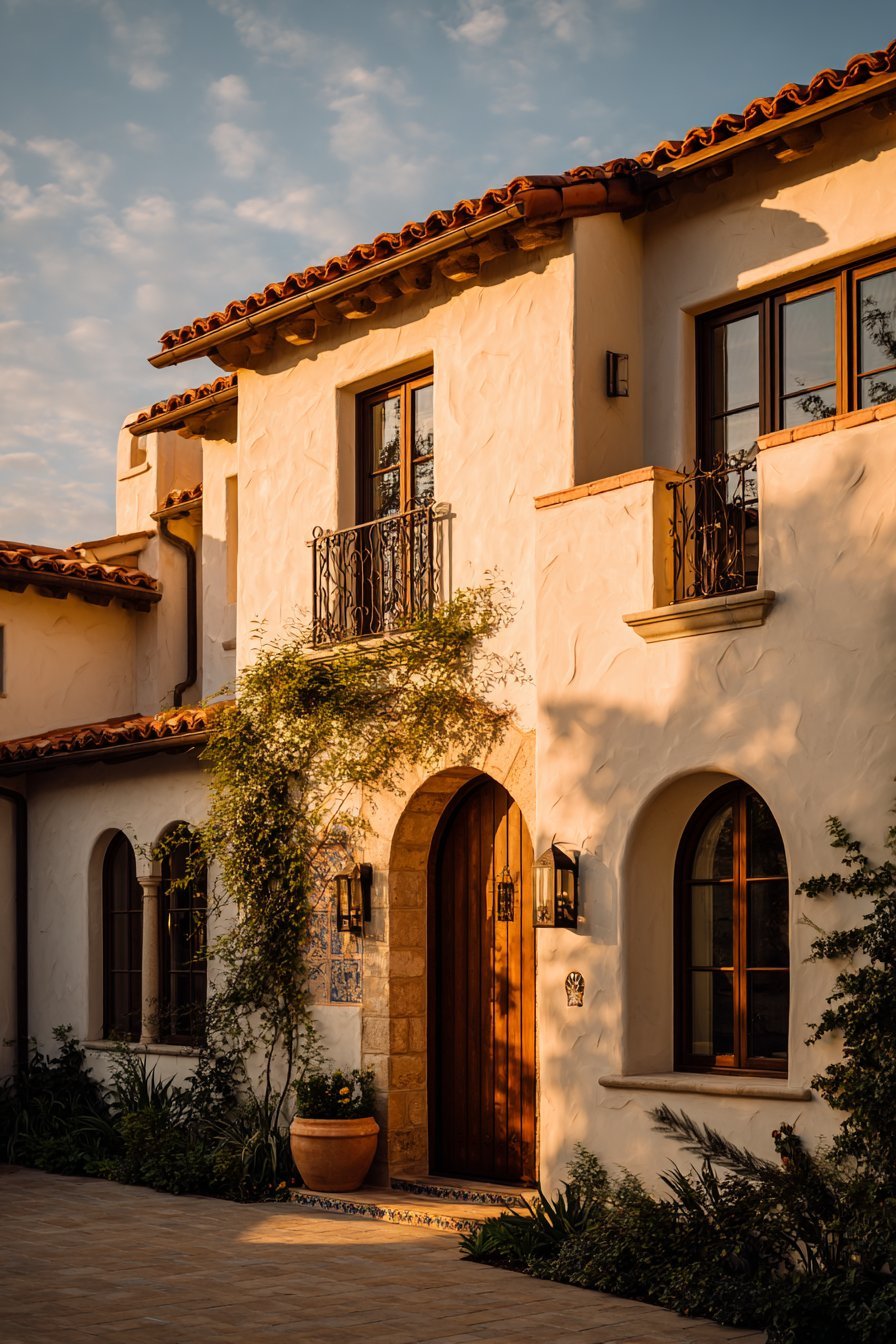
Warm cream-colored stucco finish creates the primary facade surface. Terracotta clay tile roofing adds authentic Mediterranean character. Arched windows with wrought iron grilles reference regional architectural traditions. The rounded arched entry door reinforces this curved vocabulary.
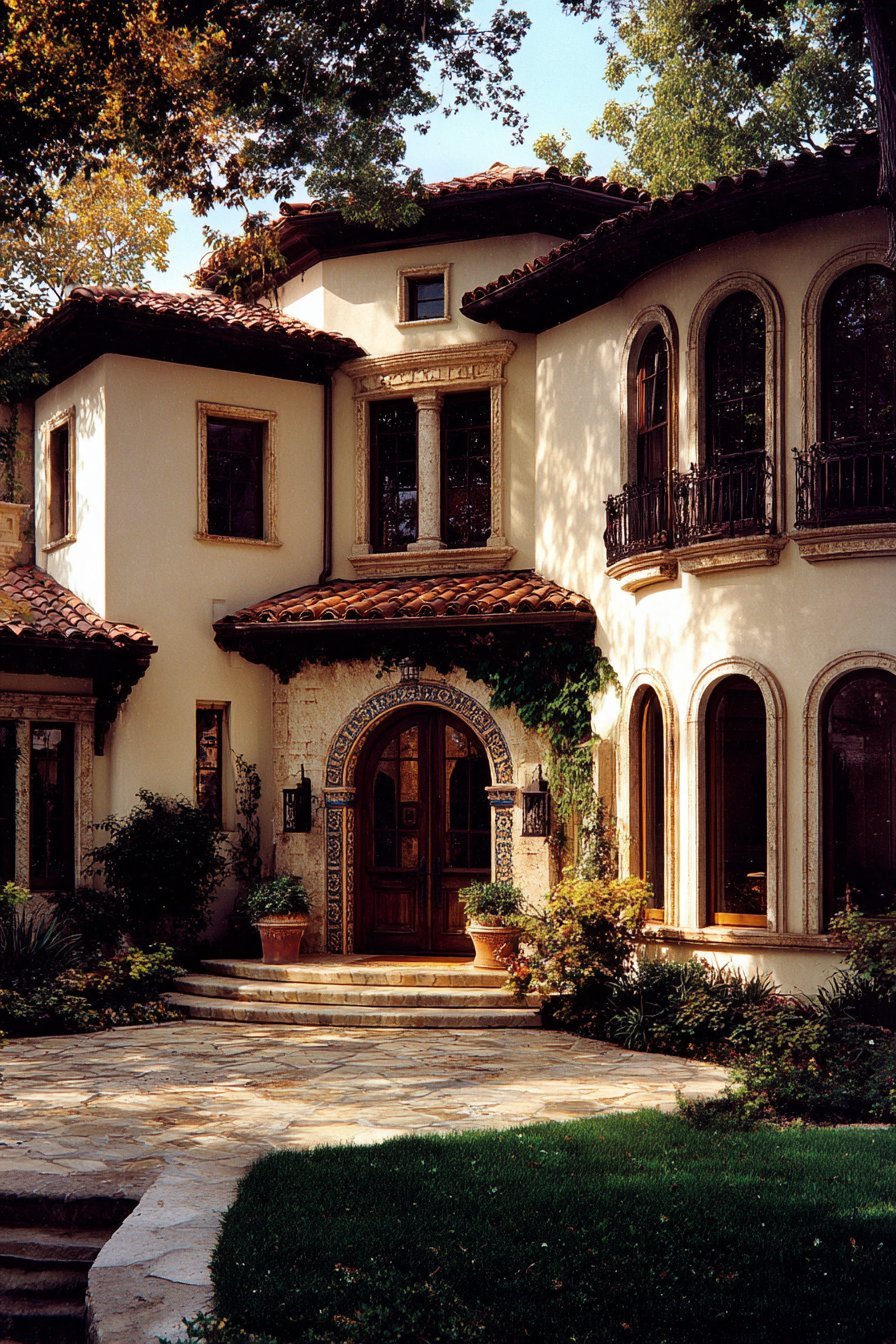
Decorative tile accents surround the entrance area. These hand-painted ceramic details add artisanal quality. Exposed wooden beam ends beneath roof eaves suggest traditional construction methods. Climbing jasmine vines frame one side of entry.
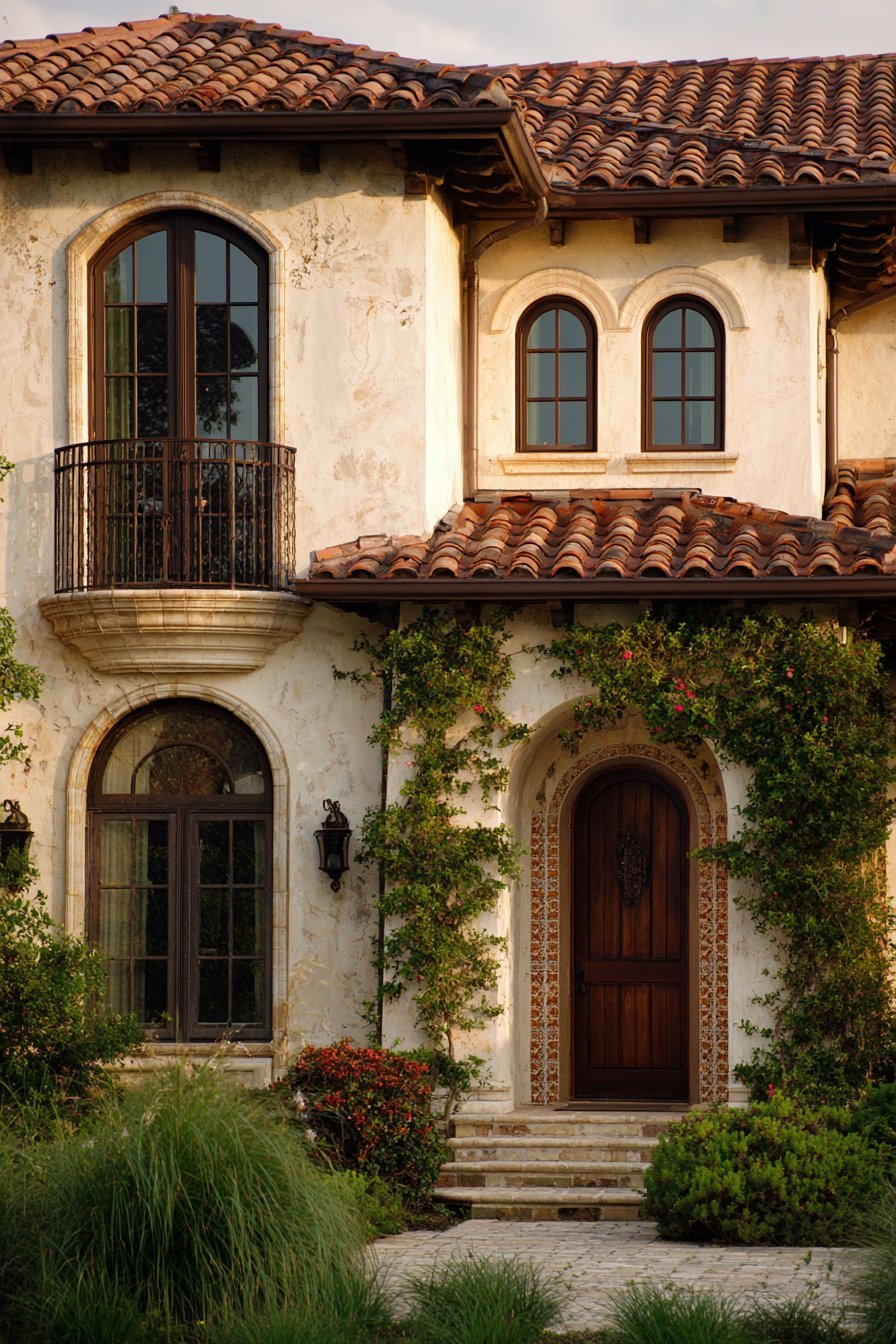
The organic plant material softens structured architectural elements. This integration of architecture and landscape creates cohesive design. The vines add seasonal change and living quality to the static facade.
Afternoon light emphasizes textured stucco surface character. Dramatic shadows form in arched recesses throughout the facade. This play of light and shadow enhances three-dimensional architectural depth.
Key Design Tips:
- Apply textured stucco for authentic Mediterranean surface quality
- Use terracotta clay tiles for traditional roofing material
- Design arched openings for windows and doors as regional characteristic
- Install wrought iron grilles for decorative window protection
- Add hand-painted ceramic tile accents near entrances
- Allow climbing vines to soften architectural hardscape elements
- Photograph during afternoon for dramatic shadow effects in arches
6. Modern Industrial with Metal and Concrete
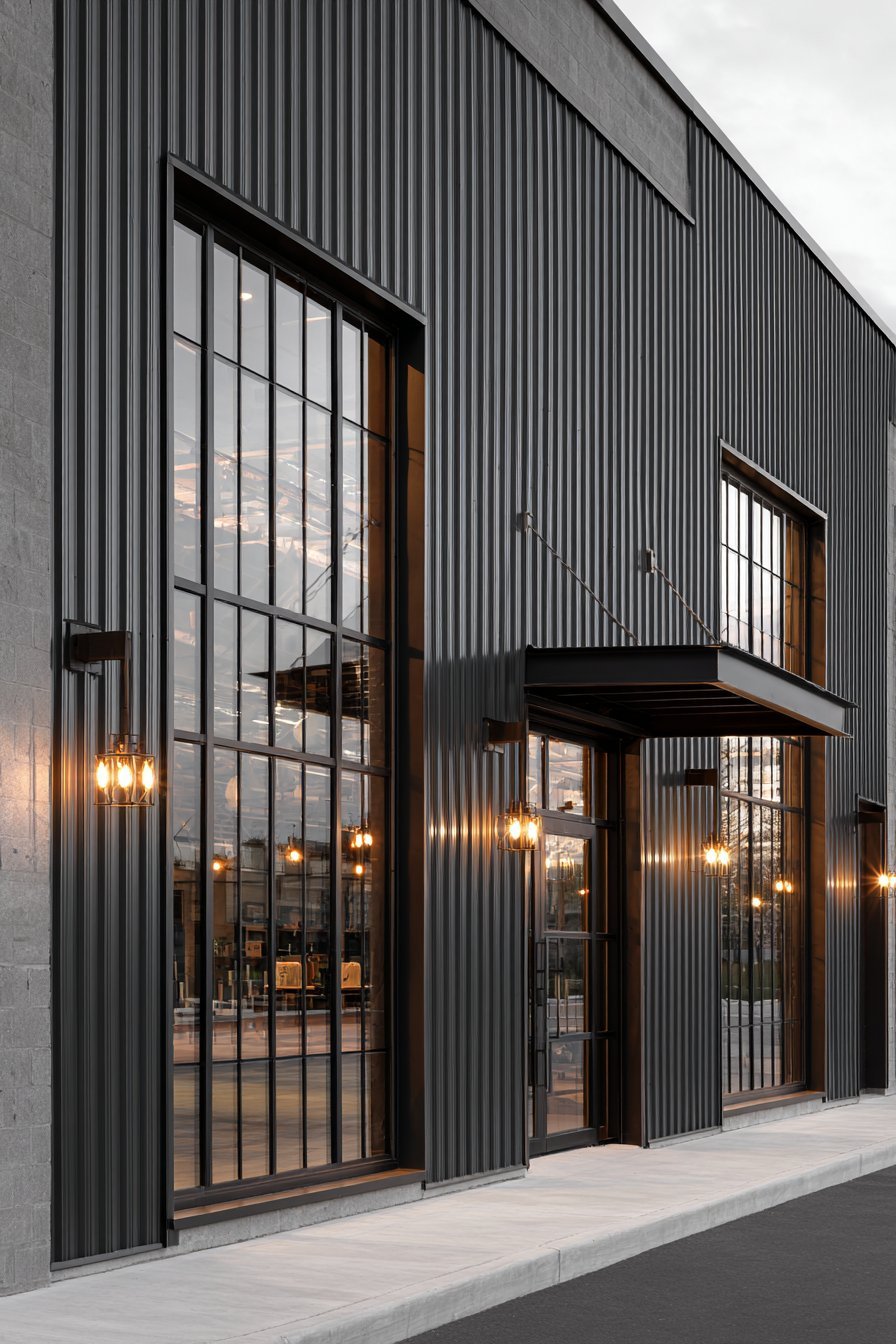
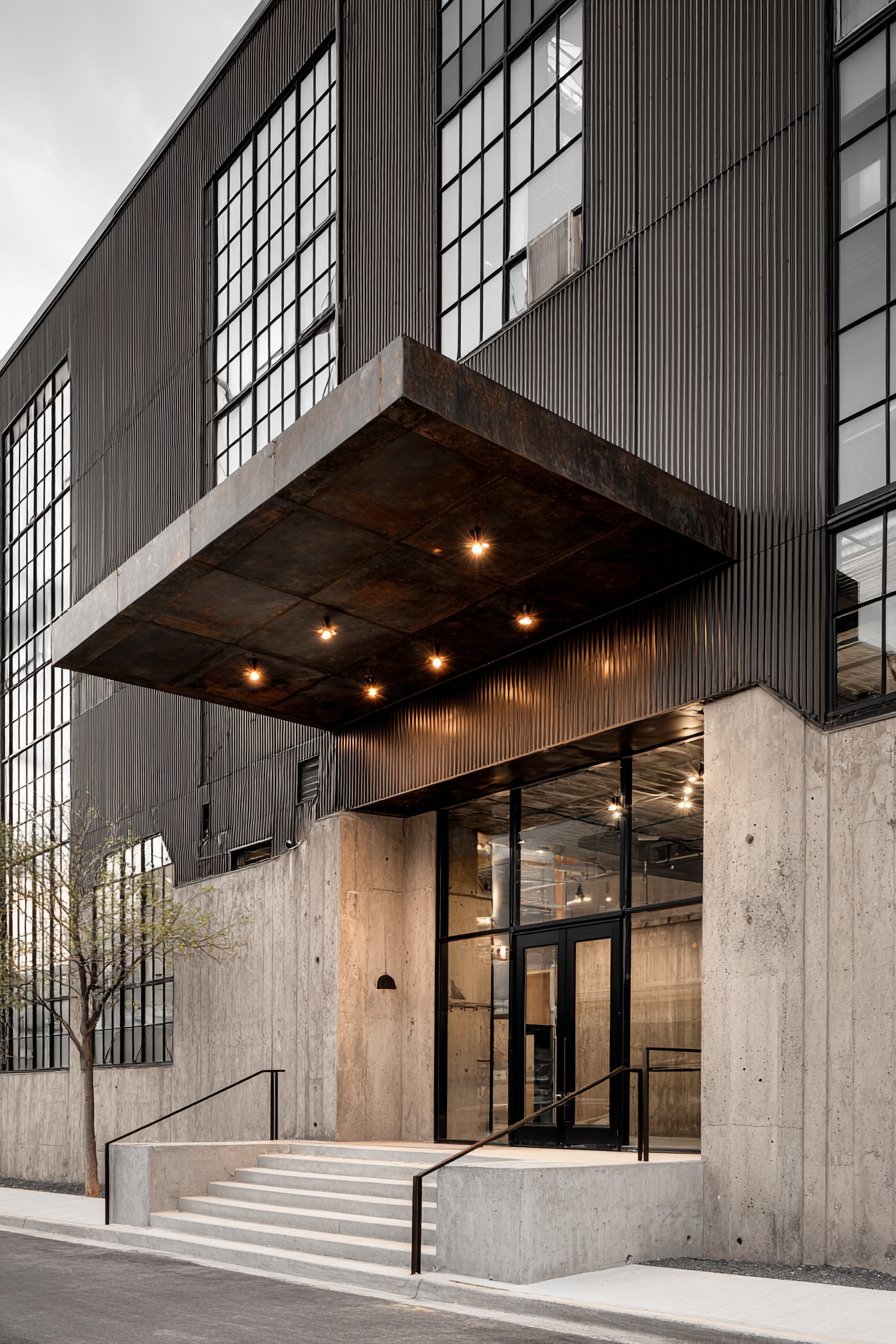
Corrugated metal panels in dark bronze finish create contemporary industrial character. Polished concrete walls provide textural contrast and visual weight. Large industrial-style steel-framed windows feature multiple panes. These windows reference factory and warehouse aesthetic.
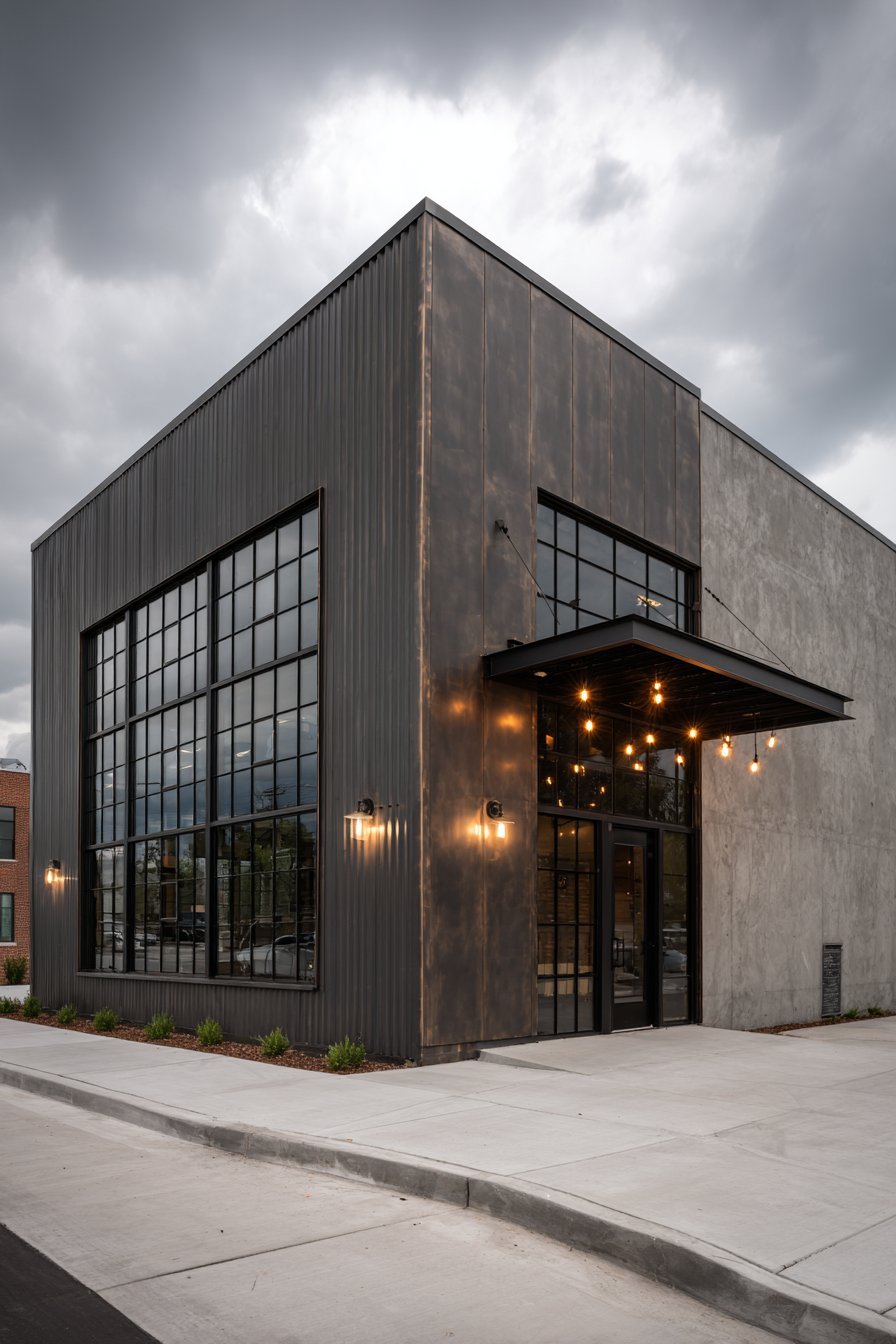
The entrance design celebrates exposed structure and materials. A steel canopy with visible structural elements shelters the entry. Edison bulb pendant lights hang beneath the canopy. Raw concrete foundation remains exposed showing formwork patterns.
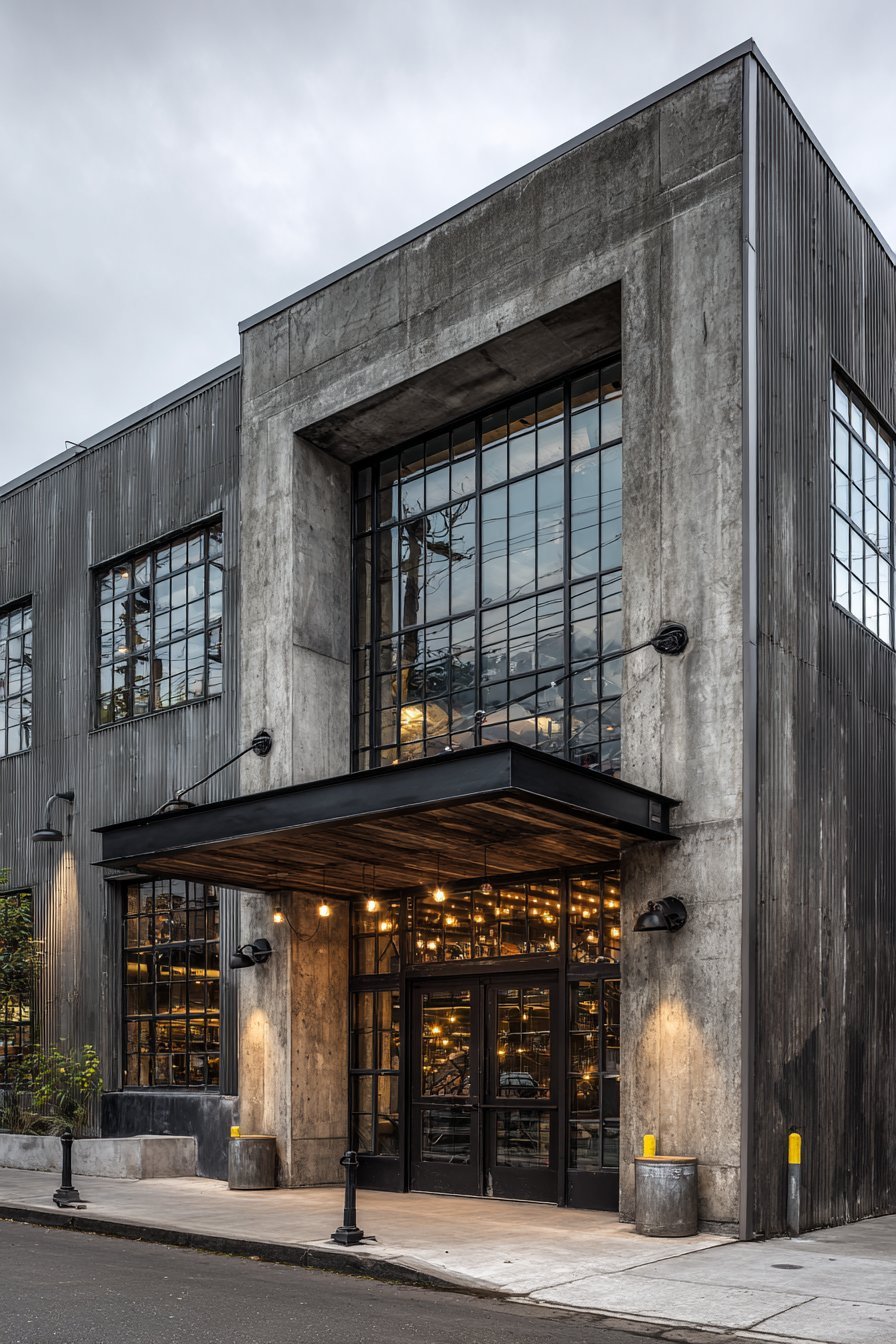
These construction marks become decorative elements in the design. The honest material expression defines the industrial aesthetic approach. Metallic finishes vary from dark bronze panels to polished steel details.
Overcast conditions provide even lighting that highlights material textures. The photography captures subtle variations in metallic finishes. Concrete shows aggregate composition and subtle color shifts across surfaces.
Key Design Tips:
- Use corrugated metal panels for authentic industrial facade character
- Combine metal with polished concrete for textural variety
- Install steel-framed windows with multiple panes for factory aesthetic
- Design steel canopies with exposed structural elements
- Incorporate Edison bulb lighting for vintage industrial feel
- Leave concrete formwork patterns visible as decorative element
- Photograph during overcast conditions for even material documentation
7. Coastal Contemporary with Weathered Wood Accents
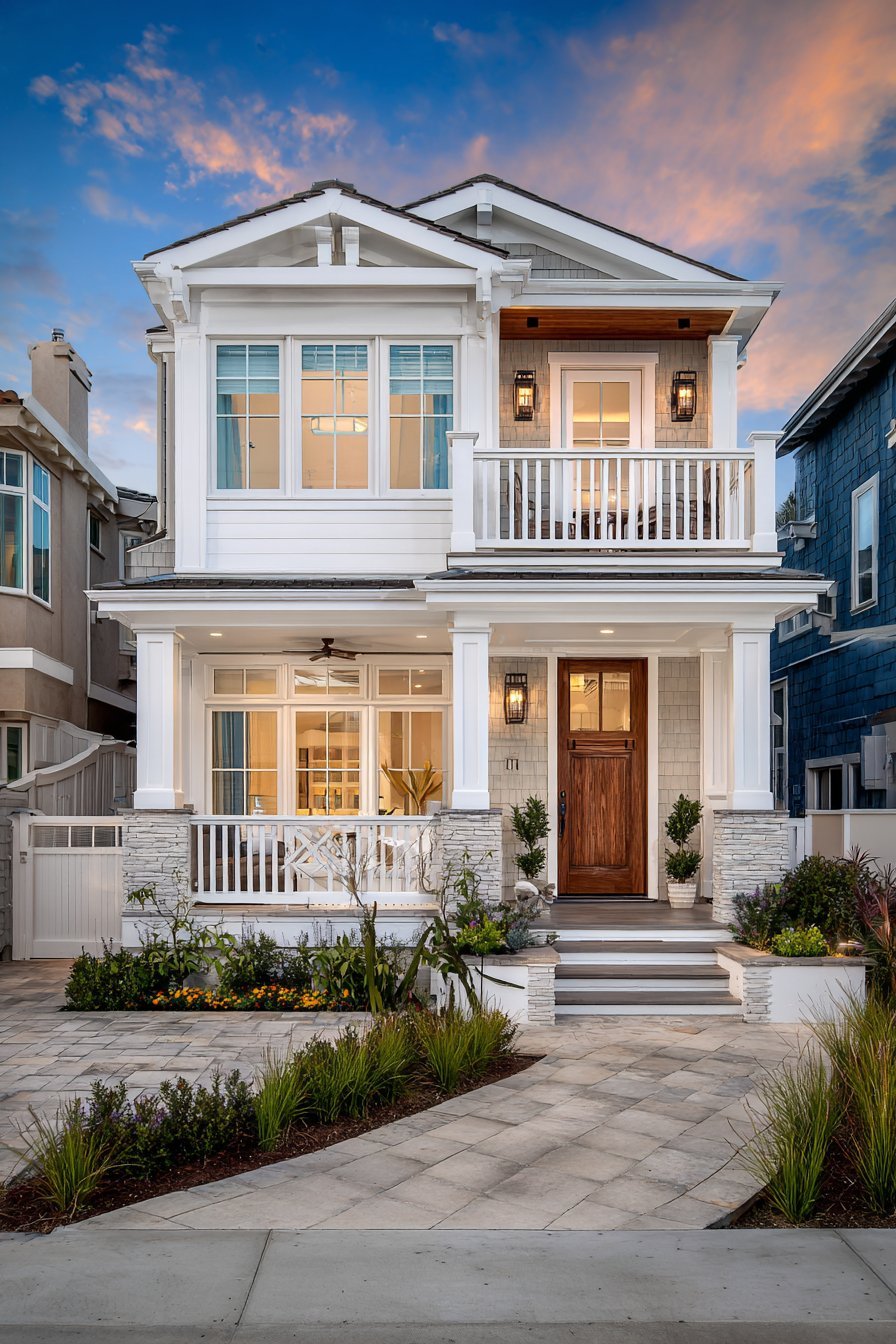
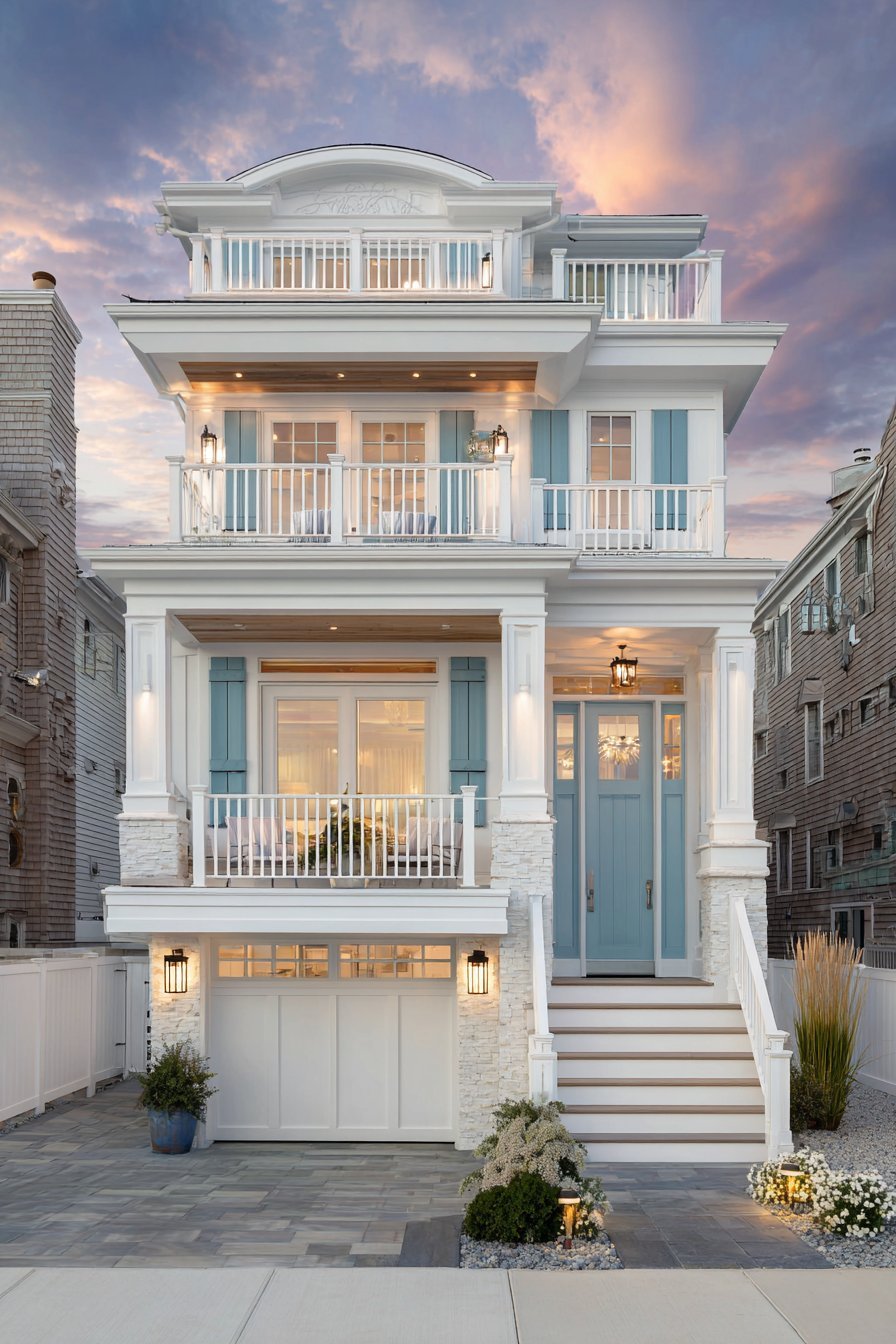
White horizontal lap siding creates bright, light-reflecting surfaces. Natural weathered wood accents surround windows and frame doors. Large windows maximize ocean views and natural light penetration. White frames keep the overall palette cohesive and clean.
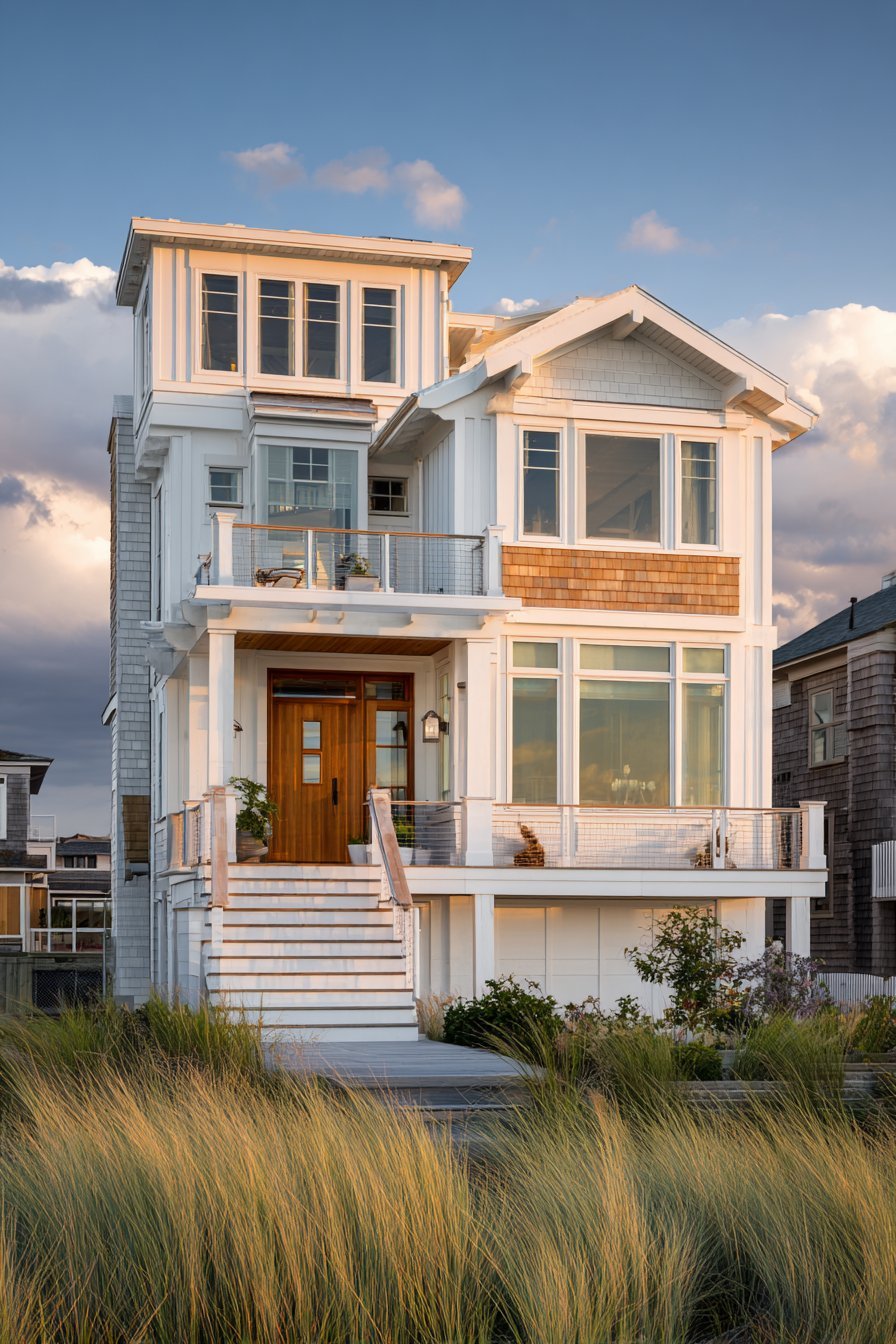
A second-story deck with white painted wood railings extends living space outdoors. A covered porch below provides sheltered outdoor room. Natural wood posts support the porch roof structure. Soft blue-grey painted accents on shutters complement beach-inspired colors.
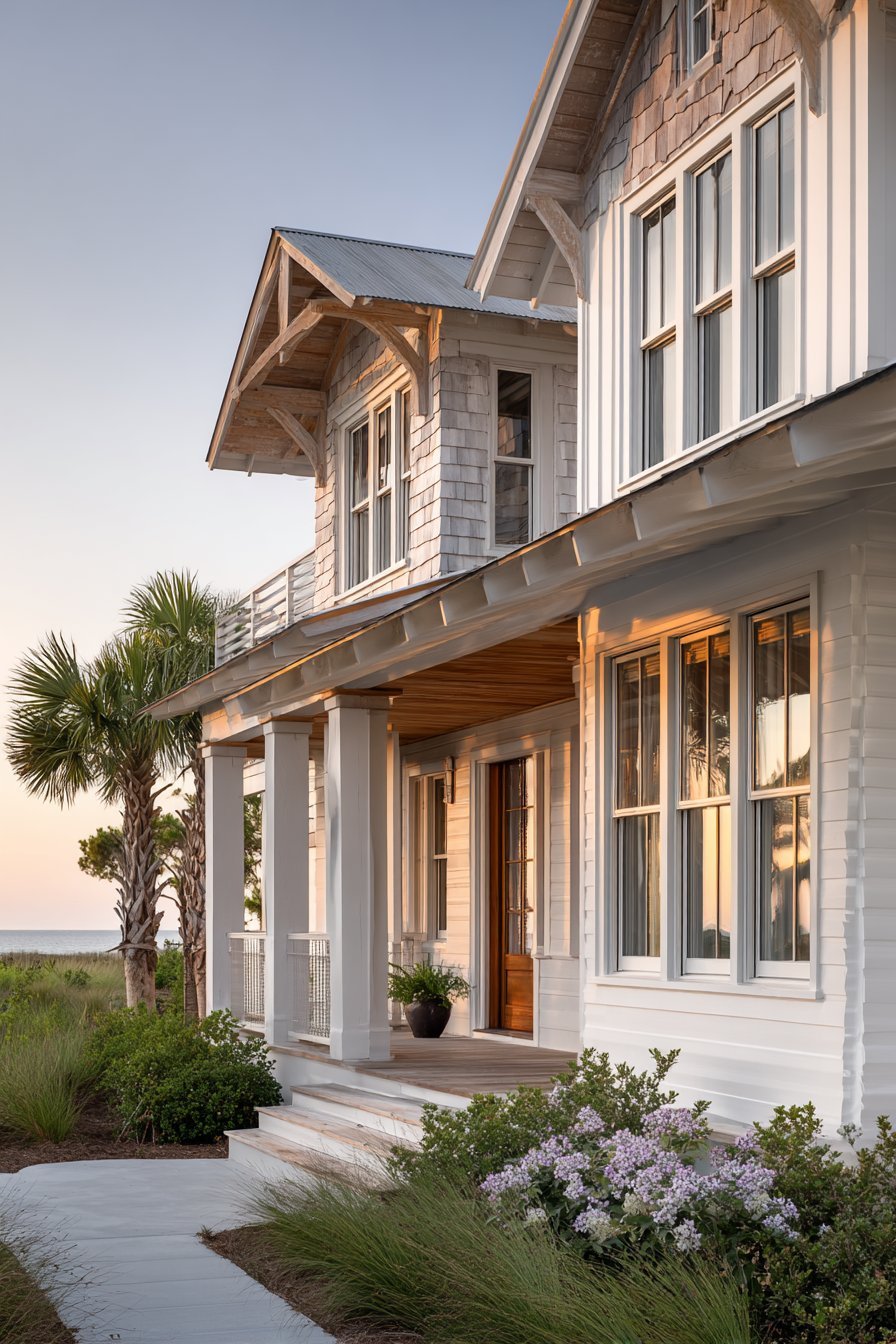
The design responds to coastal climate and lifestyle requirements. Durable materials withstand salt air and weather exposure. The open porch and deck designs embrace indoor-outdoor living patterns.
Golden hour photography captures warm light interaction with white surfaces. The natural wood grain becomes more prominent under directional lighting. The overall effect communicates relaxed coastal living aesthetic.
Key Design Tips:
- Choose white horizontal siding for bright coastal appearance
- Use weathered natural wood for window and door surrounds
- Install large windows to maximize water views and daylight
- Design decks and porches for indoor-outdoor coastal lifestyle
- Add soft blue-grey accent colors for subtle beach palette
- Select materials that withstand salt air and coastal weather
- Photograph during golden hour to enhance white surfaces with warm light
8. Mid-Century Modern with Floor-to-Ceiling Glass
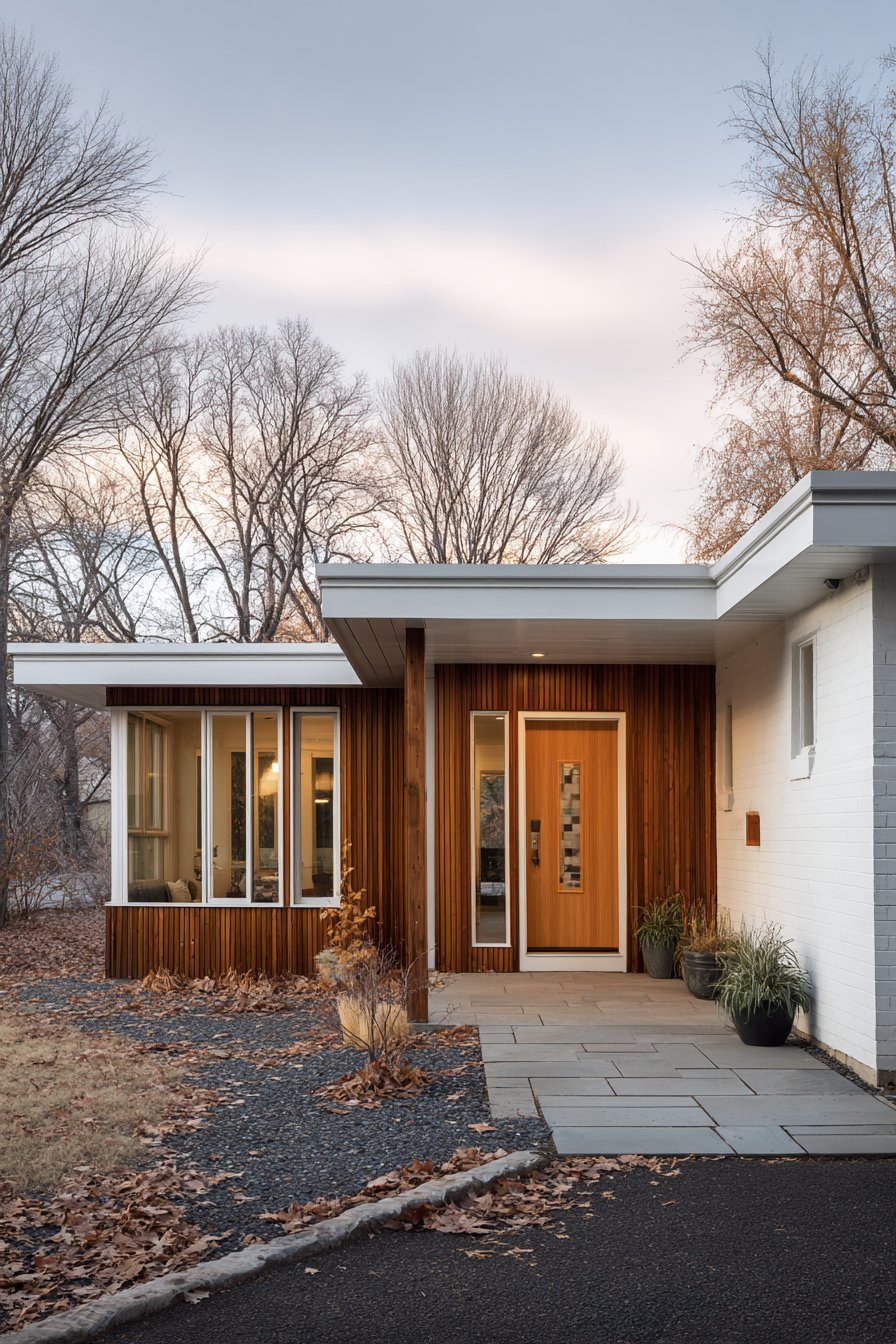
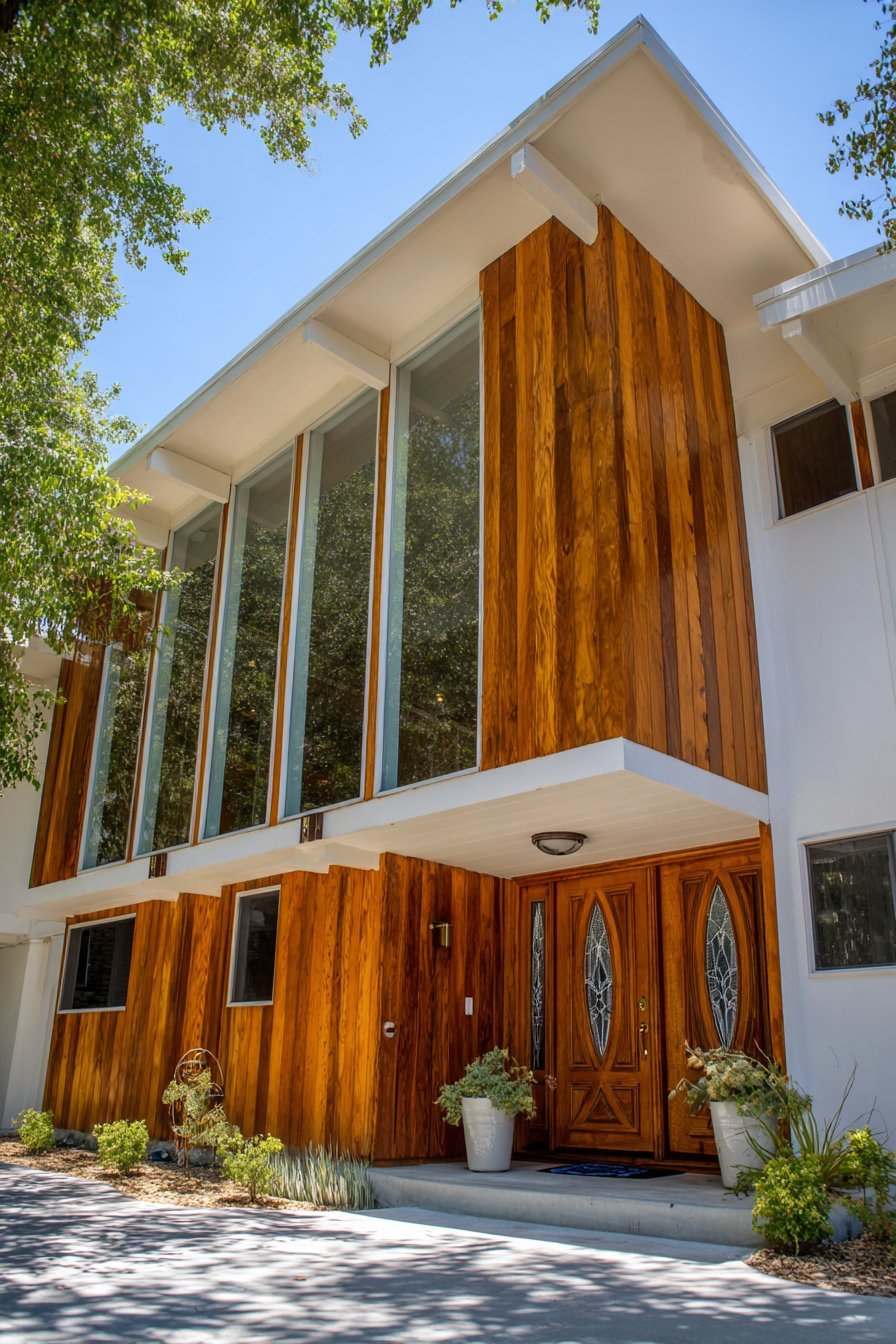
Floor-to-ceiling windows separated by vertical wood slats create the signature mid-century look. Rich walnut finish on wood elements adds warmth and sophistication. Smooth white stucco walls combine with horizontal wood paneling at entry level.
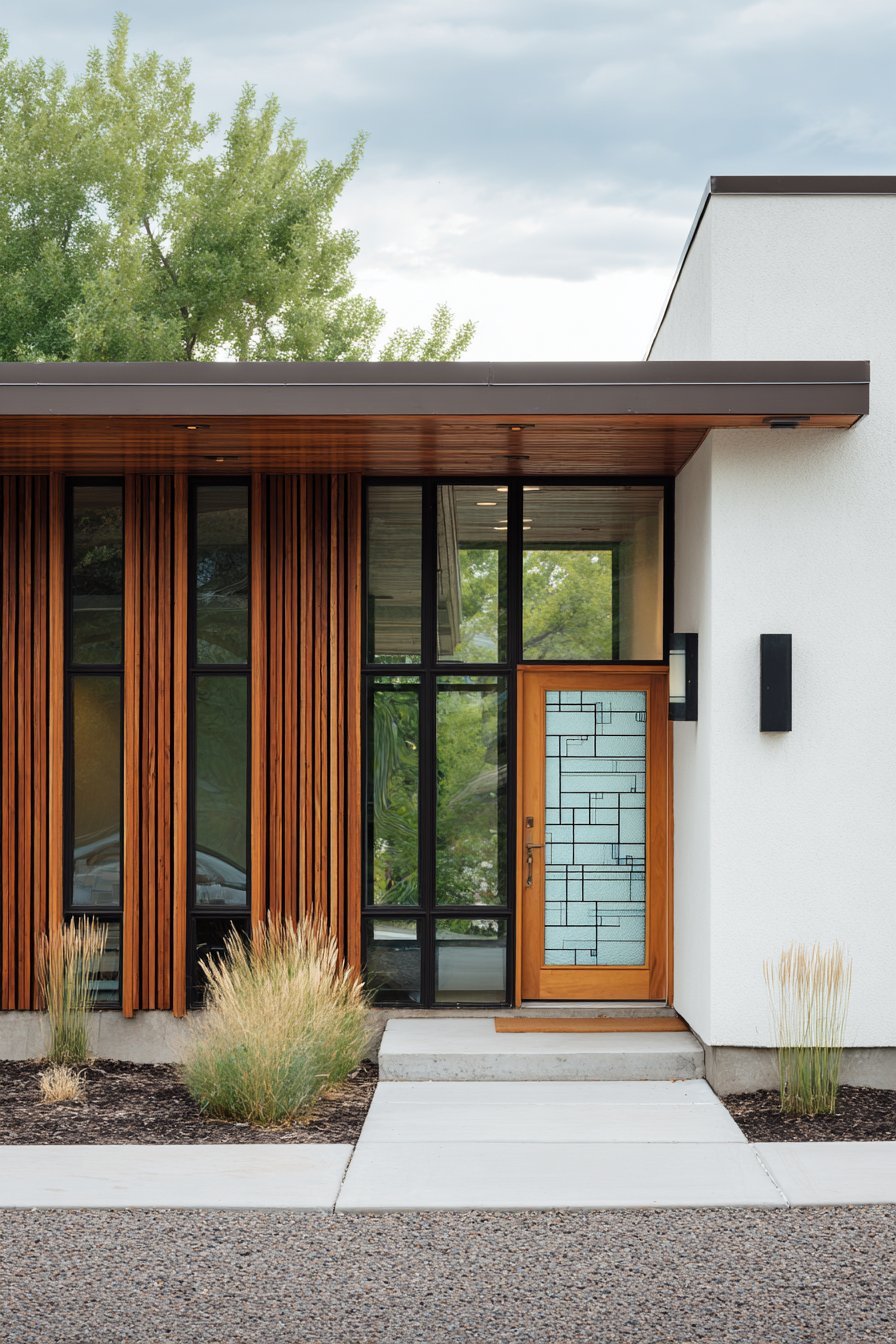
A flat roof with minimal overhang emphasizes horizontal emphasis. Clean lines define every element without ornamental interruption. The entrance features original mid-century door with geometric glass inserts.
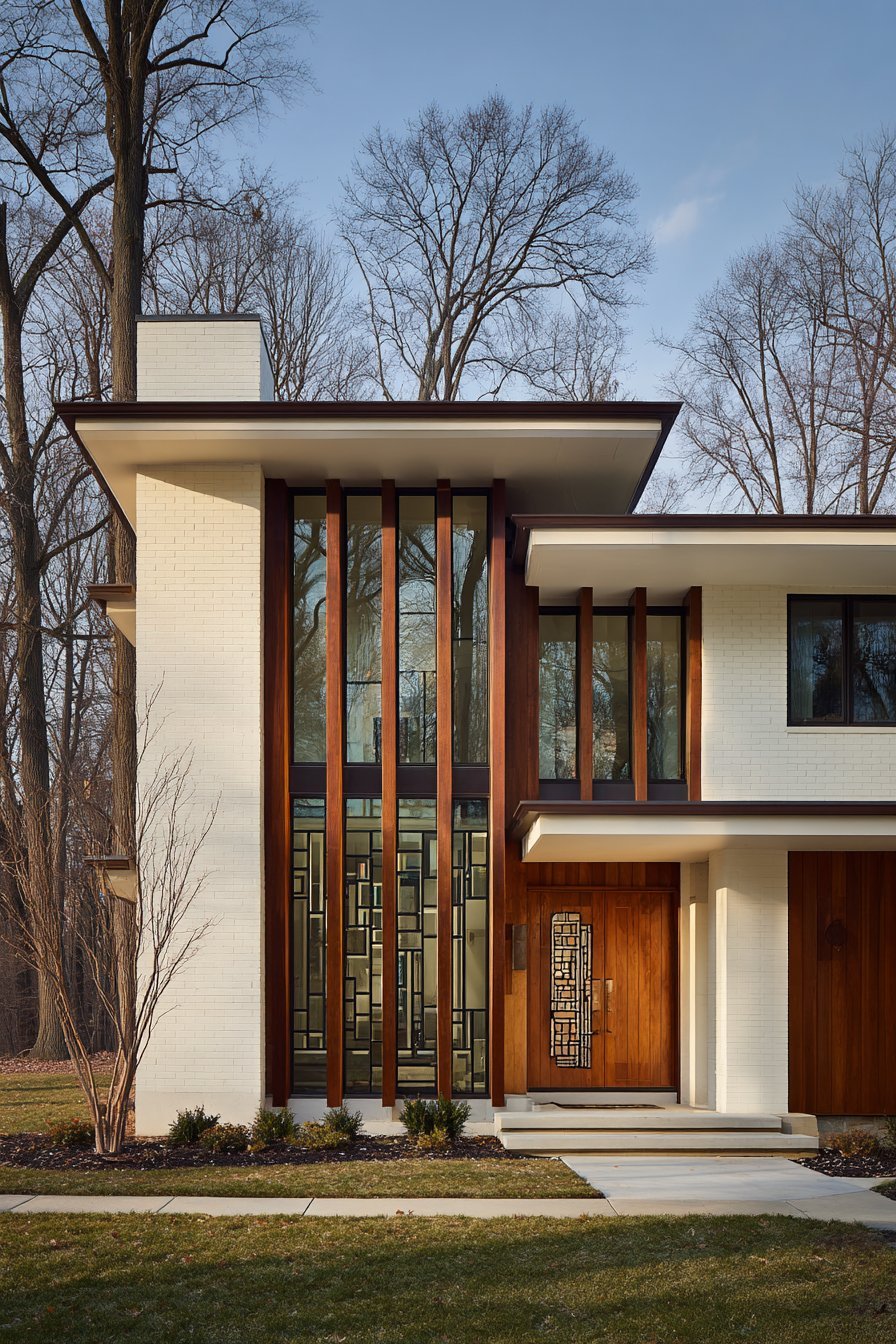
These glass patterns reference the period’s fascination with atomic age design. The transparent and opaque elements create interesting light patterns inside. The relationship between solid and void receives careful attention.
Three-quarter angle photography shows how transparent and solid elements interact. The composition reveals period-appropriate material choices and proportional relationships. Authentic mid-century design principles guide every decision.
Key Design Tips:
- Install floor-to-ceiling windows for signature mid-century transparency
- Use vertical wood slats in walnut for warm dividing elements
- Combine smooth stucco with horizontal wood paneling for material variety
- Design flat roofs with minimal overhang for period accuracy
- Select doors with geometric glass inserts for atomic age character
- Maintain clean lines without ornamental additions
- Photograph from three-quarter angle to show solid and transparent relationships
9. Rustic Mountain Cabin with Stone and Timber
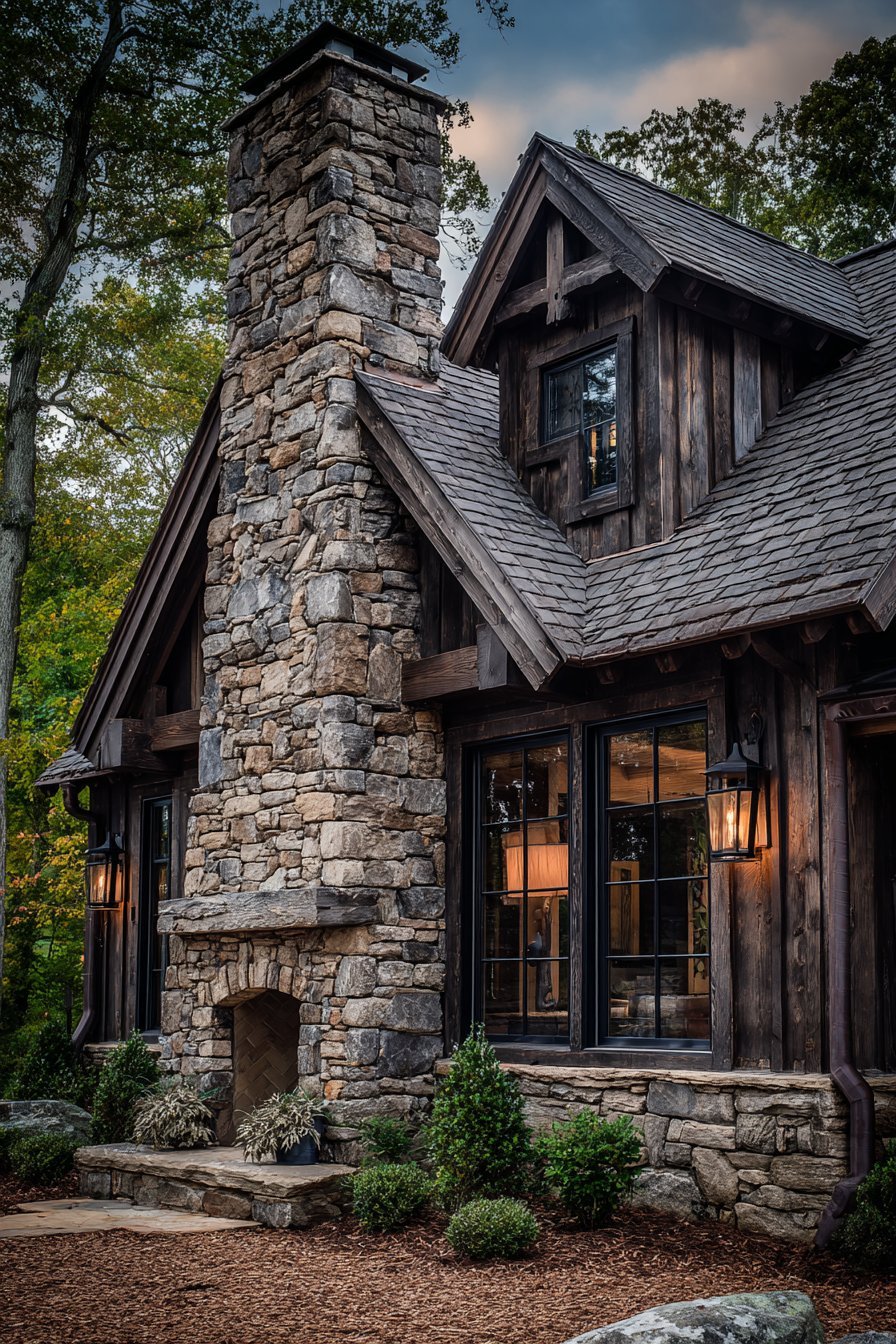
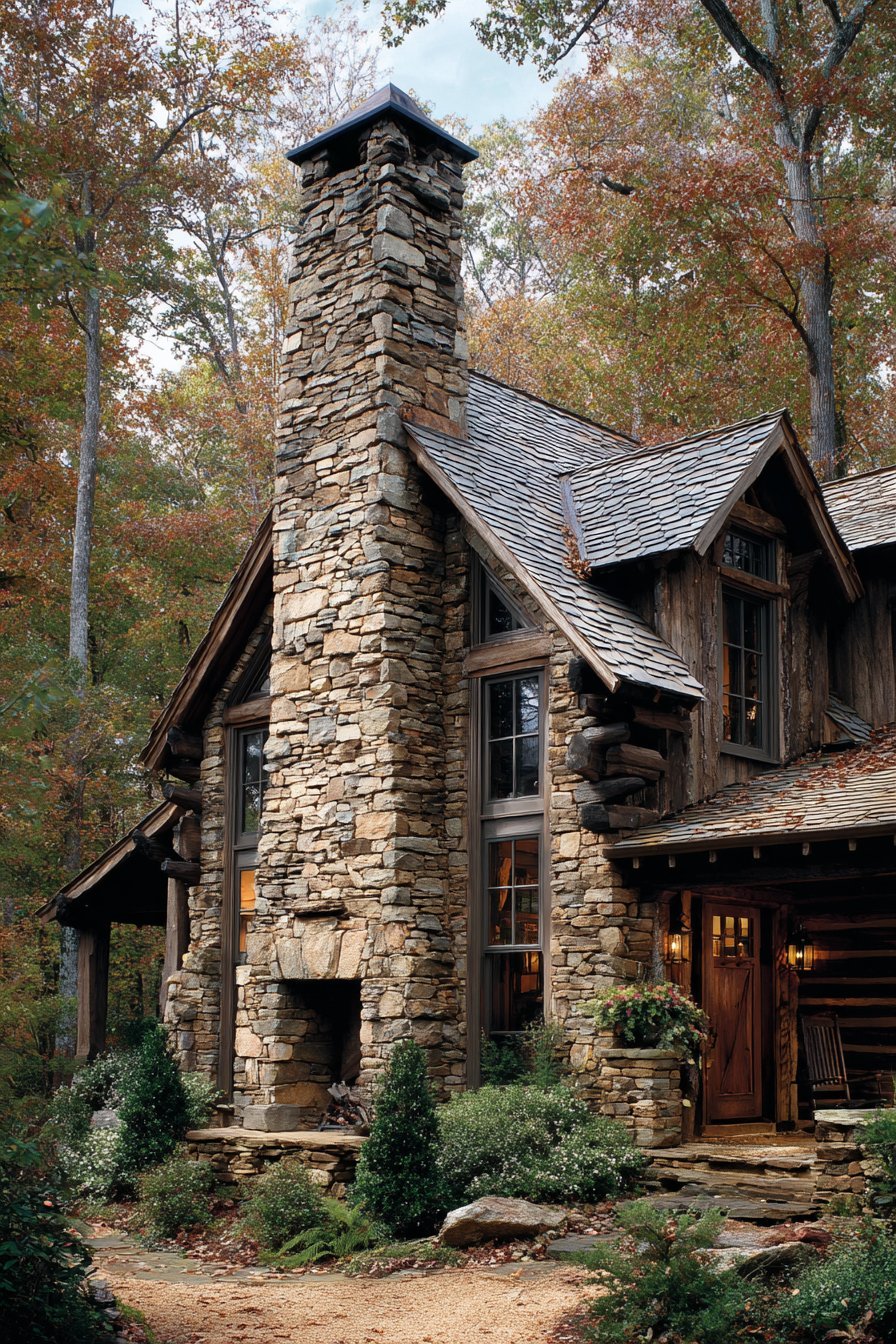
A full-height natural stone chimney creates dominant vertical element. Locally sourced fieldstone shows varied earth tones and textures. Dark stained log siding provides authentic cabin character. Chinked joints between logs reference traditional construction methods.
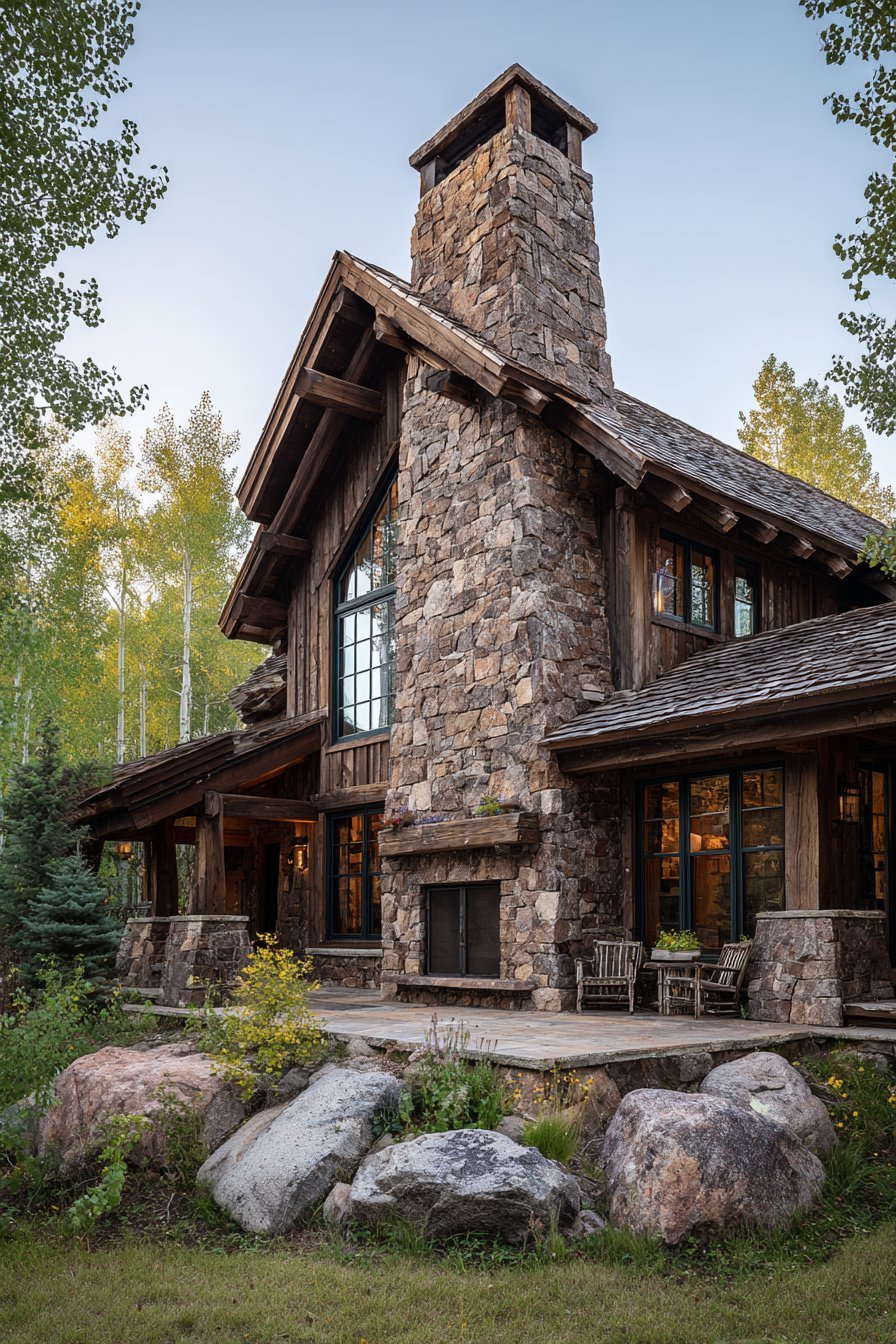
Deep overhanging eaves with exposed log rafter tails provide weather protection. This structural honesty celebrates the building’s construction logic. Multi-pane windows with dark frames suit the rustic aesthetic. A heavy timber front door with wrought iron hardware completes the design.
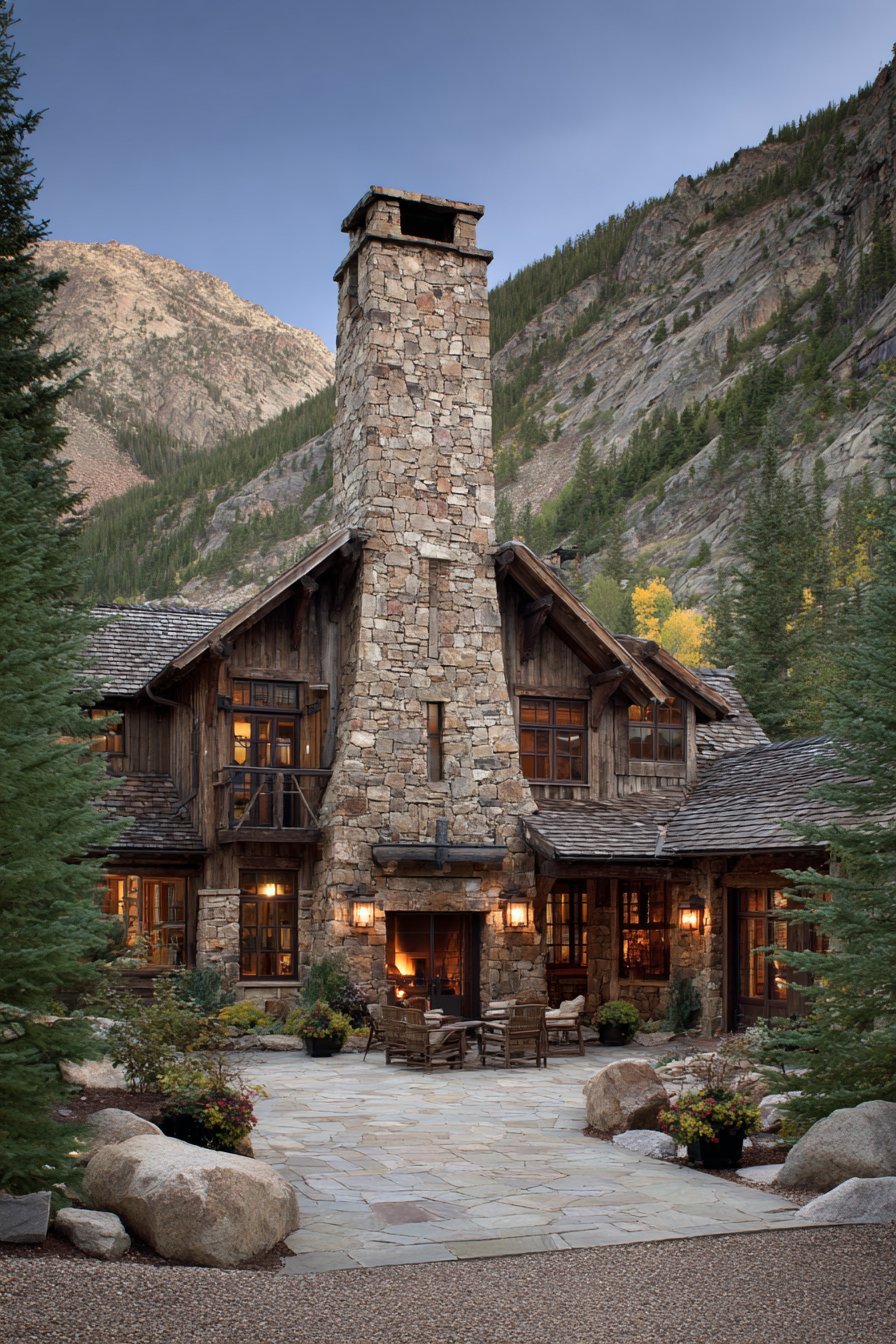
The facade demonstrates integration with natural surroundings. Materials come from local sources when possible. The design respects mountain building traditions while meeting contemporary performance standards.
Late afternoon photography captures shadows that emphasize material texture. Stone reveals three-dimensional quality under directional light. Wood grain patterns become more prominent with proper lighting angles.
Key Design Tips:
- Build full-height stone chimneys as vertical focal elements
- Source fieldstone locally for regional material authenticity
- Use dark stained log siding with visible chinked joints
- Design deep roof overhangs with exposed rafter tails
- Install multi-pane windows appropriate to rustic style
- Choose heavy timber doors with wrought iron hardware
- Photograph late afternoon to emphasize stone and wood textures
10. Scandinavian Two-Tone Simplicity
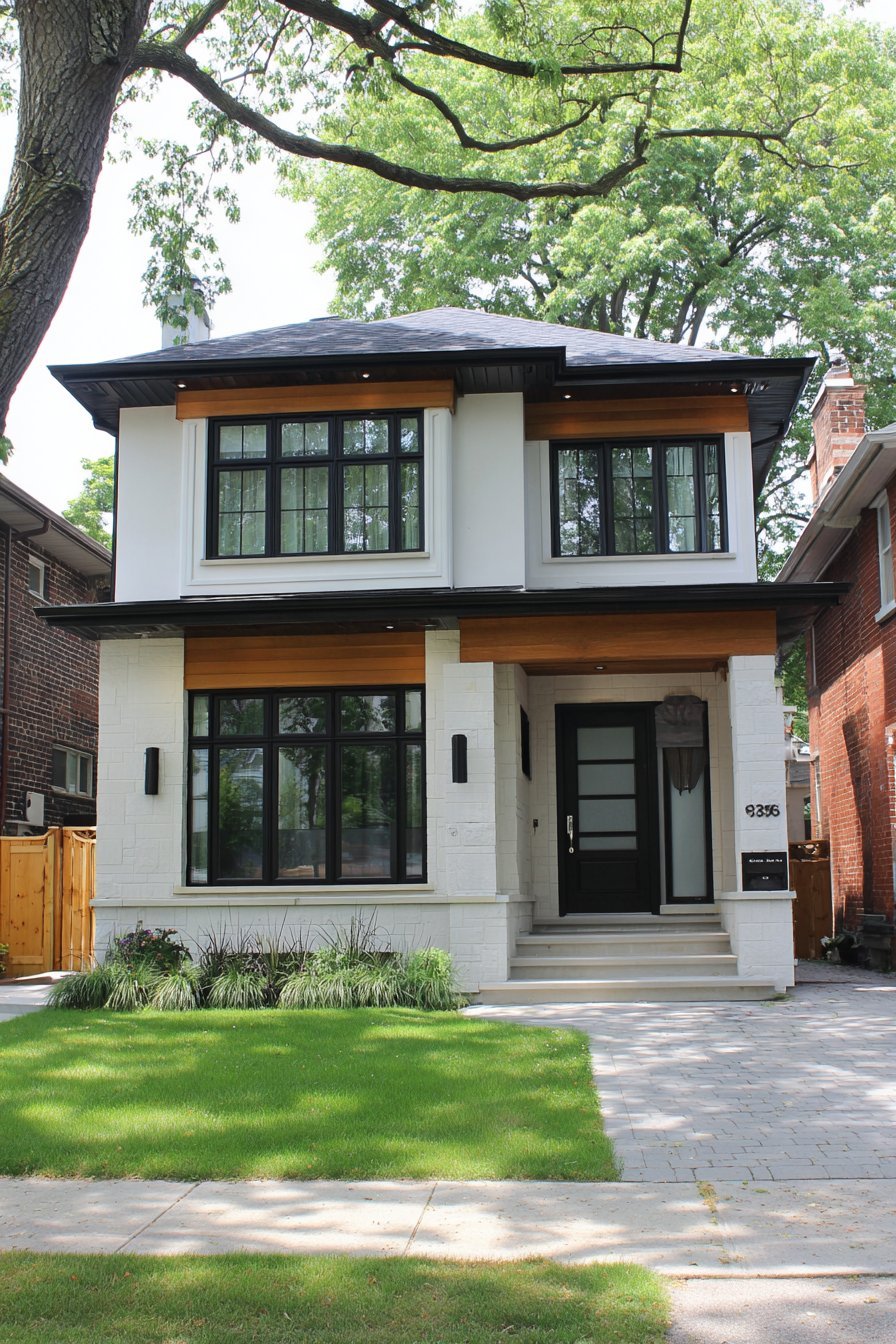
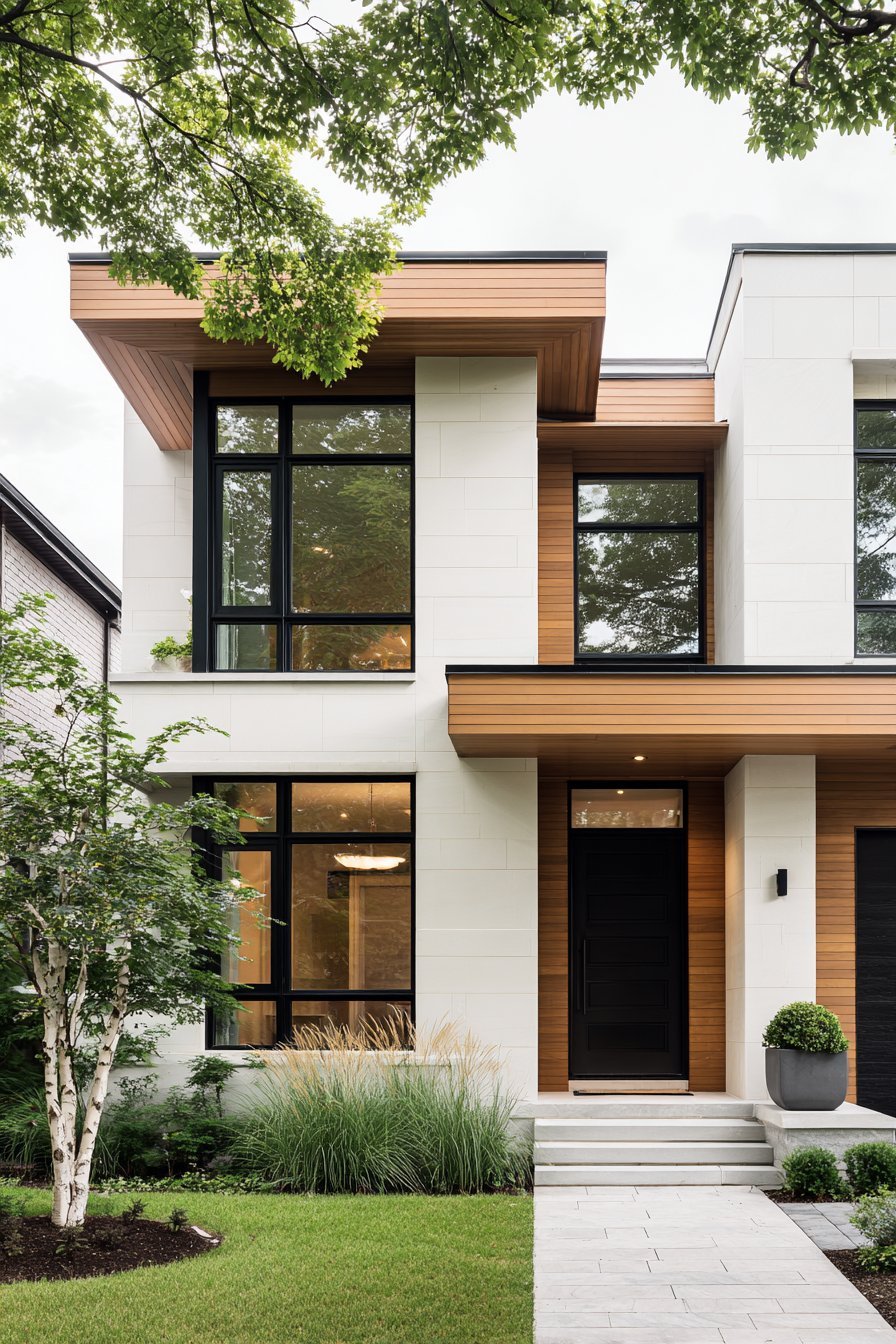
Smooth white render finish covers lower walls creating clean backdrop. Natural light oak wood cladding on upper level creates two-tone composition. Large black aluminum-framed windows with slim profiles maximize daylight. The window frames maintain clean lines and minimal visual weight.
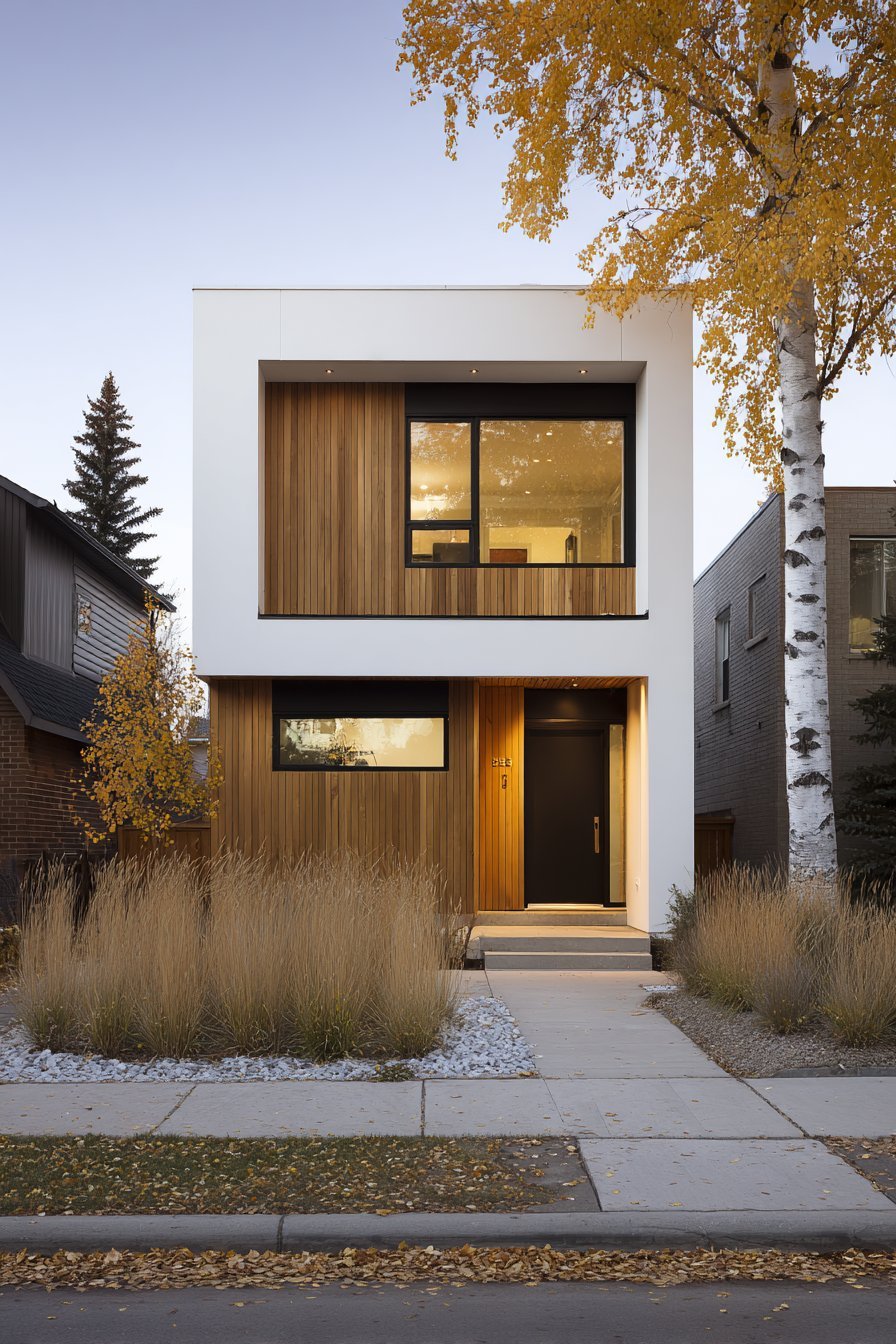
The entrance sits recessed with light oak wood paneling. A simple black front door provides subtle contrast. Minimalist landscaping with native grasses complements understated design. A single birch tree adds vertical element without complexity.
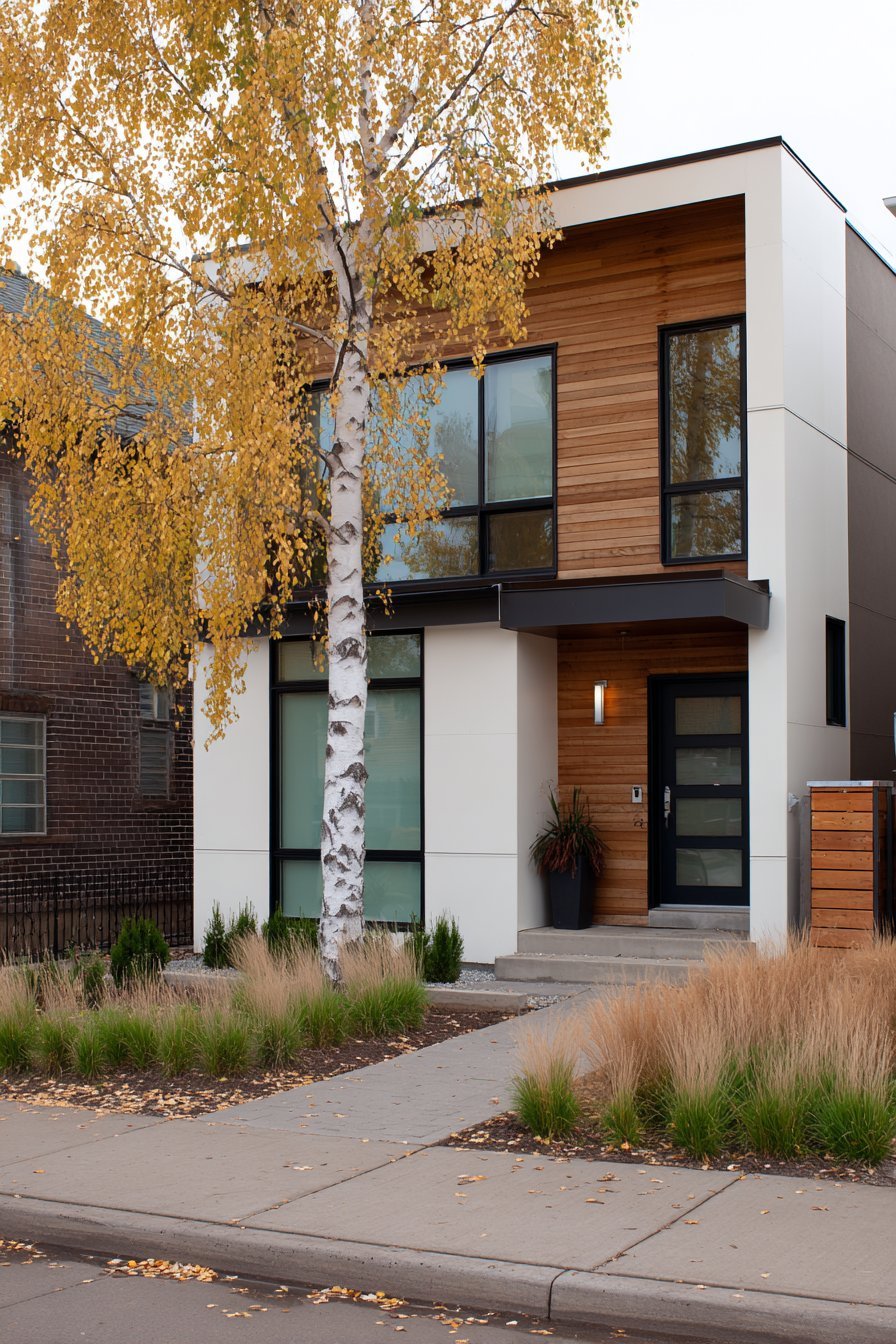
The design embodies Nordic principles of simplicity and natural connection. Every element serves clear purpose without excess decoration. Material quality and craftsmanship replace ornamental additions.
Soft diffused daylight captures subtle interplay between white and wood surfaces. The photography shows how materials respond to northern light quality. The composition demonstrates restraint and careful material editing.
Key Design Tips:
- Combine white render with light oak cladding for two-tone simplicity
- Install large black aluminum windows with slim profiles
- Recess entries to create depth and weather protection
- Choose minimalist landscaping with native grasses
- Embrace Nordic design principles of simplicity and natural connection
- Photograph in diffused light for accurate material documentation
- Let material quality replace decorative ornamentation
11. Victorian Gingerbread with Ornate Detailing
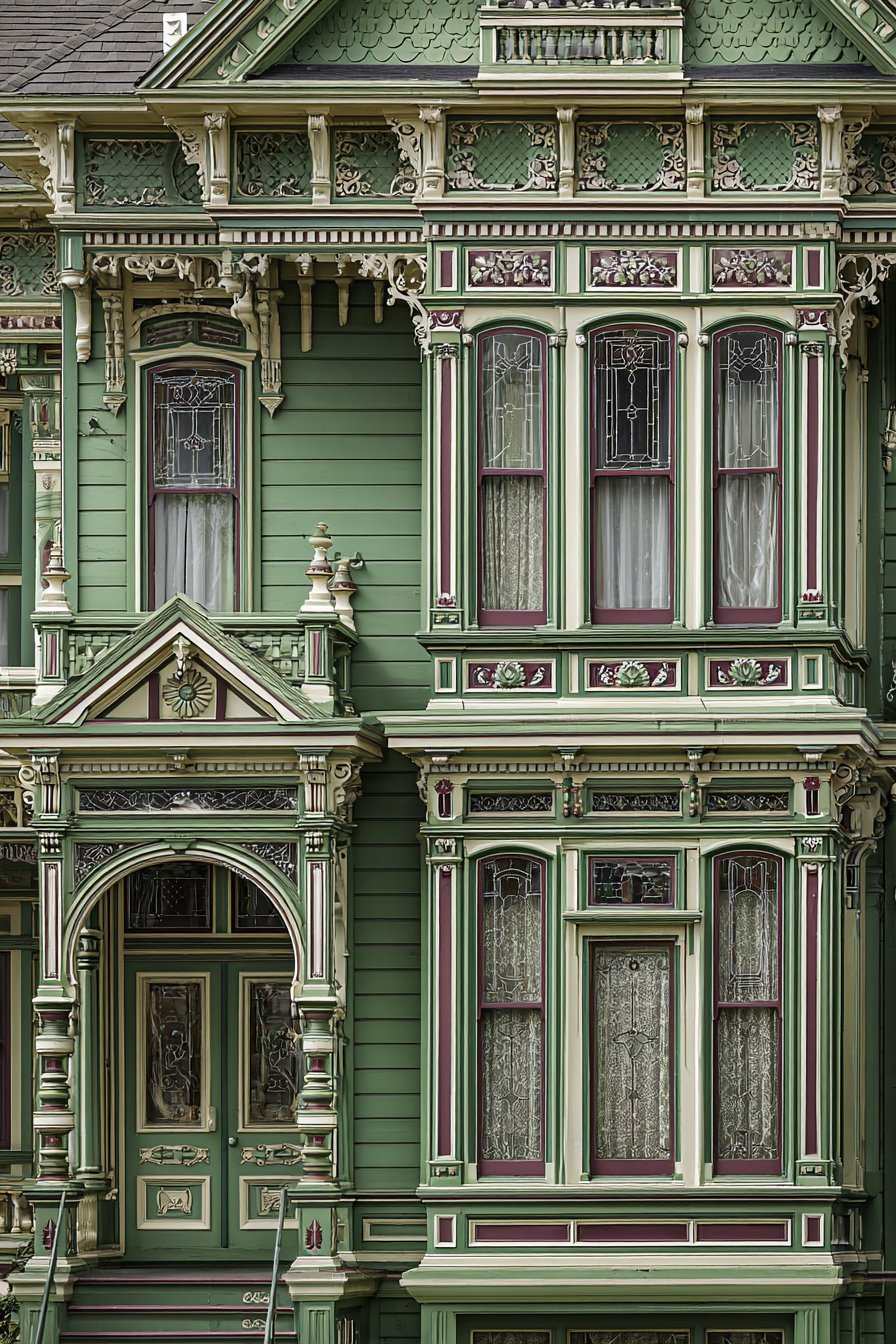
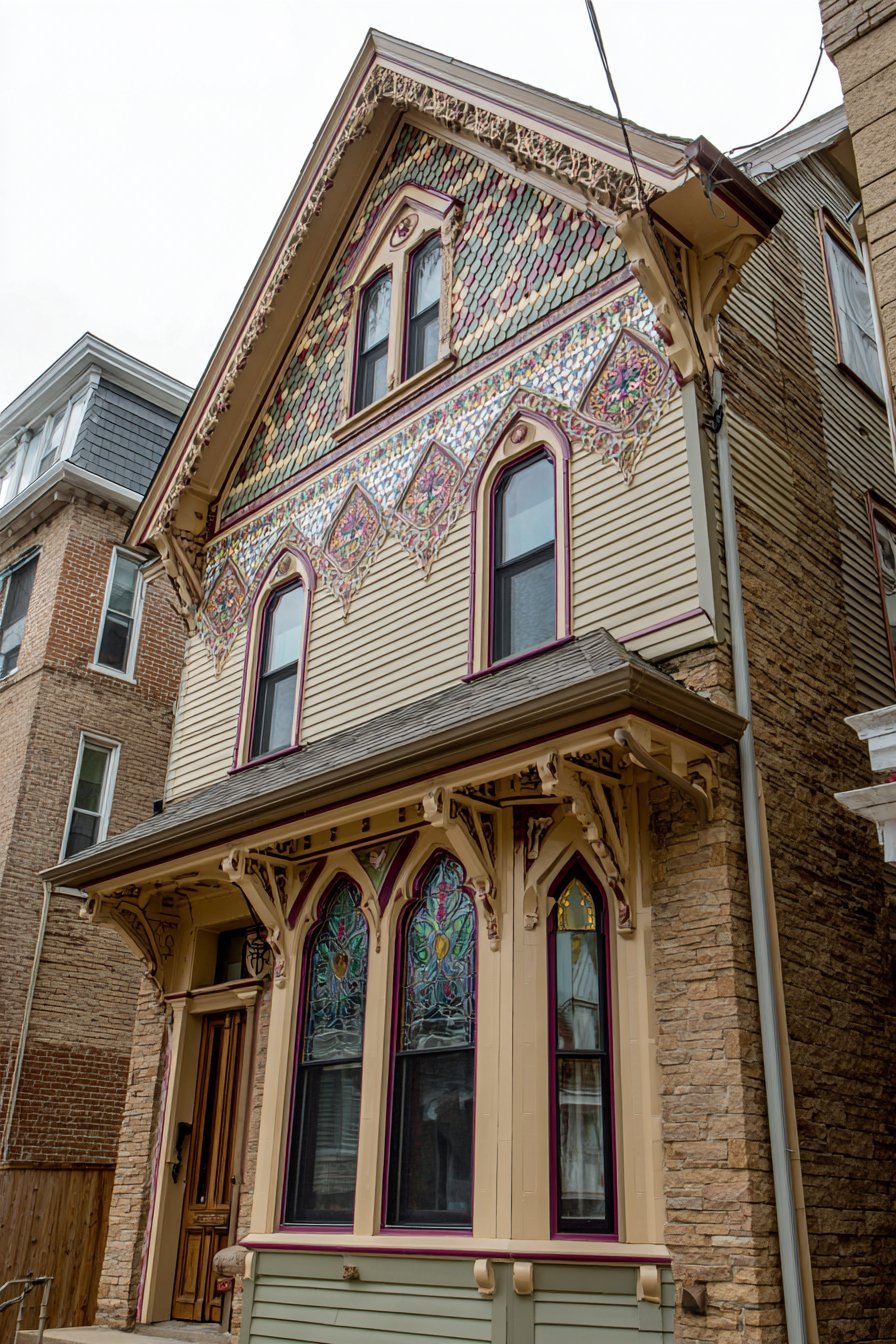
Intricate gingerbread trim details define this Victorian restoration. Historically accurate colors include sage green body with cream and burgundy accents. Ornate brackets support eaves with delicate carved patterns. Detailed spindle work adorns the front porch railings.
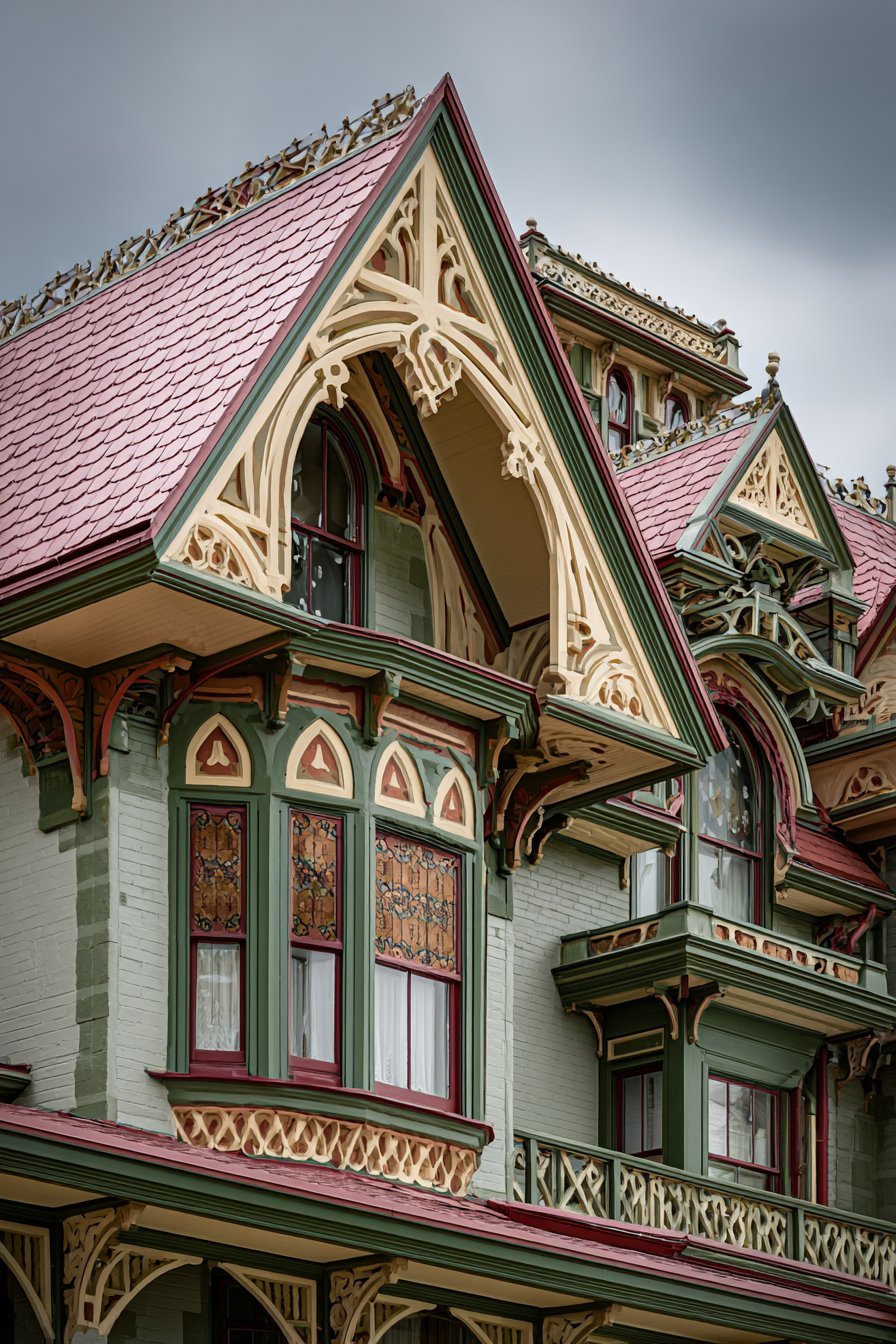
Fish-scale shingles in the gable add textural variety and pattern. Bay windows with colored glass transoms provide both light and decoration. Tall narrow windows with decorative headers maintain period authenticity. The woodwork craftsmanship demonstrates exceptional skill and patience.
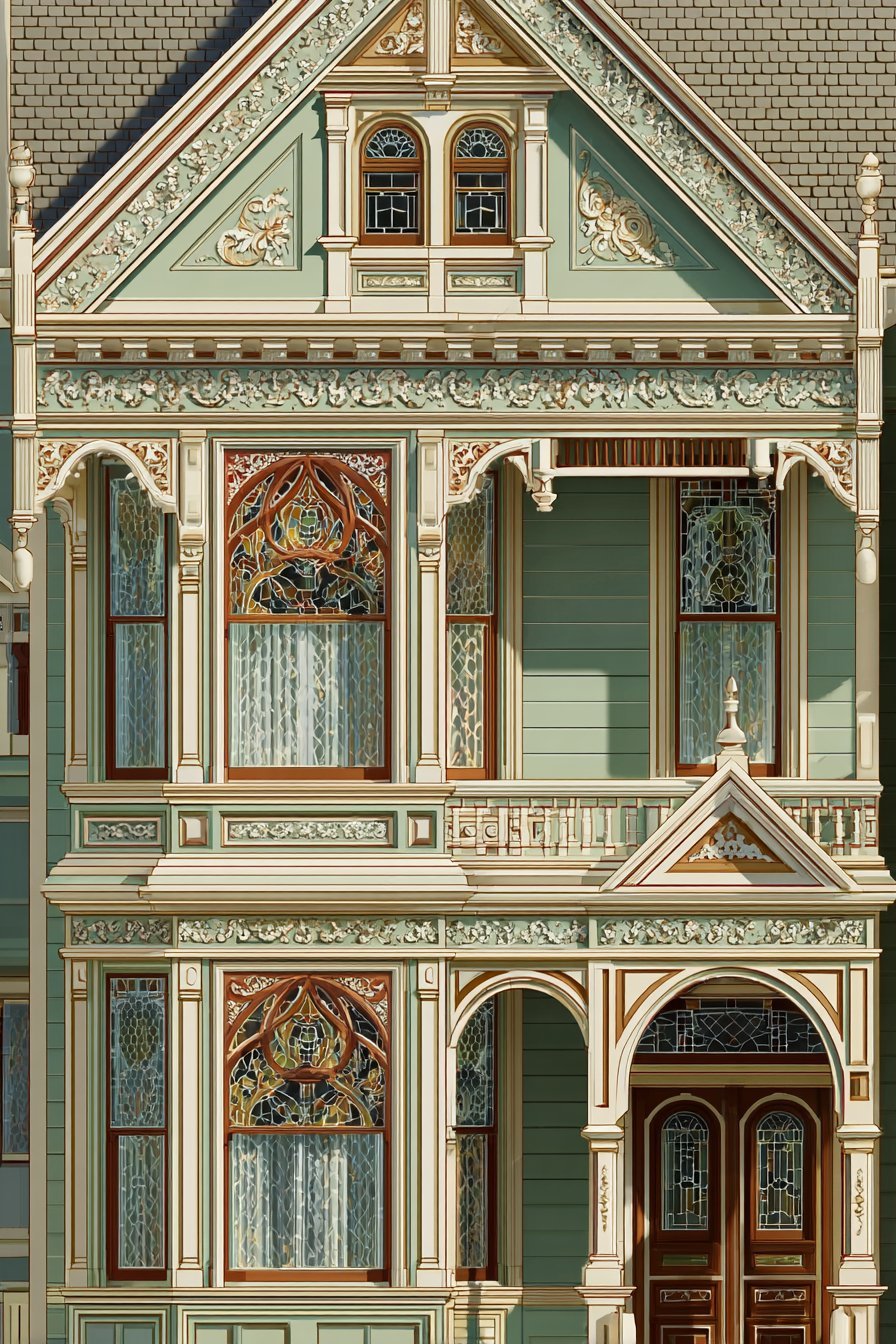
Natural overcast light provides even illumination for detailed woodwork. Harsh shadows would obscure the intricate carved elements. The photography captures every bracket, spindle, and decorative detail.
This facade represents Victorian-era commitment to ornamental expression. Every surface receives decorative attention without overwhelming the composition. The color scheme enhances rather than competes with architectural details.
Key Design Tips:
- Research historically accurate Victorian color palettes before painting
- Restore or replicate gingerbread trim with careful craftsmanship
- Install fish-scale shingles in gable ends for textural interest
- Choose bay windows with colored glass transoms for period accuracy
- Photograph in overcast conditions to capture ornamental details
- Use multiple accent colors to highlight different decorative elements
- Maintain all original ornate brackets and spindle work through restoration
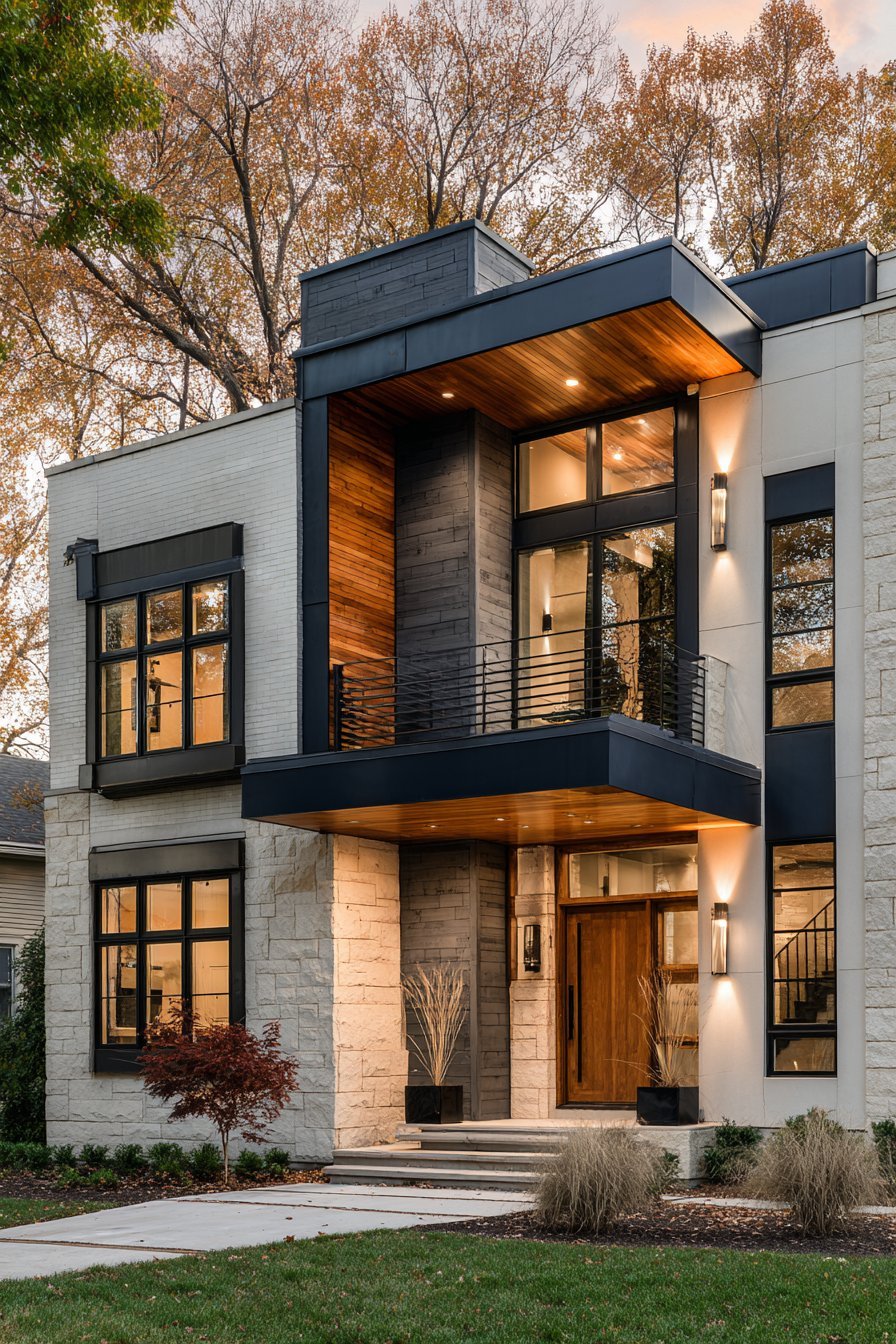
12. Contemporary Urban Townhouse with Black Brick
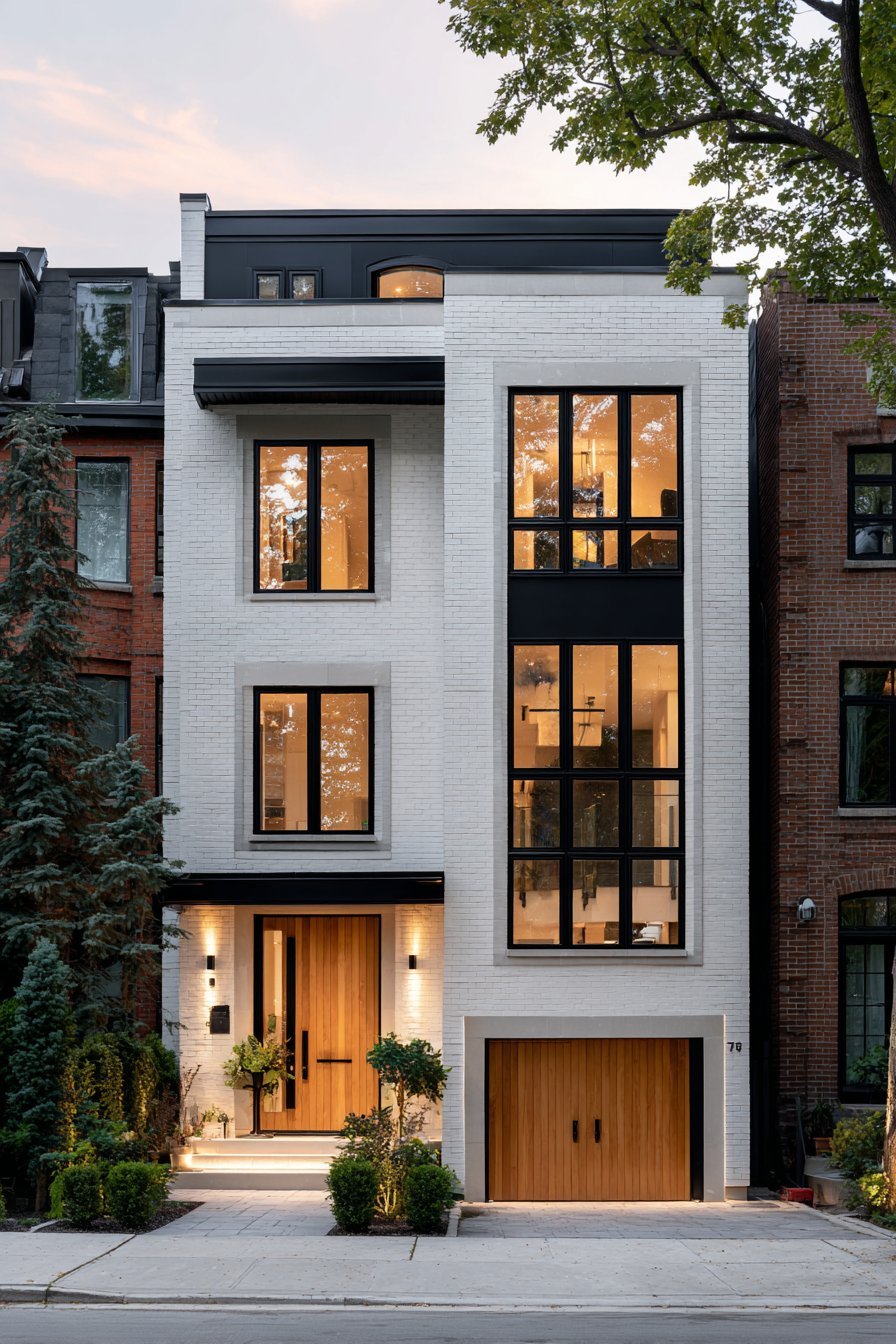
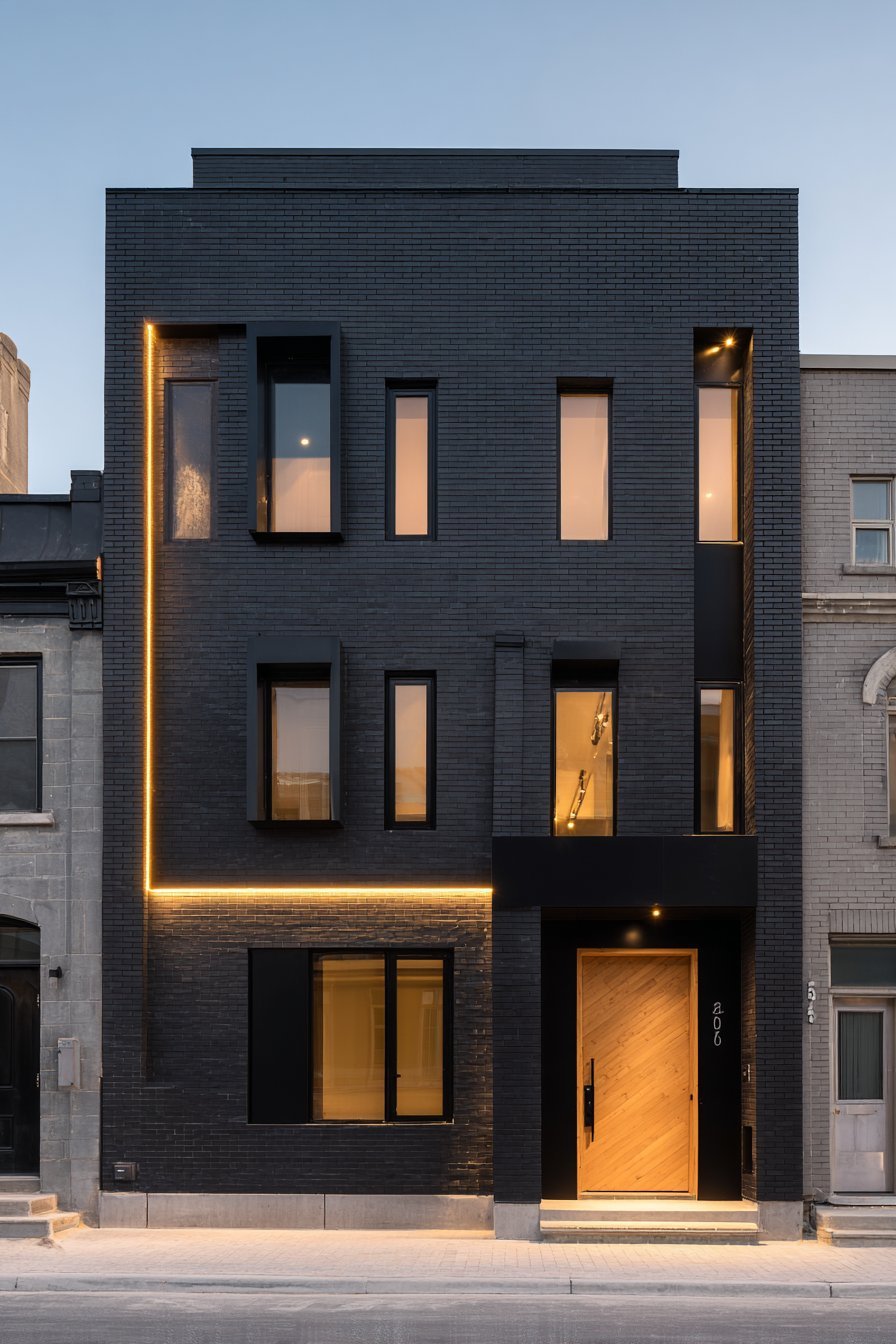
Black-painted brick covers the lower level creating strong visual foundation. Smooth grey stucco on upper floors provides material contrast. A single large pivot front door in natural oak makes dramatic entrance statement. Black hardware complements the door’s natural wood grain.
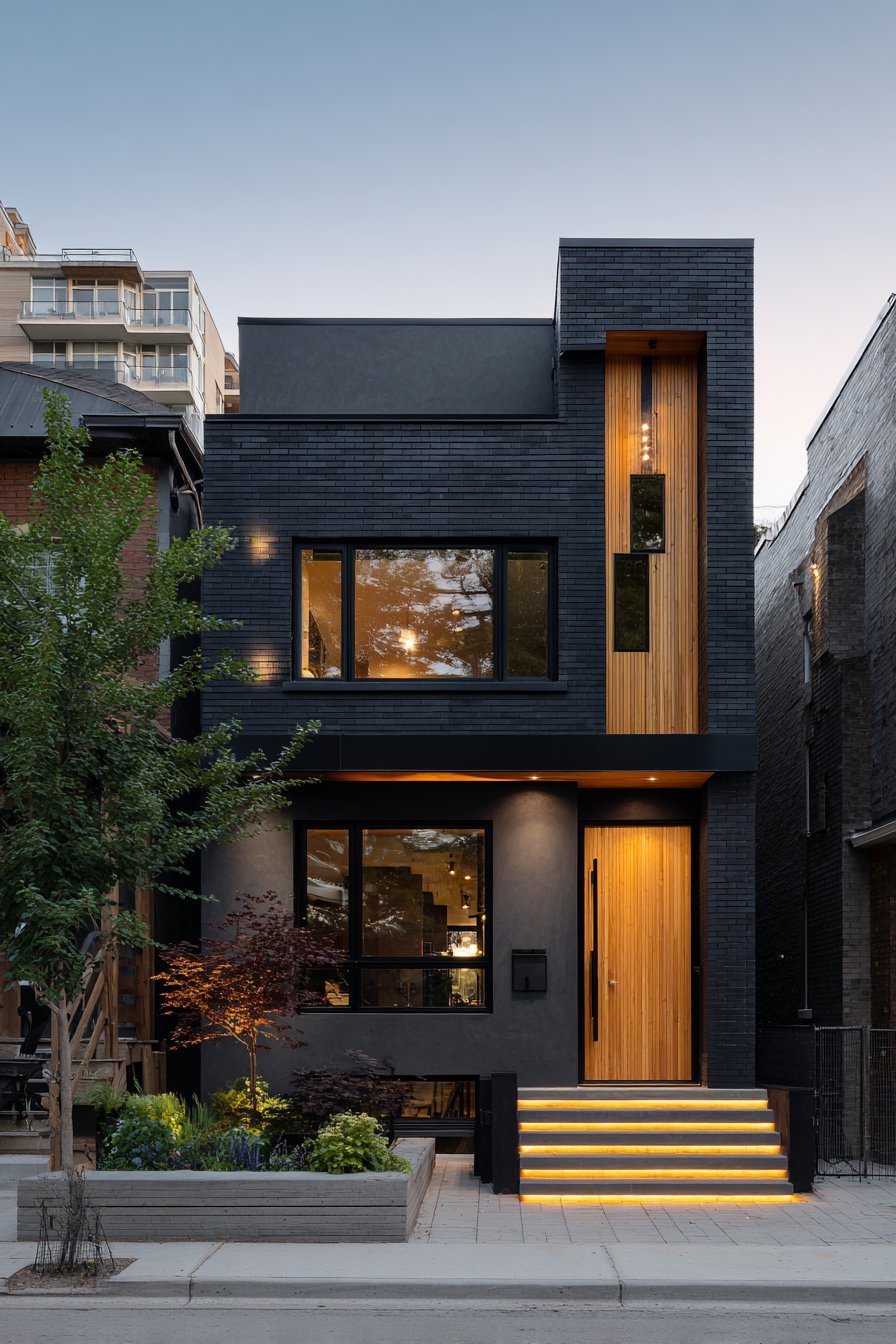
Asymmetrically placed windows of varying sizes add visual interest. Window placement responds to interior functional requirements. Black frames create cohesive visual language across the facade. Integrated LED strip lighting beneath window sills provides nighttime illumination.
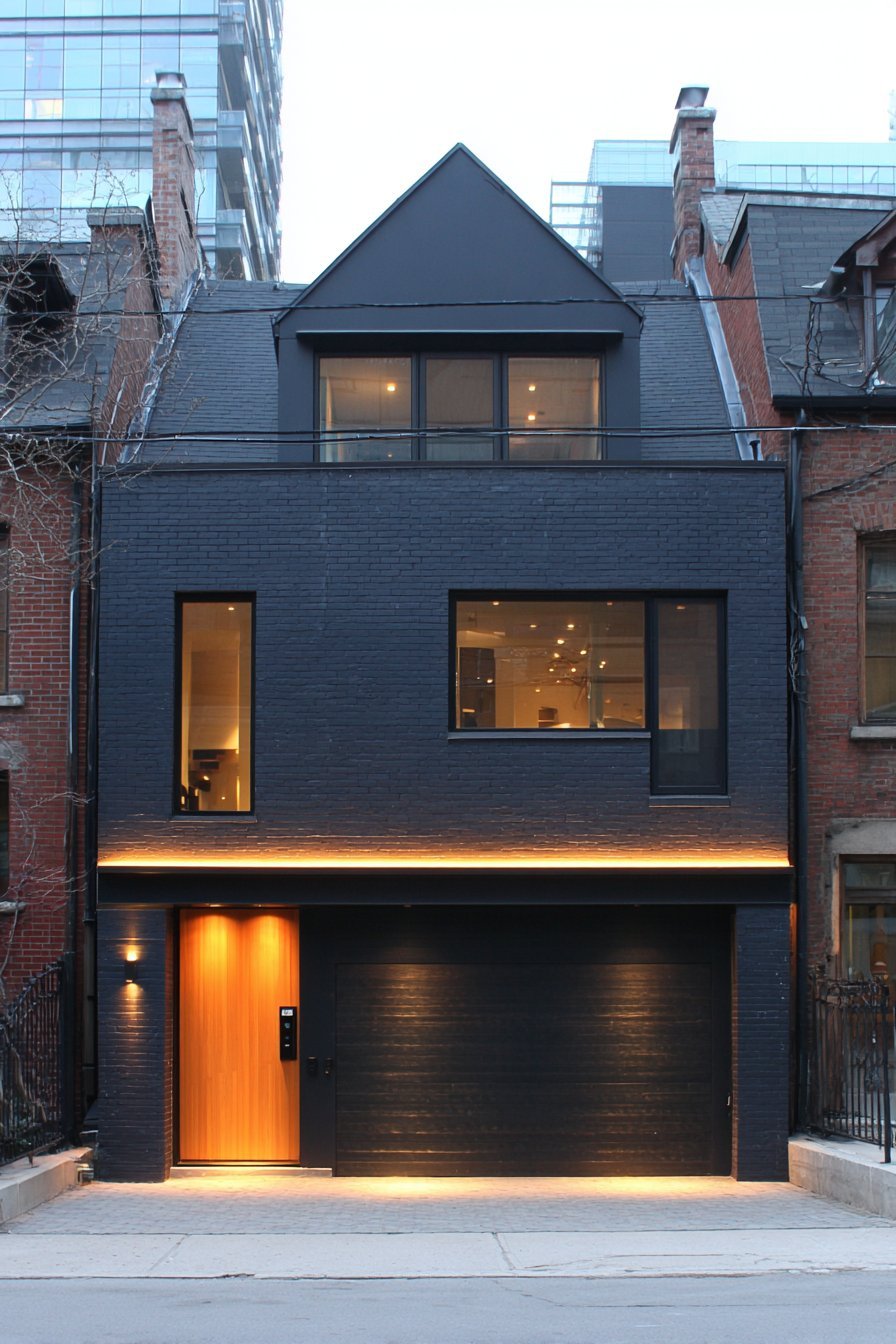
Blue hour photography captures both natural and artificial lighting conditions. The transition period showcases how the facade performs throughout daily cycles. Natural light fades while integrated lighting activates architectural features.
The design demonstrates sophisticated urban aesthetic with minimal ornamentation. Material quality and proportional relationships create architectural interest. The composition suits dense urban contexts where facades must perform at close viewing distances.
Key Design Tips:
- Paint brick black for contemporary urban foundation treatment
- Contrast lower brick with upper smooth stucco surfaces
- Install large pivot doors for dramatic entrance statements
- Place windows asymmetrically based on interior needs
- Integrate LED strip lighting for nighttime architectural emphasis
- Photograph during blue hour to capture lighting transitions
- Design for close viewing distances typical in urban settings
13. French Provincial with Limestone Details
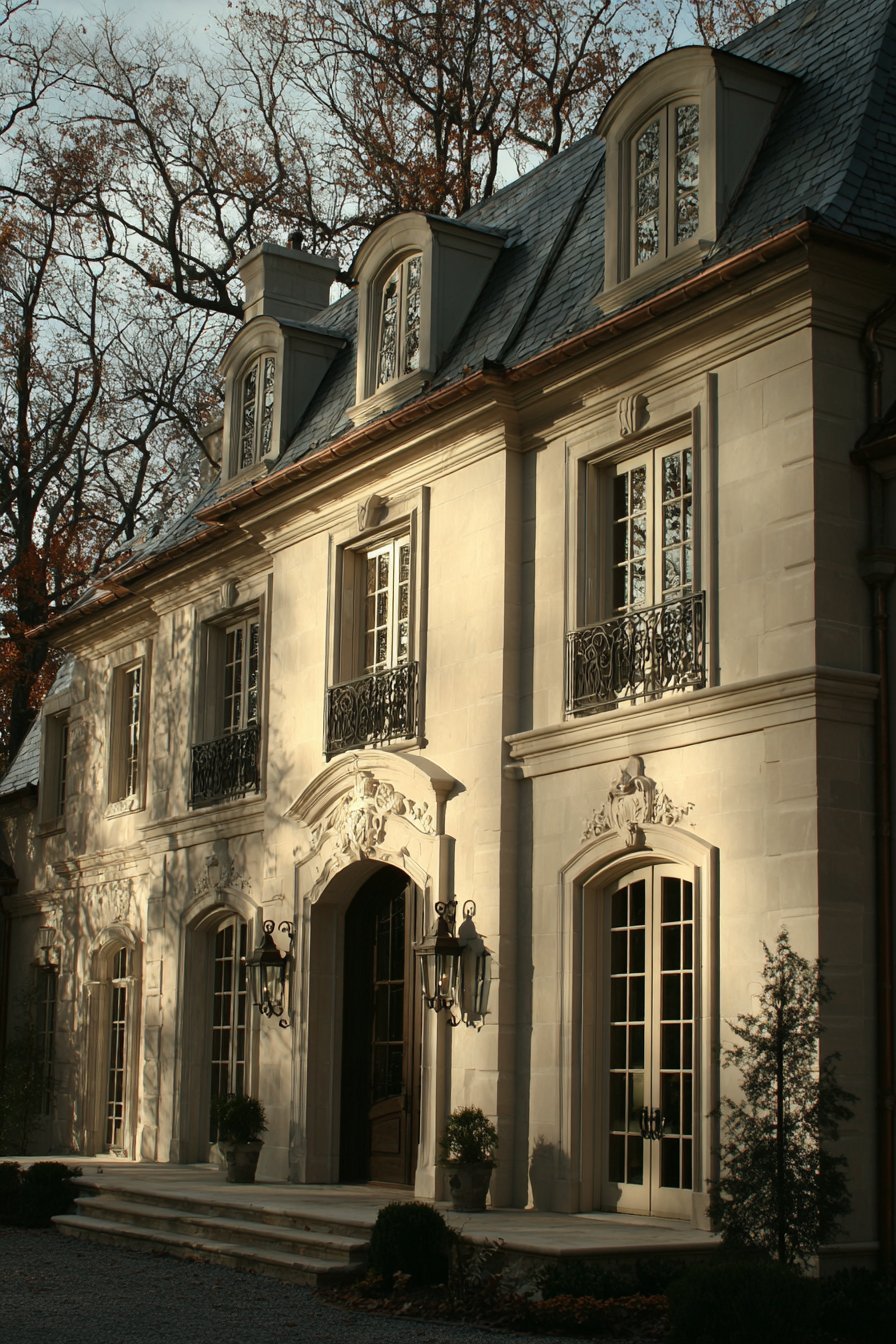
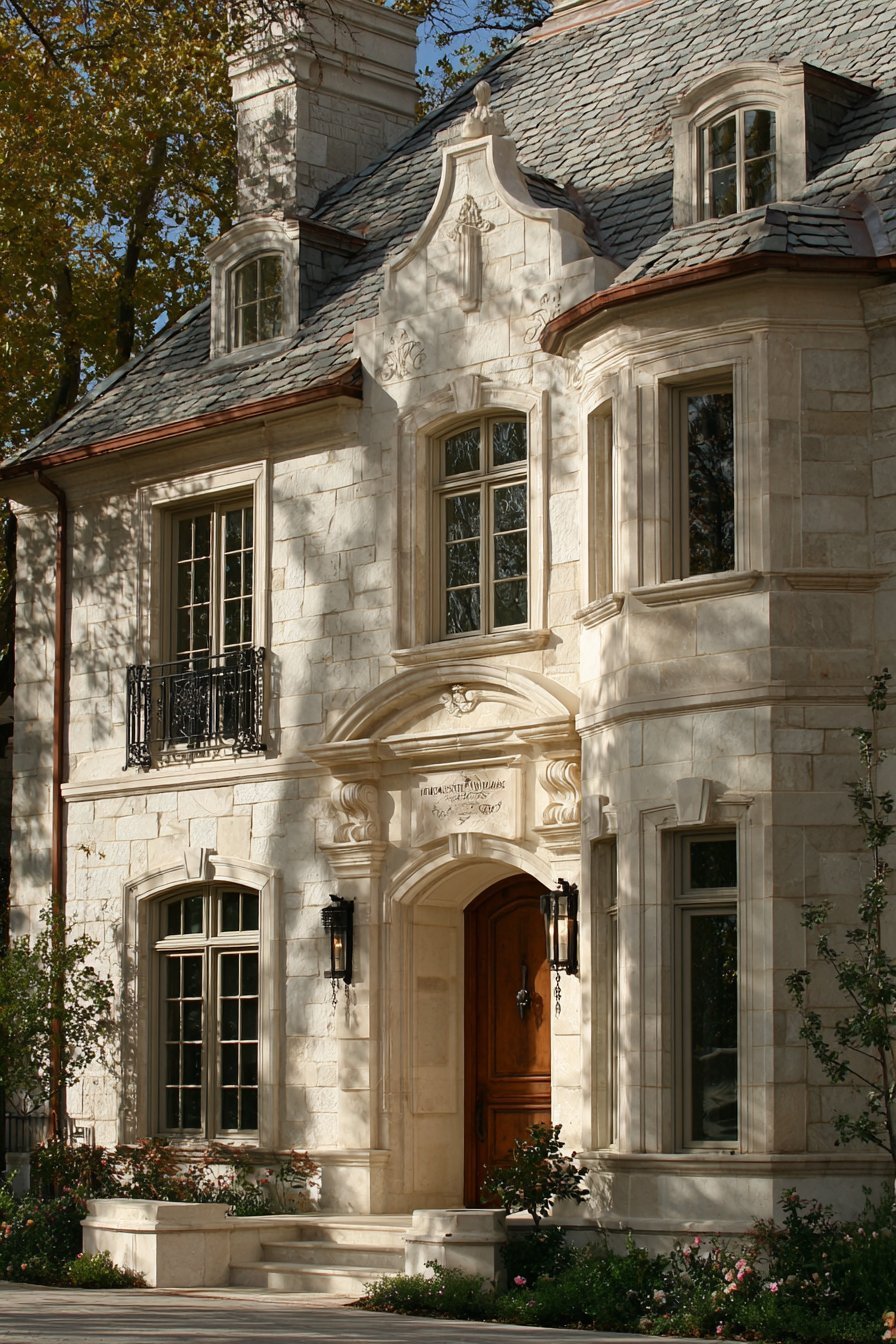
Symmetrical composition reflects classical French design principles. Cream limestone details surround windows and doors. Soft grey stucco walls provide neutral backdrop for stone ornament. A steeply pitched slate roof adds authentic European character.
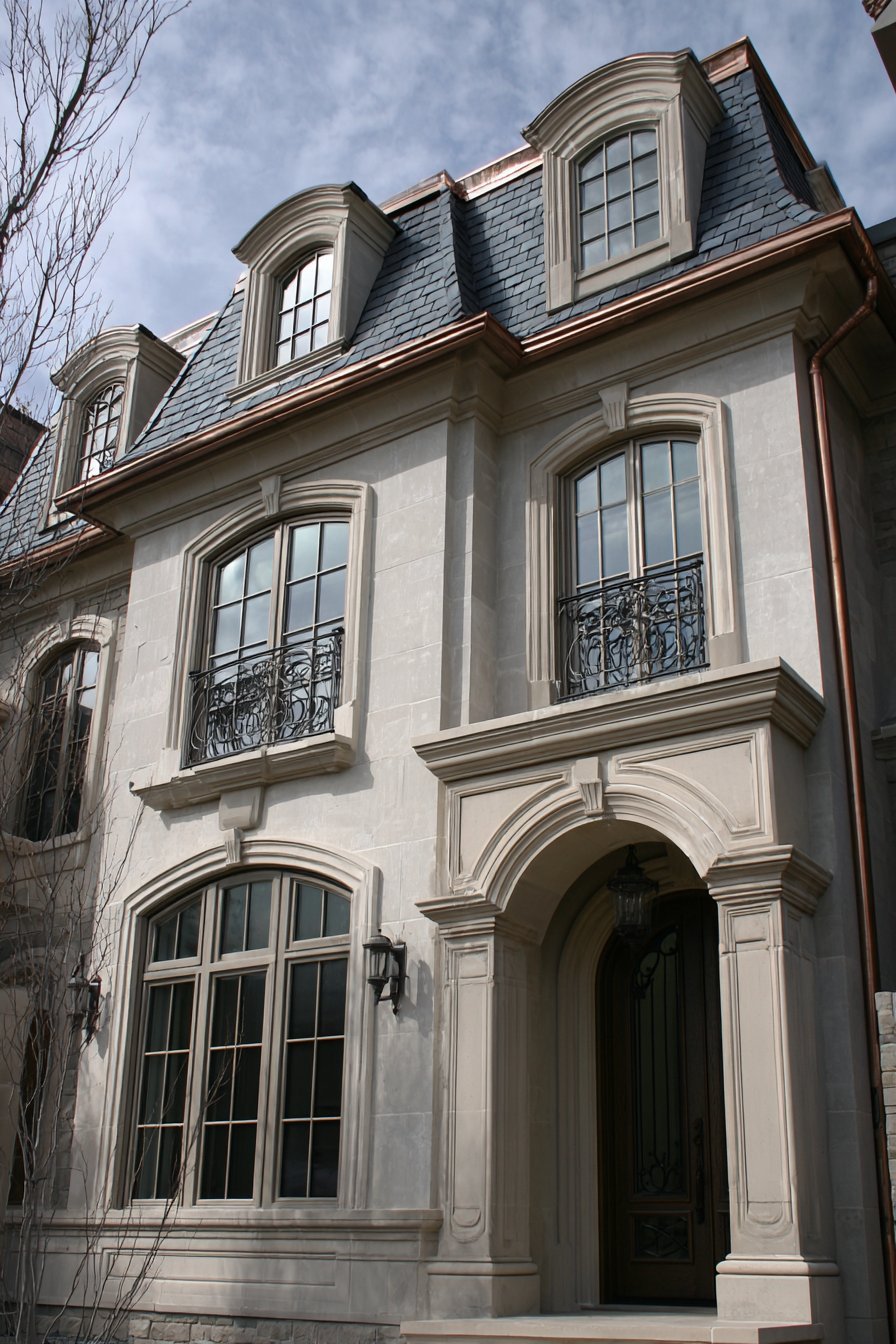
Multiple dormers punctuate the roof plane providing upper level light. Decorative copper gutters develop green patina over time. Black steel Juliet balconies accent second-floor windows. The entrance features rounded arch doorway with carved stone surround.
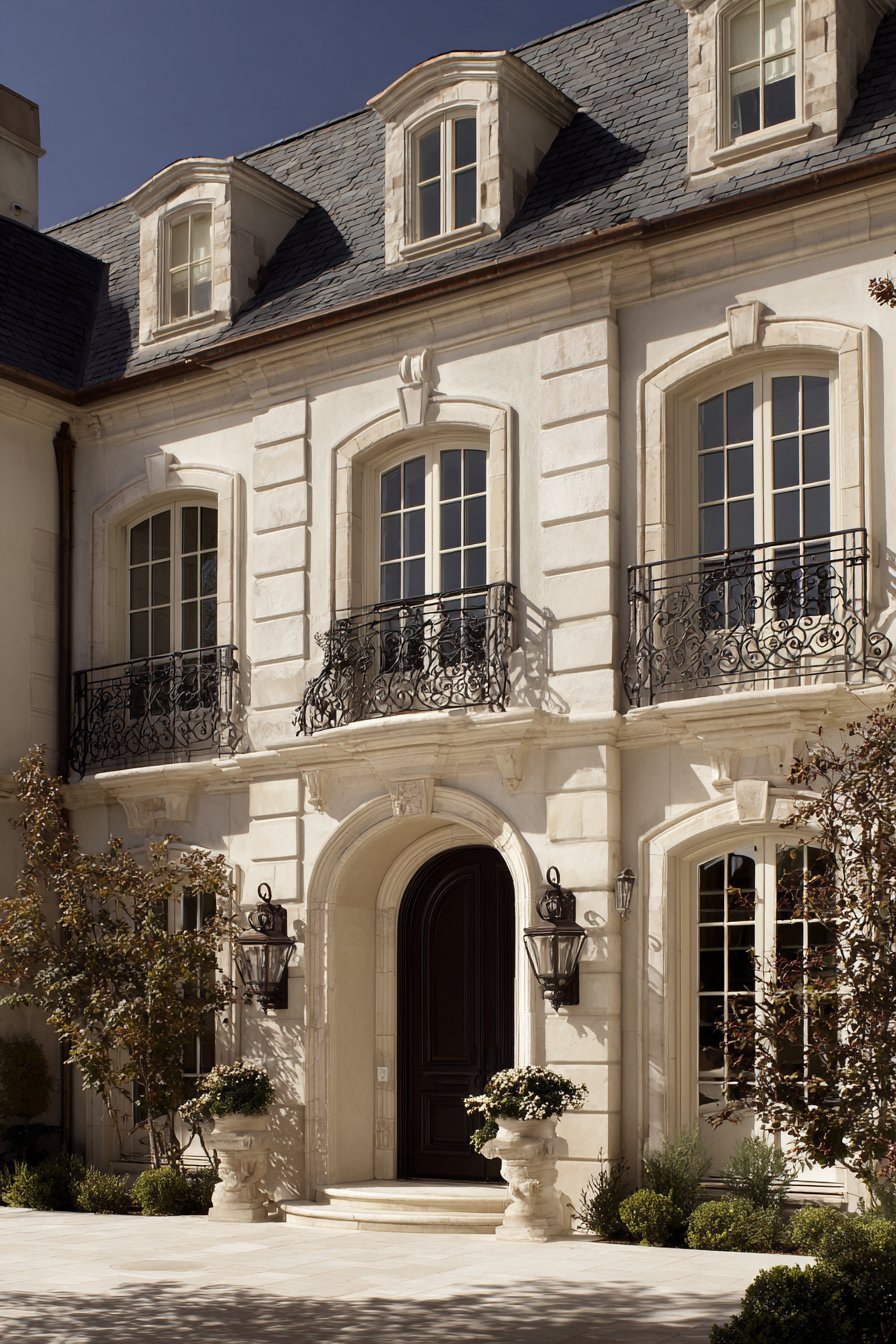
Antique bronze hardware on doors references traditional metalwork. Natural afternoon light emphasizes three-dimensional stone detail quality. Subtle shadows reveal the carved stone’s depth and craftsmanship.
The facade demonstrates classical proportional relationships and material hierarchy. Stone detailing concentrates at important architectural moments. The overall composition balances grandeur with residential scale.
Key Design Tips:
- Design symmetrical compositions for classical French character
- Use cream limestone for window and door surrounds
- Install steeply pitched slate roofs for authentic European profile
- Add multiple dormers for roof articulation and interior light
- Choose copper gutters that develop attractive patina
- Install Juliet balconies at second-floor windows for European detail
- Carve stone surrounds for entrance emphasis and craftsmanship display
14. Tropical Modern with Bamboo Screening
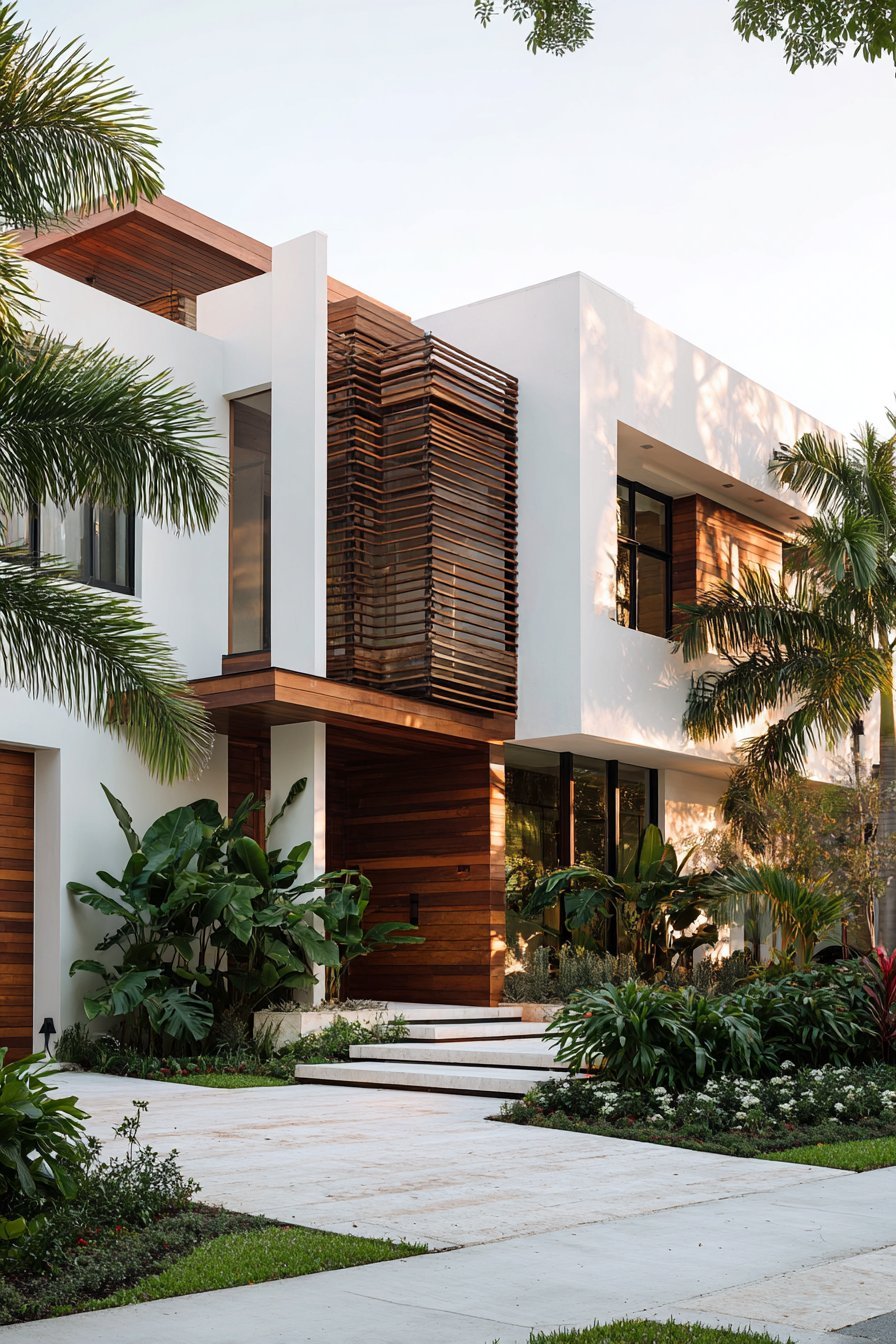
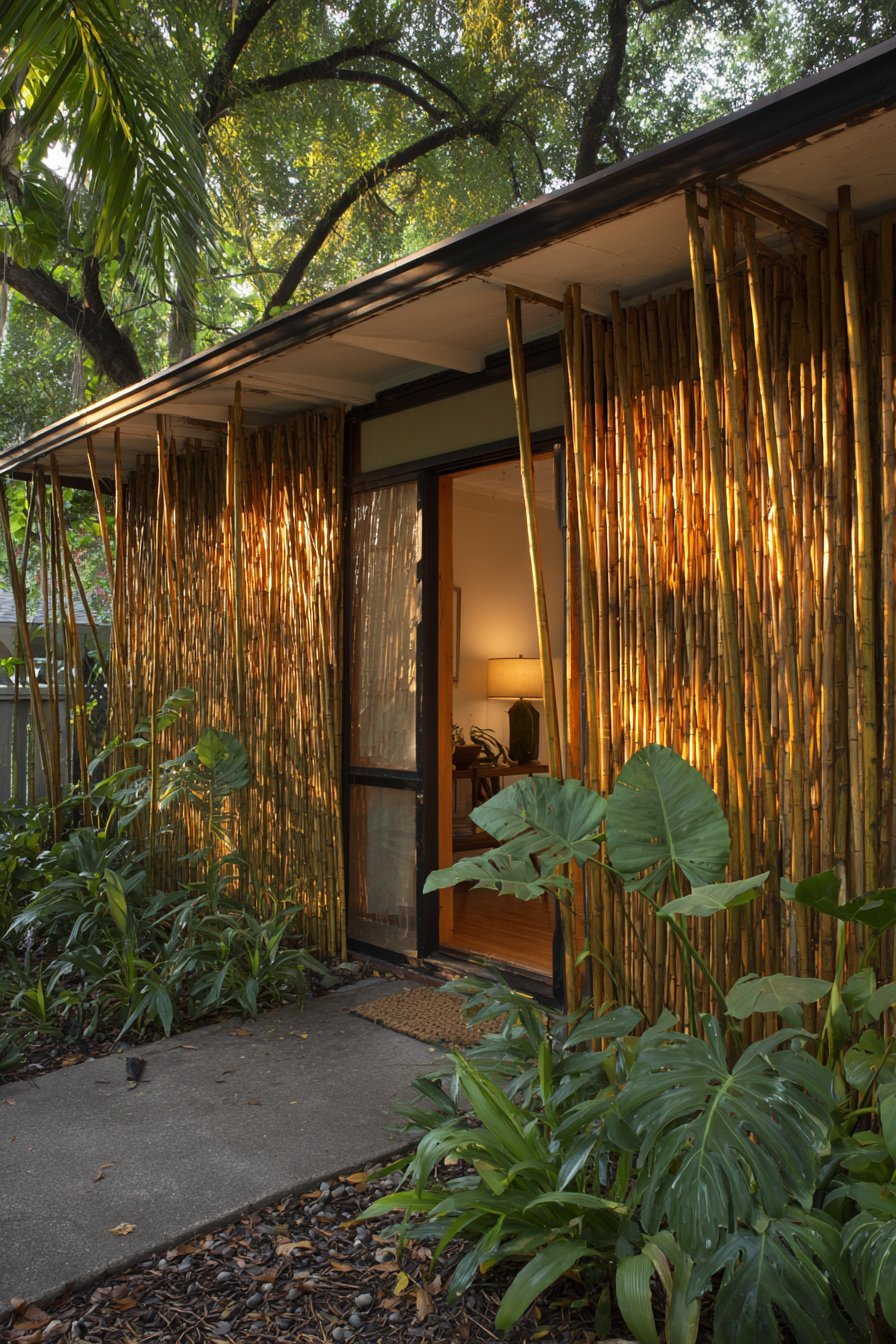
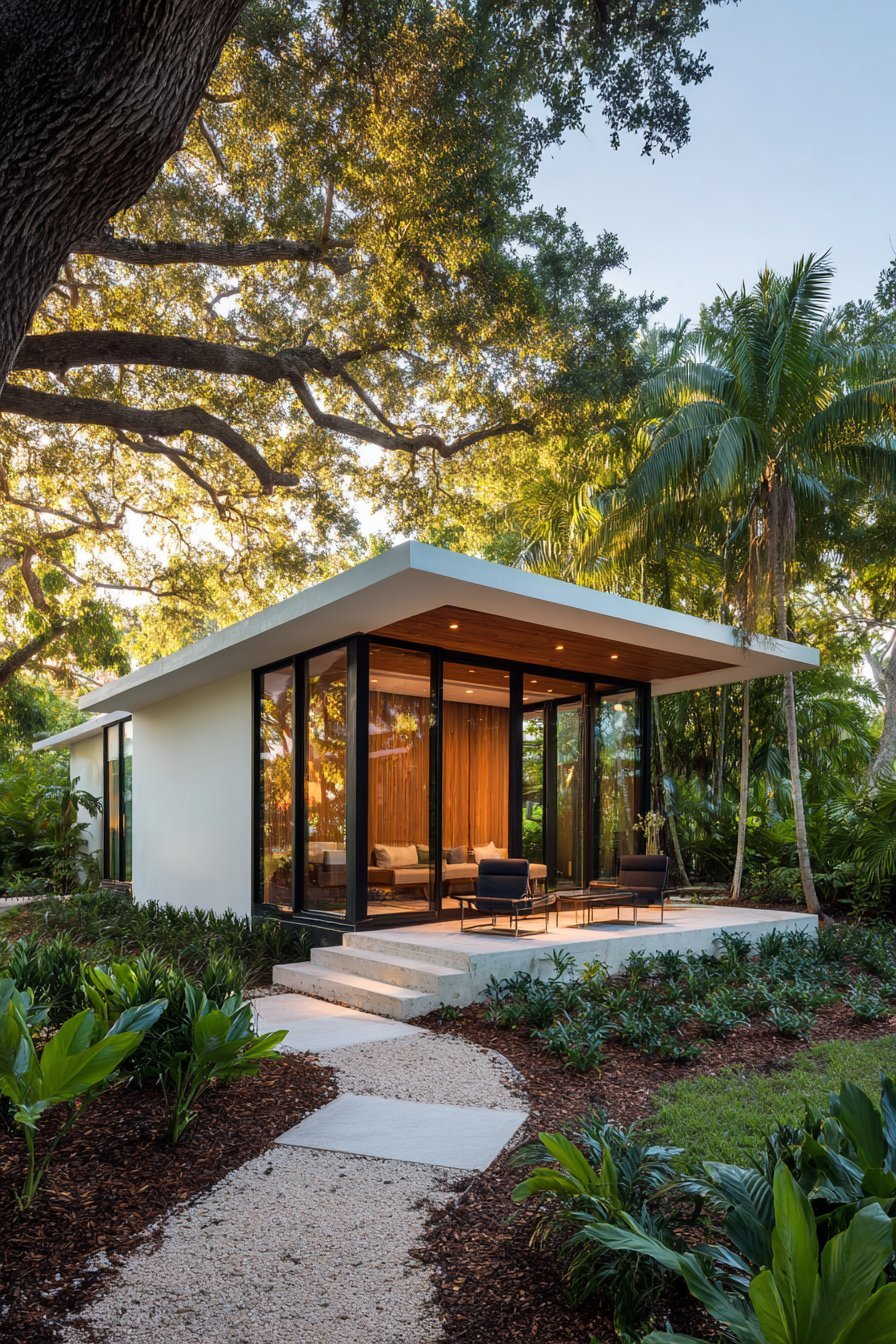
Smooth white stucco provides clean contemporary backdrop. Natural bamboo screening panels offer privacy while allowing ventilation. Large sliding glass doors with minimal black frames open completely. The glass walls blur indoor-outdoor boundaries typical of tropical design.
A flat roof with substantial overhangs provides sun protection. Integrated gutter systems maintain clean roof edges. Lush tropical plantings including palms and broad-leaf plants frame entrance. The landscape integration creates cohesive tropical environment.
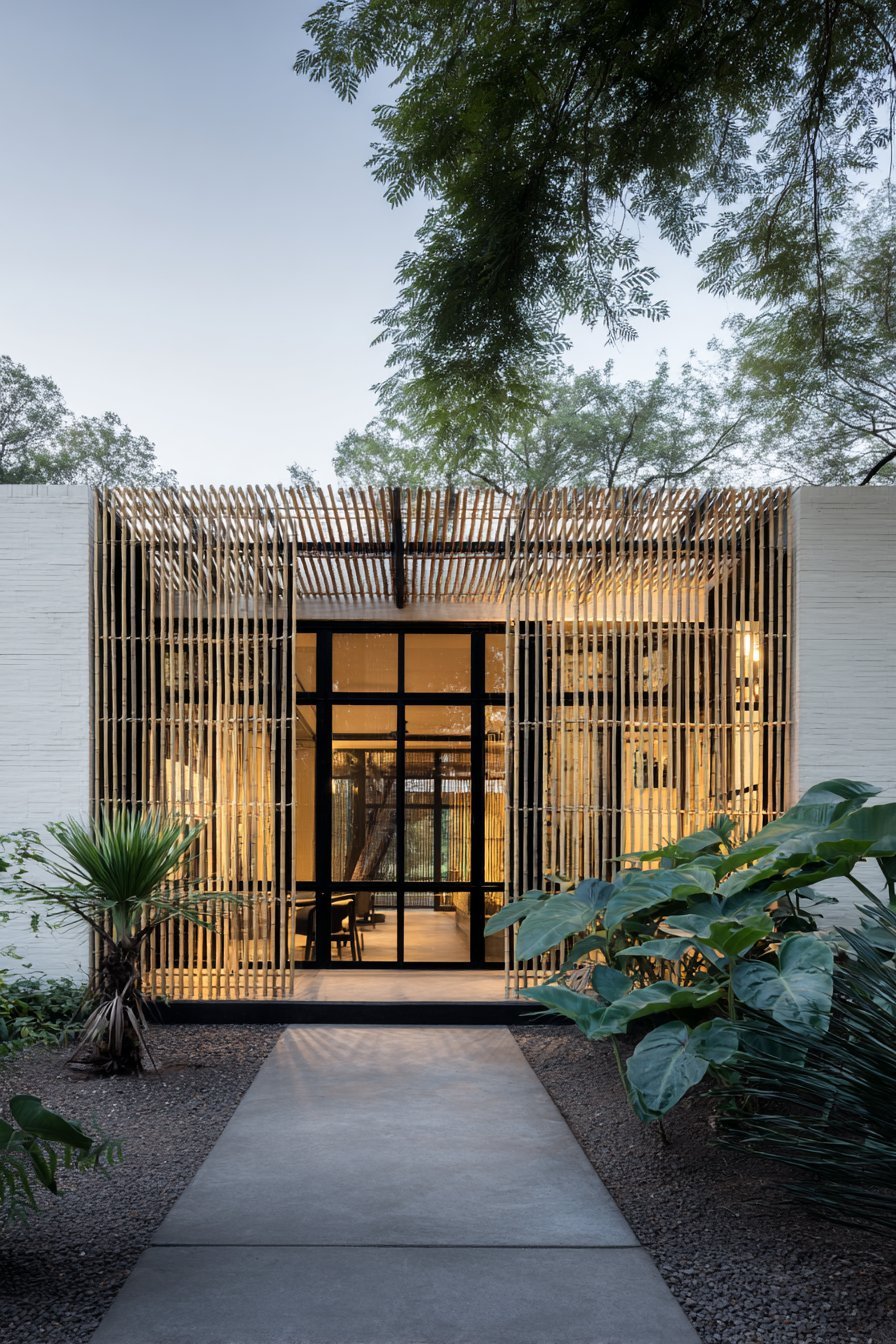
Golden hour photography captures warm light filtering through bamboo screens. Beautiful shadow patterns project onto white stucco surfaces. The interplay of light, shadow, and plant material creates dynamic facades.
The design responds specifically to tropical climate requirements. Natural ventilation through bamboo screens reduces cooling loads. Deep overhangs protect from intense sun and heavy rainfall.
Key Design Tips:
- Install bamboo screening panels for privacy with natural ventilation
- Design large sliding glass doors that open completely
- Create substantial roof overhangs for tropical sun protection
- Integrate gutter systems to maintain clean architectural lines
- Plant palms and broad-leaf tropical species near facade
- Photograph during golden hour to capture bamboo shadow patterns
- Design for natural ventilation to reduce mechanical cooling needs
15. Craftsman Bungalow with Honest Structure
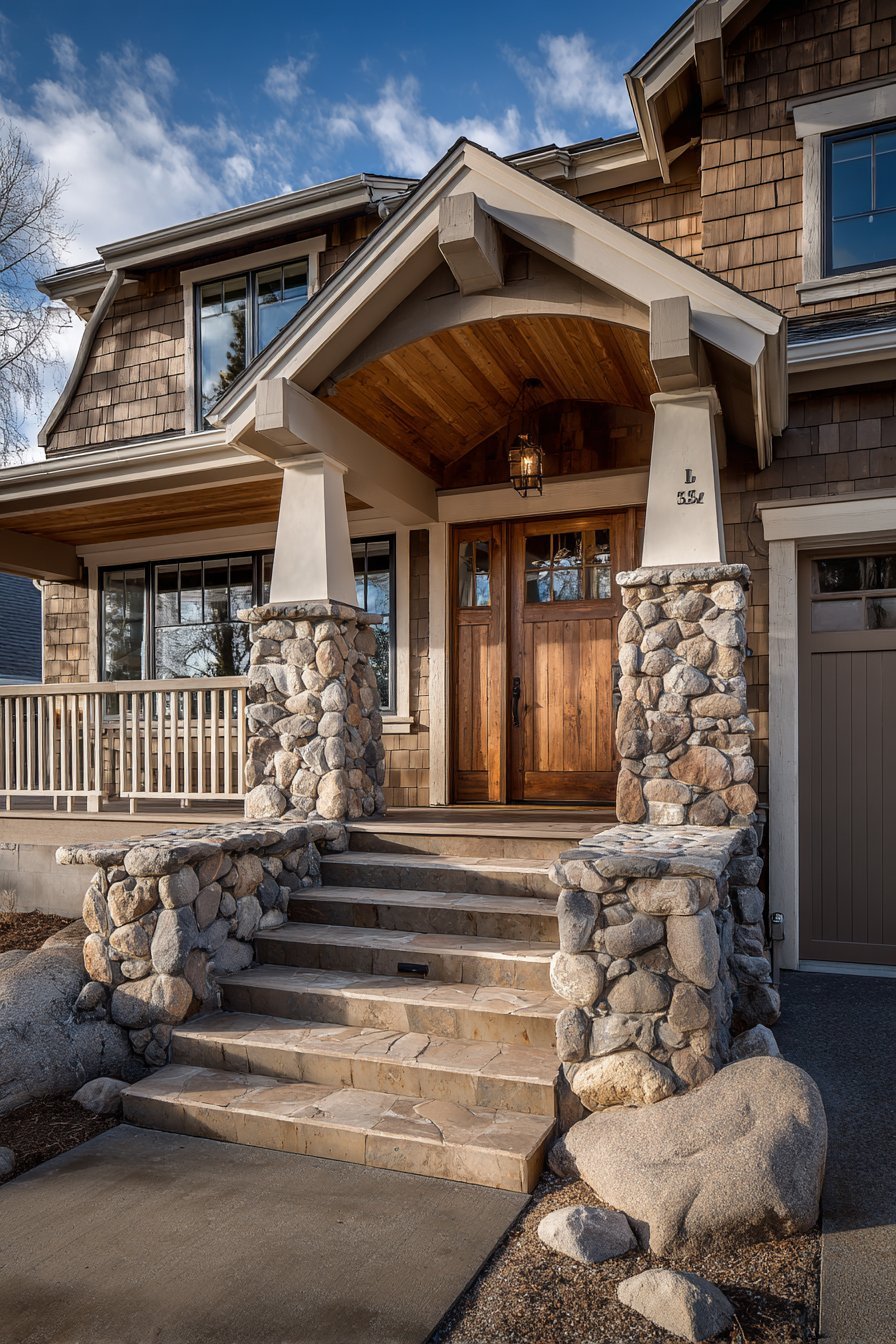
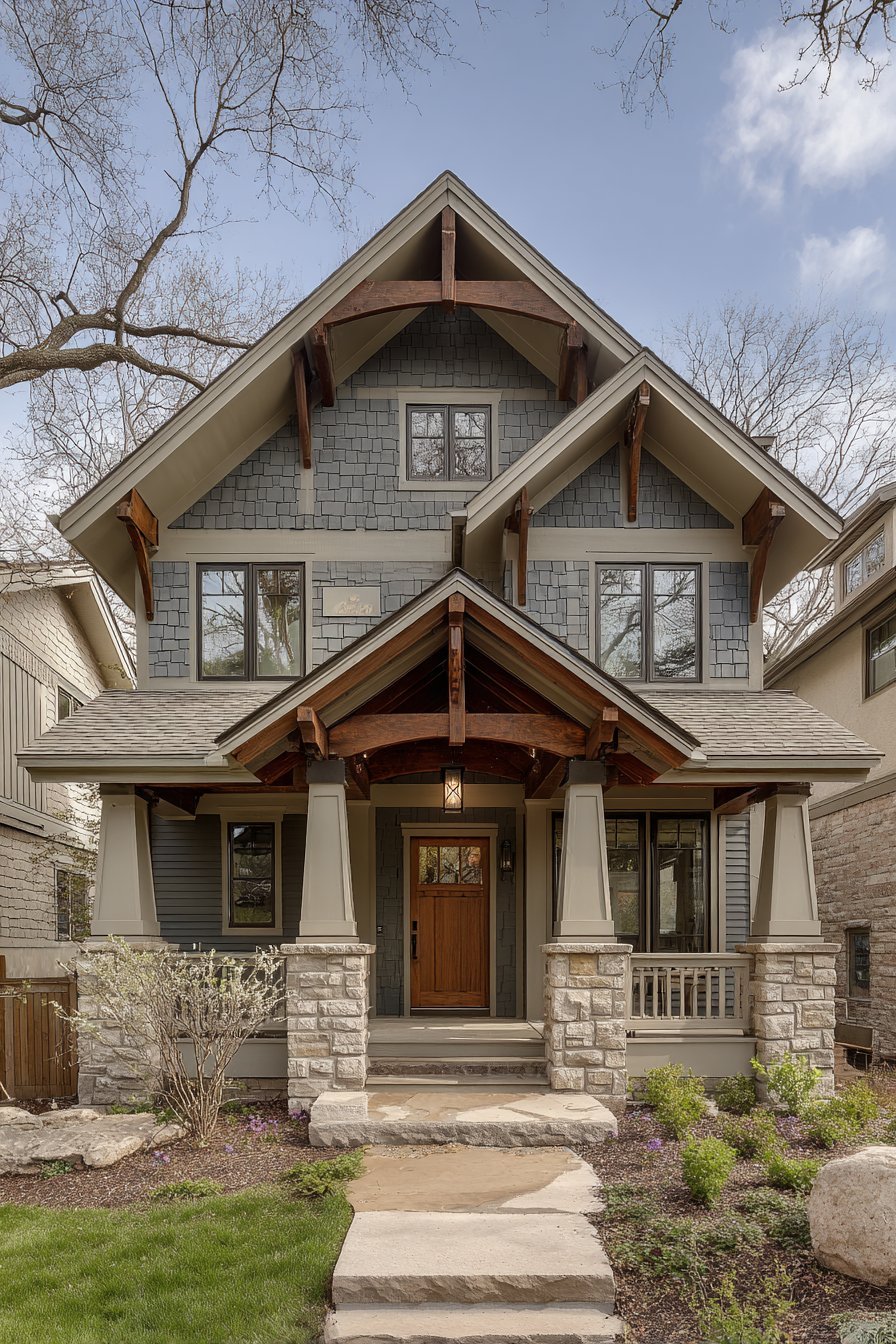
Low-pitched gabled roof with wide overhanging eaves defines craftsman proportion. Distinctive tapered columns rest on stone pedestals. Natural cedar shake siding covers upper levels. River rock stone veneer on lower walls and porch supports provides grounding.
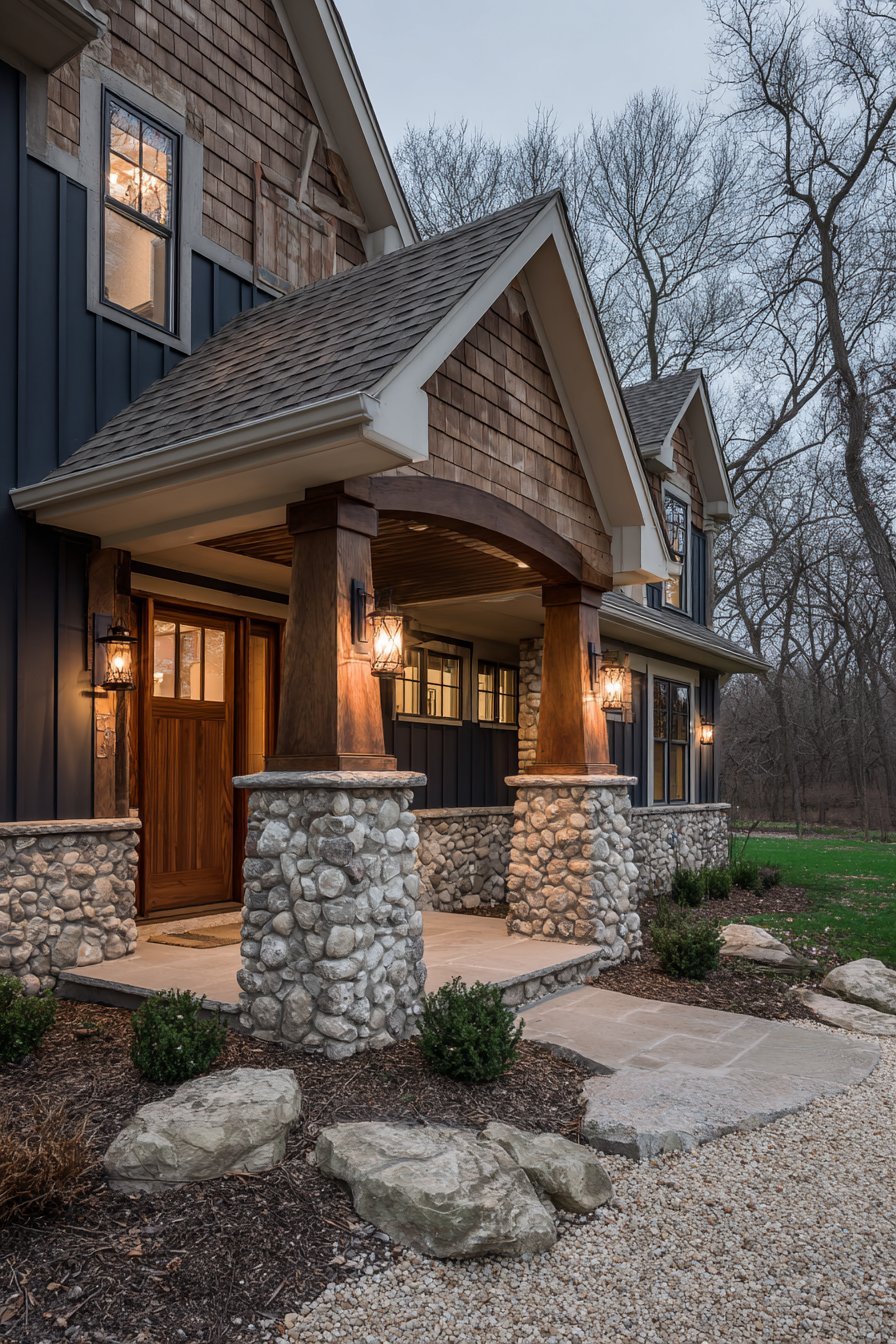
Multi-pane windows with wood frames maintain period authenticity. Solid wood front door features craftsman-style glass panels. Exposed rafter tails and decorative knee braces showcase structural expression. These elements celebrate the building’s construction logic.
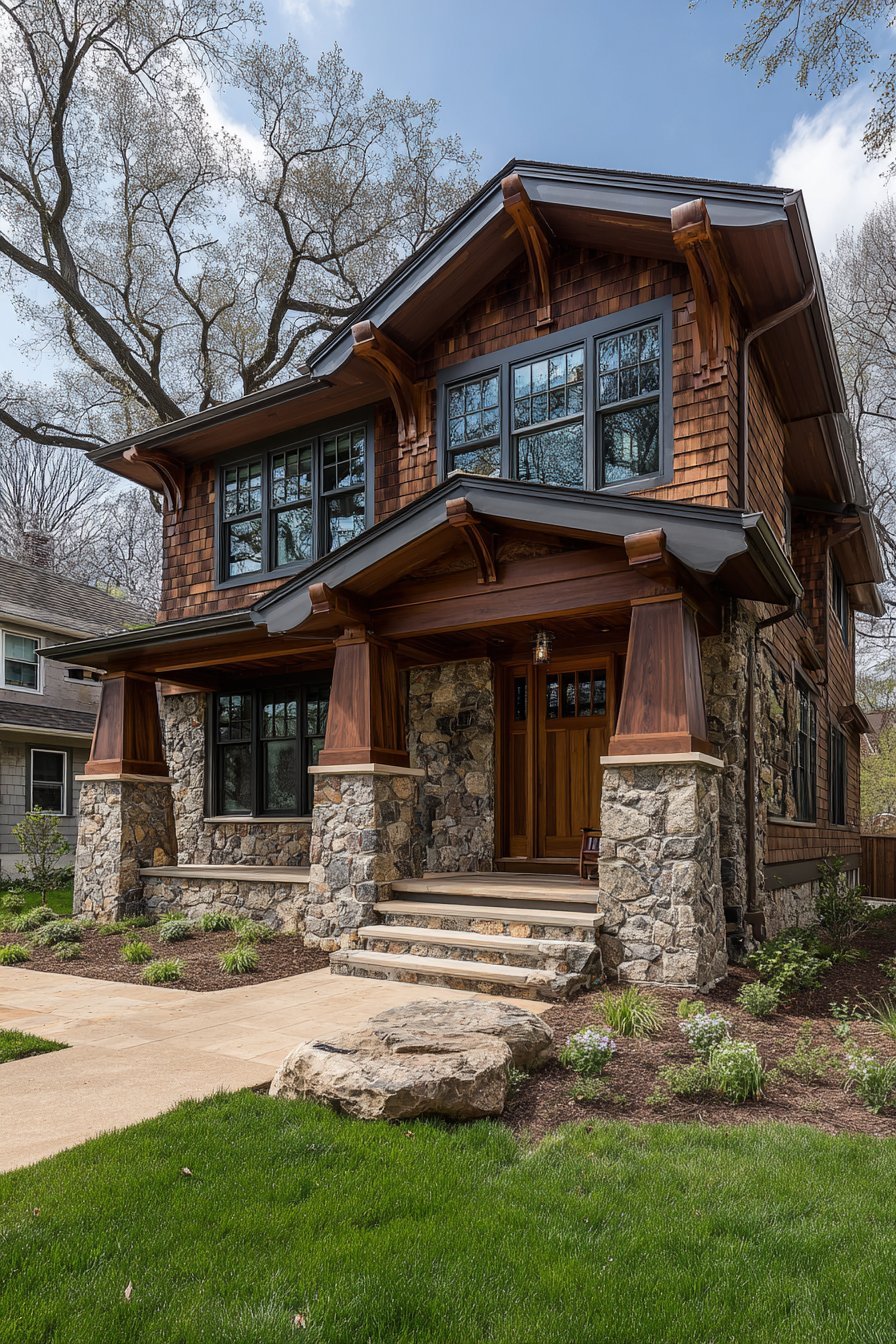
The facade demonstrates craftsman philosophy of honest materials and visible structure. Handcrafted details receive emphasis throughout the design. Natural material combinations create warmth and texture.
Natural daylight highlights stone and wood material textures. The photography captures authentic craftsman design principles. Every detail reinforces the movement’s values of craftsmanship and material truth.
Key Design Tips:
- Design low-pitched gabled roofs with wide overhangs for craftsman profile
- Install tapered columns on stone pedestals for signature detail
- Combine cedar shake siding with river rock stone veneer
- Choose multi-pane wood windows for period accuracy
- Expose rafter tails and knee braces as decorative structural elements
- Select solid wood doors with craftsman-style glass panels
- Celebrate handcrafted details and natural material combinations
16. Modernist Cube with Geometric Purity
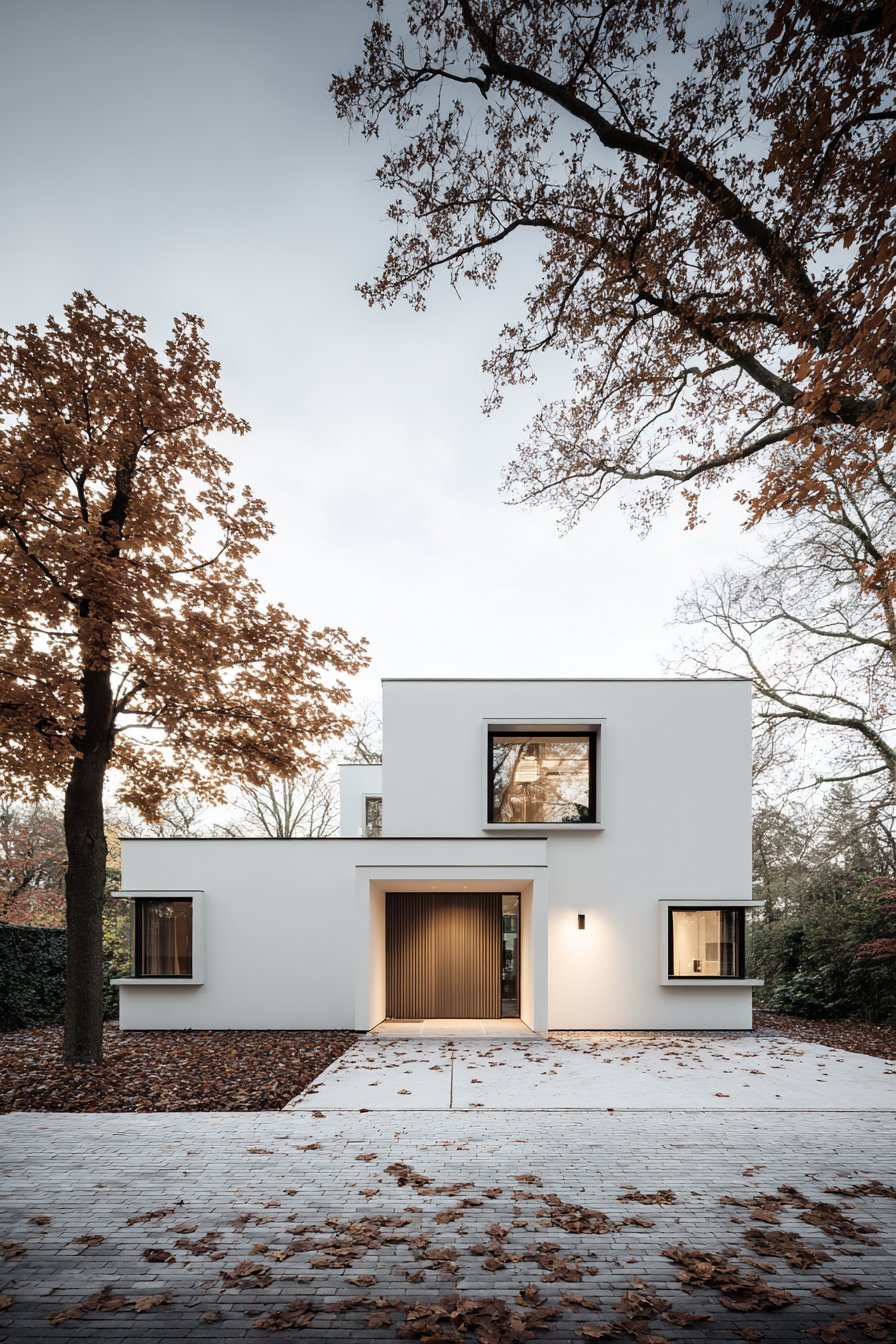
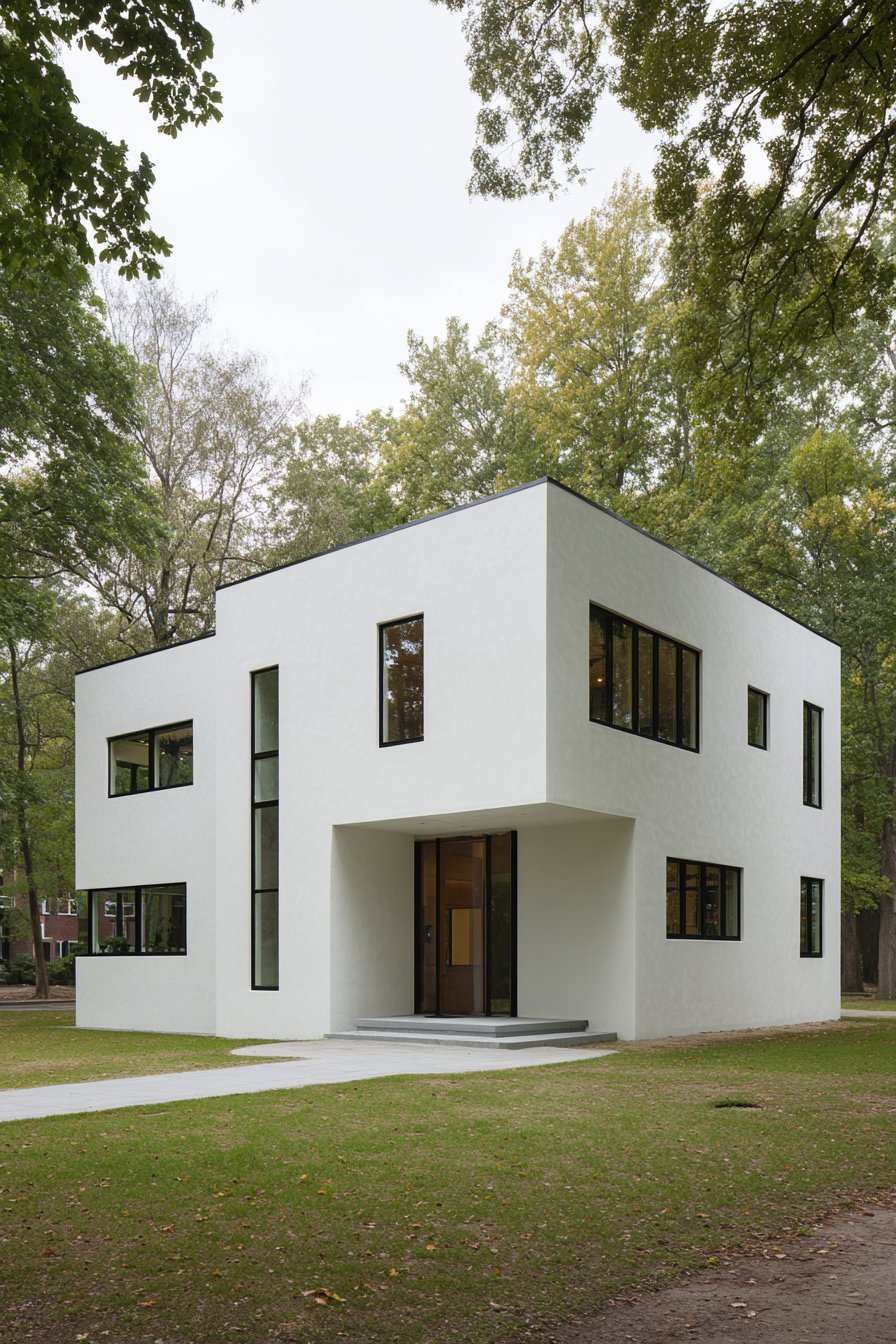
Smooth white rendered walls create pure geometric cubic form. Precisely positioned square and rectangular windows punctuate surfaces. Black aluminum frames provide crisp definition without visual weight. A flat roof with hidden drainage maintains clean cubic volume.
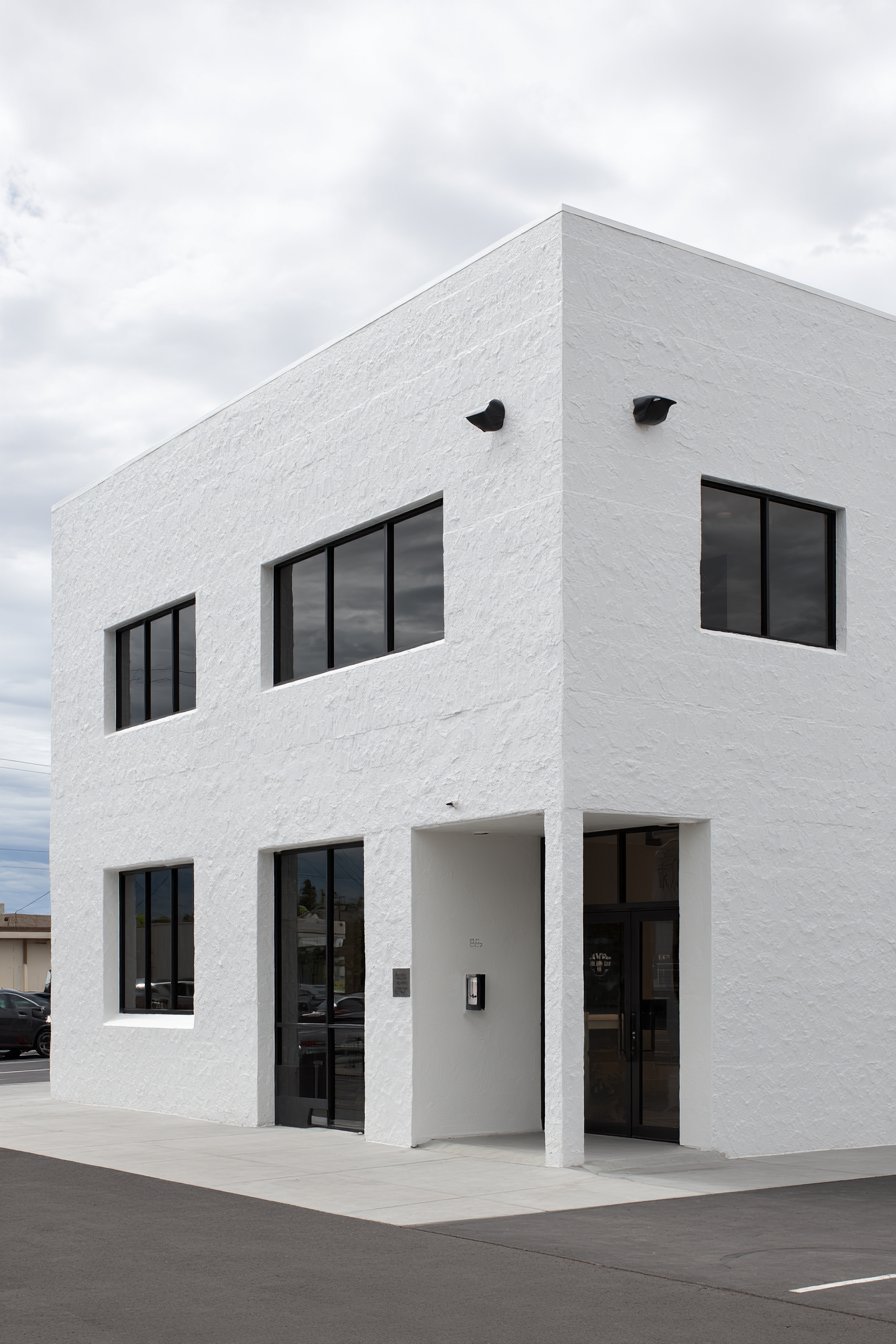
The entrance features single pivot door flush with facade plane. This minimal interruption preserves geometric integrity. Strategic window placement creates interior light patterns. Exterior simplicity contrasts with complex interior spatial experiences.
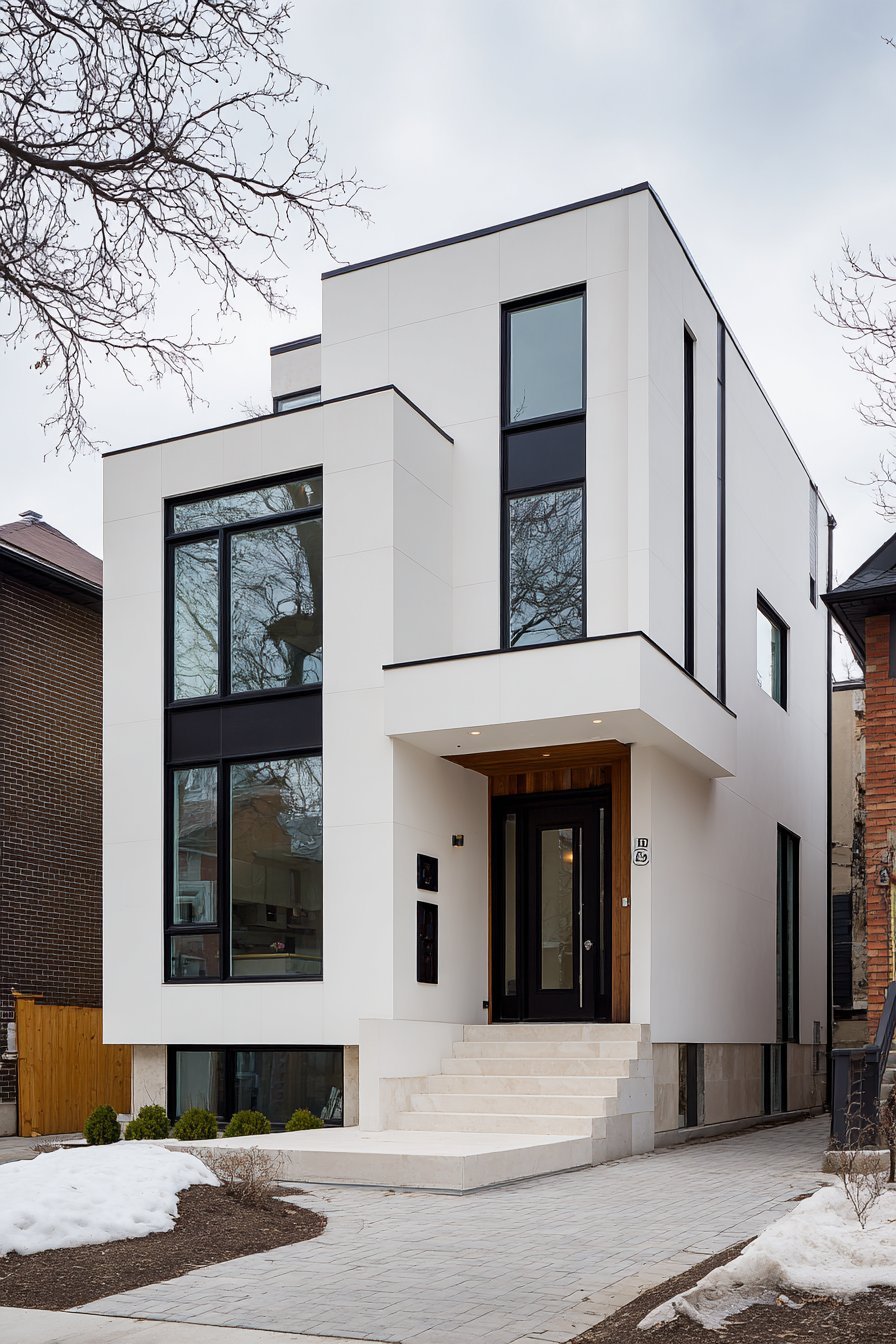
Bright overcast conditions provide even lighting for geometric documentation. The photography emphasizes facade’s pure form. Precise edges and corners receive careful attention in composition.
The design demonstrates modernist principles of geometric reduction. Ornament elimination focuses attention on proportion and material quality. The cube becomes architectural statement through restraint and precision.
Key Design Tips:
- Create pure cubic forms with smooth rendered wall surfaces
- Position windows precisely for geometric composition
- Install flat roofs with hidden drainage systems
- Design flush pivot doors to maintain facade plane
- Use black aluminum frames for crisp definition
- Photograph in overcast conditions for geometric clarity
- Emphasize proportion and material over ornamental addition
17. Contemporary Barn with Agricultural References
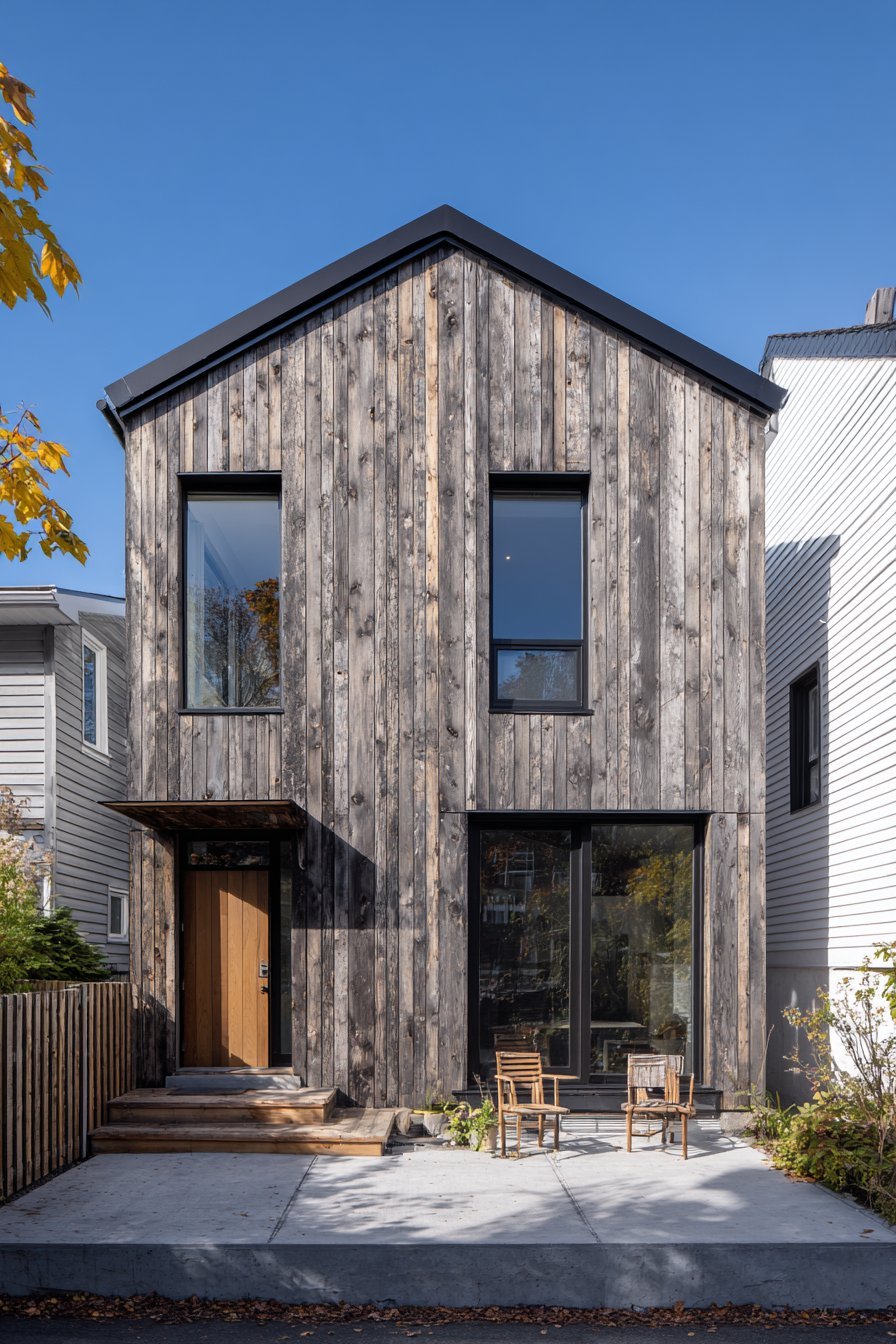
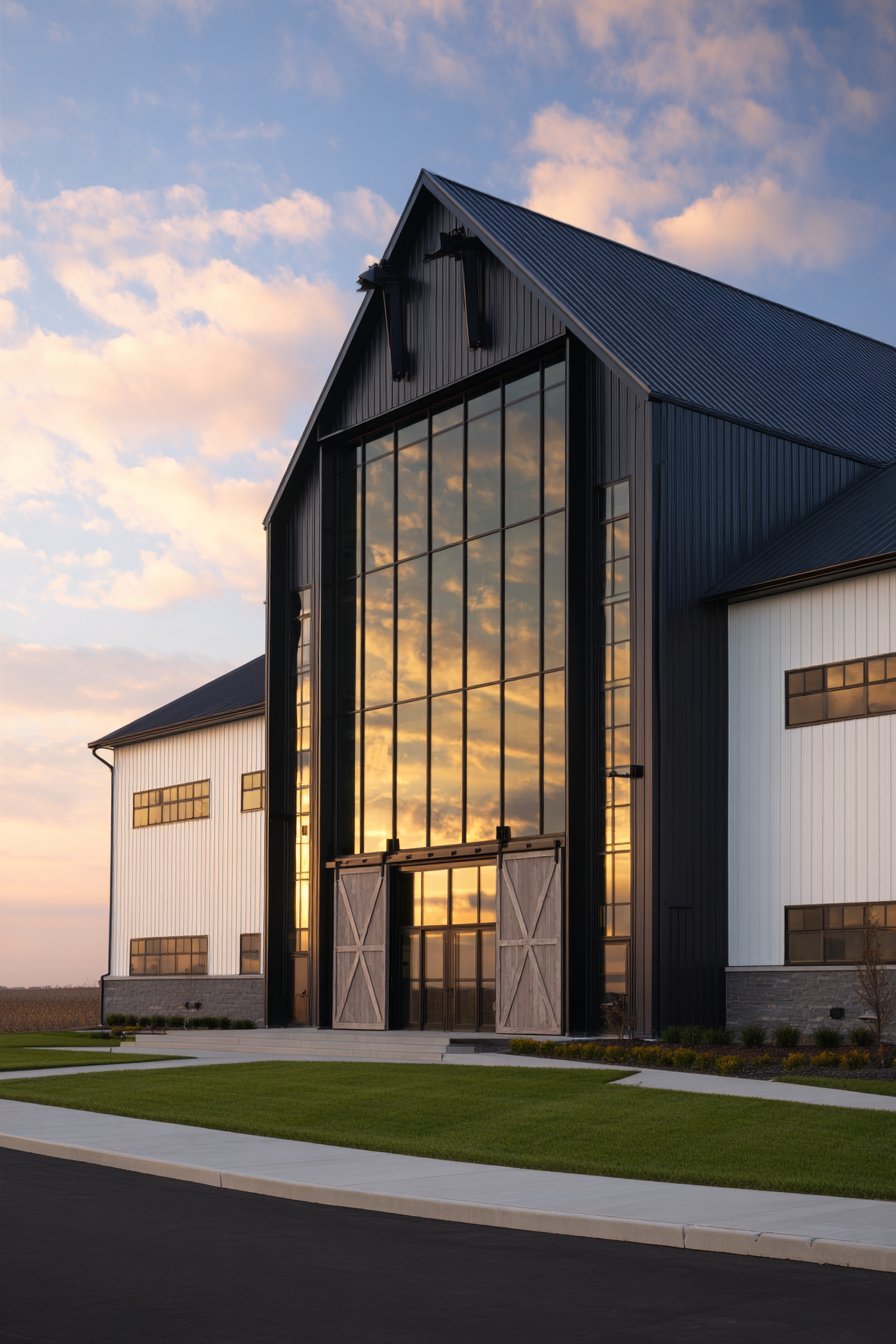
Vertical black metal siding with standing seam details covers main volume. Large sliding barn doors in natural weathered wood reveal glass walls. White horizontal siding on secondary volume creates visual contrast. Simple black metal roofing with minimal pitch references agricultural forms.
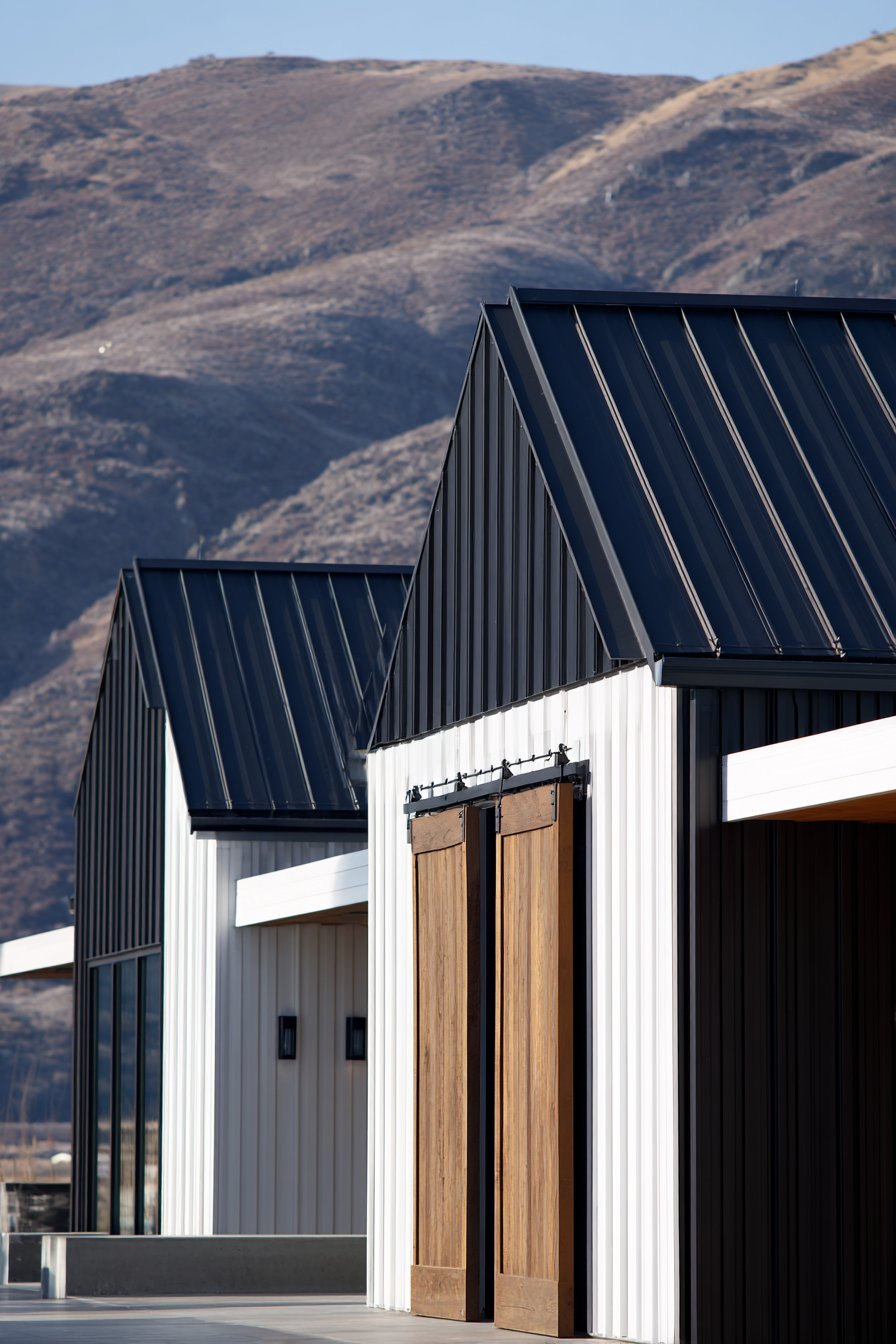
The design reinterprets traditional barn typology with modern materials. Vertical metal siding replaces traditional wood board-and-batten. Glass walls replace solid barn walls for transparency. The proportions reference agricultural buildings while serving residential functions.
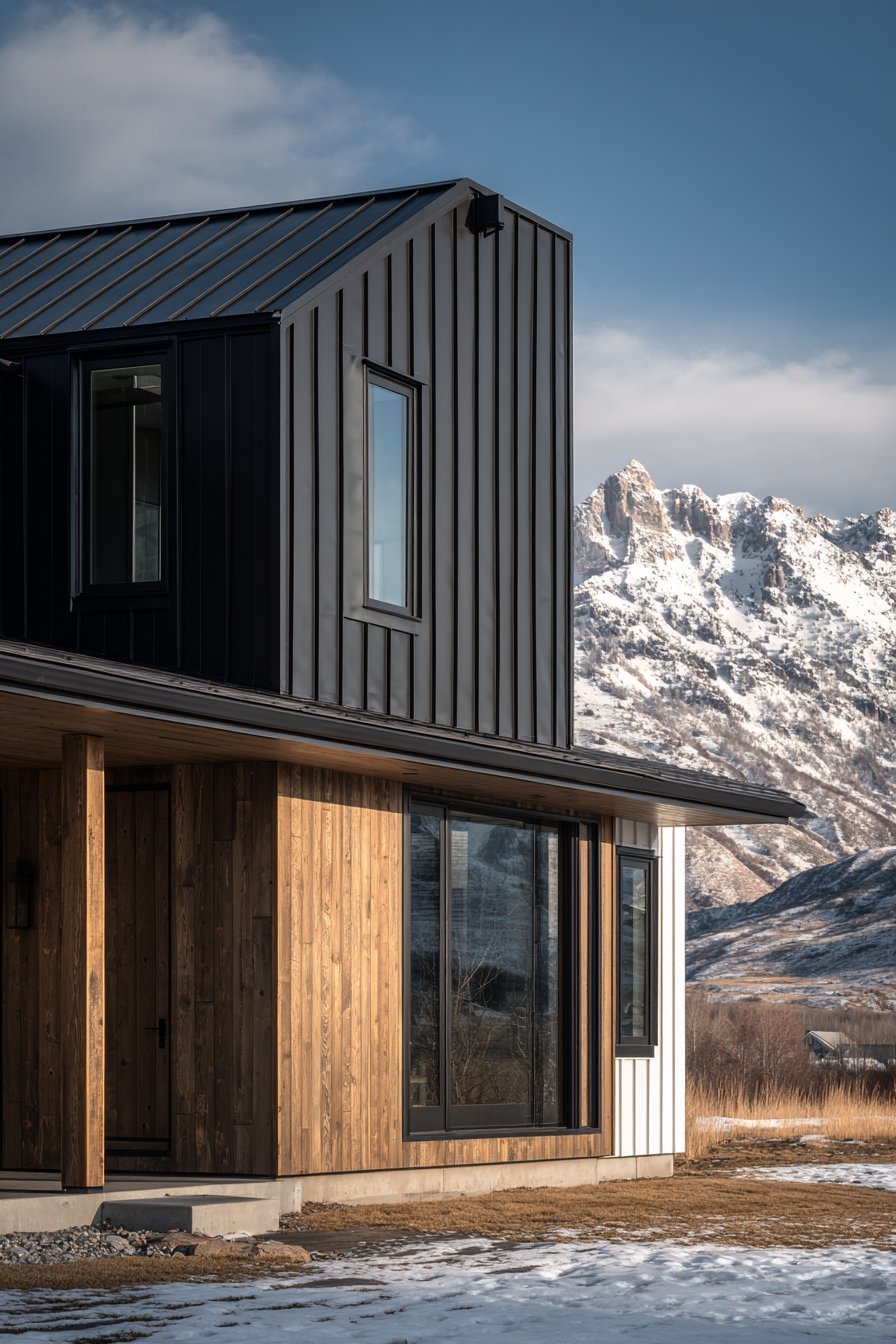
Low angle photography emphasizes building height and vertical lines. The composition captures the reinterpretation of familiar forms. Traditional agricultural references combine with contemporary material applications.
Key Design Tips:
- Use vertical black metal siding for contemporary barn aesthetic
- Install large sliding barn doors that reveal glass walls
- Contrast black metal with white horizontal siding volumes
- Choose simple metal roofing with minimal pitch
- Reference agricultural building proportions for residential use
- Photograph from low angles to emphasize vertical elements
- Reinterpret traditional forms with modern material applications
18. Art Deco with Geometric Relief Patterns
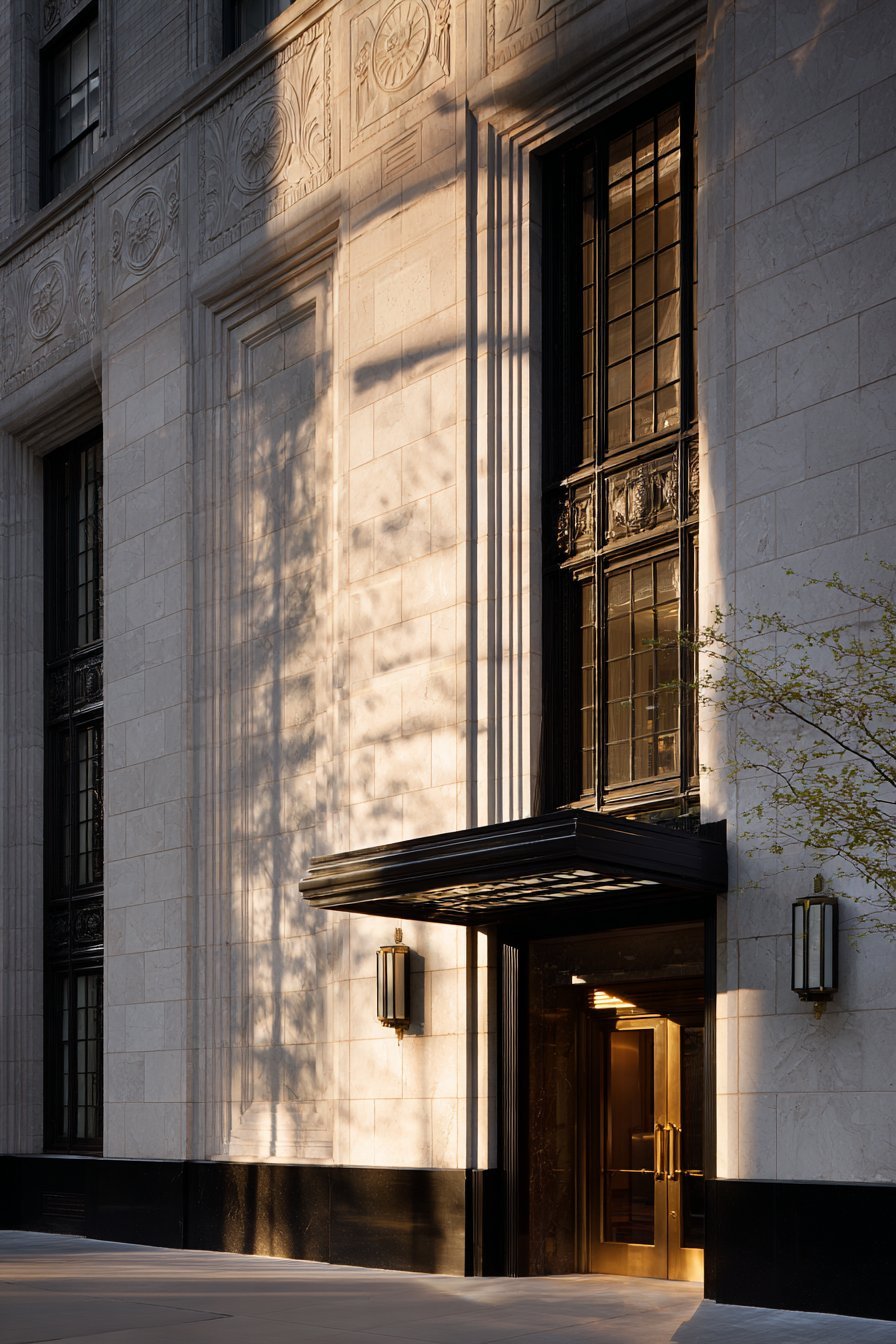
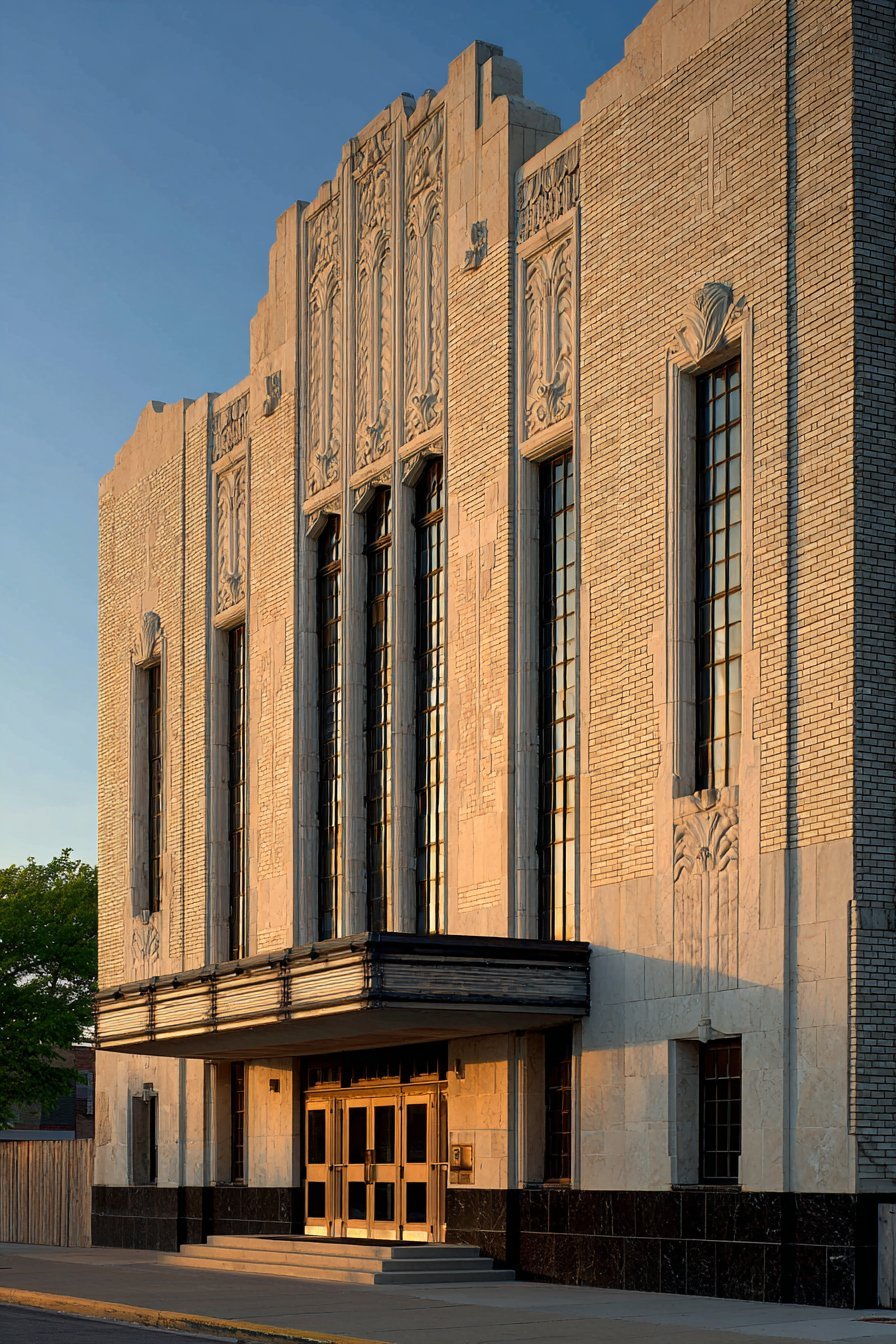
Cream-colored terracotta or cast stone features geometric relief patterns. Stylized floral motifs typical of 1920s-30s era add decorative interest. Tall narrow windows with decorative metalwork grilles emphasize vertical proportions. A stepped roofline creates characteristic Art Deco silhouette.
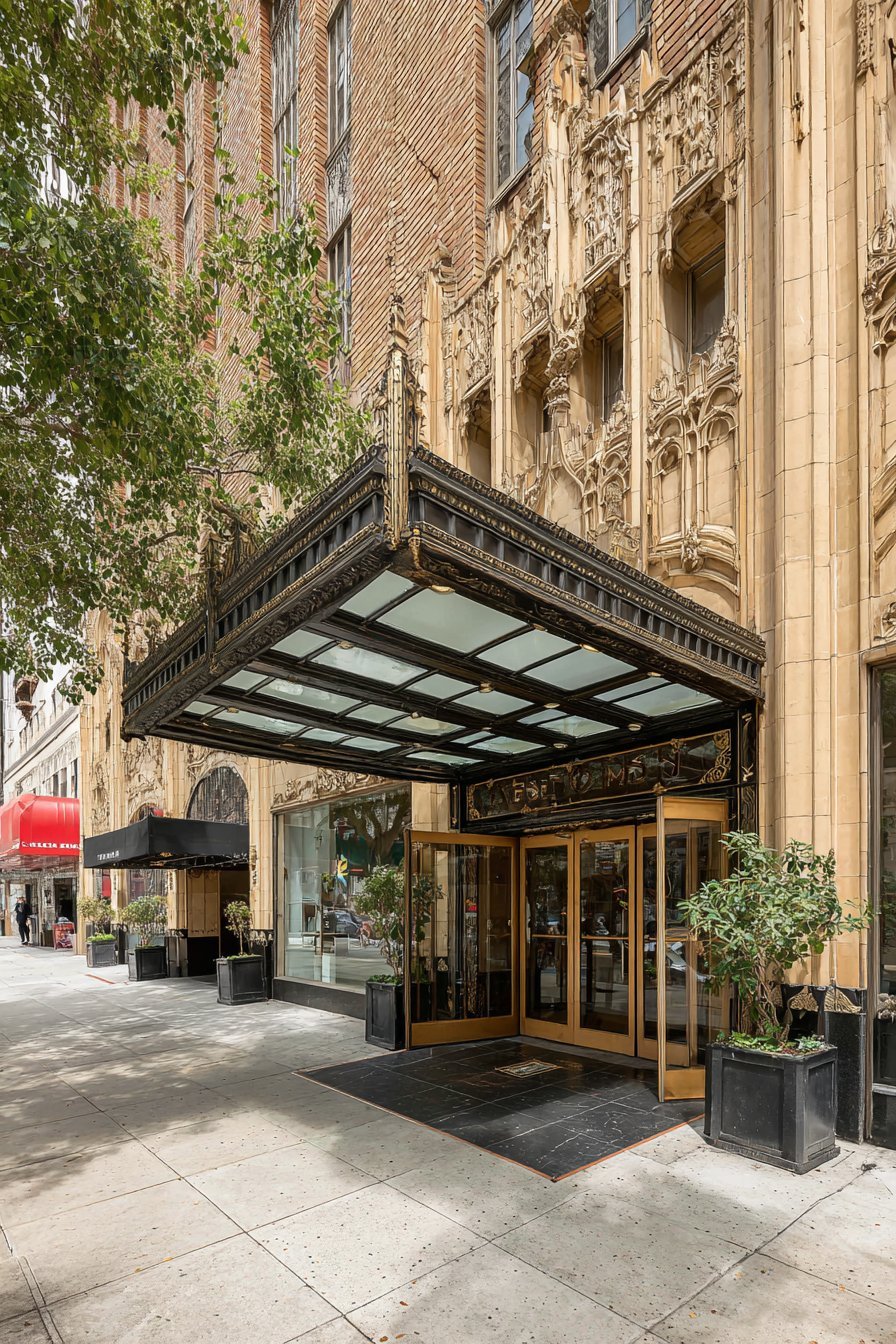
The entrance highlights bronze and glass marquee with zigzag patterns. Polished black granite surround provides strong contrast. Chrome or brass details on doors catch available light. These metallic accents add glamour and period authenticity.
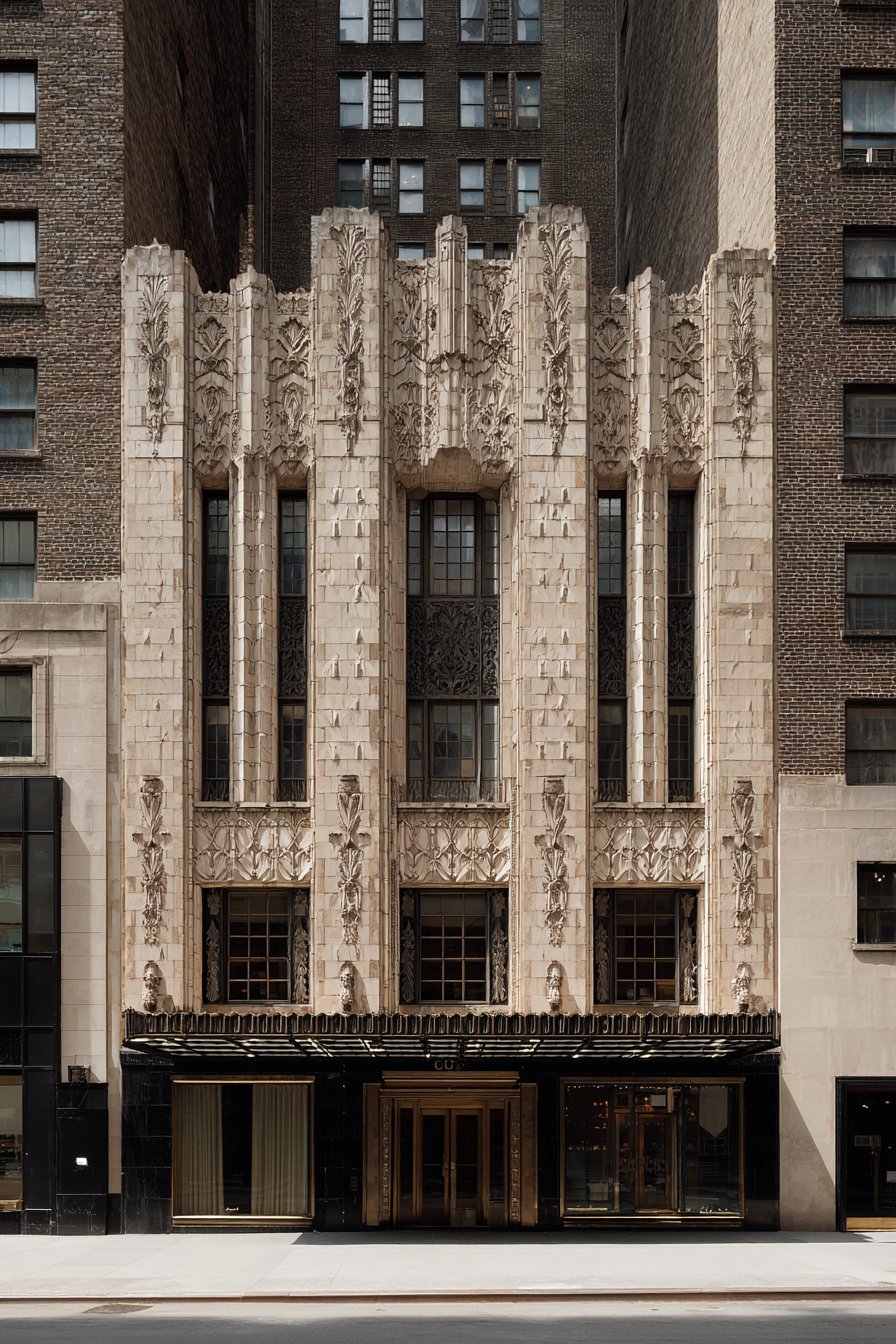
Golden hour photography creates dramatic shadows in relief patterns. Three-dimensional decorative elements become more prominent under directional light. The period ornamental vocabulary receives proper emphasis.
Key Design Tips:
- Choose cream terracotta or cast stone for authentic Art Deco palette
- Incorporate geometric relief patterns in facade surfaces
- Install tall narrow windows for vertical emphasis
- Design stepped rooflines for characteristic silhouette
- Add bronze and glass marquees with zigzag patterns
- Use polished granite and metallic accents for glamour
- Photograph during golden hour to emphasize relief patterns
19. Sustainable Green Facade with Living Walls
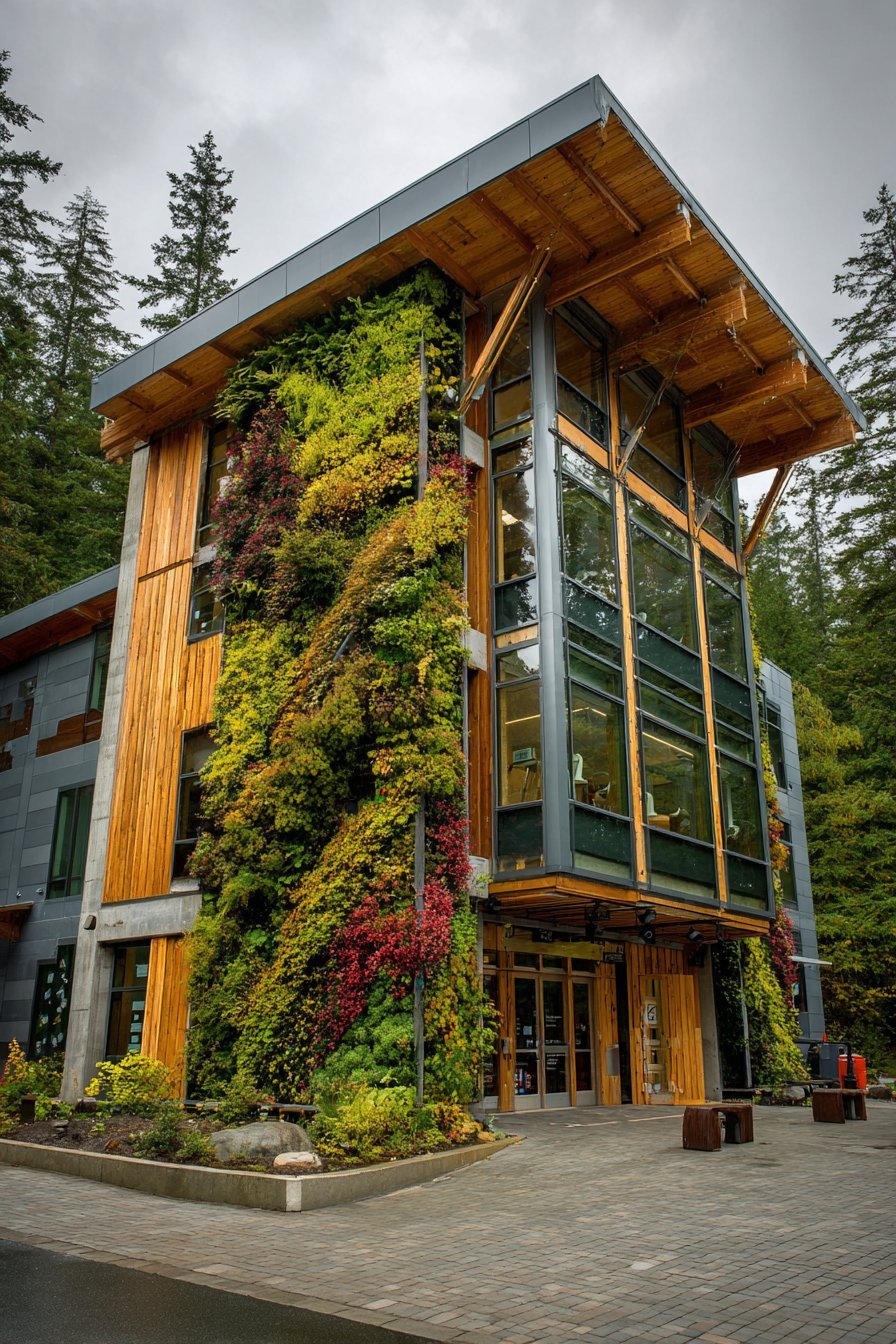
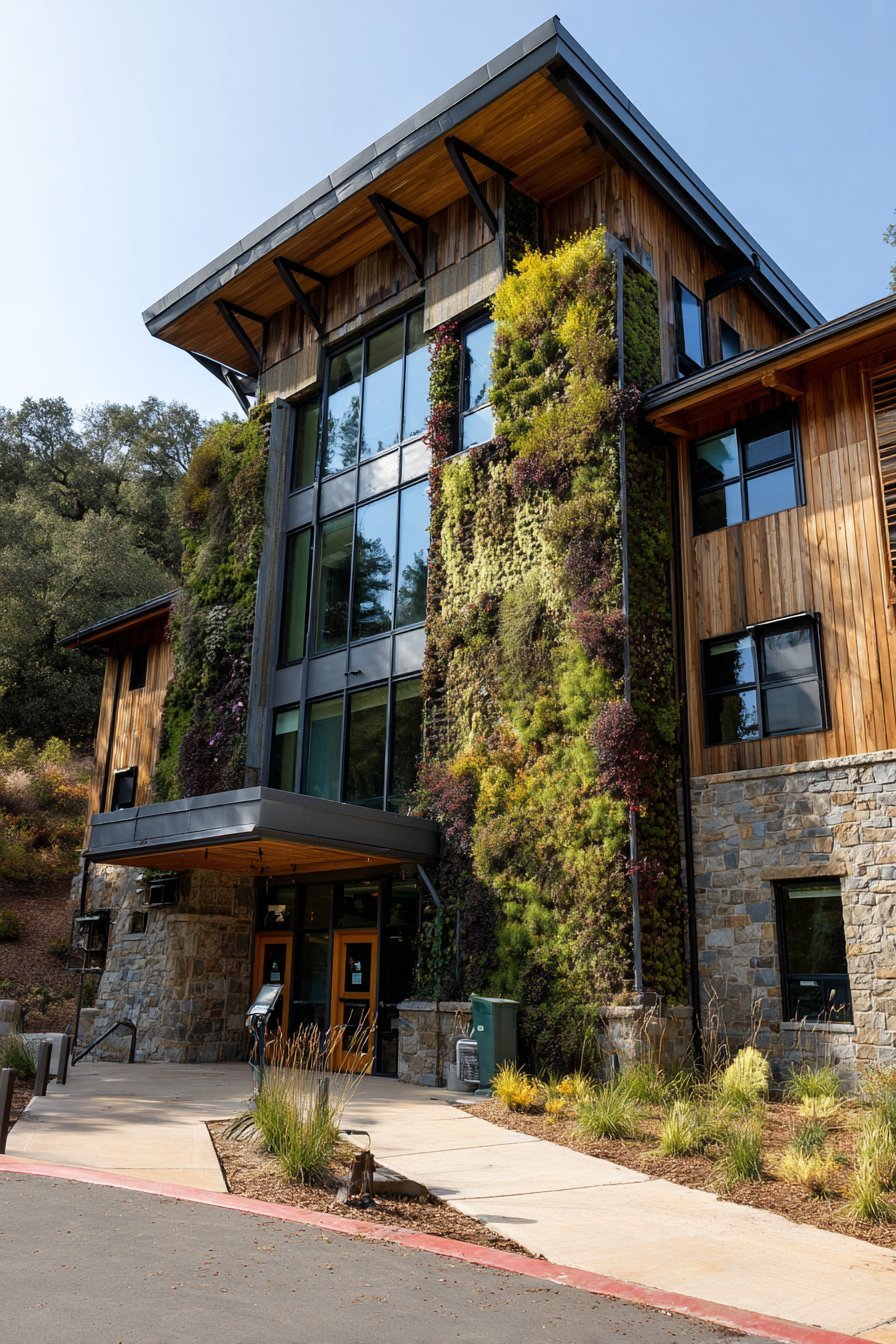
Living wall systems with native plants create vertical gardens. Natural wood rain screen cladding uses FSC-certified timber. Large energy-efficient windows with wood frames maximize light and views. Solar panels integrate into roof design seamlessly.
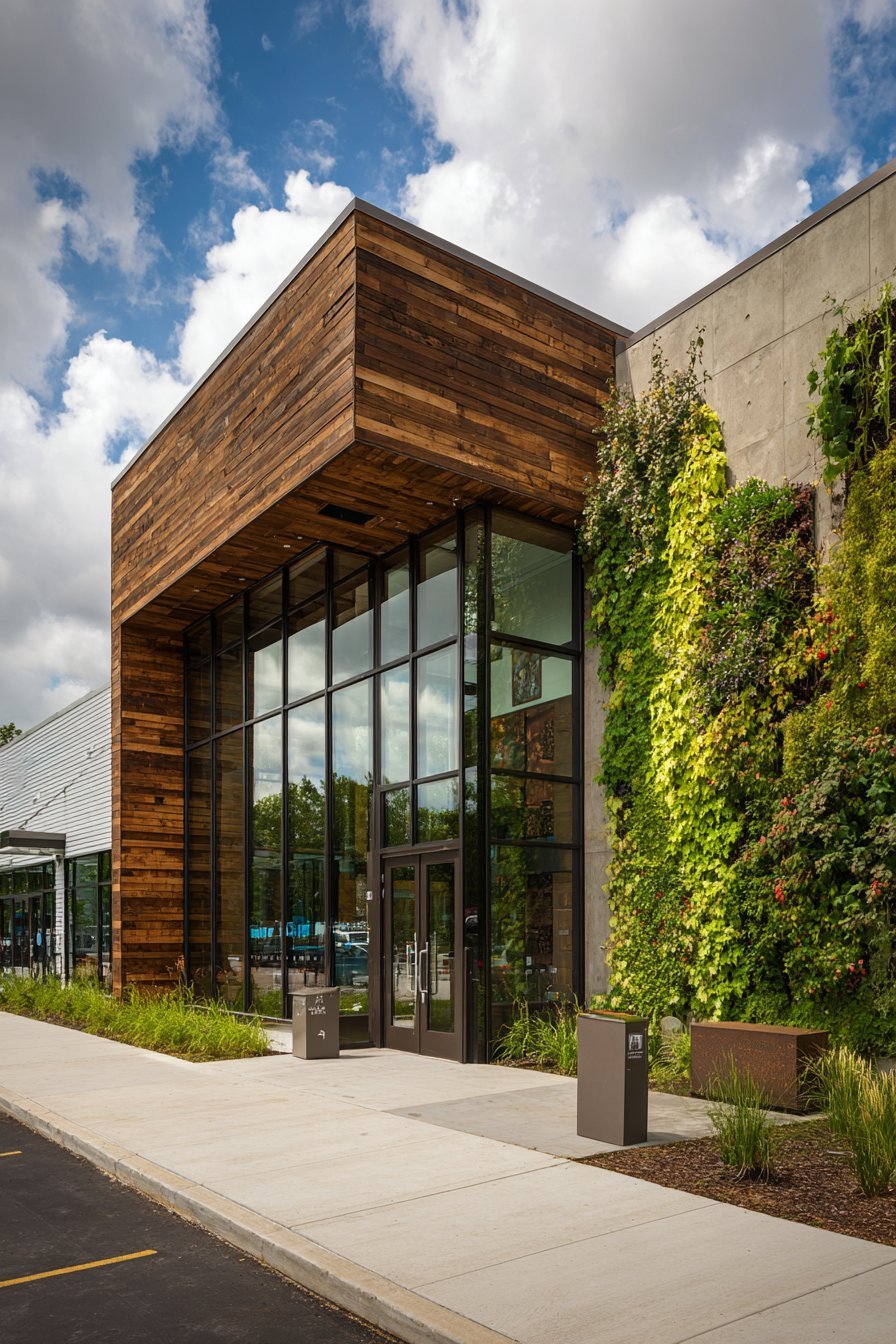
Rainwater collection systems appear as visible architectural elements. Natural ventilation features demonstrate passive cooling strategies. The facade integrates ecological design principles throughout.
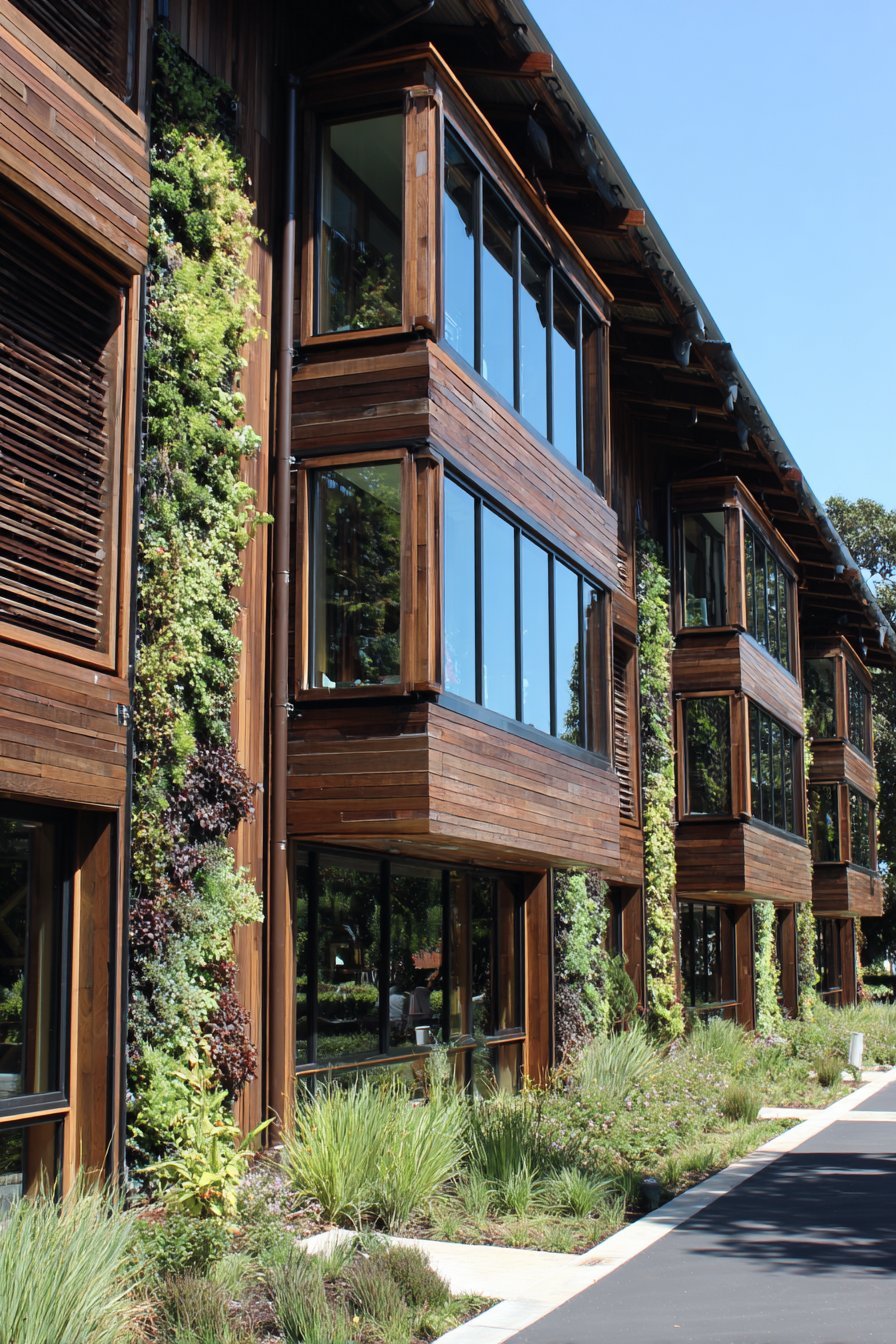
Natural daylight photography captures living plant wall texture and color. The vegetation adds seasonal change and living quality. Architecture and nature merge in this sustainable approach.
Key Design Tips:
- Install living wall systems with native plant species
- Use FSC-certified timber for sustainable wood cladding
- Choose energy-efficient windows with wood frames
- Integrate solar panels into roof design
- Make rainwater collection visible as architectural feature
- Design natural ventilation for passive cooling
- Document how architecture and nature merge sustainably
20. Desert Contemporary with Rammed Earth
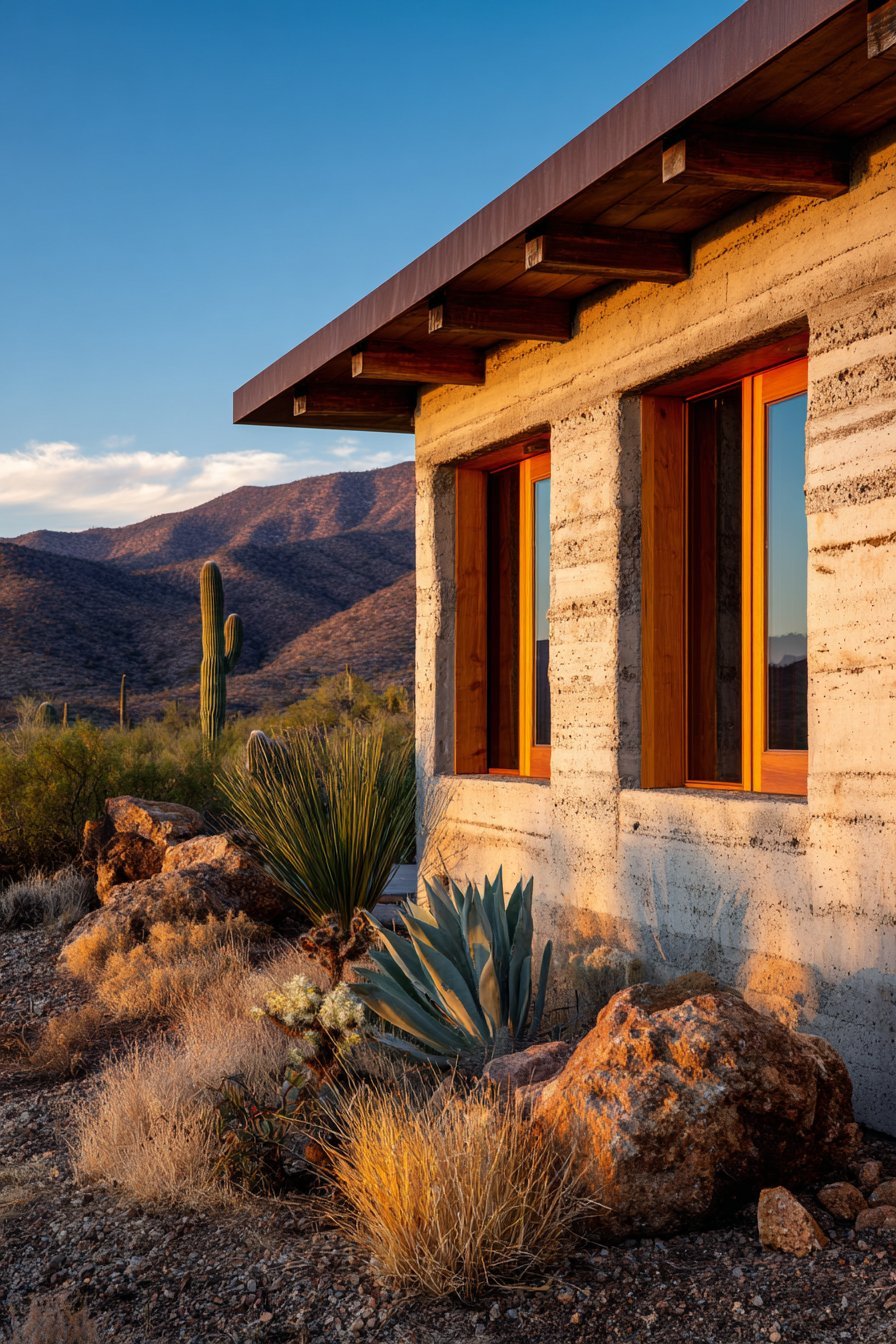
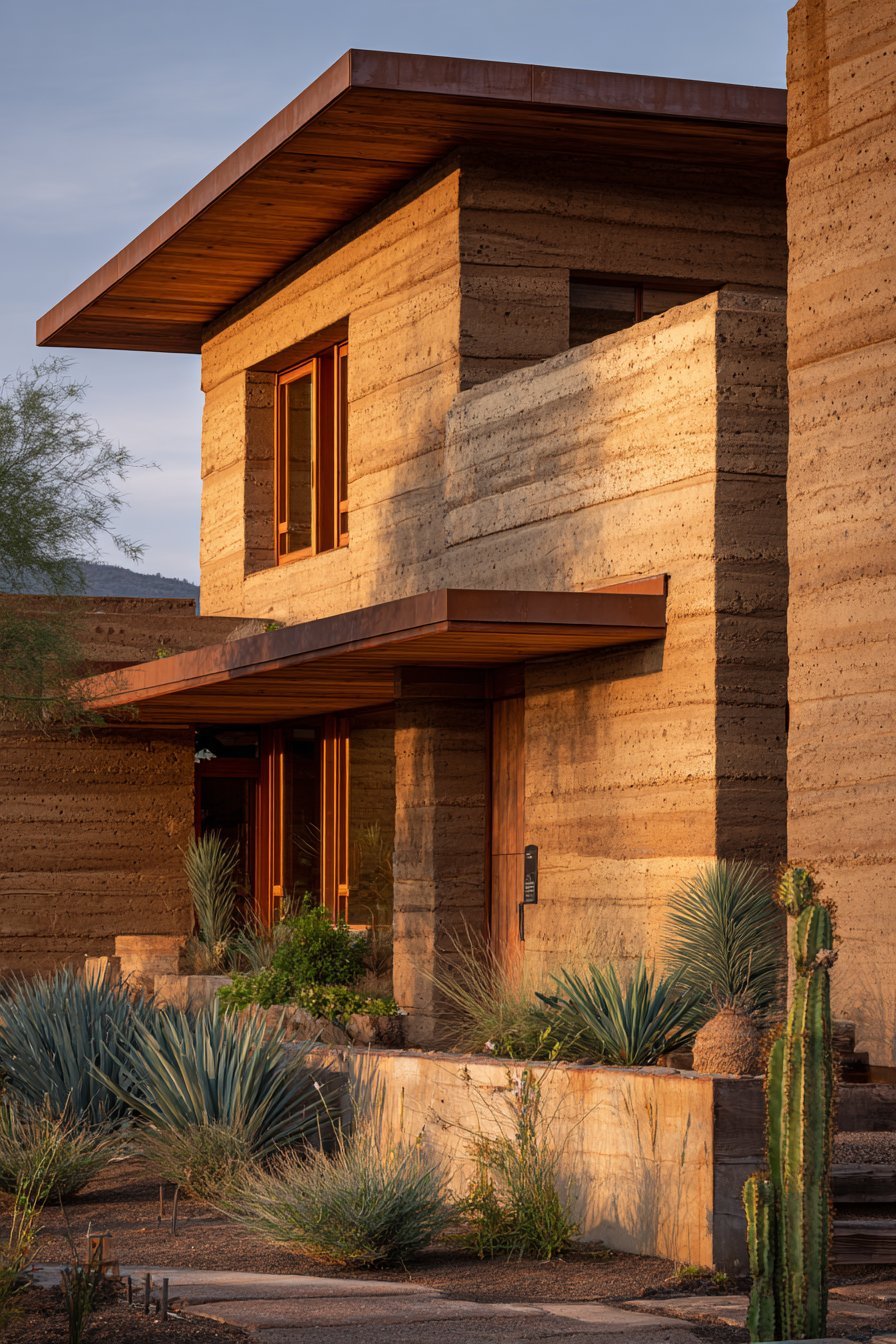
Rammed earth walls show visible horizontal layering. Natural earth tones range from tan to terracotta. Deep recessed windows with simple wood frames provide sun protection. A flat roof extends beyond facade creating covered outdoor spaces.
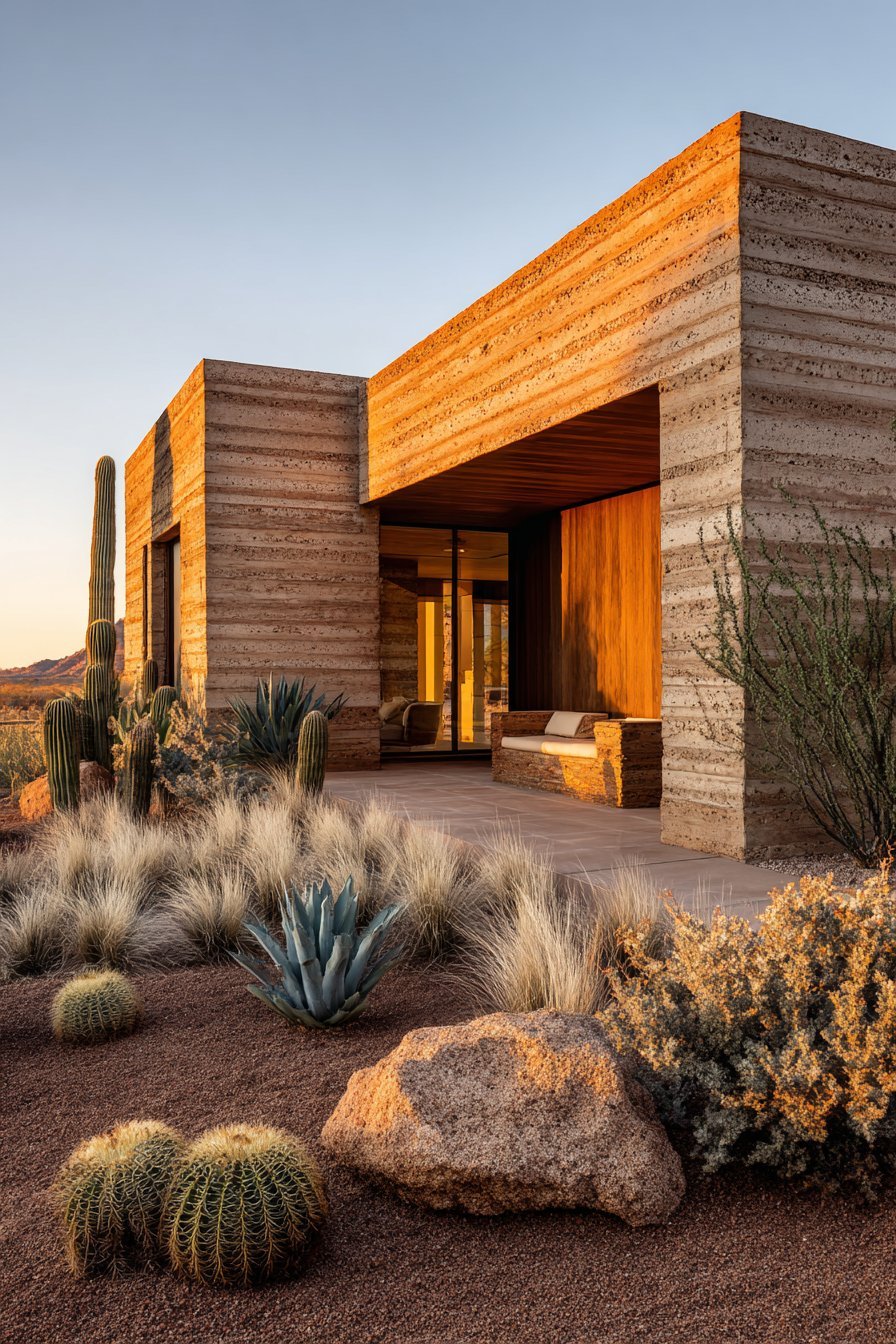
Natural desert landscaping with cacti and agave complements earthy palette. The materials respond directly to desert climate conditions. Thermal mass in rammed earth walls moderates interior temperatures.
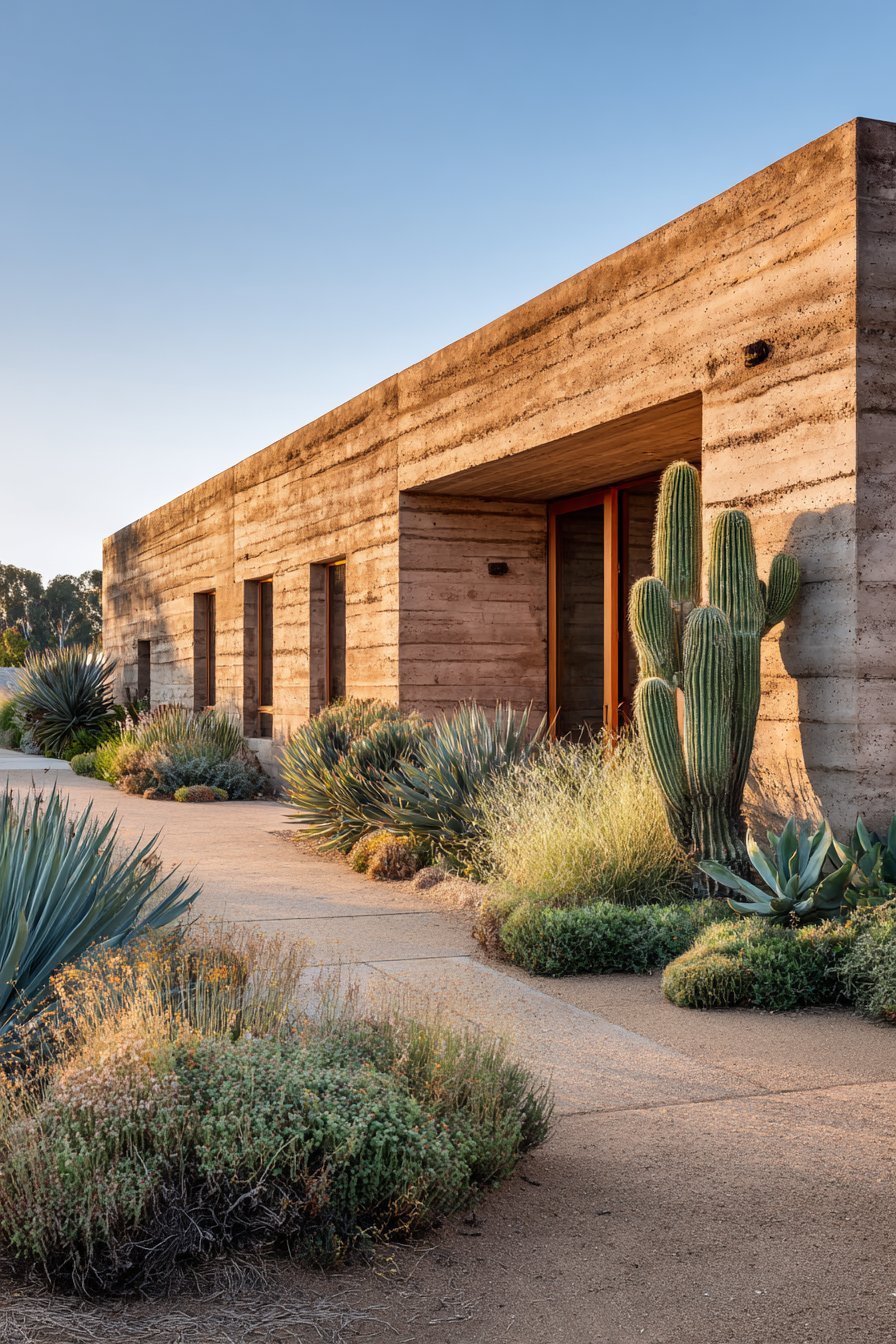
Late afternoon photography emphasizes rammed earth texture. Low-angle sunlight creates long shadows highlighting horizontal layers. The building demonstrates climate-responsive design principles.
Key Design Tips:
- Build rammed earth walls for thermal mass and visual texture
- Recess windows deeply for desert sun protection
- Extend flat roofs to create shaded outdoor areas
- Choose native desert plants for appropriate landscaping
- Photograph late afternoon to emphasize earth wall texture
- Design with climate-responsive passive strategies
- Let natural earth tones guide material palette
21. Converted Industrial with Historic Preservation
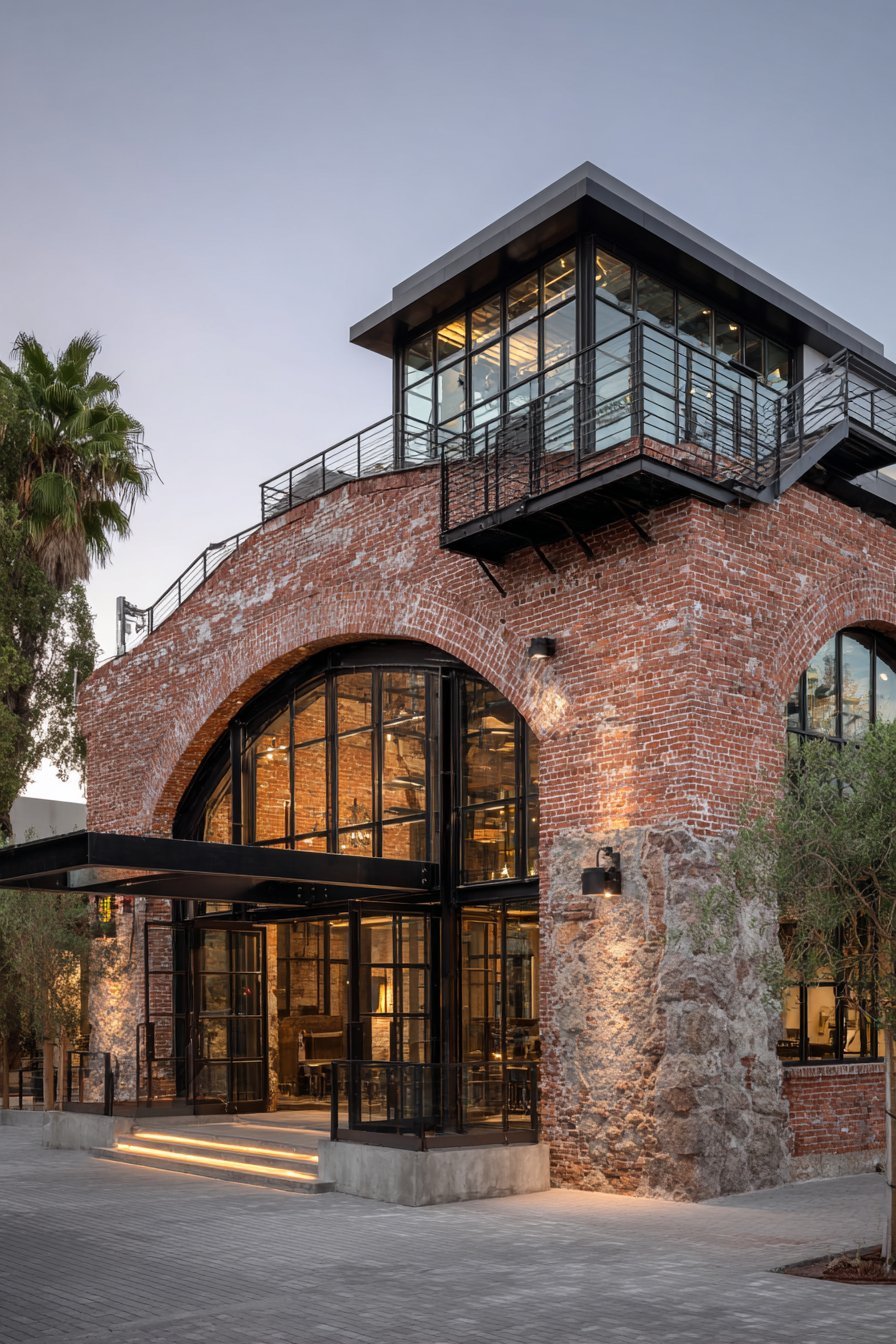
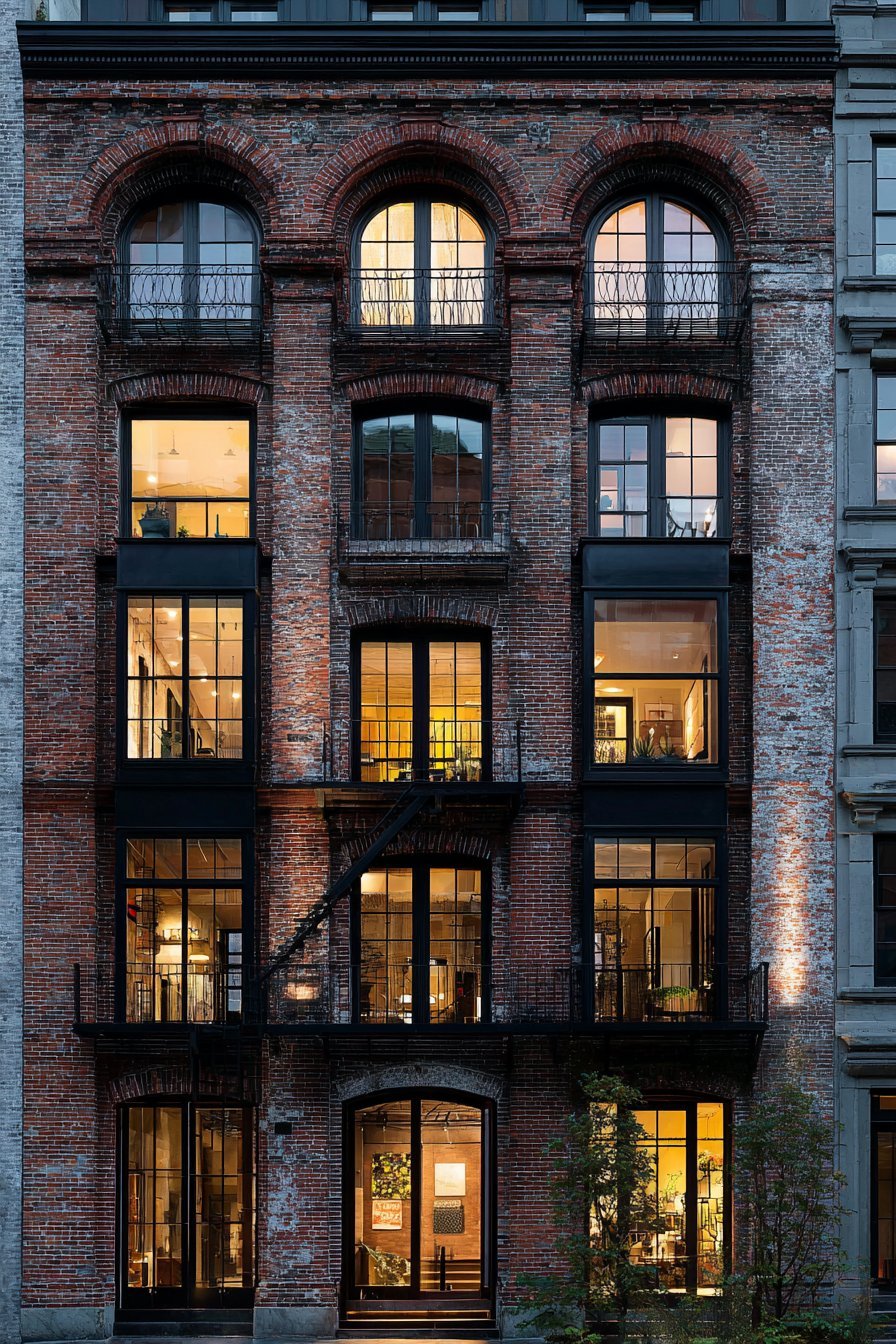
Original red brick walls preserve industrial heritage. Large arched window openings fit black steel-framed glass. Original cast iron columns remain exposed and painted black. New metal fire escapes add functional and aesthetic interest.
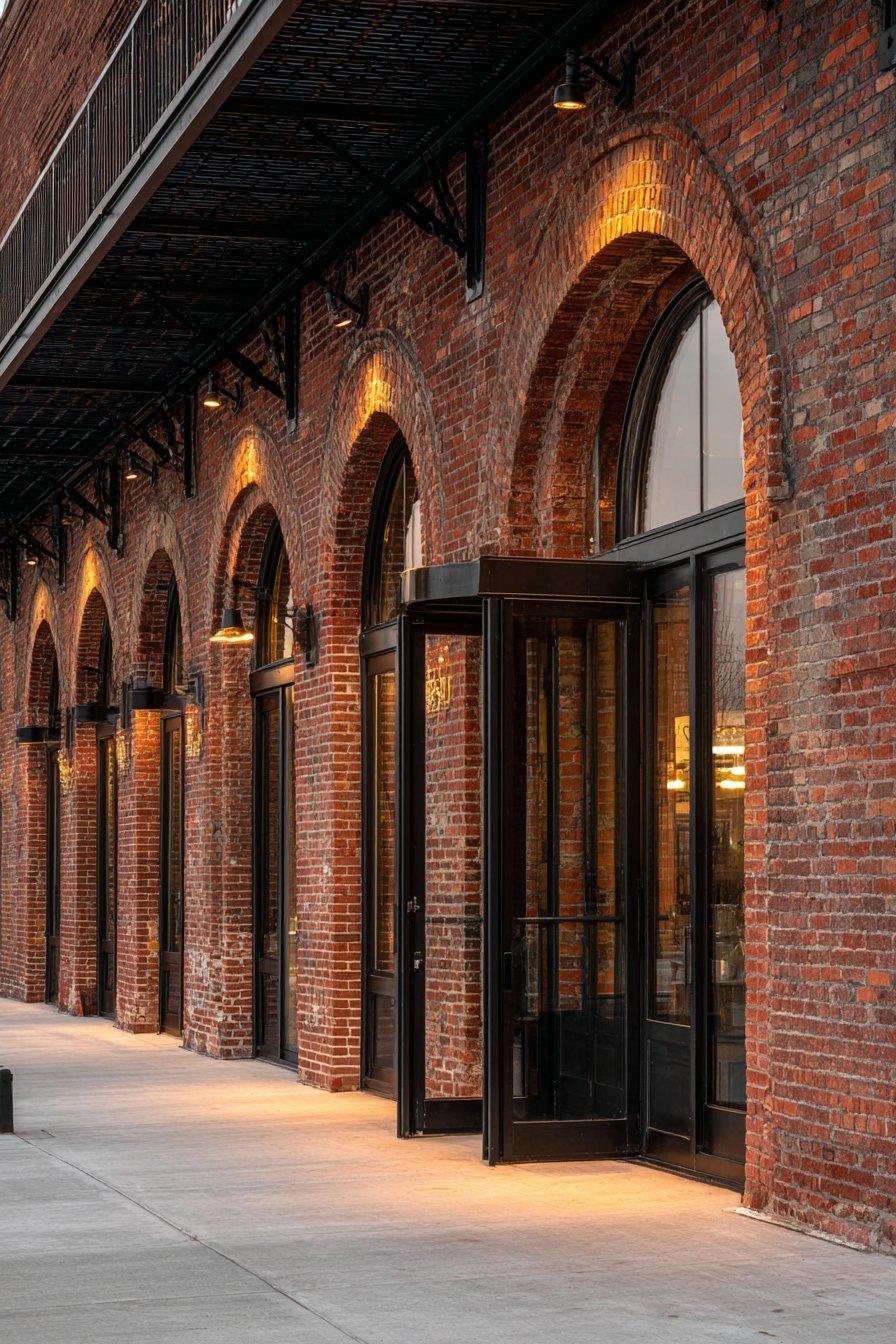
The facade shows intentional weathering and varied brick patina. Rooftop additions use glass and metal contrasting historic masonry. The design demonstrates adaptive reuse principles.
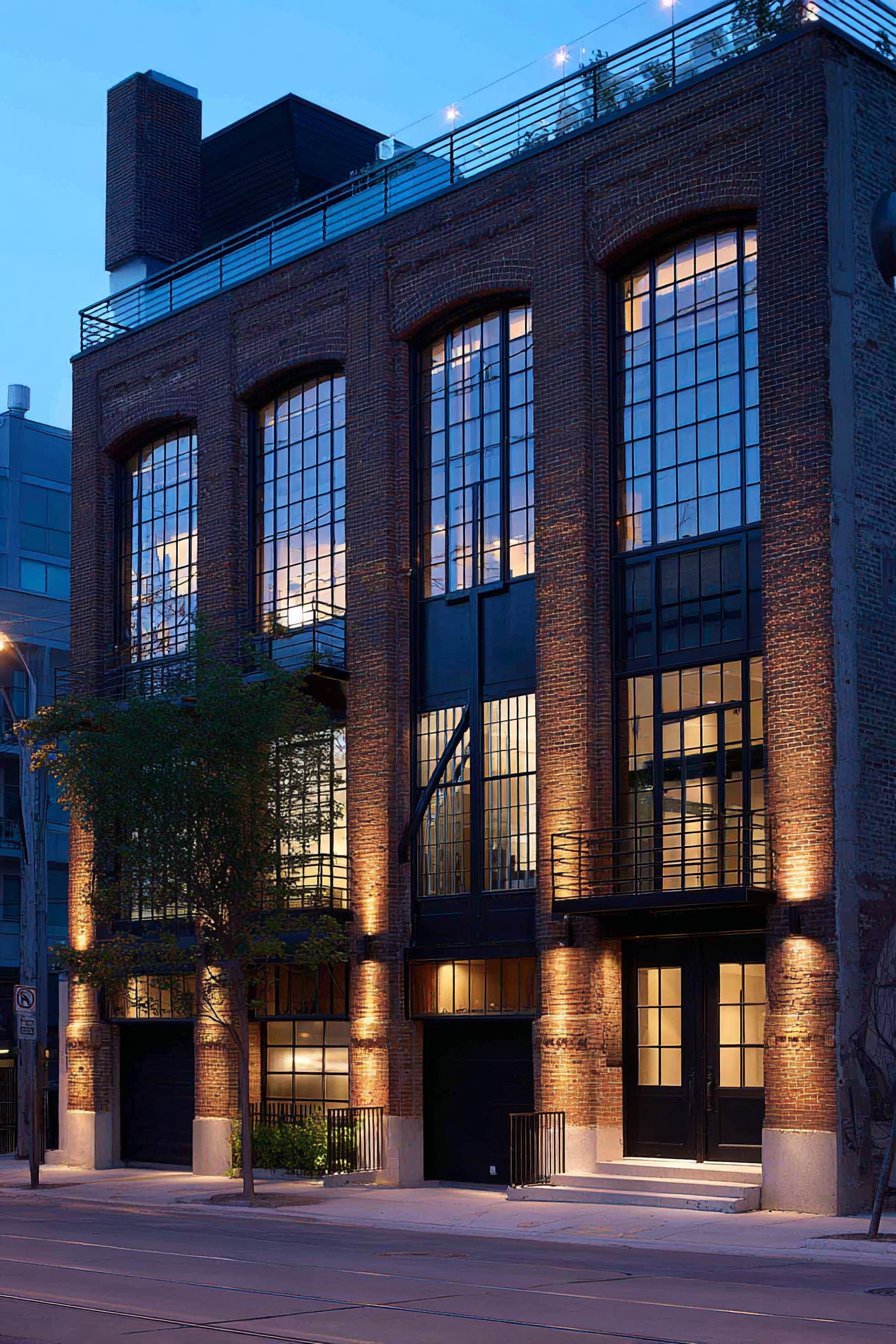
Blue hour photography captures historic and contemporary elements together. The preservation work respects original industrial character. Modern additions clearly distinguish themselves from historic fabric.
Key Design Tips:
- Preserve original red brick industrial walls
- Install steel-framed glass in arched openings
- Expose and paint original cast iron columns
- Add new metal fire escapes for code compliance
- Retain weathering and brick patina as character
- Use glass and metal for rooftop additions
- Photograph at blue hour to unite old and new
22. Cape Cod Cottage with Weathered Shingles
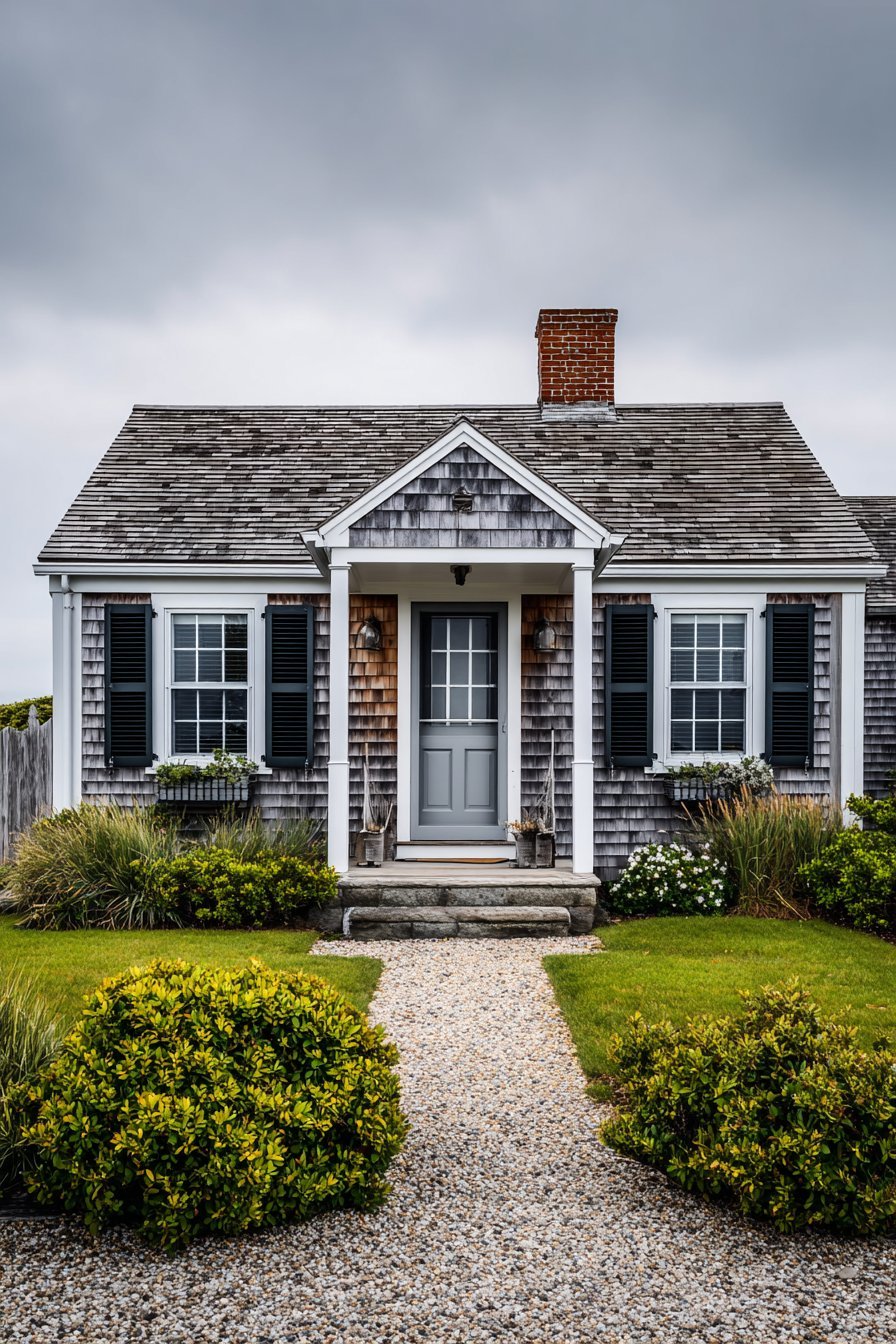
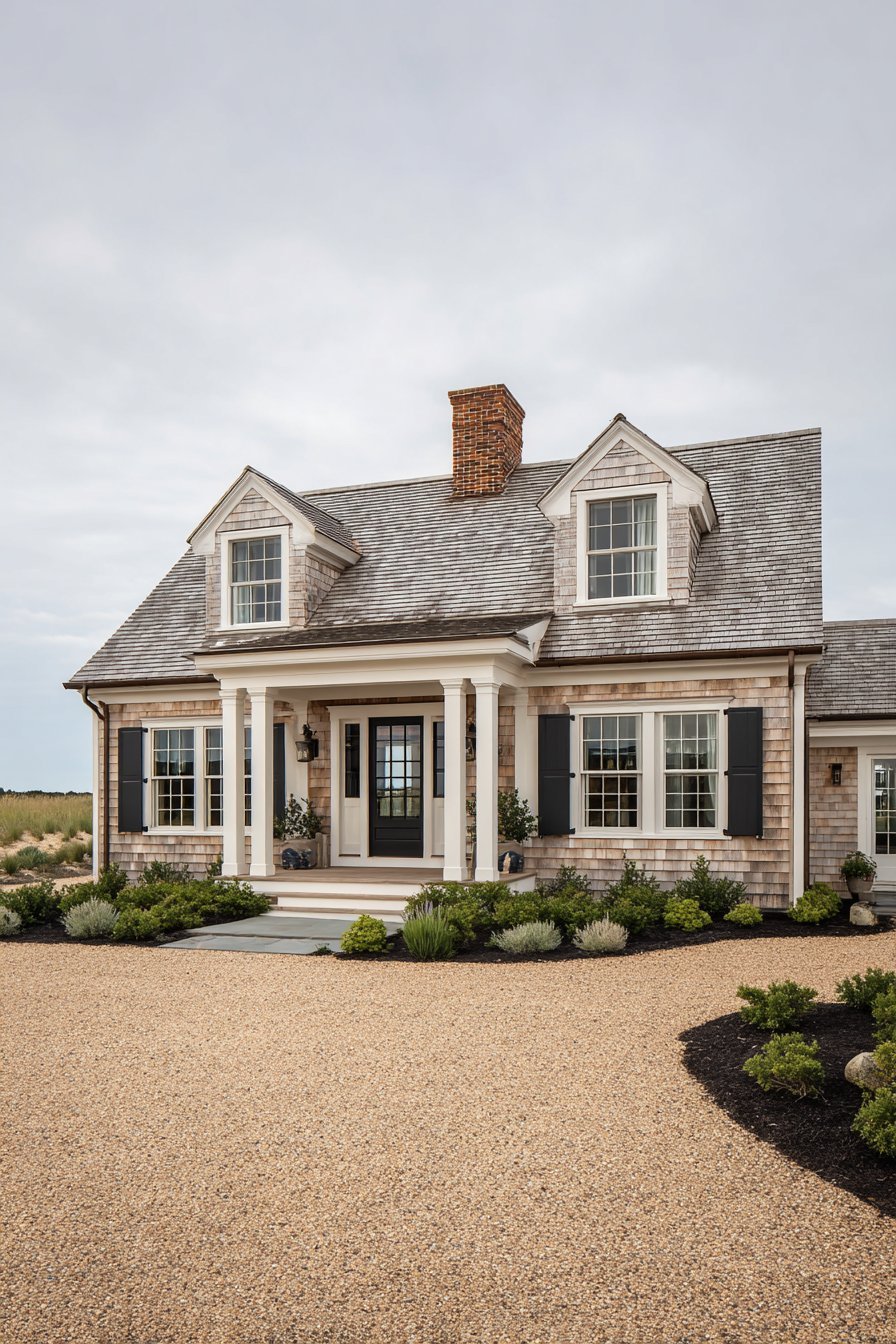
Natural weathered cedar shingle siding develops soft grey tones. White painted wood trim surrounds symmetrically placed windows. A steep gabled roof with minimal overhang maintains New England character. Central brick chimney provides vertical focal point.
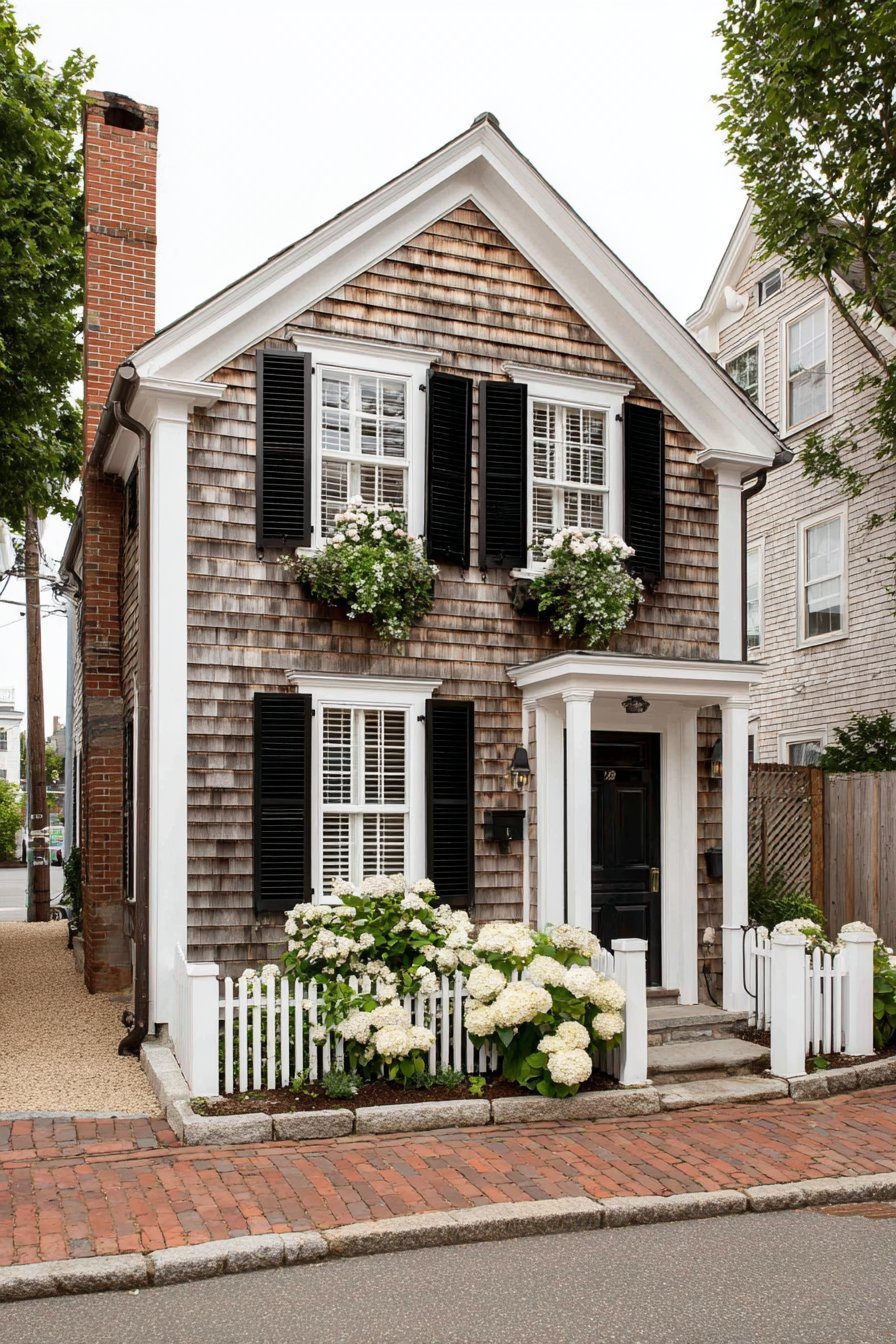
Black or dark green shutters frame multi-pane windows. Simple covered entry with white columns leads to paneled door. The design celebrates traditional Cape Cod building methods.
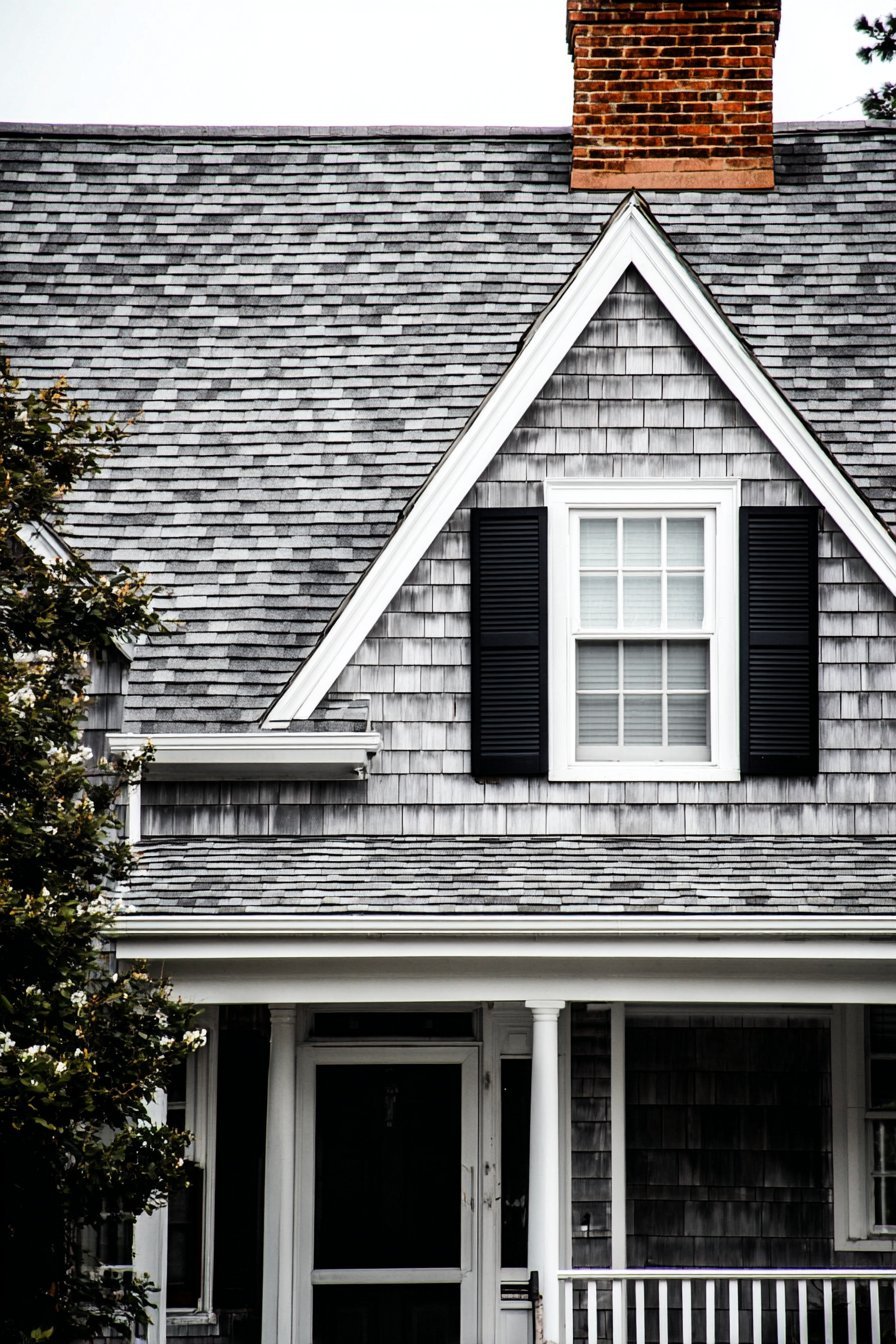
Overcast light provides even illumination for weathered shingle texture. The photography captures authentic coastal material weathering. Traditional New England proportions guide every design decision.
Key Design Tips:
- Use natural cedar shingles that weather to grey
- Paint trim white for Cape Cod contrast
- Design steep gabled roofs with central chimneys
- Install multi-pane windows with traditional shutters
- Keep entry designs simple with white columns
- Document weathered shingle texture in even light
- Follow traditional New England proportional systems
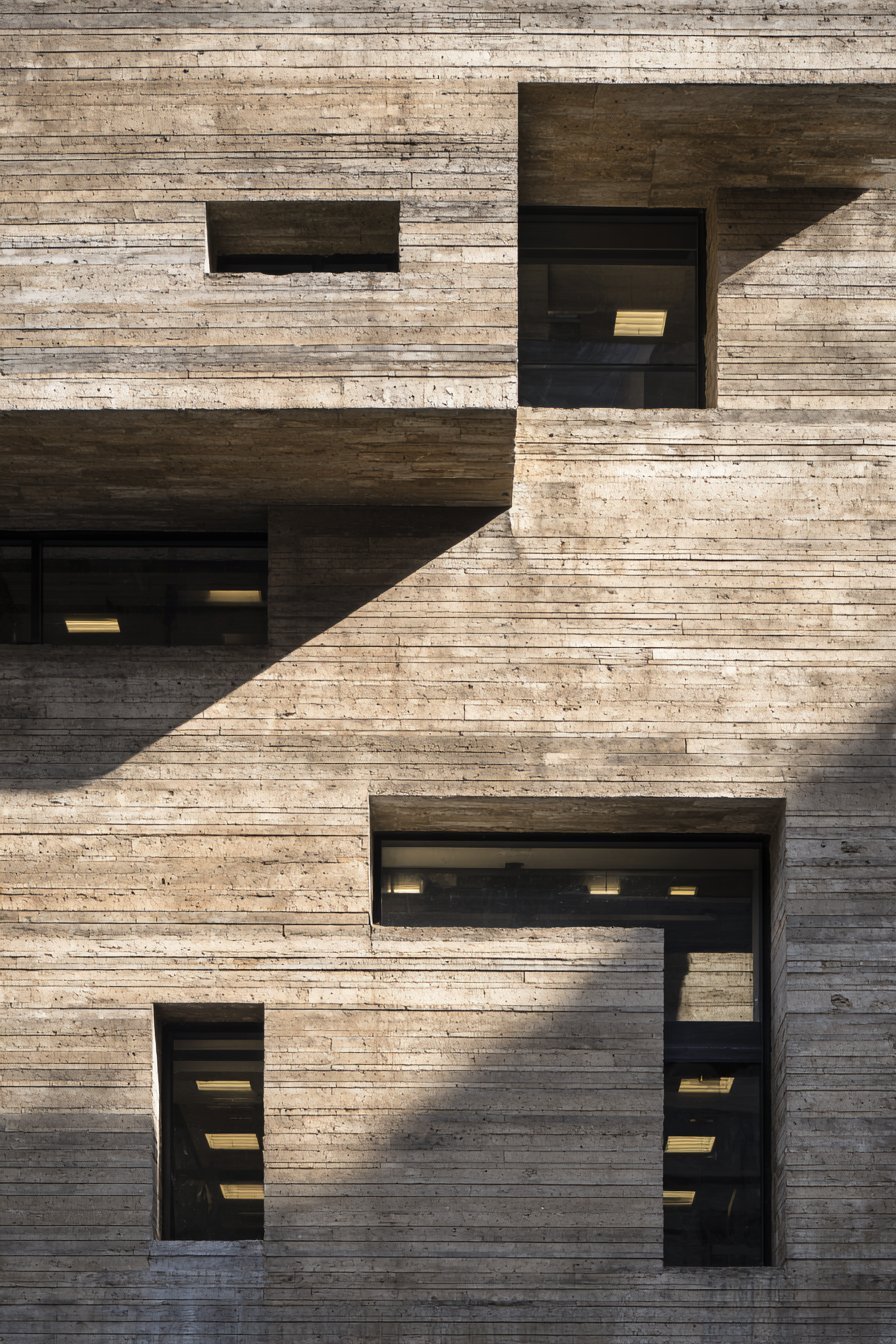
23. Brutalist Concrete with Board Forming
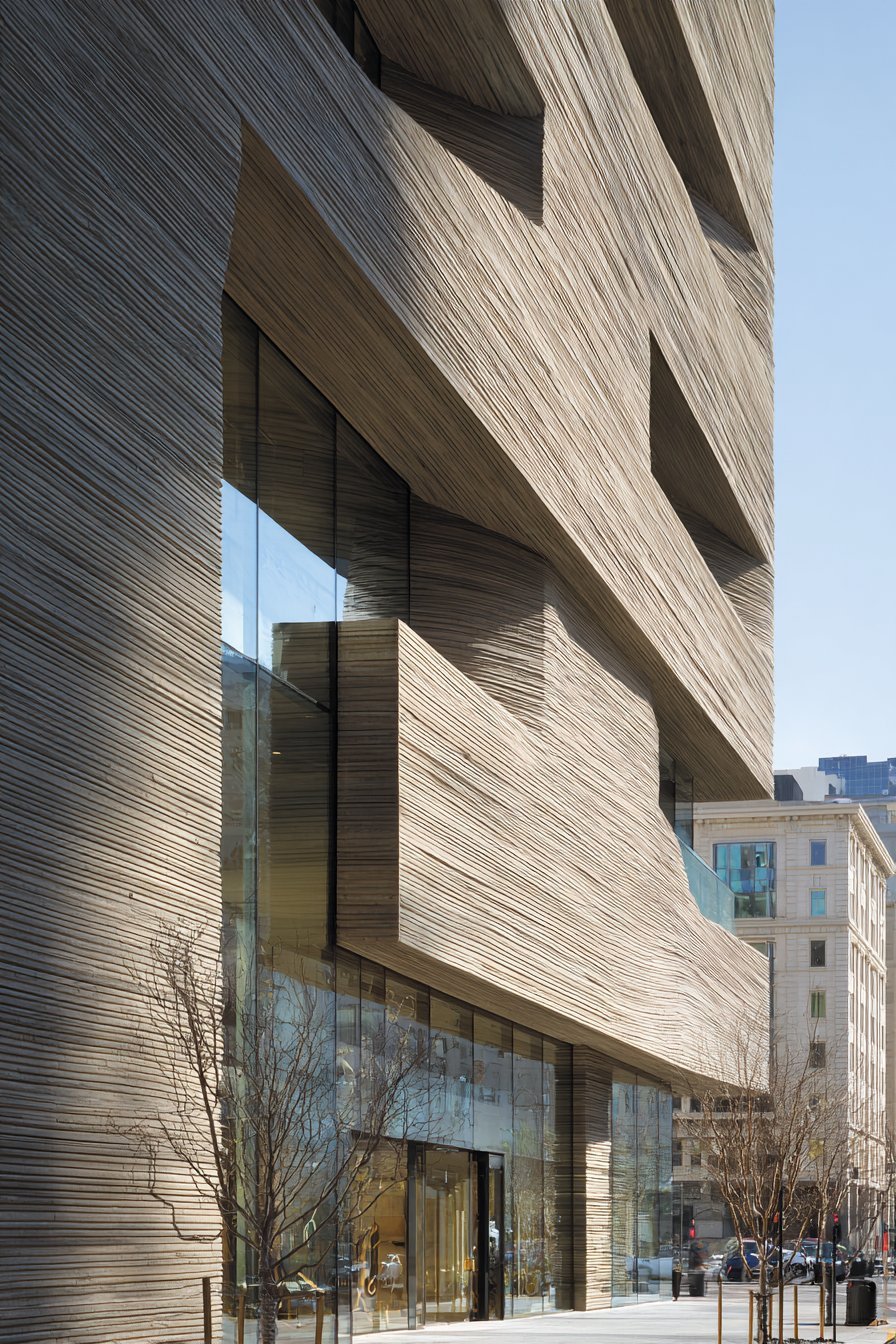
Board-formed concrete shows horizontal wood grain patterns. Deeply recessed window openings create dramatic shadow lines. Cantilevered concrete elements demonstrate structural capability. Expressed structural components become sculptural features.
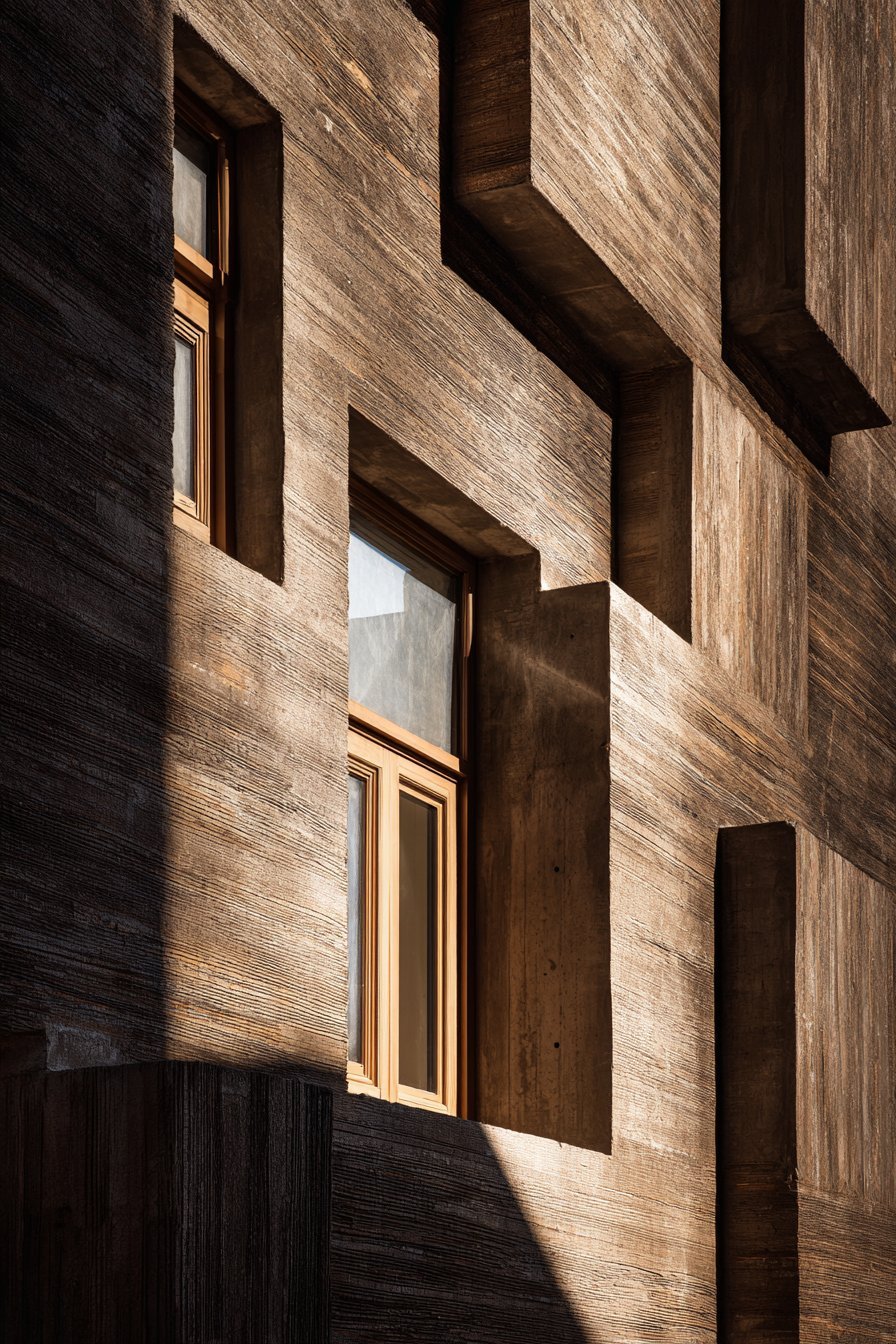
Minimal fenestration emphasizes concrete’s massive quality. Simple aluminum frames disappear visually against concrete. The facade celebrates raw material expression and structural honesty.
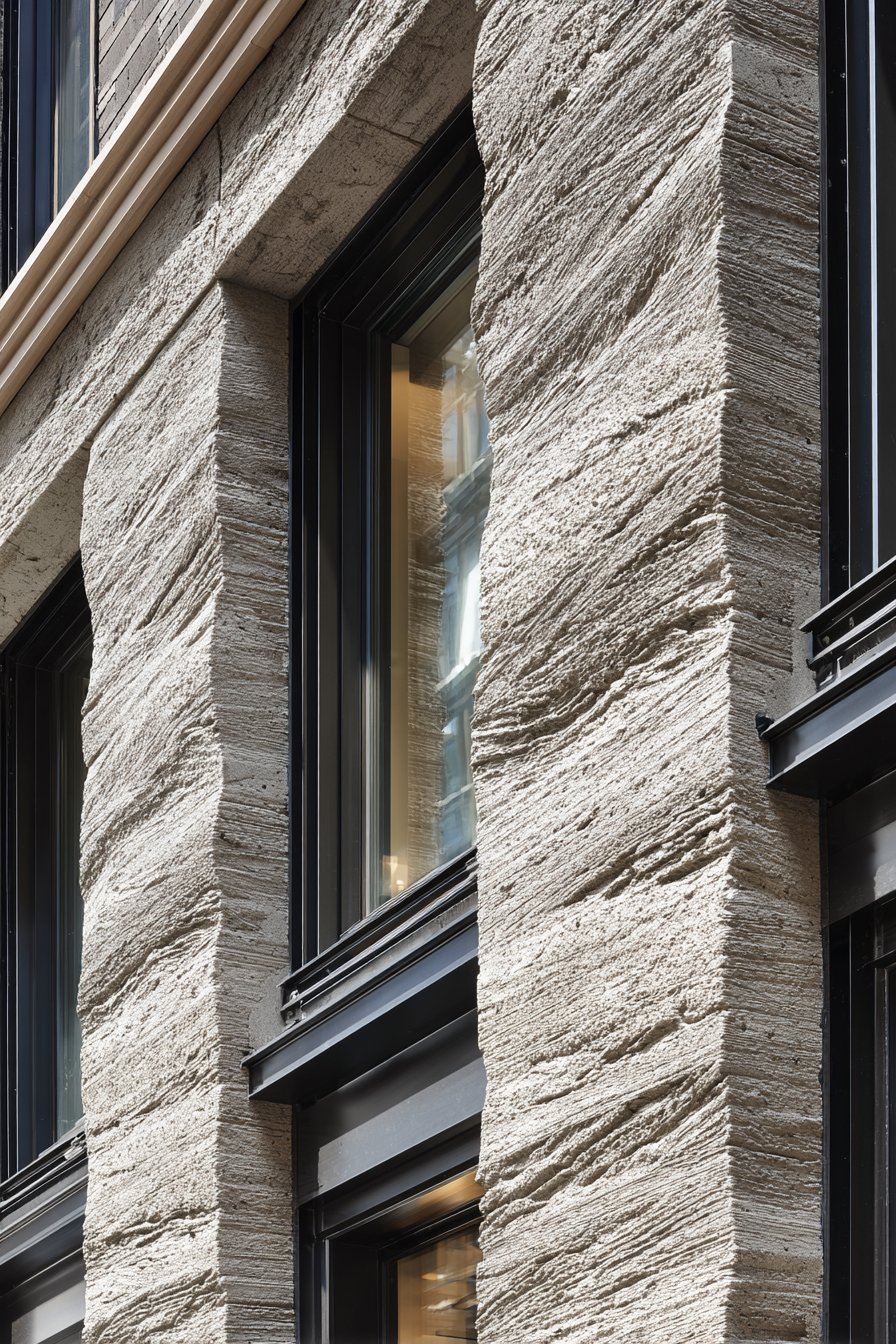
Midday photography captures light and shadow play on concrete. Textured concrete surface reveals formwork detail. The composition emphasizes geometric forms and material weight.
Key Design Tips:
- Use board-formed concrete for textured surfaces
- Recess windows deeply for dramatic shadows
- Design cantilevered elements to show structural capability
- Minimize window openings for massive appearance
- Choose simple aluminum frames that visually recede
- Photograph at midday for concrete shadow play
- Celebrate raw material and structural expression
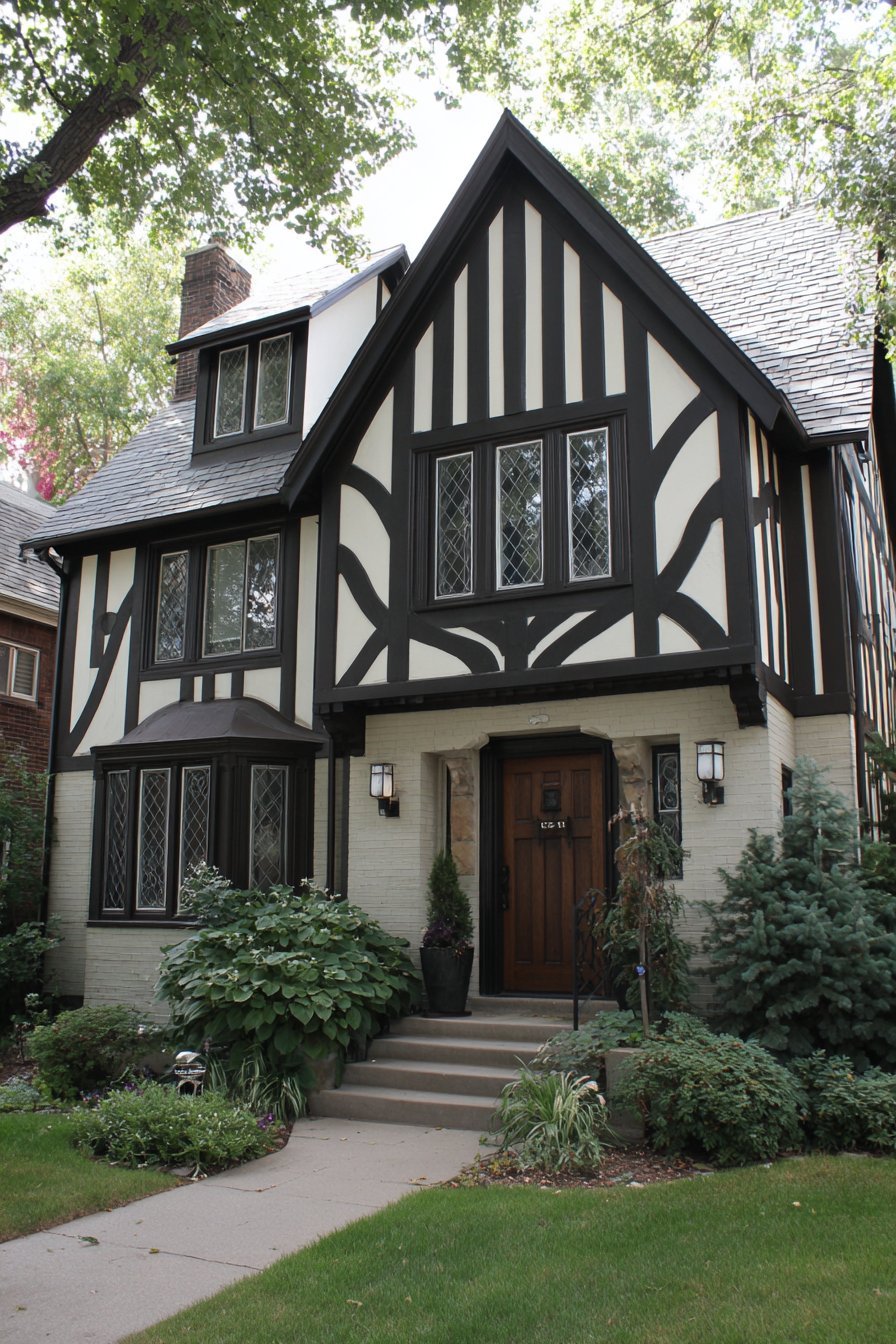
24. Tudor Revival with Decorative Half-Timbering
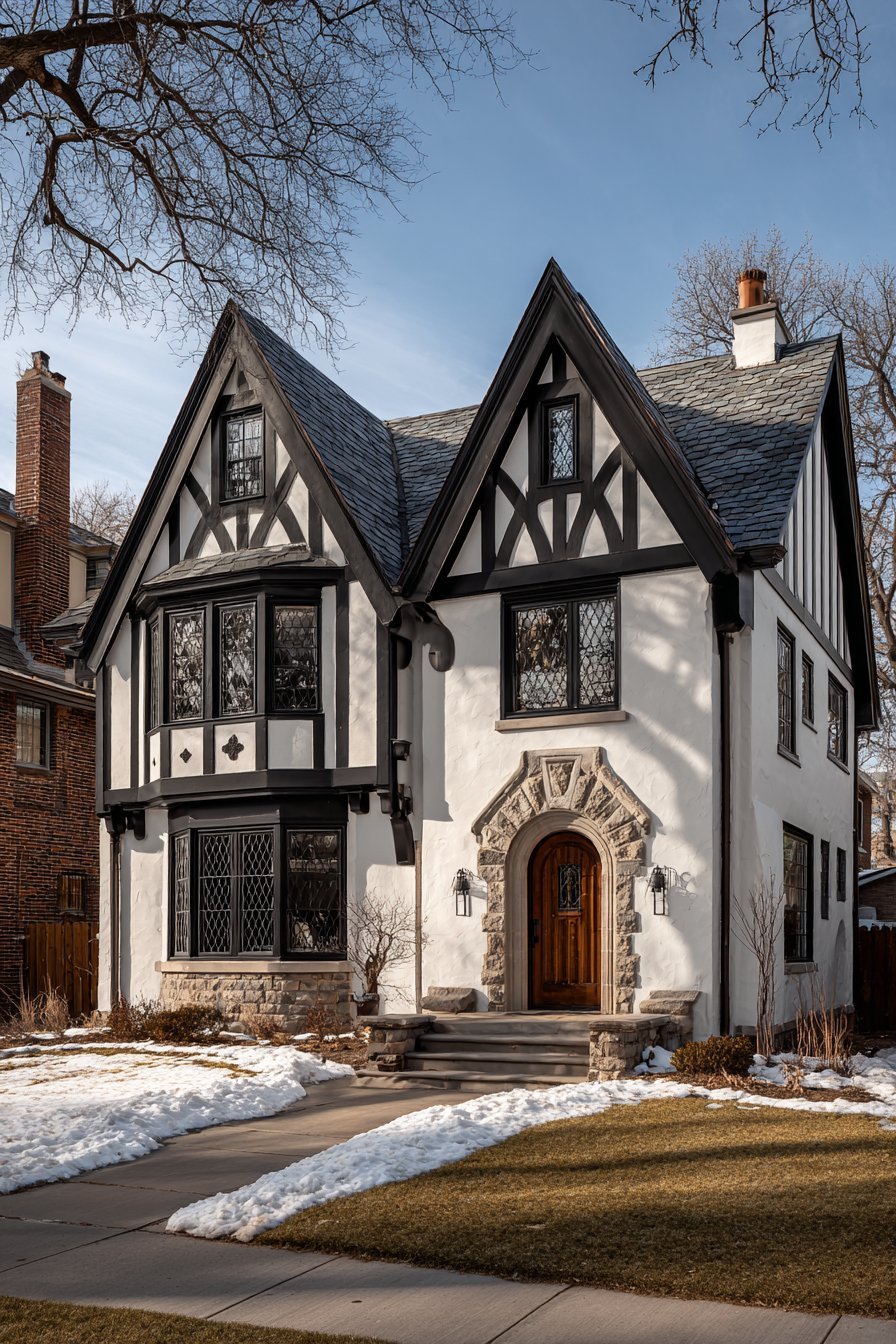
Decorative half-timbering creates geometric patterns against stucco. Dark stained wood beams contrast with white or cream infill. Steeply pitched cross-gabled roofs use slate tiles. Tall narrow casement windows feature diamond-pane leaded glass.
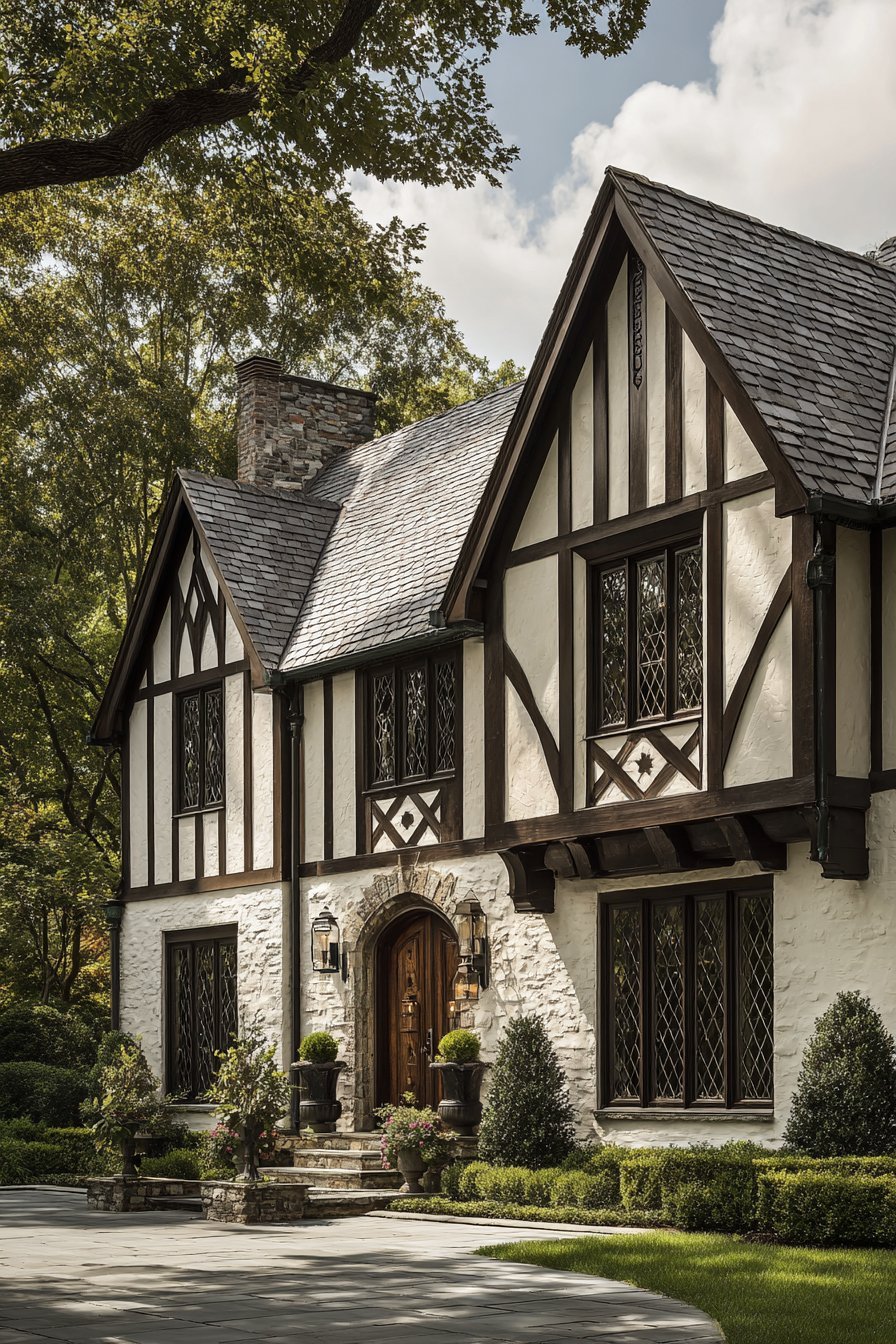
A prominent front-facing gable shows decorative timber work. Rounded-arch doorway features heavy wood door and iron hardware. The design references medieval English building traditions.
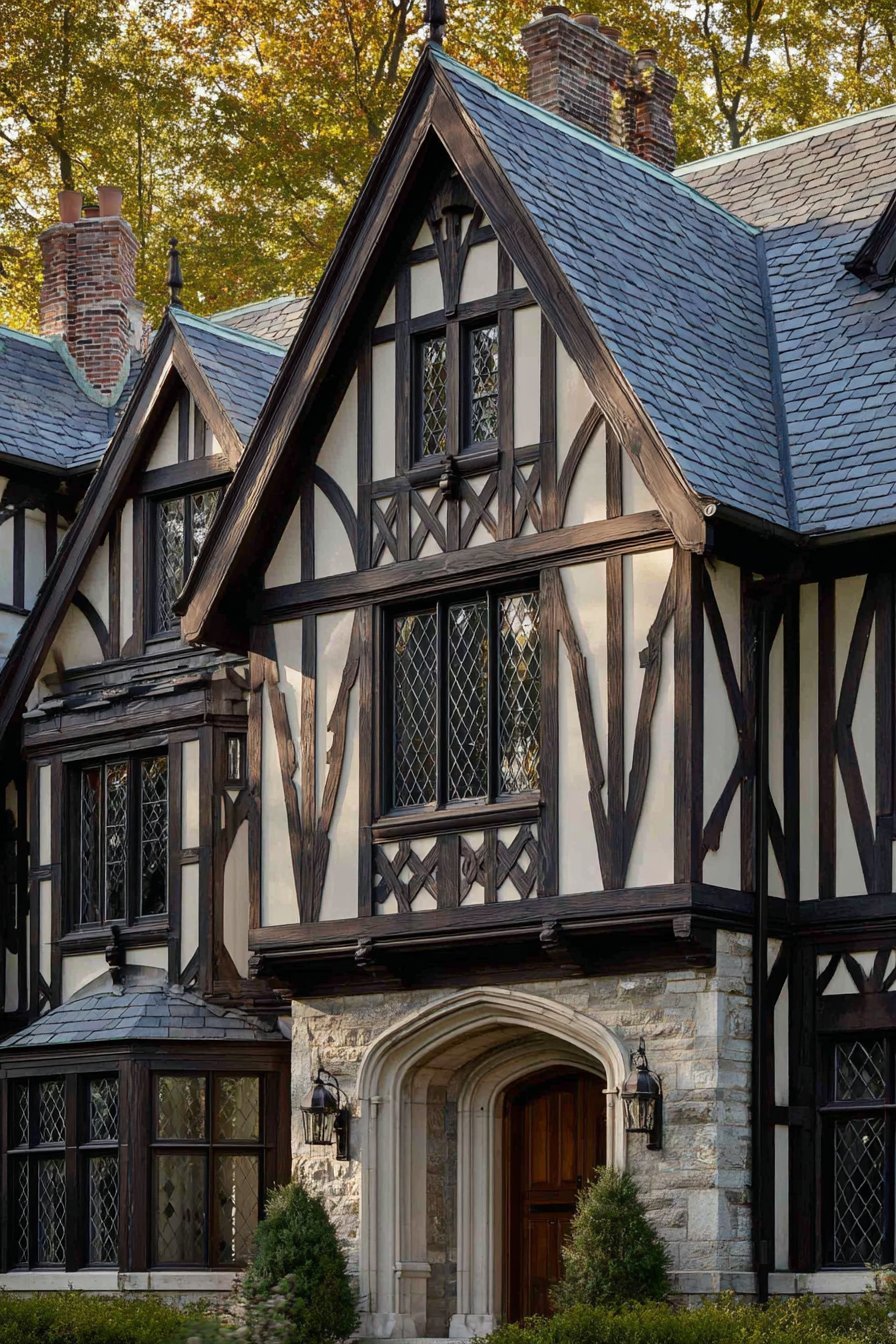
Natural daylight emphasizes timber and stucco contrast. The photography captures authentic Tudor design vocabulary. Traditional craftsmanship appears throughout the facade.
Key Design Tips:
- Create half-timber patterns with dark stained beams
- Use white or cream stucco for traditional infill
- Design steeply pitched roofs with slate tiles
- Install casement windows with diamond-pane glass
- Feature prominent front gables with timber decoration
- Choose heavy wood doors with iron hardware
- Document timber-stucco contrast in natural light
25. Contemporary Glass with Transparency
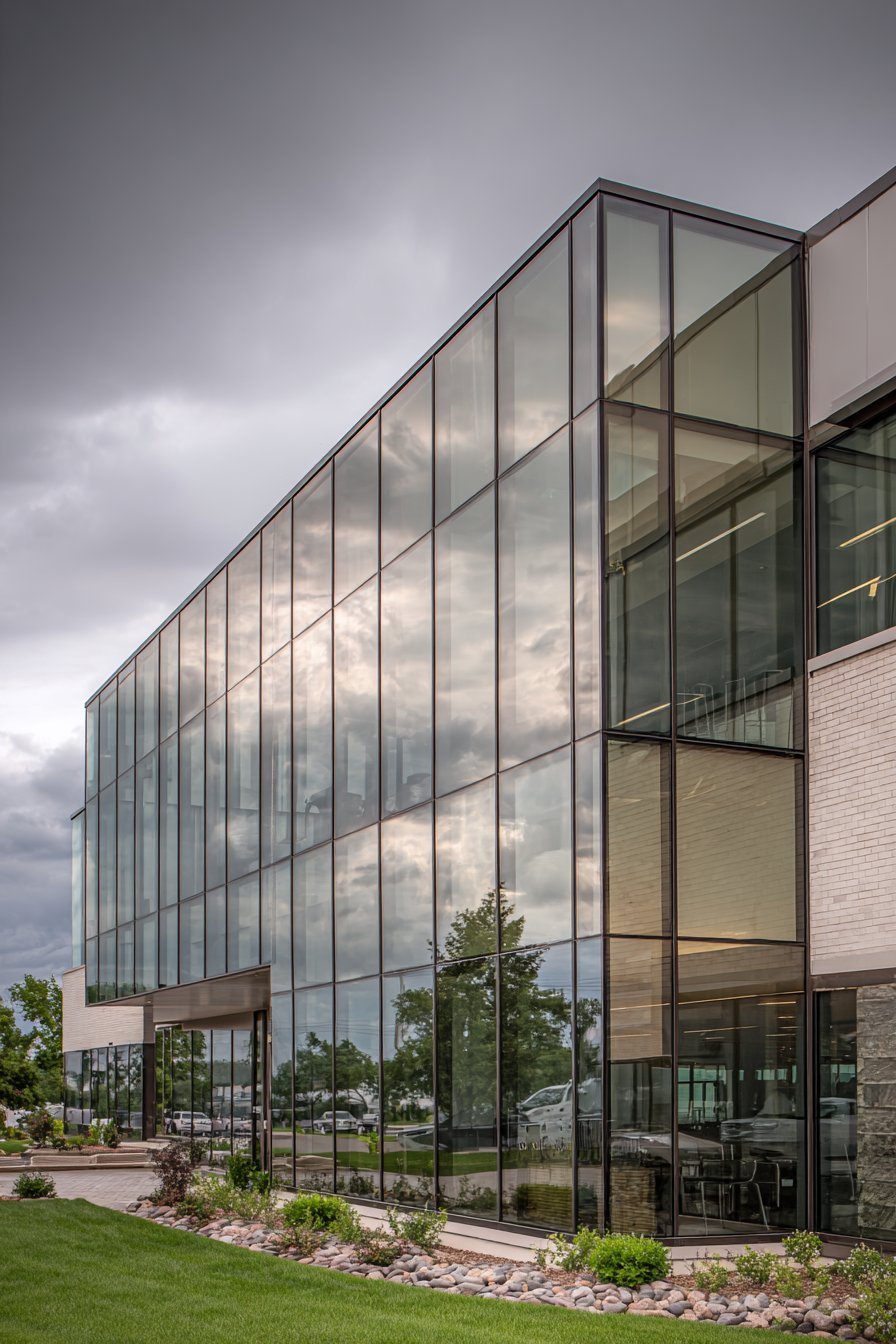
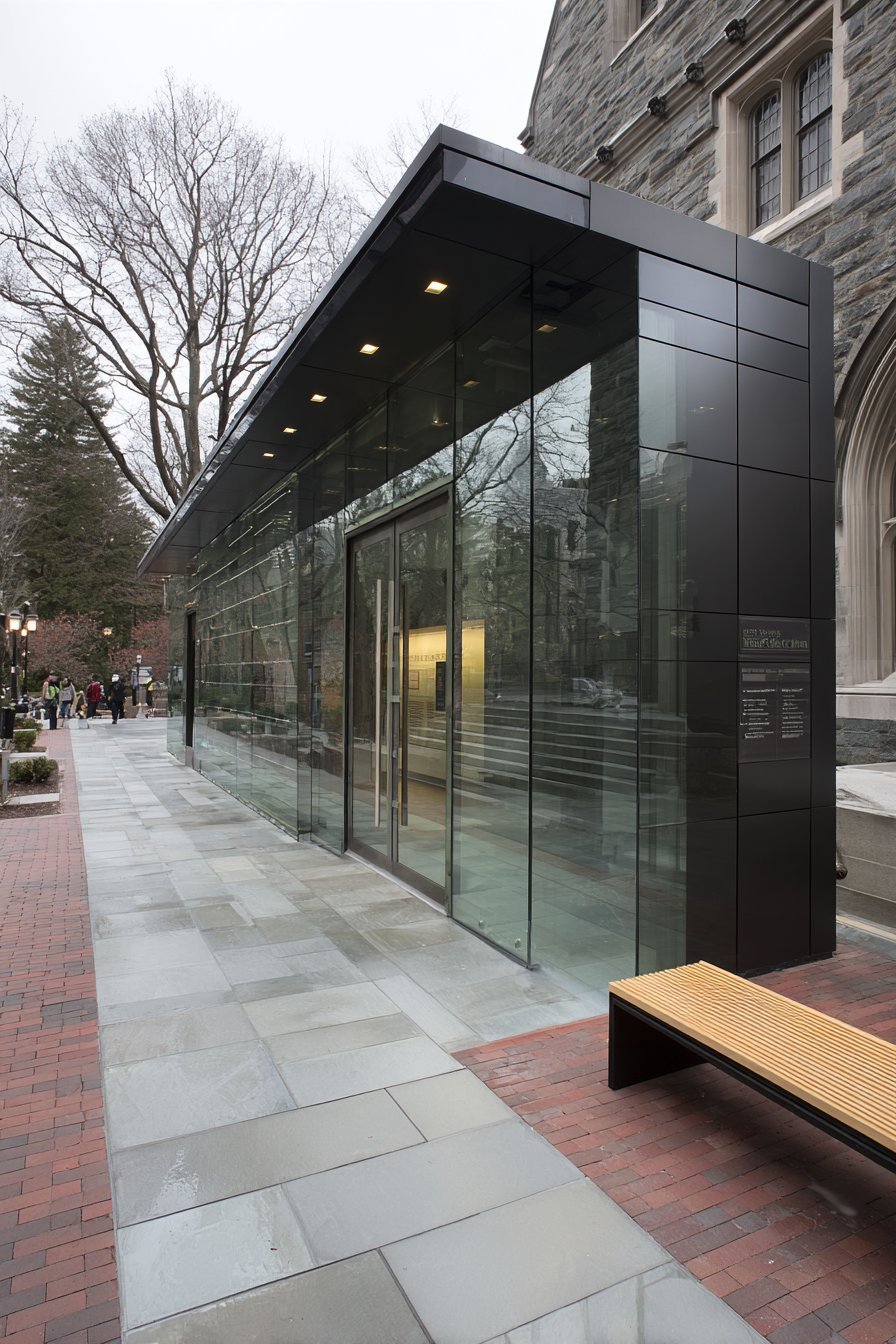
Floor-to-ceiling glazing creates transparency between spaces. Minimal black metal framing reduces visual obstruction. Strategic solid panels provide necessary privacy areas. High-performance glazing reflects surrounding landscape subtly.
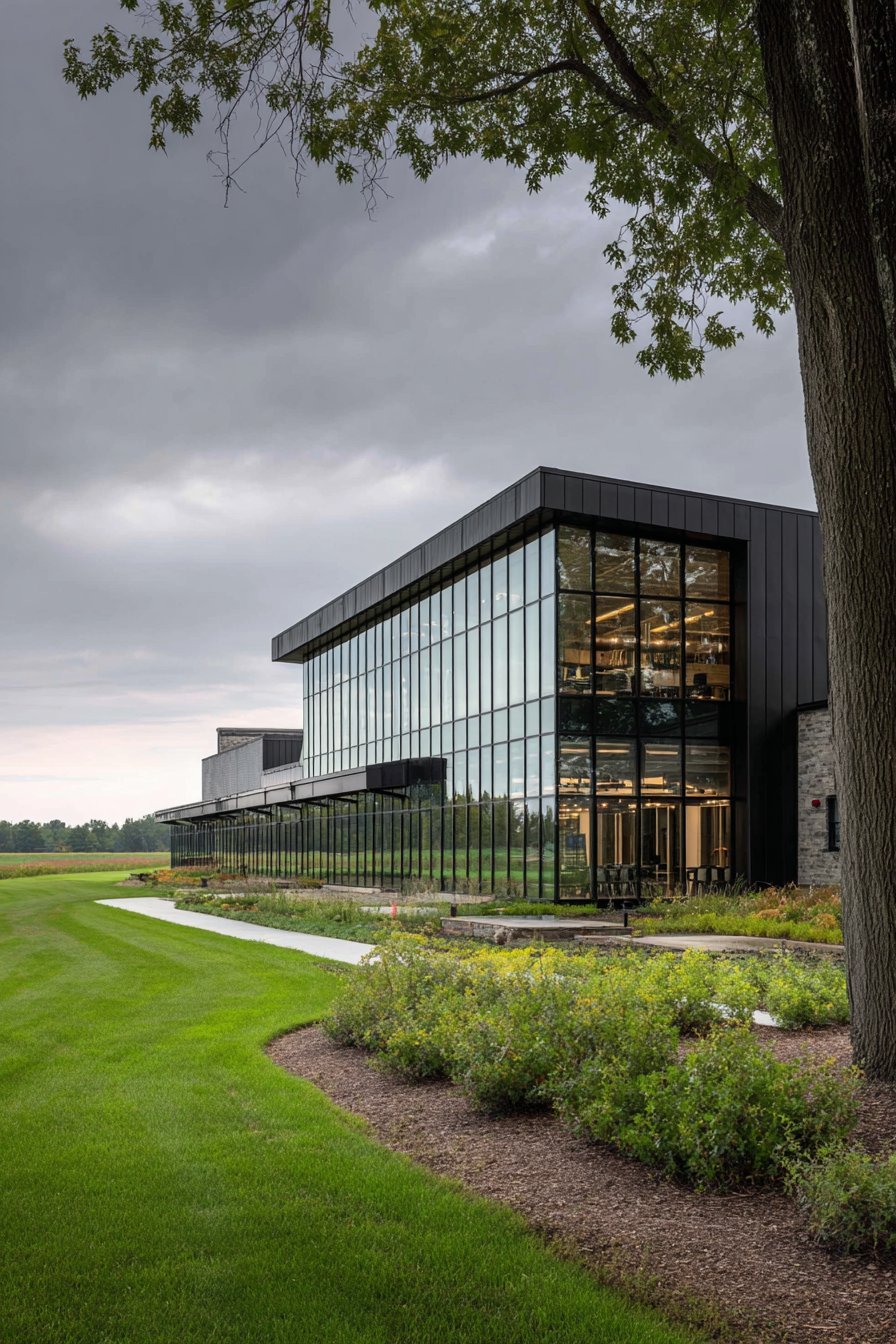
Operable glass louvers allow natural ventilation control. The facade demonstrates environmental responsiveness. Interior-exterior relationships become deliberately ambiguous.
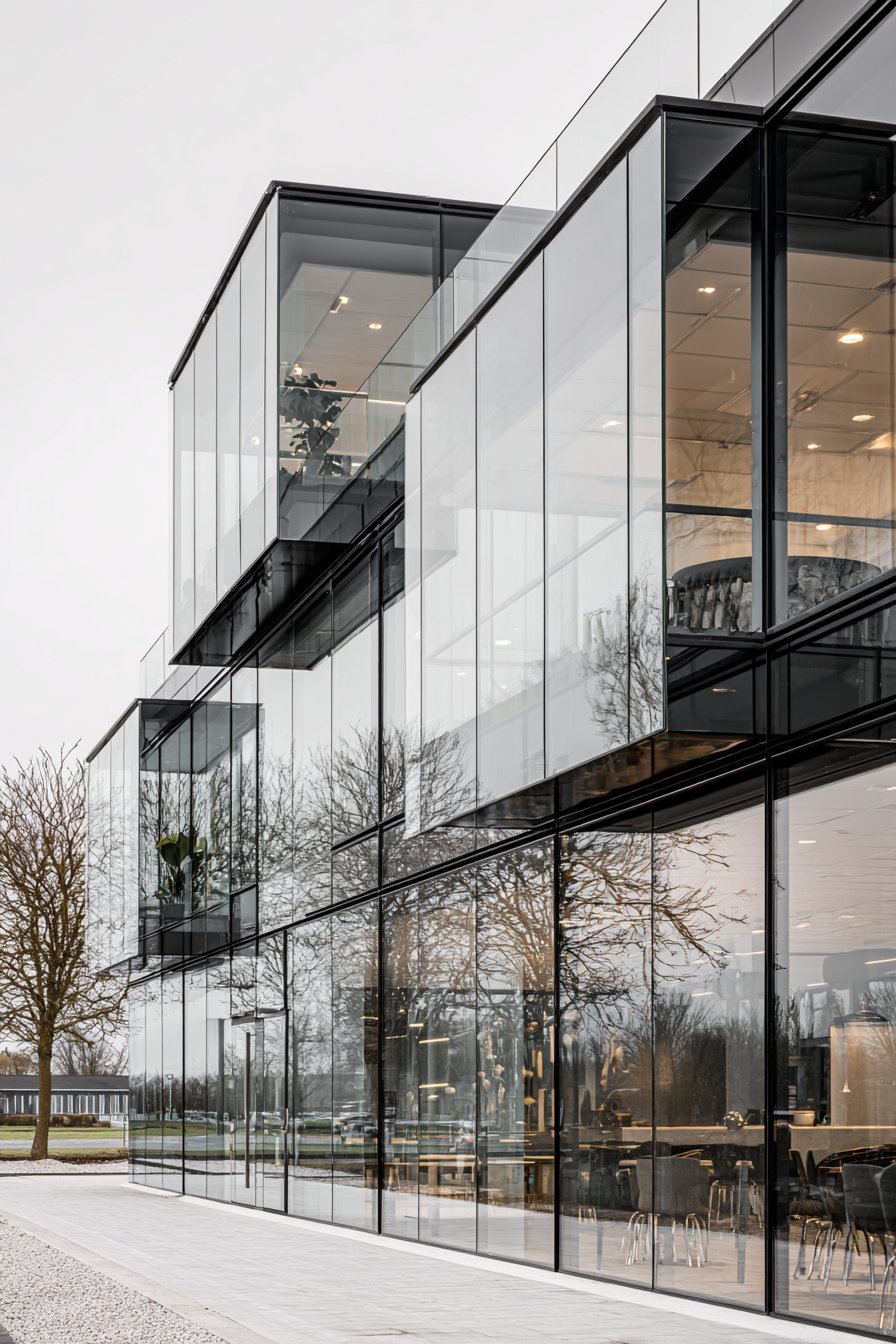
Overcast photography minimizes reflections while showing transparency. The composition reveals layered visual effects through glass. The building’s openness to surroundings receives emphasis.
Key Design Tips:
- Install floor-to-ceiling glazing for maximum transparency
- Use minimal black metal framing systems
- Add strategic solid panels for privacy needs
- Choose high-performance glazing with subtle tinting
- Include operable louvers for natural ventilation
- Photograph in overcast conditions to reduce reflections
- Design for deliberate interior-exterior ambiguity
26. Spanish Colonial Revival with Stucco and Tile
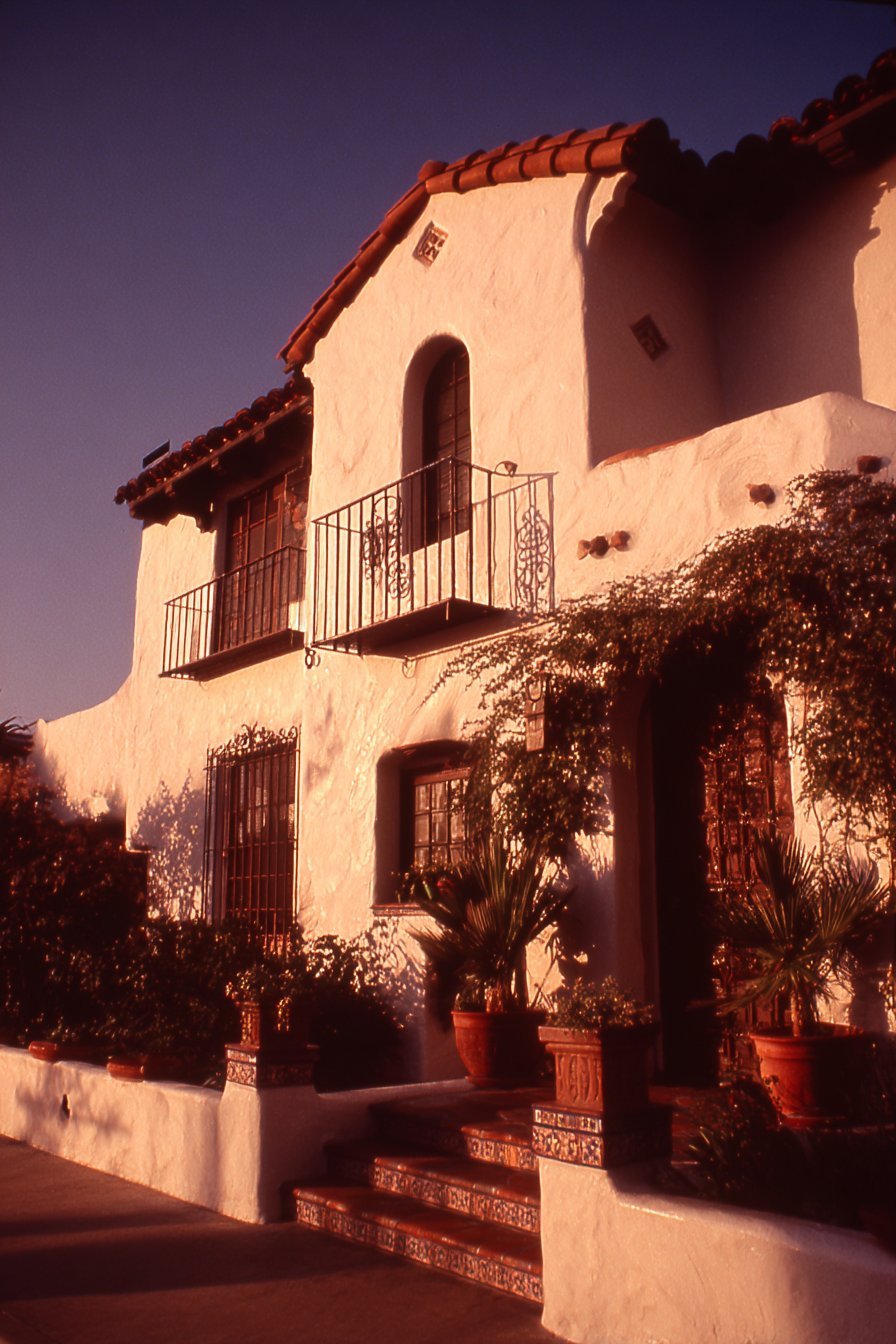
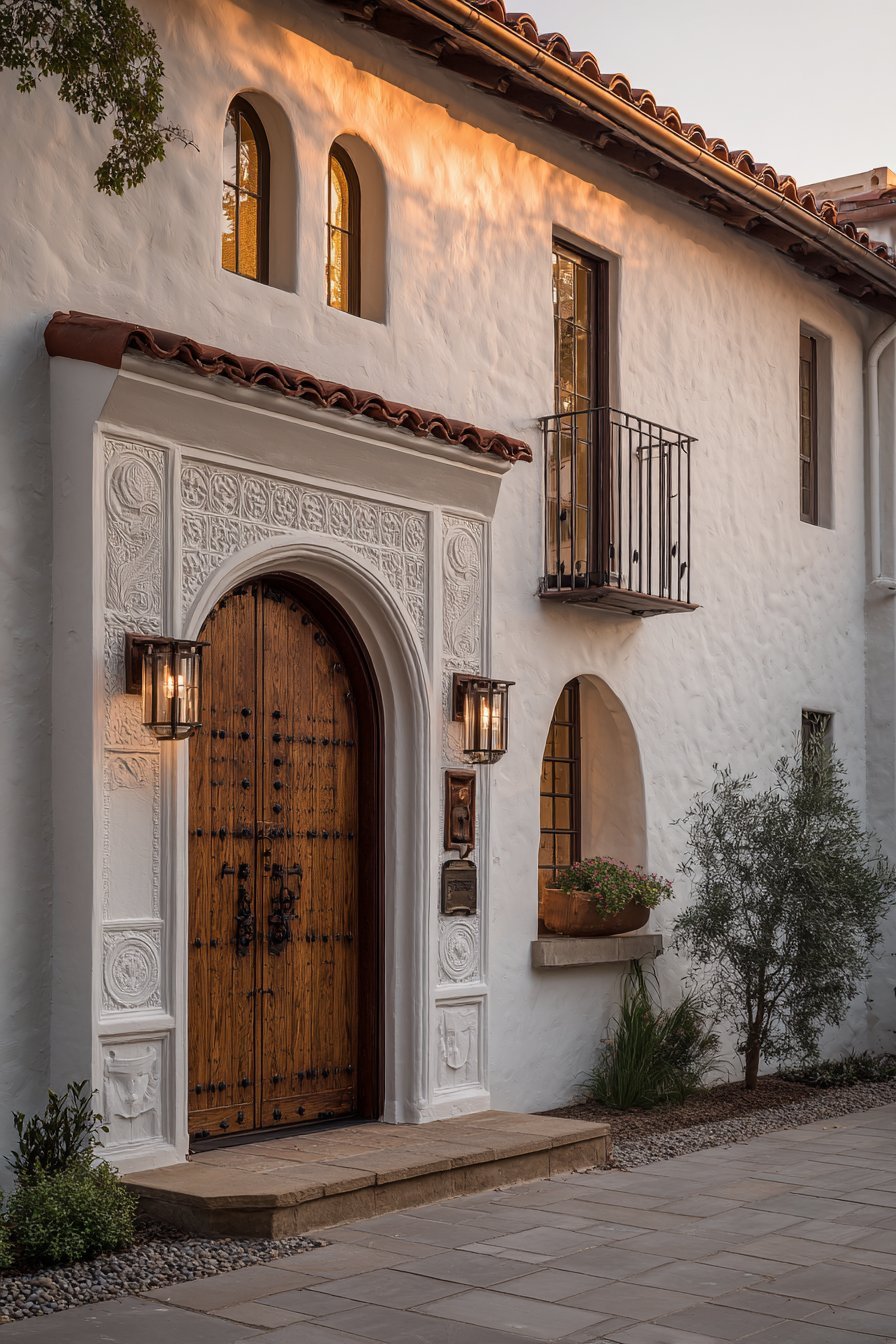
Smooth white stucco walls feature rounded arch openings. Terra cotta clay tile roofing provides warm red-orange tones. Wrought iron window grilles and balcony railings add decorative elements. Hand-painted ceramic tile accents frame entrance areas.
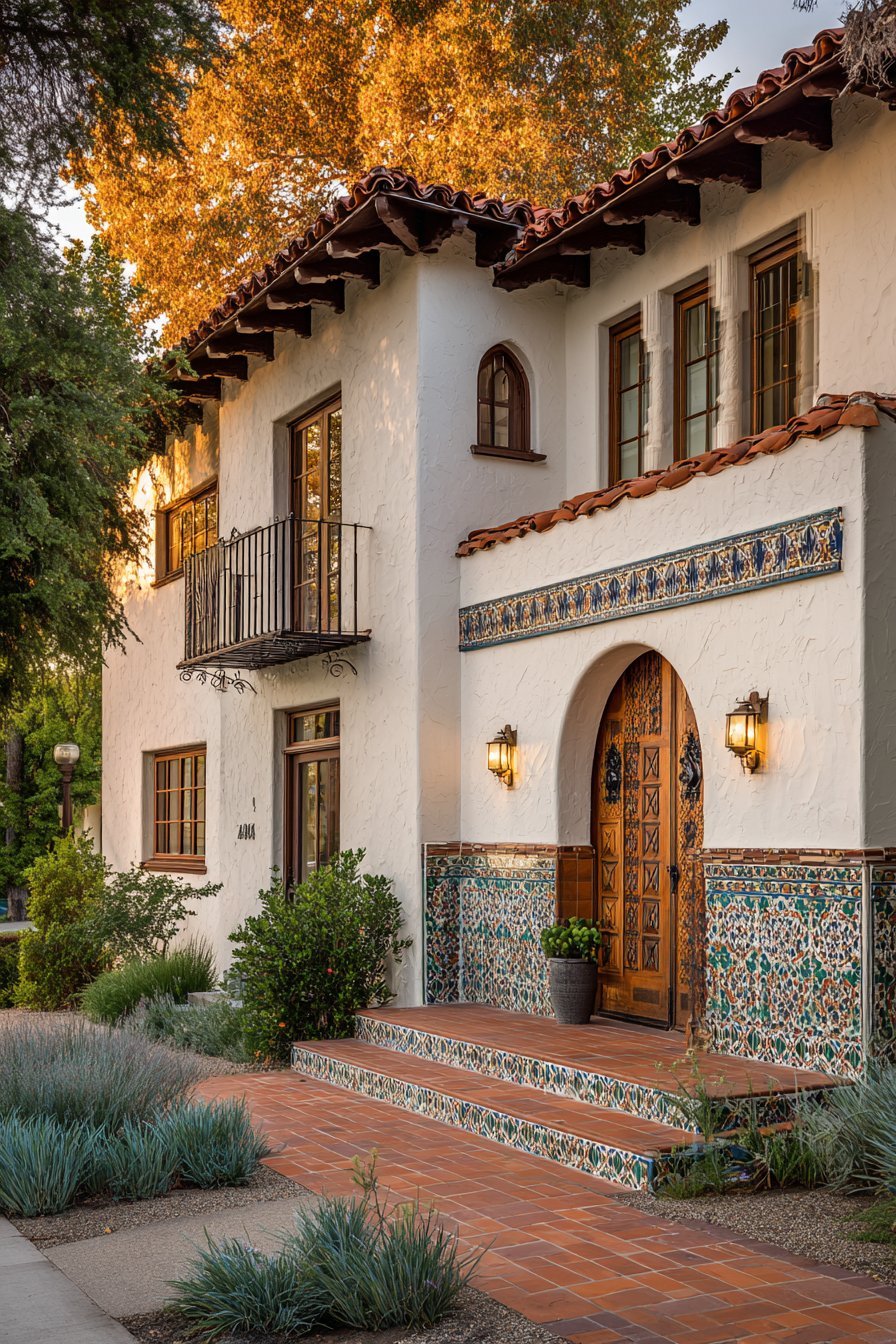
Carved wood front door with iron studs creates authentic focal point. Low-pitched roof forms suit the regional style. The design celebrates Spanish colonial architectural traditions.
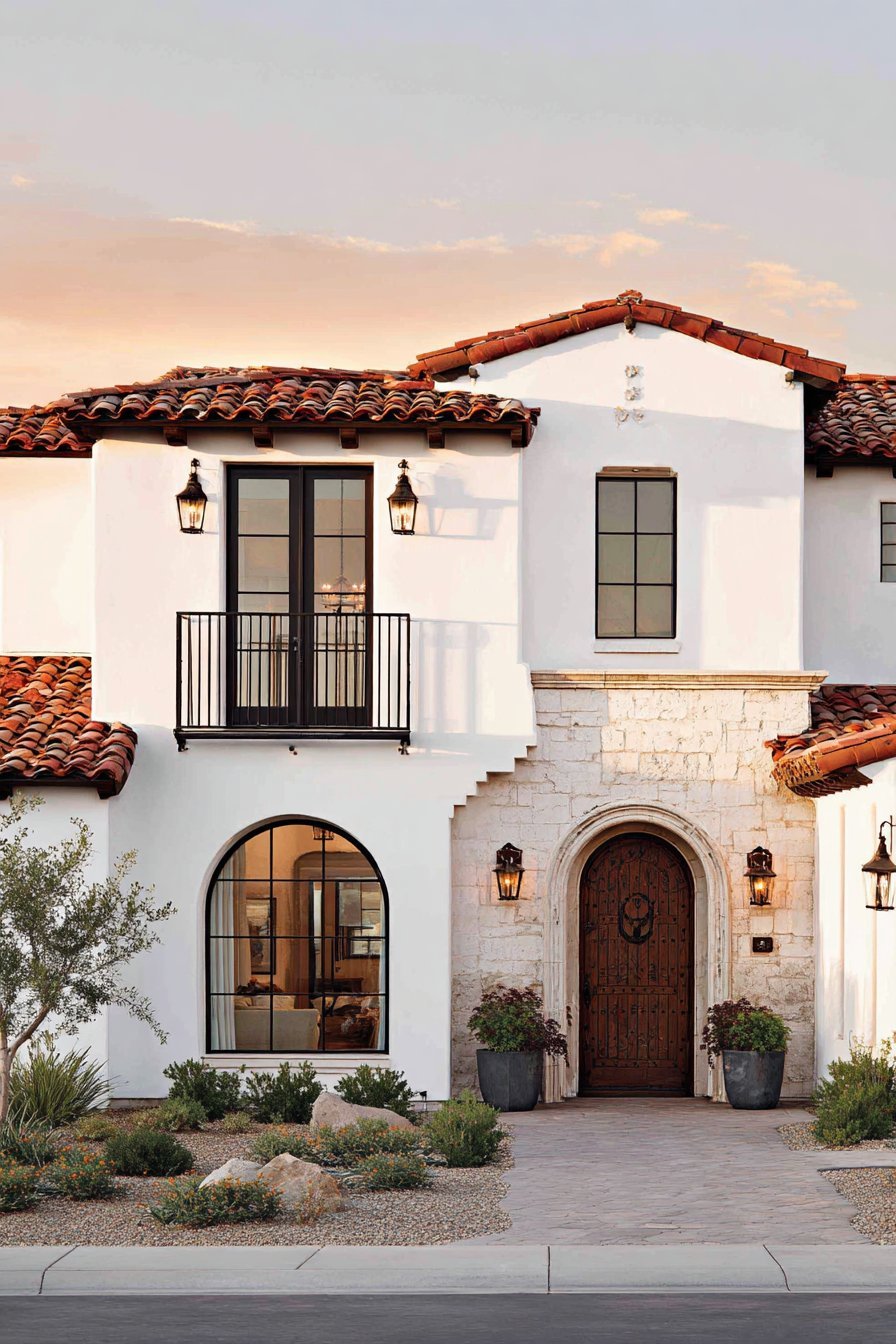
Golden hour photography captures warm light on white stucco. Gentle shadows form in arched recesses throughout. Traditional Spanish colonial vocabulary appears consistently.
Key Design Tips:
- Apply smooth stucco with rounded arch openings
- Use terra cotta clay tiles for traditional roofing
- Install wrought iron grilles and balcony railings
- Add hand-painted ceramic tile near entrances
- Choose carved wood doors with decorative iron studs
- Design low-pitched roofs appropriate to style
- Photograph during golden hour for stucco shadows
27. Contemporary Copper with Natural Patina
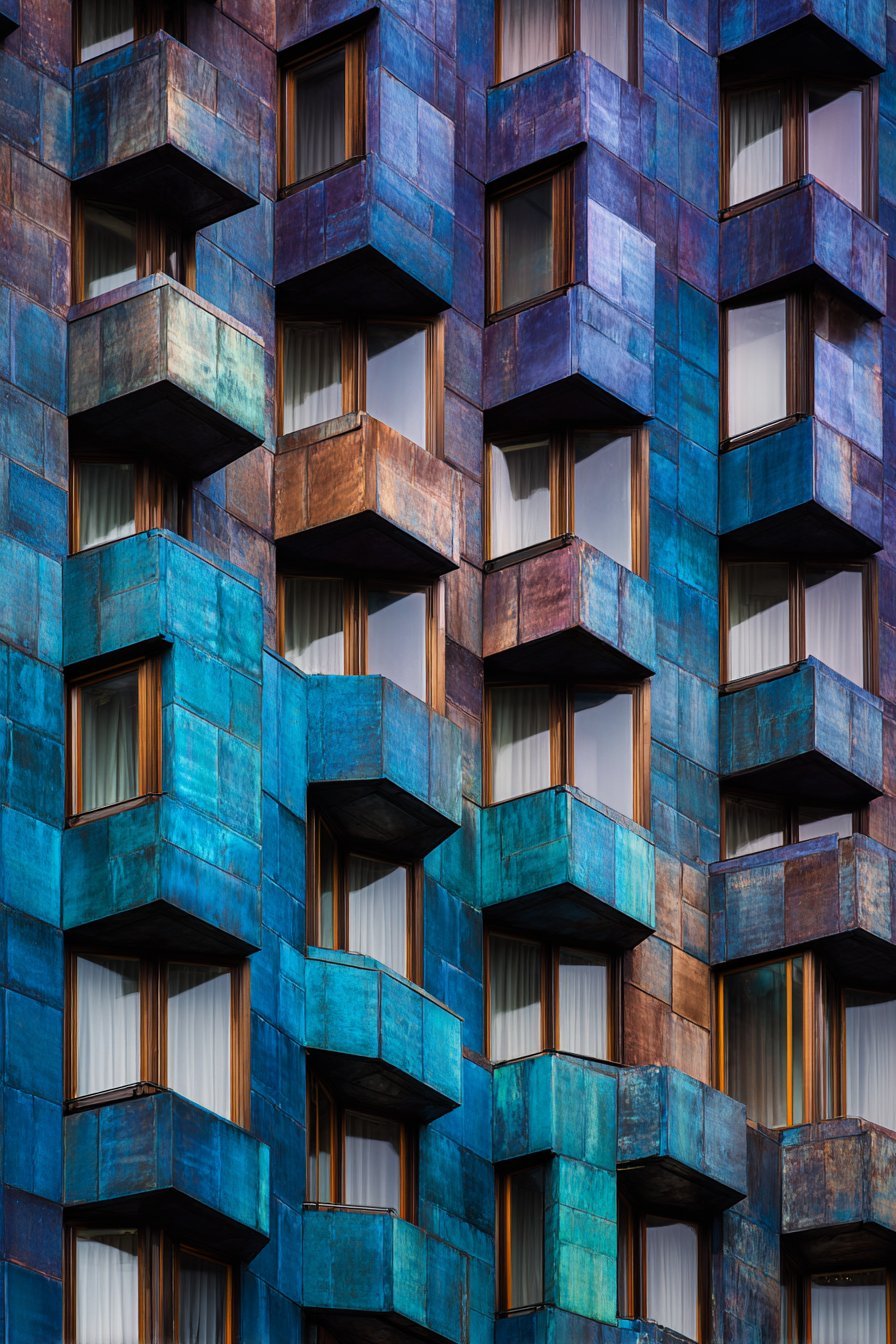
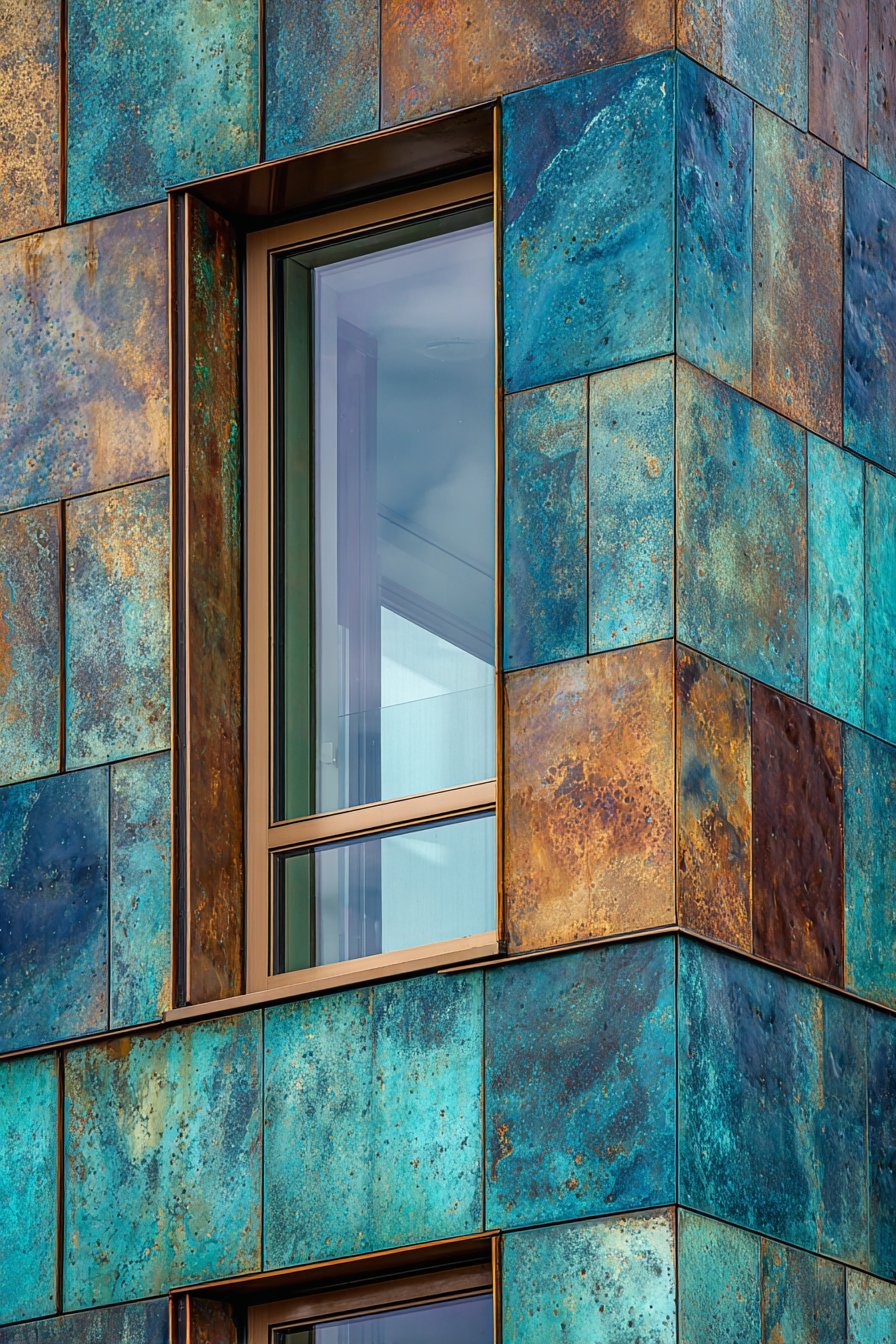
Copper panels develop natural verdigris patina in blue-green tones. Reveal joints create grid pattern across facade. Large punched window openings use bronze anodized aluminum frames. Natural weathering creates varied panel coloration.
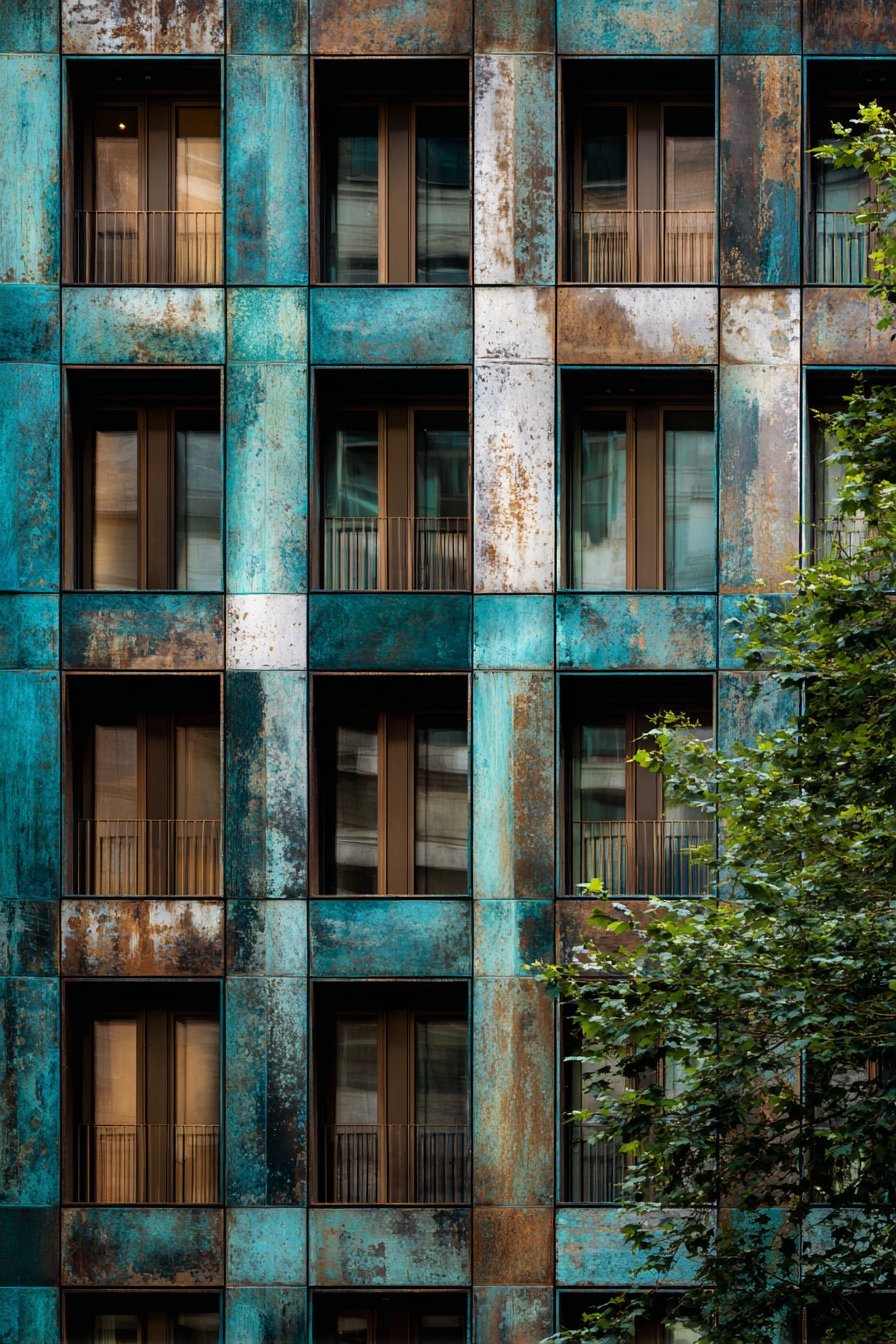
The aging process becomes intentional design feature. Metallic finishes vary across different elements. The facade demonstrates living material philosophy.
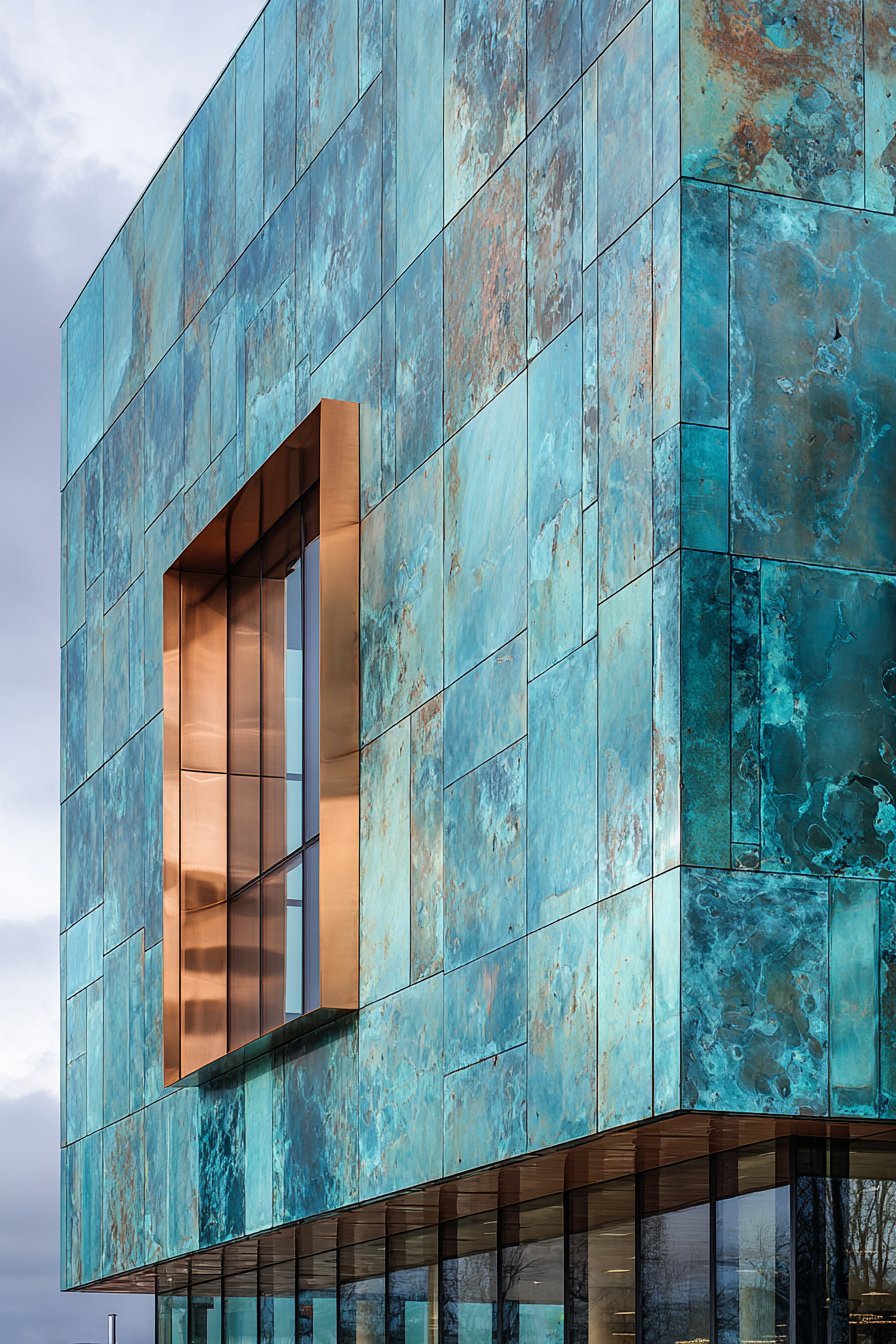
Soft daylight captures subtle patina color variations. The photography documents natural copper aging process. Metallic finish interplay receives careful attention.
Key Design Tips:
- Install copper panels that develop natural patina
- Use reveal joints for grid pattern composition
- Choose bronze aluminum frames to complement copper
- Embrace natural weathering as design intention
- Vary metallic finishes across facade elements
- Document patina color variations in soft light
- Celebrate living material aging philosophy
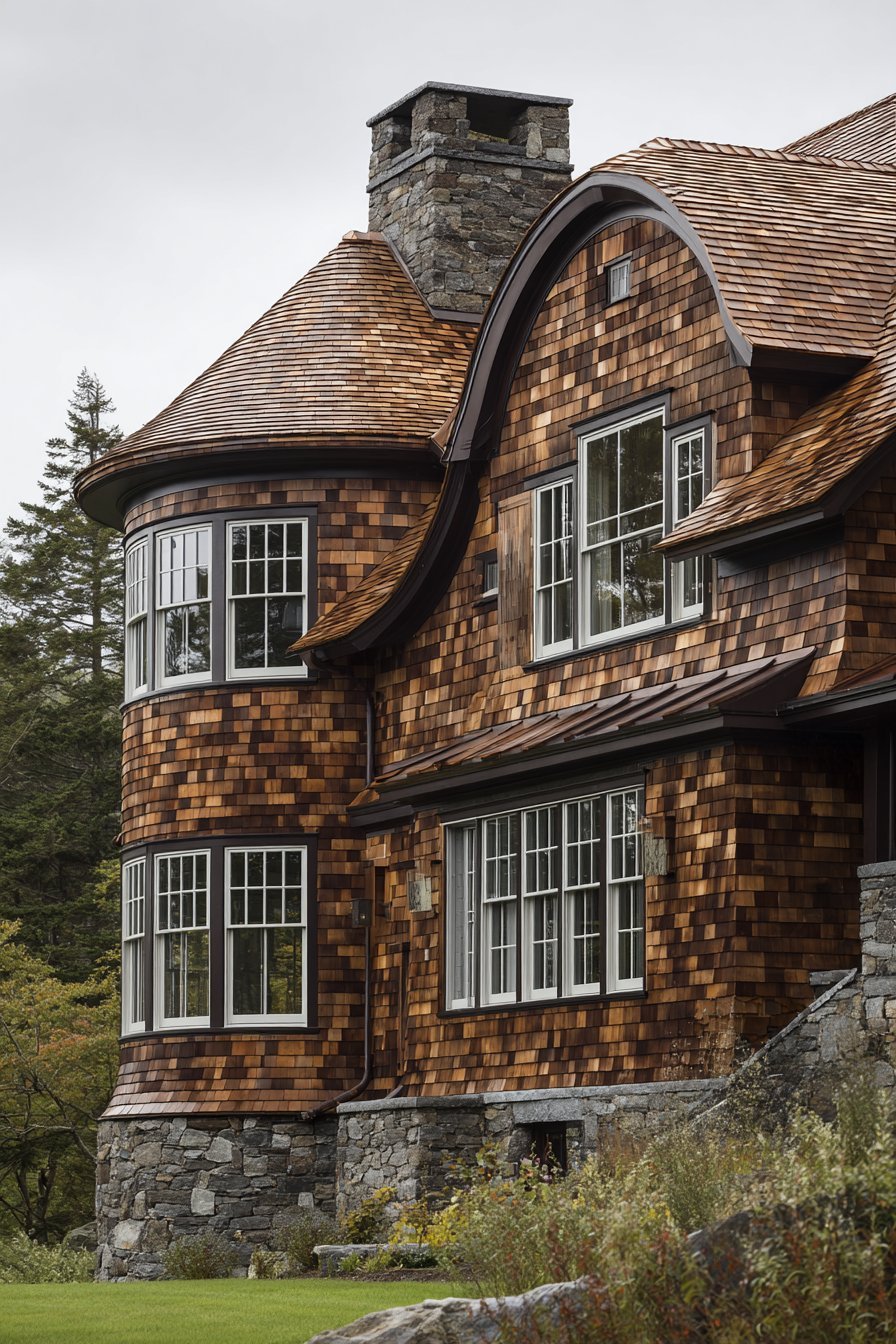
28. Shingle Style with Flowing Forms
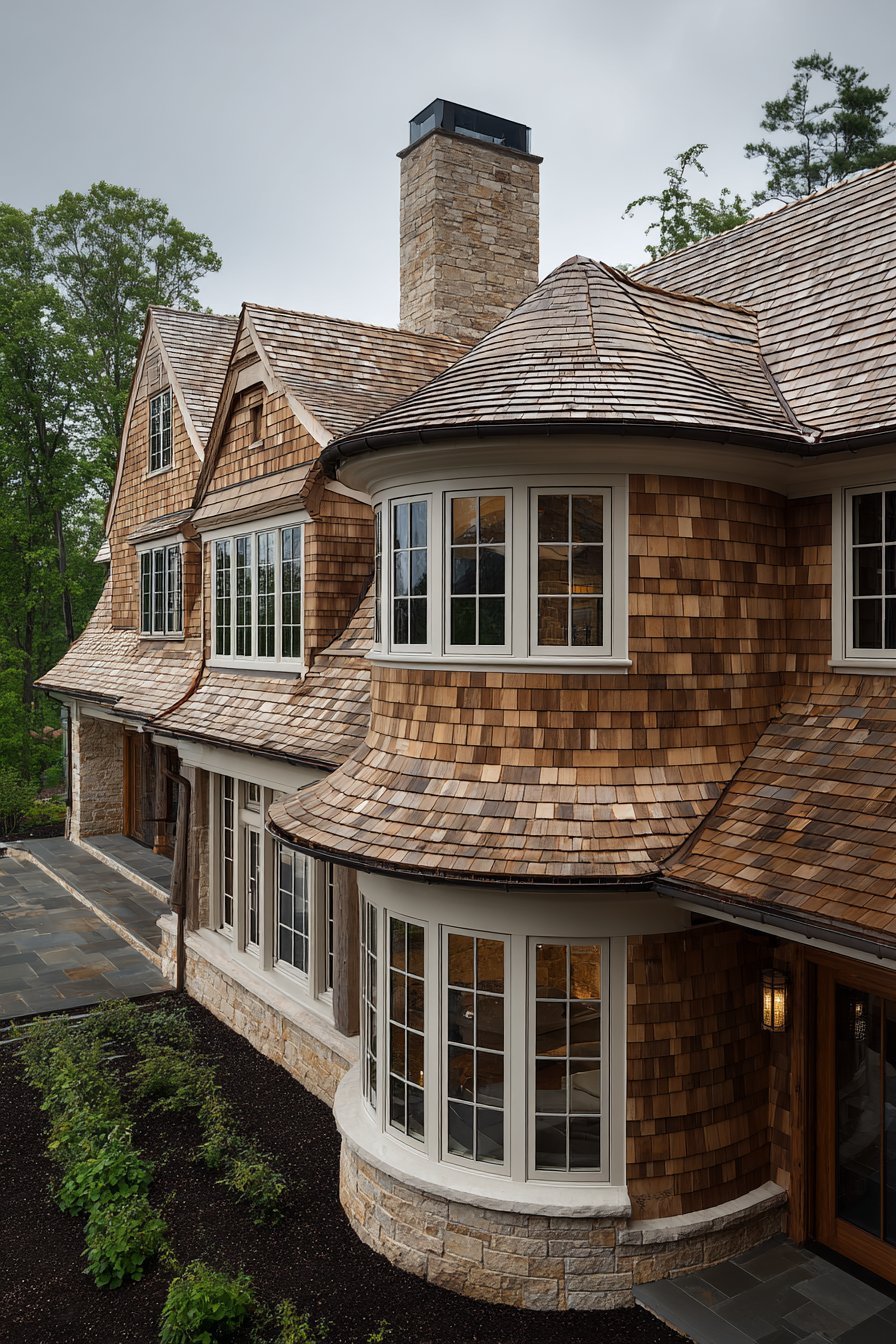
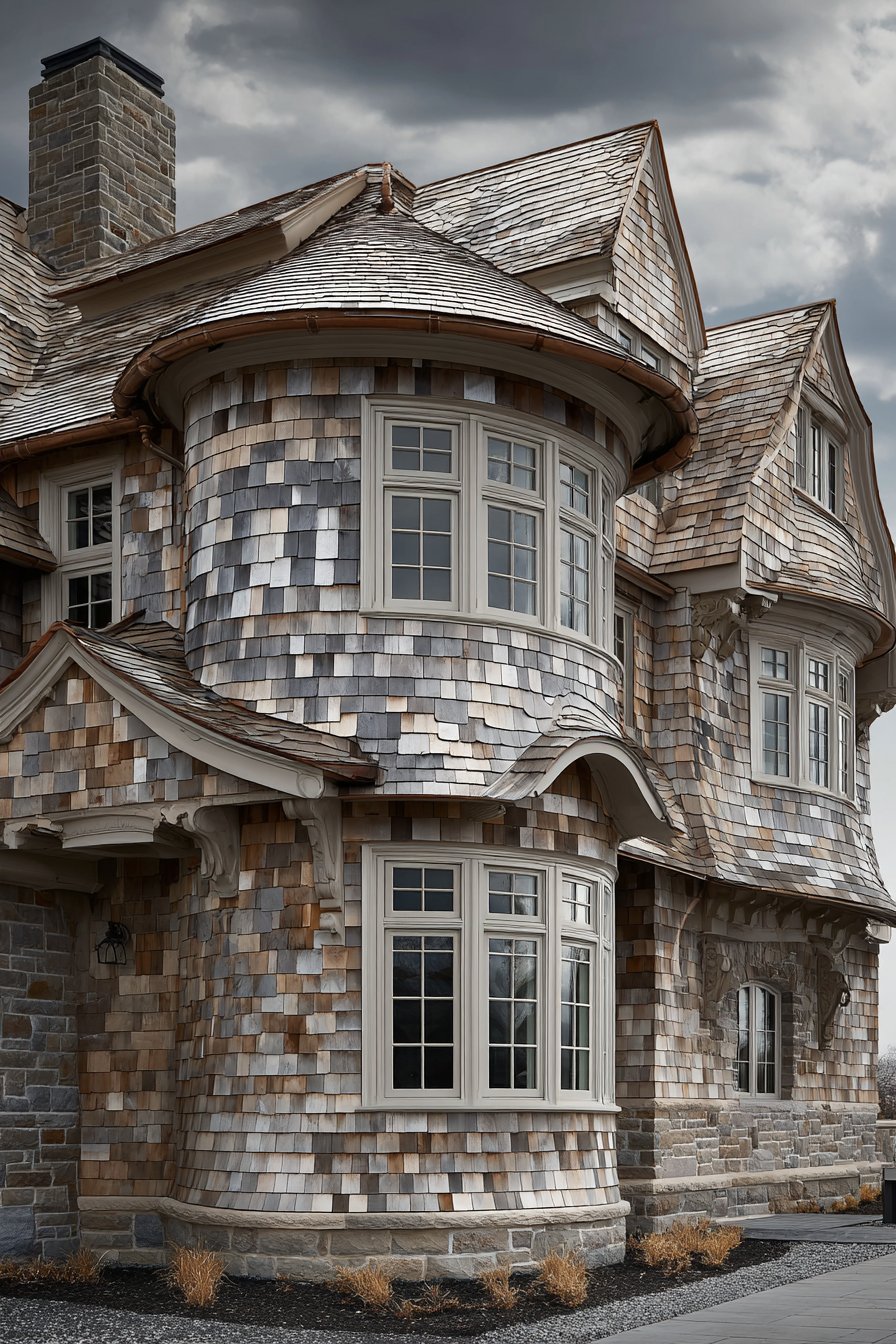
Continuous wood shingles cover walls and roof without clear separation. Natural cedar weathers to soft grey with varied tones. Large multi-pane windows with white frames punctuate shingled surfaces. Rounded turret demonstrates flowing form characteristics.
Natural stone foundation and chimney provide visual anchoring. The design demonstrates organic sculptural quality. Continuous surface treatment creates unified composition.
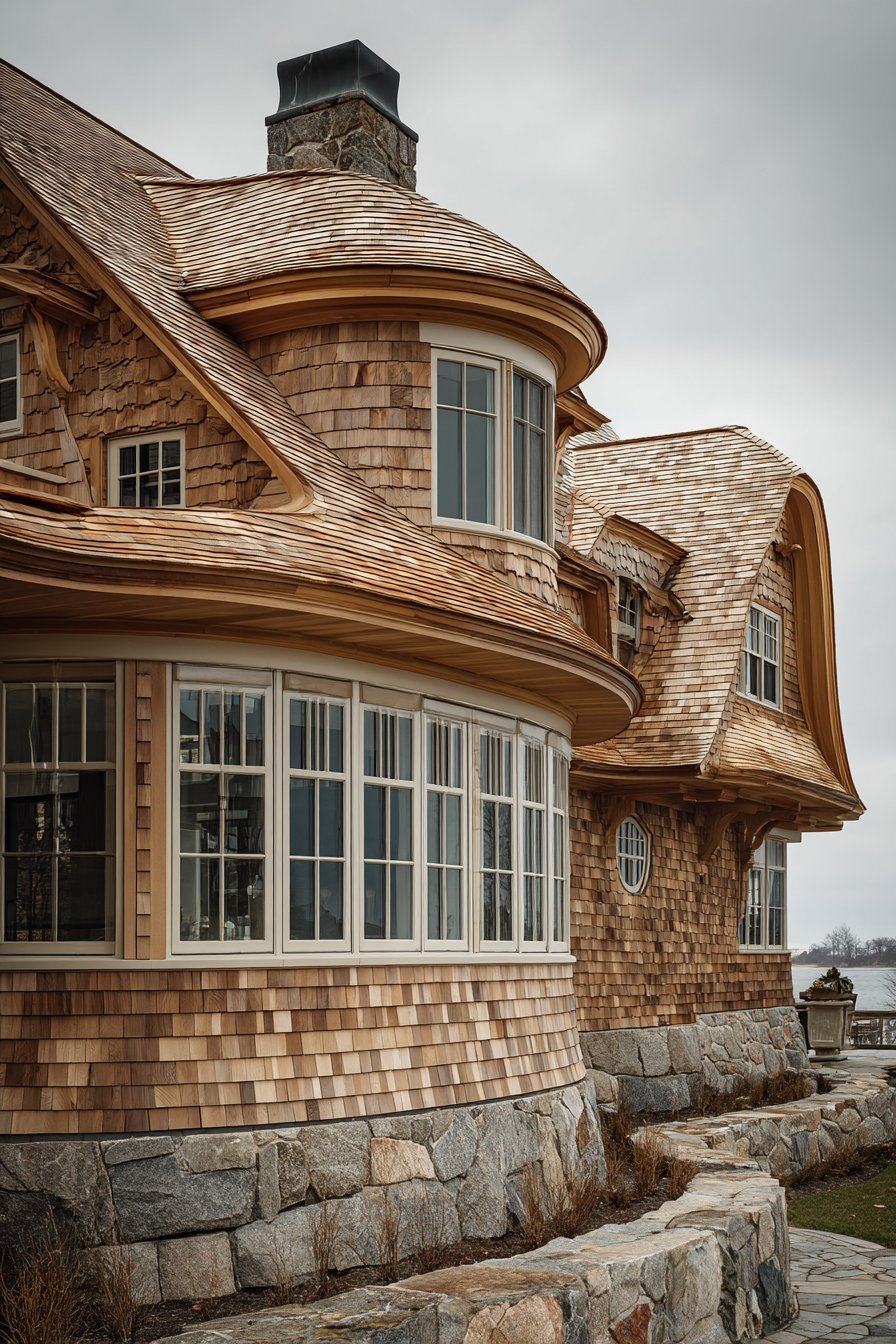
Overcast light shows shingle texture and color variation. The photography captures flowing organic forms. Natural material weathering receives proper documentation.
Key Design Tips:
- Cover walls and roof continuously with wood shingles
- Allow cedar to weather naturally to grey tones
- Install multi-pane windows with white painted frames
- Include rounded turrets or curved wall sections
- Use stone foundations for visual grounding
- Photograph in overcast light for even shingle documentation
- Emphasize organic flowing forms throughout design
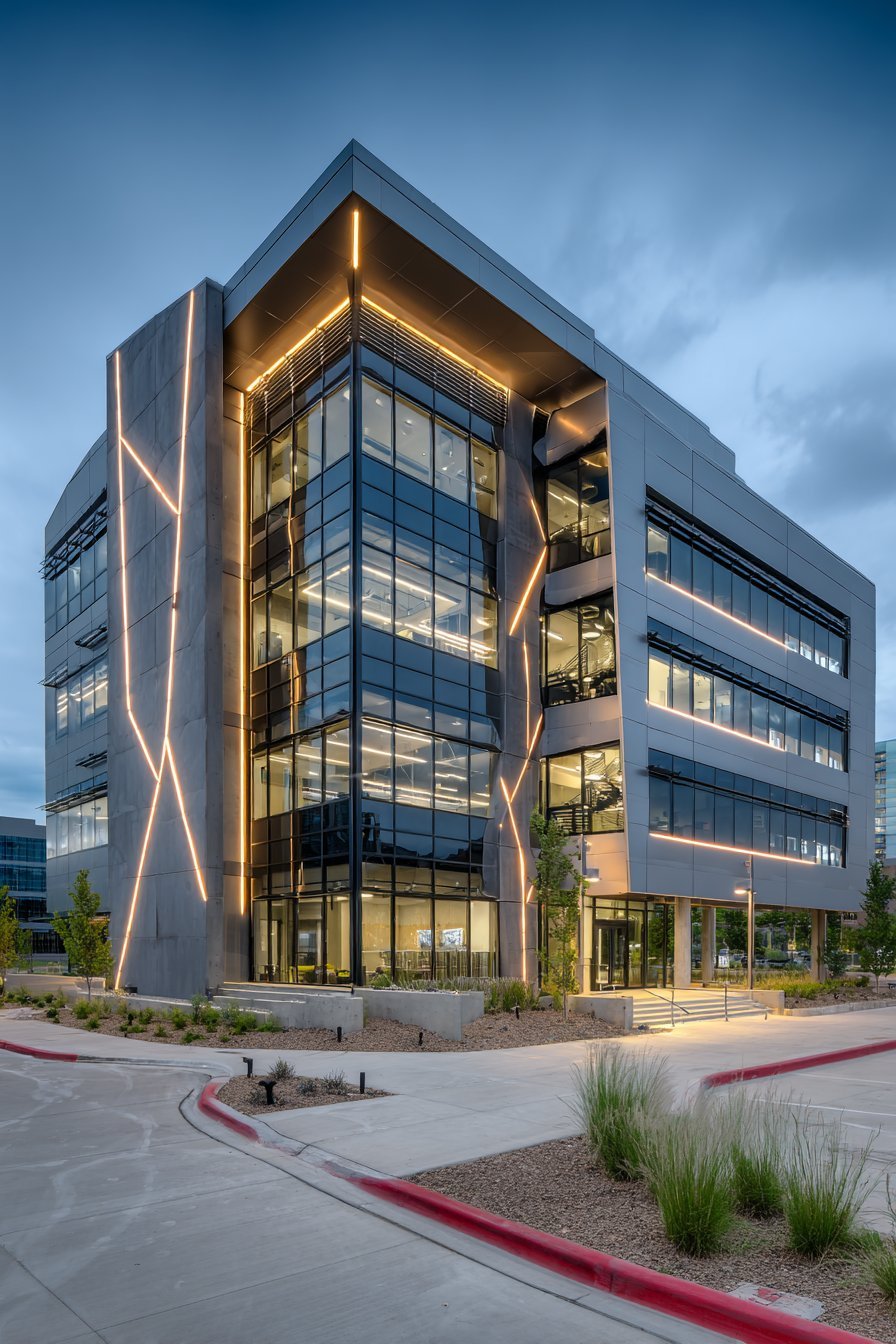
29. High-Tech Modern with Aluminum Panels
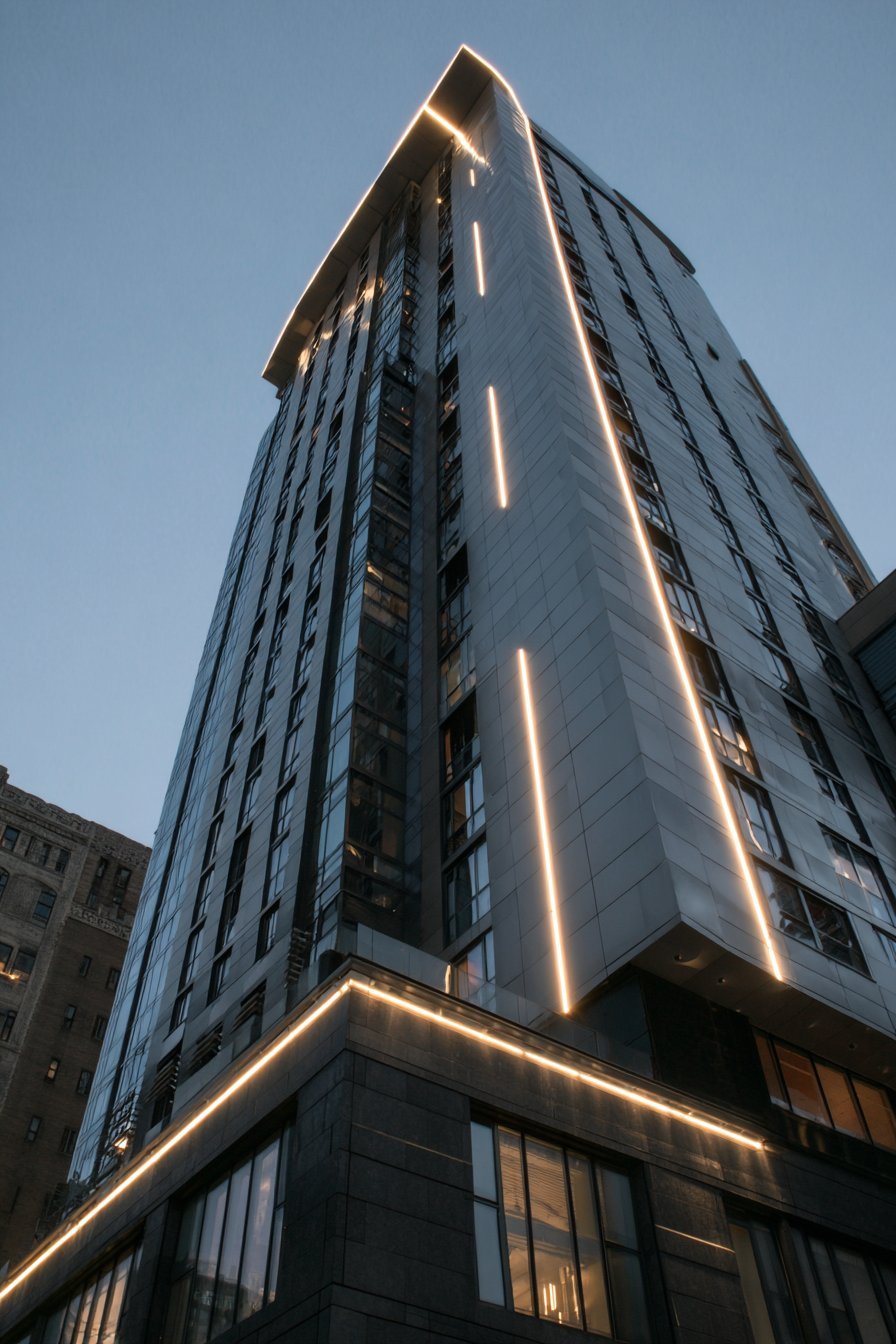
Anodized aluminum composite panels in metallic silver create sleek appearance. Ribbon windows with black frames wrap around corners. Integrated LED lighting behind panel reveals provides nighttime effects. High-performance glazing varies in transparency levels.
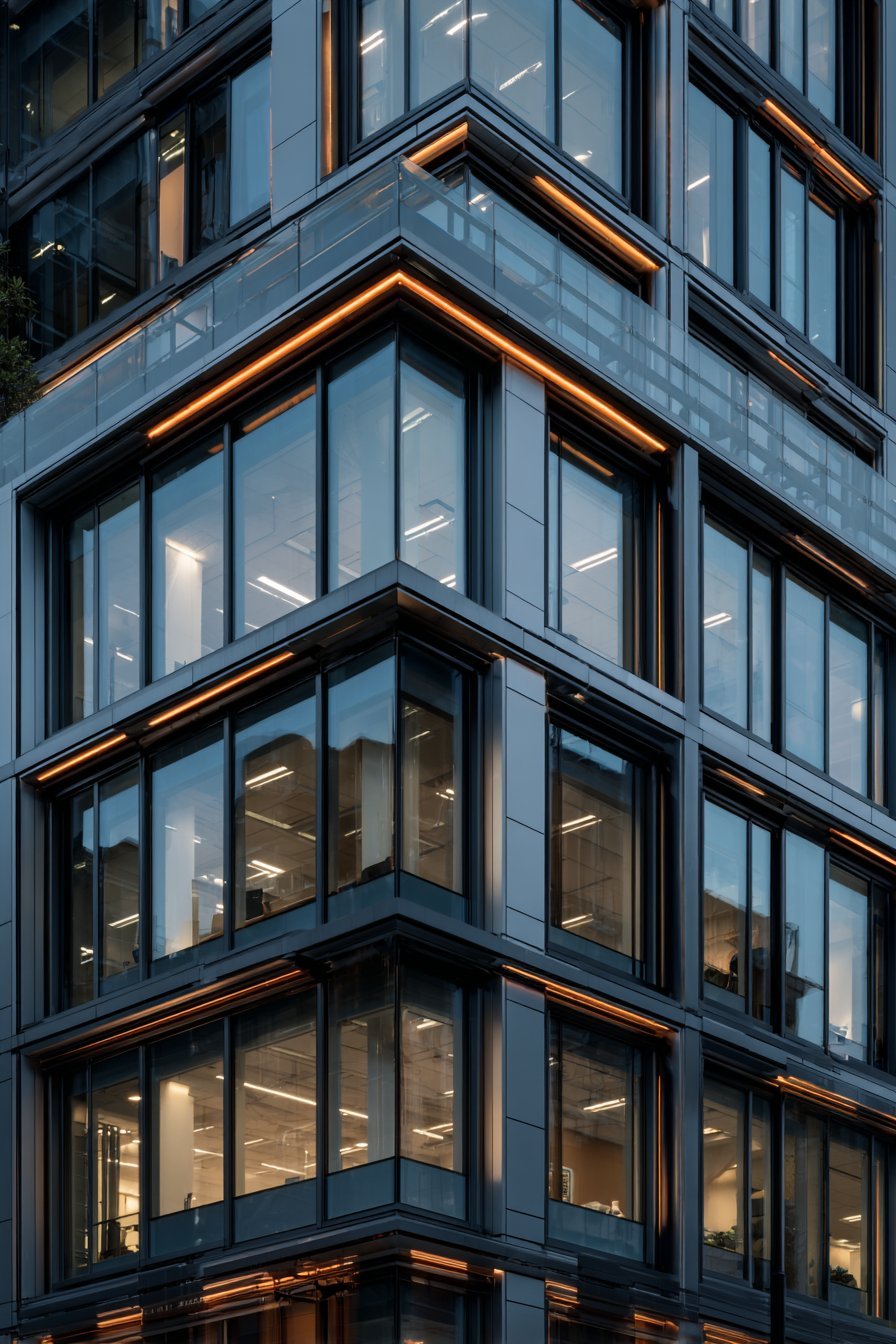
Exposed mechanical systems become celebrated design features. The facade demonstrates technological aesthetic approach. Precision panel installation receives careful attention.
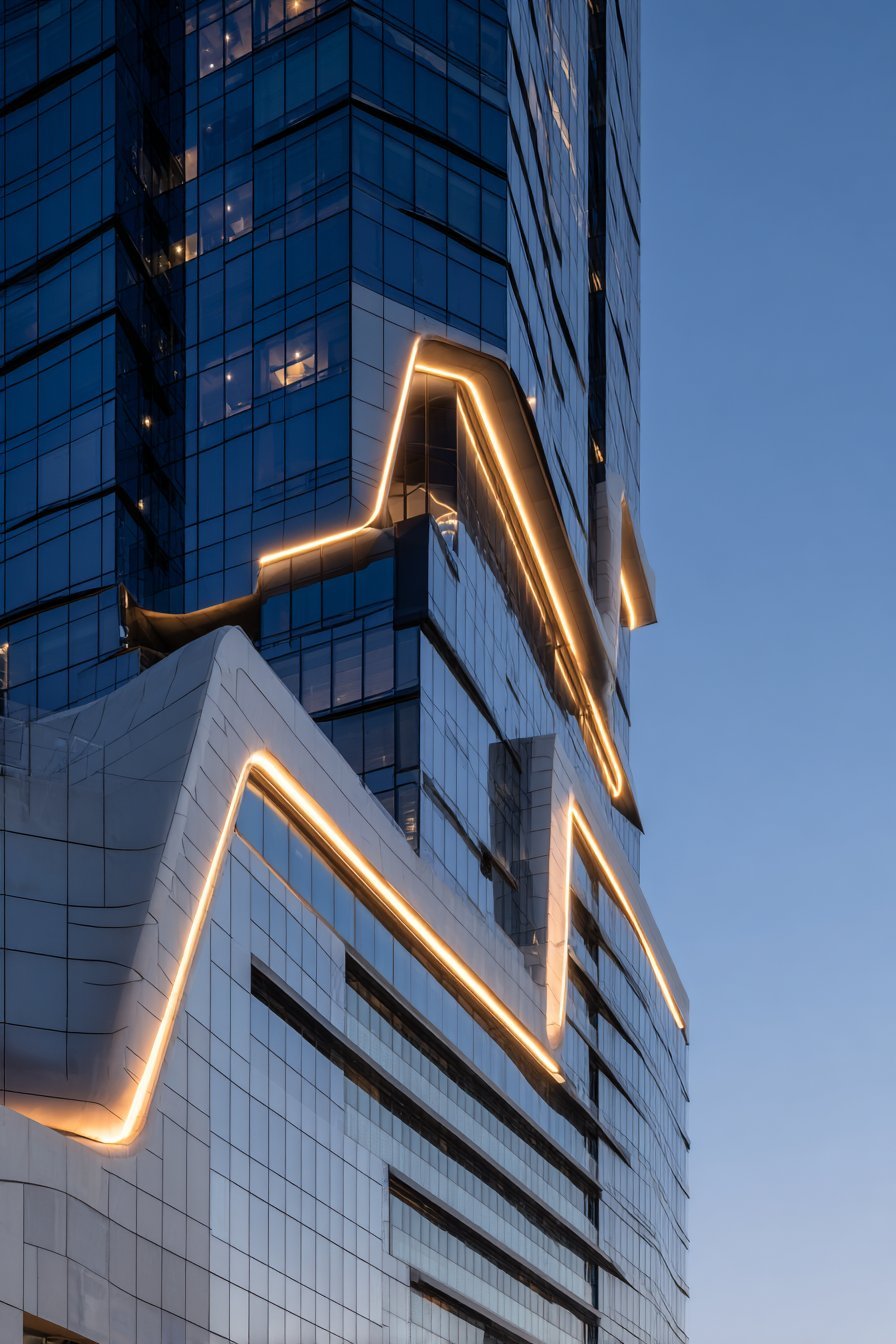
Blue hour photography captures reflective metal and integrated lighting. The composition emphasizes technological character. Building systems appear as architectural expression.
Key Design Tips:
- Use anodized aluminum composite panels for sleek surfaces
- Install ribbon windows that wrap building corners
- Integrate LED lighting behind panel reveals
- Vary glazing transparency for visual interest
- Expose mechanical systems as design features
- Photograph during blue hour for lighting effects
- Celebrate technological aesthetic and precision installation
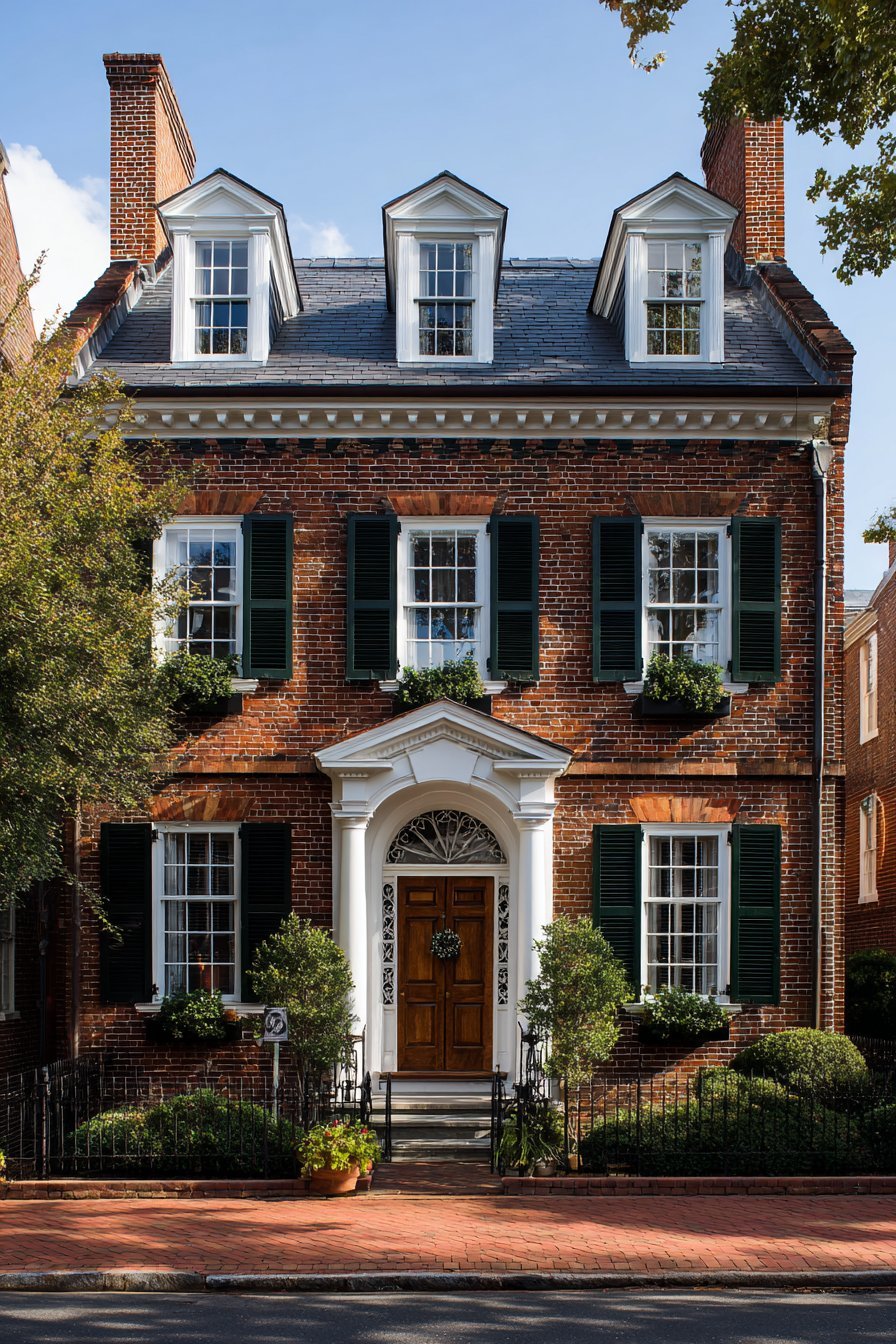
30. Georgian Colonial with Classical Brick Patterns
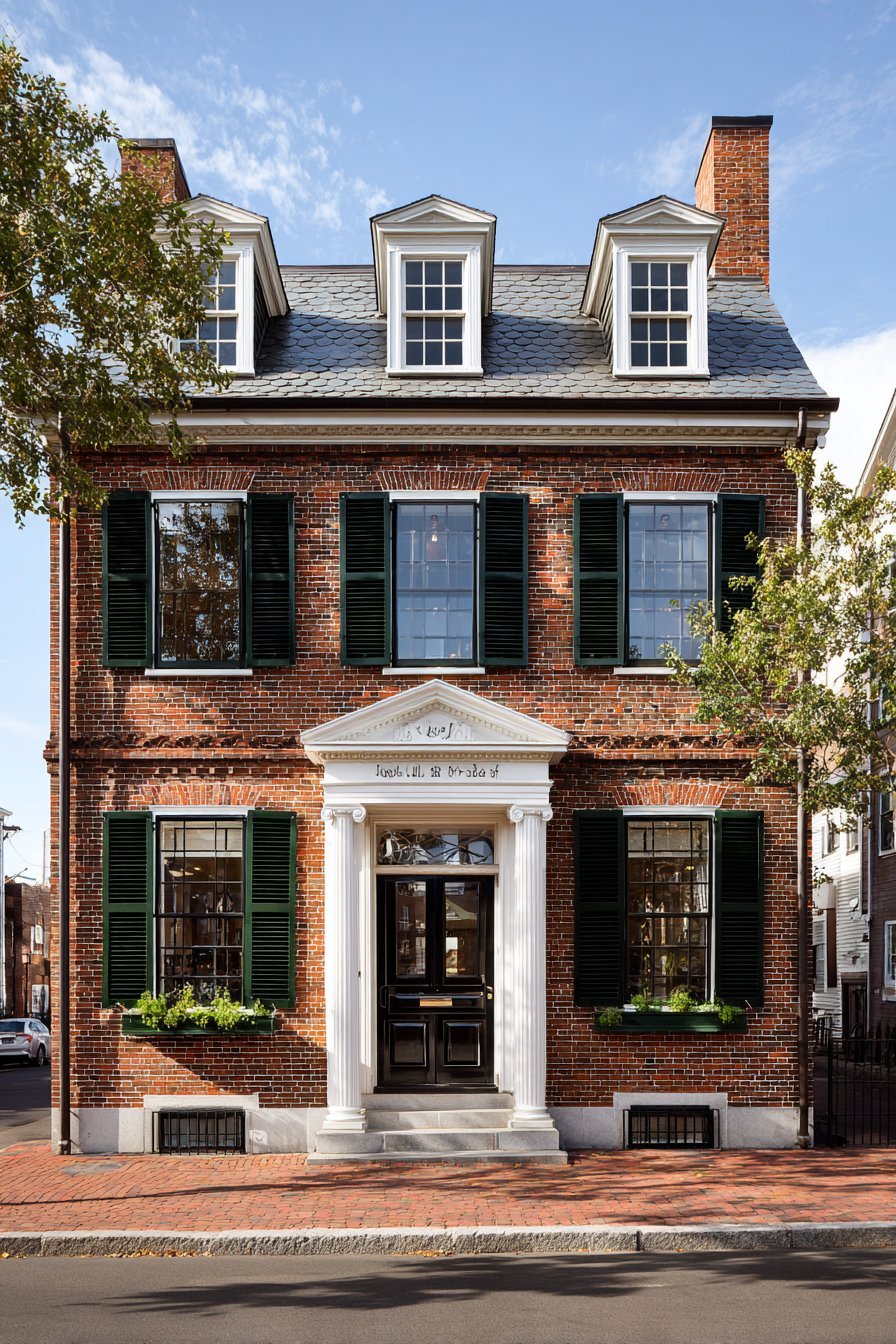
Red brick in Flemish bond pattern creates decorative character. Contrasting black header bricks form subtle patterns. Symmetrical composition reflects classical design principles. White painted trim and working shutters frame tall windows.
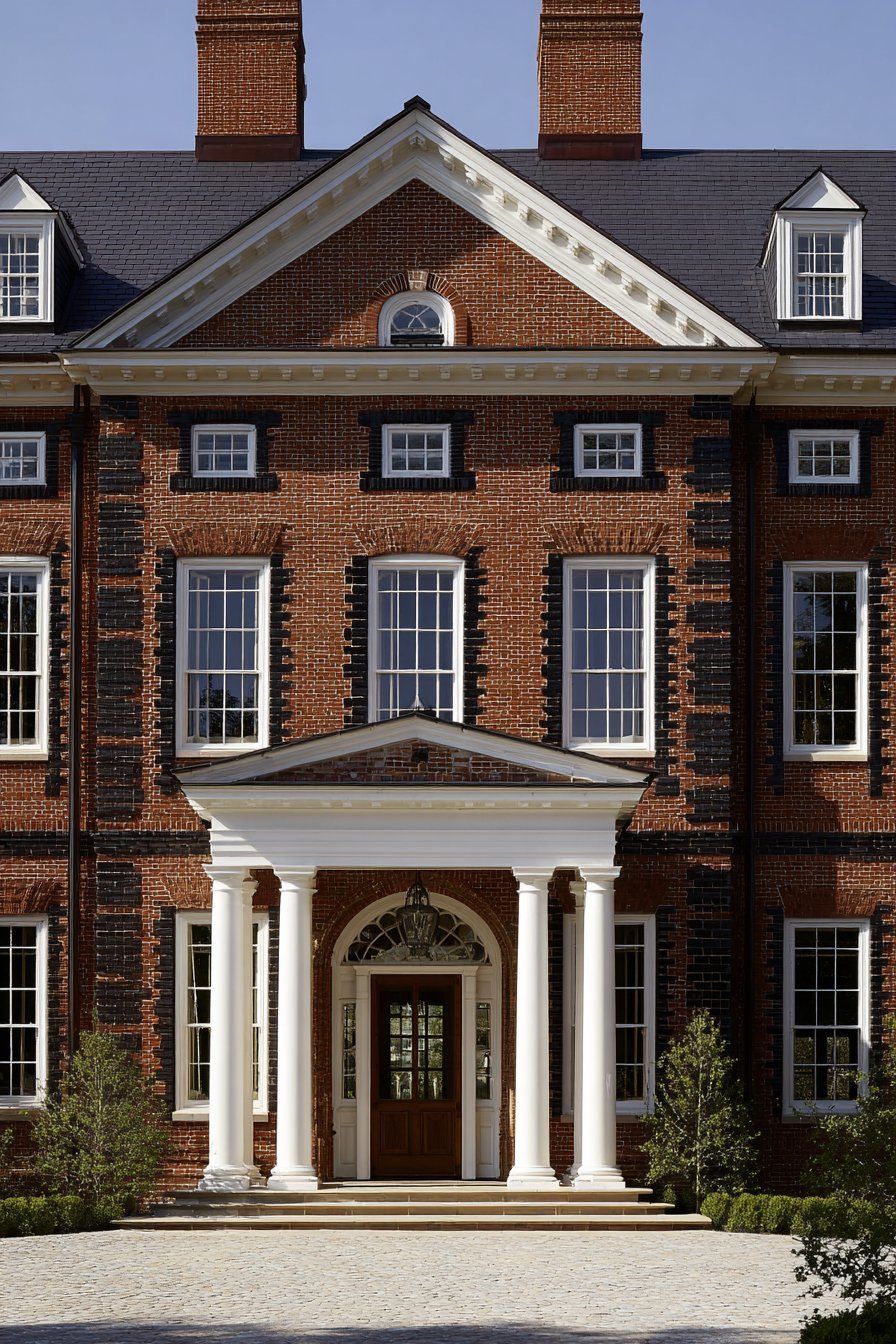
Central entrance features classical portico with white columns. Pediment above portico reinforces classical vocabulary. Paneled door with transom and sidelights completes entrance composition. Dormers with pitched roofs punctuate main roof.
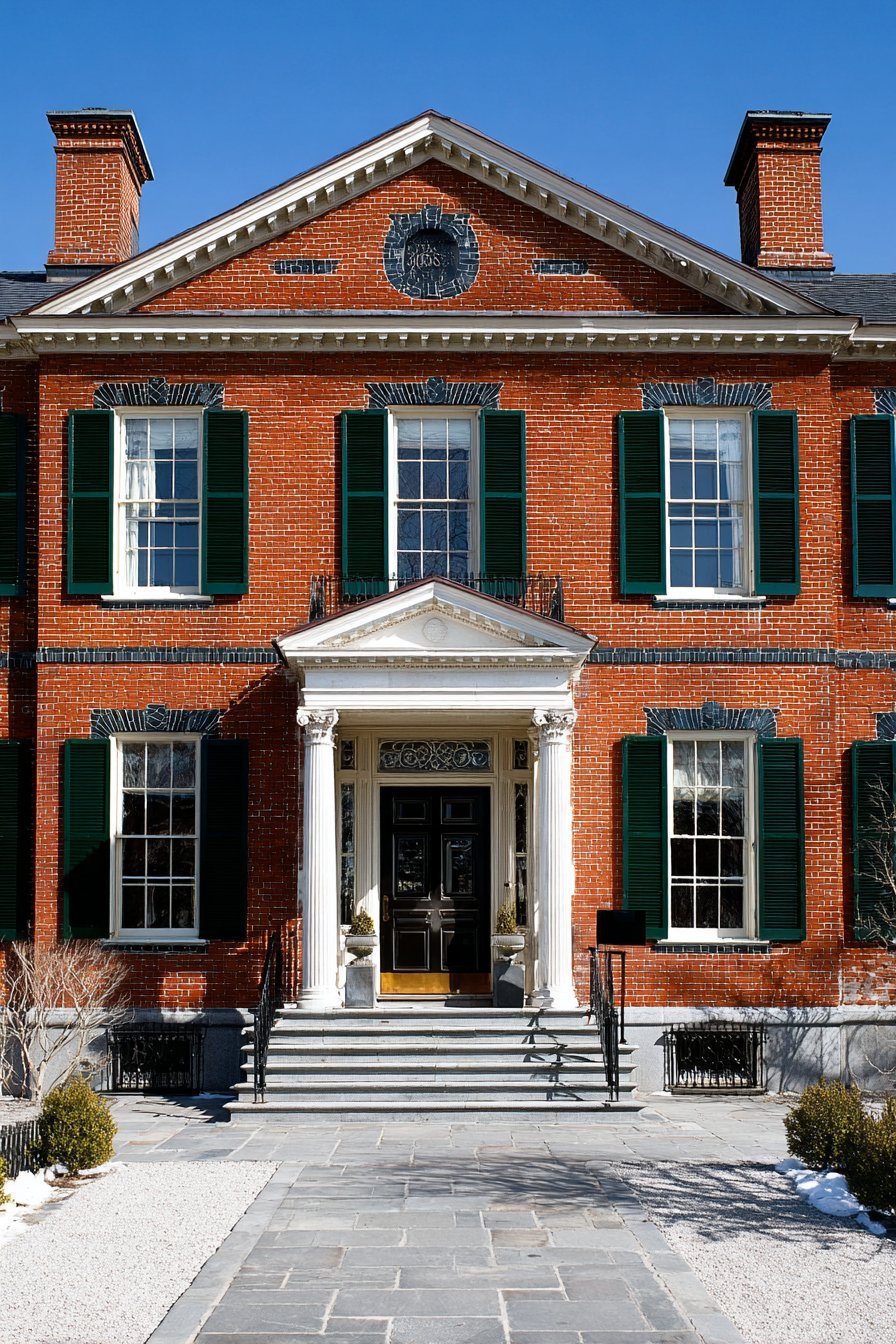
Natural daylight emphasizes brick work precision. The photography captures classical proportional relationships. Historically accurate details appear throughout.
Key Design Tips:
- Lay brick in Flemish bond for decorative pattern
- Use contrasting header bricks for subtle variation
- Design symmetrical compositions with classical proportions
- Paint trim and shutters white for Georgian contrast
- Create porticos with columns and pediments
- Install paneled doors with transoms and sidelights
- Document brickwork precision and classical proportions
Why These Facade Design Ideas Are the Best
These thirty facade designs represent comprehensive approaches to residential exterior architecture. Each concept demonstrates thoughtful material selection, proportional relationships, and detail resolution. The variety spans traditional to contemporary, minimal to ornate, manufactured to natural materials.
Successful facade design balances aesthetic expression with functional performance. Weather protection, energy efficiency, and durability form essential requirements. The designs showcase how different materials age gracefully while maintaining structural integrity. Natural materials like wood, stone, and copper develop character through weathering. Manufactured materials like fiber cement and metal panels provide low maintenance solutions.
Material authenticity creates facades with lasting value. Genuine brick masonry, solid wood elements, and natural stone veneer offer irreplaceable quality. These materials respond beautifully to changing light conditions throughout days and seasons. The interplay between light, shadow, and material texture defines architectural character.
Color theory plays crucial roles in facade composition. Neutral palettes provide timeless backdrops that accommodate changing tastes. Bold contrasts between dark and light elements create visual drama. Earth tones connect buildings to natural surroundings. The designs demonstrate how color choices affect perceived scale, proportion, and material relationships.
Sustainable design principles appear throughout these concepts. Durable materials reduce replacement cycles and environmental impact. Passive design strategies including deep overhangs, strategic window placement, and natural ventilation reduce energy consumption. Living walls and green roofs integrate ecological functions. These approaches prove that sustainability enhances rather than compromises aesthetic quality.
The designs accommodate various architectural styles and regional contexts. Traditional approaches reference historical building methods while meeting contemporary performance standards. Contemporary designs embrace new materials and construction techniques. This versatility allows homeowners to express individual preferences while respecting neighborhood character.
Spatial considerations influence facade success regardless of building size. Careful window placement maximizes natural light and views. Material divisions create visual weight and grounding. Vertical and horizontal emphasis affects perceived proportions. These principles apply equally to compact urban townhouses and expansive suburban residences.
Conclusion
These facade design concepts demonstrate that exterior architecture combines aesthetic vision with technical performance. The key takeaways emphasize material authenticity, proportional relationships, sustainable practices, and climate-responsive design. Successful facades balance timeless design principles with individual expression.
Quality materials and thoughtful detailing create facades that improve with age. Consider how materials weather and develop patina over time. Invest in authentic materials over synthetic substitutions when possible. Work with architects and builders who understand construction details and material properties.
Your home’s facade communicates your design philosophy to the world. Start by identifying styles and materials that resonate with your aesthetic preferences. Consider your climate, neighborhood context, and long-term maintenance requirements. These thirty designs provide inspiration for creating facades that combine beauty, durability, and architectural integrity. Transform your home’s exterior through thoughtful facade design that stands the test of time.