


The minimalist bedroom represents more than just a design trend. It embodies a philosophy of intentional living and mindful space creation. In our increasingly cluttered world, these serene sanctuaries offer refuge from visual noise and mental overwhelm.
Minimalist design strips away the unnecessary to reveal what truly matters. Each element serves a purpose, whether functional or aesthetic. The result transforms bedrooms into peaceful retreats that promote rest and rejuvenation. Clean lines, neutral palettes, and carefully curated furnishings create environments where the mind can finally relax.
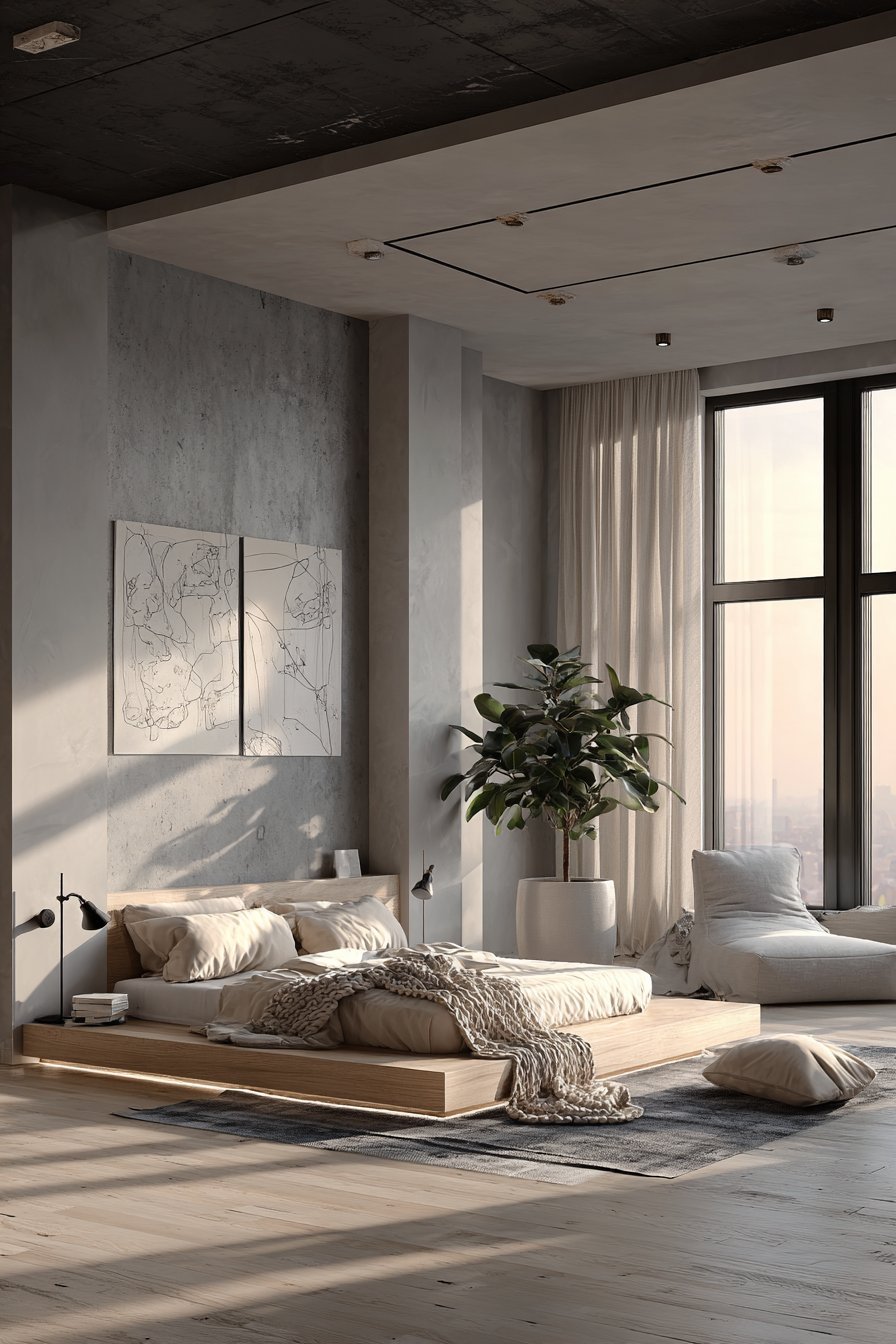
This comprehensive guide explores thirty distinct minimalist bedroom concepts. From Japanese-inspired platforms to Scandinavian simplicity, each design demonstrates how less truly becomes more. Whether you’re working with compact urban spaces or generous square footage, these ideas prove that minimalism adapts beautifully to any setting while maintaining its core principles of simplicity and intention.
1. Serene White and Oak Sanctuary
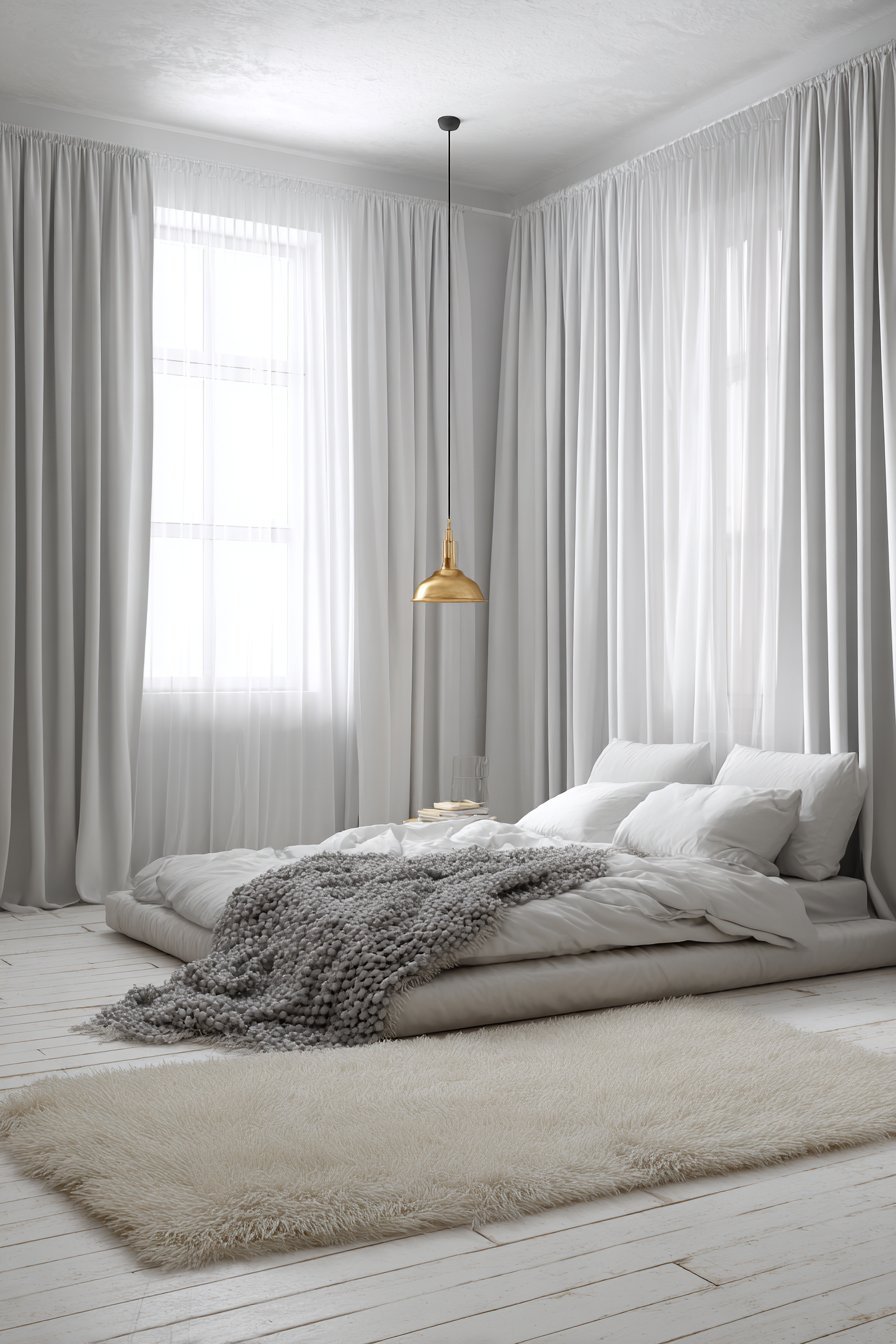
A low-profile platform bed anchors this peaceful minimalist bedroom. Crisp white linen bedding creates a cloud-like appearance against light oak wood. The bed sits directly against a plain white wall without a headboard. This absence emphasizes the room’s commitment to simplicity. A single textured throw blanket in soft grey provides subtle visual interest.
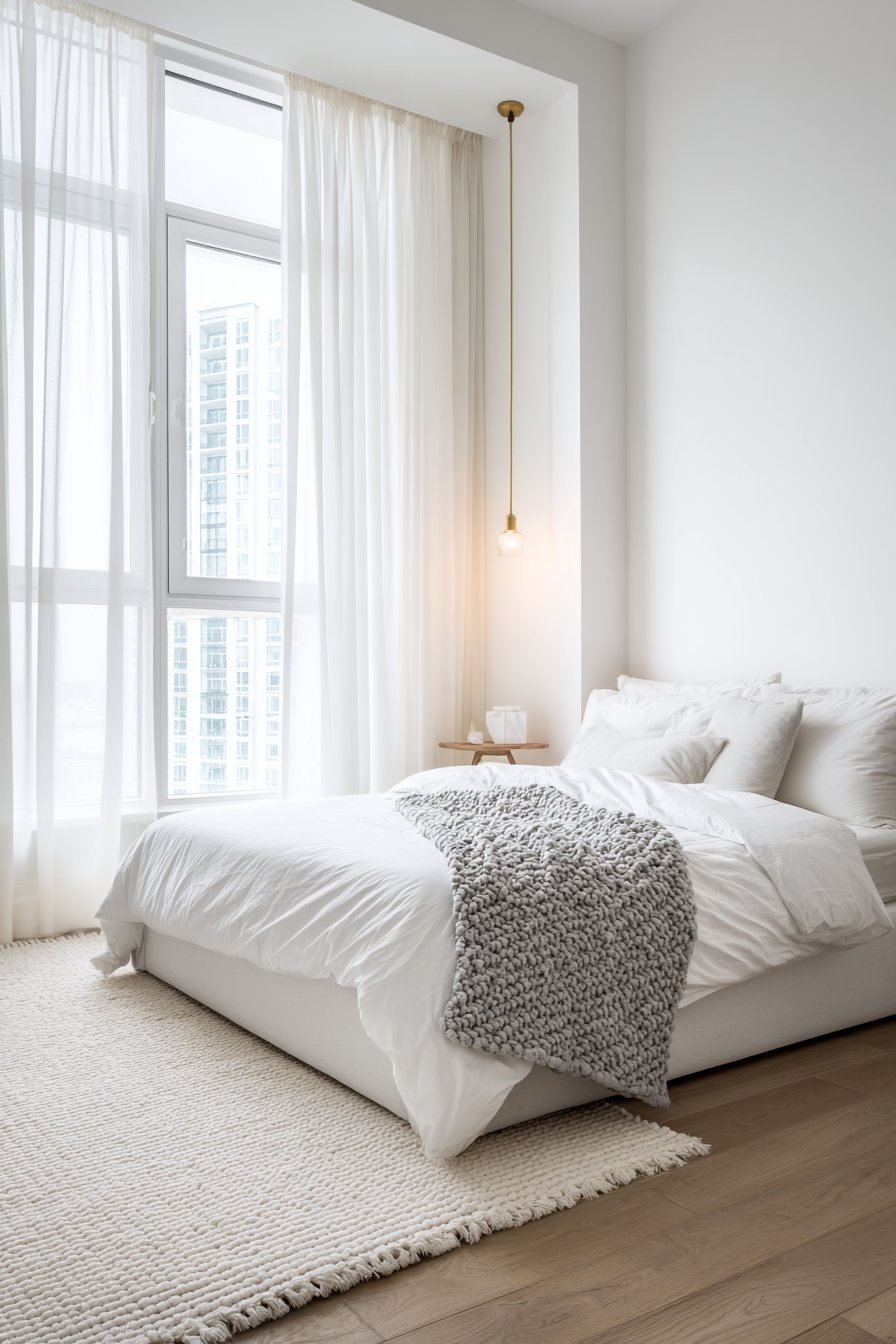
Light oak hardwood flooring extends throughout the entire space. The natural wood grain adds warmth without overwhelming the senses. A simple wool area rug in natural cream defines the sleeping zone. The rug’s organic texture introduces tactile dimension while maintaining color restraint.
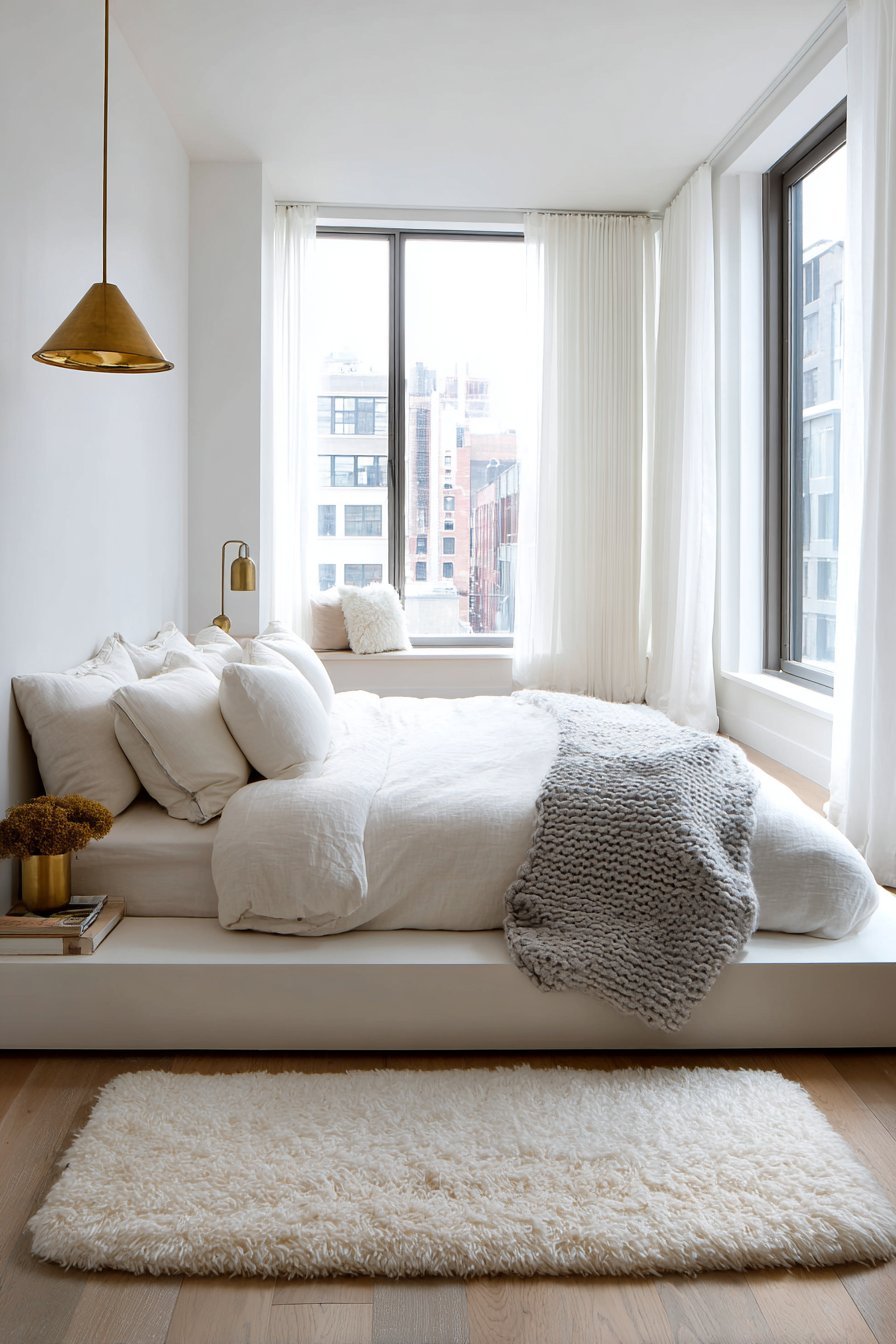
Illumination comes from a single pendant light with brushed brass finish. The fixture hangs beside the bed at the perfect reading height. Floor-to-ceiling sheer curtains filter morning light through large windows. The translucent fabric creates a soft, diffused glow that changes throughout the day.
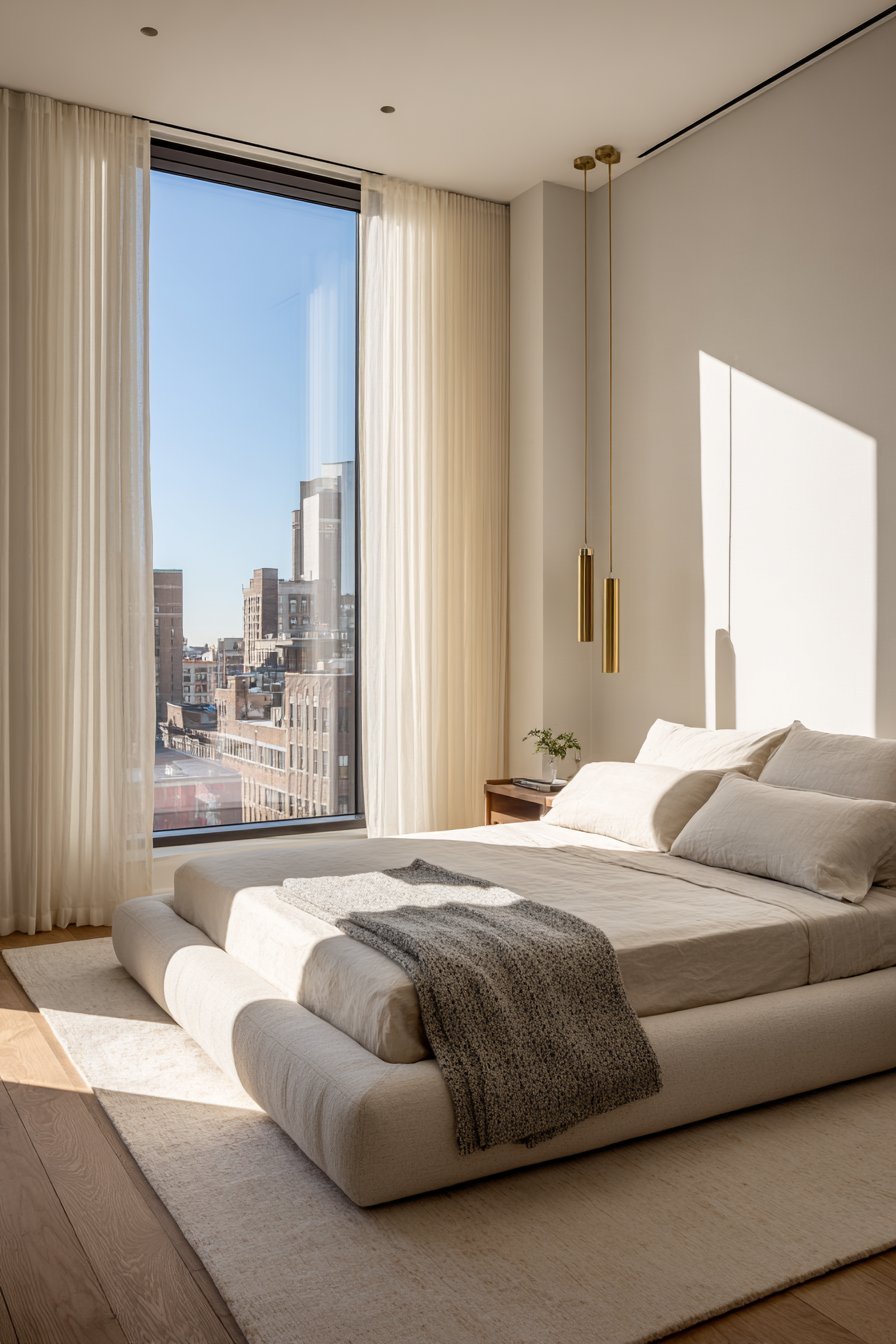
The room’s spaciousness becomes its most striking feature. Wide-angle views reveal generous breathing room around each furniture piece. Natural daylight creates subtle shadows that emphasize clean lines. The peaceful atmosphere invites deep relaxation and restful sleep.
Key Design Tips:
- Select platform beds to maintain low sightlines and visual openness
- Layer different white tones to add depth without introducing color
- Choose single-color throws in natural fibers for texture without pattern
- Install sheer curtains to maximize natural light while maintaining privacy
- Leave walls bare to emphasize architectural simplicity
- Use brushed metals sparingly for subtle warmth against cool tones
2. Built-In Wardrobe Efficiency
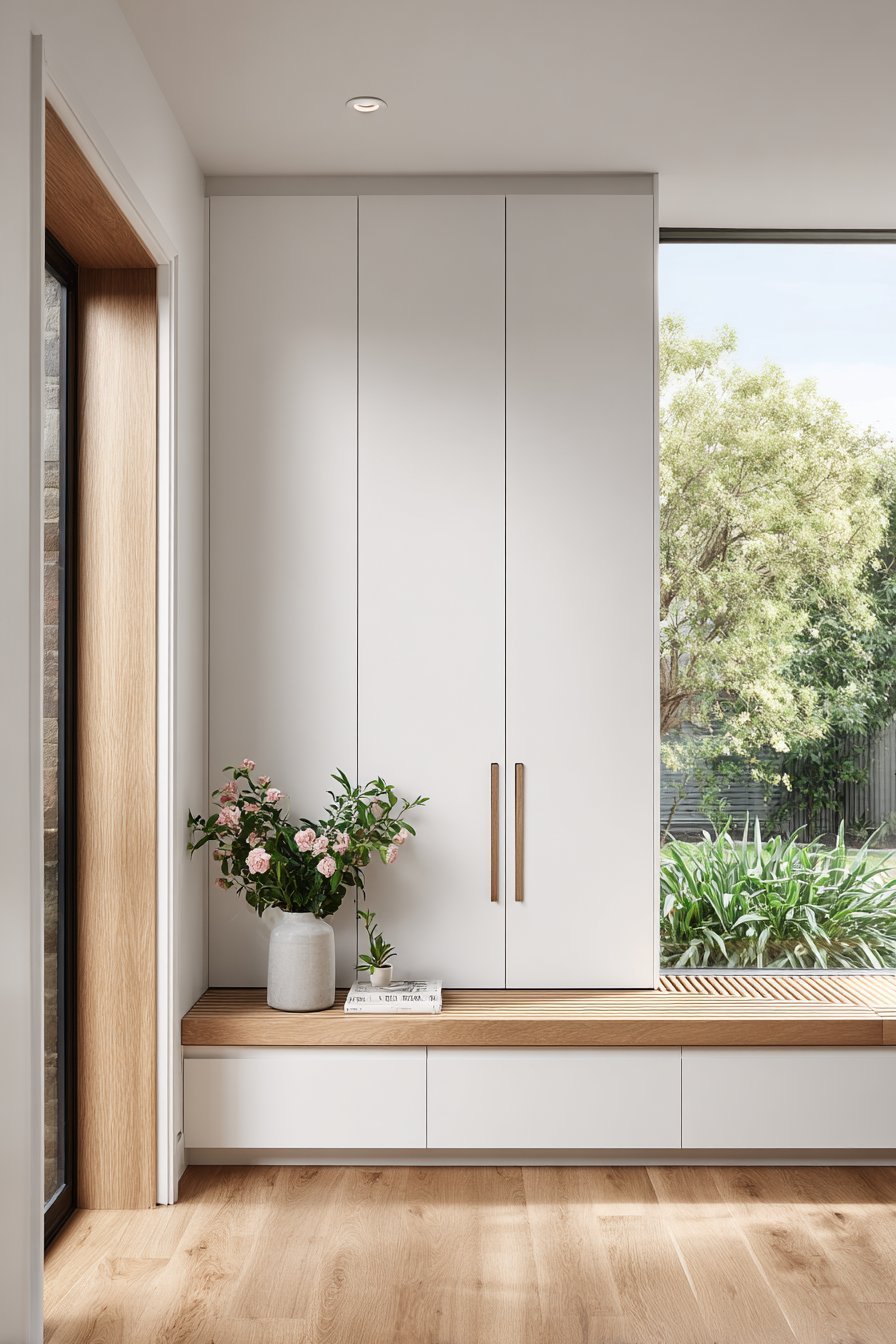
This minimalist bedroom showcases the power of integrated storage solutions. Built-in wardrobes feature handleless matte white cabinet doors. The cabinets blend seamlessly into the wall surface. Clean horizontal lines create visual continuity across the entire storage system. The floor-to-ceiling design maximizes vertical space utilization.
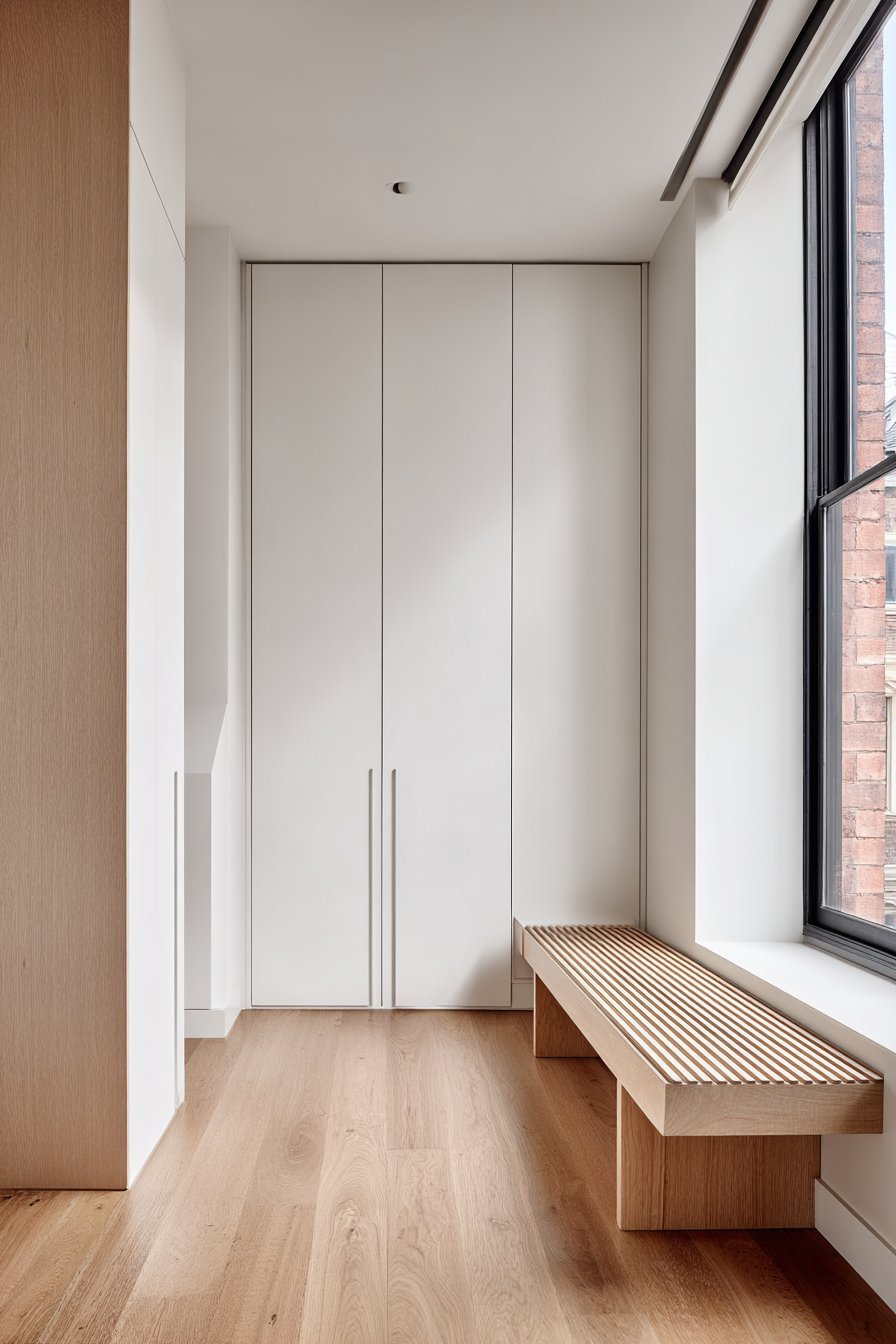
A simple wooden bench with linear design sits at the bed’s foot. The bench serves multiple purposes without cluttering the floor. It provides seating for dressing and a place to organize clothes. The piece’s straightforward construction echoes the room’s commitment to functional beauty.
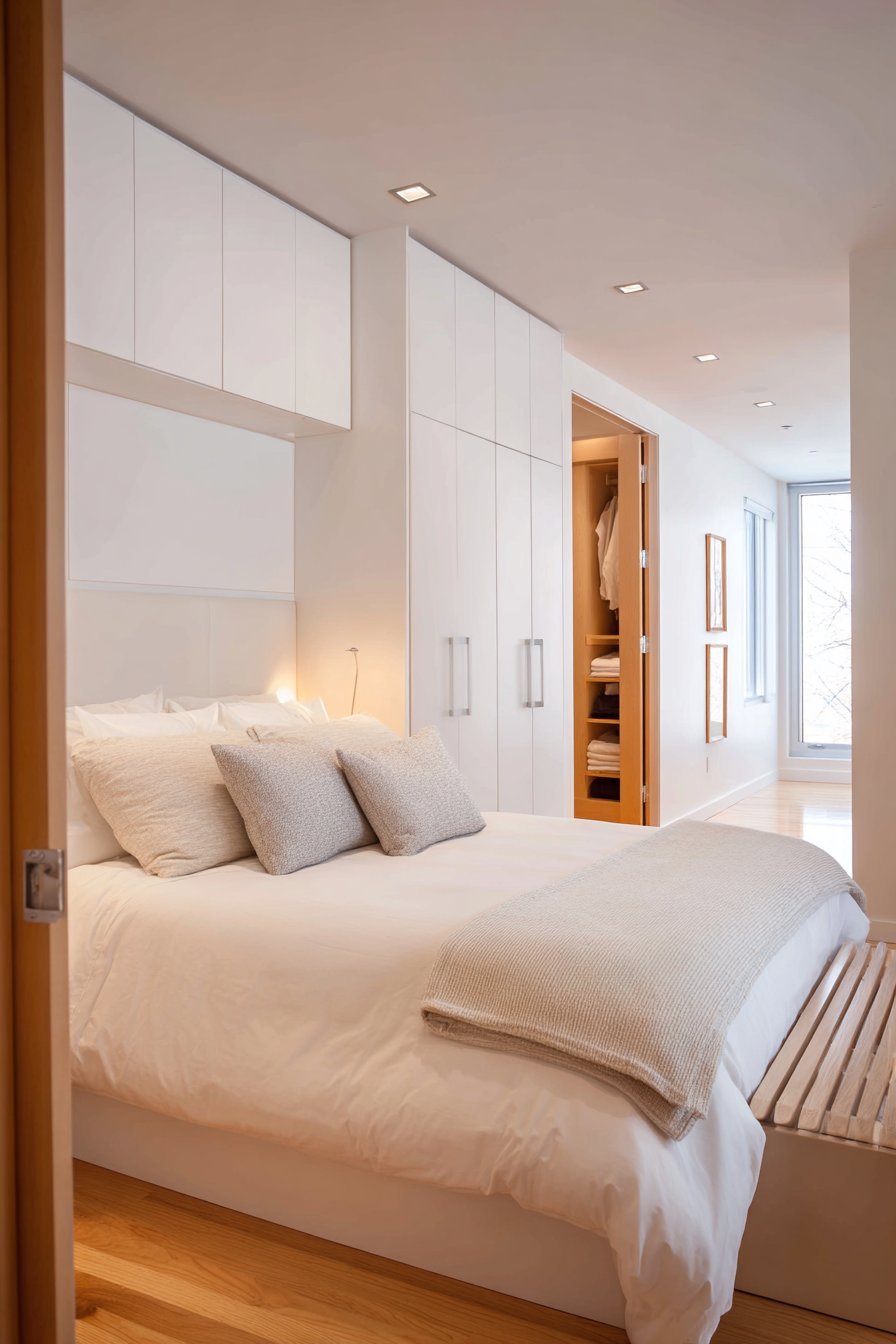
The room maintains a strict neutral palette throughout. Whites and light wood tones dominate every surface. This color discipline creates a cohesive, calming environment. Natural light from nearby windows illuminates the smooth cabinet surfaces beautifully.
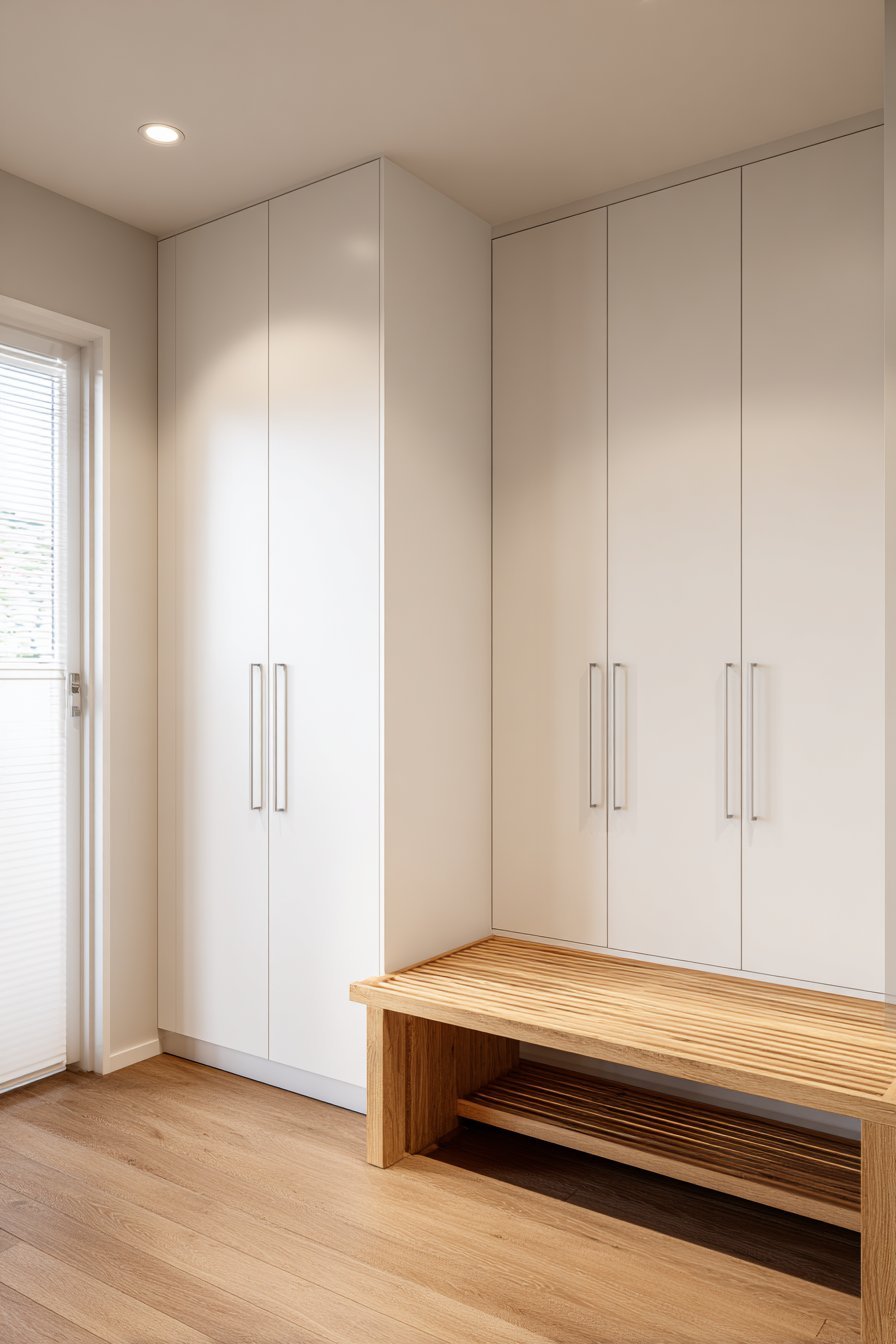
Professional organization becomes invisible within these integrated systems. The handleless doors eliminate visual interruption from hardware. Push-to-open mechanisms maintain the seamless appearance. Everything needed finds its place behind closed doors.
Key Design Tips:
- Invest in floor-to-ceiling built-ins to maximize storage capacity
- Choose handleless cabinets for completely smooth surfaces
- Select matte finishes to reduce visual reflection and glare
- Position benches strategically for both seating and organization
- Align cabinet lines horizontally to emphasize room width
- Keep visible furniture minimal when storage is built-in
3. Floating Shelf Nightstand Alternative
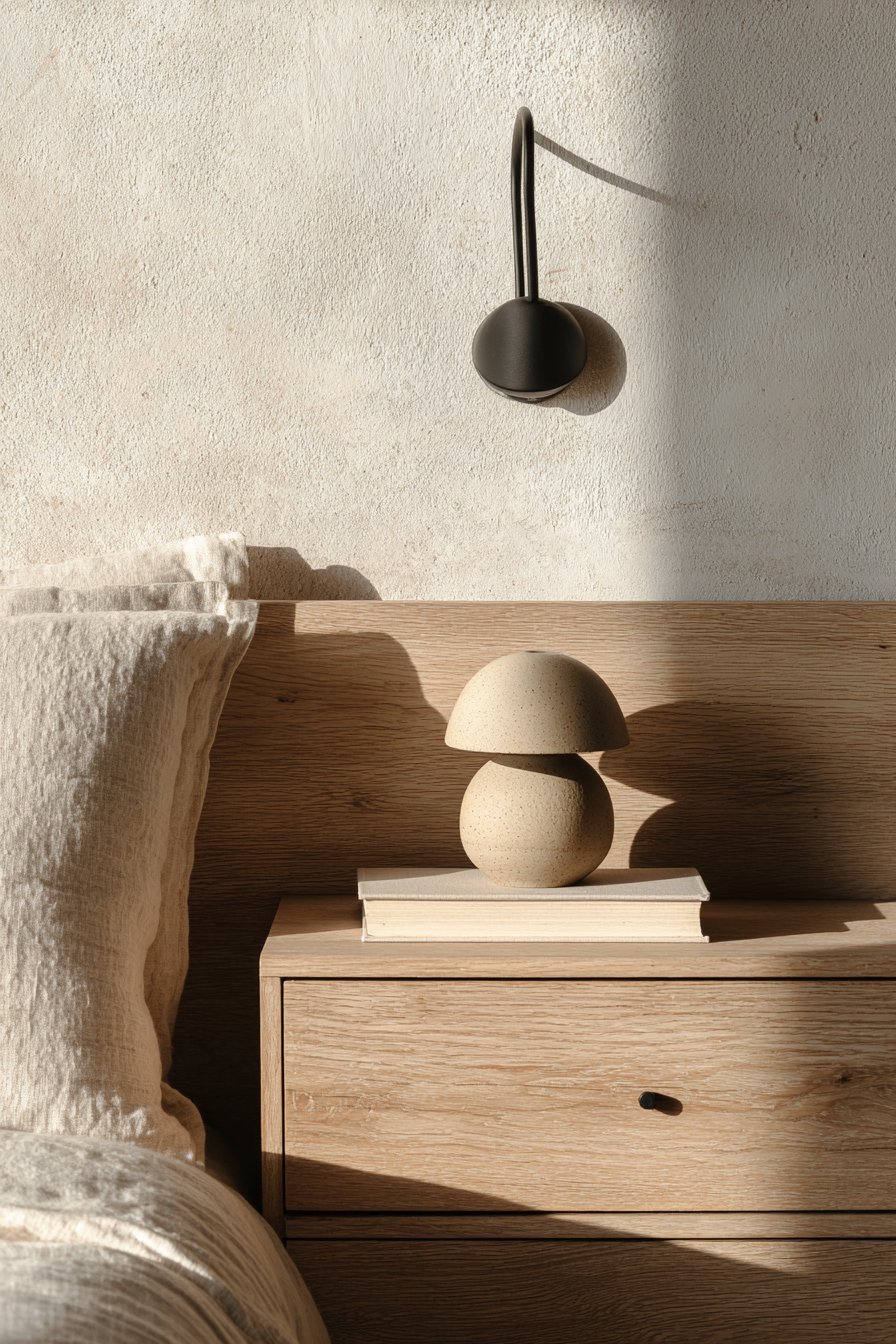
The nightstand area receives minimalist treatment through a floating shelf. Light ash wood mounts seamlessly beside the bed. The shelf displays only essential items with intentional spacing. A small ceramic reading lamp with linen shade provides warm illumination. A single hardcover book rests nearby for bedtime reading.
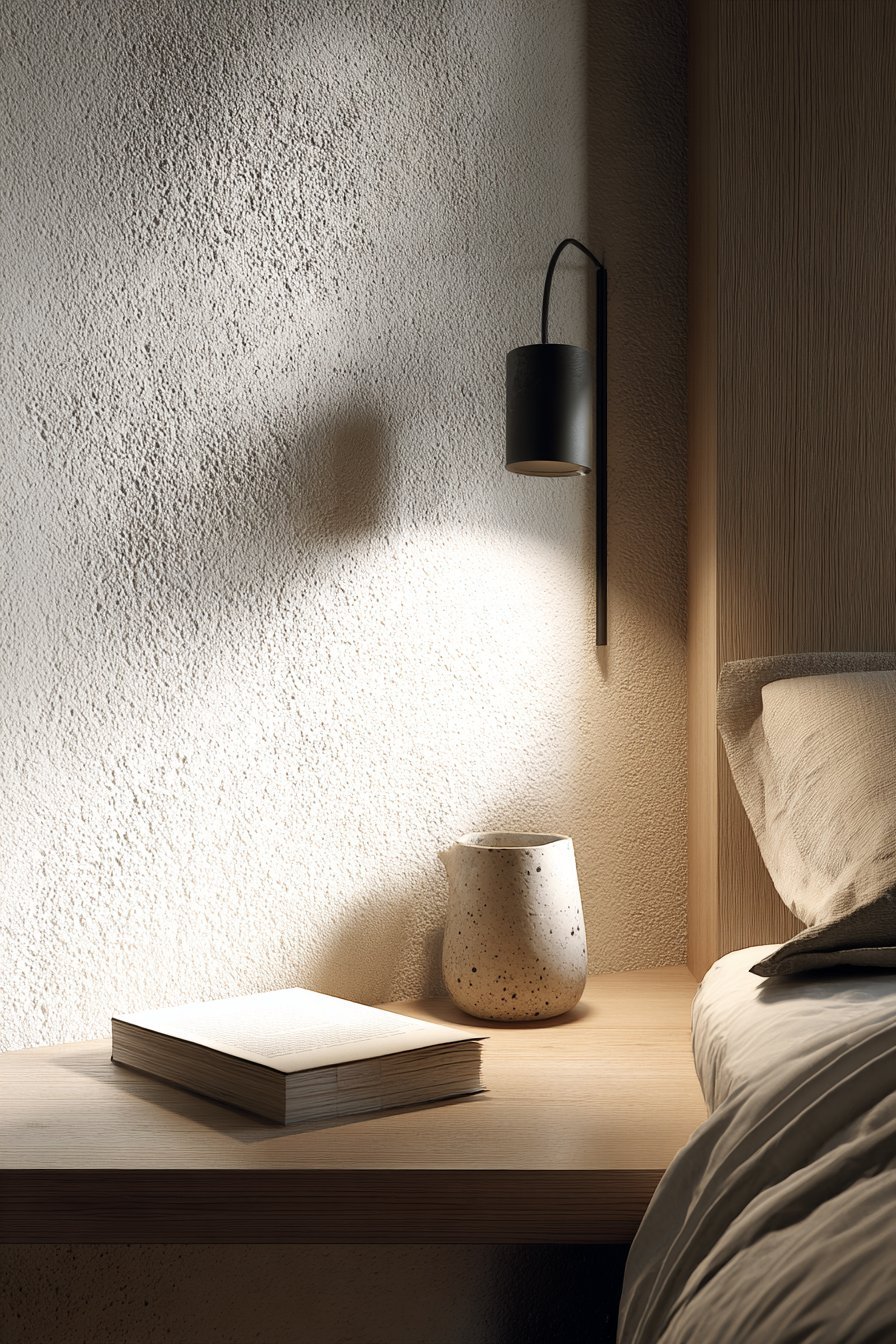
The wall behind features subtle texture in matte white paint. This gentle surface variation adds dimension without pattern. A slender adjustable wall-mounted reading light in matte black provides focused illumination. The articulating arm allows precise light direction for reading comfort.
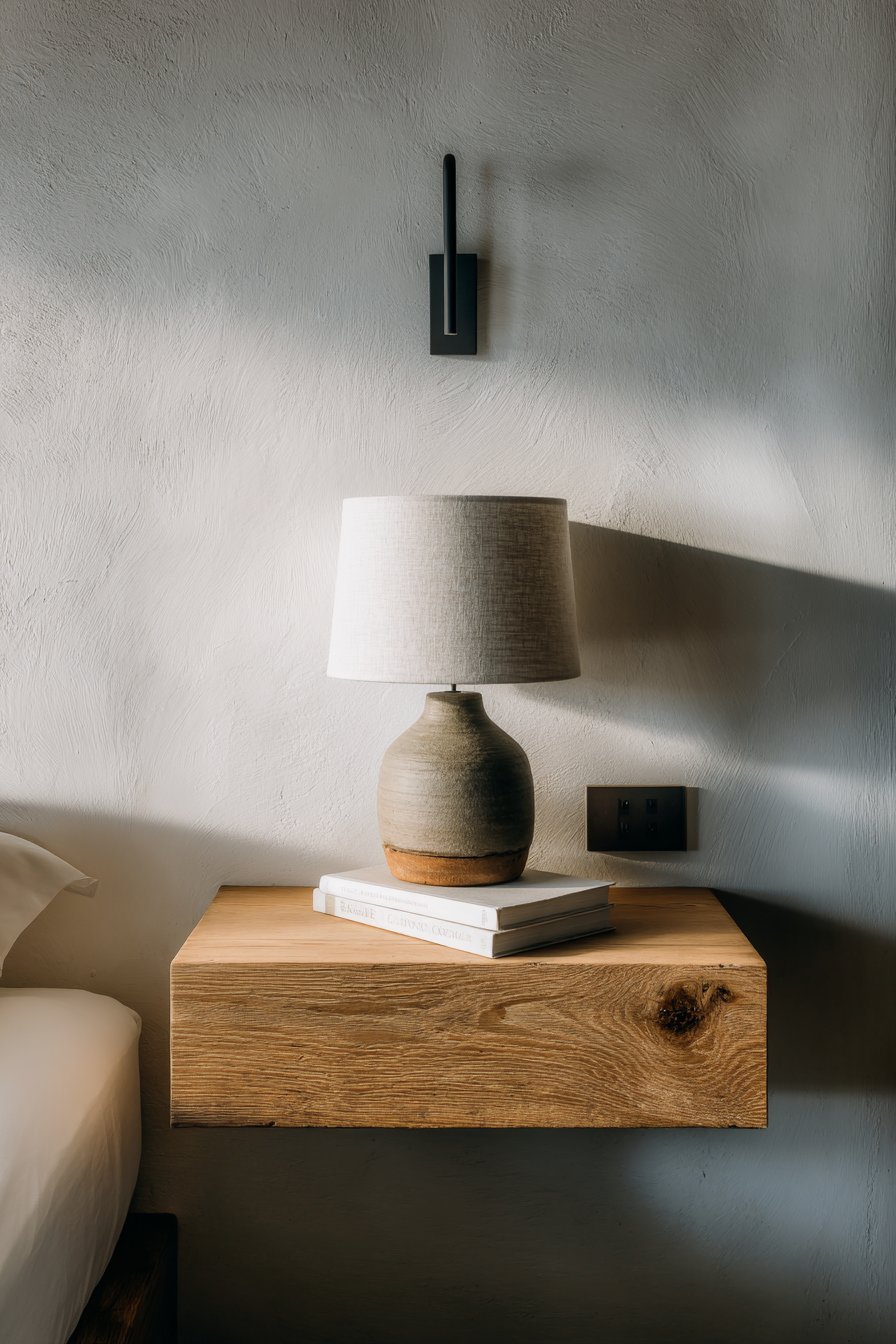
The composition demonstrates restraint in styling choices. Negative space receives equal consideration as displayed objects. Each item earns its place through utility or beauty. The careful attention to emptiness creates visual breathing room.
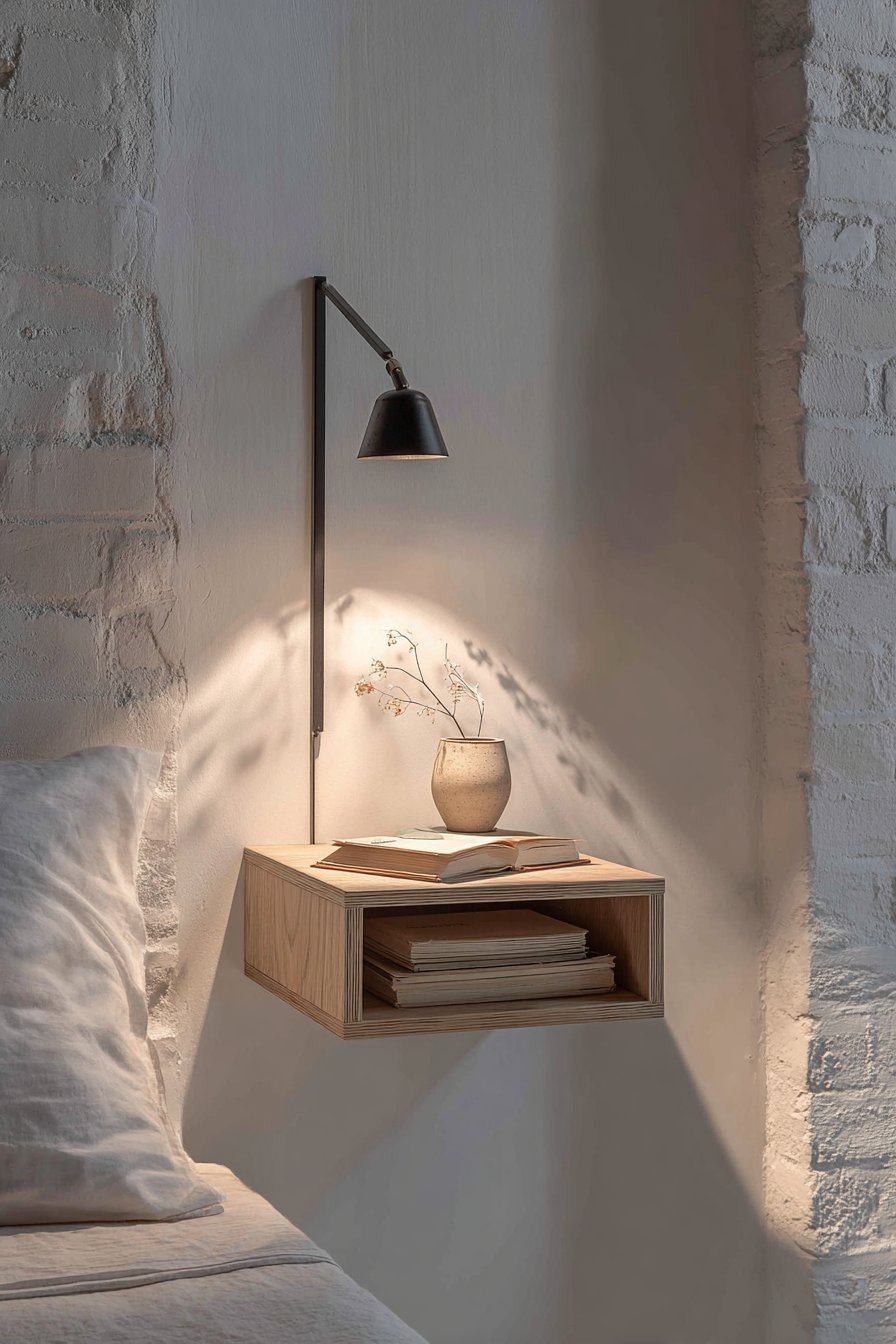
Morning and evening light play across the simple arrangement. The wood grain catches sunlight at different angles throughout the day. Gentle shadows define the shelf’s floating effect against the wall. The minimal setup proves that less furniture creates more peace.
Key Design Tips:
- Mount floating shelves at the optimal height for bedside reach
- Limit nightstand displays to three items maximum
- Choose adjustable wall lights to eliminate table lamp clutter
- Select wood tones that complement flooring for cohesion
- Leave generous wall space around mounted elements
- Use ceramic or natural materials for lamp bases
4. Natural Linen Window Treatment
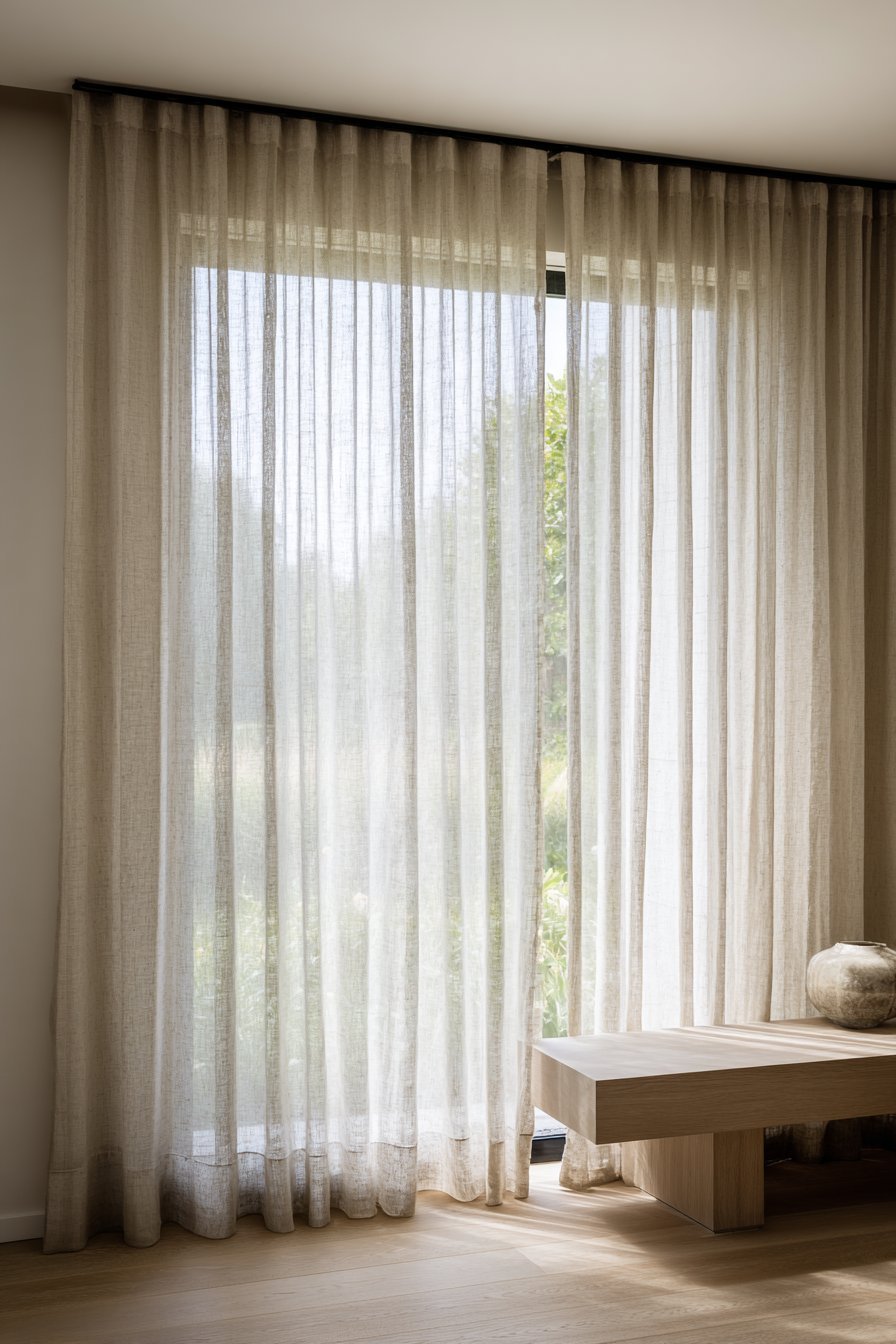
Floor-length curtains in natural undyed linen create soft window treatments. The visible weave texture adds organic interest to the minimal space. The fabric hangs from a simple matte black curtain rod. Minimal hardware maintains the unadorned aesthetic throughout.
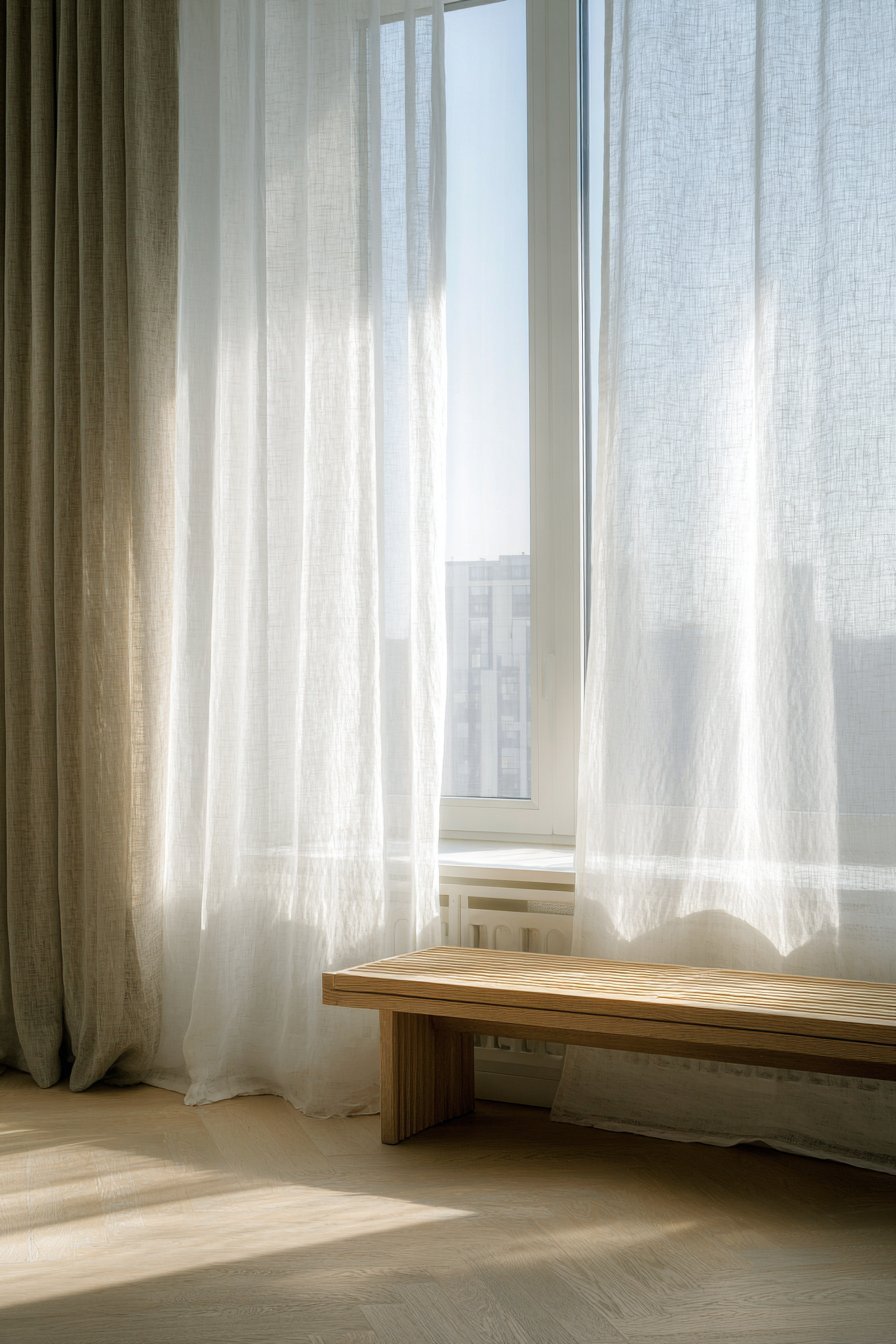
The curtains pool slightly on light oak flooring. This subtle pooling adds softness without appearing cluttered. Behind the sheer fabric, morning light creates a gentle glow. The natural linen filters harsh sunlight into diffused illumination.
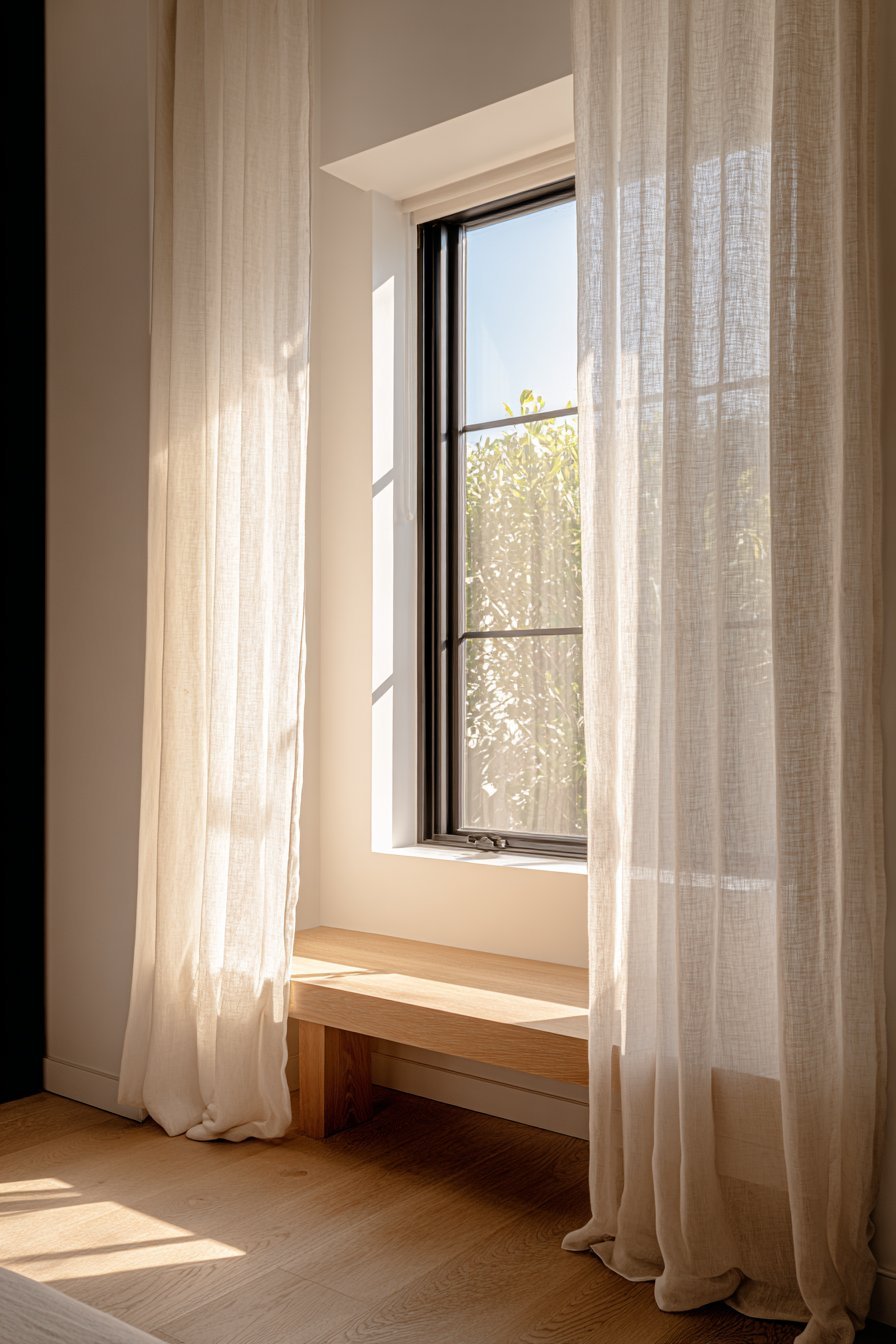
A simple wooden window bench with clean lines sits beneath the window. The bench provides a quiet spot for contemplation or morning coffee. Its straightforward construction echoes the room’s design philosophy. Light wood matches the flooring for visual continuity.
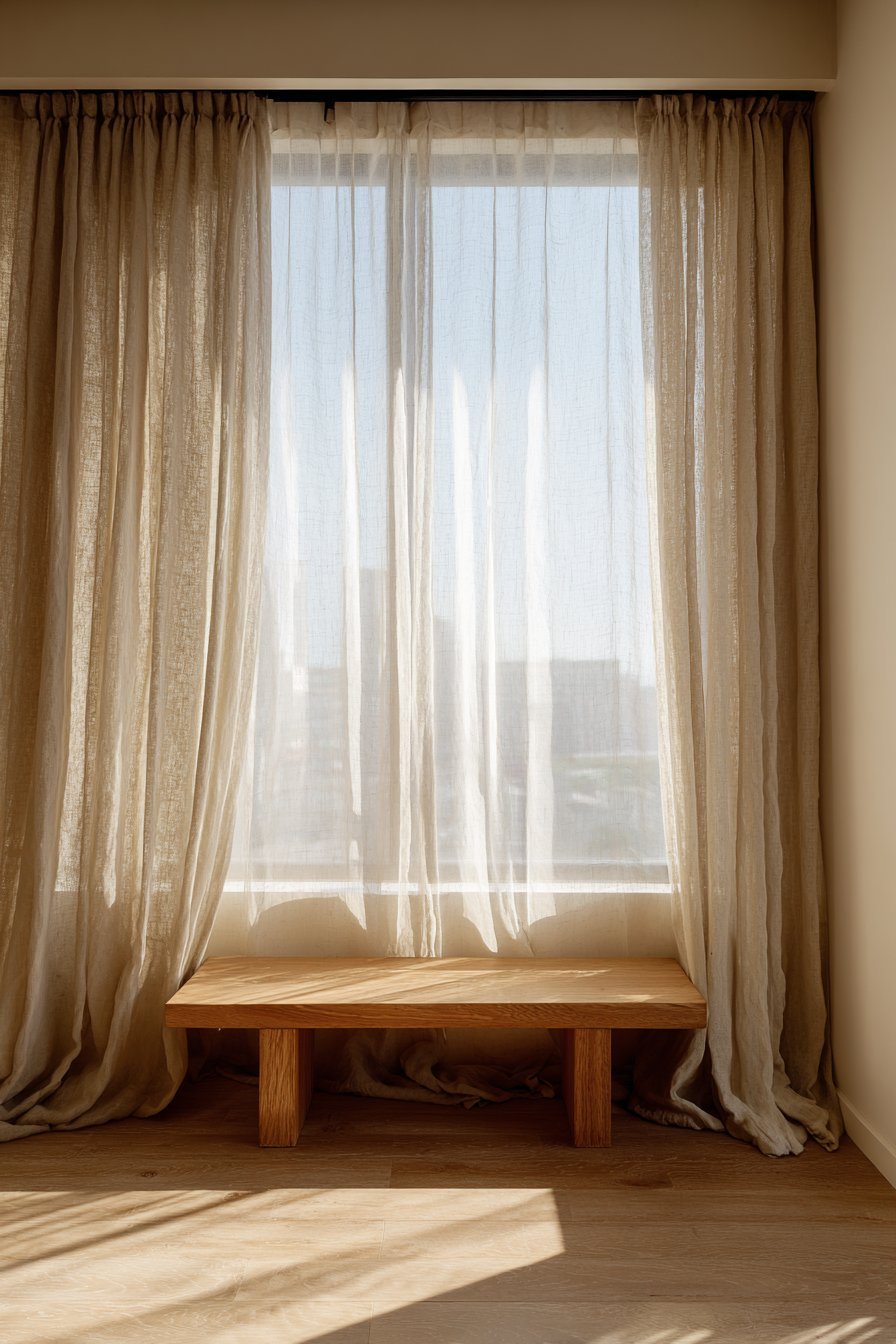
The natural fabric becomes a focal point through its honest materiality. Linen’s organic texture and color variations celebrate imperfection. The weave catches light differently throughout the day. This creates ever-changing visual interest through natural means alone.
Key Design Tips:
- Choose undyed linens to showcase natural fiber beauty
- Allow curtains to pool 1-2 inches for relaxed elegance
- Select matte black hardware for subtle contrast against light fabrics
- Position window benches to create functional seating areas
- Hang curtains from ceiling height to emphasize room verticality
- Embrace linen’s natural wrinkles as part of its authentic character
5. Geometric Precision Through Art
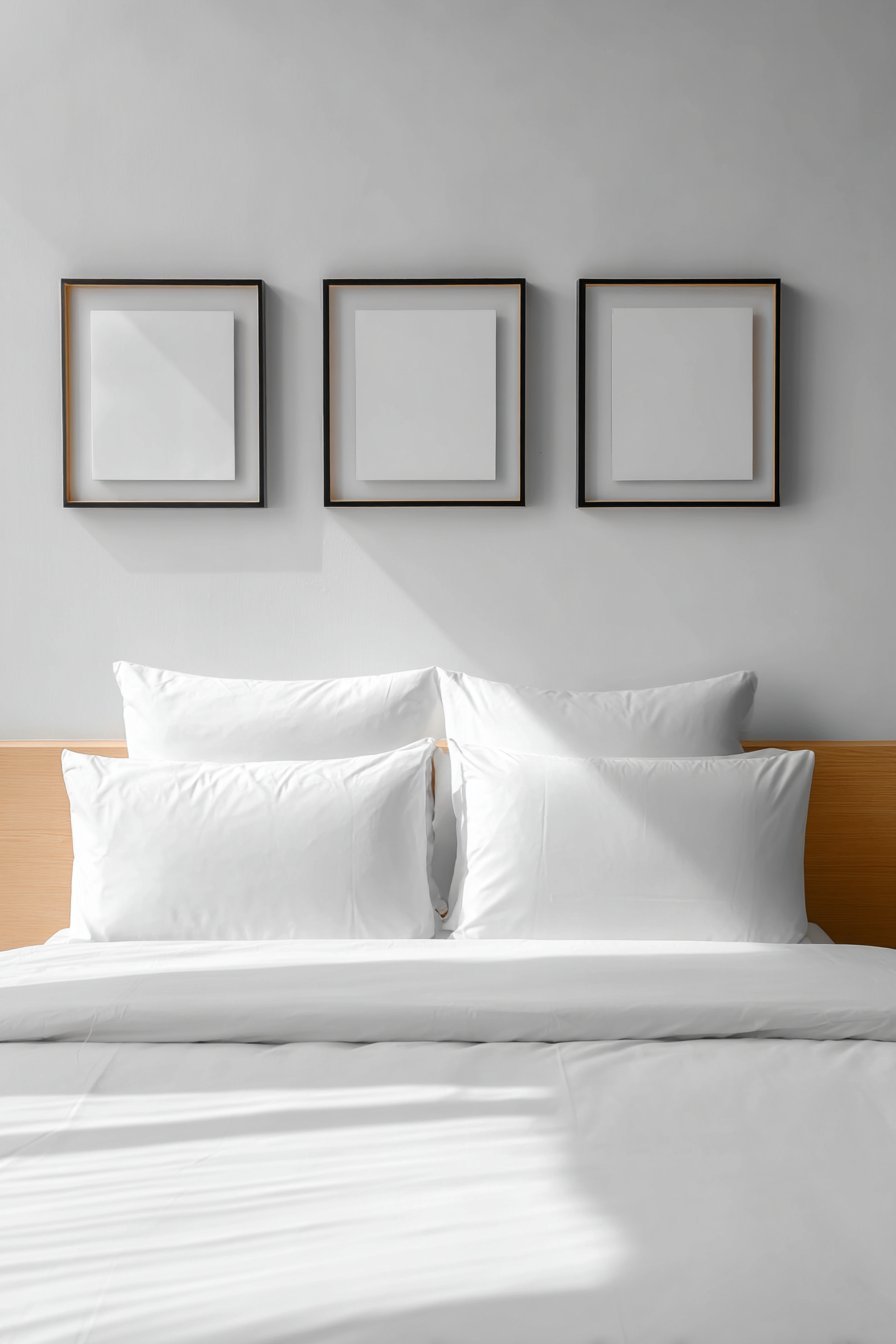
Three identical square frames in light oak hang above the bed. The frames align in perfect horizontal arrangement with mathematical spacing. Each contains simple line art in black ink on white paper. The repetition creates visual rhythm through minimalist means.
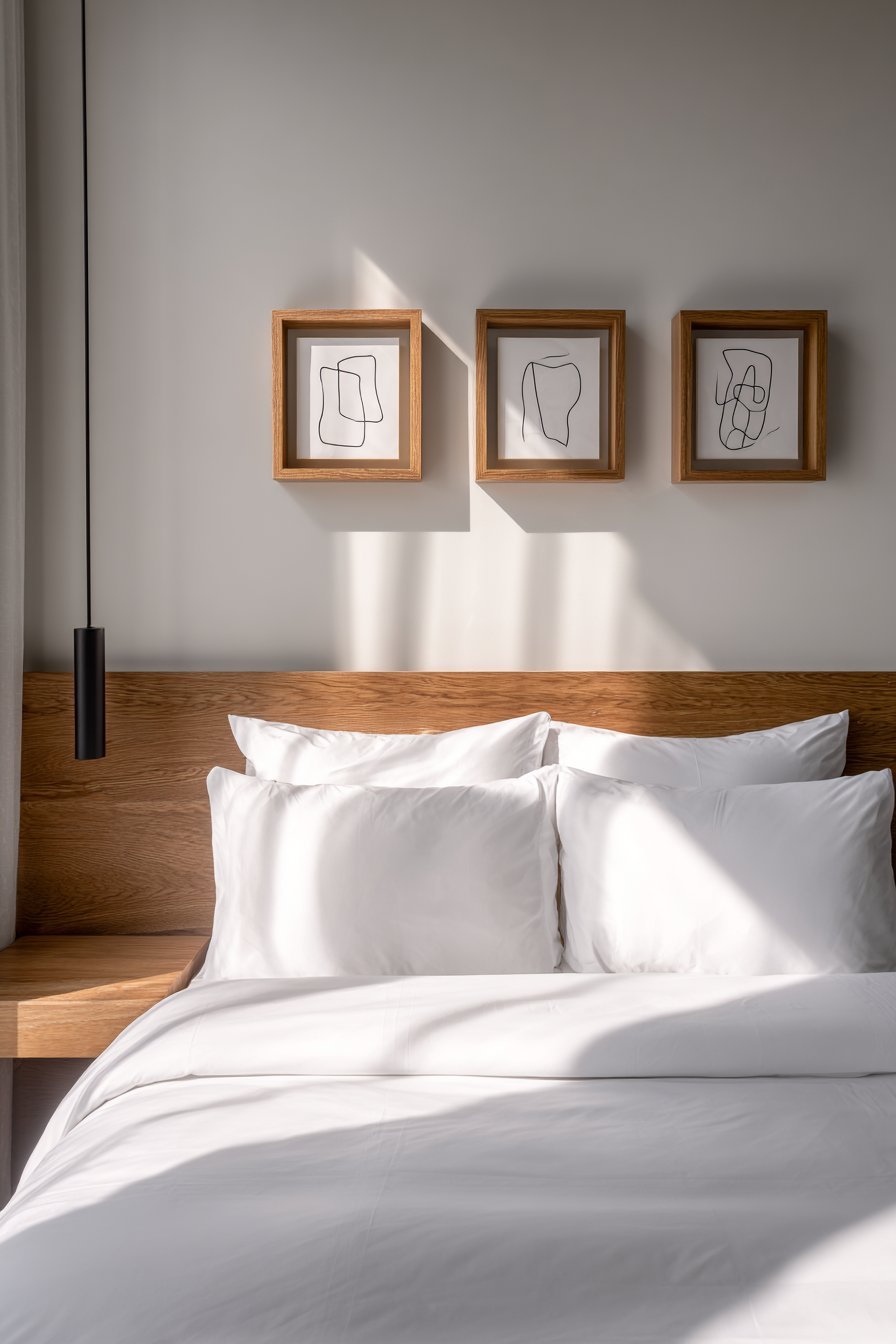
The accent wall features warm white paint with matte finish. The subtle warmth prevents stark coldness in the monochromatic scheme. Below, monochromatic white bedding displays precise hospital corners. The crisp folding demonstrates attention to detail and order.
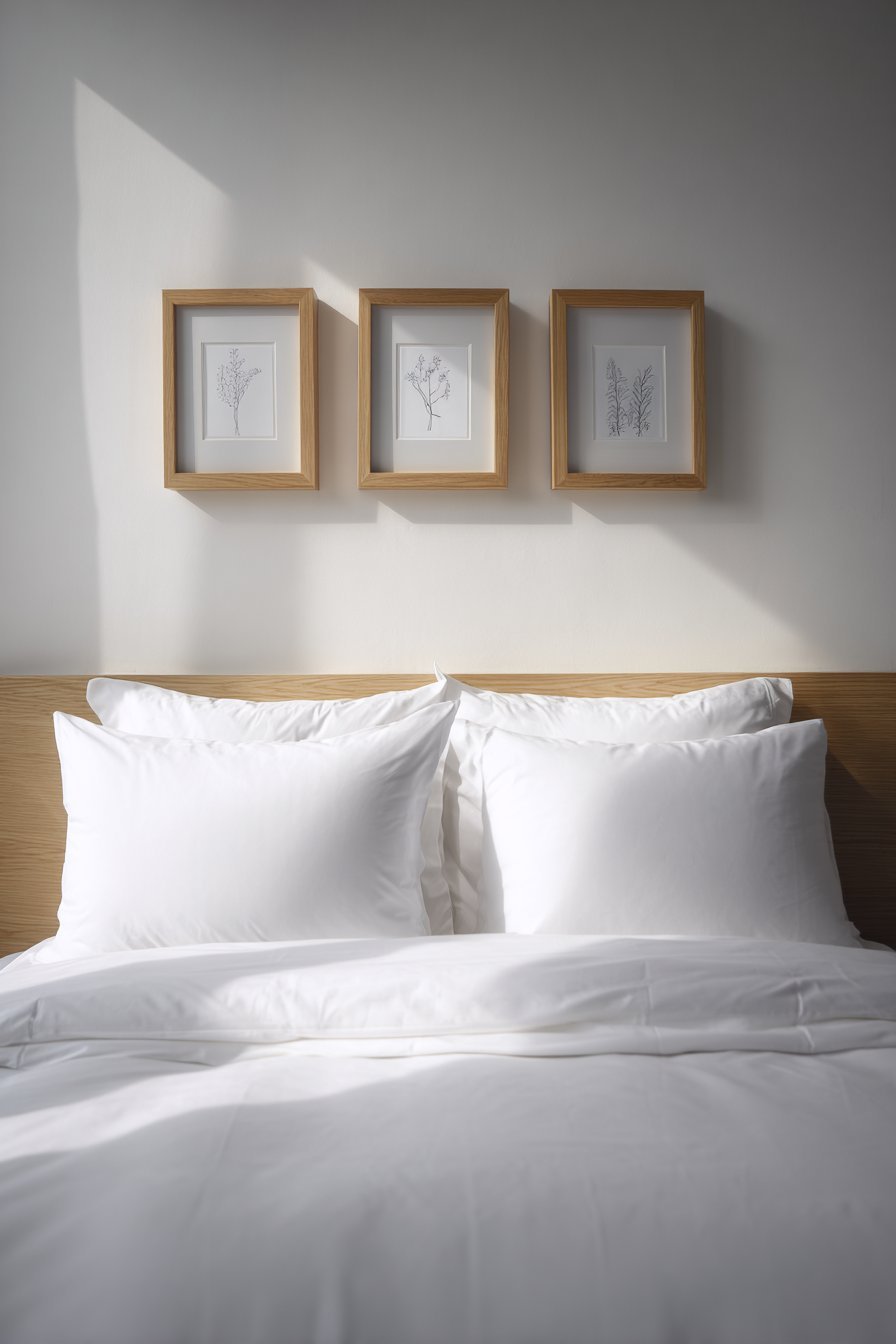
Natural side lighting creates subtle shadows that emphasize geometric precision. The frames cast parallel shadows across the wall surface. This shadow play adds dimension to the flat wall. The changing light throughout the day animates the static arrangement.
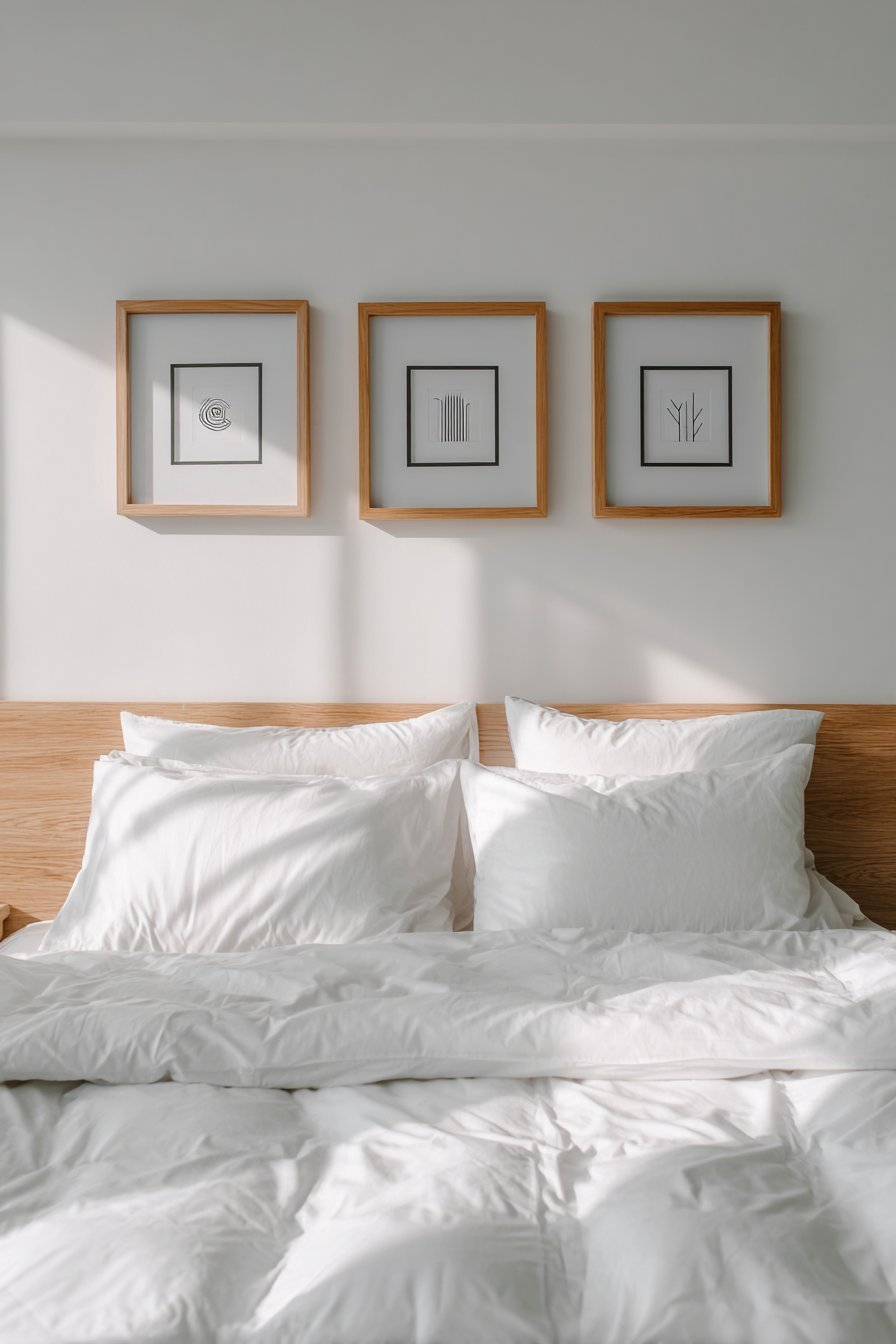
The careful spacing demonstrates mathematical consideration in design. Equal distances between frames create visual balance and harmony. The identical sizing reinforces the sense of order. This precise composition proves that minimal decoration can create powerful visual interest.
Key Design Tips:
- Use identical frames in sets of three for balanced repetition
- Maintain equal spacing between frames using precise measurements
- Choose line art with simple geometric compositions
- Align frames horizontally at a consistent height above bed
- Select frame colors that complement flooring tones
- Keep artwork monochromatic to avoid color distraction
6. Murphy Bed Space Transformation
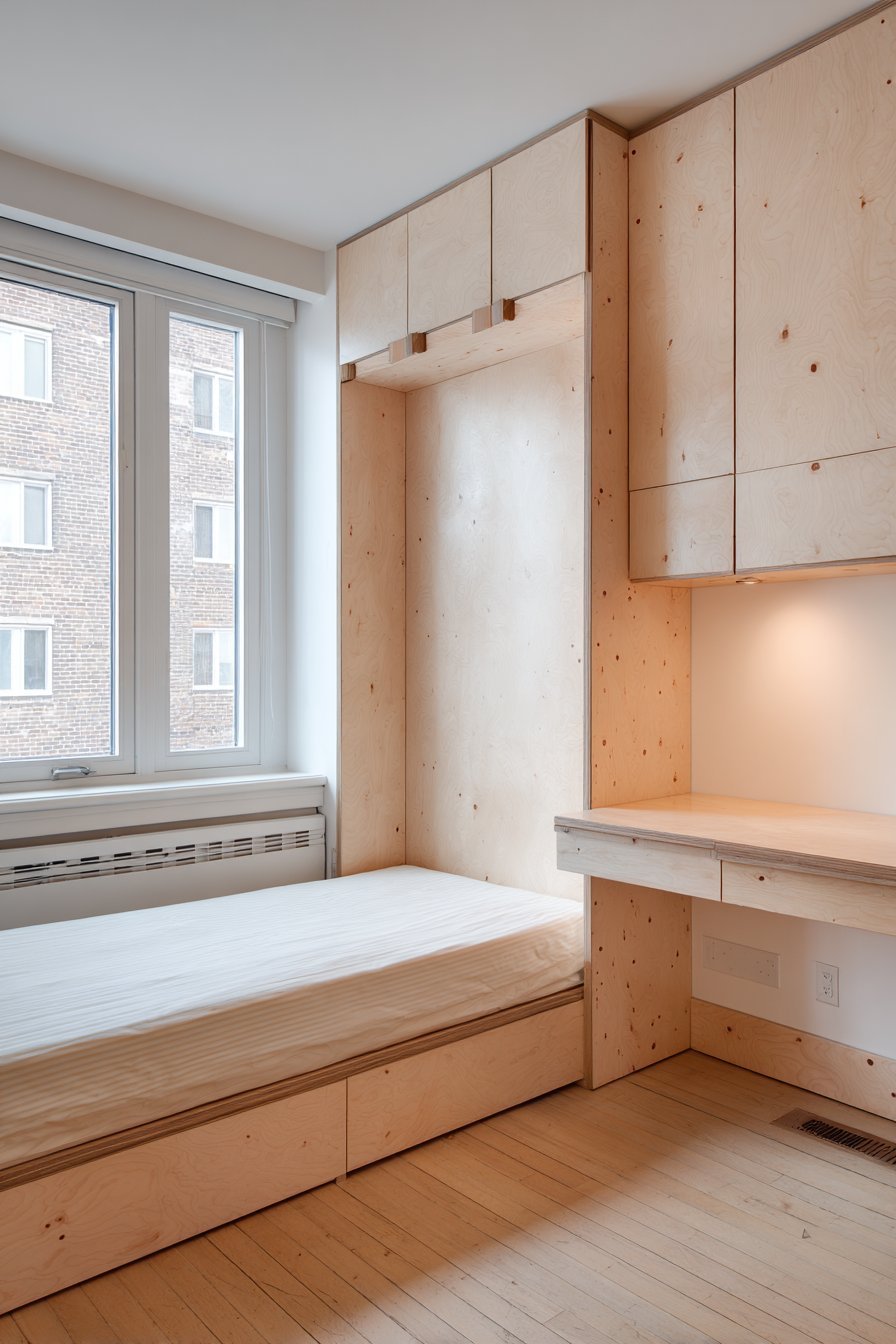
This compact bedroom demonstrates efficient space utilization brilliantly. A Murphy bed in light birch veneer folds into a seamless wall unit. When stored, the bed disappears completely into the cabinetry. The surrounding storage features matching wood finish throughout.
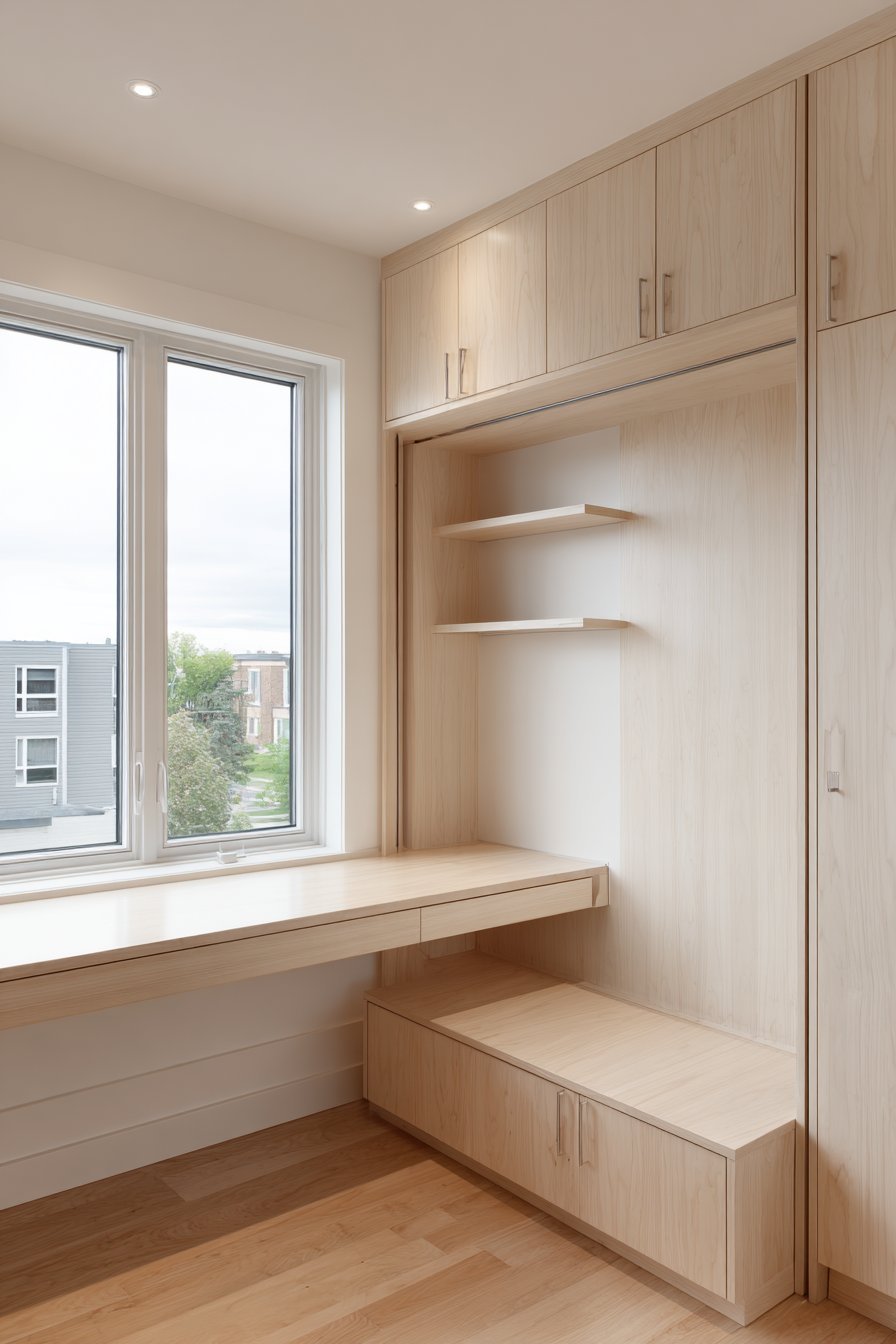
Simple recessed pulls maintain clean cabinet fronts when the bed is hidden. A narrow floating desk extends from the wall unit. The desk provides workspace without cluttering valuable floor area. The multi-functional design adapts to different daily needs.
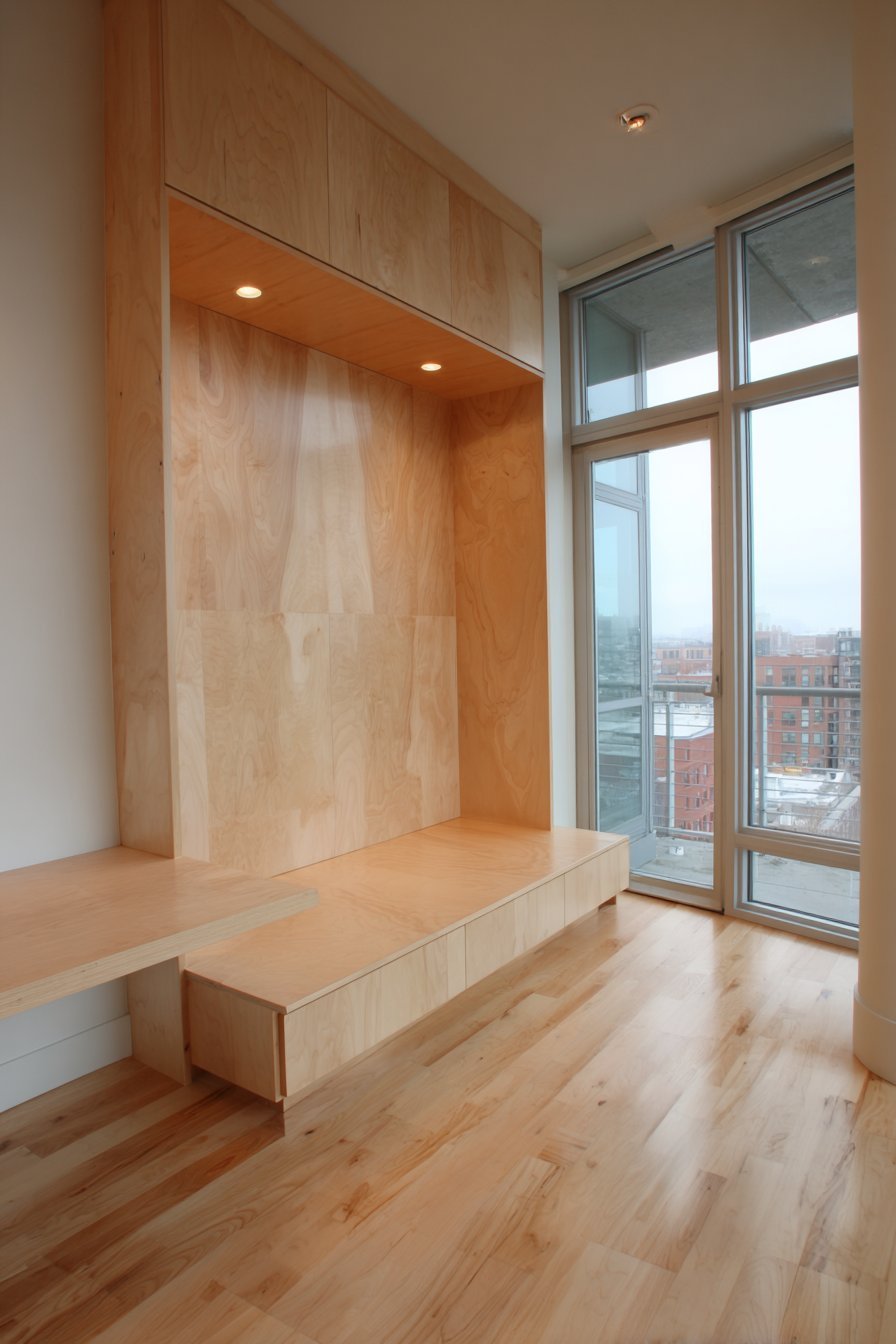
The room maintains clear sightlines and open floor space. When the bed folds away, the room transforms completely. This flexibility suits urban living and small space challenges. The design proves that minimalism and functionality coexist beautifully.
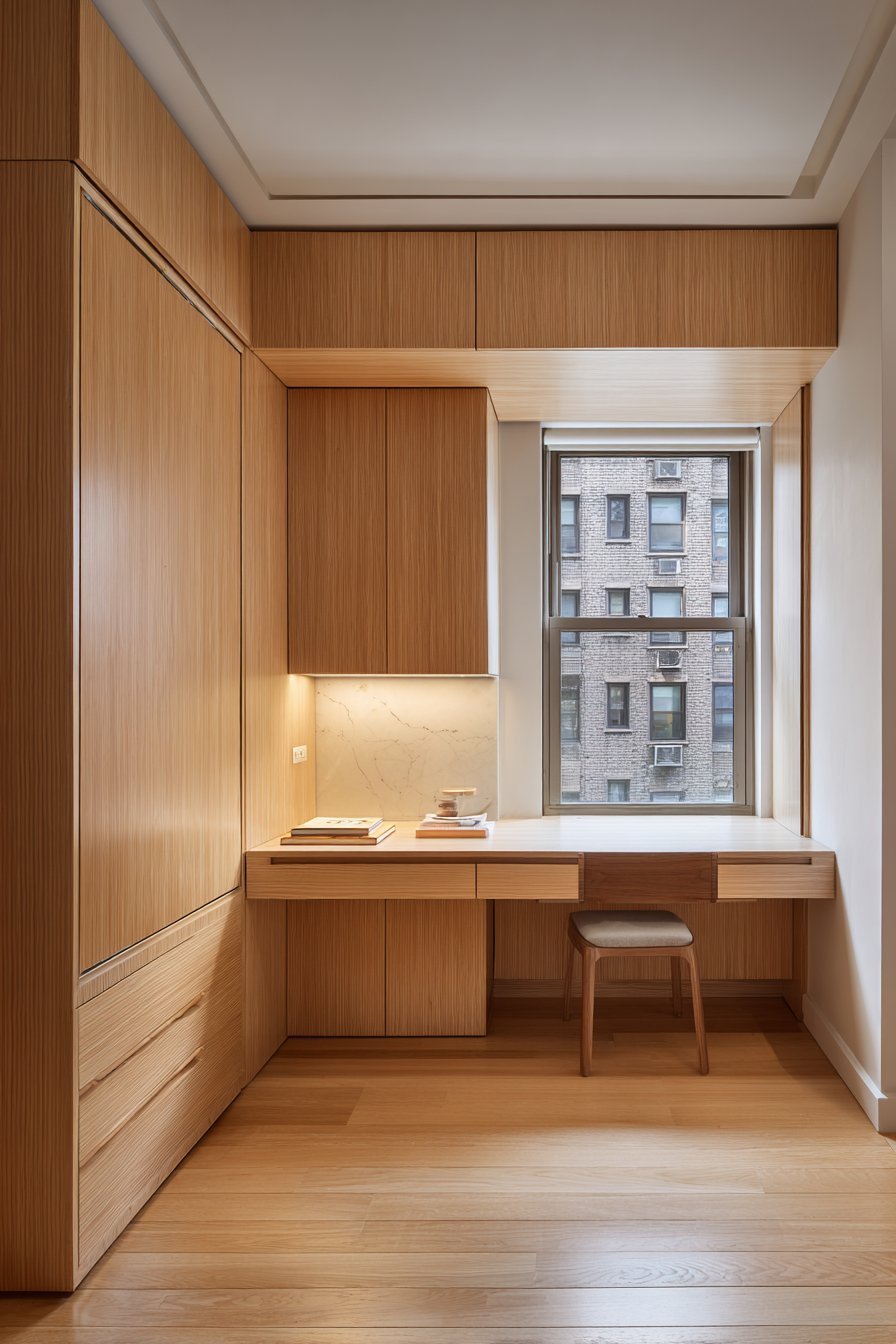
Soft natural lighting from a side window illuminates smooth wood surfaces. The continuous wood grain creates visual flow across the wall unit. The birch’s light color keeps the space feeling open and airy. Professional craftsmanship ensures smooth operation and longevity.
Key Design Tips:
- Invest in quality Murphy bed mechanisms for daily use reliability
- Match the surrounding cabinetry to bed unit for seamless integration
- Include workspace in wall units for multi-functional spaces
- Choose light wood finishes to maintain airiness in compact rooms
- Use recessed pulls to preserve clean surface lines
- Plan storage around the bed’s footprint when deployed
7. Monochromatic Grey Sophistication
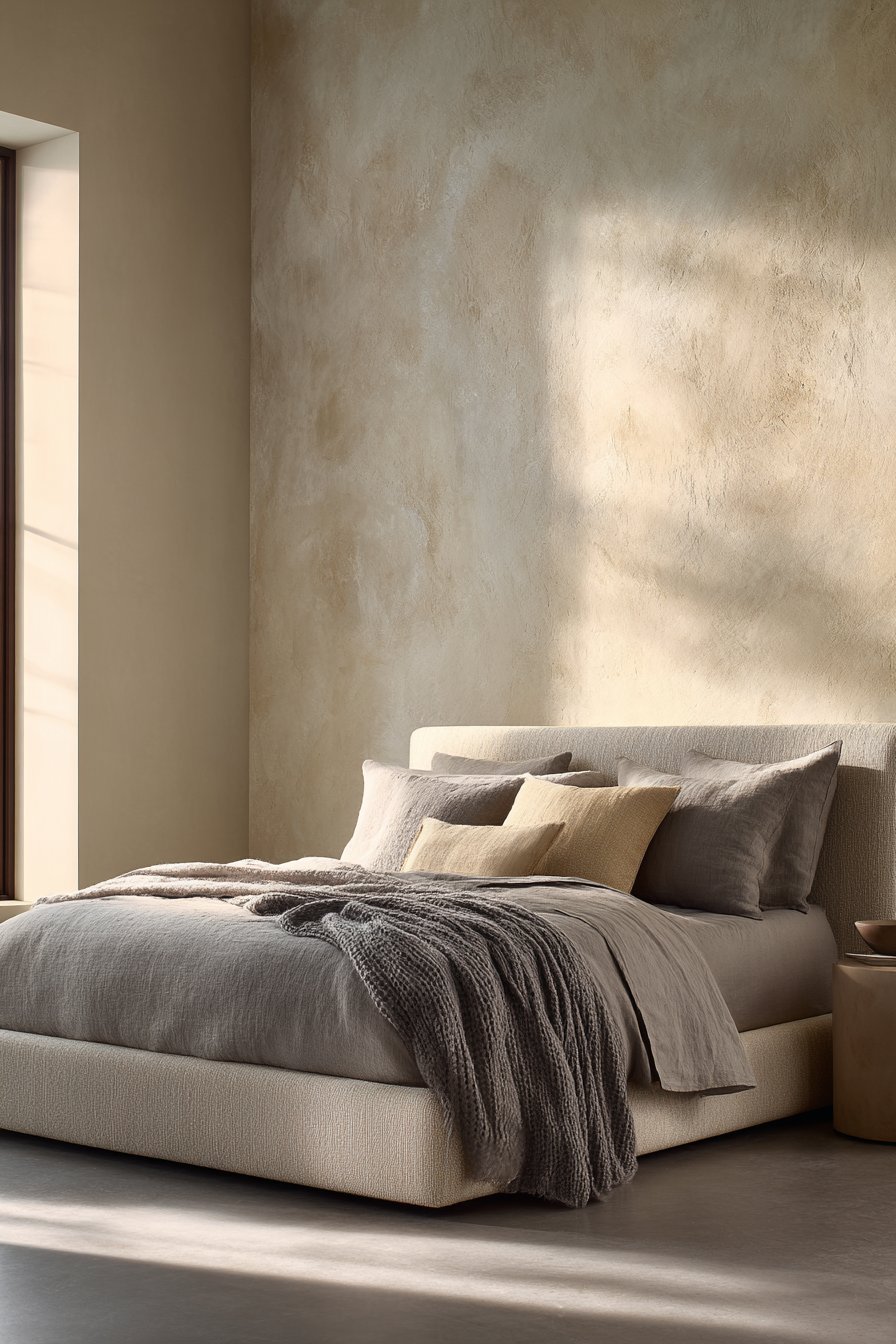
This bedroom showcases monochromatic design in varying grey shades. The upholstered bed frame features smooth grey linen fabric. Simple horizontal channeling adds subtle architectural detail. Bedding layers include different grey tones from charcoal to pearl.
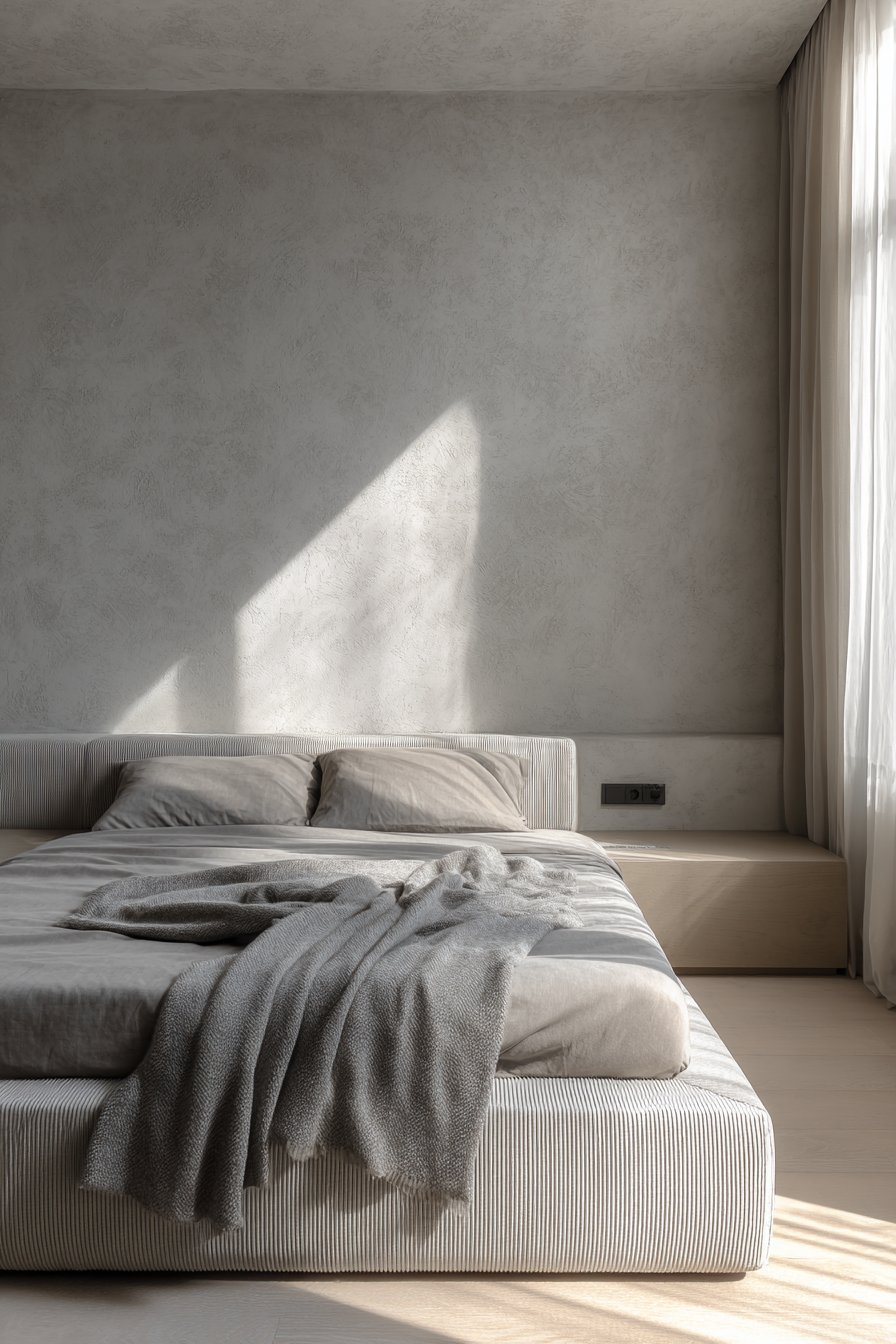
All textiles use natural fabrics with subtle texture variations. The texture differences create depth within the single-color palette. A single grey wool throw drapes across the bed’s foot. The throw introduces another texture while maintaining color discipline.
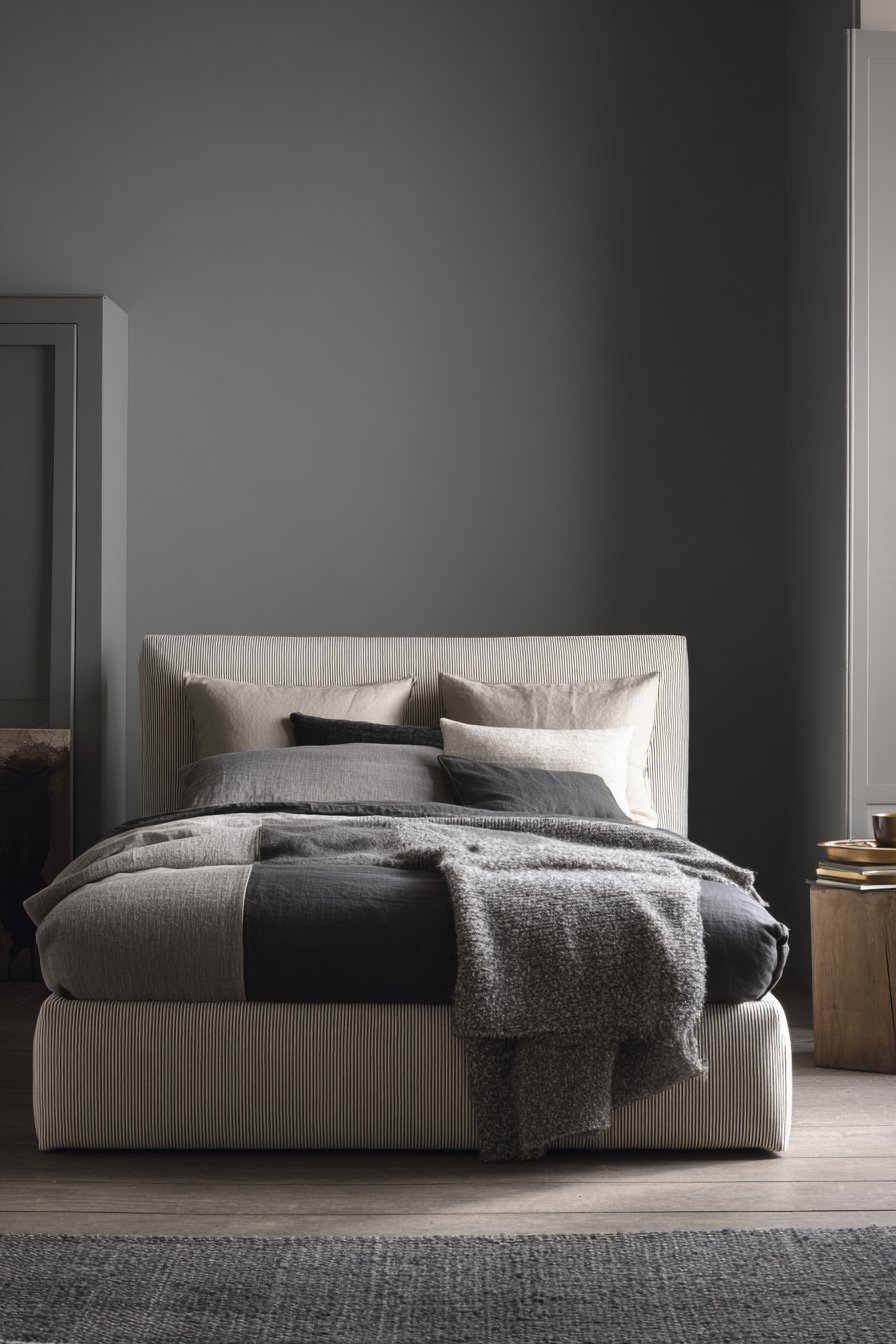
The walls receive paint in a complementary grey with barely perceptible warmth. This prevents the space from feeling cold or institutional. Morning light through sheer curtains reveals nuanced tonal variations. The grey spectrum creates surprising depth and interest.
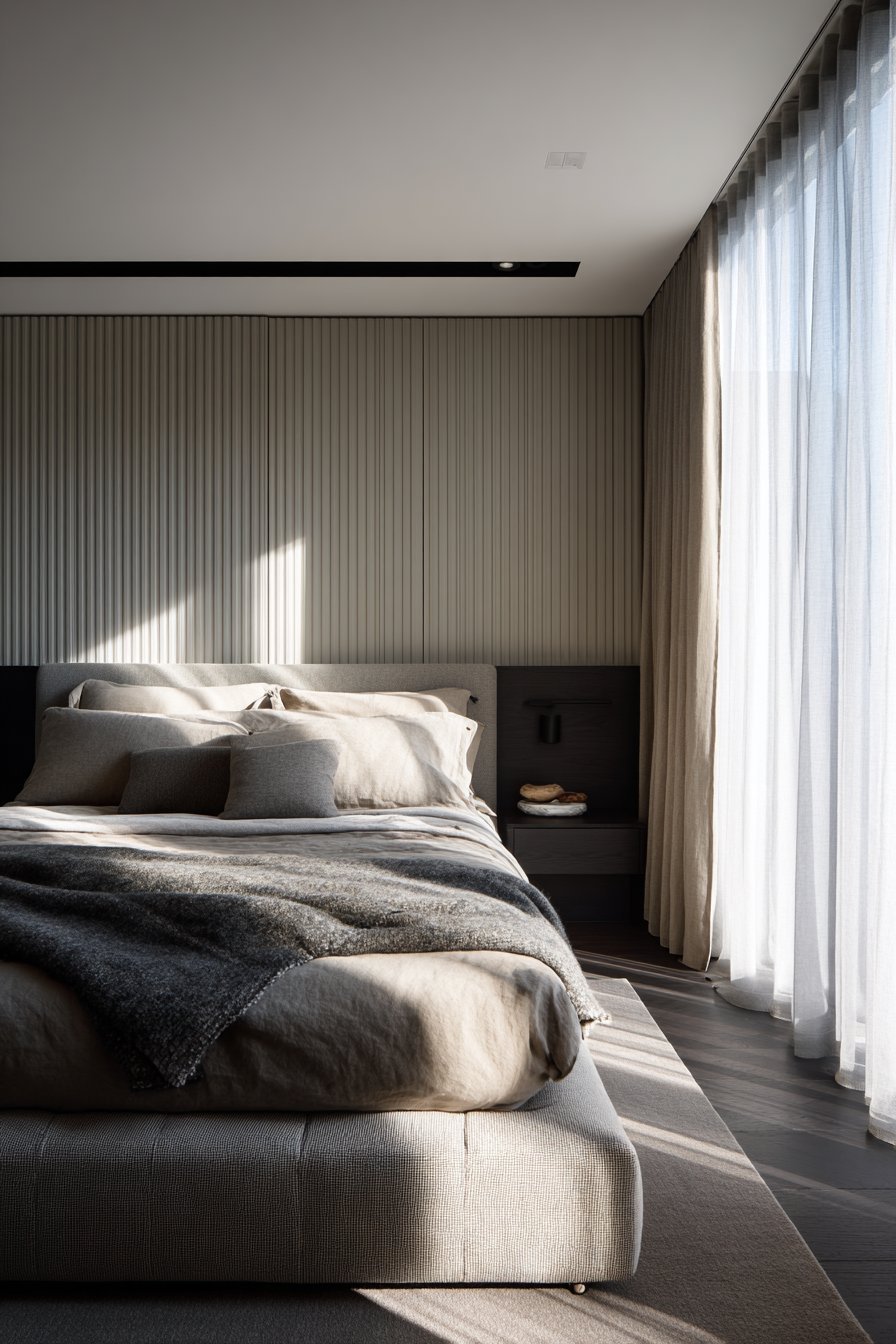
The sophisticated palette demonstrates how monochromatic schemes avoid boredom. Multiple shades of one color create visual layers. Different textures catch light uniquely throughout the day. The result feels cohesive yet dynamic within strict color limitations.
Key Design Tips:
- Layer 4-5 different grey tones for monochromatic depth
- Vary textures extensively to compensate for limited color
- Choose warm-based greys to avoid cold, sterile feelings
- Include both matte and slight sheen finishes for variation
- Use natural light to reveal subtle tonal differences
- Add one darker anchor tone for visual grounding
8. Corner Reading Retreat
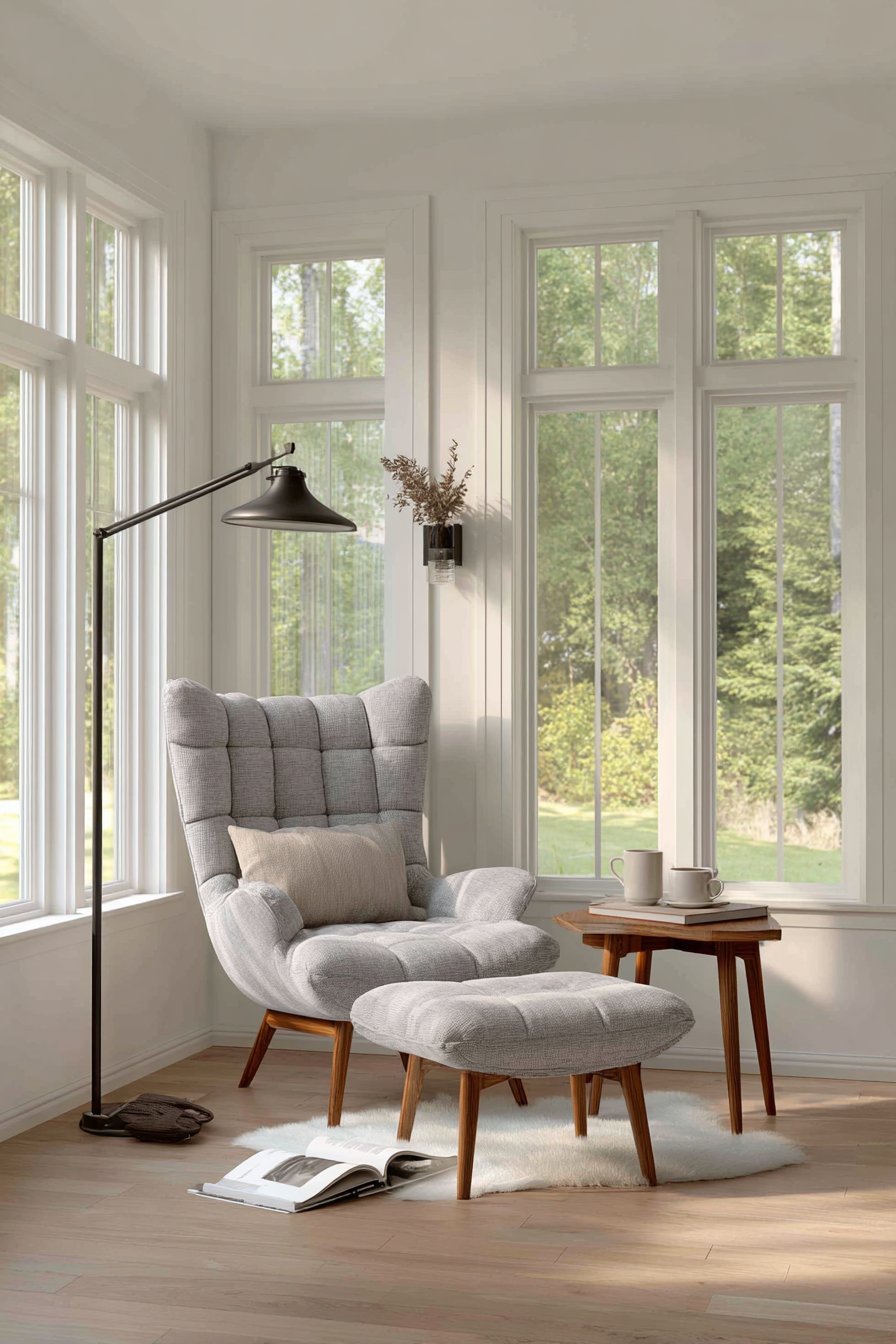
A reading nook occupies a corner near a large window. A single sculptural lounge chair in pale grey fabric provides comfortable seating. Wooden legs in natural oak finish connect to the room’s flooring. The chair’s form becomes a sculpture when not in use.
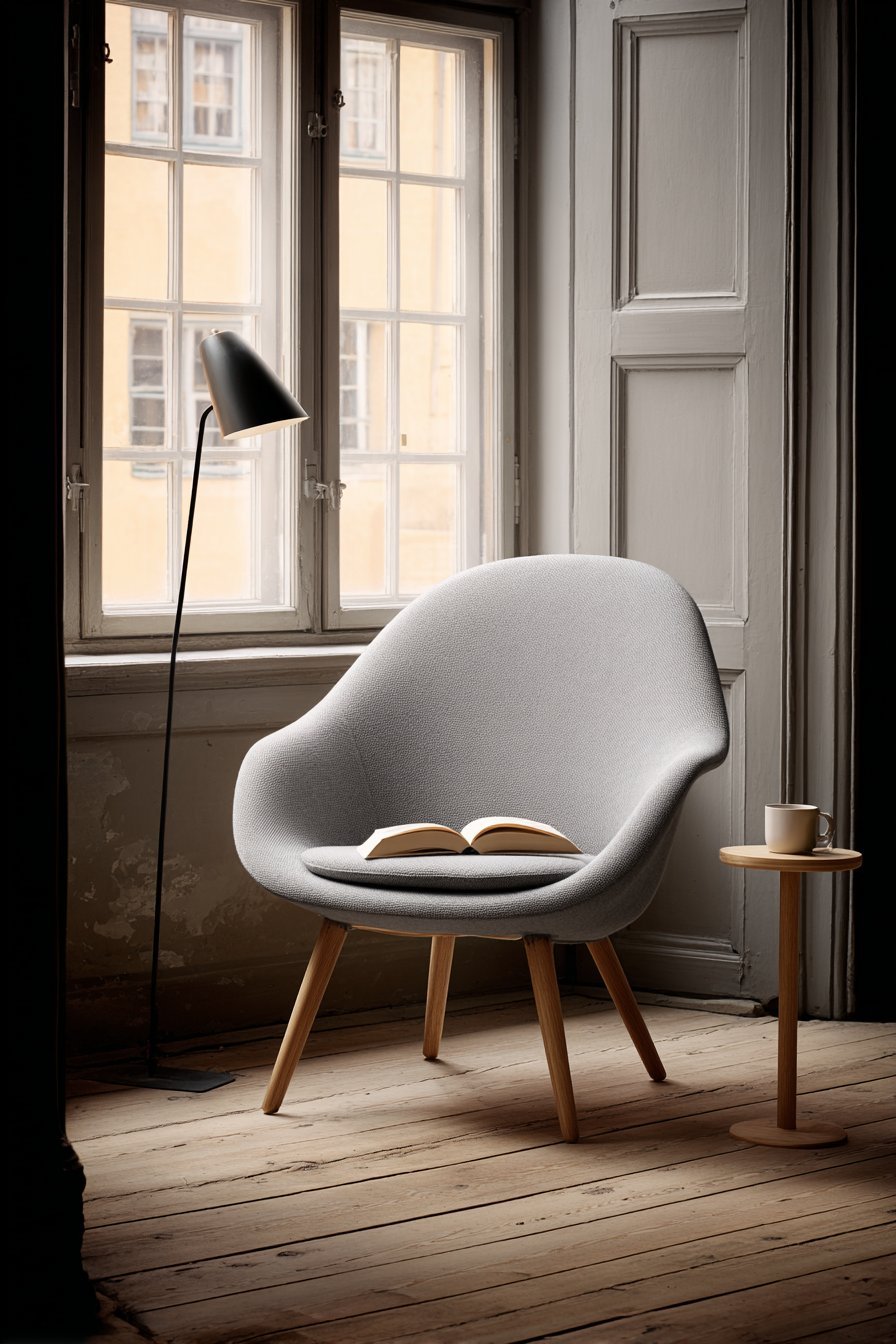
A slender floor lamp with an adjustable arm provides focused reading light. The matte black finish creates purposeful contrast against light surfaces. A small side table in matching oak holds reading essentials. The table’s simple form echoes minimalist design principles.
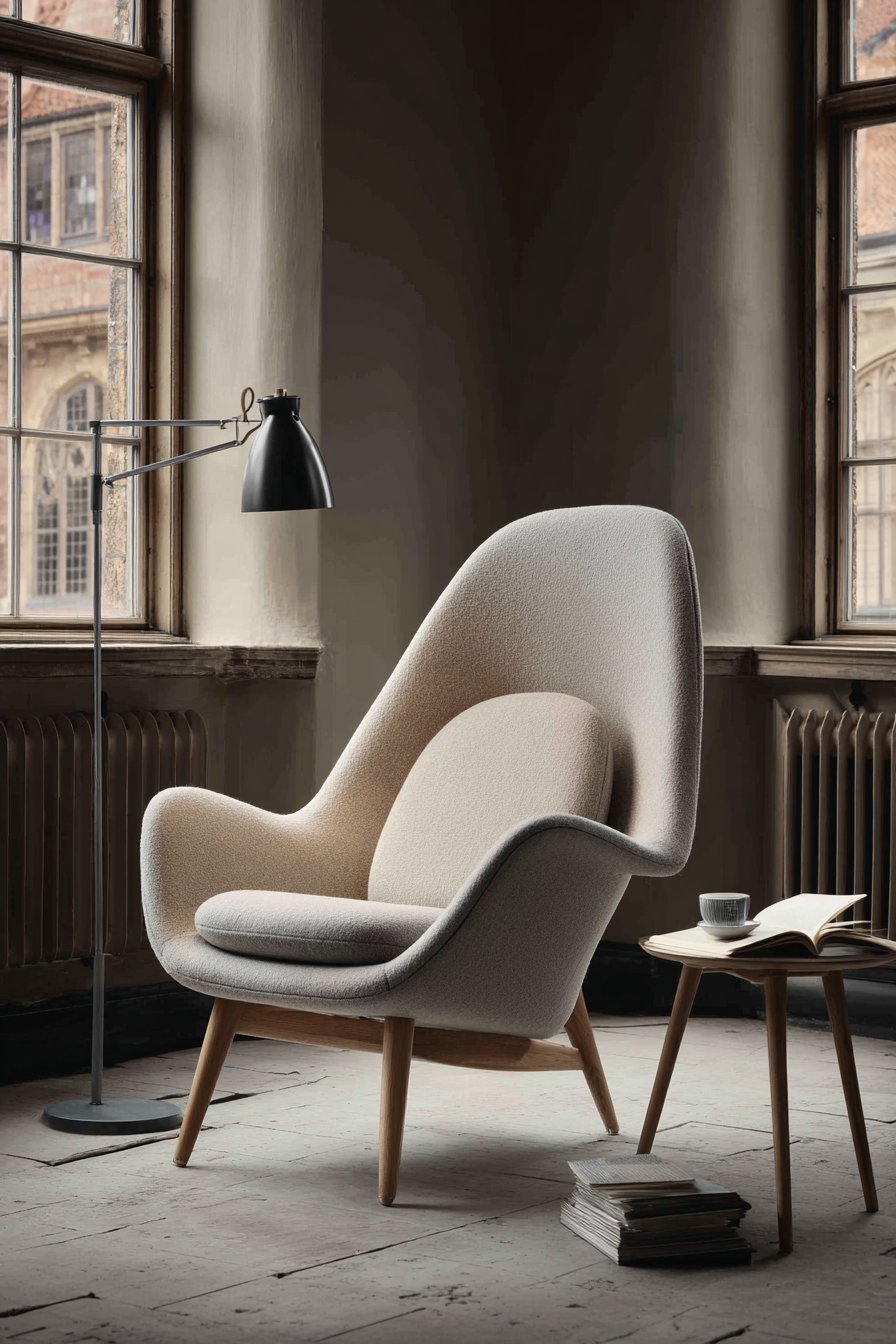
The corner maintains generous breathing room around each element. Furniture placement allows easy circulation and visual flow. Natural afternoon light floods the space through unadorned windows. The window view becomes part of the reading experience.
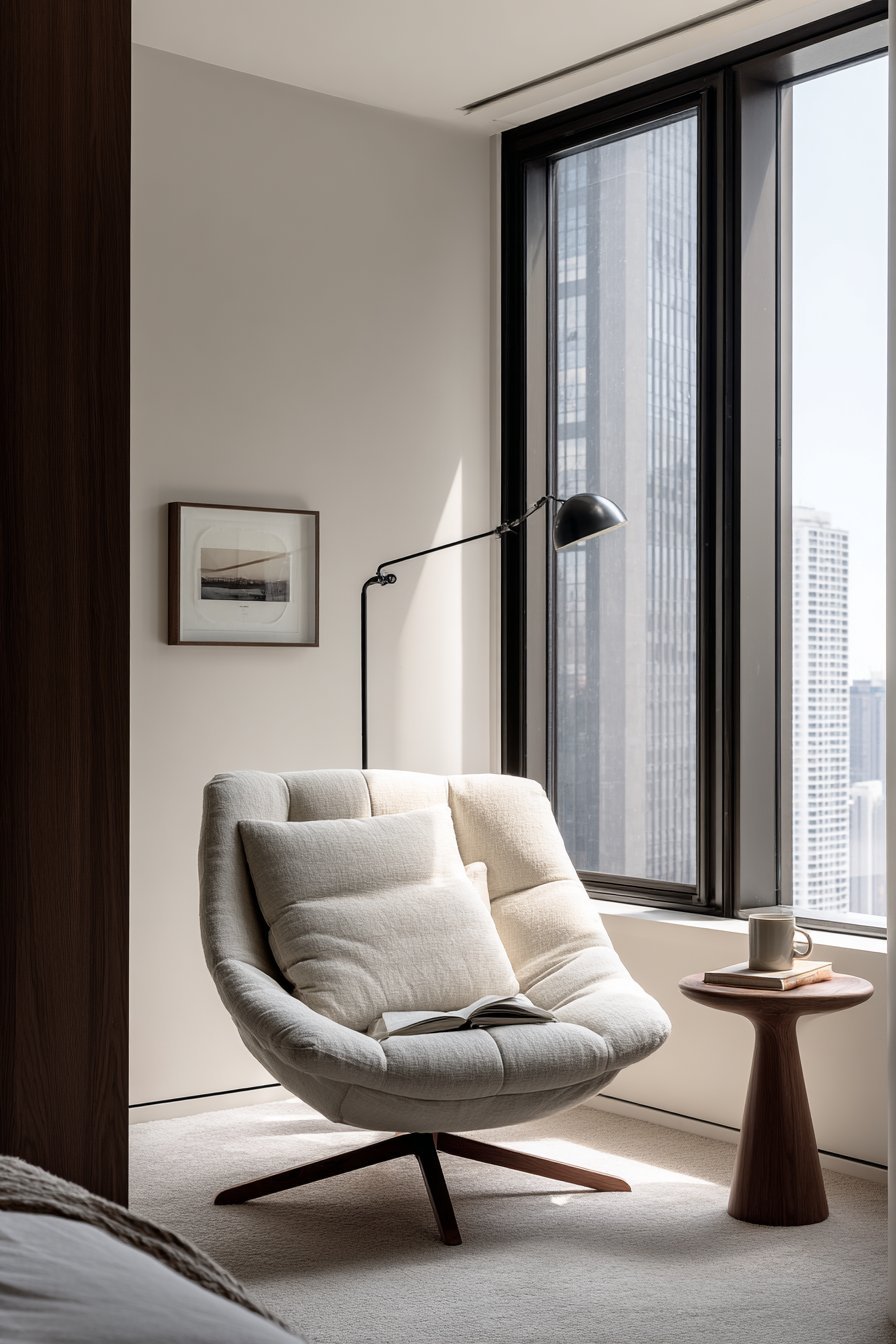
This dedicated zone demonstrates how minimalism creates functional areas. Each piece serves a specific purpose without excess. The careful placement and spacing prevent the corner from feeling cramped. The result is an inviting spot for quiet contemplation.
Key Design Tips:
- Position reading chairs near windows for natural light
- Choose sculptural chairs that look beautiful when empty
- Select adjustable floor lamps for flexible light direction
- Keep side tables small to maintain open floor space
- Allow 30 inches minimum around furniture for circulation
- Use corner spaces efficiently without overcrowding them
9. Industrial Concrete and Oak Contrast
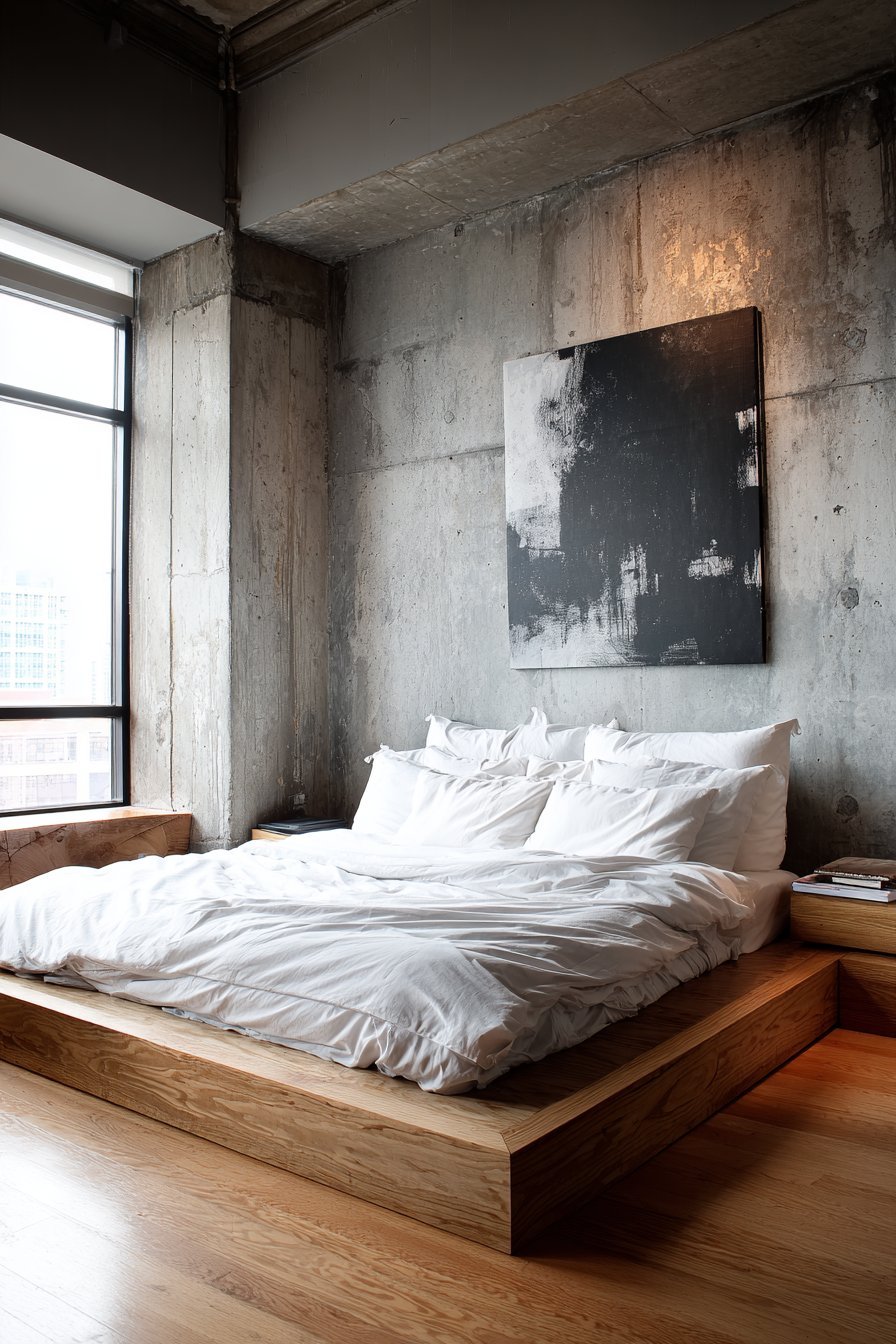
Exposed concrete walls with smooth trowel finish create industrial beauty. Natural color variations in the concrete add organic interest. Warm oak flooring balances the concrete’s coolness. The material contrast creates dynamic visual tension.
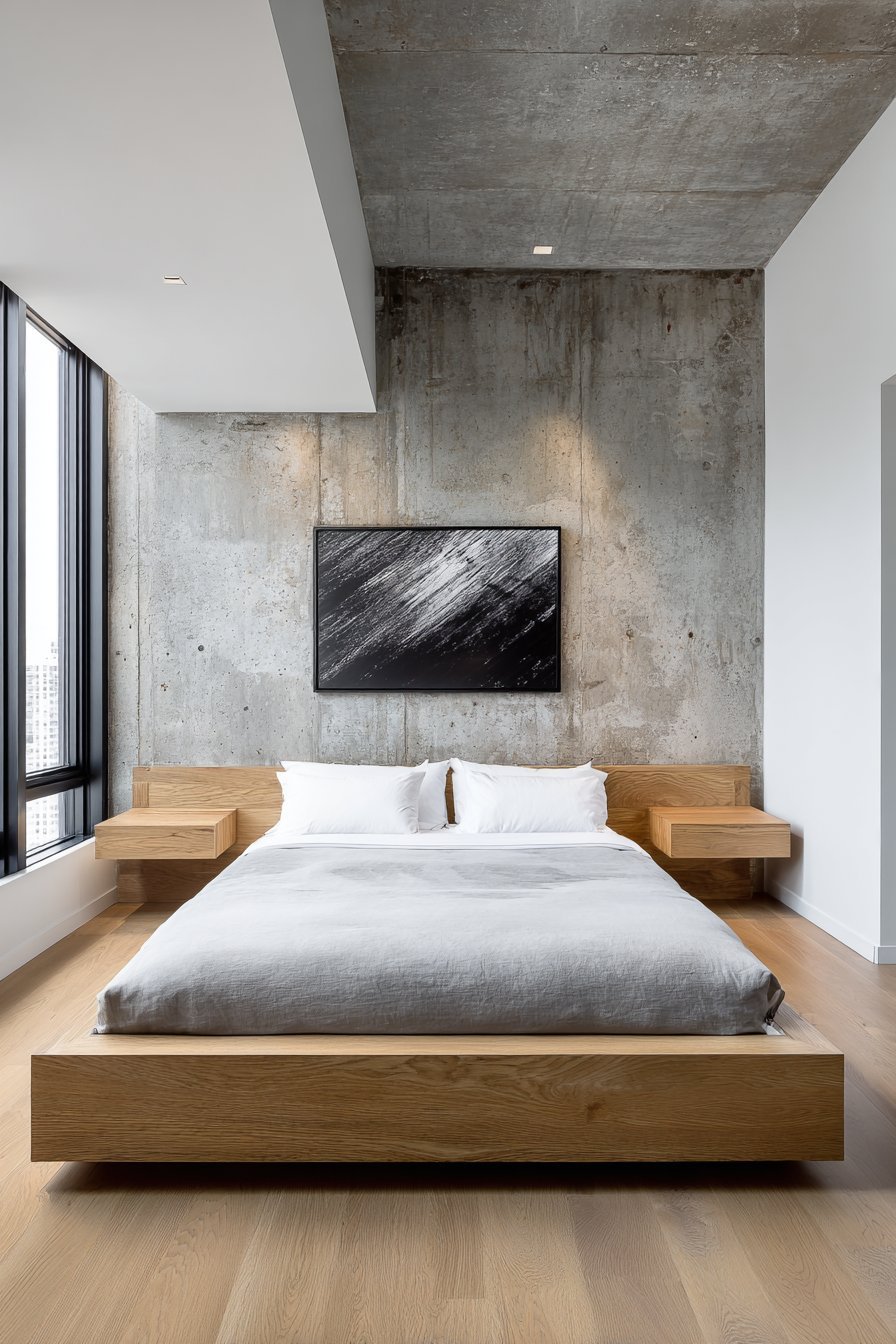
A simple platform bed with integrated side tables appears to float. The oak construction matches the flooring for continuity. White bedding provides crisp contrast against raw concrete. The clean linens soften the industrial materials.
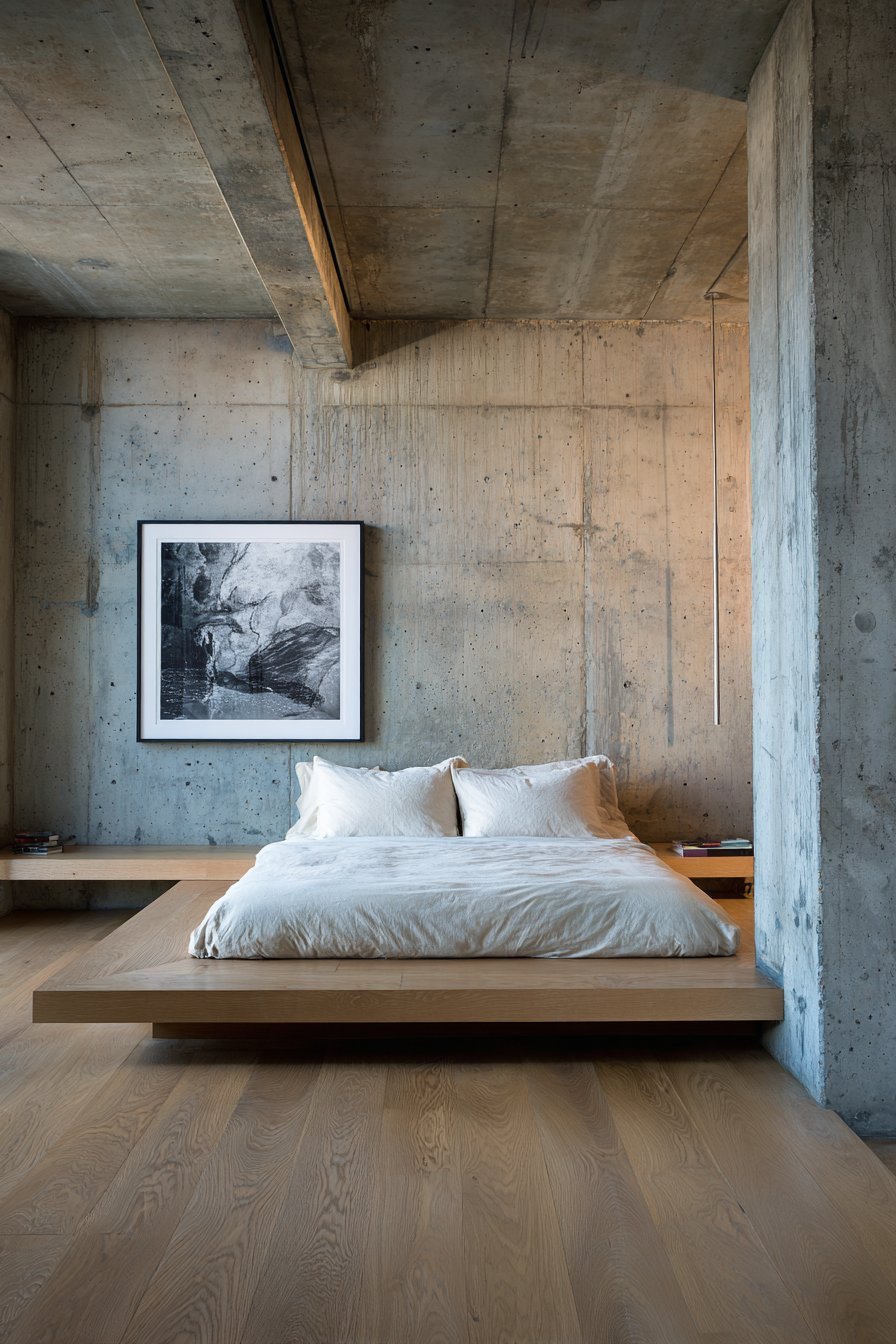
A single large-scale black and white photograph hangs above the bed. The slim black frame complements the minimal aesthetic. The photograph’s graphic quality suits the architectural space. Natural light from clerestory windows washes down the concrete surface.
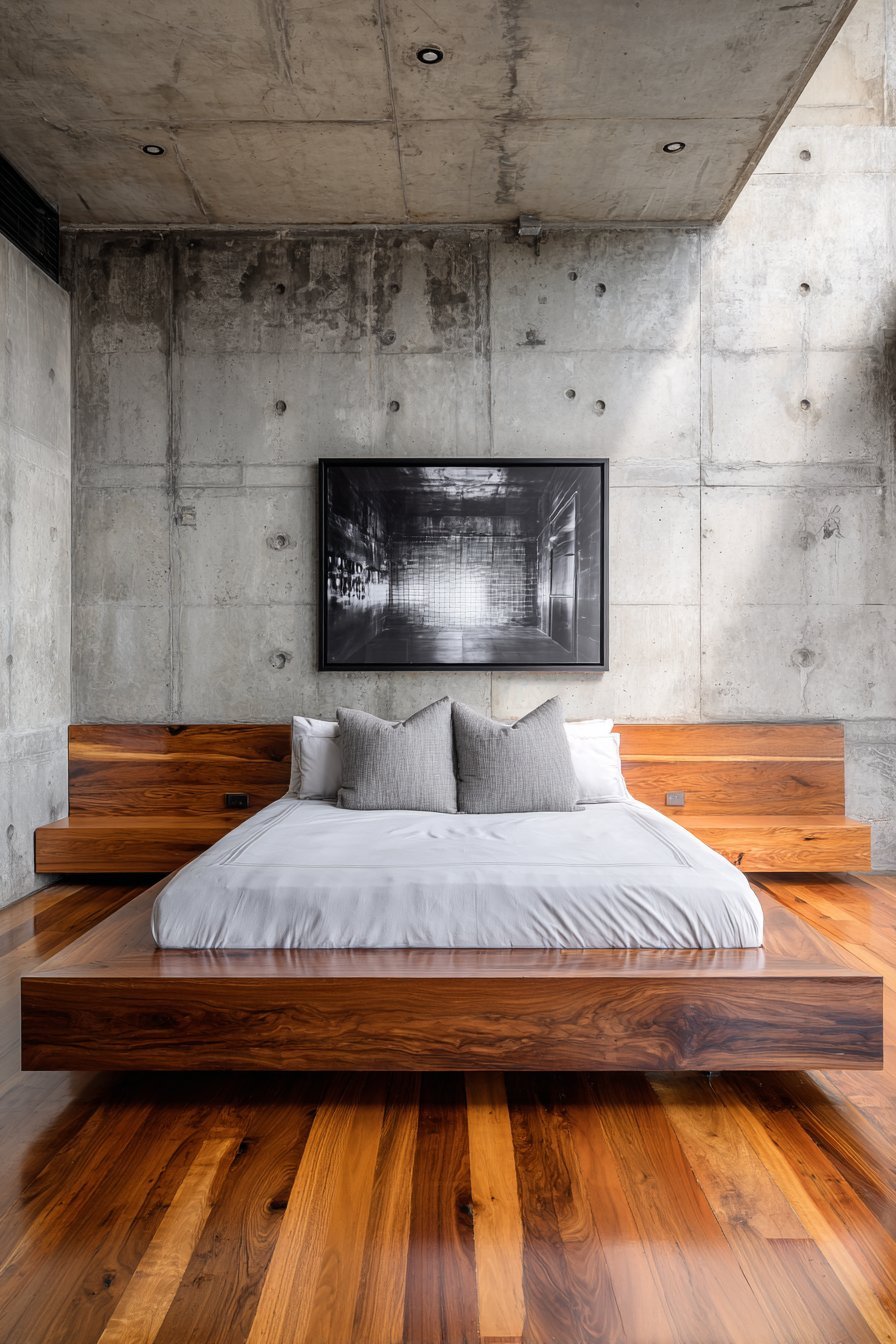
The high windows reveal the concrete’s texture through changing shadows. The material’s subtle variations become artwork themselves. This combination proves that industrial materials create warm, inviting spaces. The key lies in balancing hard and soft elements thoughtfully.
Key Design Tips:
- Pair concrete with warm wood to balance cool and warm tones
- Use white bedding to soften the harshness
- Install clerestory windows to highlight textured walls
- Choose large-scale art to match architectural boldness
- Apply clear sealant to concrete for easier maintenance
- Leave concrete natural to celebrate authentic material character
10. Japanese-Inspired Low Platform
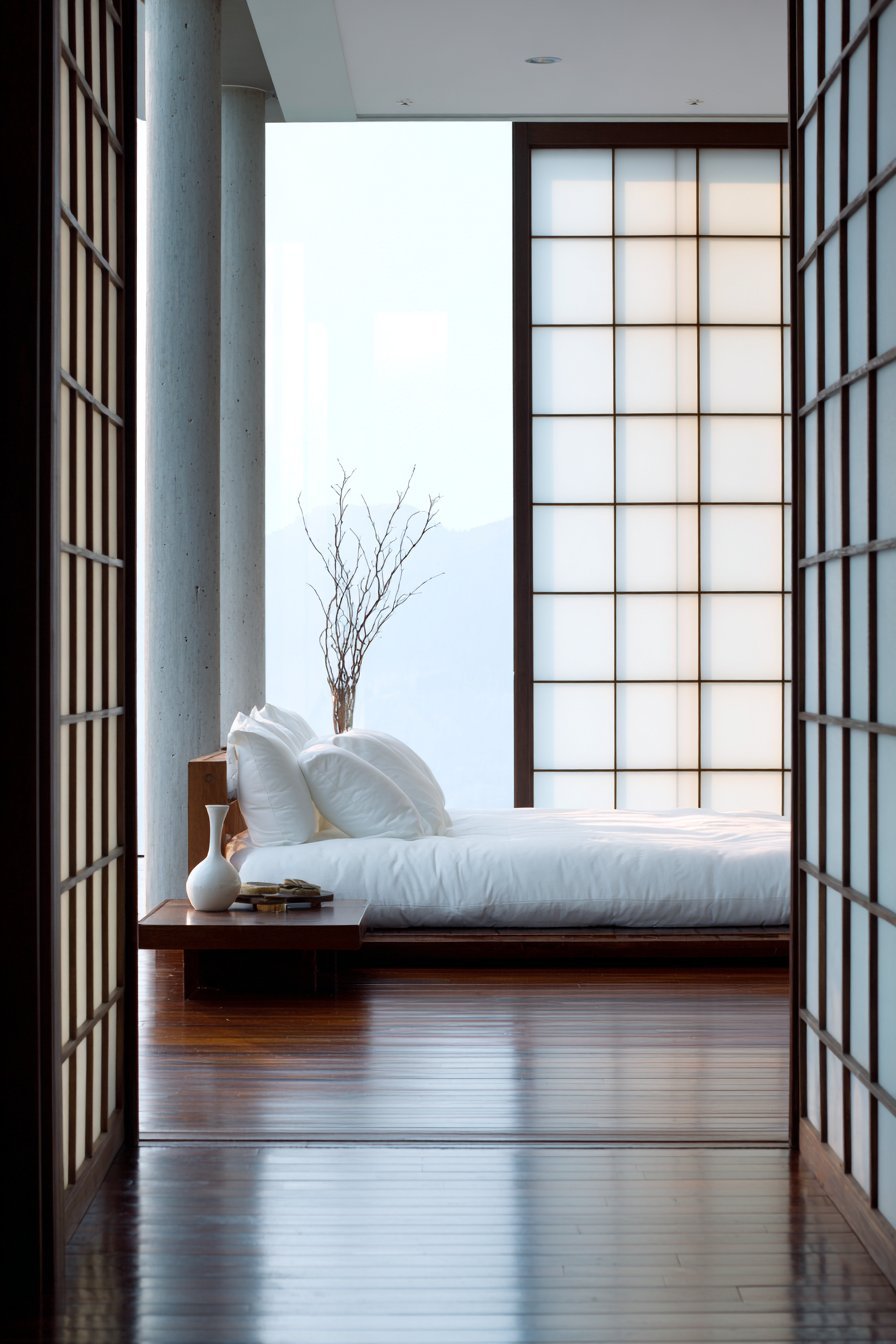
This bedroom embraces Japanese-inspired floor-level living. A low tatami platform bed features clean-lined wooden frame. Dark walnut provides rich color contrast against white walls. A simple futon mattress with crisp white cotton cover sits atop.
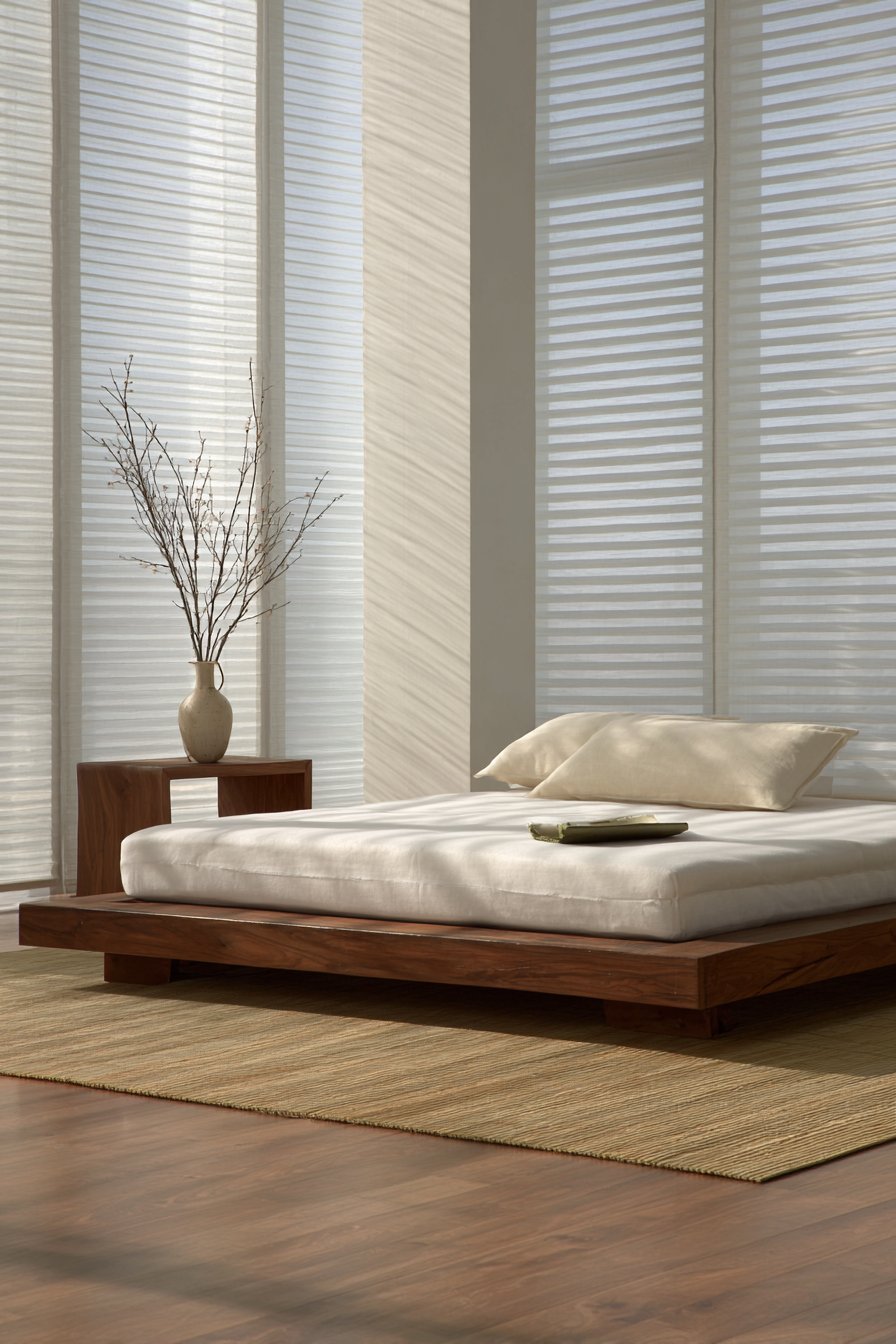
Traditional tatami mats define the sleeping area. The natural rush provides subtle texture and organic scent. One side table in matching walnut holds minimal essentials. A small ceramic vase with a single branch provides natural decoration.
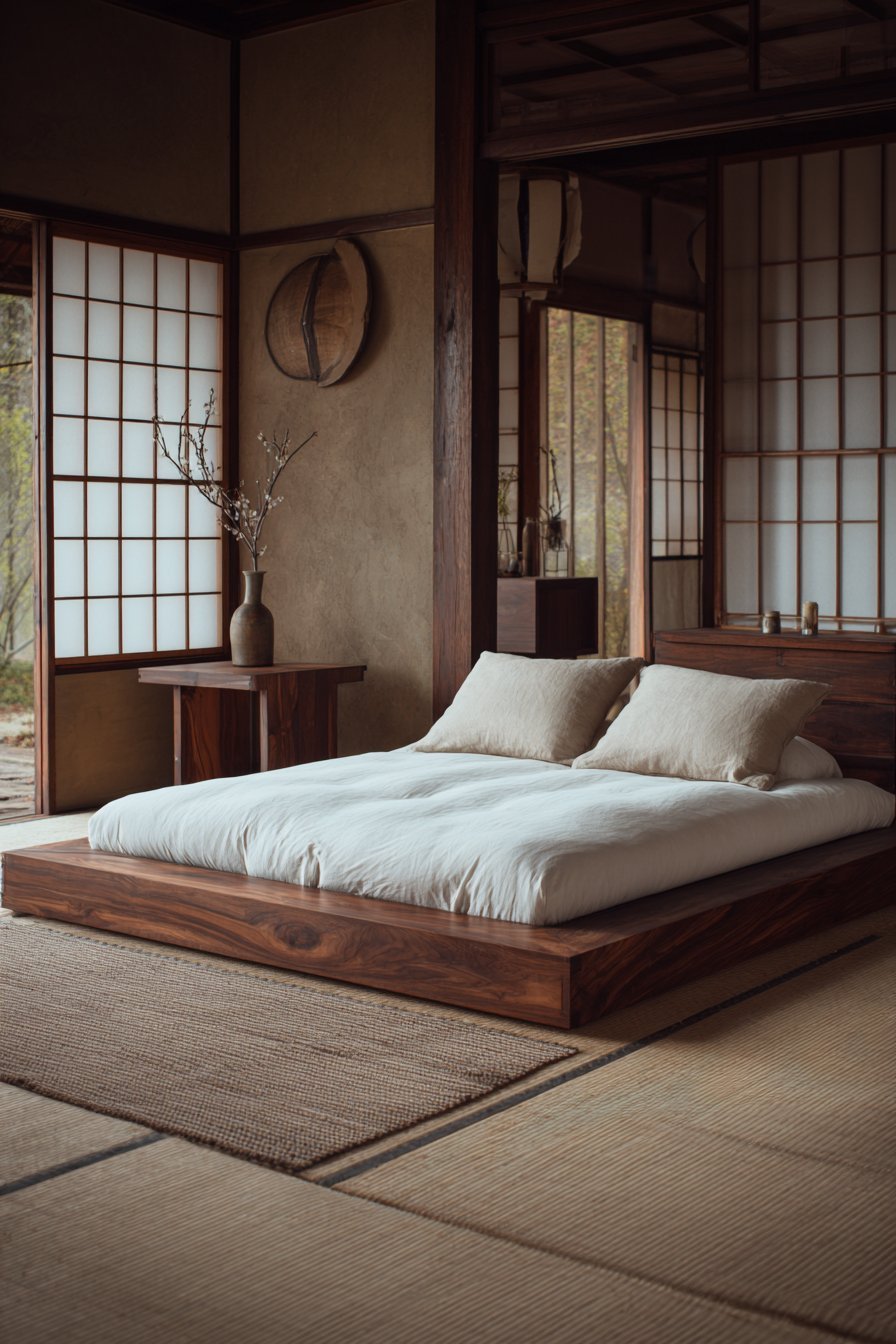
Sliding shoji-inspired panels in translucent white fabric diffuse natural light. The panels create soft, even illumination throughout the space. The room maintains perfect symmetry and balance. This Eastern aesthetic influence creates meditative atmosphere.
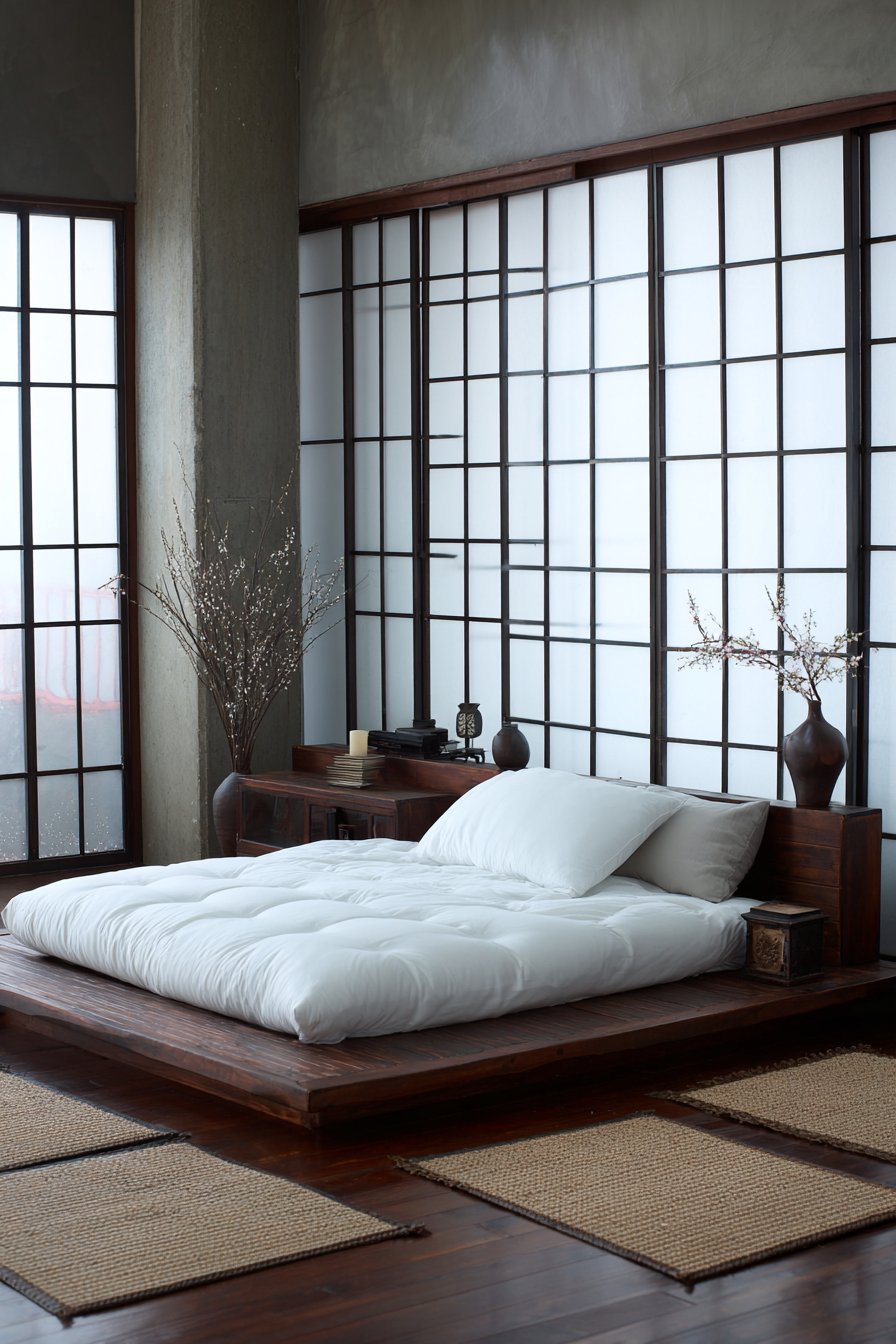
The low sightlines change the room’s proportions dramatically. Sitting and sleeping at floor level alters spatial perception. This traditional approach to bedroom design promotes grounding and calm. The intentional simplicity supports restful sleep and peaceful waking.
Key Design Tips:
- Lower bed height to create an expansive ceiling perspective
- Use tatami mats for authentic texture and natural fragrance
- Maintain strict symmetry for Japanese aesthetic authenticity
- Choose dark walnut for dramatic contrast against light walls
- Install sliding panels for soft light diffusion
- Limit decorative elements to single natural specimens
11. Open Wardrobe Organization
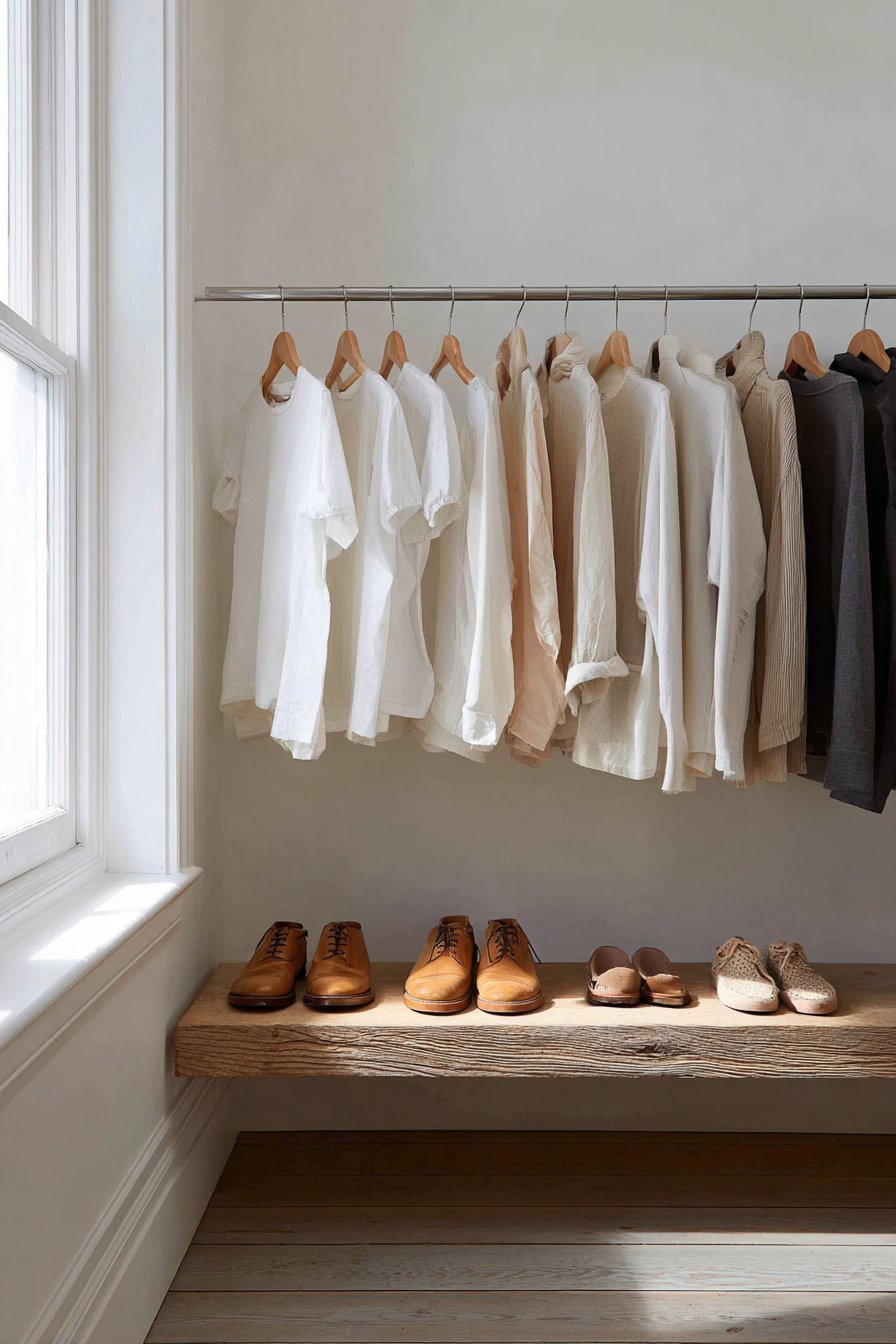
The closet system features open wardrobe organization. A simple clothing rod in brushed stainless steel mounts on white walls. Garments receive careful curation and even spacing. Matching wooden hangers organize clothes by color progression.

Below the hanging clothes, shoes sit on a low wooden shelf. The visible grain texture adds warmth to the organizational system. The open system eliminates doors entirely. Organization becomes the aesthetic through disciplined curation.

Natural light from the main room illuminates the orderly display. The visible wardrobe requires strict editing of possessions. Only loved and worn pieces earn their place. The breathing room between items prevents visual clutter.

This approach demonstrates minimalist storage through thoughtful reduction. Every garment remains visible and accessible. The color organization creates a rainbow effect. The system encourages mindful consumption and regular editing.
Key Design Tips:
- Invest in matching hangers for visual cohesion
- Organize clothes by color for pleasing visual progression
- Leave 2-3 inches between hanging garments for breathing room
- Choose brushed stainless for durability and minimal maintenance
- Curate ruthlessly to maintain open wardrobe aesthetics
- Include shoe storage at visible eye level for accessibility
12. Monolithic Headboard Statement
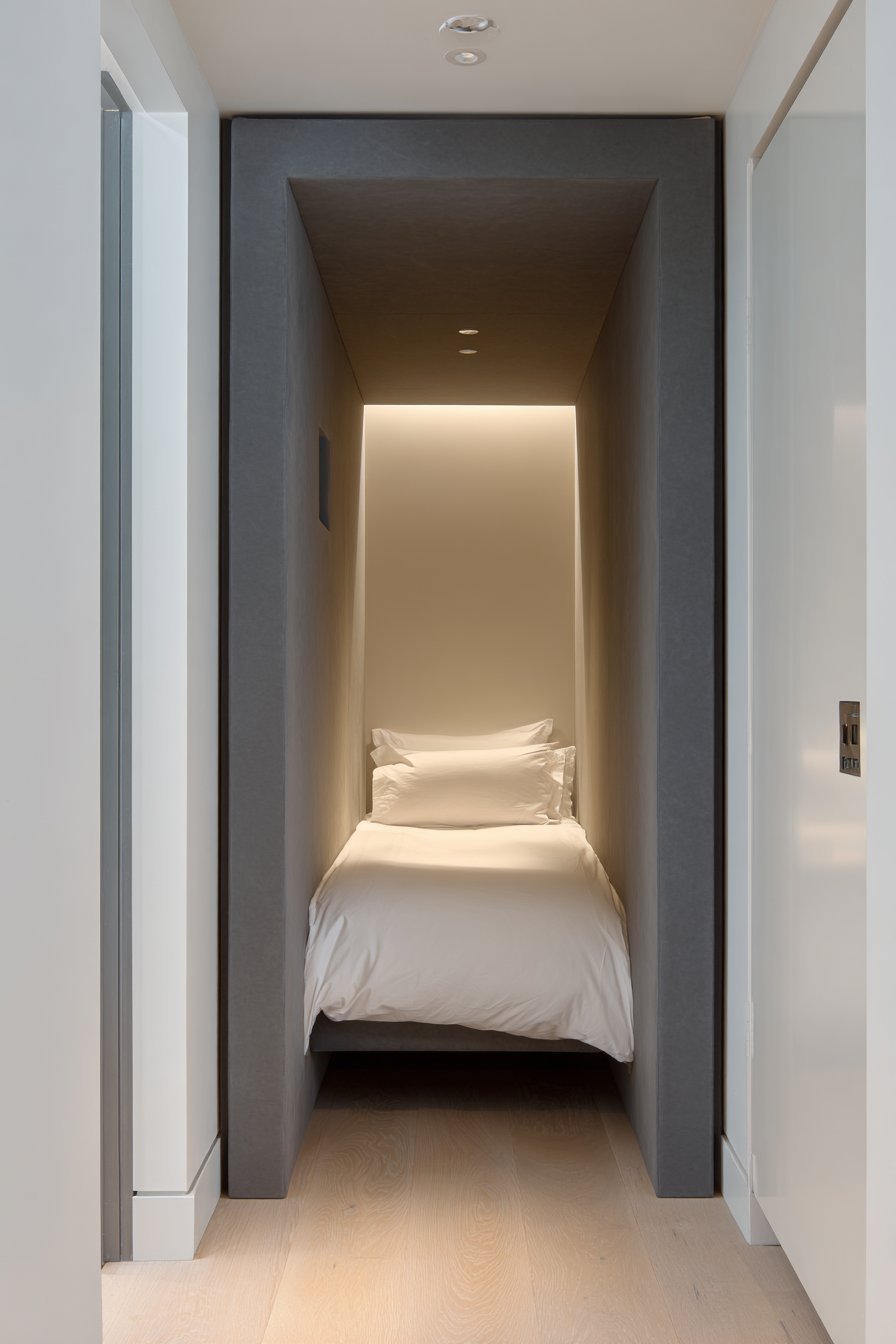
A striking floor-to-ceiling headboard creates architectural presence. Charcoal grey fabric extends from floor to ceiling. The monolithic element anchors the room through simple geometry. Perfect centering on the wall demonstrates intentional placement.
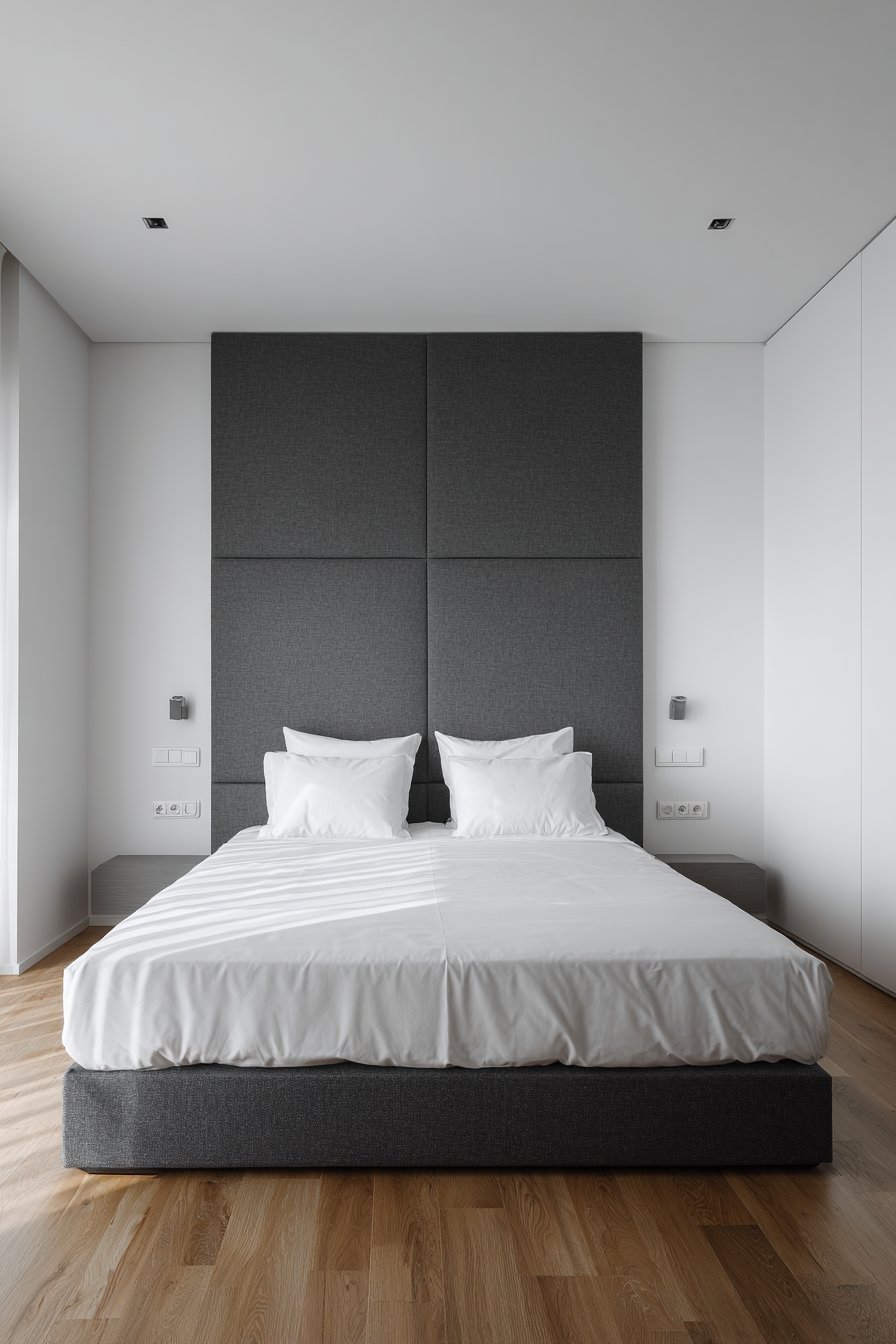
Integrated recessed reading lights hide within the headboard. The invisible fixtures maintain clean surface lines. White bedding in crisp cotton provides stark contrast. The dramatic color juxtaposition creates visual impact.
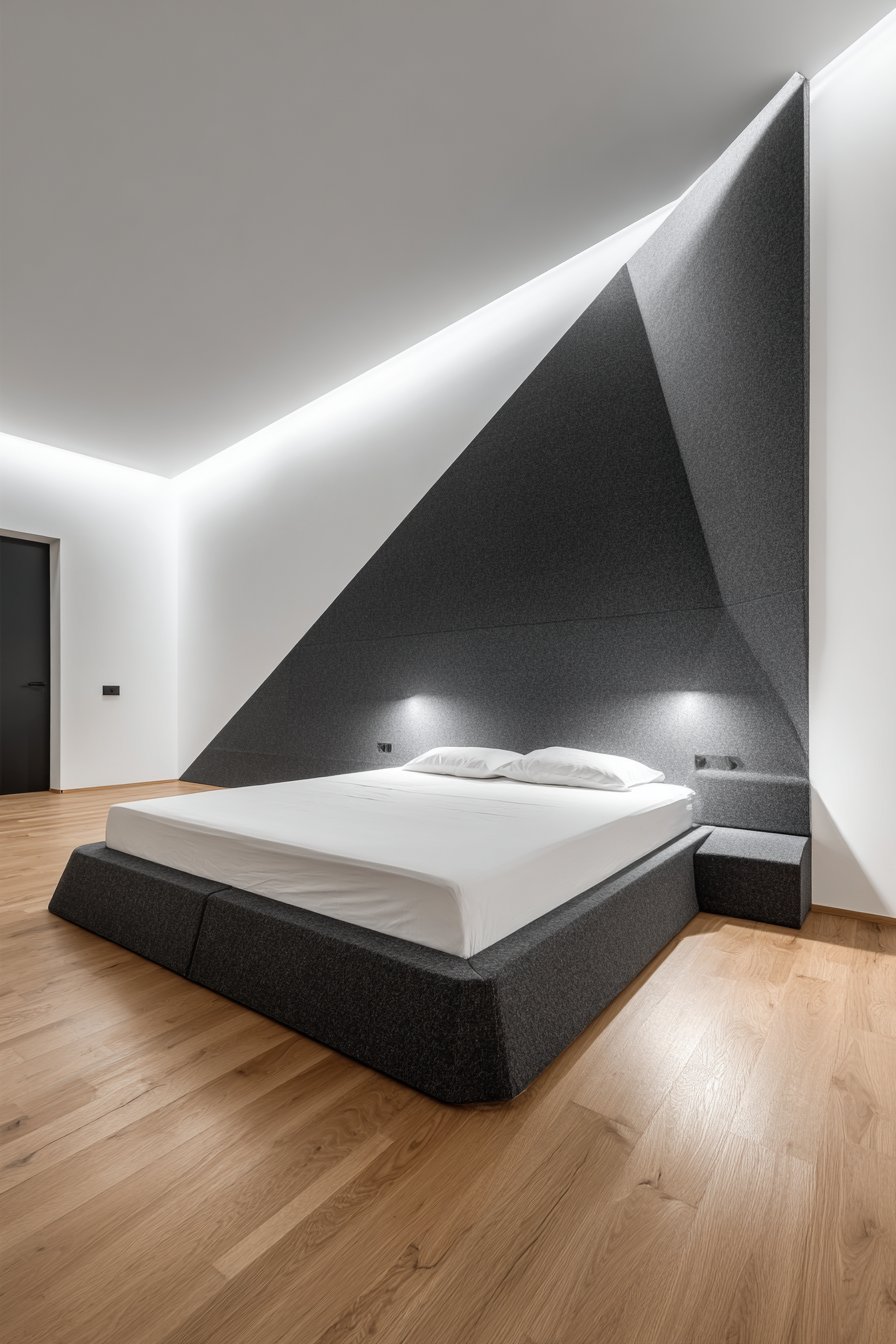
Surrounding walls feature pure white with matte finish. Light oak flooring grounds the vertical drama. Natural side lighting creates subtle shadows emphasizing geometric form. The headboard becomes the room’s singular focal point.
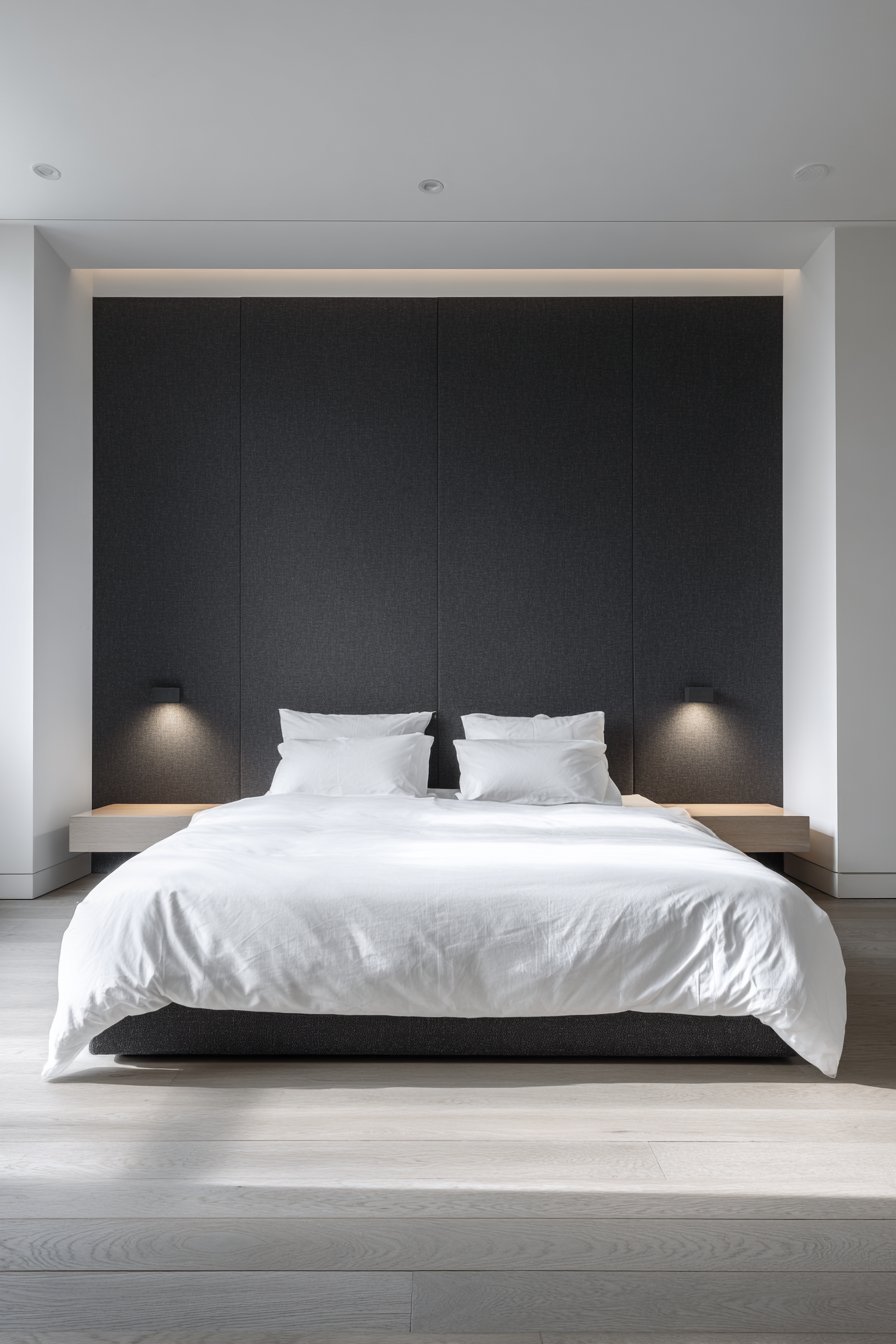
This bold approach proves minimalism can be dramatic. The single architectural gesture replaces multiple decorative elements. The height emphasizes ceiling verticality. The result feels both restful and architecturally significant.
Key Design Tips:
- Extend headboards to ceiling height for maximum impact
- Integrate lighting into headboards to eliminate bedside tables
- Choose dark headboards against white walls for contrast
- Center headboards precisely for balanced composition
- Use thick upholstery for acoustic softening benefits
- Select matte fabrics to avoid sheen distraction
13. Floating Desk Workspace Integration
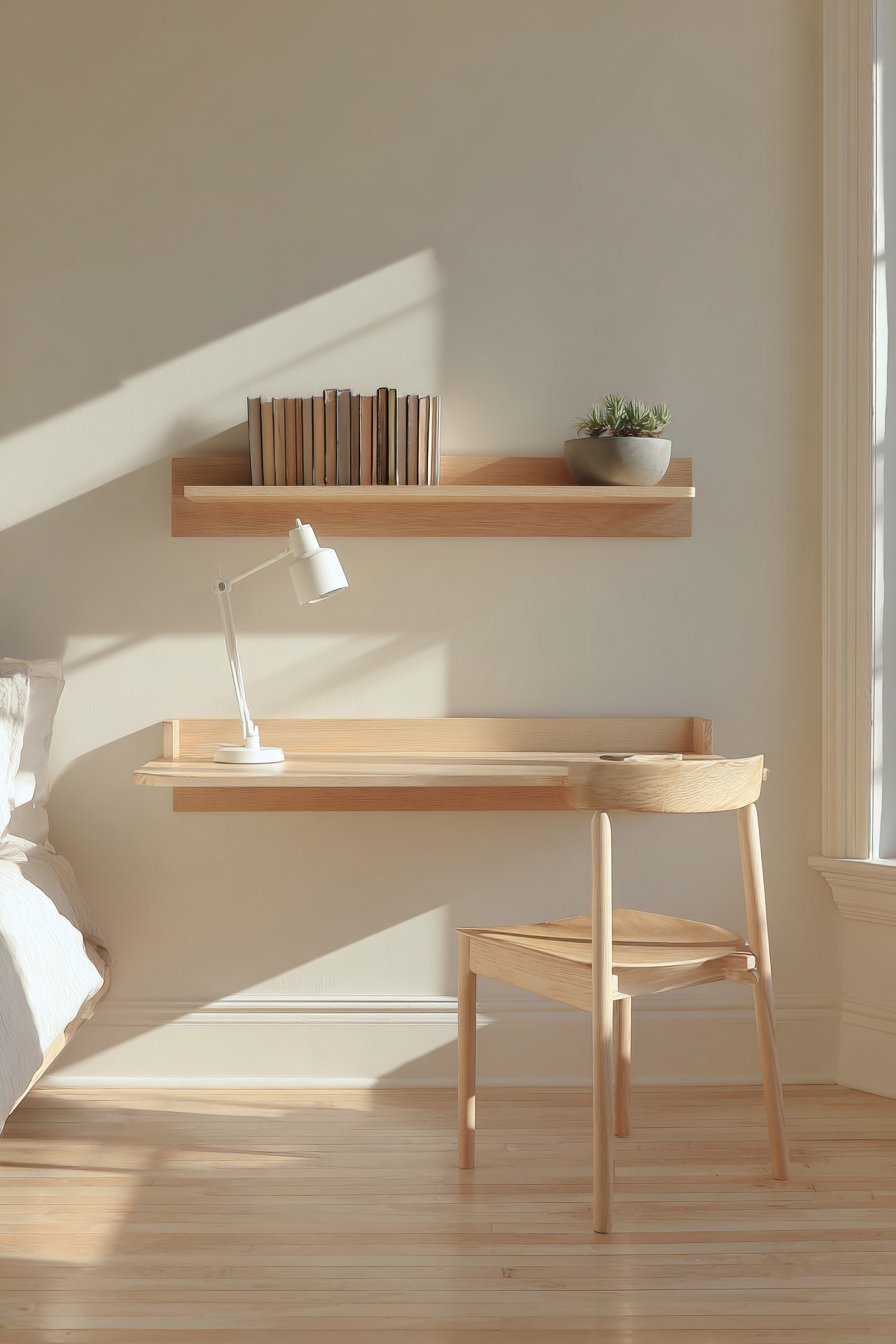
A wall-mounted floating desk in pale ash wood creates workspace. Invisible bracket mounting achieves seamless appearance. The desk surface remains mostly clear of objects. A simple adjustable arm lamp in matte white provides task lighting.
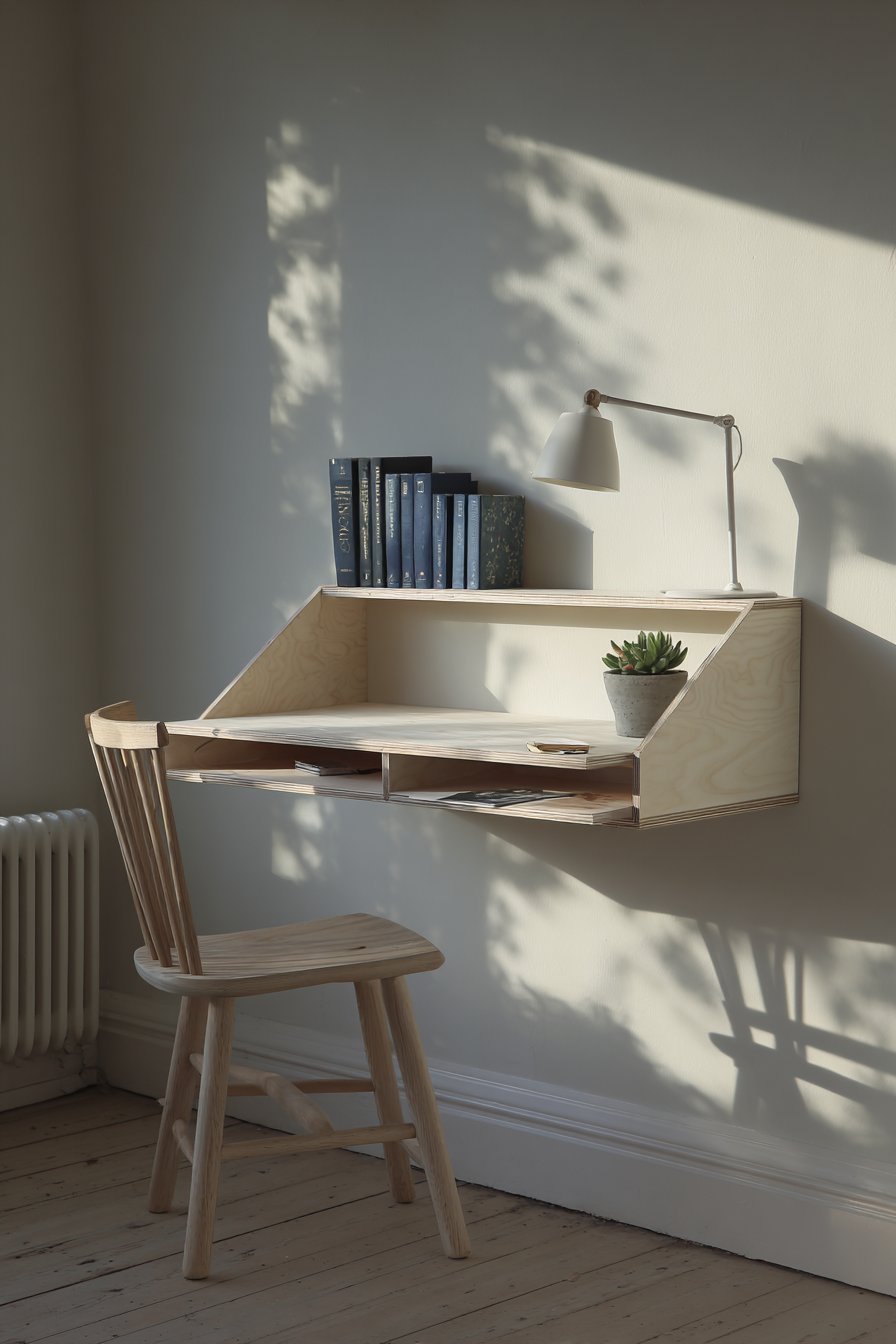
A small succulent in a concrete planter adds living element. One open shelf above displays three identical books arranged vertically. The vertical arrangement creates visual interest through repetition. A classic wooden chair with simple lines provides seating.
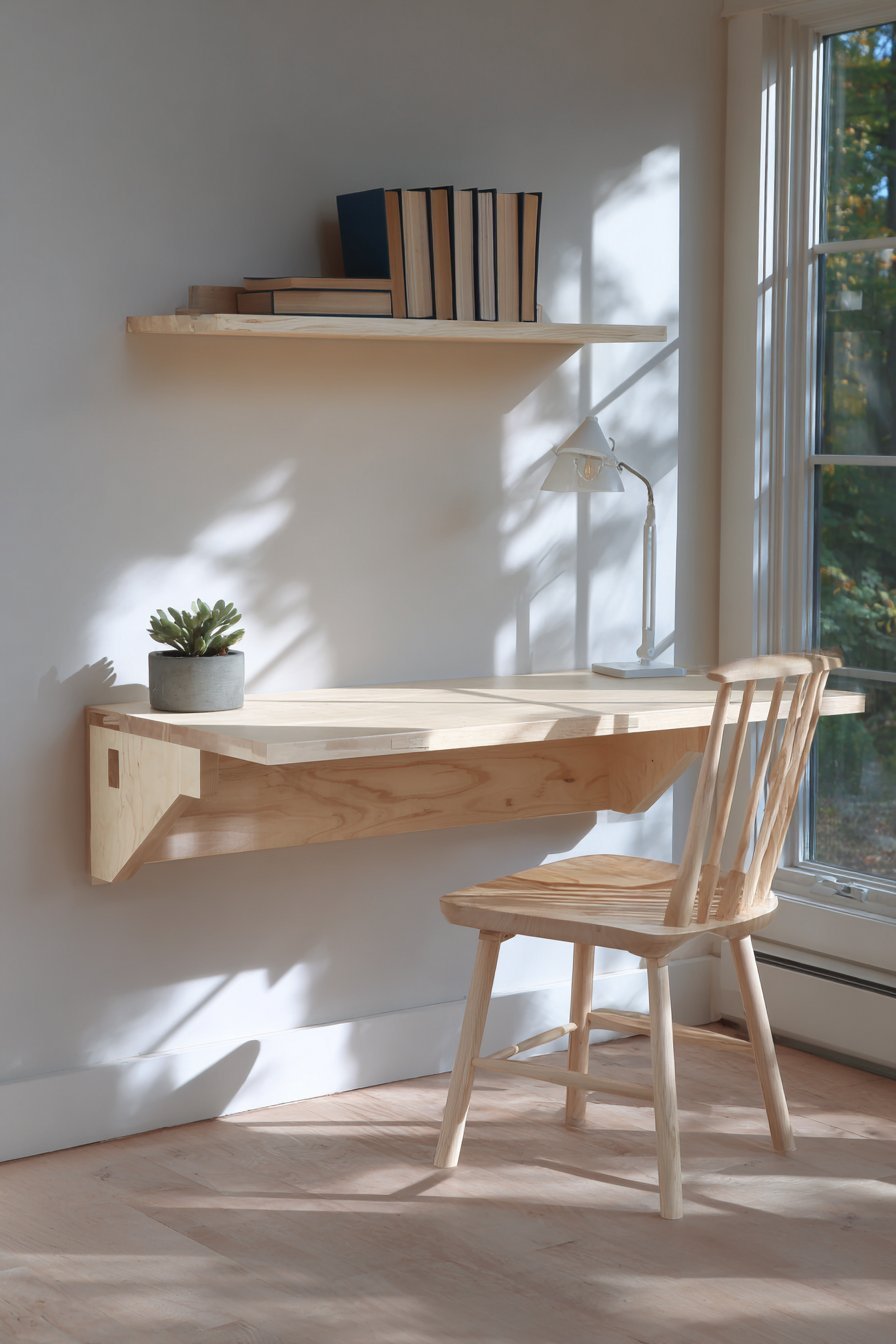
Natural light from a nearby window illuminates the workspace. The desk appears to float without visible support. This creates visual lightness in the functional area. The wood grain catches changing daylight throughout the day.
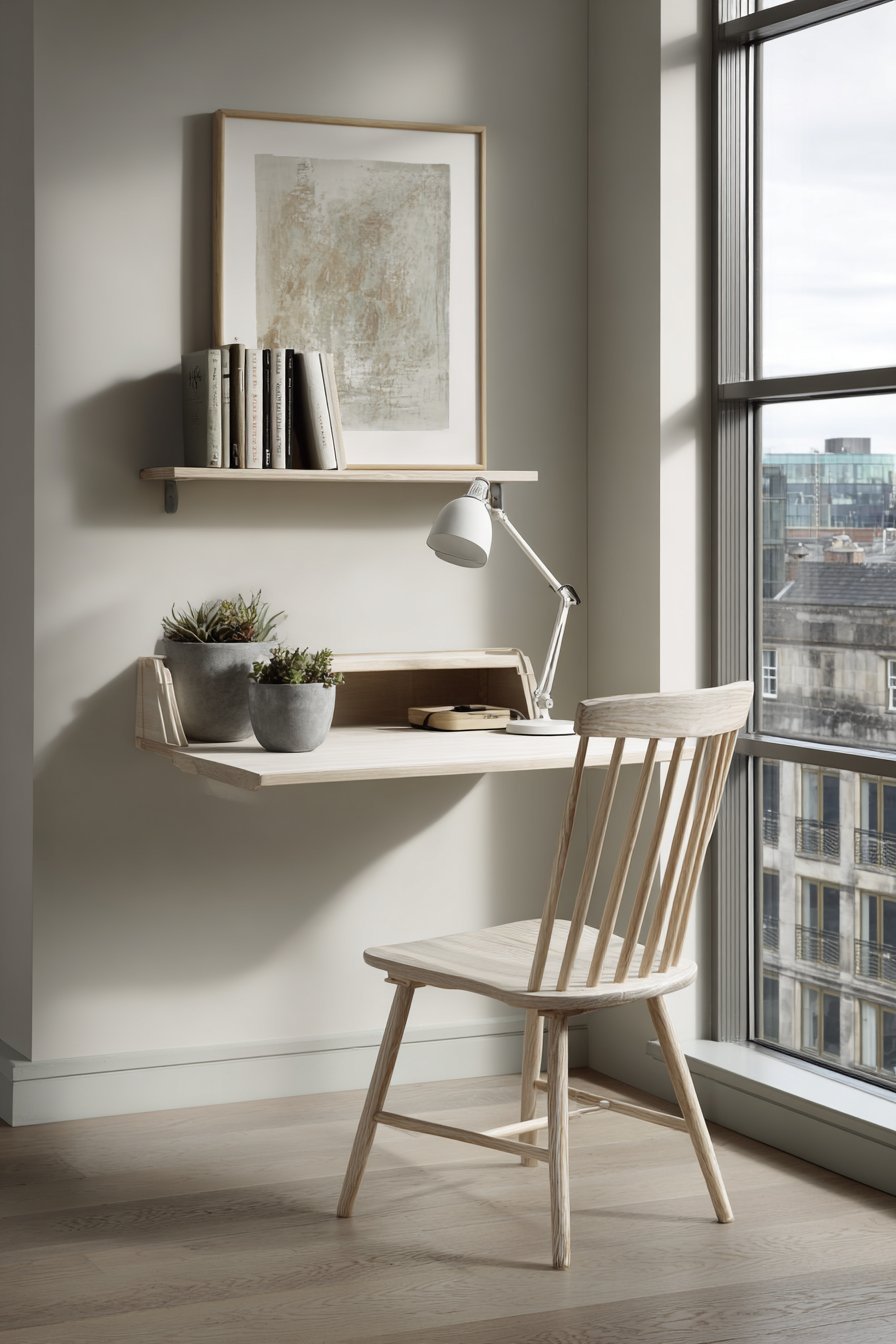
The workspace integration demonstrates multi-functional bedroom design. Work and rest coexist without spatial conflict. The minimal desk footprint preserves floor space. The floating effect maintains airiness despite added functionality.
Key Design Tips:
- Mount floating desks at standard 29-inch height
- Use invisible brackets rated for workspace weight loads
- Keep desk surfaces clear except during active use
- Choose adjustable lamps for flexible task lighting
- Include one living plant for air quality and life
- Select chairs that slide completely under desks when not in use
14. Textural Layering in Neutrals
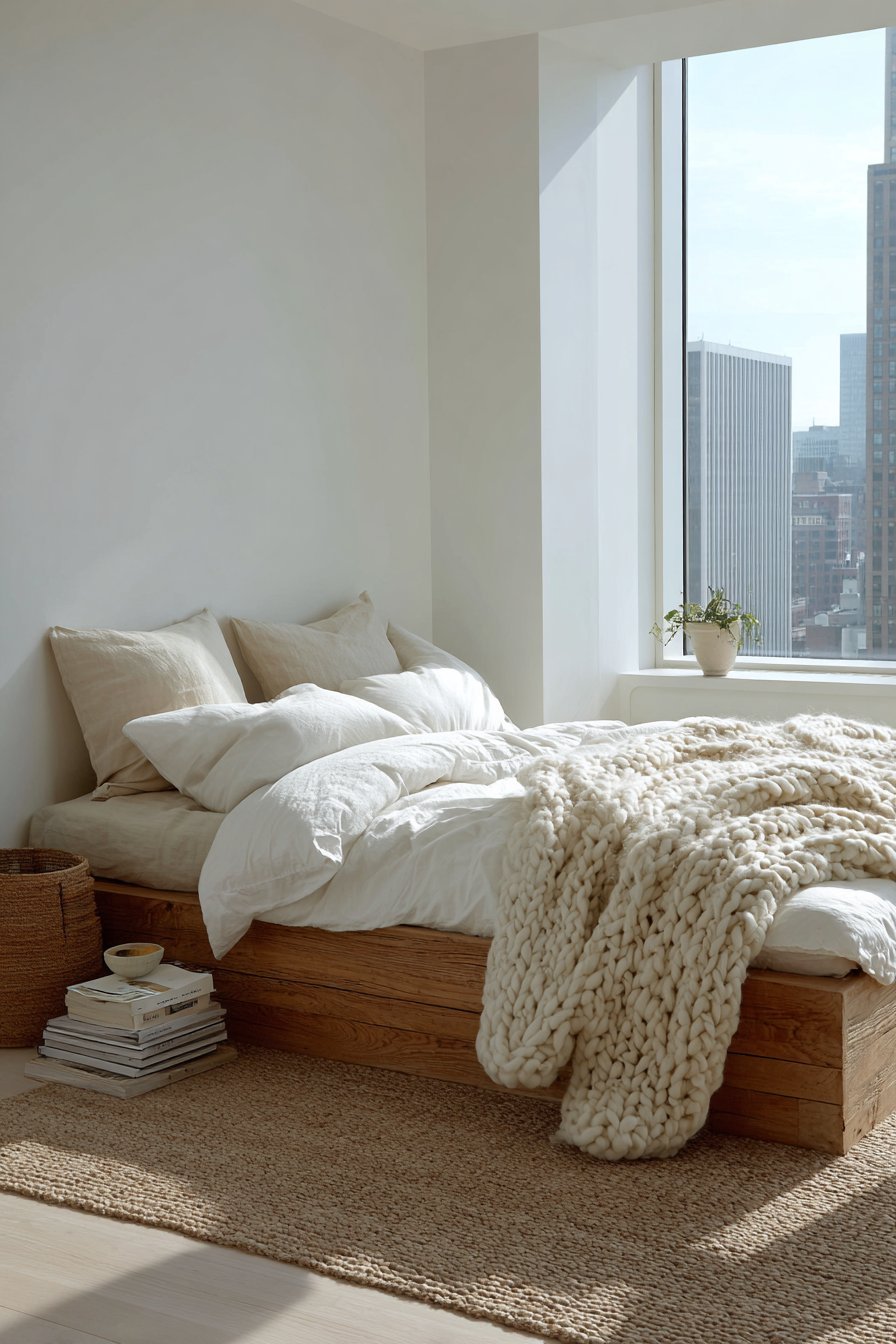
This bedroom demonstrates texture as visual interest strategy. Bedding includes multiple natural fabrics with distinct characteristics. Crisp white cotton sheets provide smooth base layer. A chunky knit throw in undyed wool adds dimensional texture.
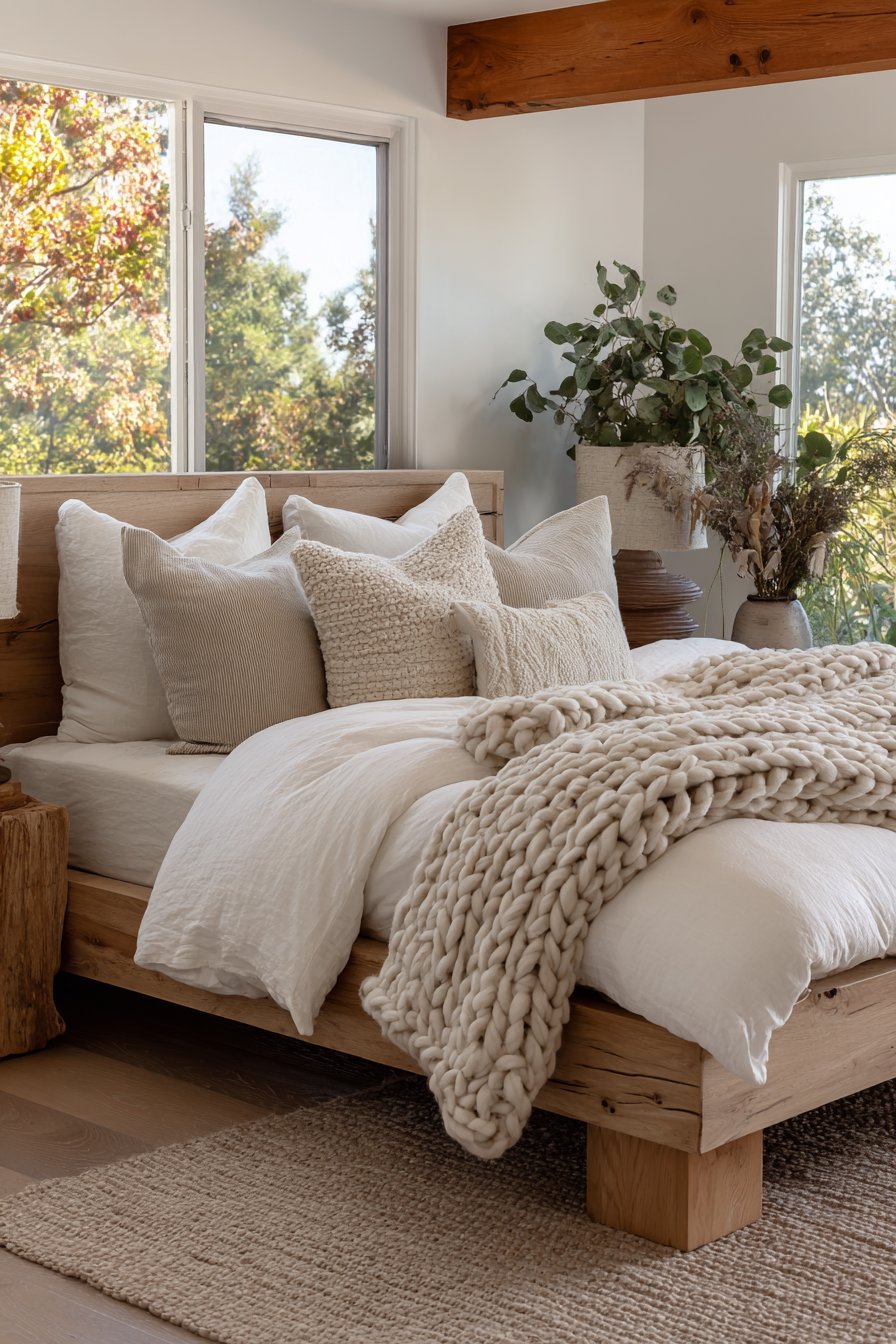
Linen pillowcases in warm cream introduce another natural fiber. The bed frame uses simple oak with visible grain. A jute area rug with tight weave adds subtle texture underfoot. White walls provide neutral backdrop for material focus.
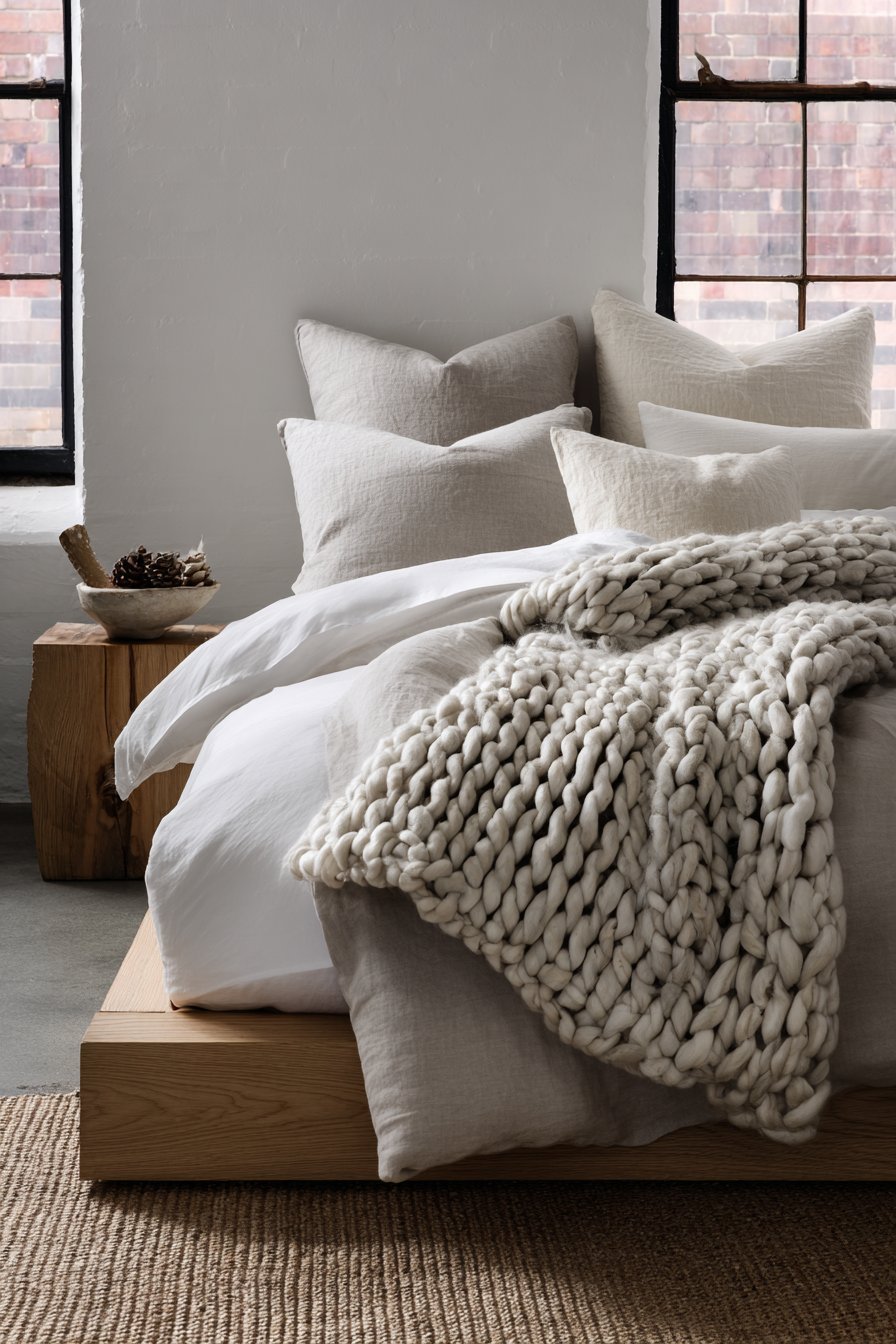
Morning light from large windows highlights textile weaves. Each fabric catches light differently based on surface texture. The various natural fiber characteristics become visible. The composition proves that texture creates interest without color or pattern.
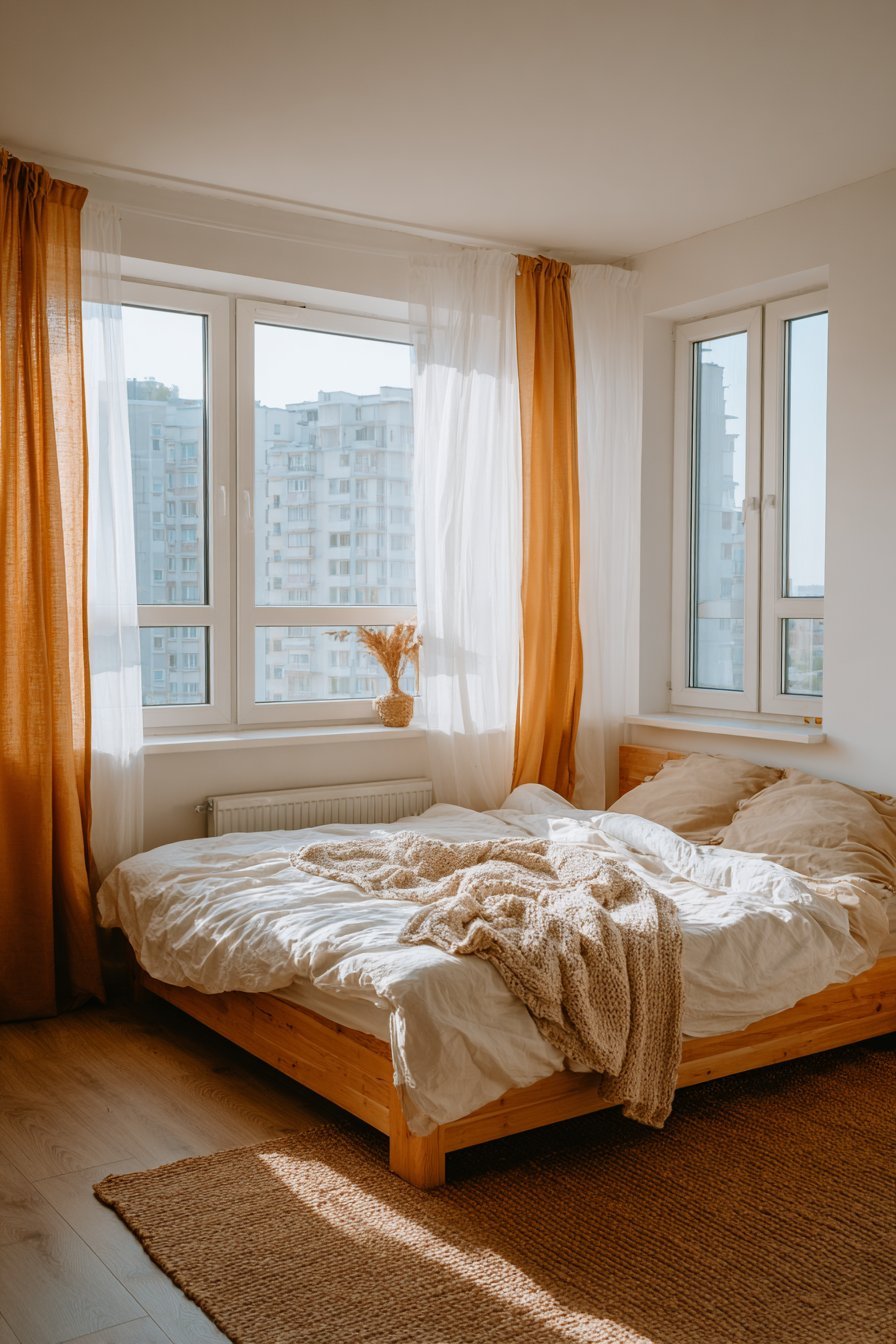
The layered approach celebrates natural materials’ inherent beauty. Wool, linen, cotton, and jute each contribute unique qualities. The neutral palette allows texture to dominate perception. This strategy suits minimalist aesthetics perfectly while avoiding visual coldness.
Key Design Tips:
- Layer 3-4 different natural fiber textures in bedding
- Choose undyed or naturally colored textiles for authenticity
- Include one chunky knit element for dramatic texture contrast
- Add jute or sisal rugs for organic underfoot texture
- Position bed near windows to highlight textile details with light
- Avoid synthetic fabrics to maintain natural material integrity
15. Architectural Plant Display
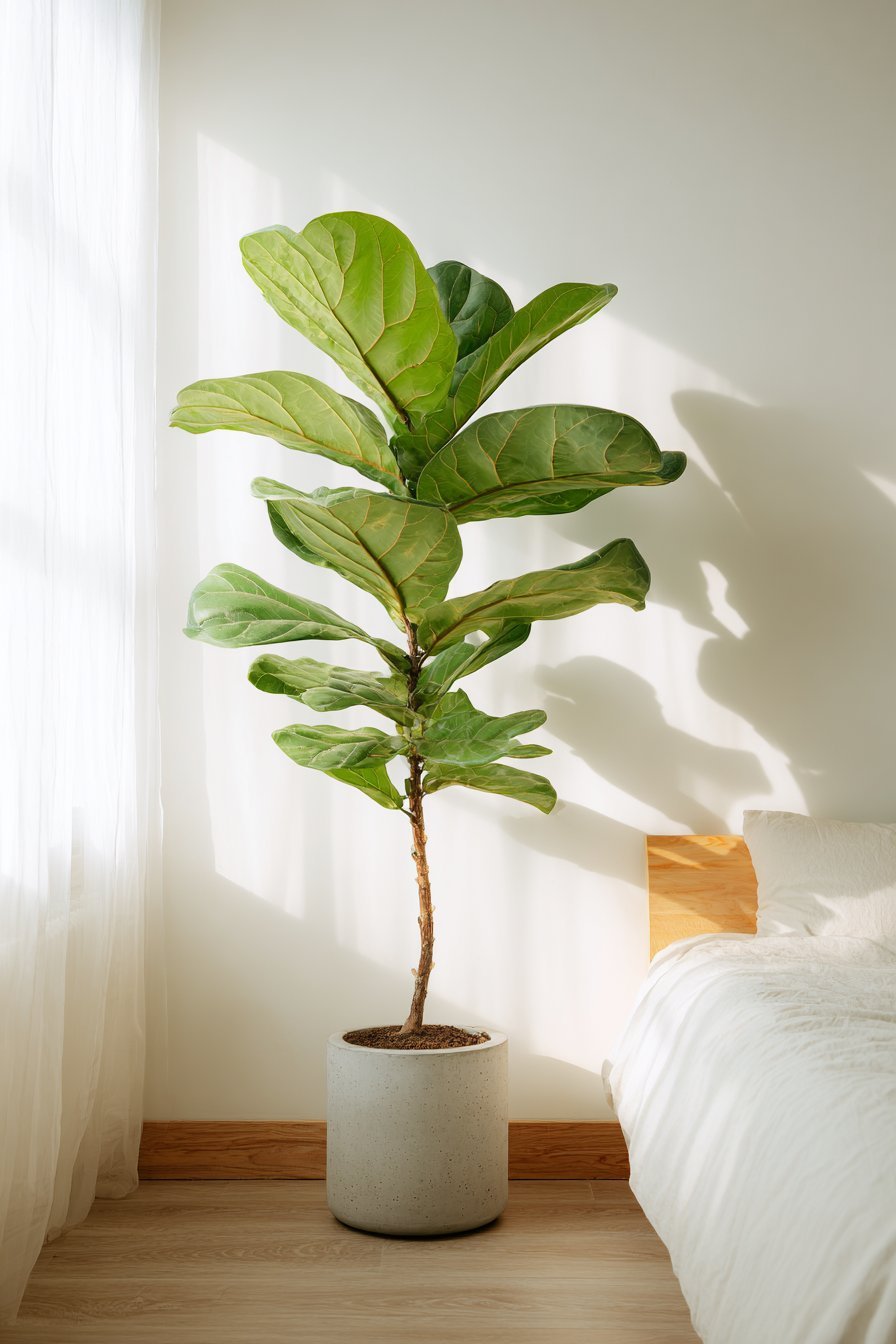
A single large fiddle leaf fig tree provides natural element. The plant sits in a simple cylindrical concrete planter. Positioned in the corner near a window, it receives optimal light. The architectural leaves provide organic form against geometric simplicity.
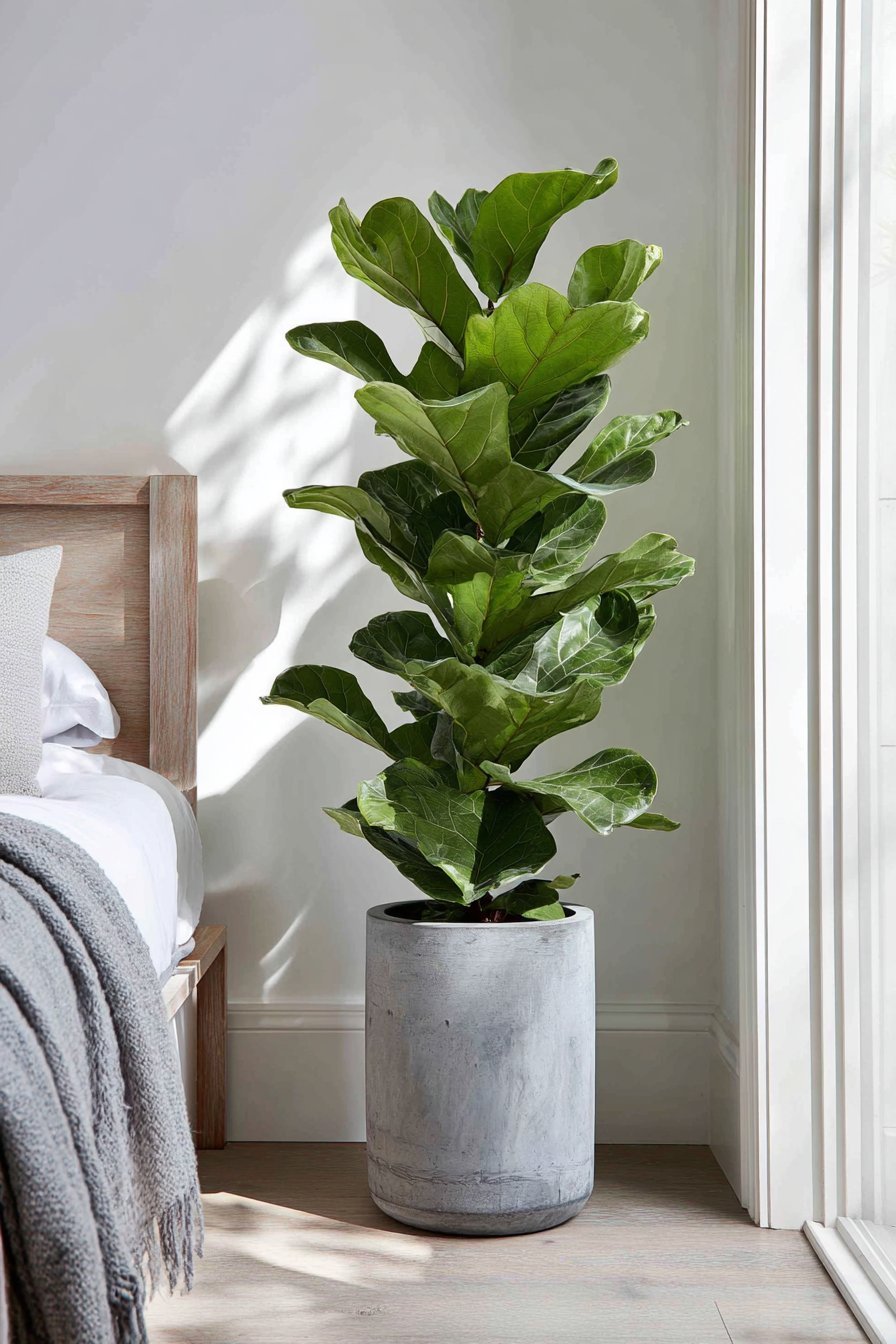
The concrete planter sits on light oak flooring. The industrial material contrasts with natural wood warmth. White walls and minimal furnishings allow the plant to dominate. The living element becomes the room’s focal point.
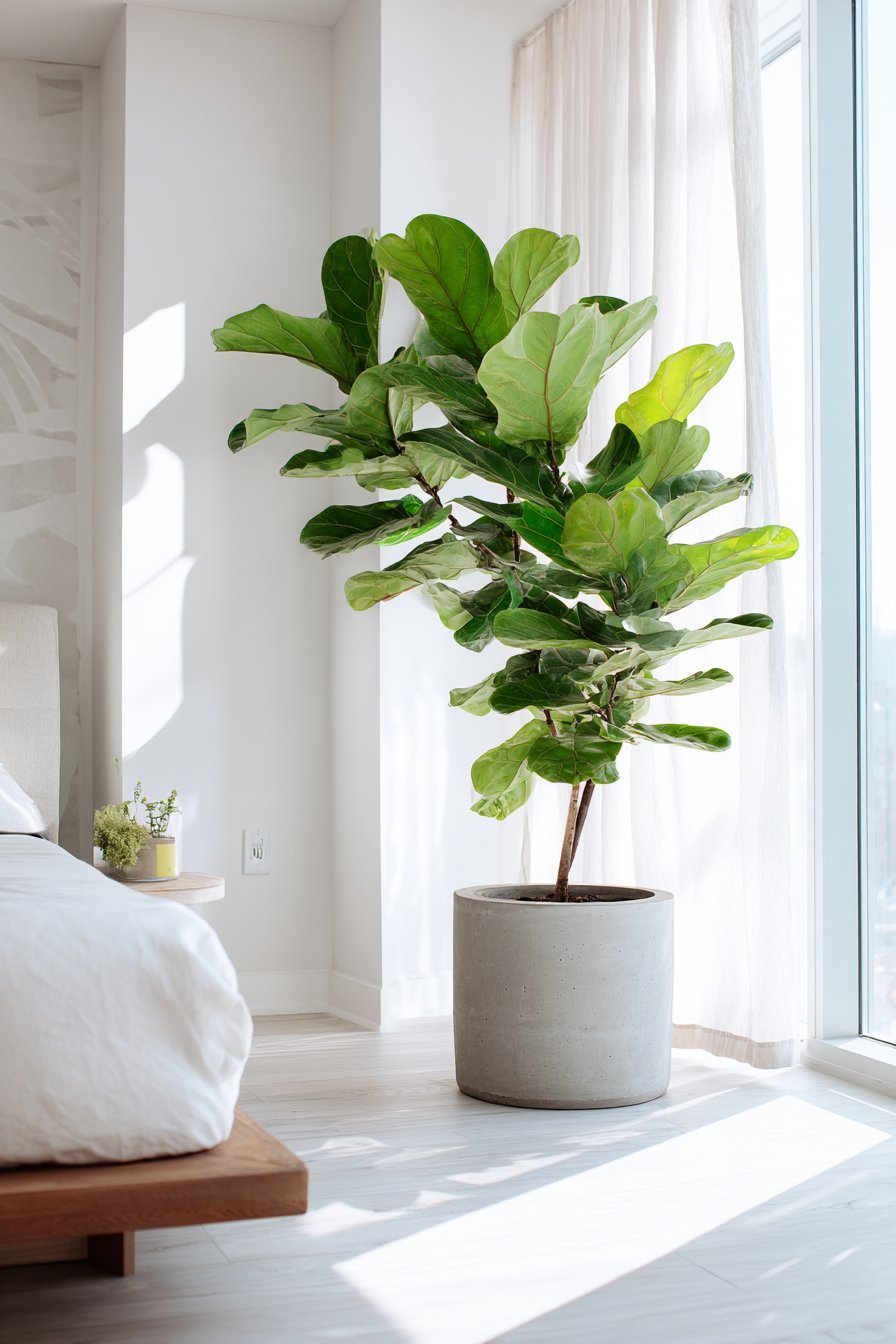
Natural light illuminates glossy leaves throughout the day. Leaf shadows cast across the white wall surface. This shadow play adds dynamic dimension to flat surfaces. The plant’s growth pattern creates ever-changing visual interest.
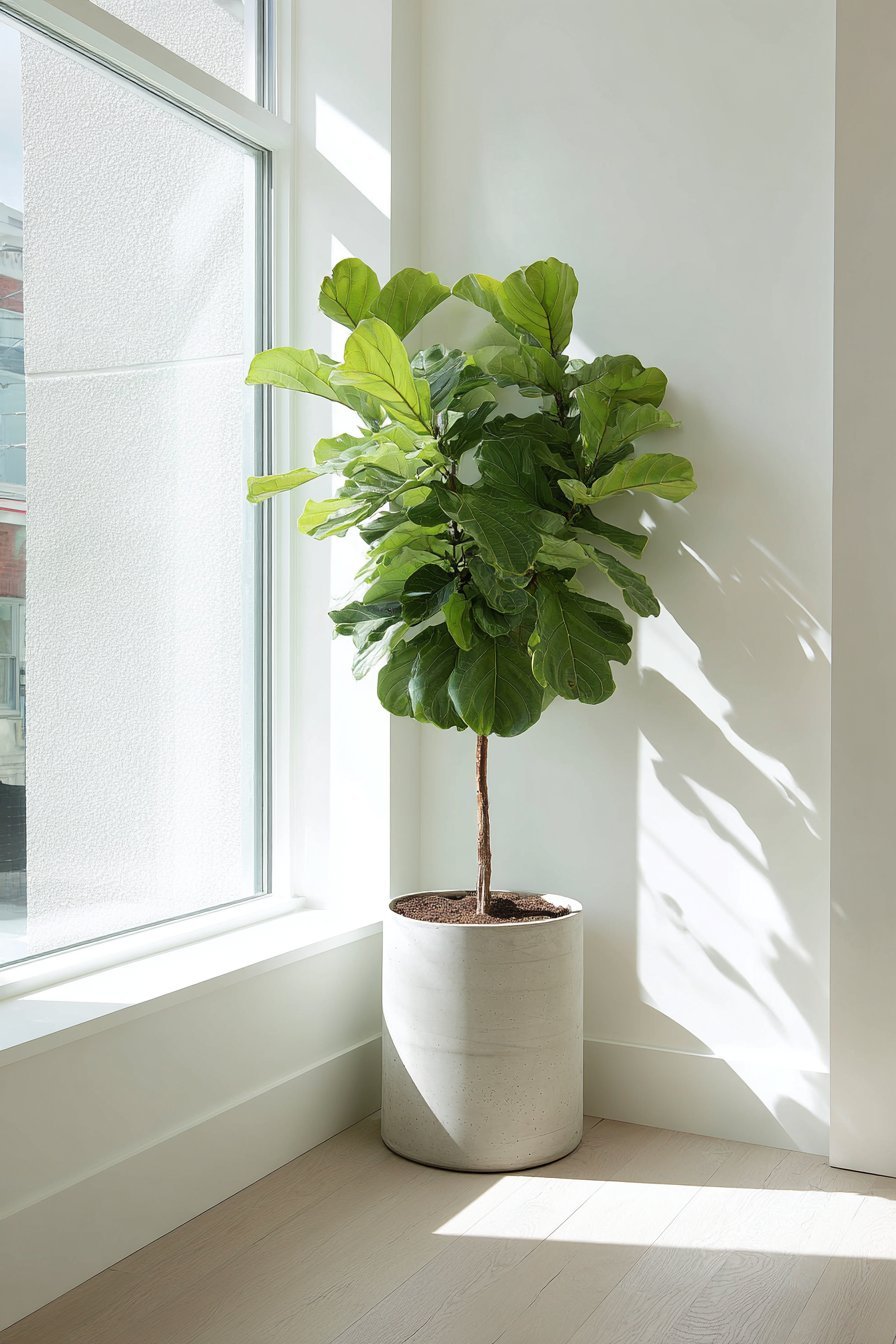
The purposeful inclusion demonstrates biophilic design principles. One statement plant outweighs multiple small specimens. The living element connects the interior to nature. This single green addition softens the room’s geometric precision.
Key Design Tips:
- Choose large specimen plants over multiple small ones
- Position plants near windows for health and shadow effects
- Use concrete planters for an industrial-minimal aesthetic
- Allow plant shadows to create natural wall decoration
- Select architectural plants like fiddle leaf fig or bird of paradise
- Rotate plants quarterly for even growth and shape maintenance
16. Recessed Lighting Architecture
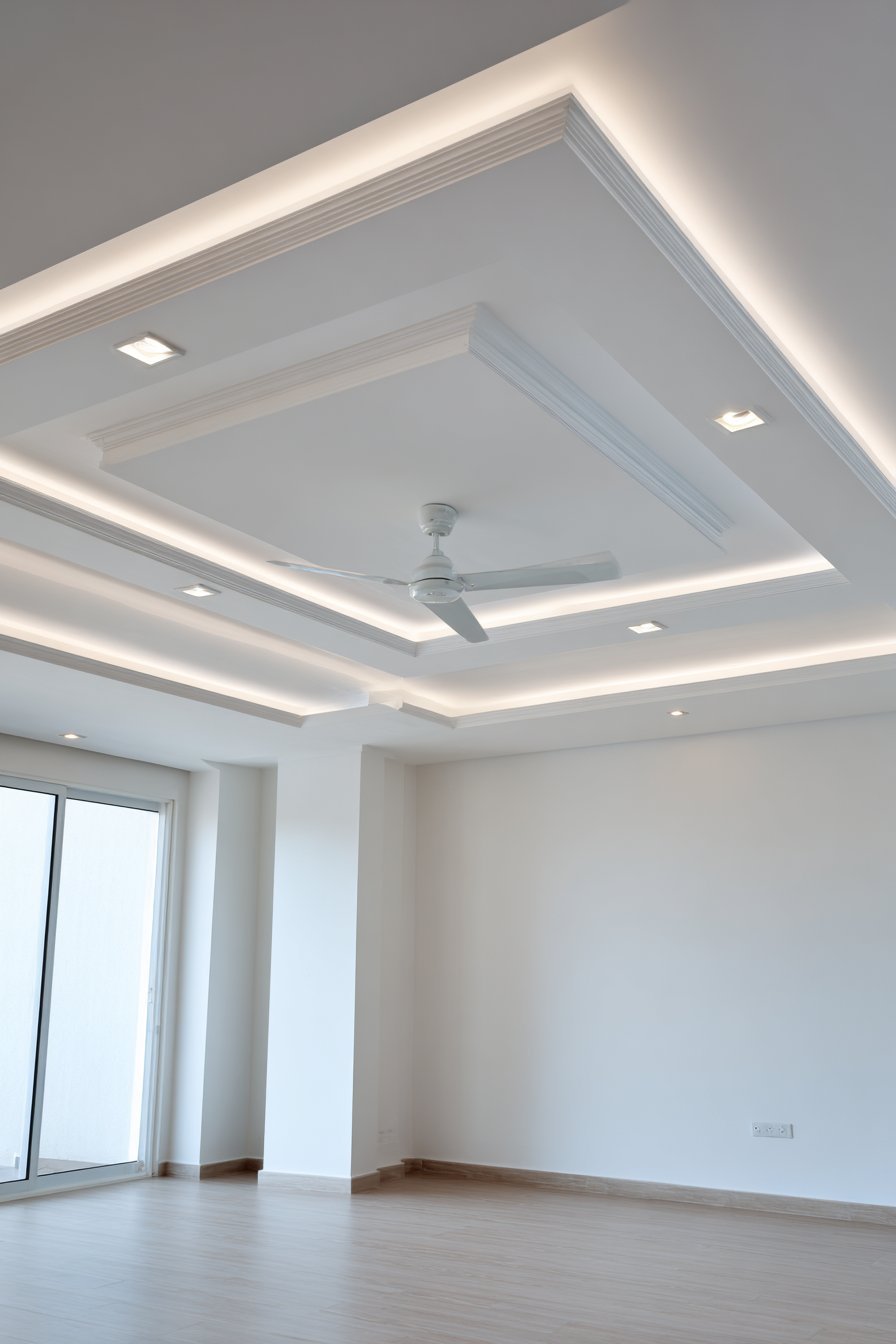
The ceiling features recessed lighting with square LED panels. The fixtures mount flush in clean white ceiling. Even, diffused illumination occurs without visible hardware. A single ceiling-mounted fan features minimal blade design.
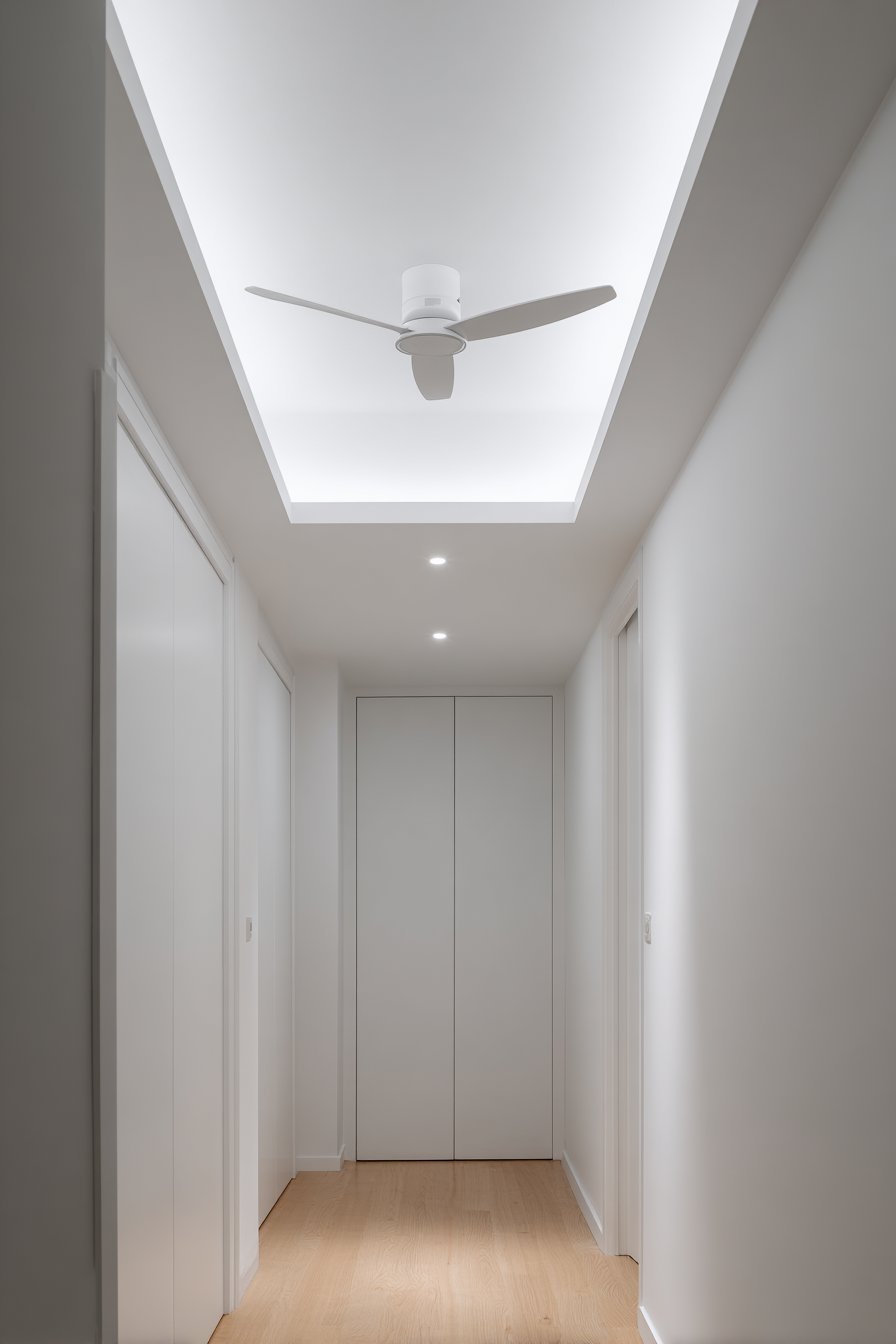
The fan blades blend seamlessly in matte white finish. The ceiling meets walls at sharp, clean corners. No crown molding interrupts the geometric precision. White walls and light wood flooring create neutral envelope.
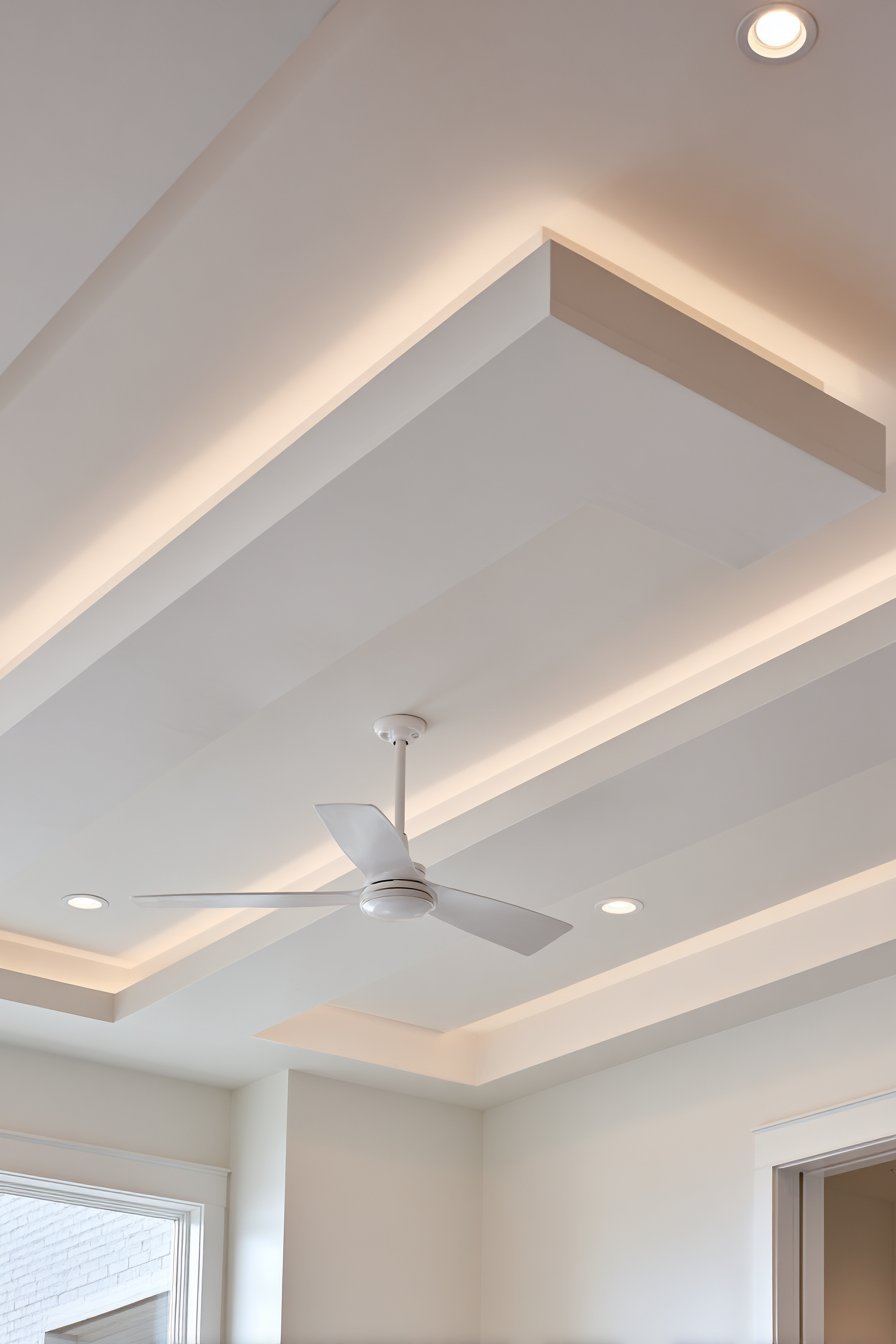
The lighting creates uniform illumination without dramatic shadows. The invisible approach eliminates visual clutter from fixtures. The ceiling becomes a smooth, uninterrupted plane. This demonstrates minimalist principles applied to every surface.
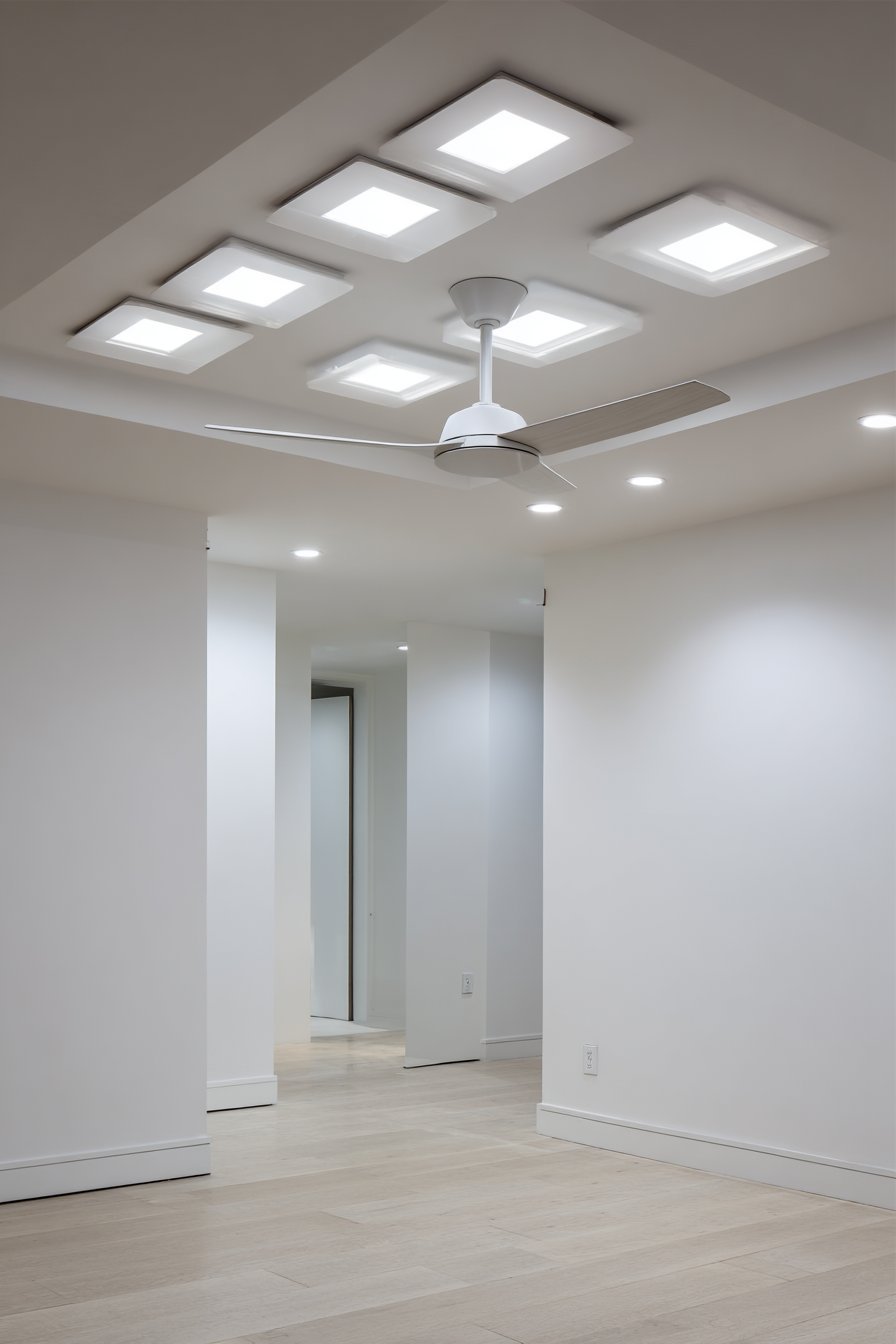
The lighting design proves that function need not compromise aesthetics. Modern LED technology enables invisible illumination. The flush mounting preserves architectural simplicity. The result is light without distraction from its source.
Key Design Tips:
- Specify recessed fixtures during construction or renovation
- Choose LED panels for energy efficiency and longevity
- Distribute lights evenly for shadow-free ambient illumination
- Select square fixtures to echo room’s geometric nature
- Install dimmer controls for adjustable light levels
- Avoid decorative ceiling fixtures in minimalist spaces
17. Flush Door Installation Detail
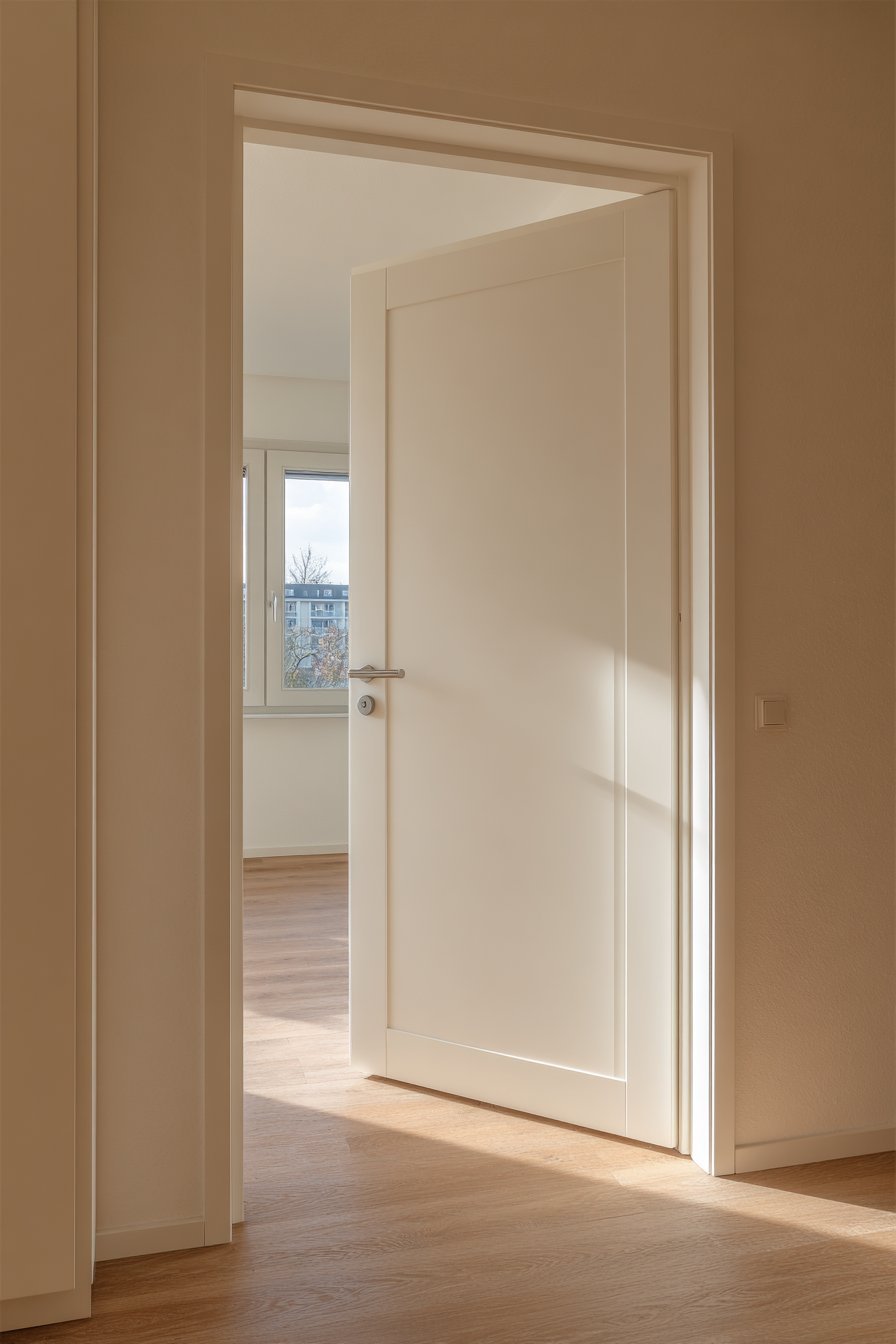
The bedroom entrance features seamless door installation. No visible door casing or trim interrupts wall surfaces. The door frame sits flush with the wall plane. The door itself matches the surrounding warm white paint.
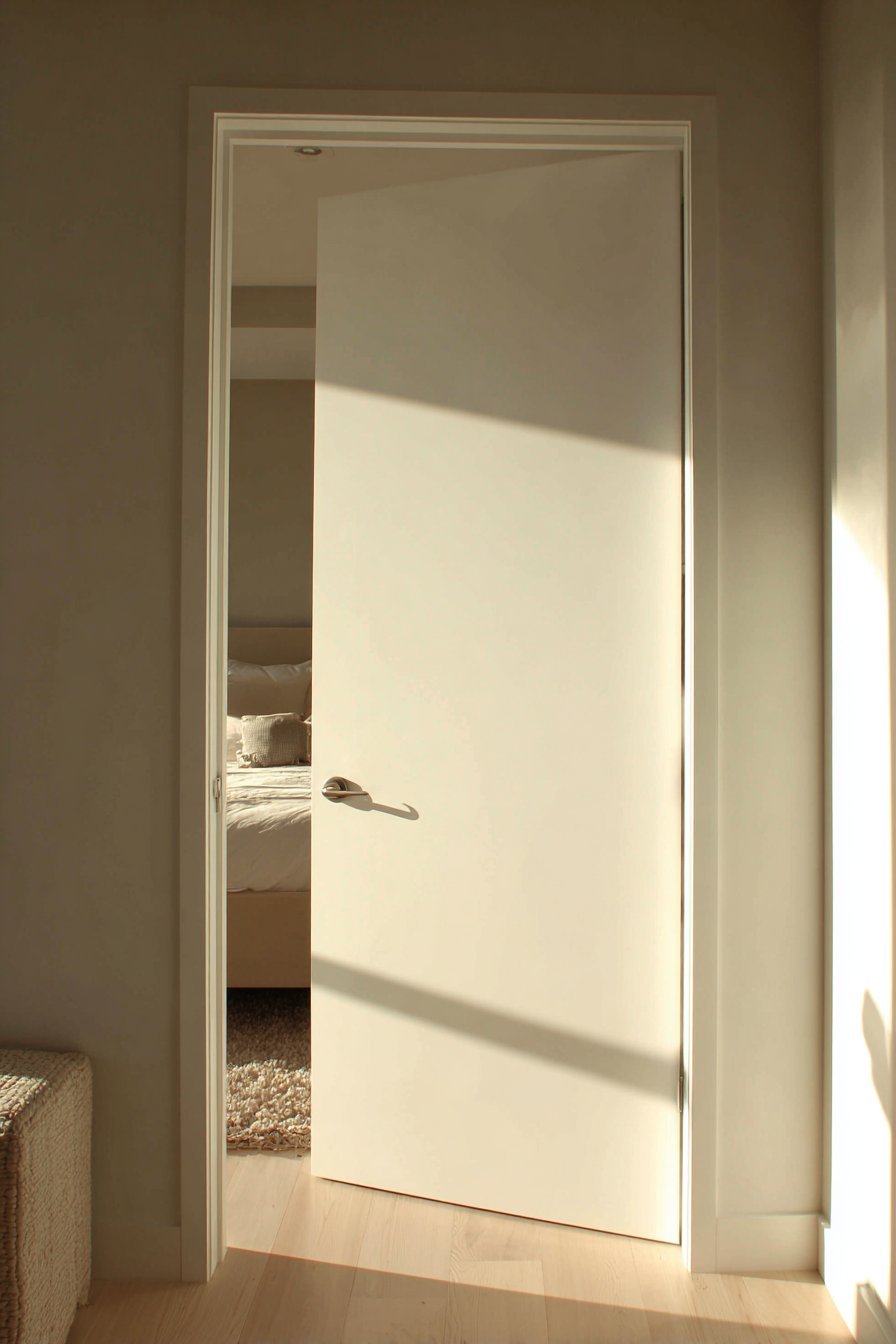
When closed, the door nearly disappears into the wall. Simple cylindrical door lever in brushed nickel provides hardware. Light oak flooring continues through the doorway without transition strips. The view through shows the minimal bedroom beyond.
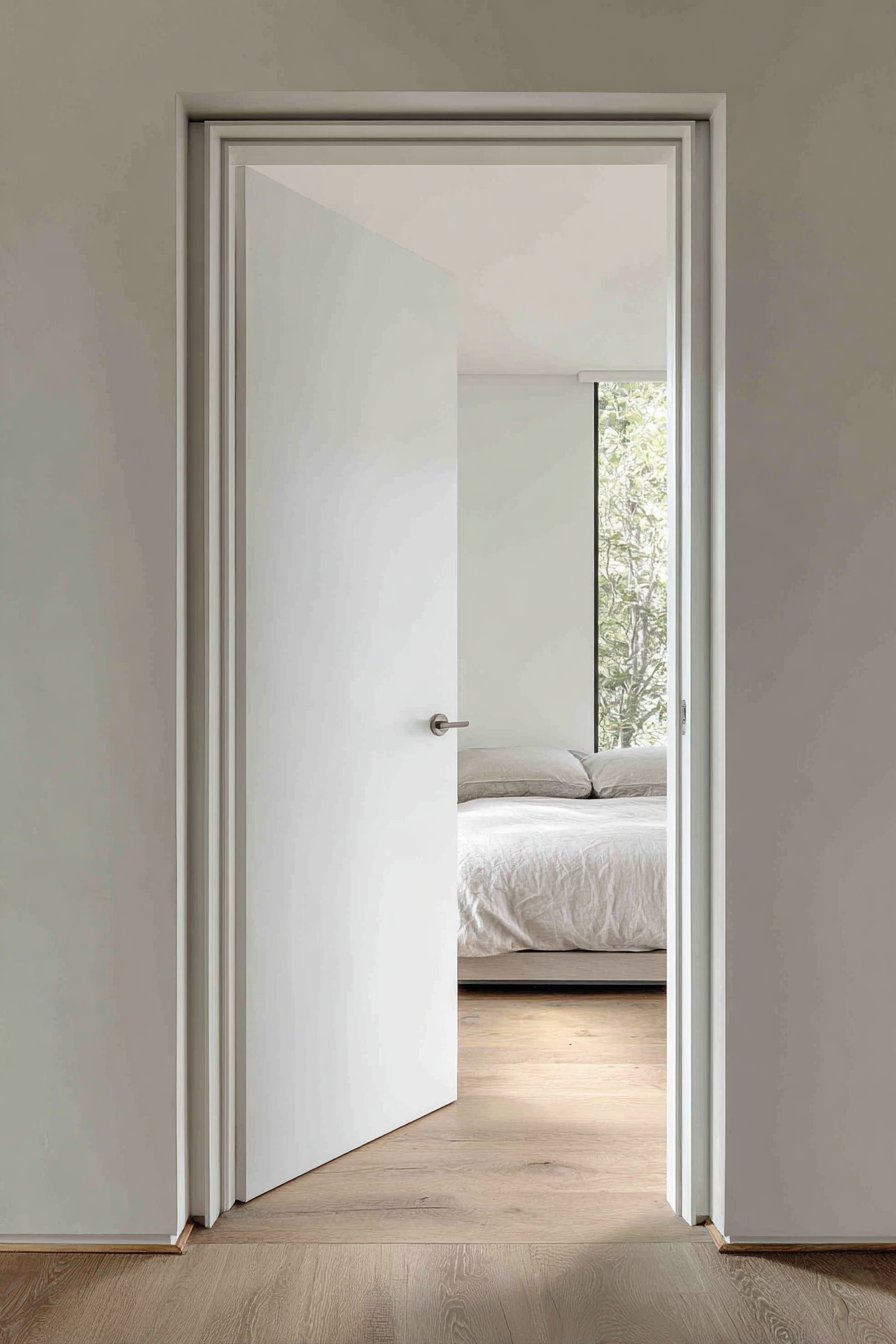
This architectural detail eliminates decorative trim entirely. The flush installation creates seamless wall-to-wall transitions. The matching paint makes boundaries invisible. The result exemplifies minimalist architectural detailing.
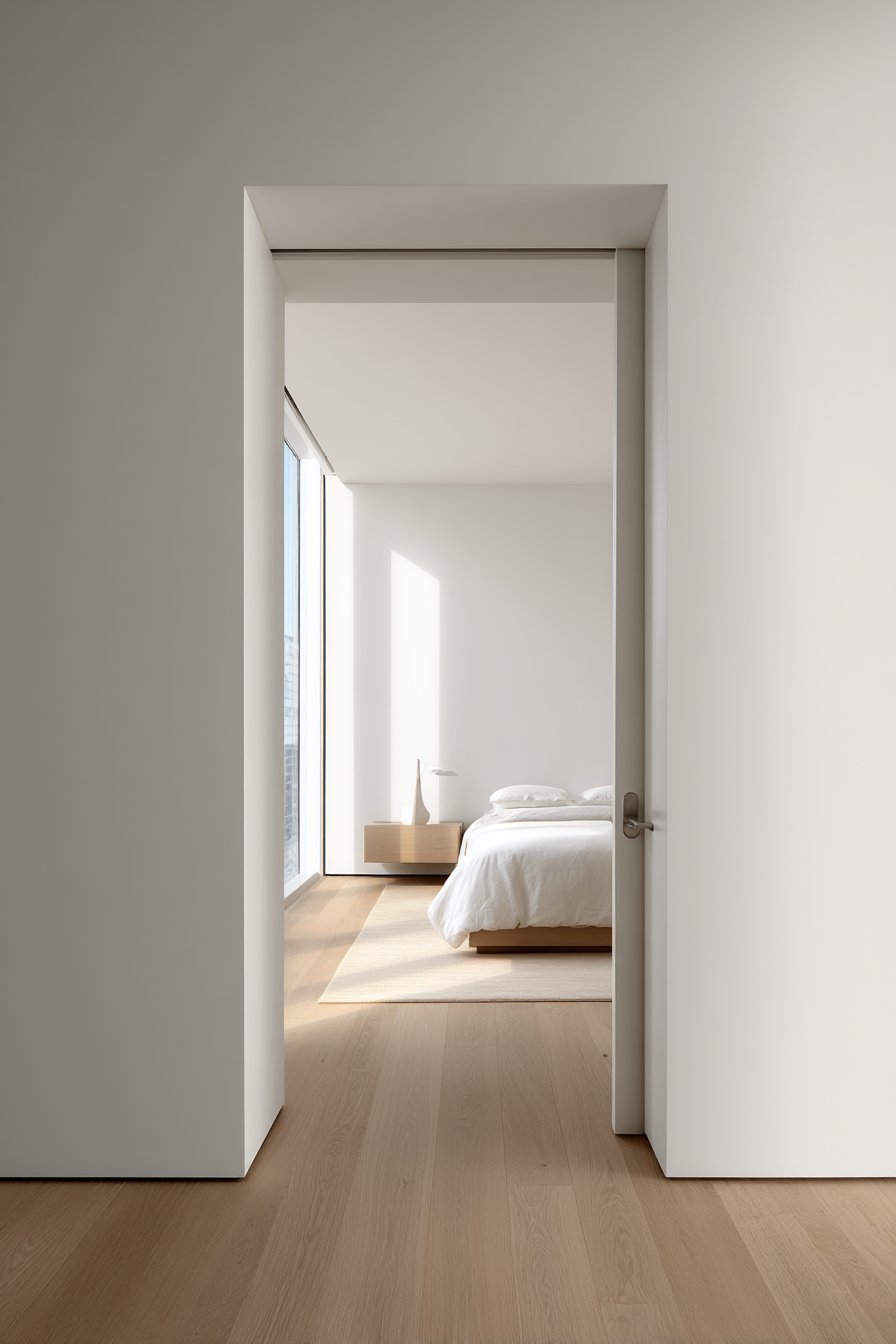
The invisible door demonstrates commitment to reducing visual noise. Standard trim adds multiple surfaces and shadow lines. Eliminating these elements creates calm continuity. This detail requires skilled installation but delivers a significant aesthetic impact.
Key Design Tips:
- Specify flush door frames during construction phase
- Paint doors the same color as walls for camouflage
- Use simple cylindrical levers instead of decorative hardware
- Eliminate transition strips by extending flooring through doorways
- Consider pocket doors for complete door concealment
- Budget for skilled carpentry required for flush installations
18. Integrated Storage Platform Bed
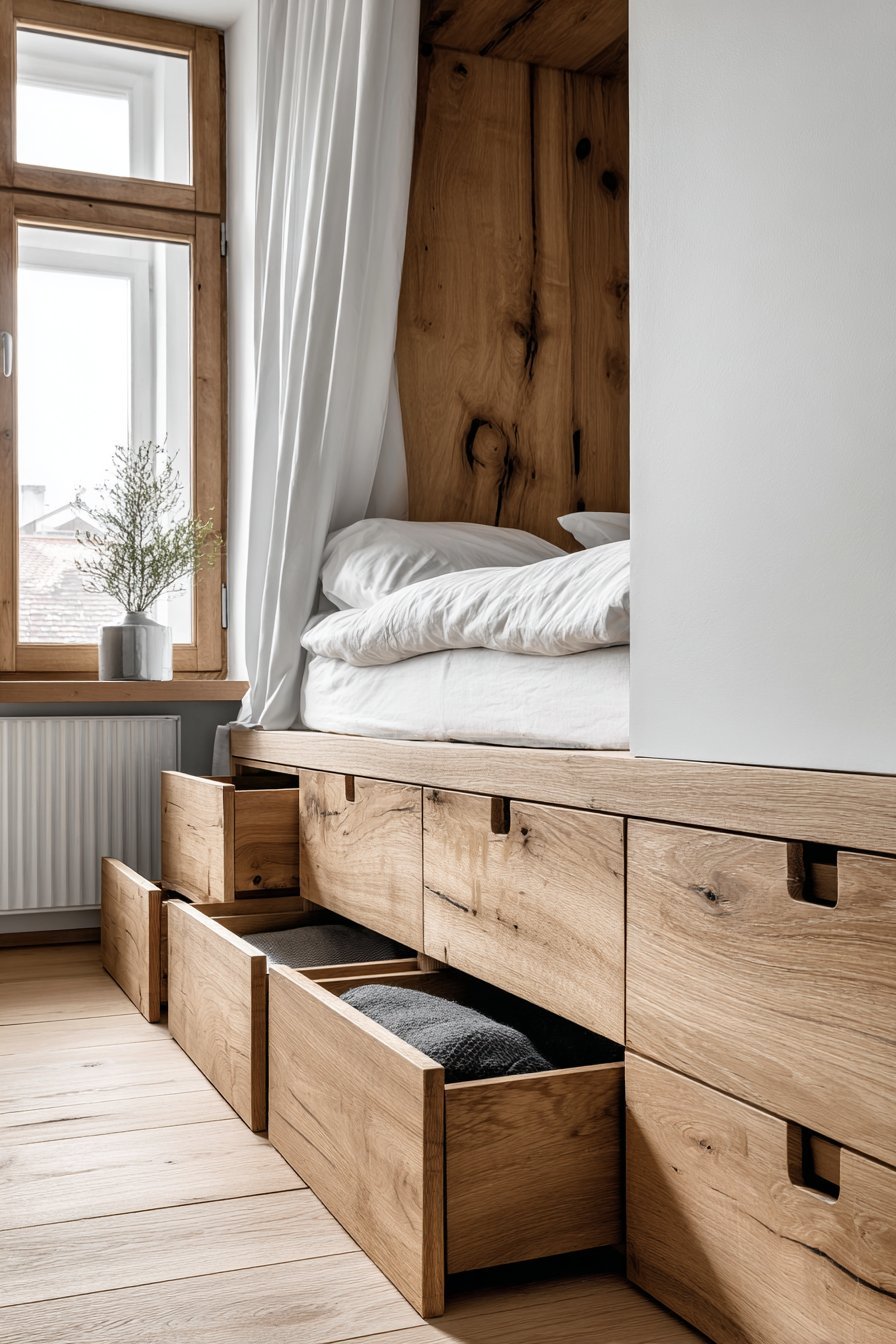
The low-profile bed features integrated storage drawers. Light oak drawer fronts pull out smoothly on full-extension slides. Simple recessed pulls maintain clean surface lines. The bed platform appears to float above the floor.
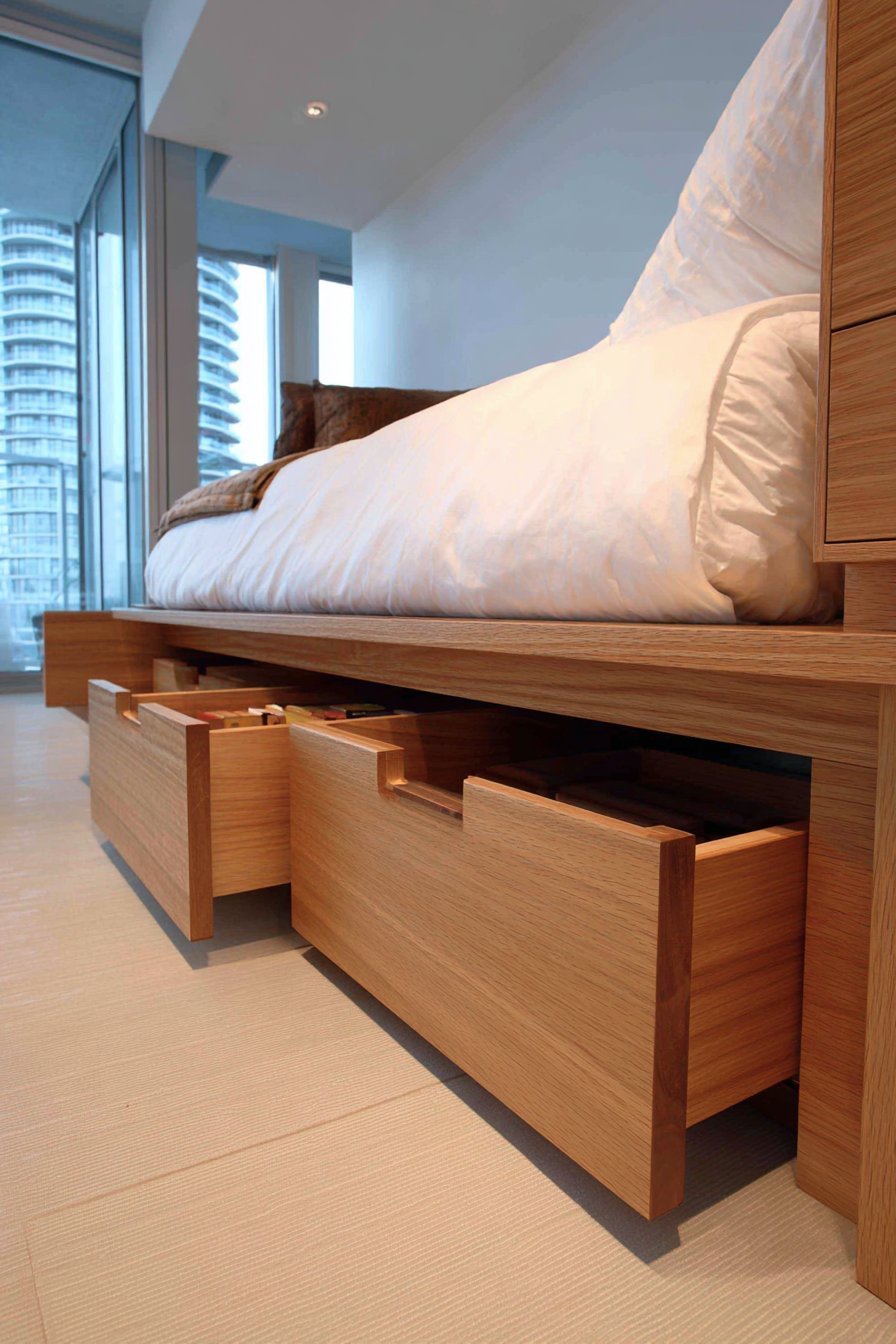
A recessed base creates the floating effect visually. White bedding contrasts with warm wood tones. The storage solution eliminates need for additional furniture. Drawer capacity handles substantial bedroom storage requirements.
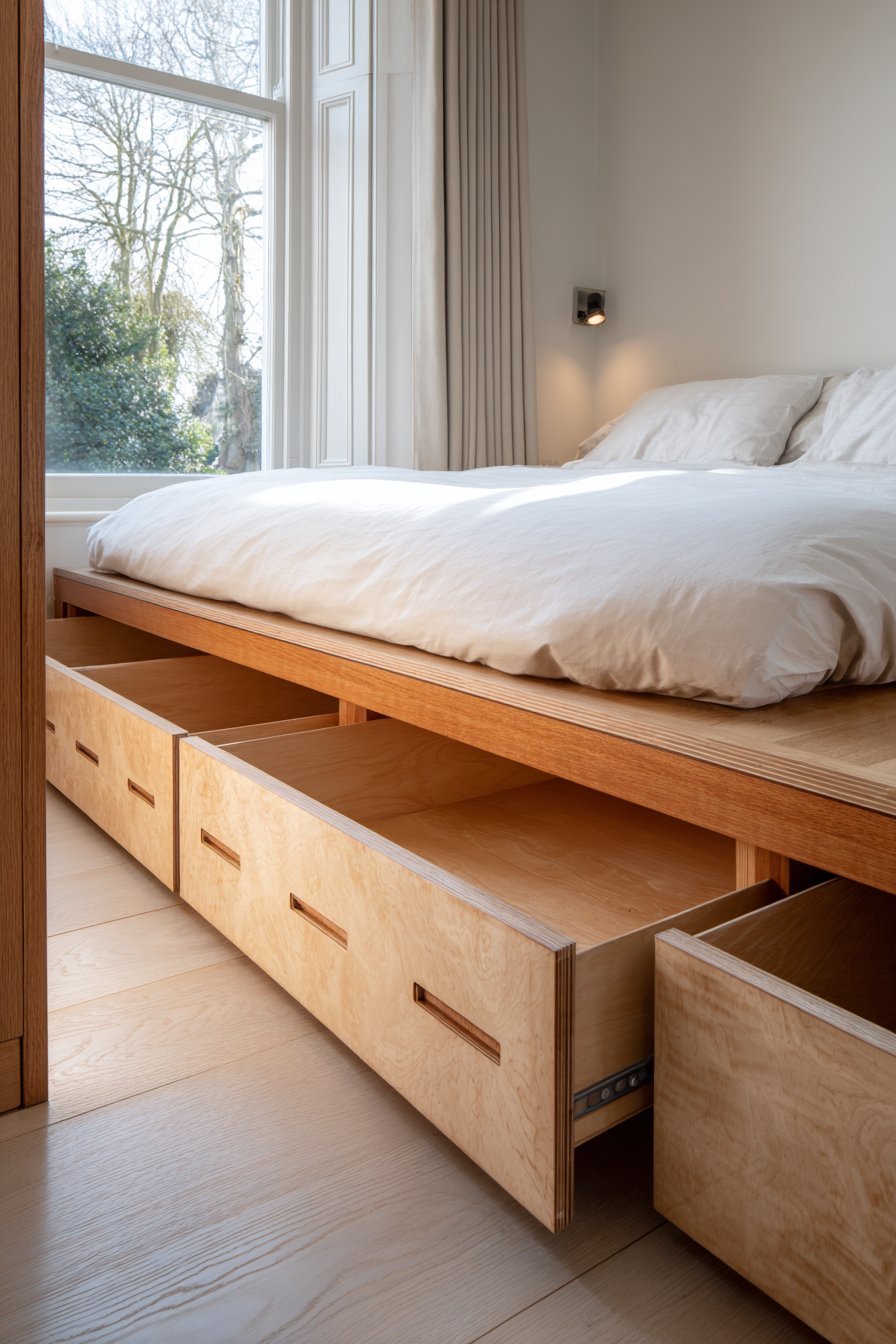
Natural light from a side window illuminates wood grain. The drawer joinery shows quality craftsmanship details. Dovetail corners ensure long-term durability. The multi-functional design suits small space living particularly well.
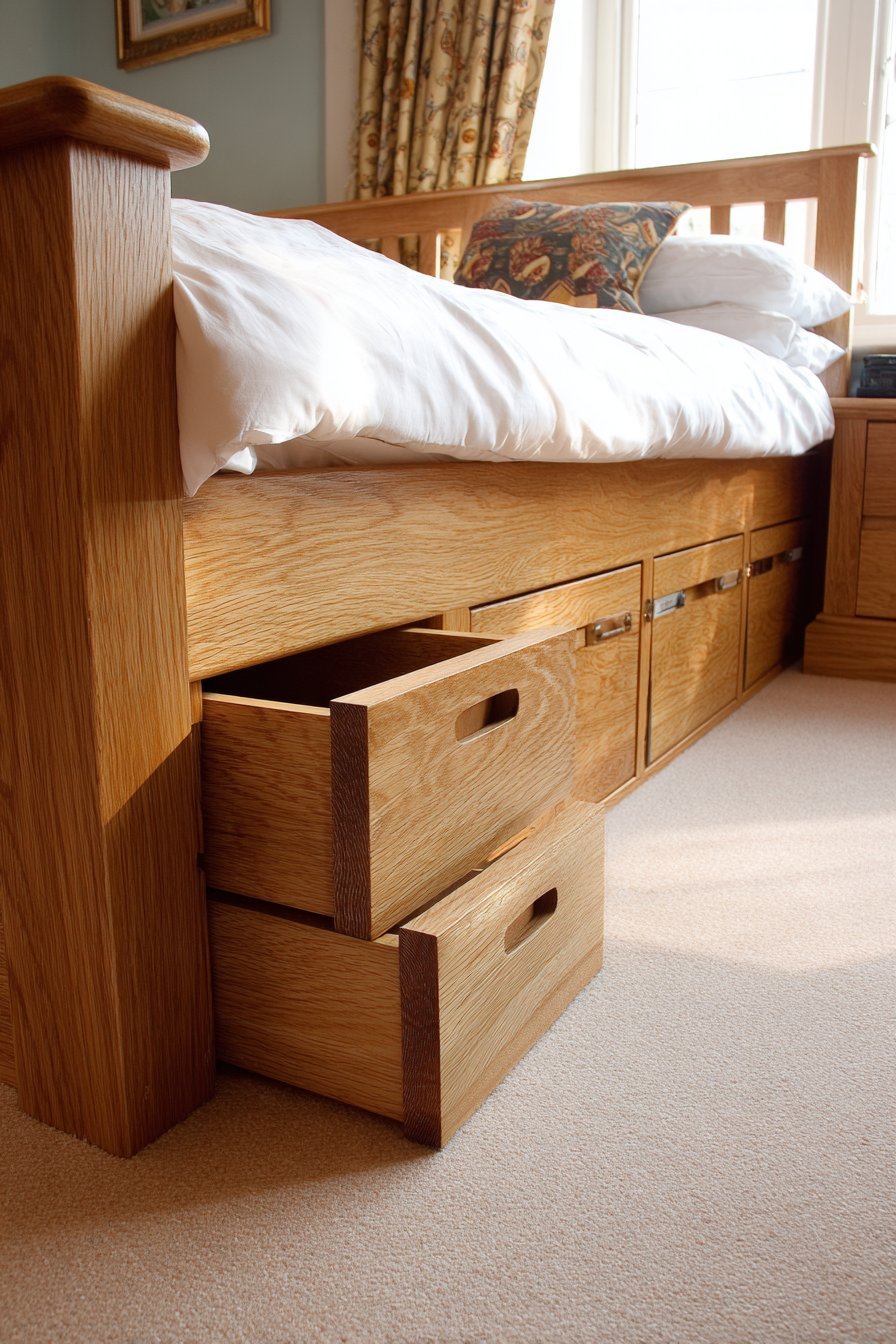
This demonstrates minimalist storage through furniture integration. The bed serves dual purposes without appearing bulky. The oak construction ensures decades of reliable use. Function and beauty unite in this essential furniture piece.
Key Design Tips:
- Specify full-extension drawer slides for complete access
- Choose recessed pulls to avoid hardware projection
- Include 4-6 drawers for significant storage capacity
- Elevate bed platform on a recessed base for floating effect
- Select solid wood construction for heirloom quality
- Organize drawer contents with internal dividers for efficiency
19. Negative Space Emphasis
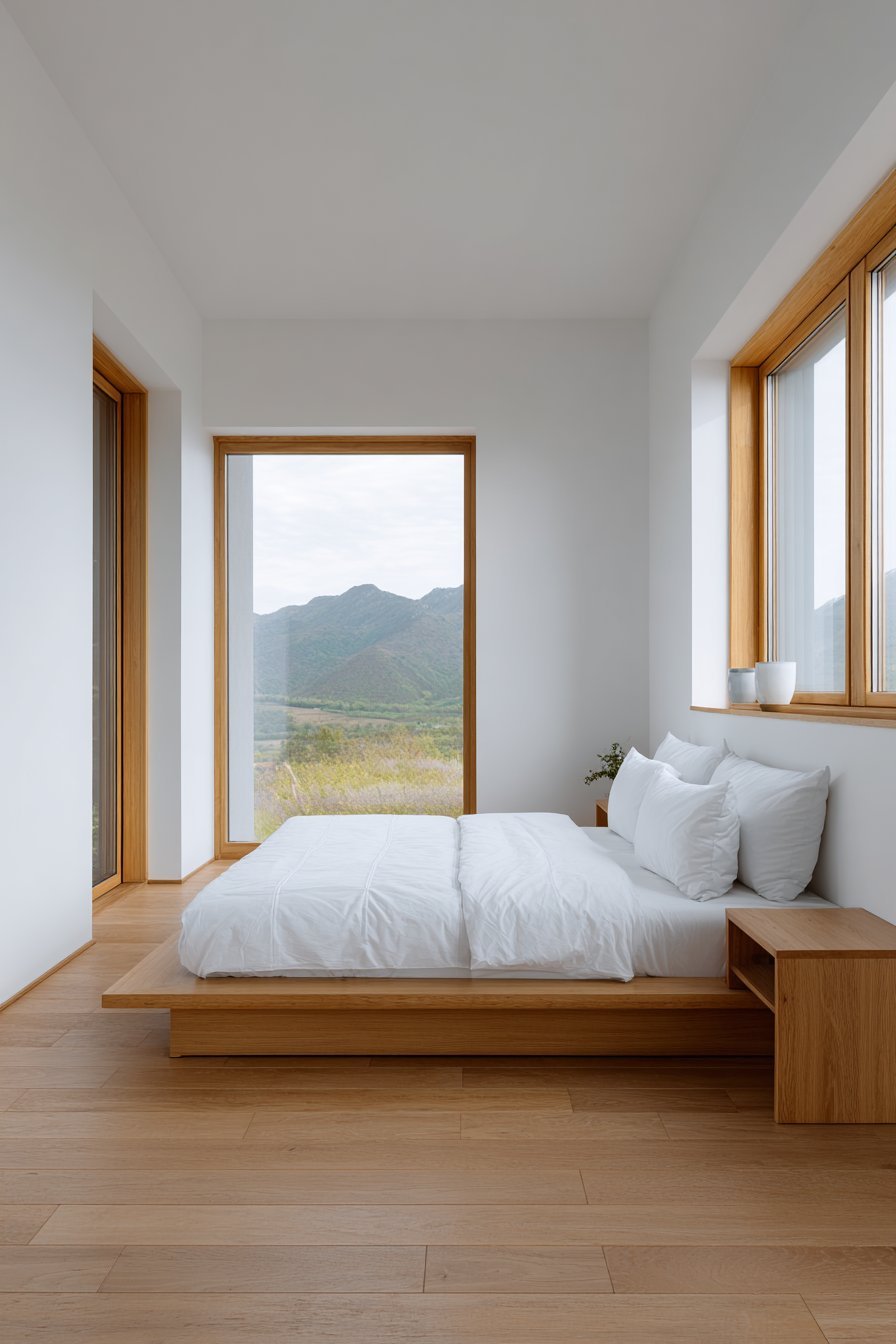
This bedroom demonstrates negative space as design element. A single bed is positioned deliberately off-center in spacious room. Intentional emptiness surrounds the minimal furnishings. The bed features simple white linens on low platform.
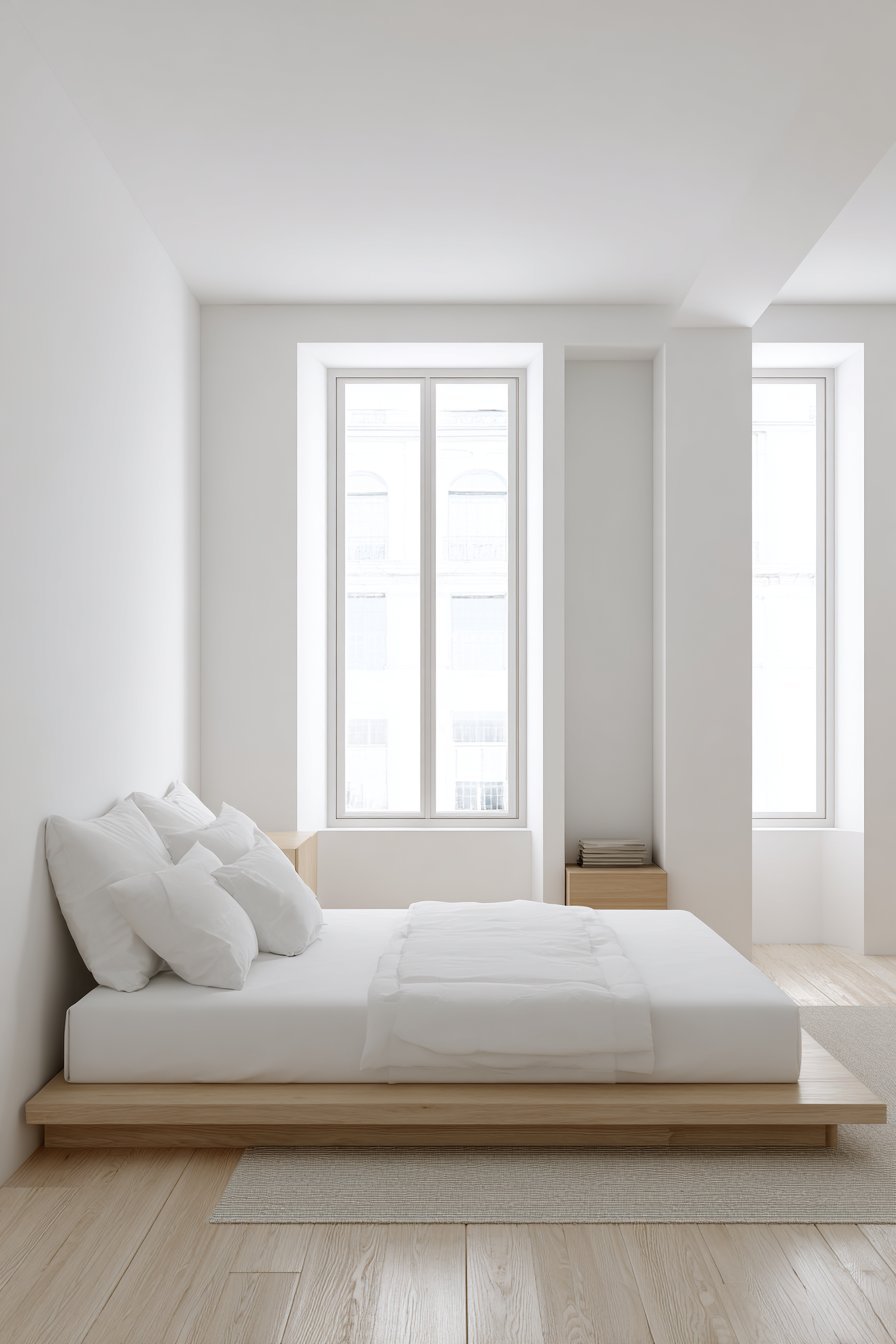
One small nightstand in natural oak sits beside the bed. The remaining floor space stays completely clear. Light oak boards extend uninterrupted across open areas. Large windows with minimal frames provide abundant natural light.
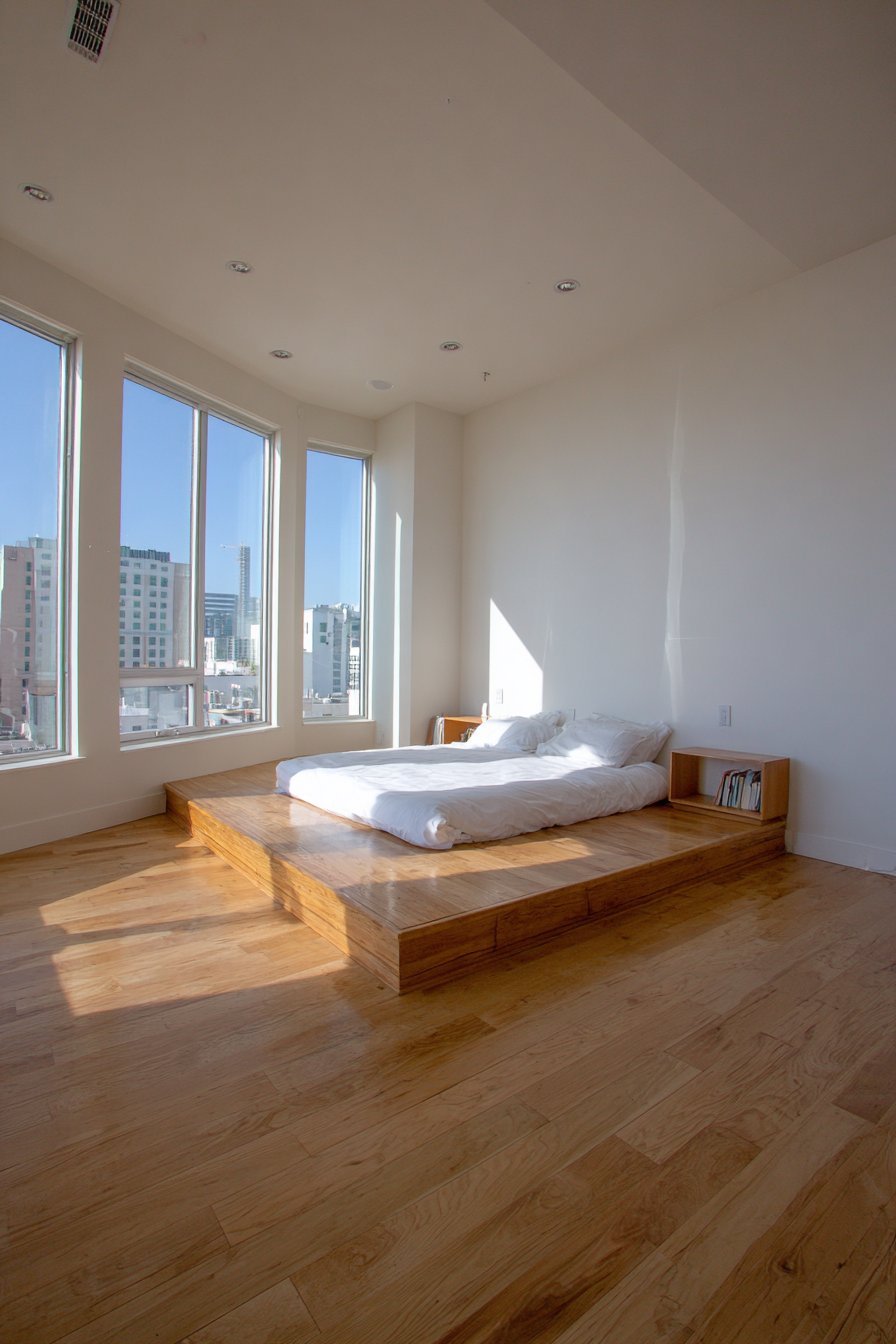
White walls remain completely unadorned without artwork. The generous breathing room creates profound calm. The deliberate emptiness allows remaining elements to breathe. This proves that empty space holds equal importance to furnished areas.
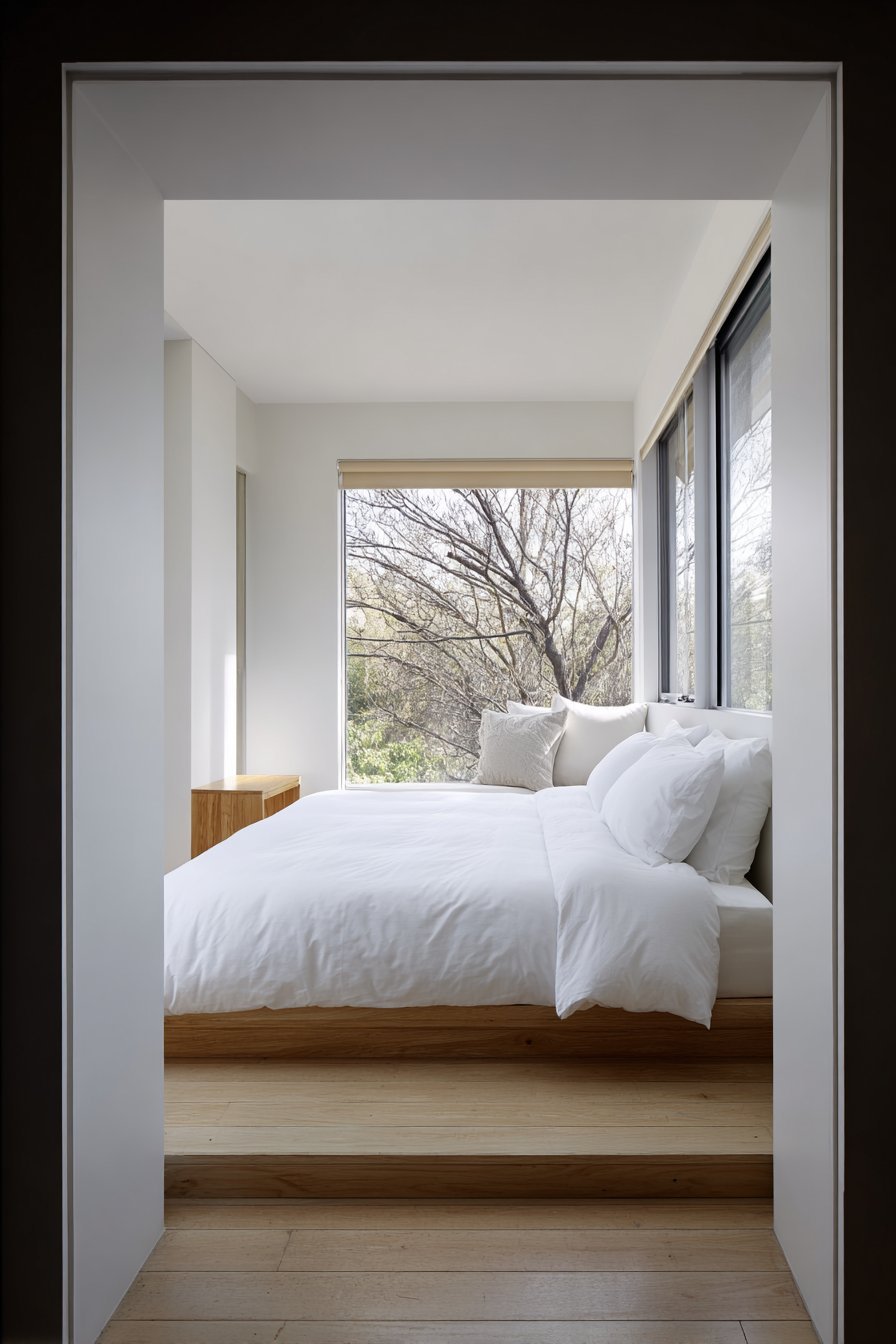
The composition challenges conventional furnishing approaches. Most rooms fill the available space with furniture and decoration. This design celebrates emptiness as an essential element. The result feels expansive despite moderate square footage.
Key Design Tips:
- Position beds off-center to create intentional negative space
- Leave at least 50% of floor space completely empty
- Resist urges to fill empty corners or walls
- Use negative space to emphasize remaining furniture pieces
- Allow natural light to define empty areas through shadow play
- Trust that emptiness creates calm, not incompleteness
20. Three-Material Discipline
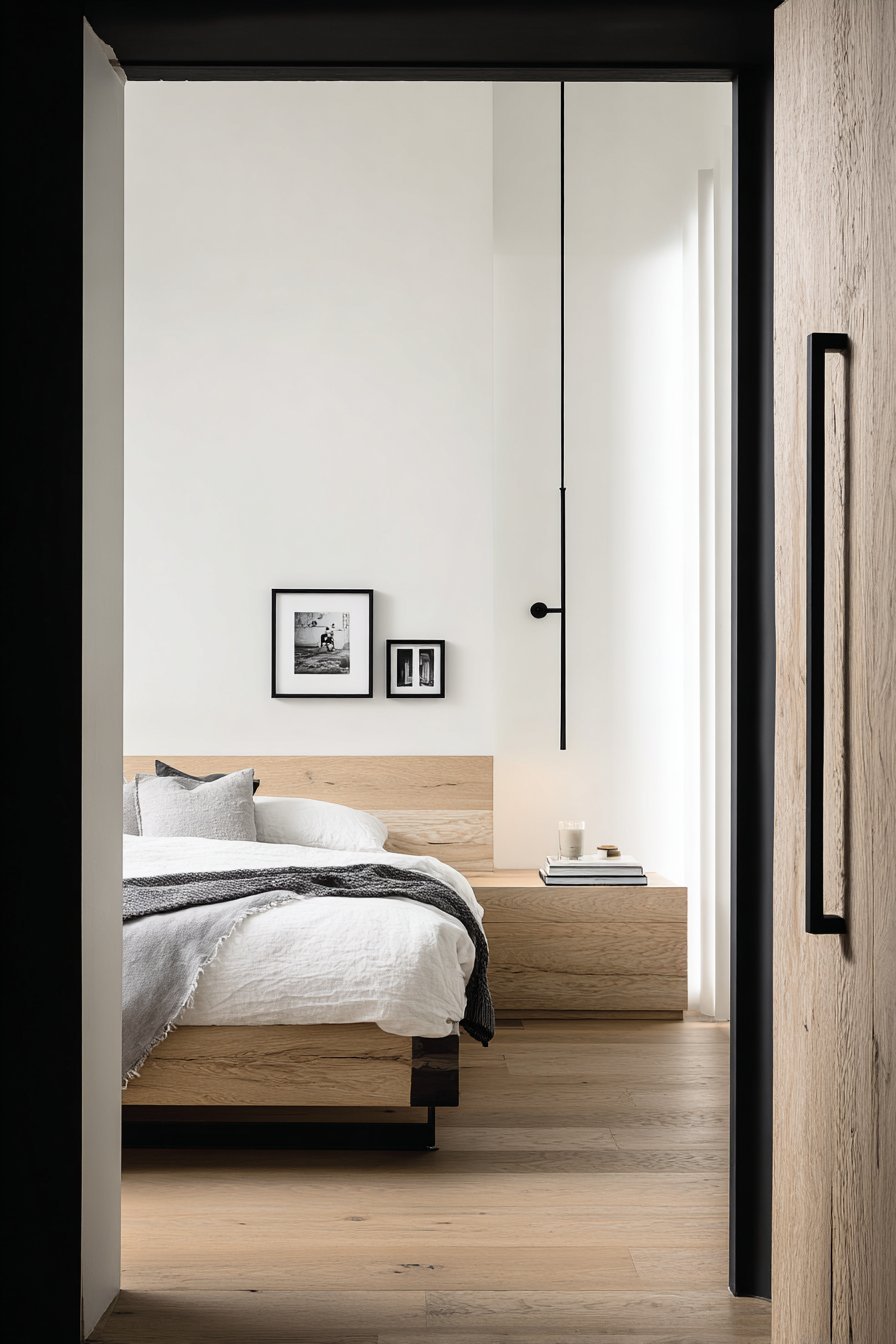
This bedroom showcases strict material limitation. Only three elements appear throughout: white painted walls, light oak wood, and black accents. The bed frame features simple oak construction with black steel legs. The material repetition creates strong cohesion.
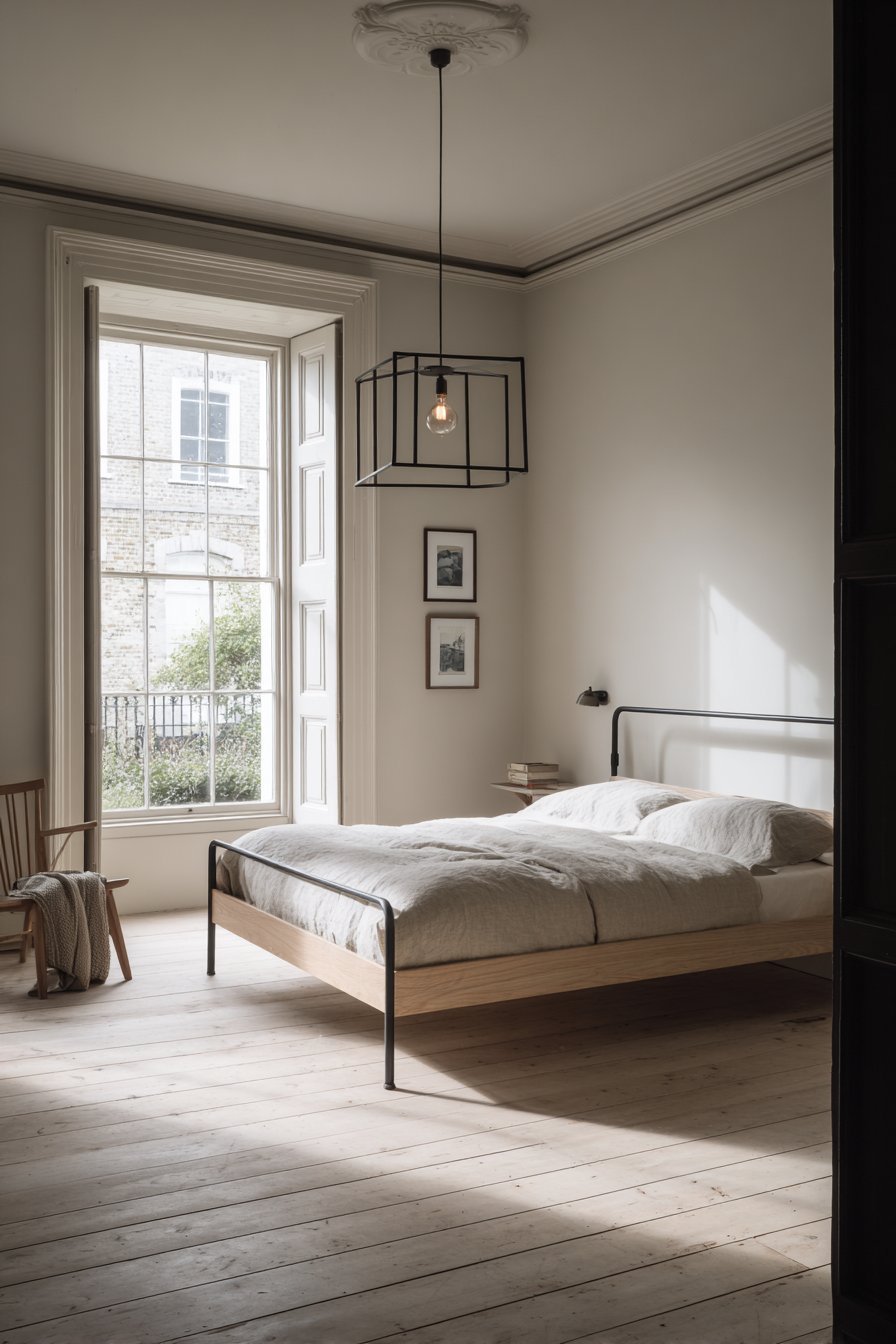
A black metal pendant light hangs beside the bed. Black frames on three small photographs provide graphic contrast. The oak flooring matches furniture wood tones exactly. The restrained selection eliminates visual confusion.
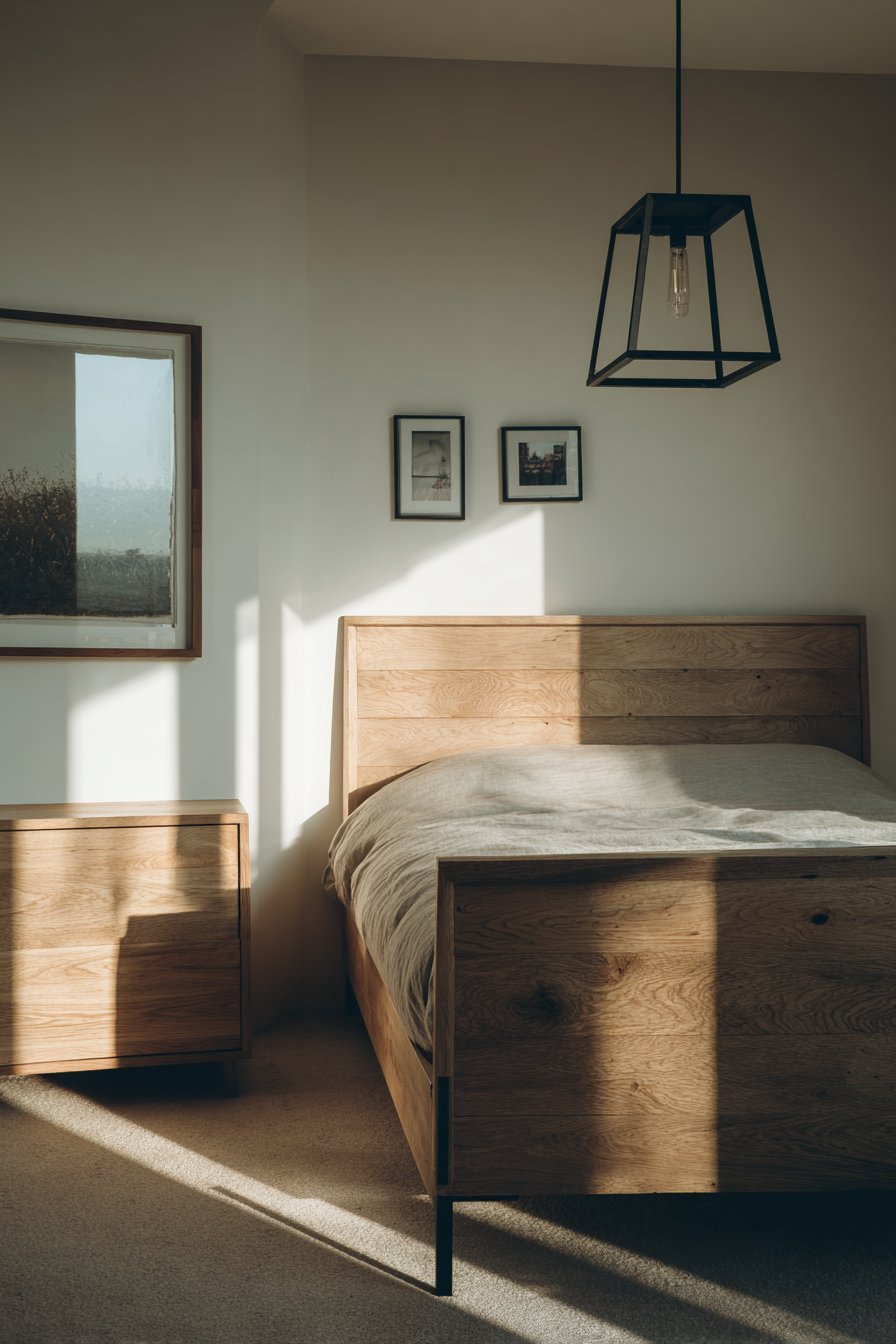
Natural morning light emphasizes material qualities. The white reflects light to maximize brightness. Oak grain patterns add warmth and organic interest. Black accents create visual anchors and definition.
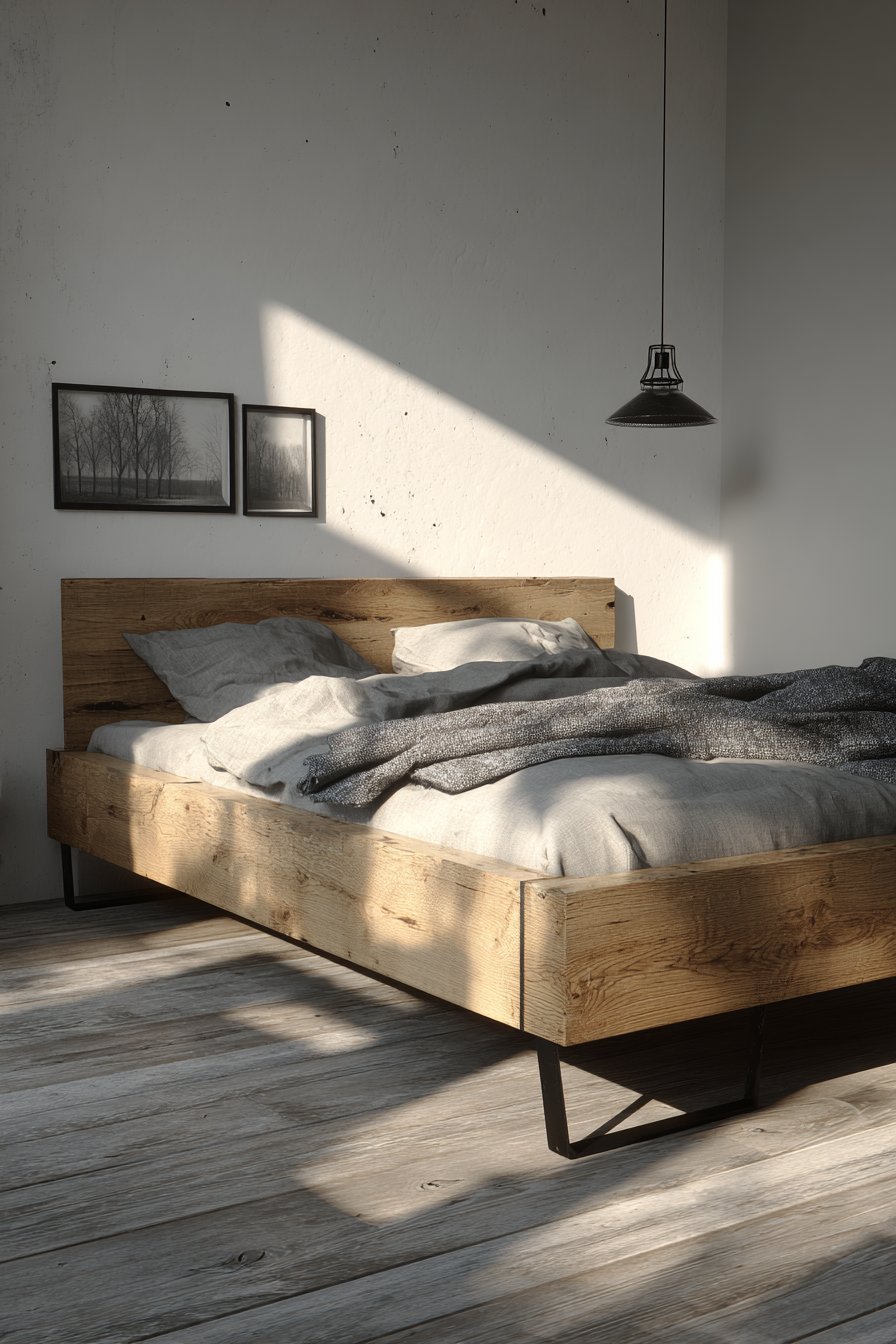
The disciplined approach demonstrates minimalist material curation. Limiting choices prevents visual chaos. Repetition of few elements creates harmony. This strategy works in any size space for cohesive results.
Key Design Tips:
- Limit entire room to three material types maximum
- Repeat selected materials throughout for cohesion
- Use black accents sparingly for maximum impact
- Match wood tones exactly across all furniture pieces
- Choose one white tone and maintain it consistently
- Let material quality shine through limited selection
21. Sustainable Material Selection
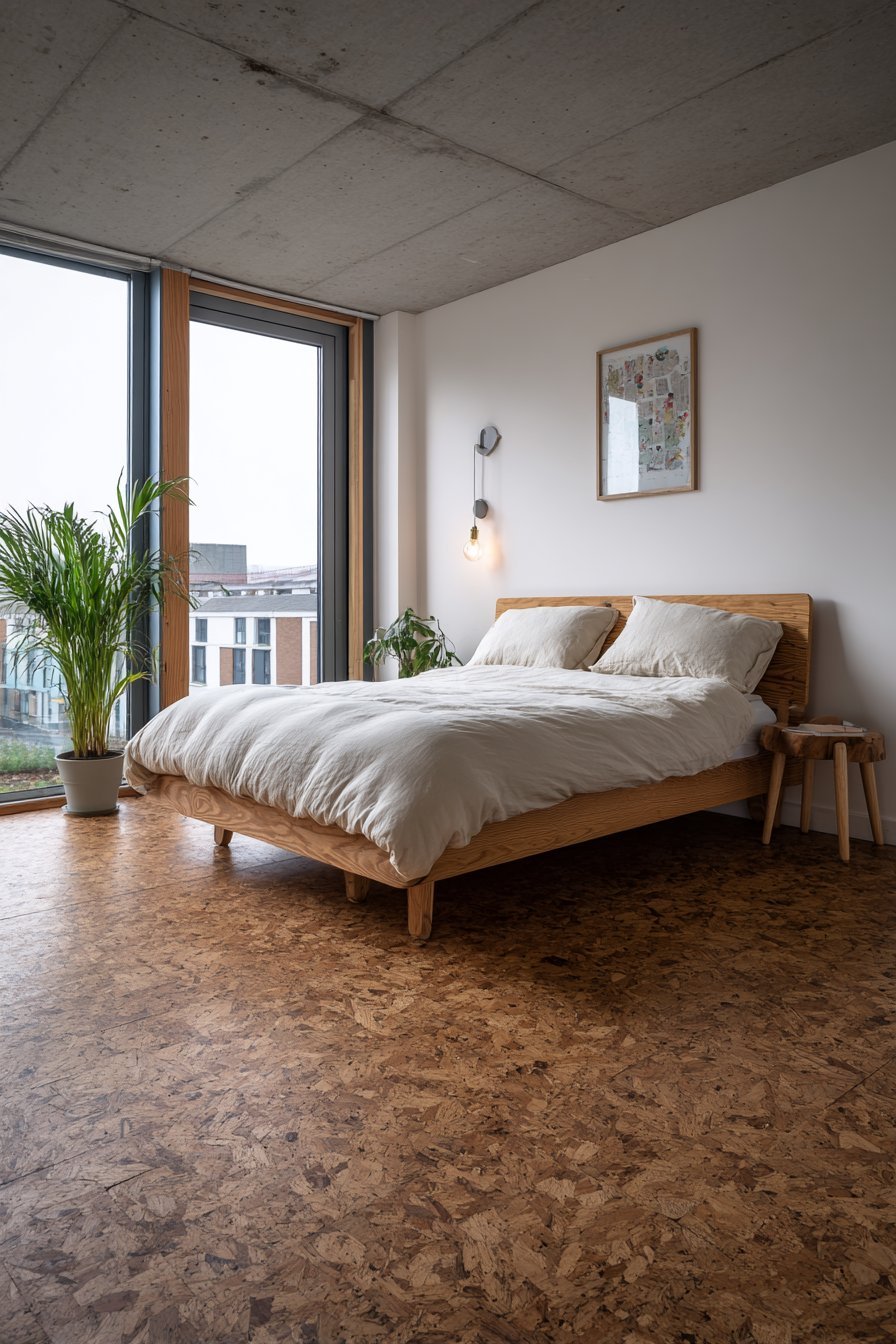
This bedroom prioritizes sustainable material choices. The bed frame uses FSC-certified solid oak. Visible joinery shows traditional woodworking techniques. Organic cotton bedding in natural undyed cream displays slight color variations.
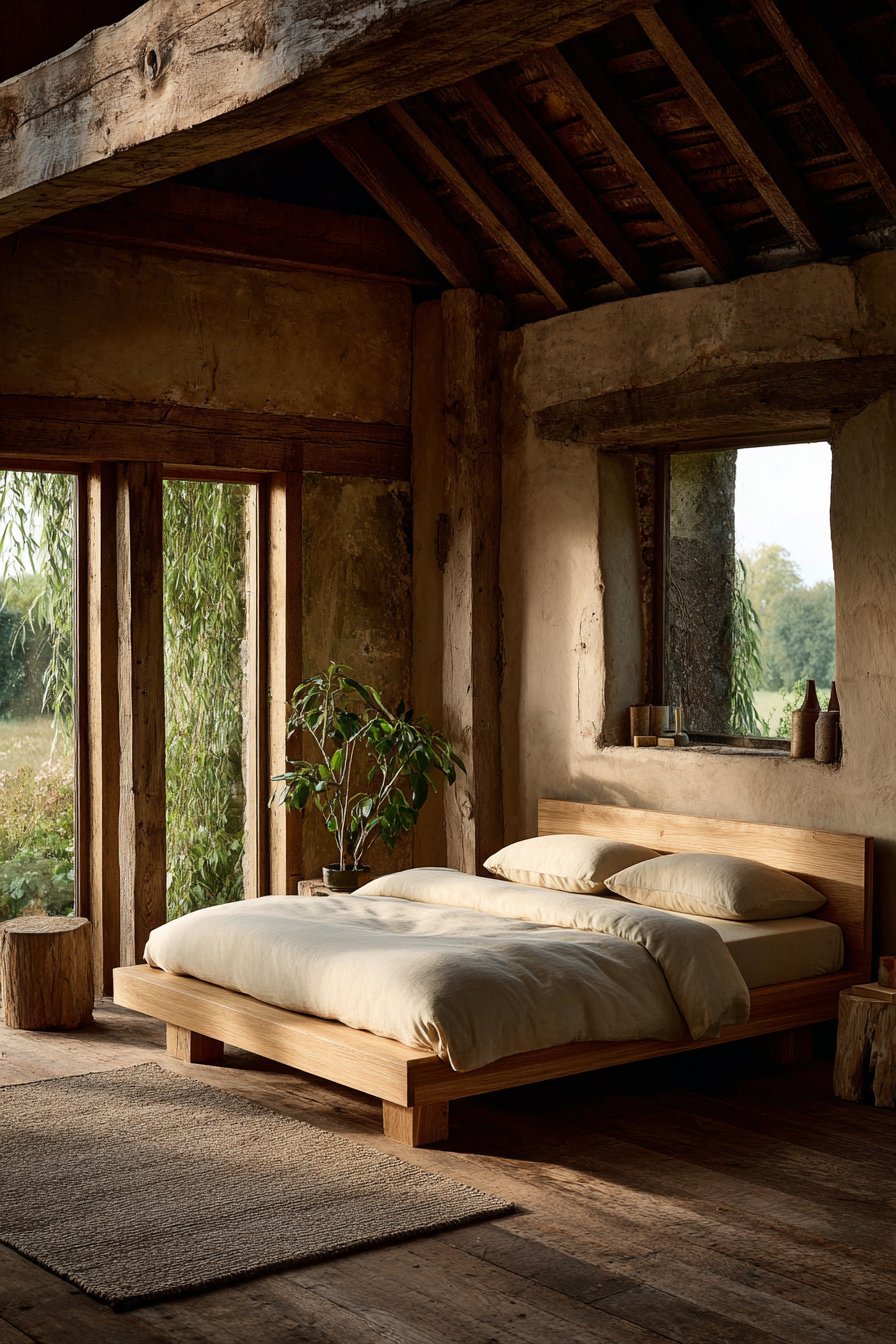
The unbleached fabric celebrates inherent material character. A wool area rug in natural grey shows traditional weaving variations. Cork flooring provides warmth underfoot with honeycomb texture. A single houseplant purifies air naturally.
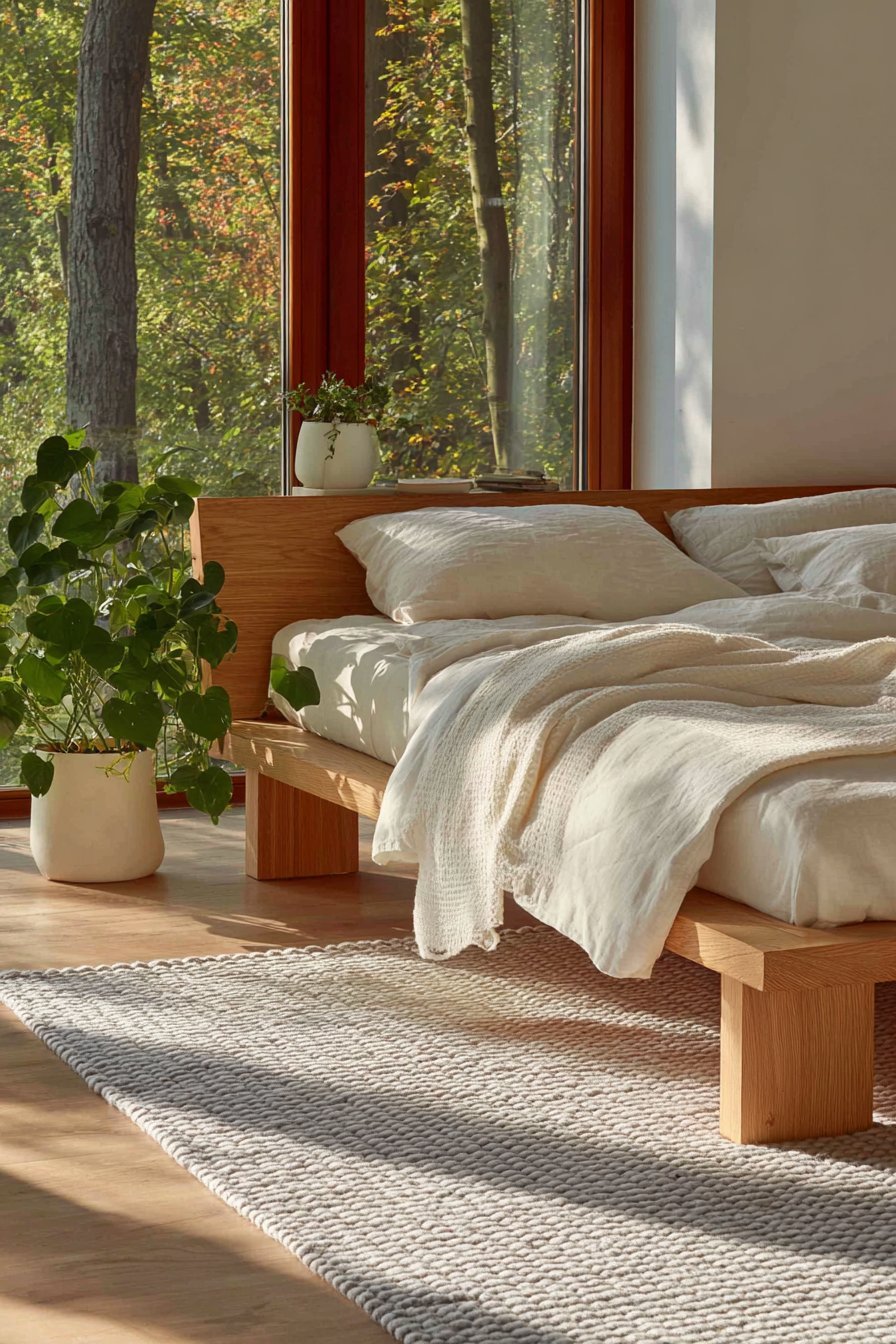
Large windows with minimal frames maximize natural light. This reduces artificial lighting requirements substantially. The eco-conscious selections support environmental responsibility. Quality natural materials ensure decades of use without replacement.
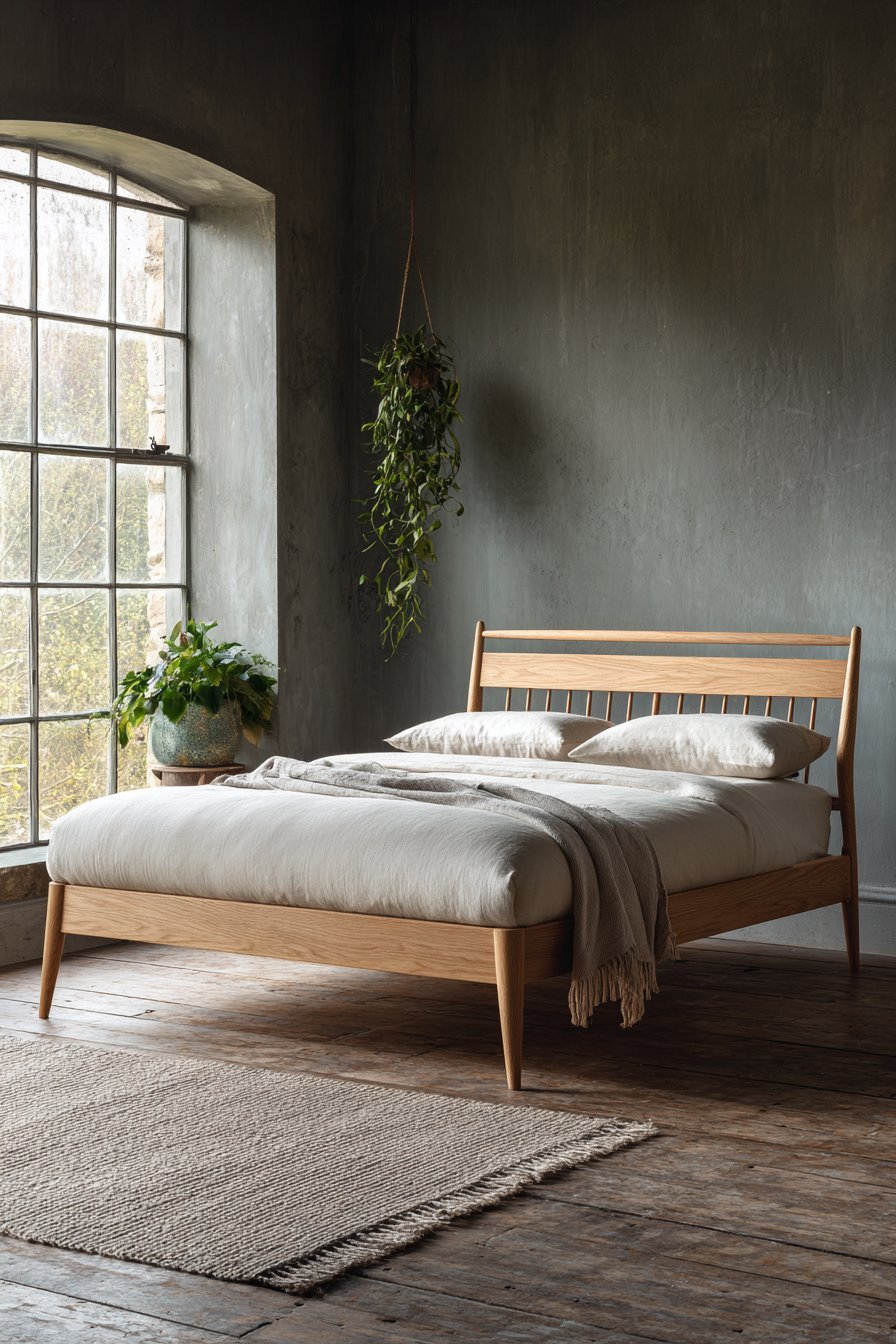
The sustainable approach aligns perfectly with minimalist principles. Both philosophies emphasize quality over quantity. Natural materials age gracefully rather than deteriorate. This creates timeless spaces with reduced environmental impact.
Key Design Tips:
- Specify FSC-certified wood for all furniture purchases
- Choose organic cotton bedding to avoid pesticide residues
- Select cork or bamboo flooring for sustainable options
- Include air-purifying plants like snake plant or pothos
- Install low-E windows to reduce heating and cooling needs
- Invest in quality pieces designed to last decades
22. Geometric Symmetry and Precision
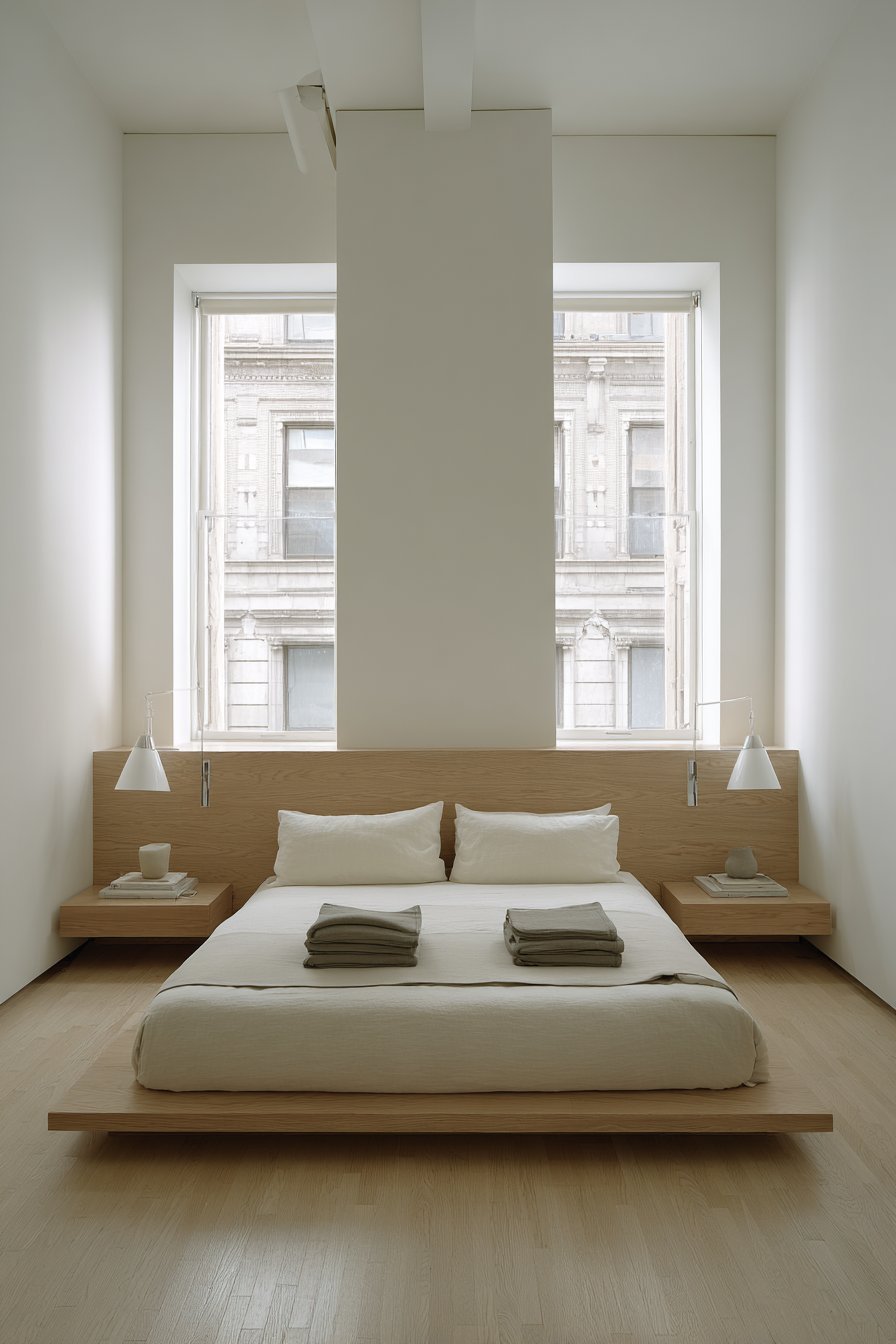
Perfect symmetry defines this minimalist bedroom. The bed centers exactly on the wall. Two identical nightstands flank at equal distances. Matching wall-mounted lamps create mirror image arrangement.
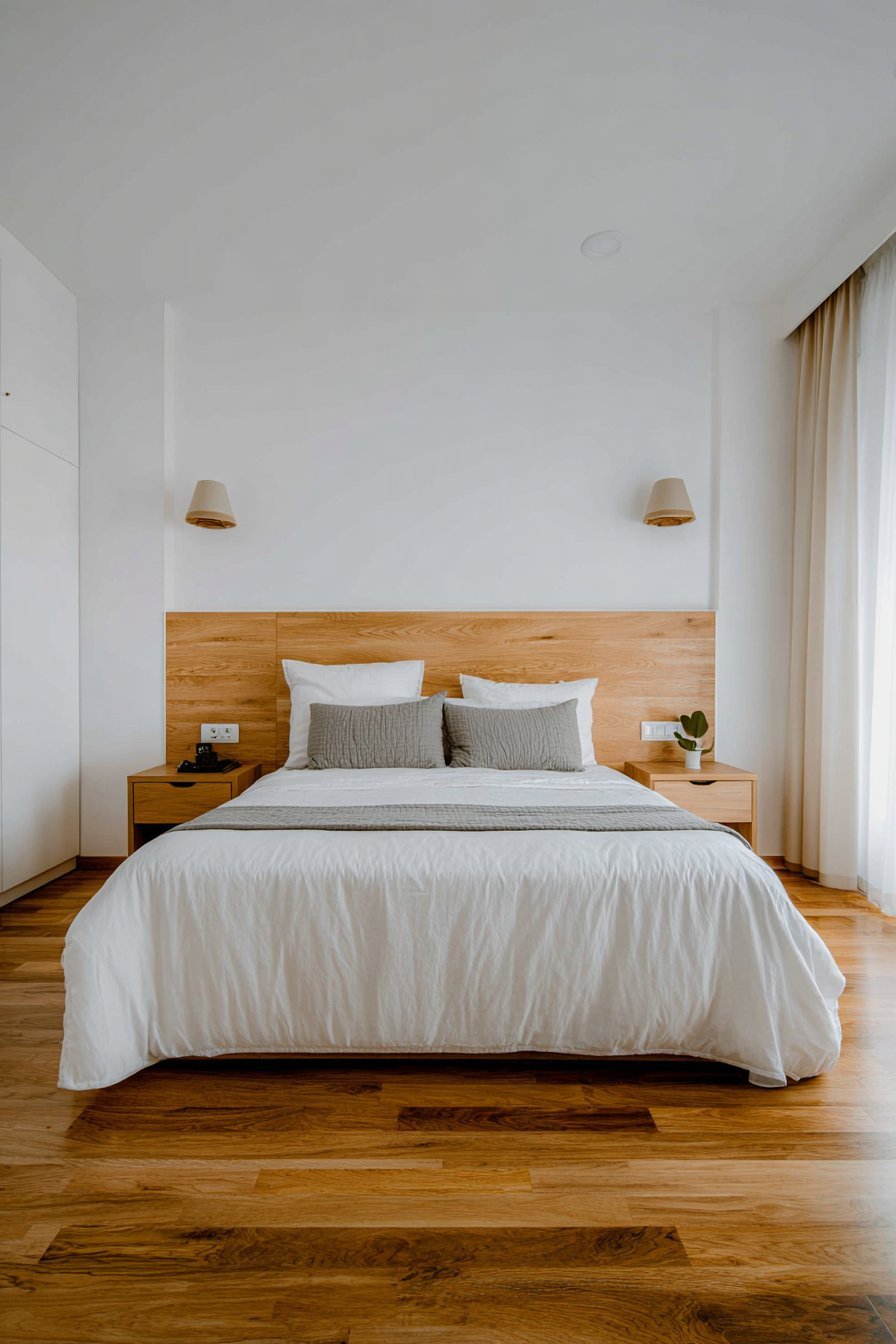
The headboard is a simple horizontal panel in light oak. Bedding folds with mathematical precision. Every element mirrors across the central axis. White walls and oak flooring provide neutral backdrop.
Natural light enters from centered windows above the bed. The bilateral symmetry creates visual harmony through balance. The precise alignment appears effortless but requires careful planning. The geometric order produces psychological calm.
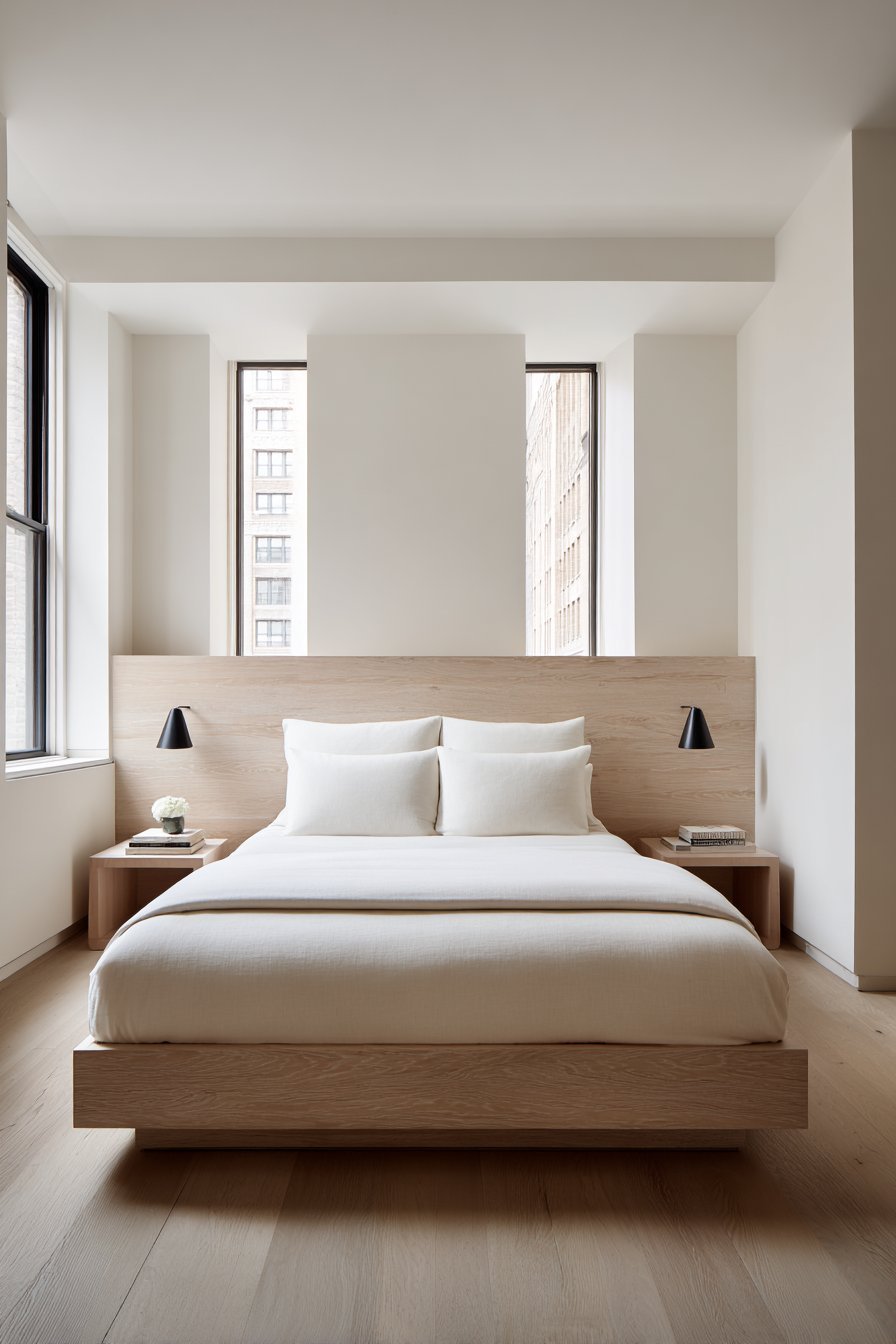
This demonstrates how minimalism often employs mathematical principles. Symmetry creates instant visual balance and order. The precise spacing and alignment feel inherently right. The result is a room that satisfies on multiple levels.
Key Design Tips:
- Measure precisely to achieve perfect symmetry
- Use identical pairs of furniture and lighting
- Center beds on walls for balanced composition
- Align window placement with bed centerlines when possible
- Maintain equal negative space on both sides
- Check alignment from multiple viewing angles
23. Built-In Sleeping Alcove
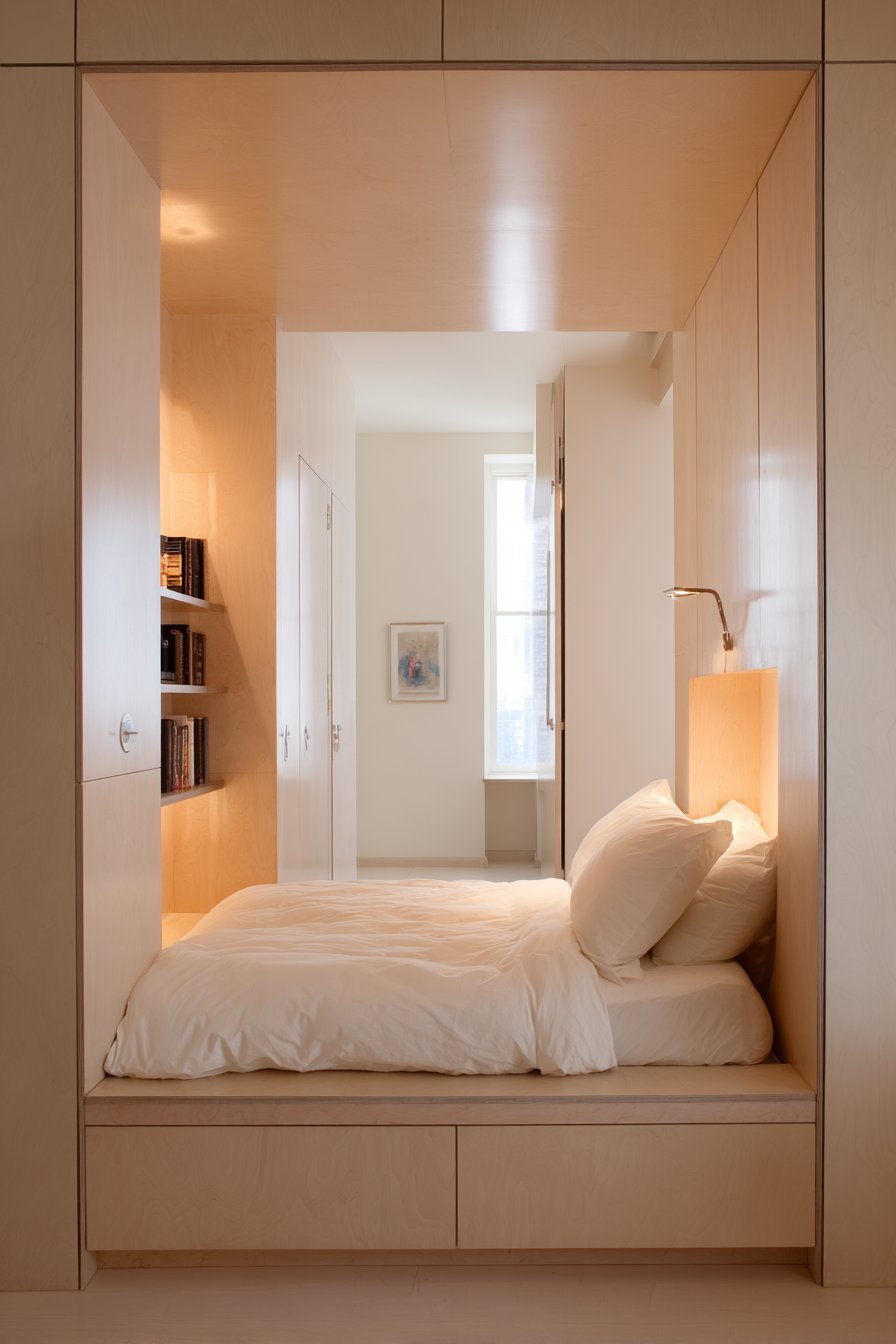
A built-in sleeping nook creates cozy enclosure. The platform bed integrates into a recessed wall space. Light oak paneling covers three sides without doors. The alcove creates distinct zone within larger room.
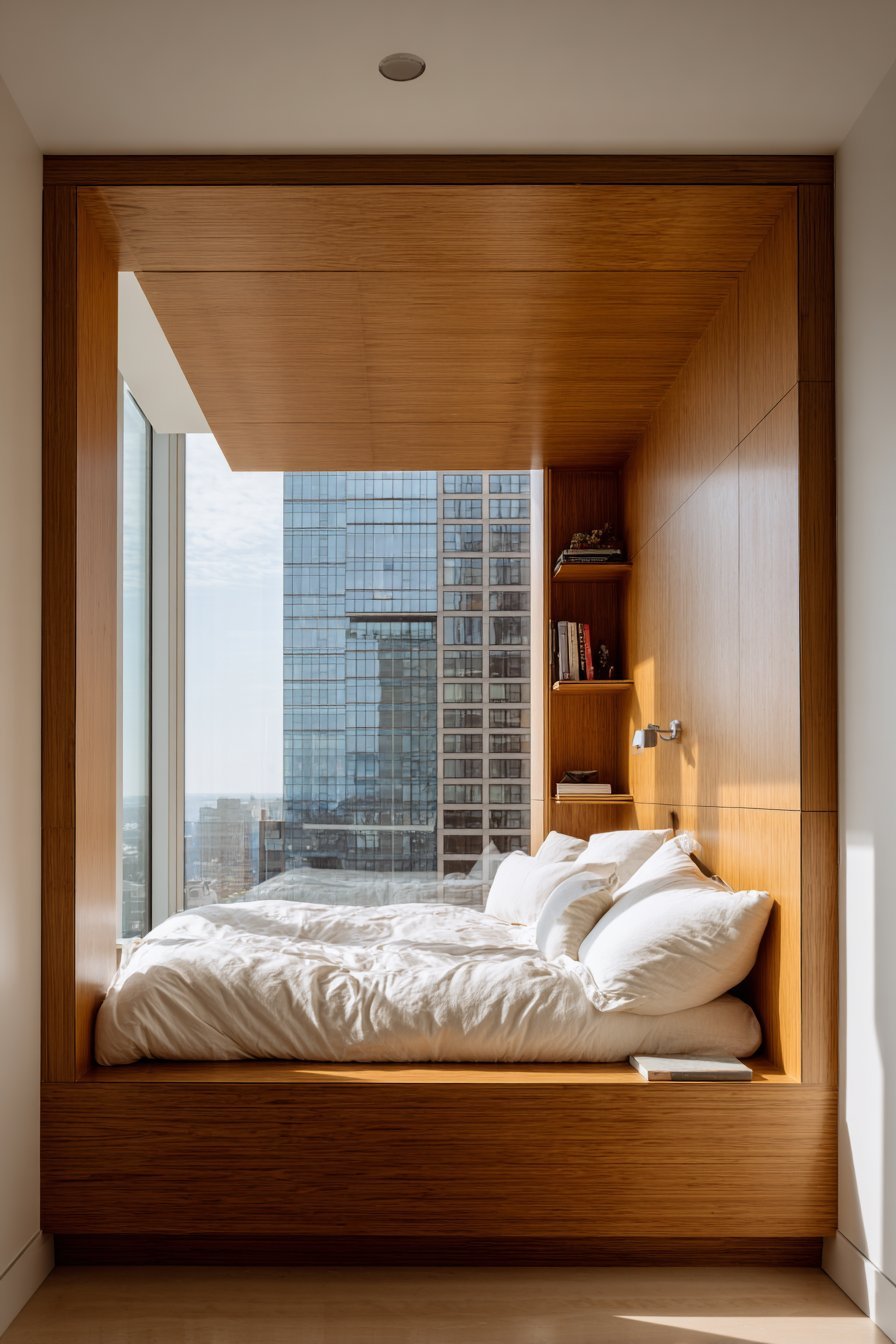
A single reading light recesses into the side panel. White bedding fills the platform completely. The design maximizes space efficiency in compact room. Natural light from main room filters into alcove.
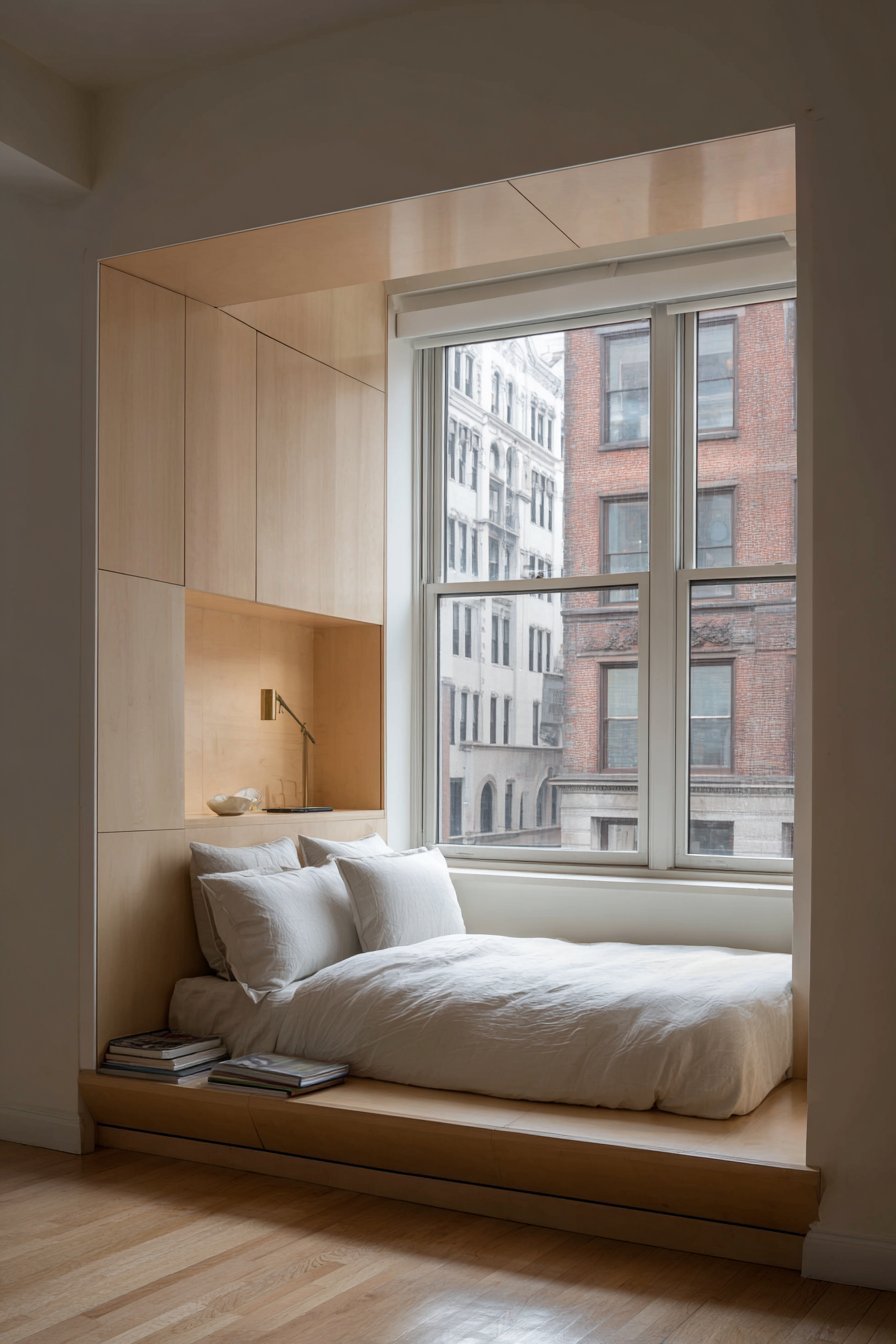
The architectural integration eliminates the need for freestanding furniture. The built-in approach suits small space living perfectly. The enclosed feeling promotes security and restful sleep. The oak paneling adds warmth to the intimate space.
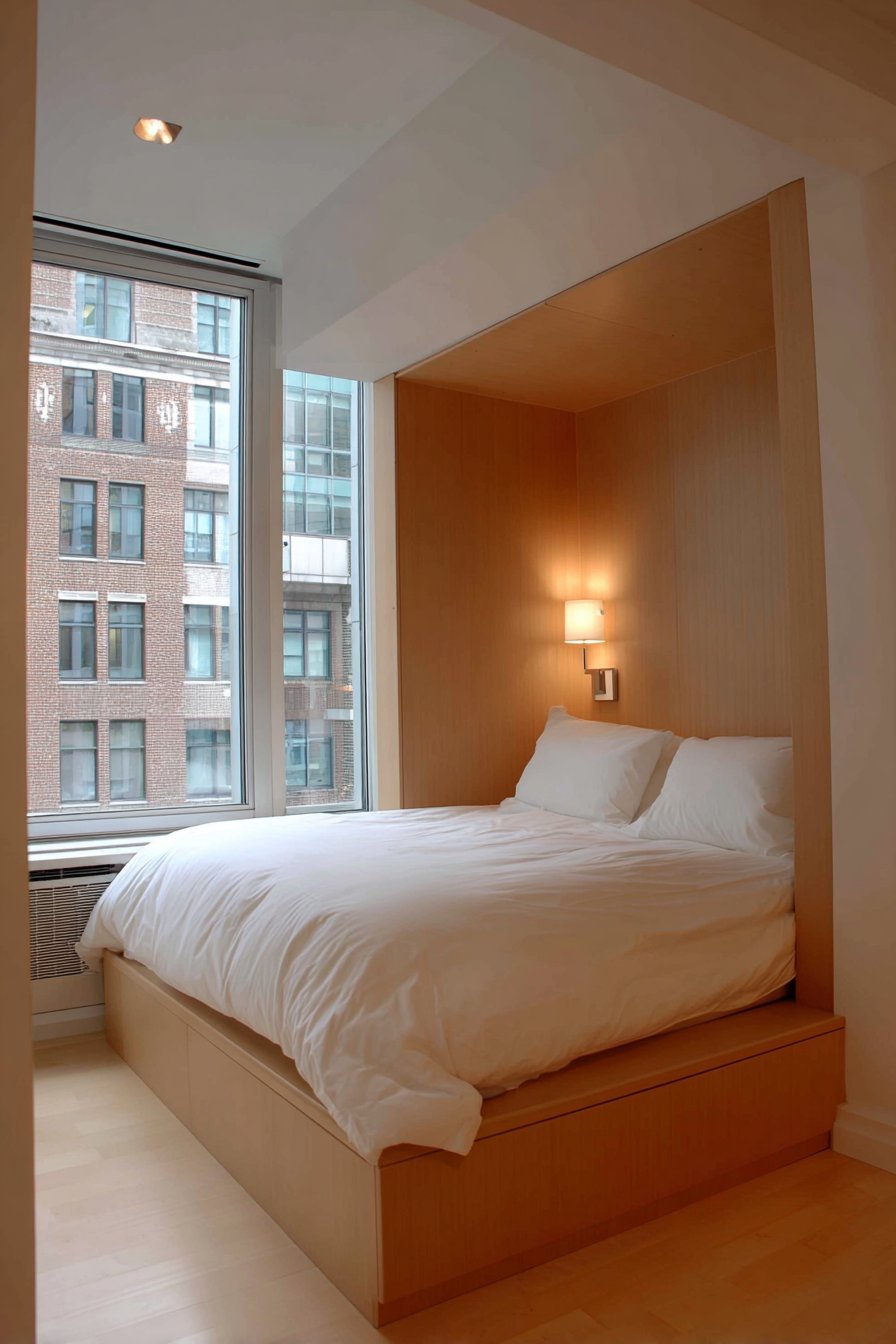
This solution demonstrates minimalist design through architectural elements. Built-ins replace furniture for cleaner aesthetics. The space-saving approach suits urban living challenges. The result feels intentional rather than cramped.
Key Design Tips:
- Design alcoves 6-12 inches deeper than mattress dimensions
- Include recessed lighting to avoid headboard lamps
- Match alcove paneling to room’s primary wood tone
- Position alcoves away from windows for darkness control
- Build platforms with hidden storage underneath
- Leave alcove openings doorless for airflow and openness
24. Handcrafted Functional Art
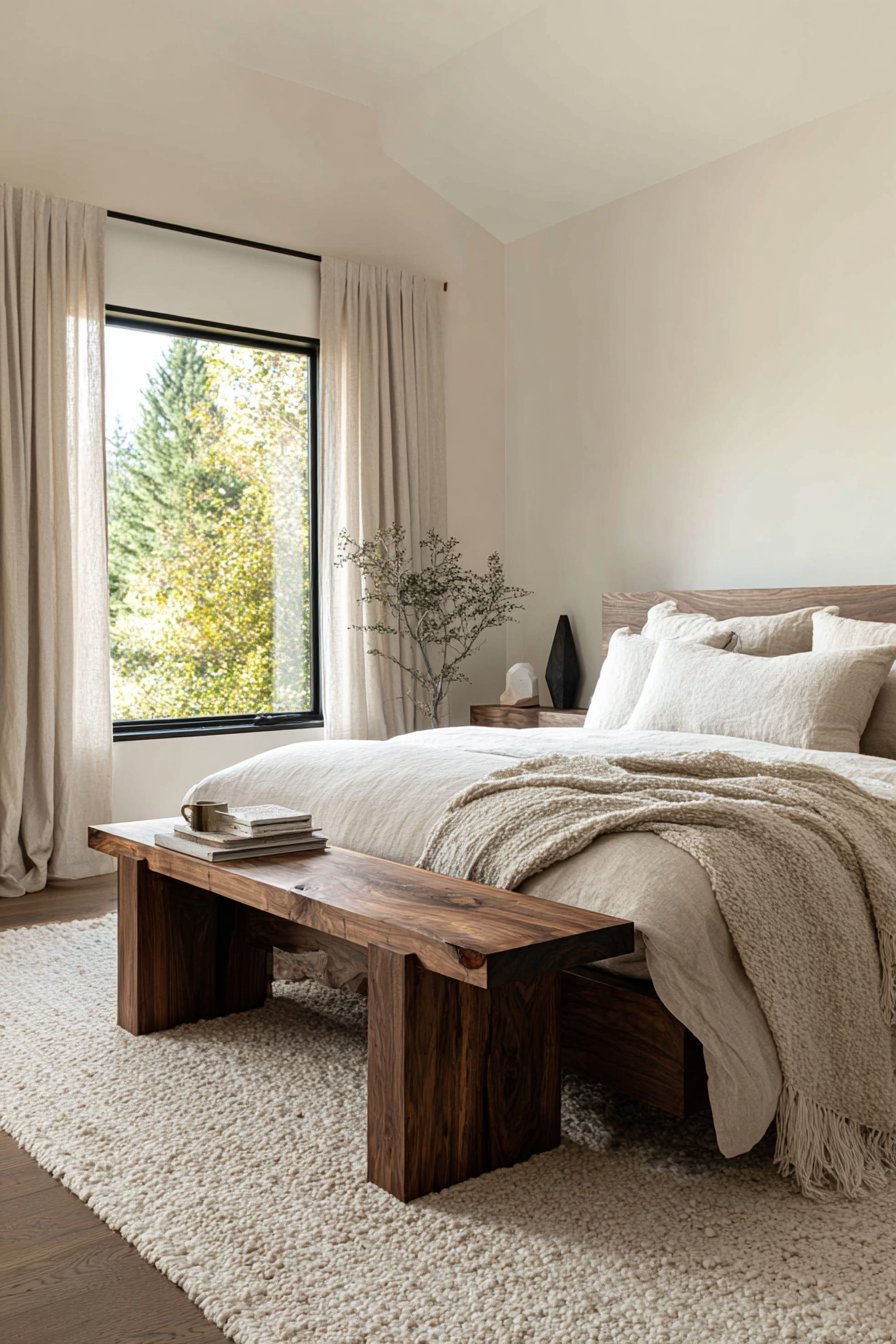
A handcrafted wooden bench sits at the bed’s foot. The piece showcases visible through-tenon joinery at each corner. Solid walnut construction displays natural grain variations and knots. Hand-rubbed oil finish highlights the wood’s depth.
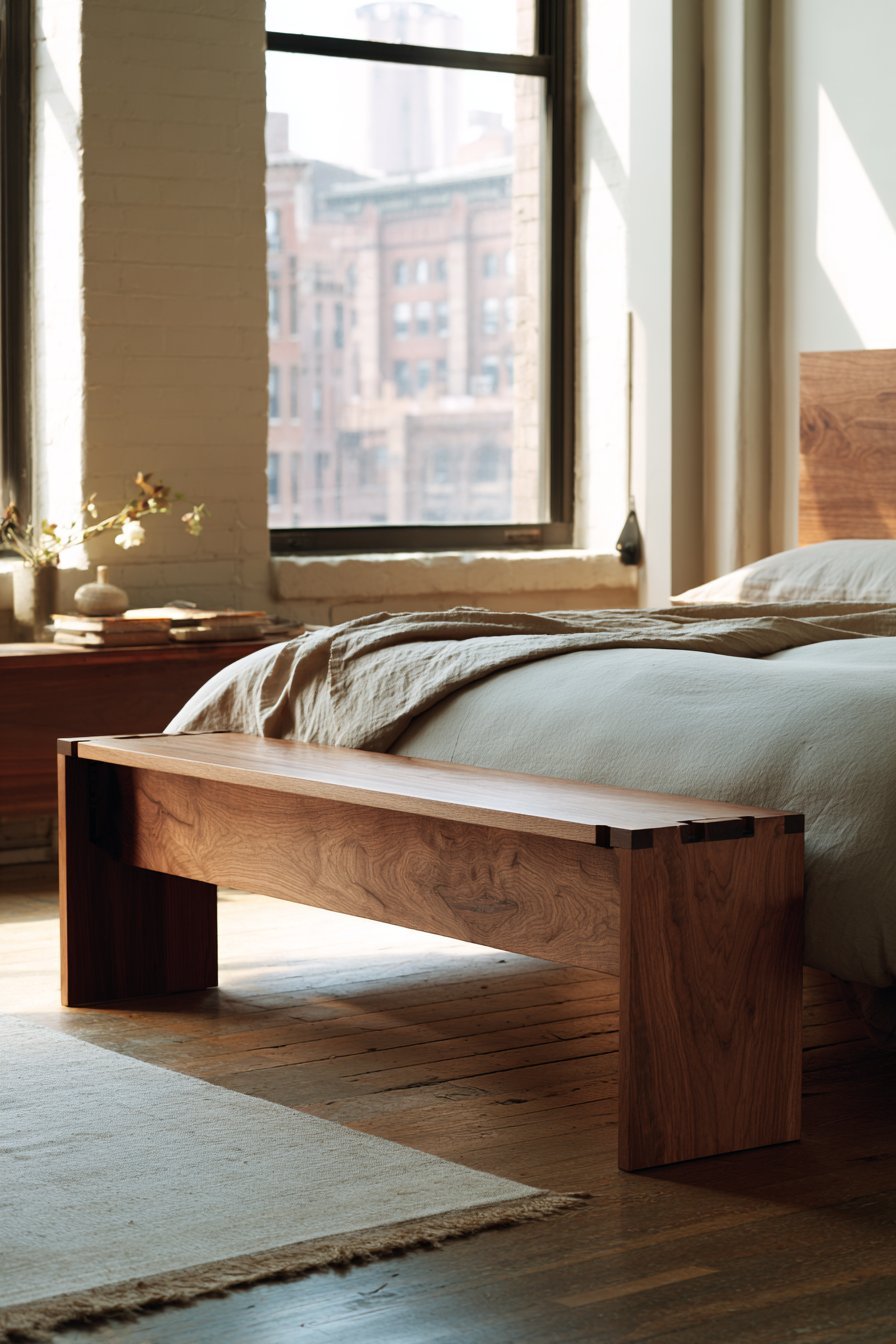
The bench serves both as seating and clothing organization. Its sculptural quality makes it the room’s focal point. The honest construction celebrates traditional craftsmanship. Within the spare environment, quality becomes obvious.
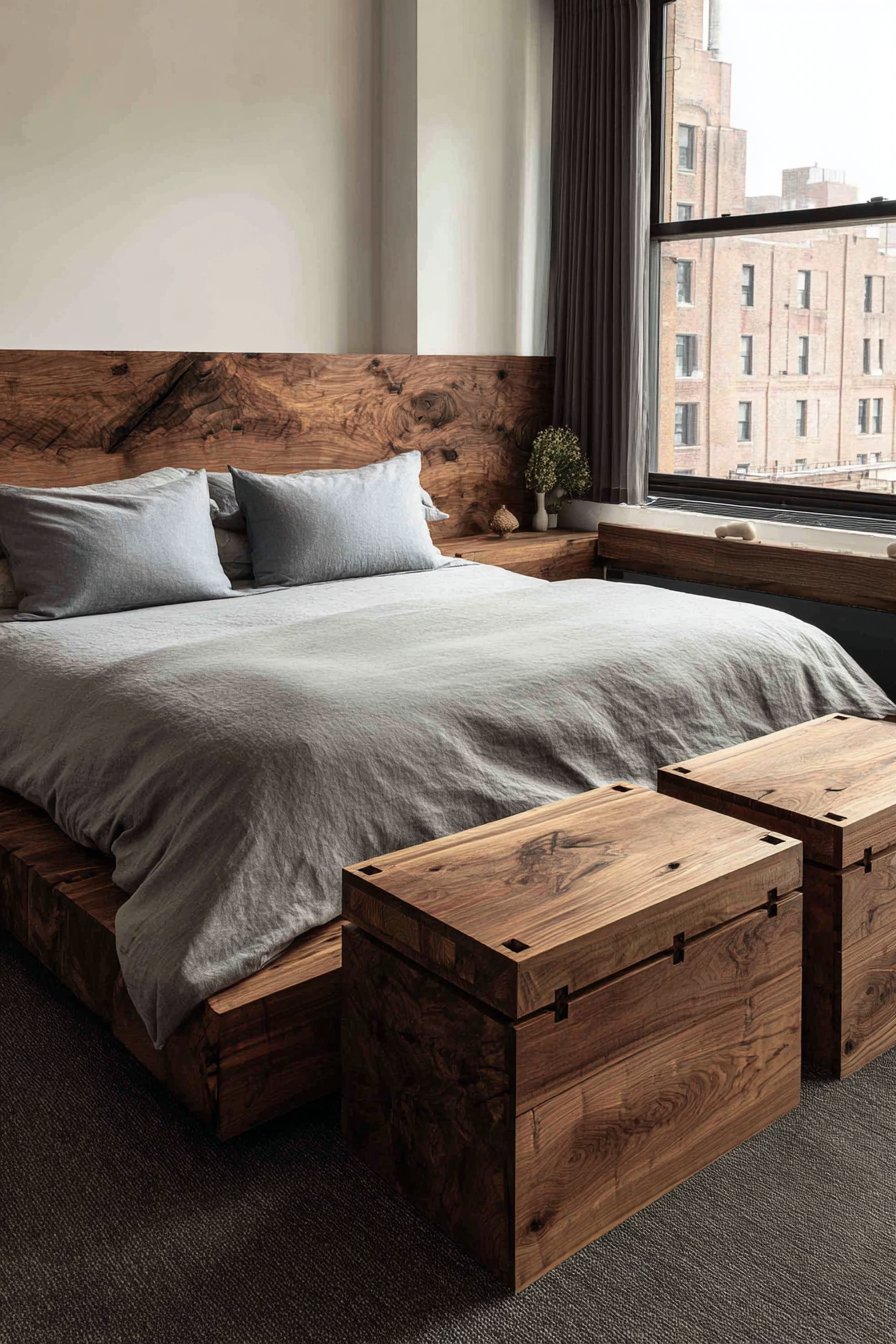
Natural window light emphasizes the hand-worked details. The wood’s depth and character stand out dramatically. The piece represents investment in lasting quality. The craftsmanship deserves display in the minimal setting.
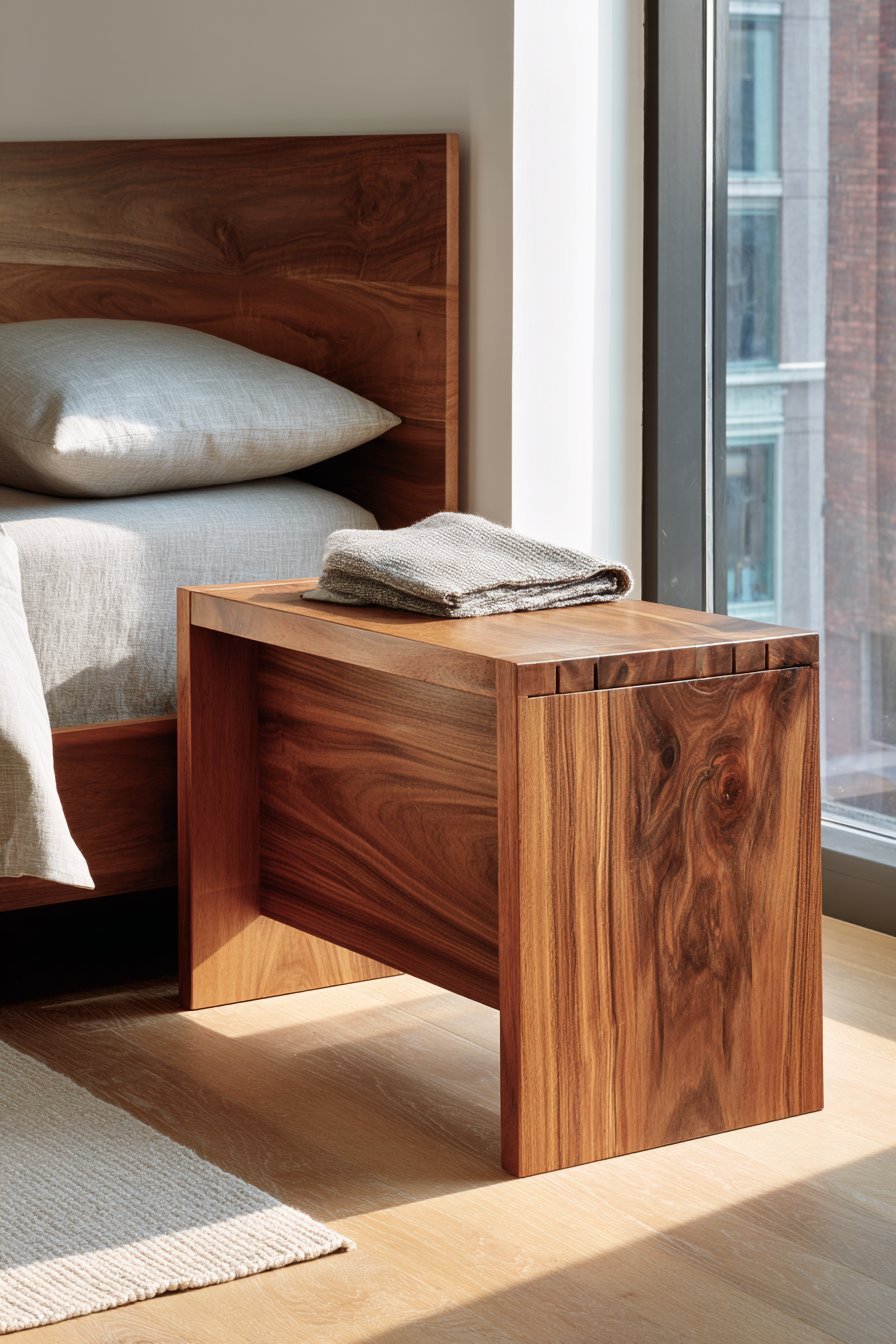
This demonstrates minimalism’s appreciation for quality over quantity. One exceptional piece outweighs multiple mediocre items. The authentic materials and visible joinery tell a story. The functional art enriches the space immeasurably.
Key Design Tips:
- Invest in one statement furniture piece per room
- Choose visible joinery that showcases craftsmanship
- Select solid wood over veneer for authentic character
- Apply hand-rubbed finishes to highlight natural grain
- Position handcrafted pieces where light reveals details
- Support local artisans and traditional woodworking methods
25. Layered Lighting Strategy
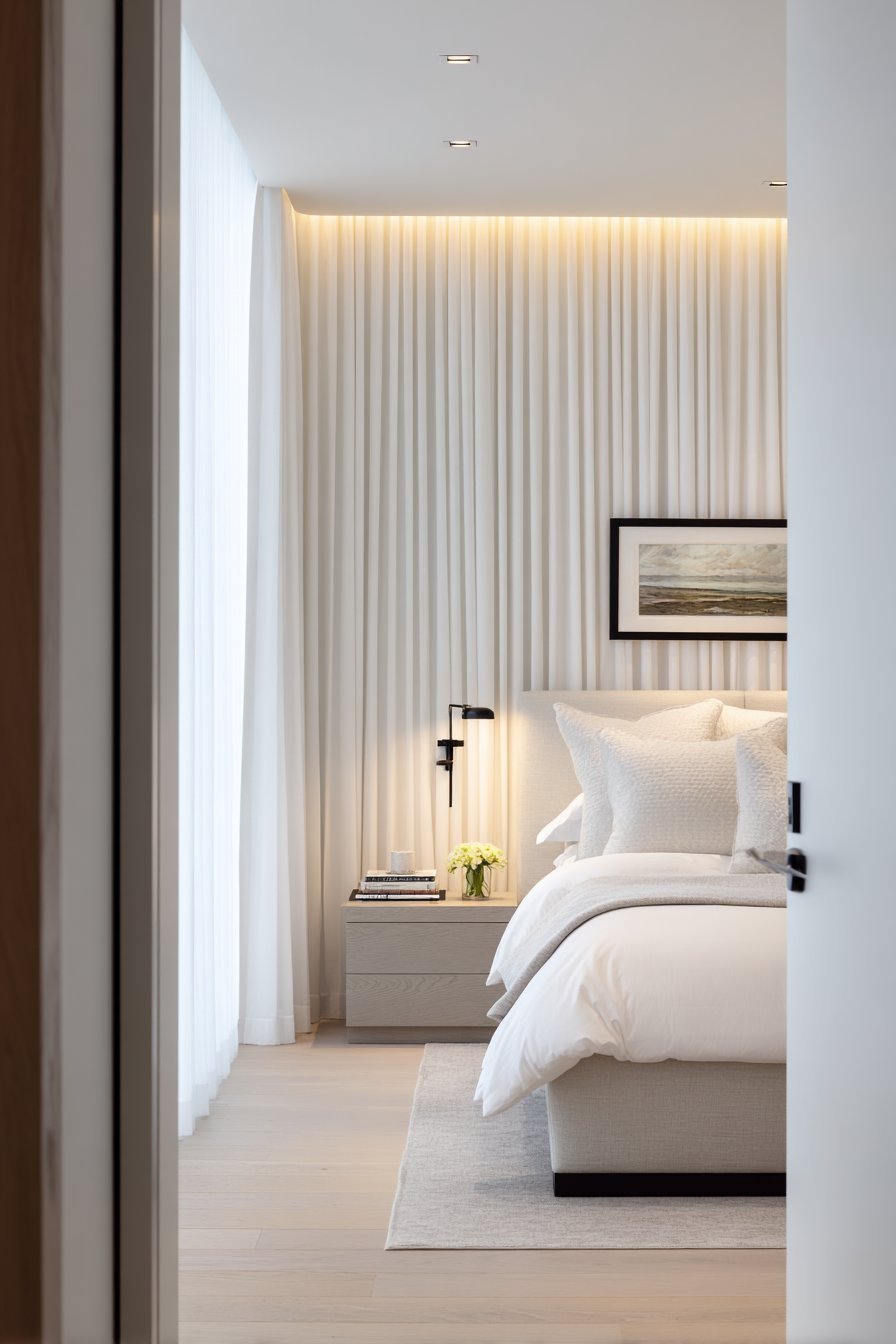
Three distinct light sources work in harmony here. Recessed ceiling lights provide ambient illumination throughout. Wall-mounted adjustable reading lights offer task lighting. Natural daylight filters through sheer linen curtains.
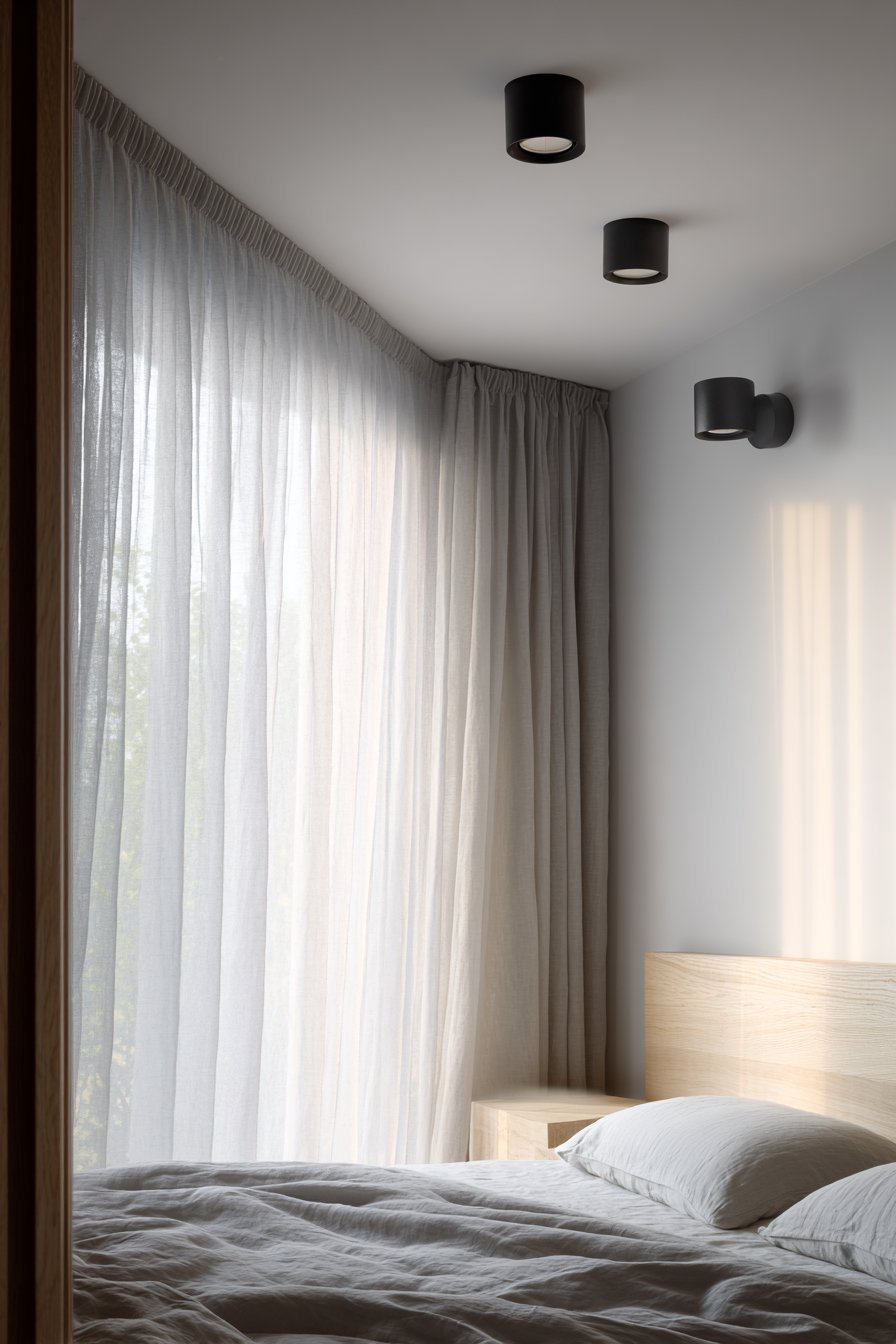
Each light source operates independently via separate controls. The layers create flexibility for different activities and times. Ambient lighting suits general movement and dressing. Task lights focus on bedtime reading needs.
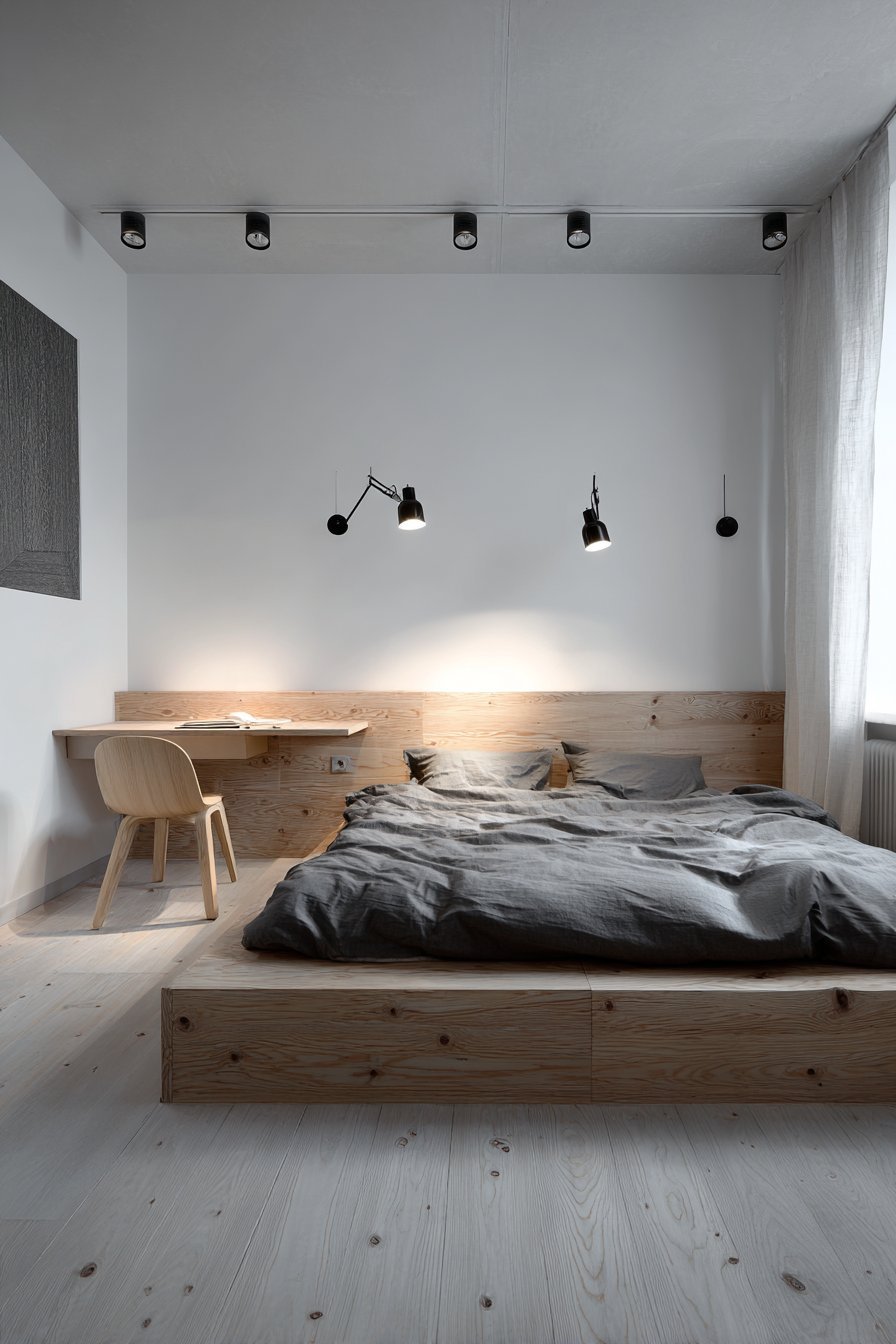
Natural light provides primary daytime illumination. White walls and light wood reflect light efficiently. The minimal aesthetic avoids visual fixture clutter. The concealed approach maintains clean surface lines.
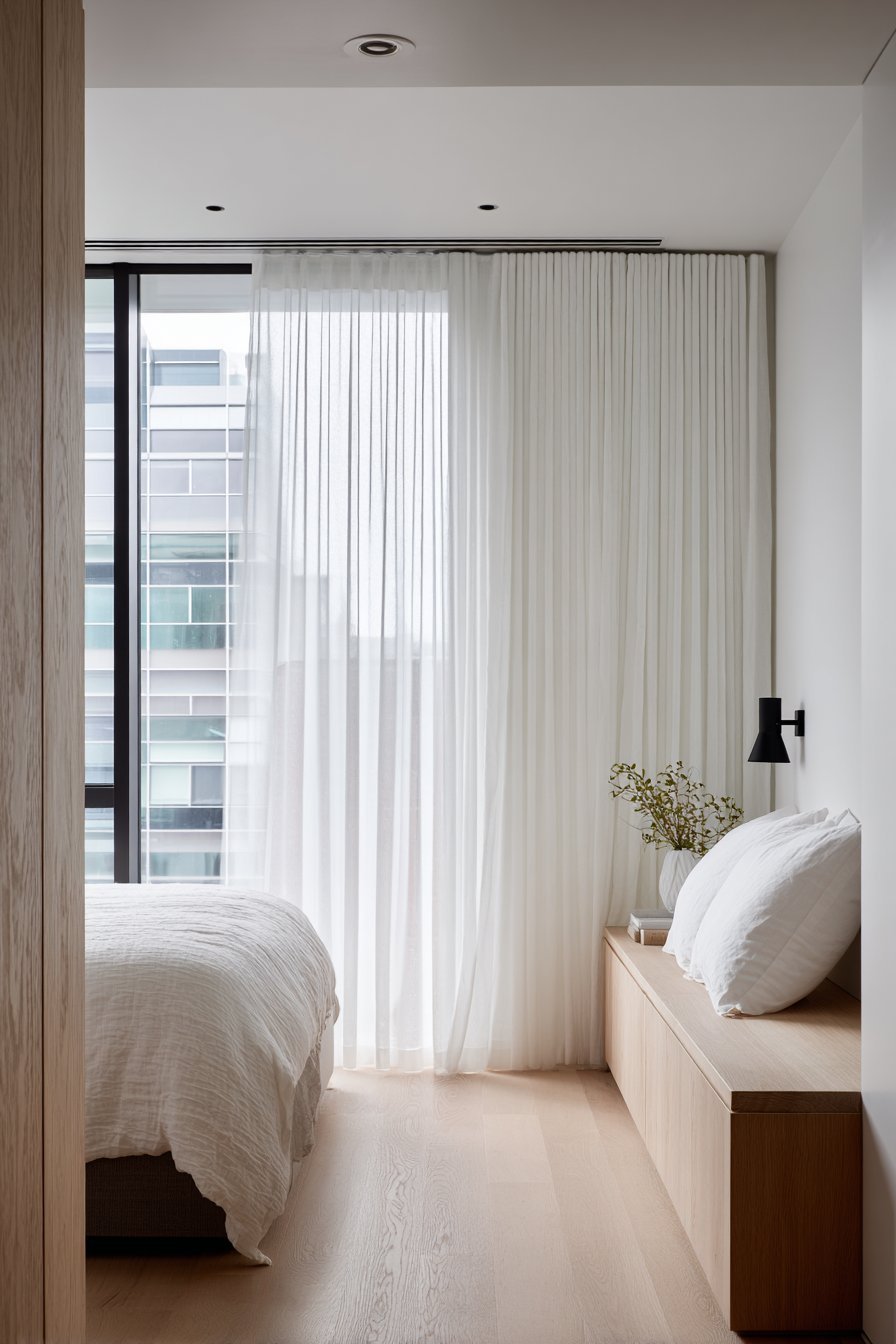
The multi-layered strategy demonstrates sophisticated lighting design. Different situations require different illumination approaches. The flexibility serves varying daily needs perfectly. The result is comfortable light for every activity.
Key Design Tips:
- Install three lighting layers: ambient, task, and natural
- Specify independent controls for each light source
- Choose recessed fixtures to eliminate visual clutter
- Include adjustable reading lights at bed height
- Maximize natural light through window placement and treatments
- Use LED bulbs in warm white for energy efficiency
26. Continuous Wide-Plank Flooring
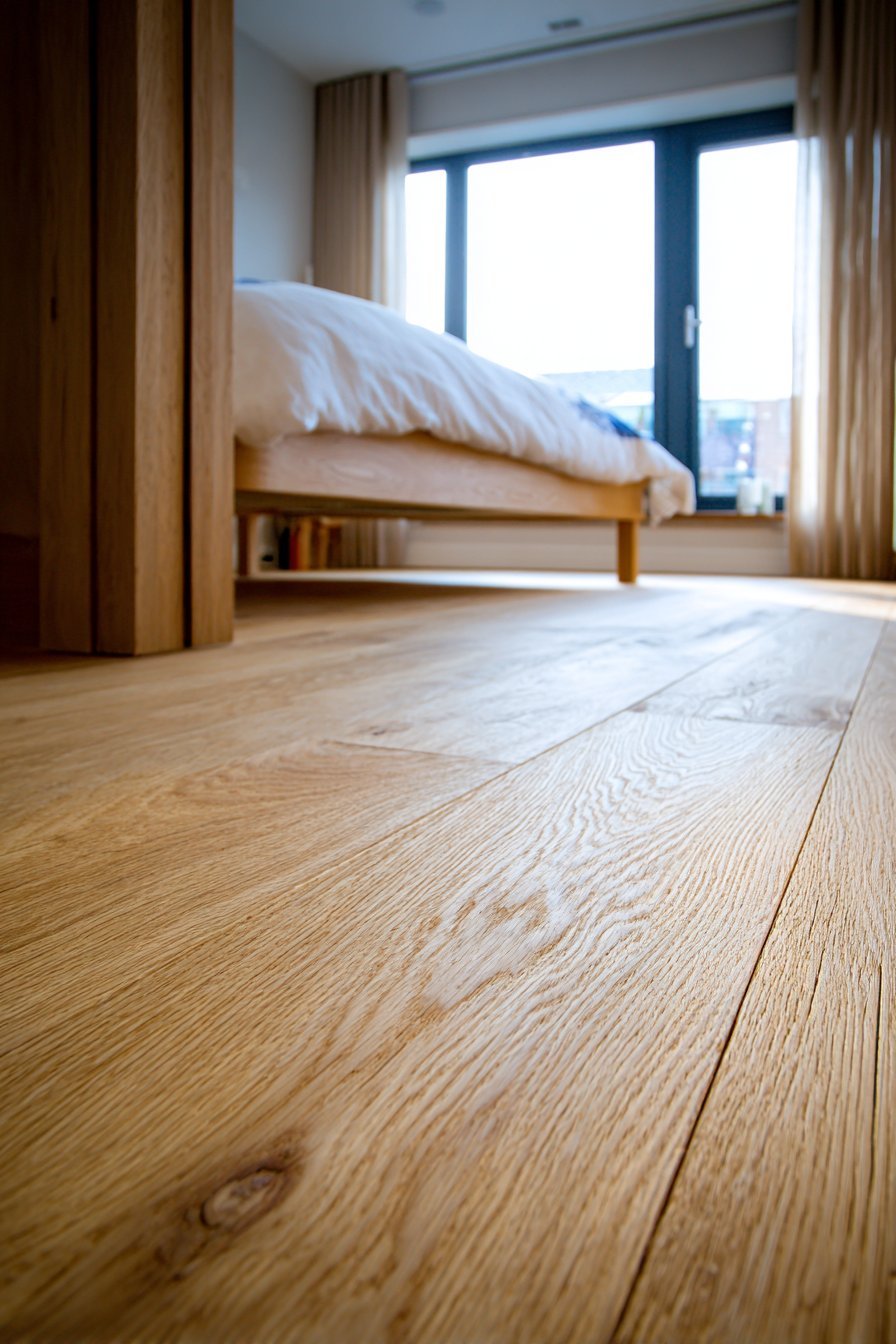
Wide-plank white oak flooring features natural matte finish. Authentic wood grain variations and subtle knots remain visible. The boards run continuously in one direction. No area rugs interrupt the beautiful wood surface.
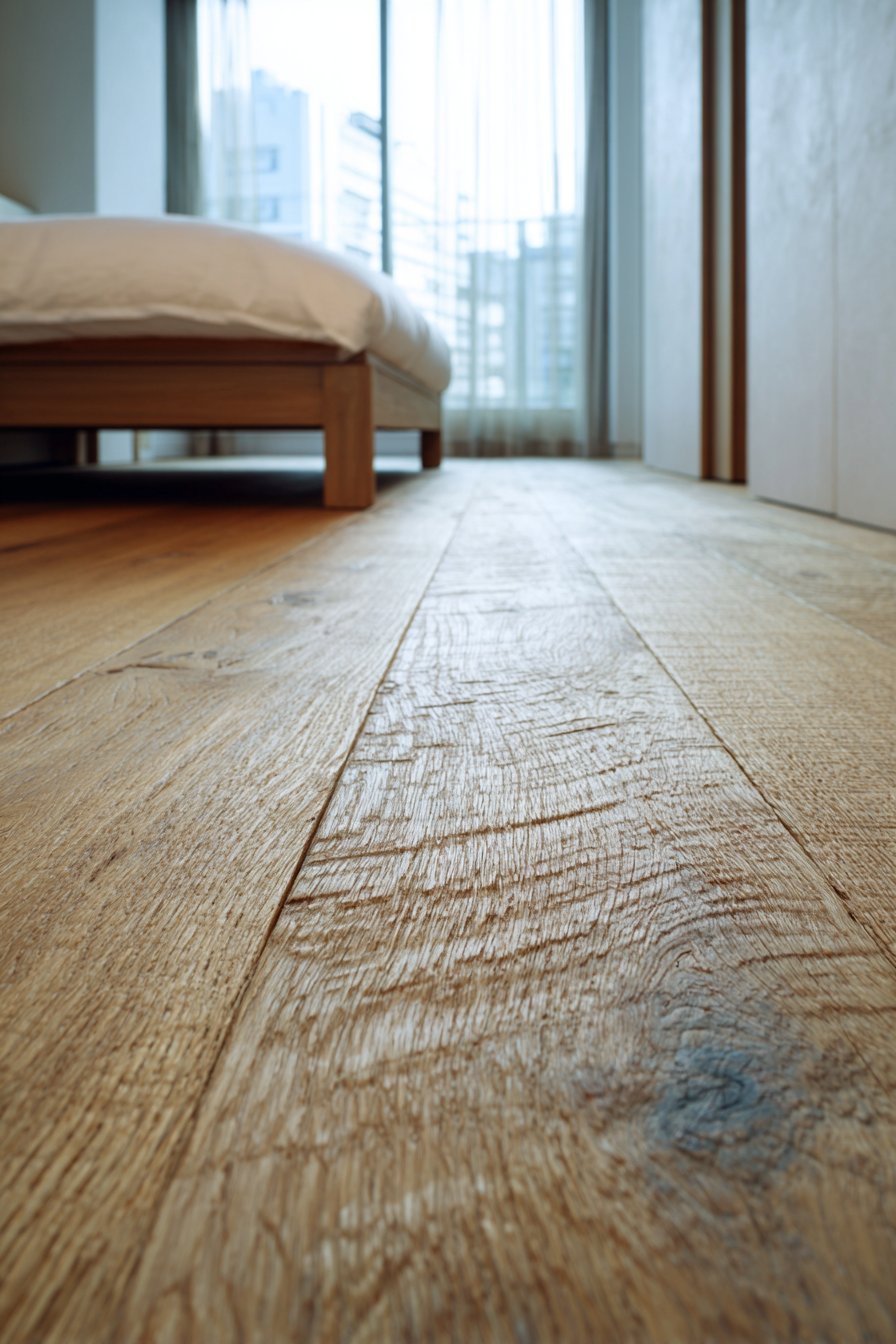
The flooring installation shows precise craftsmanship throughout. Tight seams demonstrate professional installation quality. Natural light from windows creates subtle grain highlights. The simple bed legs allow flooring to continue underneath.
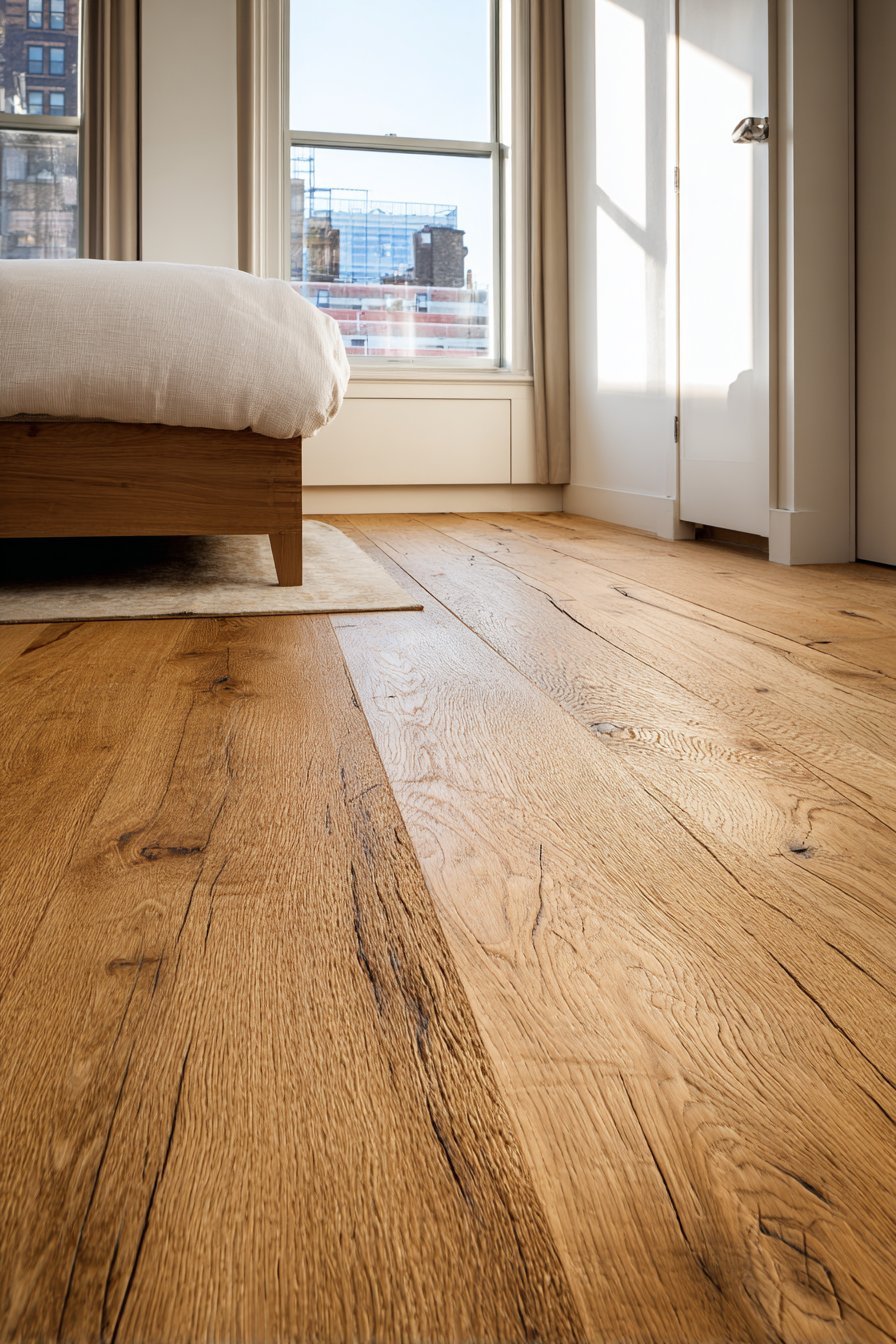
The uninterrupted surface creates visual flow and spaciousness. The wood grain becomes artwork beneath your feet. The natural variations prevent monotony in the single material. The quality material deserves full visibility without covering.
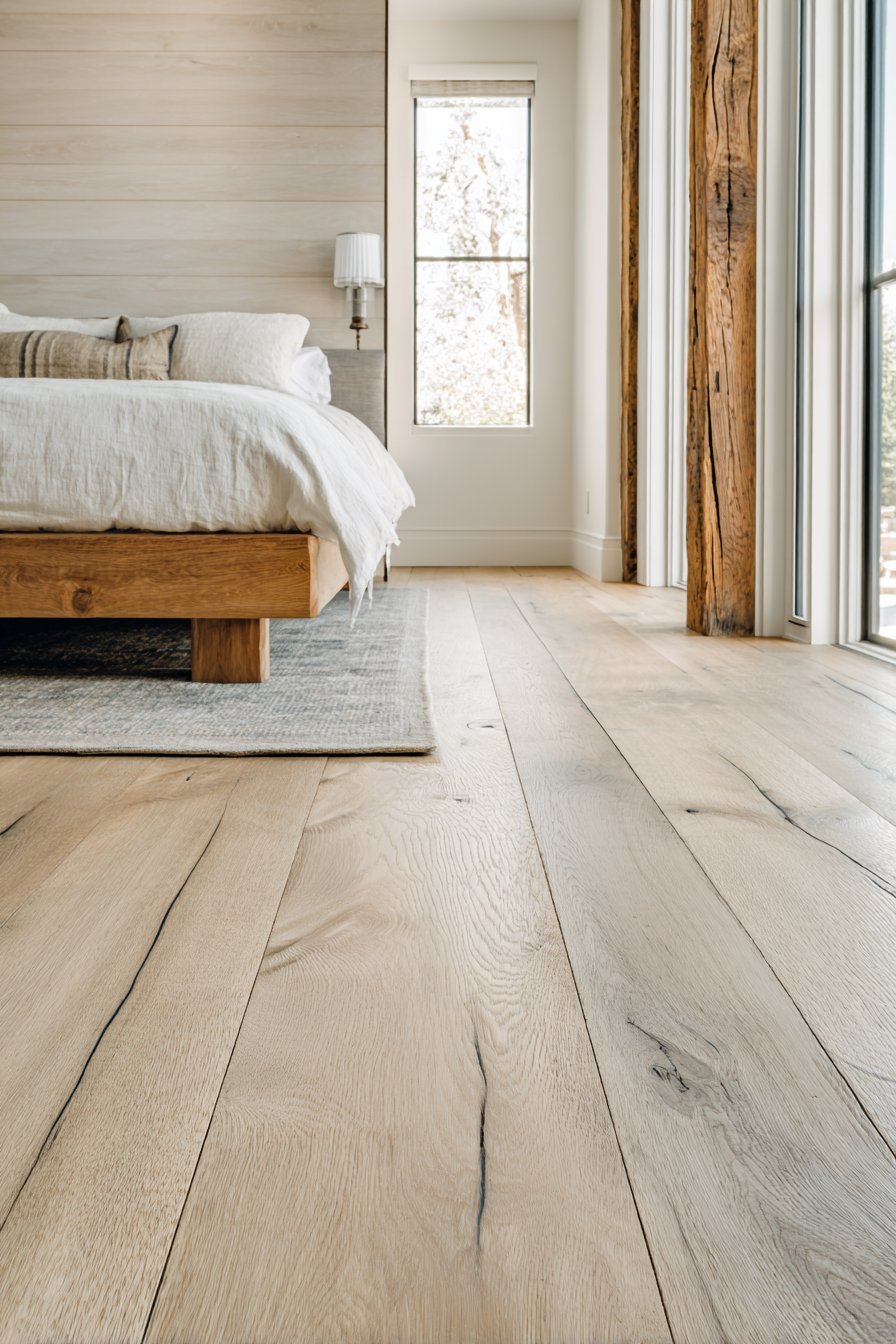
This approach showcases quality materials through uninterrupted surfaces. The continuous flooring emphasizes room dimensions. The lack of rugs simplifies cleaning and maintenance. The result is timeless beauty that improves with age.
Key Design Tips:
- Select wide planks (6-8 inches) for modern aesthetic
- Choose natural matte finishes over high gloss
- Run boards lengthwise to emphasize room length
- Avoid area rugs to showcase beautiful flooring
- Invest in quality installation for tight seams
- Accept natural variations as inherent wood character
27. Biophilic Design Integration
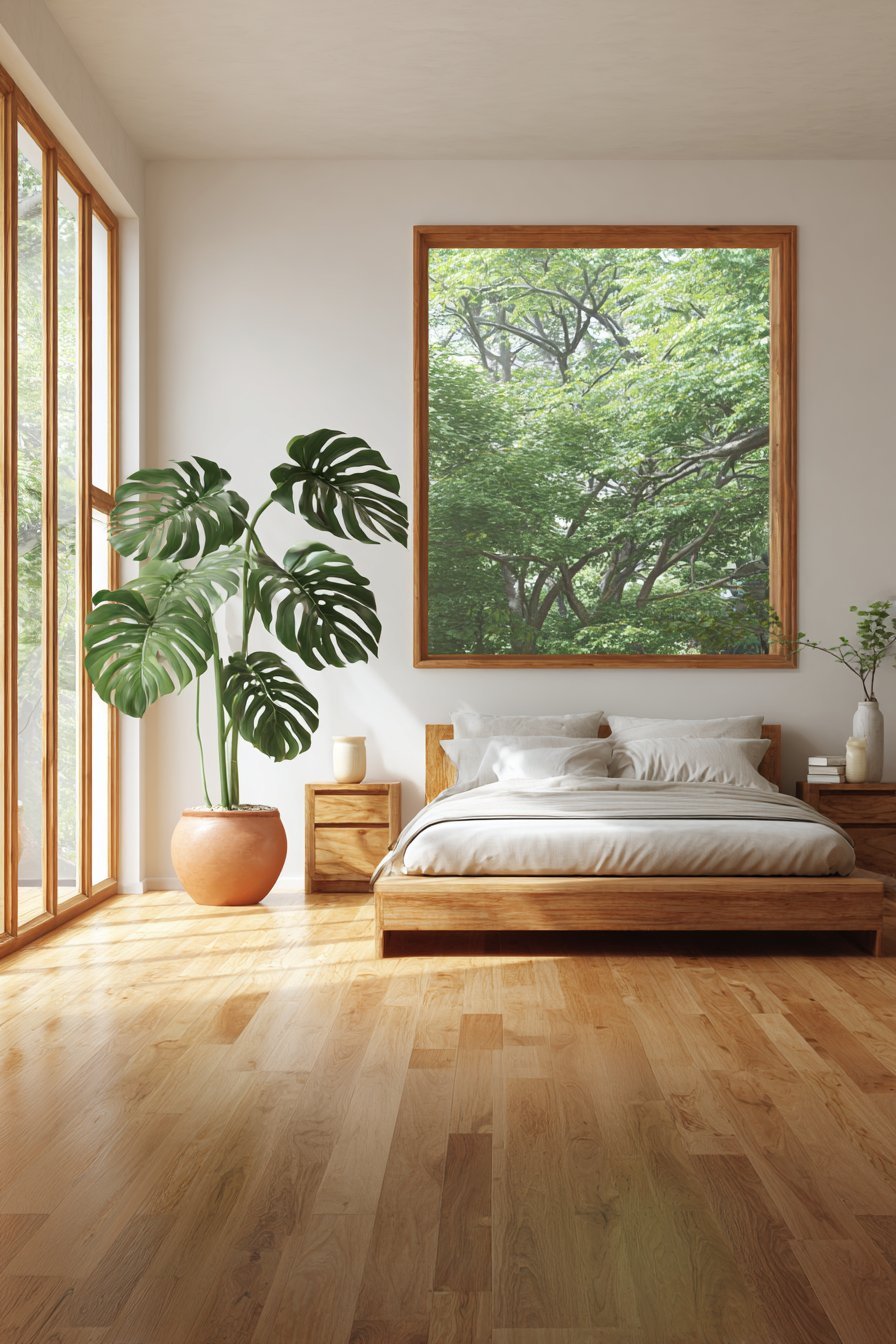
One large window frames natural greenery views outside. The window has no treatments for an unobstructed outlook. Inside, a single large monstera plant provides organic form. The simple terracotta pot suits the minimal aesthetic.
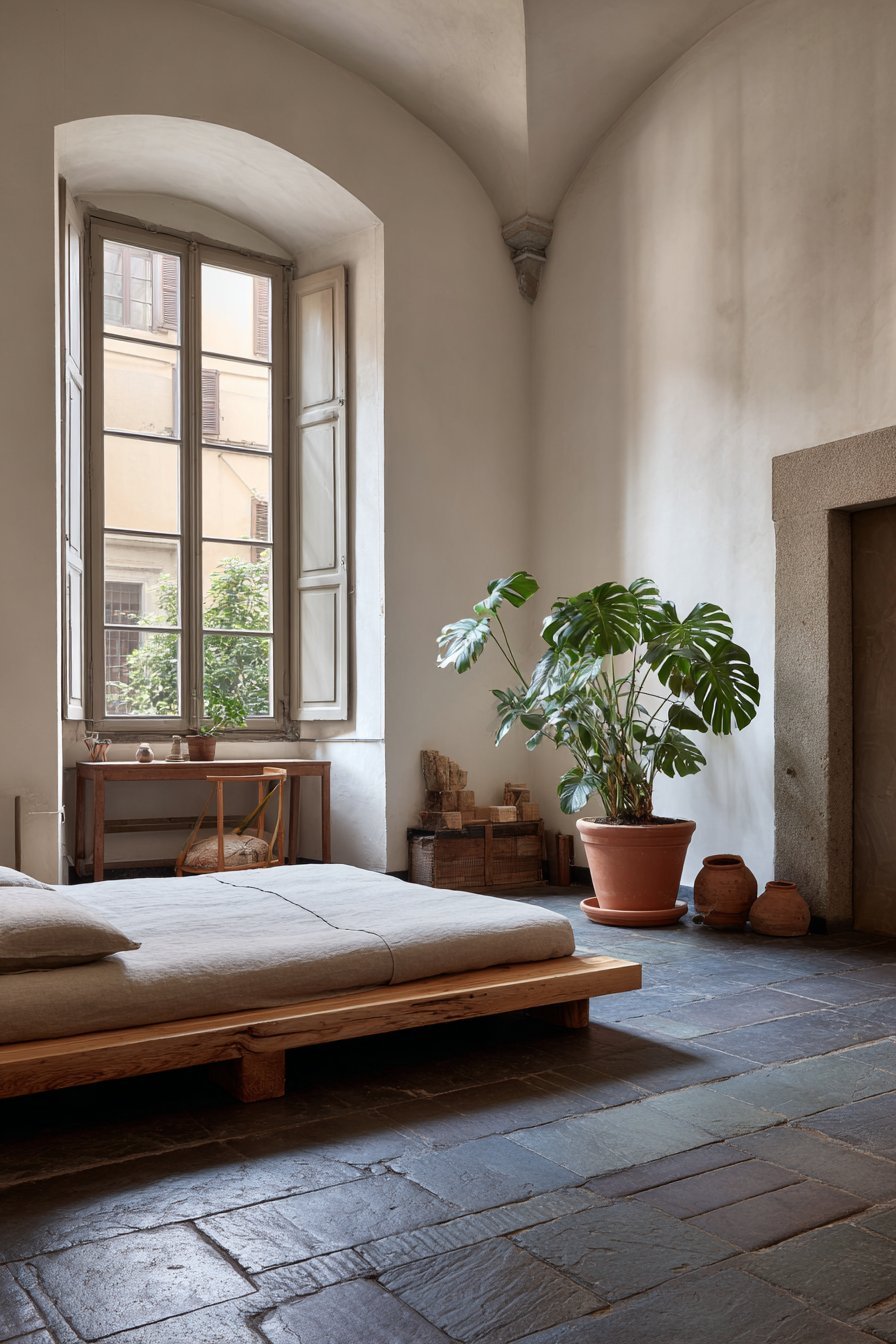
The bed positions to face the window view directly. Light wood furniture echoes natural materials outside. White walls maximize natural light reflection throughout. The outdoor connection becomes the room’s primary feature.
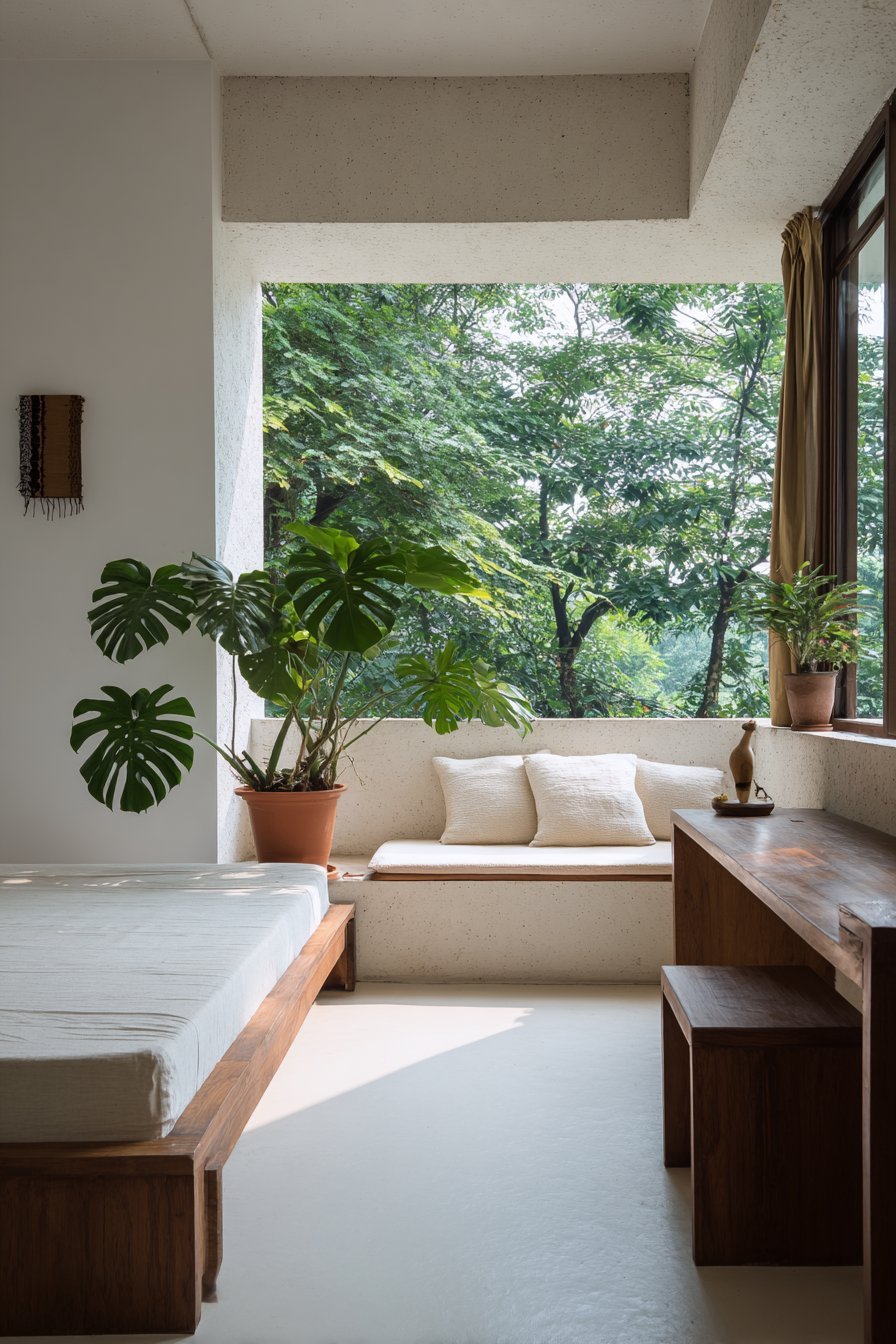
The visual link to nature promotes psychological wellbeing. Natural views reduce stress and improve sleep quality. The indoor plant reinforces the nature connection. The design demonstrates biophilic principles through outdoor connections.
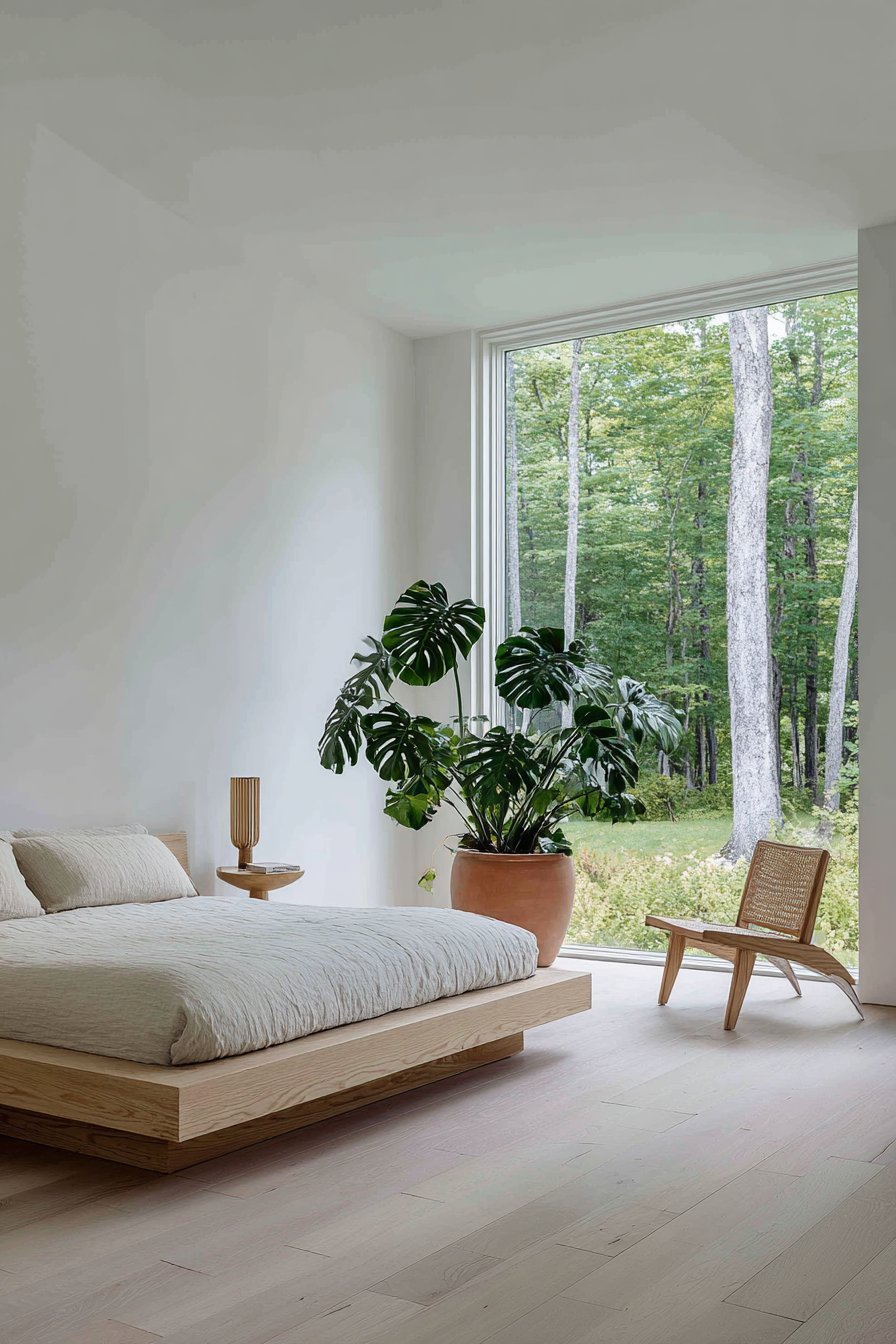
This approach brings nature into minimal interiors thoughtfully. Views and plants require no additional decoration. The living elements provide ever-changing visual interest. The result feels connected to the natural world.
Key Design Tips:
- Position beds to face pleasant outdoor views
- Leave windows untreated when privacy permits
- Include one large plant instead of multiple small ones
- Choose terracotta or ceramic planters for natural materials
- Paint walls white to maximize natural light reflection
- Select furniture in wood tones that echo outdoor colors
28. Invisible Storage Architecture
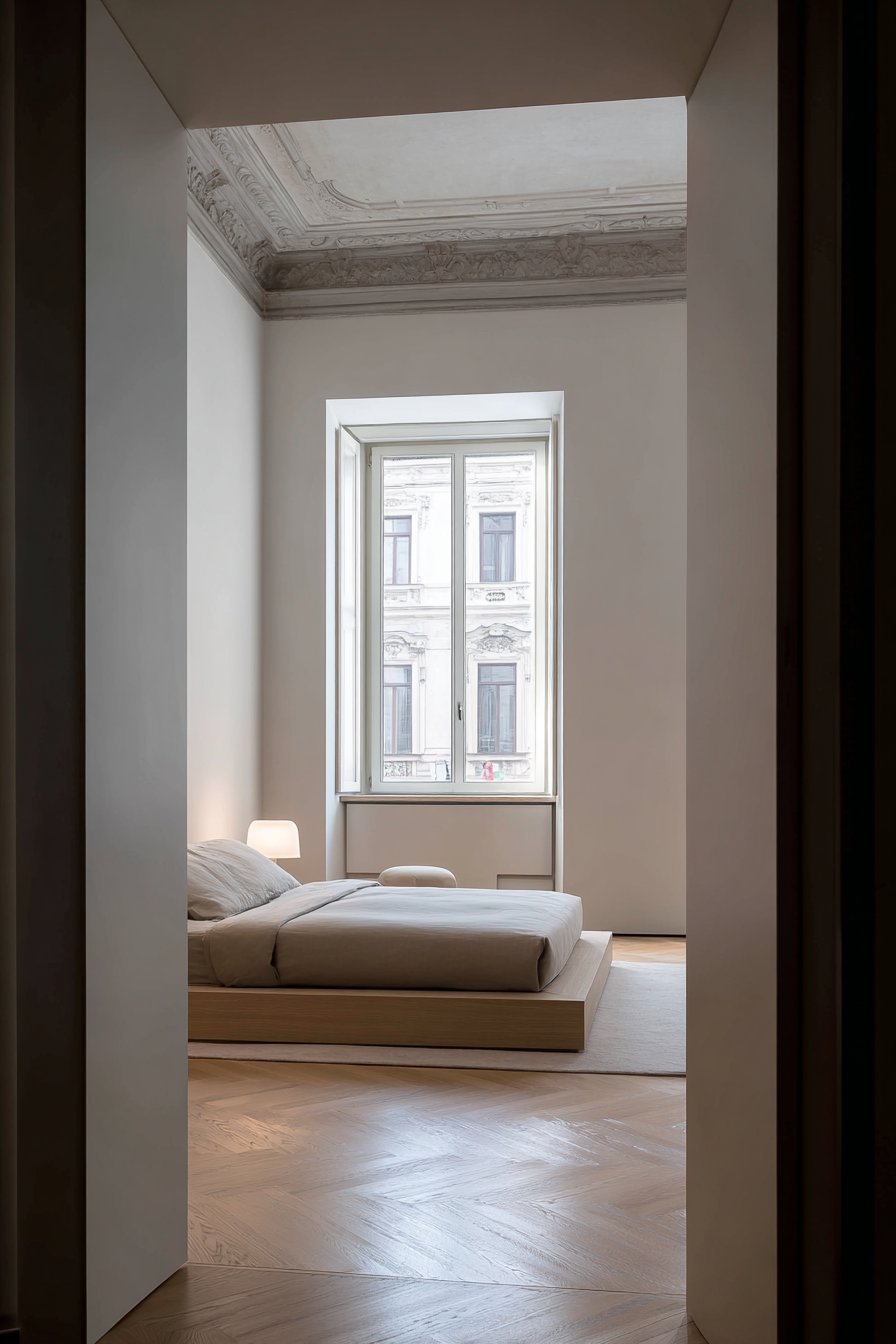
Built-in wardrobes feature push-to-open doors completely flush with walls. The doors paint the same warm white as surrounding surfaces. When closed, the storage disappears entirely from view. No visible handles or hardware interrupt the smooth plane.
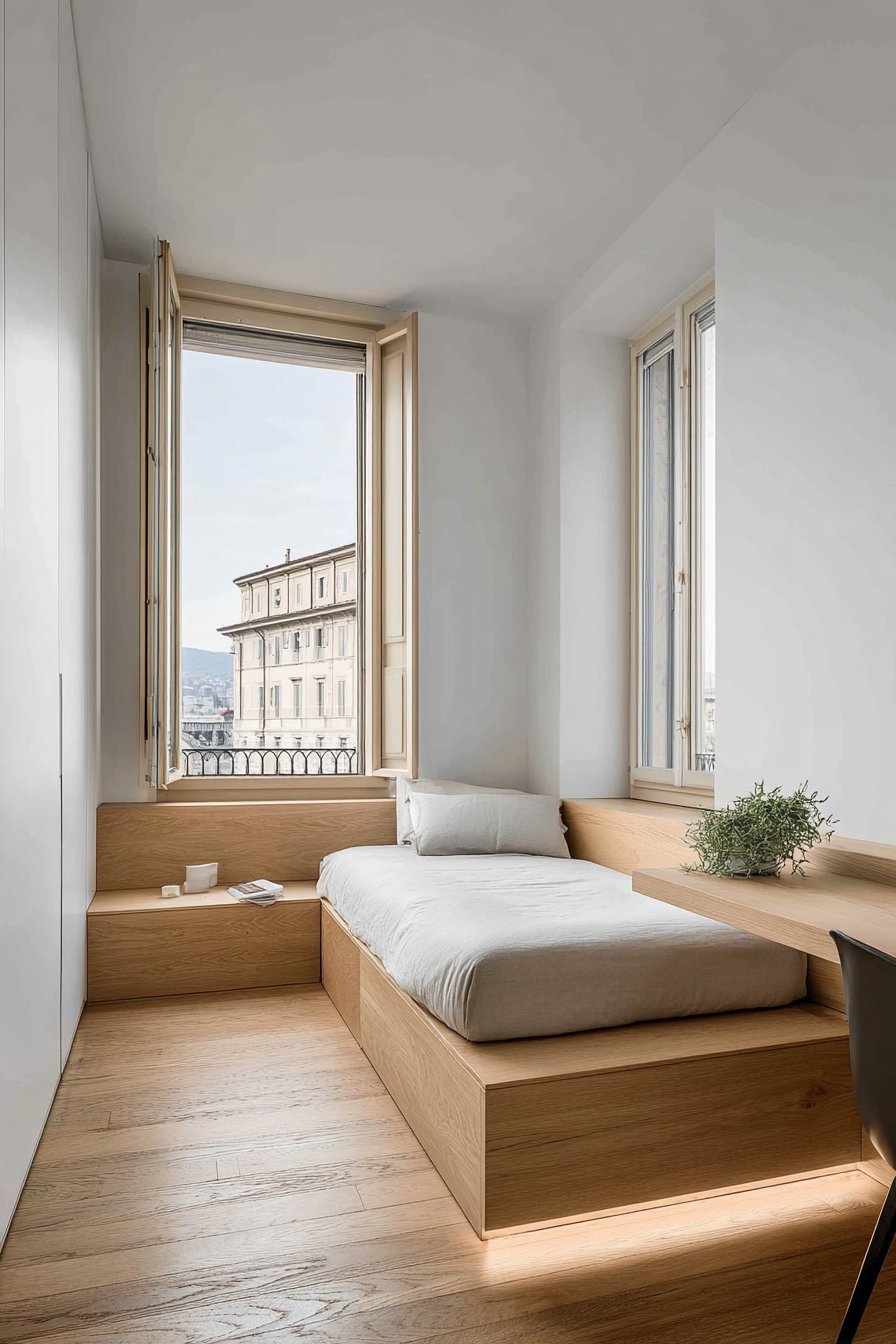
A simple bed with integrated oak drawer storage sits nearby. The floor remains completely clear of storage furniture. Clean sightlines extend uninterrupted across the space. The concealed organization maintains visual simplicity.
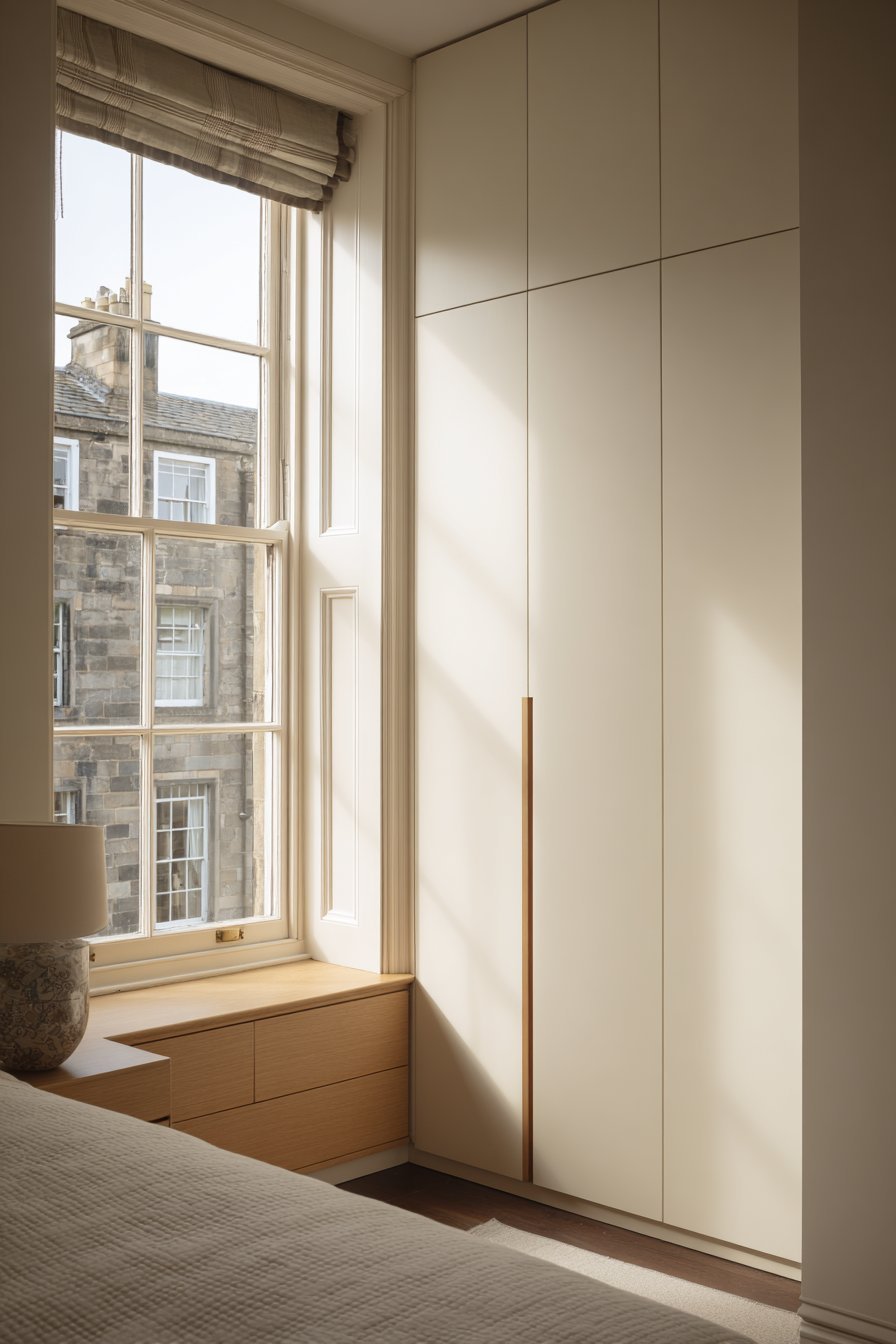
Natural light from windows illuminates the seamless surfaces. The flush door alignment requires precise installation. The invisible approach eliminates visual clutter completely. Everything needed hides behind architecturally integrated storage.
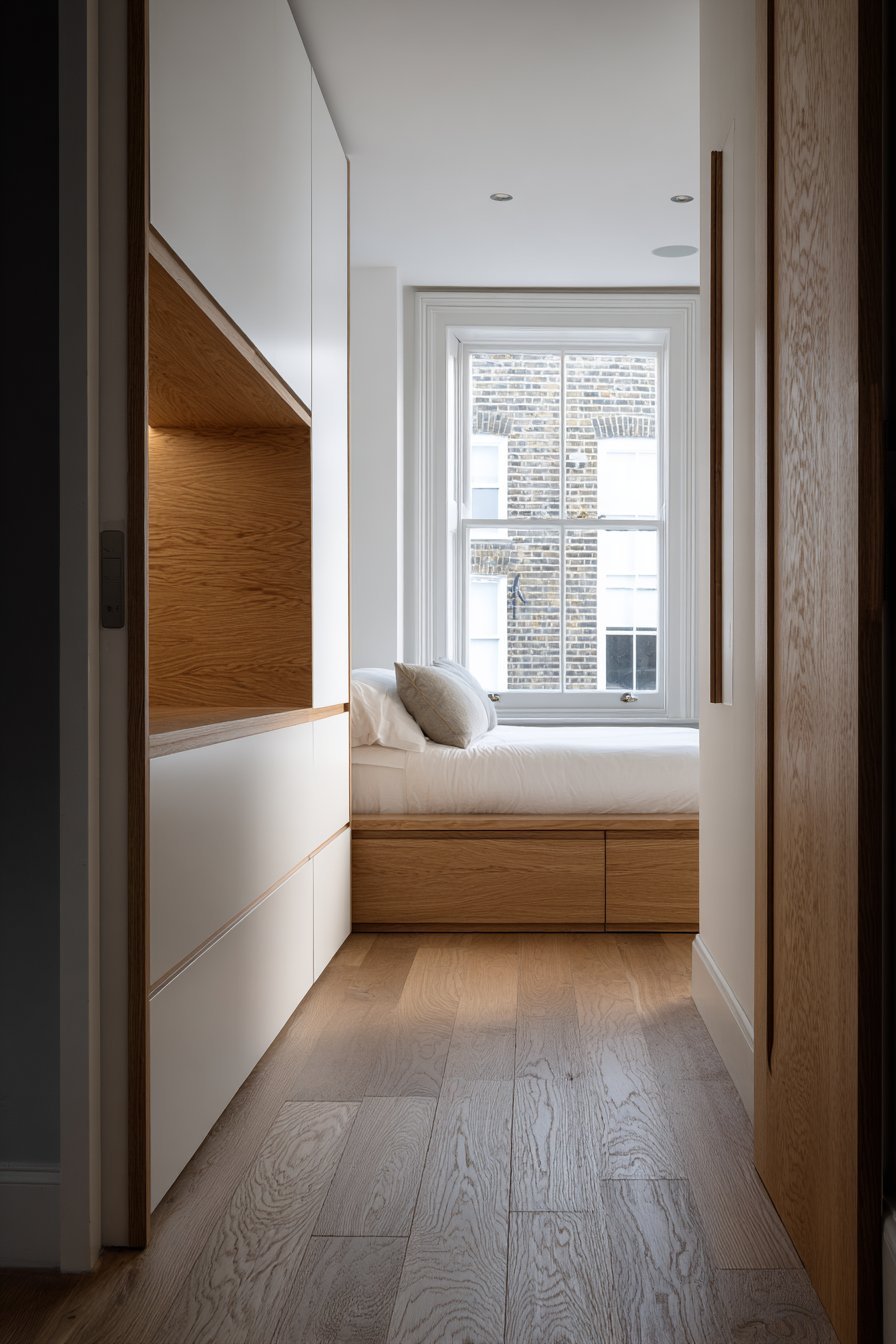
This demonstrates minimalist storage through architectural integration. The invisible wardrobes preserve clean wall surfaces. The push-to-open mechanism eliminates hardware needs. The result is storage without visual presence.
Key Design Tips:
- Specify push-to-open mechanisms during the construction phase
- Paint storage doors to match surrounding walls exactly
- Install doors perfectly flush with wall planes
- Eliminate all visible hardware including hinges when possible
- Include soft-close mechanisms for quiet operation
- Plan extensive hidden storage to keep surfaces clear
29. Quality Investment Philosophy
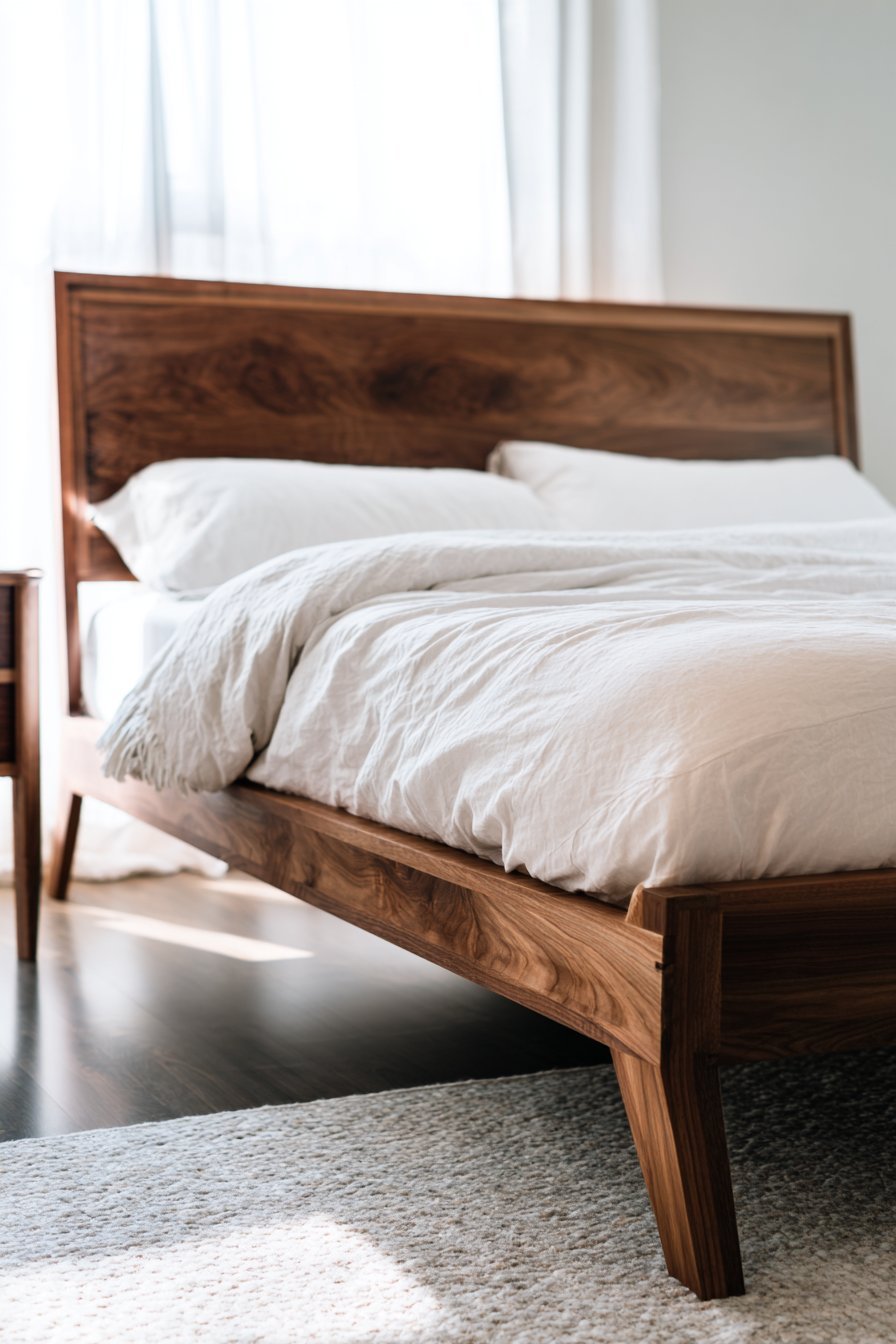
The bed frame showcases expert craftsmanship in solid walnut. Hand-cut dovetail joints appear visible at each corner. Traditional joinery techniques ensure lasting construction. Perfect proportions reflect thoughtful design and planning.

The piece is built to last decades rather than follow trends. Simple white bedding allows the craftsmanship to shine. The room contains only essential furniture pieces. Each piece receives careful selection for quality and longevity.
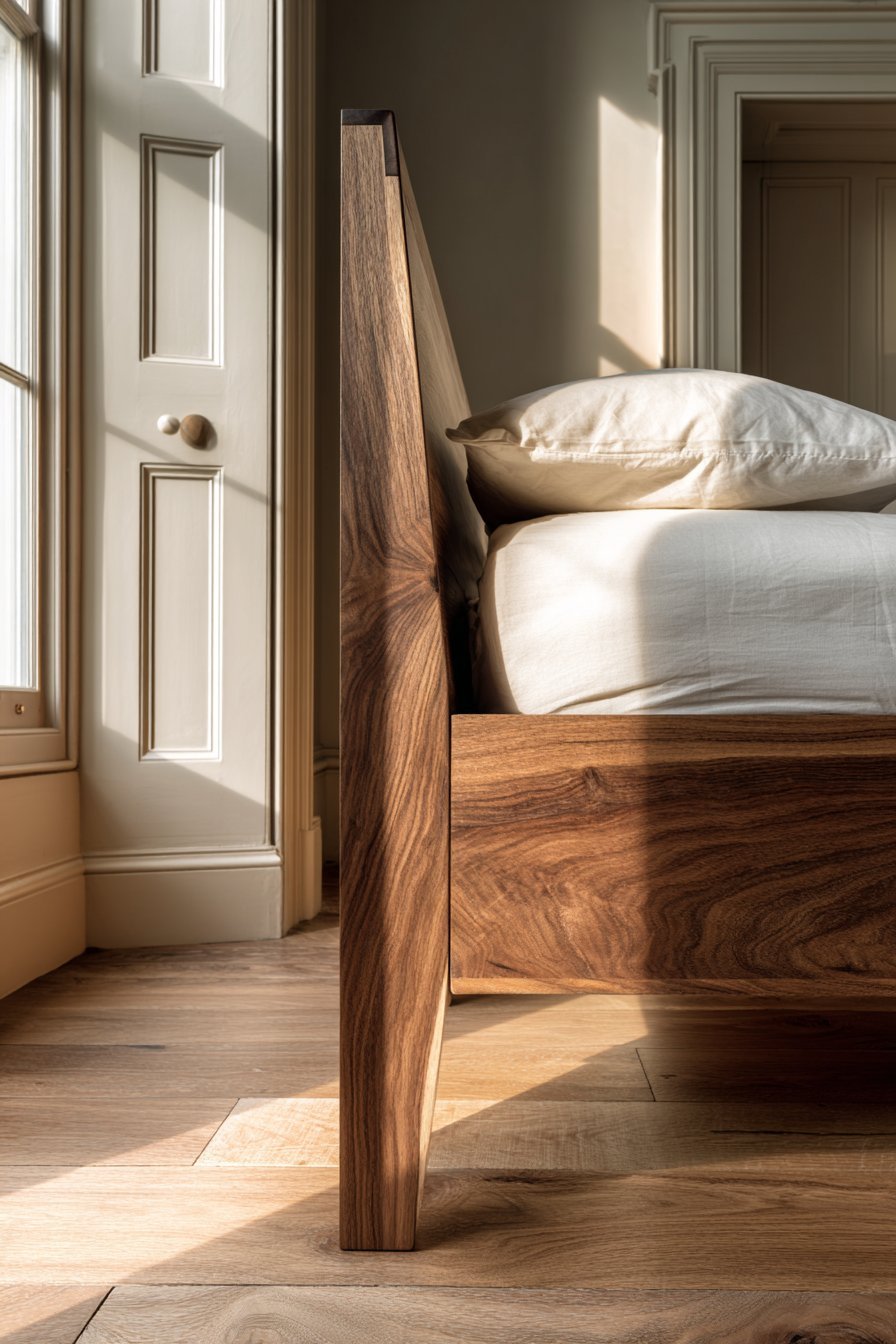
Natural light highlights the walnut’s rich color and grain. The wood will develop patina over years of use. The investment piece represents value over disposable furniture. The craftsmanship deserves display in minimal setting.
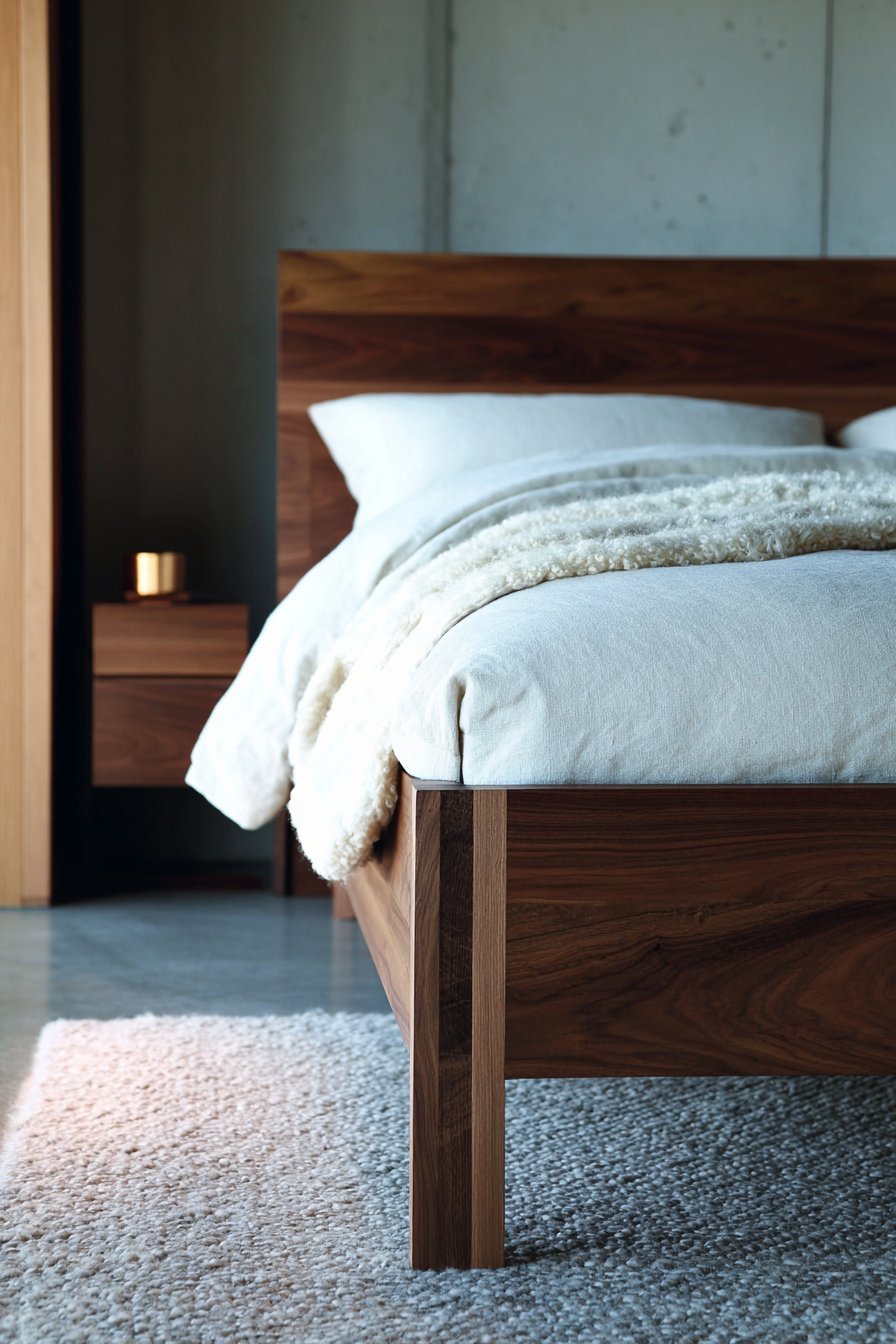
This demonstrates minimalism’s emphasis on quality over quantity. Fewer, better pieces create more satisfying environments. The visible joinery shows respect for traditional skills. The lasting quality makes economic and environmental sense.
Key Design Tips:
- Budget for investment pieces rather than disposable furniture
- Choose solid wood construction over particleboard
- Look for visible joinery indicating quality craftsmanship
- Select classic proportions that transcend trends
- Support skilled craftspeople and traditional methods
- Calculate cost-per-year of use for true value assessment
30. Proportional Harmony and Scale
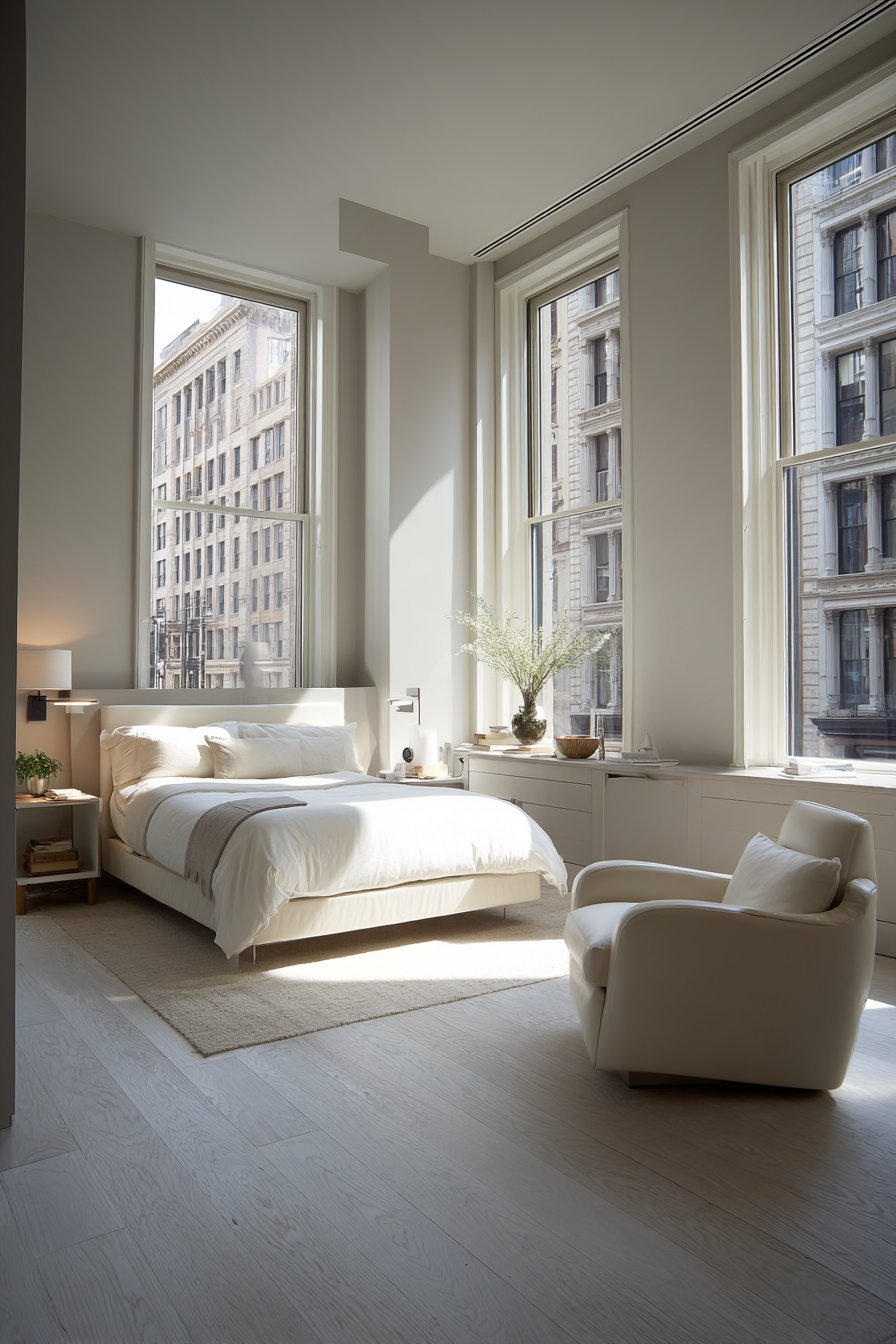
Furniture sizing matches room dimensions perfectly throughout. A queen bed maintains proper distance from walls. Two small nightstands scale appropriately to bed height. A single corner armchair preserves comfortable circulation space.
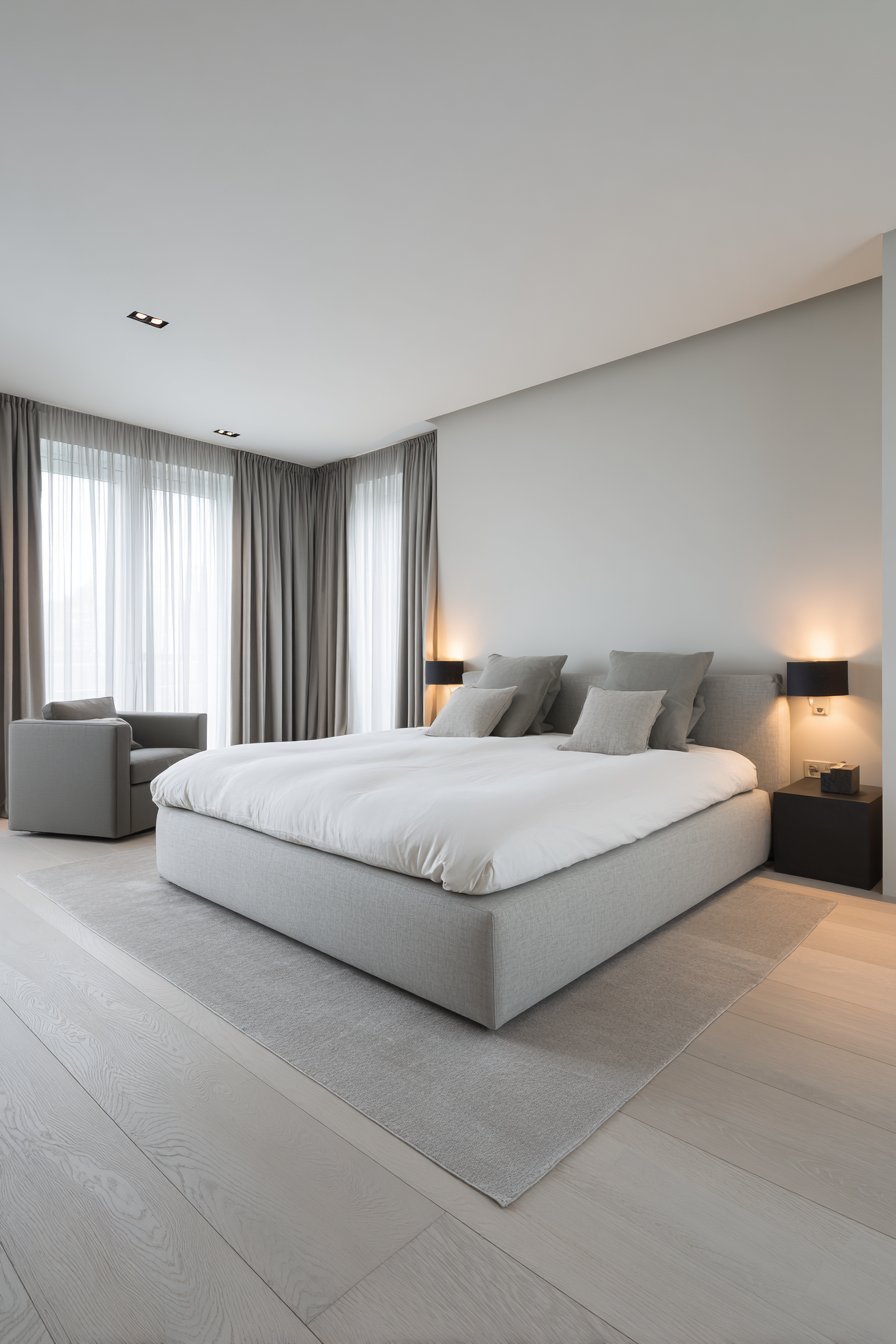
No furniture piece overwhelms the room or crowds others. White walls and light oak flooring create neutral envelope. Natural light from properly proportioned windows balances wall space. The mathematical relationships create inherent harmony.
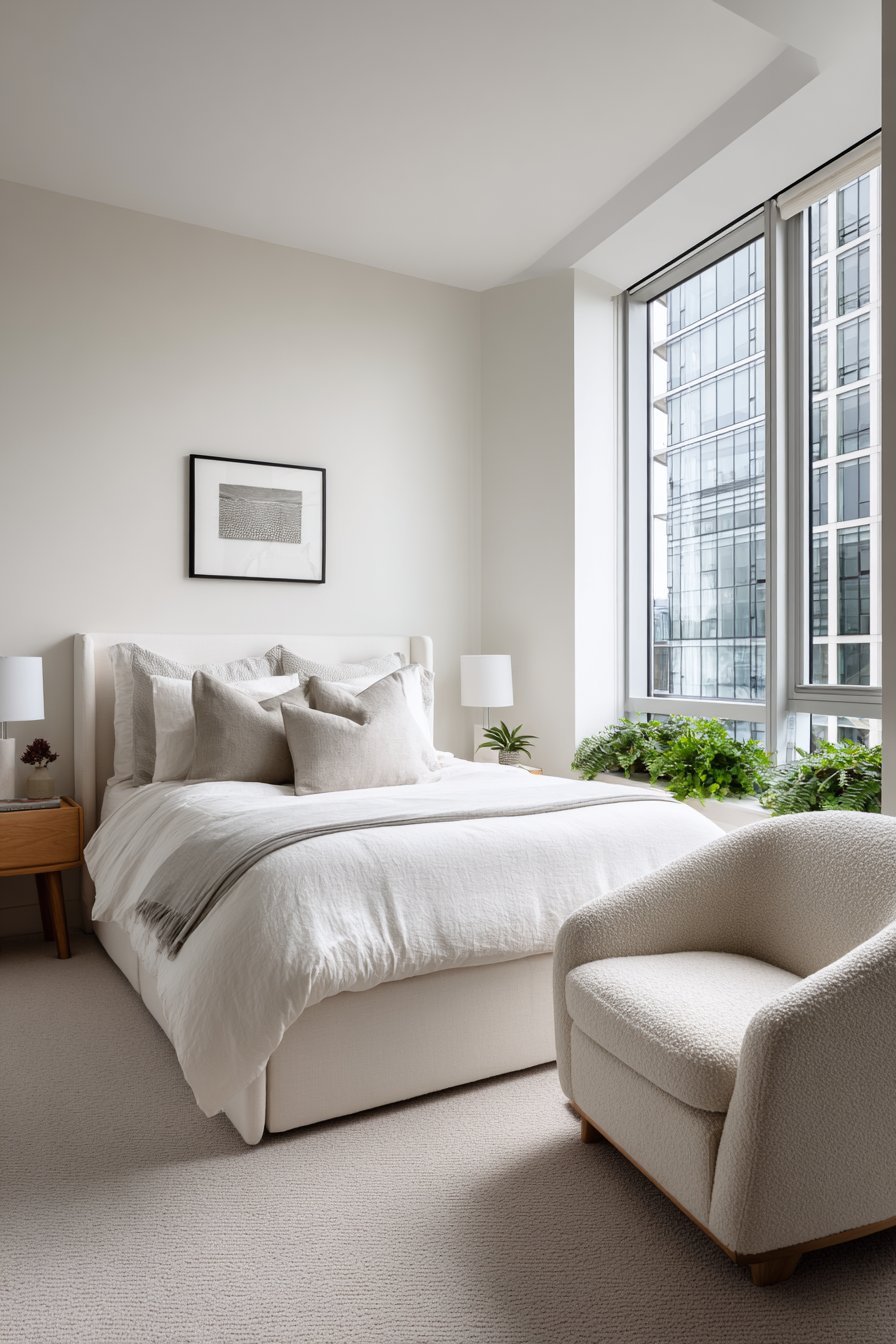
The careful spatial planning prevents both emptiness and overcrowding. Each piece relates proportionally to adjacent elements. Circulation paths maintain comfortable 36-inch minimum widths. The result feels balanced from every viewing angle.
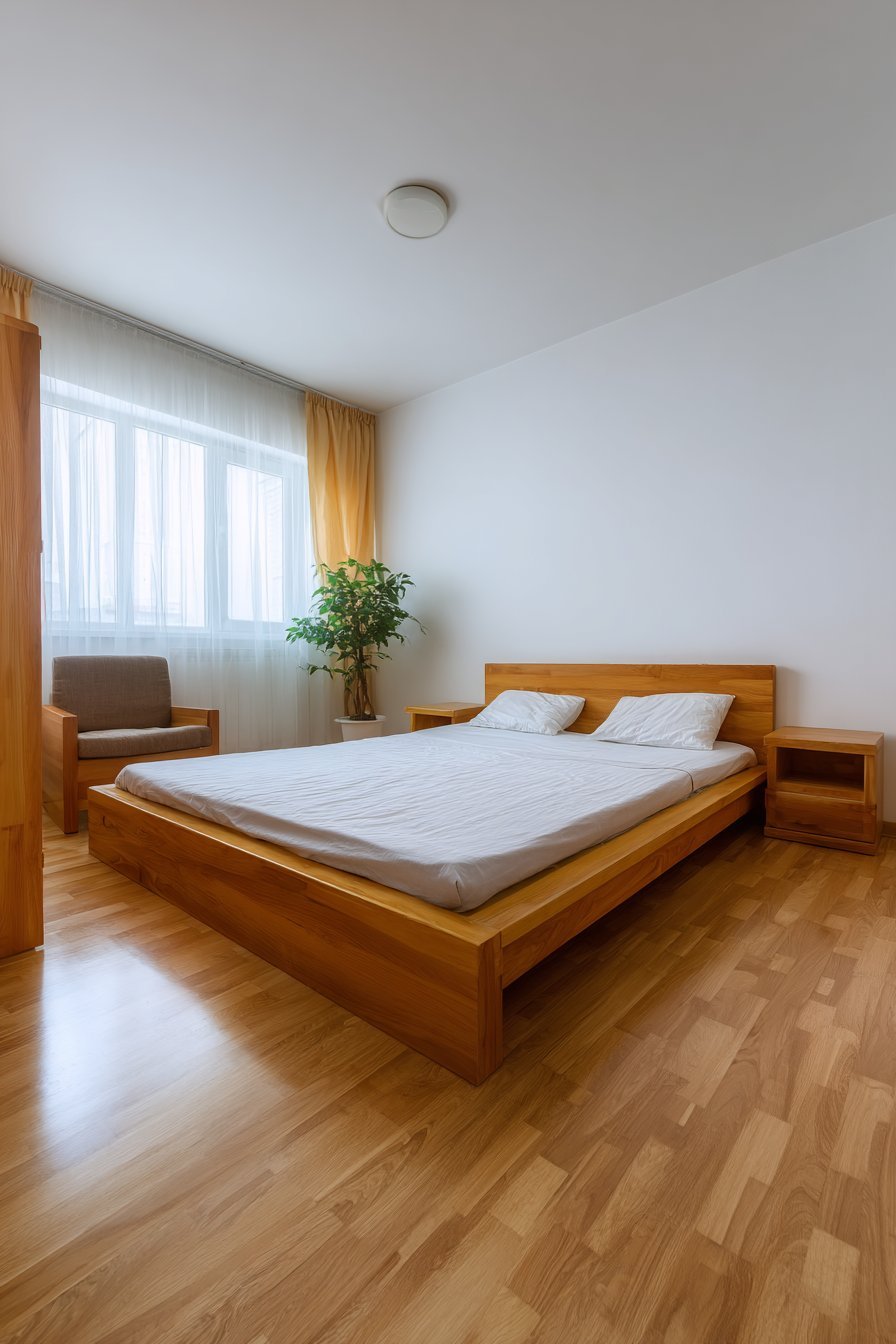
This demonstrates minimalist reliance on mathematical proportion. Appropriate scale creates psychological comfort and visual harmony. The spatial relationships require planning rather than improvisation. The result is a room that feels inherently right.
Key Design Tips:
- Measure room dimensions before selecting furniture sizes
- Maintain 30-36 inches around furniture for circulation
- Choose bed sizes appropriate to room square footage
- Scale nightstands to bed height within 2-3 inches
- Leave equal space on both sides of centered beds
- Step back and view from doorway to check proportions
Why These Minimalist Bedroom Designs Work
These minimalist bedroom concepts represent refined approaches to creating peaceful, functional sleeping spaces. Each design demonstrates core minimalist principles: intentional reduction, quality over quantity, and purposeful simplicity. The concepts work because they address both aesthetic desires and practical living requirements simultaneously.
The material choices throughout emphasize authentic, natural elements that age gracefully. Solid wood, organic textiles, and honest finishes develop character over time rather than deteriorate. This sustainability aligns with minimalist values while providing superior long-term value. The neutral color palettes create timeless backdrops that adapt to changing personal preferences without requiring complete redesigns.
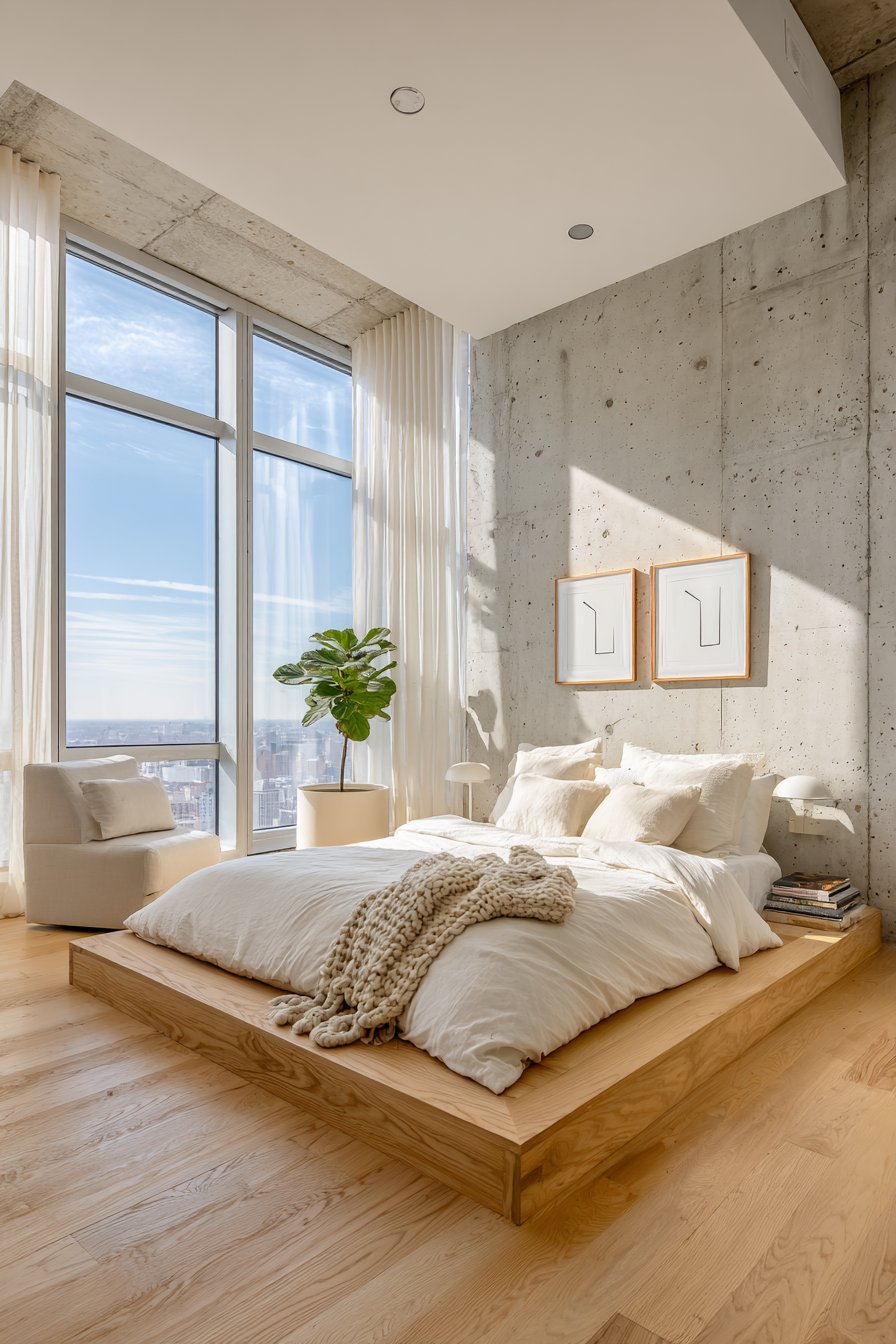
Spatial considerations receive equal attention across all concepts. The designs demonstrate that minimalism suits any room size, from compact urban spaces to generous primary suites. Built-in storage solutions and multi-functional furniture maximize efficiency without visual clutter. The emphasis on negative space and breathing room creates psychological calm that promotes better sleep quality.
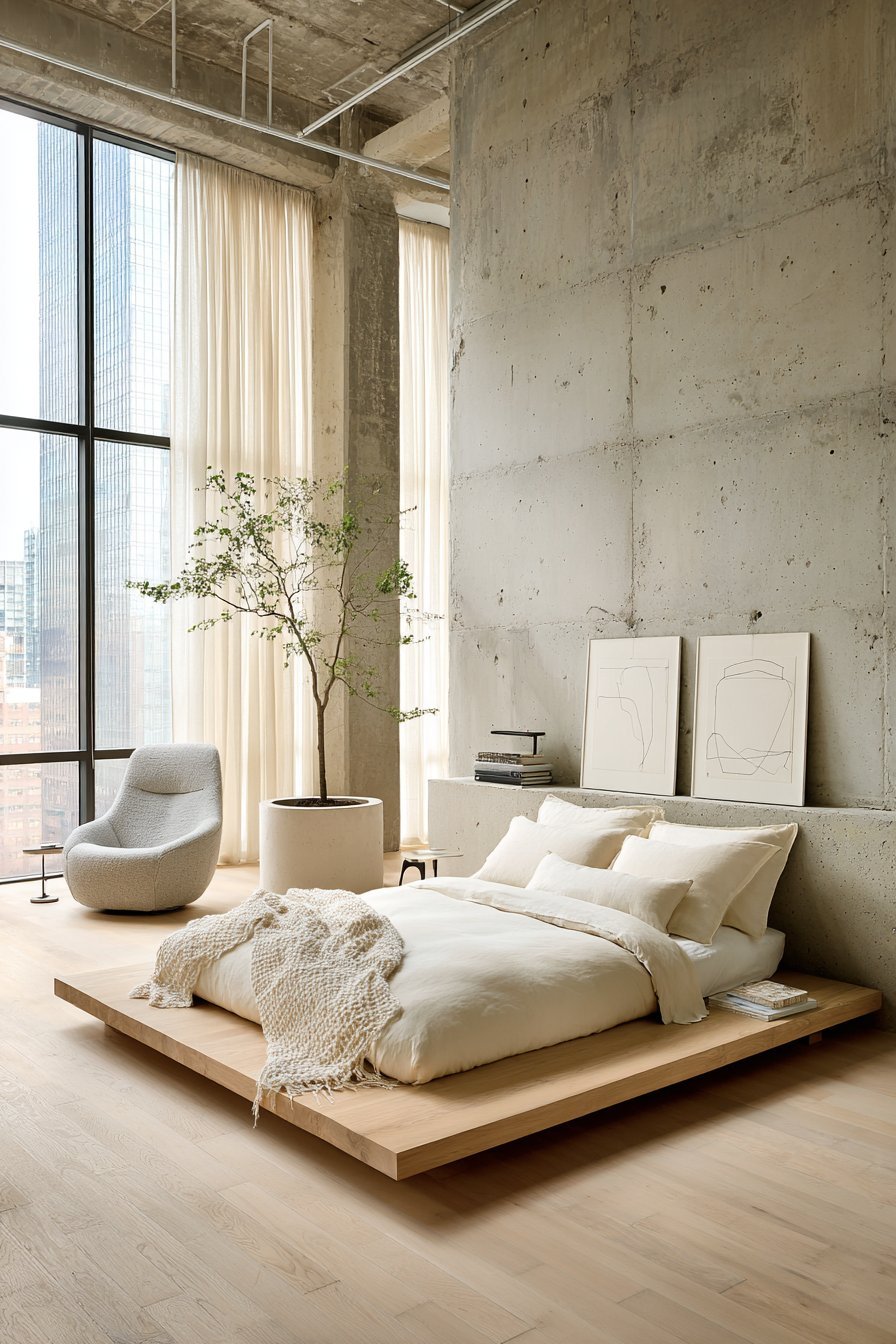
The lighting strategies showcase layered approaches combining natural daylight, ambient illumination, and focused task lighting. This flexibility serves varying daily activities while maintaining aesthetic simplicity through concealed fixtures. The consistent use of natural light maximizes energy efficiency and connects interiors to natural circadian rhythms.
Functionality underpins every design decision without compromising beauty. Integrated storage keeps surfaces clear, invisible hardware maintains clean lines, and carefully proportioned furniture ensures comfortable daily use. The designs prove that minimalist spaces can be both visually striking and supremely livable. The key lies in thoughtful planning that considers how spaces will actually be used rather than simply how they appear in photographs.
Conclusion
These thirty minimalist bedroom designs demonstrate that simplicity creates profound beauty and lasting value. The key takeaways include prioritizing quality materials, embracing negative space, and carefully curating every element. Minimalism succeeds through disciplined editing and thoughtful spatial planning rather than mere emptiness.
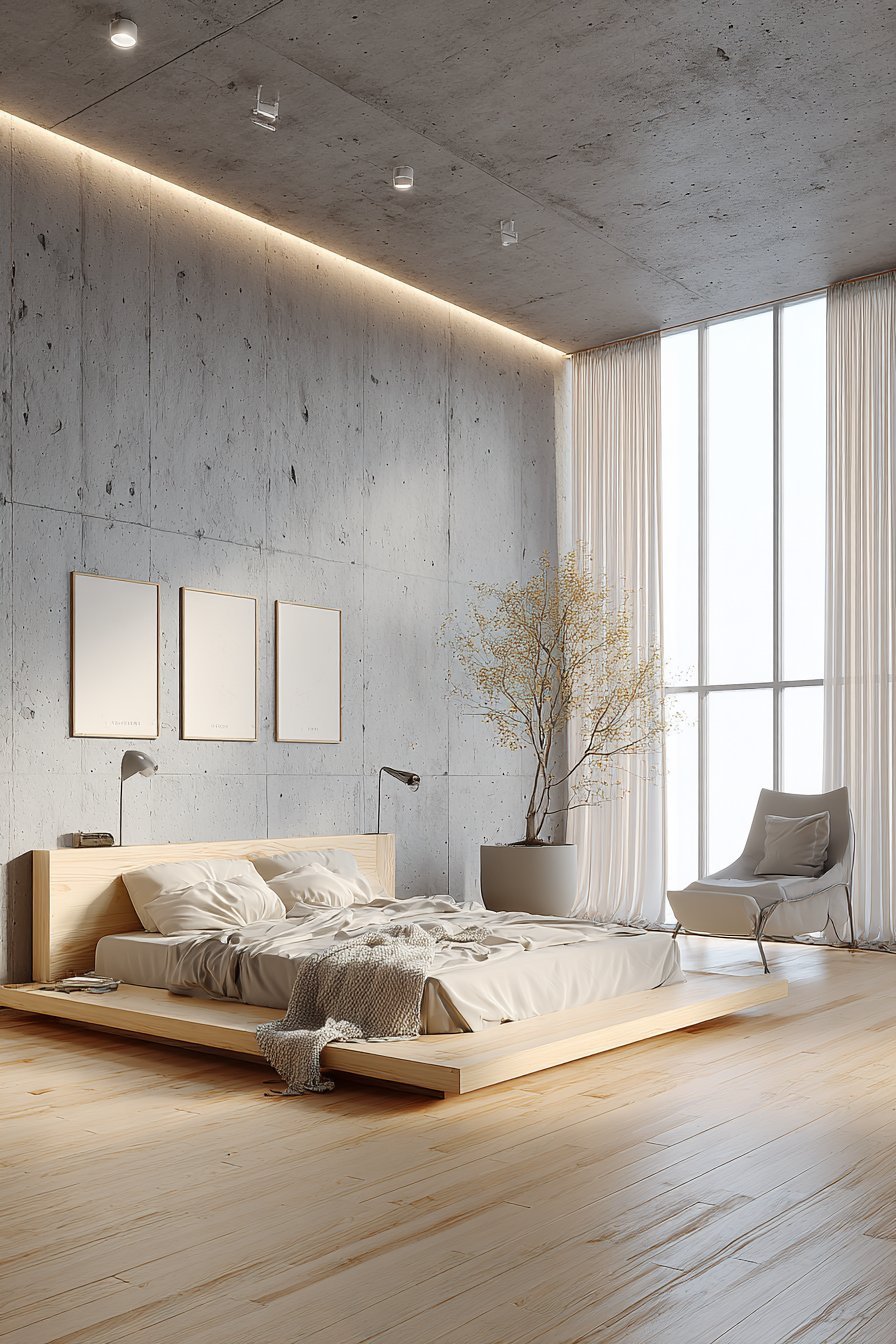
Start your minimalist bedroom transformation by removing unnecessary items first. Evaluate each remaining piece honestly for utility and joy. Invest gradually in quality replacements for worn furnishings. Your peaceful minimalist sanctuary awaits creation through intentional choices and patient curation.